
Eutrophication is often caused by excess limiting nutrient runoff from agricultural fields
into aquatic ecosystems. This results in massive algal blooms, which eventually die and
decompose, ultimately depleting the dissolved oxygen and killing large numbers of fish
and other aquatic organism. Predict which of the following human actions would best
address the problem of eutrophication near agricultural areas?
A) After each eutrophication event, remove the dead fish and invertebrates to place on
agricultural fields instead of fertilizer.
B) Determine which limiting nutrient is responsible for the algal bloom and use other
fertilizers to apply to crops.
C) Remove the algae before it dies and decomposes to prevent eutrophication from
occurring.
D) Determine critical nutrient loads required for certain crops and do not exceed this
amount during fertilizer application.
According to the lac operon model proposed by Jacob and Monod, what is predicted to
occur if the operator is removed from the operon?
A) The lac operon would be transcribed continuously.
B) Only lacZ would be transcribed.
C) Only lacY would be transcribed.
D) Galactosidase permease would be produced, but would be incapable of transporting
lactose.
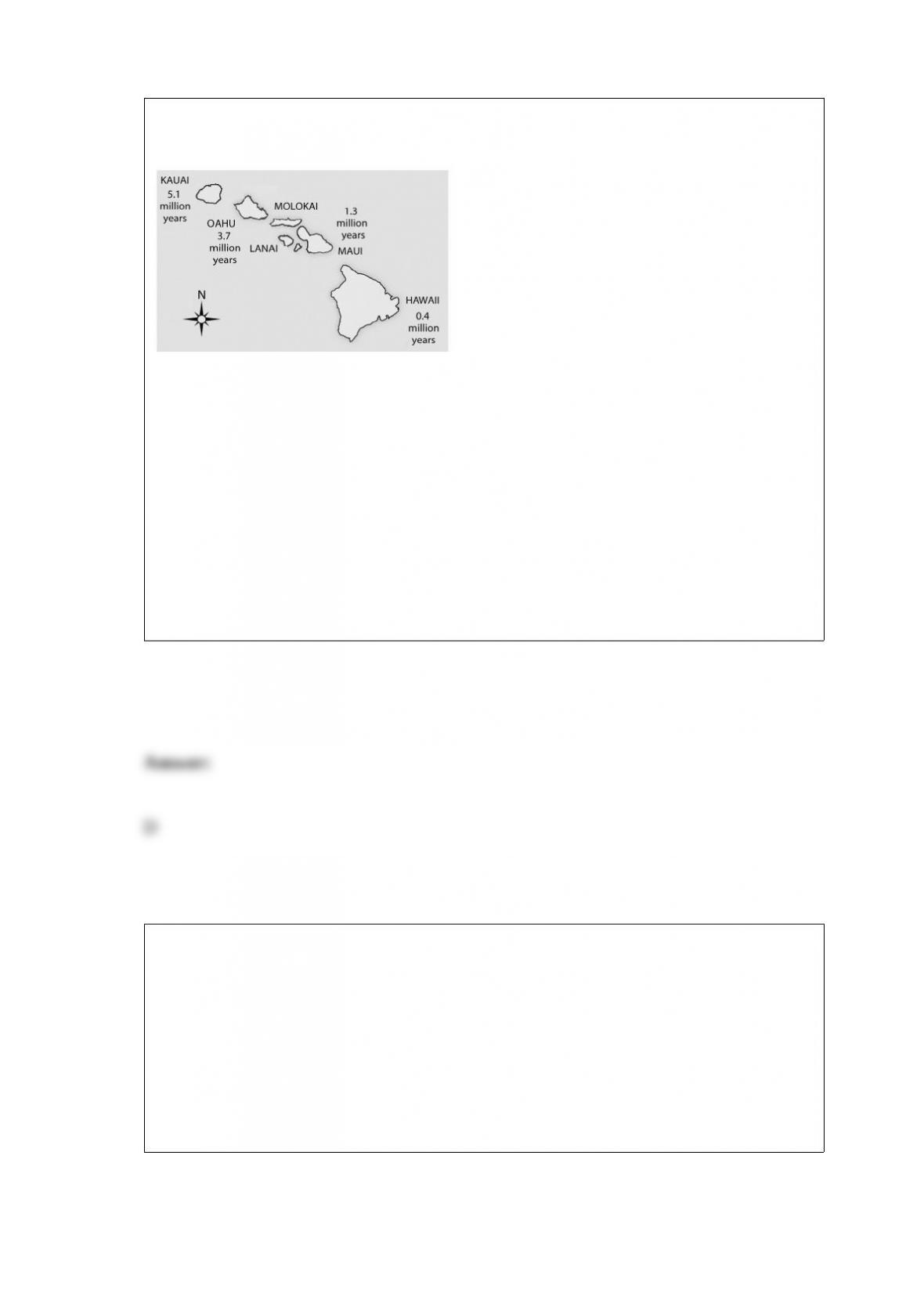
Soon after the island of Hawaii rose above the sea surface (somewhat less than one
million years ago), the evolution of life on this new island should have been most
strongly influenced by _____.
A) a genetic bottleneck
B) sexual selection
C) habitat differentiation
D) the founder effect
Which of these classes of biological molecules does NOT include polymers?
A) lipids
B) carbohydrates
C) proteins
D) nucleic acids

In the cross AaBbCc AaBbCc, what is the probability of producing the genotype
AABBCC?
A) 1/4
B) 1/8
C) 1/16
D) 1/64
The reason for using Taq polymerase for PCR is that _____.
A) it is heat stable and can withstand the heating step of PCR
B) only minute amounts are needed for each cycle of PCR
C) it binds more readily than other polymerases to the primers
D) it has regions that are complementary to the primers

A product of the anterior pituitary gland that causes color changes in its target cells is
_____.
A) follicle-stimulating hormone (FSH)
B) luteinizing hormone (LH)
C) thyroid-stimulating hormone (TSH)
D) melanocyte-stimulating hormone (MSH)
You are given an unknown organism to identify. It is unicellular and heterotrophic. It is
motile, using many short extensions of the cytoplasm, each featuring the 9 + 2 filament
pattern. It has well-developed organelles and two nuclei, one large and one small. This
organism is most likely to be a _____.
A) foraminiferan
B) radiolarian
C) ciliate
D) kinetoplastid
Which of the following is a challenge to the hypothesis that bats, which produce an
unusually large number of sperm, increase the probability of conception when females
engage in multiple matings?

I) Female bats can eject the sperm of certain males after mating.
II) A female can actively choose which male mates with her last, thus increasing the
odds of conception with that male’s sperm.
A) Only I is correct.
B) Only II is correct.
C) Both I and II are correct.
Prior to the work of Lyell and Darwin, the prevailing belief was that Earth is _____.
A) a few thousand years old, and populations are unchanging
B) a few thousand years old, and populations gradually change
C) millions of years old, and populations rapidly change
D) millions of years old, and populations are unchanging
Recall that Clements’s view of biological communities is that of a highly predictable
and interrelated structure, while Gleason’s view of biological communities is that
individual species operate independently. If we set up many identical sterilized ponds in
the same area and allowed them to be colonized, what should we predict if we wished
to test Gleason’s hypothesis?
A) Identical plankton communities will develop in all ponds.
B) Similar plankton communities will develop in all ponds.
C) Different plankton communities will develop in all ponds.
D) Limited plankton communities will develop in all ponds.
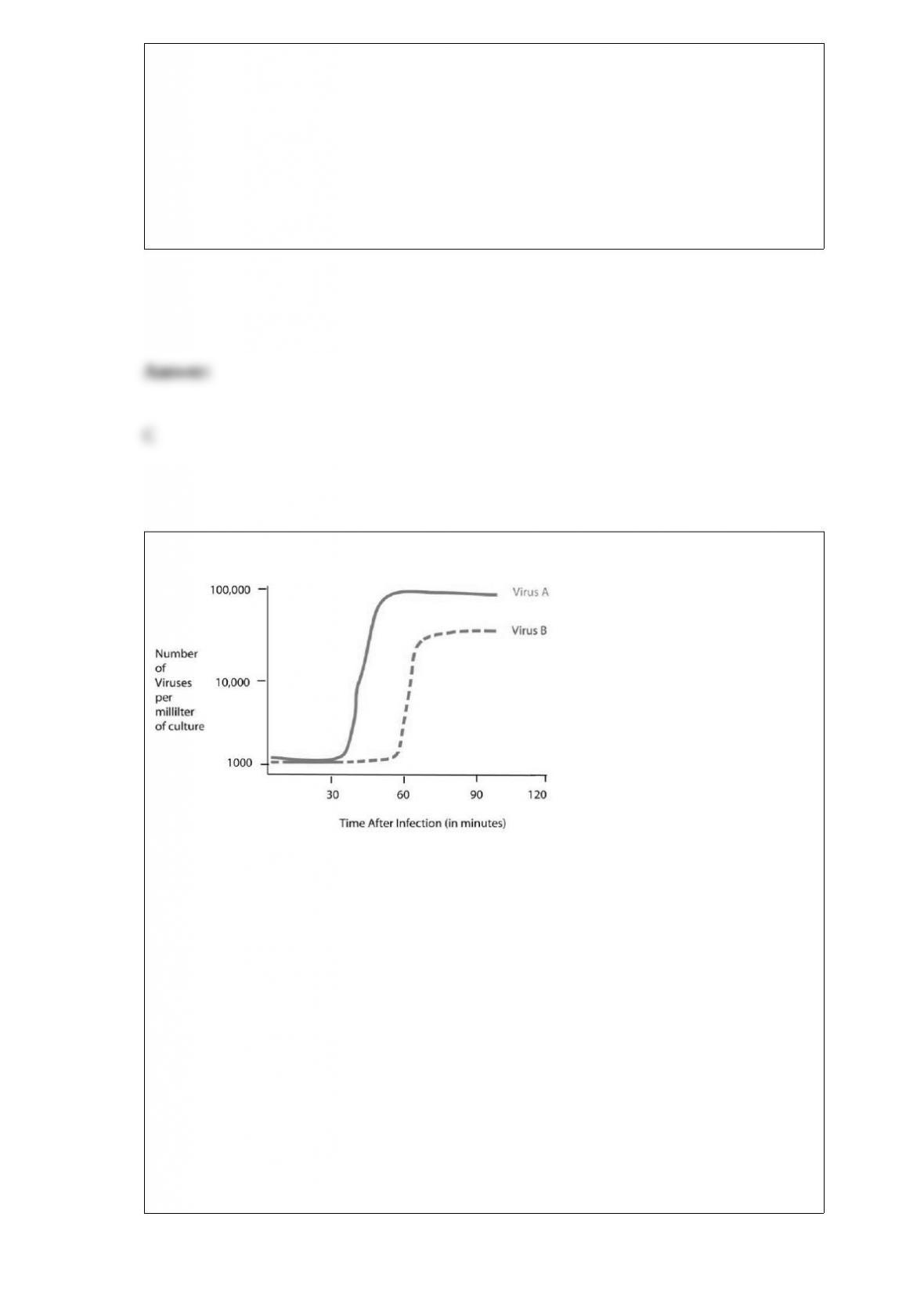
Use the following figure and information to answer the question(s) below.
Cells were infected with approximately 1000 copies of either virus A or virus B at the 0
time point. At five-minute intervals, a sample of the virus and cell mixture was
removed. The intact cells were removed from the sample, and the number of viruses per
milliliter of culture was determined.
Using the data in the figure above, how long does it take for virus B to go through one
lytic cycle?
A) 15 minutes
B) 30 minutes
C) 45 minutes
D) 60 minutes
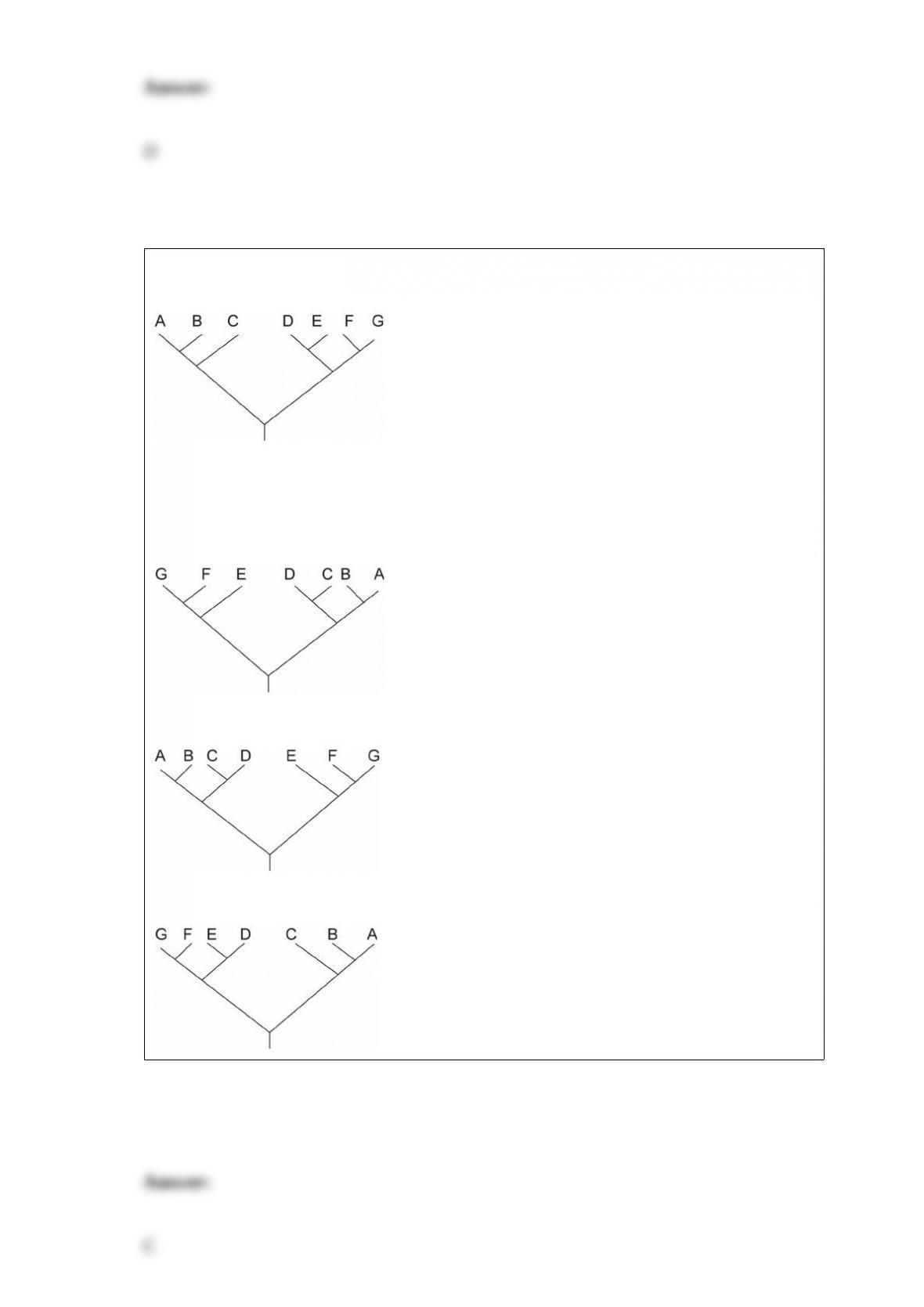
Which of the following trees, if any, depicts the same relationship among species as
shown above?
A)
B)
C)

After the drought of 1977, researchers hypothesized that on the Galpagos island Daphne
Major, medium ground finches with large, deep beaks survived better than those with
smaller beaks because they could more easily crack and eat the tough Tribulus cistoides
fruits. A tourist company sets up reliable feeding stations with a variety of bird seeds
(different types and sizes) so that tourists can get a better look at the finches. Which of
these events is now most likely to occur to finch beaks on this island?
A) evolution of yet larger, deeper beaks over time, until all birds have relatively large,
deep beaks
B) evolution of smaller, pointier beaks over time, until all birds have relatively small,
pointy beaks
C) increased variation in beak size and shape over time
D) no change in beak size and shape over time
For a science fair project, two students decided to repeat the Hershey and Chase
experiment, with modifications. They decided to label the nitrogen of the DNA, rather
than the phosphate. They reasoned that each nucleotide has only one phosphate and two
to five nitrogens. Thus, labeling the nitrogens would provide a stronger signal than
labeling the phosphates. Why won’t this experiment work?
A) There is no radioactive isotope of nitrogen.
B) Radioactive nitrogen has a half-life of 100,000 years, and the material would be too
dangerous for too long.
C) Although there are more nitrogens in a nucleotide, labeled phosphates actually have
sixteen extra neutrons; therefore, they are more radioactive.
D) Amino acids (and thus proteins) also have nitrogen atoms; thus, the radioactivity
would not distinguish between DNA and proteins.

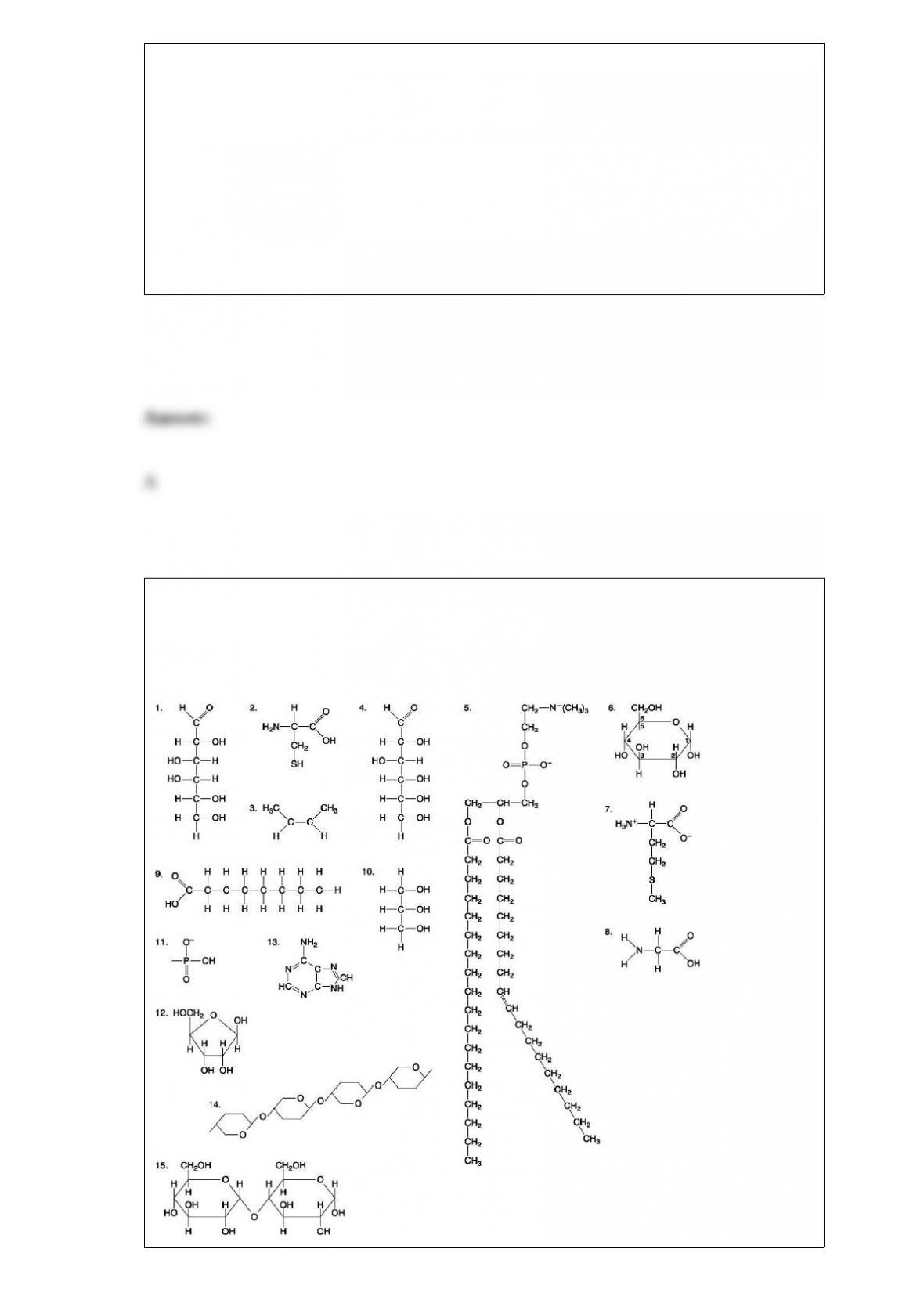
A fat (or triacylglycerol) would be formed as a result of a dehydration reaction between
_____.
A) one molecule of 9 and three molecules of 10
B) three molecules of 9 and one molecule of 10
C) one molecule of 5 and three molecules of 9
D) one molecule of 5 and three molecules of 10
Which of the following normally occurs regardless of whether or not oxygen (O2) is
present?
A) glycolysis
B) fermentation
C) citric acid cycle
D) oxidative phosphorylation (chemiosmosis)

In Drosophila melanogaster, vestigial wings are caused by a recessive allele of a gene
that is linked to a gene with a recessive allele that causes black body color. Morgan
crossed black-bodied, normal-winged females and gray-bodied, vestigial-winged males.
The F1 were all gray bodied, normal winged. The F1 females were crossed to
homozygous recessive males to produce testcross progeny. Morgan calculated the map
distance to be 17 map units. Which of the following is correct about the testcross
progeny?
A) black-bodied, normal-winged flies = 17% of the total
B) black-bodied, normal-winged flies PLUS gray-bodied, vestigial-winged flies = 17%
of the total
C) gray-bodied, normal-winged flies PLUS black-bodied, vestigial-winged flies = 17%
of the total
D) black-bodied, vestigial-winged flies = 17% of the total
Independent of whether an organism is an endotherm or ectoderm, the LEAST reliable
indicator of an animal’s metabolic rate is the amount of _____.
A) food eaten in one day
B) heat generated in one day
C) oxygen used in mitochondria in one day
D) water consumed in one day

Central coordination of vertebrate biological rhythms in physiology and behavior reside
in the _____.
A) pituitary gland
B) hypothalamus
C) cerebrum
D) thalamus
Which of the following macromolecules leaves the nucleus of a eukaryotic cell through
pores in the nuclear membrane?
A) DNA
B) amino acids
C) mRNA
D) phospholipids
Certain nutrients are considered “essential” in the diets of some animals because _____.
A) only those animals use those nutrients
B) these animals are not able to synthesize these nutrients

C) the nutrients are necessary coenzymes
D) only certain foods contain them
Compared to most animals, the growth of most plant structure is best described as
_____.
A) perennial
B) weedy
C) indeterminate
D) primary
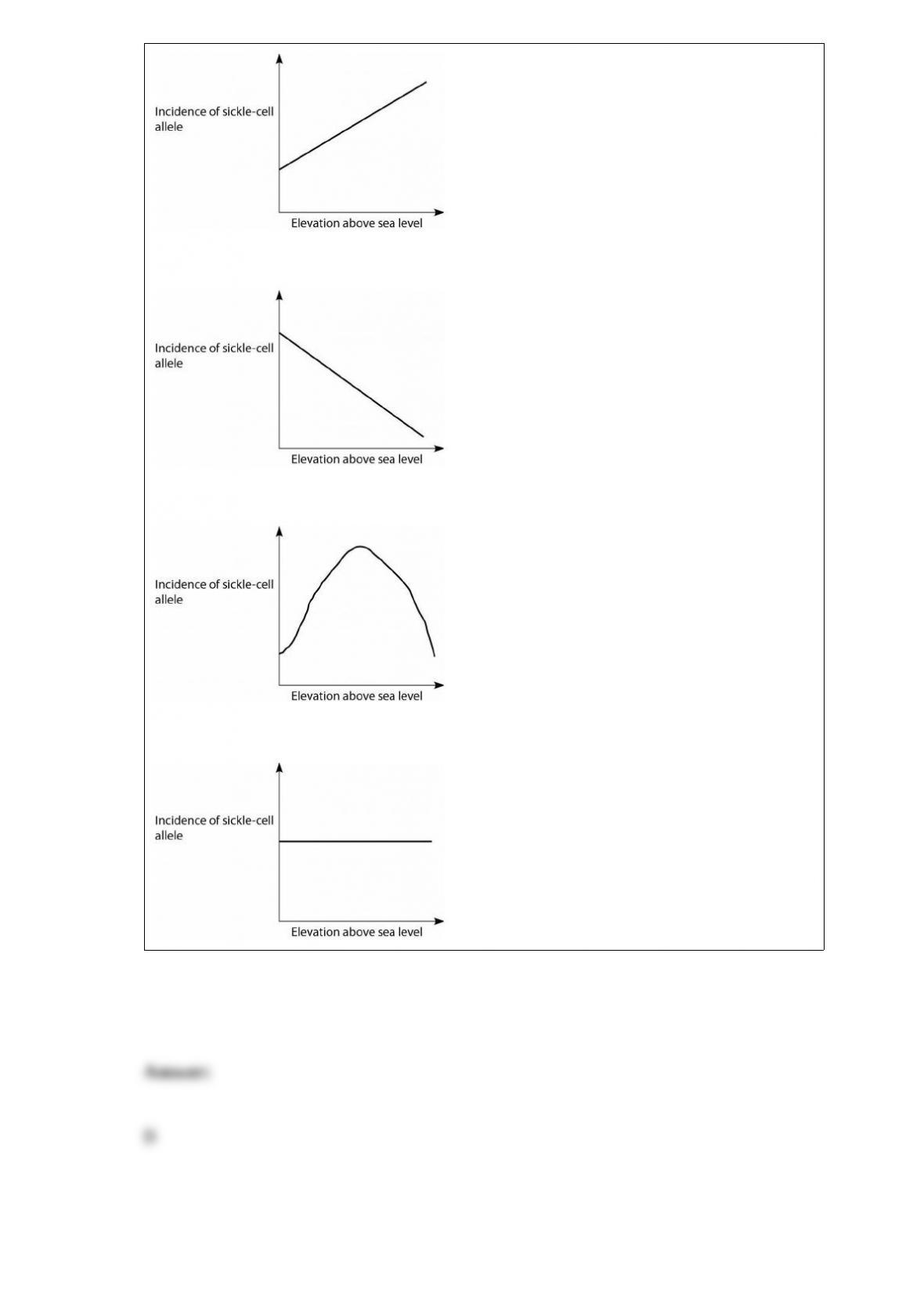
Anopheles mosquitoes, which carry the malaria parasite, cannot live above elevations
of 5900 feet. In addition, oxygen availability decreases with higher altitude. Consider a
hypothetical human population that is adapted to life on the slopes of Mt. Kilimanjaro
in Tanzania, a country in equatorial Africa. Mt. Kilimanjaro’s base is about 2600 feet
above sea level and its peak is 19,341 feet above sea level. If the incidence of the
sickle-cell allele in the population is plotted against altitude (feet above sea level),
which of the following distributions is most likely, assuming little migration of people
up or down the mountain?
A)
B)
C)
D)
If you are interested in observing a relatively simple community structure in a clear
water lake, you would do well to choose diving into _____.
A) an oligotrophic lake
B) a eutrophic lake
C) a relatively shallow lake
D) a nutrient-rich lake
The following questions are based on the 15 molecules illustrated in the accompanying
figure. Each molecule may be used once, more than once, or not at all.

Which of the following molecules act as building blocks (monomers) of polypeptides?
A) 1, 4, and 6
B) 2, 7, and 8
C) 7, 8, and 13
D) 11, 12, and 13
Which of these are amniotes?
A) amphibians
B) fishes
C) turtles
D) lungfish
Some birds follow moving swarms of army ants in the tropics. As the ants march along
the forest floor hunting insects and small vertebrates, birds follow and pick off any
insects or small vertebrates that fly or jump out of the way of the ants. This situation is
an example of what kind of species interaction between the birds and the ants?
A) consumption

B) commensalism
C) parasitism
D) mutualism
Which of these activities is part of the development of crop plants from wild relatives?
I) people planting seeds of the plants with the characteristic wanted
II) people making observations of desired plant characteristics
III) people eating products from only the plants with desired characteristics
IV) people developing several varieties of crops from a wild relative
A) I and II
B) I and IV
C) I, III, and IV
D) I, II, and IV
Which of the following statements about the 5′ end of a polynucleotide strand of RNA
is correct?

A) The end has a hydroxyl group attached to the number 5 carbon of ribose.
B) The end has a phosphate group attached to the number 5 carbon of ribose.
C) The end has phosphate attached to the number 5 carbon of the nitrogenous base.
D) The end has a carboxyl group attached to the number 5 carbon of ribose.
For the enzyme- catalyzed reaction shown in the figure, if the initial reactant
concentration is 1.0 micromolar, which of these treatments will cause the greatest
increase in the rate of the reaction?
A) doubling the activation energy needed
B) cooling the reaction by 10C
C) doubling the enzyme concentration
D) increasing the concentration of reactants to 10.0 micromolar, while reducing the
concentration of enzyme by 1/2
If a pharmaceutical company wished to design a drug to maintain low blood sugar
levels, one approach might be to design a compound _____.
A) that mimics epinephrine and can bind to the epinephrine receptor

B) that stimulates cAMP production in liver cells
C) to stimulate G protein activity in liver cells
D) that increases phosphodiesterase activity
The temperature-regulating center of vertebrate animals is located in the _____.
A) thyroid gland
B) hypothalamus
C) subcutaneous layer of the skin
D) liver