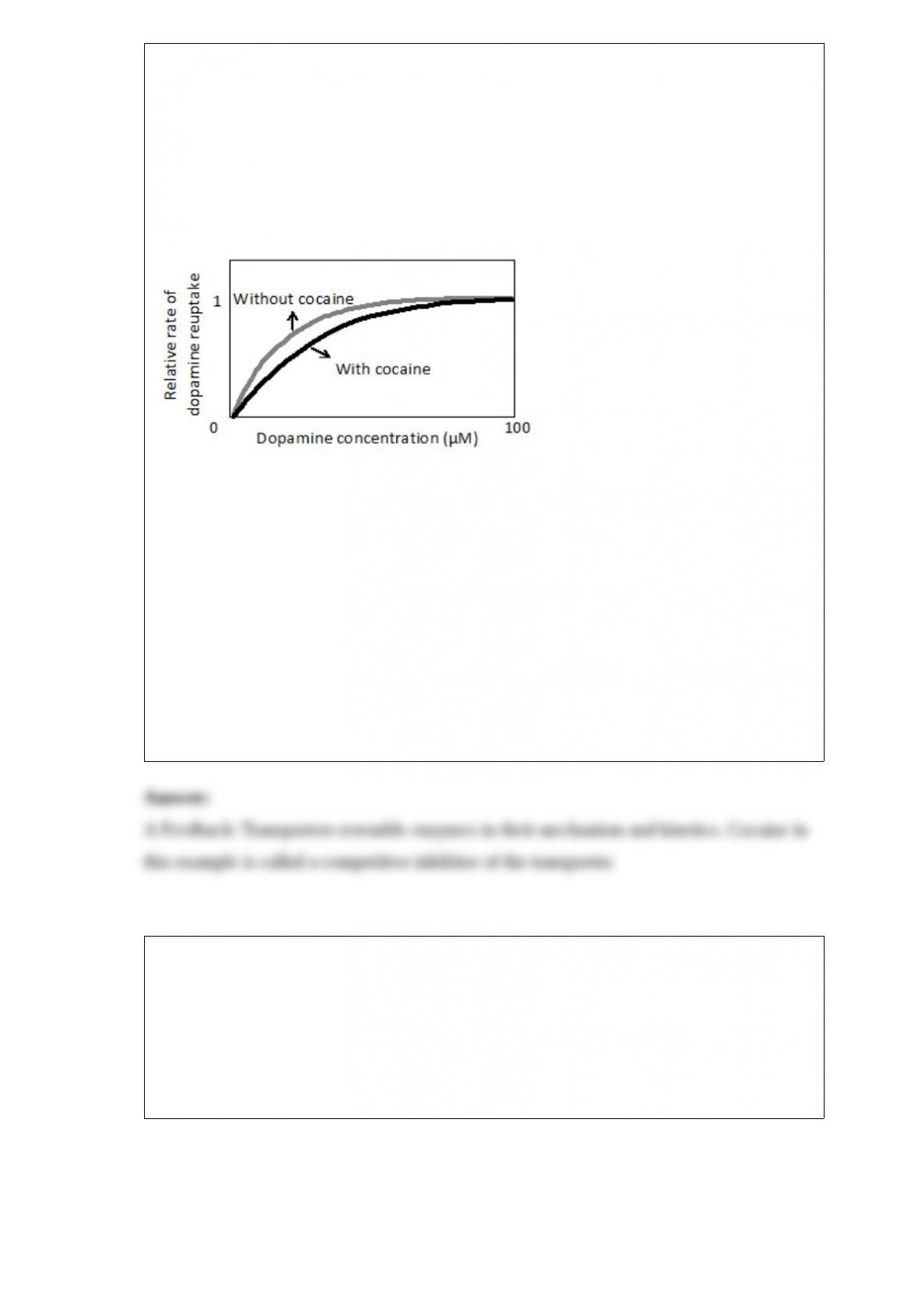
After release into the synaptic cleft, the neurotransmitter dopamine is actively taken up
by the cells via specific dopamine transporters. The drug cocaine interferes with this
process and is therefore called a reuptake inhibitor. The inhibition of the transporter at a
certain cocaine concentration is qualitatively represented in the following graph. Based
on this graph, which of the following describes the effect of cocaine on the kinetics of
dopamine reuptake by the transporter?
A.In the presence of cocaine, the maximal rate of transport (Vmax) is unaffected, but the
apparent affinity of the transporter for dopamine is reduced.
B.In the presence of cocaine, the maximal rate of transport (Vmax) is reduced, but the
apparent affinity of the transporter for dopamine is unaffected.
C.In the presence of cocaine, the maximal rate of transport (Vmax) is enhanced, but the
apparent affinity of the transporter for dopamine is unaffected.
D.In the presence of cocaine, both the maximal rate of transport (Vmax) and the
apparent affinity of the transporter for dopamine are enhanced.
E.In the presence of cocaine, both the maximal rate of transport (Vmax) and the
apparent affinity of the transporter for dopamine are unaffected, but the transporter is
nevertheless inhibited.
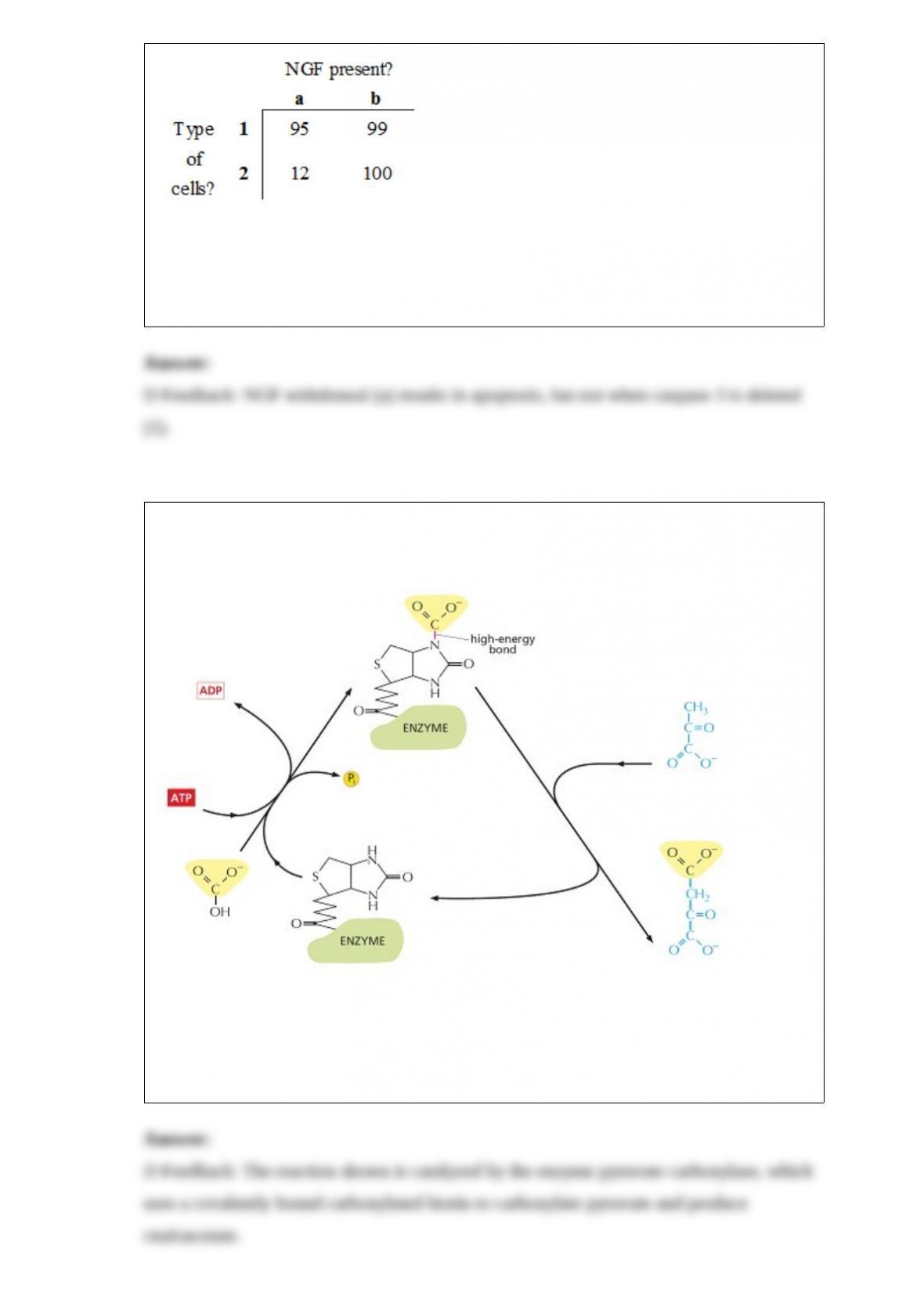
You grow neurons in culture in the presence or absence of nerve growth factor (NGF).
You perform this experiment using either wild-type neurons or neurons lacking
caspase-3, an effector protein required for programmed cell death by apoptosis in these
cells. After a day, you examine cell survival in the culture using a microscope. The
survival scores (percentage of cells surviving the treatment) are presented in the
following table. Which column (a or b) corresponds to the experiment in the presence
of NGF? Which row (1 or 2) corresponds to the experiment using wild-type cells?
A.a; 1
B.a; 2
C.b; 1
D.b; 2
What is the reaction performed on the molecule labeled as substrate in the following
diagram? What is the name of the activated carrier?
A.This is a methylation reaction and the activated carrier is ATP.
B.This is a methylation reaction and the activated carrier is S-adenosylmethionine.
C.This is a carboxylation reaction and the activated carrier is ATP.
D.This is a carboxylation reaction and the activated carrier is carboxylated biotin.
E.This is an acetylation reaction and the activated carrier is acetyl CoA.
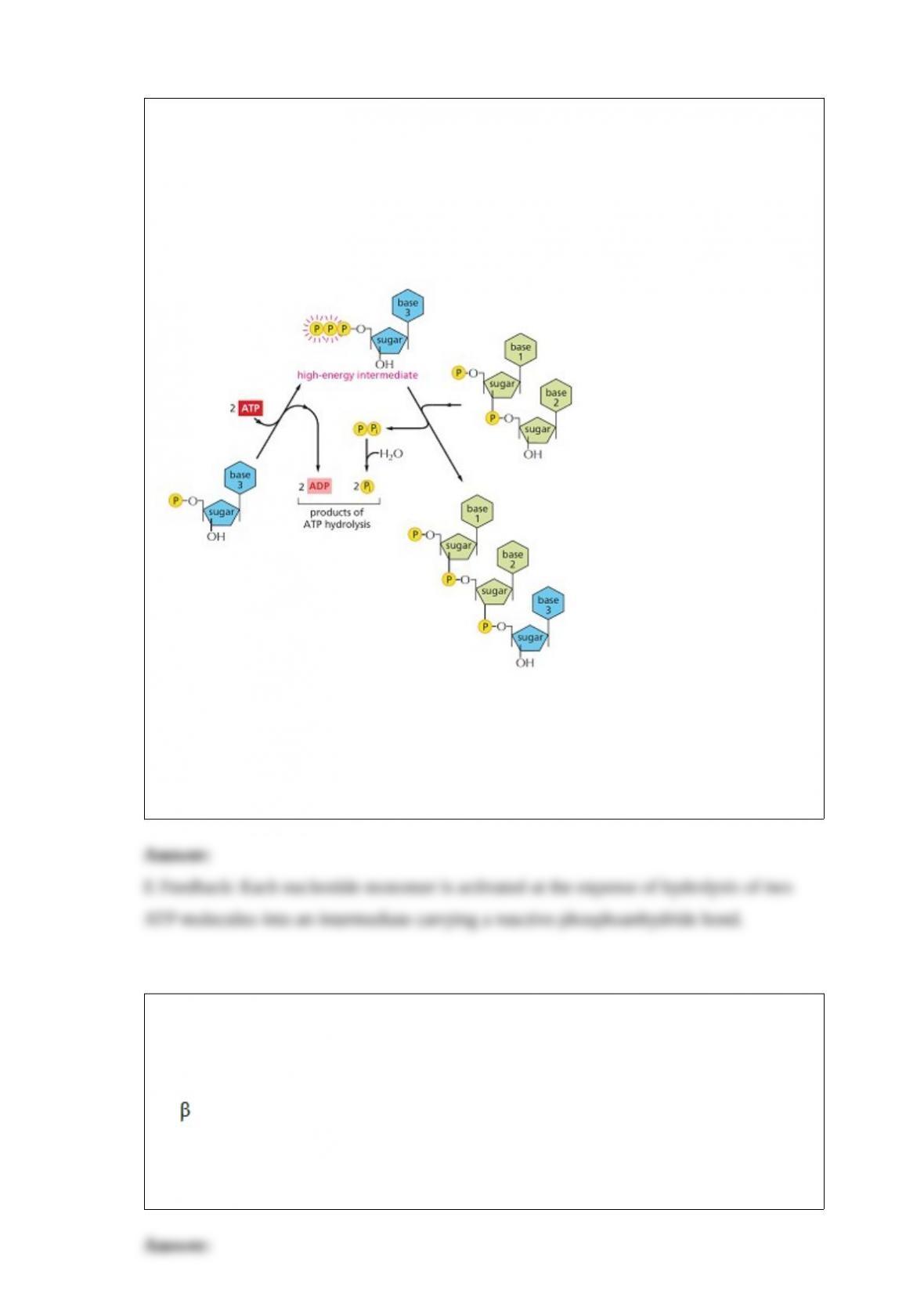
Macromolecules in the cell can be made from their monomers using one of two
polymerization schemes. One is called head polymerization, in which the reactive bond
required for polymerization is carried on the end of the growing polymer. In contrast, in
tail polymerization, the reactive bond is carried by each monomer for its own
incorporation. In the figure, indicate the polymerization scheme and the type of
macromolecule.
A.Head polymerization of a protein
B.Tail polymerization of a protein
C.Head polymerization of a polysaccharide
D.Head polymerization of a nucleic acid
E.Tail polymerization of a nucleic acid
If some cells in an adult mammal are lost, they are lost forever and cannot be replaced.
Which of the following cell types have such a limitation? Your answer would be a
string composed of a subset of the letters A to E in alphabetical order, e.g. AE.
(A)Photoreceptive epithelium of the retina
(B) Cells of pancreatic islets
(C)Hepatocytes of the liver
(D)Auditory epithelium of the inner ear
(E)Olfactory epithelium of the nose
Proteins of the Src family (e.g. Src, Fyn, Lck, and Hck) have important roles in several
signaling pathways in mammals. A typical Src family protein …
A.is a cytosolic tyrosine kinase.
B.contains SH2 and SH3 domains in addition to a kinase domain.
C.has covalently attached lipid chains.
D.is located on the cytoplasmic side of the plasma membrane.
E.All of the above.
Sort the following phases in the order that they take place in neural development in
vertebrates. Your answer would be a four-letter string composed of letters A to D only,
e.g. DACB.
(A)Neurons are assigned specific characters according to the place and time of their
birth.
(B)Neurons form synapses with other neurons or with muscle cells.
(C)Synaptic connections are refined and adjusted.
(D)Neurons extend axons and dendrites toward their target cells.
A cell has been infected with an RNA virus. As a consequence, it may …
A.reduce the expression of its surface class I MHC molecules.
B.secrete type I interferons such as interferon- .
C.shut down most protein translation and destroy most of its RNA.
D.be induced to die by apoptosis.
E.All of the above.
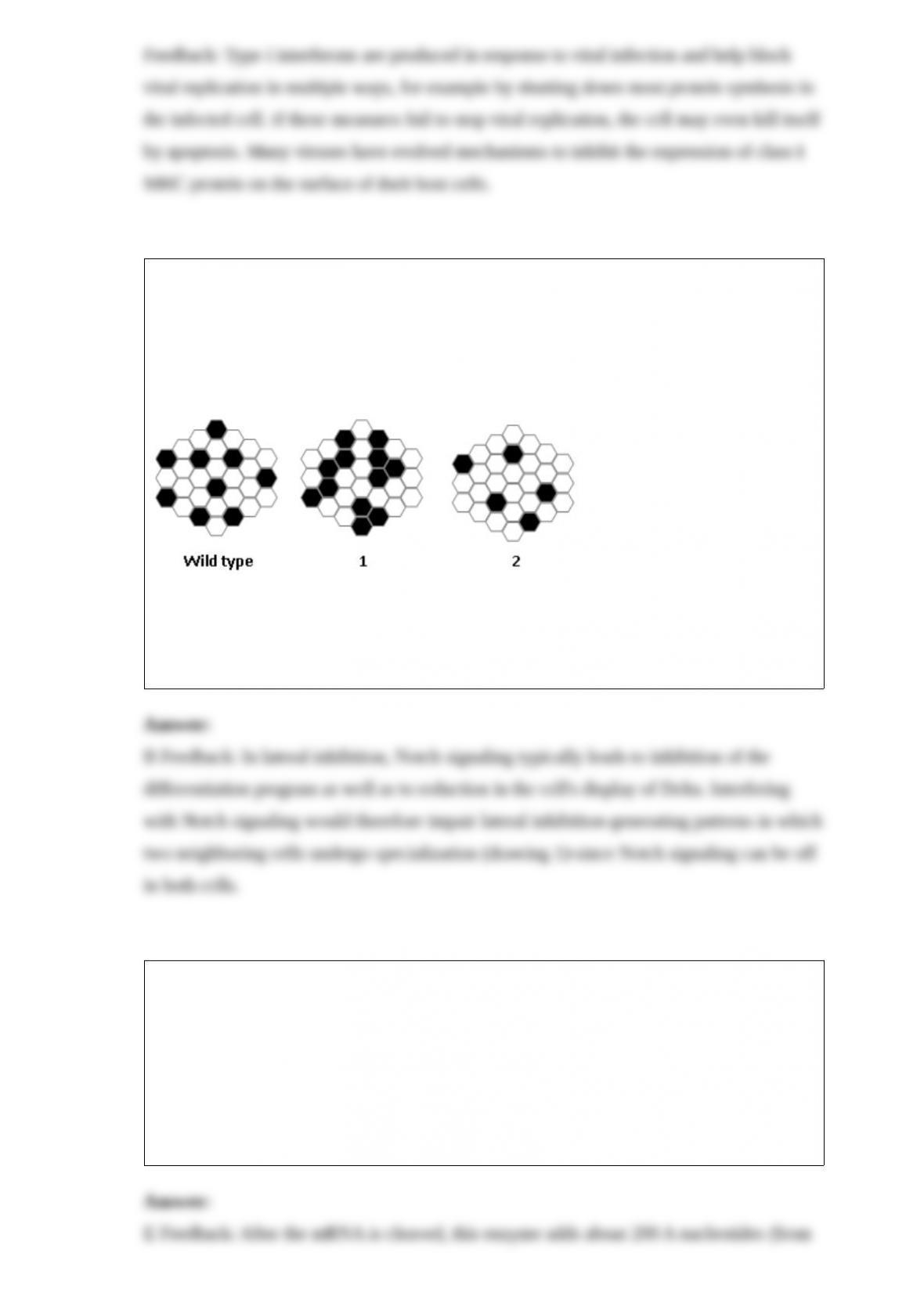
The result of Notch-mediated competitive lateral inhibition in a patch of wild-type cells
is depicted on the left in the following schematic drawing, in which the black cells have
become specialized. Consider a genetic mutation that interferes with intracellular Notch
signaling in such a way that Notch can no longer regulate Delta effectively. Which
drawing (1 or 2) better represents the outcome with cells bearing this mutation? Do the
specialized cells (black hexagons) have active or inactive Notch at their surface?
A.Drawing 1; active Notch
B.Drawing 1; inactive Notch
C.Drawing 2; active Notch
D.Drawing 2; inactive Notch
The enzyme poly-A polymerase is responsible for adding 3′ poly-A tails to eukaryotic
mRNAs. This enzyme___
A.cuts the mRNA after recognition of the cleavage/polyadenylation signal by CstF and
CPSF proteins.
B.polymerizes the tail using an RNA template that is part of the enzyme.
C.is extremely processive.
D.normally adds about 1000 A nucleotides to the mRNA.
E.uses ATP as a substrate.
The enzyme lysozyme catalyzes the cutting of a polysaccharide chain through
hydrolysis. Which of the following is NOT true regarding the catalytic cycle for this
enzyme?
A.It involves acid catalysis.
B.It involves base catalysis.
C.It involves strain catalysis.
D.It involves covalent catalysis.
E.It involves metal ion catalysis.
Glycolipids such as gangliosides ___
A.may contain oligosaccharide chains with negatively charged residues.
B.are found to constitute about 10% of the total lipid mass in the plasma membrane of
neurons.
C.are found in the extracellular leaflet (facing away from the cytosol) in the cellular
membranes.
D.affect the electrical environment of the membrane.
E.All of the above
Which of the following is true regarding a fatty acid molecule in water?
A.It is positively charged at physiological pH, but can become neutral when the pH is
high enough.
B.It is positively charged at physiological pH, but can become neutral when the pH is
low enough.
C.It is negatively charged at physiological pH, but can become neutral when the pH is
high enough.
D.It is negatively charged at physiological pH, but can become neutral when the pH is
low enough.
E.It is not charged at physiological pH.
In the following schematic drawing of an abundant plasma membrane
phosphoglyceride, which part is positively charged?
A.A
B.B
C.C
D.D
E.E
Polyclonal antibodies can be generated against almost any protein of interest by
repeatedly injecting the purified protein into an animal (such as a rabbit) and collecting
blood serum once the animal’s immune system has produced antibodies against the
protein. In this process, the antigen is not injected alone; it is co-injected with a
so-called adjuvant to “trick” the immune system. Additionally, the adjuvant used in the
first injection is often different from that used in later “booster” injections. Freund’s
complete adjuvant (C) contains a water-oil emulsion plus heat-killed Mycobacteria. In
contrast, Freund’s incomplete adjuvant (I) lacks the Mycobacteria component. Which
adjuvant (C or I) do you think is used in the booster injections? Which immune
response-primary (P) or secondary (S)-is triggered after the first purified protein
injection? Activation of which antigen-specific immune cells-memory (M) or effector
(E)-is chiefly responsible for the “boosting” effect of the later injections? Write down
your answer as a three-letter string, e.g. ISM.
Many macromolecular complexes in the cell contain scaffold proteins. What do these
proteins do that benefits the cell?
A.They can enhance the rate of critical cellular reactions.
B.They can hold the many subunits of a large complex together.
C.They can confine and concentrate a specific set of interacting proteins to a particular
cellular location.
D.They can provide a large macromolecular complex with either flexibility or rigidity.
E.All of the above.
What are the typical consequences of mutations in keratins and their associated
proteins?
A.Neurodegeneration as a result of interference with normal axonal transport.
B.Muscle development defects as a result of sarcomere disorganization.
C.Skeletal and cardiac abnormalities as a result of a weakened nuclear envelope.
D.Cornea disorders as a result of cell rupture from mechanical trauma.
E.Developmental defects as a result of abnormal signaling related to the primary cilia.
For which of the following ions is the intracellular concentration typically higher than
the extracellular concentration?
A.Sodium
B.Calcium
C.Magnesium
D.Potassium
E.Chloride
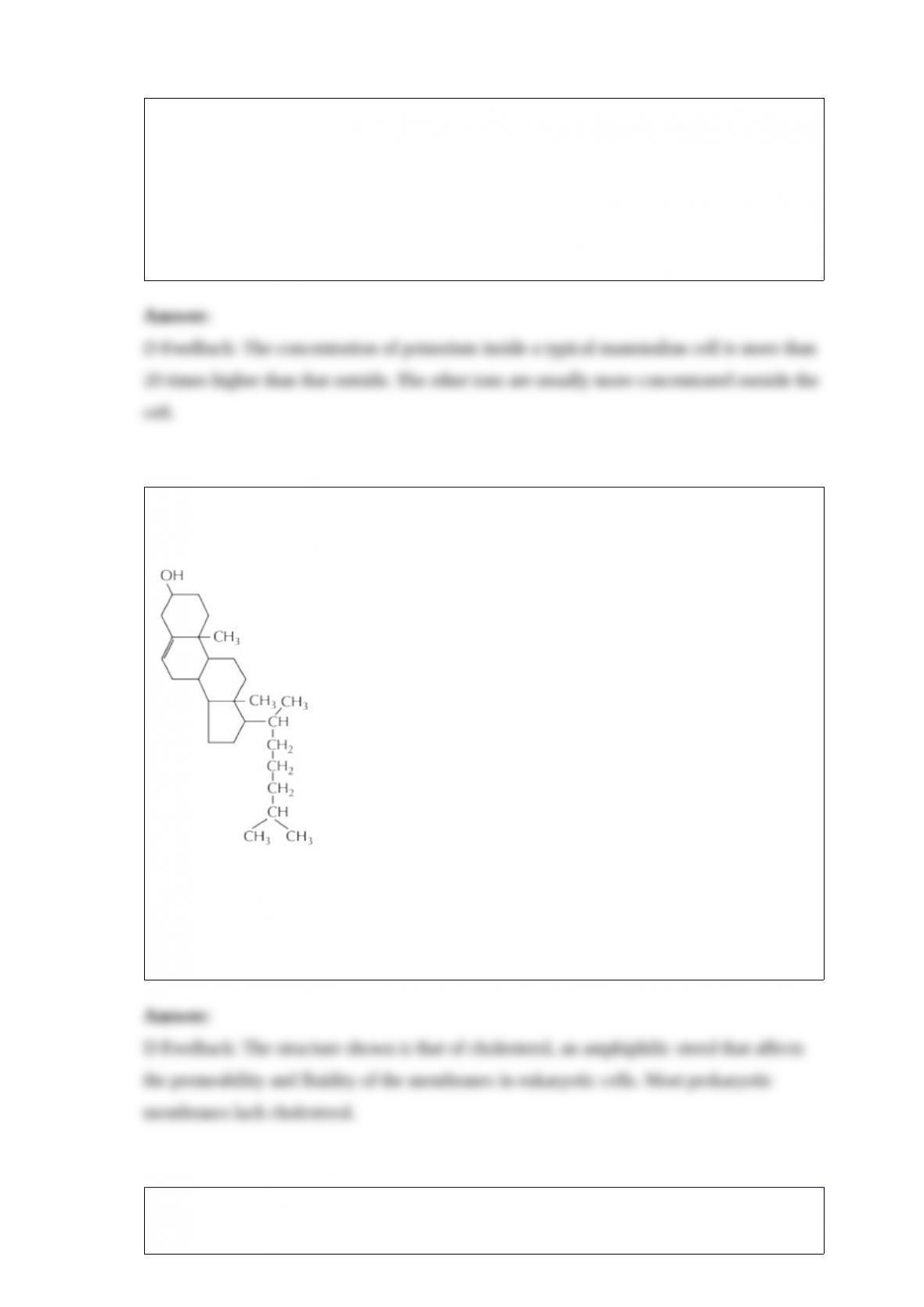
Which of the following is NOT correct regarding the molecule whose structural formula
is shown below?
A.It is an amphiphilic molecule.
B.It is a sterol.
C.It makes the membrane less permeable to small hydrophilic molecules.
D.It is found in membranes of virtually all living cells.
E.It affects the fluidity of the lipid bilayer.
Tubulin labeled with caged fluorescein can be introduced into dividing cells by
microinjection. Various small regions in the mitotic spindle (made up of tubulin
subunits) are briefly irradiated with laser light that uncages the fluorescent tubulin. Five
minutes after irradiation, the highest spindle fluorescence is observed when the
irradiated region is close to the chromosomes near the cell equator, and the lowest
fluorescence is observed when regions near the spindle poles are irradiated. Based on
this observation, do you think tubulin subunits are incorporated into the spindle mostly
near the poles (P) or near the equator (E)? Write down P or E as your answer.
Indicate whether each of the following descriptions better applies to COPI- (1), COPII-
(2), or clathrin- (3) coated vesicles. Your answer would be a four-digit number
composed of digits 1 to 3 only, e.g. 132
( )They mediate transport from the ER to the cis Golgi network.
( )Their coat protein forms a three-legged structure called a triskelion.
( )They are pinched off from their donor compartment by a dynamin collar.
( )They are involved in retrograde transport in the Golgi apparatus.
Indicate whether each of the following descriptions better applies to egg-polarity genes
(E), gap genes (G), pair-rule genes (P), or segment-polarity genes (S). Your answer
would be a four-letter string composed of letters E, G, P, and S only, e.g. SSGG.
( )Mutations in these genes show a maternal effect.
( )Mutations in these genes leave the embryo with only half the number of normal
segments.
( )Mutations in these genes produce a normal number of segments but with part of each
segment replaced by a mirror-image duplicate of other parts of the segment.
( )Mutations in these genes can eliminate one or two groups of adjacent segments
altogether.
Rab5 and Rab7 constitute a Rab cascade in the process of endosome maturation. One of
the Rab5 effectors is a Rab7-GEF, while one of the Rab7 effectors is a Rab5-GAP.
Which of these proteins would you expect to find in early endosomes? Write down
Rab5 or Rab7 as your answer.
Consider two receptors, one inhibitory and one activating, on the surface of natural
killer (NK) cells: KIR receptors that interact with certain class I MHC proteins, and
special Fc receptors that recognize the tail region of IgG antibodies. When NK cells are
incubated with an immortalized B cell line derived by infection of human B cells with
Epstein-Barr Virus, the B cells are killed by NK cells. Normal B cells, in contrast, are
not efficiently killed by NK cells. In each of the following scenarios, indicate whether
the described changes are expected to enhance (E) or suppress (S) the cytotoxicity
(killing activity) of the NK cells in this system. Your answer would be a four-letter
string composed of letters E and S only, e.g. SEEE.
( )The cell line is transformed with human class I MHC genes, and the genes are
expressed.
( )An anti-CD23 IgG antibody is added to the cells. (CD23 is a known marker on the
surface of the immortalized B cells.)
( )The cells are treated with stibogluconate, an inhibitor of KIR receptor signaling.
( )Type I interferons are added to the cells.
Indicate whether each of the following organs or tissues arises from ectoderm (C),
mesoderm (M), or endoderm (N). Your answer would be a four-letter string composed
of letters C, M, and N only, e.g. MMCC.
( )Blood
( )Liver and pancreas
( )Brain
( )Bone and cartilage
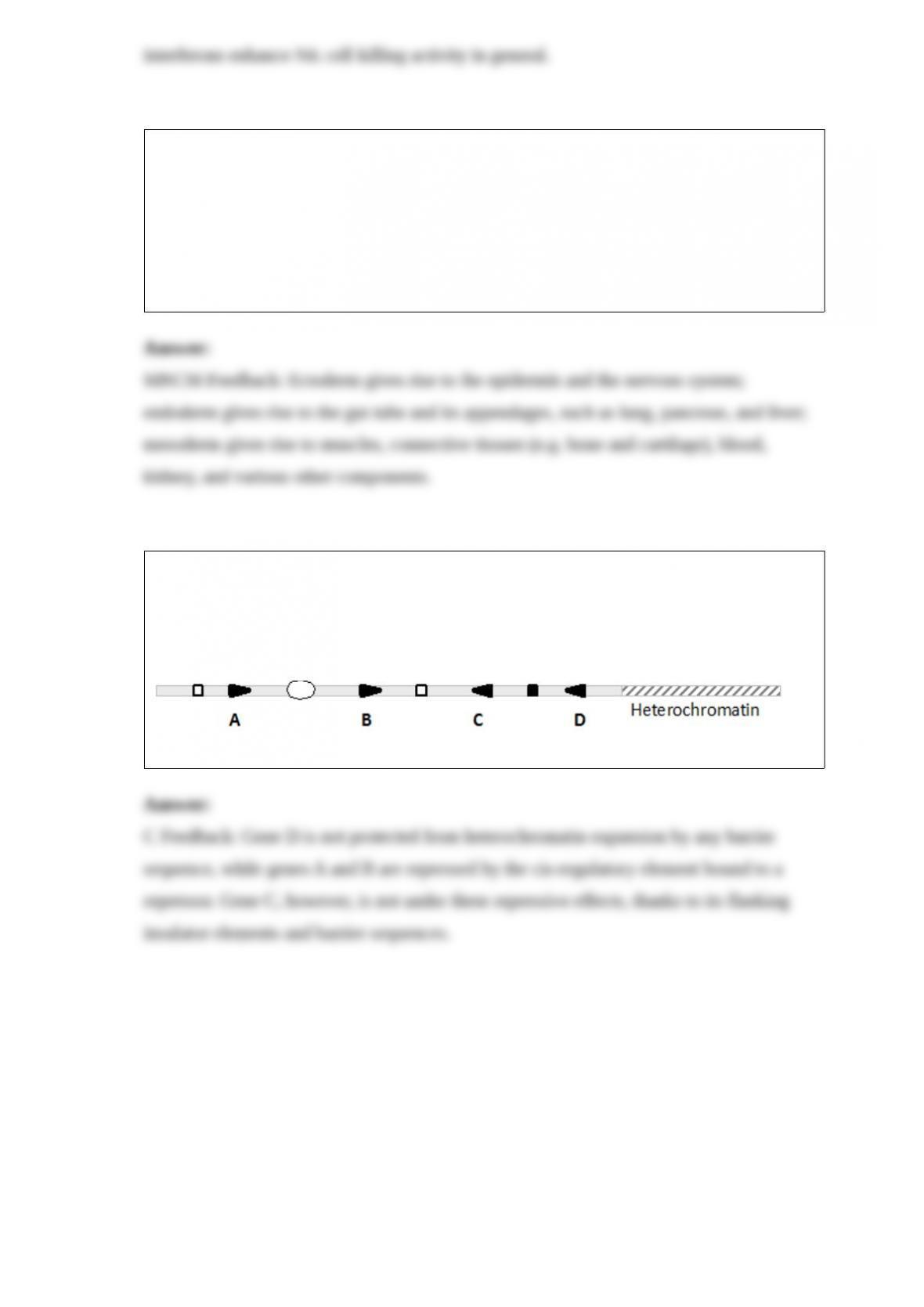
In the following schematic diagram of a region of a mammalian genome, genes A to D
(triangles) are located in between a number of insulator elements (white squares) and
barrier sequences (black squares). If the cis-regulatory sequence (oval) is bound by an
abundant repressor protein, which gene would you expect to be expressed at a higher
rate in this cell?
.