
Which of the following statements is a correct distinction between autotrophs and
heterotrophs?
A) Cellular respiration is unique to heterotrophs.
B) Only heterotrophs have mitochondria.
C) Autotrophs, but not heterotrophs, can nourish themselves beginning with CO2 and
other nutrients that are inorganic.
D) Only heterotrophs require oxygen.
The extracellular matrix is thought to participate in the regulation of animal cell
behavior by communicating information from the outside to the inside of the cell via
which of the following?
A) gap junctions
B) the nucleus
C) DNA and RNA
D) integrins
Against which hard structure do the circular and longitudinal muscles of annelids work?
A) cuticle

B) shell
C) endoskeleton
D) hydrostatic skeleton
Zoonotic disease _____.
A) is caused by suborganismal pathogens such as viruses, viroids, and prions only
B) is caused by pathogens that are transferred from other animals to humans by direct
contact or by means of a vector
C) can only be spread from animals to humans through direct contact
D) can only be transferred from animals to humans by means of an intermediate host
Fossils of the earliest tetrapods should _____.
A) show evidence of internal fertilization
B) show evidence of having produced shelled eggs
C) indicate limited adaptation to life on land
D) feature the earliest indications of the appearance of jaws

At a specific area of a chromosome, the sequence of nucleotides below is present where
the chain opens to form a replication fork:
C C T A G G C T G C A A T C C
An RNA primer is formed starting at the underlined T (T) of the template. Which of the
following represents the primer sequence?
A) G C C T A G G
B) A C G T T A G G
C) A C G U U A G G
D) G C C U A G G
For water fleas of the genus Daphnia, switching from a pattern of asexual reproduction
to sexual reproduction coincides with _____.
A) environmental conditions becoming more favorable for offspring
B) greater abundance of food resources for offspring
C) periods of temperature or food stresses on adults
D) exhaustion of an individual’s supply of eggs

Protein kinase is an enzyme that _____.
A) functions as a second messenger molecule
B) serves as a receptor for various signal molecules
C) activates or inactivates other proteins by adding a phosphate group to them
D) produces second messenger molecules
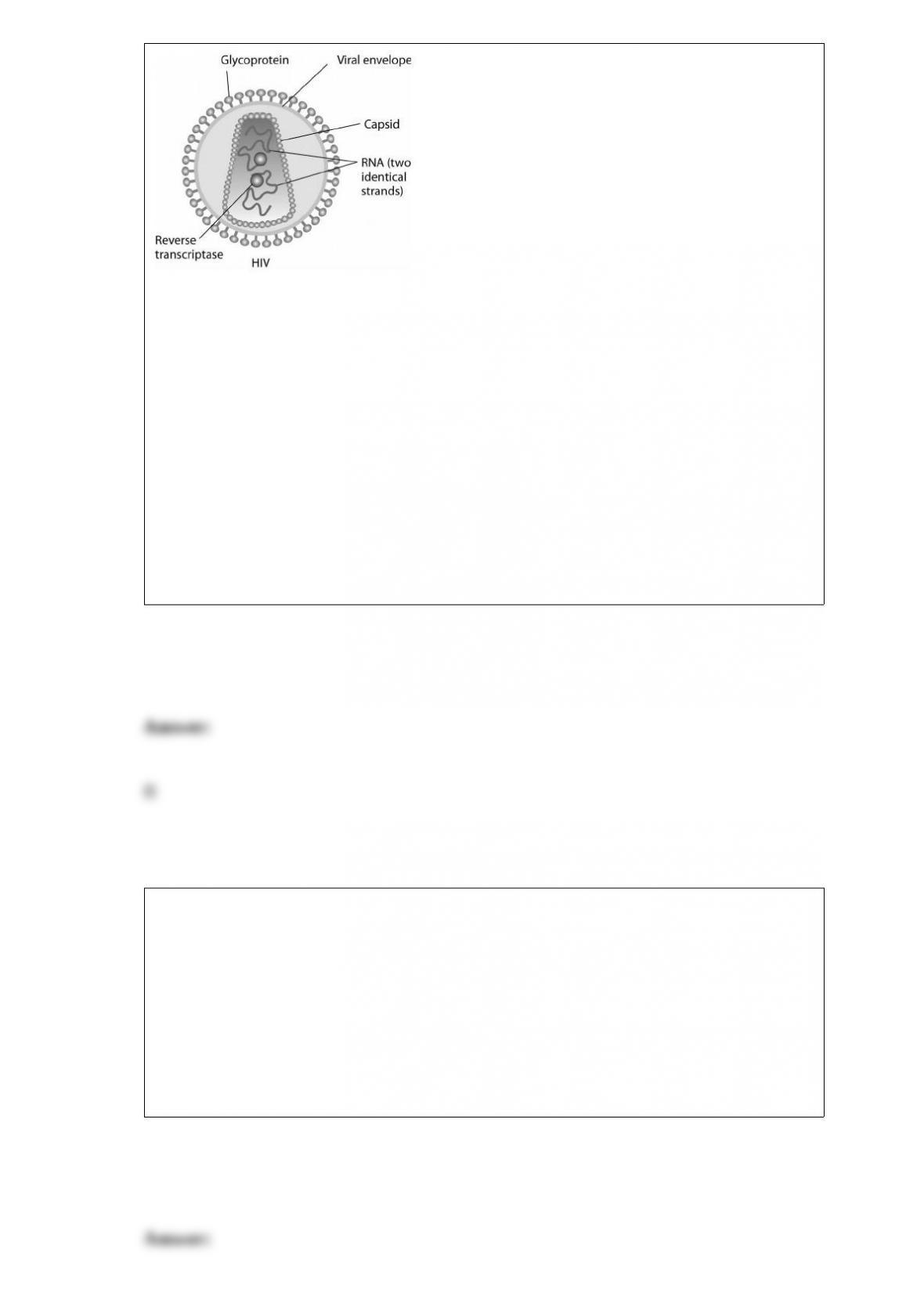
Use the paragraph and accompanying figure to answer the following questions.
Human immunodeficiency virus (HIV) infects cells that have both CD4 and CCR5 cell
surface molecules. The viral nucleic acid molecules are enclosed in a protein capsid,
and the protein capsid is itself contained inside an envelope consisting of a lipid bilayer
membrane and viral glycoproteins. One hypothesis for viral entry into cells is that
binding of HIV membrane glycoproteins to CD4 and CCR5 initiates fusion of the HIV
membrane with the plasma membrane, releasing the viral capsid into the cytoplasm. An
alternative hypothesis is that HIV gains entry into the cell via receptor-mediated
endocytosis, and membrane fusion occurs in the endocytotic vesicle. To test these
alternative hypotheses for HIV entry, researchers labeled the lipids on the HIV
membrane with a red fluorescent dye.
In an HIV-infected cell producing HIV virus particles, the viral glycoprotein is
expressed on the plasma membrane. How do the viral glycoproteins get to the plasma
membrane? They are synthesized _____.
A) on ribosomes on the plasma membrane
B) by ribosomes in the rough ER and arrive at the plasma membrane in the membrane
of secretory vesicles
C) on free cytoplasmic ribosomes and then inserted into the plasma membrane
D) by ribosomes in the rough ER, secreted from the cell, and inserted into the plasma
membrane from the outside
Carbohydrates and fats are considered high-energy foods because they _____.
A) have a lot of oxygen atoms.
B) have no nitrogen in their makeup.
C) have a lot of electrons associated with hydrogen.
D) are easily reduced.
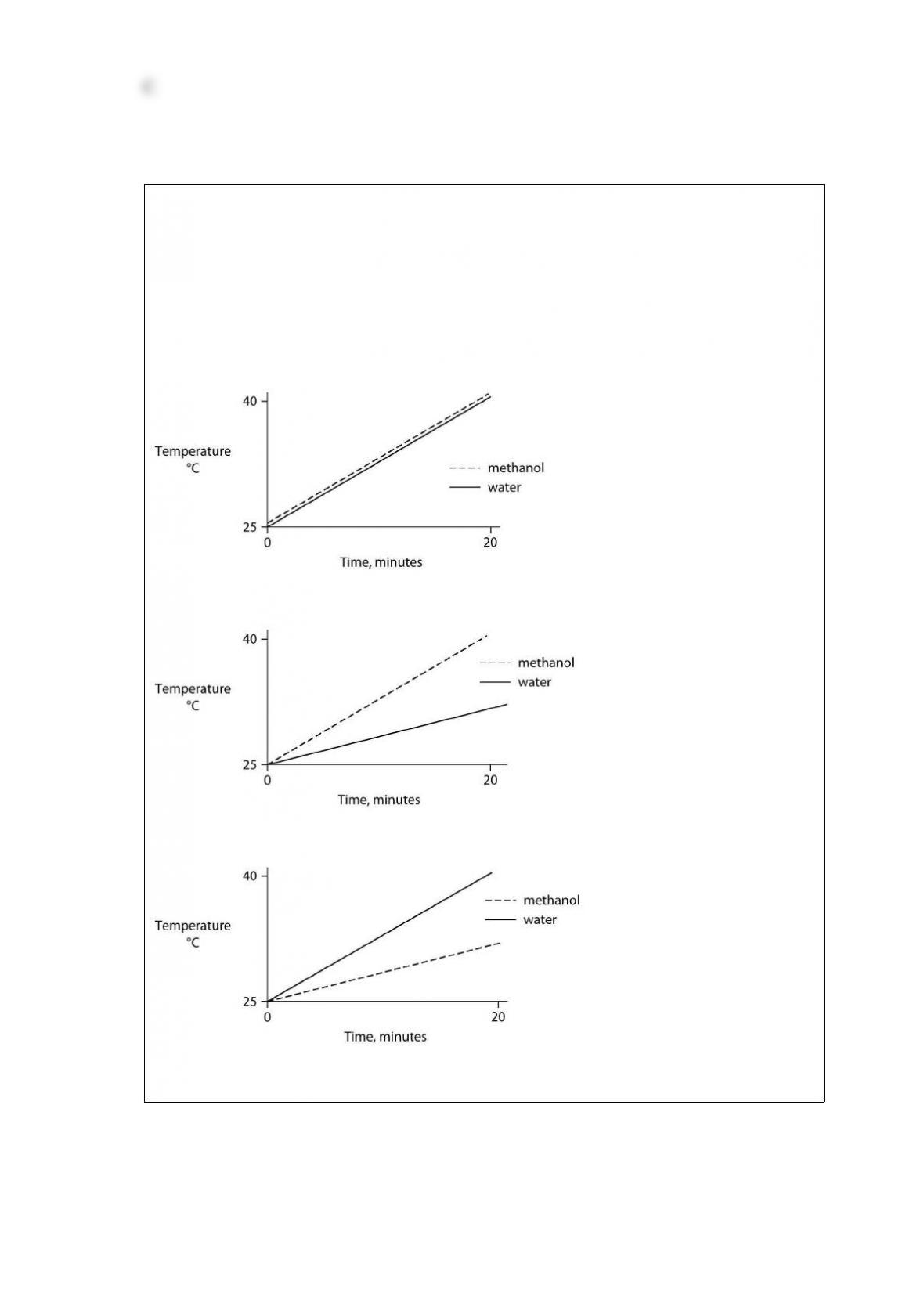
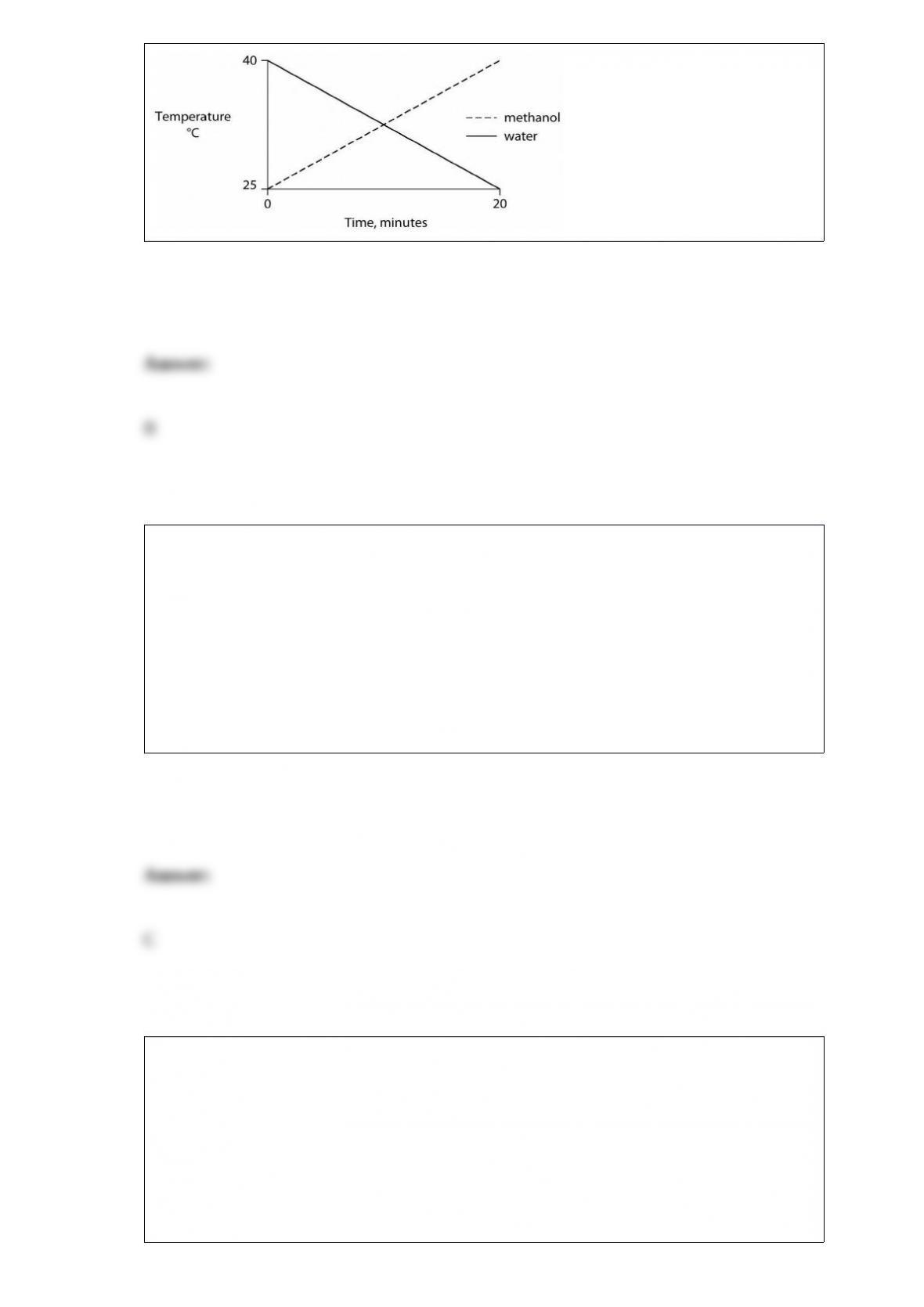
Identical heat lamps are arranged to shine on two identical containers, one containing
water and one methanol (wood alcohol), so that each liquid absorbs the same amount of
energy minute by minute. The covalent bonds of methanol molecules are nonpolar, so
there are no hydrogen bonds among methanol molecules. Which of the following
graphs correctly describes what will happen to the temperature of the water and the
methanol?
A)
B)
C)
D)
Naturally acquired passive immunity can result from the _____.
A) injection of vaccine
B) ingestion of interferon
C) placental transfer of antibodies
D) absorption of pathogens through mucous membranes
In a tide pool, fifteen species of invertebrates were reduced to eight after one species
was removed. The species removed was likely a(n) _____.
A) pathogen
B) keystone species
C) herbivore

D) resource partitioner
Structures as different as human arms, bat wings, and dolphin flippers contain many of
the same bones, which develop from similar embryonic tissues. These structural
similarities are an example of _____.
A) homology
B) convergent evolution
C) the evolution of common structure as a result of common function
D) the evolution of similar appearance as a result of common function
Which of the following would be LEAST likely in the fossil record?
A) burrowing species
B) marine-dwelling species
C) marsh-dwelling species
D) desert-dwelling species

Spherocytosis is a human blood disorder associated with a defective cytoskeletal
protein in the red blood cells (RBCs). What do you suspect is the consequence of such a
defect?
A) abnormally shaped RBCs
B) an insufficient supply of ATP in the RBCs
C) an insufficient supply of oxygen-transporting proteins in the RBCs
D) adherence of RBCs to blood vessel walls, causing plaque formation
Among the following choices, which organism likely has the highest systolic pressure?
A) mouse
B) human
C) hippopotamus
D) giraffe

Gene S controls the sharpness of spines in a type of cactus. Cactuses with the dominant
allele, S, have sharp spines, whereas homozygous recessive ss cactuses have dull
spines. At the same time, a second gene, N, determines whether or not cactuses have
spines. Homozygous recessive nn cactuses have no spines at all. A cross between a
true-breeding sharp-spined cactus and a spineless cactus would produce_____.
A) all sharp-spined progeny
B) 50% sharp-spined, 50% dull-spined progeny
C) 25% sharp-spined, 50% dull-spined, 25% spineless progeny
D) It is impossible to determine the phenotypes of the progeny.
Of the following anatomical structures, which is homologous to the bones in the wing
of a bird?
A) bones in the hind limb of a kangaroo
B) chitinous struts in the wing of a butterfly
C) bony rays in the tail fin of a flying fish
D) bones in the flipper of a whale

In the development of terrestrial biomes, which factor is most dependent on all the
others?
A) the species of colonizing animals
B) prevailing rainfall
C) mineral nutrient availability
D) soil structure
The application of scientific knowledge for some specific purpose is known as _____.
A) technology
B) deductive science
C) inductive science
D) pure science
Which of the following calculations require that you utilize the addition rule?
A) Calculate the probability of black offspring from the cross AaBb AaBb, where B is
the symbol for black.
B) Calculate the probability of children with both cystic fibrosis and polydactyly when

parents are each heterozygous for both genes.
C) Calculate the probability of each of four children having cystic fibrosis if the parents
are both heterozygous.
D) Calculate the probability of a child having either sickle-cell anemia or cystic fibrosis
if parents are each heterozygous for both.
Mitochondria are thought to be the descendants of certain alpha proteobacteria. They
are, however, no longer able to lead independent lives because most genes originally
present on their chromosomes have moved to the nuclear genome. Which phenomenon
accounts for the movement of these genes?
A) plasmolysis
B) conjugation
C) translation
D) horizontal gene transfer
When the beta cells of the pancreas release insulin into the blood, _____.
A) the skeletal muscles and the adipose cells take up glucose at a faster rate
B) the liver catabolizes glycogen
C) the alpha cells of the pancreas release glucose into the blood
D) the kidneys begin gluconeogenesis
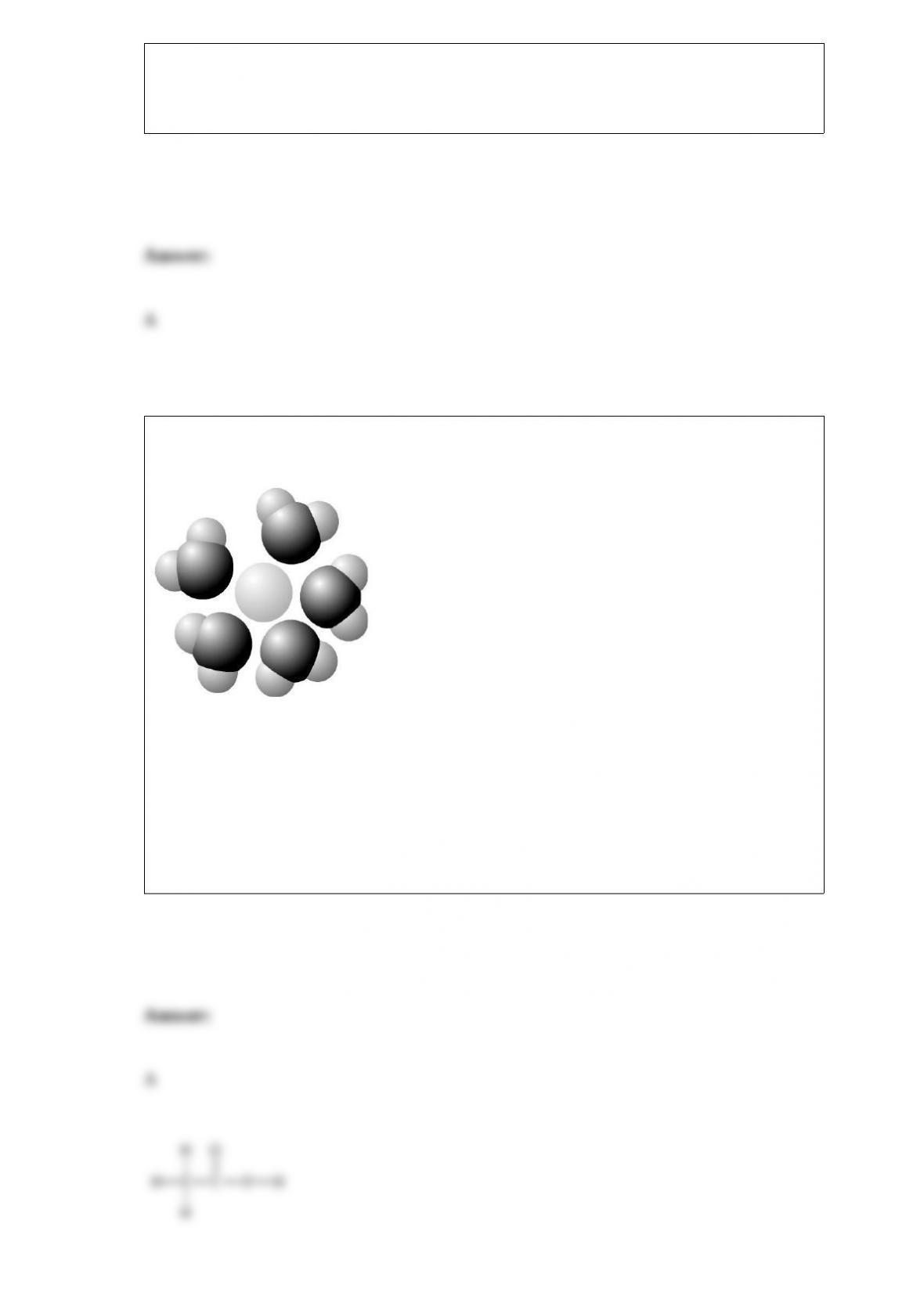
Based on your knowledge of the polarity of water molecules, the solute molecule
depicted here is most likely _____.
A) positively charged
B) negatively charged
C) without charge
D) nonpolar

When homologous chromosomes cross over, what occurs?
A) Two chromatids get tangled, resulting in one re-sequencing its DNA.
B) Two sister chromatids exchange identical pieces of DNA.
C) Corresponding segments of non-sister chromatids are exchanged.
D) Maternal alleles are “corrected” to be like paternal alleles and vice versa.
Portal blood vessels connect two capillary beds found in the _____.
A) hypothalamus and thalamus
B) anterior pituitary and posterior pituitary
C) hypothalamus and anterior pituitary
D) posterior pituitary and thyroid gland
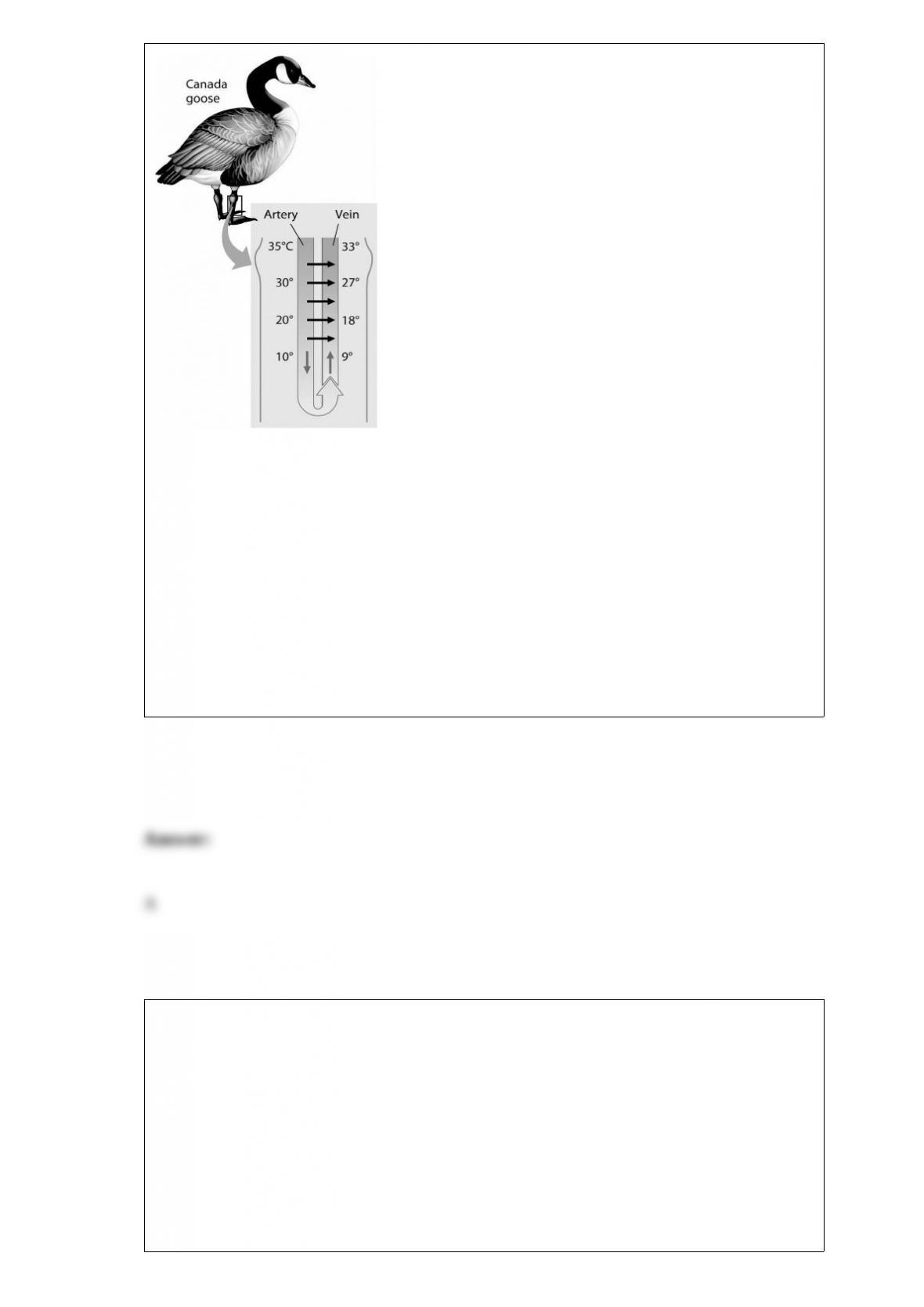
Examine the figure above. Near a goose’s abdomen, the countercurrent arrangement of
the arterial and venous blood vessels causes the _____.
A) temperature difference between the contents of the two sets of vessels to be
minimized
B) venous blood to be as cold near the abdomen as it is near the feet
C) blood in the feet to be as warm as the blood in the abdomen
D) loss of the maximum possible amount of heat to the environment
Most cnidarians are known to produce toxins. In fact, it has been claimed that one
particular species produces the most deadly of all toxins on the planet. What feature of
this group most likely evolved simultaneously with the evolution of these toxins?
A) the medusa body form
B) asexual reproduction
C) a slow-moving or sessile lifestyle in the adult

D) diploblastic design
Every ecosystem must have _____.
A) autotrophs and heterotrophs
B) producers and primary consumers
C) photosynthesizers
D) autotrophs
Consider the energy budgets for a human, an elephant, a penguin, a mouse, and a snake.
The _____ would have the highest total annual energy expenditure, and the _____
would have the highest energy expenditure per unit mass.
A) elephant; mouse
B) elephant; human
C) human; penguin
D) mouse; snake