
Darwin and Wallace were the first to propose _____.
A) that evolution occurs
B) a mechanism for how evolution occurs
C) that Earth is older than a few thousand years
D) natural selection as the mechanism of evolution
A disease that destroys the adrenal cortex should lead to an increase in the plasma levels
of _____.
A) glucocorticoid hormones
B) epinephrine
C) adrenocorticotropic hormone (ACTH)
D) acetylcholine
When a steroid hormone and a peptide hormone exert similar effects on a population of
target cells, then _____.
A) the steroid and peptide hormones must use the same biochemical mechanisms
B) the steroid and peptide hormones must bind to the same receptor protein

C) the steroid hormones affect the synthesis of effector proteins, whereas peptide
hormones activate effector proteins already present in the cell
D) the steroid hormones affect the activity of certain proteins within the cell, whereas
peptide hormones directly affect the processing of mRNA
Which of the following best describes “game theory” as it applies to animal behavior?
A) The fitness of a particular behavior is influenced by other behavioral phenotypes in a
population.
B) The total of all of the behavioral displays, both male and female, is related to
courtship.
C) The play behavior performed by juveniles allows them to perfect adult behaviors
that are needed for survival, such as hunting, courtship, and so on.
D) The evolutionary “game” is played between predator and prey. The prey evolve a
behavior in response to the nature of the predatory behavior.
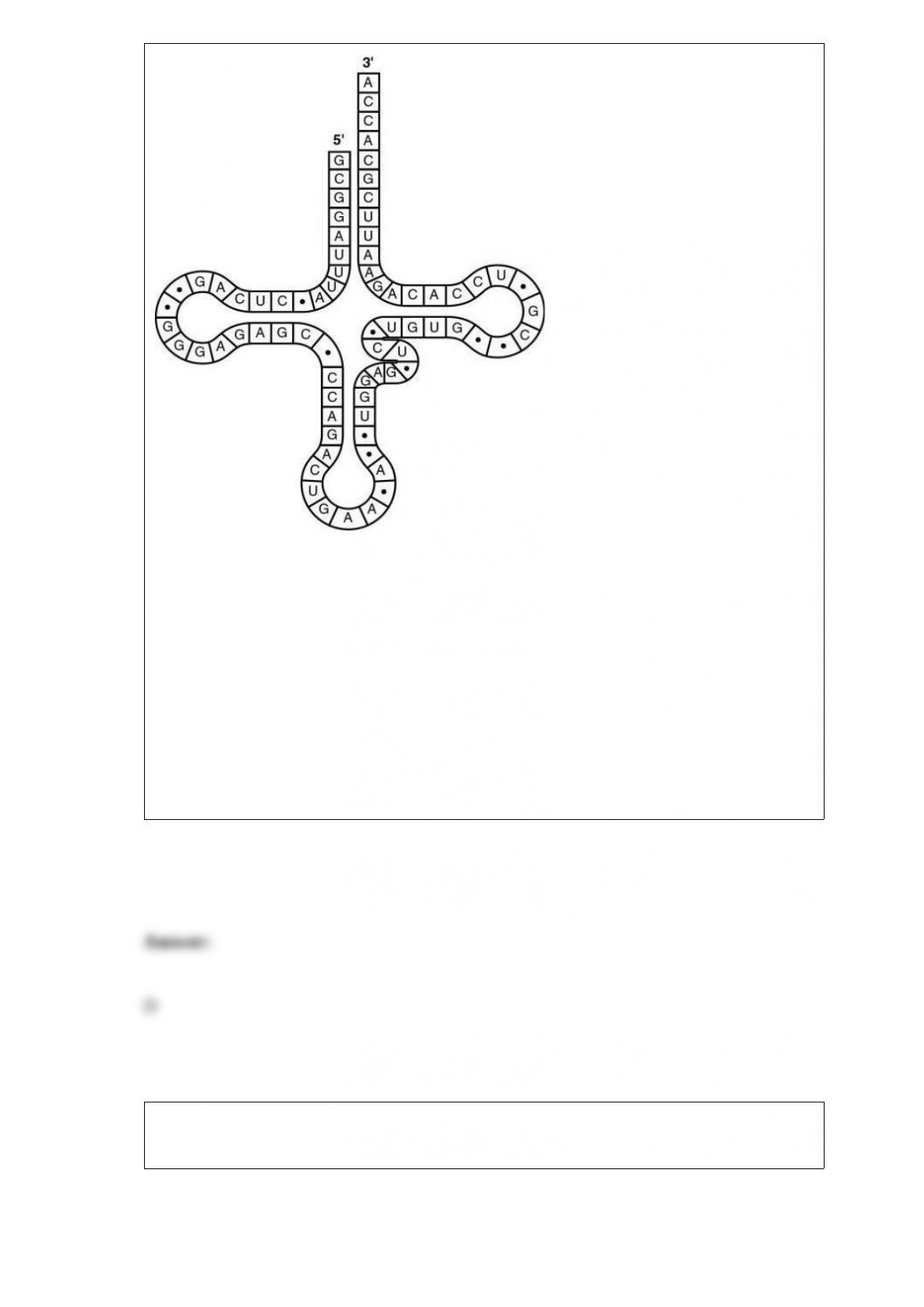
The figure above represents tRNA that recognizes and binds a particular amino acid (in
this instance, phenylalanine). Which codon on the mRNA strand codes for this amino
acid?
A) UGG
B) GUG
C) GUA
D) UUC
Refer to the following figure, which diagrams the reproductive anatomy of the human
male, to answer the question(s) below.
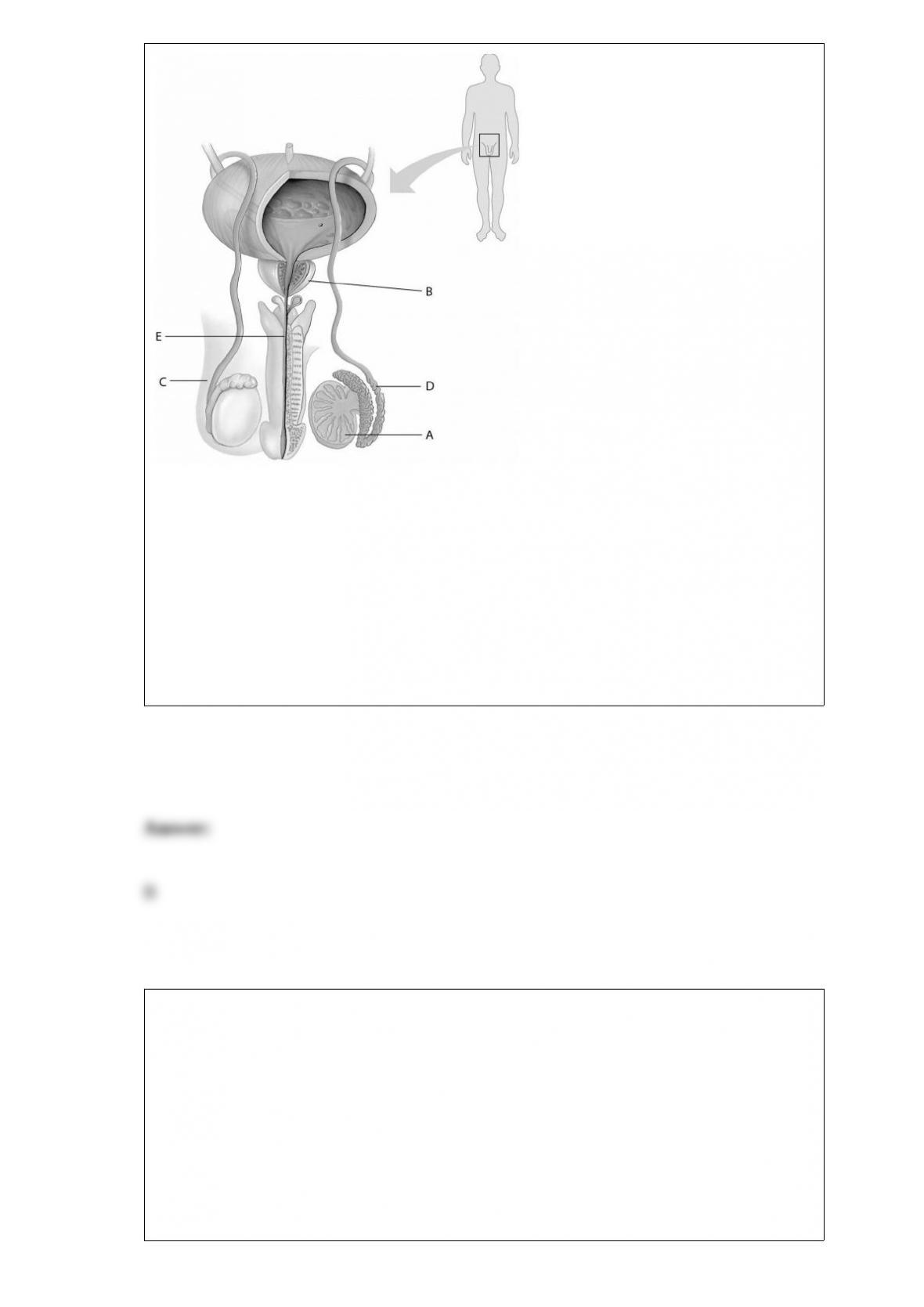
In the above figure, which letter points to the prostate gland?
A) A
B) B
C) C
D) D
A certain cell type has existed in the blood and tissue of its vertebrate host’s immune
system for over twenty years. One day, it recognizes a newly arrived antigen and binds
to it, subsequently triggering a secondary immune response in the body. Which of the
following cell types most accurately describes this cell?
A) plasma cell
B) thyroid cell
C) memory cell

D) macrophage
A signal peptide _____.
A) directs an mRNA molecule into the cisternal space of the ER
B) terminates translation of messenger RNA
C) helps target a protein to the ER
D) signals the initiation of transcription
A primary response by the Leydig cells in the testes to the presence of luteinizing
hormone is an increase in the synthesis and secretion of _____.
A) inhibin
B) testosterone
C) oxytocin
D) progesterone

One predicted aspect of climate change is that climates, including precipitation and
temperature, over most of the Earth will become more variable. Which of the following
is a good crop genetic engineering strategy if this is true?
A) Only plant crops that are genetically engineered.
B) Genetically engineer most crops to withstand very long droughts.
C) Genetically engineer several genotypes within single crop types.
D) Genetically engineer the fastest growing crops possible.
What is the overall charge on the cytoplamsic side of a plant cell plasma membrane?
A) positive
B) negative
C) neutral
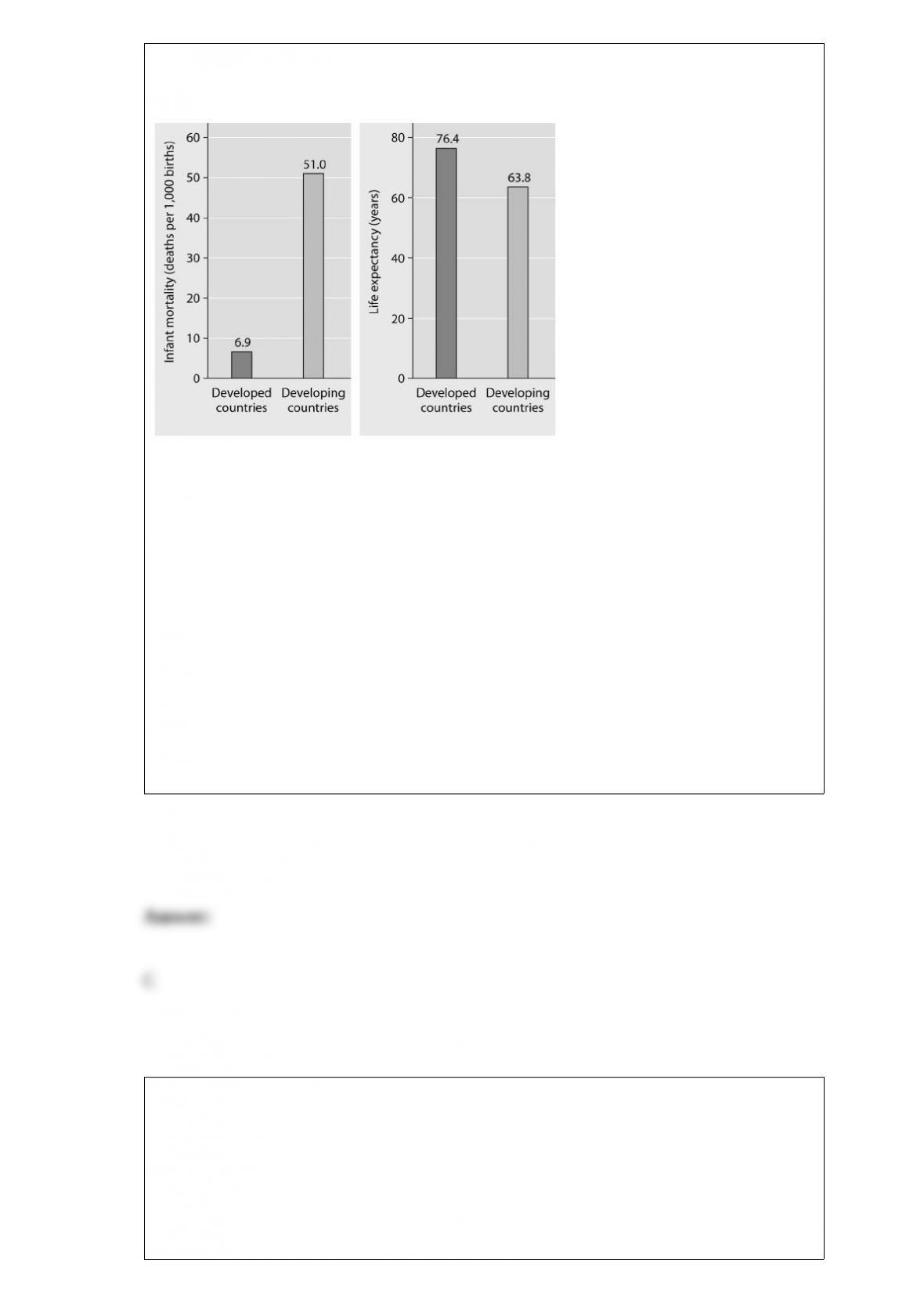
Infant mortality and life expectancy at birth in developed
and developing countries (data as of 2005).
What is a logical conclusion that can be drawn from the graphs above? Developed
countries have _____.
A) lower infant mortality rates and lower life expectancy than developing countries
B) higher infant mortality rates and lower life expectancy than developing countries
C) lower infant mortality rates and higher life expectancy than developing countries
D) higher infant mortality rates and higher life expectancy than developing countries
Paulinella chromatophora is one of the few cercozoans that is autotrophic, carrying out
aerobic photosynthesis with its two elongated “chromatophores.” The chromatophores
are contained within vesicles of the host cell, and each is derived from a
cyanobacterium, though not the same type of cyanobacterium that gave rise to the
chloroplasts of algae and plants.
P. chromatophora secretes around itself a test, or case, of plates made of silica. Which

of the following is another rhizarian that would be in competition with P.
chromatophora for the silica needed to make these plates, assuming limited quantities
of silica in the environment?
A) radiolarians
B) foraminiferans
C) dinoflagellates
D) diatoms
Paulinella chromatophora is one of the few cercozoans that is autotrophic, carrying out
aerobic photosynthesis with its two elongated “chromatophores.” The chromatophores
are contained within vesicles of the host cell, and each is derived from a
cyanobacterium, though not the same type of cyanobacterium that gave rise to the
chloroplasts of algae and plants.
The closest living relative of P. chromatophora is the heterotroph P. ovalis. P. ovalis
uses threadlike pseudopods to capture its prey, which it digests internally. Which of the
following, if observed, would be the best reason for relabeling P. chromatophora as a
mixotroph instead of an autotroph?
A) a pigmented central vacuole, surrounded by a tonoplast
B) a vacuole with food inside
C) a secretory vesicle
D) a contractile vacuole

An elementary school science teacher decided to liven up the classroom with a
saltwater aquarium. Knowing that saltwater aquaria can be quite a hassle, the teacher
proceeded stepwise. First, the teacher conditioned the water. Next, the teacher decided
to stock the tank with various marine invertebrates, including a polychaete, a siliceous
sponge, several bivalves, a shrimp, several sea anemones of different types, a colonial
hydra, a few coral species, an ectoproct, a sea star, and several herbivorous gastropod
varieties. Lastly, she added some vertebratesa parrotfish and a clownfish. She arranged
for daily feedings of copepods and feeder fish.
One day, Tommy, a student in an undersupervised class of forty fifth graders, got the
urge to pet Nemo (the clownfish), who was swimming among the waving petals of a
pretty underwater “flower” that had a big hole in the midst of the petals. Tommy
giggled upon finding that these petals felt sticky. A few hours later, Tommy was in the
nurse’s office with nausea and cramps. Microscopic examination of his fingers would
probably have revealed the presence of _____.
A) teeth marks
B) spines
C) spicules
D) nematocysts
The following figure depicts the outline of a large fairy ring that has appeared overnight
in an open meadow, as viewed from above. The fairy ring represents the furthest
advance of this mycelium through the soil. Locations A-D are all 0.5 meters below the
soil surface.
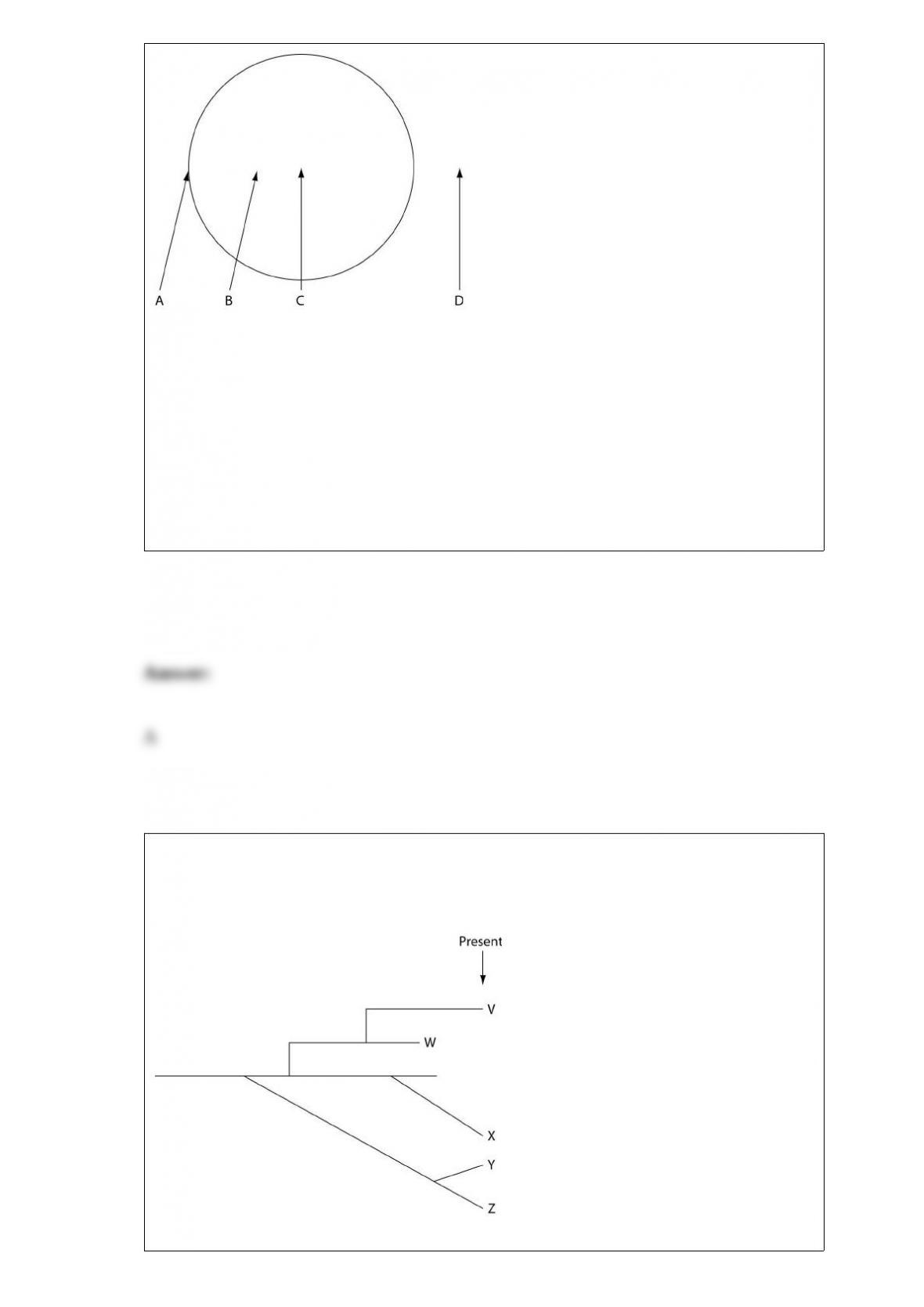
Which location is nearest to basidiocarps?
A) A
B) B
C) C
D) D
The questions below refer to the following evolutionary tree, in which the horizontal
axis represents time (present time is on the far right) and the vertical axis represents
morphological change.

Which of these is the extant (that is, living) species most closely related to species X?
A) V
B) W
C) Y
D) Z
The functional significance of porous septa in certain fungal hyphae is most similar to
that represented by which pair of structures in animal cells and plant cells, respectively?
A) desmosomes tonoplasts
B) gap junctions plasmodesmata
C) tight junctions plastids
D) centrioles plastids
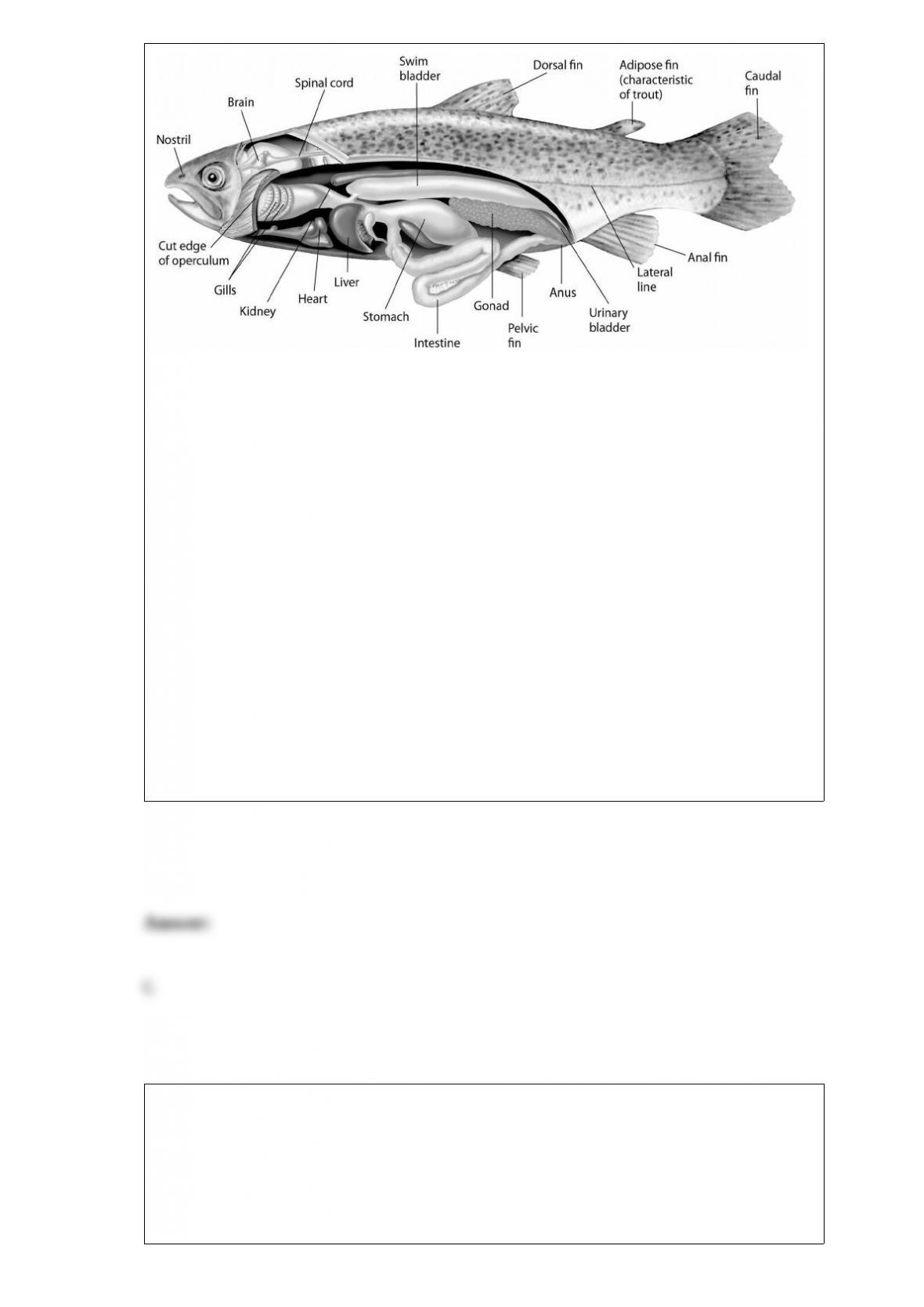
Fishes that have swim bladders can regulate their density and, thus, their buoyancy.
There are two types of swim bladder: physostomous and physoclistous. The ancestral
version is the physostomous version, in which the swim bladder is connected to the
esophagus via a short tube (see the figure above). The fish fills this version by
swimming to the surface, taking gulps of air, and directing them into the swim bladder.
Air is removed from this version by “belching.” The physoclistous version is more
derived, and has lost its connection to the esophagus. Instead, gas enters and leaves the
swim bladder via special circulatory mechanisms within the wall of the swim bladder.
Which shark structure is closest in function to a swim bladder full of gas?
A) its lateral line system
B) its spiral valve
C) its liver
D) its gills
Oxytocin and antidiuretic hormone (ADH) are synthesized in the _____.
A) hypothalamus
B) adenohypophysis

C) anterior pituitary
D) posterior pituitary
Canadian and Swiss researchers wanted to know if the diversity of arbuscular
mycorrhizal fungi (AMF) was important to the productivity of grasslands (M.G.A. van
der Heijden, J. N. Klironomos, M. Ursic, P. Moutoglis, R. Streitwolf-Engel, T. Boler, A.
Wiemken, and I. R. Sanders. 1998. Mycorrhizal fungal diversity determines plant
biodiversity, ecosystem variability and productivity. Nature 396:69-72). Specifically,
they wanted to know if it mattered which specific AMF species were present, or just
that some type of AMF was present. They grew various plants in combination with one
of four AMF species (A, B, C, & D), no AMF species (O), or all four AMF species
together (A+B+C+D); and they measured plant growth under each set of conditions. All
plant species were grown in each plot, so they always competed with each other with
the only difference being which AMF species were present.
On the graphs below, the x-axis labels indicate the number and identity of AMF species
(bar 0 = no fungi; bars A-D = individual AMF species; bar A+B+C+D = all AMF
species together). The y-axis indicates the amount (grams) of plant biomass for the
species shown in italics above each graph. Graph (e) is the total biomass (grams) of all
11 plant species combined; graph (f) is the biomass of Bromus erectus plants only,
separated from the total.
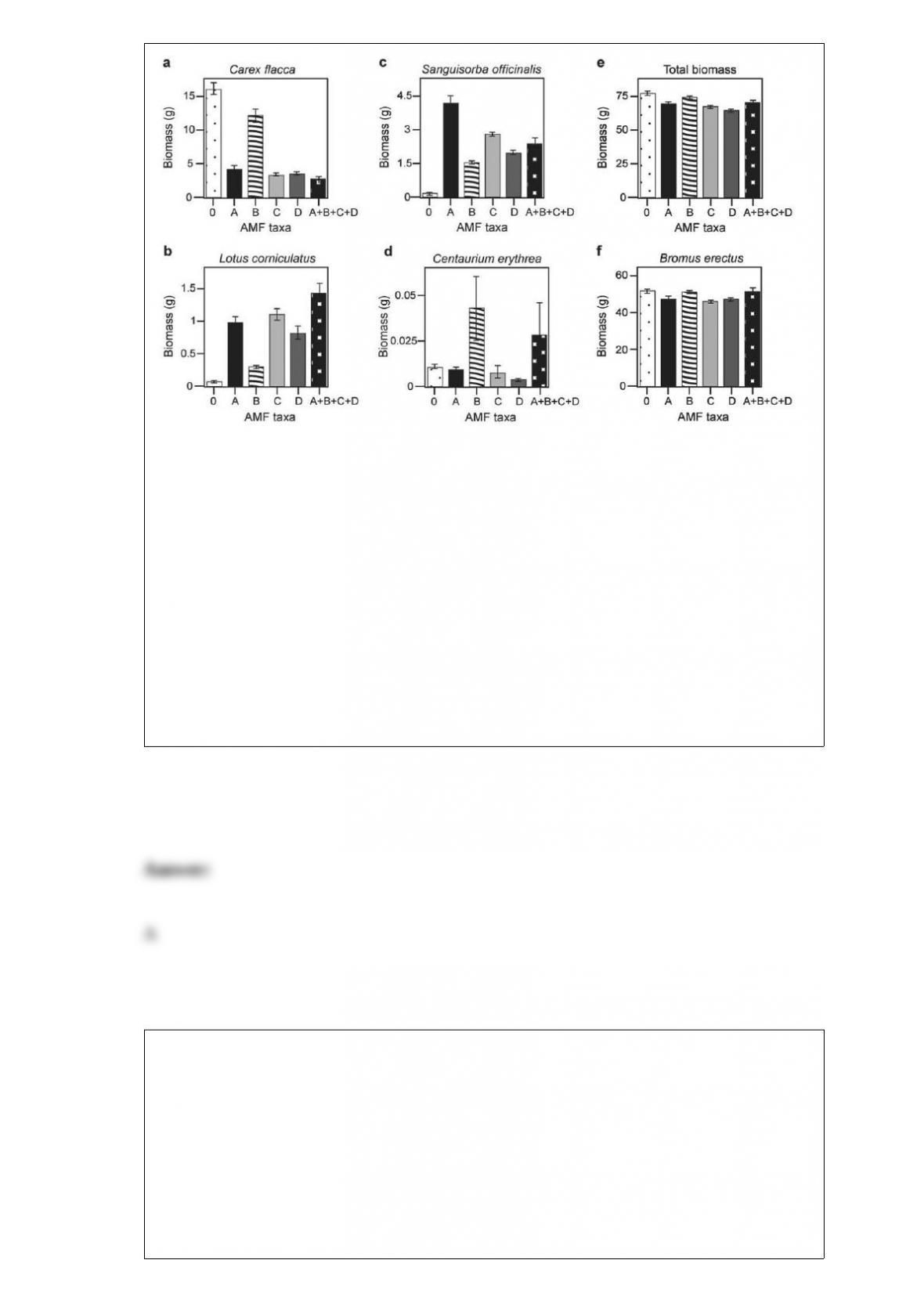
Based on graphs (e) and (f) in the figure above, which is the most well-supported
prediction for the effect on total plant biomass if AMF diversity were increased to eight
species?
A) No effect is predicted, because the dominant species is unaffected by AMF diversity.
B) Total biomass for eight species would double in comparison to that for four species.
C) Rare species would produce more biomass compared to the case when fewer AMF
are present.
D) No effect is predicted, because the dominant species is non-mycorrhizal.
HIV is the virus that causes AIDS. In the mid-1990s, researchers discovered an enzyme
in HIV called protease. Once the enzyme’s structure was known, researchers began
looking for drugs that would fit into the active site and block it. If this strategy for
stopping HIV infections were successful, it would be an example of what phenomenon?
A) vaccination
B) denaturation

C) allosteric regulation
D) competitive inhibition
During aerobic respiration, which of the following directly donates electrons to the
electron transport chain at the lowest energy level?
A) NADH
B) ATP
C) ADP + i
D) FADH2
In close comparisons, external fertilization often yields more offspring than does
internal fertilization. However, internal fertilization typically offers the advantage that
_____.
A) it requires less time and energy to be devoted to reproduction
B) the smaller number of offspring produced often receive a greater amount of parental
investment
C) it permits the most rapid population increase

D) it requires expression of fewer genes and maximizes genetic stability
Among non-mammalian vertebrates, the cloaca is an anatomical structure that functions
as _____.
A) a specialized sperm-transfer device produced only by males
B) a shared pathway for the digestive, excretory, and reproductive systems
C) a source of nutrients for developing sperm in the testes
D) a gland that secretes mucus to lubricate the vaginal opening
Which one of the following is formed by the removal of a carbon (as CO2) from a
molecule of pyruvate?
A) glyceraldehyde 3-phosphate
B) oxaloacetate
C) acetyl CoA
D) citrate

A female fly, full of fertilized eggs, is swept by high winds to an island far out to sea.
She is the first fly to arrive on this island and the only fly to arrive in this way.
Thousands of years later, her numerous offspring occupy the island, but none of them
resembles her. There are, instead, several species, each of which eats only a certain type
of food. None of the species can fly and their balancing organs (halteres) are now used
in courtship displays. The male members of each species bear modified halteres that are
unique in appearance to their species. Females bear vestigial halteres. The ranges of all
of the daughter species overlap.
Fly species W, found in a certain part of the island, produces fertile offspring with
species Y. Species W does not produce fertile offspring with species X or Z. If no other
species can hybridize, then which of the following statements about species W and Y
are true?
I) Species W and Y have genomes that are still similar enough for successful meiosis to
occur in hybrid flies.
II) Species W and Y have more genetic similarity with each other than either did with
the other two species.
III) Species W and Y may fuse into a single species if their hybrids remain fertile over
the course of many generations.
A) Only I is correct.
B) Only II is correct.
C) Only III is correct.
D) I, II, and III are correct.

Damage to the sinoatrial node in humans _____.
A) would block conductance between the bundle branches and the Purkinje fibers
B) would have a negative effect on peripheral resistance
C) would disrupt the rate and timing of cardiac muscle contractions
D) would have a direct effect on blood pressure monitors in the aorta
Based on the figure above, which of the following statements correctly interprets the
data?
A) As female density increases, clutch size increases.
B) As female density increases, survivorship decreases.
C) Clutch size decreases as female density increases.
Organisms with a circulating body fluid that is distinct from the fluid that directly
surrounds the body’s cells are likely to have _____.
A) an open circulatory system
B) a closed circulatory system
C) a gastrovascular cavity

D) branched tracheae
Which viruses have single-stranded RNA that acts as a template for DNA synthesis?
A) proviruses
B) viroids
C) bacteriophages
D) retroviruses
According to the induced fit hypothesis of enzyme catalysis, _____.
A) the binding of the substrate depends on the shape of the active site
B) some enzymes change their structure when activators bind to the enzyme
C) the binding of the substrate changes the shape of the enzyme’s active site
D) the active site creates a microenvironment ideal for the reaction