
Scientists have found that extracellular matrix components may induce specific gene
expression in embryonic tissues such as the liver and testes. For this to happen there
must be direct communication between the extracellular matrix and the developing
cells. Which kind of transmembrane protein would most likely be involved in this kind
of induction?
A) integrins
B) collagens
C) actins
D) fibronectins
Among protostomes, which morphological trait has shown the most variation?
A) type of symmetry (bilateral vs. radial vs. none)
B) type of body cavity (coelom vs. pseudocoelom vs. no coelom)
C) number of embryonic tissue types (diploblasty vs. triploblasty)
D) type of development (protostome vs. deuterostome)
Which of the following is LEAST associated with the others?
A) horizontal gene transfer

B) conjugation
C) transformation
D) binary fission
Which of the following statements best describes the relationship between
photosynthesis and respiration?
A) Respiration runs the biochemical pathways of photosynthesis in reverse.
B) Photosynthesis stores energy in complex organic molecules; respiration releases
energy from complex organic molecules
C) Photosynthesis occurs only in plants; respiration occurs only in animals.
D) Photosynthesis is catabolic; respiration is anabolic.

Which component is a protein fiber of the extracellular matrix?
A) A
B) B
C) C
D) E
Growth and development of plant parts involves _____.
I) cell division to produce new cells
II) enlargement and elongation of cells
III) specialization of cells into tissues
A) only I
B) only II
C) only III
D) I, II, and III

In comparison to eukaryotes, prokaryotes _____.
A) are more structurally complex
B) are larger
C) are smaller
D) do not have membranes
Organisms maintain dynamic homeostasis (internal balance) through behavioral and
physiological mechanisms. Which of the following statements is an accurate
explanation of a negative feedback mechanism used by animals to regulate body
temperature?
A) Squirrels are able to cool themselves during warmer months by producing more
brown fat, which contains abundant mitochondria and a rich blood supply.
B) Desert jackrabbits have unusually large ears that serve as solar heat collectors to
enable them to maintain their body temperatures.
C) A ground squirrel’s hypothalamus detects changes in environmental temperatures
and responds by activating or suppressing metabolic heat production.
D) A goldfish slows its movements when the water temperature is lower.

Nitric oxide and epinephrine _____.
A) both function as neurotransmitters
B) both function as steroid hormones
C) bind the same receptors
D) both cause a reduction in the blood levels of glucose
Fatty acids usually have an even number of carbons in their structures. They are
catabolized by a process called beta-oxidation. The end products of the metabolic
pathway are acetyl groups of acetyl CoA molecules. These acetyl groups _____.
A) directly enter the electron transport chain
B) directly enter the energy-yielding stages of glycolysis
C) are directly decarboxylated by pyruvate dehydrogenase
D) directly enter the citric acid cycle
Nitrogen (N) is more electronegative than hydrogen (H). Which of the following is a
correct statement about the atoms in ammonia (NH3)?
A) Each hydrogen atom has a partial positive charge; the nitrogen atom has a partial
negative charge.
B) Ammonia has an overall positive charge.
C) Ammonia has an overall negative charge.
D) The nitrogen atom has a partial positive charge; each hydrogen atom has a partial
negative charge.
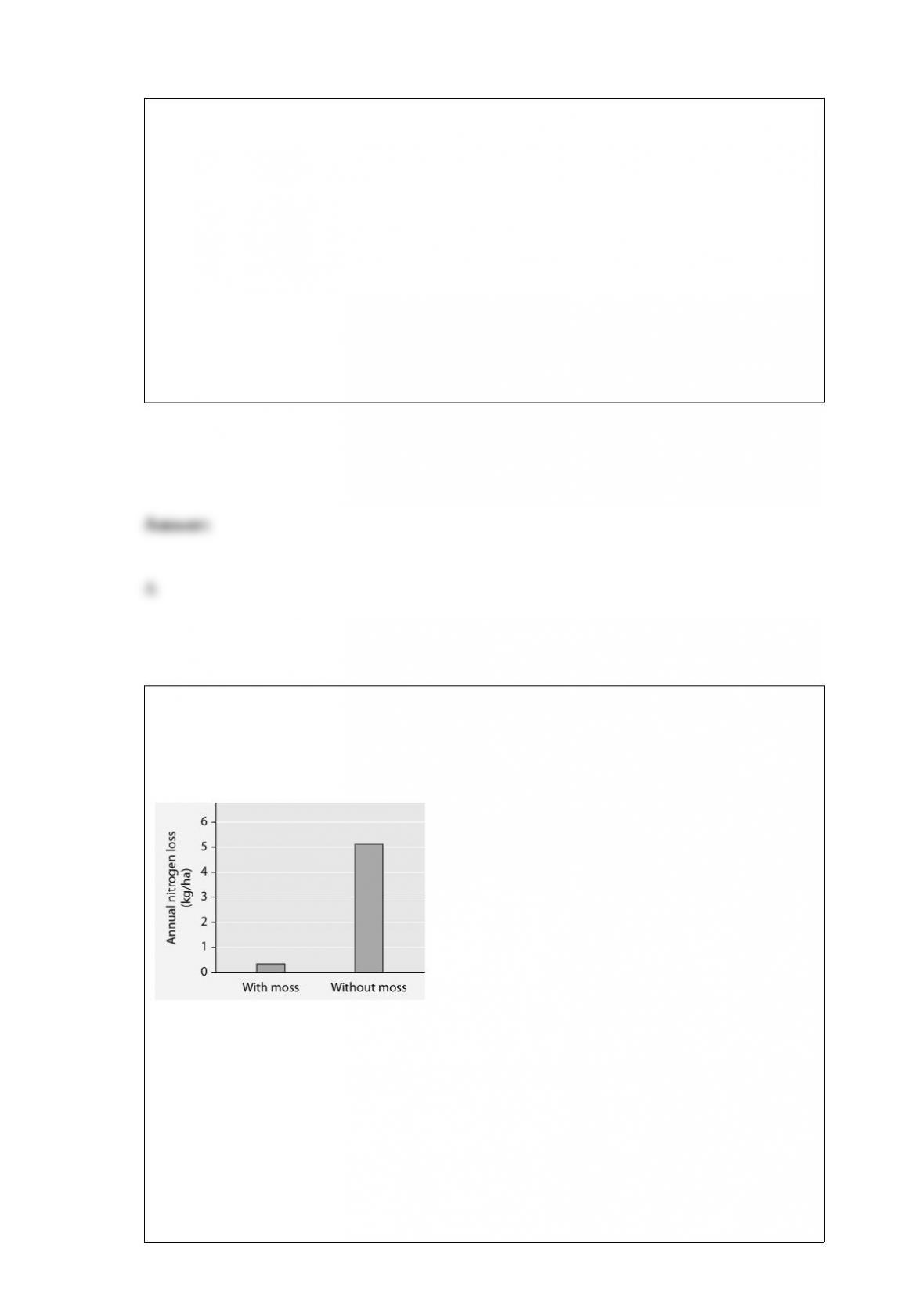
Researchers tested nitrogen loss from soil where the moss Dawsonia was growing, and
compared it to soil from which Dawsonia had been removed. The data are presented
below.
Researchers decided to test the hypothesis that if the 1-meter-tall Dawsonia
gametophyte-sporophyte plants had acted as a physical buffer, then they would have
reduced water’s ability to erode the soil and carry away its nitrogen. They began with
four equal-sized areas where Dawsonia mosses grew to a height of 1 m above the soil
surface. One of the four areas was not modified. In the second area, the mosses were
trimmed to a height of 0.5 m above the soil surface. In the third area, the mosses were
trimmed to a height of 0.25 m above the soil surface. In the fourth area, the mosses
were trimmed all the way to the ground, leaving only the rhizoids. Water, simulating
rainfall, was then added in a controlled fashion to all plots over the course of one year.
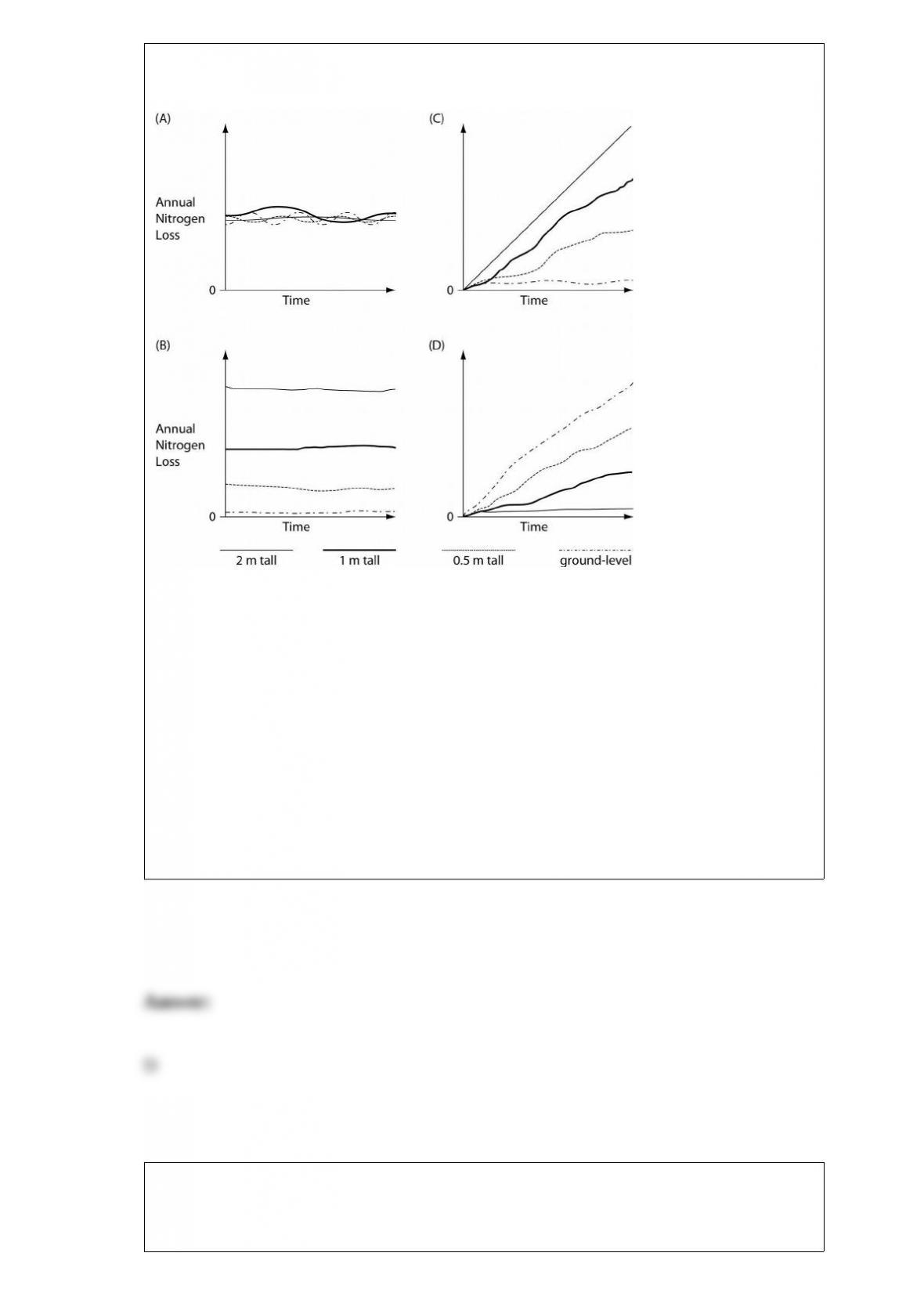
The figure below presents four graphs that depict potential results of this experiment.
In the figure above, which graph of soil nitrogen loss over time most strongly supports
the hypothesis that if the 1-m tall Dawsonia gametophyte-sporophyte plants had acted
as a physical buffer, then they would have reduced water’s ability to erode the soil and
carry away its nitrogen?
A) A
B) B
C) C
D) D
What will happen to a red blood cell (RBC), which has an internal ion concentration of
about 0.9 percent, if it is placed into a beaker of pure water?
A) The cell would shrink because the water in the beaker is hypotonic relative to the
cytoplasm of the RBC.
B) The cell would shrink because the water in the beaker is hypertonic relative to the
cytoplasm of the RBC.
C) The cell would swell because the water in the beaker is hypotonic relative to the
cytoplasm of the RBC.
D) The cell will remain the same size because the solution outside the cell is isotonic.
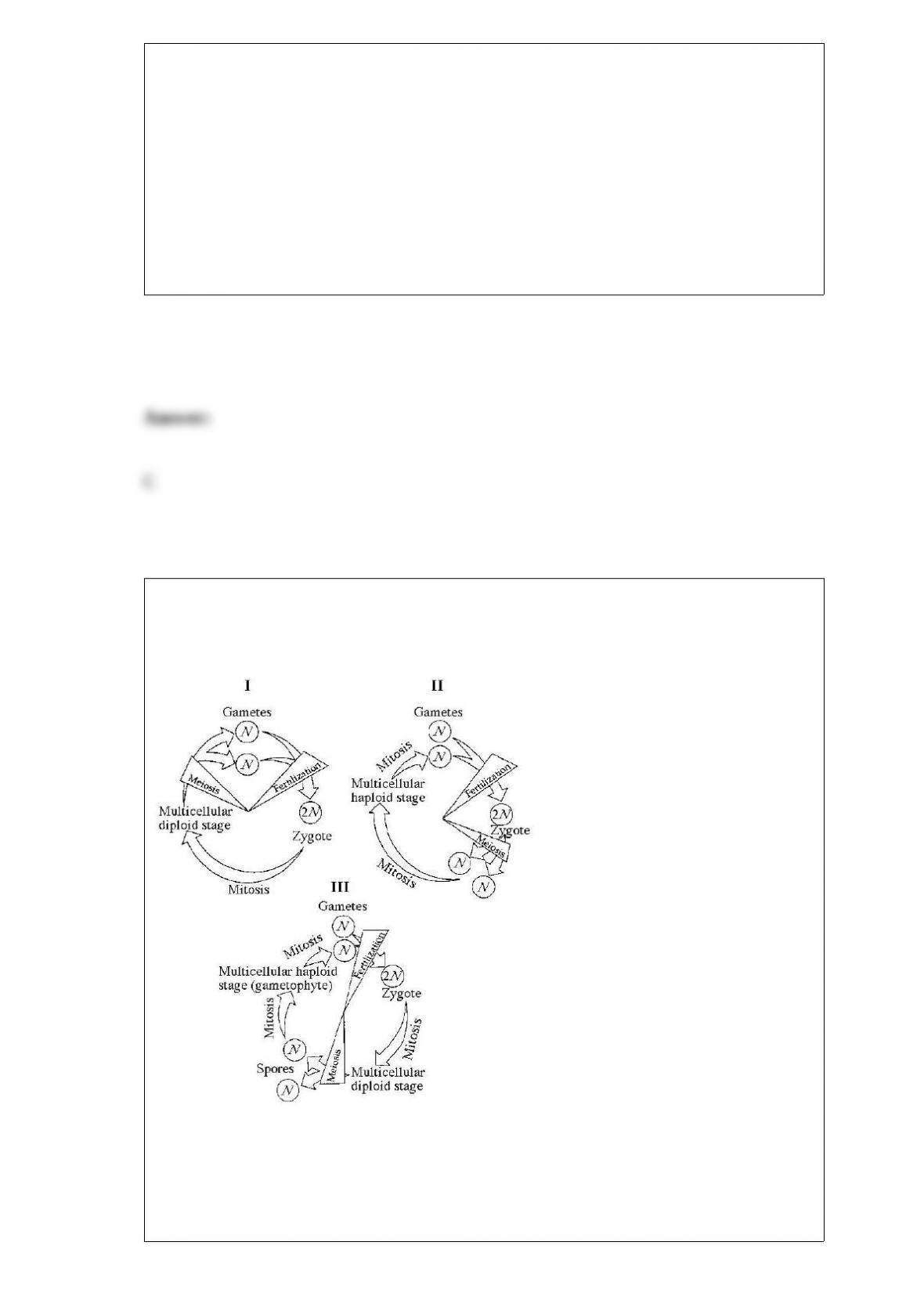
Which of the life cycles is typical for most fungi and some protists?
A) I only

B) II only
C) III only
D) I and II
How is it that satellites can detect differences in primary productivity on Earth?
A) Satellite instruments can detect reflectance patterns of the photosynthetic organisms
of different ecosystems.
B) Sensitive satellite instruments can measure the amount of NADPH (nicotinamide
adenine dinucleotide phosphate) produced in the summative light reactions of different
ecosystems.
C) Satellites compare the wavelengths of light captured and reflected by
photoautotrophs in different ecosystems.
D) Satellites detect differences by measuring the amount of water vapor emitted by
transpiring producers.
Vaccination increases the number of _____.
A) lymphocytes with receptors that can bind to the pathogen
B) epitopes that the immune system can recognize
C) macrophages specific for a pathogen
D) major histocompatability (MHC) molecules that can present an antigen
The following experiment is used for the corresponding question(s).
A researcher discovered a species of moth that lays its eggs on oak trees. Eggs are laid
at two distinct times of the year: early in spring when the oak trees are flowering and in
midsummer when flowering is past. Caterpillars from eggs that hatch in spring feed on
oak flowers and look like oak flowers. But caterpillars that hatch in summer feed on
oak leaves and look like oak twigs.
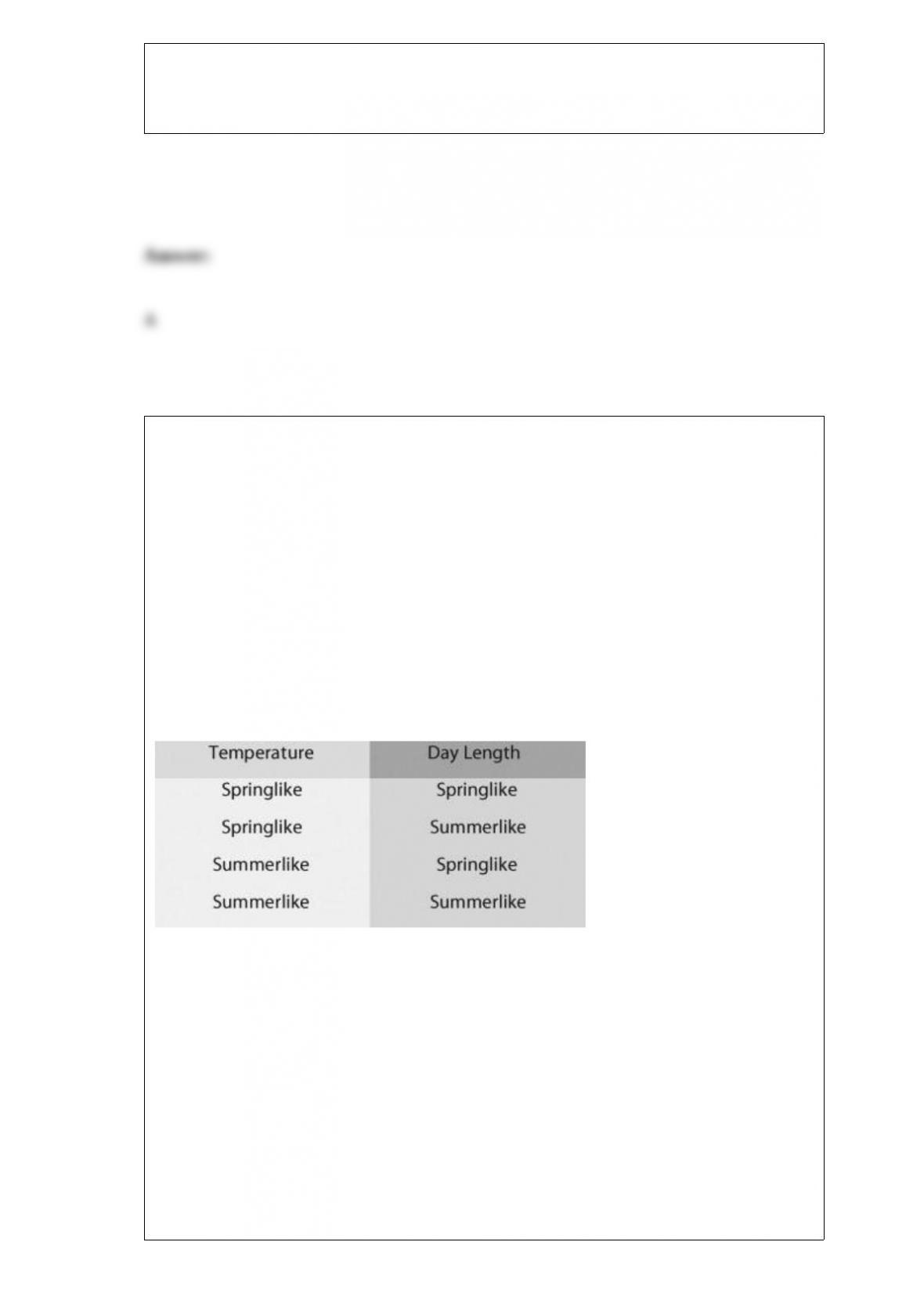
How does the same population of moths produce such different-looking caterpillars on
the same trees? To answer this question, the biologist caught many female moths from
the same population and collected their eggs. He put at least one egg from each female
into eight identical cups. The eggs hatched, and at least two larvae from each female
were maintained in one of the four temperature and light conditions listed below.
In each of the four environments, one of the caterpillars was fed oak flowers, the other
oak leaves. Thus, there were a total of eight treatment groups (4 environments x 2
diets).
Refer to the accompanying figure. Which one of the following is NOT a plausible
hypothesis to explain the differences in caterpillar appearance observed in this
population?
A) The longer day lengths of summer trigger the development of twig-like caterpillars.
B) The cooler temperatures of spring trigger the development of flowerlike caterpillars.

C) Differences in air pressure, due to differences in elevation, trigger the development
of different types of caterpillars.
D) Differences in diet trigger the development of different types of caterpillars.
A molecule with the chemical formula C6H12O6 is probably a _____.
A) fatty acid
B) polysaccharide
C) nucleic acid
D) monosaccharide
Growth factors are local regulators that _____.
A) are modified fatty acids that stimulate bone and cartilage growth
B) are found on the surface of cancer cells and stimulate abnormal cell division
C) bind to cell-surface receptors and stimulate growth and development of target cells
D) convey messages between nerve cells

Which of the following are water-conducting cells that are dead at functional maturity?
A) parenchyma cells
B) collenchyma cells
C) tracheids and vessel elements
D) sieve-tube elements
A particular species of virus carries a gene for salicylate hydroxylase, an enzyme that
breaks down salicylic acid. Will this virus be more or less virulent to plants than other
viruses?
A) more
B) less
C) This will not make the virus more or less virulent.

A chemical that affects neuronal function but is not stored in presynaptic vesicles is
_____.
A) acetylcholine
B) epinephrine
C) nitric oxide
D) gamma-aminobutyric acid (GABA)
Many songbirds breed in North America in the spring and summer and then migrate to
Central and South America in the fall. They spend the winter in these warmer areas,
where they feed and prepare for the spring migration north and another breeding
season. Two hypothetical species of sparrow, A and B, overwinter together in mixed
flocks in Costa Rica. In spring, species A goes to the east coast of North America, and
species B goes to the west coast. What can you say about the isolating mechanisms of
these two species?
A) They must have strong postzygotic isolating mechanisms to spend winter in such
close proximity.
B) They must have strong prezygotic isolating mechanisms to spend winter in such
close proximity.
C) Their winter habitat has no bearing on their degree of reproductive isolation.
D) Reinforcement must be occurring when they winter together.
A principal problem with inserting an unmodified mammalian gene into a plasmid and
then getting that gene expressed in bacteria is that _____.
A) prokaryotes use a different genetic code from that of eukaryotes
B) bacteria translate only mRNAs that have multiple messages
C) bacteria cannot remove eukaryotic introns
D) bacterial RNA polymerase cannot make RNA complementary to mammalian DNA
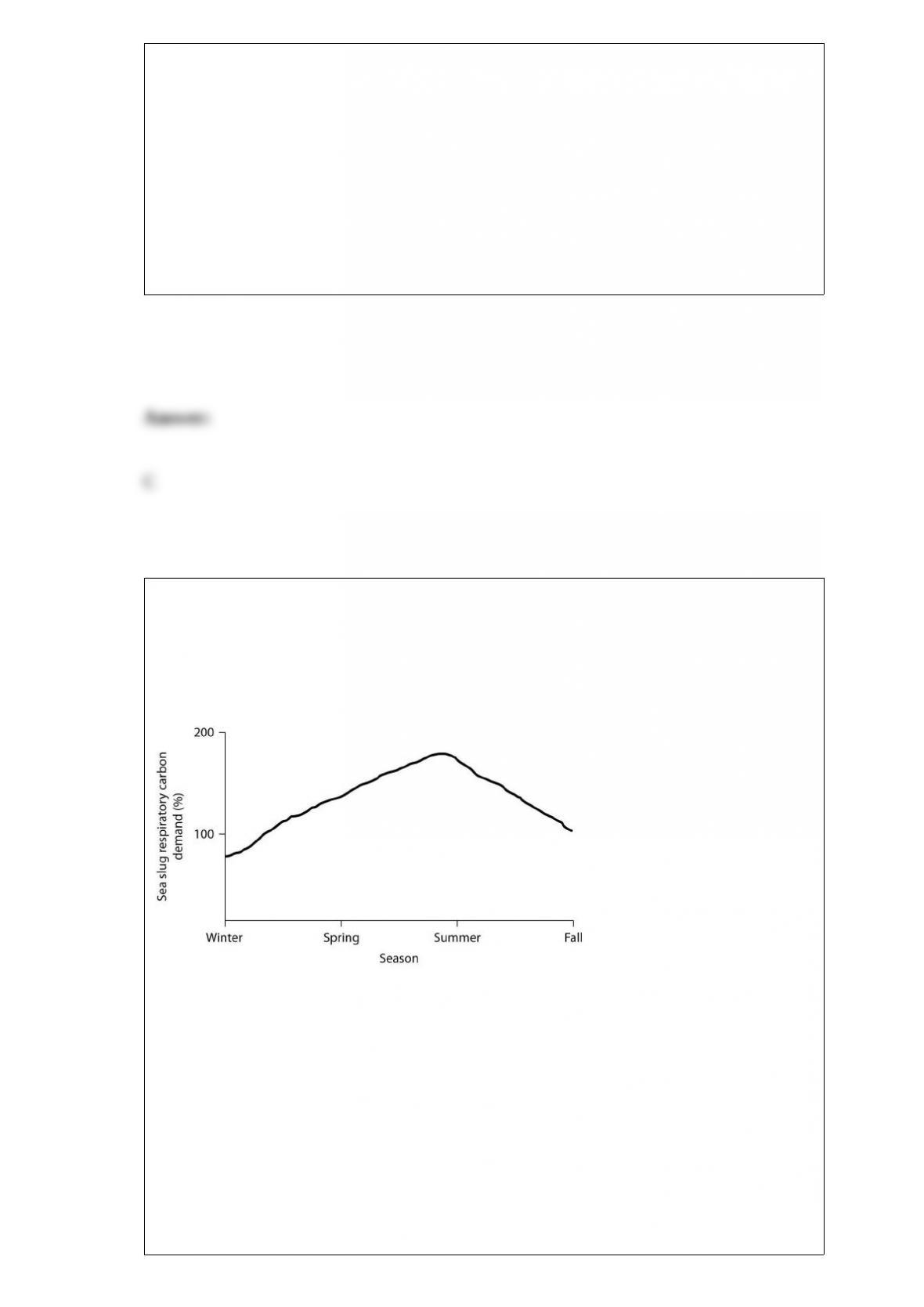
The sea slug Pteraeolidia ianthina (P. ianthina) can harbor living dinoflagellates
(photosynthetic protists) in its skin. These endosymbiotic dinoflagellates reproduce
quickly enough to maintain their populations. Low populations do not affect the sea
slugs very much, but high populations (> 5 x 10⁵ cells/mg of sea slug protein) can
promote sea slug survival.
Percent of sea slug respiratory carbon demand provided by indwelling dinoflagellates.
Use of synthetic fertilizers often leads to the contamination of groundwater with
nitrates. Nitrate pollution is also a suspected cause of anoxic “dead zones” in the ocean.
Which of the following might help reduce nitrate pollution?
A) growing improved crop plants that have nitrogen-fixing enzymes
B) adding nitrifying bacteria to the soil
C) adding denitrifying bacteria to the soil

D) using ammonia instead of nitrate as a fertilizer
You may have observed plants rotate towards a light source, thereby increasing the
plant’s ability to intercept light energy and increase photosynthesis. You, however, are
given the task of preventing grass seedlings from rotating toward the light. Using your
knowledge of phototropism, which of the following experimental procedures would you
use to complete your task?
A) Cover the growing tip of the grass seedling with black paper.
B) Supply the seedlings with very dim light. fired light does not induce a bend)
C) Cover the portion of the seedling below the tip with a black shield.
D) Supply the seedling with nutrient-rich fertilizer solution.
Erwin and Scott used an insecticidal fog to knock down insects from the top of a L.
seemannii tree. The researchers identified over 900 species of beetles among the
individuals that fell. Erwin also projected that this entire tree is host to about 600
arthropod species unique to this tree species. There are approximately 50,000 species of
tropical trees. Although it could not be entirely accurate, what would be the best way to
estimate the total number of arthropod species?
A) Estimate the species density and then multiply by 50,000.
B) Multiply 900 by 50,000.

C) Multiply 600 by 50,000.
D) Divide 900 by 600 and then multiply by 50,000.
What happens if a neuron is stimulated enough midway in an axon to trigger an action
potential?
A) The nerve impulse would go both directions from the stimulus point, but only the
axon end could transfer the message trough neurotransmitters to another neuron.
B) Since neuron transmission is one-way, the nerve impulse would only be transmitted
to the end of the axon and then through neurotransmitters to the next neuron.
C) The nerve impulse could not be transmitted because it must be initiated at the
dendrite end of a neuron.
D) The nerve impulse would go both directions and the dendrite end would be
stimulated to send a second message through this neuron.
A black guinea pig crossed with an albino guinea pig produced twelve black offspring.
When the albino was crossed with a second black animal, six blacks and six albinos
were obtained. What is the best explanation for this genetic situation?
A) Albino is recessive; black is dominant.
B) Albino is dominant; black is incompletely dominant.

C) Albino and black are codominant.
D) Albino is recessive; black is codominant.
Previously understood similarities that seemed to connect slime molds and fungi are
now considered to be _____.
A) homologies
B) examples of convergent evolution
C) variations of common ancestral traits
D) adaptations for much different functions
Adenylyl cyclase has the opposite effect of which of the following?
A) protein kinase
B) protein phosphatase
C) phosphodiesterase
D) phosphorylase

The predatory bacterium Bdellovibrio bacteriophorus drills into a prey bacterium and,
once inside, digests it. In an attack upon a Gram-negative bacterium that has a slimy
cell covering, what is the correct sequence of structures penetrated by B.
bacteriophorus on its way to the prey’s cytoplasm?
1. membrane composed mostly of lipopolysaccharide
2. membrane composed mostly of phospholipids
3. peptidoglycan
4. capsule
A) 2, 4, 3, 1
B) 1, 3, 4, 2
C) 1, 4, 3, 2
D) 4, 1, 3, 2
The veins of leaves are _____.
I) composed of xylem and phloem
II) continuous with vascular bundles in the stem and roots
III) finely branched to be in close contact with photosynthesizing cells
A) only I

B) only II
C) only III
D) I, II, and III
The Nernst equation specifies the equilibrium potential for a particular ion. This
equilibrium potential is a function of _____.
A) hydrostatic pressure
B) ion concentration gradient
C) osmotic gradient
D) temperature (thermal) gradient
What is a critical load?
A) the amount of nutrient augmentation necessary to bring a depleted habitat back to its
former level
B) the level of a given toxin in an ecosystem that is lethal to 50 percent of the species
present
C) the amount of added nutrient that can be absorbed by plants without damaging

ecosystem integrity
D) the number of predators an ecosystem can support that effectively culls prey
populations to healthy levels