TEST BANK
CAPITAL MARKETS: INSTITUTIONS AND INSTRUMENTS
FABOZZI/MODIGLIANI
Chapter 33
THE MARKET FOR FOREIGN EXCHANGE
AND RISK CONTROL INSTRUMENTS
MULTIPLE CHOICE
1. An indirect quote is the:
[M]
2. The price of one currency in terms of another currency is called:
[E]
3. If the Swiss franc price of the dollar increases:
[M]
4. The risk that a currency’s value may change adversely is called:
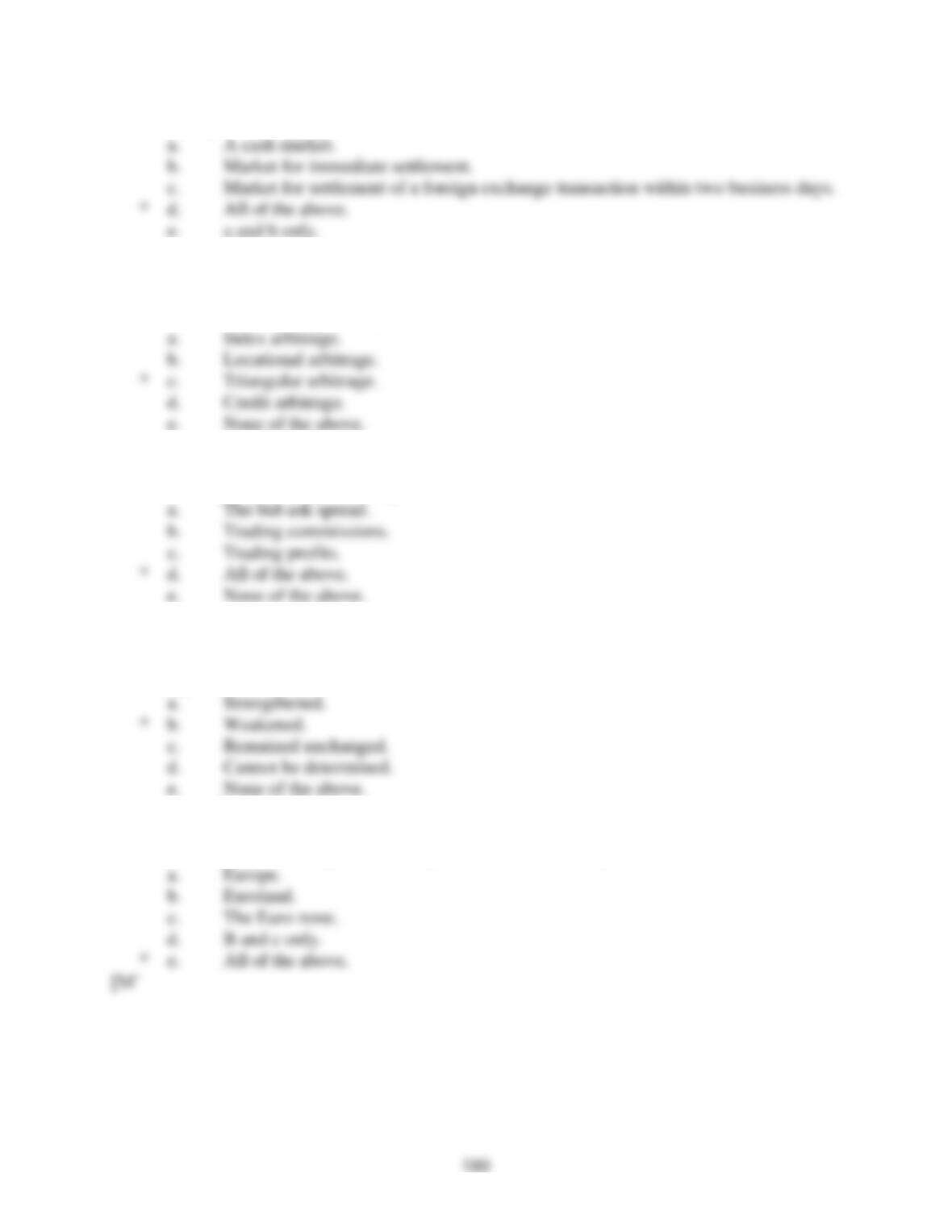
5. The spot exchange rate market is:
[E]
6. When the theoretical cross rate differs from the actual cross rate quoted by dealers, a
riskless arbitrage opportunity arises called:
[M]
7. Dealers in the foreign exchange market realize revenue from:
[M]
8. Since the introduction of the euro on January 1, 1999, the single European currency
against the U.S. dollar has:
[M]
9. Members of the European Monetary Union are said to be part of:
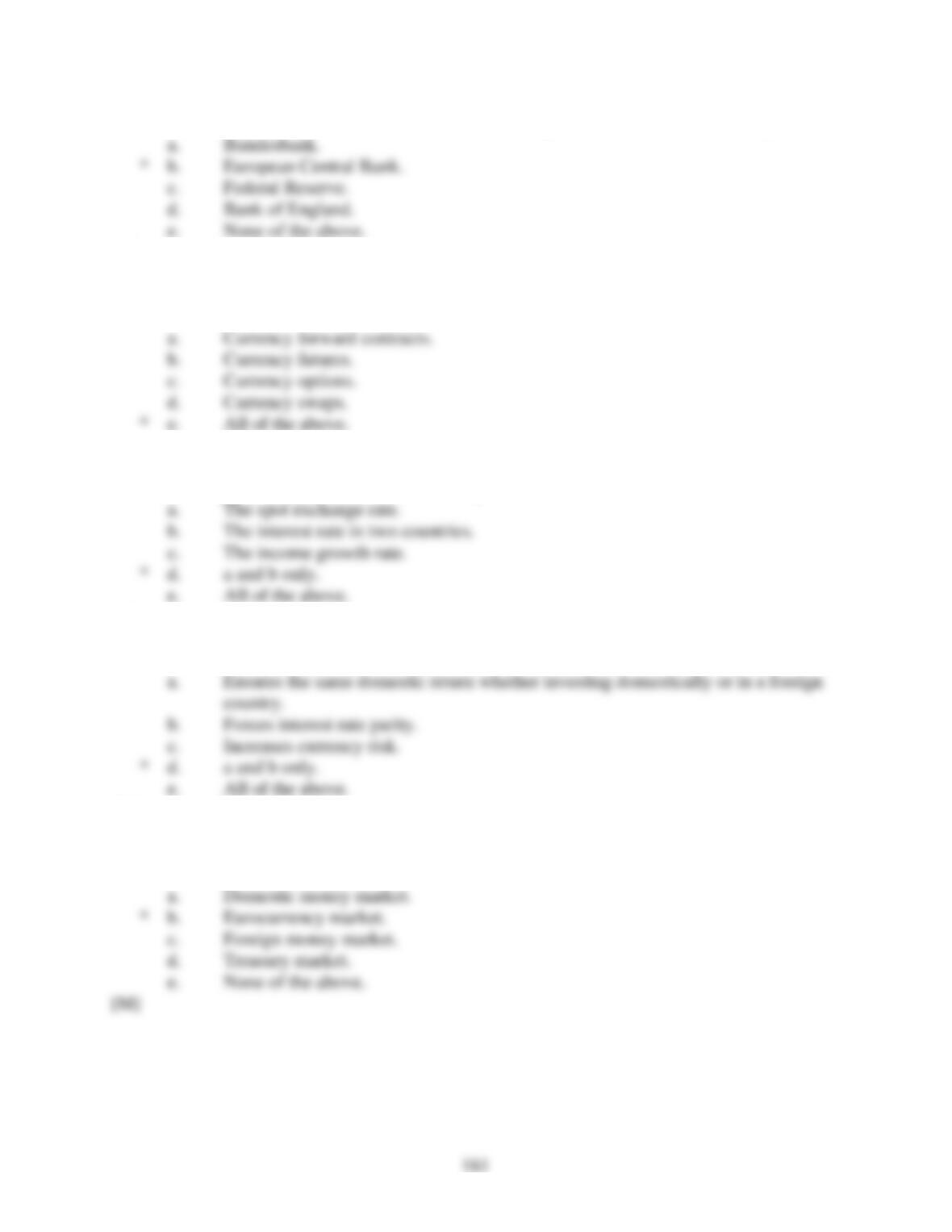
10. Monetary policy for member countries of the European Union is administered by the:
[M]
11. To protect against adverse foreign exchange rate movements, borrowers and investors
can use:
[E]
12. Forward exchange rates are determined by:
[M]
13. Covered interest arbitrage is the process that:
[D]
14. An investor seeking covered interest arbitrage will accomplish it with short-term
borrowing and lending in the:
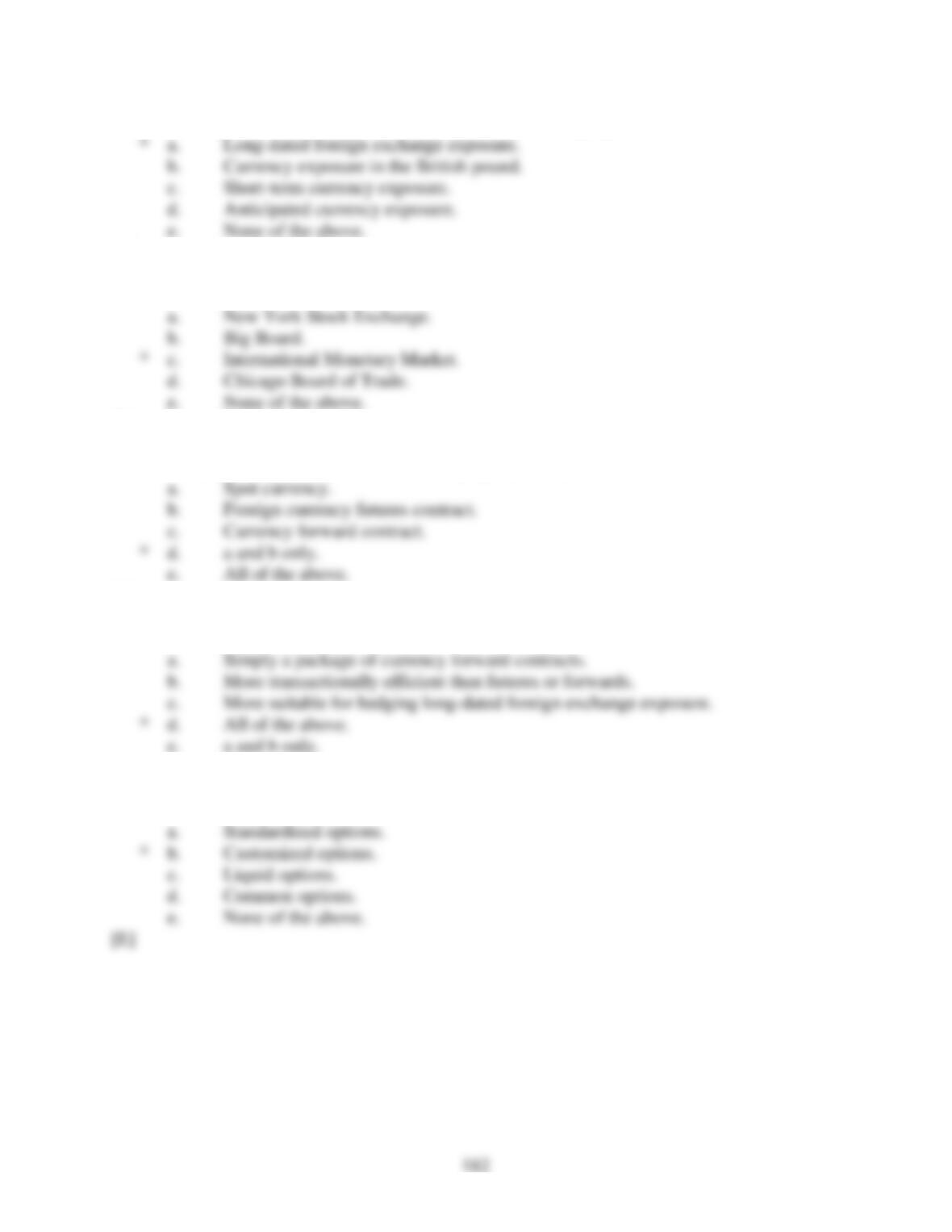
15. Currency futures do not provide a good vehicle for hedging:
[M]
16. In the U.S., currency futures contracts are traded on the:
[E]
17. The underlying instrument in a currency option is the:
[E]
18. A currency swap is:
[M]
19. Currency options traded in the over-the-counter market are:
20. The foreign exchange market is a(n)
TRUE/FALSE
1. Currency values changes in response to economic developments or political events.
[M]
2. Spot exchange rate adjust to compensate for the relative inflation rate.
[M]
3. An indirect quote is also referred to as an American term.
[M]
4. Long-dated forward contracts have relatively large bid-ask spreads.
[E]
5. The relationship among the spot exchange rate, the interest rates in two countries. And
the forward rate is called purchasing power parity.
[M]
ESSAY QUESTIONS
1. What is triangular arbitrage?
Key Issues:
2. Discuss the fundamental determinants of exchange rates.
Key Issues:
3. What are the major differences between currency forwards, futures, and options?
Key Issues: