Appendix to Chapter 3—Consumer Surplus, Producer Surplus, and Market Efficiency
MULTIPLE CHOICE
1. Using supply and demand curve analysis, the triangular area above the equilibrium price and under the
demand curve is:
a.
consumer surplus.
b.
producer surplus.
c.
marginal cost.
d.
deadweight loss.
2. Which of the following is not true concerning consumer surplus?
a.
It is graphically the area under the demand curve and above the market price.
b.
It does not exist in equilibrium.
c.
A leftward shift of the supply curve will decrease consumer surplus.
d.
A rightward shift of the supply curve will increase consumer surplus.
3. At $30 each, Jack will buy 1 Blu-ray and at $25, he will purchase 2. If the price is $20, Jack’s
consumer surplus is:
a.
$10.
b.
$15.
c.
$20.
d.
$25.
4. Consumer surplus is the:
a.
number of consumers who are excluded from a market because of scarcity.
b.
amount of a good that consumers will buy at a price below the equilibrium price.
c.
amount consumers are willing to pay for a good minus the amount the consumers actually
pay for it.
d.
amount consumers are willing to pay for a good minus the cost of producing the good.
5. Consumer surplus is the:
a.
amount by which the quantity supplied of a good exceeds the quantity demanded of a
good.
b.
measure of consumes’ willingness to buy a good plus the price of the good.
c.
measure of how much consumers value a good.
d.
amount consumers are willing to pay for a good minus the amount the consumers actually
pays for it.
6. A drought destroys much of the peach crop. As a result, consumer surplus in the peach market:
a.
increases.
c.
remains unchanged.
b.
decreases.
d.
equals the deadweight loss increase.
7. A drought destroys much of the grape crop. As a result, consumer surplus in the market for wine:
a.
decreases.
c.
remains unchanged.
b.
increases.
d.
depends on the deadweight loss.
8. Suppose Sam buys a good for $100 at a yard sale. If consumer surplus from the sale is $75, Sam would
have been willing to pay:
a.
$100.
c.
$25.
b.
$175.
d.
equal to the deadweight loss.
9. Suppose Sue’s buys a good for $60 on eBay. If the consumer surplus from the sale is $25, Sue would
have been willing to pay:
a.
$35.
c.
$60.
b.
$25.
d.
$85.
10. Consumer surplus measures the value between the price consumers are willing to pay and the:
a.
producer surplus price.
c.
actual price paid.
b.
deadweight gain price.
d.
preference price.
11. Suppose a consumer is willing to pay $20 for one good X, $10 for a second, and $5 for a third, and the
market price is $4. The consumer surplus is:
a.
$16.
c.
$1.
b.
$6.
d.
$23.
12. If Sam is willing to pay $50 for one good X, $30 for a second, $20 for a third, $8 for a fourth, and the
market price is $10, then Sam’s consumer surplus is:
a.
$10.
c.
$70.
b.
$40.
d.
$100.
13. If Bill is willing to pay $10 for one good X, $8 for a second, and $6 for a third, and the market price is
$5, then Max’s consumer surplus is:
a.
$24.
c.
$9.
b.
$18.
d.
$6.
14. Consumer surplus:
a.
does not exist in equilibrium.
b.
is illustrated by the area under the demand curve and above the market price.
c.
is illustrated by the area under the demand curve and below the market price.
d.
is illustrated by the area above the supply curve and under the demand curve.
15. Consumer surplus:
a.
is minimized in market equilibrium.
b.
measures the value between the actual selling price of a product and the price at which
sellers are willing to sell the product.
c.
measures the value between the price consumers are willing to pay for a product and the
price they actually pay.
d.
measures the price at which sellers extract excess profits from consumers.
16. Producer surplus is the:
a.
number of producers who are excluded from a market because of scarcity.
b.
amount of a good that a producers will sell at a price below the equilibrium price.
c.
amount consumers actually pay for a good minus the amount the sellers are willing to sell
the good.
d.
amount consumers are willing to pay for a good minus the cost of producing the good.
17. Producer surplus is the:
a.
amount by which the quantity supplied of a good exceeds the quantity demanded of a
good.
b.
measure of producers’ willingness to sell a good plus the price of the good.
c.
measure of how much producers value a good.
d.
amount consumers actually pay for a good minus the amount the sellers are willing to sell
the good.
18. Assuming peaches are a normal good and consumer incomes rise, producer surplus in the peach
market:
a.
increases.
c.
remains unchanged.
b.
decreases.
d.
equals the deadweight loss increase.
19. Suppose Jones sells a good for $100 at a yard sale. If the producer surplus from the sale is $75, Jones’s
cost of the good must have been:
a.
$100.
c.
$25.
b.
$175.
d.
equal to the deadweight loss.
20. Suppose Alice sells a good for $60 on eBay. If the producer surplus from the sale is $25, Alice’s cost
of the good must have been:
a.
$35.
c.
$60.
b.
$25.
d.
$85.
21. Suppose Gizmo Inc. is willing to sell one gizmo for $10, a second gizmo for $12, a third for $14, and a
fourth for $20, and the market price is $20. What is Gizmo Inc.’s producer surplus?
a.
$56
c.
$20
b.
$24
d.
$10
22. Producer surplus:
a.
measures the value between the actual selling price of a product and the price at which
sellers are willing to sell the product.
b.
is illustrated by the area above the supply curve and below the market price.
c.
is maximized in market equilibrium.
d.
all of these.
23. Producer surplus measures the value between the actual selling price and the:
a.
price sellers are willing to sell the product.
b.
deadweight loss price.
c.
lowest price sellers are willing to sell the product.
d.
profit-maximization price.
24. Suppose Tucker Inc. is willing to sell one gizmo for $10, a second gizmo for $15, a third for $20, and
the market price is $25. What is Tucker Inc.’s producer surplus?
a.
$10
c.
$30
b.
$15
d.
$50
25. Suppose seller X is willing to sell one good X for $5, a second good X for $10, a third for $16, a fourth
for $25, and the market price is $20. What is seller X’s producer surplus?
a.
$15
c.
$22
b.
$20
d.
$29
26. In an efficient market, deadweight loss is ____.
a.
maximum.
c.
constant.
b.
minimum.
d.
zero.
27. Deadweight loss results from:
a.
equilibrium.
b.
underproduction.
c.
overproduction.
d.
none of the above are correct.
e.
Either b or c.
28. Total surplus equals:
a.
consumer surplus + producer surplus − deadweight loss.
b.
consumer surplus − producer surplus − deadweight loss.
c.
consumer surplus − producer surplus + deadweight loss.
d.
consumer surplus + producer surplus.
29. Which of the following statements is correct?
a.
Total surplus is the sum of consumer and producer surplus.
b.
Deadweight loss is the net loss of both consumer and producer surplus resulting from
underproduction or overproduction of a product.
c.
Deadweight loss is a measure of market inefficiency.
d.
All of these.
30. Deadweight loss is the result of:
a.
disequilibrium.
c.
overproduction.
b.
underproduction.
d.
all of these are correct.
31. Deadweight loss is the net loss of:
a.
consumer surplus.
c.
disequilibrium surplus.
b.
producer surplus.
d.
both a and b.
32. Deadweight loss is not the result of:
a.
an efficient market.
c.
zero consumer surplus.
b.
an inefficient market.
d.
zero producer surplus.
33. At the equilibrium price, deadweight loss is:
a.
minimized.
b.
zero.
c.
maximized.
d.
equal to the equilibrium price multiplied by the quantity exchanged.
34. If the quantity supplied exceeds the quantity demanded in a market, then the result is which of the
following?
a.
Deadweight loss
c.
Overproduction
b.
Inefficiency
d.
Each of these are true.
35. If the quantity demanded exceeds the quantity supplied in a market, then the result is which of the
following?
a.
Deadweight loss
c.
Underproduction
b.
Inefficiency
d.
Each of these are true.
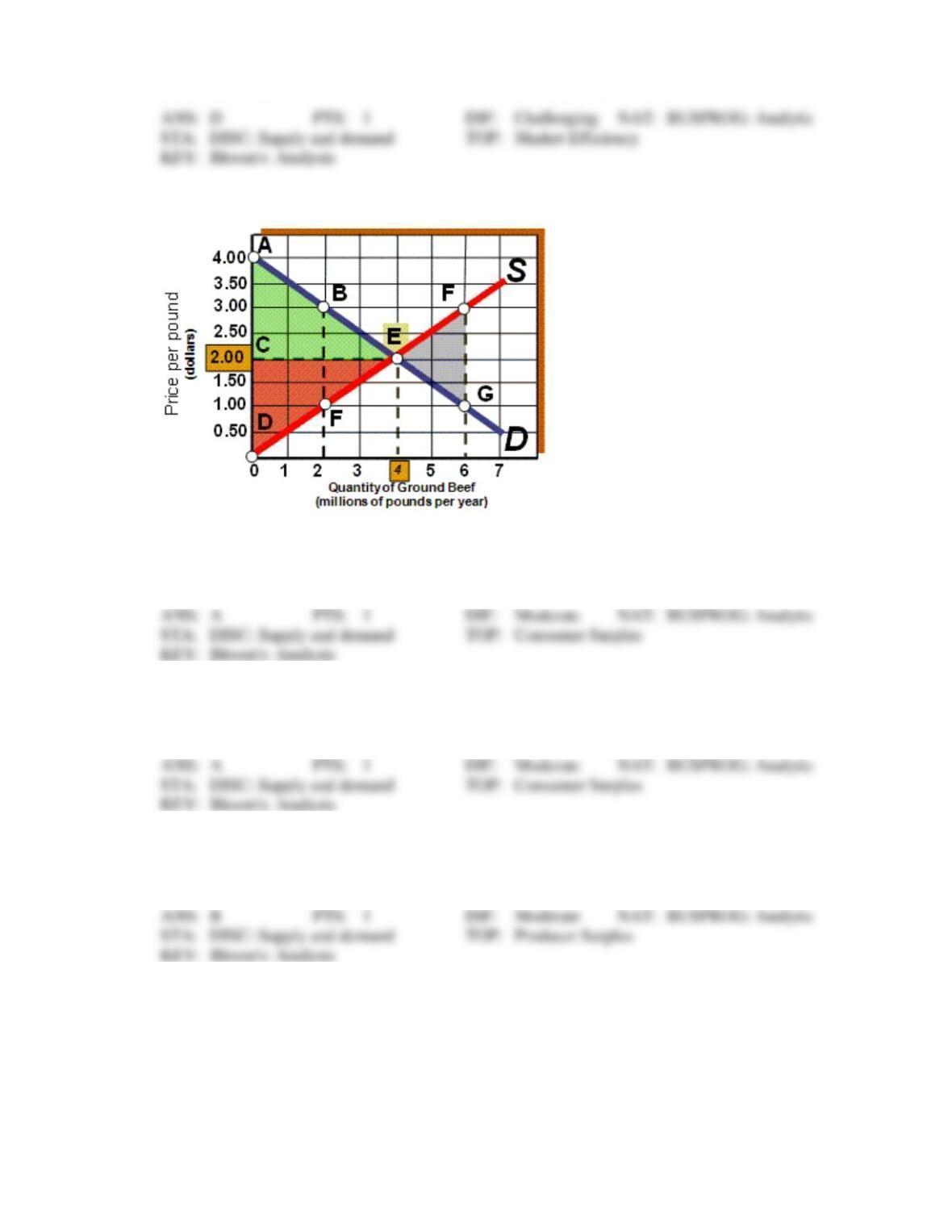
Exhibit 3A-1 Comparison of Market Efficiency and Deadweight Loss
36. As shown in Exhibit 3A-1, if the market is in equilibrium, then ____ represents consumer surplus.
a.
ABEC
c.
EGH
b.
AED
d.
BEF
37. As shown in Exhibit 3A-1, if the market price falls from $3.00 to $2.00, then:
a.
total surplus increases.
c.
overproduction increases.
b.
deadweight loss increases.
d.
underproduction decreases.
38. As shown in Exhibit 3A-1, if the market is in equilibrium, then ____ represents producer surplus.
a.
ADFB
c.
EGH
b.
CEFD
d.
BEF
39. As shown in Exhibit 3A-1, if the quantity supplied is 2 million pounds of ground beef per year, the
result is:
a.
deadweight loss.
b.
inefficiency.
c.
underproduction.
d.
all of the above are true.
e.
none of the above are true.
40. As shown in Exhibit 3A-1, if the quantity supplied is 6 million pounds of ground beef per year, the
result is:
a.
deadweight loss.
b.
inefficiency.
c.
overproduction.
d.
all of the above are true.
e.
none of the above are true.
41. As shown in Exhibit 3A-1, if the quantity supplied is 2 million pounds of ground beef per year, the
result is a deadweight loss represented by area:
a.
ABEC.
c.
EGH.
b.
CEFD.
d.
BEF.
42. As shown in Exhibit 3A-1, if the market price falls from $3.00 to $2.00, then:
a.
consumer surplus increases.
c.
deadweight loss is eliminated.
b.
producer surplus increases.
d.
all of these are true.
43. As shown in Exhibit 3A-1, if the market price falls from $3.00 to $2.00, then area ____ disappears.
a.
ABEFD
c.
CEFD
b.
ABEC
d.
BEF
44. As shown in Exhibit 3A-1, if the market price falls from $2.00 to $1.00, then:
a.
consumer surplus increases.
b.
producer surplus increases.
c.
deadweight loss is eliminated.
d.
all of the above are true.
e.
none of the above are true.
45. As shown in Exhibit 3A-1, if the market price falls from $2.00 to $1.00, then area ____ appears.
a.
ABEFD
c.
EGF
b.
ABEC
d.
BEF
46. As shown in Exhibit 3A-1, if the market price falls from $2.00 to $1.00, then:
a.
total surplus increases.
c.
overproduction decreases.
b.
deadweight loss increases.
d.
underproduction decreases.
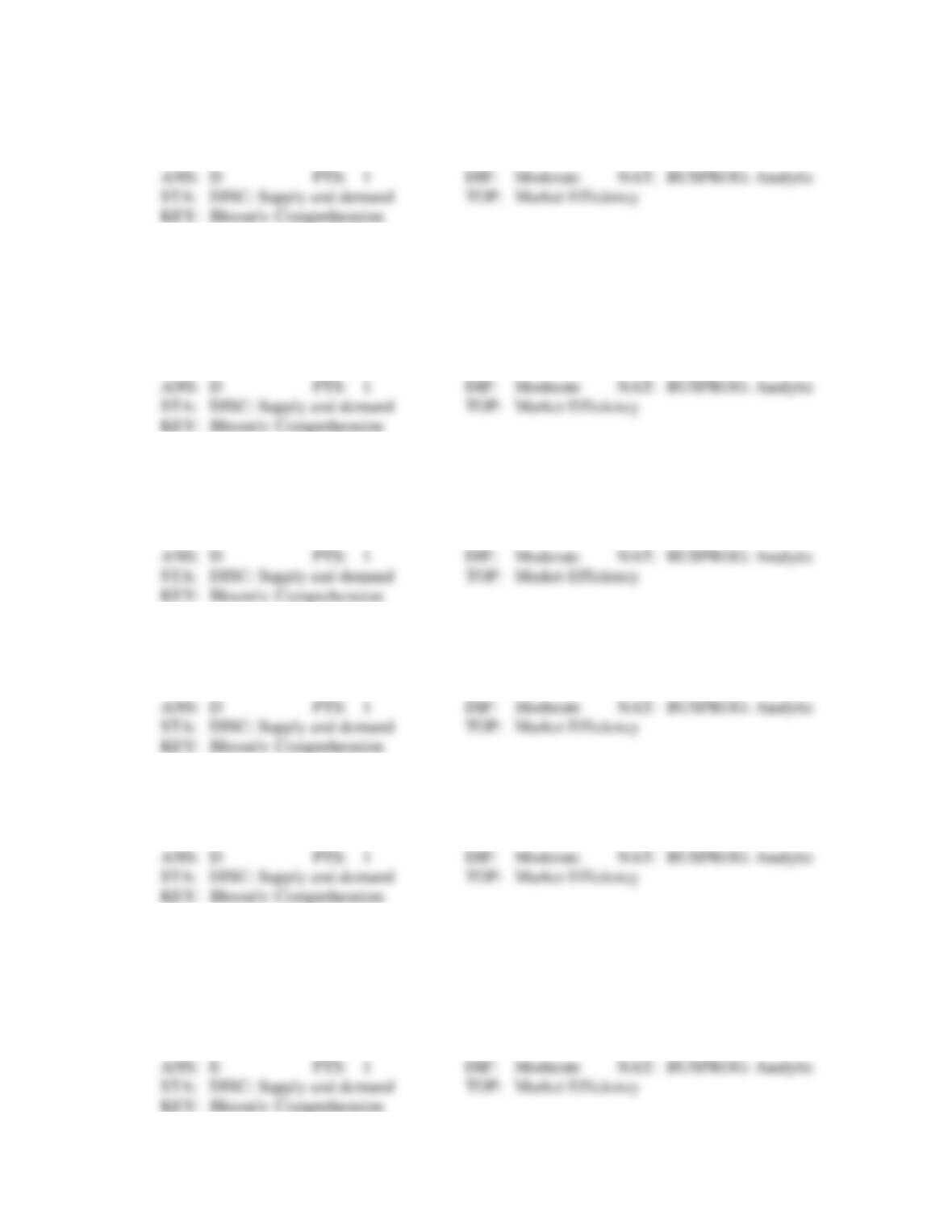
Exhibit 3A-2 Comparison of Market Efficiency and Deadweight Loss
47. As shown in Exhibit 3A-2, if the market is in equilibrium, then ____ represents consumer surplus.
a.
DFEBC
c.
DEA
b.
AEBC
d.
BEG
48. As shown in Exhibit 3A-2, if the market price falls from P1 to P2, then:
a.
total surplus increases.
c.
overproduction increases.
b.
deadweight loss increases.
d.
underproduction decreases.
49. As shown in Exhibit 3A-2, if the market is in equilibrium, then ____ represents producer surplus.
a.
FEH
c.
EGH
b.
FEH
d.
DFEA
50. As shown in Exhibit 3A-2, if the quantity supplied of good X per year is Q1, the result is:
a.
deadweight loss.
b.
inefficiency.
c.
underproduction.
d.
all of the above are true.
e.
none of the above are true.
51. As shown in Exhibit 3A-2, if the quantity supplied of good X per year is Q3, the result is:
a.
deadweight loss.
b.
inefficiency.
c.
overproduction.
d.
all of the above are true.
e.
none of the above are true.
52. As shown in Exhibit 3A-2, if the quantity supplied of good X per year is Q1, the result is a deadweight
loss represented by area:
a.
BEG.
c.
EGH.
b.
CBEFD.
d.
BEF.
53. As shown in Exhibit 3A-2, if the market price falls from P1 to P2, then:
a.
consumer surplus increases.
c.
deadweight loss is eliminated.
b.
producer surplus increases.
d.
all of these are true.
54. As shown in Exhibit 3A-2, if the market price falls from P1 to P2, then area ____ disappears.
a.
ABEFD
c.
EGH
b.
BEG
d.
BEF
55. As shown in Exhibit 3A-2, if the market price falls from P2 to P3, then:
a.
consumer surplus increases.
b.
producer surplus increases.
c.
deadweight loss increases.
d.
all of the above are true.
e.
none of the above are true.
56. As shown in Exhibit 3A-2, if the market price falls from P2 to P3, then area ____ appears.
a.
ABEFD
c.
EGF
b.
ABEC
d.
BEF
57. As shown in Exhibit 3A-2, if the market price falls from P2 to P3, then:
a.
total surplus increases.
c.
overproduction increases.
b.
deadweight loss decreases.
d.
underproduction decreases.
TRUE/FALSE
1. Total consumer surplus is measured by the total area under the market demand curve and below the
equilibrium price.
2. The points along the demand curve represent the maximum willingness of consumers to purchase a
product.
3. Consumer surplus measures the value between the price consumers are willing to pay for a product
and the preference price.
4. The points along the supply curve represent the maximum willingness of firms to accept payment for a
product offered for sale at various prices.
5. Producer surplus measures the value between the actual selling price and the profit-maximization
price.
6. Total producer surplus is measured by the total area under the equilibrium price and below the supply
curve.
7. Total producer surplus is the area below the equilibrium price and above the supply curve.
8. Deadweight loss results from a misallocation of resources.
9. The deadweight loss equals the consumer surplus minus the producer surplus resulting from a non-
equilibrium price.
10. Deadweight loss results from too few or too many resources used in a given market.
11. At the equilibrium price, deadweight loss is minimized.