App A-41
52. The desired profit according to the target costing calculations is:
53. The target cost per lawn blower is closest to:
Blumstein Corporation would like to use target costing for a new product it is considering
introducing. At a selling price of $22 per unit, management projects sales of 60,000 units. The
new product would require an investment of $300,000. The desired return on investment is
11%.
App A-42
54. The desired profit according to the target costing calculations is:
55. The target cost per unit is closest to:
Essay Questions
App A-43
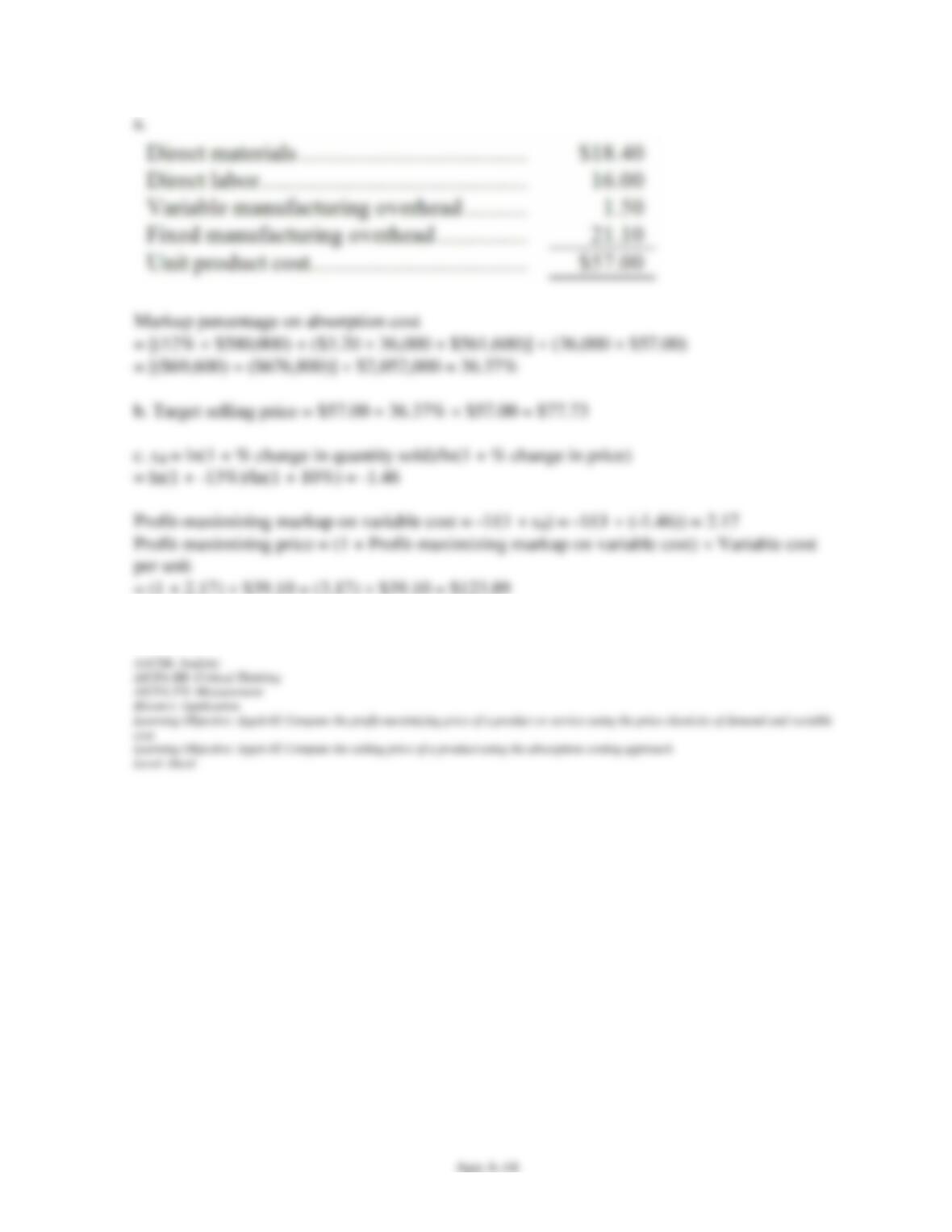
56. Qudsi Company makes a product that has the following costs:
The company uses the absorption costing approach to cost-plus pricing as described in the
text. The pricing calculations are based on budgeted production and sales of 36,000 units per
year.
The company has invested $580,000 in this product and expects a return on investment of
12%.
Required:
a. Compute the markup on absorption cost.
b. Compute the selling price of the product using the absorption costing approach.
c. Assume that every 10% increase in price leads to a 13% decrease in quantity sold.
Assuming no change in cost structure and that direct labor is a variable cost, compute the
profit-maximizing price.
57. Nicklos Corporation’s marketing manager believes that every 7% decrease in the selling
price of one of the company’s products would lead to a 10% increase in the product’s total unit
sales. The product’s absorption costing unit product cost is $18.60. The variable production
cost is $7.60 per unit and the variable selling and administrative cost is $4.90.
Required:
a. Compute the product’s price elasticity of demand as defined in the text.
b. Compute the product’s profit-maximizing price according to the formula in the text.
58. Okano Company’s management believes that every 5% increase in the selling price of one
of the company’s products would lead to a 7% decrease in the product’s total unit sales. The
variable cost per unit of this product is $47.00.
Required:
a. Compute the product’s price elasticity of demand as defined in the text.
b. Compute the product’s profit-maximizing price according to the formula in the text.
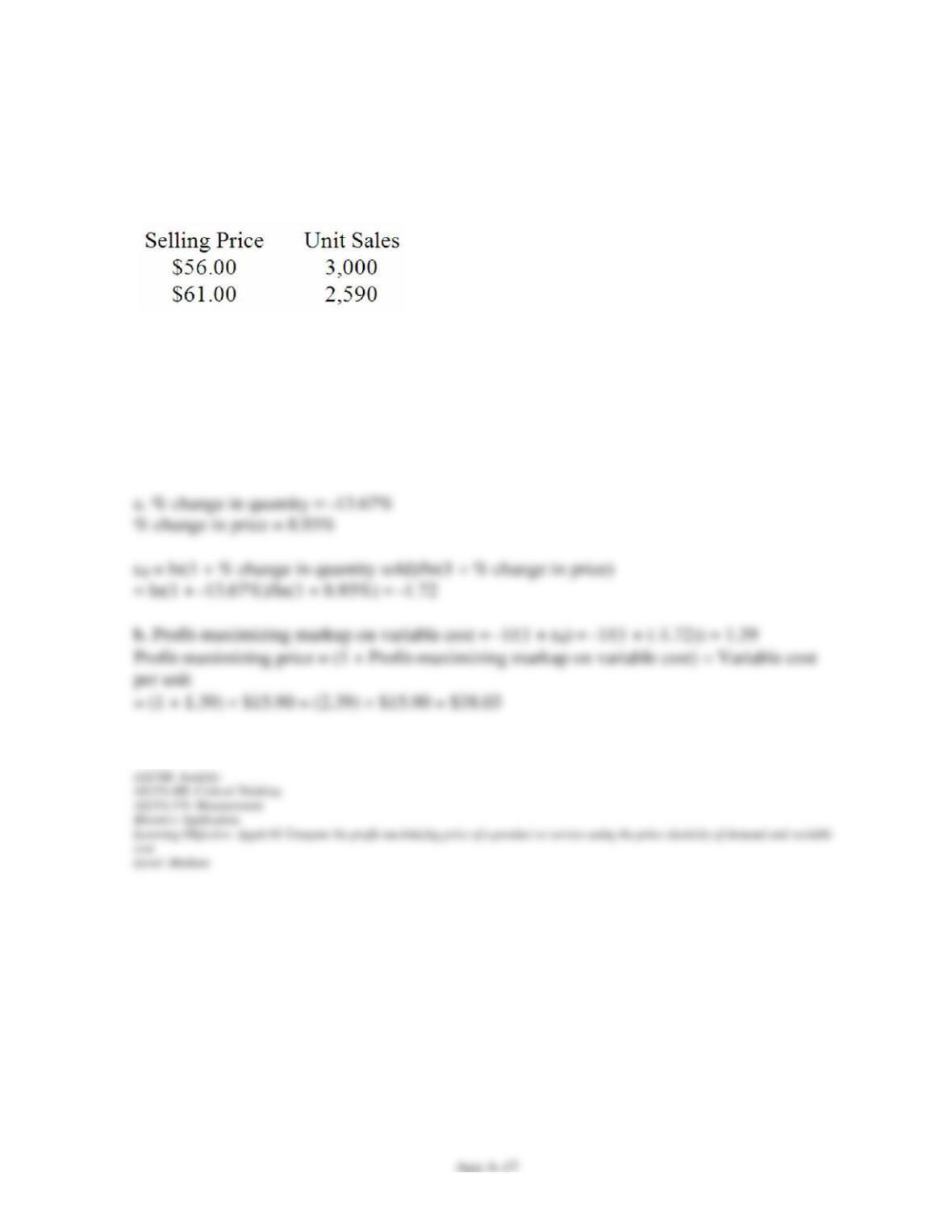
59. Pasta Corporation recently changed the selling price of one of its products. Data
concerning sales for comparable periods before and after the price change are presented
below.
The product’s variable cost is $15.90 per unit.
Required:
a Compute the product’s price elasticity of demand as defined in the text.
b. Compute the product’s profit-maximizing price according to the formula in the text.
App A-48
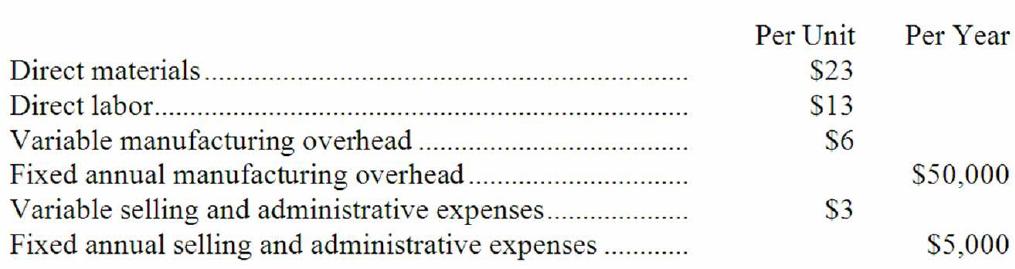
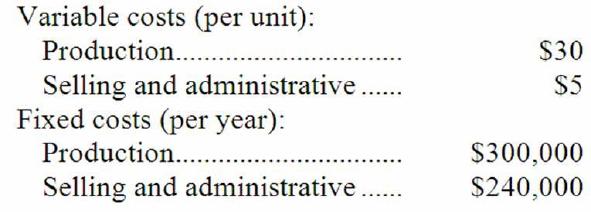
60. The management of Heimrich Corporation would like to set the selling price on a new
product using the absorption costing approach to cost-plus pricing. The company’s accounting
department has supplied the following estimates for the new product:
Management plans to produce and sell 5,000 units of the new product annually. The new
product would require an investment of $420,000 and has a required return on investment of
20%.
Required:
a. Determine the unit product cost for the new product.
b. Determine the markup percentage on absorption cost for the new product.
c. Determine the target selling price for the new product using the absorption costing
approach.
App A-50
61. Mercer Company estimates that an investment of $800,000 would be necessary in order to
produce and sell 40,000 units of Product A each year. Costs associated with the new product
would be:
The company requires a 20% rate of return on the investment on all products.
Required:
a. Compute the markup that would be used under the absorption costing approach to cost-plus
pricing as described in the text.
b. Compute the selling price under the absorption costing approach to cost-plus pricing as
described in the text.
62. Madonia Corporation is introducing a new product whose direct materials cost is $37 per
unit, direct labor cost is $19 per unit, variable manufacturing overhead is $6 per unit, and
variable selling and administrative expense is $4 per unit. The annual fixed manufacturing
overhead associated with the product is $91,000 and its annual fixed selling and
administrative expense is $42,000. Management plans to produce and sell 7,000 units of the
new product annually. The new product would require an investment of $595,000 and has a
required return on investment of 20%. Management would like to set the selling price on a
new product using the absorption costing approach to cost-plus pricing.
Required:
a. Determine the unit product cost for the new product.
b. Determine the markup percentage on absorption cost for the new product.
c. Determine the target selling price for the new product using the absorption costing
approach.
App A-53
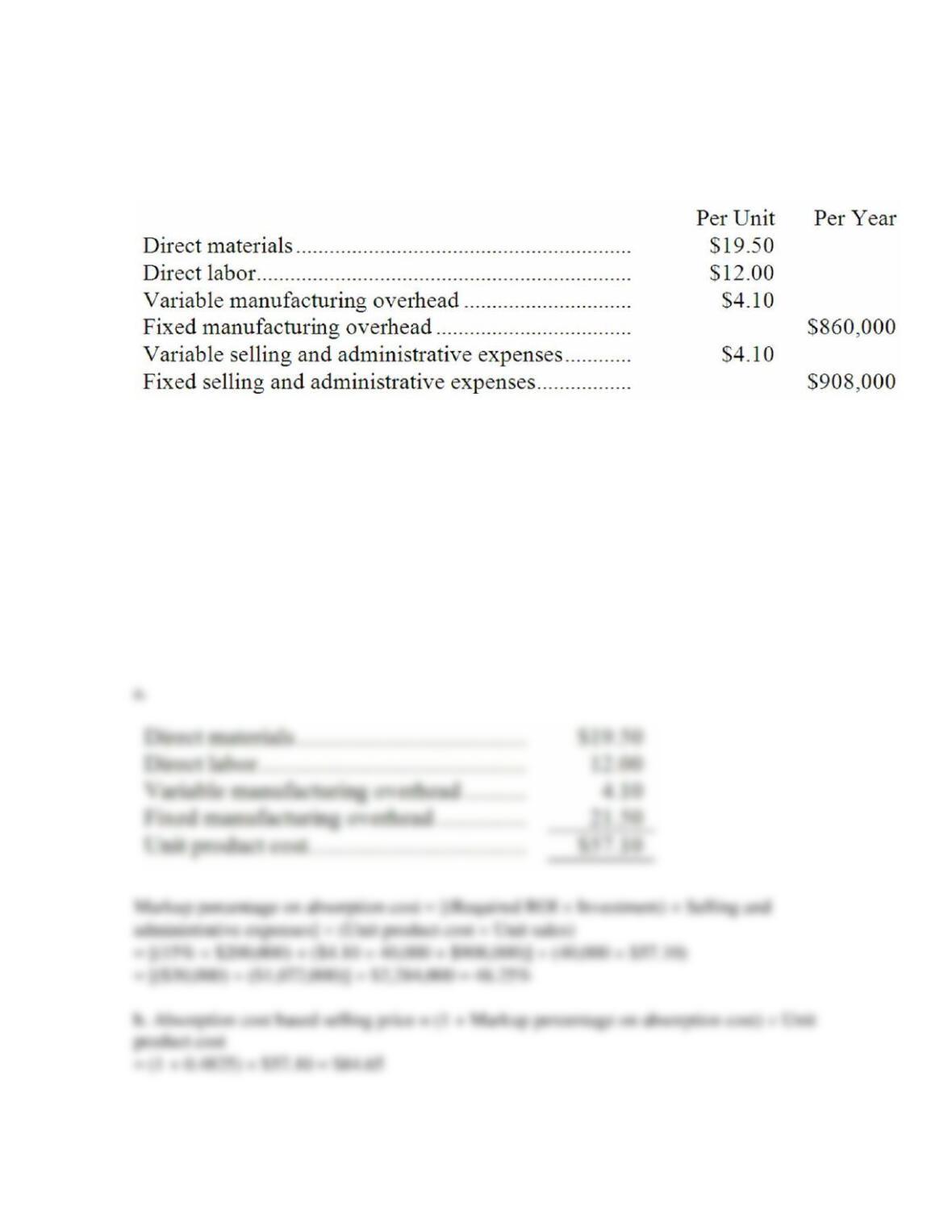
63. Rizer Corporation manufactures a product that has the following costs:
The company uses the absorption costing approach to cost-plus pricing as described in the
text. The pricing calculations are based on budgeted production and sales of 40,000 units per
year.
The company has invested $200,000 in this product and expects a return on investment of
15%.
Required:
a. Compute the markup on absorption cost.
b. Compute the selling price of the product using the absorption costing approach.
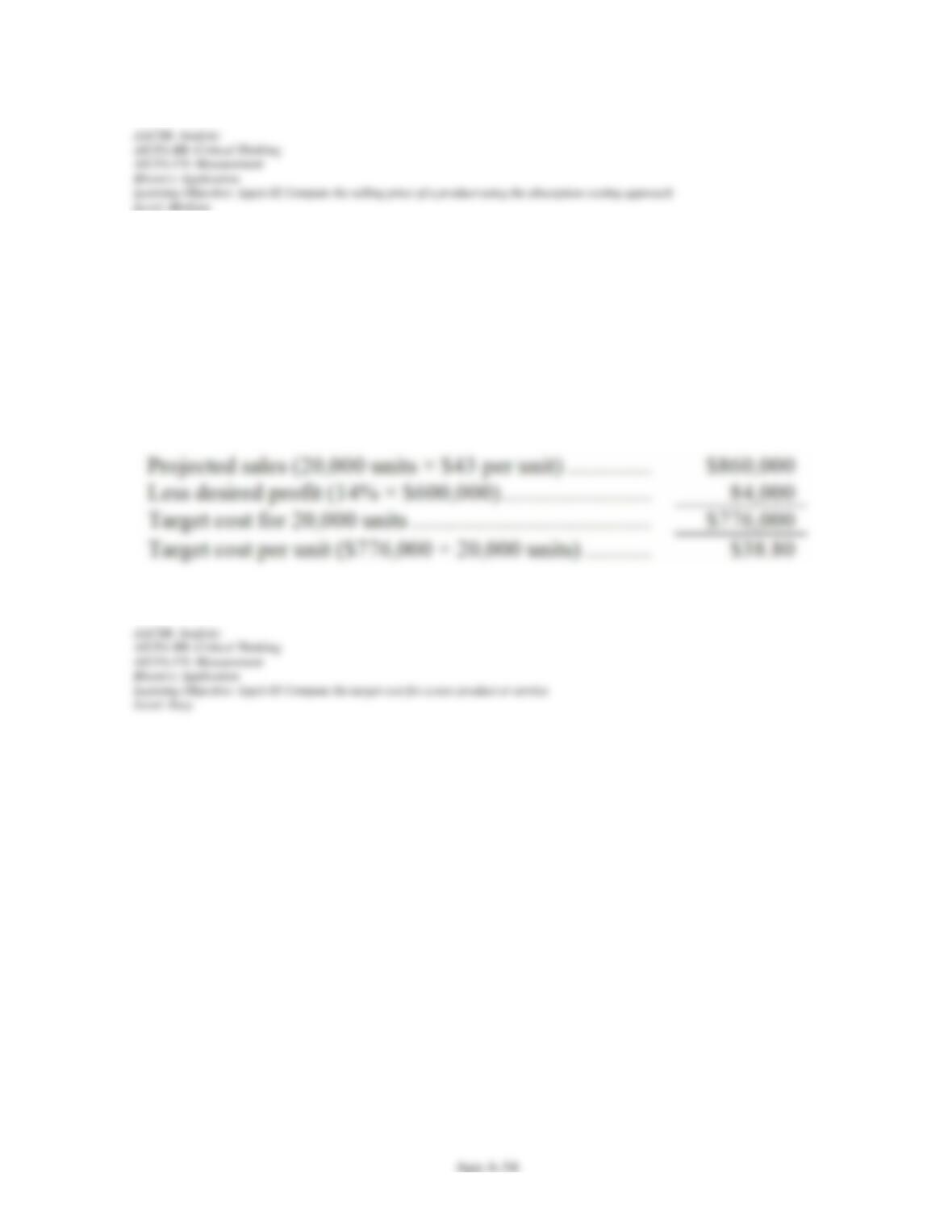
64. Management of Fabiano Corporation is considering a new product, an outdoor speaker
that would have a selling price of $43 per unit and projected sales of 20,000 units. Launching
the new product would require an investment of $600,000. The desired return on investment
is 14%.
Required:
Determine the target cost per unit for the outdoor speaker.
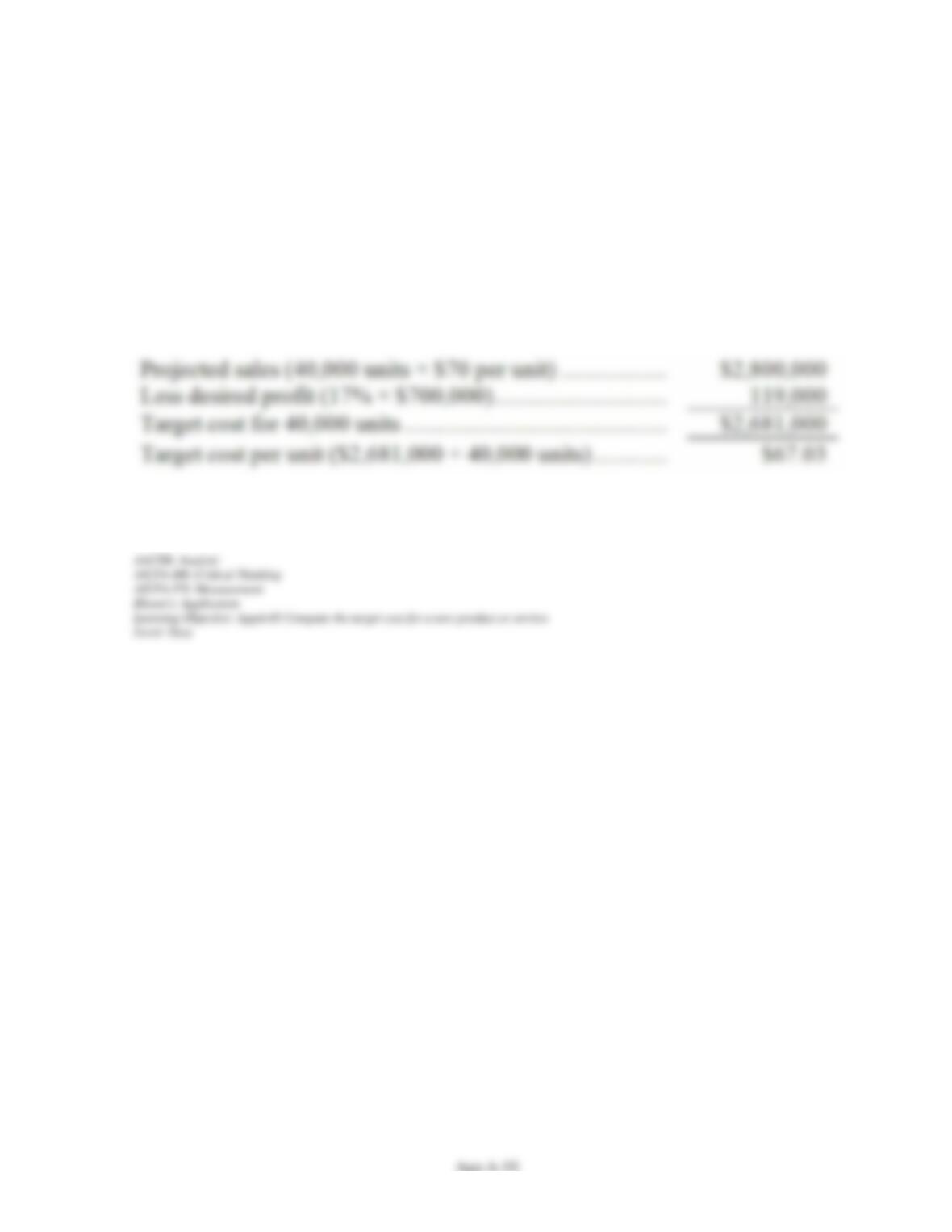
65. Guzzetta Corporation would like to use target costing for a new product that is under
consideration. At a selling price of $70 per unit, management projects sales of 40,000 units.
The new product would require an investment of $700,000. The desired return on investment
is 17%.
Required:
Determine the target cost per unit for the new product.
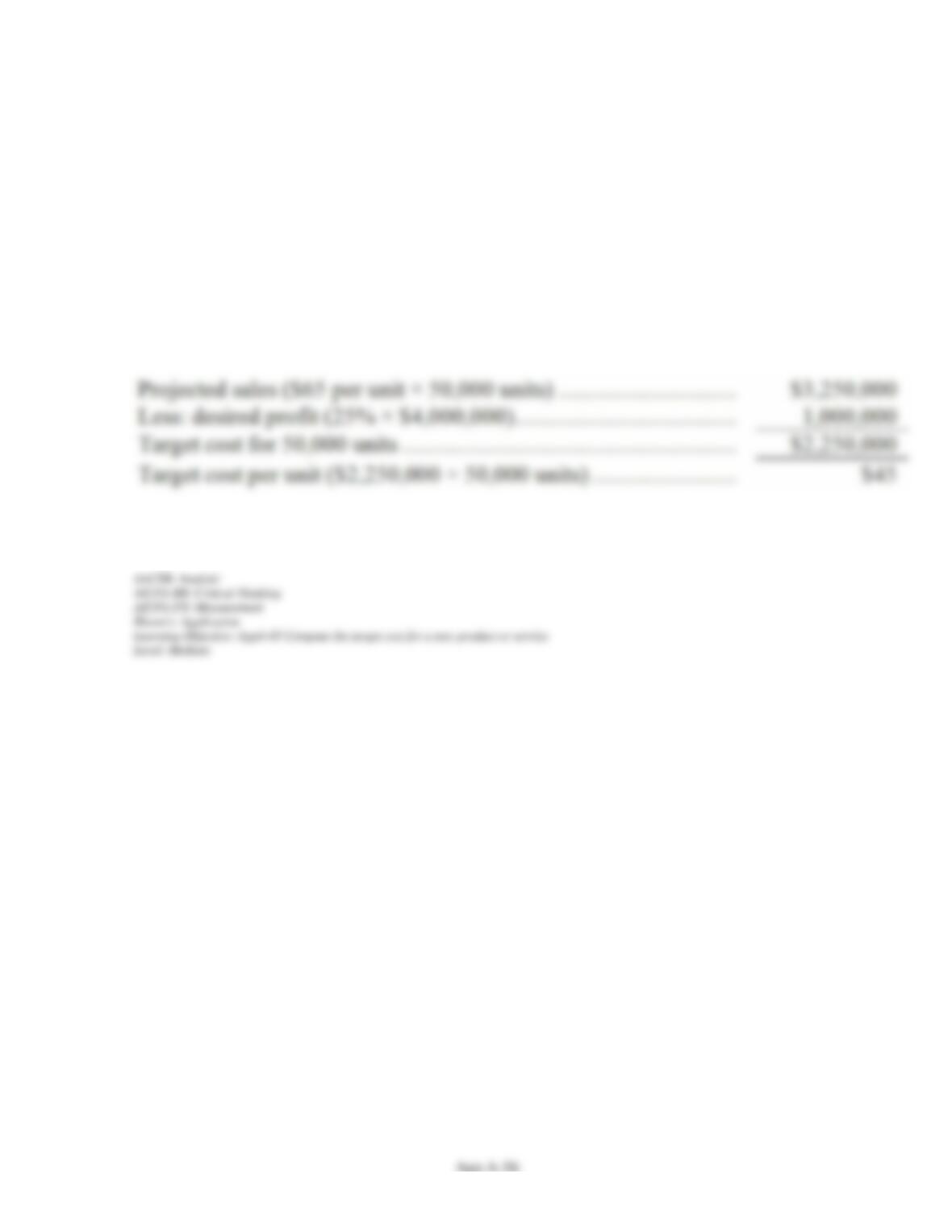
66. Kupperson, Inc. is considering adding an inline roller skate to its product line.
Management believes that in order to be competitive, the skate cannot be priced above $65
per pair. The company requires a minimum return of 25% on its investments. Launching the
new product would require an investment of $4,000,000. Sales are expected to be 50,000 pairs
of skates per year.
Required:
Compute the target cost of a pair of skates.
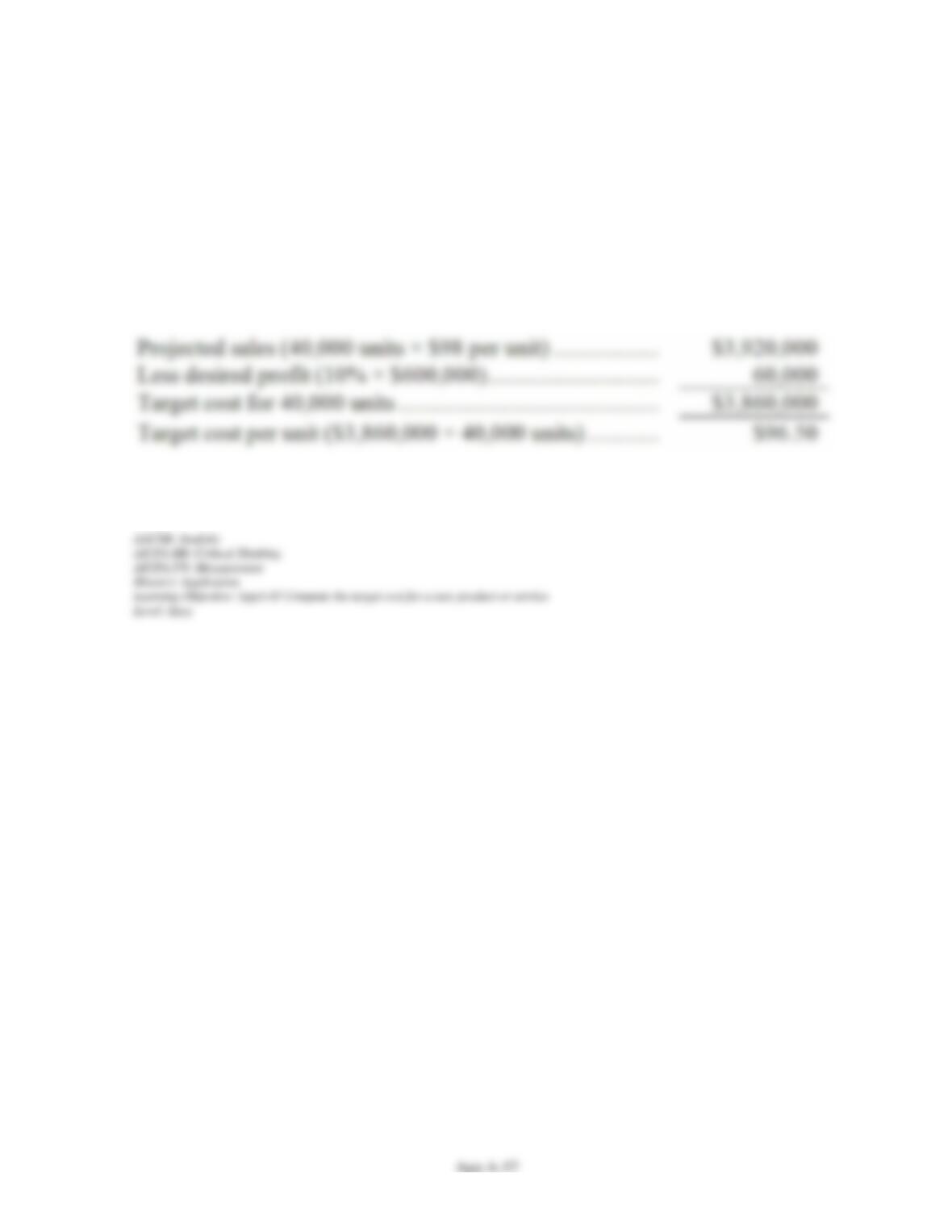
67. The management of Mendoza, Inc., is considering a new product that would have a selling
price of $98 per unit and projected sales of 40,000 units. The new product would require an
investment of $600,000. The desired return on investment is 10%.
Required:
Determine the target cost per unit for the new product.