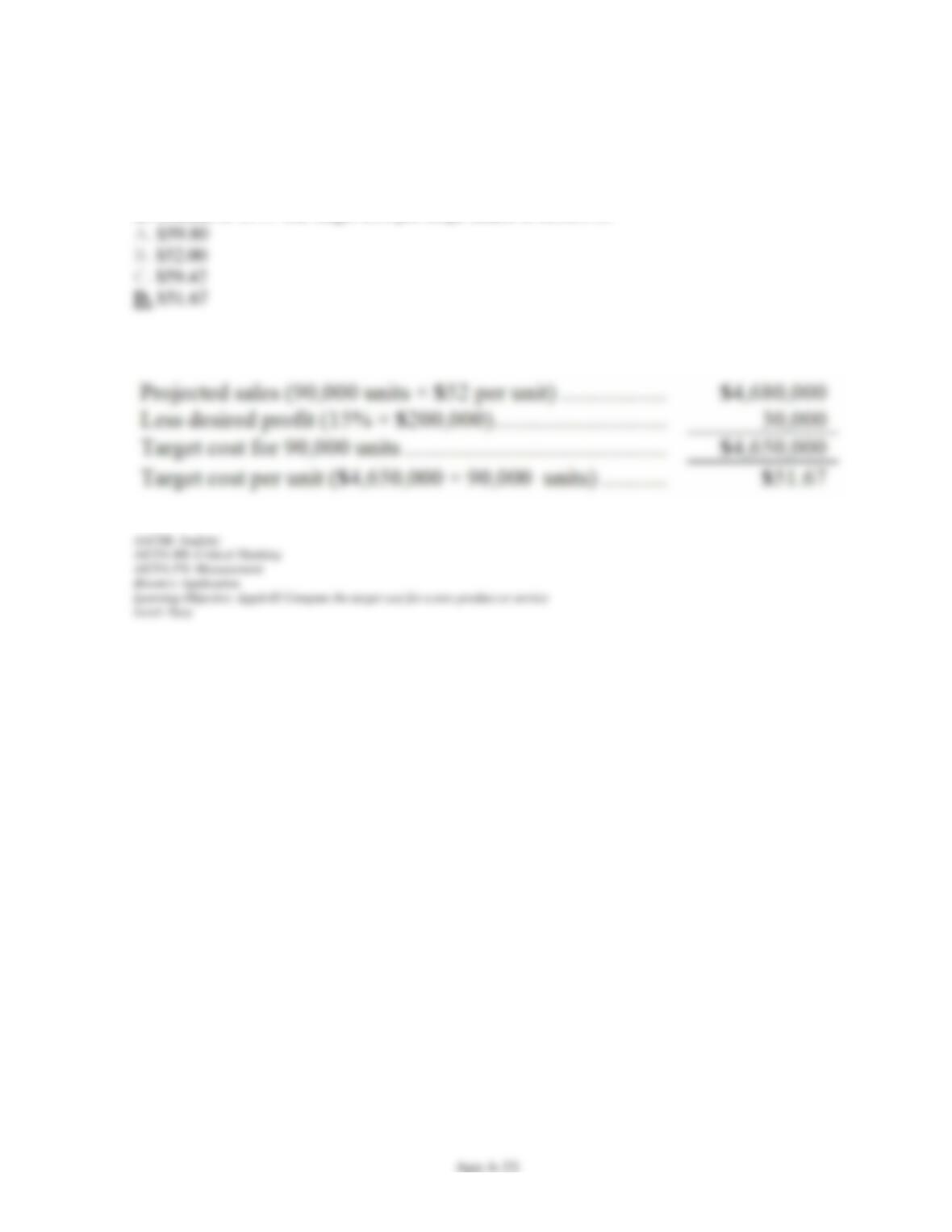
31. A new product, an automated crepe maker, is being introduced at Laguna Corporation. At
a selling price of $52 per unit, management projects sales of 90,000 units. Launching the
crepe maker as a new product would require an investment of $200,000. The desired return on
investment is 15%. The target cost per crepe maker is closest to:
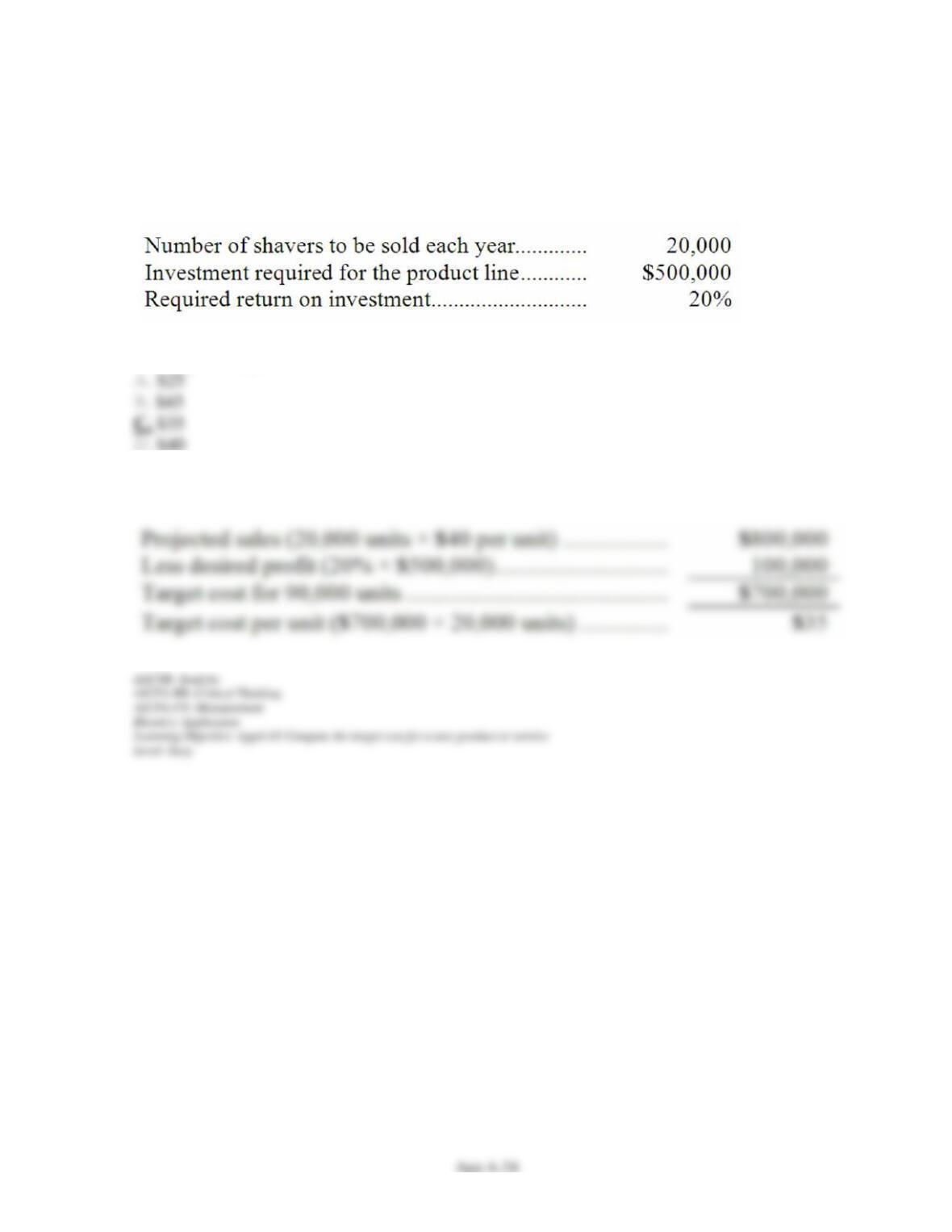
32. Penrod Company wants to manufacture and sell a new electric shaver. To compete
effectively, the shaver would have to be priced at no more than $40 per unit. The following
additional information is available:
The target cost per shaver would be:
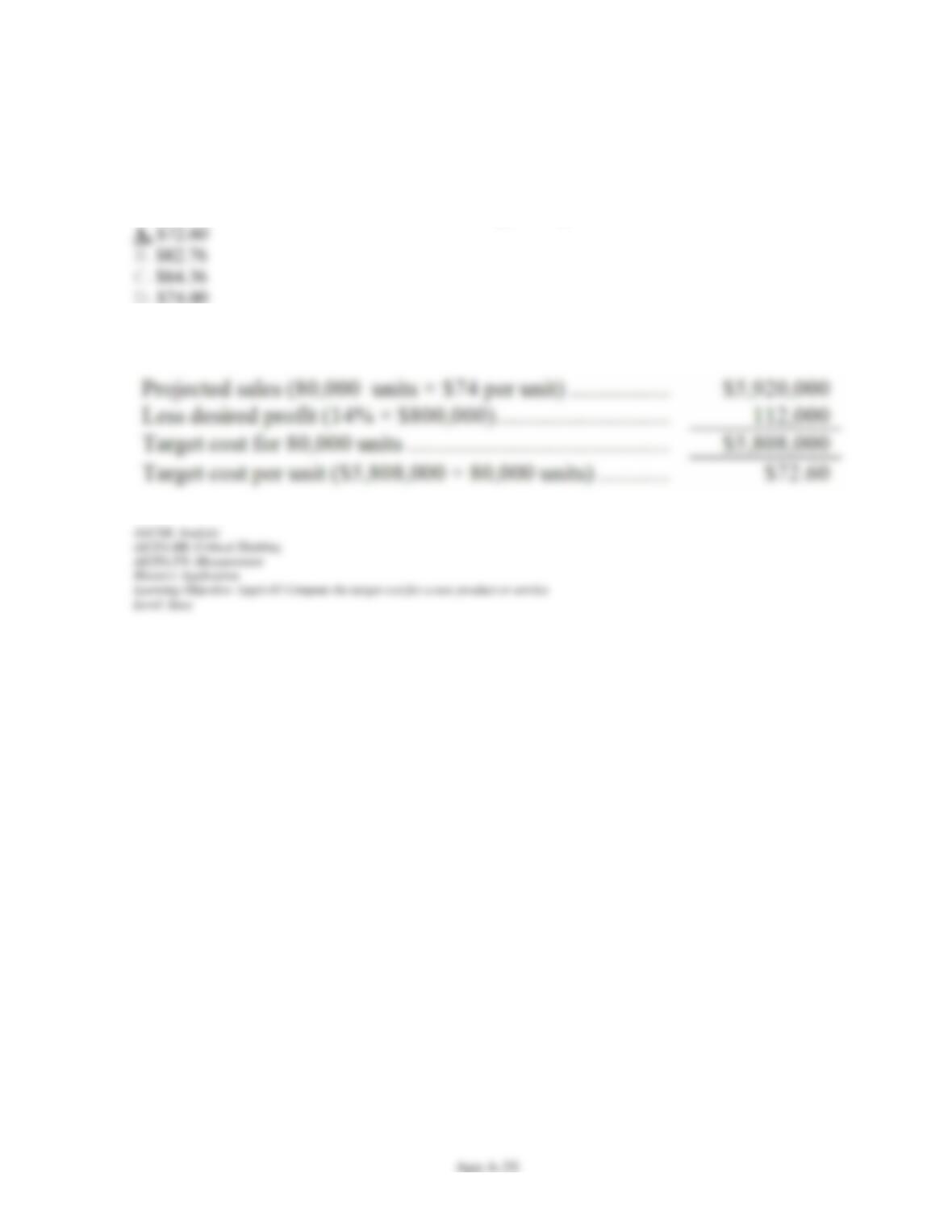
33. The management of Kozloff Corporation is considering introducing a new product—a
compact barbecue. At a selling price of $74 per unit, management projects sales of 80,000
units. Launching the barbecue as a new product would require an investment of $800,000.
The desired return on investment is 14%. The target cost per barbecue is closest to:
App A-26
34. Perin Corporation would like to use target costing for a new product it is considering
introduce. At a selling price of $25 per unit, management projects sales of 30,000 units. The
new product would require an investment of $500,000. The desired return on investment is
11%. The target cost per unit is closest to:
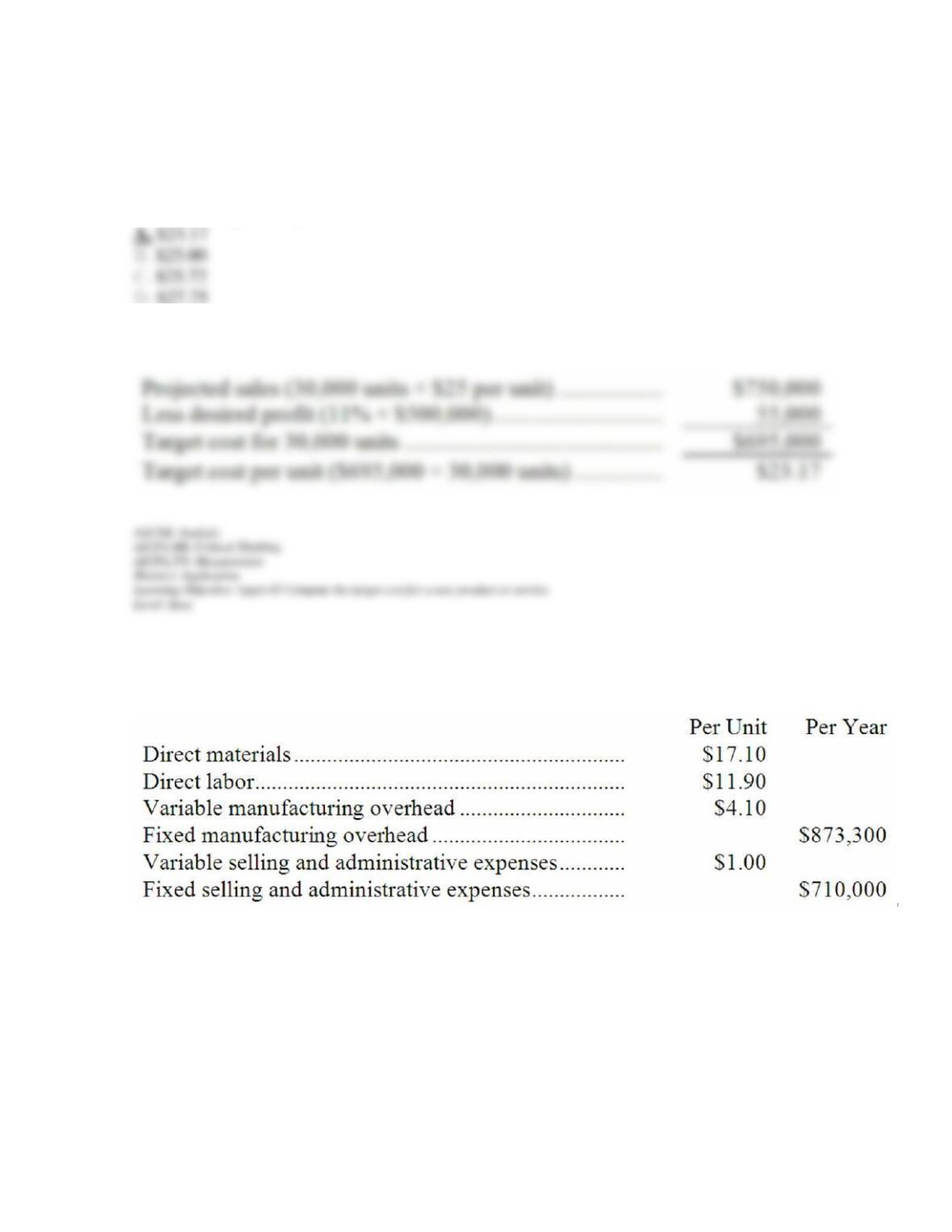
Dieckman Company makes a product with the following costs:
The company uses the absorption costing approach to cost-plus pricing described in the text.
The pricing calculations are based on budgeted production and sales of 71,000 units per year.
The company has invested $360,000 in this product and expects a return on investment of
13%.
Direct labor is a variable cost in this company.
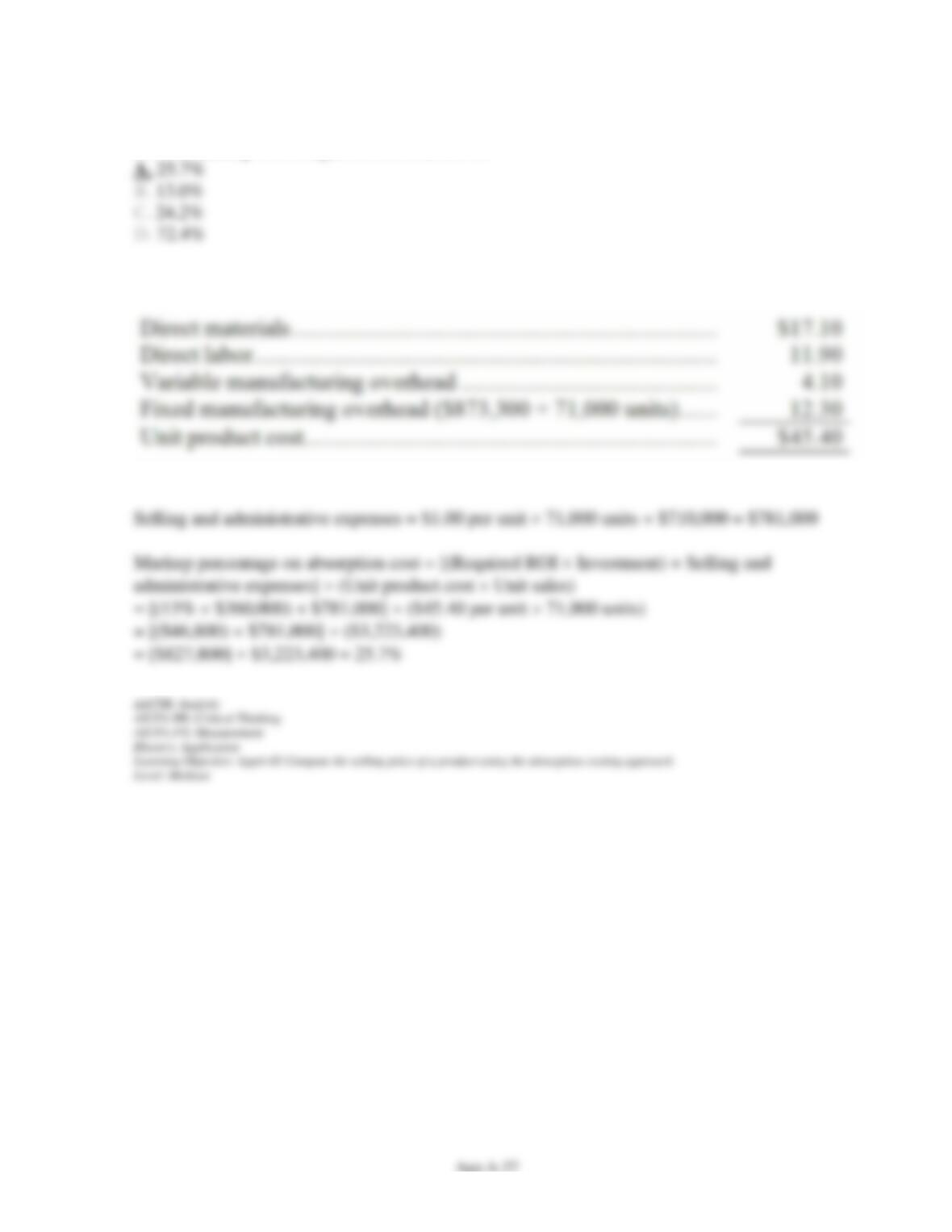
35. The markup on absorption cost is closest to:
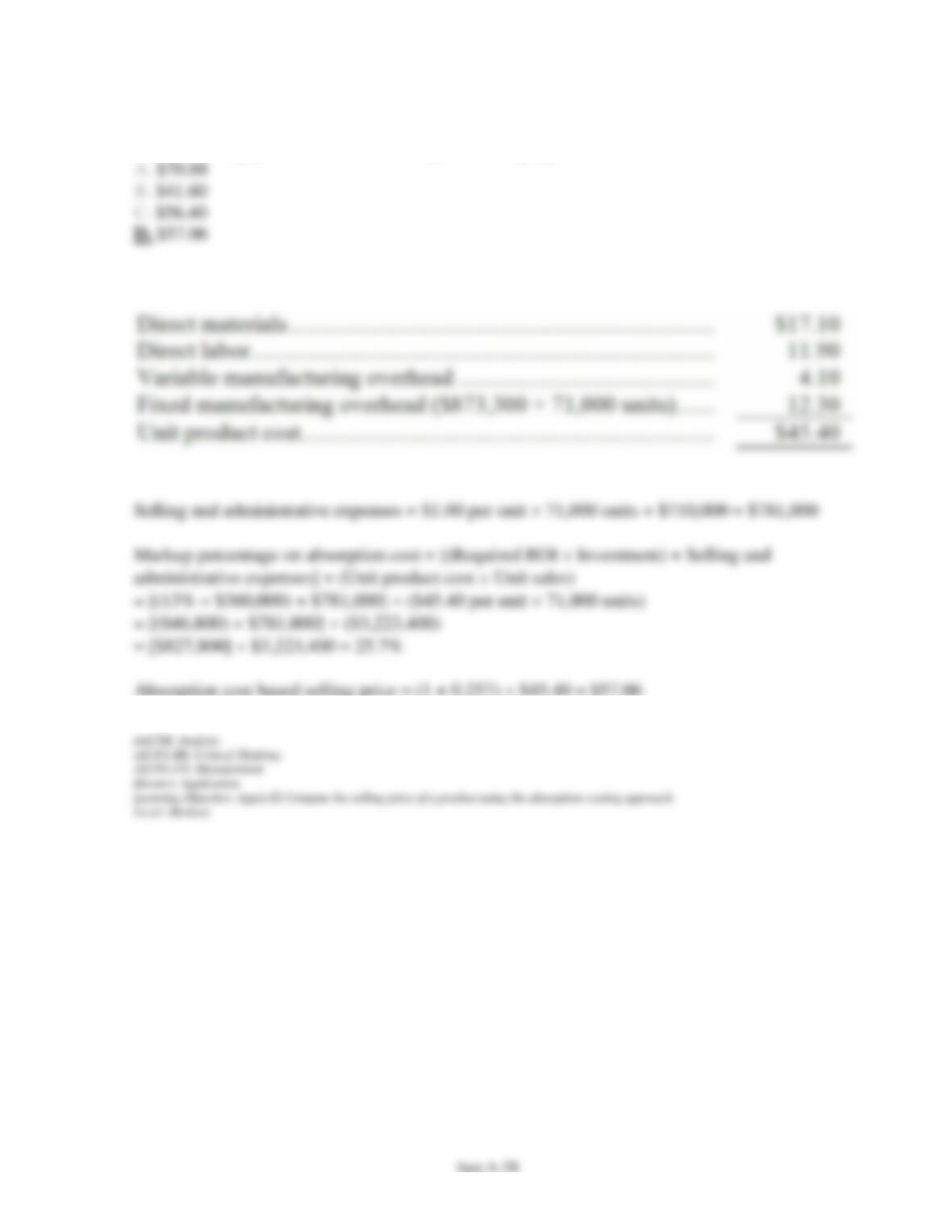
36. The selling price based on the absorption costing approach is closest to:
App A-29
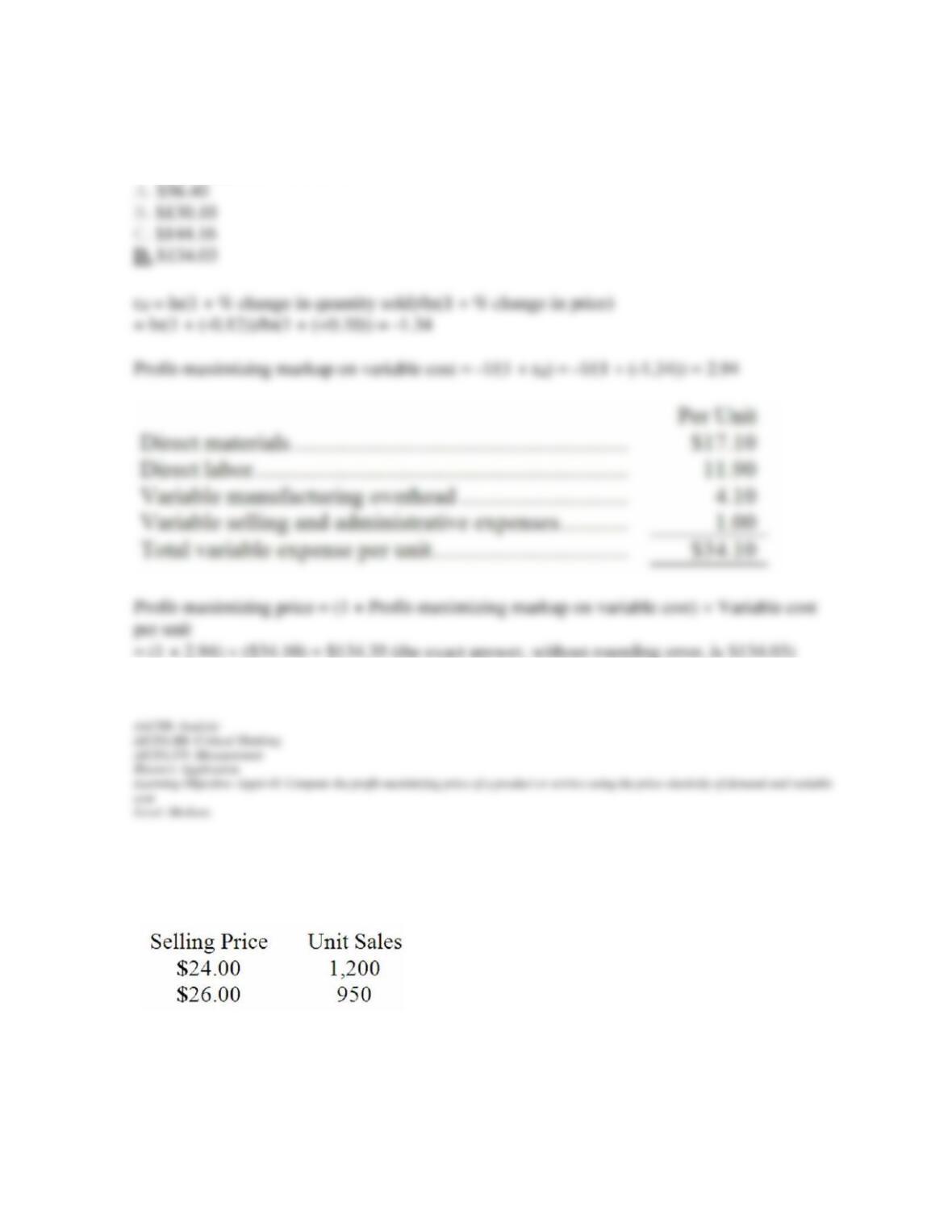
37. If every 10% increase in price leads to a 12% decrease in quantity sold, the profit-
maximizing price is closest to:
Coan Company recently changed the selling price of one of its products. Data concerning
sales for comparable periods before and after the price change are presented below.
The product’s variable cost is $21.40 per unit.
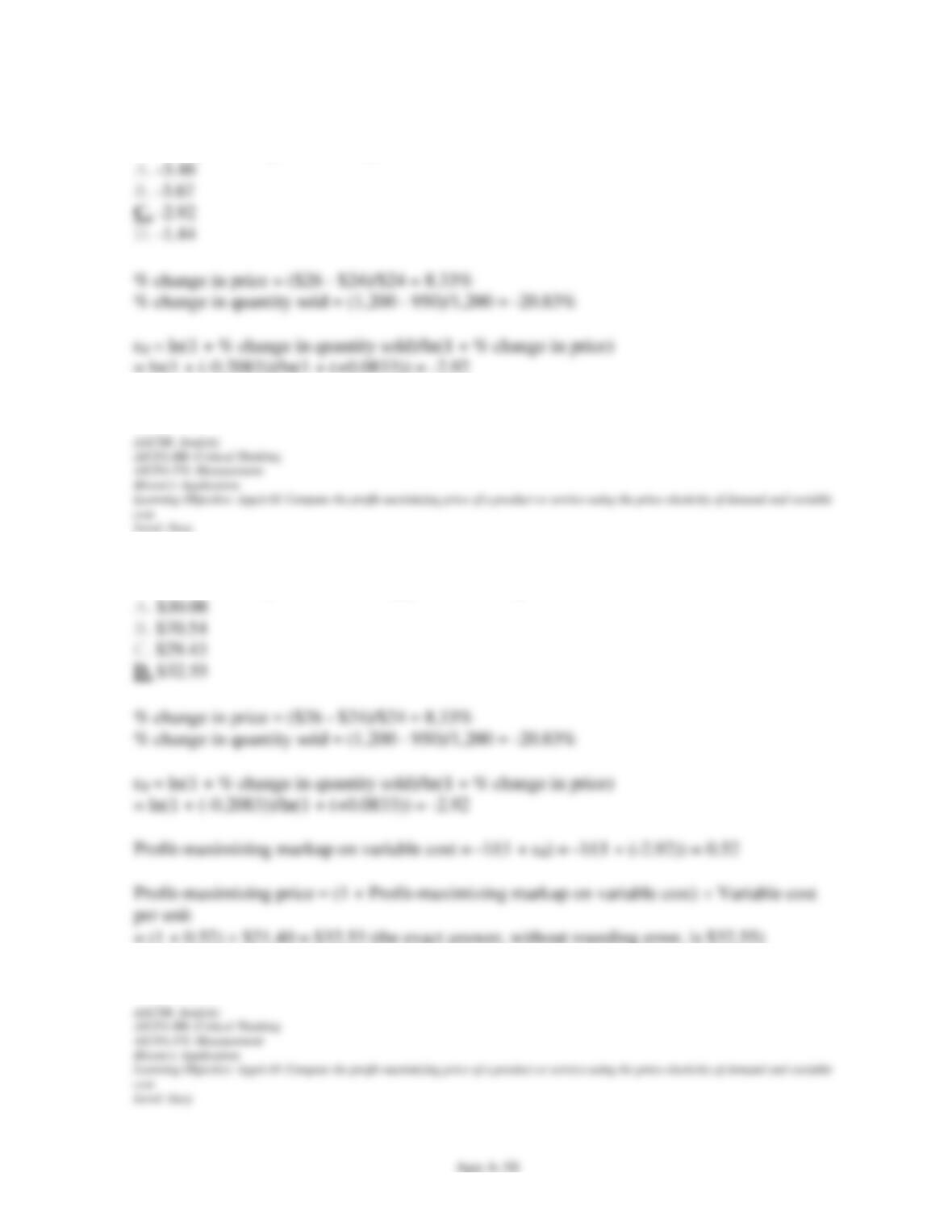
38. The product’s price elasticity of demand as defined in the text is closest to:
39. The product’s profit-maximizing price according to the formula in the text is closest to:
Allen Corporation’s vice president in charge of marketing believes that every 8% increase in
the selling price of one of the company’s products would lead to an 11% decrease in the
product’s total unit sales. The product’s absorption costing unit product cost is $10.70. The
variable production cost is $1.50 per unit and the variable selling and administrative cost is
$4.40 per unit.
40. The product’s price elasticity of demand as defined in the text is closest to:
App A-32
41. The product’s profit-maximizing price according to the formula in the text is closest to:
Boden Company’s management believes that every 2% increase in the selling price of one of
the company’s products would lead to a 5% decrease in the product’s total unit sales. The
product’s variable cost is $19.30 per unit.
42. The product’s price elasticity of demand as defined in the text is closest to:
43. The product’s profit-maximizing price according to the formula in the text is closest to:
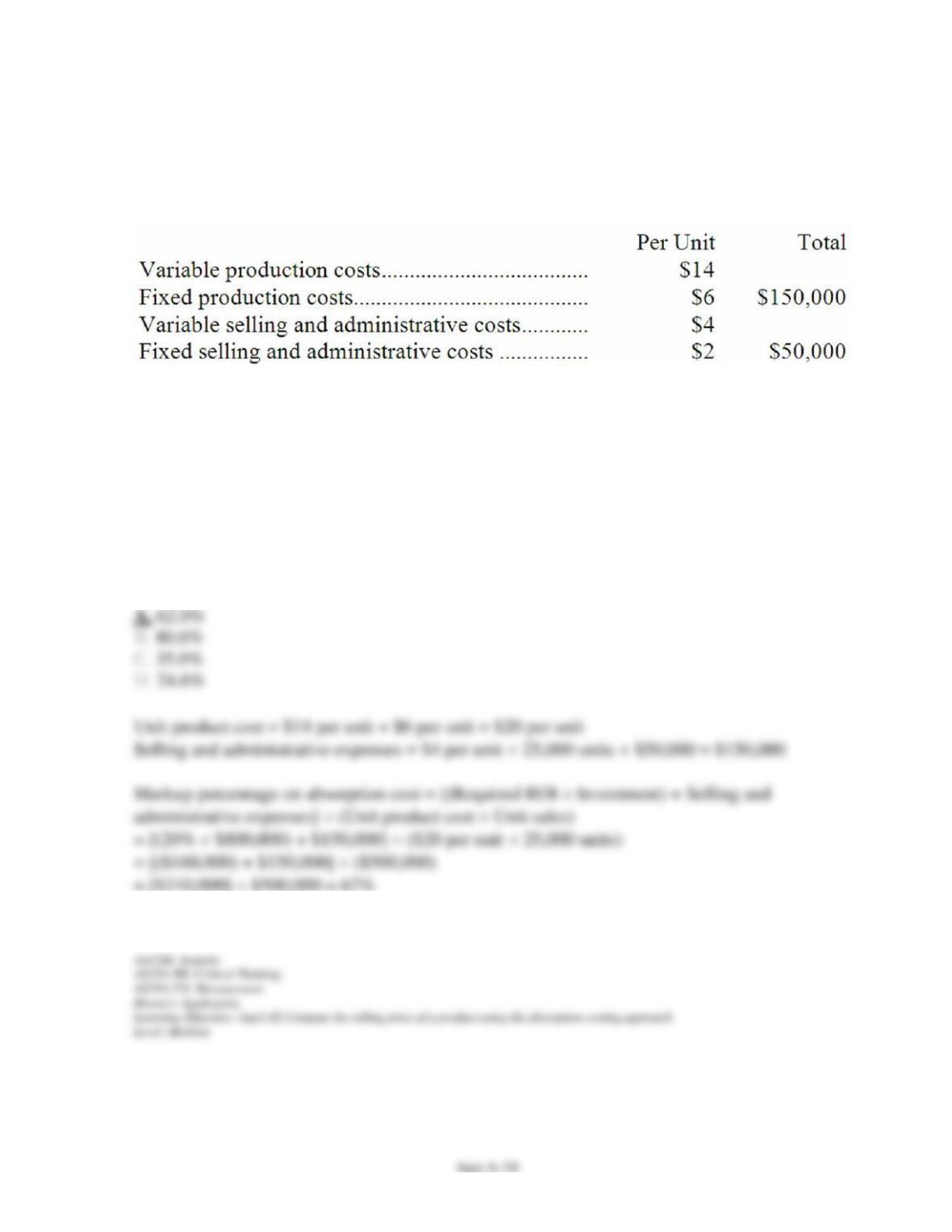
Werry Company is about to introduce a new product. It is expected that the following costs
would be incurred when 25,000 units are produced and sold in a year:
Werry Company uses the absorption costing approach to cost-plus pricing as described in the
text.
44. Assume that Werry Company has not yet determined a markup to use on the new product.
The new product would require an investment of $800,000. The company requires a 20% rate
of return on investment on all new products. The markup under the absorption costing
approach would be closest to:
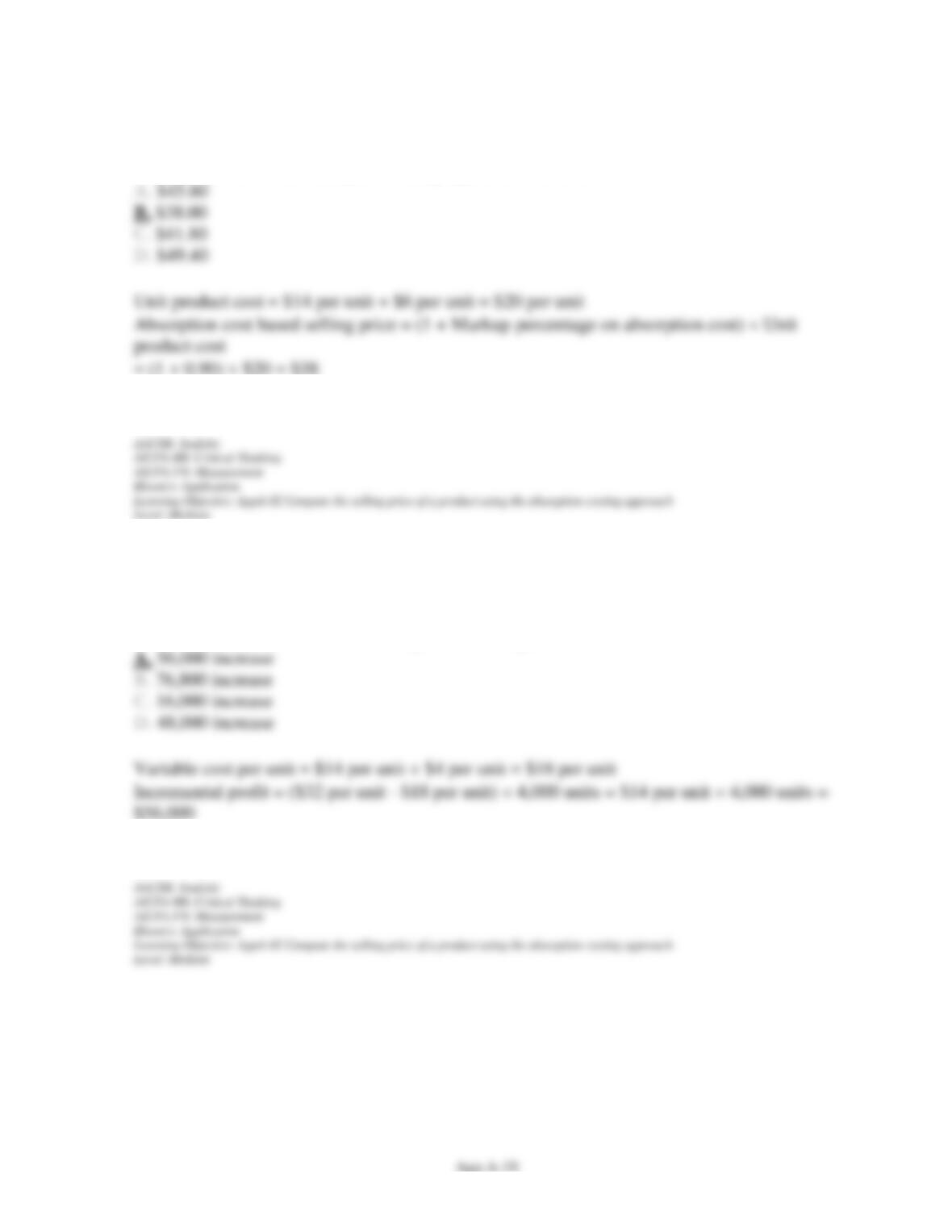
45. Assume that the company uses a markup of 90% in order to determine selling prices. The
selling price under the absorption costing approach would be:
46. After introducing the product at a markup of 90%, the company finds that it has excess
capacity. A foreign dealer has offered to purchase 4,000 units of the product at a special price
of $32 per unit. This sale would not disturb regular business. If the special price is accepted
on the 4,000 units, the effect on total profits for the year will be a:
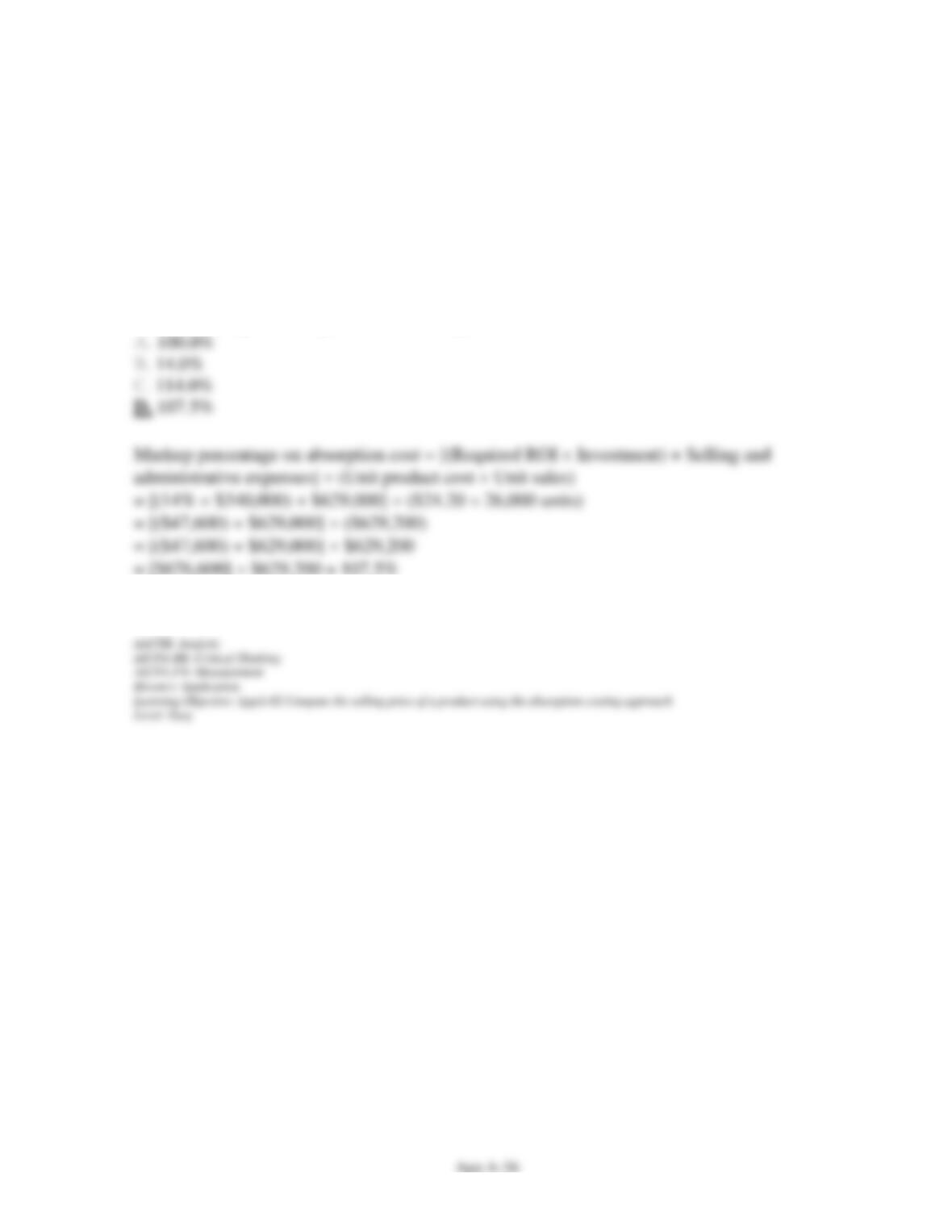
Edelheit Company uses the absorption costing approach to cost-plus pricing as described in
the text to set prices for its products. Based on budgeted sales of 26,000 units next year, the
unit product cost of a particular product is $24.20. The company’s selling and administrative
expenses for this product are budgeted to be $629,000 in total for the year. The company has
invested $340,000 in this product and expects a return on investment of 14%.
47. The markup on absorption cost for this product would be closest to:
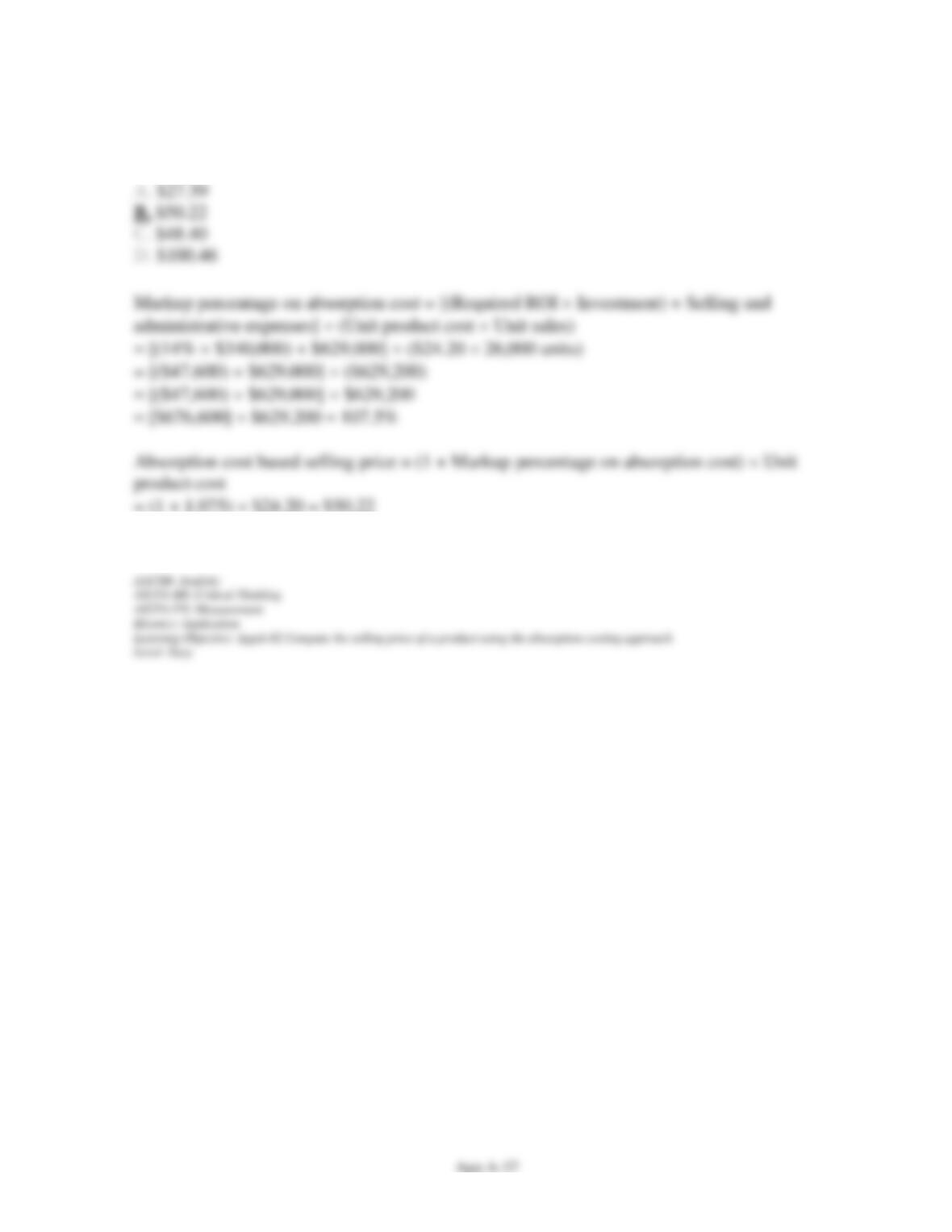
48. The selling price based on the absorption costing approach for this product would be
closest to:
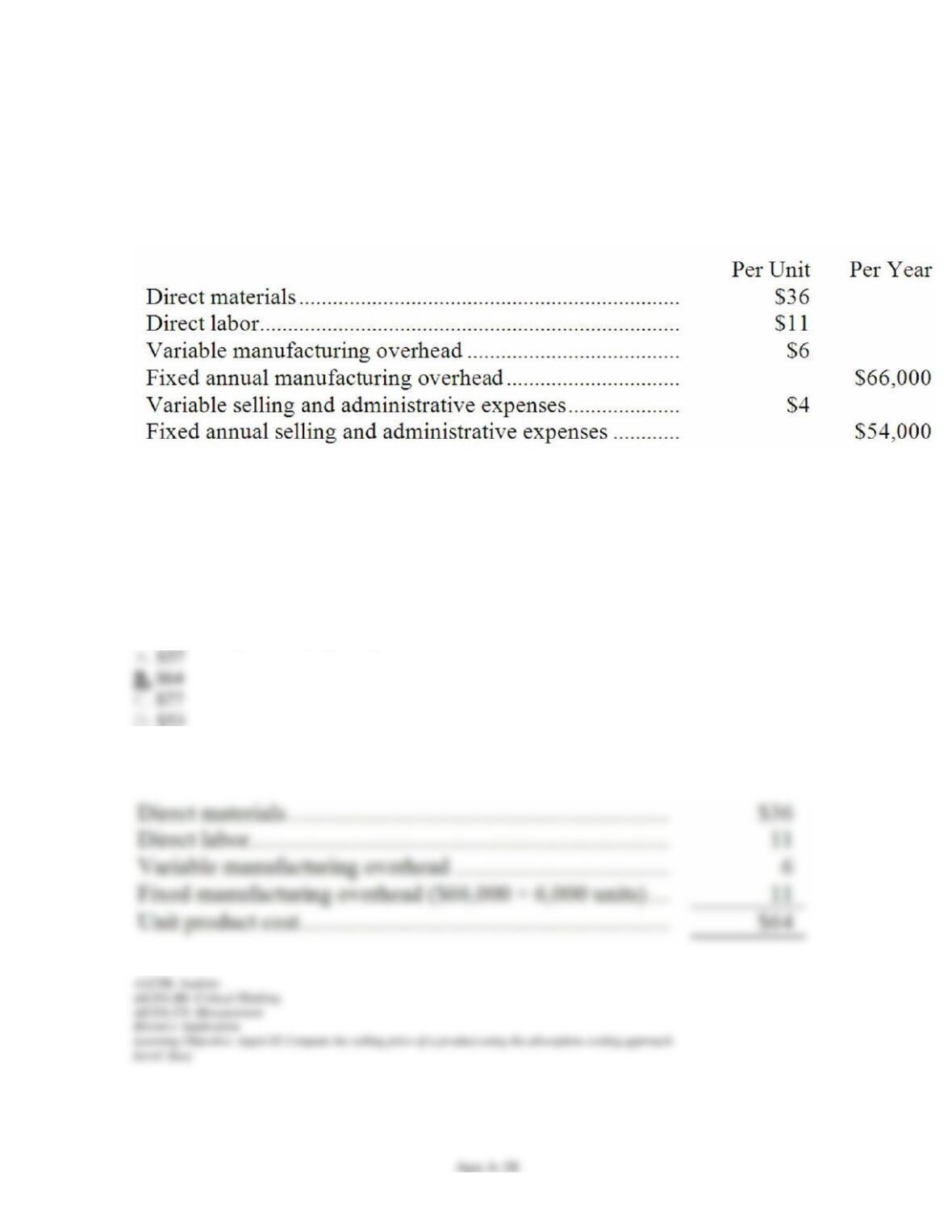
The management of Store Corporation would like to set the selling price on a new product
using the absorption costing approach to cost-plus pricing. The company’s accounting
department has supplied the following estimates for the new product:
Management plans to produce and sell 6,000 units of the new product annually. The new
product would require an investment of $1,140,000 and has a required return on investment of
10%.
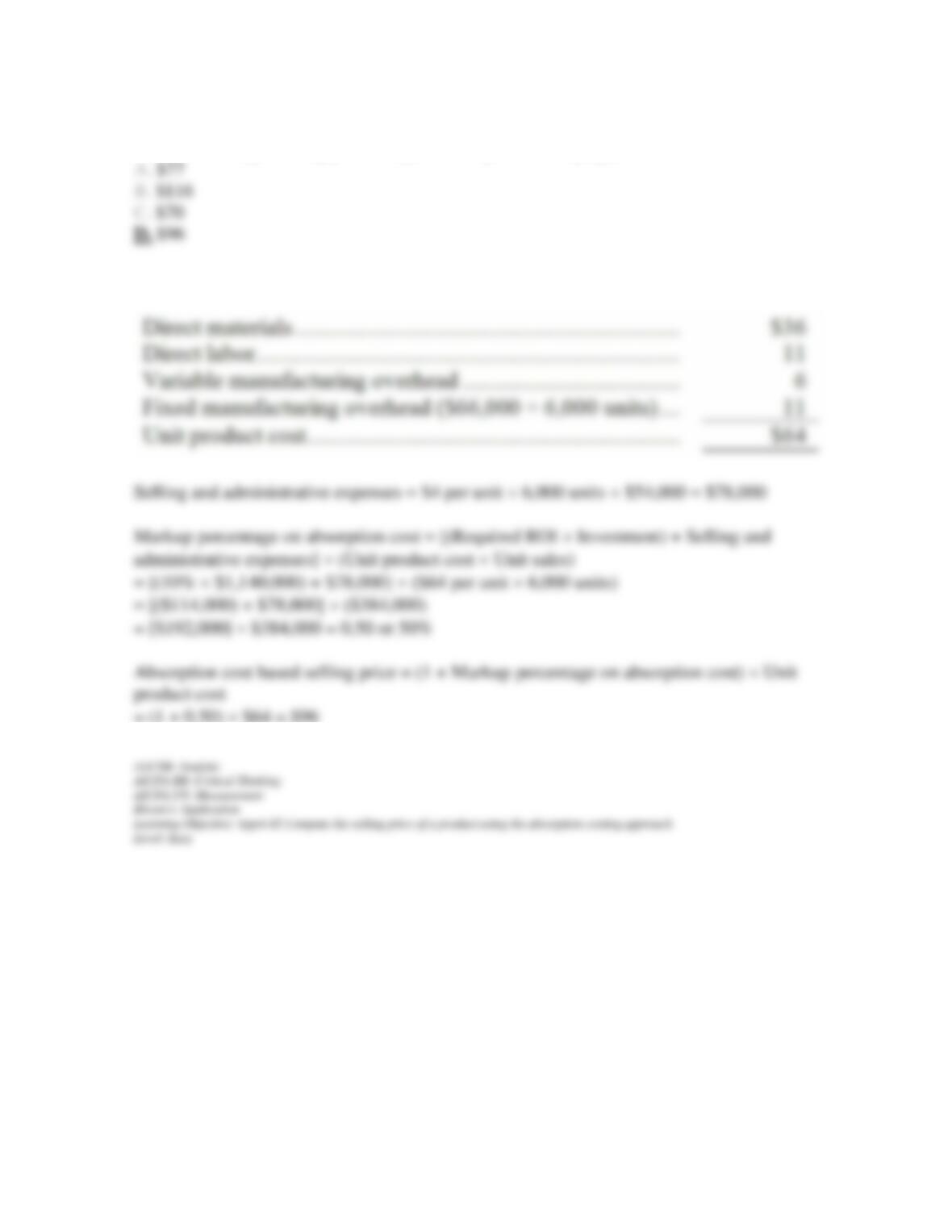
49. The absorption costing unit product cost is:
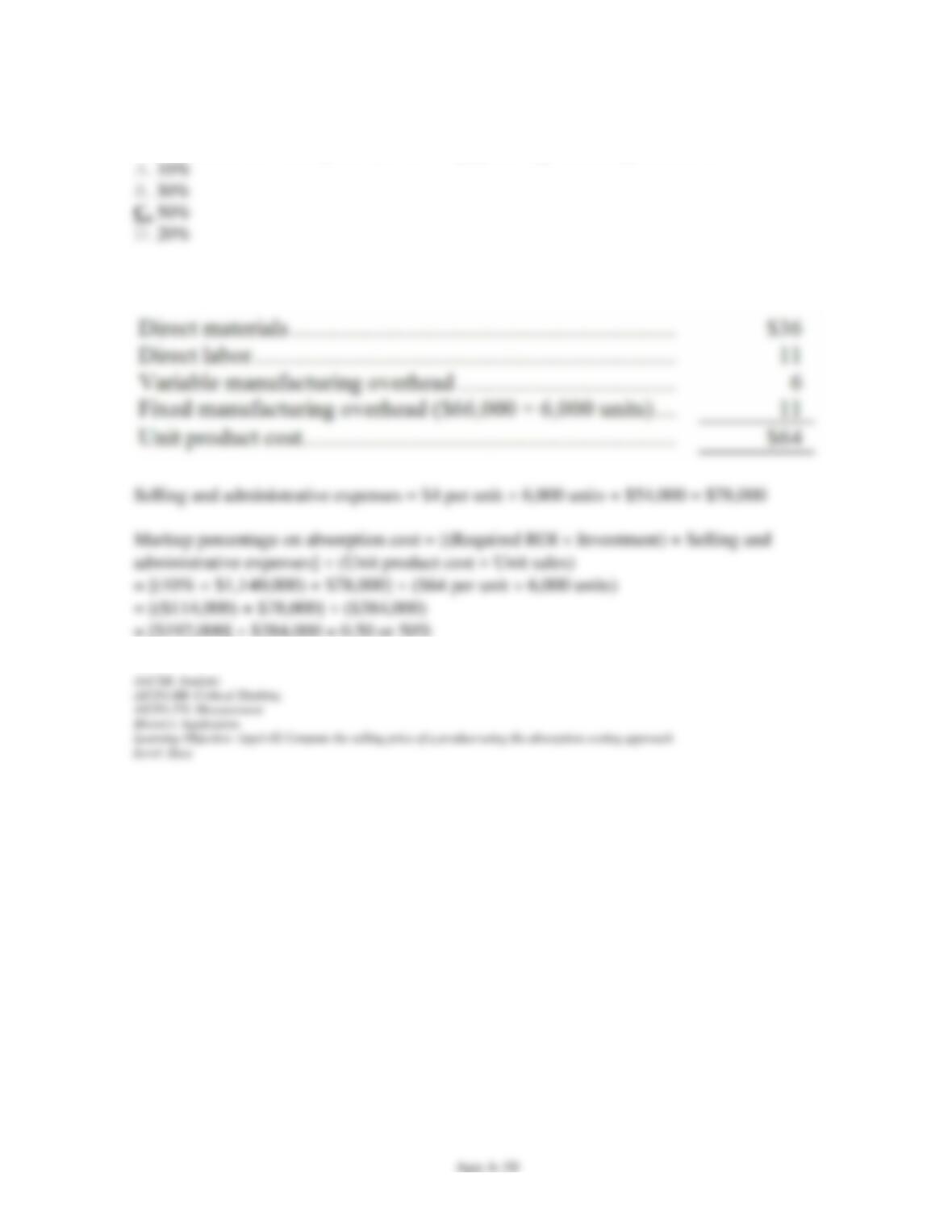
50. To the nearest whole percent, the markup percentage on absorption cost is:
App A-40
51. The unit target selling price using the absorption costing approach is closest to:
The management of Nerby Corporation is considering introducing a new product—a compact
lawn blower. At a selling price of $28 per unit, management projects sales of 40,000 units.
The lawn blower would require an investment of $900,000. The desired return on investment
is 20%.