Month Total Maintenance Cost Production Volume (units) January $1,880 1,750 units
February $1,800 1,500 units March $2,200 2,500 units April $2,120 2,250 units May
$2,300 2,750 units
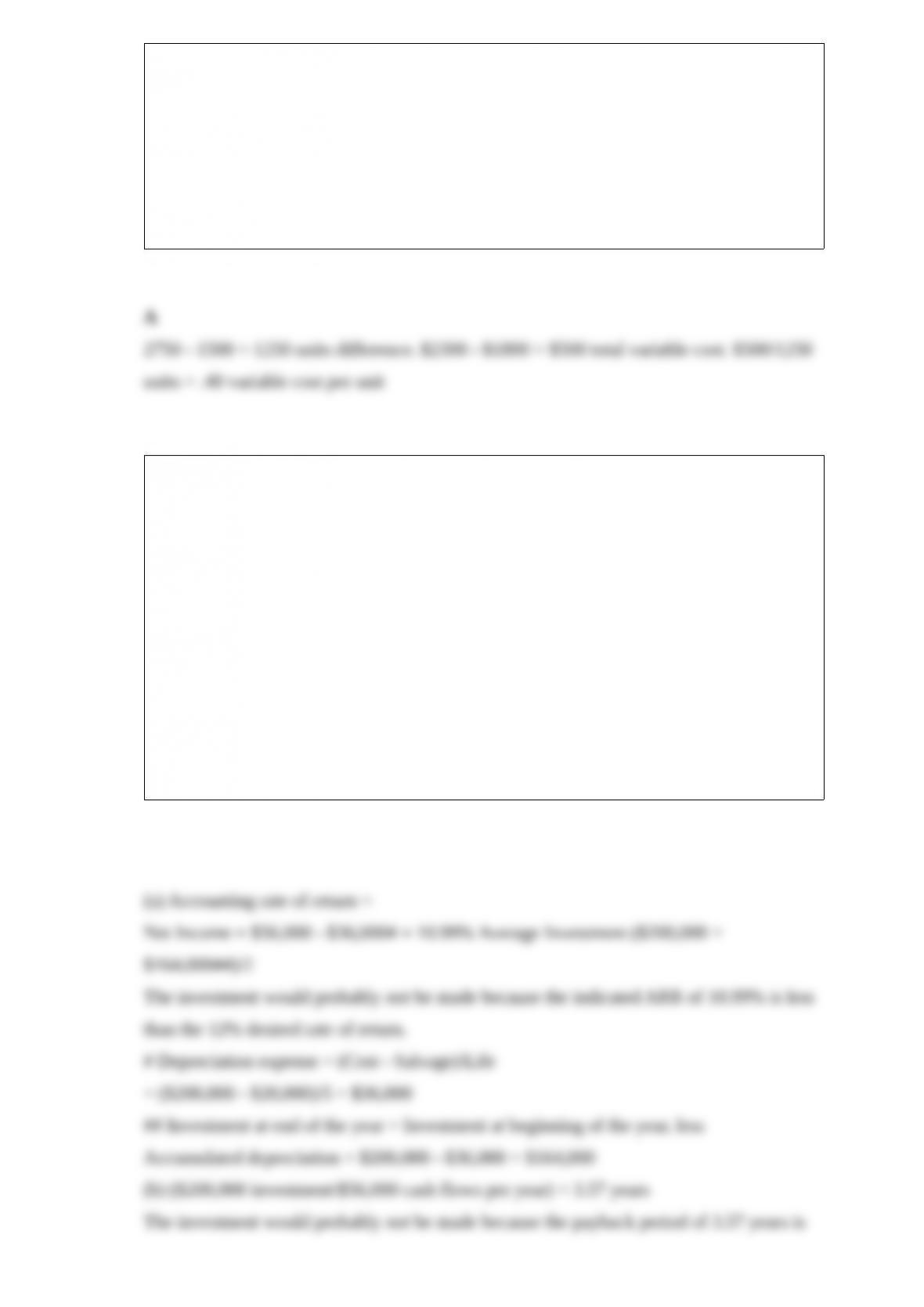
Using the high-low method, the variable rate for maintenance is:
A. $0.40.
B. $0.80.
C. $1.20.
D. $2.50.
OldSchool Corp. is reviewing its method of evaluating capital expenditure proposals
using the accounting rate of return method. A recent proposal involved a $200,000
investment in a machine that had an estimated useful life of five years and an estimated
salvage value of $20,000. The cash flow from the new machine was expected to
increase net income before depreciation expense by $56,000 per year. OldSchool’s
current policy for approving a new investment is that it have a rate of return of 12% and
a payback period of three years or less.
(a) Calculate the accounting rate of return on this investment for the first year. Assume
straight-line depreciation. Based on this analysis, would the investment be made?
Explain.
(b) Calculate the payback period for this investment. Based on this analysis, would the
investment be made? Explain.
(c) Comment on OldSchool’s current policy for capital expenditure proposals
What should the decision rule be to determine what budget variances to investigate?
A. Investigate unfavorable variances only.
B. Investigate favorable variances only.
C. Investigate if the variance is significant.
D. Investigate all variances.
The balance sheet valuation of inventories is:
A. lower of cost or market.
B. lower of selling price or cost.
C. lower of realizable value or selling price.
D. cost, regardless of the cost of replacing the inventory.
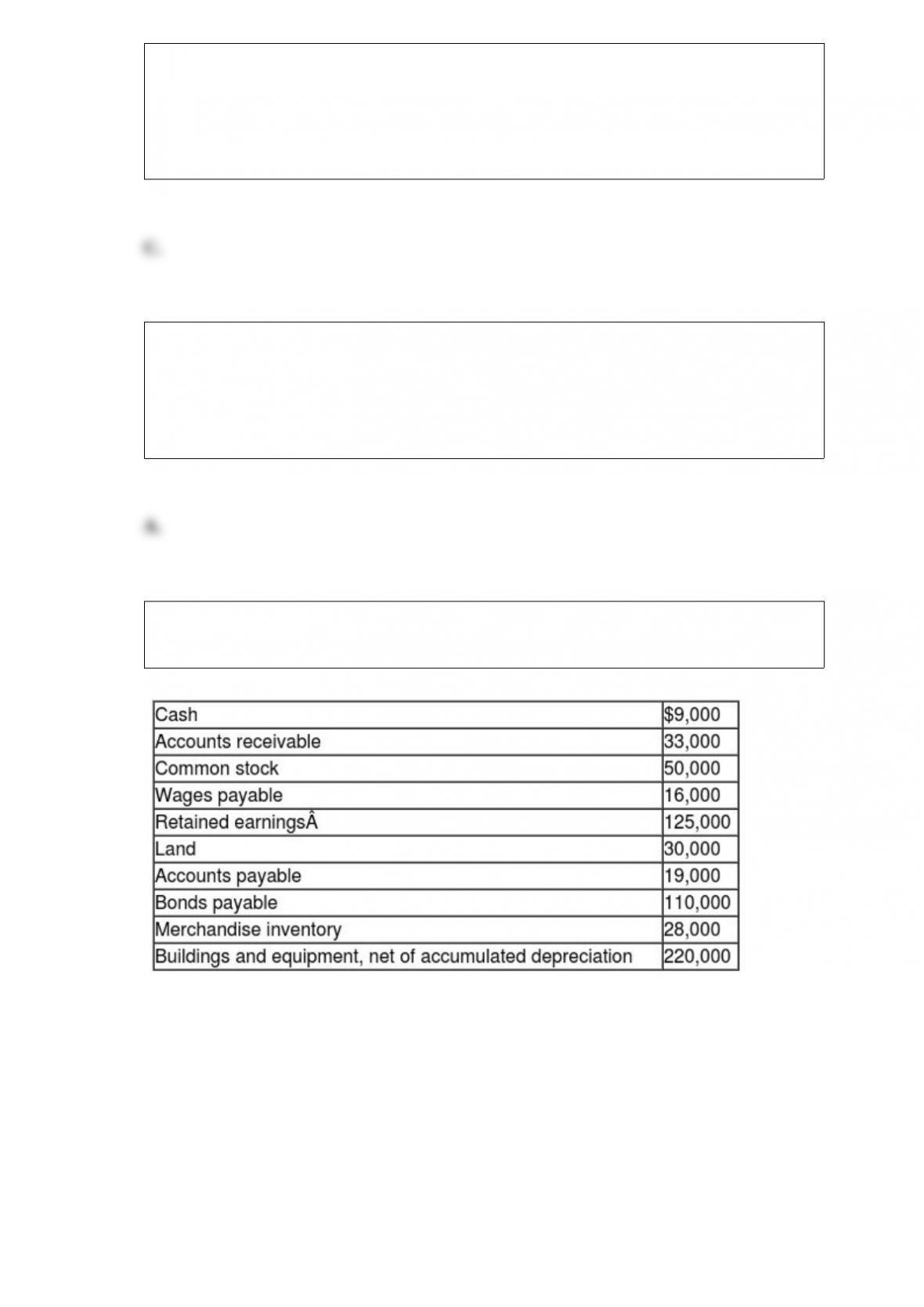
The following amounts were reported on the December 31, 2016, balance sheet:
Required:
(a.) Calculate working capital at December 31, 2016.
(b.) Calculate the current ratio at December 31, 2016.
(c.) Calculate the acid-test ratio at December 31, 2016.
Zero-based budgeting forces managers to:
A. identify and prioritize the activities that are carried out in their departments.
B. justify all of their expenditures for each budget period.
C. both A and B.
D. none of the above.
When the present value analysis of a proposed investment results in an indication that
the proposal has a rate of return greater than the cost of capital, the investment might
not be made because:
A. the quantitative analysis indicates that it should not be made.
B. management’s assessment of qualitative factors overrides the quantitative analysis.
C. the timing of the cash flows of the investment will not be as assumed in the present
value calculation.
D. post-audits of prior investments have revealed that cash flow estimates were
consistently less than actual cash flows realized.
Goodwill is an asset that arises because the present value of an acquired company’s
estimated future earnings, discounted at the acquiring firm’s ROI:
A. is less than the fair value of the net assets of the acquired company.
B. is more than the fair value of the net assets of the acquired company.
C. is more than the fair value of the net assets of the acquiring company.
D. is less than the fair value of the net assets of the acquiring company.
It is not unusual for a company to use different depreciation methods for book and tax
purposes. When this happens, the firm usually:
A. uses an accelerated depreciation method for book purposes.
B. uses an accelerated depreciation method for tax purposes.
C. is trying to maximize its taxable income.
D. is trying to minimize its book income.
The standards for one carton of Flavor Rite are:
During the week ended May 17, the following activity took place:
• 4,800 lbs. of raw material were purchased for inventory at a cost of $5.60 per pound;
• 1,200 cartons of finished product were produced;
• 4,020 lbs. of raw material were used;
• 3,110 labor hours were worked at a total cost of $26,435.
Calculate each of the following variances:
(a.) Raw materials purchase price variance.
(b.) Raw materials usage variance.
(c.) Direct labor rate variance.
(d.) Direct labor efficiency variance.
(e.) Explain the factors that most likely caused the variances computed above.
Prepare a bank reconciliation for Show Me, Inc., as of June 30 from the following
information:
(a.) The June 30 balance shown on the bank statement is $5,796.
(b.) Outstanding checks at June 30 totaled $330.
(c.) A deposit of $424 made on June 30 was not included in the balance shown on the
bank statement.
(d.) The bank statement contained an adjustment of $410 for a note receivable
collected by the bank on behalf of Show Me, Inc. ($382 principal and $28 interest).
(e.) A bank charge of $34 was made to the account during June. Although the company
was expecting a charge, the amount was not known until the bank statement arrived.
(f.) The bank erroneously charged a $340 check of Shirt, Inc., against the Show Me,
Inc., bank account.
(g.) The June 30 balance in the general ledger Cash account, before reconciliation, is
$6,026.
(h.) The bank statement included a notice that a customer’s check for $172 that had
been deposited on June 14 had been returned NSF.
The following table summarizes the beginning and ending inventories of Ariel Co. for
the month of October:
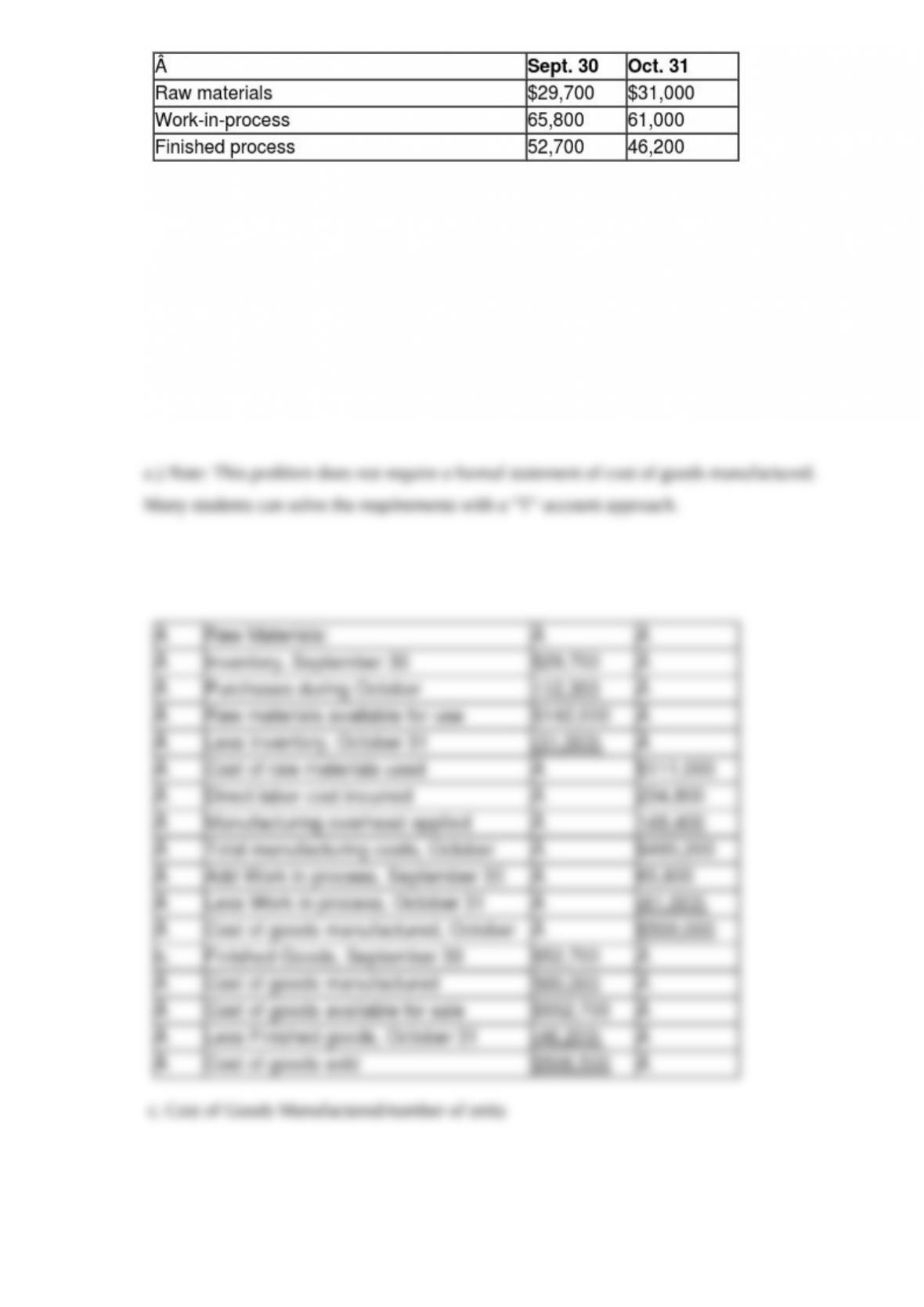
Raw materials purchased during the month of October totaled $112,300. Direct labor costs
incurred totaled $234,800 for the month. Actual and applied manufacturing overhead costs
for October totaled $145,100 and $149,400, respectively.
(a) Calculate the cost of goods manufactured for October.
(b) Calculate the cost of goods sold for October (Ignore under/overapplied overhead).
(c) Given the fact that 25,000 units were produced, what is the cost per unit for October?
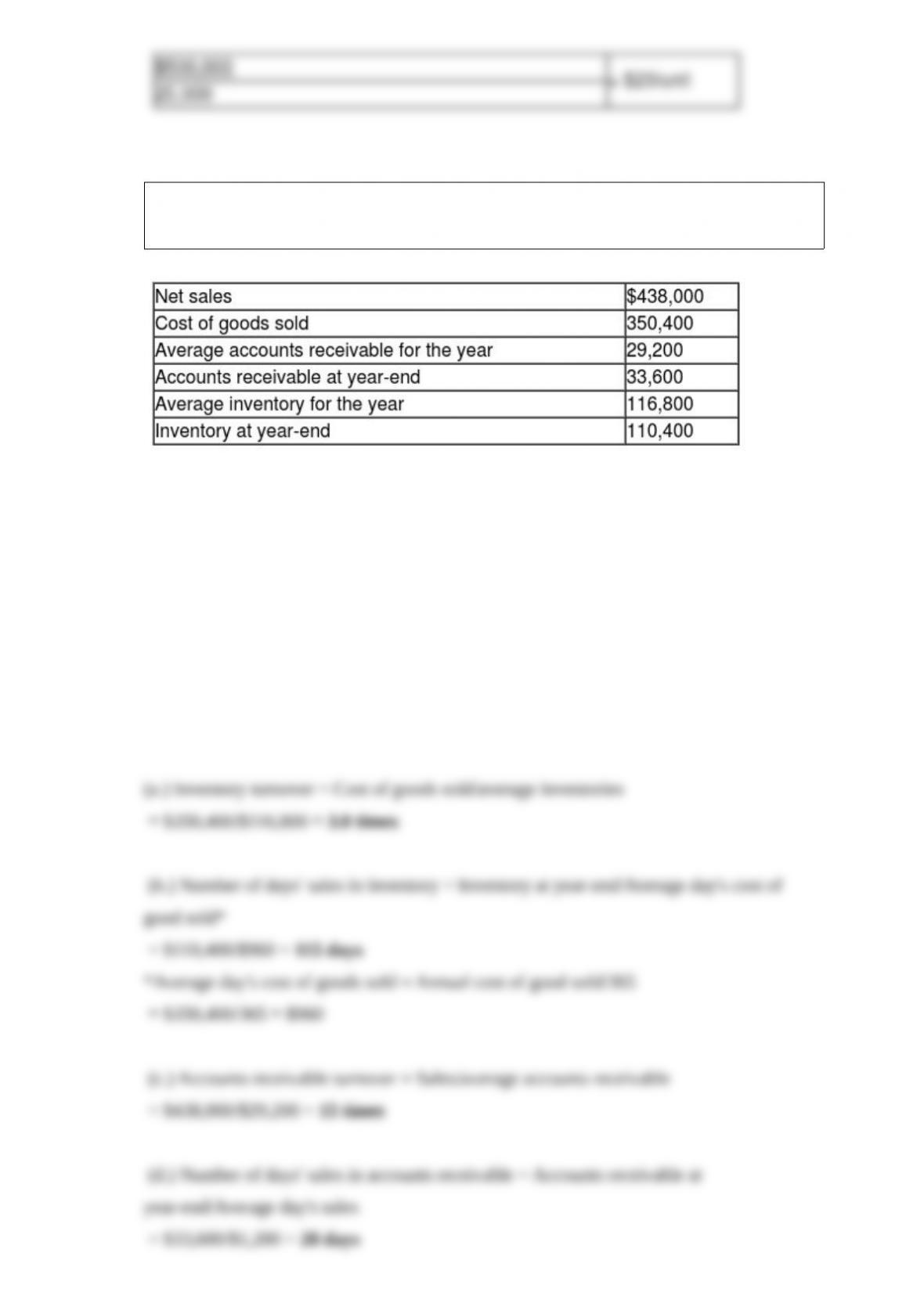
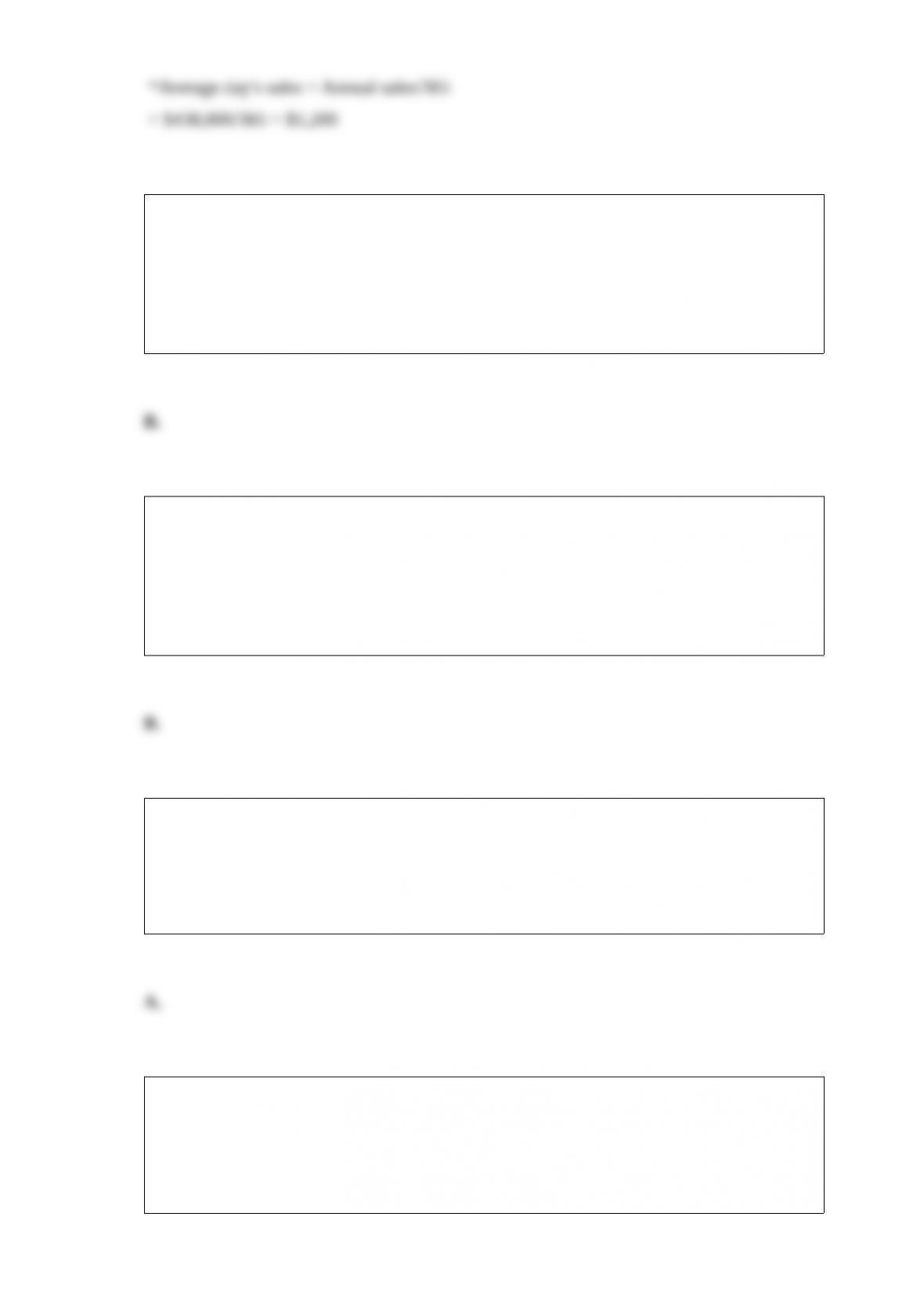
The following information was available for the year ended December 31, 2016:
Required:
(a.) Calculate the inventory turnover for 2016.
(b.) Calculate the number of days’ sales in inventory for 2016, using year-end inventories.
(c.) Calculate the accounts receivable turnover for 2016.
(d.) Calculate the number of days’ sales in accounts receivable for 2016, using year-end
accounts receivable
Which of the following formula elements is not used in calculating the accounting rate
of return?
A. operating income.
B. a present value factor.
C. depreciation expense.
D. average investment.
A high-level integrated approach to measuring and reporting organizational
performance is accomplished by using:
A. a DuPont performance analysis.
B. a balanced scorecard.
C. a segmented income statement.
D. a residual income analysis.
When a depreciable asset is sold:
A. a gain arises if the sales proceeds exceed the net book value.
B. a loss arises if the sales proceeds exceed the net book value.
C. any cash received results in a gain.
D. depreciation expense is adjusted so there is no gain or loss.
XYZ Company produces high quality widgets. Three raw materials are converted into
the finished product by two labor groups. Manufacturing overhead is applied to finished
units based on direct labor hours. The following standards have been established for
each widget produced:
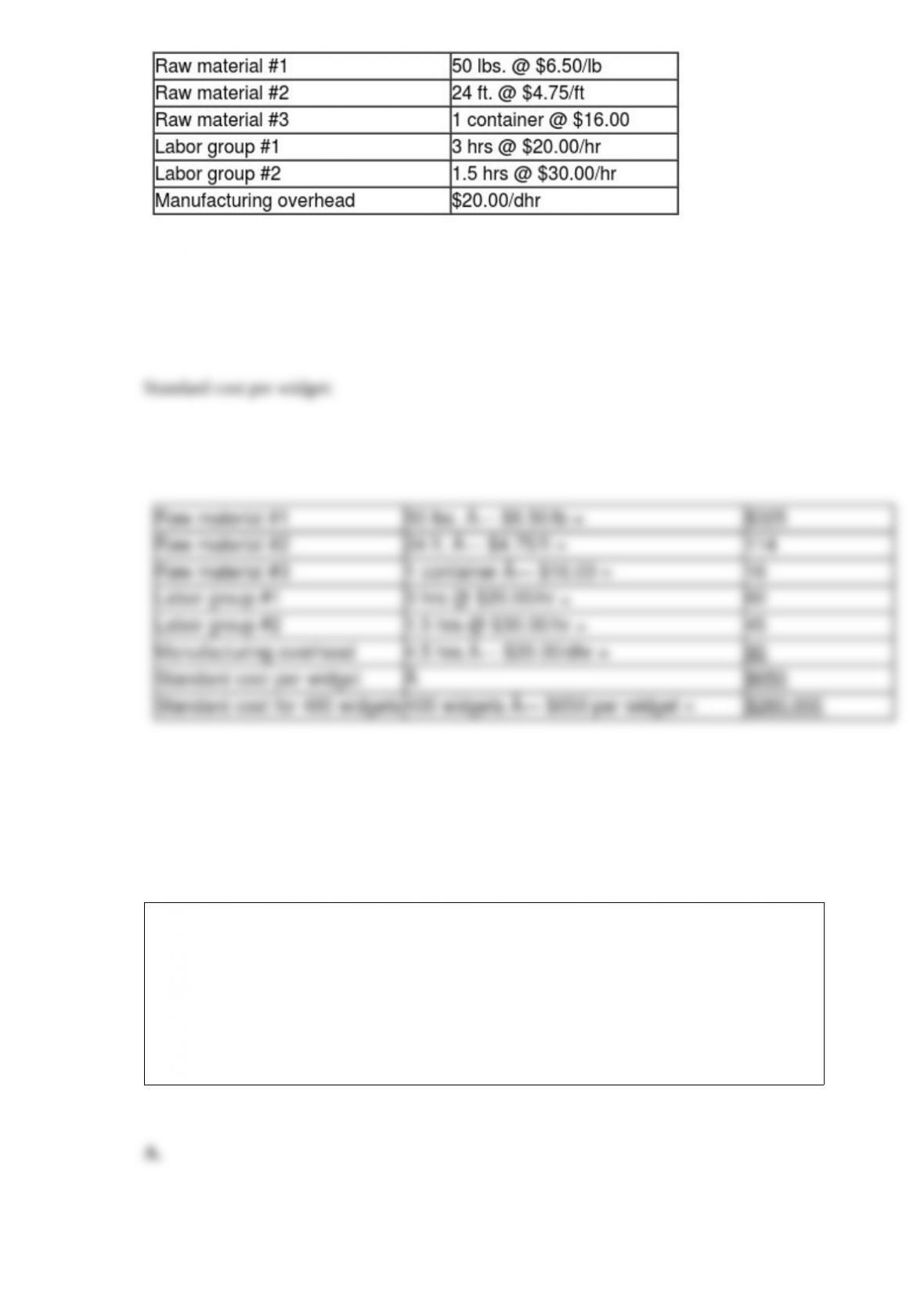
a) Calculate the standard cost of producing 400 high quality widgets.
The term, “earned,” in revenue recognition refers to which of the following?
A. The entity has completed, or substantially completed, the activities it must perform
to be entitled to the revenue benefits.
B. The product or service has been exchanged for cash, claims to cash, or an asset that
is readily convertible to a known amount of cash or claims to cash.
C. The entity has received an irrevocable order for goods or services.
D. Cash has been received with an irrevocable order for goods or services.
Month Total Maintenance Cost Production Volume (units) January $1,880 1,750 units
February $1,800 1,500 units March $2,200 2,500 units April $2,120 2,250 units May
$2,300 2,750 units
Using the high-low method, the monthly fixed component of maintenance cost is:
A. $1,600.
B. $1,200.
C. $1,100.
D. $1,300.
Costs may be allocated to a product or activity for many purposes, but care must be
exercised when using allocated costs because:
A. direct costs identified with the product or activity may not be accurately assigned.
B. fixed costs will change in total if the volume of activity changes.
C. all costs may not have been allocated to the product or activity.
D. arbitrarily allocated costs may not behave in the way assumed in the allocation
method.
Expressing fixed costs on a per unit basis of activity is misleading because:
A. total fixed costs decrease as activity decreases.
B. total fixed costs increase as activity increases.
C. fixed cost per unit increase as activity increases.
D. fixed cost per unit decrease as activity increases.
The comparison of activity measures of different companies is complicated by the fact
that:
A. different inventory cost flow assumptions may be used.
B. dollar amounts of assets may be significantly different.
C. only one of the companies may have preferred stock outstanding.
D. the number of shares of common stock issued may be significantly different.
Many current liabilities are affected by accrual accounting entries. This happens
because:
A. liabilities are usually paid when they are incurred.
B. accrual accounting involves recognizing liabilities before they are paid.
C. the only way to reduce a liability account balance is with an adjusting entry.
D. accrual accounting frequently involves recognizing liabilities before they are
incurred.
The cost of a single unit of production in excess of the break-even point in units is:
A. its fixed cost and variable cost.
B. its fixed cost only.
C. its variable cost only.
D. none of the above.
Which of the following is NOT an account that over/under applied overhead is
transferred to at the end of an accounting period?
A. Cost of Goods Sold.
B. Work-in-Process.
C. Raw Materials.
D. Finished Goods.
An example of a cost likely to have a mixed behavior pattern is:
A. sales force commission.
B. raw material cost.
C. depreciation of production equipment.
D. electricity cost for the manufacturing plant.
Which of the following is not one of the 5 questions of transaction analysis?
A. What’s going on?
B. Which accounts are affected?
C. Is this an accrual?
D. Does the balance sheet balance?
E. Does my analysis make sense?
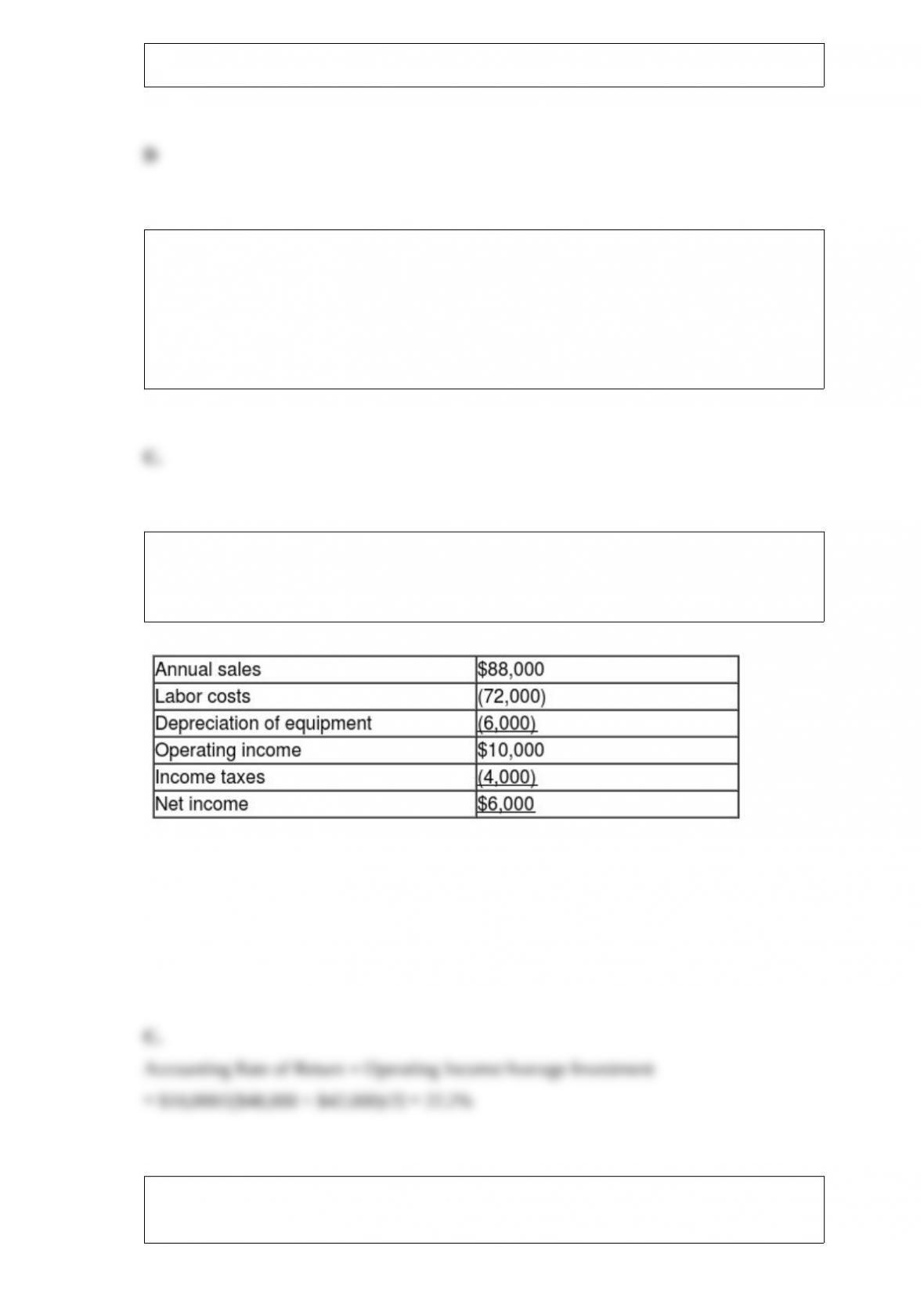
Boccardi Inc., has invested in new pasta manufacturing equipment at a cost of $48,000.
The equipment has an estimated useful life of eight years. Estimated annual sales and
operating expenses related to the pasta equipment follow:
A. 12.5%.
B. 18.0%.
C. 22.2%.
D. 25.0%.
The balance in the Wages Payable account increased from $24,400 at the beginning of
the month to $30,000 at the end of the month. Wages accrued during the month totaled
$122,000.
A. Wages paid during the month totaled $116,400.
B. Wages paid during the month totaled $129,600.
C. Wages expense for the month totaled $116,400.
D. Wages expense for the month totaled $152,000.
The raw materials budgeted to be purchased for the period is equal to:
A. ending inventory + raw material used – beginning inventory.
B. ending inventory + ending inventory – raw material used.
C. beginning inventory – ending inventory + raw material used.
D. beginning inventory + raw material used – ending inventory.
Net sales for the year were $300,000 and cost of goods sold was $174,000 for the
company’s existing products. A new product is presently under development and has an
expected selling price of not more than $55 per unit in order to remain competitive with
similar products in the marketplace.
Required:
(a.) Calculate gross profit and the gross profit ratio for the year.
(b.) What is the maximum cost per unit that can be incurred to manufacture the new
product so that the product can be priced competitively and will not result in a reduction
to the company’s gross profit ratio?
Use the appropriate factors from Table 6 – 4 or Table 6 – 5 to answer the following
questions.
(a.) Yoko Co.’s common stock is expected to have a dividend of $3 per share for each of
the next four years, and it is estimated that the market value per share will be $42 at the
end of four years. If an investor requires a return on investment of 12%, what is the
maximum price the investor would be willing to pay for a share of Yoko Co. common
stock today?
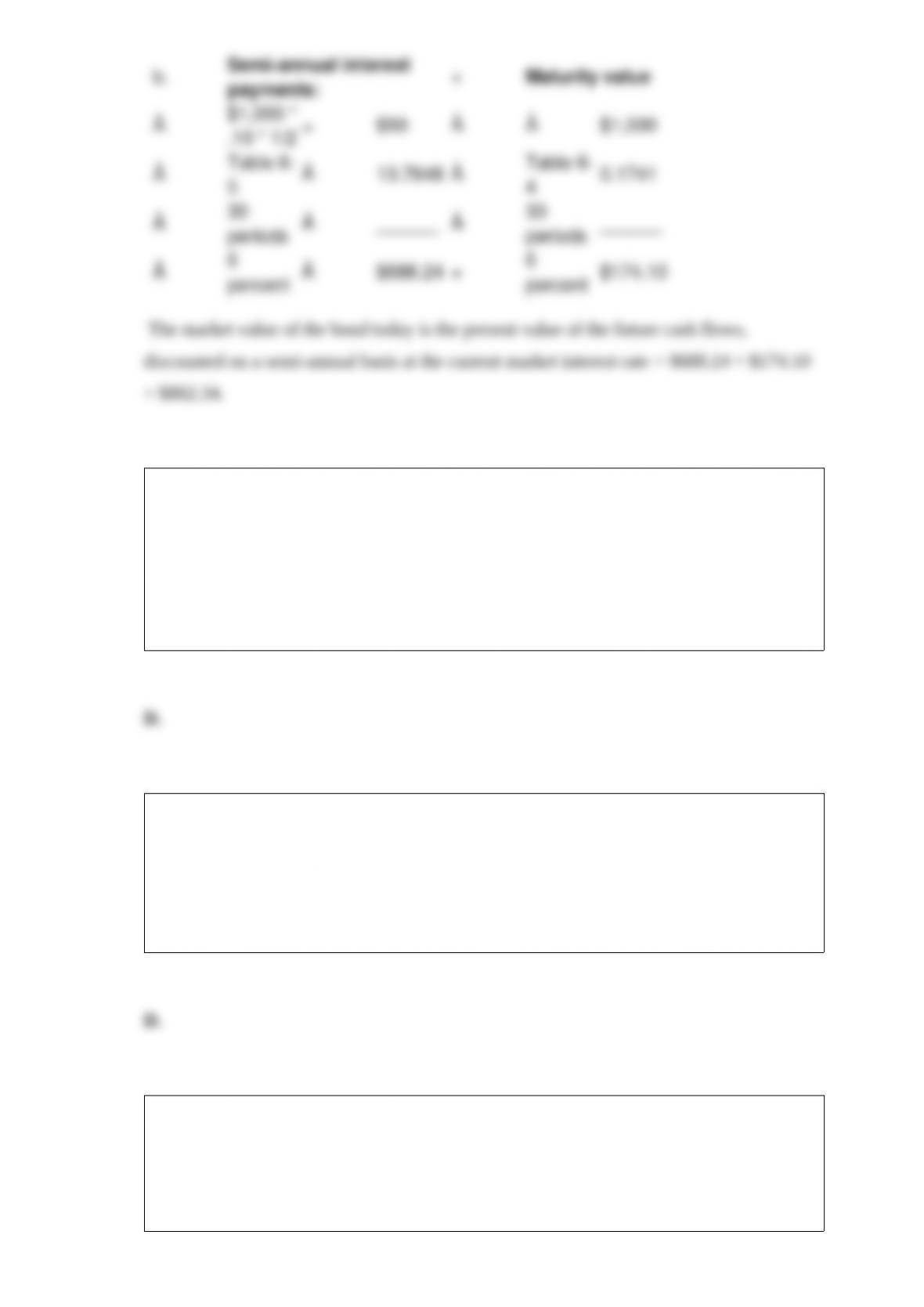
(b.) Lashana bought a bond with a face amount of $1,000, a stated interest rate of 10%,
and a maturity date 20 years in the future for $1,025. The bond pays interest on a
semi-annual basis. Five years have gone by and the market interest rate is now 12%.
What is the market value of the bond today?
Which of the following are qualified to express an auditor’s opinion about an entity’s
financial statements?
A. A Comptroller.
B. A Certified Management Accountant.
C. A Certified Internal Auditor.
D. A Certified Public Accountant.
E. None of the above.
An example of a cost that is likely to have a direct relationship with products being
manufactured is:
A. sales force salaries.
B. depreciation of production equipment.
C. salaries of production supervisors.
D. production labor costs.
Standard costs are used in which of the following phases of the management process?
A. planning.
B. control.
C. organizing.
D. both a and b.