1) The process by which management allocates available investment funds among
competing capital investment proposals is termed present value analysis.
2) The relevant range is useful for analyzing cost behavior for management
decision-making purposes.
3) When a product or segment of a business is determined to be generating a loss, the
total income from operations for the company will always increase if management
eliminates the product or segment.
4) The major advantage of residual income as a performance measure is that it gives
consideration to not only a minimum rate of return on investment but also to the total
magnitude of income from operations earned by each division.
5) The balance sheet represents the accounting equation.
6) A limited liability company combines attributes of a partnership and a corporation.
7) As a device for measuring efficiency, standard cost systems enables management to
determine the causes of differences between what a product should cost and how much
it actually costs to produce.
8) If divisional income from operations is $100,000, invested assets are $850,000, and
the minimum rate of return on invested assets is 8%, the residual income would be
$32,000.
9) The balanced scorecard attempts to evaluate the underlying financial drivers of
nonfinancial performance.
10) Manufacturing businesses change basic inputs into products that are sold to
individual customers.
11) If bonds are issued at a premium, the stated interest rate is:
A.higher than the market rate of interest
B.lower than the market rate of interest
C.too low to attract investors
D.adjusted to a higher rate of interest
12) Which term indicates that merchandise is free of transportation charges to the
buyer?
A.FOB destination
B.Transportation out
C.FOB shipping point
D.Transportation in
13) During a period of consistently rising prices, the method of inventory costing that
will result in reporting the greatest cost of merchandise sold is:
A.FIFO
B.average cost
C.LIFO
D.All methods will generate the same cost of merchandise sold
14) Planning for capital expenditures is necessary for all of the following reasons
except:
A.machinery and other fixed assets wear out
B.expansion may be necessary to meet increased demand
C.amounts spent for office equipment may be immaterial
D.fixed assets may fall below minimum standards of efficiency
15) In a job order cost accounting system, when goods that have been ordered are
received, the receiving department personnel inspects the goods and completes the:
A.purchase order
B.sales invoice
C.receiving report
D.purchase requisition
16) Using the following information, prepare a bank reconciliation for Salem Co. for
May 31, 2013 .
(a) The bank statement balance is $2,597.
(b) The cash account balance is $2,680.
(c) Outstanding checks amounted to $703.
(d) Deposits in transit are $732.
(e) The bank service charge is $25.
(f) Interest added to the checking account by the bank is $7.
(g) A check drawn for $59 was incorrectly charged by the bank as $95.
17) Expenditures for research and development are generally recorded as:
A.current operating expenses
B.assets, and amortized over their estimated useful life
C.assets, and usually amortized over 40 years
D.current assets
18) The following is a list of various costs of producing sweatshirts. Classify each cost
as either a variable, fixed, or mixed cost for units produced and sold.
(a) Electricity costs of $0.025 per kilowatt-hour
(b) Warehouse rent of $6,000 per month plus $0.50 per square foot of storage used
(c) Thread
(d) Zip used in sweatshirts
(e) Janitorial costs of $2,000 per month
(f) Advertising costs of $10,000 per month
(g) Plant manager salary
(h) Color dyes for producing different colors of sweatshirts
(i) Salary of the production supervisor
(j) Straight-line depreciation on sewing machines
(k) Patterns for different designs. Patterns typically last many years before being
replaced
(l) Maintenance costs for the companys sewing machine. The cost is $2,000 per year
plus $0.001 for each machine hour of use
(m) Property taxes on factory, building, and equipment
(n) Cotton and polyester cloth
(o) Hourly wages of sewing machine operators
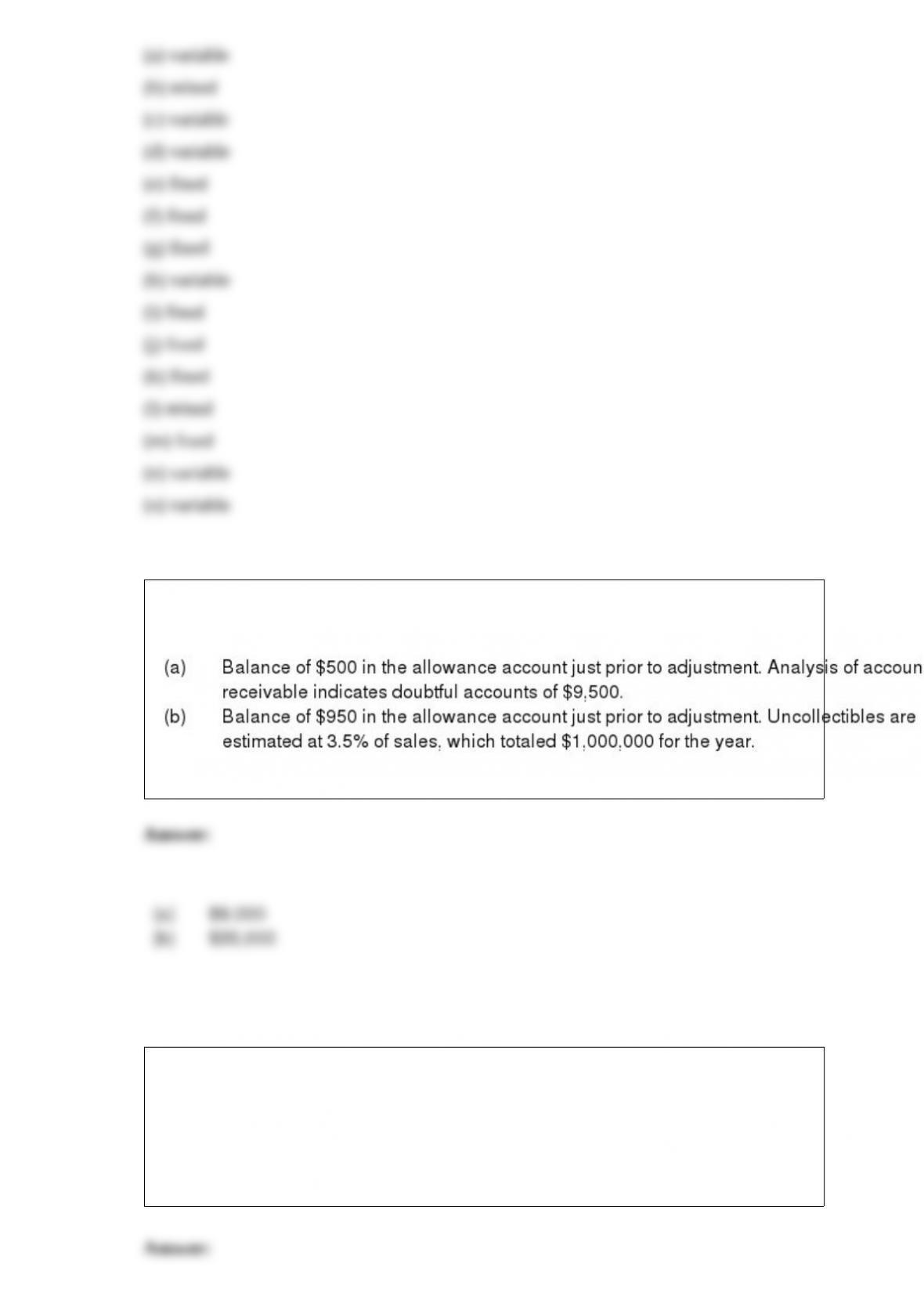
19) Determine the amount to be added to Allowance for Doubtful Accounts in each of
the following cases:
20) Which transfer price approach is used when the transfer price is set at the amount
sold to outside buyers?
A.Market price
B.Cost price
C.Negotiated price
D.Variable price
21) Which of the following expressions is termed the profit margin factor as used in
determining the rate of return on investment?
A.Sales/Income From Operations
B.Income From Operations/Sales
C.Invested Assets/Sales
D.Sales/Invested Assets
22) Who has the first preference to assets in case a business fails?
A.Stockholders
B.Long-term creditors
C.Customers
D.Employees
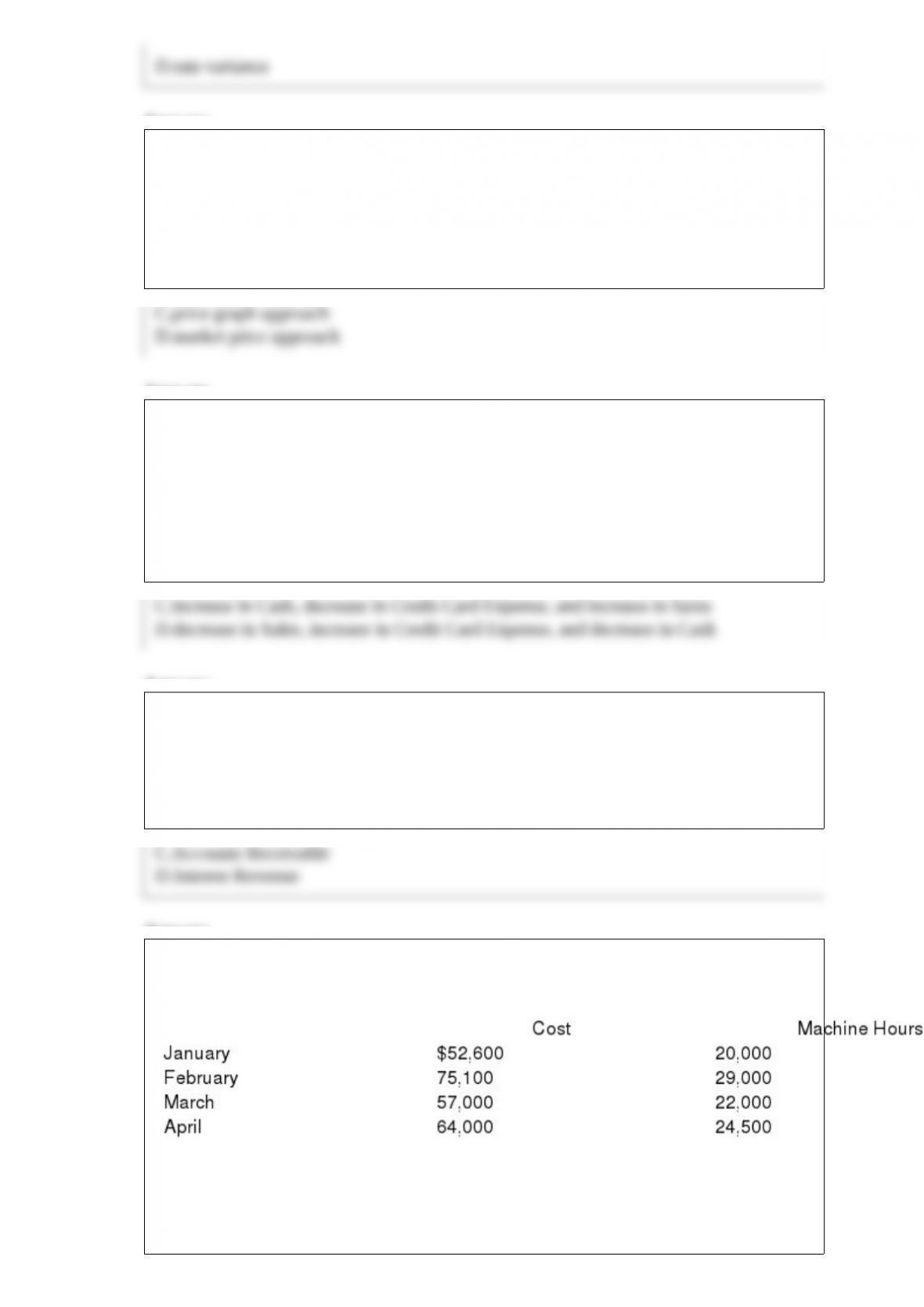
23) For the current year ending January 31, Ringo Company expects fixed costs of
$178,500 and a unit variable cost of $41.50. For the coming year, a new wage contract
will increase the unit variable cost to $45. The selling price of $50 per unit is expected
to remain the same.
24) If the actual quantity of direct materials used in producing a commodity differs
from the standard quantity, the variance is termed:
A.controllable variance
B.price variance
C.quantity variance
D.rate variance
25) A practical approach that is frequently used by managers when setting normal
selling price is the:
A.cost-plus approach
B.economic theory approach
C.price graph approach
D.market price approach
26) Sales to customers who use bank credit cards such as MasterCard and Visa are
usually recorded by a(n):
A.decrease in Bank Credit Card Sales, increase in Credit Card Expense, and increase in
Sales
B.increase in Cash, increase in Credit Card Expense, and increase in Sales
C.increase in Cash, decrease in Credit Card Expense, and increase in Sales
D.decrease in Sales, increase in Credit Card Expense, and decrease in Cash
27) Which of the following accounts is a contra account to Sales?
A.Accounts Payable
B.Sales Returns and Allowances
C.Accounts Receivable
D.Interest Revenue
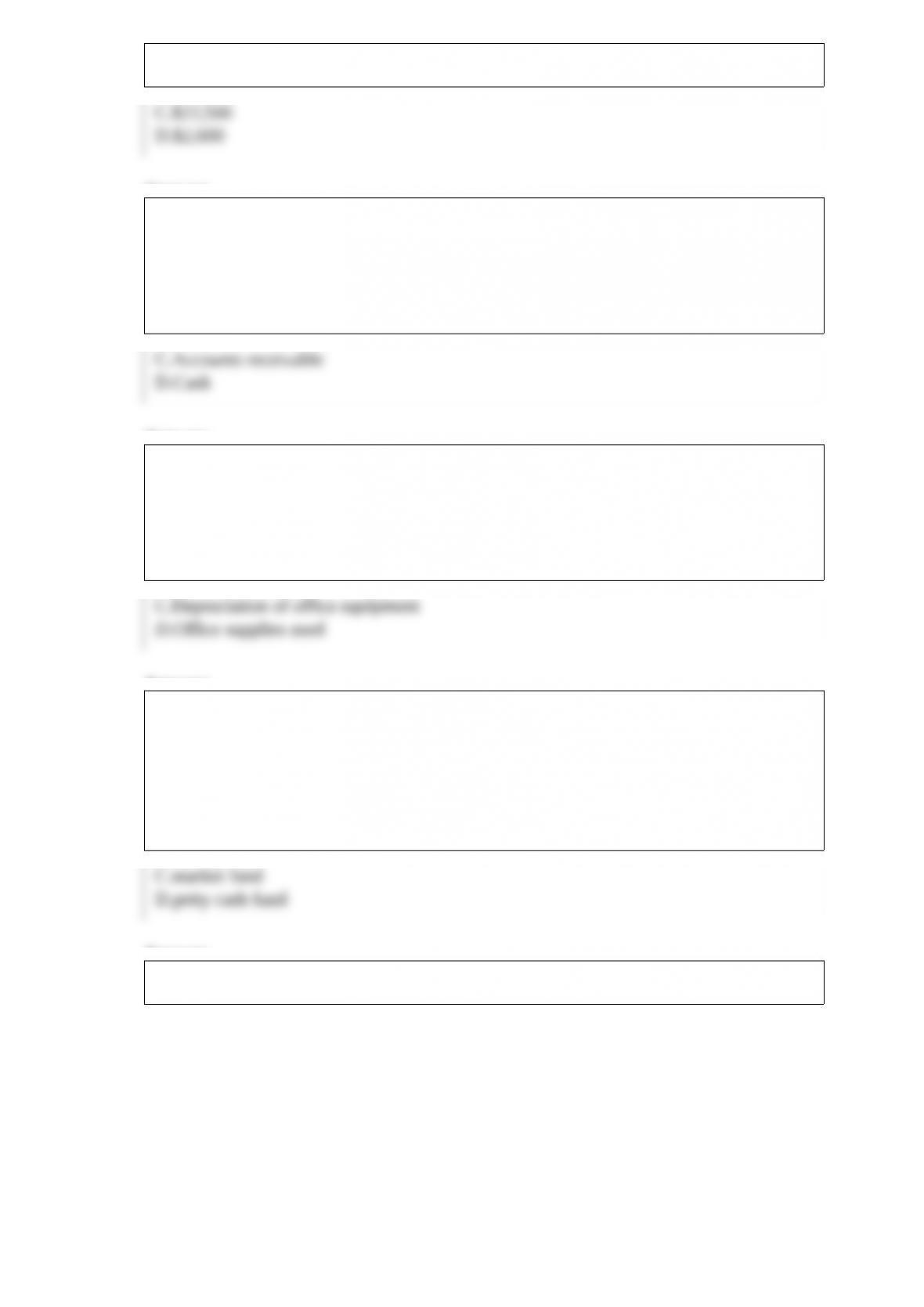
28) Given the following cost and activity observations for Merritt Companys utilities,
use the high-low method to calculate Merritts fixed costs per month.
A.$25,100
B.$50,000
C.$22,500
D.$2,600
29) Which of the following is not included in the computation of the quick ratio?
A.Inventory
B.Marketable securities
C.Accounts receivable
D.Cash
30) Which of the following is not an administrative expense?
A.Salespersons’ salaries
B.Office staff salaries
C.Depreciation of office equipment
D.Office supplies used
31) A special cash fund used to make small payments that occur frequently is called
a(n):
A.operating expenses fund
B.change fund
C.market fund
D.petty cash fund
32) Based on the following data, what is the amount of working capital?
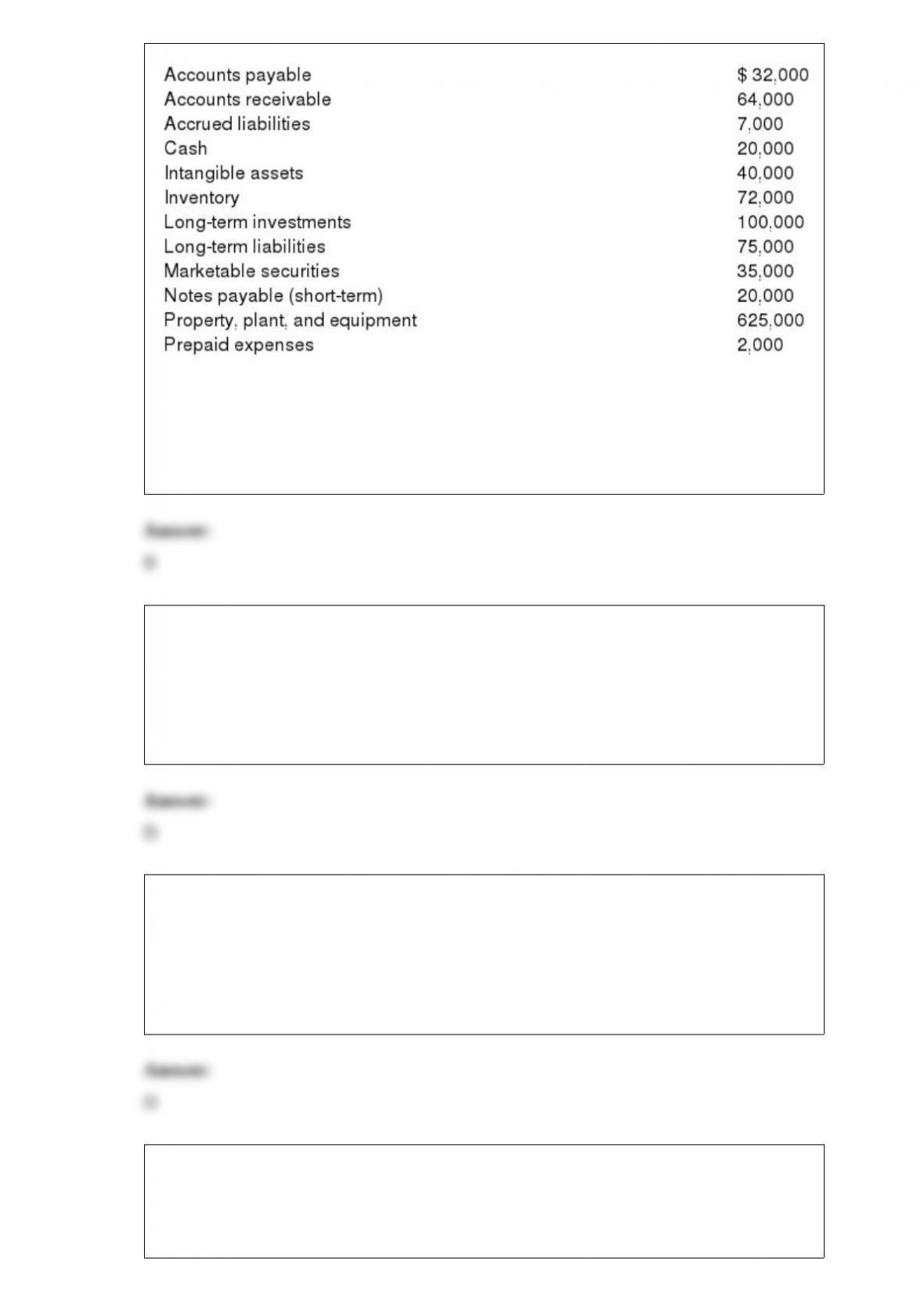
A.$190,000
B.$134,000
C.$118,000
D.$62,000
33) If the contribution margin ratio for Harrison Company is 38%, sales were $425,000,
and fixed costs were $100,000, what was the income from operations?
A.$163,500
B.$161,500
C.$54,730
D.$61,500
34) Which one of the following is not a characteristic generally evaluated in ratio
analysis?
A.Liquidity
B.Profitability
C.Solvency
D.Marketability
35) The point where the profit line intersects the horizontal axis on the profit-volume
chart represents:
A.the maximum possible operating loss
B.the maximum possible operating income
C.the total fixed costs
D.the break-even point
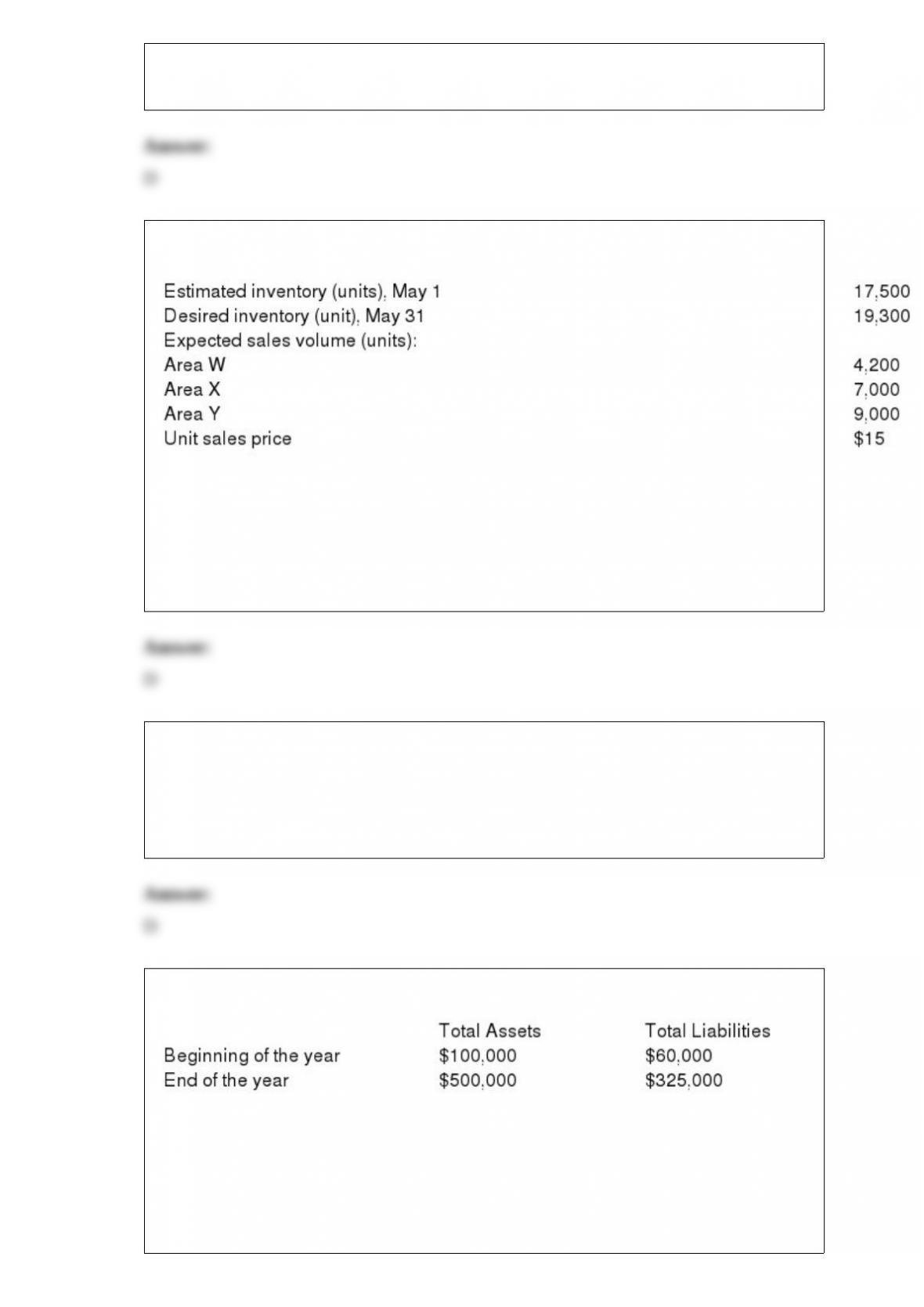
36) Production and sales estimates for May for the Hudson Co. are as follows:
The number of units expected to be sold in May is:
A.22,000
B.18,400
C.23,800
D.20,200
37) Buying equipment for cash affects which account/ accounts?
A.Cash only
B.Retained earnings only
C.Equipment and retained earnings
D.Cash and equipment
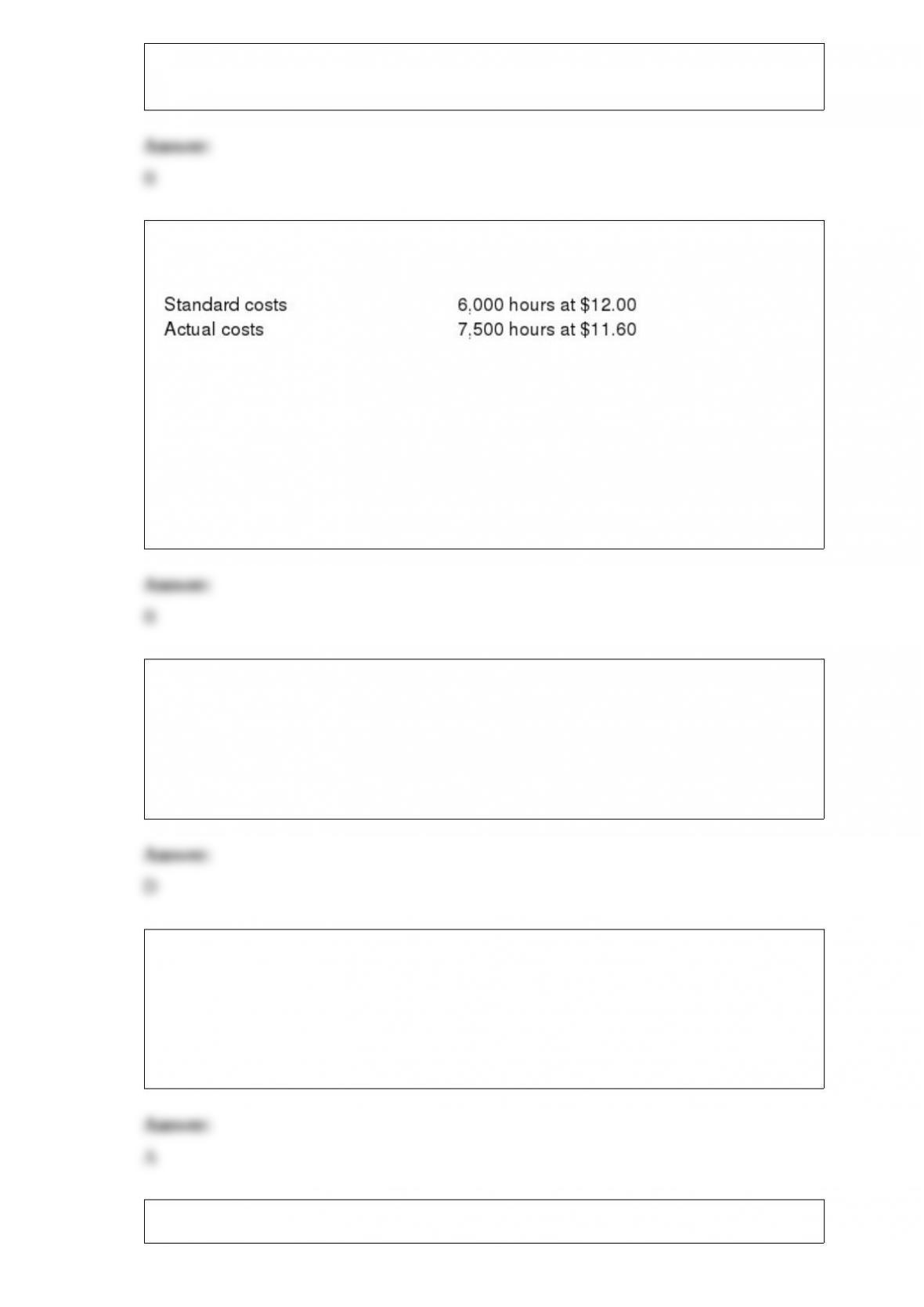
38) Exhibit 2-1
Refer to Exhibit 2-1 . What is net income, assuming $50,000 of stock was issued and no
dividends were paid?
A.$110,000
B.$85,000
C.$70,000
D.$200,000
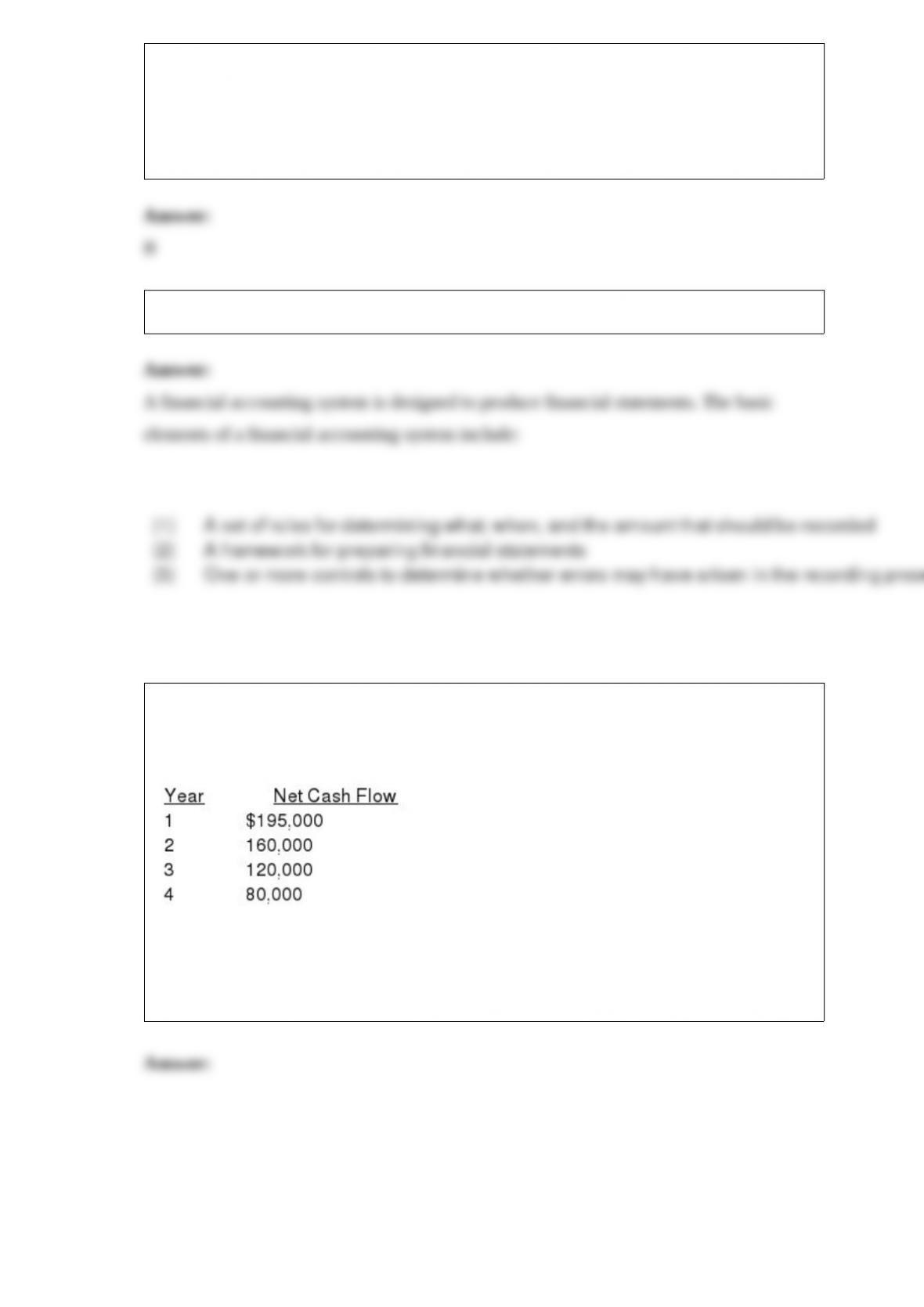
39) The following data relate to direct labor costs for the current period of Executive
Inc.:
Refer to the information provided for Executive Inc. What is the direct labor rate
variance?
A.$3,000 unfavorable
B.$3,000 favorable
C.$2,400 unfavorable
D.$2,400 favorable
40) Which asset is not depreciated as it usually does not lose its ability to provide
service?
A.Prepaid insurance
B.Equipment
C.Building
D.Land
41) What additional information is needed to find the rate of return on investment if
income from operations is known?
A.Invested assets
B.Residual income
C.Direct expenses
D.Sales
42) What cost concept used in applying the cost-plus approach to product pricing
covers selling expenses, administrative expenses, and desired profit in the markup?
A.Total cost concept
B.Product cost concept
C.Variable cost concept
D.Sunk cost concept
43) What are the basic elements of a financial accounting system?
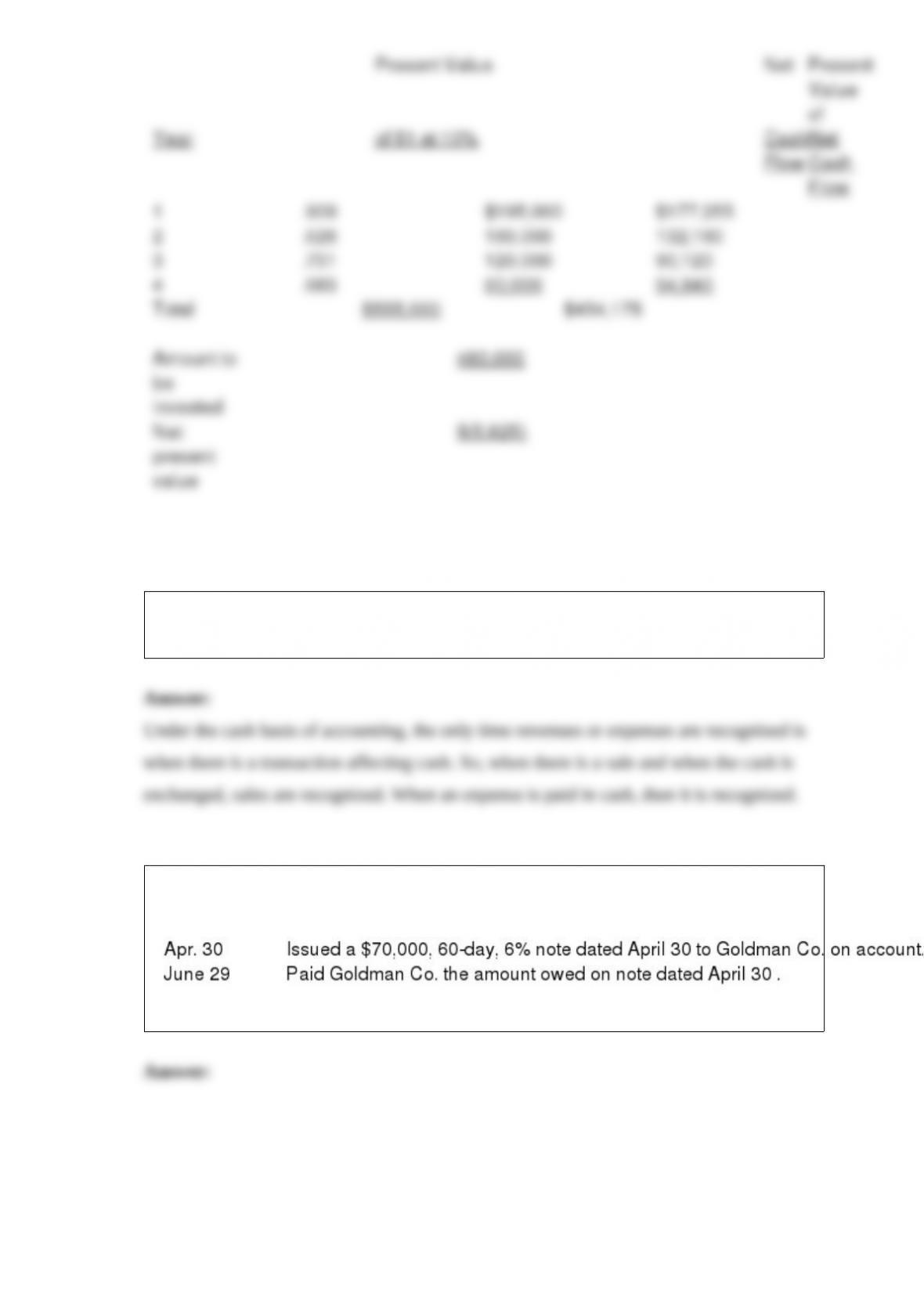
44) Heedy Inc. is considering a capital investment proposal that costs $460,000 and has
an estimated life of four years, and no residual value. The estimated net cash flows are
as follows:
The minimum desired rate of return for net present value analysis is 10%. The present
value of $1 at compound interest rates of 10% for 1, 2, 3, and 4 years is 0.909, 0.826,
0.751, and 0.683, respectively. Determine the net present value.
45) When are sales recognized under the cash basis of accounting? When are expenses
recognized?
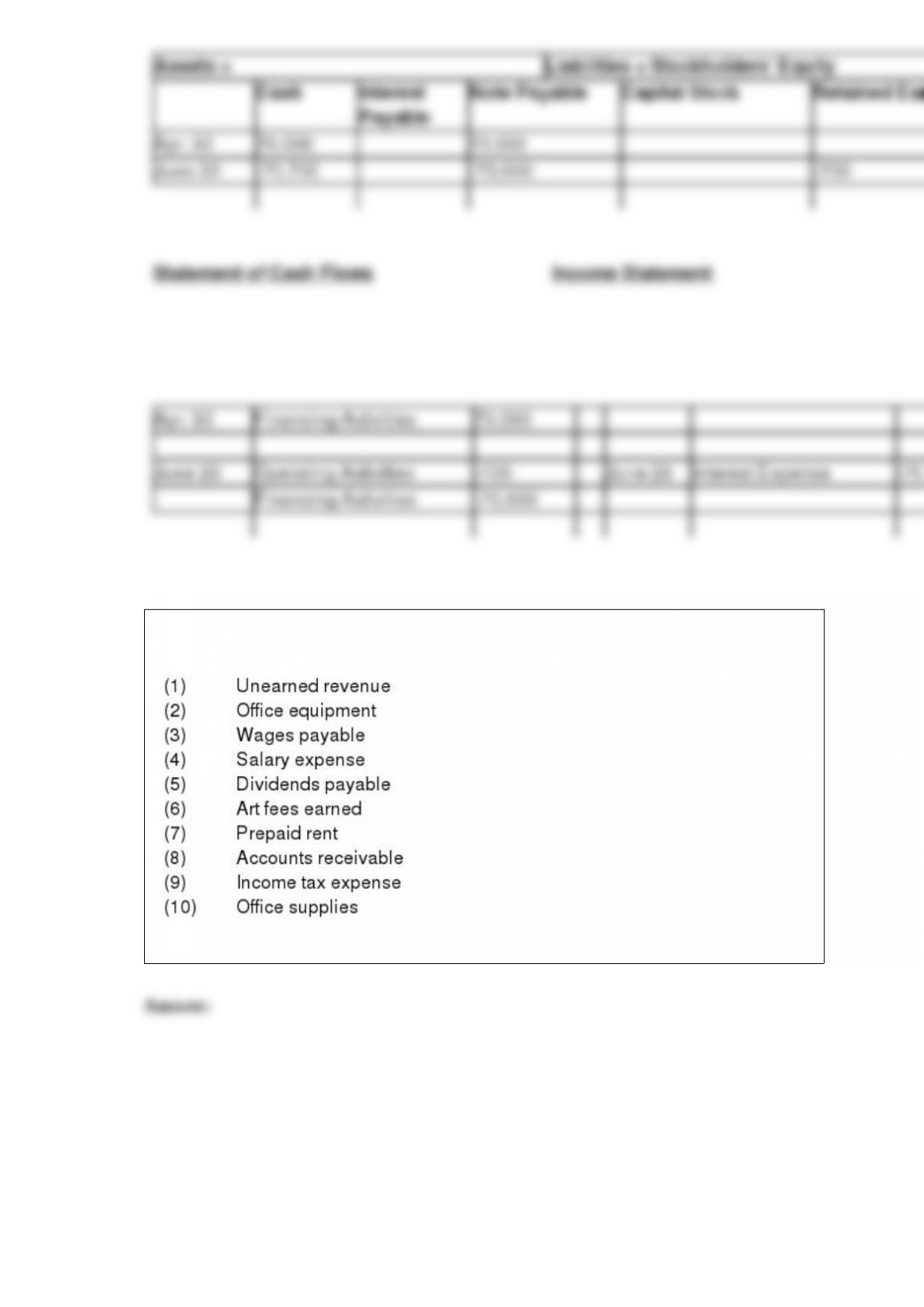
46) Illustrate the effects on the accounts and the financial statements of each of the
following transactions:
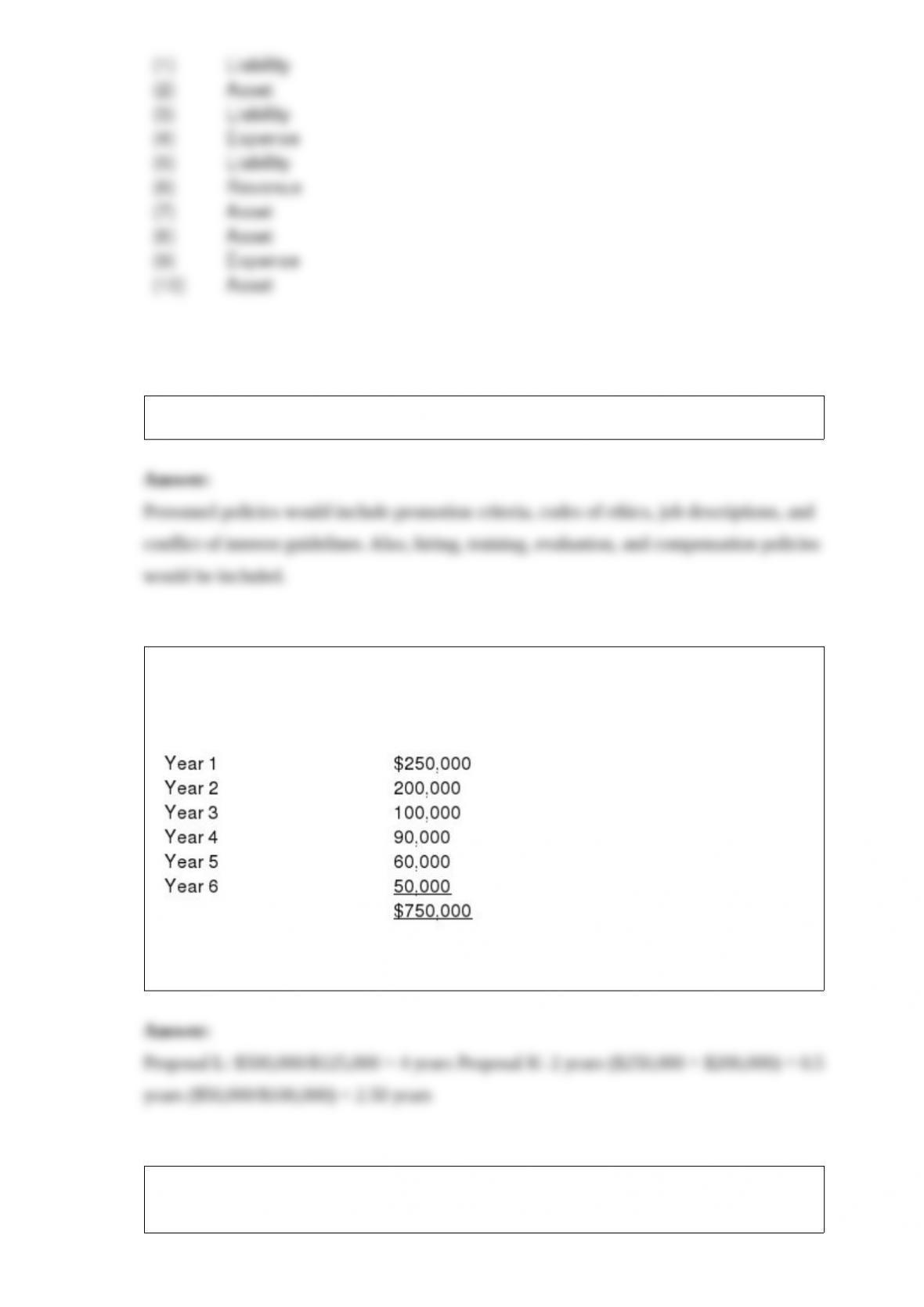
47) Classify the following as an asset, liability, revenue, or expense.
48) Discuss what would be included under personnel policies.
49) Proposals L and K each cost $500,000, have 6-year lives, and have expected total
cash flows of $750,000. Proposal L is expected to provide equal annual net cash flows
of $125,000, while the net cash flows for Proposal K are as follows:
Determine the cash payback period for each proposal.
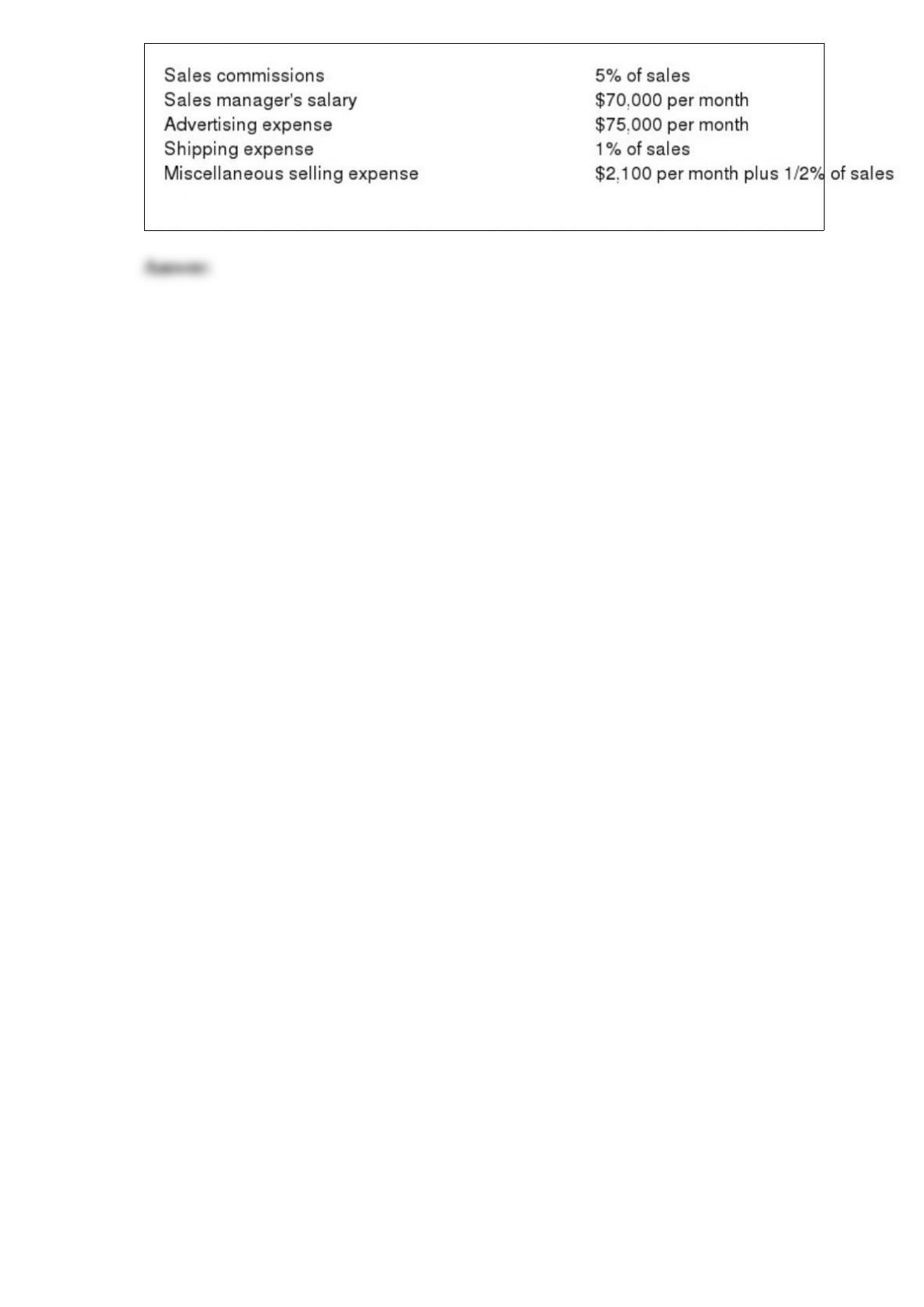
50) Prepare a monthly flexible selling expense budget for Prater Company for sales
volumes of $300,000, $400,000, and $500,000, based on the following data:
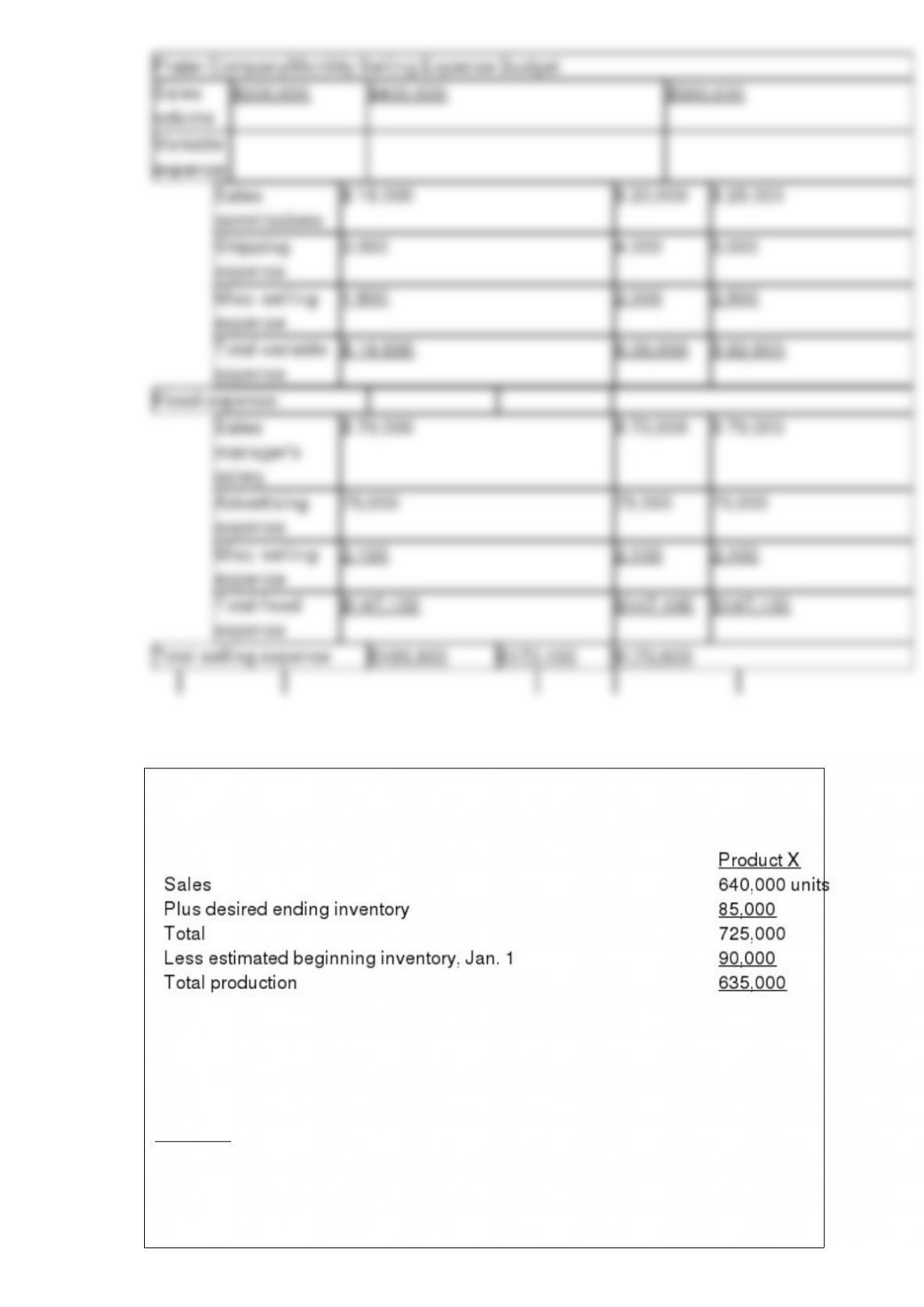
51) Brown Inc.s production budget for Product X for the year ended December 31 is as
follows:
In Brown’s production operations, Materials A, B, and C are required to make Product
X. The quantities of direct materials expected to be used for each unit of product are as
follows:
Product X
Material A .50 pound per unit
Material B 1.00 pound per unit
Material C 1.20 pound per unit
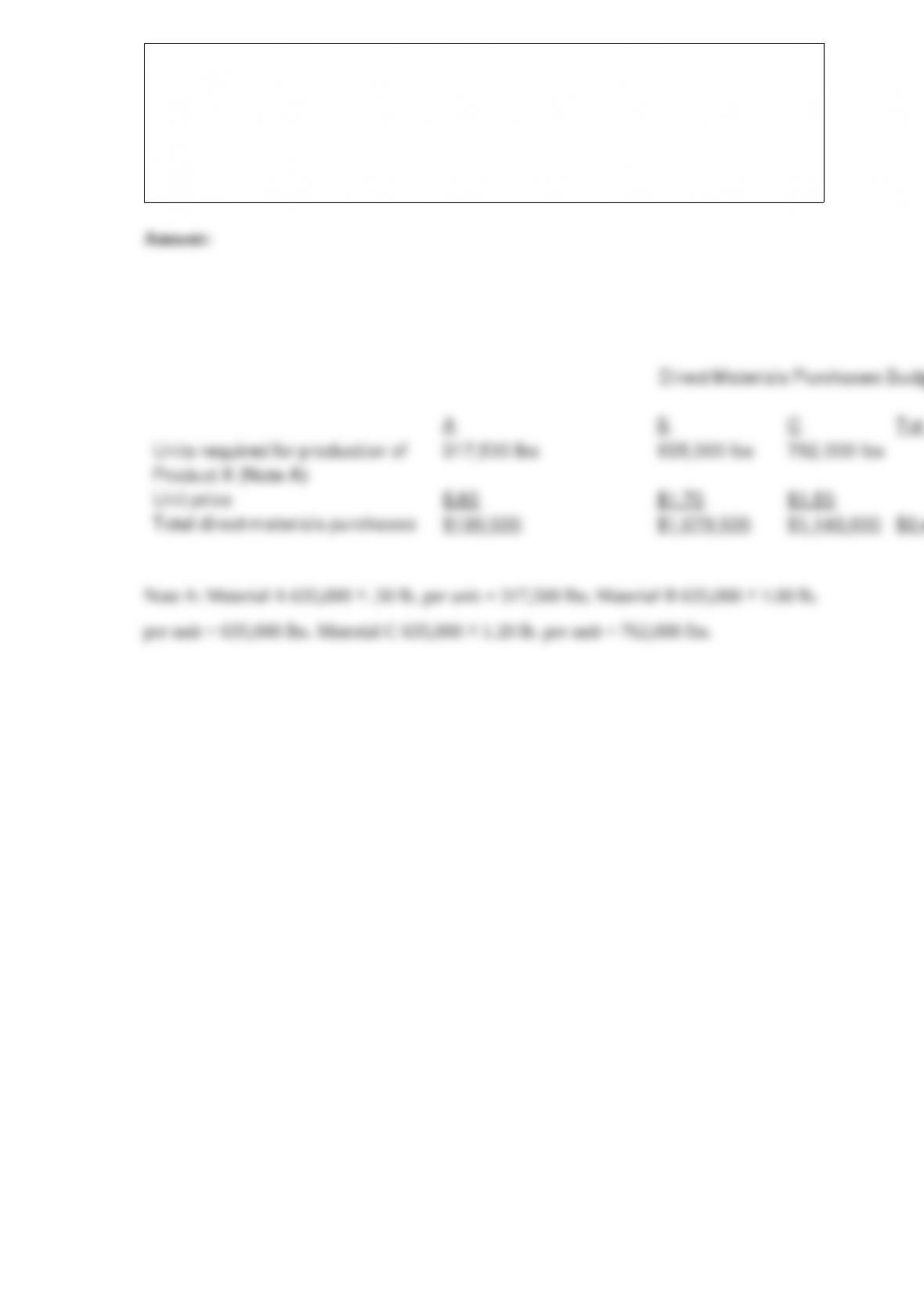
The prices of direct materials are as follows:
Material A $0.60 per pound
Material B $1.70 per pound
Material C $1.50 per pound
Prepare a direct materials purchases budget for Product X.