1) Aronson, Inc. began business on January 1, 2014, and at December 31, 2014,
Aronson had the following investment portfolios of equity securities:
None of the declines is judged to be other than temporary. Unrealized losses at
December 31, 2014, should be recorded with corresponding charges against
Stockholders’
Income Equity
a. $70,000 $ 0
b. $40,000 $30,000
c. $30,000 $40,000
d. $ 0 $70,000
2) What is the accounting principle underlying the recognition of an estimated liability
for warranties in the period of product sale?
a. Matching
b. Materiality
c. Full Disclosure
d. Conservatism
3) When a company issues bonds, how are unamortized bond discounts and premiums
classified on the balance sheet?
a. Bond discounts are classified as assets, and bond premiums are classified as
contra-asset accounts
b. Bond discounts are classified as expenses, and bond premiums are classified as
revenues
c. Bond premiums are classified as additions to, and bond discounts are classified as
deductions from, the face value of bonds
d. None of these are correct
4) When using common-size statements,
a. data may be selected for the same business as of different dates, or for two or more
businesses as of the same date

b. relationships should be stated in terms of ratios
c. dollar changes are reported over a period of at least three years
d. All of these are correct
5) Conrad, Inc. has $2,000,000 of notes payable due June 15, 2015. At the financial
statement date of December 31, 2014, Conrad signed an agreement to borrow up to
$2,000,000 to refinance the notes payable on a long-term basis. The financing
agreement called for borrowings not to exceed 80 percent of the value of the collateral
Conrad was providing. At the date of issue of the December 31, 2014, financial
statements, the value of the collateral was $2,400,000 and was not expected to fall
below this amount during 2015. In its December 31, 2014, balance sheet, Conrad
should classify notes payable as
Short-Term Long-Term
Obligations Obligations
a. $2,000,000 $0
b. $400,000 $1,600,000
c. $80,000 $1,920,000
d. $0 $2,000,000
6) When computing diluted earnings per share, stock options are
a. recognized only if they are dilutive
b. recognized only if they are antidilutive
c. recognized only if they were exercised
d. Ignored
7) Recognizing tax benefits in a loss year due to a loss carryforward requires
a. only a footnote disclosure
b. creating a new carryforward for the next year
c. creating a deferred tax asset
d. creating a deferred tax liability
8) In 2014, Ryan Corporation reported $85,000 net income before income taxes. The
income tax rate for 2014 was 30 percent. Ryan had an unused $65,000 net operating

loss carryforward arising in 2013 when the tax rate was 35 percent. The income tax
expense Ryan would report for 2014 would be
a. $7,000
b. $6,000
c. $24,600
d. $32,000
9) Which of the following is NOT a long-term, joint FASBIASB project?
a. Derecognition
b. Fair value measurement
c. Accounting for income taxes
d. Accounting and reporting for intangible assets
10) A $50,000 bond with a carrying value of $52,000 was called at 103 and retired. In
recording the retirement, the issuing company should record
a. a $500 gain
b. a $1,500 loss
c. a $2,000 gain
d. no gain or loss
11) On September 1, 2014, Clownfish Corporation declared and issued a 15 percent
common stock dividend. Prior to this date, Clownfish had 25,000 shares of $2 par value
common stock that were both issued and outstanding. The market value of Clownfish’
stock was $20 per share at the time the dividend was issued. As a result of this stock
dividend, Clownfish’ total stockholders’ equity
a. decreased by $37,5000
b. decreased by $375,000
c. increased by $375,000
d. did not change
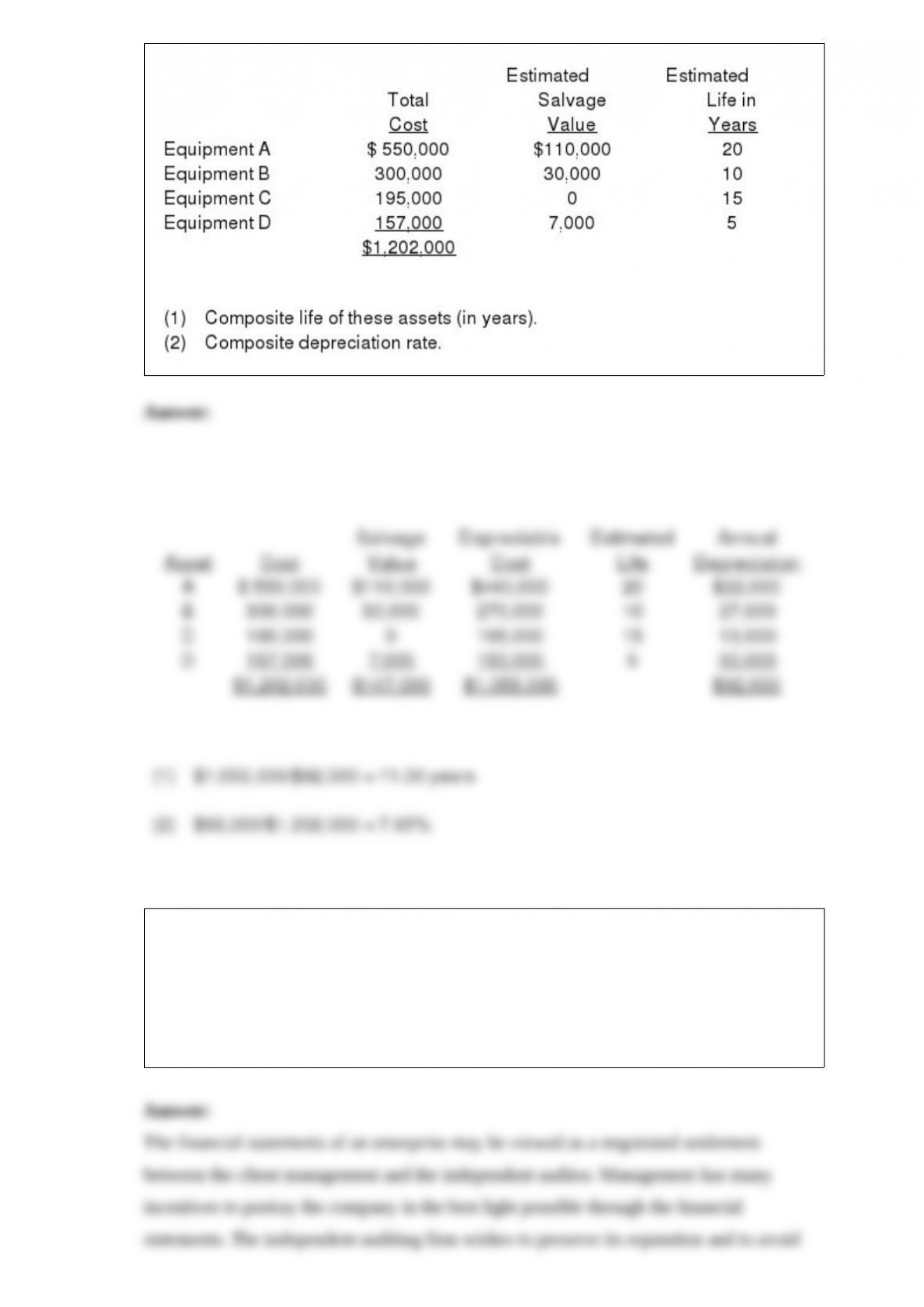
12) Image Creators, Inc. owns the following equipment and computes their depreciation
on the straight-line basis:
Required:
13) Several catastrophic accounting failures have occurred over the last few years.
Although the details of each failure is different, each case stems from attempts to
manage earnings and thus all of these failures have common elements.
One of the elements identified in these earnings management meltdowns is the auditor’s
calculated risk.
Explain what is meant by the term “the auditor’s calculated risk”.
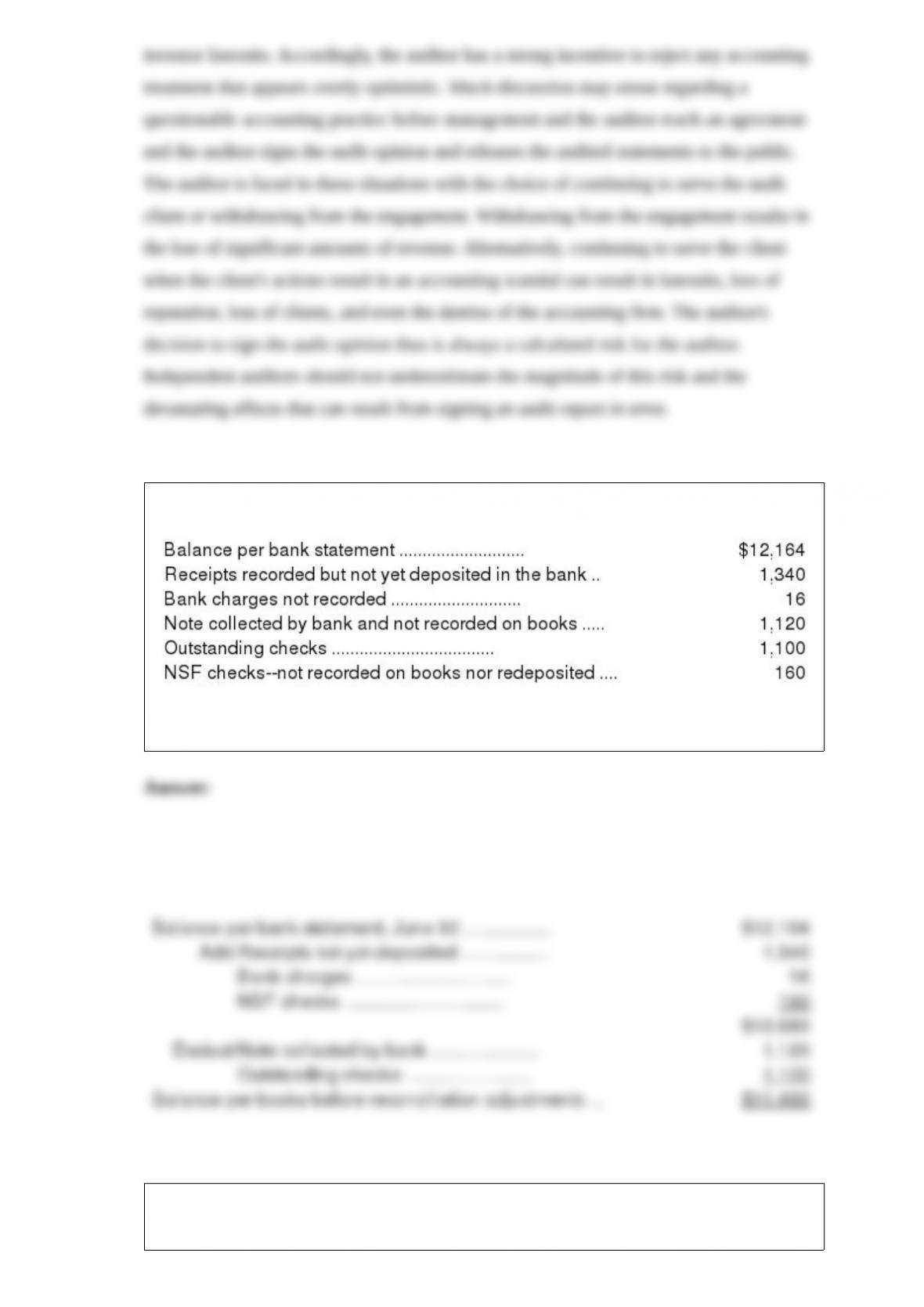
14) The information below is from the books of the Pawnee Corporation on June 30:
Assuming no errors were made, compute the cash balance per books on June 30 before
any reconciliation adjustments.
15) A major conceptual issue regarding the accounting for income taxes is the
recognition of income taxes as expenses. Some would argue that income taxes are not
directly related to revenues or revenue-seeking functions and should not be considered
as expenses. Some view income taxes as a distribution of income similar to dividends.
This view would hold that income taxes, like dividends, are paid only if income is
earned. Wages and supplies, on the other hand, are paid for whether the entity earns a
profit or incurs a loss.
Identify arguments that can be made for recognizing income tax as an expense on the
income statement.
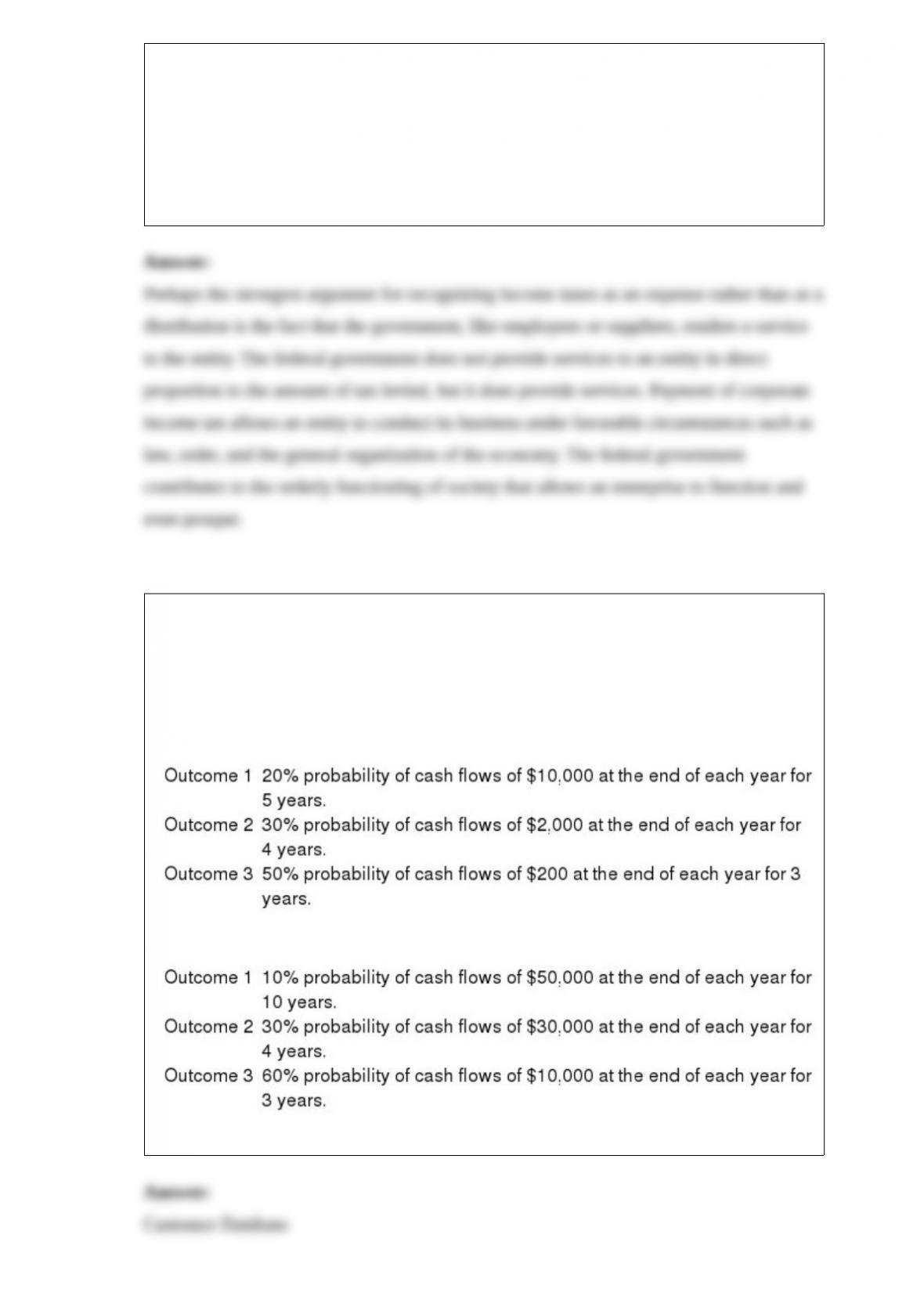
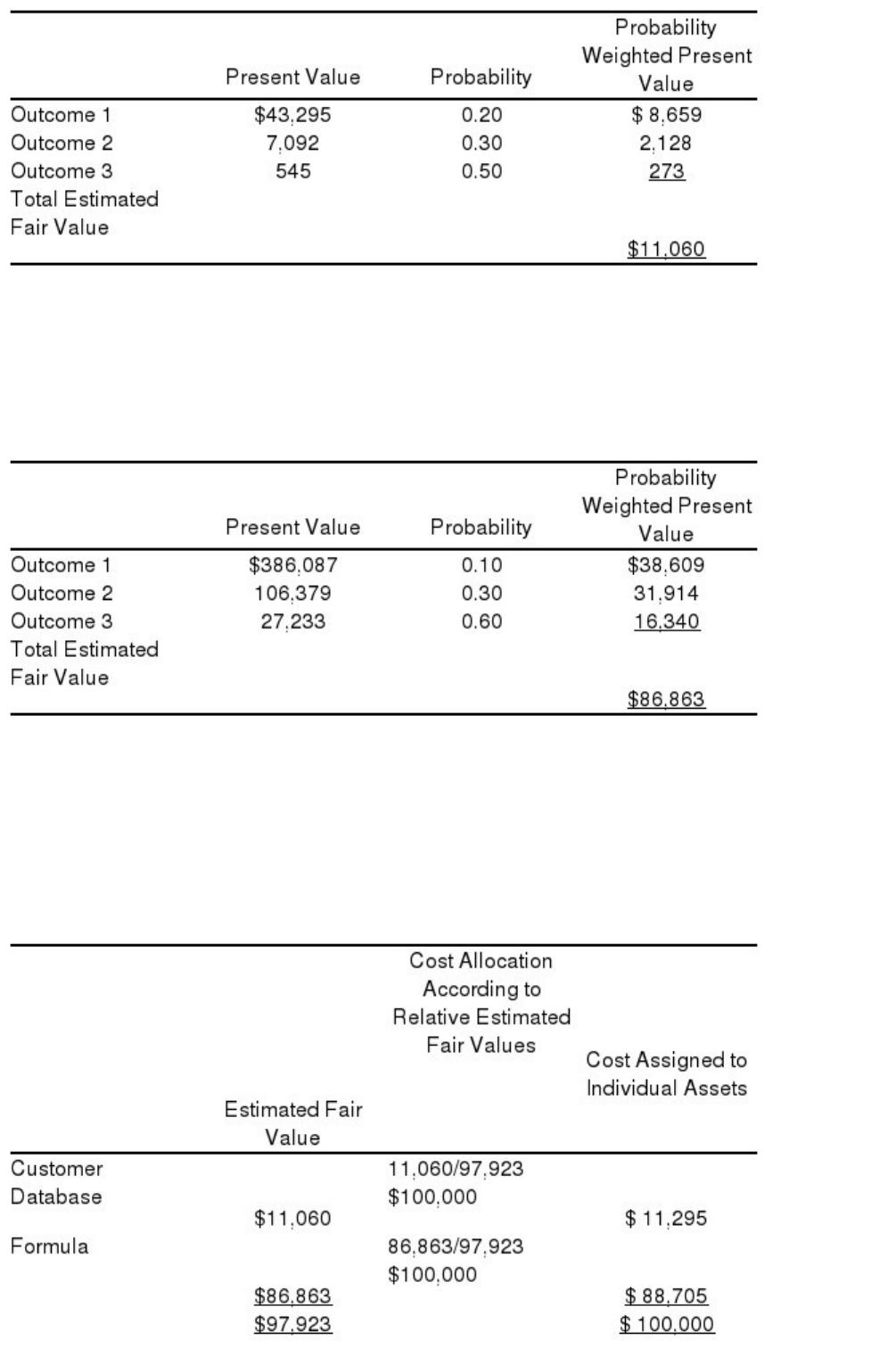
16) Addmachine Company purchased a customer database and in-process research and
development for a total of $100,000. Addmachine Company uses the expected cash
flow approach for estimating the fair value of these two intangibles. The appropriate
interest rate is 5%. The potential future cash flows from the two intangibles, and their
associated probabilities, are as follows:
Customer Database:
In-process Research and Development:
Prepare the journal entry necessary to record the purchase of the two intangibles.
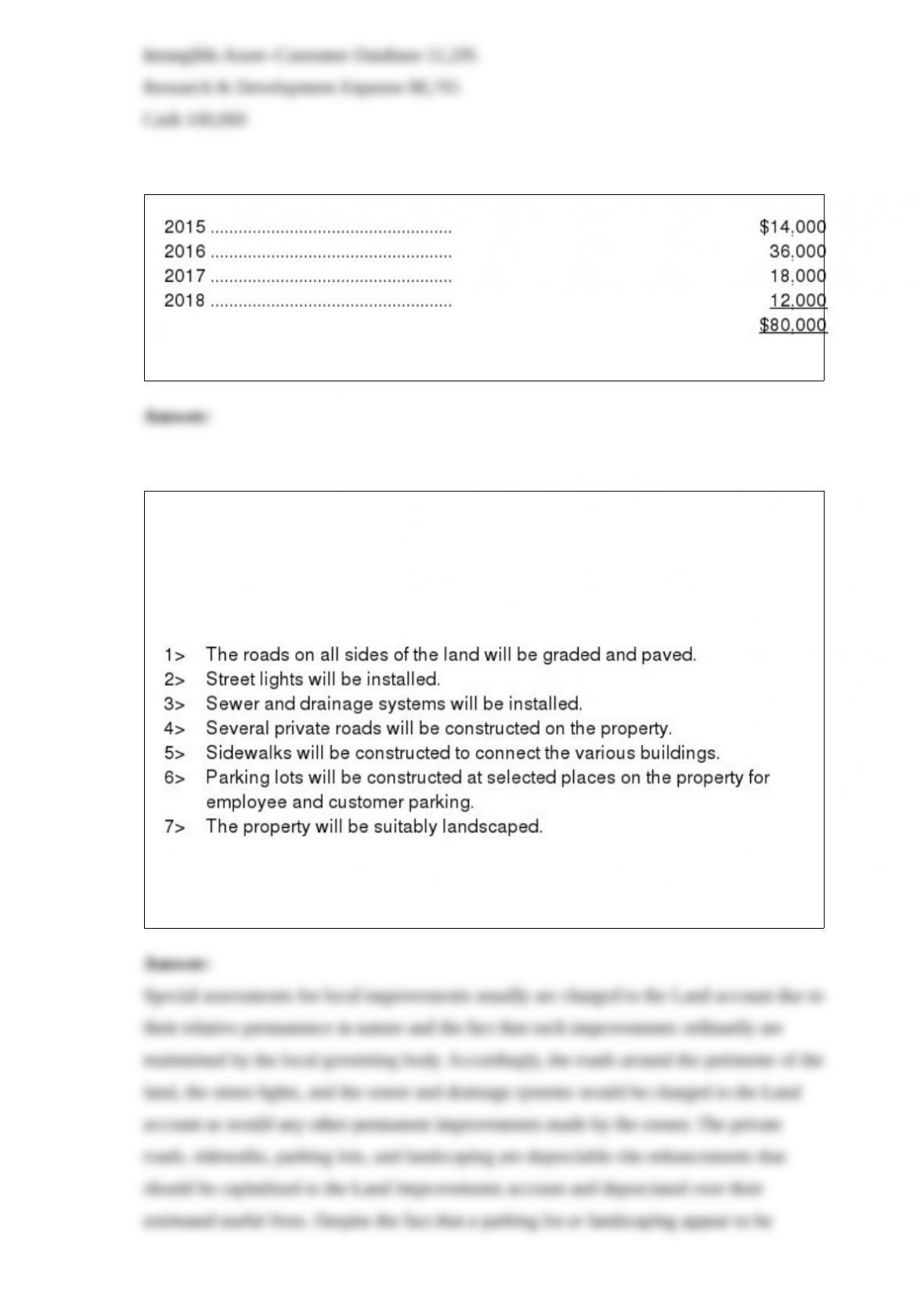
17) The enacted tax rates for this year and the next four years are as follows:
18) The Final Word Company produces word processing software. The company
recently purchased a large tract of land on which will be constructed several buildings
to house the production and administrative personnel of the company. The following
improvements are expected to be made to the land as part of the construction of the
complex:
Required:
Explain how each of the above items would be accounted for in the records of Final
Word Company.
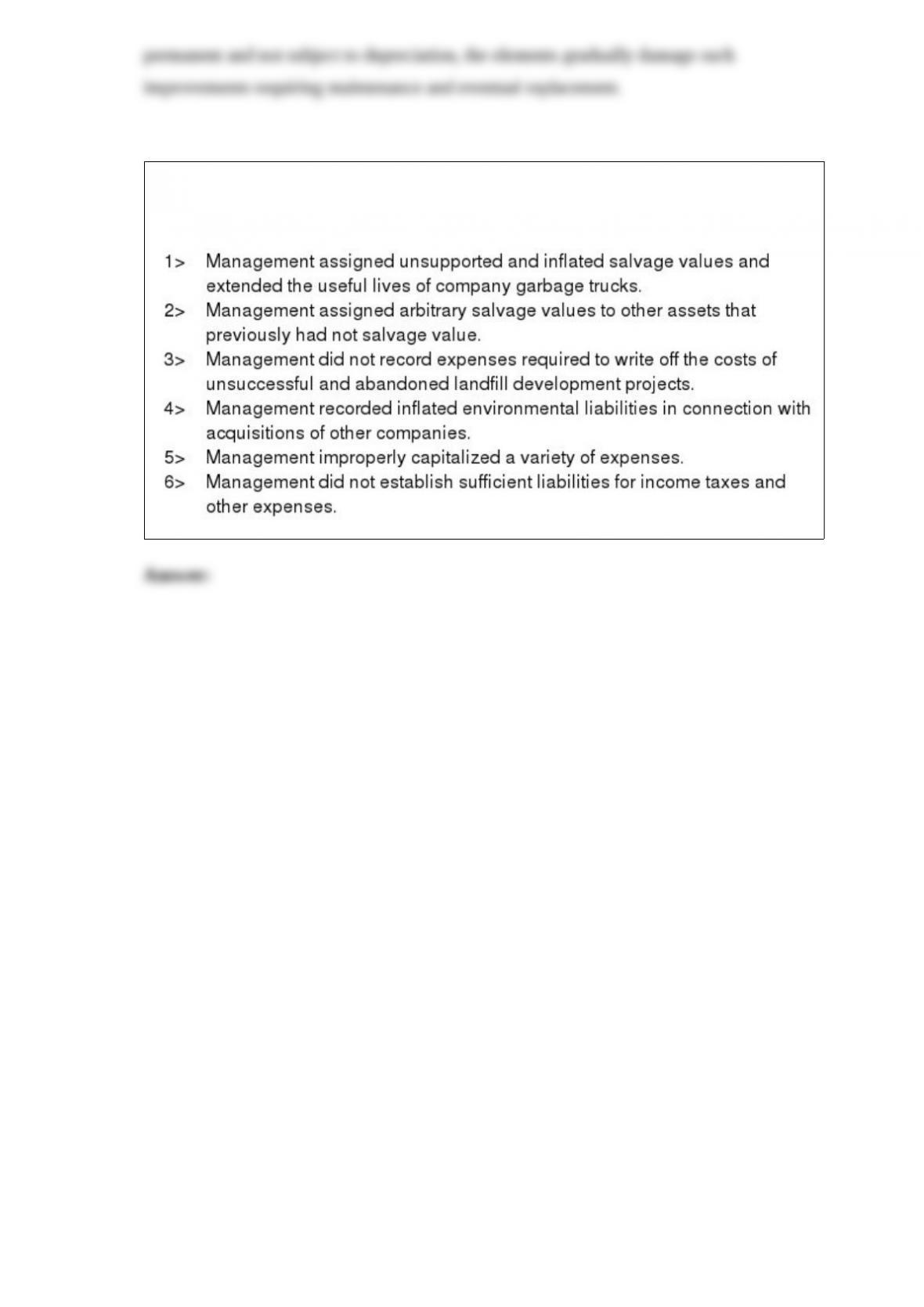
19) Trashbin is a waste disposal company. Explain the effect the following actions of
the management of Trashbin Company might have in managing earnings: