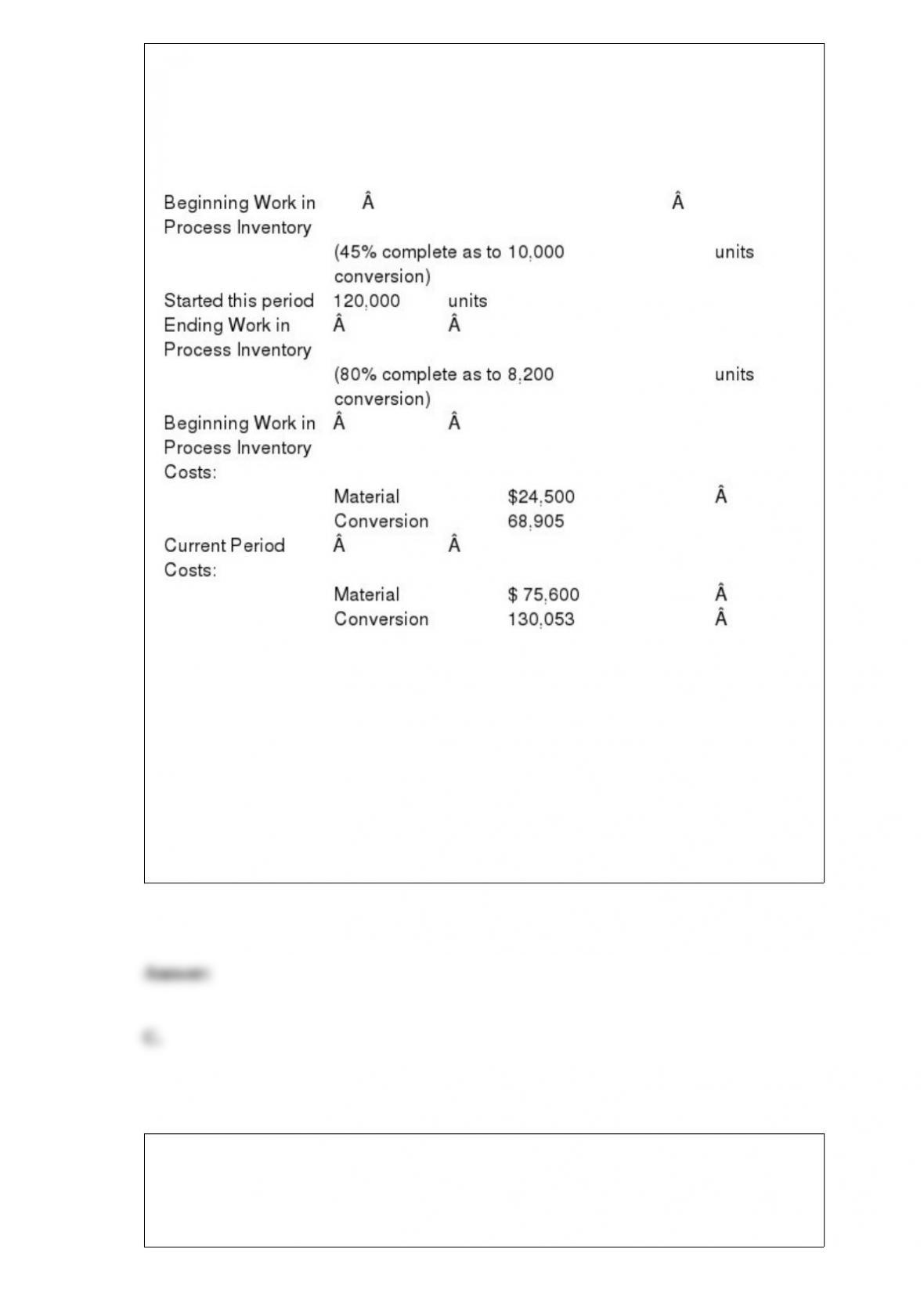
Wright Company
Wright Company adds material at the start of production. The following production
information is available for September:
Refer to Wright Company. What is the cost of all units transferred out using the FIFO
method?
A. $204,624
B. $191,289
C. $287,004
D. $298,029
Beasley Company
Beasley Company prepared a cash budget by quarters for the upcoming year. Missing
data amounts are indicated with question marks or lower case letters; these lower case
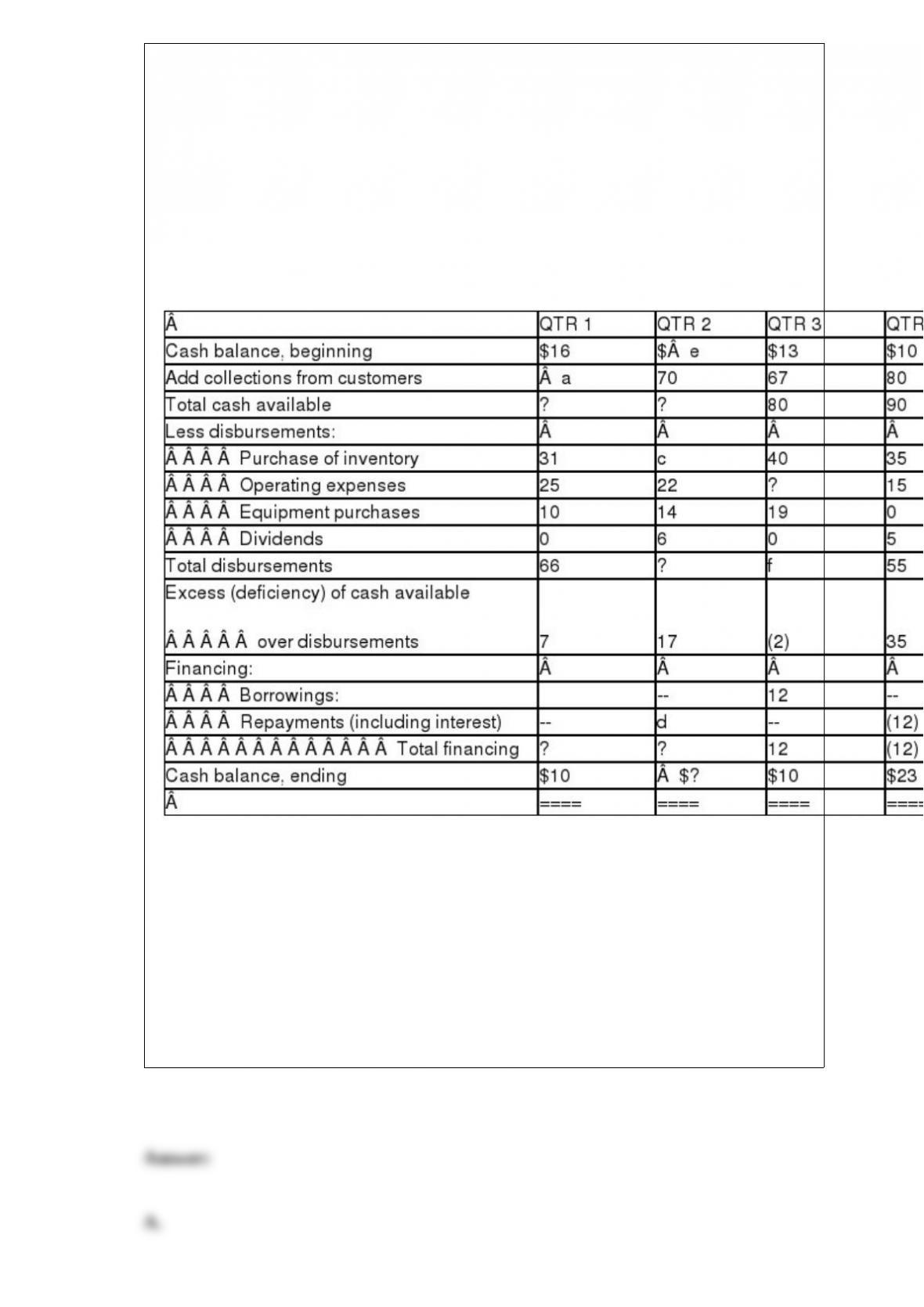
letters will be referred to in the questions that follow.
Beasley requires a minimum balance of $10,000 to start a quarter.
All data are in thousands.
Beasley Corporation
Cash Budget
Refer to Beasley Company. The repayment (including interest) of financing during the
second quarter (item d) is:
A. $ 4
B. $ 0
C. $17
D. $ 7

In a highly regulated, monopolistic industry, such as the electrical utility or TV cable, a
cost management system is
A. of limited need because costs are typically passed along to customers via the rate
structure.
B. essential because of the need to provide the highest degree of cost efficiency possible
for customers.
C. critical to the needs of empowered employees making decisions at various levels of
the organizational hierarchy.
D. of no use because there is no attempt by management to control costs.
Which of the following is a reason for allocating service department costs and thereby
motivating management?
A. provides for cost recovery
B. provides relevant information in determining corporate-wide profits generated by
alternative actions
C. meets regulations in some pricing instances
D. reflects usage of services on a fair and equitable basis
Which of the following is not an ordering cost?

A. cost of receiving inventory
B. cost of preparing the order
C. cost of processing payment for inventory ordered
D. cost of storing the inventory
A standard cost system may be used in
A. job order costing, but not process costing.
B. process costing, but not job order costing.
C. either job order costing or process costing.
D. neither job order costing nor process costing.
Stocks Corporation
Stocks Corporation has the following information available for June of the current year:
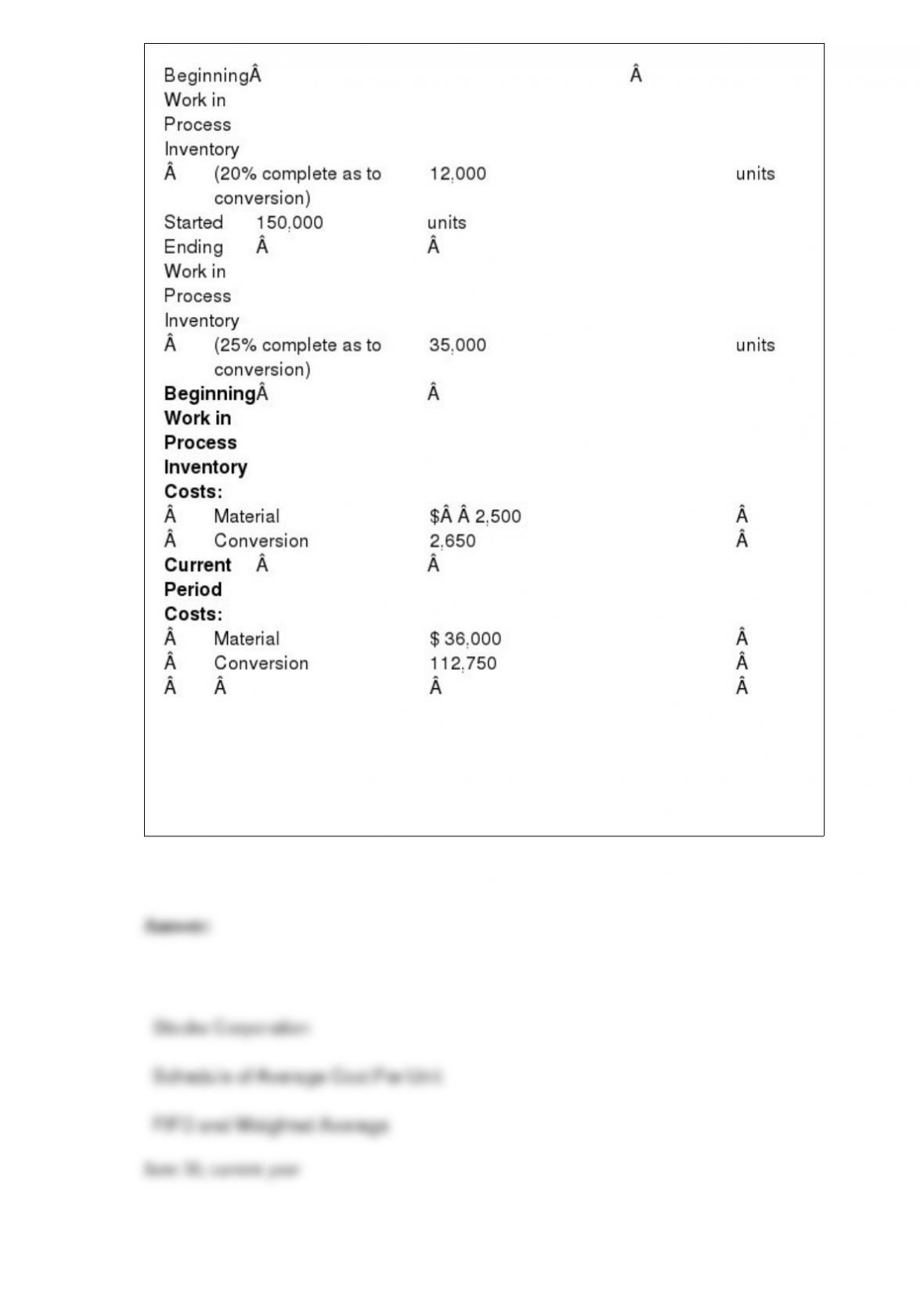
All material is added at the start of production and all products completed are
transferred out.
Refer to Stocks Corporation. Prepare a schedule showing the computation for cost per
equivalent unit assuming the (a) FIFO and (b) weighted average method.
The learning and growth perspective of the balanced scorecard addresses how well the
organization is doing with regard to important customer criteria.
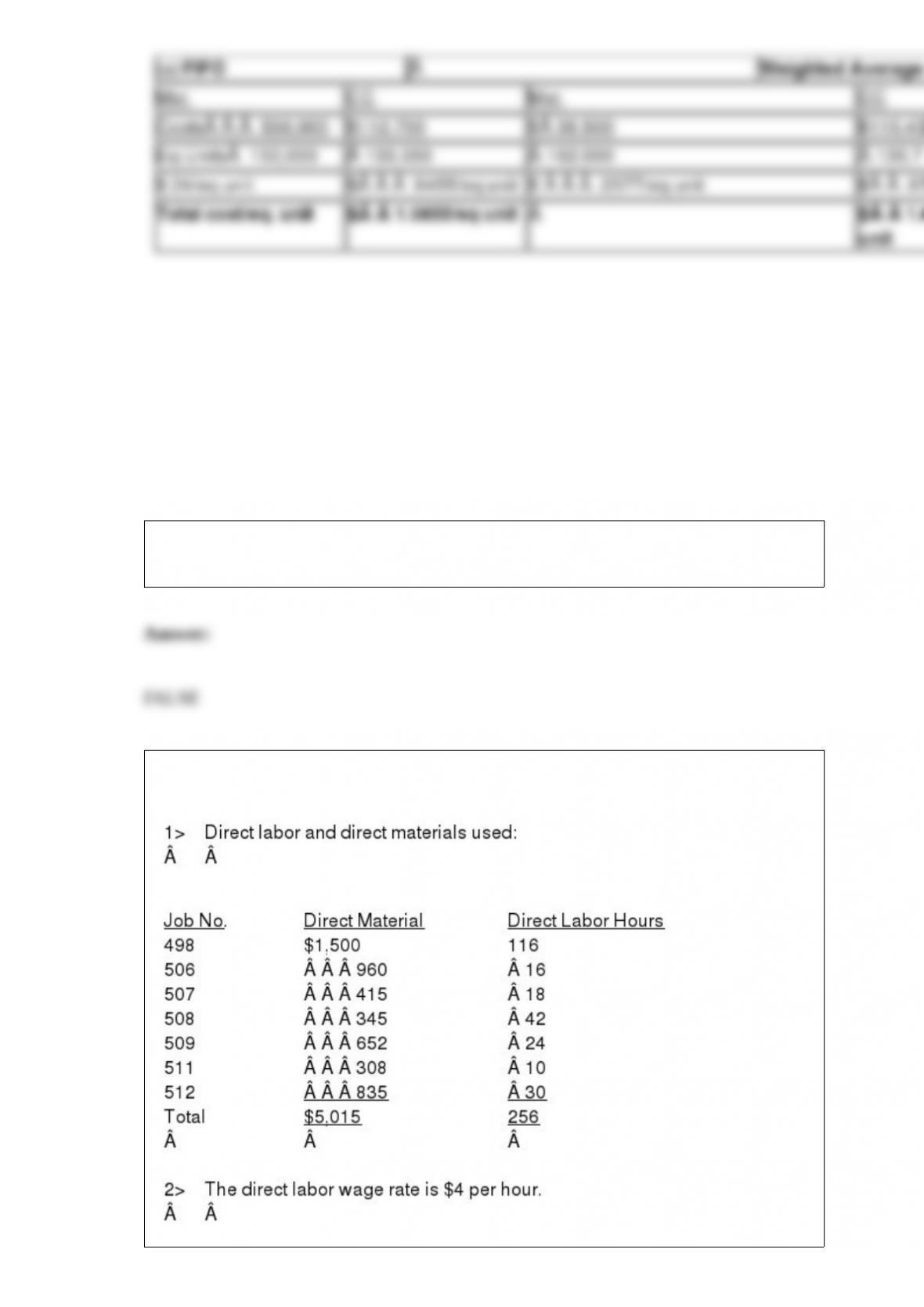
Hodges Company uses a job-order costing system and has the following information for
the first week of June:

Required:
As the internal transfer price is increased,
A. overall corporate profits increase.
B. profits in the buying division increase.
C. profits in the selling division increase.
D. profits in the selling division and the overall corporation increase.
Why is it likely that a subordinate manager would be more attentive to certain
performance measures than overall corporate objectives to guide his decision making?
Define a cost management system and indicate how it should help managers.
What four areas are covered by the Standards of Ethical Conduct for Certified
Management Accountants? How are these areas defined?
What are the limitations of the payback period as a capital budgeting technique?
A set of formal methods used to plan and control the cost-generating activities of an
organization is referred to as a(n) ________________________________________.
Define confrontation strategy and indicate why many companies may believe it is the
only way to face competitors.
Kennedy Company
The following information is available for Kennedy Company for March of the current
year. All materials are added at the start of production.
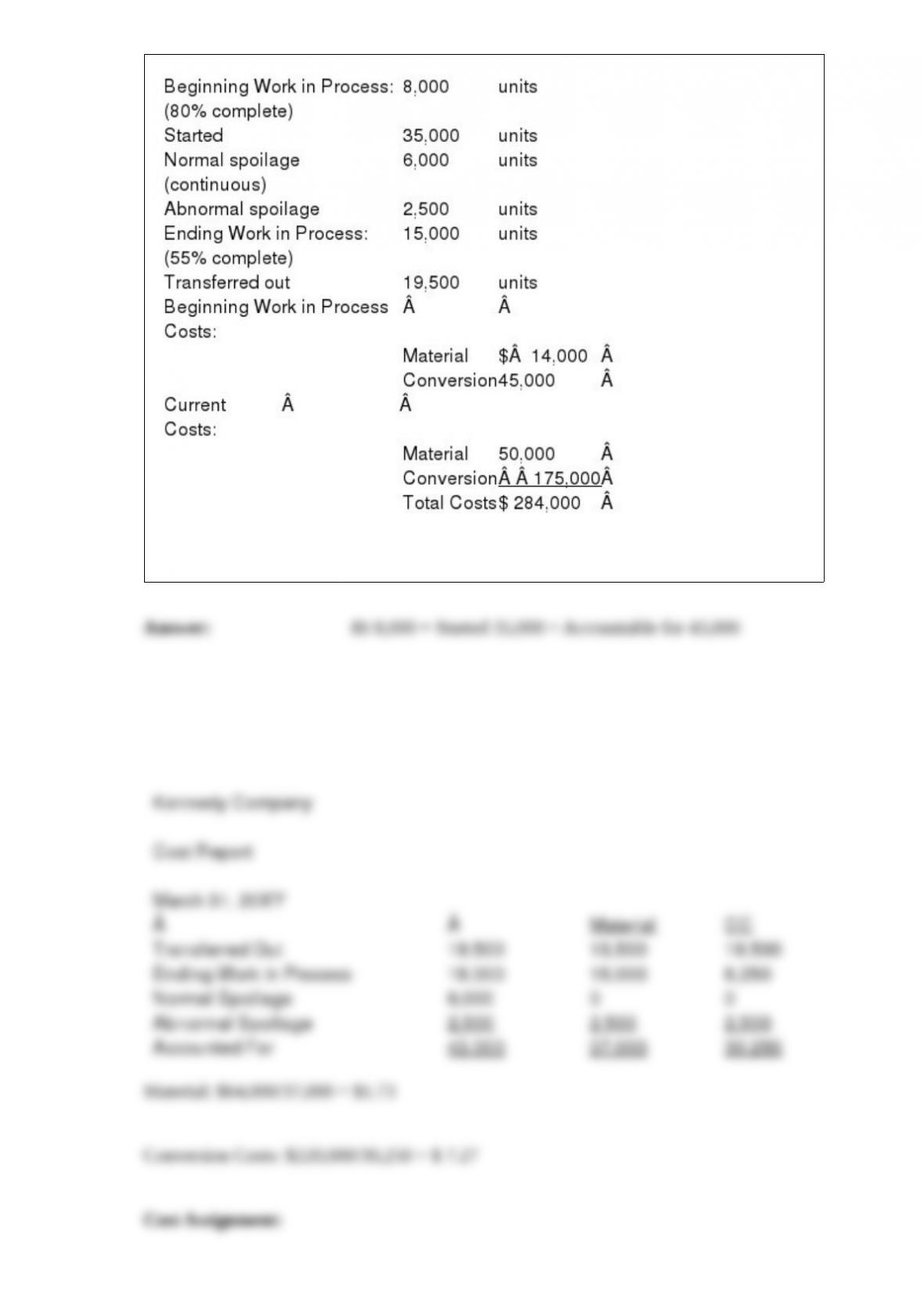
Refer to Kennedy Company. Prepare the cost of production report assuming the
weighted average method.
Statistical data about the steps that will create the results desired as referred to as
___________________________________.