
The coefficient of correlation is
A. the range of values over which the probability may be estimated based upon the
regression equation results.
B. the proportion of the total variance in the dependent variable explained by the
independent variable.
C. the measure of variability of the actual observations from the predicting (forecasting)
equation line.
D. the relative degree that changes in one variable can be used to estimate changes in
another variable.
Answer:
How would a 5% sales commission paid to sales personnel be classified in a
manufacturing company?
A. Fixed, period cost.
B. Fixed, product cost.
C. Variable, period cost.
D. Variable, product cost.
Answer:
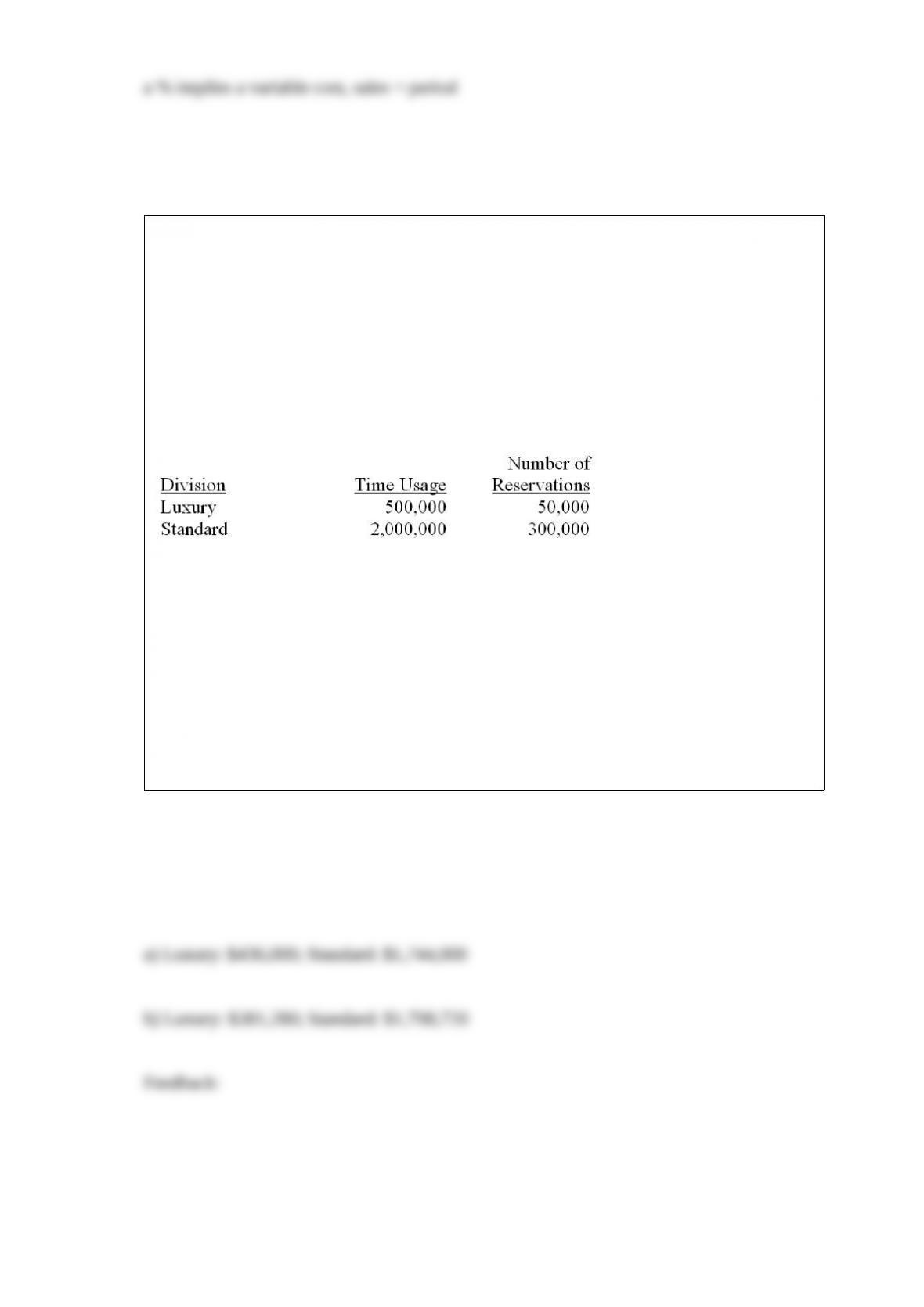
Caspian Resorts operates a centralized call center for the reservation needs of its
time-share units. Costs associated with use of the center are charged to the time-share
group (Luxury and Standard) where a reservation is made on the basis of time spent on
a call. Due to recent increased competition in the time-share, the company has decided
that it is necessary to more accurately allocate its costs to price its services
competitively and profitably. During the current period, the use of the call center for
each group was as follows (in thousands of seconds for time usage and in number of
reservations):
During this period, the cost of the computer center amounted to $1,220,000 for
personnel and $960,000 for equipment and other costs.
Required Determine the allocation to each of the divisions using (round all decimals to
three places):
a) A single rate based on time used.
b) Multiple rates based on time used (for personnel costs) and number of reservations
(for equipment and other cost).
Answer:
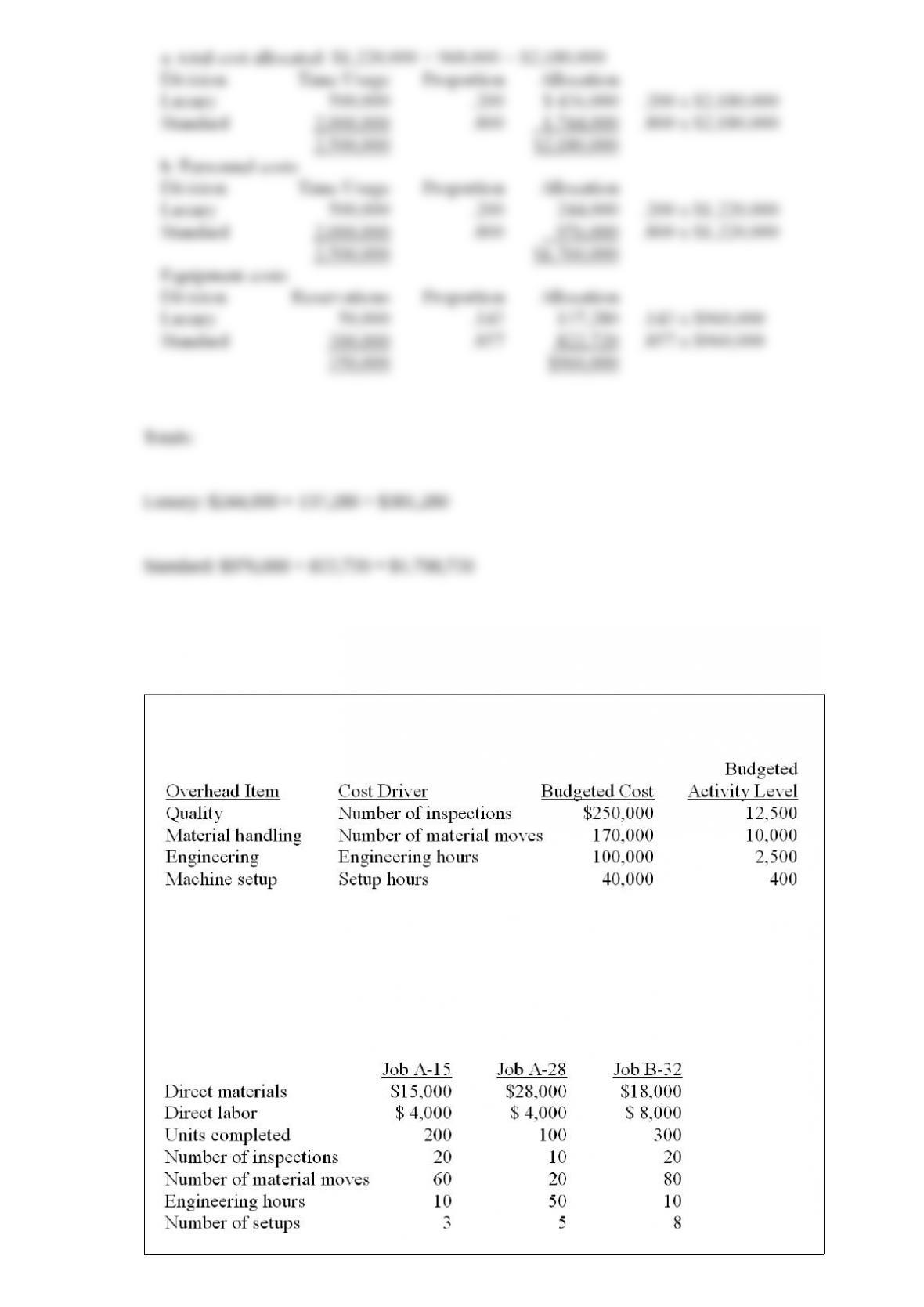
Scottso Enterprises has identified the following overhead costs and cost drivers for the
coming year:
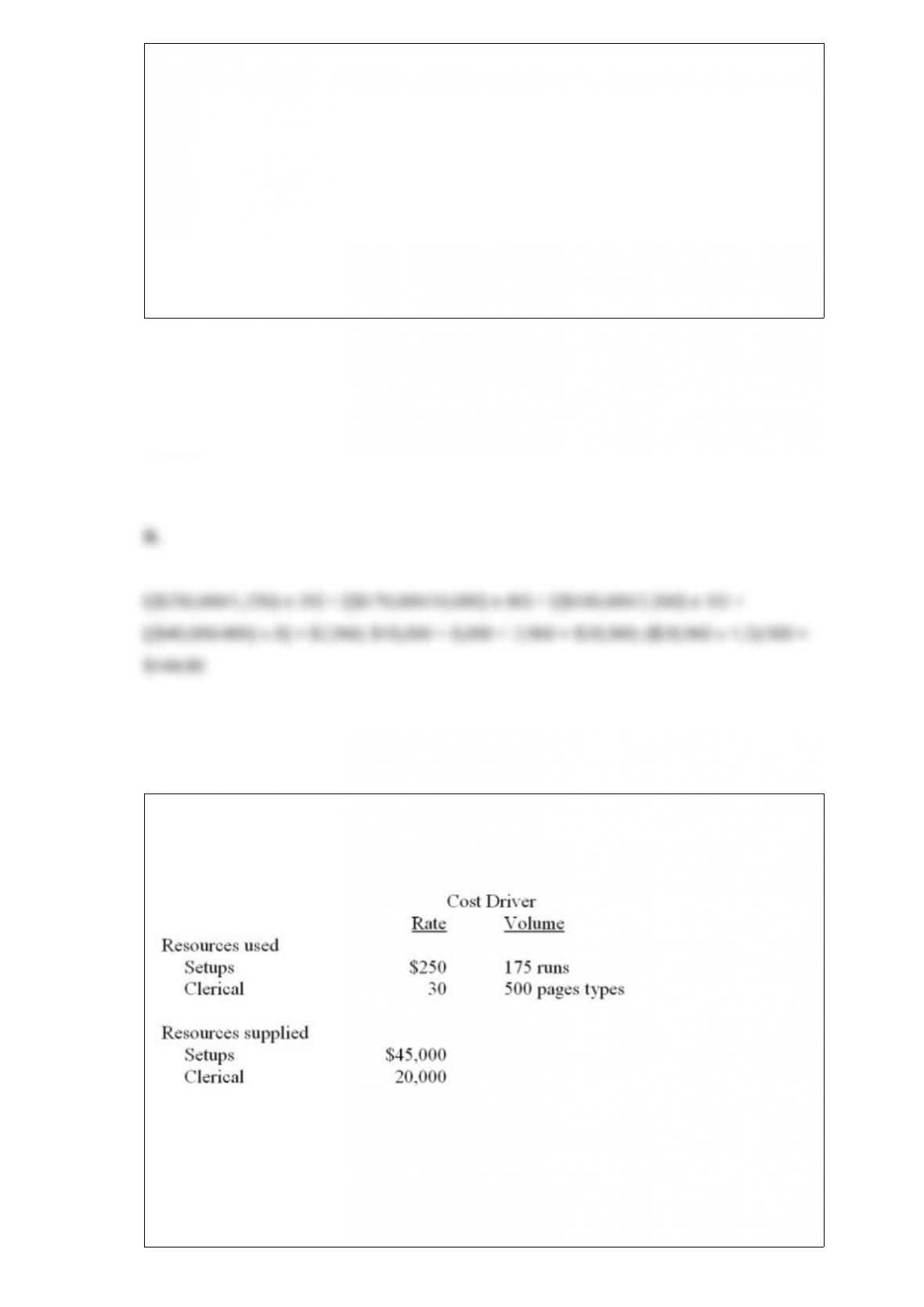
Budgeted direct labor cost was $200,000 and budgeted direct material cost was
$800,000. The following information was collected on three jobs that were completed
during the month:
The company prices its products at 150% of cost. If the company uses activity-based
costing (ABC), the price of each unit of Job B-32 would be
A. $96.53
B. $144.80
C. $130.00
D. $226.53
Answer:
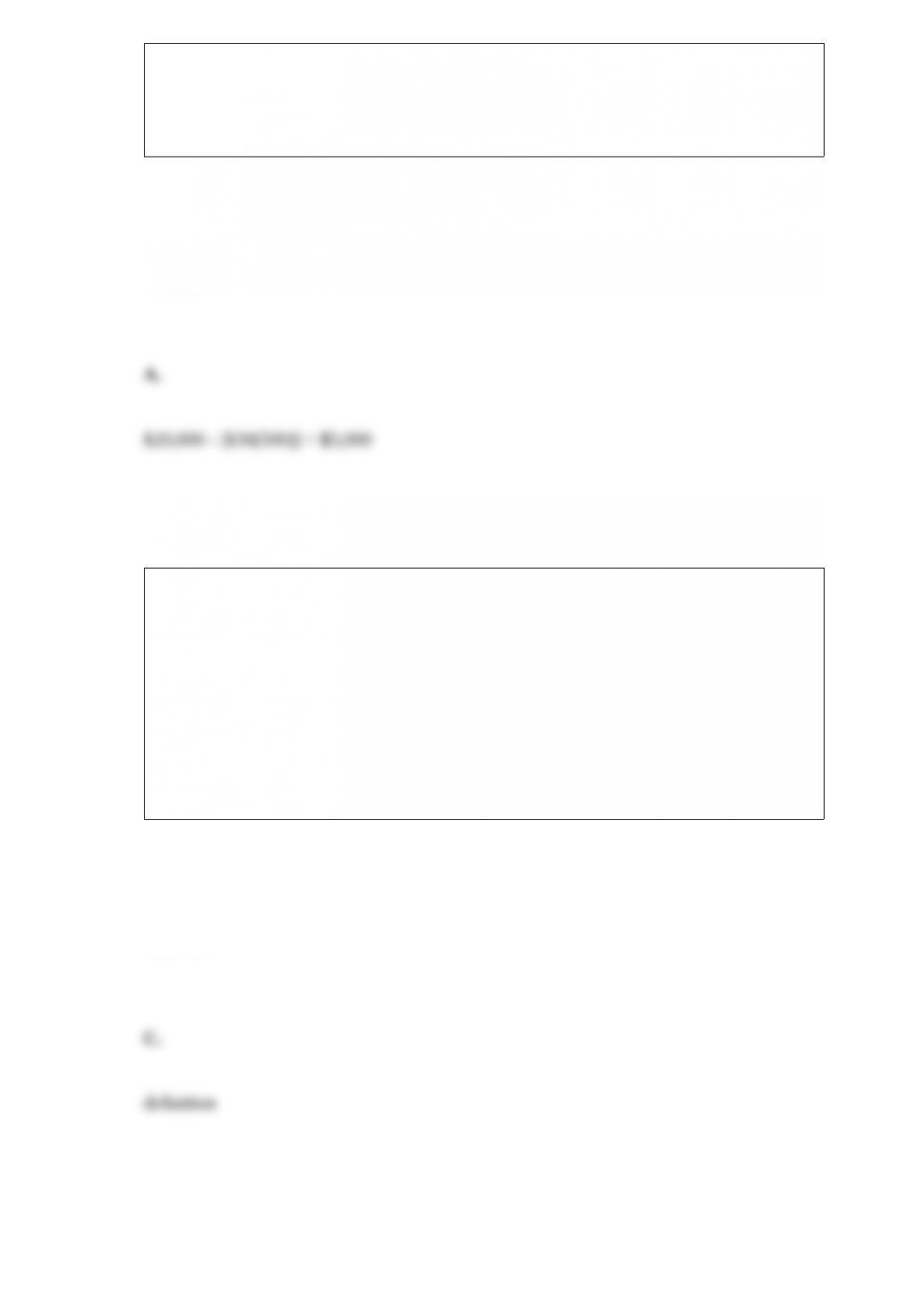
Gundy Press reports the following information about resources. At the beginning of
the year, Gundy estimated it would spend $42,000 for setups and $21,000 for clerical.
Compute unused resource capacity for clerical for Gundy Press.
A. $5,000
B. $1,000
C. $6,000
D. $1,260
Answer:
The beginning Work-in-Process inventory plus the total of the manufacturing costs
equals
A. total finished goods during the period.
B. cost of goods sold for the period.
C. total work-in-process during the period.
D. cost of goods manufactured for the period.
Answer:

The ALG Manufacturing Company has gathered the following information for the
month of September:
– 6,000 units in the beginning Work-in-Process Inventory (75% complete as to
materials, 1/3 complete with respect to the conversion costs)
– 60,000 units were started into production
– 50,000 units were completed and transferred to the next department
– The ending Work-in-Process Inventory is complete as to materials but only 3/8
complete with respect to conversion costs.
What are the equivalent units of production (EUP) for the conversion costs in the month
of September assuming ALG uses weighted-average process costing?
A. 64,500
B. 56,000
C. 61,500
D. 54,000
Answer:
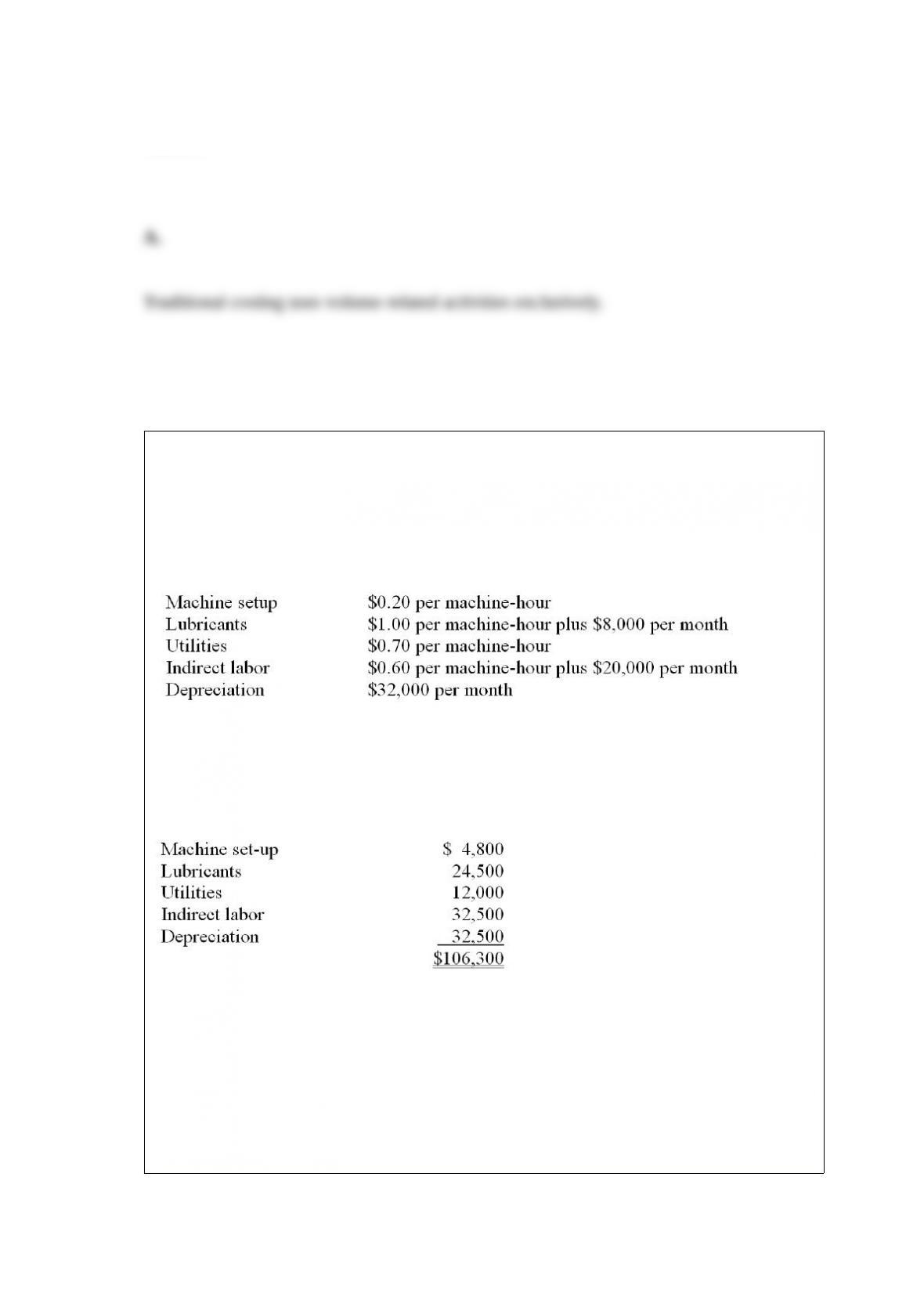
Which of the following measures is used by traditional costing systems as an allocation
base for allocating overhead costs to the units produced?
A. Volume-related activities
B. Batch-related activities
C. Product-related activities
D. Facility-related activities
Answer:
The Hageness Company has had great XOAXOA in controlling overhead costs. At a
recent convention, the president heard about a control device for overhead costs known
as a flexible budget and she has hired you to implement this budgeting program. After
some effort, you develop the following cost formulas for the company’s machining
department. These costs are based on a normal operating range of 15,000 to 23,000
machine-hours per month:
During March, the first month after your preparation of the above data, the machining
department worked 18,000 machine-hours and produced 9,000 units of product. The
actual costs of this production were:
The department had originally been budgeted to work 19,000 machine-hours during
March.
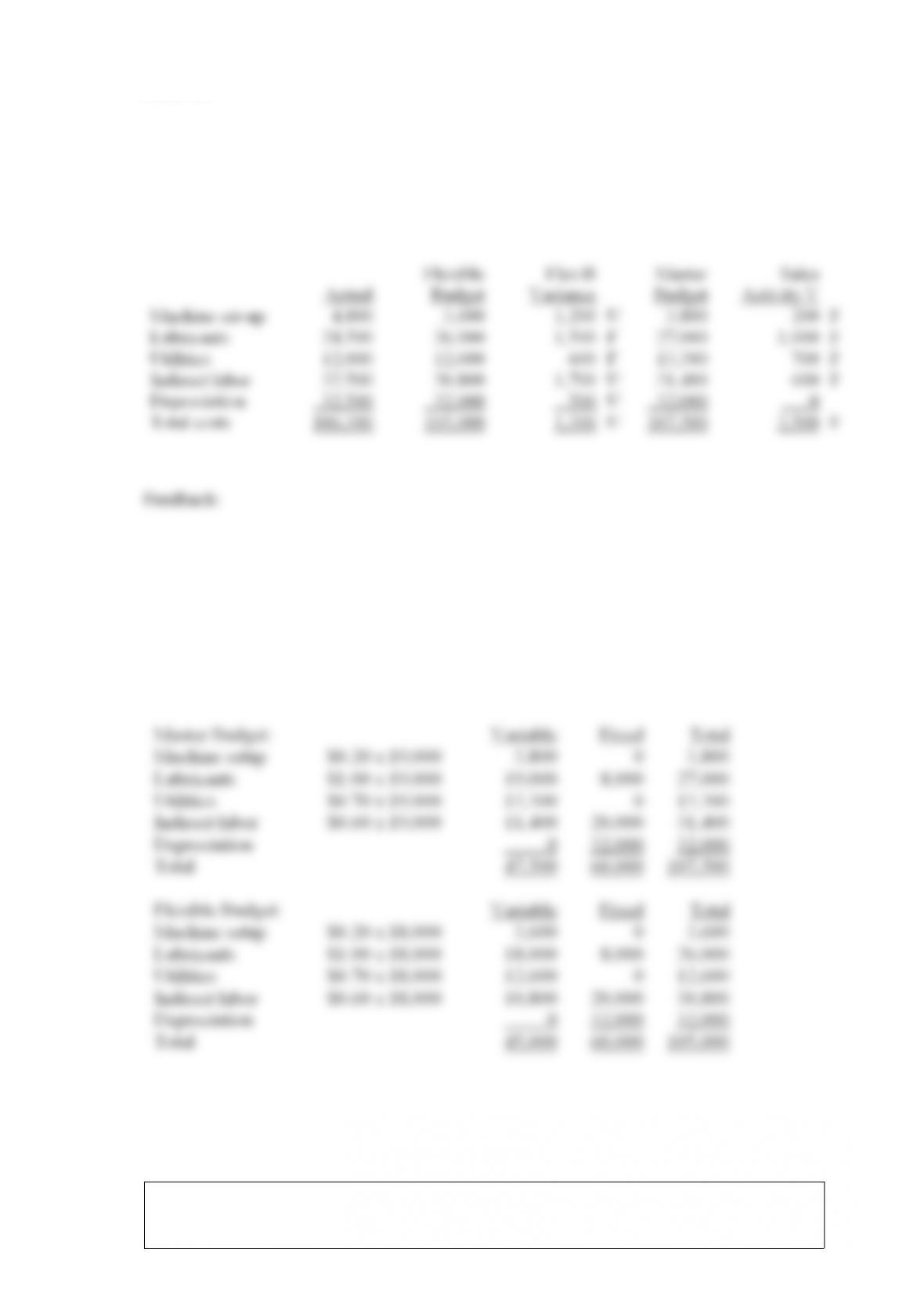
Required:
Prepare a performance report for the machining department for the month of March
including columns for the (a) actual results, (b) flexible budget, (c) flexible budget
variance, (d) master budget, and (e) sales activity variance.
Answer:
The Katie Corporation has budgeted fixed costs of $125,000 and an estimated selling
price of $16.50 per unit. The contribution margin ratio is 40% and the company plans to
sell 25,000 units in 2011.
Required:
(a) Compute the break-even point in dollars.
(b) Compute the margin of safety for 2011.
(c) Compute the expected operating profit for 2011.
Answer:
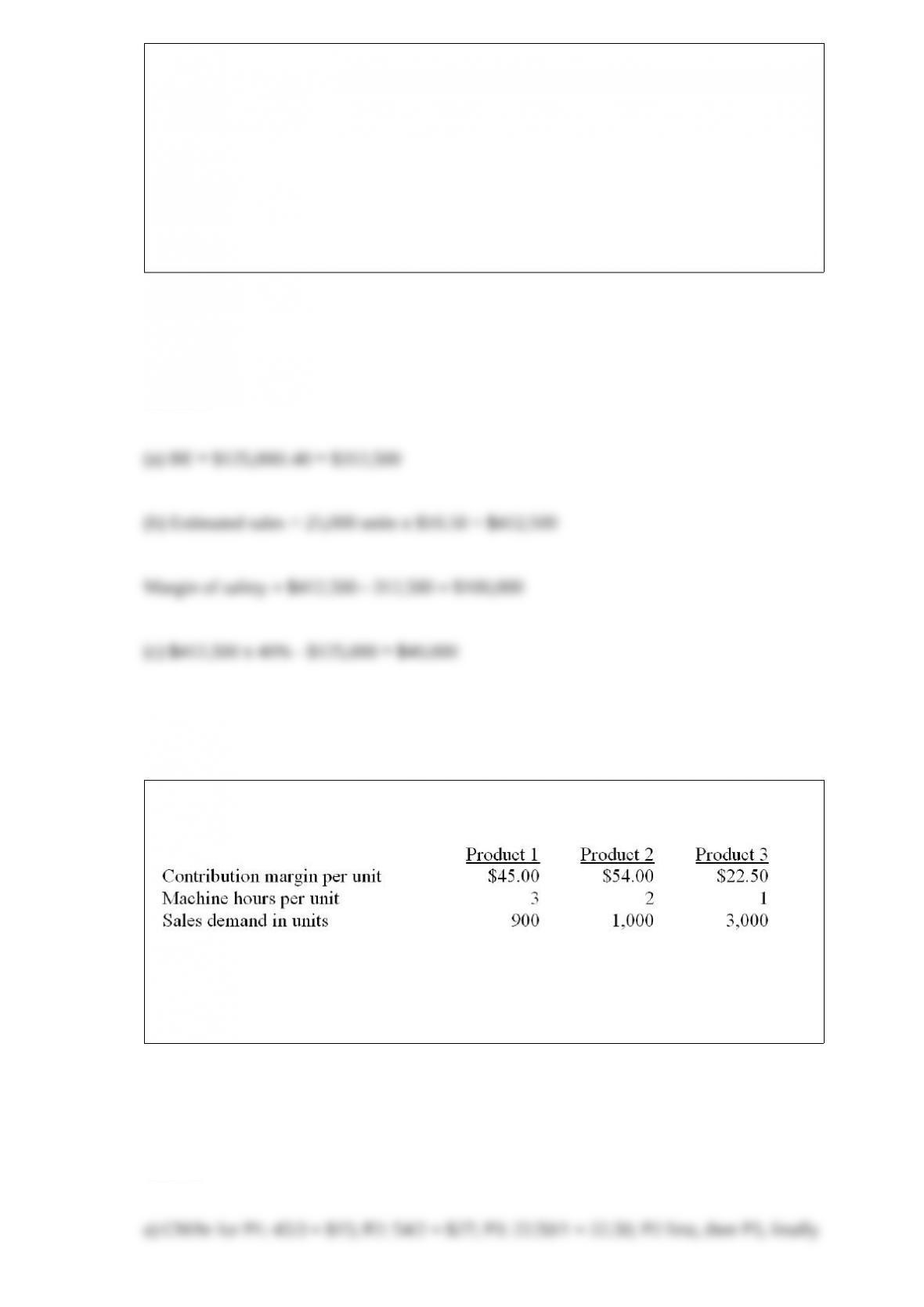
Gerber Inc has 5,200 machine hours available each month. The following information
on the company’s three products is available:
a) What production schedule will maximize the company’s profits?
b) What will be the maximum possible contribution margin?
Answer:
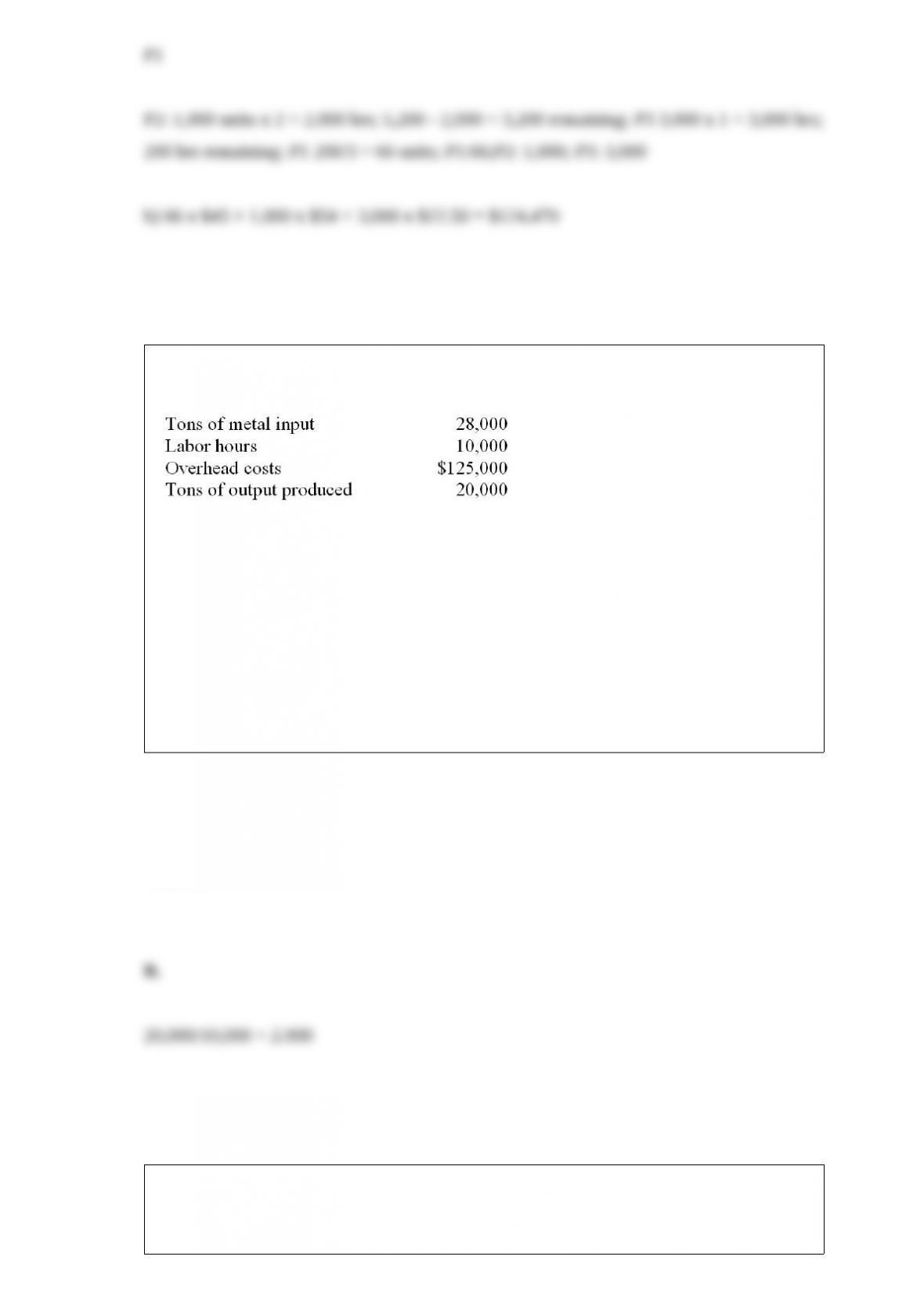
The Lutsen Machining Co has the following information for last year
The partial productivity for labor is
A. 2.800
B. 2.000
C. 0.526
D. 0.500
Answer:
Wrigley Services has three divisions, commercial, retail and consumer, that share the
common costs of the company’s computer server network. The annual common costs
are $1,200,000. You have been provided with the following information for the
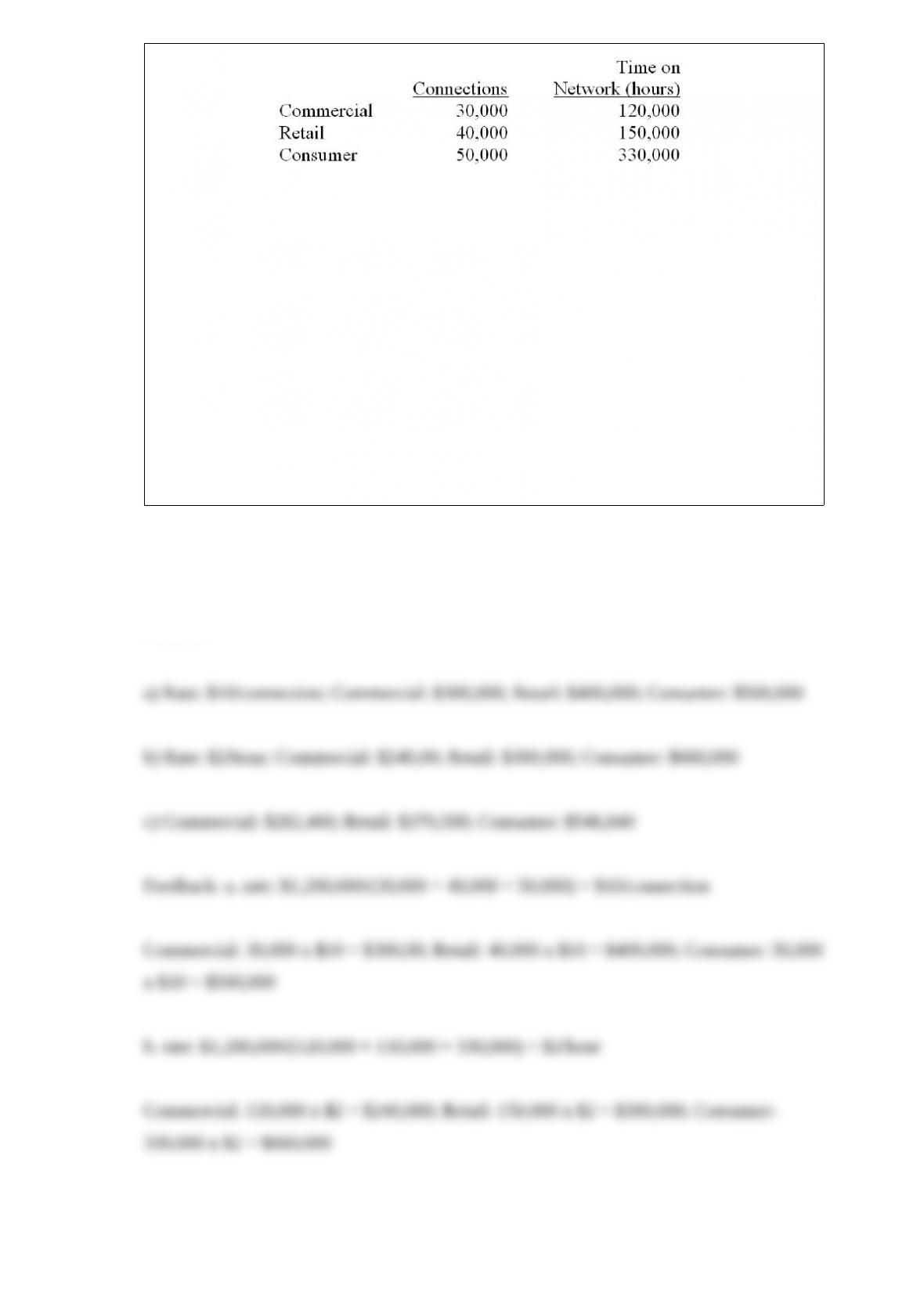
upcoming year:
Required (use three decimal places in your calculations):
a) What is the allocation rate for the upcoming year assuming Wrigley uses the
single-rate method and allocates common costs based on the number of connections?
Calculate the allocated amount for each division.
b) What is the allocation rate for the upcoming year assuming Wrigley uses the
single-rate method and allocates common costs based on the time on network?
Calculate the allocated amount for each division.
c) The cost accountant determined $850,000 of the server network’s costs were fixed
and should be allocated based on the number of connections. The remaining costs
should be allocated based on the time on the network. What is the total server network
costs allocated to each division?
Answer:
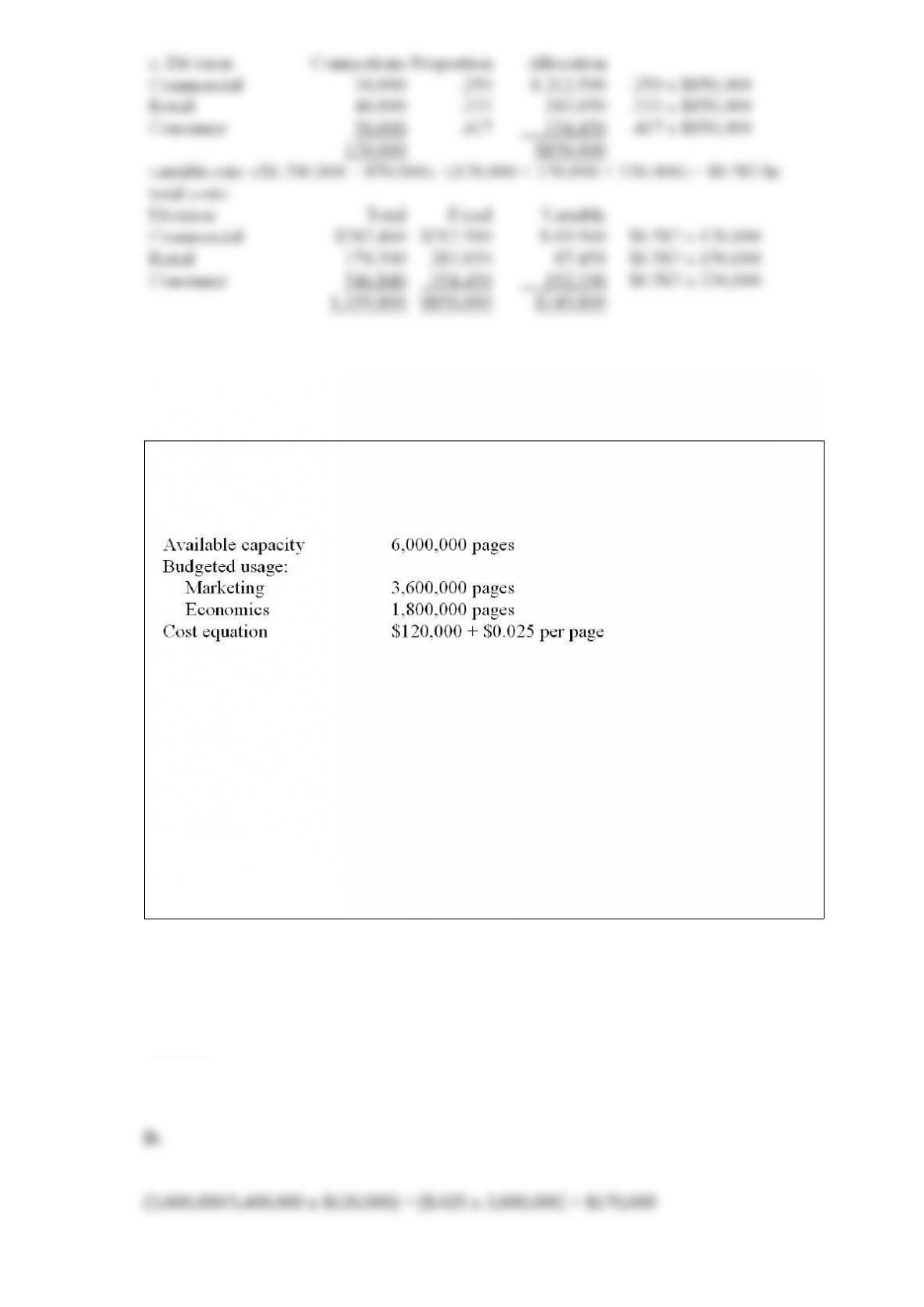
The Copy Department in the College of Business at State University provides
photocopying service for both the Marketing and Economics Department. The
following budget has been prepared for the year.
If the Copy Department uses a dual rate for allocating its costs based on usage, how
much cost will be allocated to the Marketing Department?
A. $85,000
B. $90,000
C. $150,000
D. $170,000
Answer:
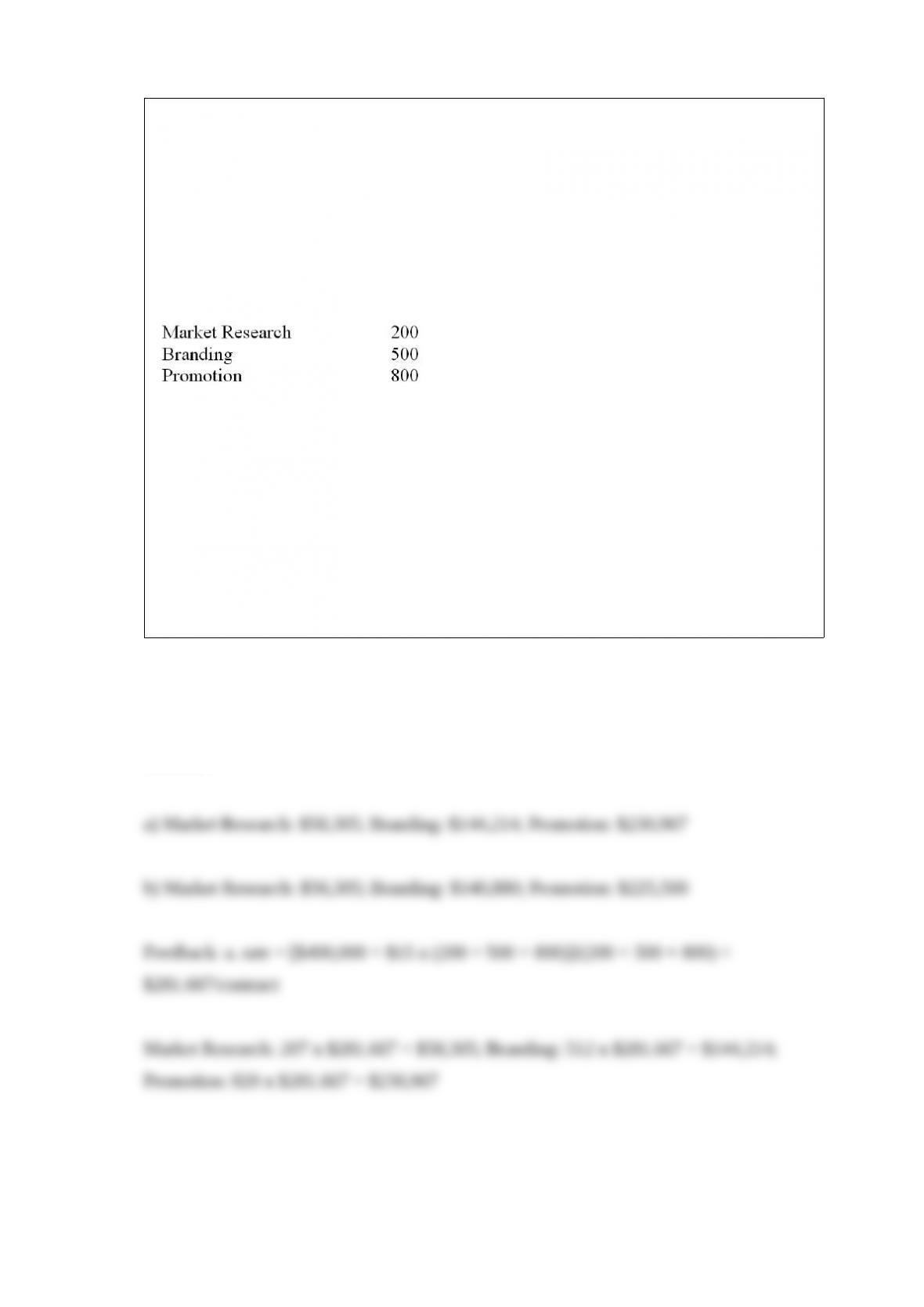
The Black Swan Company has three client-contact departments: Market Research,
Branding, and Promotion. Each department requires the services of the Legal
Department for the contracts that each undertakes. The size of the Legal Department
was based on long-run estimates of contracts. Information on the Legal Department’s
budgeted and actual costs is as follows:
The budget for the Legal Dept is $400,000 + $15/contract. The budgeted volume of
contracts is as follows:
The actual number of contracts for Market Research was 207, for Branding was 512,
and for Promotion was 820.
Required (use three decimal places in your calculations):
a) If a single charging rate based on budgeted usage is used, how much of the cost of
the Legal Department would be allocated to each of the producing departments?
b) If a dual charging rate is used, how much of the cost of the Legal Department would
be allocated to each of the producing departments
Answer:
Which of the following measures is used by activity-based costing (ABC) systems as
an allocation base for allocating overhead costs to the units produced?
A. Volume-related activities
B. Batch-related activities
C. Product-related activities
D. Facility-related activities
E. All of these are used by ABC systems
Answer:
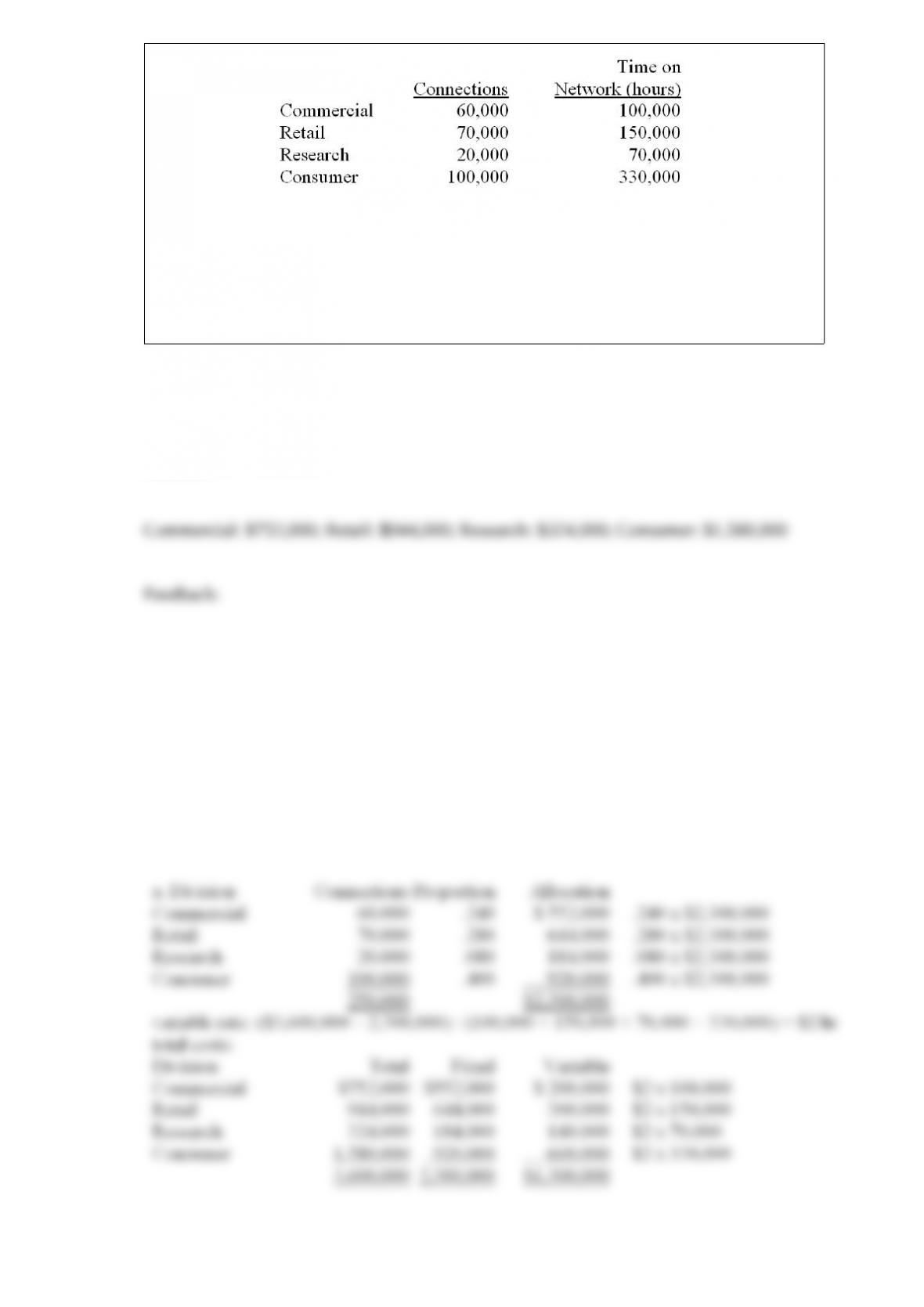
Charleston has four divisions, commercial, retail, research, and consumer, that share
the common costs of the company’s computer server network. The annual common
costs are $3,600,000. You have been provided with the following information for the
upcoming year:
Required (use three decimal places in your calculations):
a) The cost accountant determined $2,300,000 of the server network’s costs were fixed
and should be allocated based on the number of connections. The remaining costs
should be allocated based on the time on the network. What is the total server network
costs allocated to each division?
Answer:

Avery Corporation has two divisions, A and B, which are both organized as profit
centers; Division A produces and sells widgets to Division B and to outside customers.
Division A has total costs of $35, $20 of which are variable. Division A is operating
significantly below capacity and sells the widgets for $50.
Division B has received an offer from an outsider vendor to supply all the widgets it
needs (20,000 widgets) at a cost of $45. The manager of Division B is considering the
offer but wants to approach Division A first.
What is the maximum transfer price from Division A to Division B?
A. $20
B. $35
C. $45
D. $50
Answer:
Agreement among business competitors to set prices at a particular level:
A. predatory pricing
B. target pricing
C. peak-load pricing
D. price fixing
Answer:
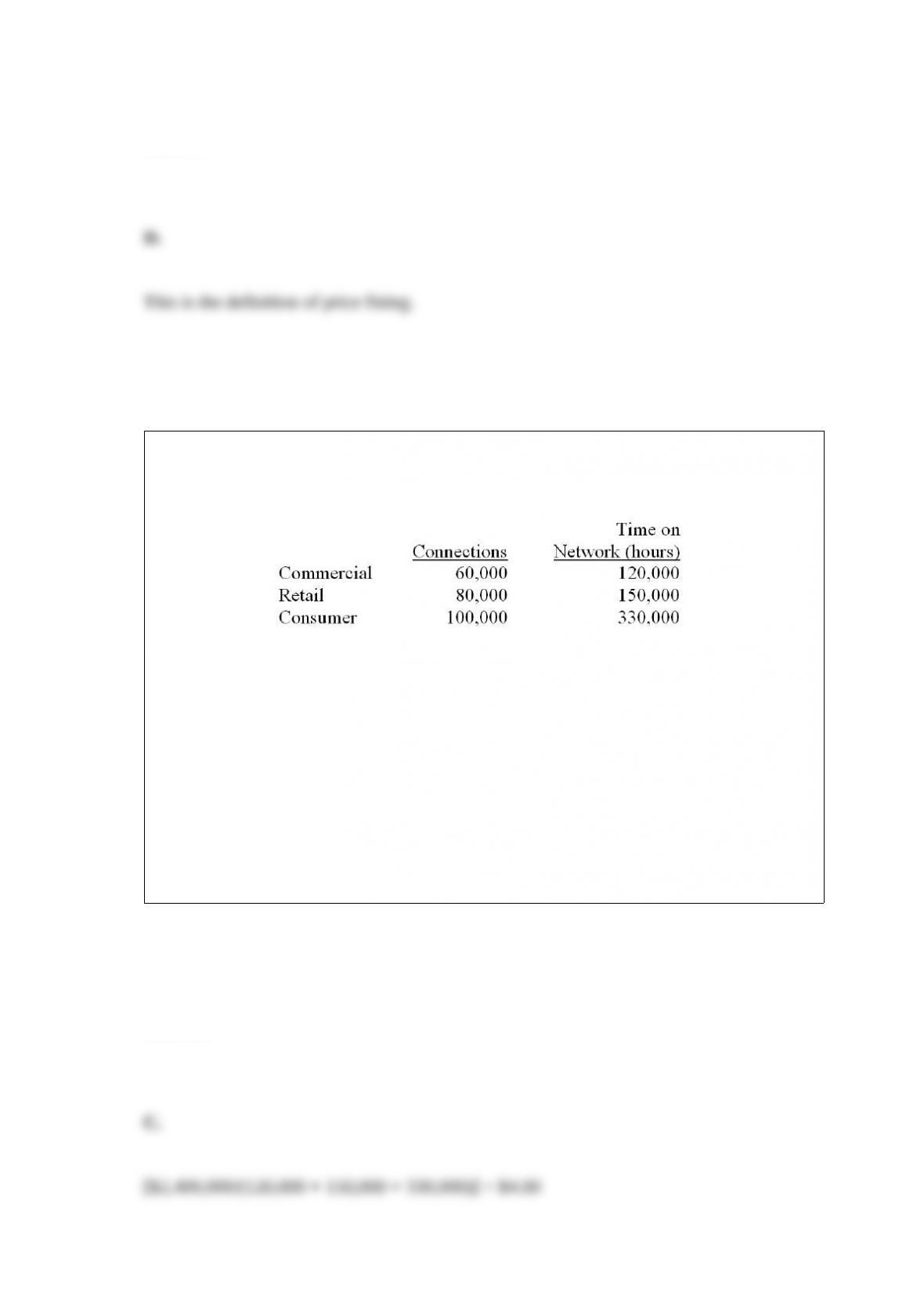
Fenway Telcom has three divisions, commercial, retail and consumer, that share the
common costs of the company’s computer server network. The annual common costs
are $2,400,000. You have been provided with the following information for the
upcoming year:
What is the allocation rate for the upcoming year assuming Fenway Telcom uses the
single-rate method and allocates common costs based on the time on the network?
A. $20.00
B. $16.00
C. $4.00
D. $2.86
Answer:
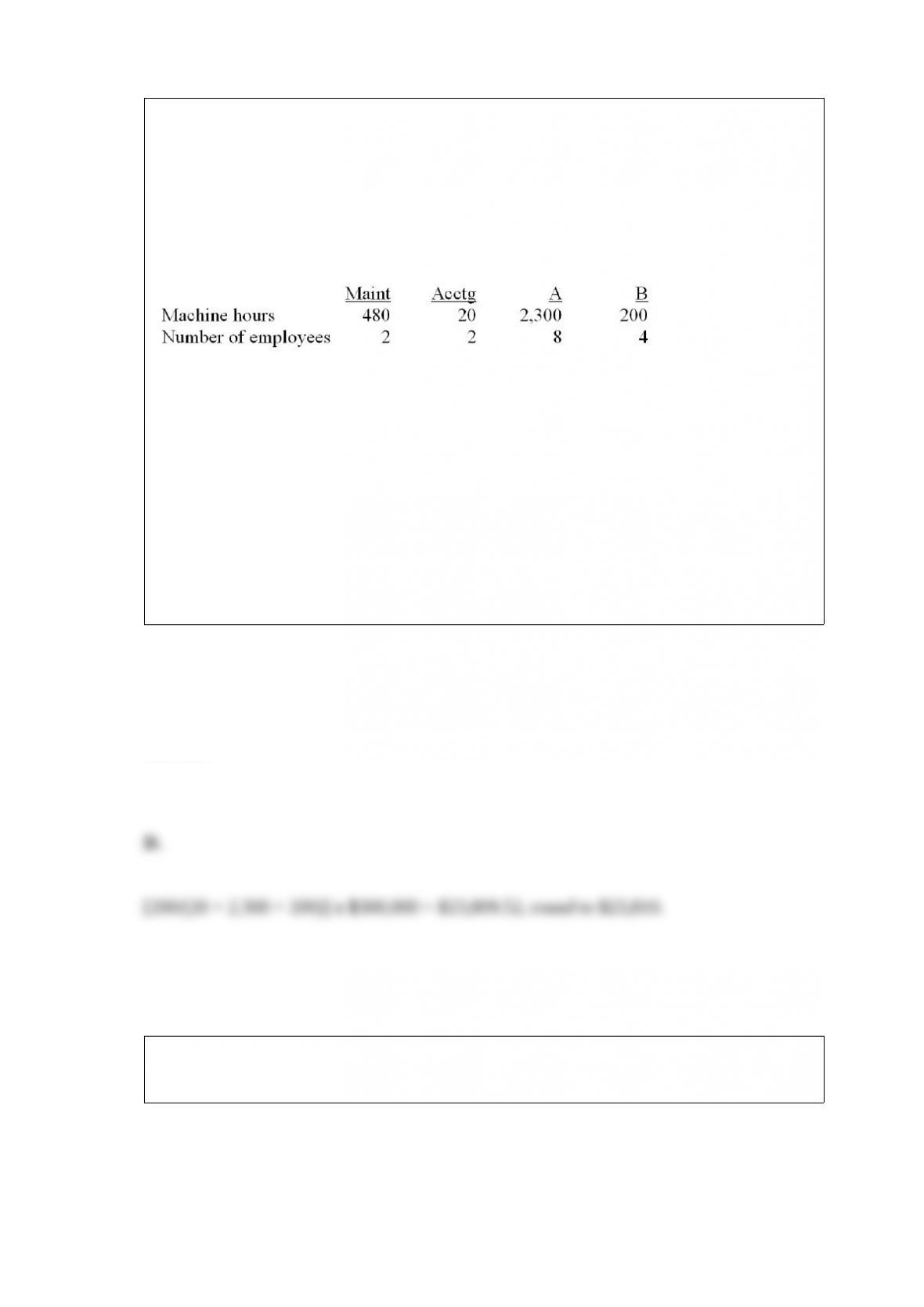
The RAH Manufacturing Company has two service departments: Maintenance and
Accounting. The Maintenance Department’s costs of $300,000 are allocated on the basis
of machine hours. The Accounting Department’s costs of $120,000 are allocated on the
basis of the number of employees within a specific department. The direct departmental
costs for A and B are $300,000 and $500,000, respectively.
What is the Maintenance Department’s cost allocated to Department B using the step
method and assuming the Maintenance Department’s costs are allocated first?
A. $276,000
B. $230,000
C. $322,000
D. $23,810
Answer:
The Wilbur Company gathered the following information for the year.
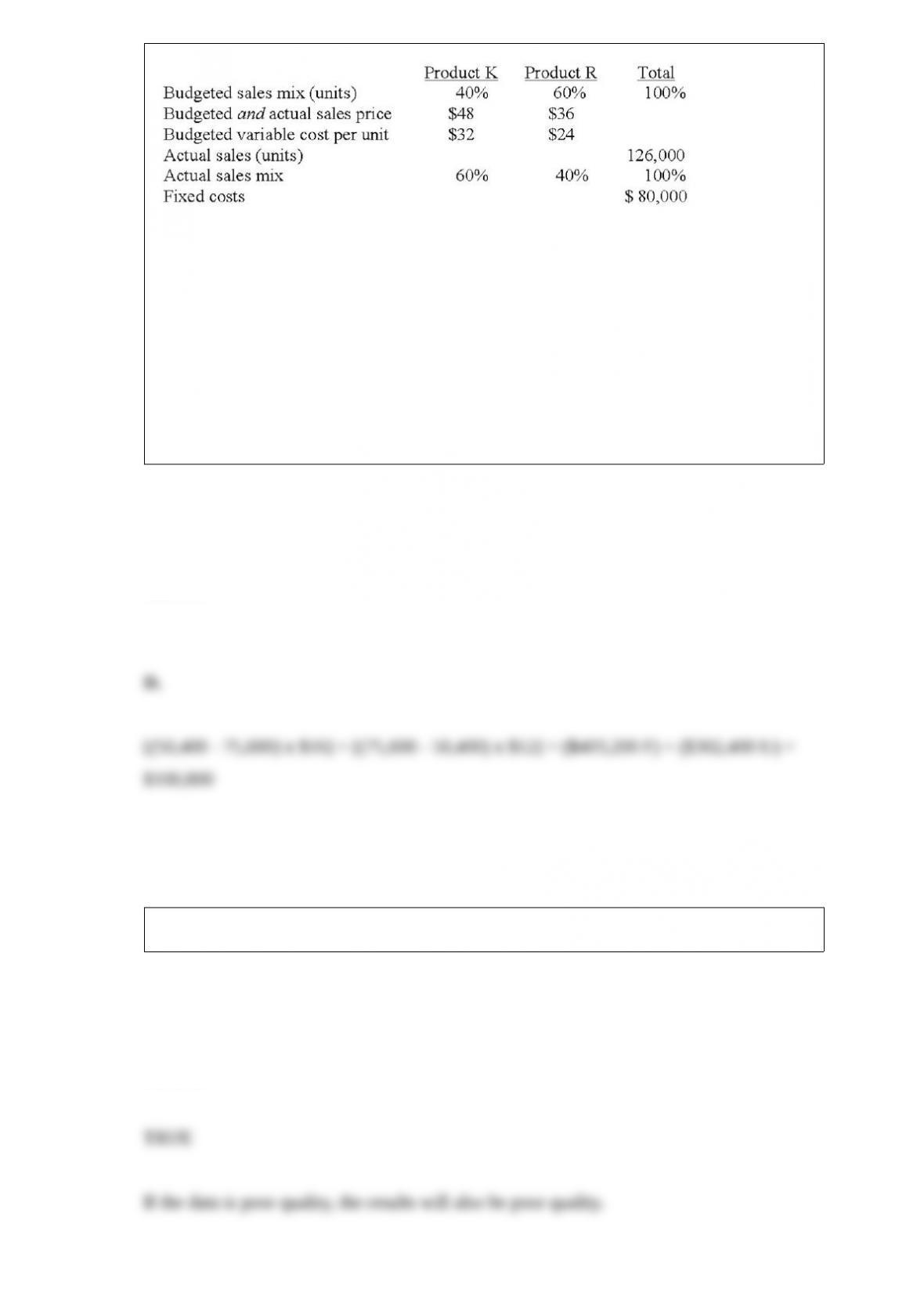
What is the total sales mix variance?
A. $705,600
B. $403,200
C. $302,400
D. $100,800
Answer:
The quality of the cost equation depends on collecting appropriate data.
Answer:
The Viva Company had 20,000 units in process on December 31, 2008 which was 80%
complete as to materials but only 40% complete as to conversion costs. The company’s
records show 40,000 units were transferred to the Finished Goods Inventory during
January 2009. On January 31, 2009, 15,000 units were on hand which were 30%
complete as to conversion costs and 60% complete as to materials. What are the
equivalent units of production for the conversion costs in January, assuming Viva uses
first-in, first-out (FIFO)?
A. 34,000
B. 35,000
C. 36,500
D. 41,500
Answer:
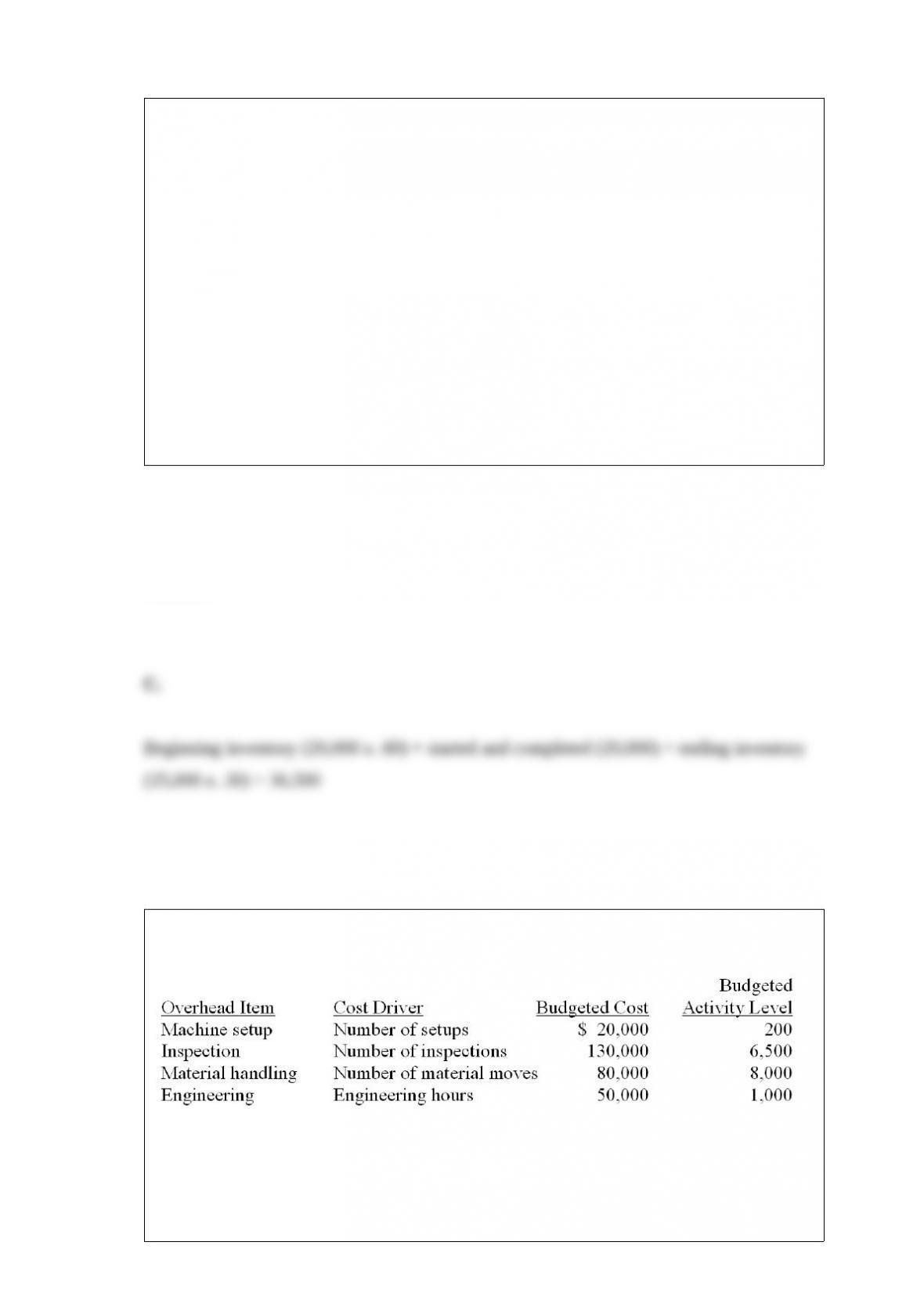
A company has identified the following overhead costs and cost drivers for the coming
year: (CIA adapted)
Budgeted direct labor cost was $100,000 and budgeted direct material cost was
$280,000. The following information was collected on three jobs that were completed
during the year:
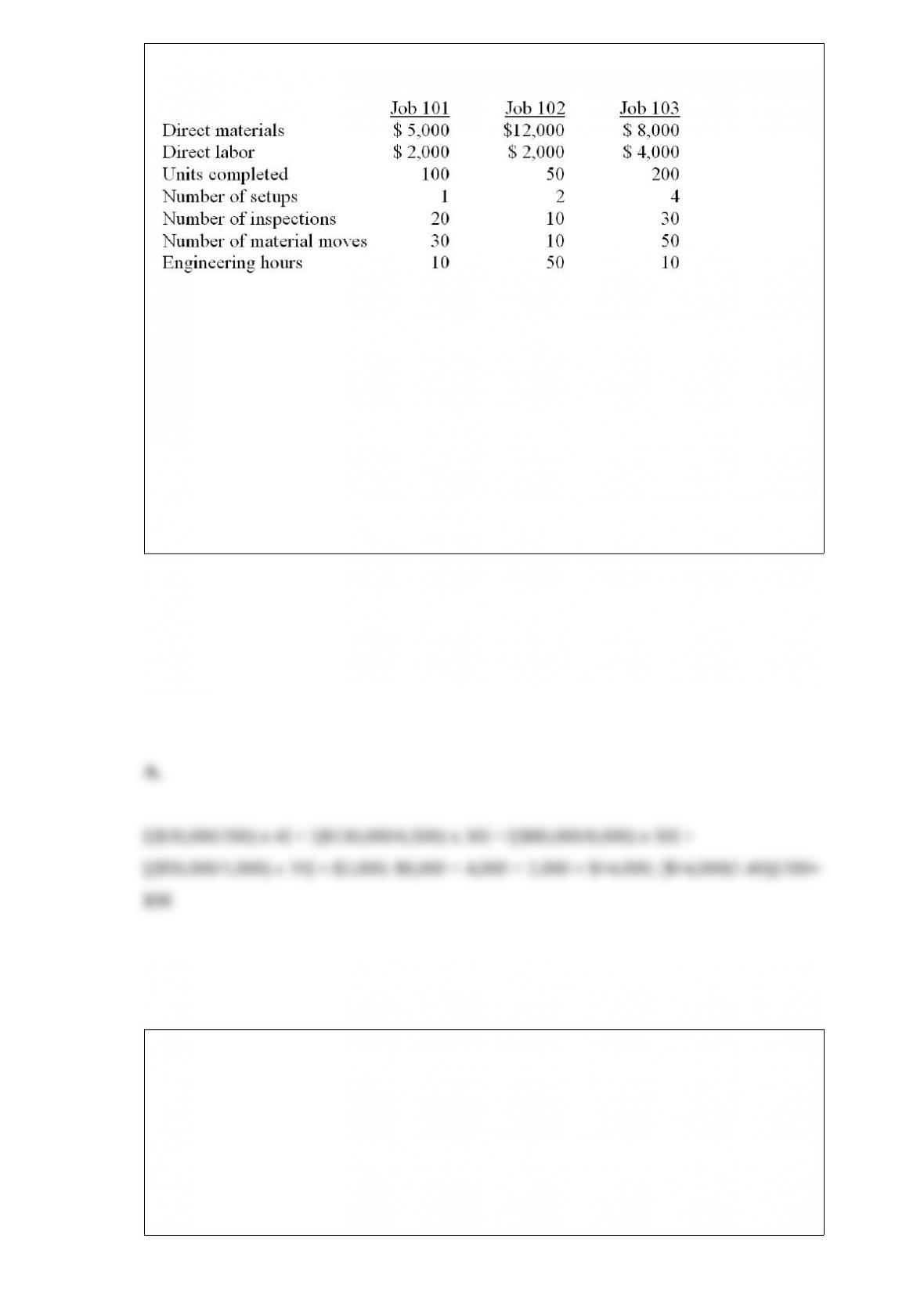
The company prices its products at 140% of cost. If the company uses activity-based
costing (ABC), the price of each unit of Job 103 would be
A. $98
B. $100
C. $116
D. $140
Answer:
Based on past experience, a company has developed the following budget formula for
estimating its shipping expenses. The company’s shipments average 12 lbs. per
shipment:
Shipping costs = $16,000 + ($0.50 x lbs. shipped)
The planned activity and actual activity regarding orders and shipments for the current
month are given in the following schedule:
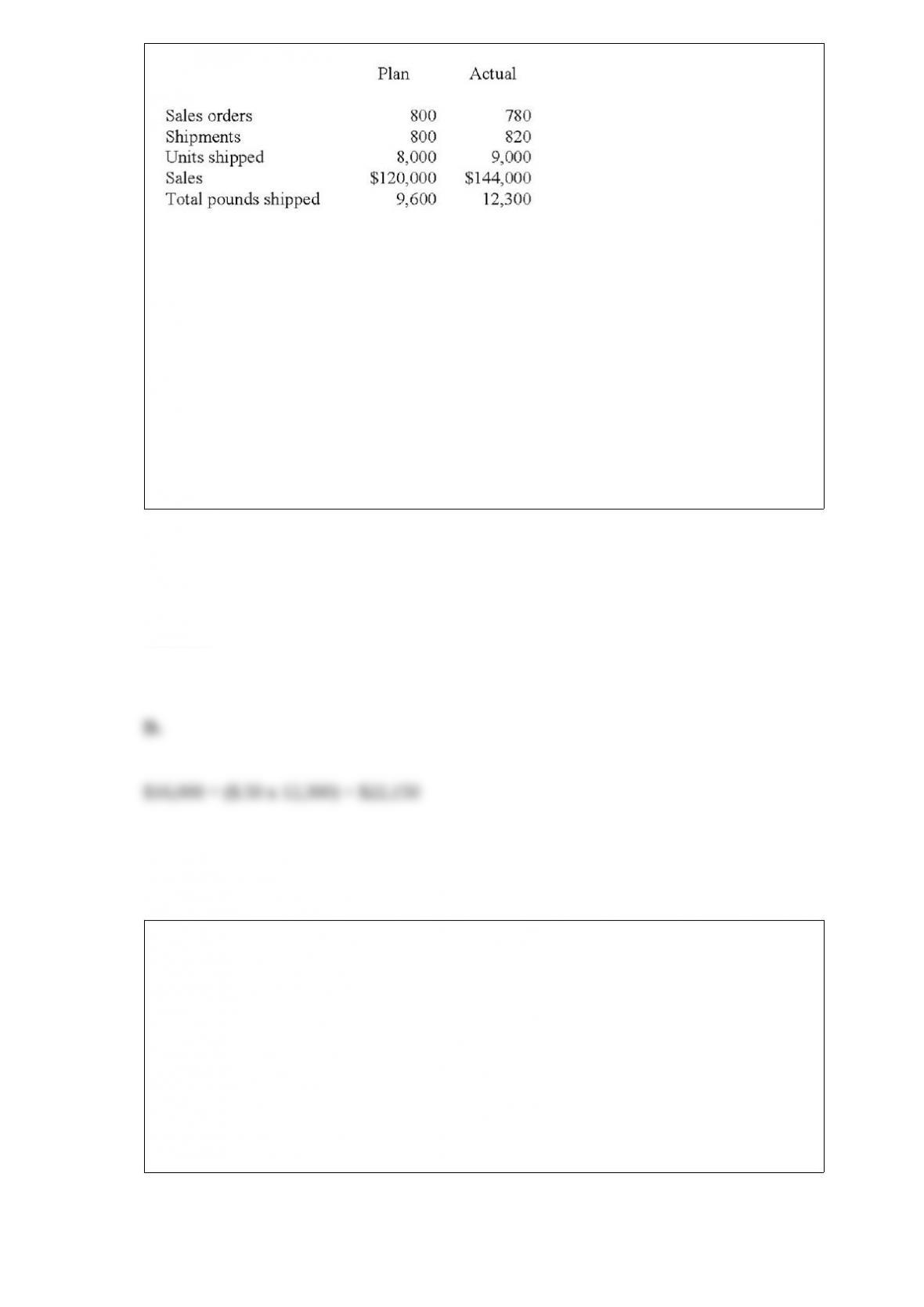
The actual shipping costs for the month amounted to $21,000. The appropriate monthly
flexible budget allowance for shipping costs for the purpose of performance evaluation
would be (CMA adapted)
A. $20,680
B. $20,920
C. $20,800
D. $22,150
Answer:
For a manufacturing company, which of the following is an example of a period cost
rather than a product cost?
A. Wages of salespersons.
B. Salaries of machine operators.
C. Insurance on factory equipment.
D. Depreciation of factory equipment.
Answer:
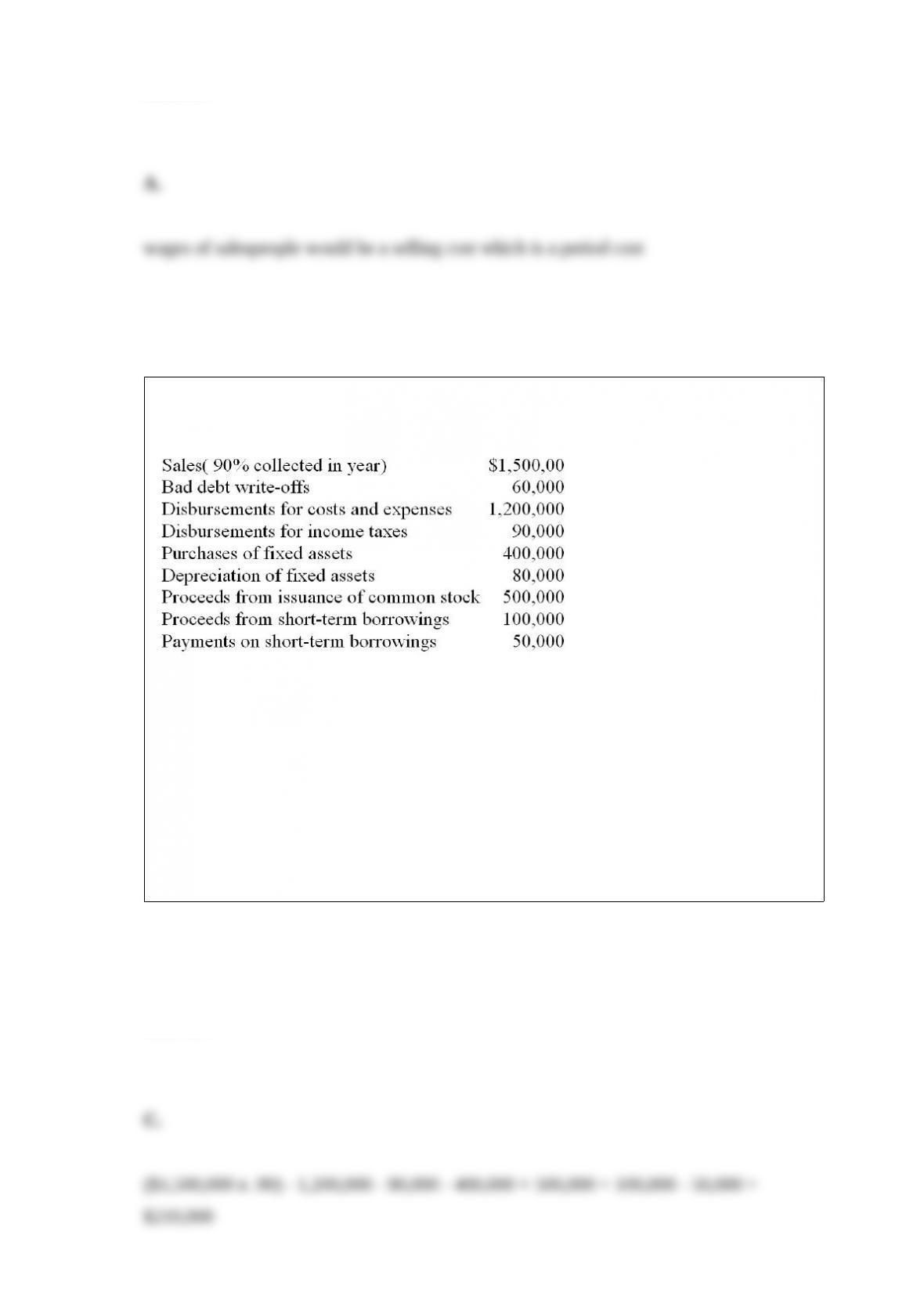
Davis Corporation had the following transactions in their first year of operations:
What is the cash balance at year end?
A. $150,000
B. $170,000
C. $210,000
D. $280,000
Answer:
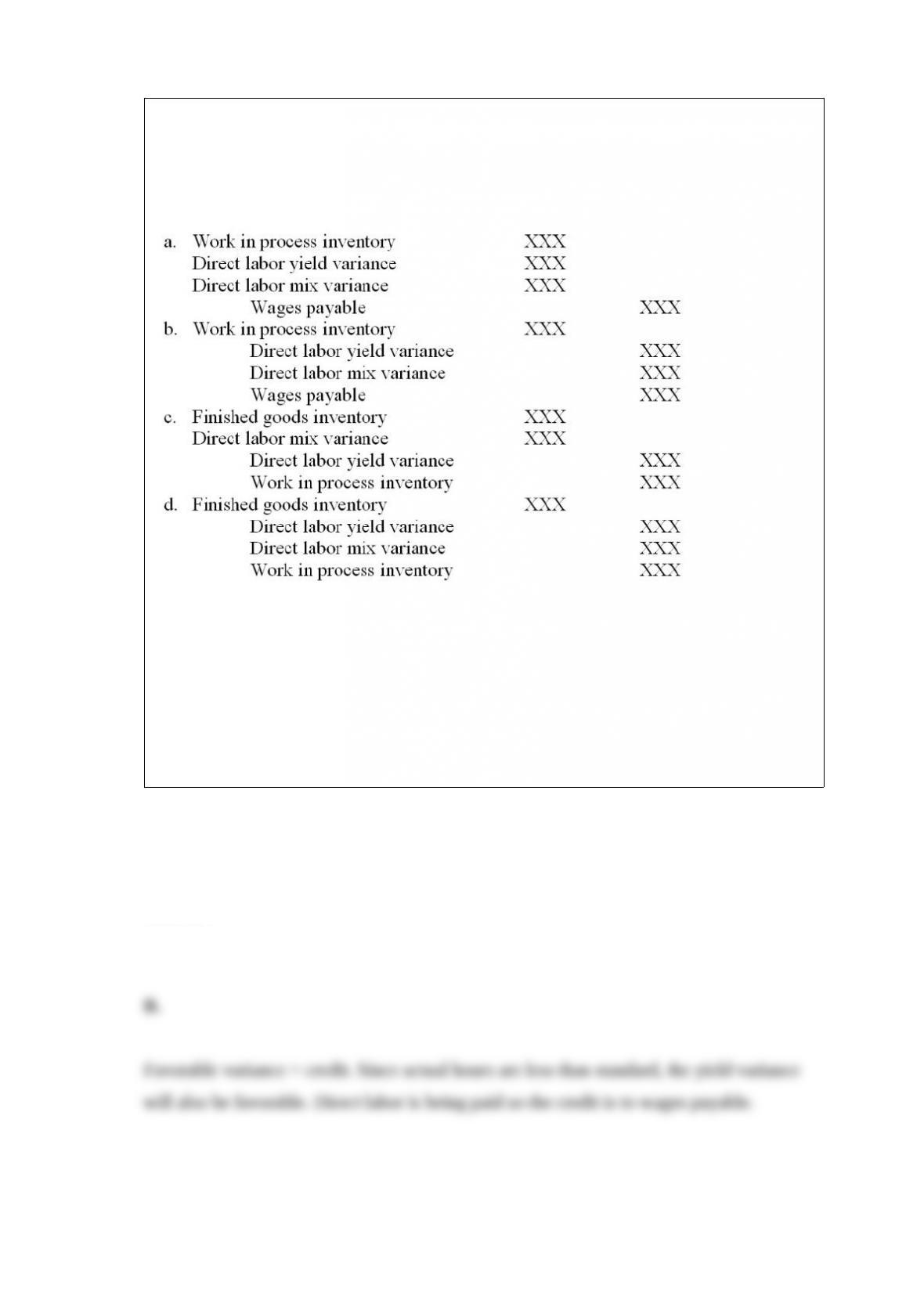
What is the correct journal entry to record direct labor when the actual labor mix is
favorable and the total standard hours allowed is greater than the total actual hours
worked?
A. a
B. b
C. c
D. d
Answer:
Which of the following budgets is not required in a service organization?
A. cash
B. sales
C. labor
D. cost of goods sold
E. marketing and administrative expenses
Answer:
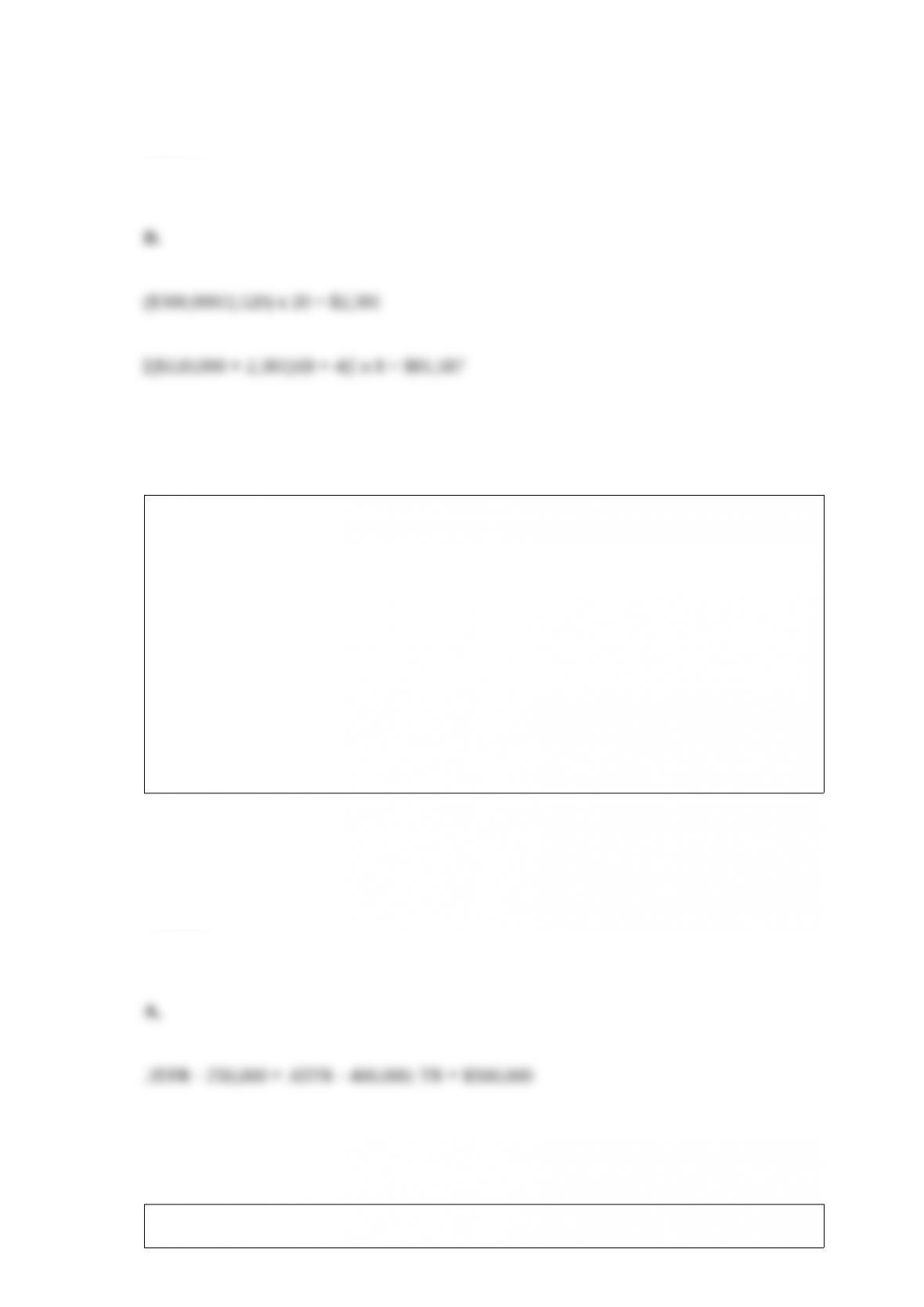
The RAH Manufacturing Company has two service departments: Maintenance and
Accounting. The Maintenance Department’s costs of $300,000 are allocated on the basis
of machine hours. The Accounting Department’s costs of $120,000 are allocated on the
basis of the number of employees within a specific department. The direct departmental
costs for A and B are $300,000 and $500,000, respectively.
What is the cost of the Accounting Department’s cost allocated to Department A using
the stefp method and assuming the Maintenance Department’s costs are allocated first?
A. $81,333
B. $81,587
C. $80,000
D. $68,571
Answer:
Genco Sales has two store locations. Carslberg has fixed costs of $250,000 per month
and a contribution margin ratio of 35%. Tuborg has fixed costs of $400,000 per month
and a contribution margin ratio of 65%. At what sales volume would the two stores
have equal profits?
A. $500,000
B. $650,000
C. $1,300,000
D. Cannot determine with the information given.
Answer:
If the selling division has excess capacity, the transfer price should be set at its

A. differential outlay costs.
B. differential outlay costs plus the foregone contribution to the organization of making
the transfer internally.
C. selling price less the variable costs.
D. selling price less the variable costs plus the foregone contribution to the organization
of making the transfer internally.
Answer:
Which of the following statements is false?
A. In essence, the value chain and the supply chain are similar; each creates something
for which the customer is willing to pay.
B. Accounting systems are important because they provide all the information for
decisions commonly made by managers.
C. The supply or distribution chain is a linked set of organizations that exchange goods
and services in combination to provide a final product or service to the customer.
D. Eliminating nonvalue-added activities always reduces costs without affecting the
value of the product to customers.
Answer:
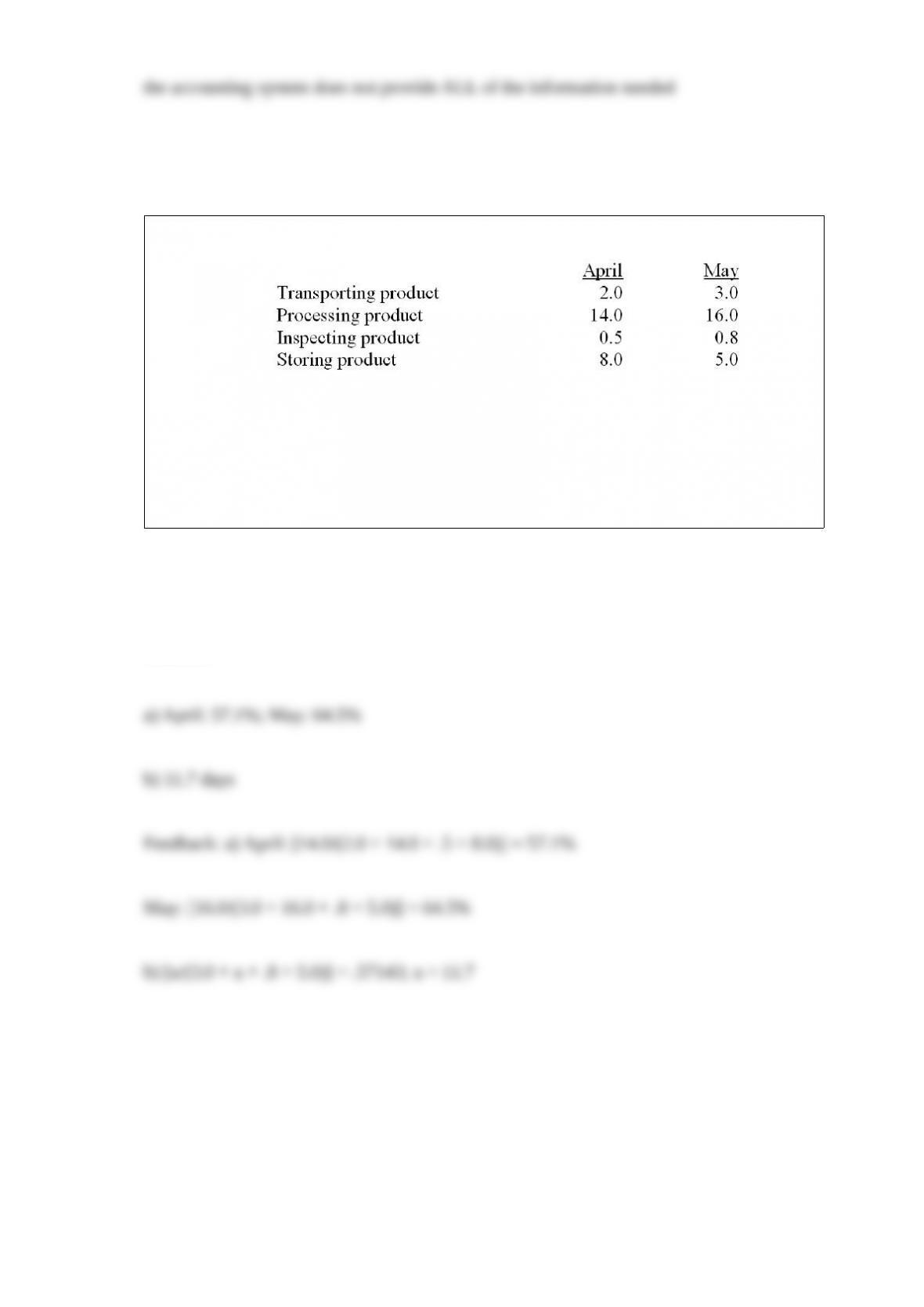
The ABC Manufacturing Company collected the following information (in days) for
April and May.
Required:
a) Calculate the manufacturing cycle efficiency for April and May.
b) Calculate the processing time required for May so that May’s manufacturing cycle
efficiency is equal to April’s manufacturing cycle efficiency.
Answer: