A company with a low debt to equity ratio is in a more vulnerable position during poor
economic times than a company with a high debt to equity ratio.
When the equity method is used to account for an investment in stock, dividends
received by the investor decrease the investment account.
Book value is another term for carrying value.
Owner’s Capital is closed by transferring the balance to Income Summary.
Adding freight-out expenses to net purchases gives net cost of purchases.
Interest on bonds usually is paid monthly.
Return on assets is a measure of liquidity.
Securitization delays the receipt of cash from sales made on credit.
The perpetual inventory system relies on a physical count of merchandise for its
balance sheet amount.
Reversing entries, like any other entries, are posted to the ledger.

The costs associated with coupons and rebates are usually reflected in contra-revenue
accounts.
To calculate payables turnover, an increase in merchandise inventory must be added to
cost of goods sold before dividing by average accounts payable.
Accounts Receivable is an asset that is considered nonmonetary in nature.
When common stock with a par value is sold for a price that exceeds par value, the
Common Stock account is credited for the cash proceeds received from the sale of the
shares.
Staff accountants express their duty to ensure financial reports are not false or
misleading in the management report that appears as part of the company’s annual
report.
A transposition error will cause the trial balance to be out of balance by an amount that
is evenly divisible by two.
The entry that includes a debit to Payroll Taxes and Benefits Expense also includes
credits to Federal Unemployment Tax Payable and State Unemployment Tax Payable.
In a common-size balance sheet, total liabilities are represented by 100 percent.
According to generally accepted accounting principles, most expenditures for intangible
assets acquired from others should be treated as revenue expenditures when incurred.
An important use of the work sheet is as a replacement for the annual financial
statements.
An advantage of using the perpetual inventory system is that it requires less
recordkeeping than the periodic inventory system.
When the board of directors decides to issue bonds, it is necessary to make an entry to
record the SEC’s authorization of the bond issue.
The LIFO method agrees with the actual physical goods flow in most businesses.
A stock split results in a transfer of the market value of the stock from Retained
Earnings to Contributed Capital.
Advertising expense appears as a general and administrative expense on the income
statement.
The account Common Stock Distributable is classified as a current liability.
It is best that the receiving department not be given a copy of the purchase order or the
invoice.

An understatement of ending inventory in a period will result in an overstatement of
gross margin in the next period.
Under the successful efforts method, the costs of both successful and unsuccessful
exploration for oil and gas are recorded as assets.
The principal of a non-interest-bearing note includes an implied interest cost.
The use of a cash register would be an example of a physical control.
The matching rule dictates that both the accrued interest and the amortization of a
premium or discount be recorded at the year end.
Investments are valued on the balance sheet at the original purchase price, even if the
price has changed since the date of purchase.
In the accounting cycle, closing entries are prepared before adjusting entries.
The convertibility feature of a bond can be exercised by the issuing corporation.
The board of directors carries out the day-to-day operations of the business.
Stock options often are granted by a corporation to management personnel as a means
of additional compensation and motivation of these employees.
The correct order of the three stages of accounting is
A. communication, processing, and measurement.
B. measurement, communication, and processing.
C. processing, measurement, and communication.
D. measurement, processing, and communication.
Under the perpetual inventory system, in addition to making the entry to record a sales
return, a company would
A. increase Merchandise Inventory and decrease Cost of Goods Sold.
B. increase Cost of Goods Sold and decrease Purchases.
C. increase Cost of Goods Sold and decrease Merchandise Inventory.
D. make no additional entry until the end of the period.
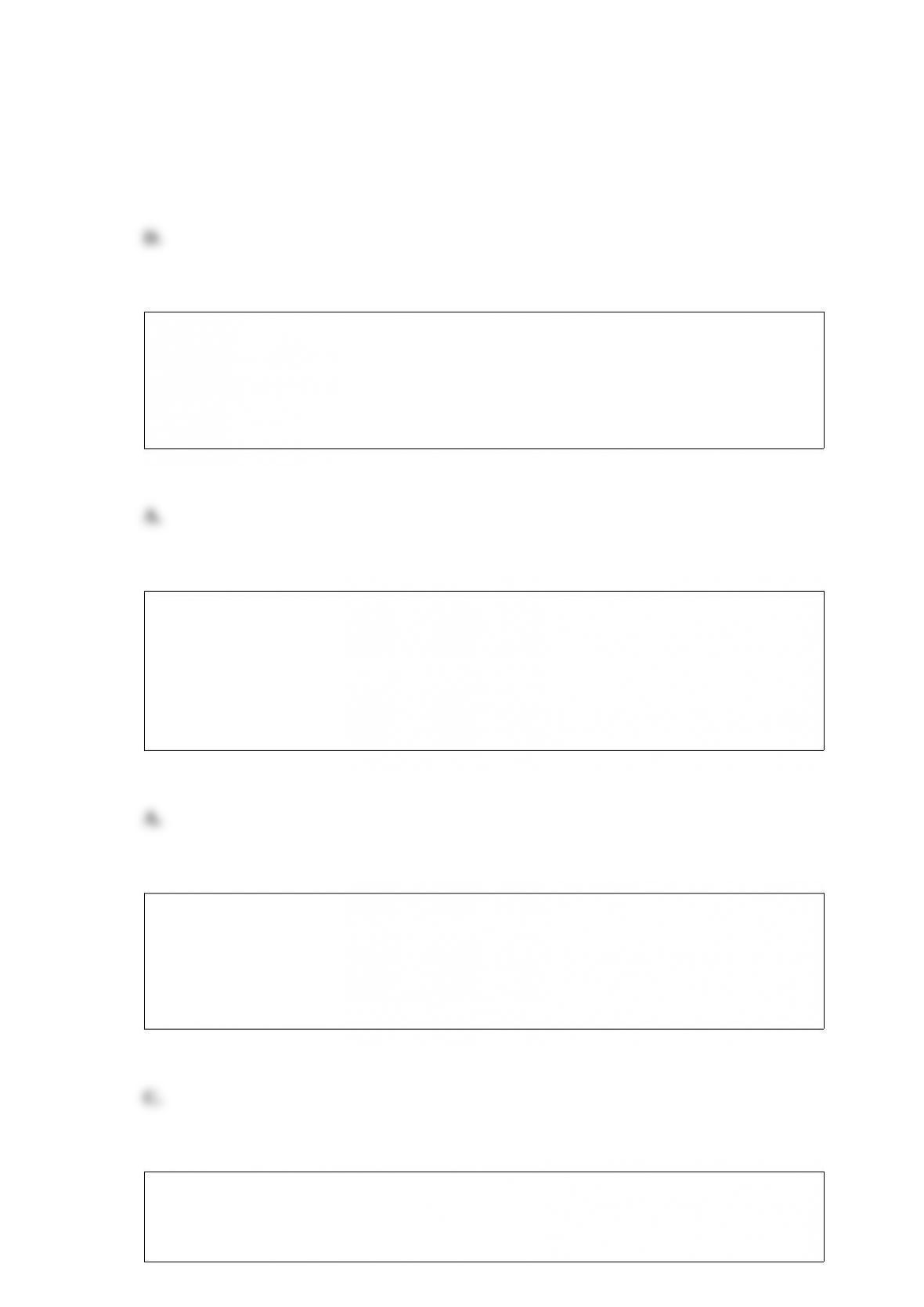
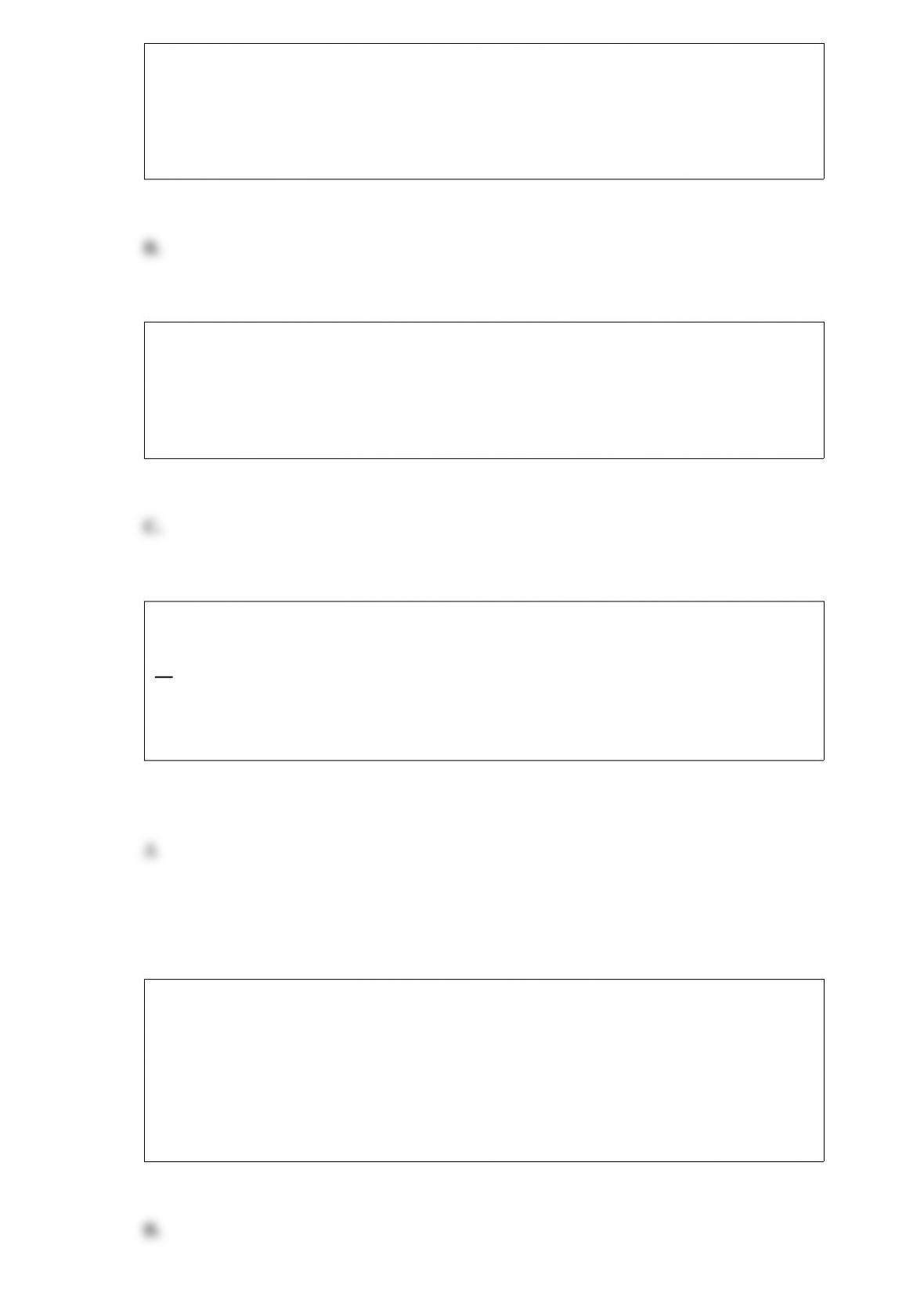
Sinoyianis Realty Company had the following balance sheet accounts and balances:
What is the balance of the Flora Sinoyianis, Capital account?
A. $8,000
B. $12,000
C. $28,000
D. $40,000
Inventory costing methods place primary reliance on assumptions about the flow of
A. costs.
B. goods.
C. resale prices.
D. values.
If a capital expenditure is incorrectly recorded on a company’s books as a revenue
expenditure, which of the following statements will be true?
A. Net income will be understated for the year.
B. Stockholders’ equity will be overstated at year end.
C. Total assets will be overstated at year end.
D. Net income in the following year will be understated.
An understatement of ending inventory in one period results in
A. an overstatement of the ending inventory of the next period.
B. an understatement of gross margin of the next period.
C. an overstatement of gross margin of the next period.
D. no effect on gross margin of the next period.
Assume the direct method is used to compute net cash flows from operating activities.
For this item extracted from the financial statements—Increase in Income Taxes
Payable—indicate the effect on cash payments for income taxes by choosing one of the
following:
A. Add to Income Taxes to arrive at cash payments for income taxes.
B. Subtract from Income Taxes to arrive at cash payments for income taxes.
C. Not used to adjust Income Taxes to arrive at cash payments for income taxes.
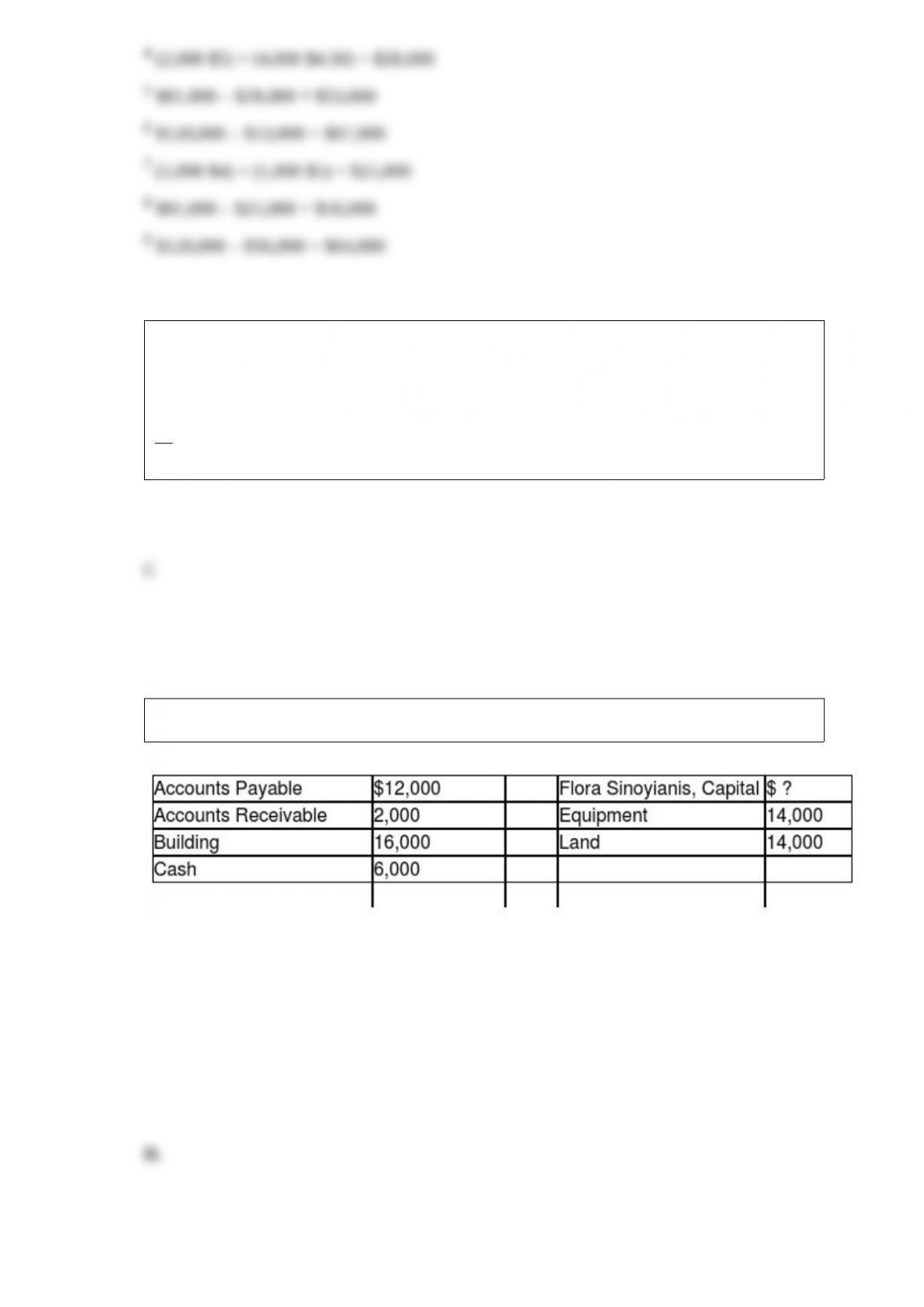
Atwood Company uses a periodic inventory system. During the first quarter of 2014, it
sold 12,000 cases of Product A for $120,000. Facts related to its beginning inventory
and purchases are as follows:
For the quarter ended March 31, 2014, compute the ending inventory, cost of goods sold,
and gross margin under three methods: (a) average-cost, (b) FIFO, and (c) LIFO. (Show
your work.)
For available-for-sale equity securities, the Allowance to Adjust Long-Term
Investments to Market account should be reported as a(n)
A. realized loss item on the income statement.
B. prior period adjustment.
C. contra-asset on the balance sheet.
D. other comprehensive income (loss)
Sinoyianis Realty Company had the following balance sheet accounts and balances:
What is the total of liabilities and owner’s equity?
A. $26,000
B. $32,000
C. $36,000
D. $52,000
Which of the following is an example of a deferral?
A. Wages recorded but not yet paid.
B. The purchase of a company vehicle.
C. Legal fees earned but not yet collected.
D. The accumulation of interest in a bank account.
A physical inventory is usually taken
A. in the middle of the fiscal year.
B. at the peak of the busy season.
C. at the end of the fiscal year.
D. at December 31.
Which type of investment, if any, could be classified as short- or long-term, as well as
debt or equity?
A. Available-for-sale securities
B. Trading securities
C. Held-to-maturity securities
D. None of these are correct.
What is the effect of the payment of an account payable on the current ratio and the
quick ratio, respectively? (Assume the current ratio was 2.3 times and the quick ratio
was 2.1 times before this transaction.)
A. Decrease in current ratio; no effect on quick ratio
B. Increase in current ratio; increase in quick ratio
C. No effect on current ratio; no effect on quick ratio
D. Decrease in current ratio; decrease in quick ratio

Assume the direct method is used to compute net cash flows from operating activities.
For this item extracted from the financial statements—Decrease in Accounts Payable—
indicate the effect on cash payments for purchases by choosing one of the following:
A. Add to Cost of Goods Sold to compute cash payments for purchases.
B. Subtract from Cost of Goods Sold to compute cash payments for purchases.
C. Not used to adjust Cost of Goods Sold to compute cash payments for purchases.
Cash and equivalents can consist of all of the following except
A. deposits in checking accounts
B. IOUs from customers
C. certificates of deposit (CDs)
D. U.S. Treasury notes
Payroll Taxes and Benefits Expense includes all of the following except
A. federal income taxes.
B. Social Security taxes.
C. Medicare taxes.
D. unemployment taxes.
A short-term investment in a U.S. Treasury bill costs $24,400 and will mature six
months later at $25,000. Management intends to hold the investment until it matures.
The entry to record the adjusting entry on December 31, assuming three months have
passed is:
A. Short-Term Investments 300
Interest Income 300
B. Interest Receivable 300
Interest Income 300
C. Short-Term Investments 600
Cash 600
D. Interest Income 600

The entry to record the issuance of bonds at a discount on an interest payment date
should include a
A. debit to Cash for the face amount of the bonds.
B. debit to Cash for the face amount of the bonds plus the amount of discount.
C. debit to Cash for the face amount of the bonds minus the amount of discount.
D. credit to Cash for the face amount of the bonds.
A net loss results in a decrease in
A. revenues.
B. expenses.
C. owner’s equity.
D. liabilities.
A tabulation of invoices at the end of the day showed $1,600 in MasterCard invoices,
which were deposited into a bank account at full value, less a 5 percent discount. The
entry to record the above events would include an increase in
A. Accounts Receivable for $1,520.
B. Cash for $1,600.
C. Sales for $1,520.
D. Credit Card Expense for $80.
Greco Co. issued ten-year term bonds on January 1, 20×5, with a face value of
$1,600,000. The face interest rate is 6 percent and interest is payable semi-annually on
June 30 and December 31. The bonds were issued for $1,381,920 to yield an effective
annual rate of 8 percent. The effective interest method of amortization is to be used.
How much bond interest expense (rounded to the nearest dollar) should be reported on
the income statement for the year ended December 31, 20×5?

A. $96,000
B. $110,844
C. $110,262
D. $110,552
Use this information to answer the following question.
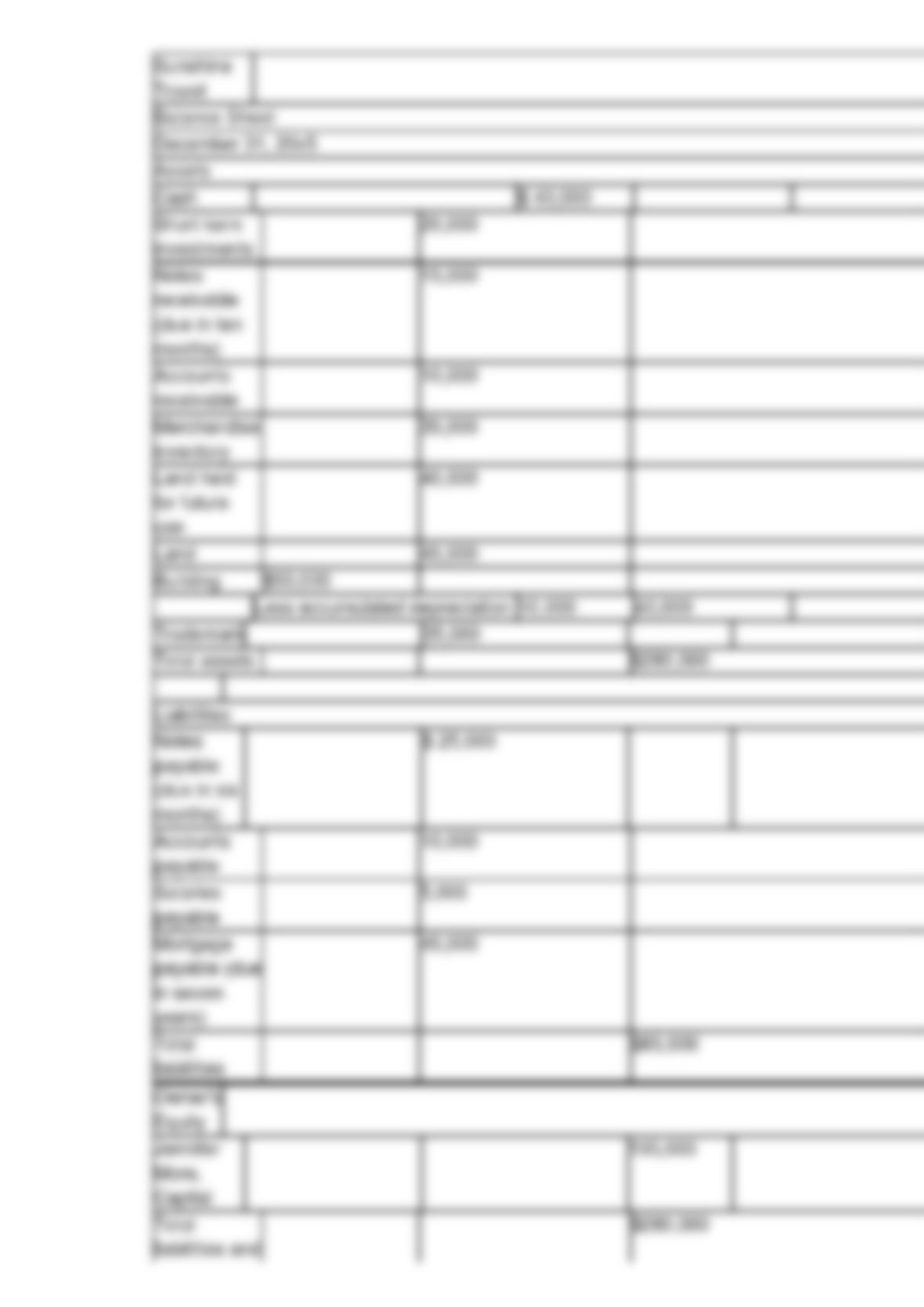
The total dollar amount of assets to be classified as investments is
A. $125,000.
B. $95,000.
C. $60,000.
D. $40,000.
Which of the following accounts is not closed?
A. Income Summary
B. Withdrawals
C. Owner’s Capital
D. Interest Income
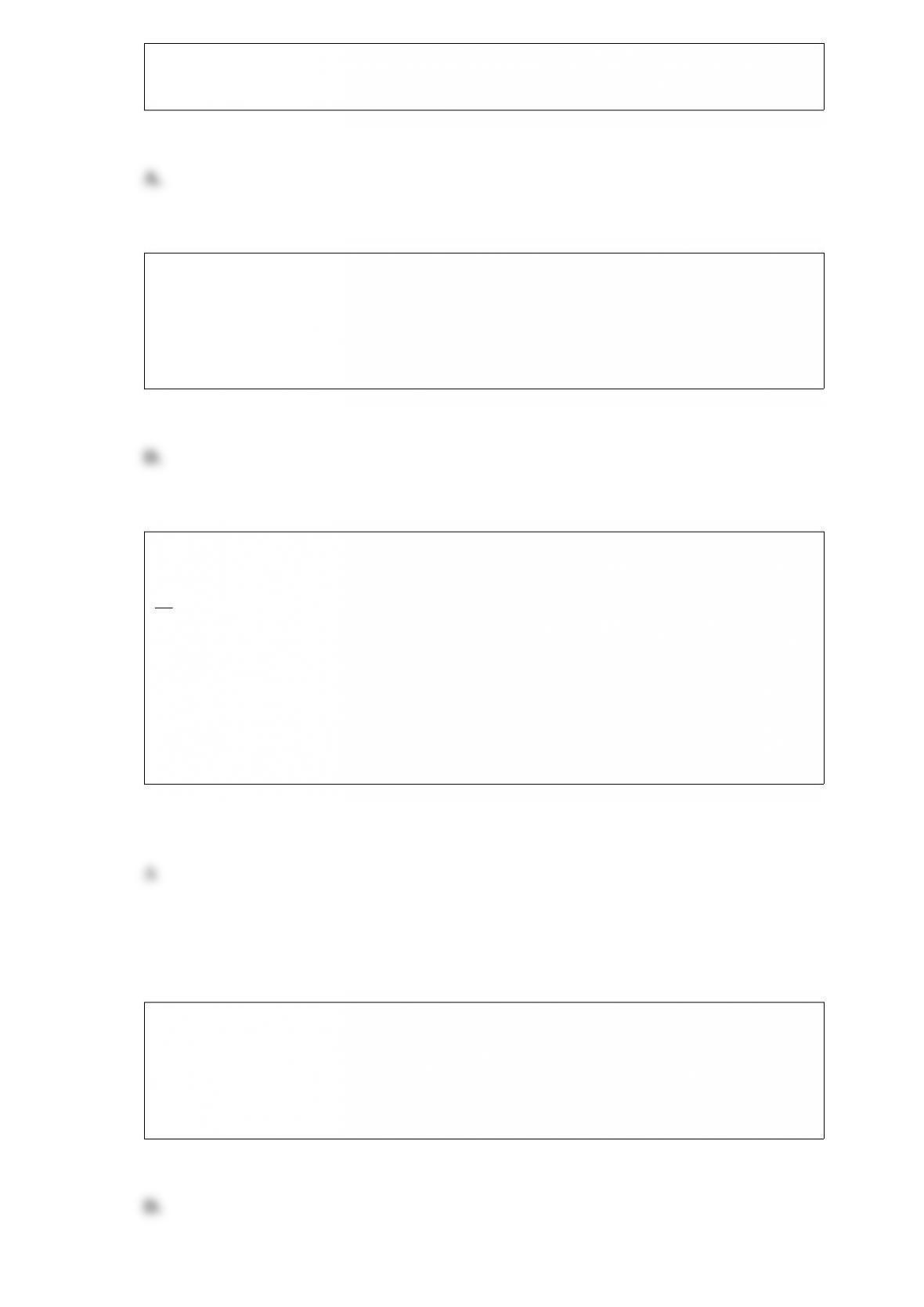
Use the following information to calculate cost of goods sold under each of three
methods: (a) FIFO, (b) LIFO, and (c) average-cost. Assume the periodic inventory
system is used. (Show your work.)
Noncash assets invested into a partnership are recorded at
A. their fair market value
B. their carrying value
C. zero
D. their original cost
The cost of a natural resource is expensed in the year during which the resource is
A. purchased.
B. extracted.
C. paid for.
D. sold.
Stock categorized as trading securities is purchased for $52,000. At year end, when the
market value of the stock is $61,000, the adjusting entry that would be recorded is:
A. Allowance to Adjust Short-Term Investments to Market 9,000
Unrealized Gain on Short-Term Investments 9,000
B. Unrealized Loss on Short-Term Investments 9,000
Allowance to Adjust Short-Term Investments to Market 9,000
C. Allowance to Adjust Short-Term Investments to Market 9,000
Short-Term Investments 9,000
D. Realized Gain on Investments 9,000
Short-Term Investments 9,000
All of the following are possible reasons for using accelerated depreciation except
A. greater efficiency of assets when new.
B. increasing repair costs in later years.
C. rapid changes in technology.
D. increasing use of an asset over the years.
A $200,000 bond issue with a carrying value of $206,000 is called at 101 and retired.
The entry to record the retirement of bonds is:
A. Bonds Payable 202,000
Loss on Retirement
of Bonds 4,000
Cash 206,000
B. Bonds Payable 200,000
Unamortized Bond
Premium 6,000
Cash 202,000
Gain on Retirement
of Bonds 4,000
C. Bonds Payable 200,000
Loss on Retirement
of Bonds 6,000
Cash 206,000
D. Bonds Payable 206,000
Which of the following most likely is an example of an accrued liability?
A. Interest payable
B. Accounts payable
C. Current portion of long-term debt
D. Sales tax payable
Which of the following would normally be included in the inventory?
A. Outgoing goods shipped FOB destination
B. Goods sold but not yet delivered
C. Incoming goods shipped FOB destination
D. Goods held on consignment
The length of the operating cycle equals the days’ sales uncollected plus the
A. days’ payable.
B. days’ inventory on hand.
C. receivable turnover.
D. payables turnover.
Chelsea, Jack, and Connor have a partnership. Chelsea wishes to withdraw from the
partnership by removing assets that represent less than her current capital balance.
Discuss how this transaction is accounted for on the partnership books.
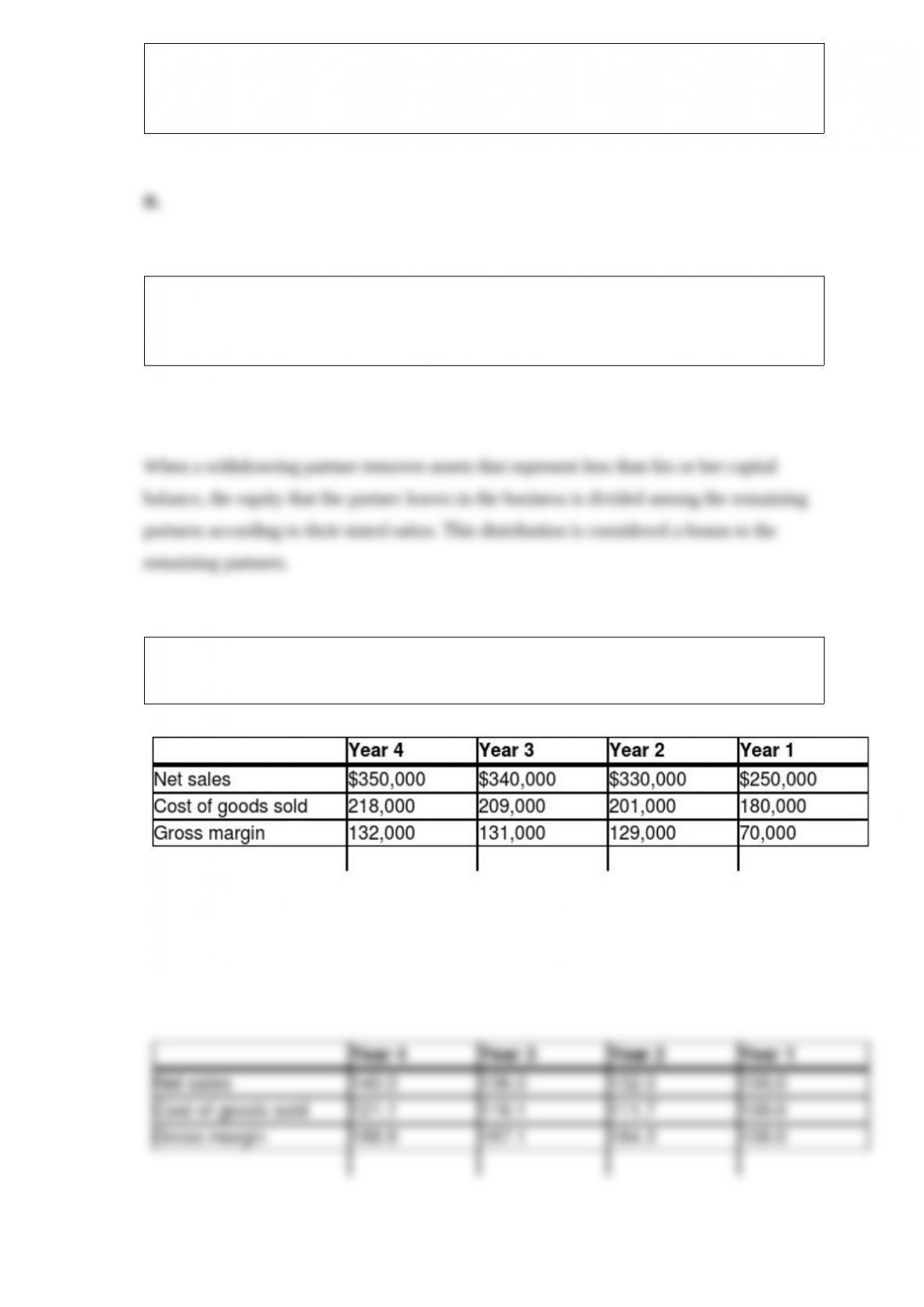
The following selected amounts were extracted from the financial statements of Alma
Corporation.
Prepare a trend analysis for net sales, cost of goods sold, and gross margin. (Round
answers to the nearest tenth of 1 percent.) Use Year 1 as the base year.
Given the adjusted trial balance below, prepare (in good form) an income statement,
statement of owner’s equity, and balance sheet.
Portocall Sailboats reports income before income taxes of $160,000 during 2014.
Whalen Mining, a U.S company, purchases products from a British company for
£1,000,000. Between the dates of purchase and payment, the exchange value of the
pound decreased from $2.00 to $1.90. Compute Whalen Mining’s exchange gain or
loss. Where would the gain or loss be reported?
Toojay Company manufactures and sells widgets. Each widget costs $60 and sells for
$100. Each widget carries a warranty that provides for free replacement if it fails for
any reason during the next 36 months. In the past, 4 percent of the widgets have had to
be replaced under the warranty. During April, Toojay sold 2,000 widgets and replaced
150 under warranty. Calculate the product warranty expense for the month. Show your
computation.
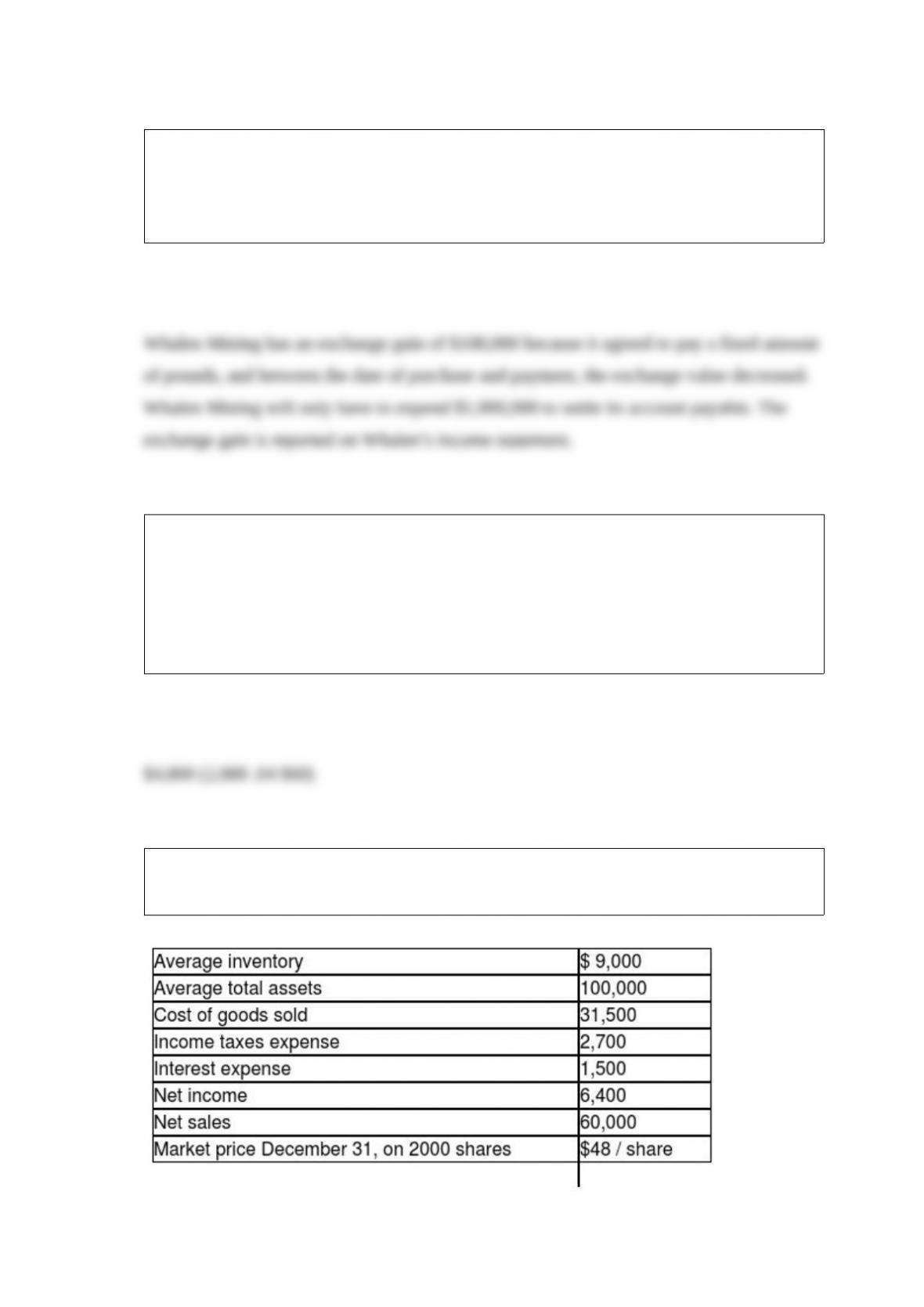
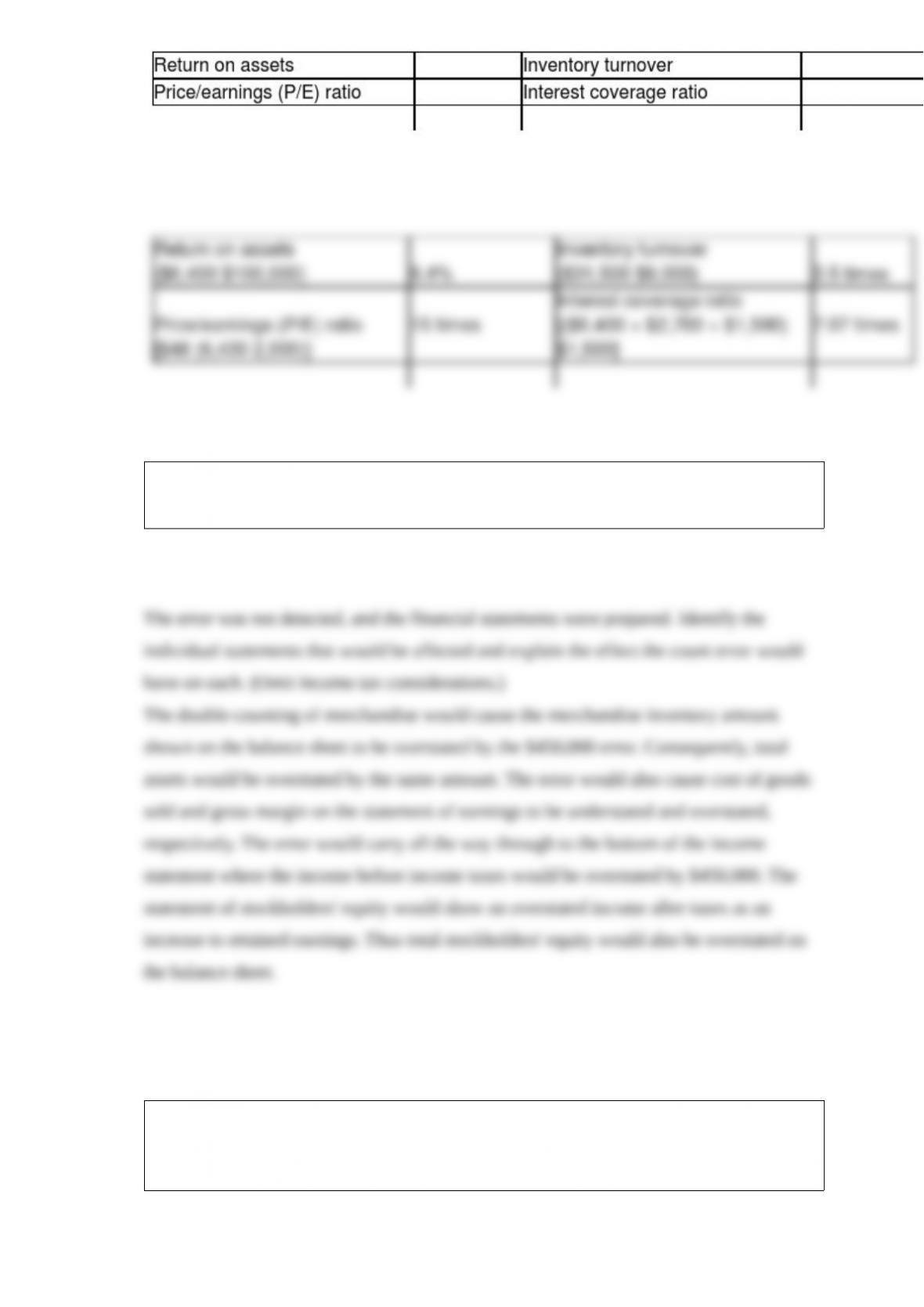
Use the following information to calculate the ratios requested below. Round answers to
two decimal places. Show your work.
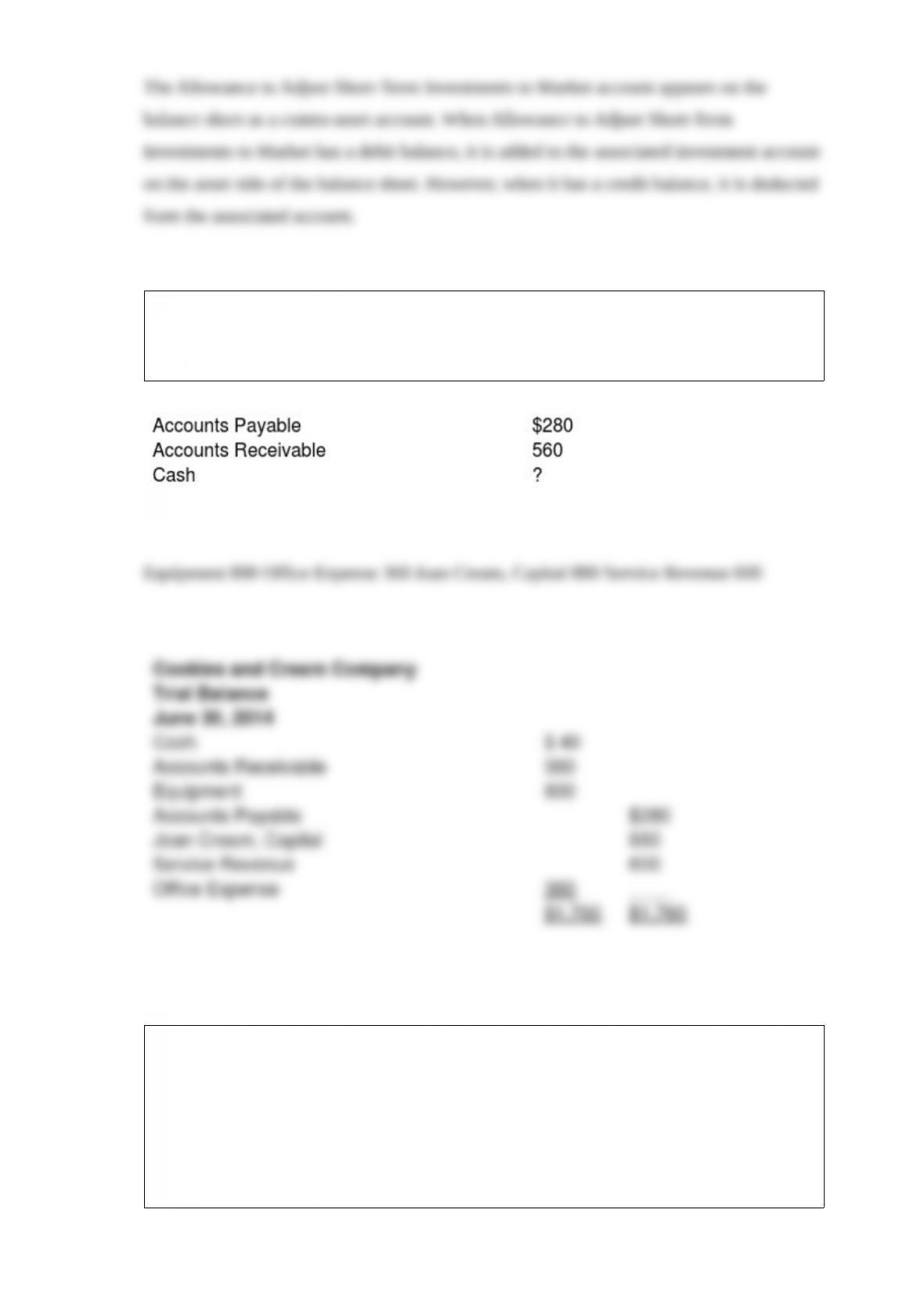
Assume that during the physical count of the inventory of a large corporation for this
year, $450,000 of merchandise was counted twice.
Discuss the financial statement presentation of the account Allowance to Adjust
Short-Term Investments to Market, distinguishing between the effect of a debit balance
and the effect of a credit balance in the account.
Using the alphabetical list of account balances presented below, all of which are
normal, prepare a trial balance for Cookies and Cream Company at June 30, 2014, in
proper order. Compute the balance of the Cash account.
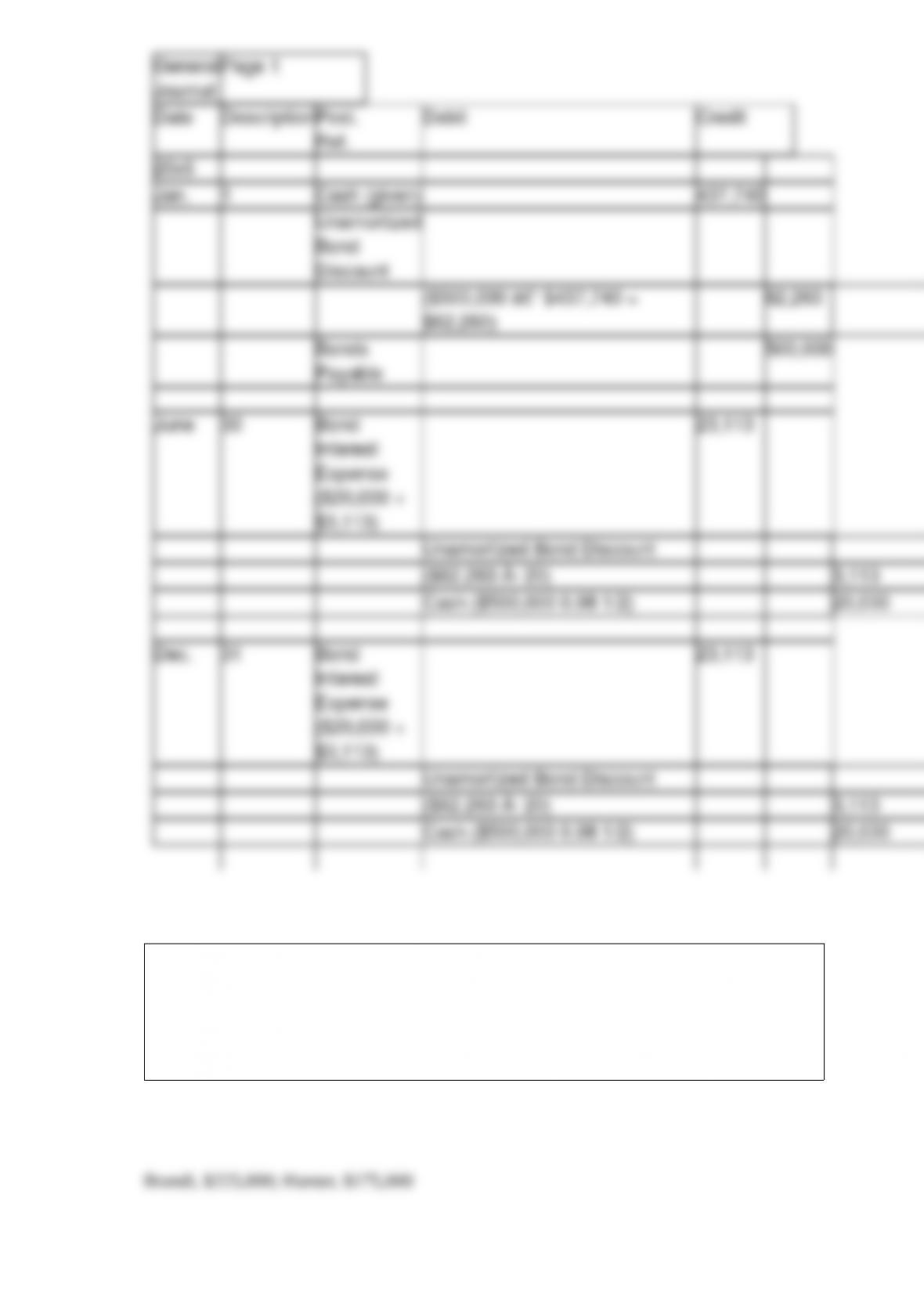
On January 2, 20×5 Platte Golf Corp. issued ten-year, 8 percent bonds with a face value
of $500,000. The semiannual interest dates are June 30 and December 31. The bonds
were issued for $437,740 to yield a market interest rate of 10 percent. The accounting
year ends on December 31. Prepare entries in journal form without explanations to
record the bond issue on January 2, 20×5, and the payments of interest and amortization
of discount on June 30 and December 31, 20×5. Use the straight-line method of
amortization. Round answers to the nearest dollar.
Brandi and Hunter divide partnership income and losses solely on the basis of their
average capital balances. Brandi had $90,000 invested during all of 20×5; Hunter had
$60,000 invested from January 1 to September 30, and he invested another $40,000 on
October 1. If income was $400,000 during 20×5, how much should each partner
receive?
Assume that the sales made by Rios Company for the month ended February 28, 20×5,
were made to customers using credit cards and totaled $11,332. Prepare one entry in
journal form to record these sales assuming that all of the credit card companies charge
Rios Company a 2.5 percent discount fee. (Omit date.) Round to the nearest whole
dollar.
List four advantages and four disadvantages of the partnership form of business.
For a company that takes an average of 50 days to sell inventory, takes an average of
110 days to collect for its sales, and has payment terms of 45 days on its purchases,
what is the financing period? Show calculations.
Chin Company’s owner’s equity equals one-third of the company’s total assets. The
company’s liabilities are $120,000. What is the amount of the company’s owner’s
equity?
Discuss and define financial risk, financial leverage, and negative financial leverage.
Tomkin Company had current liabilities of $400,000, current assets of $650,000, total
liabilities of $1,300,000 and total assets of $2,200,000. What is Tomkin’s debt to equity
ratio, rounded to one decimal place?