
1) The United States Securities and Exchange Commission
a. has recognized IASB standards as an acceptable alternative to U.S. GAAP
b. requires foreign companies listing their shares on U.S. stock exchanges to restate
their financial statements to U.S. GAAP
c. has barred foreign companies from listing their shares on U.S. stock exchanges
d. has no jurisdiction in the United States over foreign companies listing their shares on
U.S. stock exchanges
2) Which of the following measures is NOT used to determine whether a subunit of a
business is a reportable segment?
a. Revenue
b. Owners equity
c. Earnings
d. Assets
3) Which of the following transactions would increase a firm’s current ratio?
a. Purchase of inventory on account
b. Payment of accounts payable
c. Collection of accounts receivable
d. Purchase of temporary investments for cash
4) See information regarding the Kidde Corporation above. When valuing the pens, the
market value to be used in the lower-of-cost-or- market comparison is
a. $18,800
b. $31,200
c. $16,800
d. $22,200
5) Which of the following is an appropriate computation for return on investment?
a. Net income divided by sales
b. Net income divided by total assets
c. Sales divided by total assets
d. Sales divided by stockholders’ equity
6) The books of Barrys Service, Inc. disclosed a cash balance of $68,757 on June 30.
The bank statement as of June 30 showed a balance of $54,780. Additional information
that might be useful in reconciling the two balances follows:
(a) Check number 748 for $3,000 was originally recorded on the books as $4,500.
(b) A customer’s note dated March 25 was discounted on April 12. The note was
dishonored on June 29 (maturity date). The bank charged Barrys account for $14,265,
including a protest fee of $42.
(c) The deposit of June 24 was recorded on the books as $2,895, but it was actually a
deposit of $2,700.
(d) Outstanding checks totaled $9,885 as of June 30.
(e) There were bank service charges for June of $210 not yet recorded on the books.
(f) Barrys account had been charged on June 26 for a customer’s NSF check for $1,296.
(g) Barry properly deposited $600 on June 3 that was not recorded by the bank.
(h) Receipts of June 30 for $13,425 were recorded by the bank on July 2.
(i) A bank memo stated that a customer’s note for $4,500 and interest of $165 had been
collected on June 27, and the bank charged a $36 collection fee.
Prepare a bank reconciliation statement, using the form reconciling bank and book
balances to the correct cash balance.
7) Which of the following principles best describes the conceptual rationale for the
methods of matching depreciation expense with revenues?
a. Partial recognition
b. Immediate recognition
c. Systematic and rational allocation
d. Associating cause and effect
8) If the cost of ordinary repairs is capitalized as an addition to the building account
during the current year,
a. net income for the current year will be understated
b. stockholders’ equity at the end of the current year will be understated
c. total assets at the end of the current year will not be affected
d. total liabilities at the end of the current year will not be affected
9) Which of the following is correct regarding international accounting standards for the
impairment of intangible assets?
a. Goodwill impairments may not be reversed
b. Goodwill impairments may be reversed
c. No impairment losses may be reversed
d. A distinction is made between impairment procedures for intangibles with finite and
indefinite lives
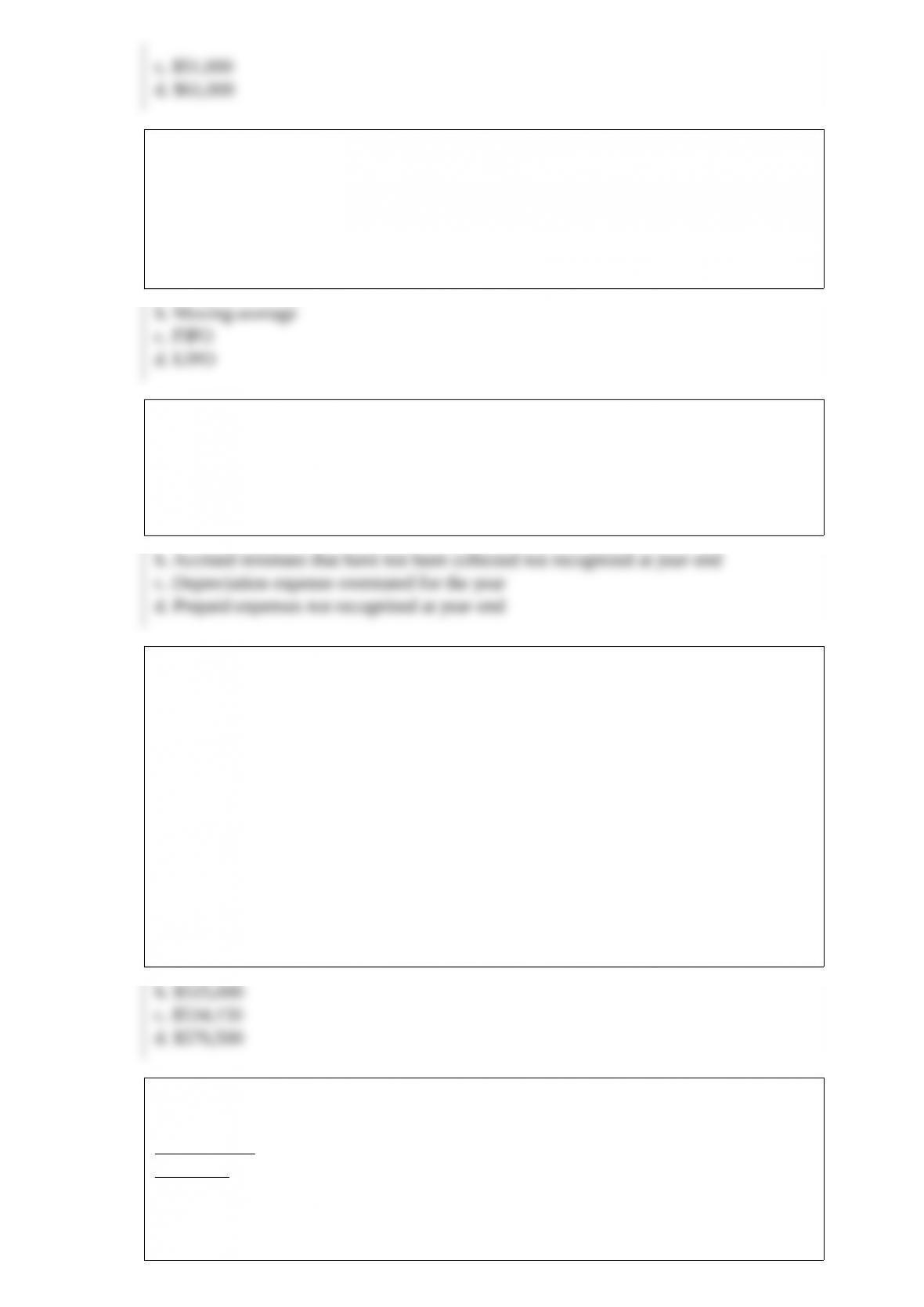
10) The following information was obtained from the accounts of Marion Company:
Given this information, the cost of goods sold during the year is
a. $46,000
b. $41,000
c. $51,000
d. $61,000
11) Under international accounting standards, which of the following methods of
inventory costing is not acceptable?
a. Weighted-average
b. Moving-average
c. FIFO
d. LIFO
12) Which of the following types of errors will NOT self-correct in the next year?
a. Accrued expenses not recognized at year-end
b. Accrued revenues that have not been collected not recognized at year-end
c. Depreciation expense overstated for the year
d. Prepaid expenses not recognized at year-end
13) Scher Co. leased a machine on December 31, 2014. Annual payments under the
lease are $110,000 (which includes $10,000 annual executory costs) and are due on
December 31 each year, for a ten-year period. The first payment was made on
December 31, 2014, and the second payment was made on December 31, 2015.
According to the agreement, the lease payments are discounted at 10 percent over the
lease term. Assume the present value of minimum lease payments at the inception of the
lease and before the first annual payment was $615,000 and Scher appropriately
classified the lease as a capital lease. What is the lease liability Scher should report in
its December 31, 2015, balance sheet?
a. $466,500
b. $515,000
c. $534,150
d. $576,500
14) The following information is provided for Rodriguez Enterprises. (Amounts in
$1,000s)
December 31
20142013
Assets
Current Assets:
Cash $ 95$105

Investment Securities 50 30
Receivables (net) 140 90
Inventories 180 195
Total Current Assets 465 420
Noncurrent Assets
Land 60 60
Building & Equipment 40 10
Total Noncurrent Assets100 70
Total Assets $565$490
Liabilities
Current Liabilities:
Notes Payable $ 90 $ 65
Accounts Payable 80 55
Accrued Expenses 15 15
Total Current Liabilities 185 135
Noncurrent Liabilities:
Notes Payable 145 130
Long-term Lease Obligations 120 125
Total Noncurrent Liabilities 265 255
Total Liabilities $450 $390
Required:
Compute the ratios listed below for years 2013 and 2014 and determine which year had
the most favorable ratios. Show supporting computations.
a. Current ratio
b. Quick ratio
c. Debt ratio
d. Asset mix
15) __________ accounting focuses on the development and communication of
financial information for external users.
a. management
b. forensic
c. audit
d. financial
16) Which of the following is NOT normally an objective of financial reporting?
a. To provide information about an entity’s assets and claims against those assets
b. To provide information that is useful in assessing an entity’s sources and uses of cash
c. To provide information that is useful in lending and investing decisions
d. To provide information about an entity’s liquidation value
17) Using the information above, in the comparative 2013 and 2014 income statements,
what amounts would be shown for cost of goods sold?
2013 2014
a. $50,000 $58,000
b. $51,000 $55,000
c. $50,000 $55,000
d. $51,000 $58,000
18) Which of the following characteristics may result in the classification of a liability
being changed from current to noncurrent?
a. Violation of a subjective acceleration clause
b. Violation of an objective acceleration clause
c. A demand provision for payment
d. Refinancing after the balance sheet date
19) The use of equity reserves under international accounting standards
a. is strictly voluntary on the part of the management of a company
b. is based on whether a reserve is part of distributable or nondistributable equity
c. is primarily for the benefit of shareholders rather than creditors
d. results in the elimination of the retained earnings category from the total equity of a
company
20) Which of the following would NOT be a cash flow from financing activities for
Carlton Company?
a. Cash from issuance of Carlton Co. common stock
b. Cash from issuance of Carlton Co. preferred stock
c. Cash from issuance of Carlton Co. bonds payable
d. Cash from sale of Fern Company common stock
21) In January 2014, Shone Company exchanged an old machine, with a book value of
$156,000 and a fair value of $140,000, and paid $40,000 cash for a similar used
machine having a list price of $200,000. The exchange had commercial substance. At
what amount should the machine acquired in the exchange be recorded on Shone’s
books?
a. $200,000
b. $196,000
c. $184,000
d. $180,000
22) Operations of the FASB are overseen by the:
a. operations of the
b. Financial Accounting Foundation
c. AAA
d. financial reporting arm of the SEC
23) The measurement of deferred tax liabilities and assets under international
accounting standards requires the use of
a. current-year tax rates; use of future-years tax rates even though enacted is prohibited
b. currently-enacted tax rates for future years
c. currently-enacted tax rates for future years and future tax rates that have been
announced by the government but have not yet been formally enacted into law
d. tax rates in effect when the temporary difference originated
24) Scott Co. reported an allowance for doubtful accounts of $28,000 (credit) at
December 31, 2013, before performing an aging of accounts receivable. As a result of
the aging, Scott determined that an estimated $27,000 of the December 31, 2013,
accounts receivable would prove uncollectible. The adjusting entry required at
December 31, 2013, would be
a. Doubtful Accounts Expense ……….. 27,000 Allowance for Doubtful Accounts …
27,000
b. Doubtful Accounts Expense ……….. 27,000 Accounts Receivable …………… 27,000
c. Allowance for Doubtful Accounts ….. 1,000 Doubtful Accounts Expense ……… 1,000
d. Doubtful Accounts Expense ……….. 1,000 Allowance for Doubtful Accounts … 1,000
25) Selected information from the accounting records of the Clemens Company is as
follows:
What was Clemens’ gross margin for 2014?
a. $150,000
b. $200,000
c. $400,000
d. $500,000
26) Proper application of accounting principles is most dependent upon the
a. existence of specific guidelines
b. oversight of regulatory bodies

c. external audit function
d. professional judgment of the accountant
27) Pages, Inc. receives subscription payments for annual (one year) subscriptions to its
magazine. Payments are recorded as revenue when received. Amounts received but
unearned at the end of each of the last three years are shown below.
Pages failed to record the unearned revenues in each of the three years. The entry
needed to correct the above errors is
a. Retained Earnings ……………… 150,000 Subscription Revenues ………….. 26,000
Unearned Revenues …………… 176,000
b. Retained Earnings ……………… 30,000 Subscription Revenues ………….. 26,000
Unearned Revenues …………… 56,000
c. Subscription Revenues ………….. 176,000 Unearned Revenues …………… 176,000
d. Subscription Revenues ………….. 150,000 Retained Earnings ……………… 26,000
Unearned Revenues …………… 176,000
28) A comparative balance sheet for Meyerson Industries is given below:
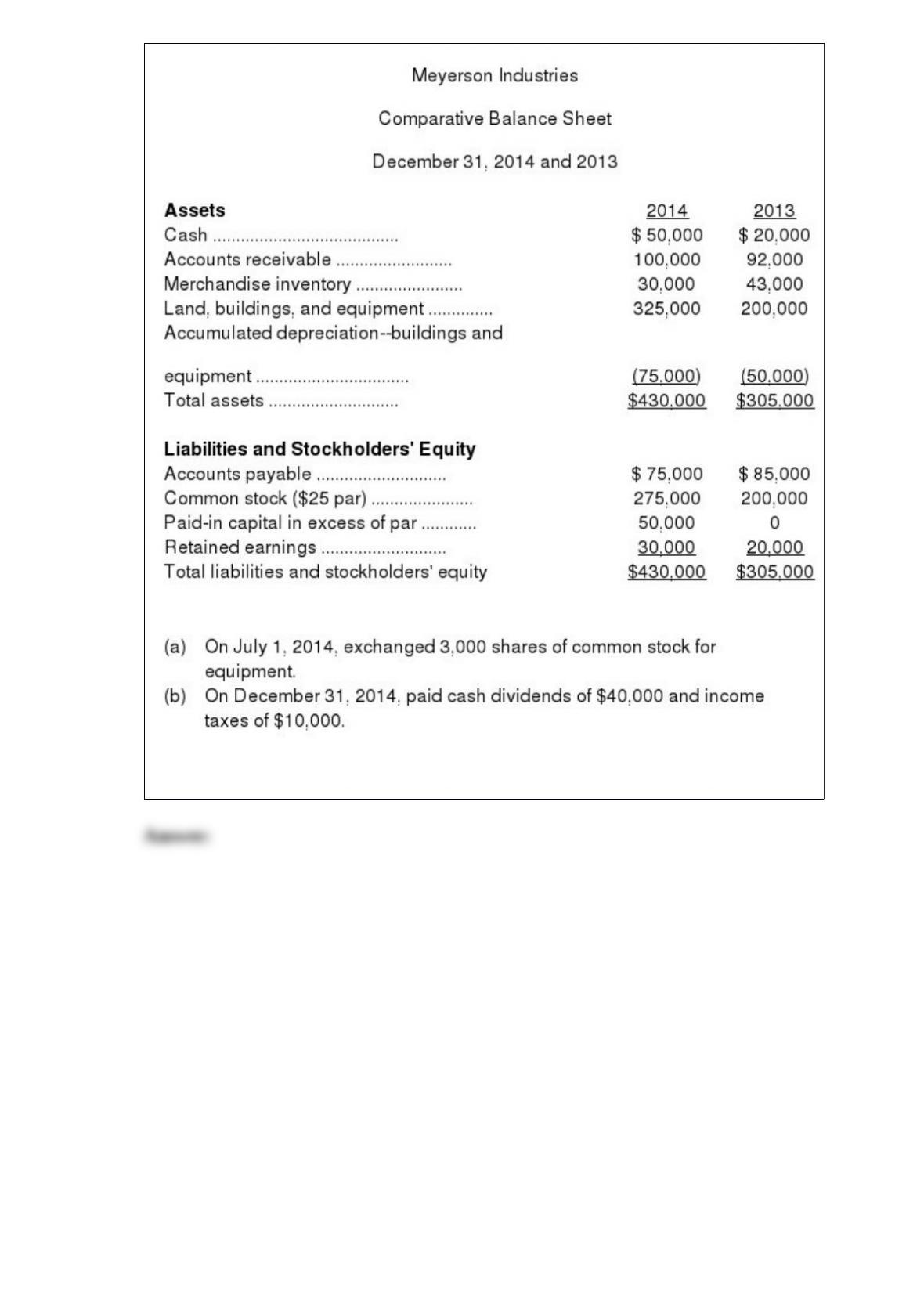
Additional data from the company’s records were:
Prepare a cash flow statement for Meyerson Industries for the year ended December 31,
2014, using the indirect method. Include any necessary supplemental disclosures.
29) Alpha had taxable income of $1,500 during 2014. Alpha used accelerated
depreciation for tax purposes ($2,000) and straight-line depreciation for financial
reporting purposes ($800). On December 30, 2014, Alpha collected the January 2015
rent of $600 on a lot it rents on a month-by-month basis to Zenith. Alphas pretax
accounting income for 2014 would be
a. $900
b. $2,100
c. $3,300
d. $3,700
30) The primary purpose of the Security and Exchange Commission’s Form 20-F is to
a. explain in detail the differences between the internal controls established under the
accounting and auditing principles of a foreign country and those of the United States
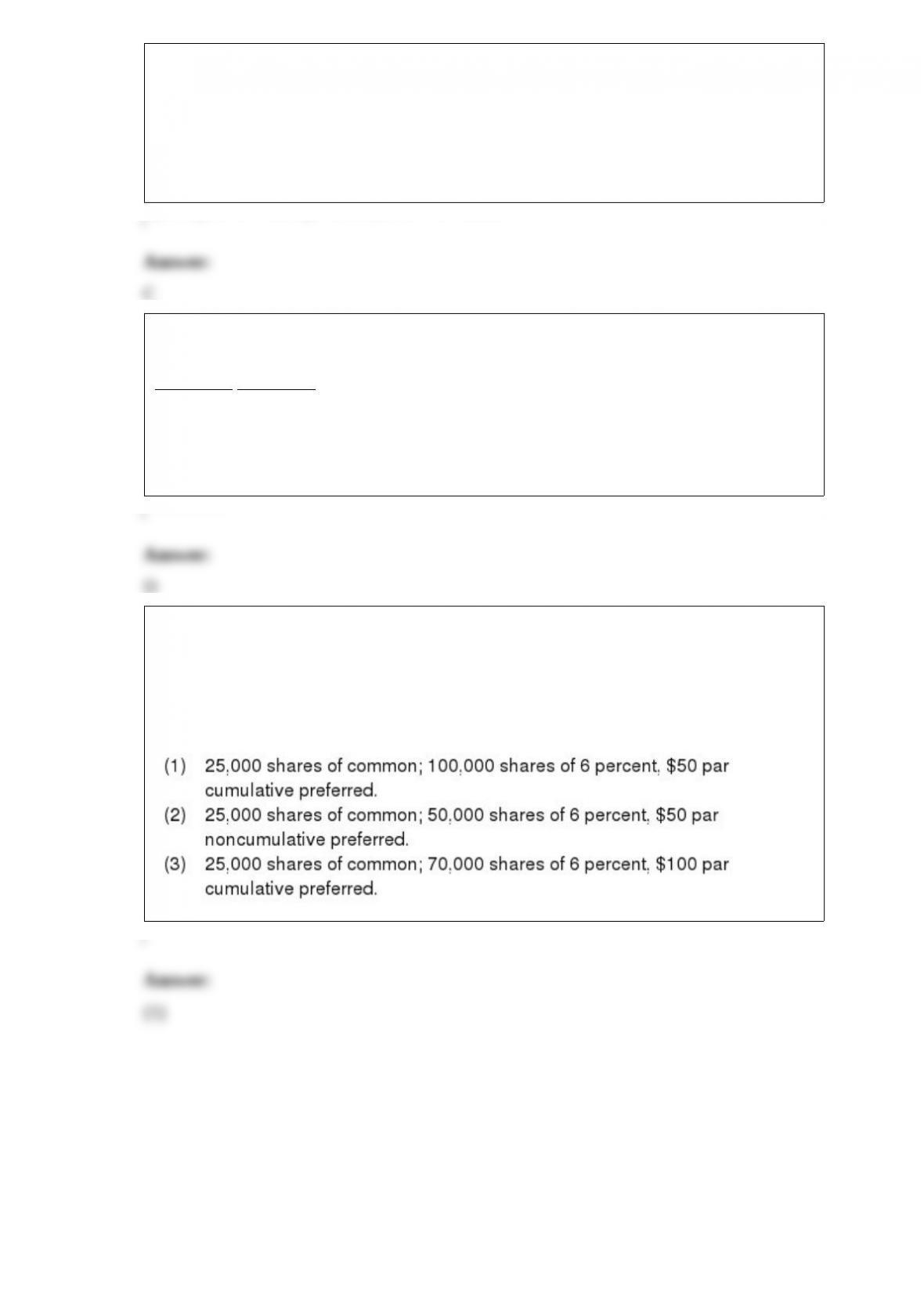
b. determine the fee a foreign company must pay to register its financial statements with
the Securities and Exchange Commission
c. explain in detail the differences between net income computed under the accounting
principles of a foreign country and U.S. GAAP
d. explain in detail the differences between total assets measured using the accounting
principles of a foreign country and U.S. GAAP
31) Under Statement of Financial Accounting Concepts No. 2, representational
faithfulness is an ingredient of
Relevance Reliability
a. YesYes
b. YesNo
c. NoNo
d. NoYes
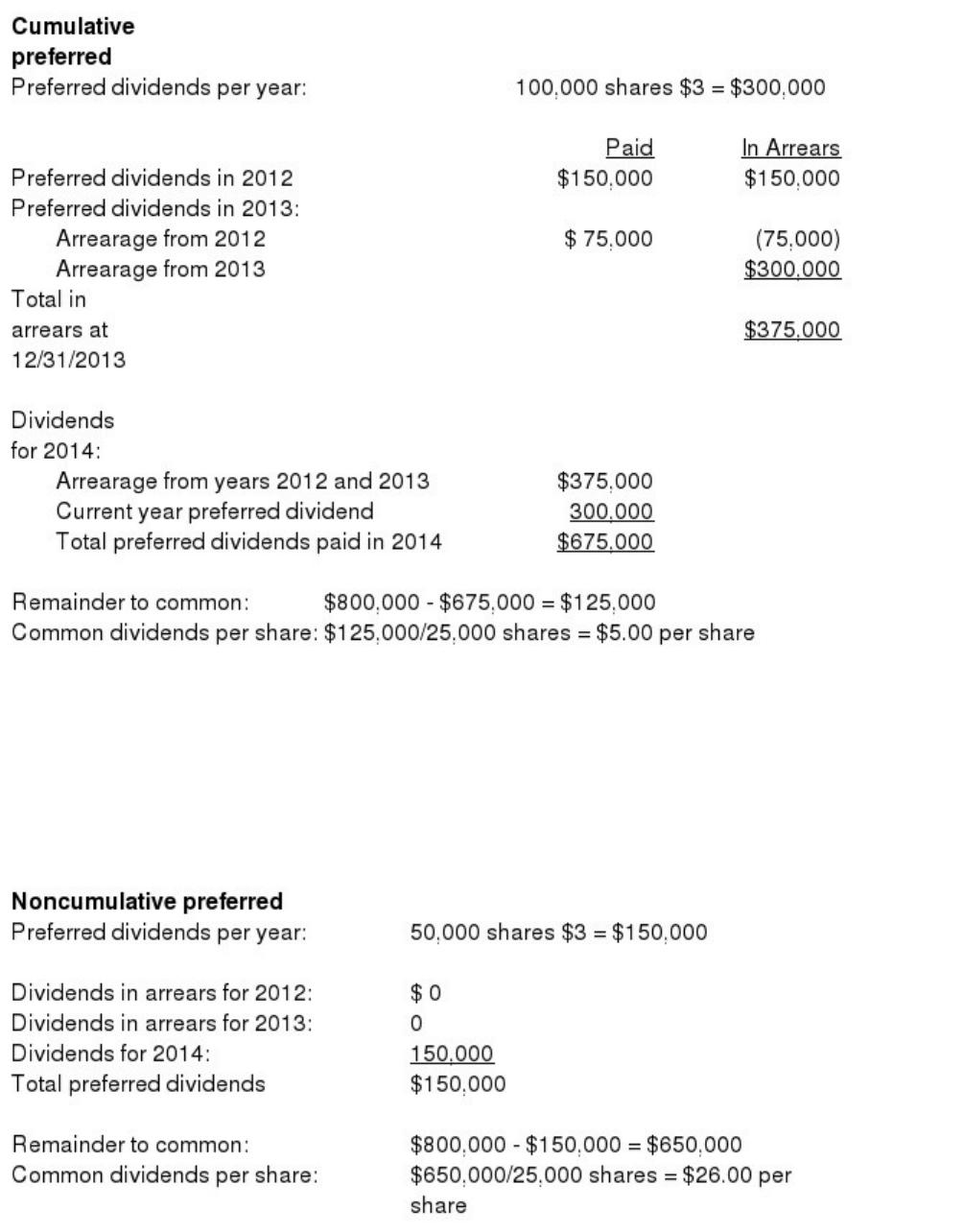
32) Taylor Company paid cash dividends totaling $150,000 in 2012 and $75,000 in
2013. In 2014, Taylor intends to pay cash dividends of $800,000. Compute the amount
of cash dividends per share to be received by common stockholders in 2014 under each
of the following assumptions. Treat each case independently. There were no dividends
in arrears as of January 1, 2012.
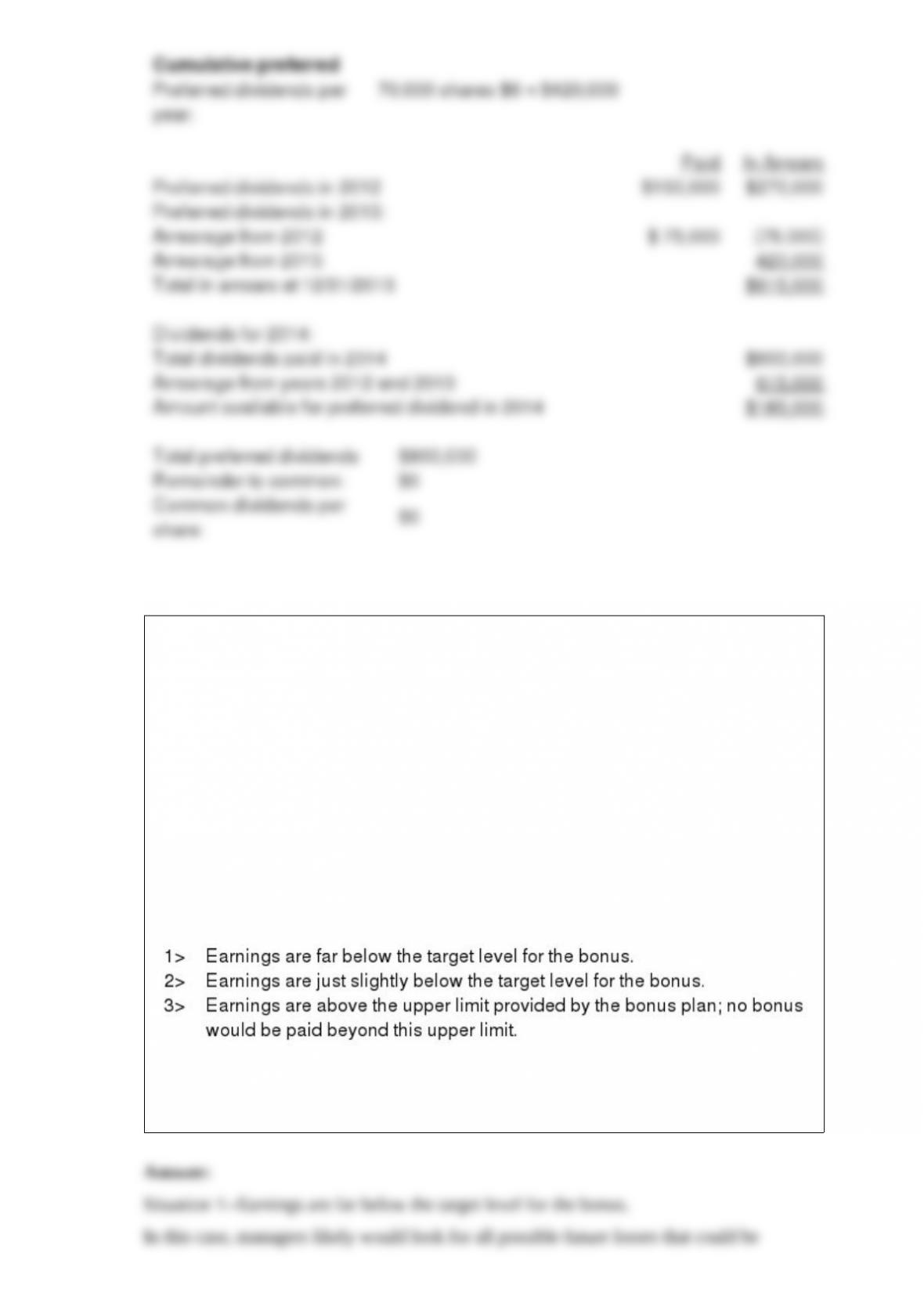
33) A significant part of the compensation received by the leaders of large business
entities comes from company-sponsored bonus plans. Determination of the amount of
compensation to be awarded under many of these bonus plans is based on net income or
some variant of net income.
Bonus plans typically provide for a target earnings number that must be achieved in
order for bonuses to be paid. This target amount of earnings usually is a percentage
either of shareholders equity or total assets. If earnings fall below the target, then no
bonuses are awarded. A bonus plan may also provide for a maximum amount of
earnings above which no bonus will be paid.
Accounting research suggests that managers of firms with bonus plans are more likely
to choose accounting procedures that shift reported earnings from future periods to the
current period. In light of this finding, consider how managers might behave given the
following situations:
Required:
Describe what you believe would be the likely behavior of managers under each of the
three situations described above.

34) The notes to the 2014 financial statements of Halvoline Oil Company provide the
following disclosure regarding the deferred tax asset and liability accounts at December
31, 2014 (amounts in millions of dollars):
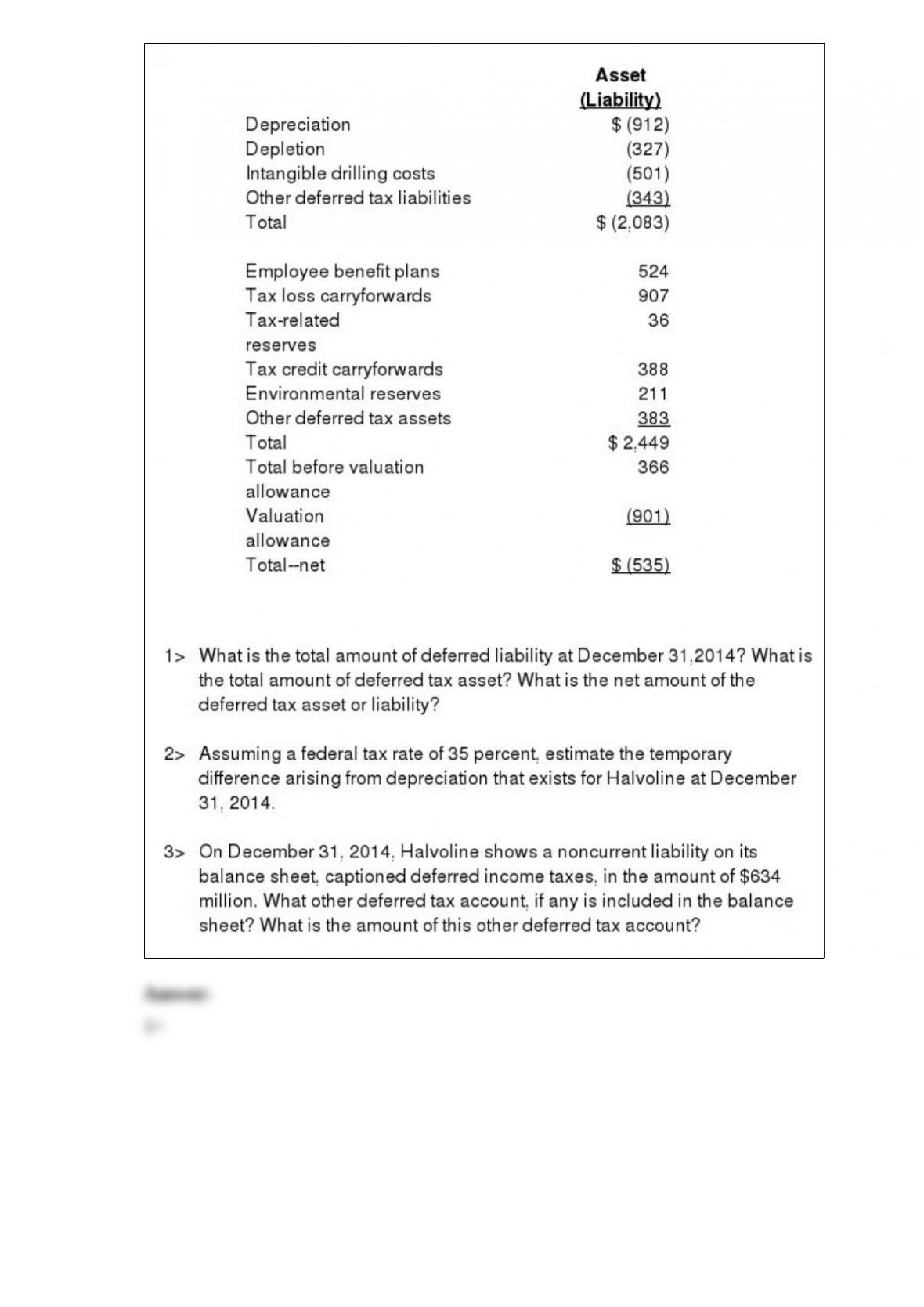
Required:
35) Sundance Communications is considering adopting a bonus plan for its executives.
Two plans are currently being evaluated. The first plan involves executives receiving a
bonus of 8 percent of company earnings calculated on income after deduction for bonus
but before deduction for income tax. The second plan involves a bonus of 12 percent
calculated on income after deductions for both bonus and income tax. Income tax is 30
percent of income after bonus.
If income before bonus and taxes for the year is estimated to be $100,000, which bonus
plan would company executives prefer?
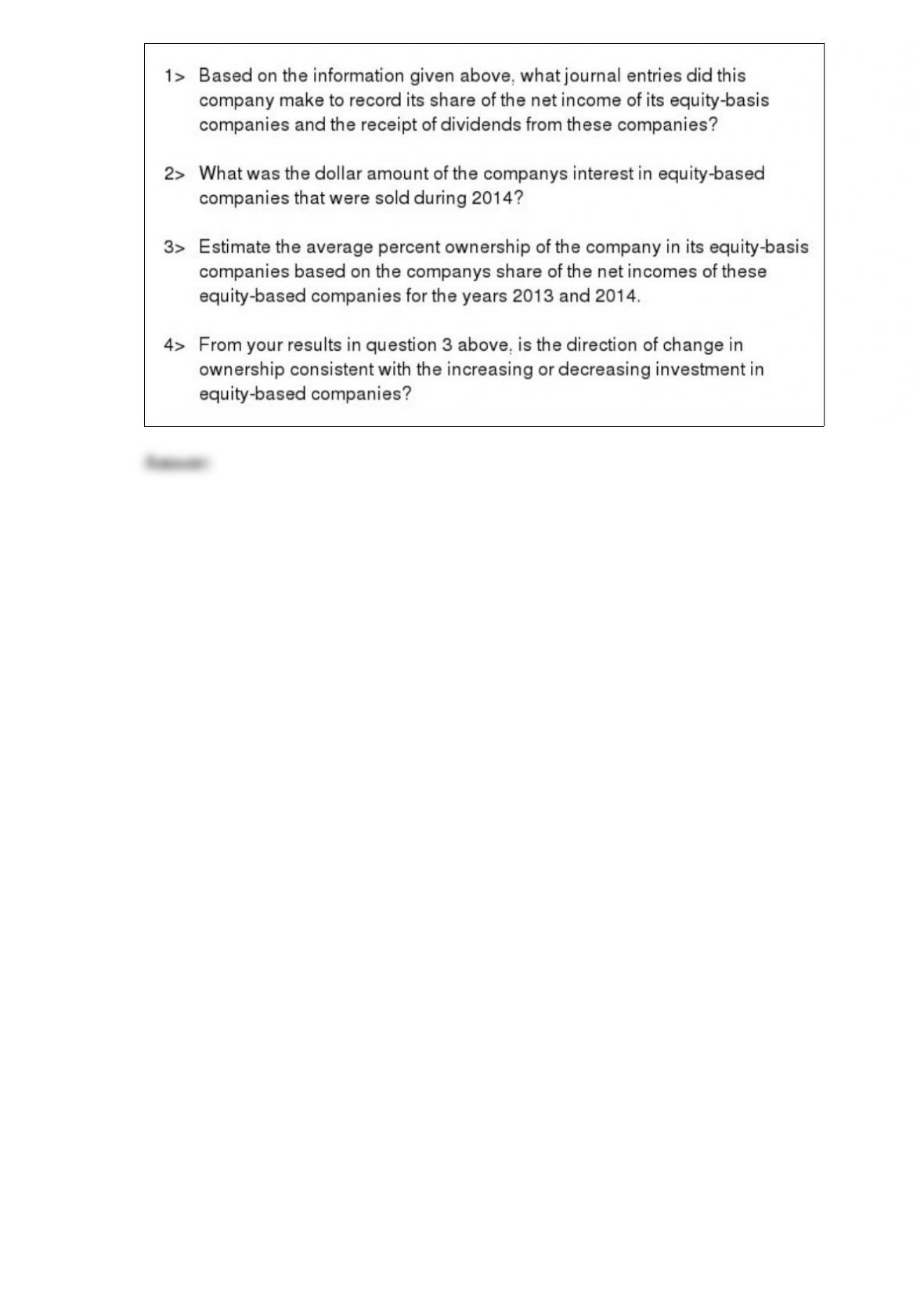
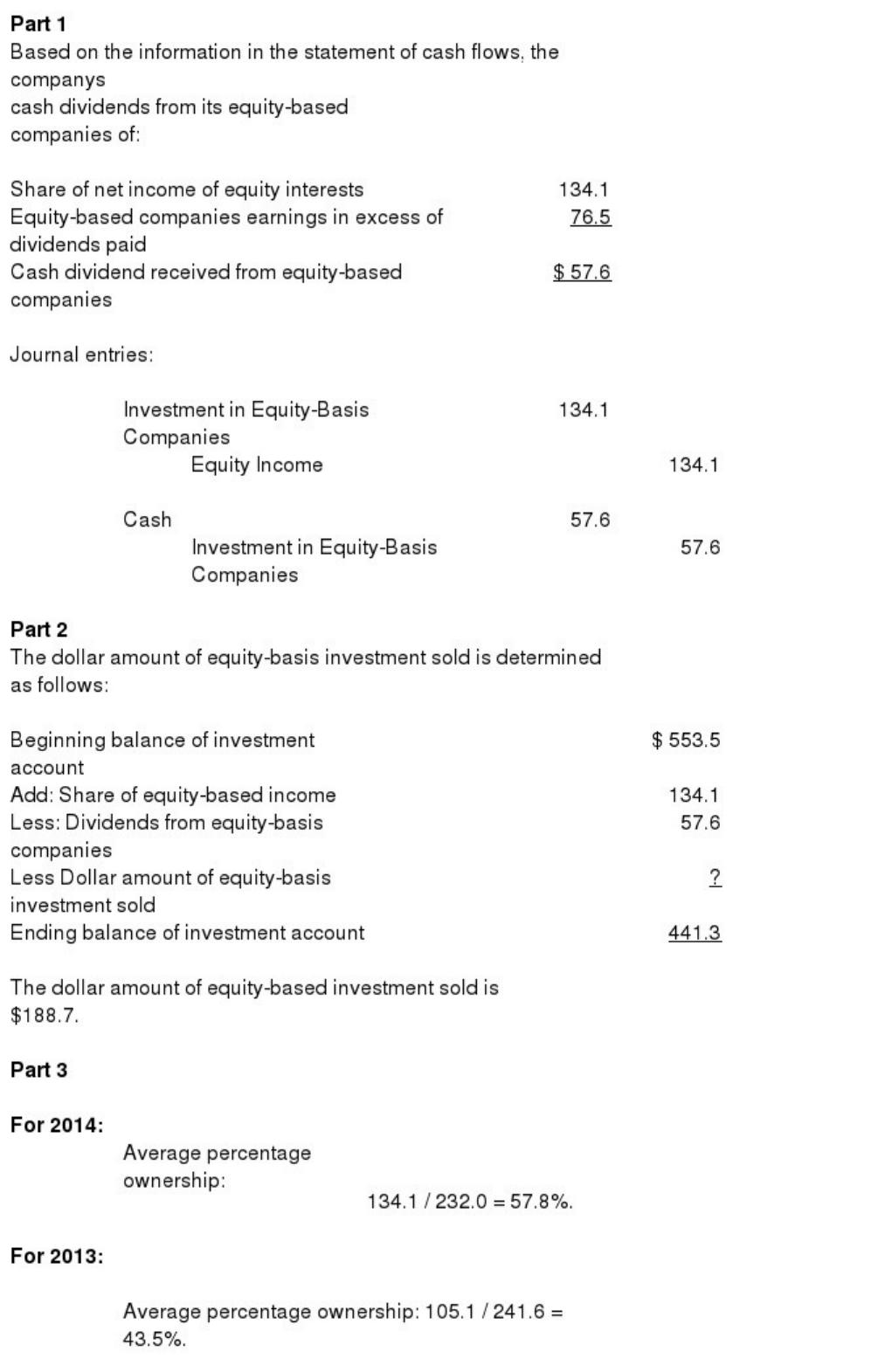
36) The following selected information is available from the financial statements of a
large global company:
Required:
Use the financial information above to answer the following questions:
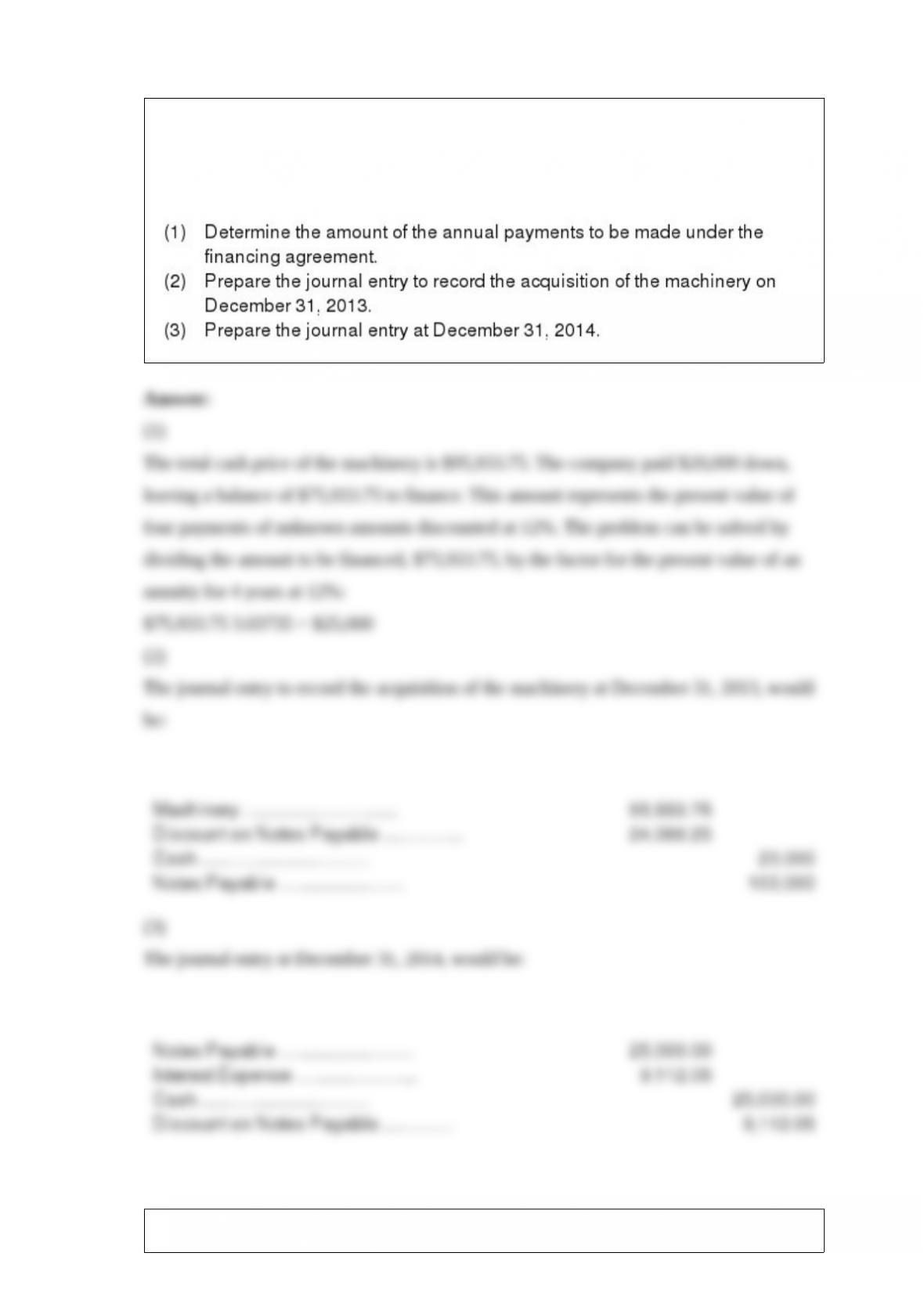
37) On December 31, 2013, National Refining Company purchased machinery having a
cash selling price of $95,933.75. The company paid $20,000 down and agreed to
finance the remainder by making four equal payments each December 31 at the implicit
interest rate of 12%.
38) Meower Corp. received a charter authorizing 120,000 shares of common stock at
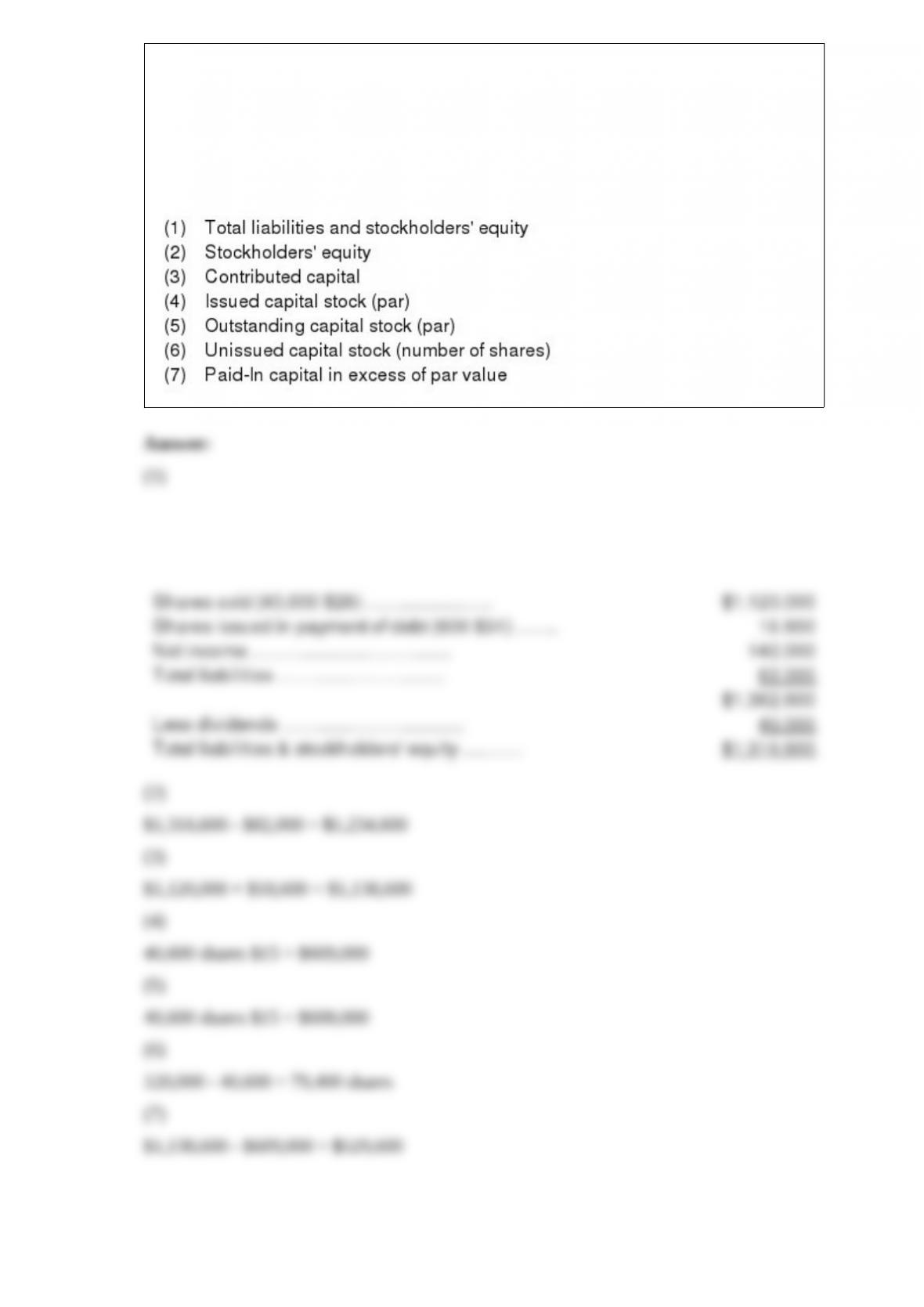
$15 par value per share. During the first year of operations, 40,000 shares were sold at
$28 per share. 600 shares were issued in payment of a current operating debt of
$18,600. In the first year, the net income was $142,000.
During the year, dividends of $46,000 were paid to stockholders. At the end of the year,
total liabilities were $82,000. Use the given data to compute the following items at the
end of the first year (show all computations):
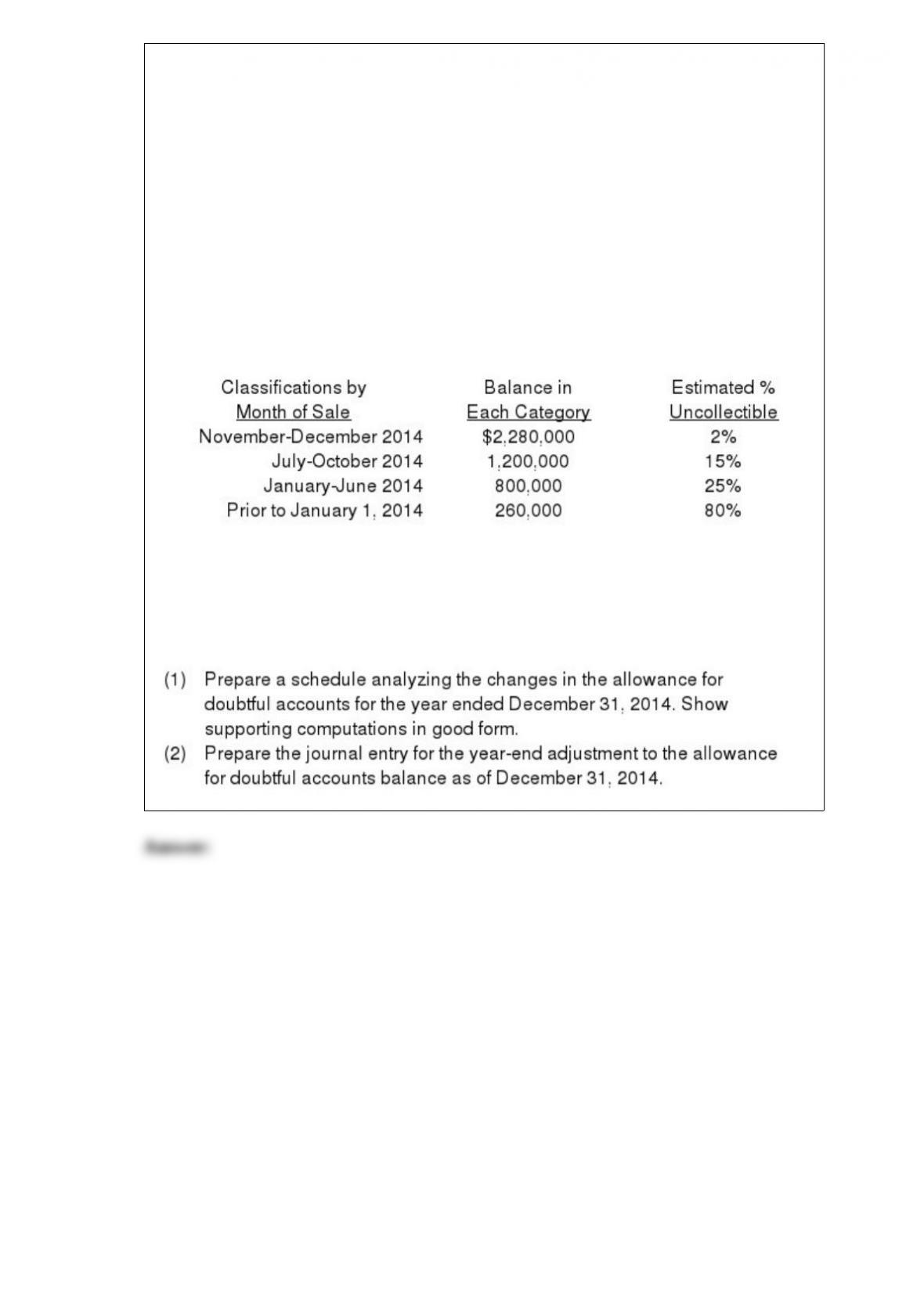
39) From inception of operations to December 31, 2013, Centaur Corporation provided
for uncollectible accounts receivable under the allowance method: Provisions were
made monthly at 2 percent of credit sales; bad debts written off were charged to the
allowance account; recoveries of bad debts previously written off were credited to the
allowance account; and no year-end adjustments to the allowance account were made.
Centaurs usual credit terms are net 30 days.
The credit balance in the allowance for doubtful accounts was $260,000 at January 1,
2014. During 2014, credit sales totaled $18,000,000, interim provisions for doubtful
accounts were made at 2 percent of credit sales, $180,000 of bad debts were written off,
and recoveries of accounts previously written off amounted to $30,000. Centaur
installed a computer system in November 2014 and an aging of accounts receivable was
prepared for the first time as of December 31, 2014. A summary of the aging is as
follows:
Based on the review of collectibility of the account balances in the “prior to January 1,
2014″ aging category, additional receivables totaling $120,000 were written off as of
December 31, 2014. Effective with the year ended December 31, 2014, Centaur adopted
a new accounting method for estimating the allowance for doubtful accounts at the
amount indicated by the year-end aging analysis of accounts receivable.
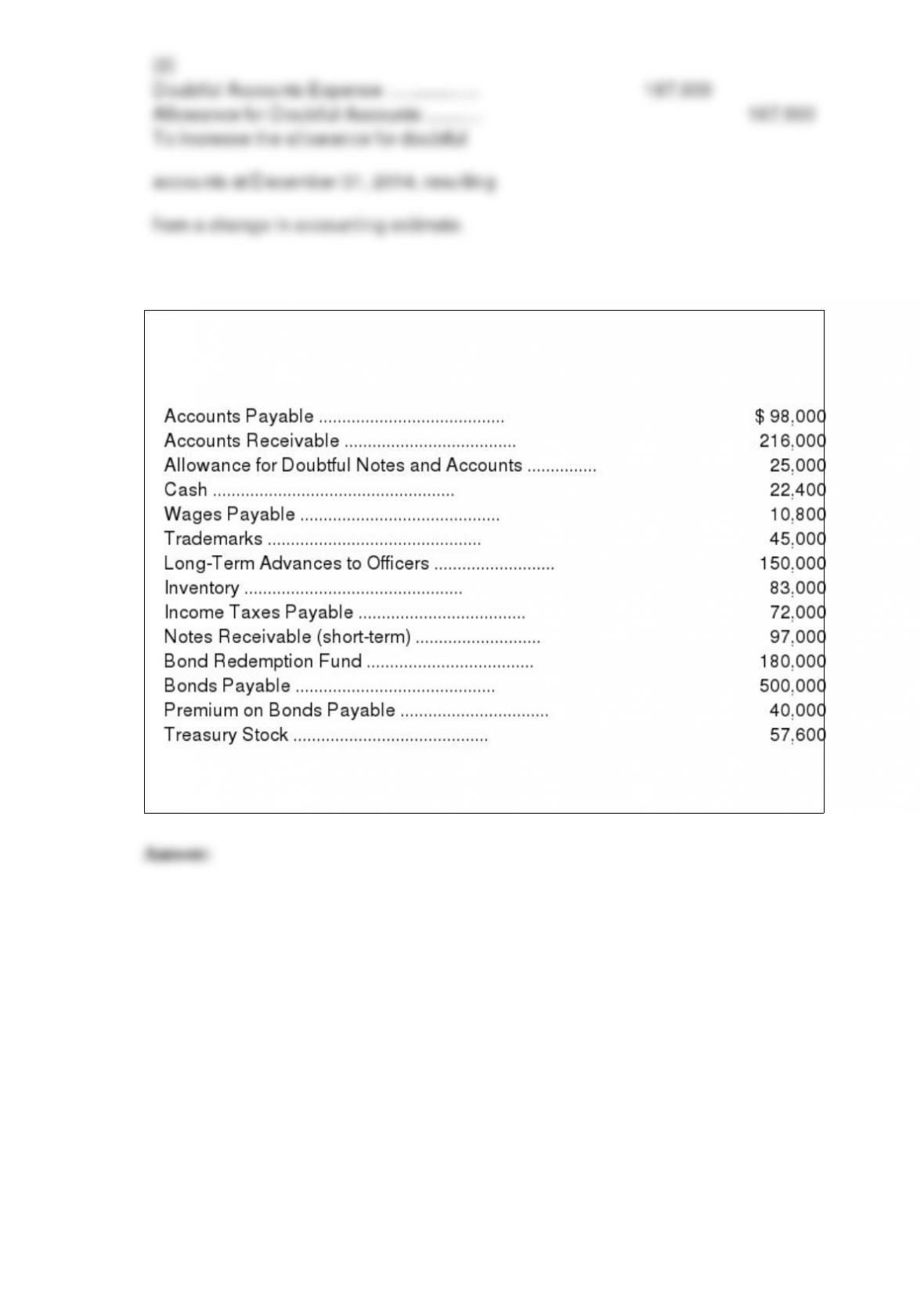
40) Below are selected accounts and their balances for the Beehive Company as of
December 31, 2015:
Based on the above information, determine the amount of working capital at December
31, 2015.
41) In Statement of Financial Accounting Concepts No. 1, Objectives of Financial
Reporting by Business Enterprises, the Financial Accounting Standards Board presents
the objectives of financial reporting.
Required:
Identify the three major objectives of financial reporting and explain the
interrelationships that exist between these objectives.