On January 1, 2014, Gene Corp. paid $800,000 for 100,000 shares of Onofine
Company’s common stock, which represents 30% of Onofine ‚s outstanding common
stock. Onofine reported net income of $200,000 and paid cash dividends of $60,000
during 2014. Gene should report the investment in Onofine Company on its December
31, 2014, balance sheet at:
a. $800,000
b. $758,000
c. $818,000
d. $842,000
Answer:
An unacceptable way to make a correcting entry is to
a. reverse the incorrect entry.
b. erase the incorrect entry.
c. compare the incorrect entry with the correct entry and make a correcting entry to
correct the accounts.
d. correct it immediately upon discovery.
Answer:
For each of the following accounts, indicate the effects of (a) a debit and (b) the normal
account balance.
1> Notes Payable
2> Prepaid Insurance
3> Salaries and Wages Expense
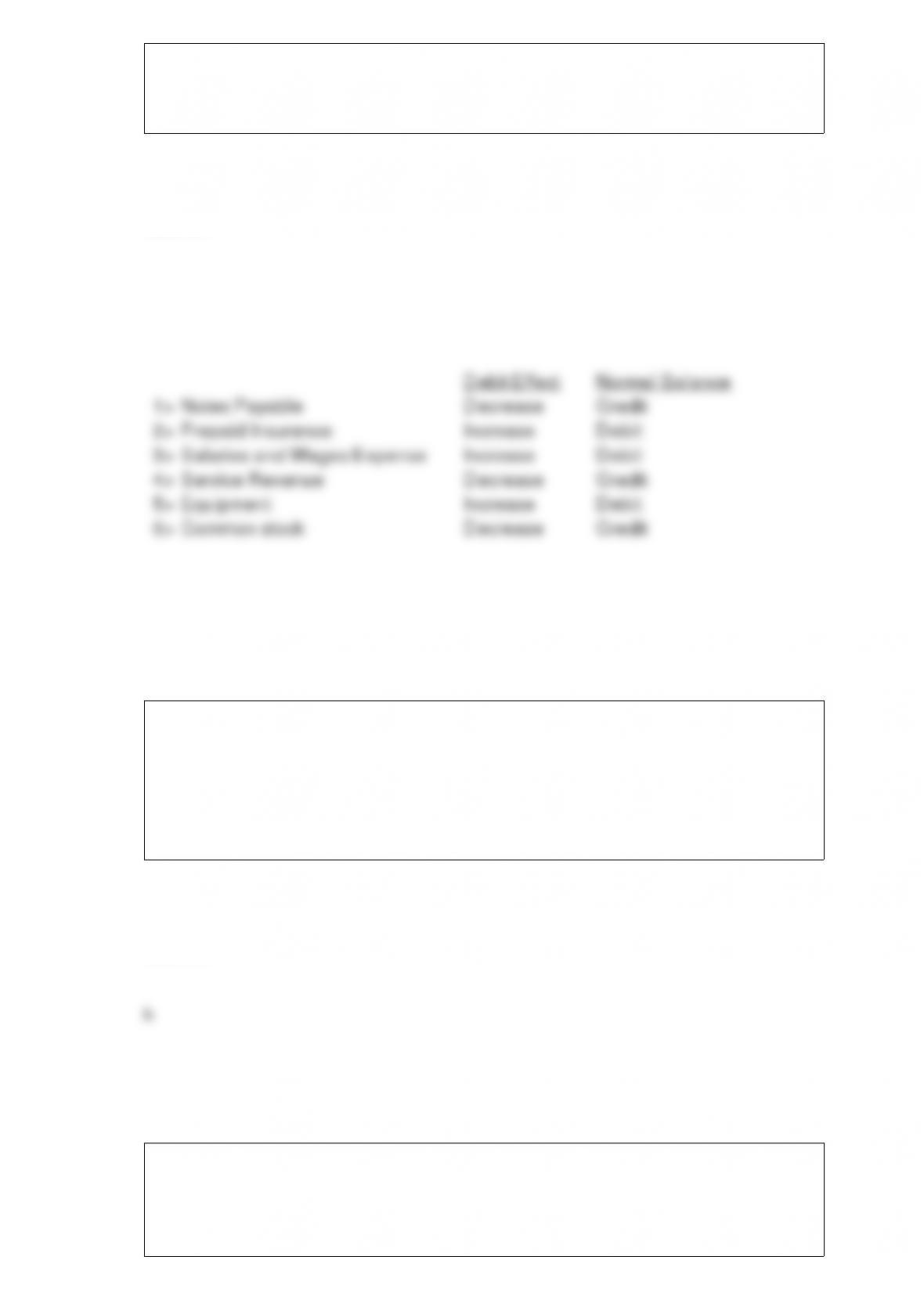
4> Service Revenue
5> Equipment
6> Common Stock
Answer:
If the cost method is used to account for a long-term investment in common stock,
dividends received should be
a. credited to the Stock Investments account.
b. credited to the Dividend Revenue account.
c. debited to the Stock Investments account.
d. recorded only when 20% or more of the stock is owned.
Answer:
. The account Unrealized Loss’”Income is reported
a. as a contra account in the stockholders’ equity section of the balance sheet.

b. in the other expenses and losses section of the income statement.
c. in the operating section of the income statement.
d. as a contra account in the current asset section of the balance sheet.
Answer:
IFRS requires the use of
a. the term balance sheet.
b. the term statement of financial position.
c. neither balance sheet nor statement of financial position, but recommends use of the
term balance sheet.
d. neither balance sheet nor statement of financial position, but recommends use of the
term statement of financial position.
Answer:
Book value per share is computed by dividing total
a. paid-in capital by the number of common shares outstanding.
b. paid-in capital by the number of common shares issued.
c. stockholders’ equity by the number of common shares outstanding.
d. stockholders’ equity by the number of common shares issued.
Answer:

A bank may issue a credit memorandum for
a. a bank service charge.
b. an NSF (not sufficient funds) check from a customer.
c. the collection of a note receivable for the depositor by the bank.
d. the cost of printing checks.
Answer:
When a note receivable is dishonored,
a. interest revenue is never recorded.
b. bad debts expense is recorded.
c. the maturity value of the note is written off.
d. Accounts Receivable is debited if eventual collection is expected.
Answer:
With regard to the accounts used to record freight costs,
a. Freight-out is added to cost of goods sold.
b. Freight-out has a normal balance of debit.
c. Freight-out is recorded when freight terms are FOB shipping point.
d. Freight-out is a contra account to Sales.
Answer:
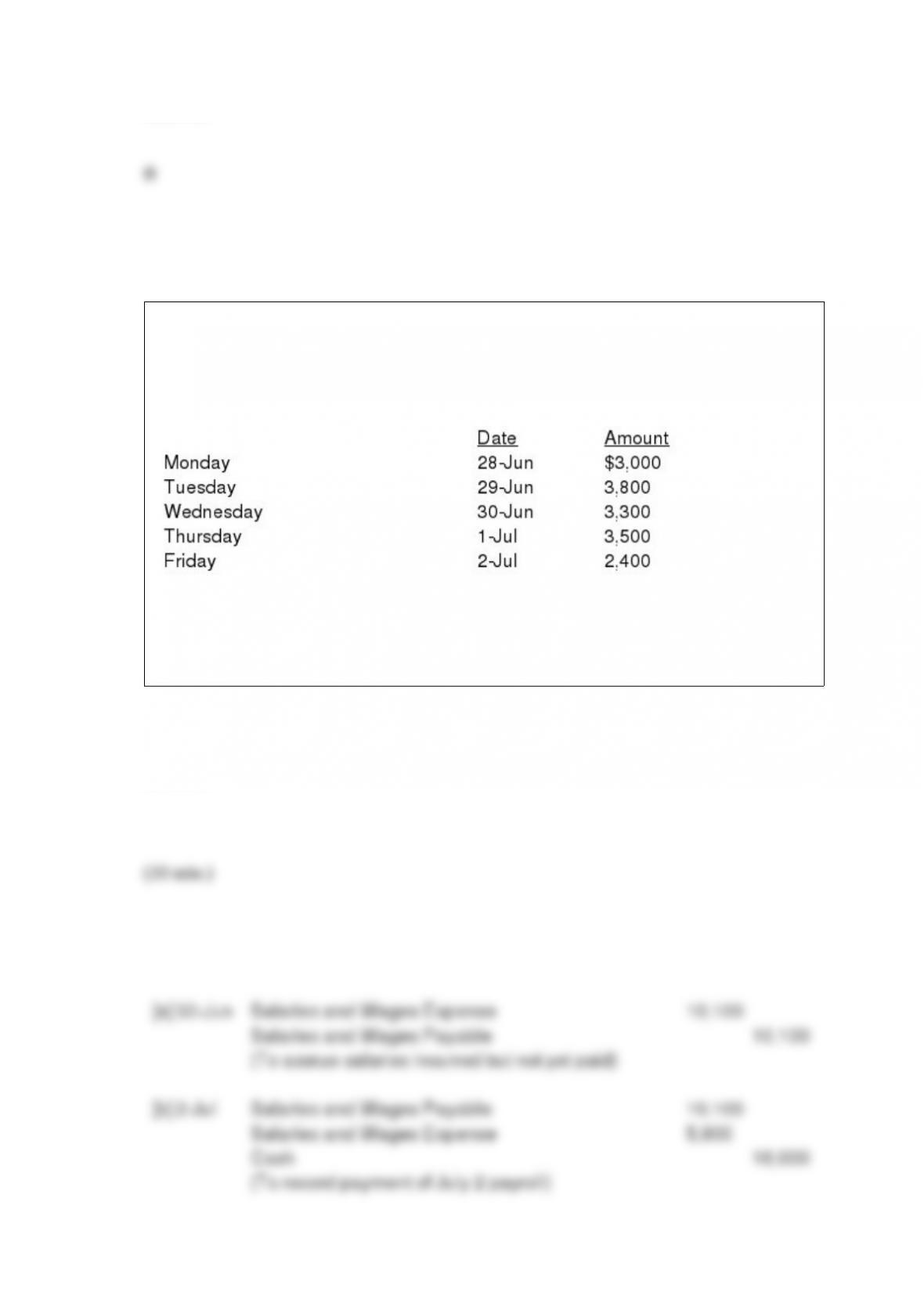
Gwynn Company has an accounting fiscal year which ends on June 30. The company
also has a policy of paying the weekly payroll on Friday. Payroll records indicate the
following salary costs were incurred.
Instructions
(a) Prepare any necessary adjusting journal entries that should be made at year end on
June 30.
(b) Prepare the journal entry to record the payment of the weekly payroll on July 2.
Answer:
The contra-account, Fair Value Adjustment, is also called a(n)
a. offset account.
b. adjustment account.
c. valuation account.
d. opposite account.
Answer:
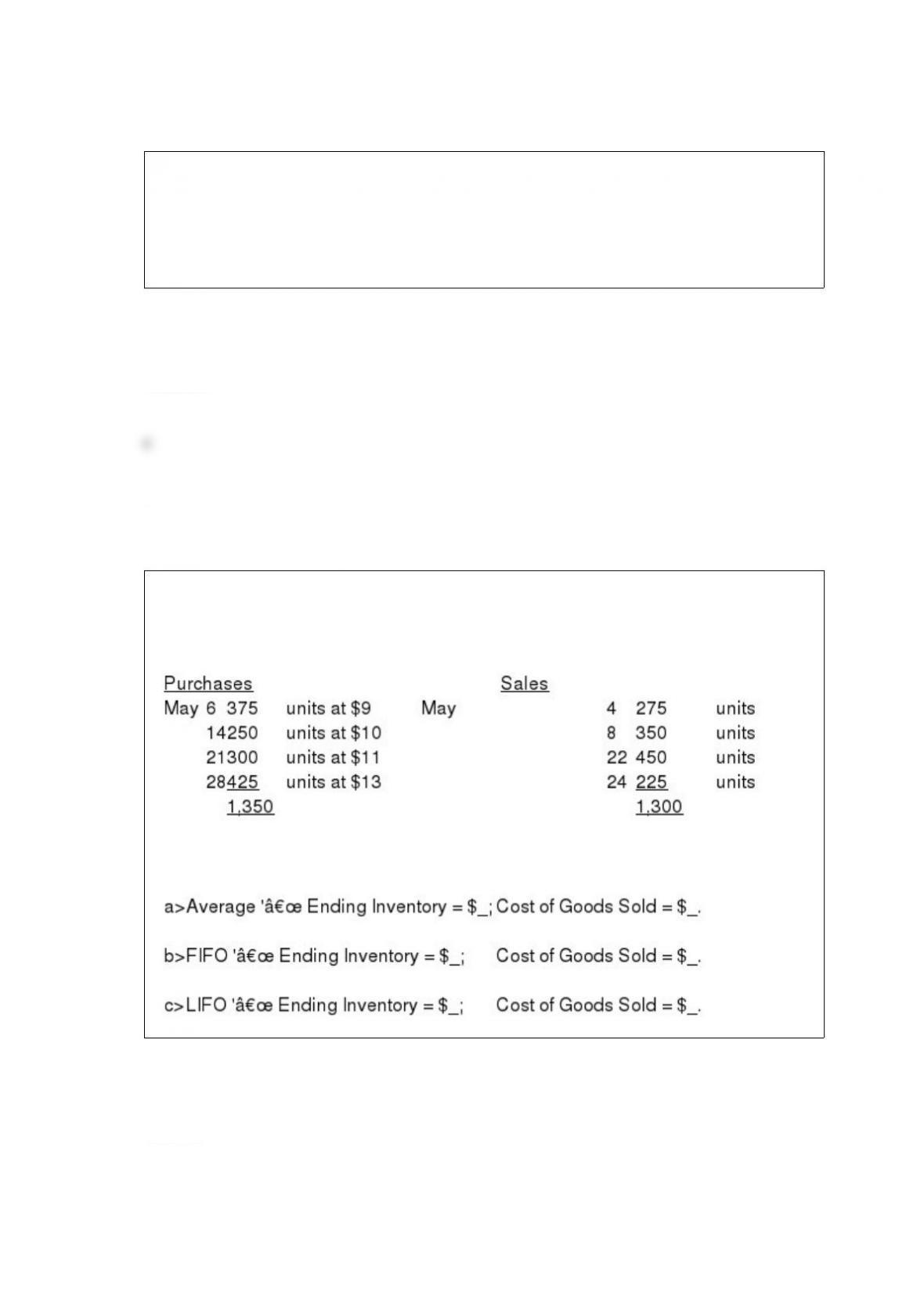
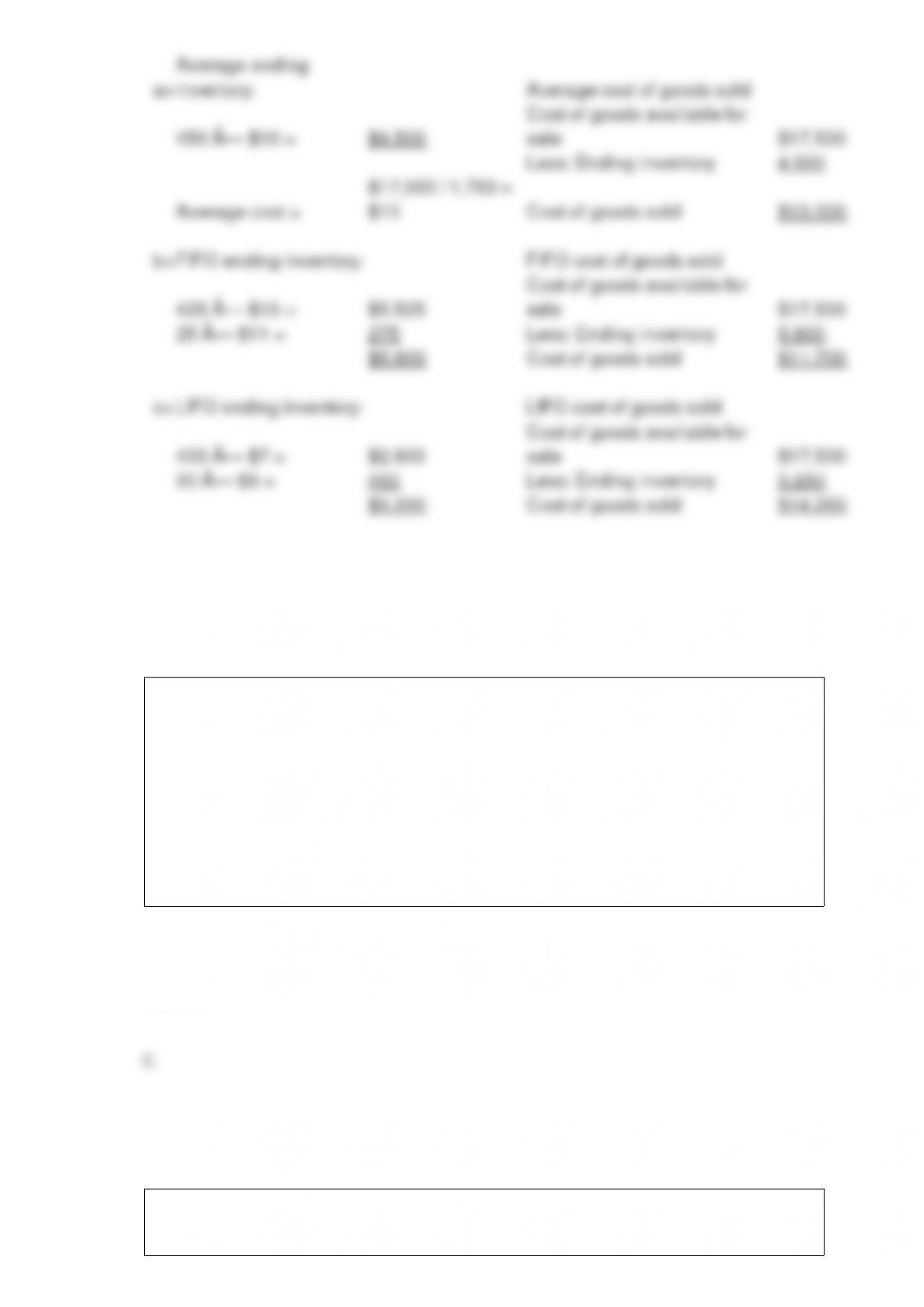
Vaughn Company, which uses a periodic inventory system, had a beginning inventory
on May 1, of 400 units of Product A at a cost of $7 per unit. During May, the following
purchases and sales were made.
Instructions: Compute the May 31 ending inventory and May cost of goods sold under
(a) Average Cost, (b) FIFO, and (c) LIFO. Provide appropriate supporting calculations.
Answer:
An exception to disbursements being made by check is acceptable when cash is paid
a. to an owner.
b. to employees as wages.
c. from petty cash.
d. to employees as loans.
Answer:
An adjusted trial balance
a. is prepared after the financial statements are completed.

b. proves the equality of the total debit balances and total credit balances of ledger
accounts after all adjustments have been made.
c. is a required financial statement under generally accepted accounting principles.
d. cannot be used to prepare financial statements.
Answer:
A dividend is
a. a distribution of the company’s earnings to its stockholders.
b. equal to liabilities minus stockholders’ equity.
c. equal to assets minus stockholders’ equity.
d. equal to revenues less expenses
Answer:
Martin Corporation purchased land in 2007 for $290,000. In 2015, it purchased a nearly
identical parcel of land for $460,000. In its 2015 balance sheet, Martin valued these two
parcels of land at a combined value of $920,000. By reporting the land in this manner,
Martin Corp. has violated the
a. historical cost principle
b. convergence
c. economic entity assumption
d. monetary unit assumption
Answer:
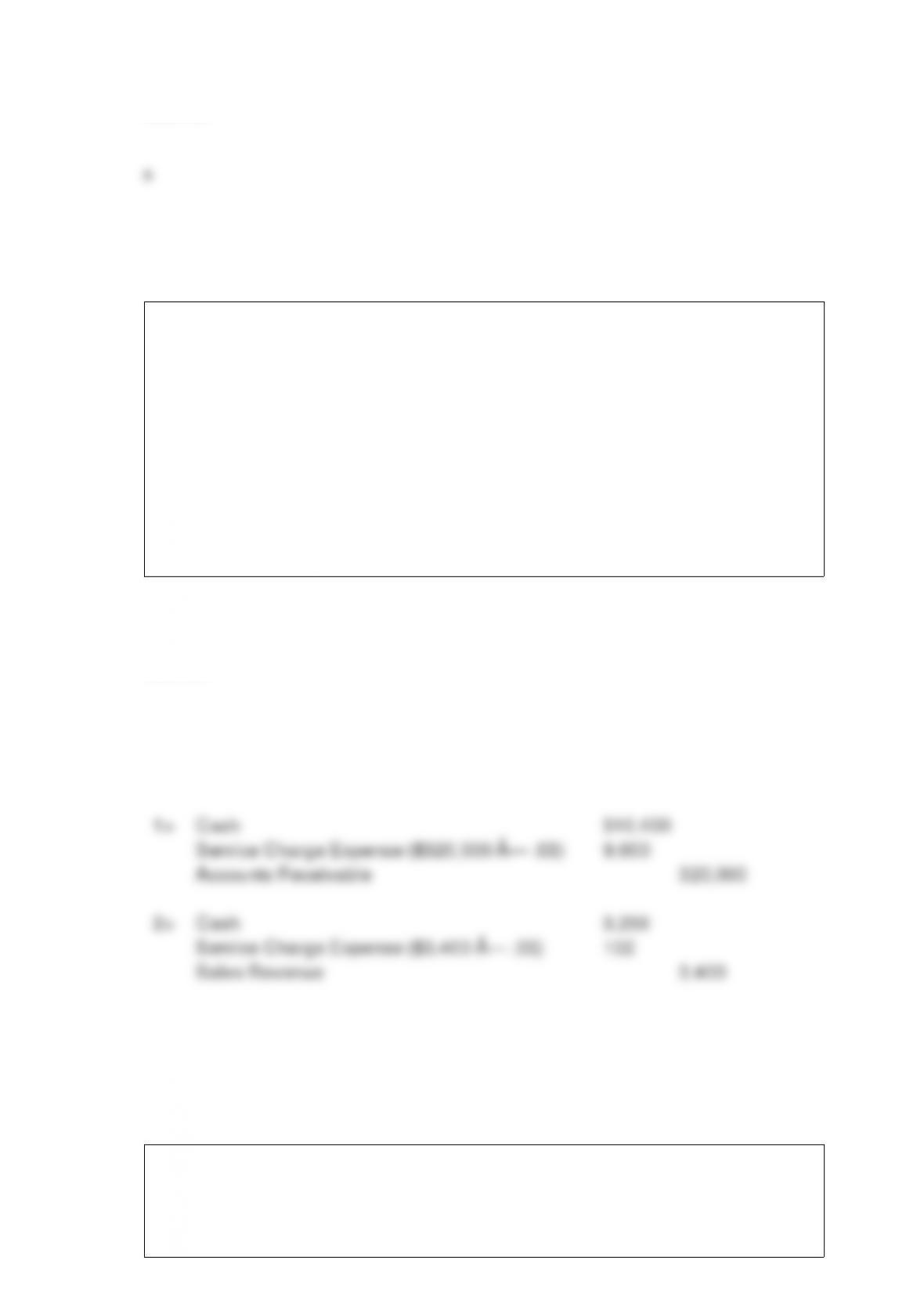
Listed below are two independent situations involving the disposition of receivables.
1> Morales Company sells $320,000 of its receivables to Instant Factors, Inc. Instant
Factors assesses a finance charge of 3% of the amount of receivables sold.
Instructions
Prepare the journal entry to record the sale of the receivables on Morales Company’s
books.
2> A restaurant is the site for a large company party. The bill totals $3,400 and is
charged by the patron on a Visa credit card.
Instructions
Assume a 3% service fee is charged by Visa. Record the entry for the transaction on the
restaurant’s books.
Answer:
Which of the following would not be classified a long-term liability?
a. Current maturities of long-term debt
b. Bonds payable
c. Mortgage payable

d. Lease liabilities
Answer:
Jolene is warehouse custodian and also maintains the accounting record of the
inventory held at the warehouse. An assessment of this situation indicates
a. documentation procedures are violated.
b. independent internal verification is violated.
c. segregation of duties is violated.
d. establishment of responsibility is violated.
Answer:
An account is an individual accounting record of increases and decreases in specific
a. liabilities.
b. assets.
c. expenses.
d. assets, liabilities, and stockholders’ equity items.
Answer:

Transaction amounts recorded in the general journal are never posted to accounts in the
subsidiary ledger.
Answer:
A major advantage of national credit cards to retailers is that there is no charge to the
retailer by the credit card companies for their services.
Answer:
The operating cycle of a company is determined by the number of years the company
has been operating.
Answer:
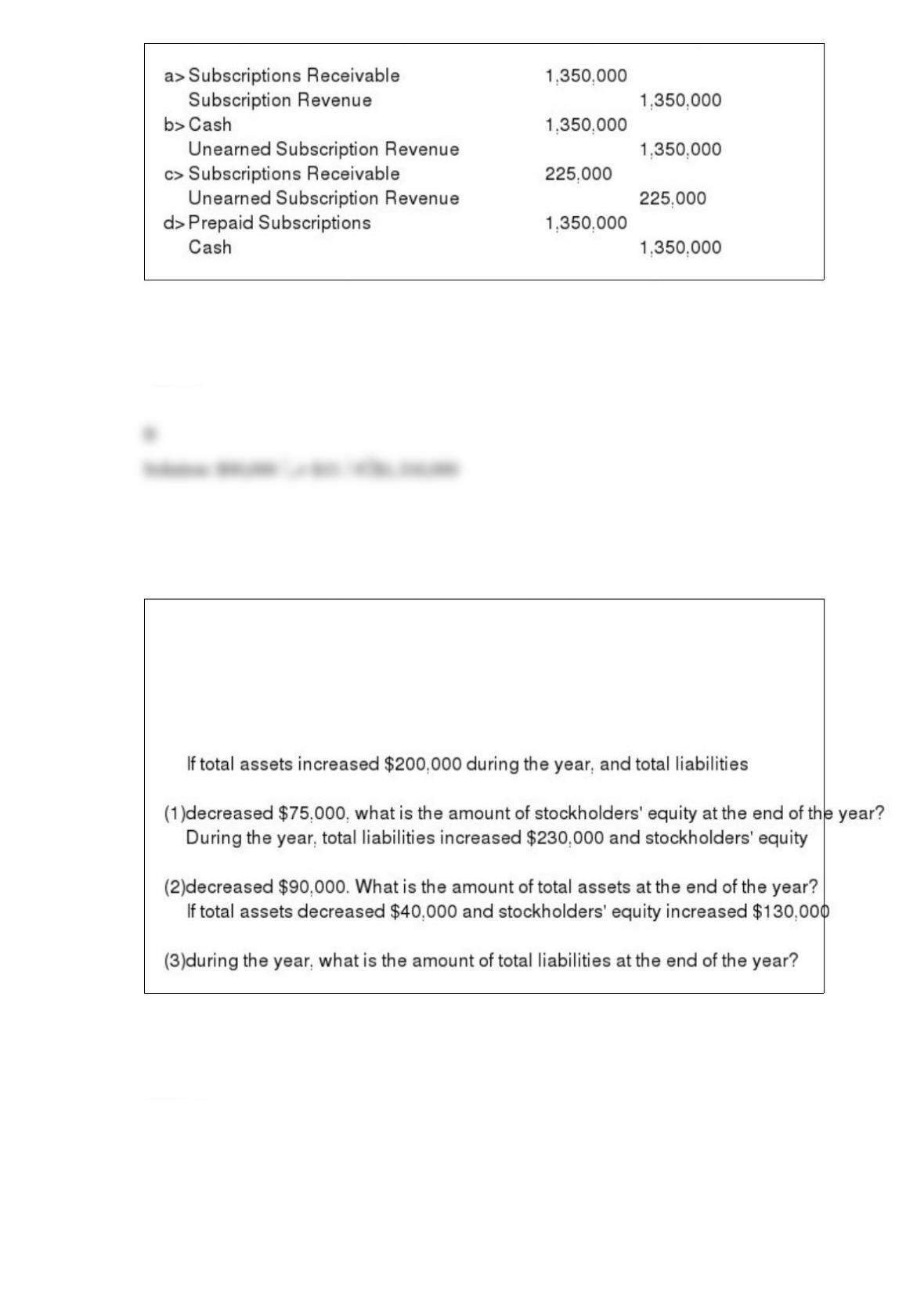
Pickett Company typically sells subscriptions on an annual basis, and publishes six
times a year. The magazine sells 90,000 subscriptions in January at $15 each. What
entry is made in January to record the sale of the subscriptions?
Answer:
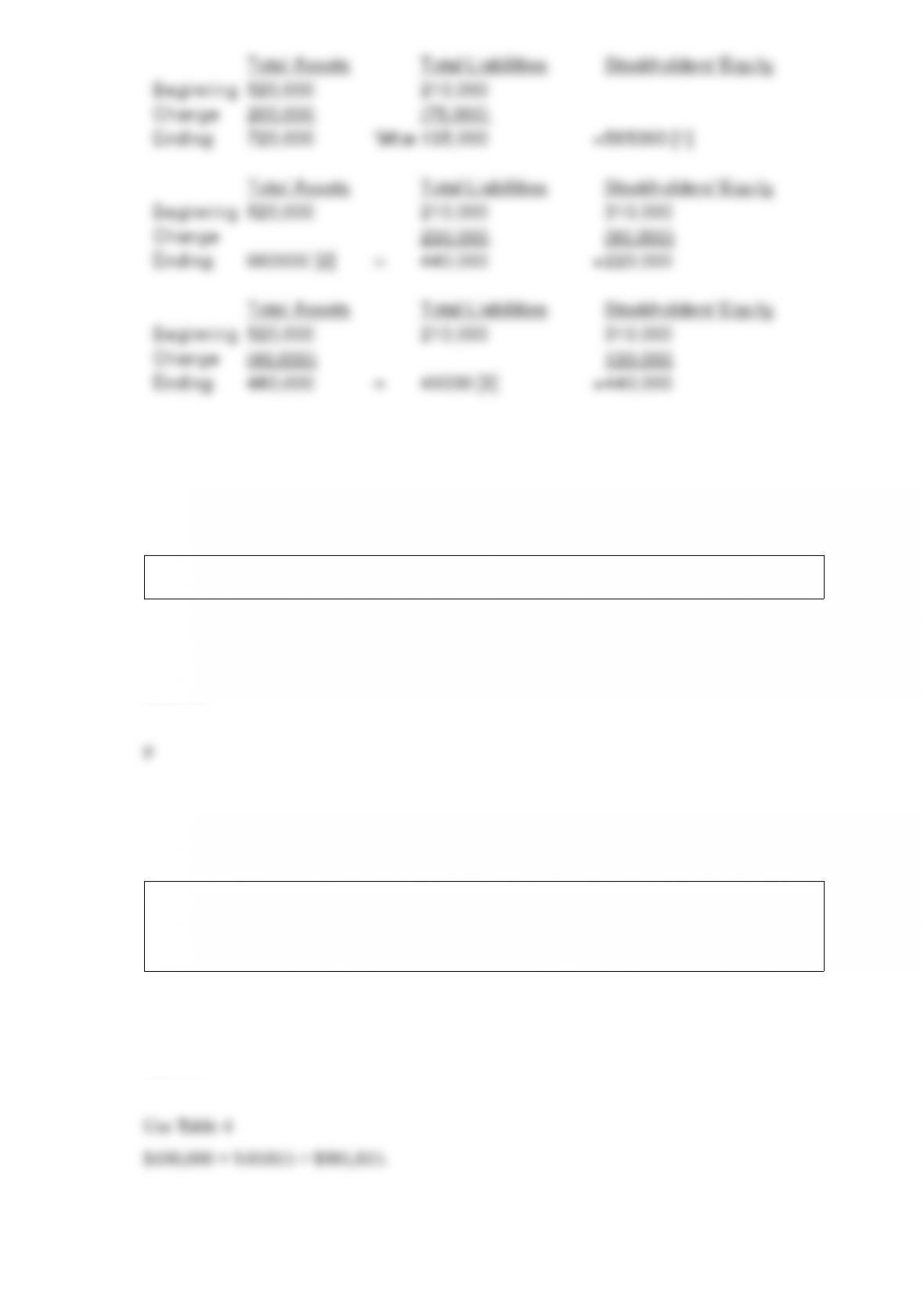
At the beginning of the year, Shaolin Company had total assets of $520,000 and total
liabilities of $210,000. Answer the following questions viewing each situation as being
independent of the others.
Answer:
The current ratio is a measure of all the ratios calculated for the current year.
Answer:
Lucky Lou has just won the lottery and will receive an annual payment of $100,000
every year for the next 20 years. If the annual interest rate is 8%, what is the present
value of the winnings?
Answer:
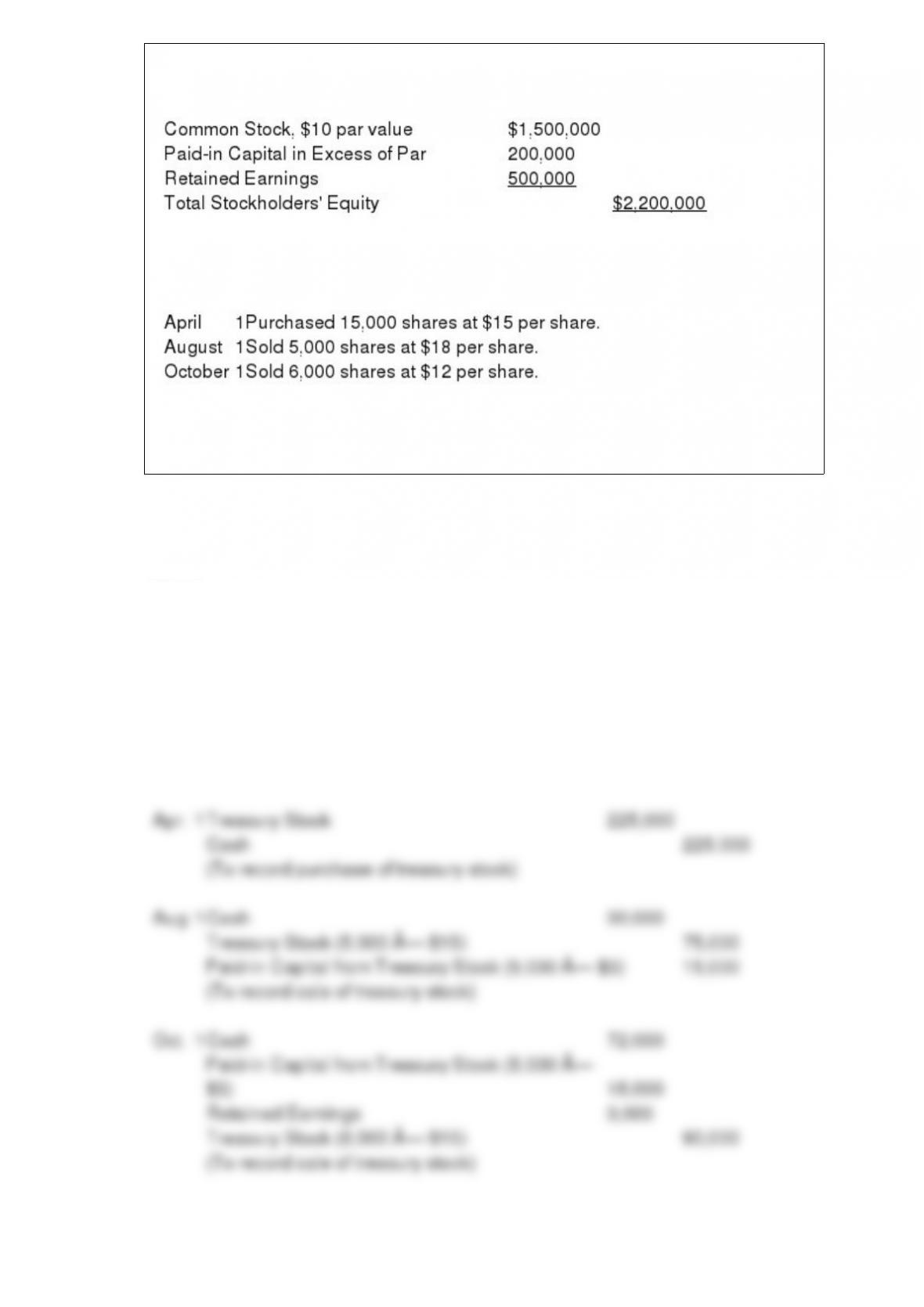
Bingham Corporation has the following stockholders’ equity accounts on January 1,
2015:
The company uses the cost method to account for treasury stock transactions. During
2015, the following treasury stock transactions occurred:
Instructions
Journalize the treasury stock transactions for 2015.
Answer: