
Nichols Corporation purchased $100,000 of Holly Inc. 6% bonds at par with the intent
and ability to hold the bonds until they matured in 2017, so Nichols classifies its
investment as held to maturity. Unfortunately, a combination of problems at Holly and
in the debt market caused the fair value of the Holly investment to decline to $70,000
during 2013. Nichols calculates that, of the $30,000 drop in fair value, $10,000 of it
relates to credit losses and $20,000 relates to noncredit losses.
Assume that Nichols concludes that the Holly bonds are other-than-temporarily
impaired because Nichols calculates that the bonds have incurred credit losses.
Before-tax net income for 2013 will be reduced by: A. $0.
B. $10,000.
C. $20,000.
D. $30,000.
Answer:
Operating cash flows would exclude:A. Interest received.
B. Interest paid.
C. Dividends paid.
D. Dividends received.
Answer:
Which of the following groups is not among the external users for whom financial
statements are prepared? A.Customers.
B.Suppliers.
C.Employees.
D.All of the above are external users of financial statements.
Answer:
Willie Nelson’s Boots uses the conventional retail method to estimate ending inventory.
Cost data for the most recent quarter is shown below:
The conventional cost-to-retail percentage (rounded) is: A. 82.6%.
B. 66.7%.
C. 71.9%.
D. 75.5%.
Answer:

The main difference between accounting for rebate and cash discount coupons is: A.
The latter is not treated as an expense.
B. Only the former creates a contingent liability when issued.
C. The expense for the latter is usually deferred until redemption of the coupon.
D. There are no significant differences in accounting between the two.
Answer:
Horrocks Company granted 180,000 restricted stock awards of its no par common
shares to executives, subject to forfeiture if employment is terminated within three
years. Horrocks’ common shares have a market price of $10 per share on January 1,
2012, the grant date, and at December 31, 2013, averaging $10 throughout the year.
When calculating diluted EPS at December 31, 2013, the net increase in the
denominator of the EPS fraction will be: A. 0 shares.
B. 60,000 shares.
C. 120,000 shares.
D. 180,000 shares.
Answer:
In a nonmonetary exchange of equipment, if the exchange has commercial substance, a
gain is recognized if: A. The fair value of the equipment received exceeds the book

value of the equipment received.
B. The book value of the equipment received exceeds the fair value of the equipment
given up.
C. The fair value of the equipment surrendered exceeds the book value of the
equipment given up.
D. None of the above is correct.
Answer:
The market price of a bond issued at a discount is the present value of its principal
amount at the market (effective) rate of interest: A. Less the present value of all future
interest payments at the rate of interest stated on the bond.
B. Plus the present value of all future interest payments at the rate of interest stated on
the bond.
C. Plus the present value of all future interest payments at the market (effective) rate of
interest.
D. Less the present value of all future interest payments at the market (effective) rate of
interest.
Answer:

Listed below are 10 terms followed by a list of phrases that describe or characterize the
terms. Match each phrase with the correct term. 1)Change in estimate
2)Nonoperating income
3)Extraordinary items
4)Comprehensive income
5)Restructuring costs
6)Earnings quality
7)Earnings per share
8)Change in accounting principle
9)Discontinued operations
10)Multiple-step income statement
A. Required disclosure for publicly traded corporations.
B. Total nonowner change in equity.
C. Costs generally associated with downsizing.
D. Reports a series of intermediate subtotals.
E. Unusual, infrequent, and material gains and losses.
F. Accounted for prospectively.
G. Tangentially related to normal operations.
H. Accounted for retrospectively by revising prior years’ statements.
I. Component of the entity has been sold or will be sold.
J. Ability of reported income to predict future earnings.
Answer:

Cash flows from investing do not include cash flows from: A. Lending money to
another corporation.
B. The sale of equipment.
C. Borrowing.
D. The purchase of other corporation’s securities.
Answer:
Pickering Company’s prepaid insurance was $8,000 at December 31, 2012, and $10,000
at December 31, 2013. Pickering reported insurance expense of $15,000 on the 2013
income statement. What amount would be reported in the statement of cash flows as
insurance paid using the direct method? A. $13,000.
B. $17,000.
C. $15,000.
D. $23,000.
Answer:
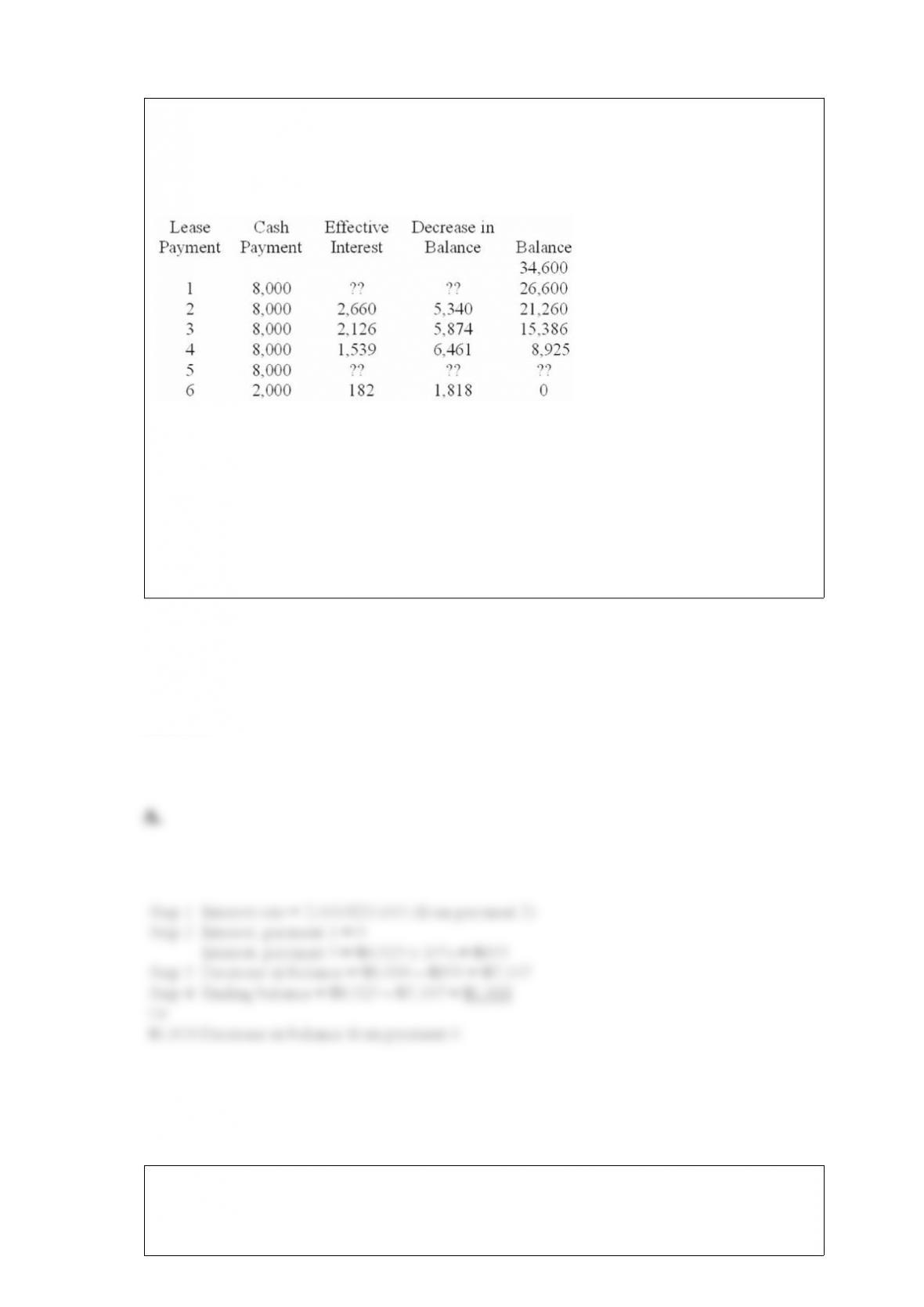
Refer to the following lease amortization schedule. The five payments are made
annually starting with the inception of the lease. A $2,000 bargain purchase option is
exercisable at the end of the five-year lease. The asset has an expected economic life of
eight years.
What is the outstanding balance after payment 5? A. $1,818.
B. $2,000.
C. $2,182.
D. $3,818.
Answer:
Red Corp. constructed a machine at a total cost of $70 million. Construction was
completed at the end of 2009 and the machine was placed in service at the beginning of
2010. The machine was being depreciated over a 10-year life using the straight-line
method. The residual value is expected to be $4 million. At the beginning of 2013, Red
decided to change to the sum-of-the-years’-digits method. Ignoring income taxes, what
will be Red’s depreciation expense for 2013? A. $4.8 million.
B. $5.4 million.
C. $6.6 million.
D. $11.55 million.
Answer:

On February 1, 2012, Pat Weaver Inc. (PWI) issued 10%, $1,000,000 bonds for
$1,116,000. PWI retired all of these bonds on January 1, 2013, at 102. Unamortized
bond premium on that date was $92,800. How much gain or loss should be recognized
on this bond retirement? A. $0 gain.
B. $111,800 gain.
C. $72,800 gain.
D. $96,000 gain.
Answer:
Rent collected in advance is: A. An asset account in the balance sheet.
B. A liability account in the balance sheet.
C. A shareholders’ equity account in the balance sheet.
D. A temporary account, not in the balance sheet at all.
Answer:

Wang Corporation purchased $100,000 of Hales Inc. 6% bonds at par with the intent
and ability to hold the bonds until they matured in 2017, so Wang classifies its
investment as held to maturity. Unfortunately, a combination of problems at Hales and
in the debt market caused the fair value of the Hales investment to decline to $70,000
during 2013. Wang calculates that, of the $30,000 drop in fair value, $10,000 of it
relates to credit losses and $20,000 relates to non-credit losses. If Wang accounts for the
Hales bonds under IFRS, before-tax net income for 2013 will be reduced by: A. $0.
B. $10,000.
C. $20,000.
D. $30,000.
Answer:
Revenue and expense items and components of other comprehensive income can be
reported in a single statement of comprehensive income using: A. U.S. GAAP.
B. IFRS.
C. Both U.S. GAAP and IFRS.
D. Neither U.S. GAAP nor IFRS.
Answer:
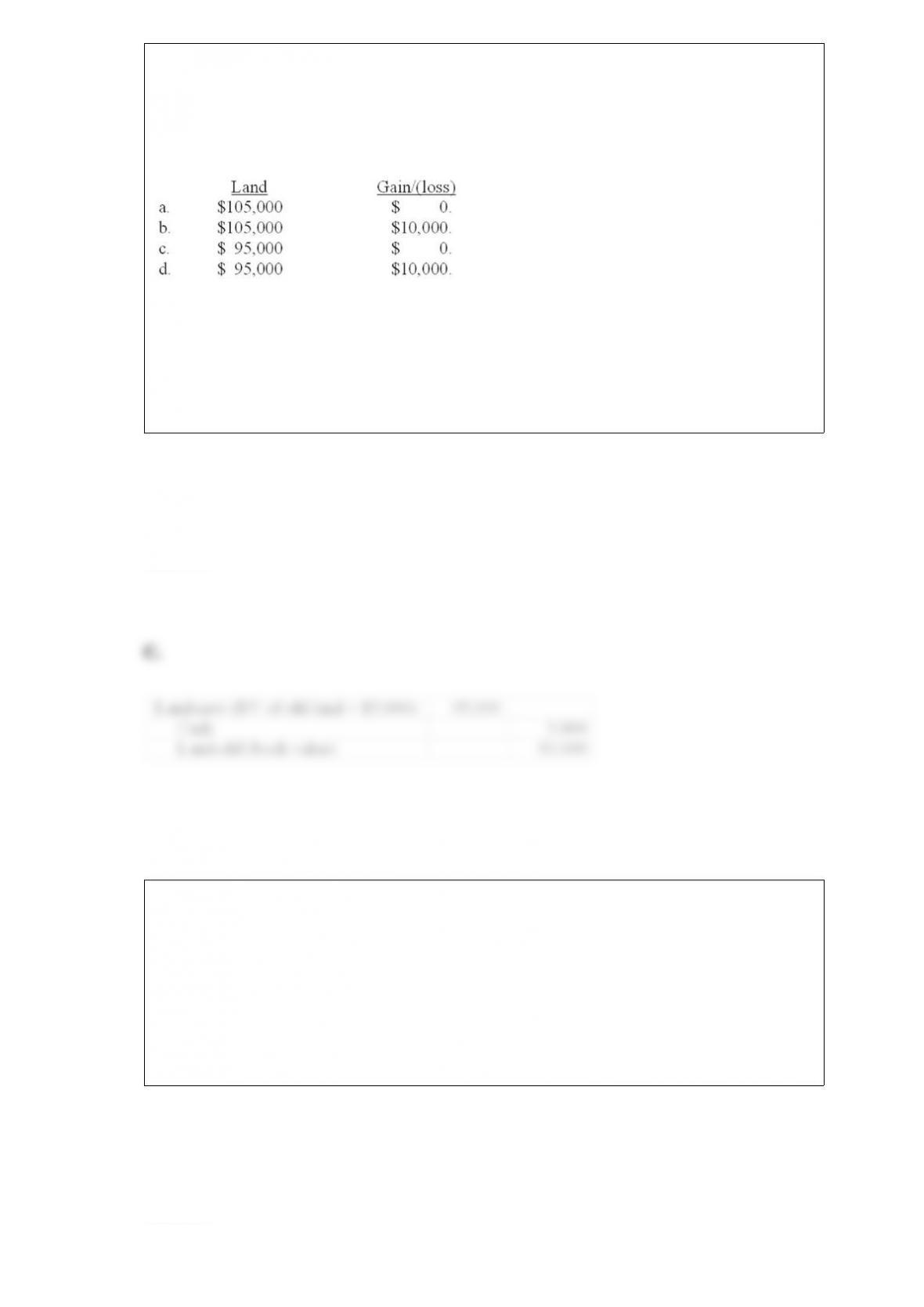
Horton Stores exchanged land and cash of $5,000 for similar land. The book value and
the fair value of the land were $90,000 and $100,000, respectively.
Assuming that the exchange lacks commercial substance, Horton would record
land-new and a gain/(loss) of:
A. Option a
B. Option b
C. Option c
D. Option d
Answer:
Property, plant, and equipment and intangible assets are: A. Created by the normal
operation of the business and include accounts receivable.
B. All assets except cash and cash equivalents.
C. Current and long-term assets used in the production of either goods or services.
D. Long-term revenue-producing assets.
Answer:
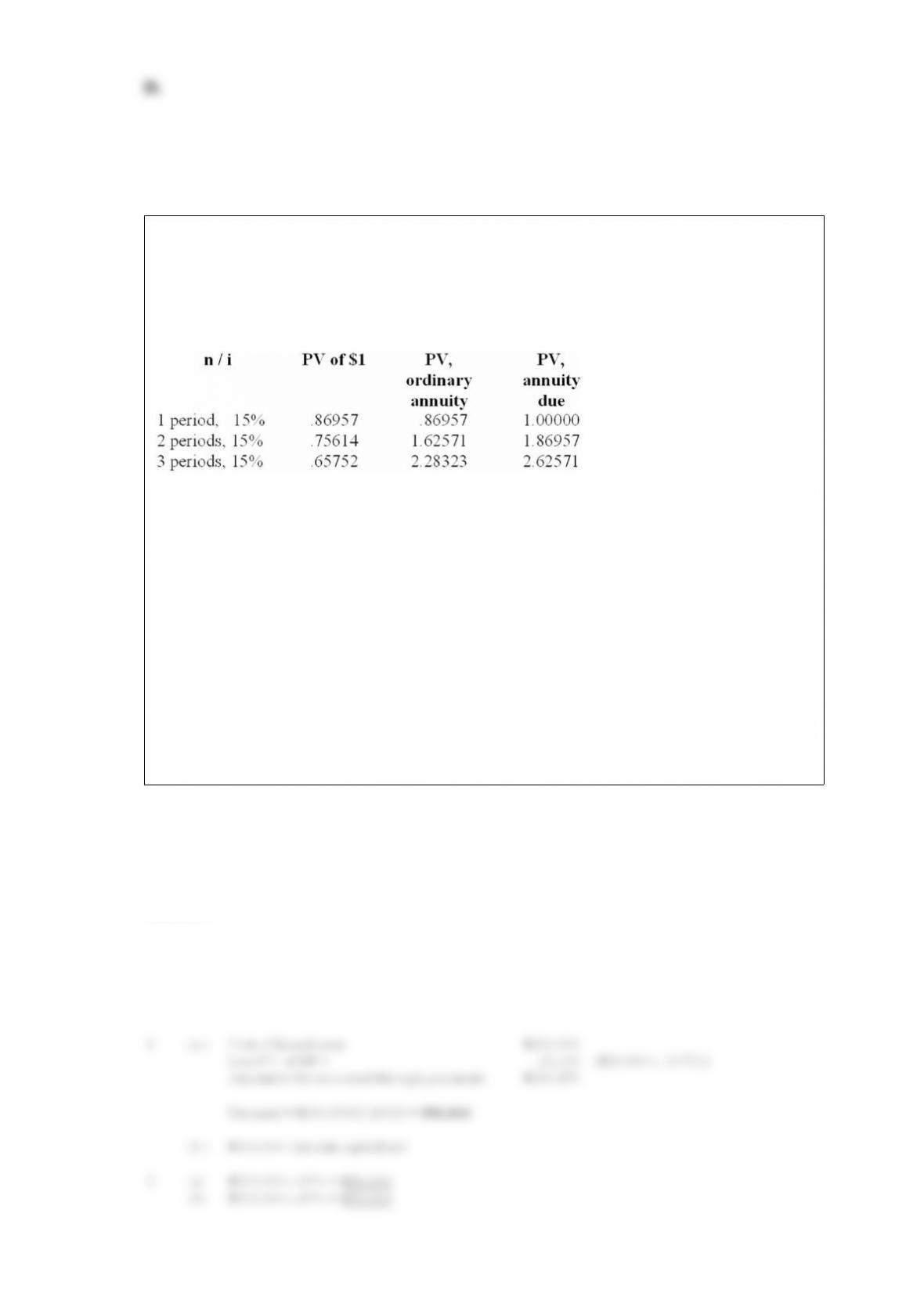
Merlin Co. leased equipment to Houdini Inc. The equipment cost the lessor $200,000.
The appropriate interest rate for this lease is 15%. The annual lease payments are made
at the end of each year. The lease term is three years. The residual value at the end of
the lease term is expected to be $40,000. Houdini has the option to purchase the
equipment at that time for $20,000. Assume this is a direct financing lease.
Required:
1) For this lease:
(a.) The lease payment computed by the lessor is $ _____________.
(b.) The amount the lessee should capitalize is $ ____________.
2) How much interest should be recognized at the end of year 1 by the:
(a.) Lessor? $ __________
(b.) Lessee? $ _____
Answer:
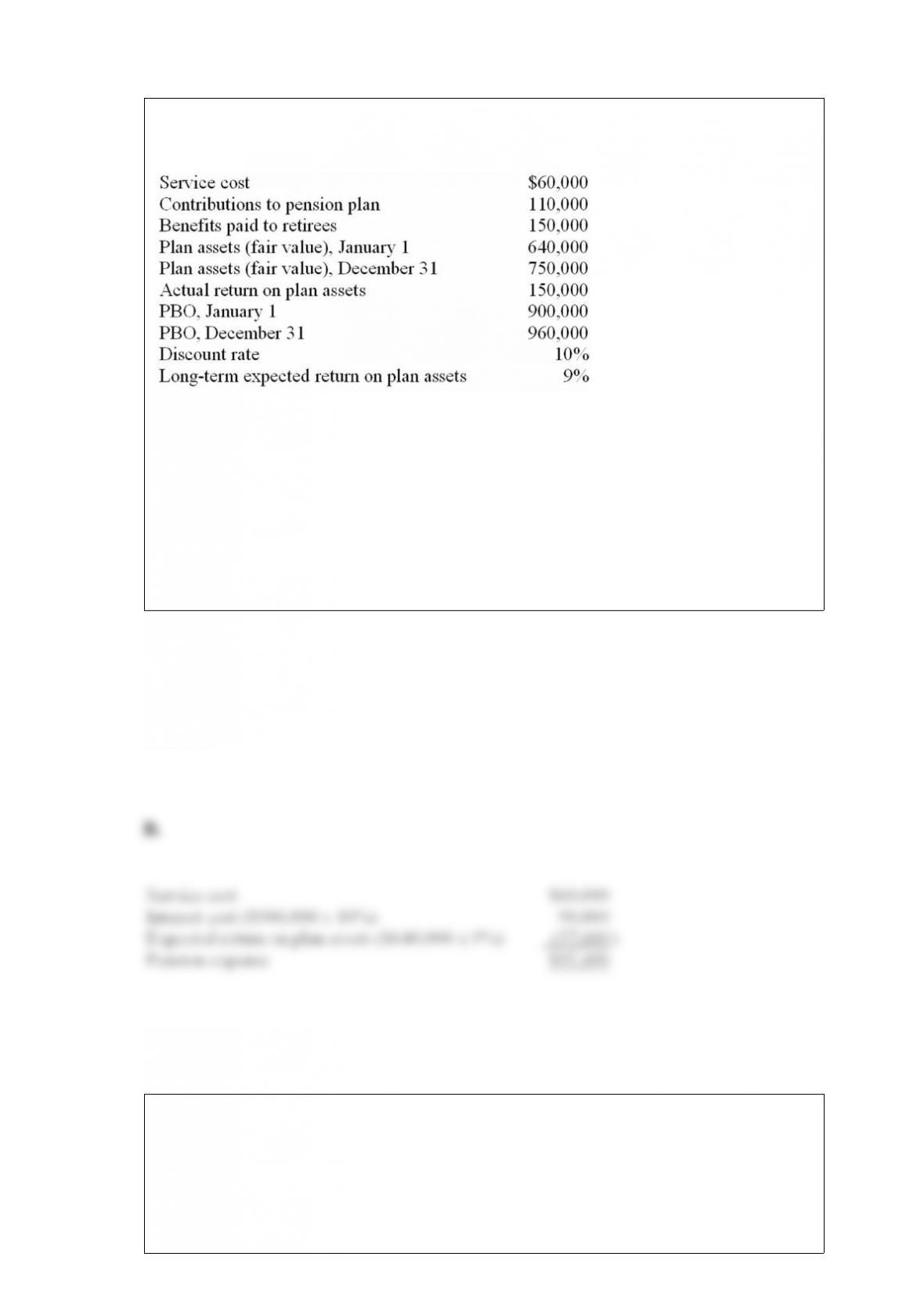
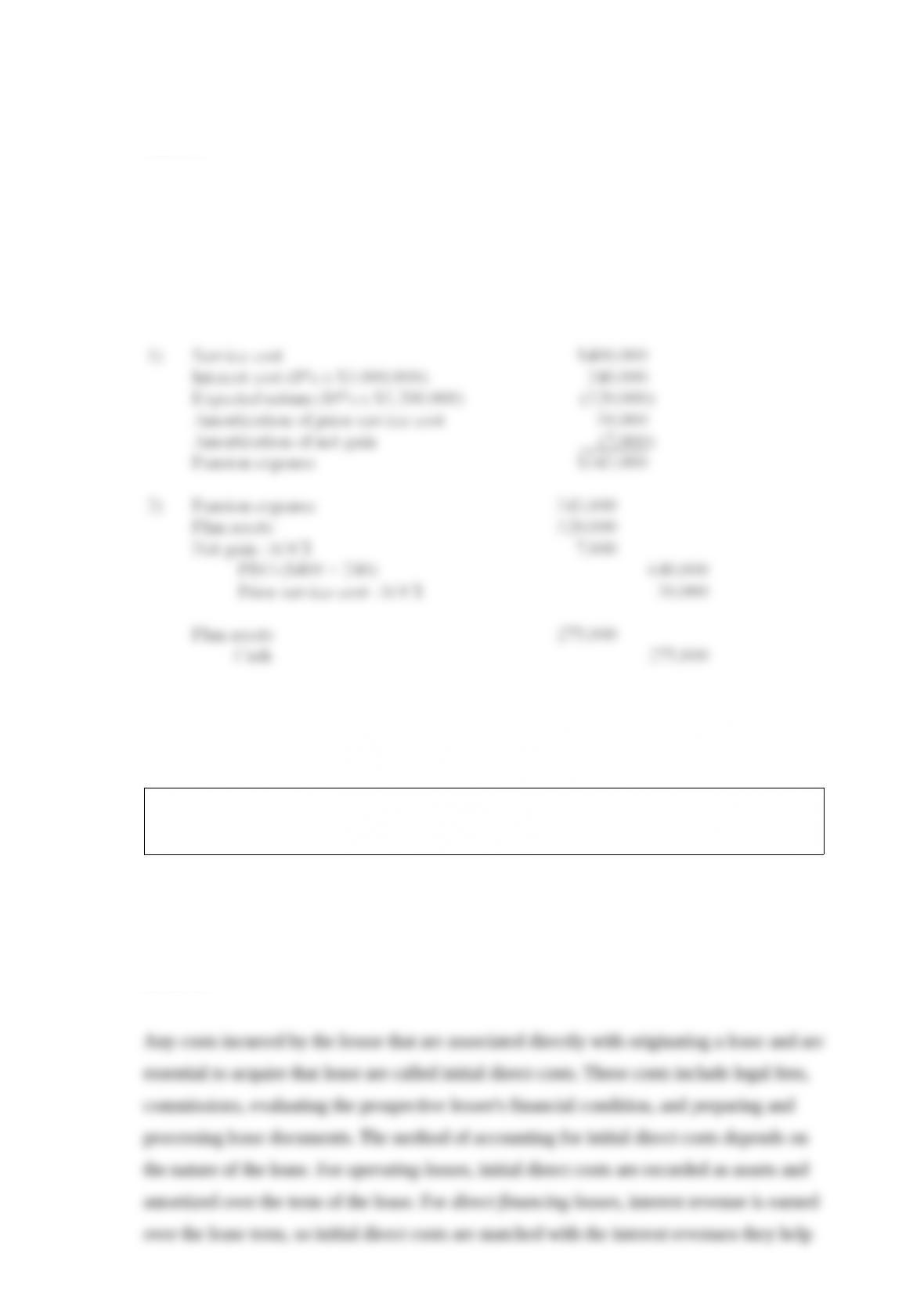
The following information is related to the defined benefit pension plan of Dreamworld
Company for the year:
Assuming no other relevant data exist, what is the pension expense for the year? A.
$190,000.
B. $92,400.
C. $60,000.
D. $170,000.
Answer:
In its first year of operations Acme Corp. had income before tax of $400,000. Acme
made income tax payments totaling $150,000 during the year and has an income tax
rate of 40%. What is the balance in income tax payable at the end of the year? A.
$160,000 credit.
B. $150,000 credit.

C. $10,000 credit.
D. $10,000 debit.
Answer:
Lack of long-term solvency refers to: A. Risk of nonpayment relative to liabilities in the
capital structure.
B. The length of time before long-term debt becomes due.
C. The ability to refinance long-term debt when it becomes due.
D. Long-term assets.
Answer:
Popeye Company purchased a machine for $300,000 on January 1, 2012. Popeye

depreciates machines of this type by the straight-line method over a five-year period
using no salvage value. Due to an error, no depreciation was taken on this machine in
2012. Popeye discovered the error in 2013. What amount should Popeye record as
depreciation expense for 2013? The tax rate is 40%. A. $120,000.
B. $60,000.
C. $36,000.
D. $72,000.
Answer:
A company’s postretirement health care benefit plan had an APBO of $265,000 on
January 1, 2013. During 2013, retiree benefits paid were $40,000. The discount rate for
the plan for this year was 10%. Service cost for 2013 was $80,000. Plan assets (fair
value) increased during the year by $45,000. The amount of the APBO at December 31,
2013, was: A. $225,000.
B. $305,000.
C. $331,500.
D. $371,500.
Answer:

On January 1, 2013, Princess Corporation leased equipment to King Company. The
lease term is eight years. The first payment of $675,000 was made on January 1, 2013.
The equipment cost Princess Corporation $3,600,000. The present value of the
minimum lease payments is $3,960,000. The lease is appropriately classified as a
sales-type lease. Assuming the interest rate for this lease is 10%, how much interest
revenue will Princess record in 2014 on this lease? A. $261,000.
B. $328,500.
C. $325,350.
D. $293,850.
Answer:
Zwick Company bought 28,000 shares of the voting common stock of Handy
Corporation in January 2013. In December, Handy announced $200,000 net income for
2013 and declared and paid a cash dividend of $2 per share on the 200,000 shares of
outstanding common stock. Zwick Company’s dividend revenue from Handy
Corporation in December 2013 would be: A. $0.
B. $28,000.
C. $56,000.
D. None of the above is correct.
Answer:

The compensation associated with restricted stock under a stock award plan is:A. The
book value of an unrestricted share of the same stock times the number of shares.
B. The estimated fair value of a share of similar stock times the number of shares.
C. Allocated to expense over the service period which usually is the vesting period.
D. The book value of a share of similar stock times the number of shares.
Answer:
Dave’s Duds reported cost of goods sold of $2,000,000 this year. The inventory account
increased by $200,000 during the year to an ending balance of $400,000. What was the
cost of merchandise that Dave’s purchased during the year? A. $1,600,000.
B. $1,800,000.
C. $2,200,000.
D. $2,400,000.
Answer:

If unexpected turnover in 2014 caused the company to estimate that 10% of the options
would be forfeited, what amount should M recognize as compensation expense for
2014? A. $30,000.
B. $60,000.
C. $120,000.
D. $150,000.
Answer:
Explodia.com sells fireworks over the Internet. Customers access Explodia’s website
and select particular products, and Explodia refers the customer order to a fireworks
manufacturer who fulfills the order, ships to the customer, and pays Explodia a 20%
commission. Which of the following is true about Explodia? A. Explodia is an agent in
this transaction.
B. Explodia is primarily responsible for providing the product to the customer.
C. Explodia’s income statement would report gross revenue and cost of sales associated
with these transactions.
D. None of the other answers is true about Explodia.
Answer:

The EPBO for a particular employee on January 1, 2013, was $150,000. The APBO at
the beginning of the year was $30,000. The appropriate discount rate for this
postretirement plan is 5%. The employee is expected to serve the company for a total of
25 years with 5 of those years already served as of January 1, 2013. What is the APBO
at December 31, 2013? A. $37,800.
B. $42,800.
C. $31,500.
D. $30,000.
Answer:
On January 1, 2013, Field Company purchased 12% bonds, dated January 1, 2013, with
a face amount of $20 million. The bonds mature in 2022 (10 years). For bonds of
similar risk and maturity, the market yield is 10%. Interest is paid semiannually on June
30 and December
Required:
1) Determine the price of the bonds at January 1, 2013.
2) Prepare the journal entry to record the bond purchase by Field on January 1, 2013.
3) Prepare the journal entry to record interest on June 30, 2013, using the straight-line
method.
4) Prepare the journal entry to record interest on December 31, 2013, using the
straight-line method.
Answer:
EZ, Inc., reports pretax accounting income of $400,000, but due to a single temporary
difference, taxable income is $500,000. At the beginning of the year, no temporary
differences existed. EZ is subject to a tax rate of 40%.
Required:
Prepare the appropriate journal entry to record EZ’s income taxes. Show well-labeled
computations.
Answer:
What is the difference between a stock split and a stock split effected in the form of a
stock dividend?
Answer:
Pension data for Sam Adams Inc. include the following for the current calendar year:
Discount rate, 8%
Expected return on plan assets, 10%
Actual return on plan assets, 9%
Service cost, $400,000
Required:
1) Determine pension expense for the year.
2) Prepare the journal entries to record pension expense and funding for the year.
Answer:
In a lease transaction, what are initial direct costs? How do we account for initial direct
costs in an operating lease, a direct financing lease, and a sales-type lease?
Answer:
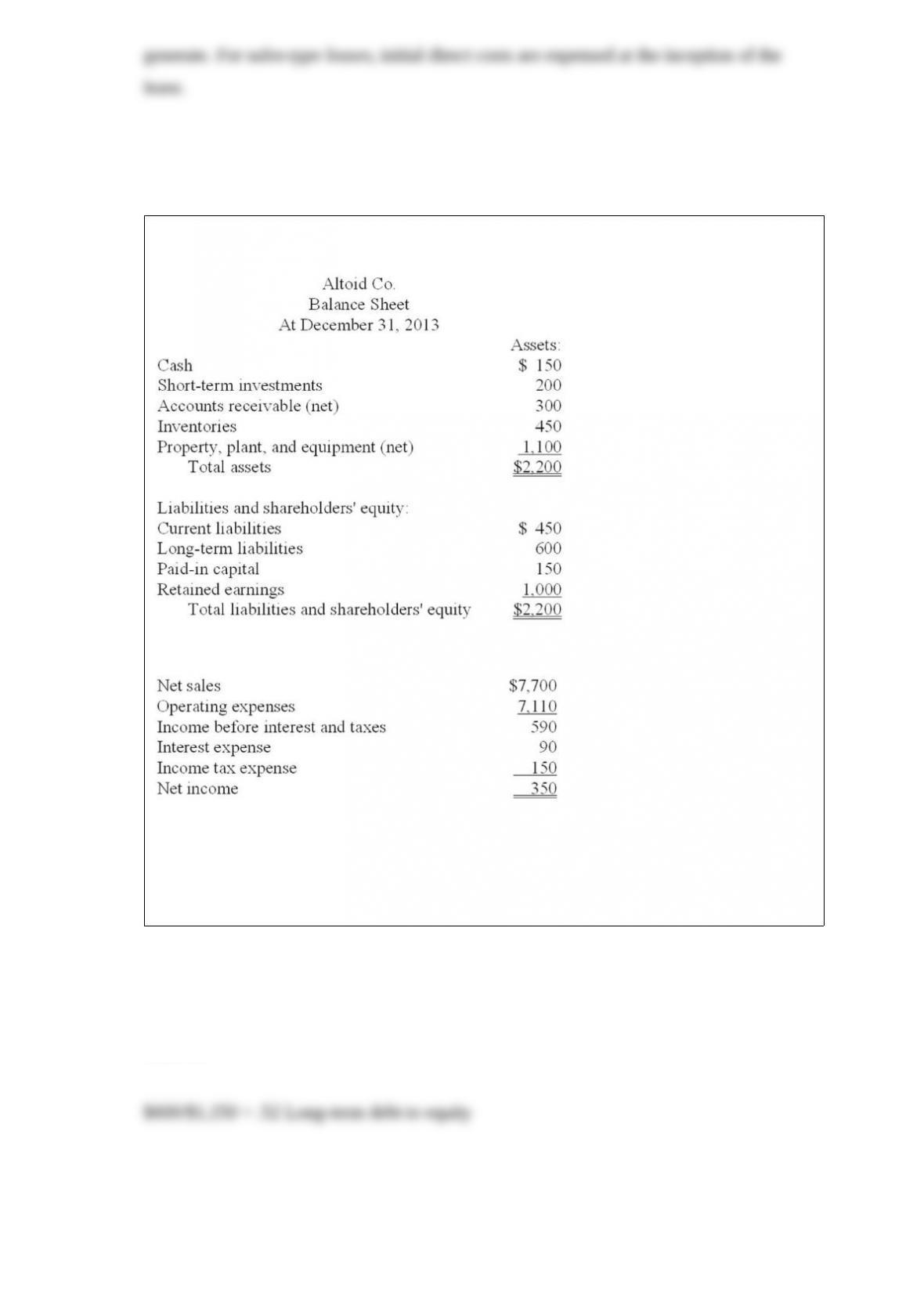
The balance sheet for Altoid Co. is shown below.
Selected 2013 income statement information for Altoid Co. includes:
Required:
Compute the following financial statement ratios for 2013:
Altoid Co.’s long term debt to equity ratio. Round your answer to two decimal places.
Answer:

Beavis Construction Company was the low bidder on a construction project to build an
earthen dam for $1,800,000. The project was begun in 2012 and completed in 2013.
Cost and other data are presented below:
that Beavis reports under IFRS and uses the percentage-of-completion method for
revenue recognition.
Required: Prepare all journal entries to record costs, billings, collections, and profit
recognition.
Answer:
Is IFRS or U.S.GAAP more restrictive for determining when firms are allowed to elect
the fair value option for financial assets and liabilities? Explain.
Answer:
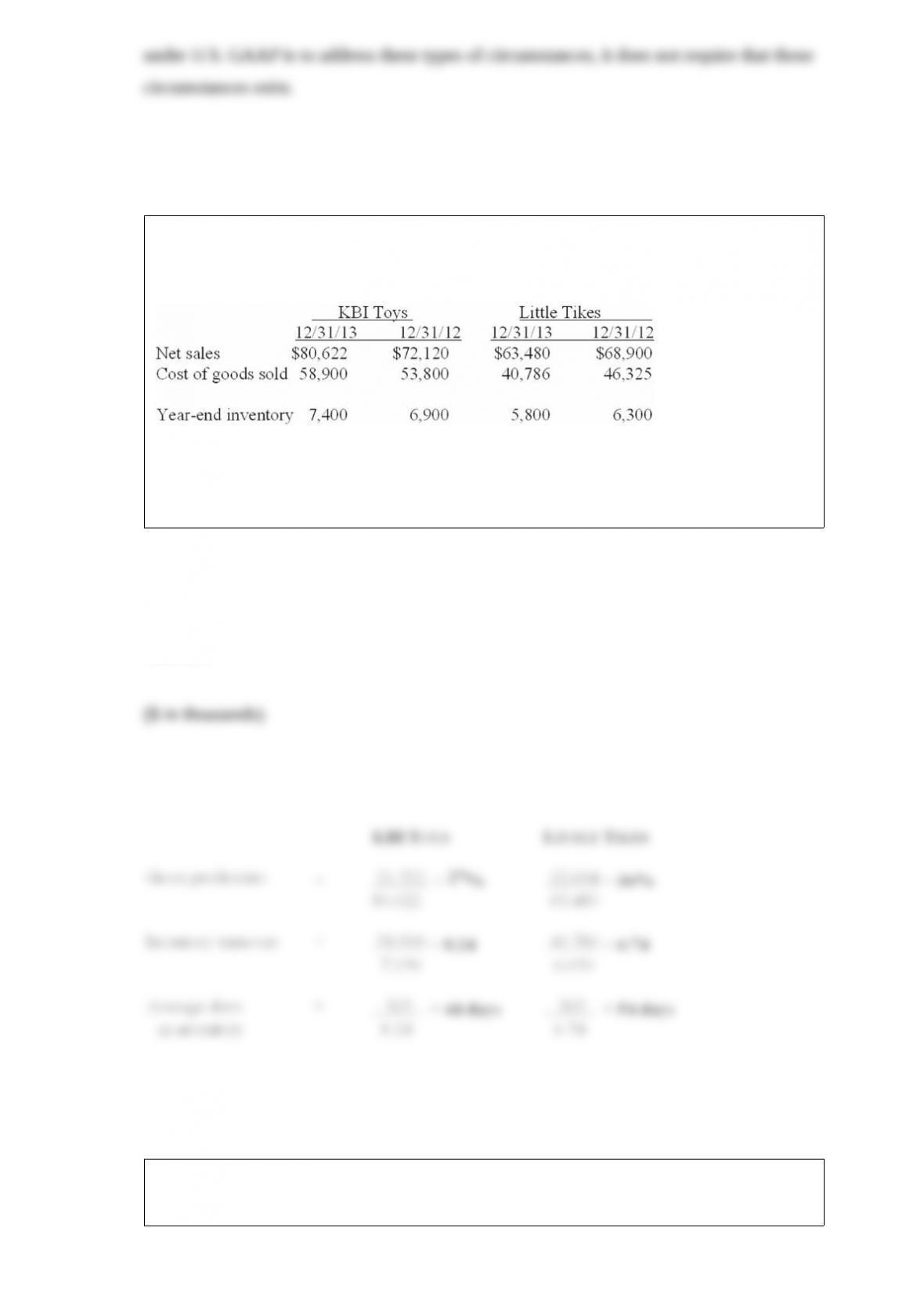
The table below contains selected financial information from recent financial
statements of KBI Toys and Little Tikes Adventure Toys, Inc., two toy manufacturing
companies ($ in thousands):
Required:
Calculate the 2013 gross profit ratio, inventory turnover ratio, and the average days in
inventory for the two companies (rounded).
Answer:
Some accountants believe that deferred taxes should not be recognized for certain
temporary differences. What is the conceptual basis for this argument?
Answer:
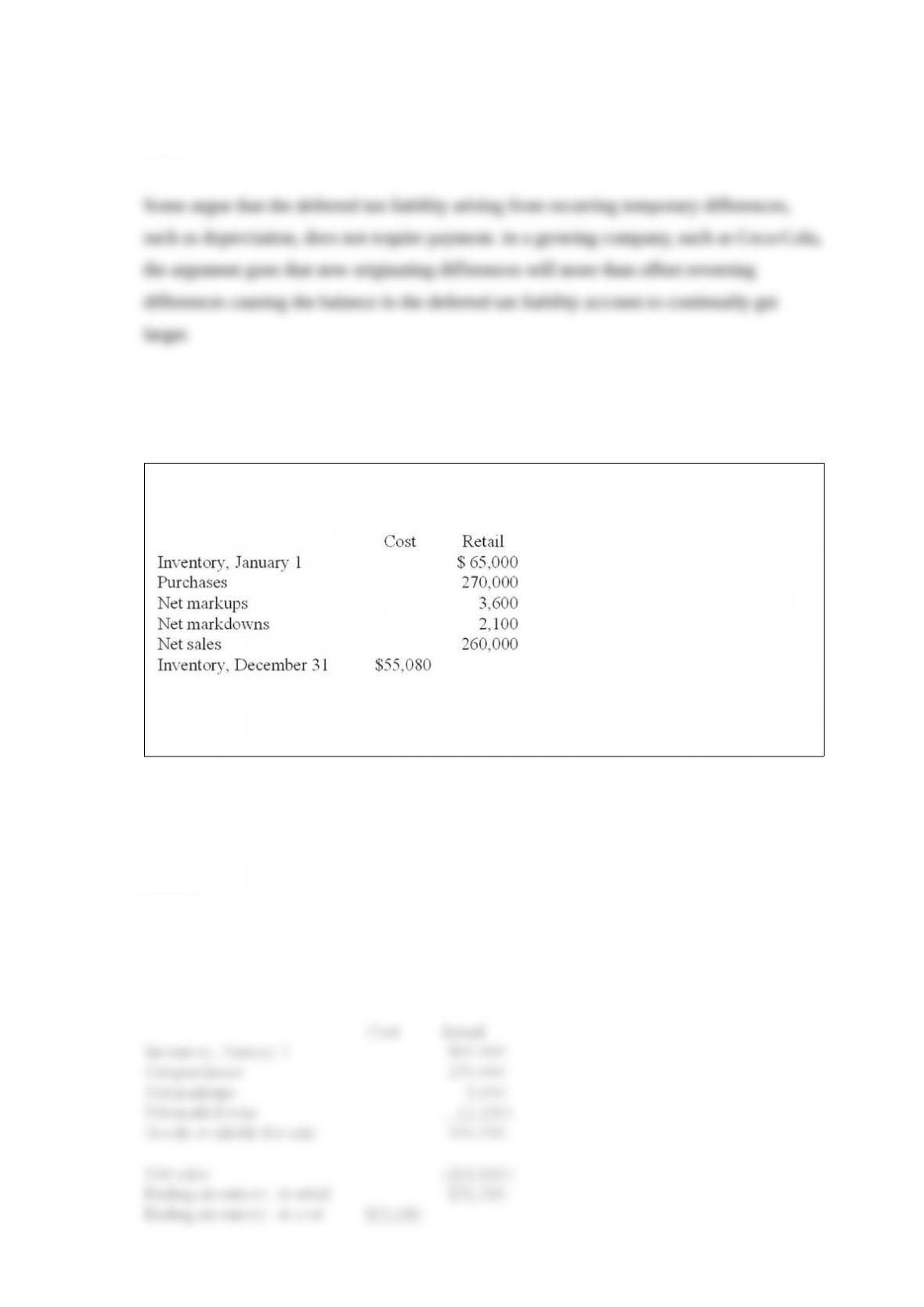
Penfold’s Paints uses the average cost retail method to estimate its ending inventories.
The following data has been summarized for the year 2013:
Required:
Compute the cost-to-retail percentage used by Penfold’s Paints.
Answer:
Why is the statement of cash flows required as part of the set of external financial
statements?
Answer:
Colorado Consulting Company has been using the sum-of-the-years’-digits depreciation
method to depreciate some office equipment that was acquired at the beginning of 2011.
At the beginning of 2013, Colorado Consulting decided to change to the straight-line
method. The equipment cost $120,000 and is expected to have no salvage value. The
estimated useful life of the equipment is five years. Ignore income taxes.
Required:
1) Prepare the appropriate journal entry, if any, to record the accounting change.
2) Prepare the journal entry to record depreciation for 2013.
Answer:

On January 1, 2013, Salvatore Company leased several machines from Nola
Corporation under a three-year operating lease agreement. The lease calls for
semiannual payments of $15,000 each, payable on June 30 and December 31 of each
year. The machines were acquired by Nola at a cost of $90,000 and are expected to have
a useful life of five years with no expected residual value.
Required:
Prepare the appropriate journal entries for the lessor from the inception of the lease
through the end of 2013.
Answer:
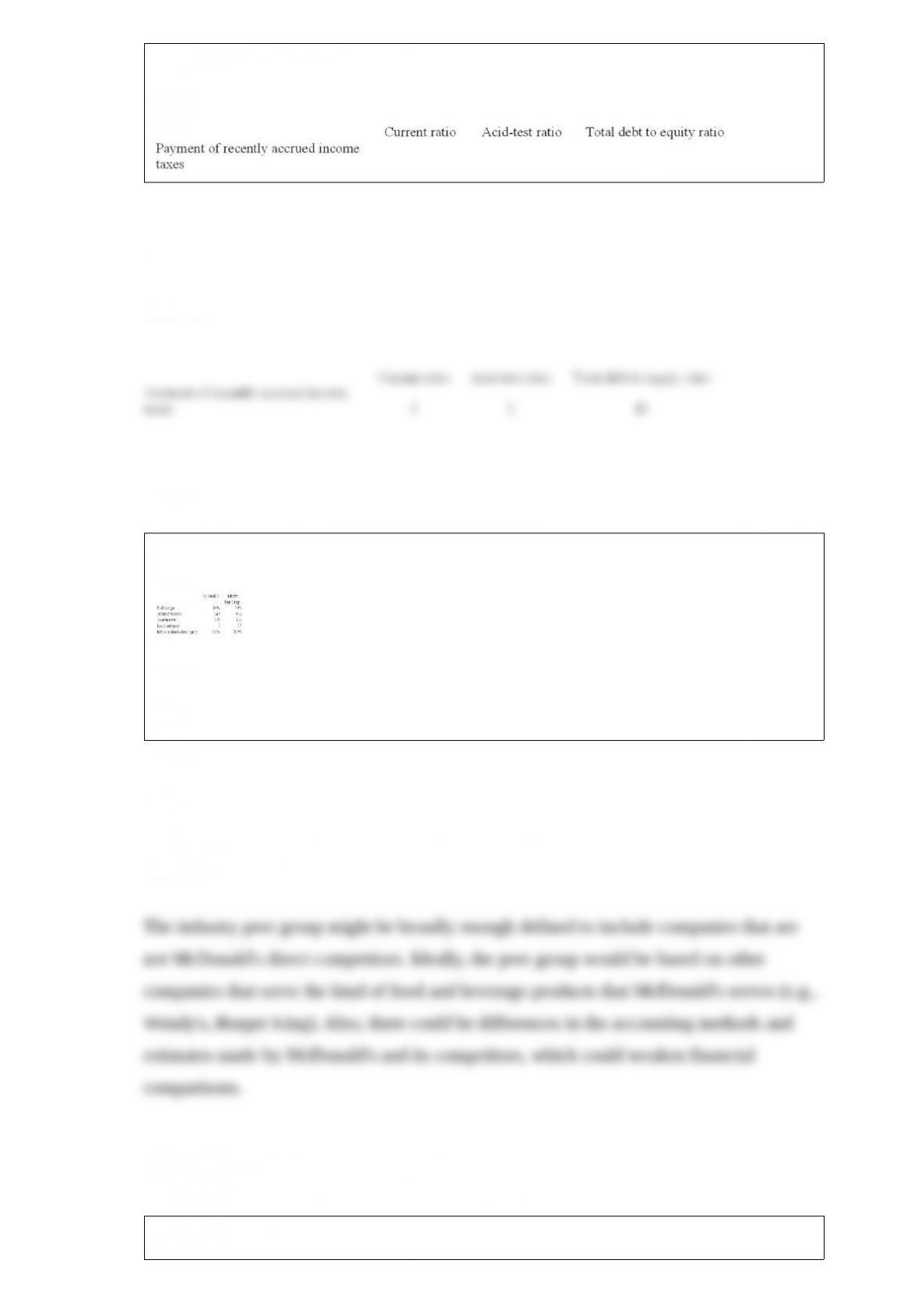
Indicate whether each of the actions listed below will immediately increase (I), decrease
(D), or have no effect (N) on the ratios shown. Assume each ratio is greater than 1.0
before the action is taken.
Answer:
The following table presents a summary of ratio analysis for McDonald’s and averages
for their peer group:
Besides size differences, what other differences between McDonald’s and its industry
peer group could limit your ability to make meaningful comparisons about the
performance of McDonald’s from the data above?
Answer:
The Bobo Company leased equipment from Bolinger Industries on January 1, Bolinger
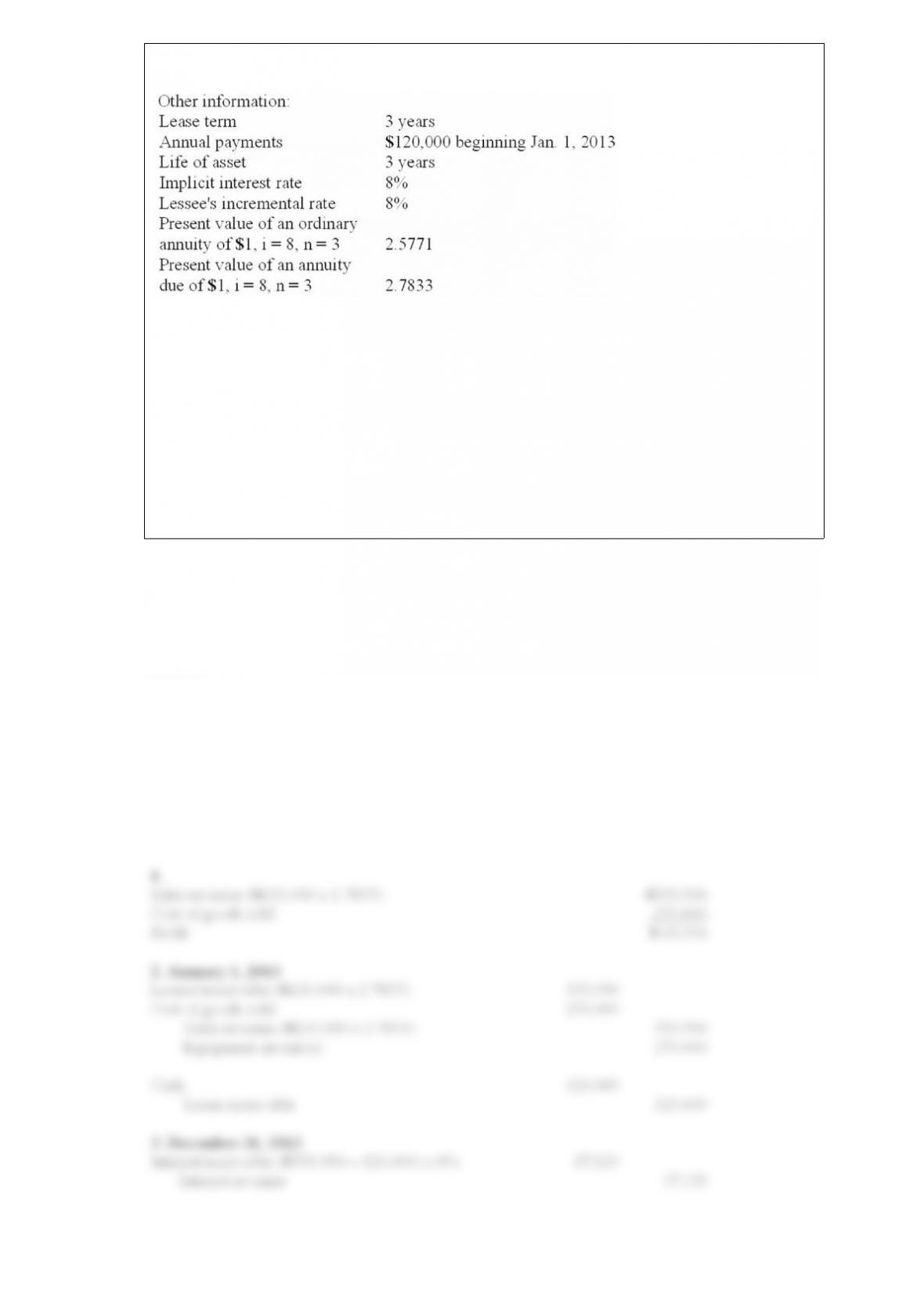
purchased the equipment at a cost of $270,000.
Required:
1) Calculate the amount of dealer’s profit that Bolinger would recognize in this
sales-type lease. Round to nearest dollar. Show calculations.
2) Prepare the appropriate entries for Bolinger on January 1, 2013. Round to nearest
dollar. Show calculations.
3) Prepare the appropriate entry for Bolinger on December 31, 2013. Round to nearest
dollar.
Answer:

Green Co. constructed a machine at a total cost of $70 million. Construction was
completed at the end of 2009 and the machine was placed in service at the beginning of
2010. The machine was being depreciated over a 10-year life using the
sum-of-the-years’-digits method. The residual value is expected to be $4 million. At the
beginning of 2013, Green decided to change to the straight-line method.
Required:
1) Ignoring income taxes, what journal entry(s) should Green record relating to the
machine for 2013?
2) Suppose Green has been using the straight-line method and switches to the
sum-of-the-years’-digits method. Ignoring income taxes, what journal entry(s) should
Green record relating to the machine for 2013?
Answer:
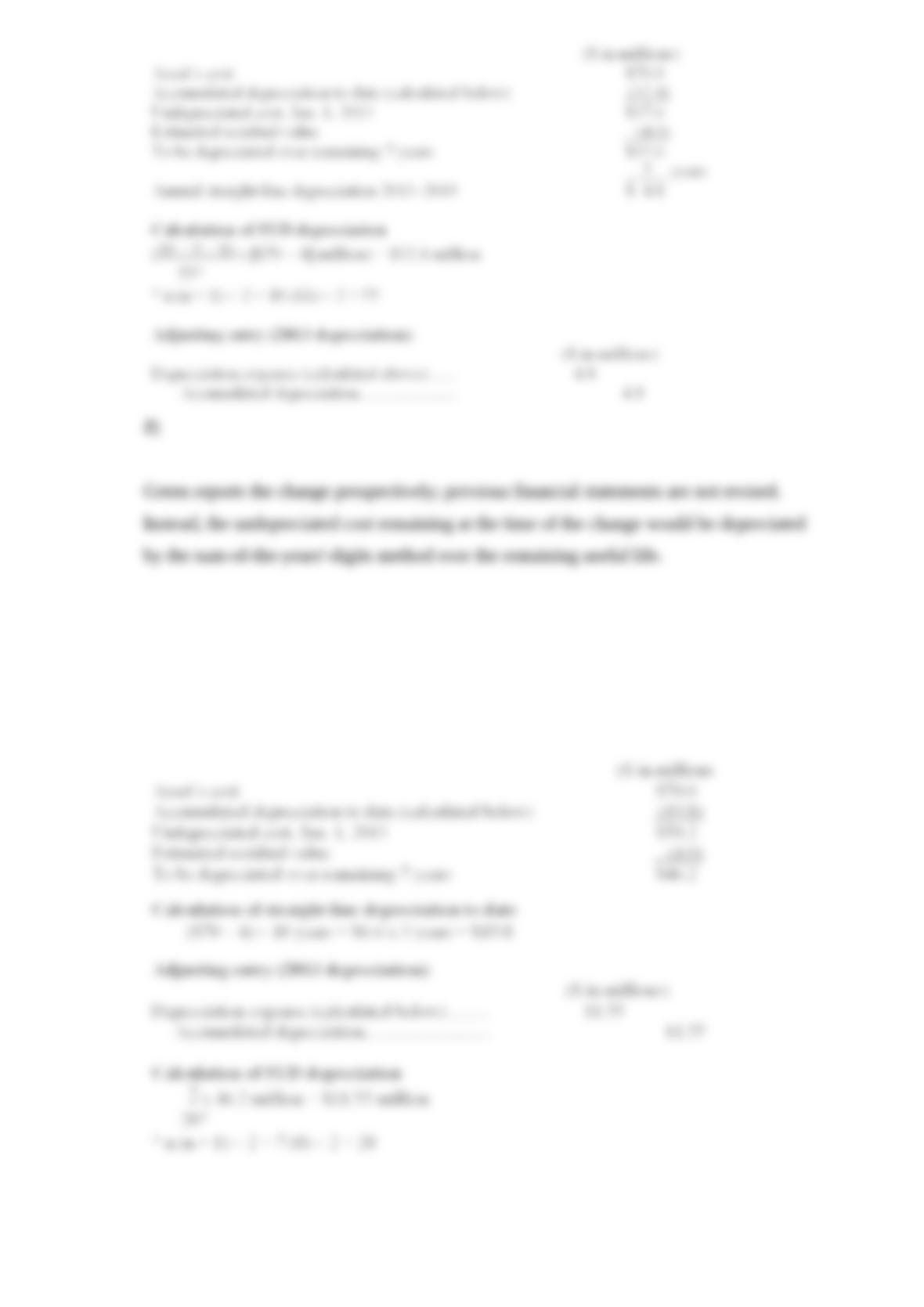
Southwestern Edison Company leased equipment from Hi-Tech Leasing on January 1,
Hi-Tech manufactured the equipment at a cost of $90,000.
There is no expected residual value.
Required:
Prepare appropriate journal entries for Hi-Tech Leasing for 2013. Assume a December
31 year-end.
Answer:
Flint Hills, Inc. has prepared a year-end 2013 trial balance. Certain accounts in the trial
balance do not reflect all activities that have occurred.
Required:
Prepare adjusting journal entries, as needed, for the following items.
1. The Supplies account shows a balance of $540, but a count of supplies reveals only
$210 on hand.
2. Flint Hills initially records the payments of all insurance premiums as expenses. The

trial balance shows a balance of $420 in Insurance expense. A review of insurance
policies reveals that $125 of insurance is unexpired.
3. Flint Hills employees work Monday through Friday, and salaries of $2,400 per week
are paid each Friday. Flint Hills’ year-end falls on Tuesday.
4. On December 31, 2013, Flint Hills received a utility bill for December electricity
usage of $190 that will be paid in early January.
Answer: