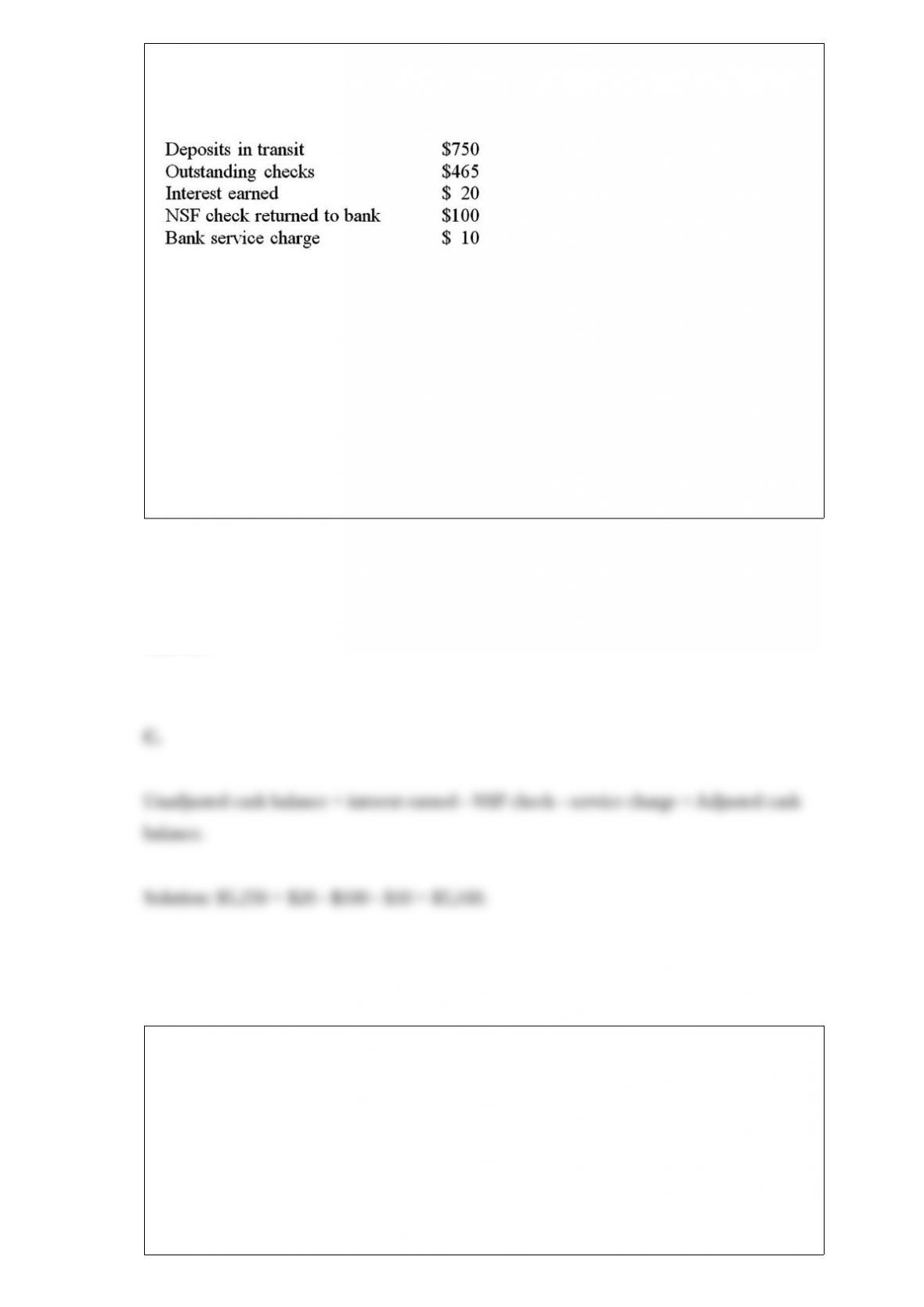
Before reconciling to its bank statement, Lauren Cosmetics Corporation’s general ledger
had a month-end balance in the cash account of $5,250. The bank reconciliation for the
month contained the following items:
Given the above information, what adjusted cash balance should Lauren report at
month-end?
A. $4,500.
B. $4,820.
C. $5,160.
D. $5,590.
Answer:
When a company uses the direct method to determine the cash flows from operating
activities, cash flows from operating activities will:
A. be identical to the amount reported using the indirect method.
B. be larger if there is a net cash inflow and smaller if there is a net cash outflow
compared to the amount reported using the indirect method.
C. always be larger than the amount reported using the indirect method.
D. be larger if there is a net cash outflow and smaller if there is a net cash inflow
compared to the amount reported using the indirect method.
Answer:
Which of the following statements regarding the trial balance is correct?
A. The adjusted trial balance is prepared after the financial statements to verify that the
numbers are accurate.
B. The primary purpose of the post-closing trial balance is to see whether revenues are
greater than expenses.
C. The adjusted trial balance is a check that the accounting records are still in balance
after posting all adjustments to the accounts.
D. The post-closing trial balance debit column total is the amount to be shown as Total
Assets on the Balance Sheet.
Answer:
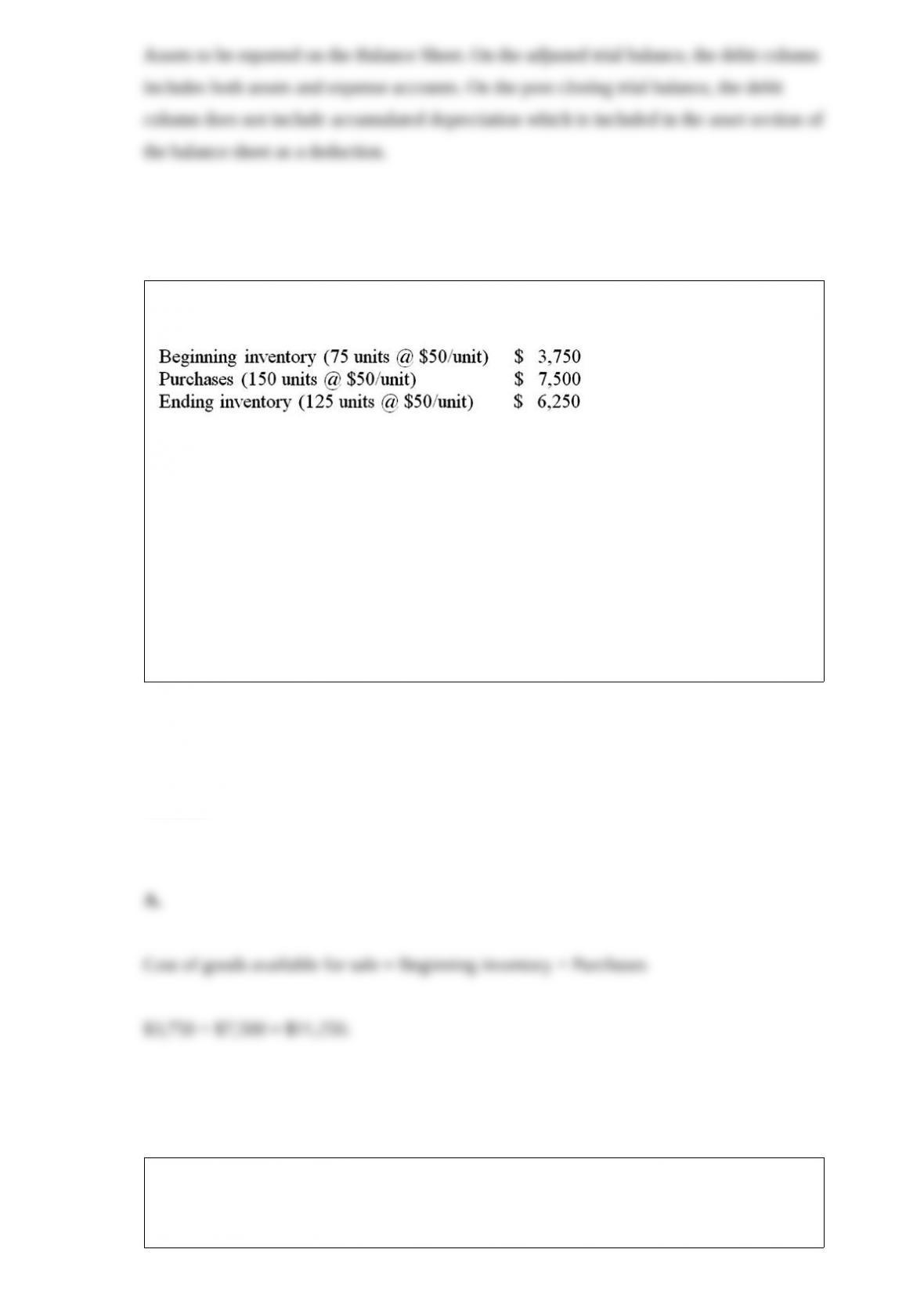
FAD Company uses a periodic inventory system and its inventory records for the period
contain the following information:
Use the information above to answer the following question. What is the amount of cost
of goods available for sale?
A. $11,250
B. $17,500
C. $5,000
D. $13,750
Answer:
Which of the following activities would not affect the inventory account for a company
that uses the perpetual inventory system?

A. Purchases
B. Purchase returns
C. Advertising
D. Freight-in
Answer:
Match the characteristic of the company with the description of the type of company.
A. Partnership.
B. Publicly traded corporation.
C. Privately traded corporation.
D. Sole Proprietorship.
_____ 1/ Issues shares of stock that are traded on a stock exchange such as the NYSE.
_____ 2/ The owners of the business are personally liable for the debts of the company.
_____ 3/ Shares of stock must be purchased directly from current owners.
_____ 4/ Can raise more financial capital by selling stock to the greatest number of
investors.
_____ 5/ The easiest form of business to start.
_____ 6/ The business ceases to exist upon the departure of one of the owners.
_____ 7/ The owners pay taxes on the profits of the business.

Answer:
Which of the following is calculated by dividing net sales by average total assets?
A. Net profit margin.
B. Fixed asset turnover.
C. Asset turnover ratio.
D. Current ratio.
Answer:
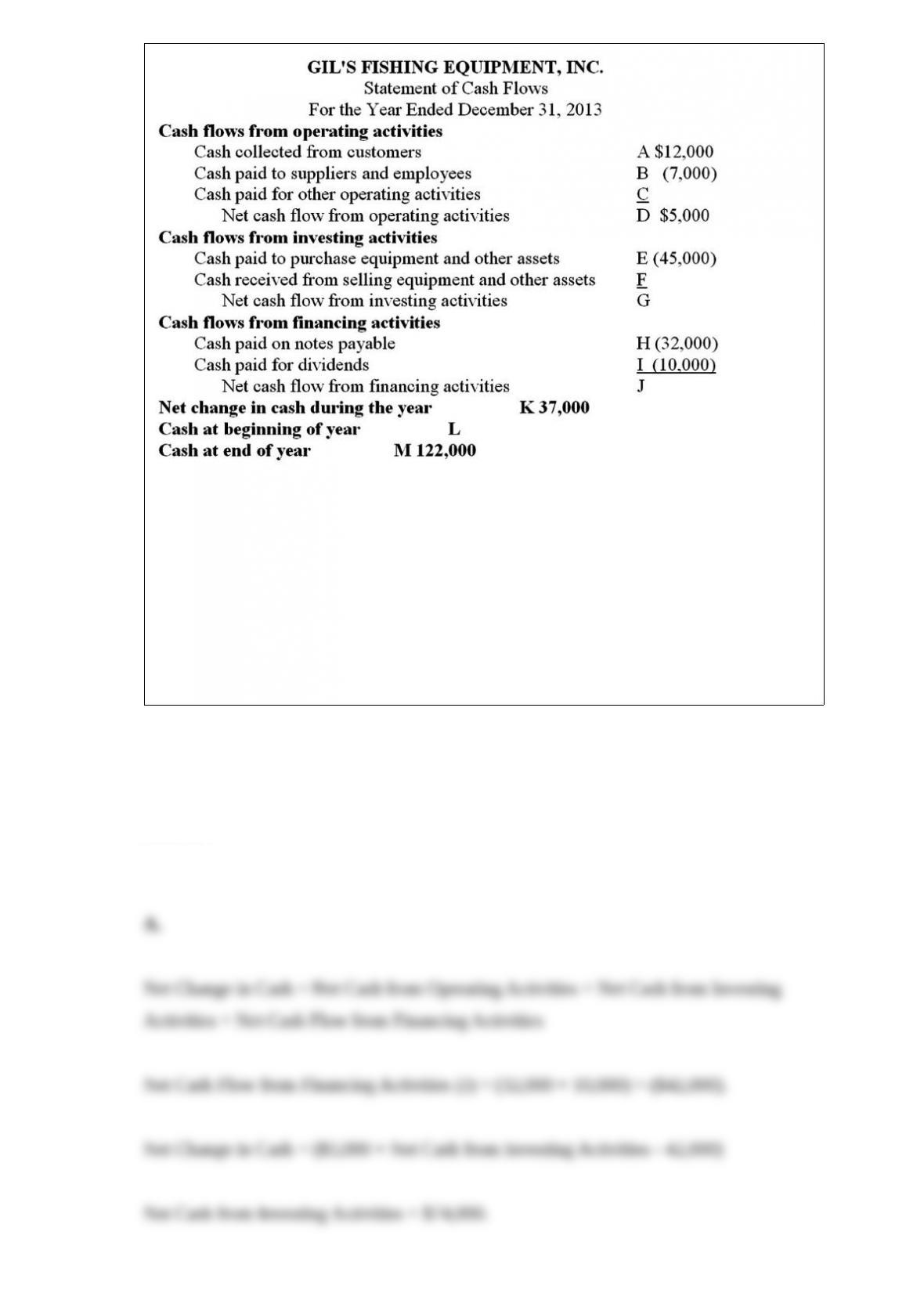
In the above statement of cash flows, what amount is represented by letter J?
A. ($42,000)
B. $42,000
C. ($22,000)
D. $22,000
Answer:
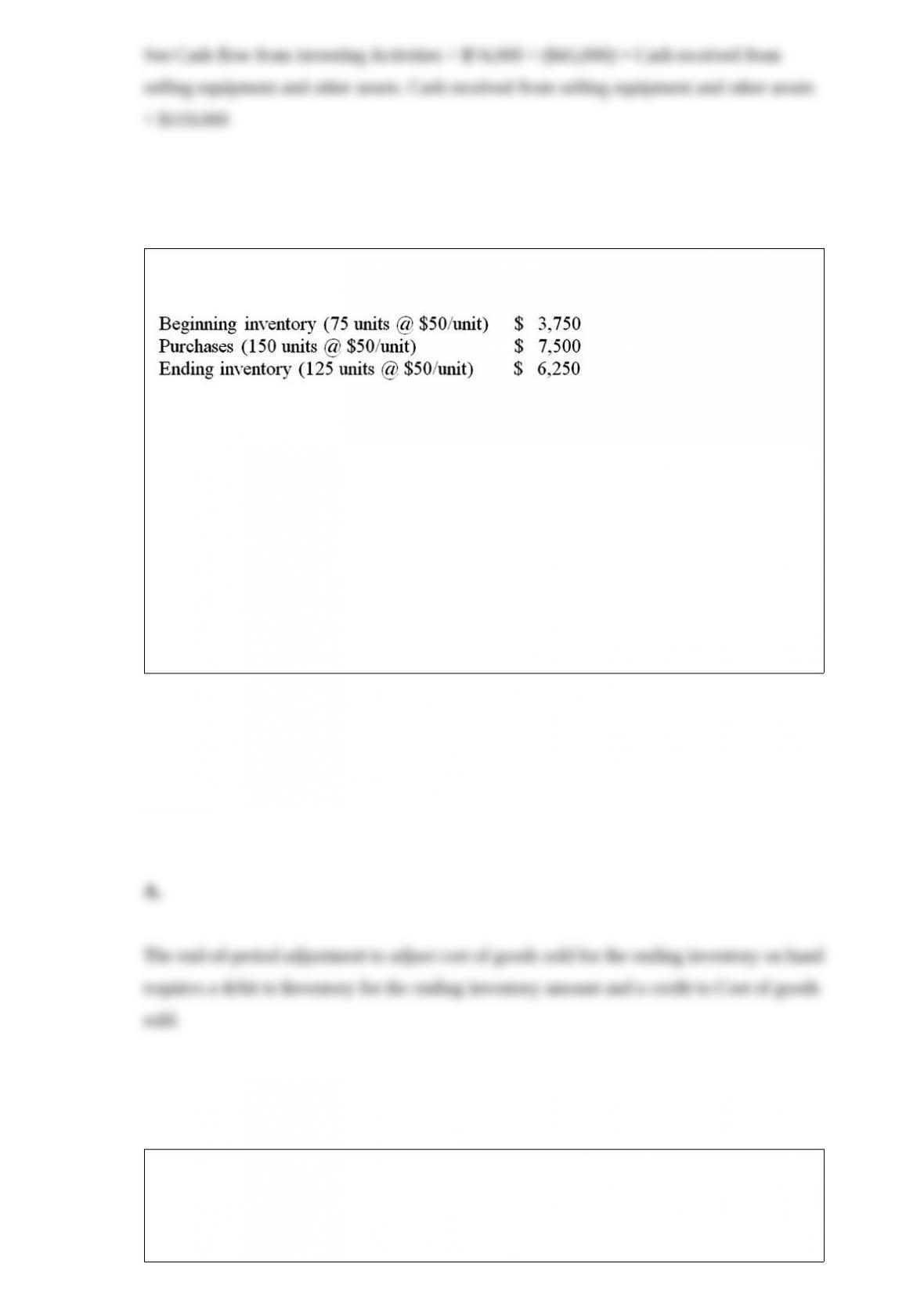
FAD Company uses a periodic inventory system and its inventory records for the period
contain the following information:
Use the information above to answer the following question. The journal entry
necessary at the end of the period to adjust cost of goods sold for the ending inventory
still on hand will include which of the following?
A. Debit Inventory, $6,250.
B. Credit Cost of goods sold, $11,250.
C. Credit Purchases, $10,200.
D. Credit Inventory, $5,000.
Answer:
An example of an accrued revenue is
A. accumulated interest on a note receivable.
B. accumulated interest on a note payable.
C. unearned revenue.
D. accounts receivable.
Answer:
The costs assigned to the individual assets acquired in a basket purchase is based on
their relative
A. historical costs.
B. market values.
C. book values.
D. depreciable costs.
Answer:
Which of the following sequences indicates the correct order of steps in the accounting
cycle?
A. T-accounts, journal entries, trial balance, financial statements.
B. T-accounts, journal entries, financial statements, trial balance.
C. Journal entries, T-accounts, trial balance, financial statements.
D. Journal entries, T-accounts, financial statements, trial balance.
Answer:
Geisel, Inc had credit sales for 2014 of $510,000. and sales returns of $10,000. Credit
sales for 2013 were $610,000 and sales returns were $10,000. Accounts receivable on
December 31, 2014 were $148,000. The allowance for doubtful accounts at December
31, 2014 before adjustment had a debit balance of $1,000. Bad debt expense of $6,000
was recorded for 2014.
a. Calculate the accounts receivable turnover ratio and the days to collect for 2013 and
2014 (round each calculation to one decimal place).
The net receivables balance reported on the company’s 12/31/12 financial statements
was $120,000. The net receivables balance reported on the 12/31/13 financial
statements was $130,000.
b. Discuss the implications of the receivables turnover ratio and days to collect as
calculated in part (a). Discuss possible reasons for any changes in the values for these
ratios, and implications for the provision for uncollectible accounts.
Answer:
Your company has 500 units in inventory that had been purchased for $12 each and that
would currently cost $15 to replace. Your supplier has just announced the cost of these
goods is rising to $16.50.
A. Your company should make no adjustments to the inventory account.
B. Your company should adjust the inventory account using the lower of the recent
market values, which is $15.
C. Your company should adjust the inventory account using the cost, which is $12.00.
D. Your company should adjust the inventory account using the average of the recent
market values, which is $14.50.
Answer:
The debt-to-assets ratio is the:
A. ratio of current liabilities to current assets.

B. ratio of long term liabilities to fixed assets.
C. ratio of total liabilities to total assets.
D. proportion of short-term liabilities to total liabilities.
Answer:
On the 15th of the month, a company receives $8,000 in payments from customers.
$1,000 is for services performed on that day and the remaining is payment for services
performed in the previous month. The $8,000 cash receipt would be recorded as a:
A. debit of $7,000 to Accounts Receivable, debit of $1,000 to Service Revenue, and a
credit of $8,000 to Cash.
B. debit of $8,000 to Cash, a credit of $7,000 to Accounts Receivable, and a credit of
$1,000 to Service Revenue.
C. debit of $7,000 to Accounts Receivable, a debit of $1,000 to Unearned Revenue, and
a credit of $8,000 to Cash.
D. debit of $8,000 to Cash, debit of $1,000 to Service Revenue, and a credit of $7,000
to Accounts Receivable.
Answer:
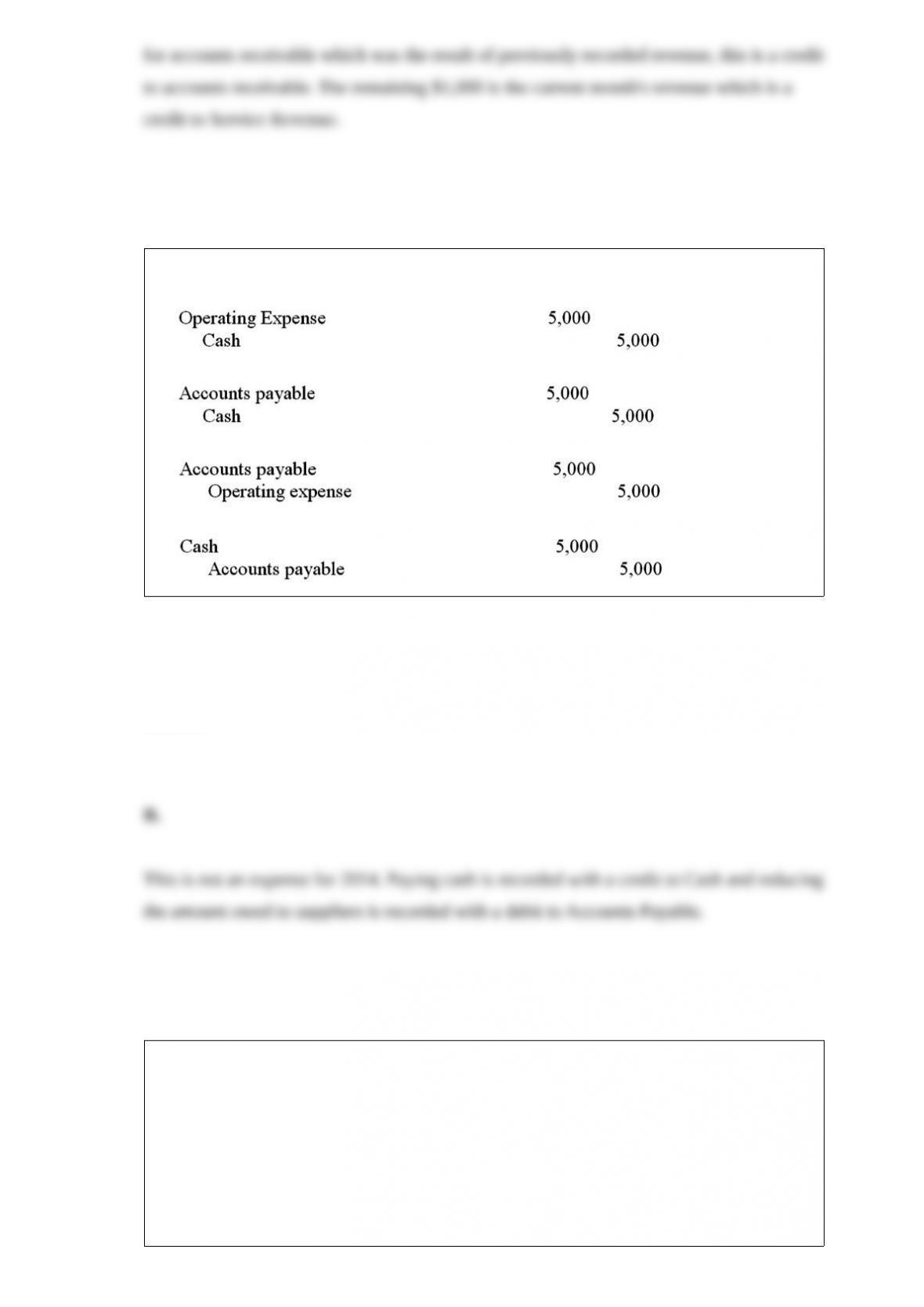
Which of the following is the journal entry to record activity #4?
A.
B.
C.
D.
Answer:
Companies using a perpetual inventory system:
A. never physically count their inventory.
B. must count their inventory at least once a week.
C. still need to count the inventory at the end of the period.
D. always know the actual amount in inventory from their accounting records.
Answer:
The direct write-off method for uncollectible accounts:
A. ignores the matching principle.
B. is an acceptable alternative method of recognizing bad debt expense under GAAP.
C. results in higher bad debt expense for most companies.
D. may only be used by companies that do not extend credit to their customers.
Answer:
The following items are taken from the adjusted trial balance prepared as of December
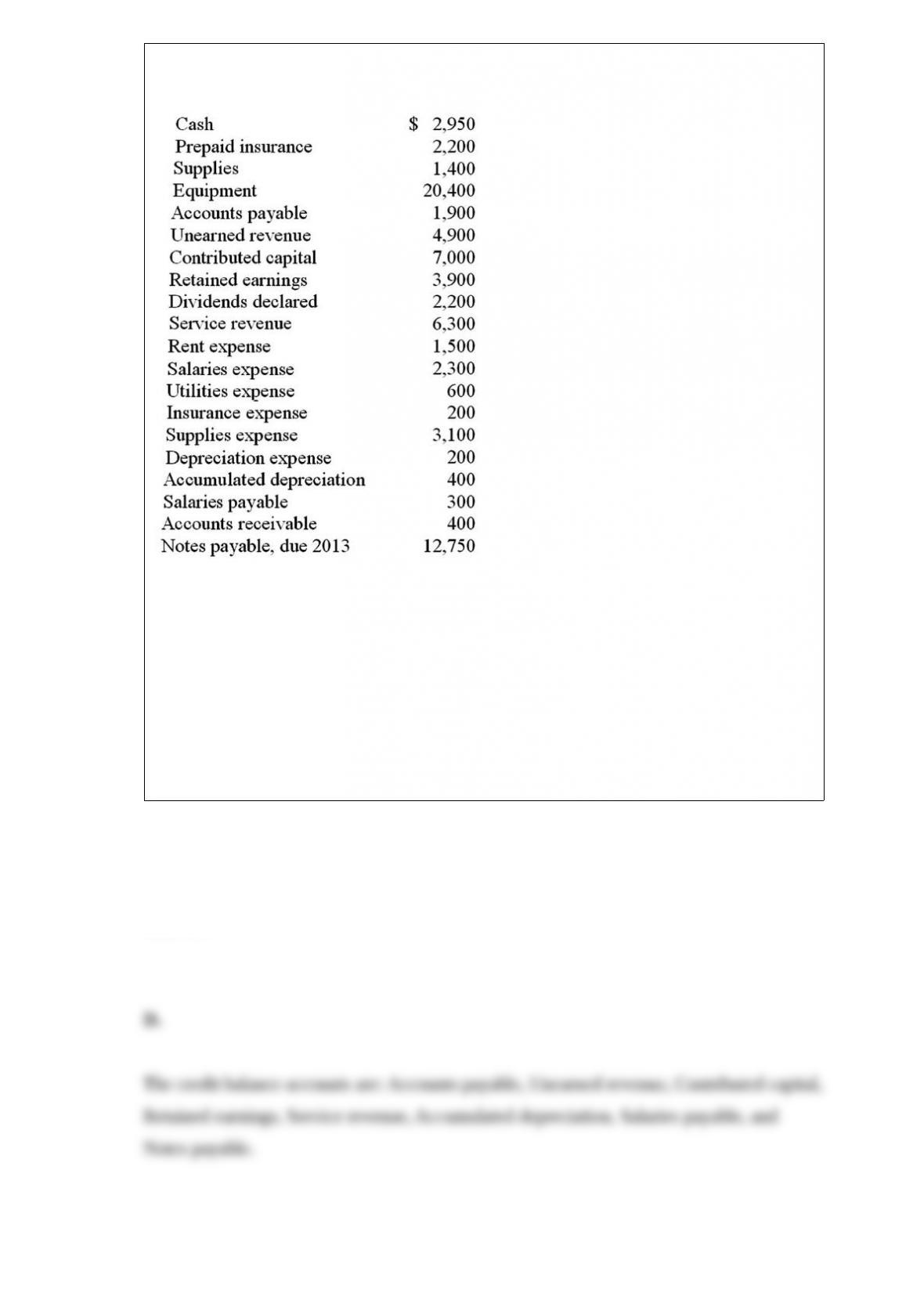
31, 2013. All accounts have normal balances.
What is the total of the credit column of the adjusted trial balance?
A. $24,700
B. $37,050
C. $74,900
D. $37,450
Answer:
A current dividend preference means that:
A. preferred stockholders are paid current dividends before common stockholders are
paid dividends.
B. unpaid dividends to preferred stockholders accumulate and must be paid before
common stockholders receive dividends.
C. preferred stockholders are paid their full fixed dividend rate each period as long as
the company is in operation.
D. unpaid cash dividends to preferred stockholders must be replaced with stock
dividends during the current period.
Answer:
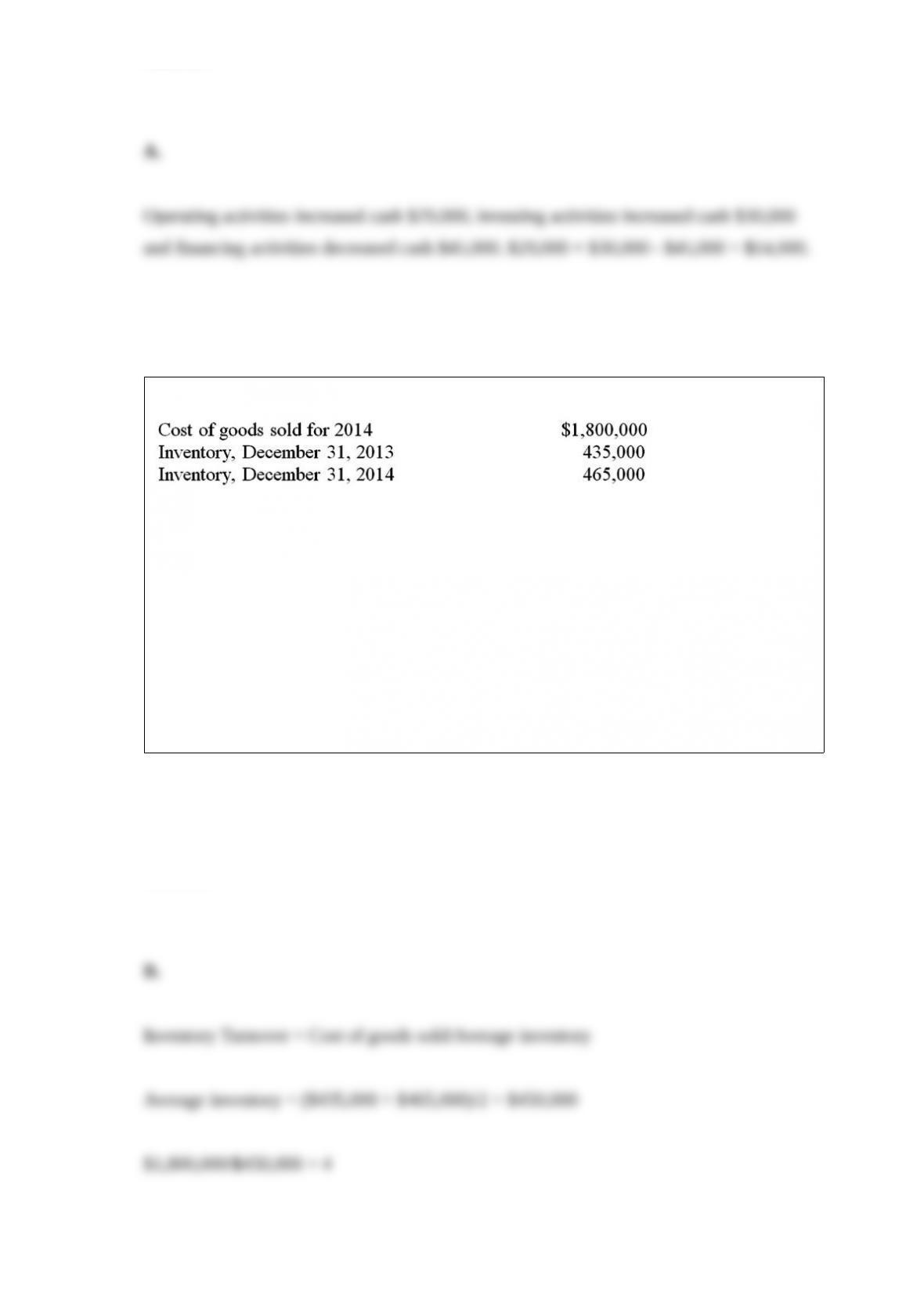
The statement of cash flows for a company contained the following:
What was the change in cash for the period?
A. $14,000 increase
B. $15,000 increase
C. $14,000 decrease
D. $15,000 decrease
Answer:
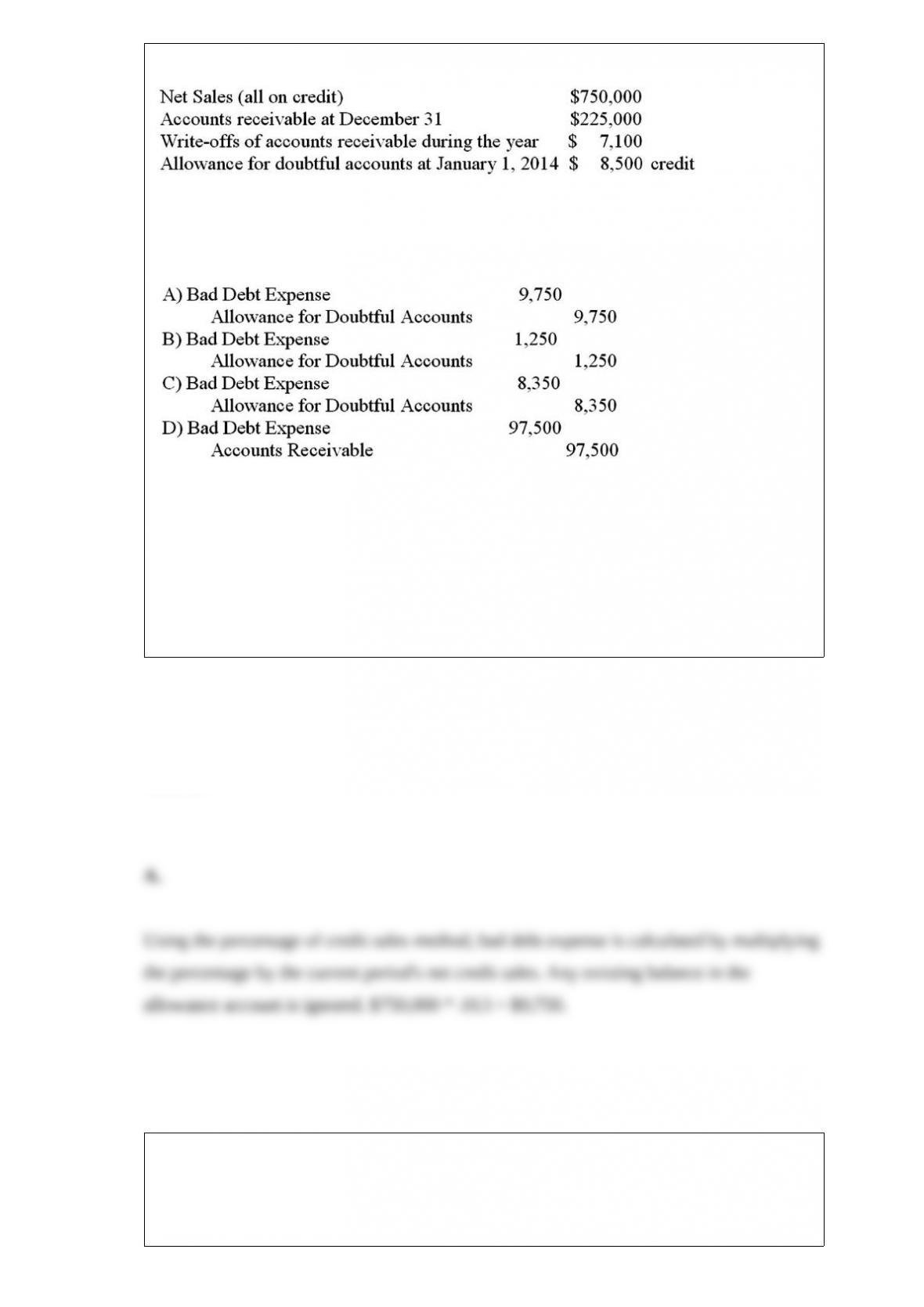
Use the information above to answer the following question. What is the inventory
turnover for 2014?
A. 3.87
B. 4
C. 4.14
D. 2
Answer:
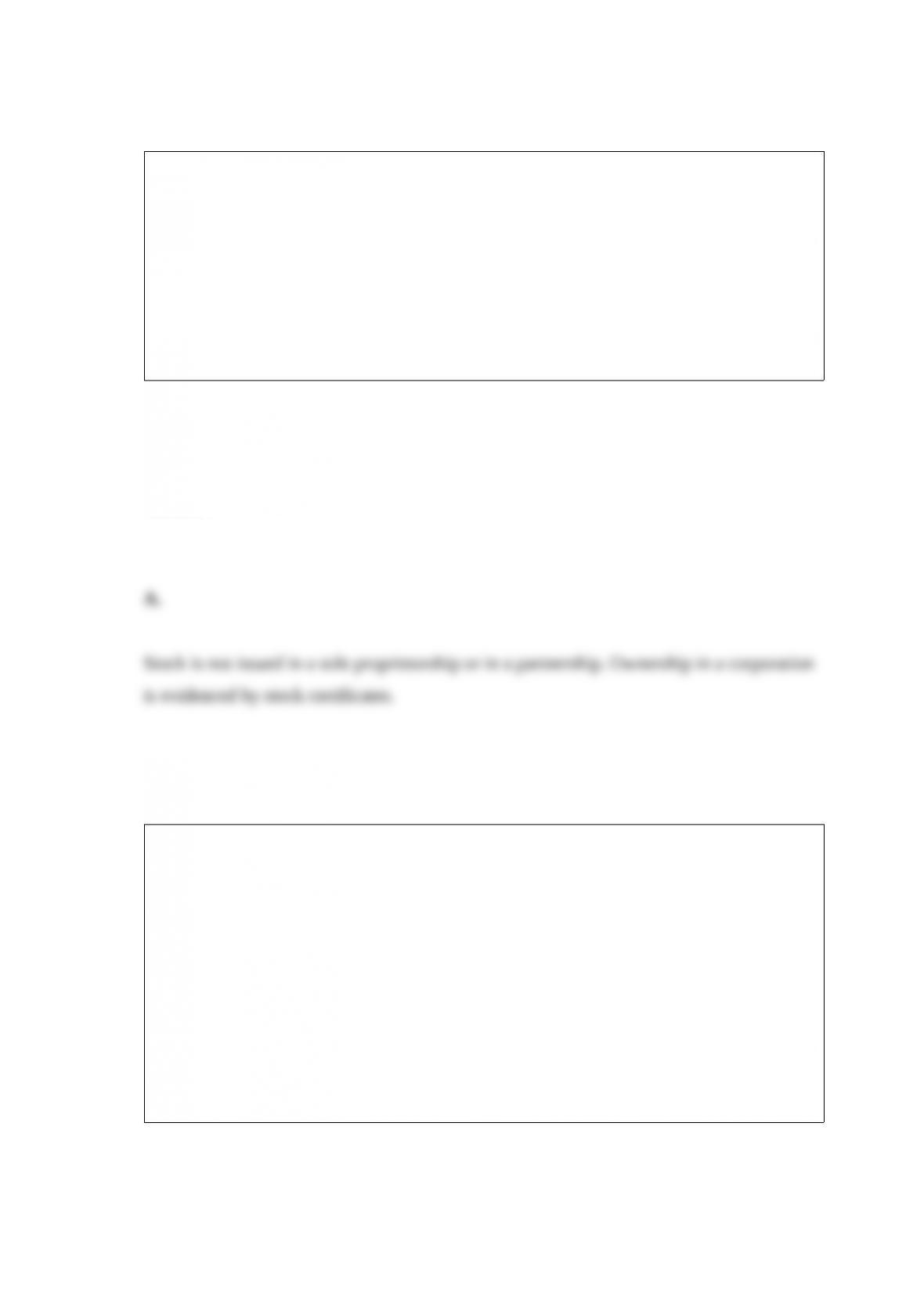
At December 31, 2014, a company’s records include the following:
Use the information above to answer the following question. Assuming the company
estimates bad debts as 1.3% of credit sales, what is the required adjusting entry to
record bad debt expense for the year?
A. Option A
B. Option B
C. Option C
D. Option D
Answer:
The inventory turnover ratio is calculated as:
A. Cost of goods sold divided by Sales.

B. Cost of goods sold divided by Average inventory.
C. Ending inventory divided by Cost of goods sold.
D. Average inventory divided by Cost of goods sold.
Answer:
On July 1, 2014, Icespresso Inc. signed a two-year $8,000 note receivable with 9
percent interest. At its due date, July 1, 2016, the principal and interest will be received
in full. Interest revenue should be reported on Icepresso’s income statement for the year
ended December 31, 2014, in the amount of:
A. $1,440.
B. $720.
C. $420.
D. $360.
Answer:
A legal document called a stock certificate is used to indicate ownership in a
A. Corporation
B. Sole proprietorship
C. Partnership
D. Both sole proprietorship and partnership
Answer:
A company issued $300,000, 10-year, 10 percent bonds at 105.
Use the information above to answer the following question. What is the total amount
of interest expense that will be recorded over the life of these bonds?
A. $300,000
B. $285,000
C. $315,000
D. $330,000
Answer:

Which of the following ratios is calculated by dividing liquid assets by current
liabilities?
A. Current ratio.
B. Quick ratio.
C. Turnover ratio.
D. Working capital ratio.
Answer:
A company was recently formed with $60,000 cash contributed to the company by its
owners. The company then borrowed $30,000 from a bank and bought $10,000 of
inventory and paid cash for it. The company also purchased $70,000 of equipment by
paying $10,000 in cash and issuing a note for the remainder.
What is the amount of the total liabilities to be reported on the balance sheet?
A. $60,000

B. $0
C. $90,000
D. $80,000
Answer:
Which of the following ratios is calculated by dividing current assets by current
liabilities?
A. Quick ratio.
B. Solvency ratio.
C. Debt ratio.
D. Current ratio.
Answer:

Choose the appropriate letter to match the term and the definition. Not all definitions
will be used.
Term:
_____ 1/ Date of declaration
_____ 2/ Issued shares
_____ 3/ Seasoned new issues
_____ 4/ Pro rata basis
_____ 5/ Date of record
_____ 6/ Additional paid-in capital
_____ 7/ Outstanding shares
_____ 8/ Stock options
_____ 9/ Payment date
Definition:
A. The date on which a company authorizes a dividend payment.
B. The total number of shares currently owned by stockholders.
C. When cash or stock dividends are issued according to the proportion of stock owned.
D. Dividends that have not had income tax withheld from them.
E. The date on which a company determines who receives a dividend.
F. When employees of a company have the opportunity to buy a company’s stock in the
future at a fixed price.
G. The accumulation of all the past dividends the company has not paid.
H. When a company sells issues of stock after its IPO.
I. The date on which a company debits dividends payable and credits cash.
J. When cash or stock dividends are issued in an equal dollar or share amount per
stockholder.
K. The date on which a liability is recorded for a dividend.
L. The total number of shares the company has sold, whether held by stockholders or by
the company.
M. When owners of the company contribute additional capital beyond what they paid

for their stock.
N. The amount owners paid the issuer for the stock above the par value of the stock.
Answer:
Limited liability companies (LLCs) are like general partnerships in that:
A. income tax is not paid by the company itself.
B. the business exists separate from its owners.
C. liability is limited.
D. amounts paid to the owners are recorded as salaries expense.
Answer: