
1) Thomas Corp. has the following number of shares of stock outstanding:
Thomas will distribute $44,000 to the two classes of stockholders this year. Not
counting the current year, the preferred stock dividends are two years in arrears.
Indicate whether each of the following statements is true or false.
1>Thomas’ common stockholders will receive $36,000 of cash dividends
2>The amount of dividends in arrears on preferred stock is zero after the $44,000 of
dividends have been paid
3>If the preferred stock was not cumulative, the dividends not paid in previous years
would not be paid in the current year
4>When preferred stock is cumulative, no dividends can be paid on common stock so
long as there are preferred dividends in arrears
5>Preferred stockholders will receive $24,000 of cash dividends
2) Indicate whether each of the following statements is true or false.
Net present value is calculated by dividing the present value of cash inflows by the
present value of cash outflows associated with a capital investment:;False
1>Company M has two potential capital investments, each of which has a positive net
present value. M can only accept one of the investments. In this situation, it should
always accept the project that has the higher net present value
2>If two capital investments both have positive net present values, both offer an actual
rate of return that is higher than the required rate of return
3>The higher the present value index, the lower the rate of return per dollar invested in
the project
4>The present value index can be used to compare different capital investment projects
3) Indicate whether each of the following statements is true or false.
1>Incremental revenues are treated as cash outflows in capital investment analyses
2>Many capital investments require an increase in the amount of a company’s working
capital
3>An increase in working capital, which may occur near the beginning of a capital
investment project, is treated as a cash inflow
4>In analysis of a capital investment, a cost saving (such as a reduction in labor costs)
is treated as a cash inflow
5>The expected salvage value of an asset is a source of a cash inflow that should be
considered in capital investment analyses
4) Orzoff Electronics offers a six-month warranty on the products it sells. It estimates
the warranty expense will be 3 percent of sales. One of the company managers
wondered how the warranty affects the company’s profit. The income statement for the
most recent year was:
The manager estimates that if the company did not offer the warranty, sales and cost of
goods sold would both decrease by 30 percent and selling and administrative expenses
would decrease by 20 percent. Based on this information, would you recommend that
the company discontinue the warranty? Prepare an income statement to support your
answer.
5) Show the effect on the accounting equation of the issuance of $100,000, 8% ten-year
bonds at face value.
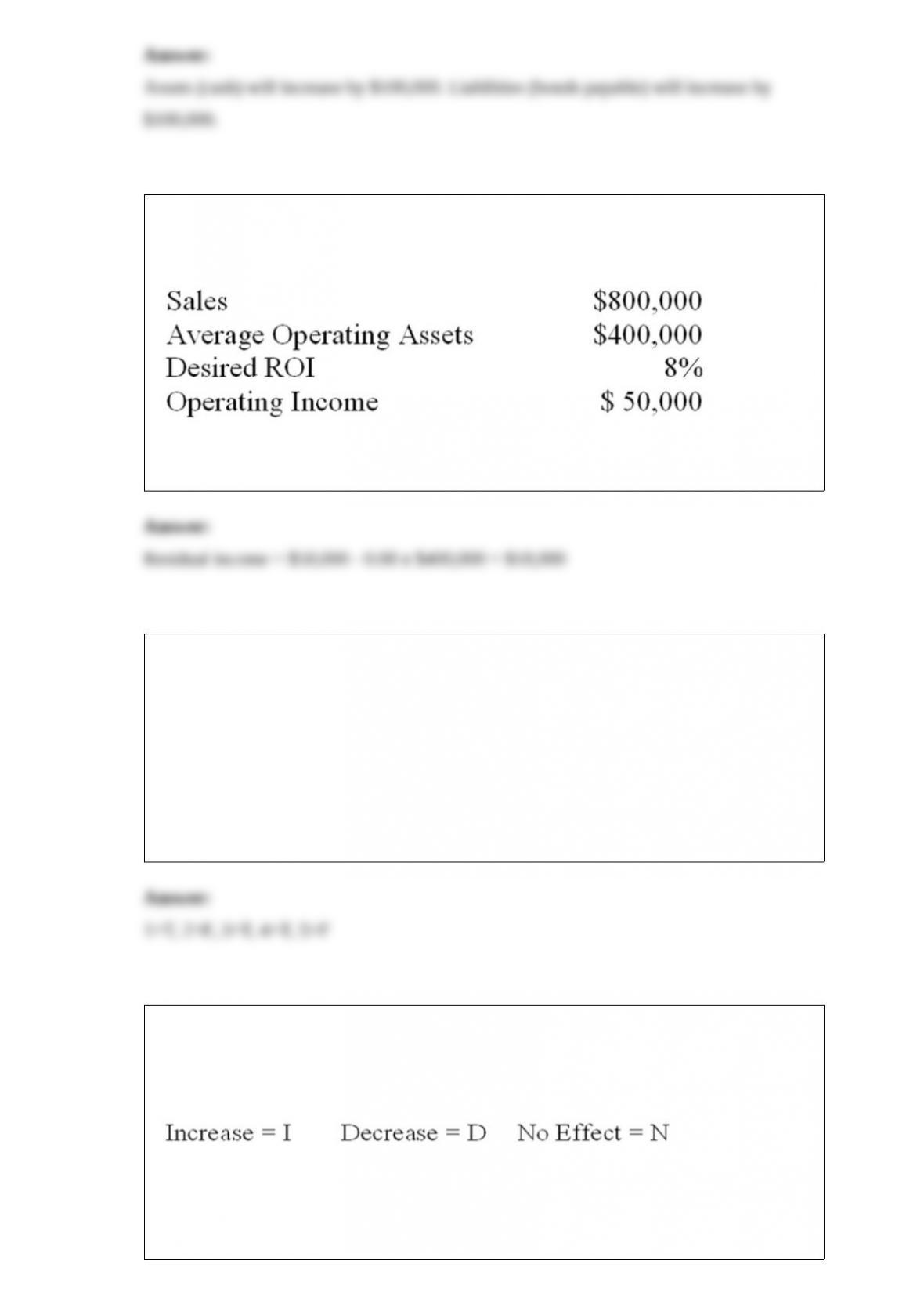
6) Shields Company reported the following information for 2012:
What was the company’s residual income for 2012?
7) Indicate whether each of the following statements is true or false.
1>An appropriation of Retained Earnings limits the amount available for dividends
2>An appropriation of Retained Earnings increases the total amount of Retained
Earnings
3>An appropriation of Retained Earnings has no effect on the income statement
4>One reason for an appropriation of Retained Earnings is that there may be restrictive
covenants in debt agreements
5>Appropriating Retained Earnings is considered an asset exchange transaction
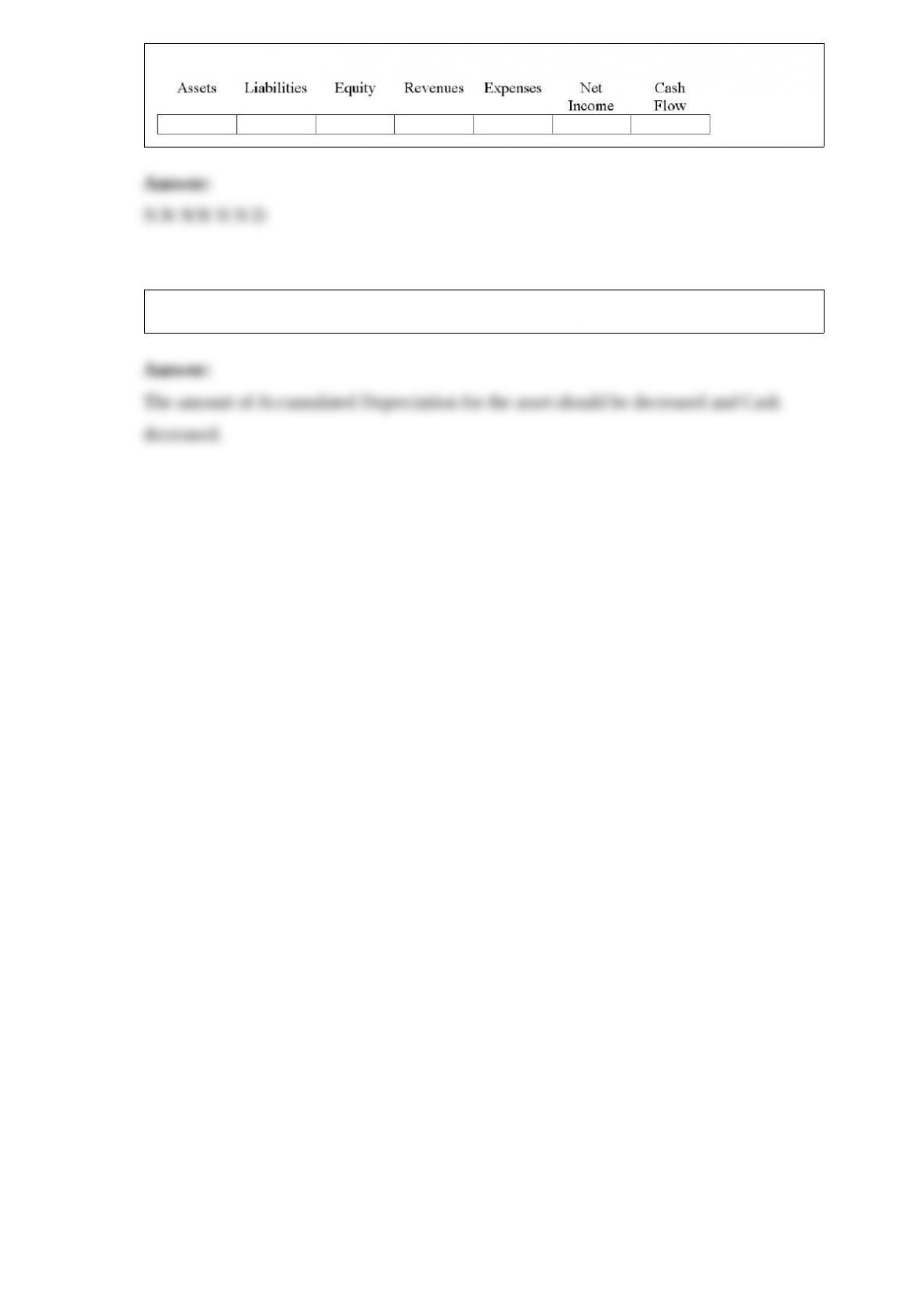
8) Indicate how each event affects the elements of financial statements. Use the
following letters to record your answer in the box shown below each element. You do
not need to enter amounts.
While reconciling Snyder Company’s bank statement an error was discovered. A $905
cash receipt for the collection of an account receivable was recorded in the company’s
books as $950. The deposit slip was correct; the error appeared only in the company’s
accounting records.
9) How should a company record an expenditure that extends the life of an asset?