1) What are cost objects? Define and give examples.
2) In October 2012, Simpson Company loaned $20,000 to Warren Corporation,
receiving Warren’s 6-month, 6% promissory note. Indicate whether each of the
following statements about the note is true or false.
1>Accruing interest receivable at the end of 2012 does not affect the 2012 statement of
cash flows
2>Accruing the amount of interest receivable at the end of 2012 is consistent with the
matching concept
3>Loaning the money to Warren was an asset use transaction for Simpson
4>Accruing the amount of interest due at the end of 2012 was an asset source
transaction for Simpson
5>Simpson’s 2012 statement of cash flows would report the loan to Warren as a
financing activity
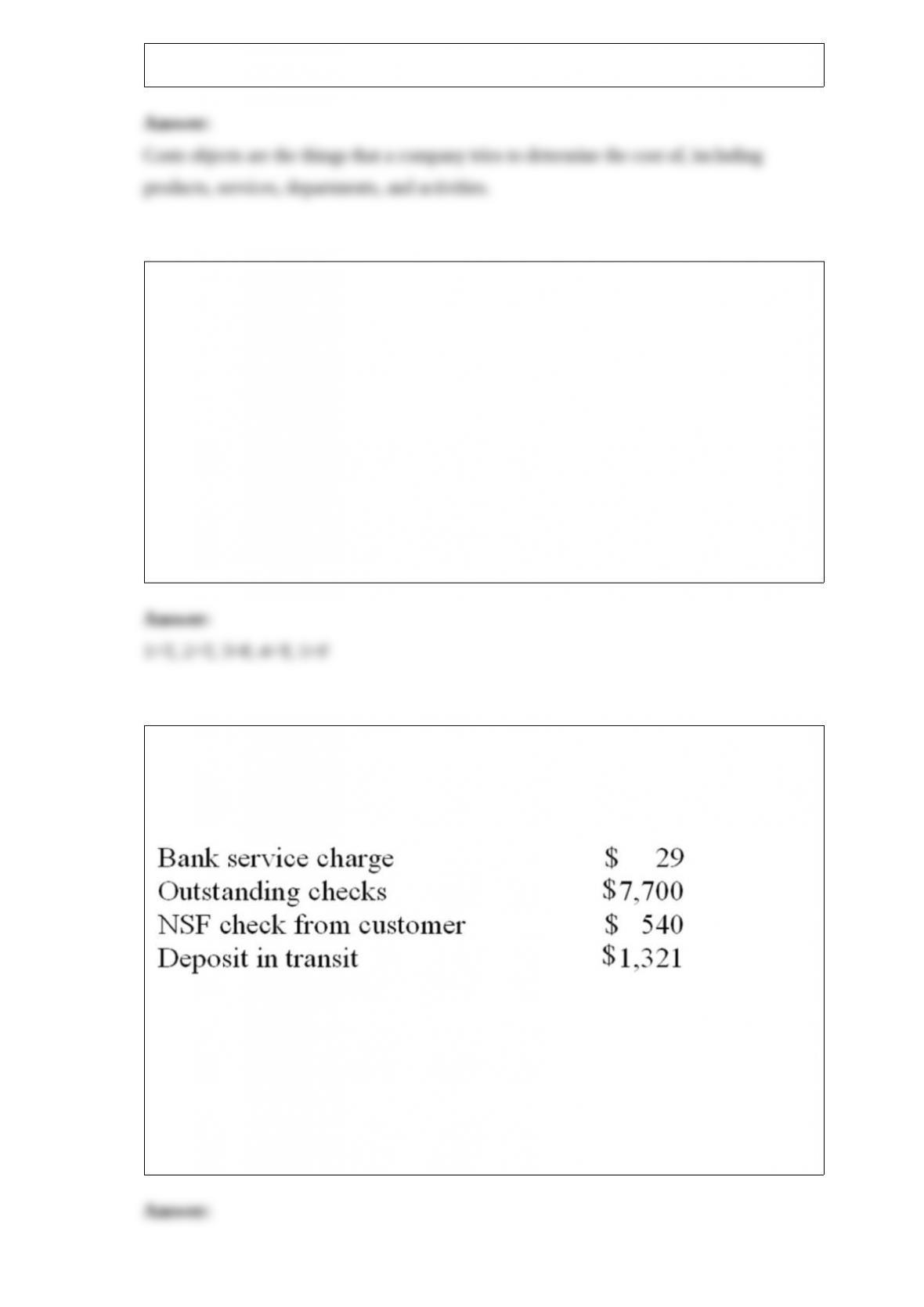
3) The unadjusted cash account balance for Few Company at December 31, 2012 is
$21,380. The bank statement showed an ending balance of $27,388 on that date. The
following information is available:
Check #433 for the purchase of inventory was written correctly and paid by the bank
correctly for $234, but was recorded on the books at $432. Few uses the perpetual
inventory system.
Required:
Prepare a bank reconciliation as of December 31, 2012 .
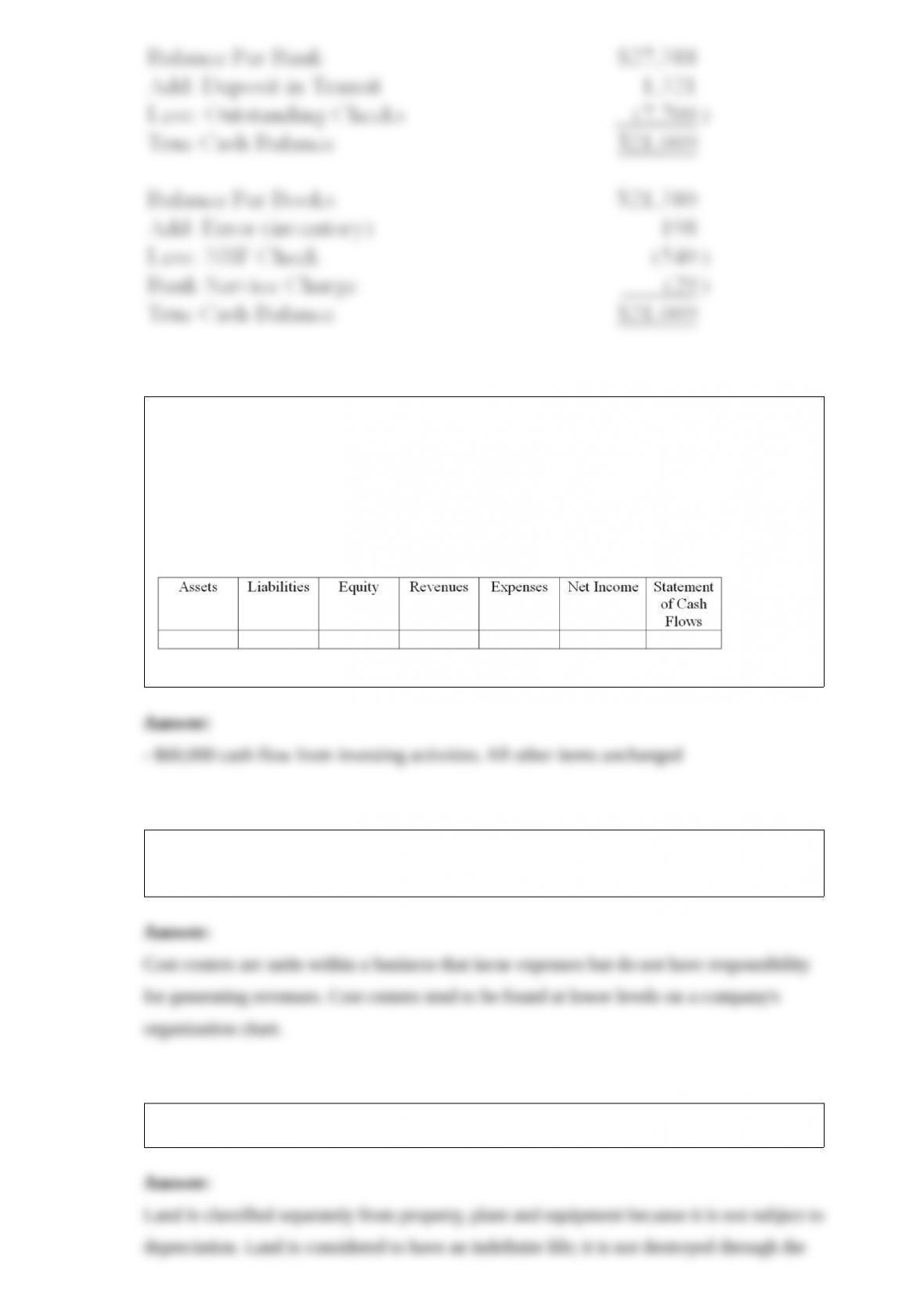
4) Indicate how the event affects the elements of the financial statements. If the
transaction affects a given element of the financial statements, enter the dollar amount
below that financial statement element with a plus to indicate an increase or a minus for
a decrease. If the item affects cash flow, indicate whether it is an operating activity,
investing activity, or financing activity.
Lemars Corporation paid $60,000 cash to purchase land.
5) What are cost centers? What responsibilities does the manager of a cost center have?
And at what level on an organization chart are you most likely to find cost centers?
6) Why is land classified separately from other tangible long-term assets?
7) What are typical sources of cash inflows for capital investments?
8) What is suboptimization? How might use of return on investment to evaluate a
manager’s performance lead to suboptimization?
9) Tell whether each of the following events are asset source (AS), asset use (AU), asset
exchange (AE), or claims exchange (CE) transactions.
Transactions for the year:
1>Recognized accrued salary expense of $2,000
2>Paid one year’s rent in advance
3>Borrowed $6,000 from creditors
4>Collected $2,000 from accounts receivable
5>Issued common stock to investors for $8,000 cash
6>Received $3,000 of revenue in advance
7>Adjusted the records for supplies used of $800
8>Provided services to customers and received $35,000 cash
9>Paid creditors $10,000
10>Provided services to customers on account, $12,000

10) Under what circumstances must a contingent liability be reported on a company’s
balance sheet?