Moore Company.
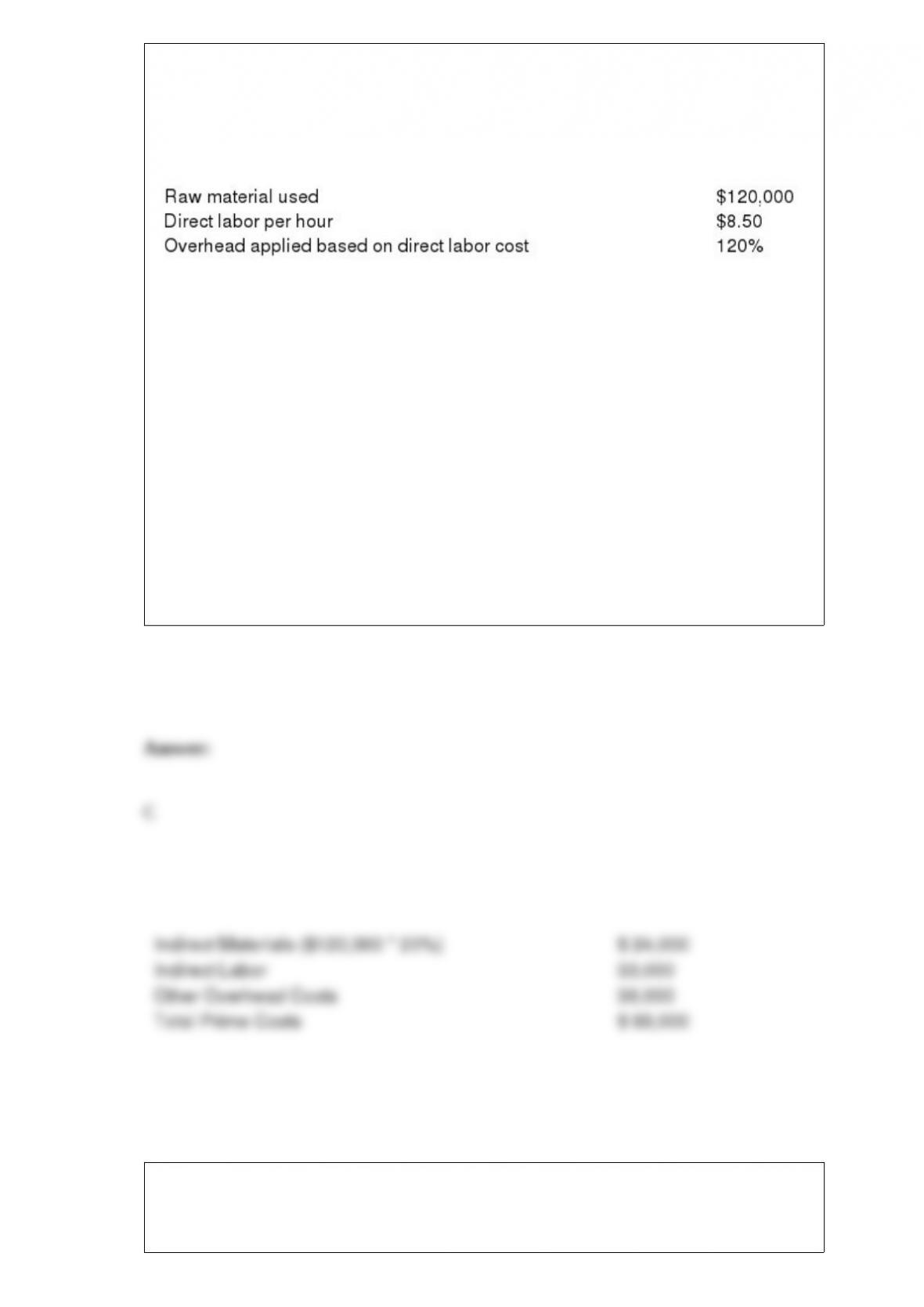
Moore Company uses a job-order costing system and the following information is
available from its records. The company has three jobs in process: #6, #9, and #13.
Direct material was requisitioned as follows for each job respectively: 30 percent, 25
percent, and 25 percent; the balance of the requisitions was considered indirect. Direct
labor hours per job are 2,500; 3,100; and 4,200; respectively. Indirect labor is $33,000.
Other actual overhead costs totaled $36,000.
Refer to Moore Company. What is the total amount of actual overhead?
a. $36,000
b. $69,000
c. $93,000
d. $99,960
If a new project generates a positive residual income, the
a. project’s return on investment is less than the target rate.
b. project’s return on investment is greater than the target rate.
c. project’s return on investment is equal to the target rate.
d. relationship between the project’s return on investment and the target rate cannot
necessarily be determined.
Robert Wilson Company
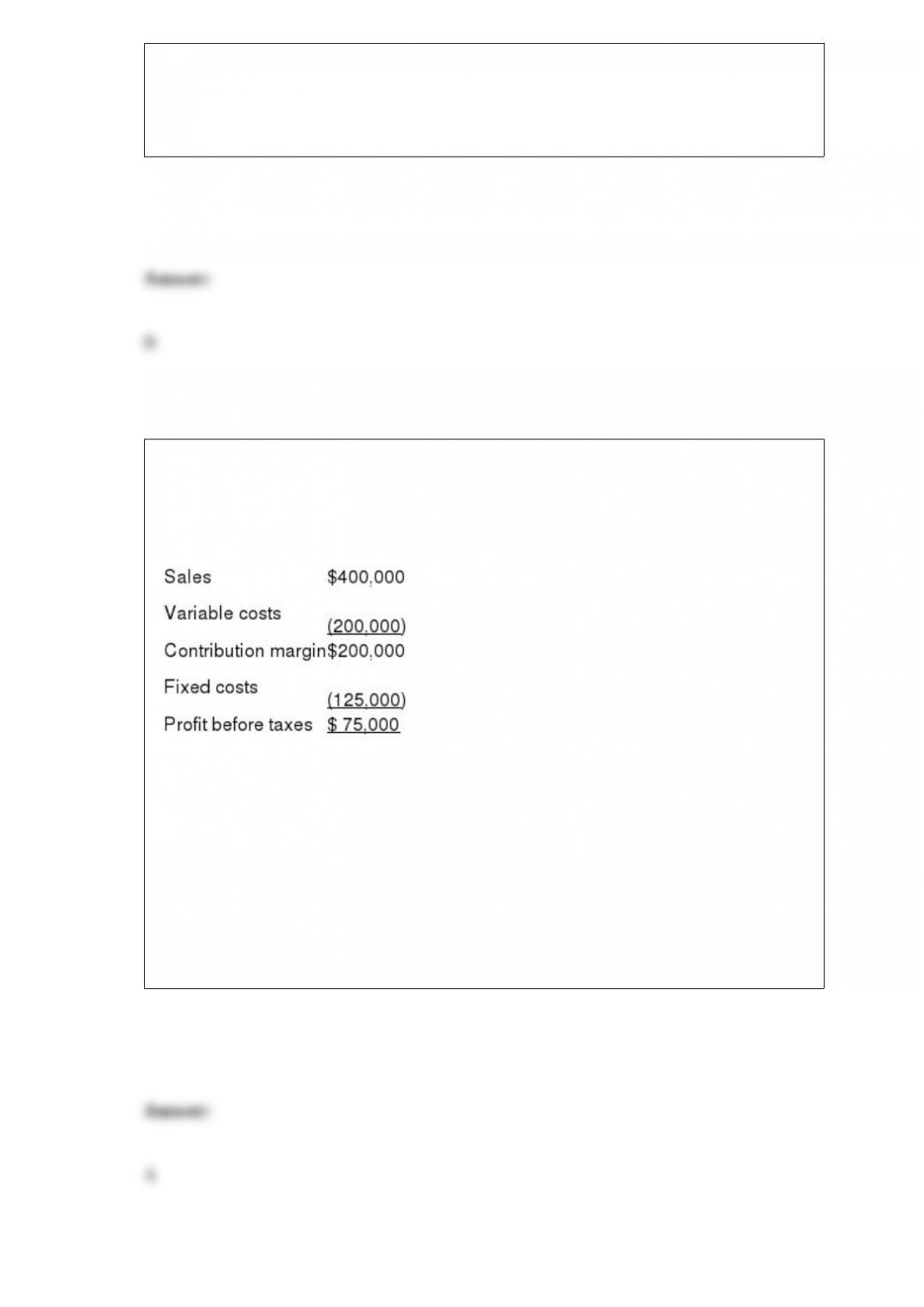
Below is an income statement for Robert Wilson Company:
Refer to Robert Wilson Company. What is the company’s degree of operating leverage
(DOL)?
a. 2.67
b. 3.2
c. 5.33
d. 10.67
Which service department cost allocation method assigns indirect costs to cost objects
after considering interrelationships of the cost objects?
a. no no
b. no yes
c. yes yes
d. yes no
Joint costs are allocated to which of the following products?
a. yes yes
b. yes no
c. no no
d. no yes

When a scarce resource, such as space, exists in an organization, the criterion that
should be used to determine production is
a. contribution margin per unit.
b. selling price per unit.
c. contribution margin per unit of scarce resource.
d. total variable costs of production.
Lead time minus production time is equal to
a. idle time.
b. storage time.
c. non-value-added time.
d. value-added time.
Buxton Company
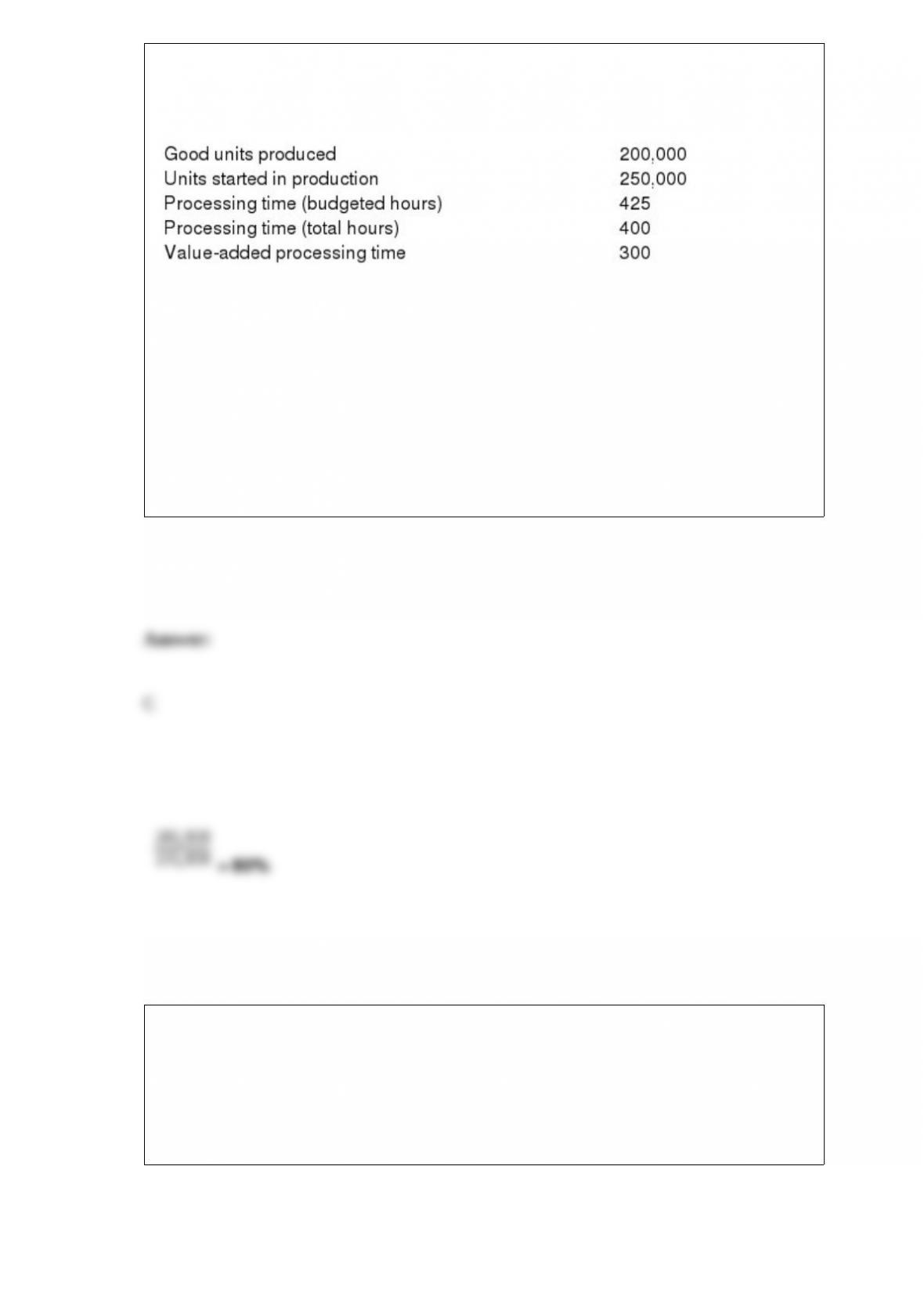
One of the products manufactured by Buxton Company is a plastic tray. The
information below relates to the Tray Production Department:
Refer to Buxton Company. What is the process quality yield in the Tray Production
Department?
a. 75%
b. 44%
c. 80%
d. 125%
The final figure in the Schedule of Cost of Goods Manufactured represents the
a. cost of goods sold for the period.
b. total cost of manufacturing for the period.
c. total cost of goods started and completed this period.
d. total cost of goods completed for the period.
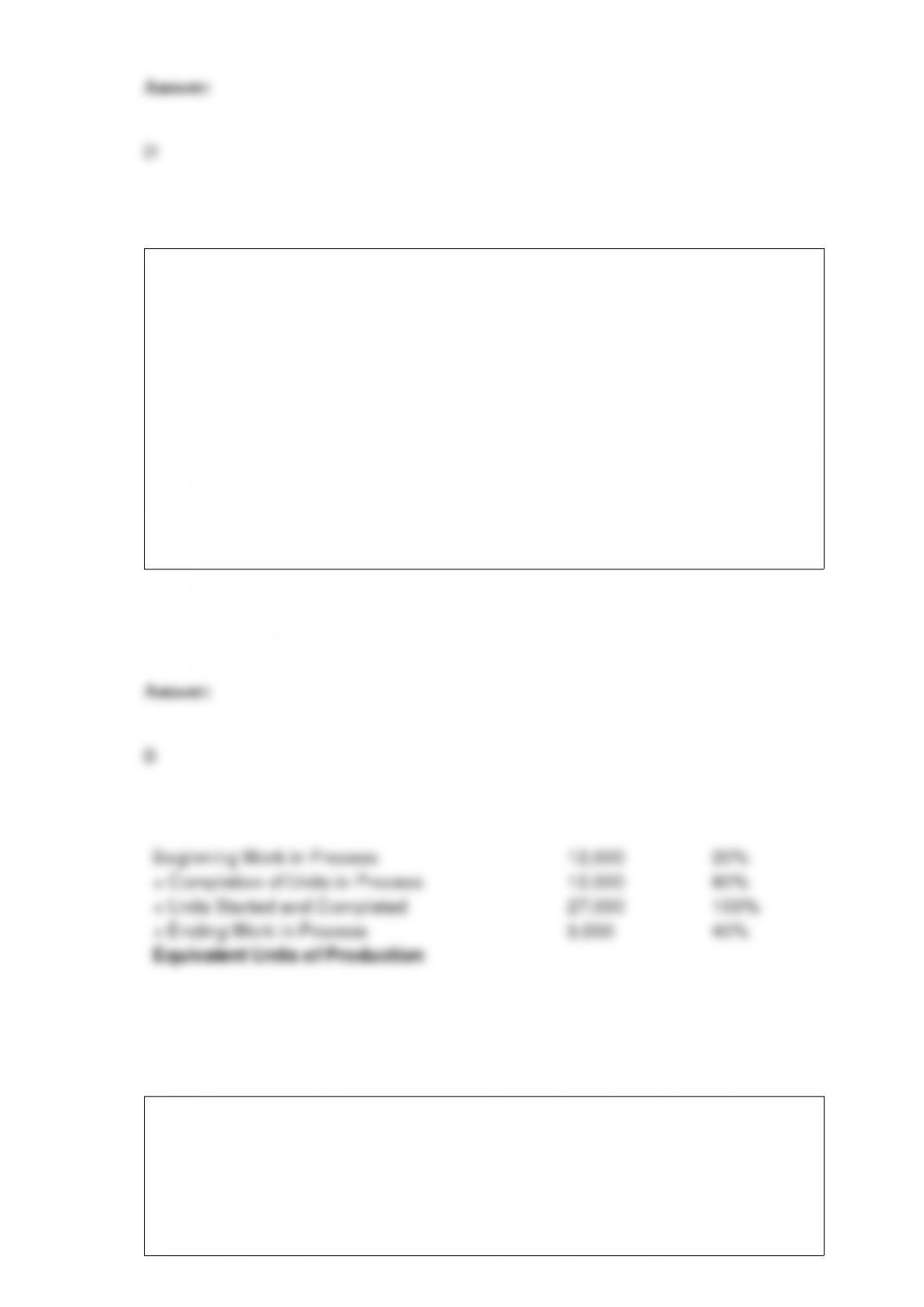
Hogan Company uses a weighted average process costing system and started 30,000
units this month. Hogan had 12,000 units that were 20 percent complete as to
conversion costs in beginning Work in Process Inventory and 3,000 units that were 40
percent complete as to conversion costs in ending Work in Process Inventory. What are
equivalent units for conversion costs?
a. 37,800
b. 40,200
c. 40,800
d. 42,000
Which of the following is necessary for any valid performance measurement?
a. It must be part of the financial accounting system in use.
b. It must be quantifiable.
c. Goal congruence must be promoted by its use.
d. It must be financial in nature.
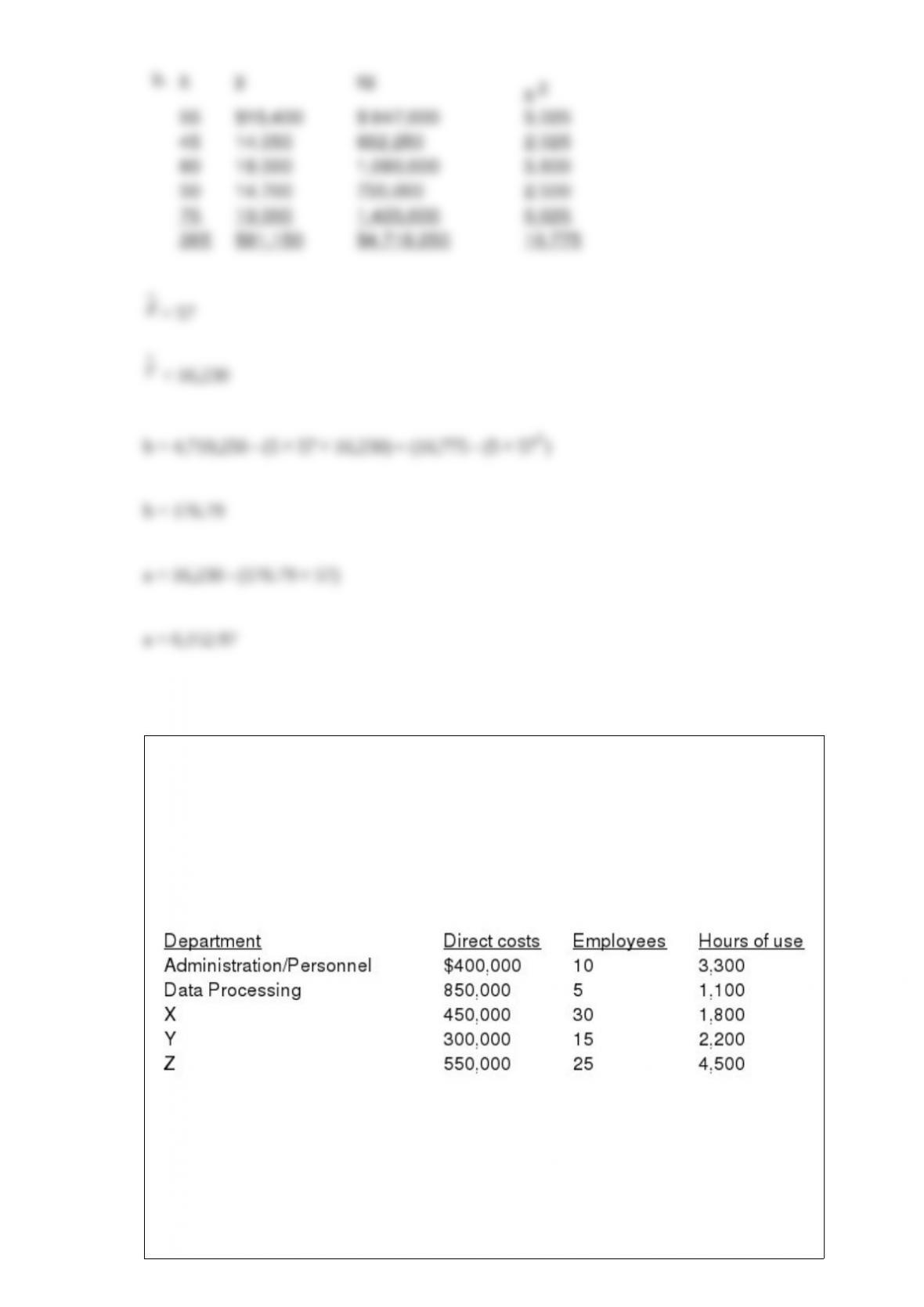
Dollarwise Trainers provides a personalized training program that is popular with many
companies. The number of programs offered over the last five months, and the costs of
offering these programs are as follows:
Crosby Corporation
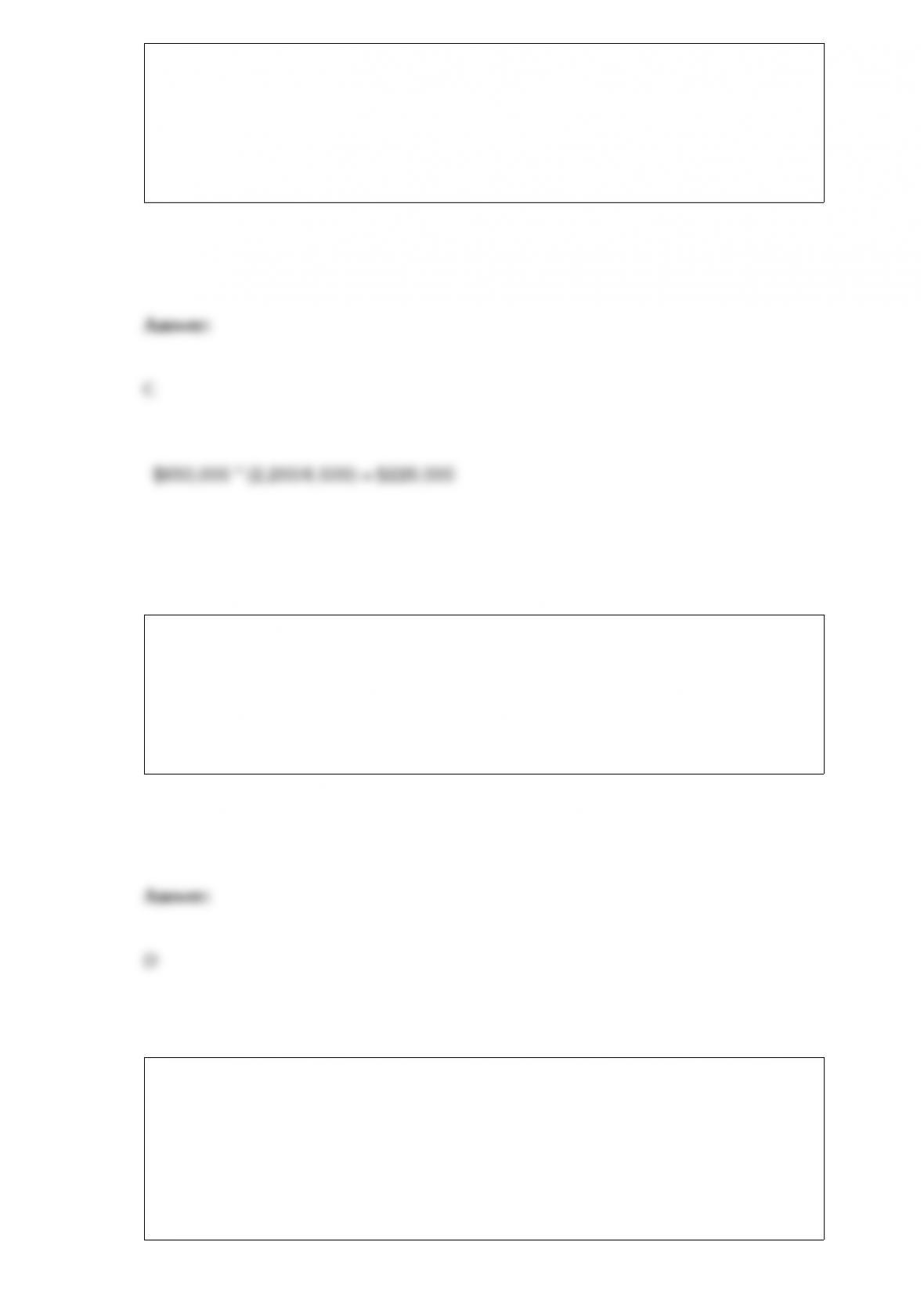
Crosby Corporation has two service departments: Data Processing and
Administration/Personnel. The company also has three divisions: X, Y, and Z. Data
Processing costs are allocated based on hours of use and Administration/Personnel costs
are allocated based on number of employees.
Assume that Data Processing provides more service than Administration/Personnel.
Refer to Crosby Corporation. Using the direct method, what amount of Data Processing
costs is allocated to Y (round to the nearest dollar)?
a. $158,475
b. $0
c. $220,000
d. $103,529
Costs forgone when an individual or organization chooses one option over another are
a. budgeted costs.
b. sunk costs.
c. historical costs.
d. opportunity costs.
In a standard cost system, Work in Process Inventory is ordinarily debited with
a. actual costs of material and labor and a predetermined overhead cost for overhead.
b. standard costs based on the level of input activity (such as direct labor hours
worked).
c. standard costs based on production output.
d. actual costs of material, labor, and overhead.

Annual after-tax corporate net income can be converted to annual after-tax cash flow by
a. adding back the depreciation amount.
b. deducting the depreciation amount.
c. adding back the quantity (t depreciation deduction), where t is the corporate tax rate.
d. deducting the quantity [(1- t) depreciation deduction], where t is the corporate tax
rate.
All of the following objectives are reasons to allocate service department costs to
compute full cost except to
a. provide information on cost recovery.
b. abide by regulations that may require full costing in some instances.
c. provide information on controllable costs.
d. reflect production’s “fair share” of costs.

Which of the following costing methods is the most effective in controlling a product’s
total life-cycle cost?
a. kaizen costing
b. target costing
c. standard costing
d. process costing
Hickman Company uses a FIFO process costing system. The company had 6,000 units
that were 75 percent complete as to conversion costs at the beginning of the month. The
company started 25,000 units this period and had 8,000 units in ending Work in Process
Inventory that were 40 percent complete as to conversion costs. What are equivalent
units for material, if material is added at the beginning of the process?
a. 18,500
b. 25,000
c. 26,500
d. 31,000
In relationship to changes in activity, fixed overhead changes
a. yes yes
b. no no
c. no yes
d. yes no
Andersen Corporation
Andersen Corporation has the following information for the current month:
All materials are added at the start of the production process. Andersen Corporation
inspects goods at 75 percent completion as to conversion.
Refer to Andersen Corporation. What are equivalent units of production for material
assuming weighted average is used?
a. 105,500
b. 106,000
c. 107,000
d. 110,000
An organization plans to produce and sell 50,000 units. It actually produces and sells
45,000 units. Total costs would be expected to be below the planned level due to cost
a. consciousness.
b. control.
c. reductions.
d. behavior.
Information for two divisions of Superb Entertainment Company is given below:

Managers may be more willing to accept a budget if
a. it is continuous.
b. it is imposed.
c. it is very hard to attain.
d. they can participate in its development.
Data mining
a. is packaged software.
b. is a method of examining processes.
c. uses statistical techniques to solve problems.
d. is a way to downsize.
The total labor variance can be subdivided into all of the following except
a. rate variance.
b. yield variance.
c. learning curve variance.
d. mix variance.

Incremental separate costs are defined as all costs incurred between ____ and the point
of sale.
a. inception
b. split-off point
c. transfer to finished goods inventory
d. point of addition of disposal costs
Sullivan Company
Sullivan Company is preparing its Manufacturing Overhead budget for the second
quarter of the year. Budgeted variable factory overhead is $3.00 per unit produced;
budgeted fixed factory overhead is $75,000 per month, with $16,000 of this amount
being factory depreciation.
Refer to Sullivan Company. If the budgeted production for April is 6,000 units, then the
total budgeted factory overhead for April is:
a. $77,000
b. $82,000
c. $85,000
d. $93,000
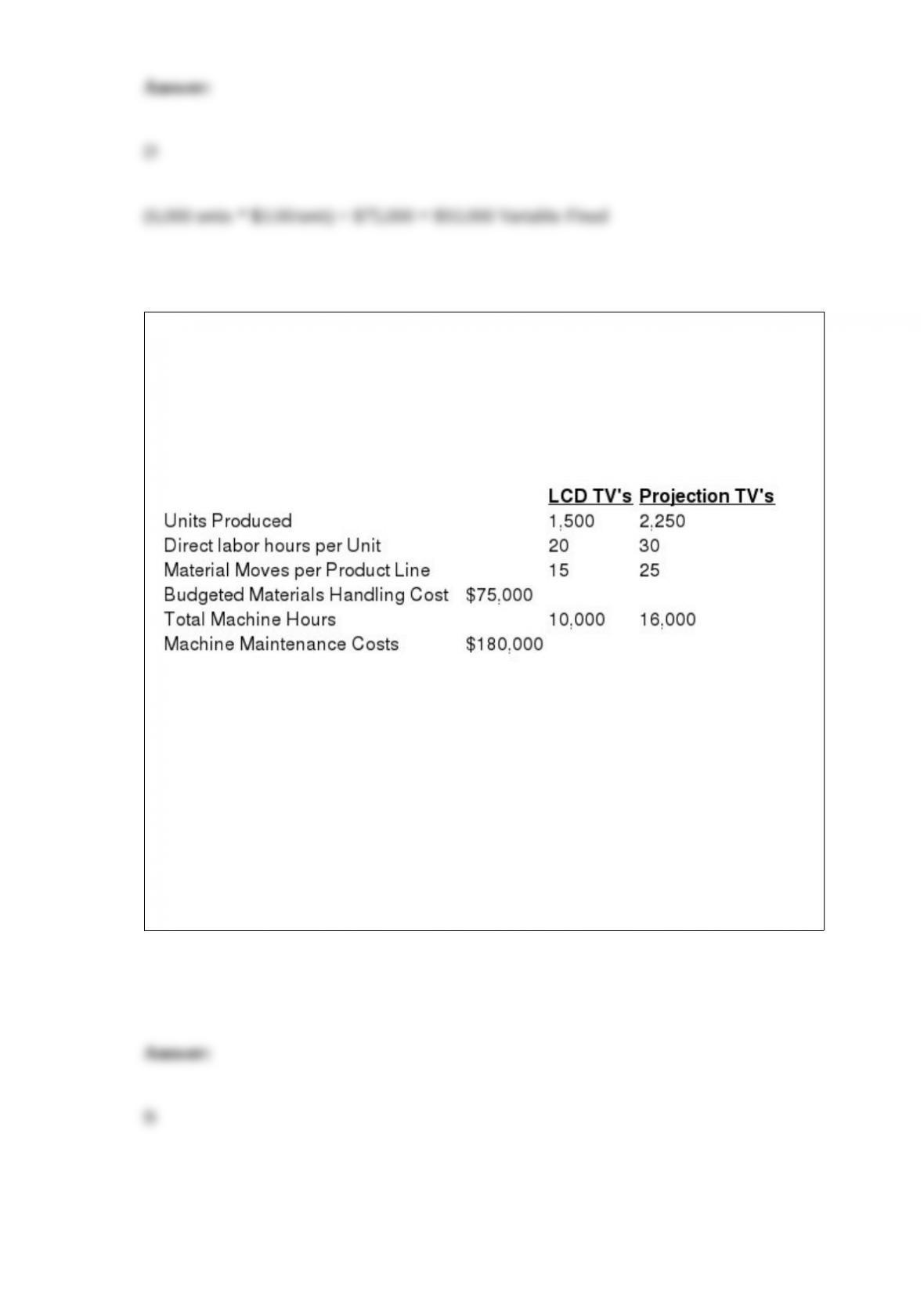
Ultimate Vision Corporation
Ultimate Vision Corporation has two product lines: LCD televisions and projection
televisions. The company has budgeted the following production and overhead costs for
the upcoming year:
Refer to Ultimate Vision Corporation. If the company uses an activity-based costing
(ABC) system to allocate factory overhead, the materials handing cost allocated to LCD
TVs would be:
a. $23,077
b. $28,125
c. $30,000
d. $45,000

The variance least significant for purposes of controlling costs is the
a. material quantity variance.
b. variable overhead efficiency variance.
c. fixed overhead spending variance.
d. fixed overhead volume variance.
The source document that records the amount of raw material that has been requested
by production is the
a. job-order cost sheet.
b. bill of lading.
c. interoffice memo.
d. material requisition.
Profit under absorption costing may differ from profit determined under variable
costing. How is this difference calculated?
a. Change in the quantity of all units in inventory times the relevant fixed costs per unit.
b. Change in the quantity of all units produced times the relevant fixed costs per unit.
c. Change in the quantity of all units in inventory times the relevant variable cost per
unit.
d. Change in the quantity of all units produced times the relevant variable cost per unit.
Costs incurred to correct defects in products after shipment are referred to as
________________________________________.
The assumed range of activity that reflects the company’s normal operating range is
referred to as the ______________________________.
The internal business perspective of the balanced scorecard addresses stakeholder
concerns about profitability and organizational growth.
A chart that indicates each step in a production process is referred to as a
_________________________.
A one-variance approach calculates only a total overhead variance.
Statistical data about the steps that will create the results desired as referred to as
___________________________________.
The amount of revenue that differs across decision choices is referred to as
______________________________.
The learning and growth perspective of the balanced scorecard focuses on using an
organization’s intellectual capital to adapt to or influence customer needs and
expectations.
On what needs do (1) management accounting and (2) financial accounting focus?
When management by exception is employed, favorable variances should notbe
investigated.
Discuss how establishing standards benefits the following management functions:
performance evaluation and decision making.
A series of activities that when performed together satisfy a specific objective is
referred to as a ____________________.
Inspection of incoming inventory is a value-added activity.
In a manufacturing organization, the budget that is prepared after the sales budget is the
______________________________.