1) Purchase returns refer to merchandise a buyer acquires but then returns to the seller.
2) The times interest earned ratio is calculated by dividing income before interest
expense and income taxes by interest expense.
3) The price-earnings ratio is computed by dividing earnings per share by the market
price per share.
4) Assets are often classified into current assets, long-term investments, plant assets,
and intangible assets.
5) An accelerated depreciation method yields smaller depreciation expense in the early
years of an asset’s life and larger depreciation expense in later years.
6) The equity method with consolidation is used in accounting for long-term
investments in equity securities with controlling influence.
7) Total asset cost plus depreciation expense equals book value.
8) A wholesaler is an intermediary that buys products from manufacturers or other
wholesalers and sells them to consumers.
9) An understatement of ending inventory will cause an understatement of assets and
equity on the balance sheet.
10) Job order costing is applicable to manufacturing firms only and not service firms.
11) For an investment center, the hurdle rate is:
A.The cost of obtaining financing
B.The desired return on investments
C.The difference between the projected rate and the earned rate
D.Not evaluated in determining the performance of an investment center
E.Not important to management
12) When preparing a statement of cash flows on the indirect method, which of the
following is correct?
A.Proceeds from the sale of equipment should be added to net income in the operating
activities section
B.A loss on the sale of land should be added to net income in the operating activities
section
C.The declaration of a cash dividend should be a use of cash in the financing activities
section
D.The issuance of a stock dividend should be a use of cash in the financing activities
section
E.The purchase of land and a building by issuing a long-term note payable should be a
source of cash in the financing activities section
13) A factor that causes the cost of an activity to go up or down is a(n):
A.Direct factor
B.Indirect factor
C.Cost driver
D.Product cost
E.Contribution factor
14) Smith, West, and Krug form a partnership. Smith contributes $180,000, West
contributes $150,000, and Krug contributes $270,000. Their partnership agreement calls
for the income or loss division to be based on the ratio of capital invested. If the
partnership reports income of $175,000 for its first year, what amount of income is
credited to Smith’s capital account?
A.$43,750
B.$78,750
C.$52,500
D.$58,333
E.$60,000
15) Incurred but unpaid expenses that are recorded during the adjusting process with a
debit to an expense and a credit to a liability are:
A.Intangible expenses
B.Prepaid expenses
C.Unearned expenses
D.Net expenses
E.Accrued expenses
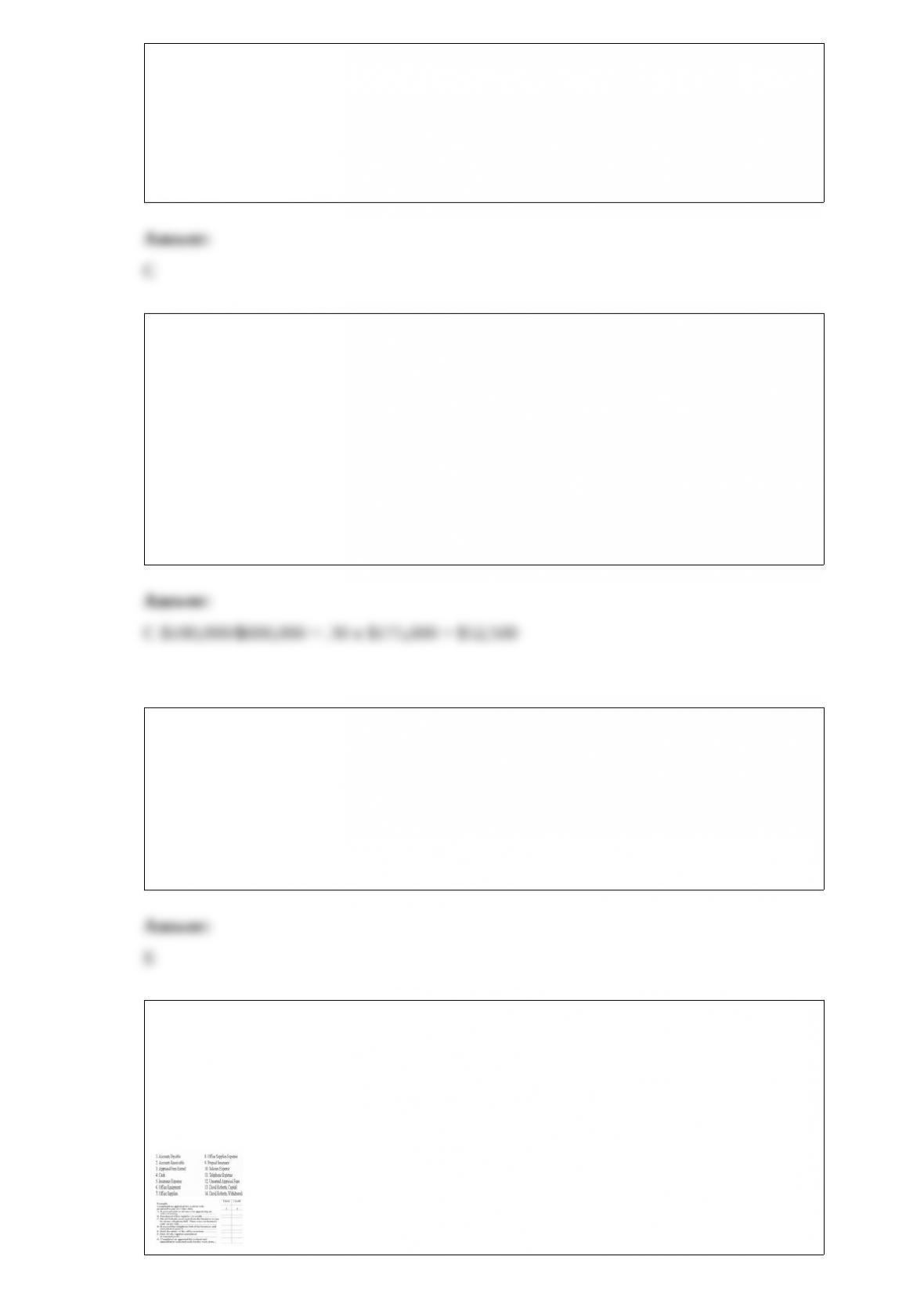
16) David Roberts is a real estate appraiser. Shown below are (a) several accounts in his
ledger with each account preceded by an identification number, and (b) several
transactions completed by Roberts. Indicate the accounts debited and credited when
recording each transaction by placing the proper account identification numbers to the
right of each transaction.

17) An employer’s federal unemployment taxes (FUTA) are reported:
A.Annually
B.Semiannually
C.Quarterly
D.Monthly
E.Weekly
18) Match the following terms with the appropriate definition.
1>Accounting period A. A 12 month period that ends when a company’s sales activities
are at their lowest point.
2>Adjusting entry B. A journal entry used at the end of an accounting period to bring an
asset or liability account balance to its proper amount and update the related expense or
revenue account.
3>Fiscal year C. An account linked with another account and having an opposite
normal balance.
4>h Interim financial reports D. The consecutive 12 months (or 52 weeks) selected as
the organization’s annual accounting period.
5>Account form balance sheet E. The length of time covered by financial statements.
6>Report form balance sheet F. A listing of accounts and balances prepared after
adjustments are recorded and posted to the ledger.
7>Contra account G. A balance sheet that lists items vertically in the order: assets,
liabilities and equity.
8>Unadjusted trial balance H. A balance sheet that lists assets on the left side and
liabilities and equity on the right.
9>Adjusted trial balance I. A listing of accounts and balances prepared before
adjustments are recorded.
10>Natural business year J. Financial reports covering less than one year, usually one,
three, or six-month periods.
19) All of the following statements regarding accounting for trading securities under
U.S. GAAP are True except:
A.The entire portfolio of trading securities is reported at is fair value
B.An unrealized gain or loss from a change in fair value is reported on the income
statement
C.A realized gain or loss is recorded when the securities are sold and reported on the

income statement
D.When the period-end fair value adjustment for the portfolio of trading securities is
computed, it includes the cost and fair value of any securities sold
E.When the period-end fair value adjustment for the portfolio of trading securities is
computed, it excludes the cost and fair value of any securities sold
20) Accumulated Depreciation, Accounts Receivable, and Service Fees Earned would
be sorted to which respective columns in completing a work sheet?
A.Balance Sheet and Statement of Owner’s Equity-Credit; Balance Sheet and Statement
of Owner’s Equity Debit; and Income Statement-Credit
B.Balance Sheet and Statement of Owner’s Equity-Debit; Balance Sheet and Statement
of Owner’s Equity-Credit; and Income Statement-Credit
C.Income Statement-Debit; Balance Sheet and Statement of Owner’s Equity-Debit; and
Income Statement-Credit
D.Income Statement-Debit; Income Statement-Debit; and Balance Sheet and Statement
of Owner’s Equity-Credit
E.Balance Sheet and Statement of Owner’s Equity-Credit; Income Statement-Debit; and
Income Statement-Credit
21) Costs that are incurred as part of the manufacturing process but are not clearly
associated with specific units of product or batches of production, including all
manufacturing costs other than direct material and direct labor costs, are called:
A.Administrative expenses
B.Nonmanufacturing costs
C.Sunk costs
D.Factory overhead
E.Preproduction costs
22) Krenz Car Care, owned and operated by Karl Krenz, began business in September
of the current year. Karl, a master mechanic, had no experience with keeping a set of
books. As a result, Karl entered all of September’s transactions directly to the ledger
accounts. When he tried to locate a particular entry he found it confusing and time
consuming. He has hired you to improve his accounting procedures. The accounts in his
General Ledger follow:
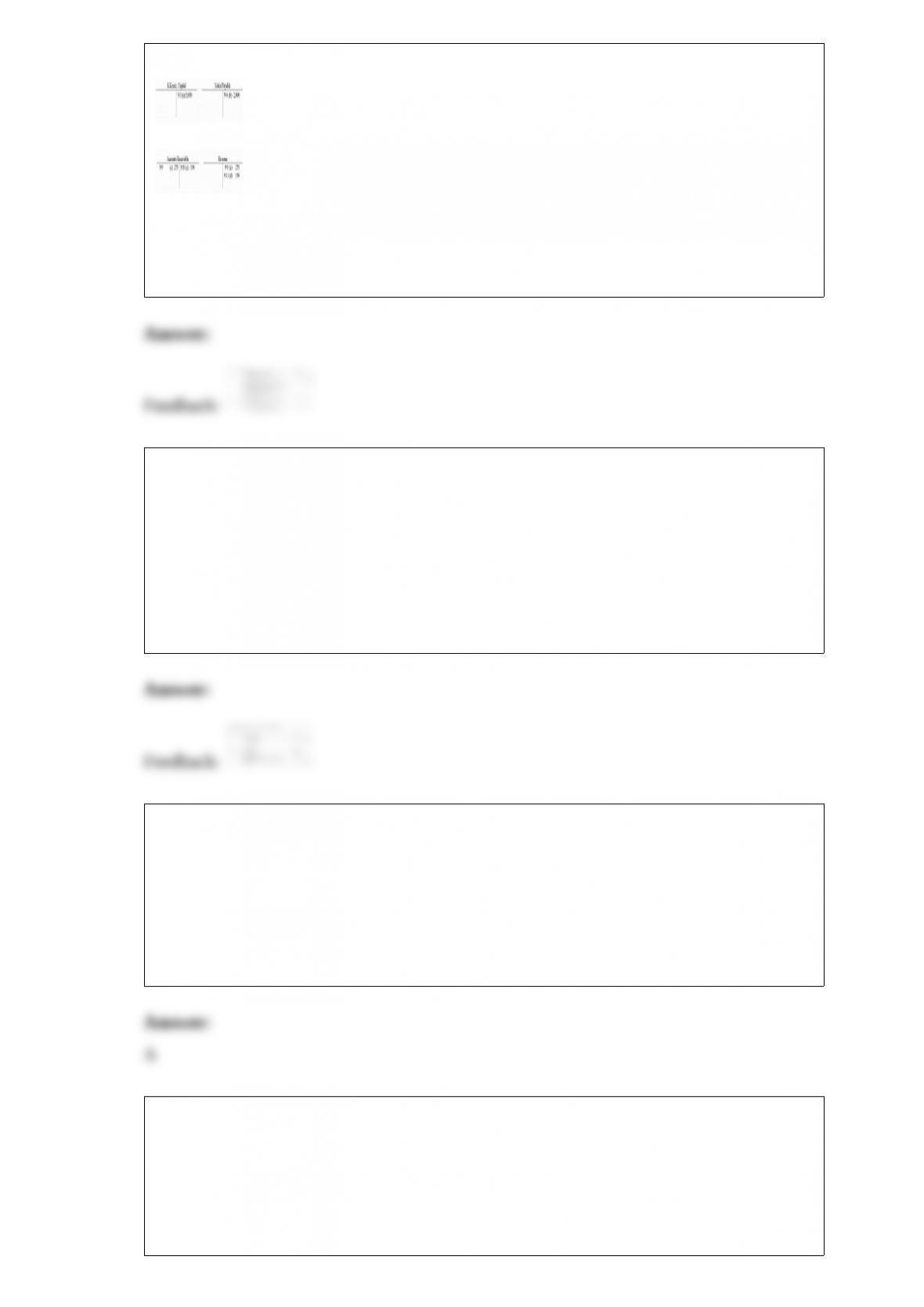
Prepare the general journal entries, in chronological order (a) through (e), from the
T-account entries shown. Include a brief description of the probable nature of each
transaction.
23) On November 1, Bob’s Skateboards signed a $12,000, 90-day, 5% note payable to
cover a past due account payable.
a. What amount of interest expense on this note should Bob’s Skateboards report on
year-end December 31?
b. Prepare Bob’s journal entry to record the issuance of the note payable.
c. Prepare Bob’s journal entry to record the payment of the note on February 1 of the
following year.
24) Revenue expenditures:
A.Are additional costs of plant assets that do not materially increase the asset’s life or
its productive capabilities.
B.Are known as balance sheet expenditures
C.Extend the asset’s useful life
D.Substantially benefit future periods
E.Are debited to asset accounts
25) The excess of expected sales over the sales level at the break-even point is known
as the:
A.Sales turnover
B.Profit margin
C.Contribution margin
D.Relevant range
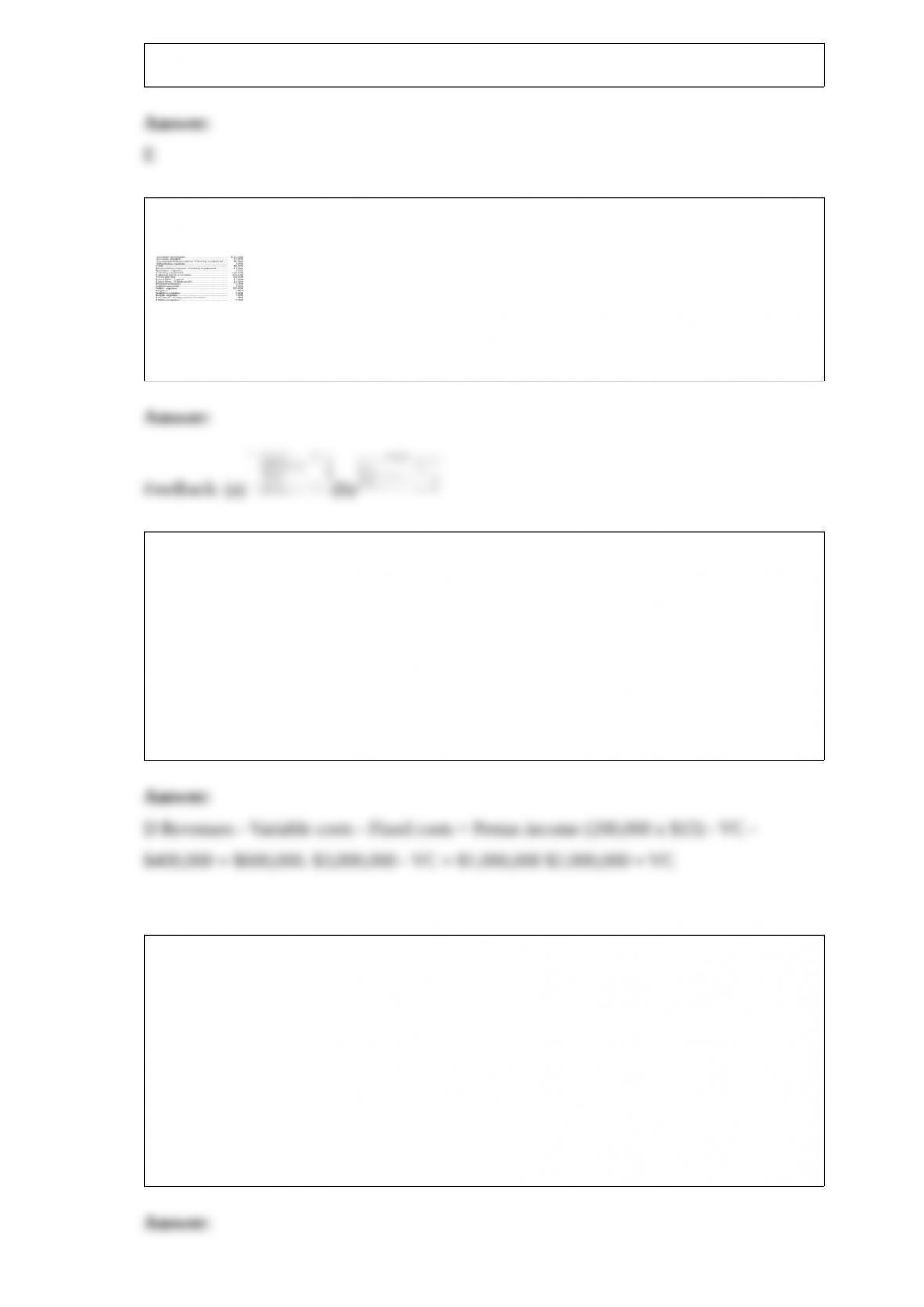
E.Margin of safety
26) Presented below are the year-end balances at December 31 of Laura’s Laundry
Service. (All accounts have normal balances.)
(a) Prepare the necessary closing entries at December 31.
(b) Prepare a post-closing trial balance at December 31.
27) During its most recent fiscal year, Simon Enterprises sold 200,000 electric
screwdrivers at a price of $15 each. Fixed costs amounted to $400,000 and pretax
income was $600,000. What amount should have been reported as variable costs in the
company’s contribution margin income statement for the year in question?
A.$2,400,000
B.$1,600,000
C.$3,000,000
D.$2,000,000
E.$1,000,000
28) In Davis Corporation’s most recent fiscal year, the company reported pretax
earnings of $215,000.
Fixed costs totaled $325,800, the unit selling price of the firm’s only product was $60,
and the variable costs per unit were 40% of the selling price. Based on this information,
the firm’s break-even point in units was:
A.13,575 units
B.15,023 units
C.13,750 units
D.9,050 units
E.8,750 units

29) A fixed cost:
A.Requires the future outlay of cash and is relevant for future decision making
B.Does not change with changes in the volume of activity within the relevant range
C.Is directly traceable to a cost object
D.Changes with changes in the volume of activity within the relevant range
E.Has already been incurred and cannot be avoided so it is irrelevant for decision
making
30) Alex Company rents space to a tenant for $2,200 per month. The tenant currently
owes two months rent, November and December. The tenant has agreed to pay the
November, December, and January rents in full on January 15 and has agreed not to fall
behind again. The adjusting entry needed on December 31 is:
A.Debit Rent Receivable, $6,600; credit Rent Earned, $6,600
B.Debit Unearned Rent, $4,400; credit Rent Earned, $4,400
C.Debit Unearned Rent, $2,200; credit Rent Earned, $2,200
D.Debit Rent Receivable, $4,400; credit Rent Earned, $4,400
E.Debit Rent Receivable, $2,200; credit Rent Earned, $2,200
31) The person who signs a note receivable and promises to pay the principal and
interest is the:
A.Maker
B.Payee
C.Holder
D.Receiver
E.Owner
32) When using the indirect method to calculate and report the net cash provided or
used by operating activities, net income is adjusted for:
A.Gains and losses from nonoperating items
B.Revenues and expenses that did not provide or use cash
C.Changes in noncash current assets and current liabilities related to operating activities
D.Changes in current liabilities related to operating activities
E.All of these
33) Baines Brothers manufactures and sells two products, A and Z in the ratio of 4:2.
Product A sells for $75; Z sells for $95. Variable costs for product A are $35; for Z $40.
Fixed costs are $418,500. Compute the number of units of Product A Baines must sell
to break even.
A.5,080
B.6,200
C.5,580
D.3,100
E.9,300
34) A company sold $12,000 worth of trampolines with an extended warranty. It
estimates that 2% of these sales will result in warranty work. The company should:
A.Consider the warranty expense a remote liability since the rate is only 2%
B.Recognize warranty expense at the time the warranty work is performed
C.Recognize warranty expense and liability in the year of the sale
D.Consider the warranty expense a contingent liability
E.Recognize warranty liability when the company purchases the trampolines
35) On November 12, Kendra, Inc., a U.S. Company, sold merchandise on credit to
Nakakura Company of Japan at a price of 1,500,000 yen. The exchange rate was
$0.00837 per yen on the date of sale. On December 31, when Kendra prepared its
financial statements, the exchange rate was $0.00843. Nakakura Company paid in full
on January 12, when the exchange rate was $0.00861. On December 31, Kendra should
prepare the following journal entry:
A.Debit Sales $90; credit Foreign Exchange Gain $90
B.Debit Foreign Exchange Loss $90; credit Sales $90
C.Debit Accounts Receivable-Nakakura Company $90; credit Foreign Exchange Gain
$90
D.Debit Foreign Exchange Loss $90; Accounts Receivable-Nakakura Company $90
E.No journal entry is required until the amount is collected

36) The direct method of reporting operating cash flows:
A.Is recommended but not required by the FASB
B.Must be used by all companies
C.Is used by most companies
D.Is considered supplementary disclosure
E.Is not recommended by the FASB, but is commonly used
37) On February 15, Seacroft buys 7,000 shares of Kebo common stock at $28.53 per
share plus a brokerage fee of $400. The stock is classified as available-for-sale
securities. On March 15, Kebo declares a dividend of $1.15 per share payable to
stockholders of record on April 15. Seacroft received the dividend on April 15 and
ultimately sells half of the Kebo stock on November 17 of the current year for $29.30
per share less a brokerage fee of $250. The journal entry to record the sale of the stock
on November 17 is:
A.Debit Cash $102,300; credit Long-Term Investments-AFS $99,855; credit Gain on
Sale of Long-Term Investments $2,445
B.Debit Cash $102,550; credit Long-Term Investments-Trading $99,855; credit Gain on
Sale of Long-Term Investments $2,645
C.Debit Cash $102,550; credit Long-Term Investments-AFS $100,055; credit Gain on
Sale of Long-Term Investments $2,495
D.Debit Cash $102,300; credit Long-Term Investments-AFS $100,055; credit Gain on
Sale of Long-Term Investments $2,245
E.Debit Cash $102,300; credit Long-Term Investments-Trading $99,855; credit Gain on
Sale of Long-Term Investments $2,645
38) A company borrows $125,000 from the Eastside Bank and receives the loan
proceeds in cash. This represents a(n):
A.Revenue activity
B.Operating activity
C.Expense activity
D.Investing activity
E.Financing activity

39) A comprehensive or overall formal plan for a business that includes specific plans
for expected sales, the units of product to be produced, the merchandise or materials to
be purchased, the expenses to be incurred, the long-term assets to be purchased, and the
amounts of cash to be borrowed or loans to be repaid, as well as a budgeted income
statement and balance sheet, is called a:
A.Master budget
B.Cash budget
C.Capital expenditures budget
D.Rolling budget
E.Production budget
40) A system of accounting for production operations that produces timely information
about inventories and manufacturing costs per unit of product is a:
A.Finished goods accounting system
B.General accounting system
C.Manufacturing accounting system
D.Cost accounting system
E.Production accounting system
41) A source document that an employee uses to report how much time was spent
working on a job or on overhead activities and that is used to determine the amount of
direct labor to charge to the job or to determine the amount of indirect labor to charge to
factory overhead is called a:
A.Payroll Register
B.Factory payroll record
C.General Ledger
D.Time ticket
E.Factory Overhead Ledger
42) A corporation reports the following year-end balance sheet data. Calculate the
following ratios:
(a) working capital
(b) acid-test ratio
(c) current ratio
(d) debt ratio
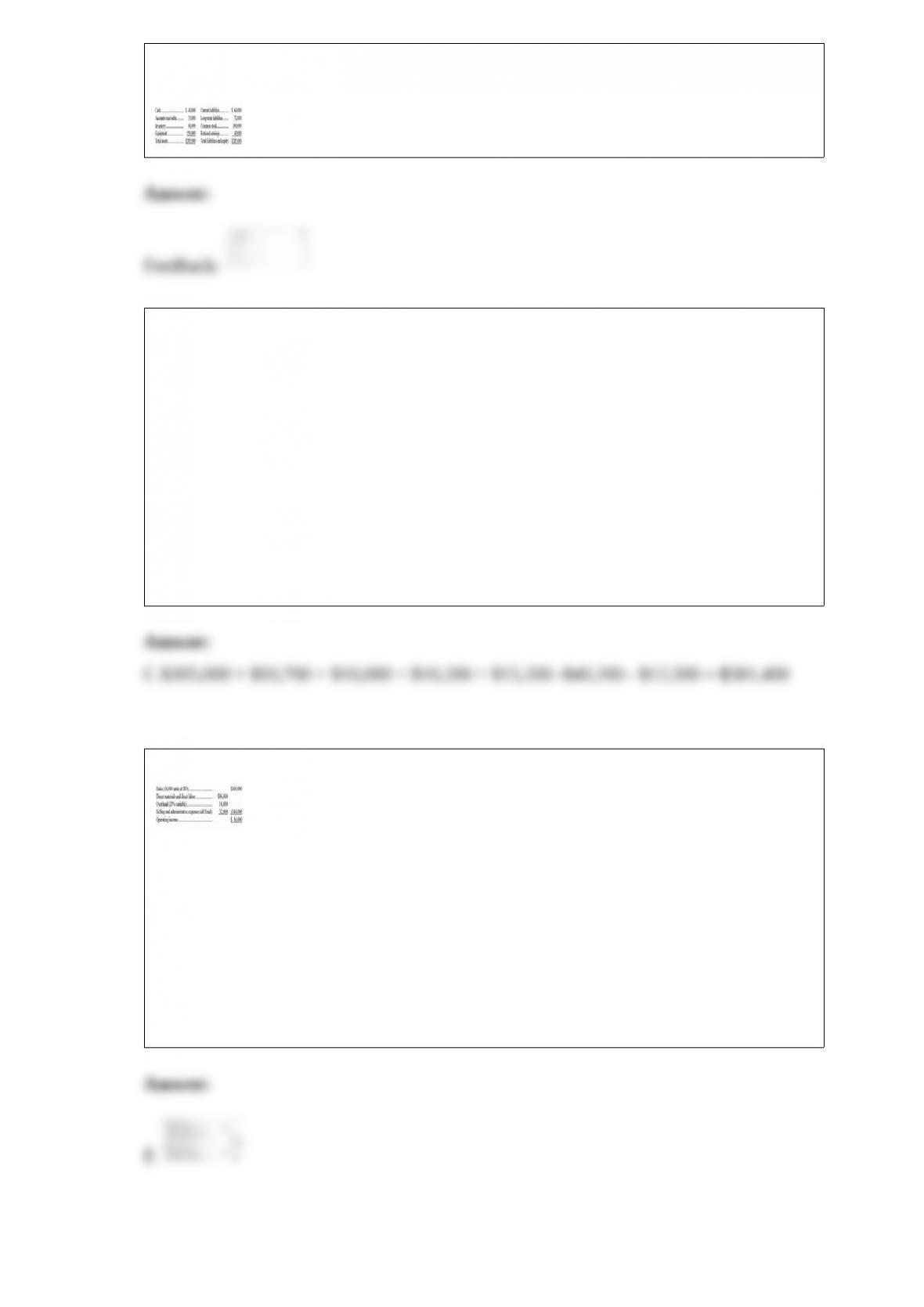
(e) equity ratio
(f) debt-to-equity ratio
43) Castine reports net income of $305,000 for the year ended December 31, Year 2. It
also reports $93,700 depreciation expense and a $10,000 loss on the sale of equipment.
Its comparative balance sheet reveals a $40,200 increase in accounts receivable, a
$10,200 decrease in prepaid expenses, a $15,200 increase in accounts payable, a
$12,500 decrease in wages payable, and a $100,000 decrease in notes payable.
Calculate the new cash provided (used) in operating activities using the indirect
method.
A.$461,800
B.$371,400
C.$381,400
D.$351,000
E.$361,000
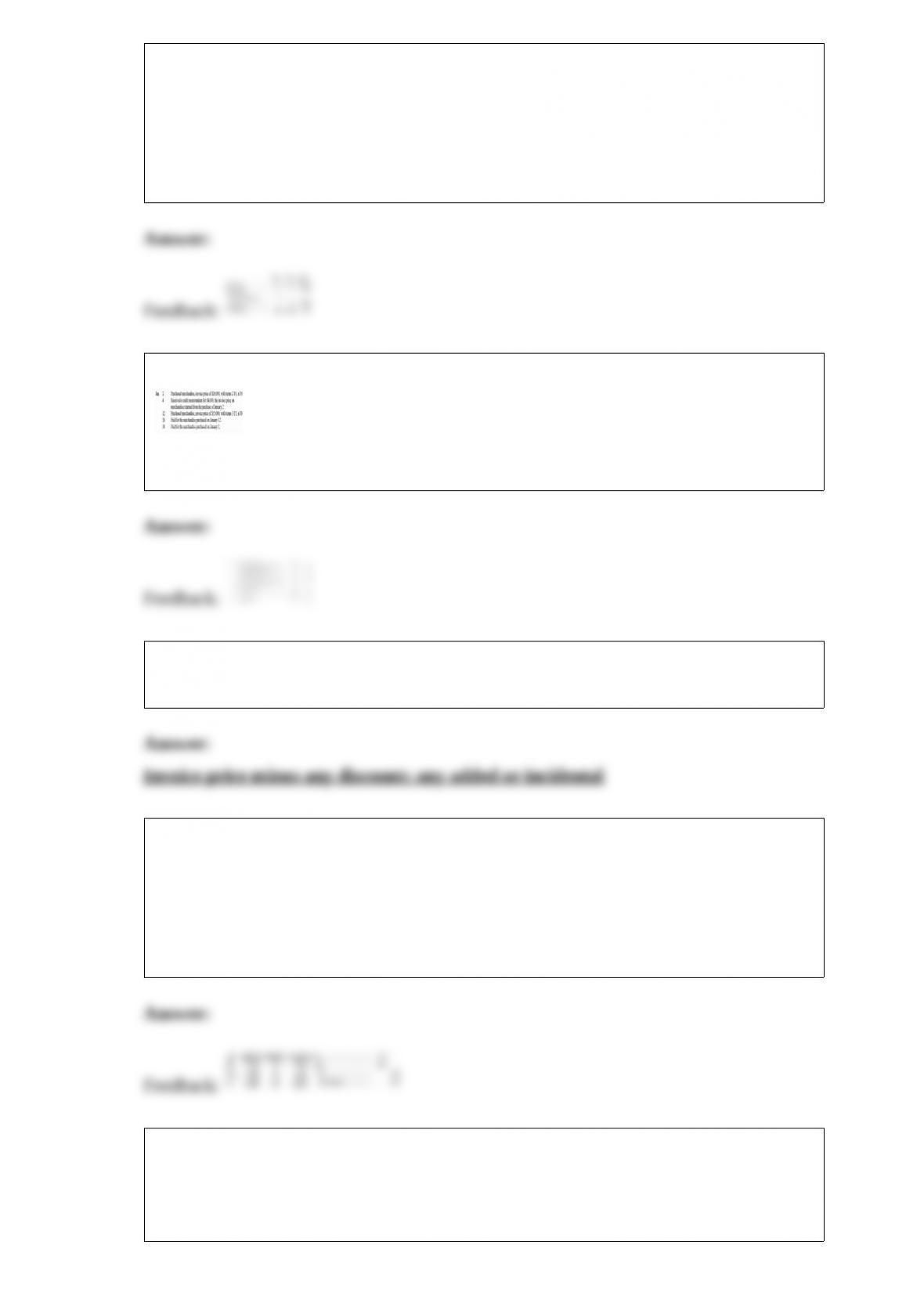
44) Thompson Company had the following results of operations for the past year:
A foreign company (whose sales will not affect Thompson’s market) offers to buy 4,000
units at $7.50 per unit. In addition to variable manufacturing costs, selling these units
would increase fixed overhead by $600 and selling and administrative costs by $300. If
Thompson accepts the offer, its profits will:
A.Increase by $30,000
B.Increase by $6,000
C.Decrease by $6,000
D.Increase by $5,200
E.Increase by $4,300
45) Juanita invested $100,000 and Jacque invested $95,000 in a new partnership. They
agreed to a $50,000 annual salary allowance to Juanita and a $40,000 annual salary
allowance to Jacque. They also agreed to an annual interest allowance of 10% on the
partners’ beginning-year capital balance, with the balance to be divided equally. Under
this agreement, what are the income or loss shares of the partners if the annual
partnership income is $102,000?
46) A company had the following transactions during January:
Using the net method of recording purchases, prepare the journal entries to record these
January transactions.
47) The cost of an inventory item includes the ____________, plus ______________
costs necessary to put it in a place and condition for sale.
48) A company purchased land with a building for a total cost of $2,570,000 ($500,000
paid in cash and the balance on a long-term note). It was estimated that the land and
building had market values of $900,000 and $2,100,000, respectively.
Determine the cost to be apportioned to the land and to the building and prepare the
journal entry to record the acquisition.
49) During the current year, a company exchanged an old truck costing $58,000 with
accumulated depreciation of $52,000 for a new truck. The new truck had a cash price of
$80,000 and the company received a $16,000 trade-in allowance on the old truck with
the balance of $64,000 paid in cash. Prepare the journal entry to record the exchange,
assuming the transaction lacked commercial substance.
50) _____________ is a borrower’s payment to the owner of an asset for its use.
51) The ______________ refers to the steps in preparing financial statements for users.