The balance of the Estimated Warranty Liability account was $12,000 on January 1,
2016, and $13,600 on December 31, 2016. Based on an analysis of warranty claims
during the past several years, this year’s warranty provision was established at 3% of
sales, and sales during the year were $800,000.
Required:
(a.) What amount of warranty expense will appear on the income statement for the year
ended December 31, 2016?
(b.) What were the actual costs of servicing products under warranty during the year?
(a.) Warranty Expense = ($800,000 sales * 3% estimated warranty expense) = $24,000
(b.) Estimated Warranty Liability, 1/1/16 balance $12,000 Less: Actual warranty costs
during 2016 (?) Add: Warranty Expense accrued during 2016 24,000 Estimated
Warranty Liability, 12/31/16 balance $13,600
Solving for the missing amount, the actual costs of servicing products under warranty
during the year = $12,000 + 24,000 – $13,600 = $22,400
(a.) Warranty Expense = ($800,000 sales * 3% estimated warranty expense) = $24,000
(b.) Estimated Warranty Liability, 1/1/16 balance $12,000
Less: Actual warranty costs during 2016 (?
The Defiance College sells season tickets for four home football games at a price of
$60. For the 2017 season, 5,000 season tickets were sold.
(a.) Write the journal entry or use the horizontal model to show the effect of the sale of
the season tickets.
(b.) Write the journal entry or use the horizontal model to show the effect of hosting a
home football game.
(c.) Where on the balance sheet would the account balance representing funds Received
for games not yet played be classified? Assume that The Defiance College follows the
same accounting and financial reporting procedures that are used in business.
At the end of the year, retained earnings totaled $5,100. During the year, net income
was $750, and dividends of $360 were declared and paid. Retained earnings at the
beginning of the year totaled:
A. $6,210
B. $3,990
C. $3,690
D. $4,710
Each of a company’s several product lines has a different contribution margin ratio.
Total sales in 2017 were 20% higher than total sales in 2016. Total contribution margin
for 2017 will be:
A. the same as it was in 2016, regardless of changes in sales mix.
B. 20% higher than it was in 2016, regardless of changes in sales mix.
C. more than 20% higher than it was in 2016, if the sales mix changes and
proportionately more high contribution margin ratio products are sold in 2017 than in
2016.
D. less than 20% higher than it was in 2016, if the sales mix changes and
proportionately more high contribution margin ratio products are sold in 2017 than in
2016.
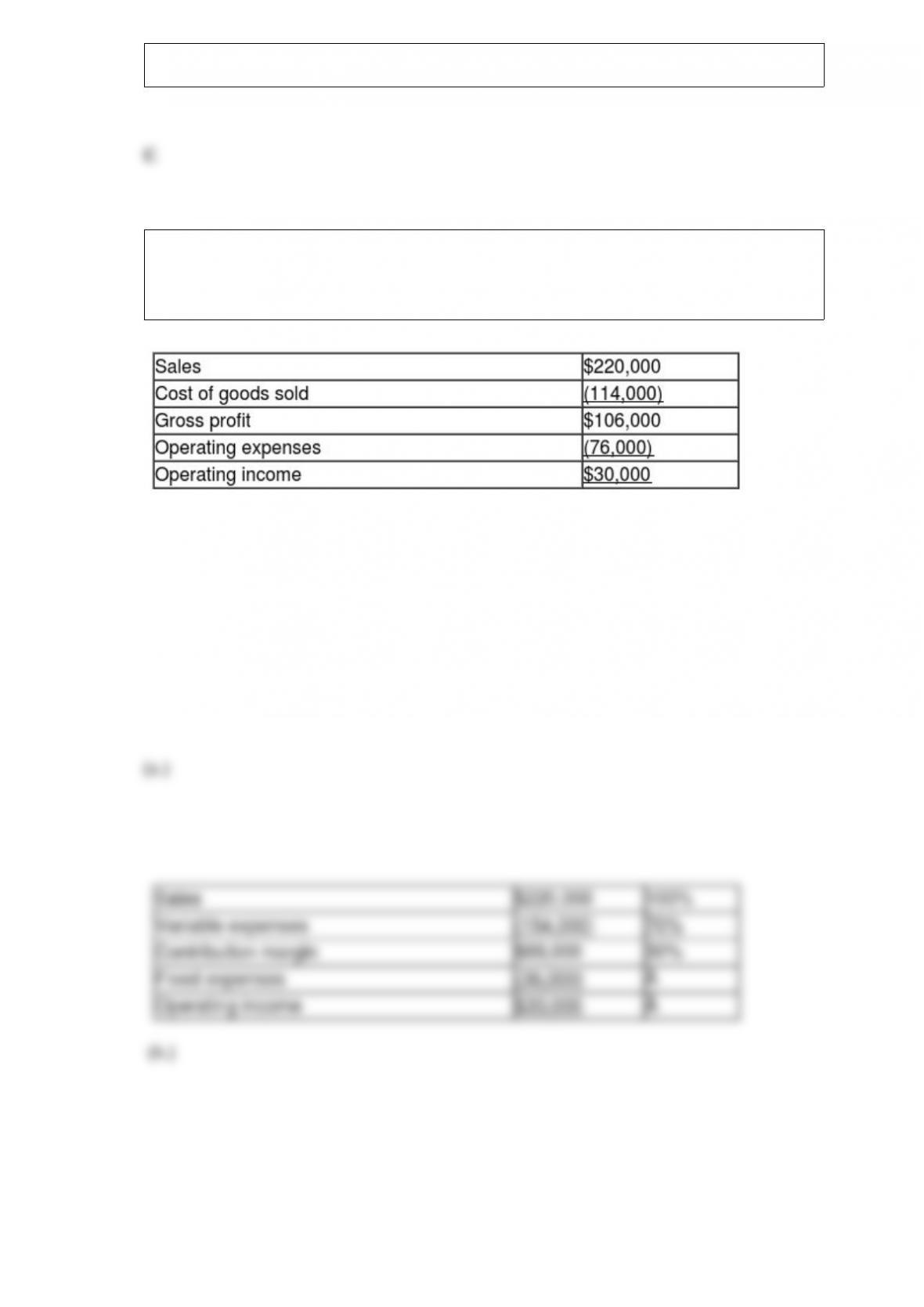
Presented below is the income statement for Breckenridge Farms for the month of
October:
Based on an analysis of cost behavior patterns, it has been determined that the company’s
contribution margin ratio is 30%.
(a.) Rearrange the income statement to the contribution margin format.
(b.) If sales increase by 20 percent, what will be the firm’s operating income?
(c.) Calculate the amount of revenue required for Breckenridge Farms to break even.
Management’s statement of responsibility:
A. explains that the entity’s financial statements are the responsibility of the entity’s
auditors.
B. states that the financial statements are free of significant error.
C. affirms that management is responsible for assuring adherence to internal control
policies and procedures.
D. guarantees that the firm has operated in a highly ethical manner.
Cost management initiatives along an organization’s value chain functions begins with
__________ and concludes with __________.
A. marketing; production
B. research and development; customer service
C. design; production
D. production; distribution
The overhead component of product cost is:
A. the sum of the actual overhead costs incurred in the manufacture of the product.
B. likely to be the same amount for every product made by the company.
C. includes all manufacturing costs except those for raw materials and direct labor.
D. determined at the end of the year when actual costs and actual production are known.
The balance sheet might also be called:
A. Statement of Financial Position.
B. Statement of Assets.
C. Statement of Changes in Financial Position.
D. None of the above.
Erber, Inc. produces men’s neckties and dress socks. Manufacturing overhead is
assigned to production using an application rate based on direct labor hours.
(a.) For 2016, the company’s cost accountant estimated that total overhead costs
incurred would be $184,500, and that a total of 24,600 direct labor hours would be
worked. Calculate the amount of overhead to be applied for each direct labor hour
worked on a production run.
(b.) A production run of 500 neckties required raw materials that cost $3,120, and 140
direct labor hours at a cost of $8.00 per hour. Calculate the cost of each necktie
produced.
(c.) At the end of February 2016, 420 neckties made in the above production run had
been sold, and the rest were in ending inventory. Calculate the cost of the neckties sold
that would have been reported in the income statement and the cost included in the
February 28, 2016, finished goods inventory.
Managerial accounting, as opposed to financial accounting, is primarily concerned
with:
A. preparing the current balance sheet of the company.
B. present and future planning and control.
C. providing information to investors and creditors.
D. historical results of operations.
A firm’s cash dividends were $1.98 per share of common stock for calendar 2016. In
2017, the stock was split 3-for-1, and in 2018 a 10% stock dividend was issued.
Dividends per share for 2016, to be reported in the firm’s annual report for 2018, are:
A. $1.98
B. $0.73
C. $0.66
D. $0.60 Stock split occurred in 2017 so $1.98/3 = $0.66. Then in 2018 there was a
stock dividend of 10% so $0.66/1.1 = $060 per share, as reported in 2018.
The capital budget provides an overall blueprint to help an organization meet it’s:
A. operating budget goals.
B. current period profitability.
C. relevant costing objectives.
D. long-term growth and profitability objectives.

What percentage of the contribution margin is profit on units sold in excess of the
break-even point?
A. It’s 50% to the contribution margin ratio.
B. It’s equal to the variable cost ratio.
C. It’s equal of the gross profit ratio.
D. It’s 100%.
The best reason for flexing a budget is to:
A. permit a more accurate determination of variances.
B. revise a budget at the beginning of a period.
C. adjust actual results so they are closer to budgeted amounts.
D. recognize the cost behavior pattern of budgeted amounts.
The principal objective of a performance report is to:
A. highlight activities that need management attention.
B. direct blame to those managers who did not meet goals.
C. provide a basis for rewarding effective managers.
D. highlight budgets that have been incorrectly established.
An example of a cost that is likely to have a variable behavior pattern is:
A. sales force salaries.
B. depreciation of production equipment.
C. salaries of production supervisors.
D. production labor wages.
The officer of a corporation responsible for the firm’s published financial statements
would be most concerned about pronouncements of the:

A. FASB.
B. AICPA.
C. GASB.
D. SEC.
E. IRS.
A firm’s net income is $630,000 on sales of $63 million. Average assets for the period
were $14 million. For the year:
A. margin was 5%, turnover was 1.2, and ROI was 6%.
B. margin was 6%, turnover was 1.5, and ROI was 6%.
C. margin was 4%, turnover was 1.2, and ROI was 4.8%.
D. margin was 1%, turnover was 4.5, and ROI was 4.5%. Margin =
$630,000/$63,000,000 = 1%
When an accelerated depreciation method is used to calculate depreciation expense:
A. the net book value of the asset halfway through its useful life will be less than if
straight-line depreciation is used.
B. the net book value of the asset at the end of its useful life will be less than if
straight-line depreciation is used.
C. depreciation expense will be less in the early years of the asset’s life than if
straight-line depreciation is used.
D. the accumulated depreciation account balance will increase by a larger amount in the
last half of an asset’s life than if straight-line depreciation is used.
The concept of matching revenue and expense refers to the fact that:
A. expenses for a period equal the revenues for the period.
B. all costs incurred in the process of earning revenues during a period are recorded as
expenses in that period.
C. all cash disbursements during a period are subtracted from all cash receipts during
the period.
D. costs incurred in the process of earning revenues during a period are deferred and
expensed in a future period.
The annual per share dividend requirement of a 6%, $100 par value preferred stock that
was issued for $105 is:
A. $6.00
B. $6.38
C. $7.50
D. $10.00
At the beginning of the fiscal year, the balance sheet showed assets of $2,728 and
stockholders’ equity of $1,672. During the year, assets increased $148 and liabilities
decreased $76.
Liabilities at the end of the year totaled:
A. $980
B. $1,056
C. $1,672
D. $1,820
A firm has revenues of $120,000, a contribution margin ratio of 30%, and fixed
expenses that total $56,000. If revenues increase $20,000, then:
A. operating income will increase by $6000.
B. operating income will be 0.
C. fixed expenses will increase $8000.
D. the contribution margin ratio will increase by 1/8.
Digital Devices, Inc. has received a special order to manufacture 10,000 CD ROM
drives for an Italian computer manufacturer. Digital determines that the order will not
affect its current domestic sales of CD ROM drives and because of the special nature of
the order no sales commission would be paid. However, to process the order for export,
an additional handling cost of $10 per unit is estimated. The order indicates that the
price of the drives cannot exceed $200.
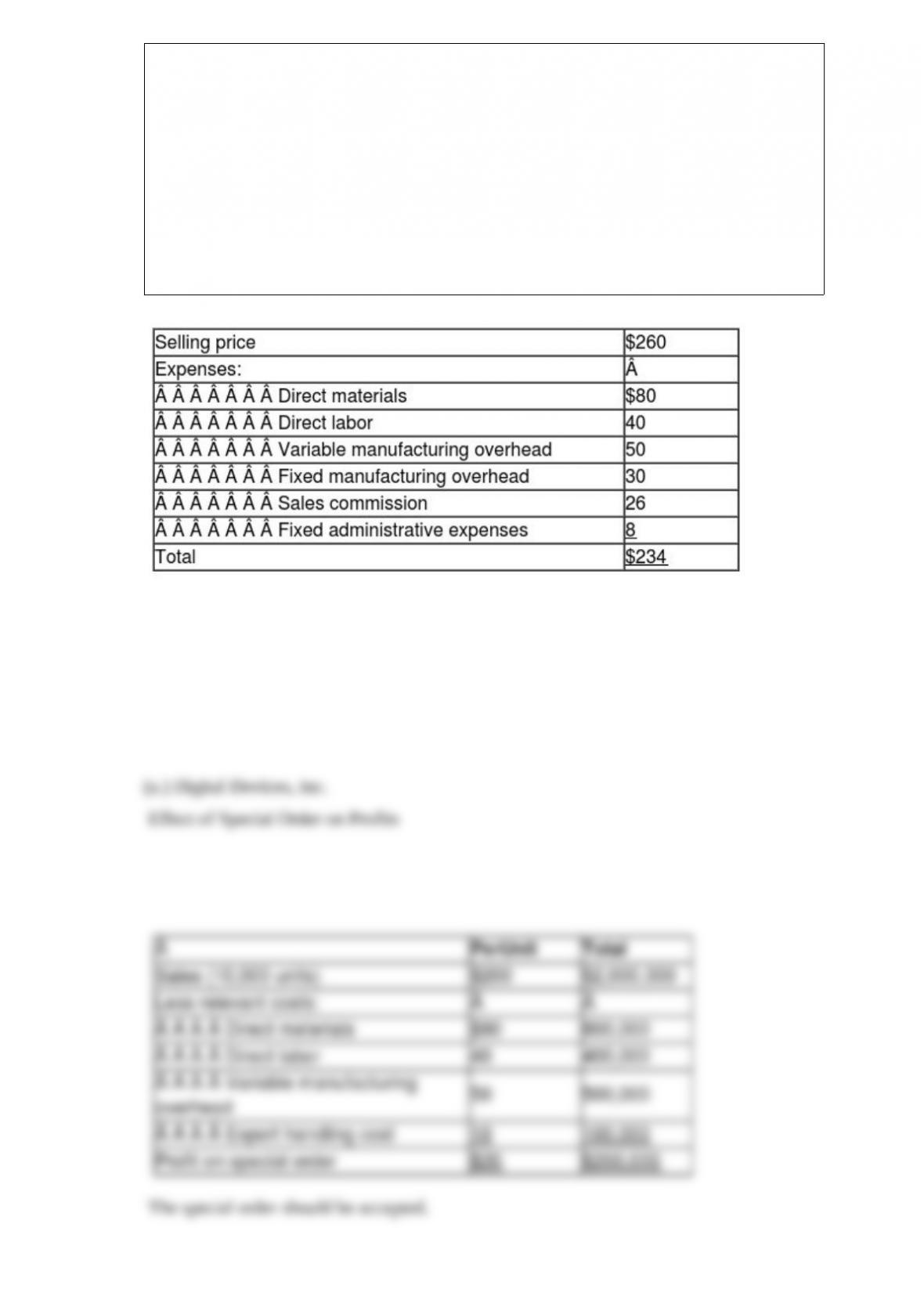
The company has the capacity to produce 100,000 units annually but is currently
operating at 75% of available capacity. Unit selling price and costs, based on estimated
actual capacity being utilized, are as follows:
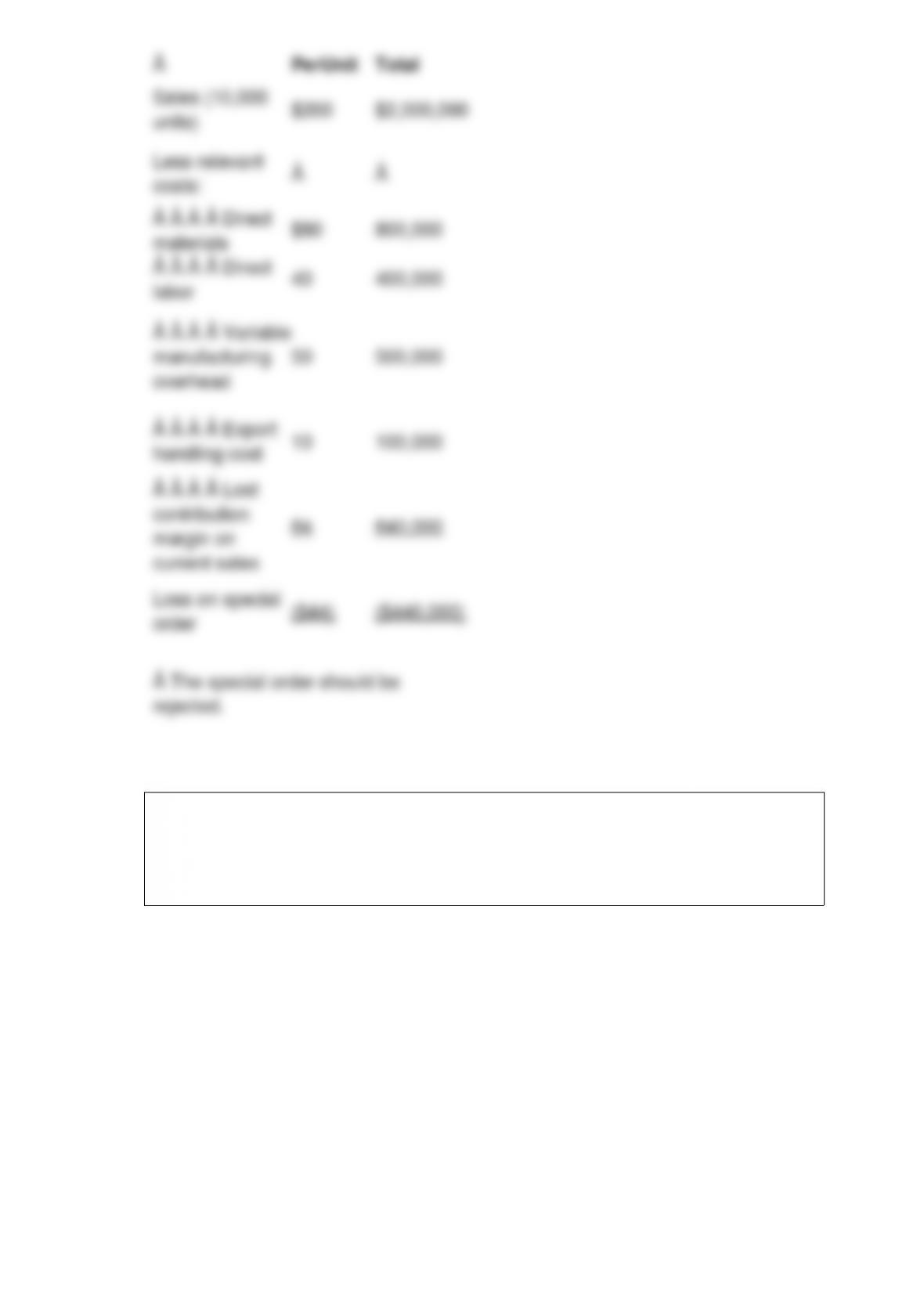
(a.) Prepare a relevant cost analysis showing the effect on profit if the company accepts
the special order.
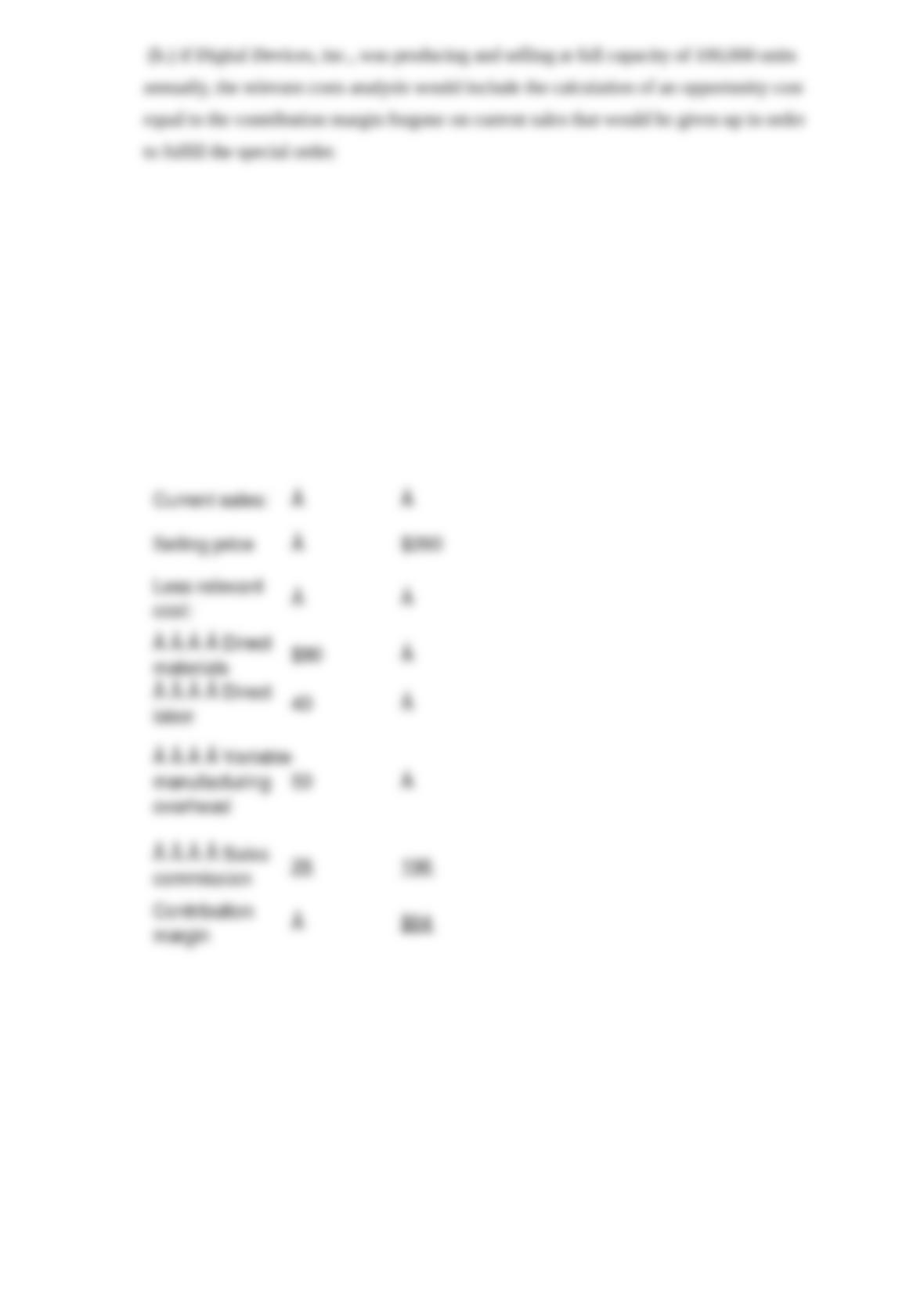
(b.) How would your analysis change if Digital Devices, Inc., was producing and selling
100,000 units annually?
The following data have been collected by capital budgeting analysts at Condel
Brothers Oil Co. concerning the drilling and production of known reserves at an
off-shore location:
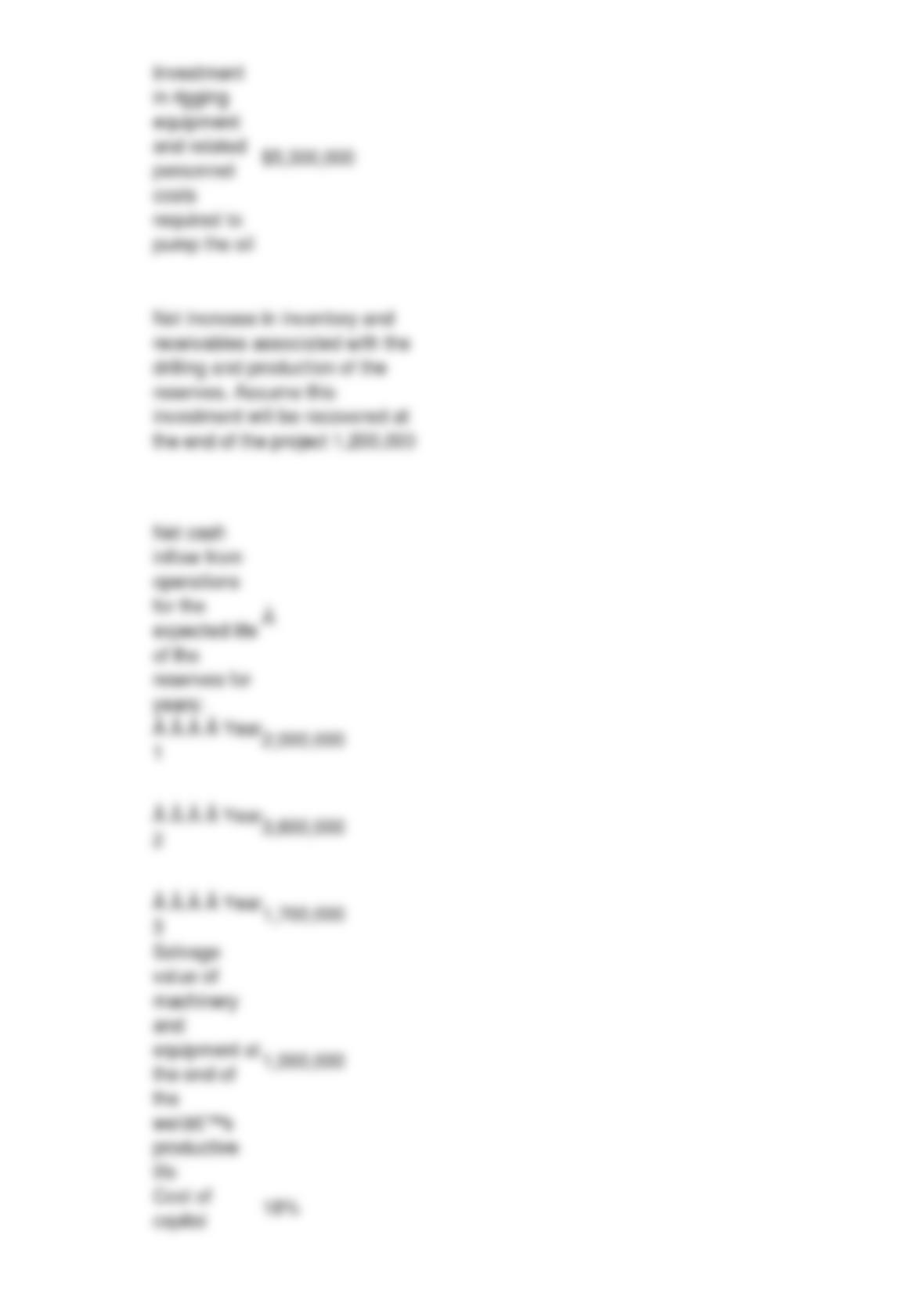
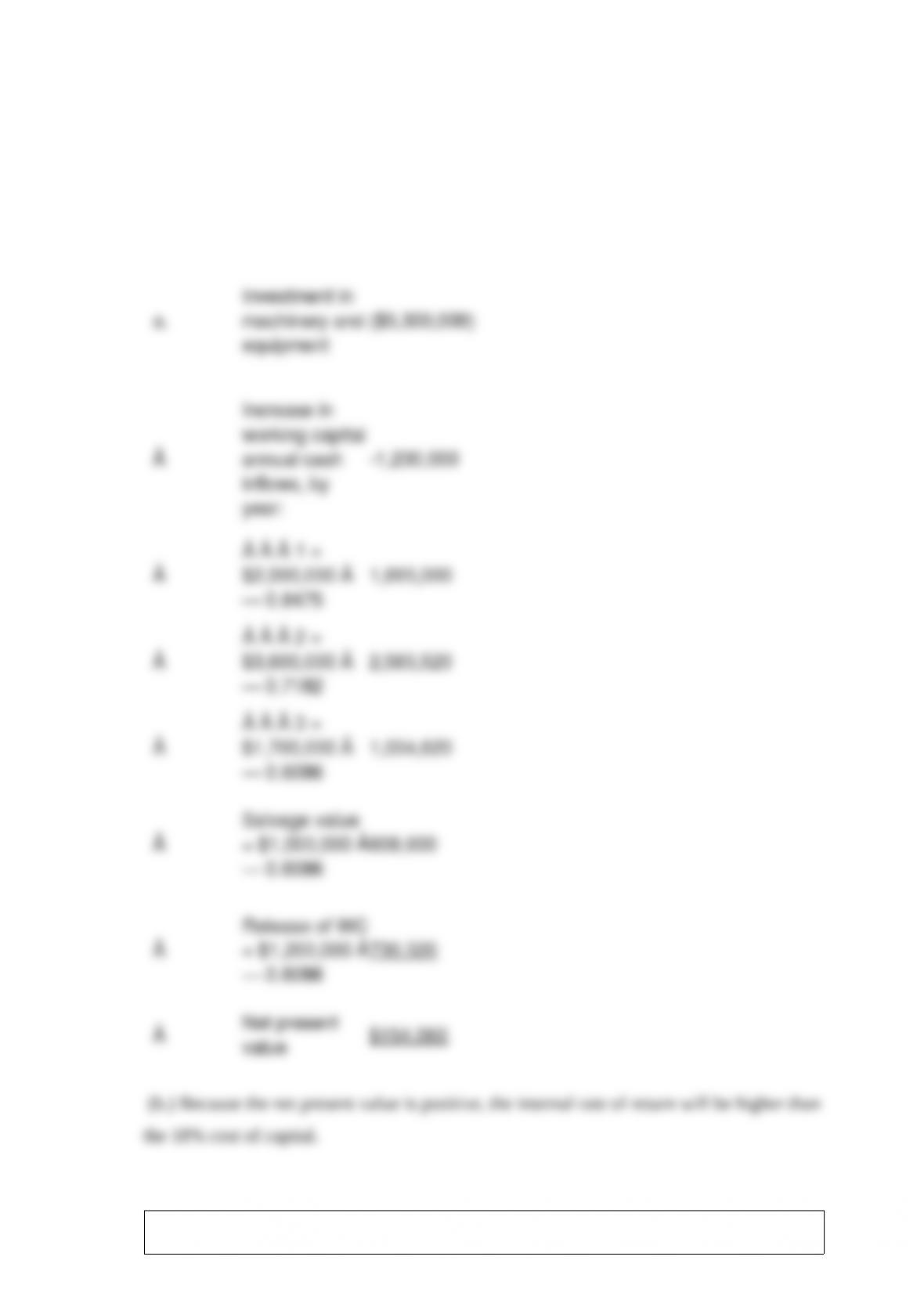
(a.) Calculate the net present value of the proposed investment in the drilling and
production operation. Ignore income taxes, and round answers to the nearest $1.
(b.) What will the internal rate of return on this investment be relative to the cost of
capital? Explain your answer.
Relevant costs in decision-making:
A. are future costs that represent differences between decision alternatives.
B. result from past decisions.
C. should not influence the decision.
D. none of the above.
Envision Company uses activity-based costing (ABC) for allocating manufacturing
overhead costs to jobs and it has established the following cost drivers and rates:
During July, Job #2005 produced 1,500 units and required the following activity: 1,800
parts, 2 production runs, and 325 direct labor hours.
(a.) Calculate the amount of manufacturing overhead applied to Job #2005.
(b.) Explain the advantage of using the ABC approach.
Calculate the annual cash dividends required to be paid for each of the following
preferred stock issuances:
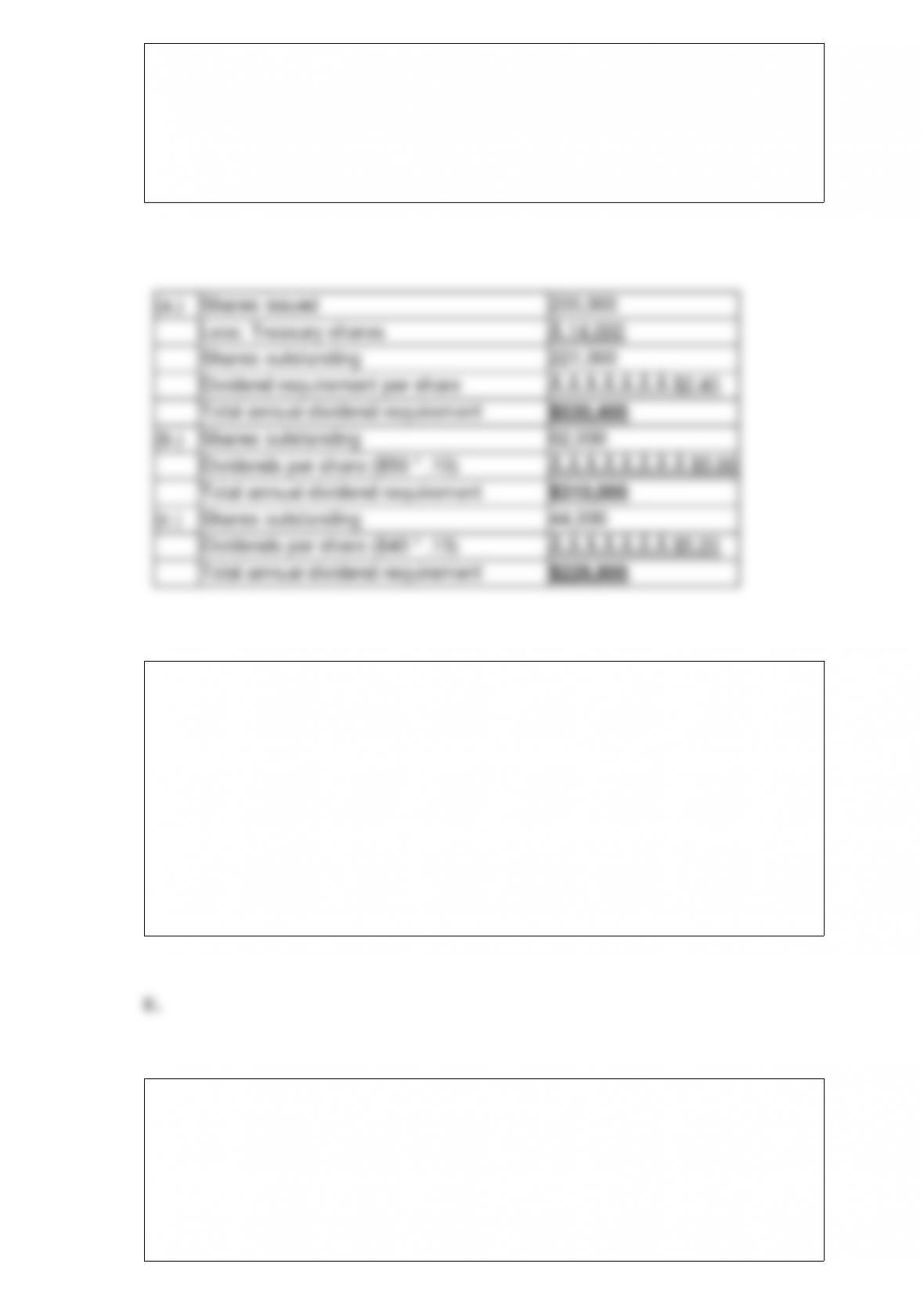
(a.) $2.40 cumulative preferred, no par value; 300,000 shares authorized, 235,000
shares issued, 14,000 shares held as treasury stock.
(b.) 10%, $50 par value preferred; 100,000 shares authorized, 62,000 shares issued and
outstanding.
(c.) 13% cumulative preferred, $40 stated value, $42 liquidating value; 70,000 shares
authorized, 46,000 shares issued, 44,000 shares outstanding.
Which of the following is true about the International Accounting Standards Board
(IASB)?
A. The IASB has been working with the FASB in recent years to achieve convergence
of International Financial Reporting Standards (IFRS) and U.S. GAAP.
B. The goal of the IASB is to develop a single set of high quality, understandable,
enforceable, and globally accepted financial reporting standards based upon clearly
articulated principles.
C. The SEC has delegated full authority to the IASB to be the accounting standards
setting body in the United States.
D. All of the above are correct.
E. Only A and B are correct.
Acme Company is considering replacing outdated production equipment that will allow
for production cost savings of $20,000 per month. The new equipment will have a
five-year life and cost $800,000, with an estimated salvage value of $50,000. Acme’s
cost of capital is 10%.
Calculate the payback period and the accounting rate of return for the new production
equipment.
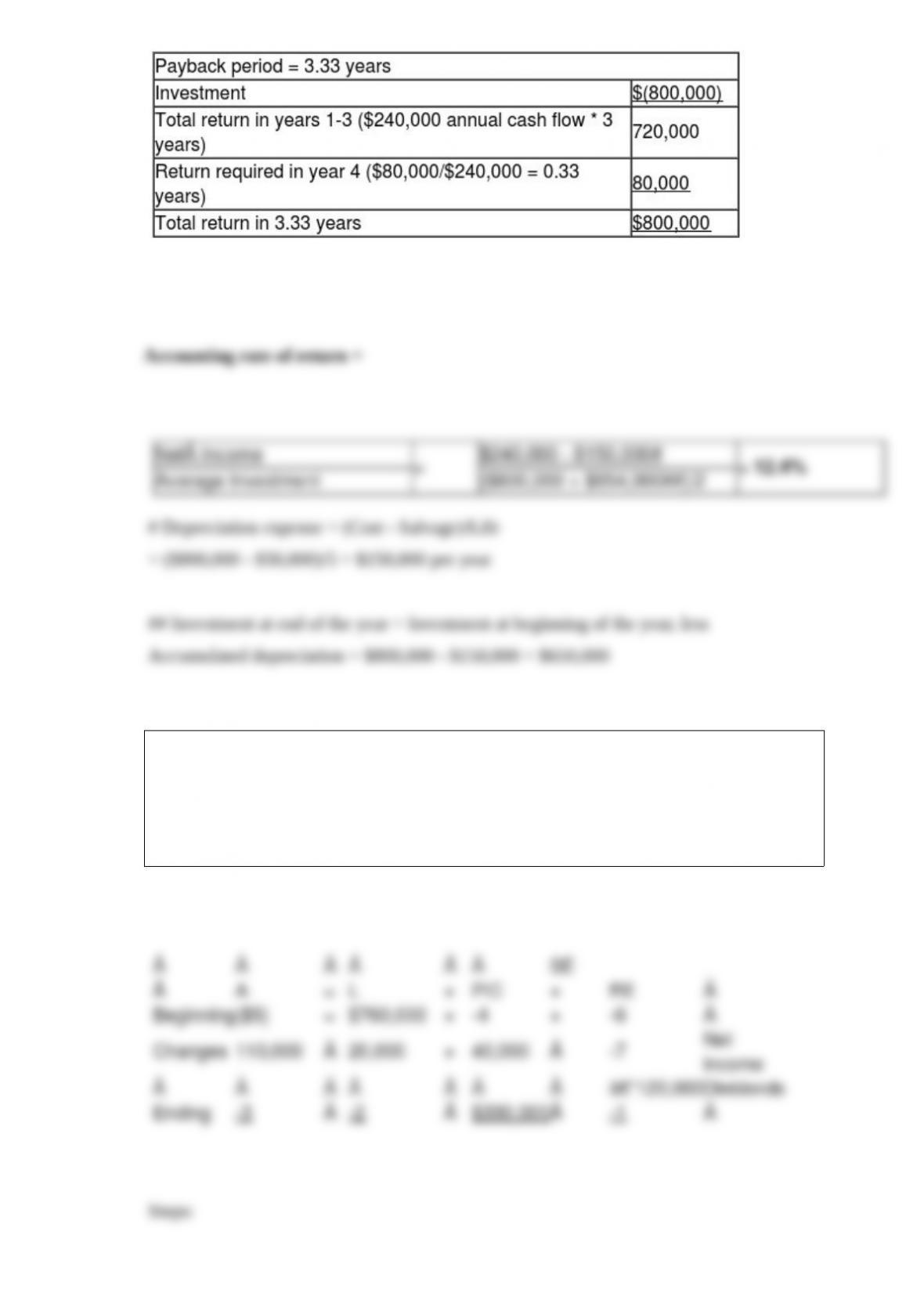
At the beginning of the current fiscal year, the balance sheet of Arches Co.showed
liabilities of $760,000. During the year liabilities increased by $20,000, assets increased
by $110,000, and paid-in capital increased by $40,000 to $330,000. Dividends declared
and paid during the year were $120,000. At the end of the year, stockholders’ equity
totaled $804,000. Calculate net income or loss for the year.
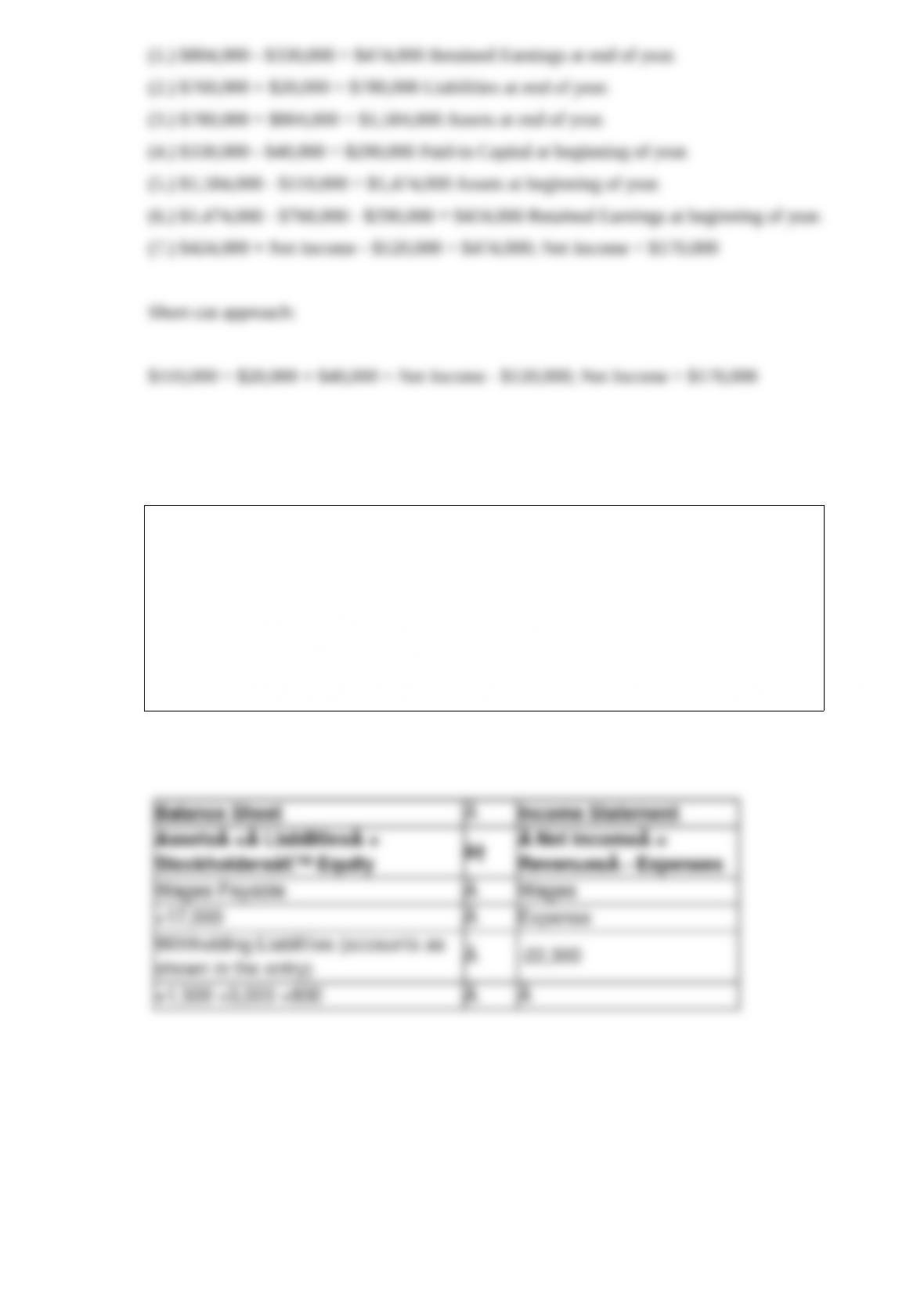
For the payroll period ended on October 19, 2016, gross pay was $22,300, net pay was
$17,000, FICA tax withholdings were $1,500, income tax withholdings were $3,000,
and medical insurance contributions were $800.
Required:
Use the horizontal model (or write the journal entry) to show the effects of the payroll
accrual on October 19, 2016.
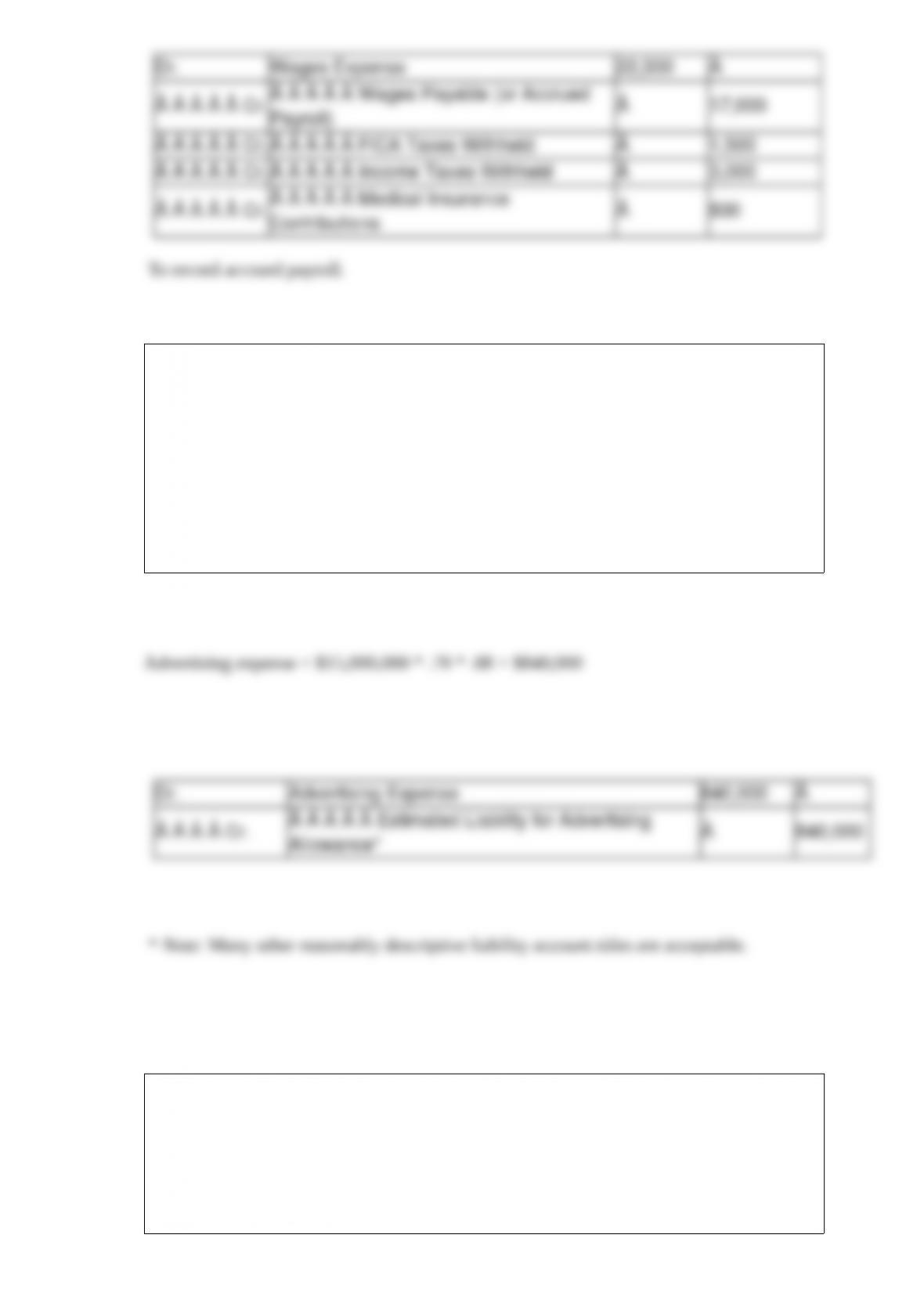
Assume that Wallywill, Inc. offered its customers, which are primarily retail stores who
sell its products, an advertising allowance equal to 8% of the amount of purchases from
Wallywill during December, if the retail store would spend the money for advertising in
January. Wallywill Inc.’s sales in December totaled $15,000,000, and it was expected
that 70% of those sales were made to retailers who would take advantage of the
advertising allowance offer.
Write the journal entry or use the horizontal model to show the effect of the accrual that
should be made as of December 31 with respect to the advertising allowance offer.
Listed here are a number of accounts: Merchandise Inventory, Land, Common Stock,
Accounts Payable, Insurance Expense, Equipment, Cash, Cost of Goods Sold,
Buildings, Retained Earnings, Supplies, Long-term Debt, Sales, Accounts Receivable.
Required:
Which of the accounts listed above are not assets? How would you categorize each of
these nonasset accounts?
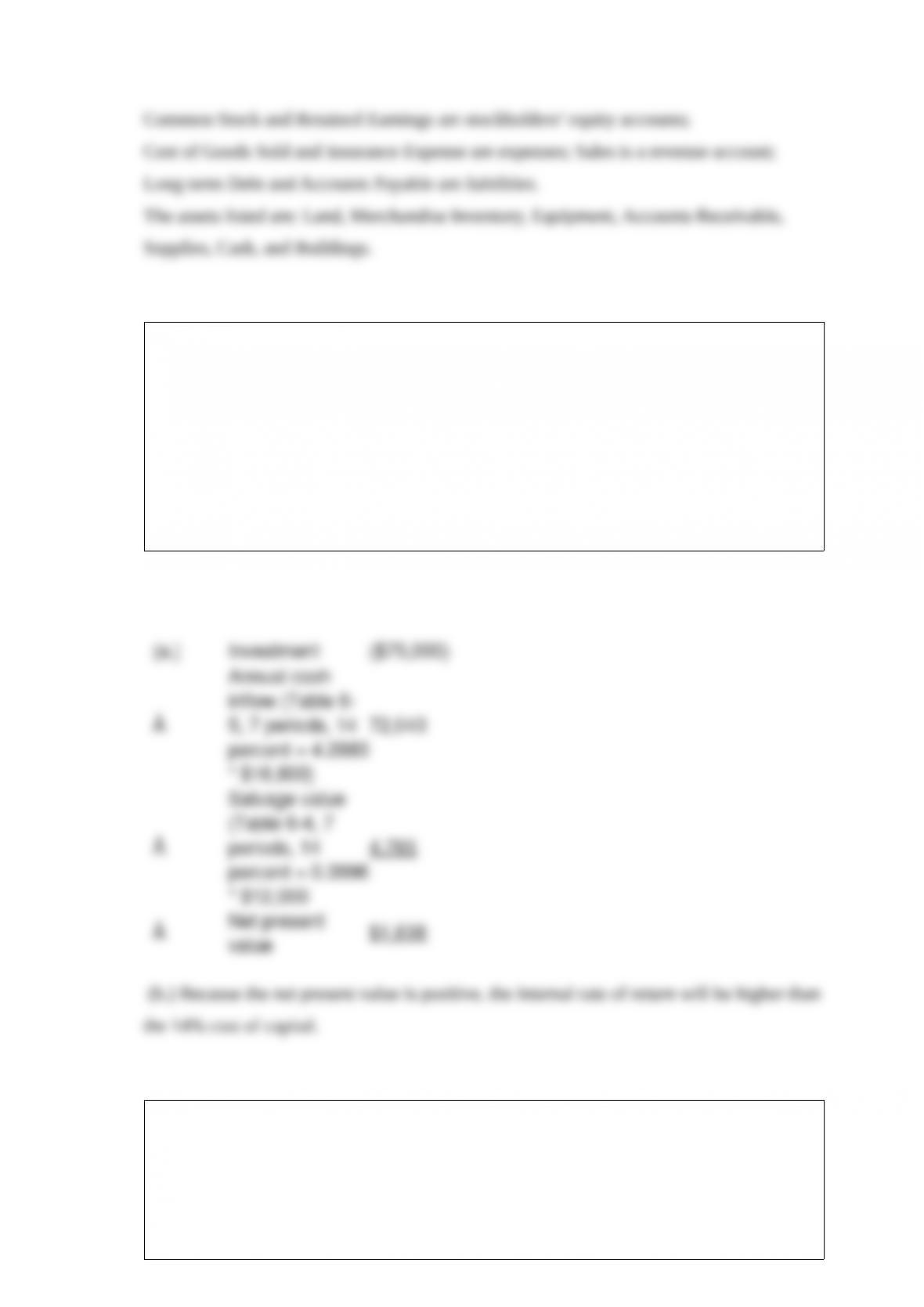
Delta, Inc. is considering the investment of $75,000 in a new machine. The machine
will generate cash flow of $16,800 per year for each year of its seven-year life and will
have a salvage value of $12,000 at the end of its life. Delta Inc.’s cost of capital is 14%
percent.
(a.) Calculate the net present value of the proposed investment. Ignore income taxes,
and round all answers to the nearest $1.
(b.) What will the internal rate of return on this investment be relative to the cost of
capital? Explain your answer.
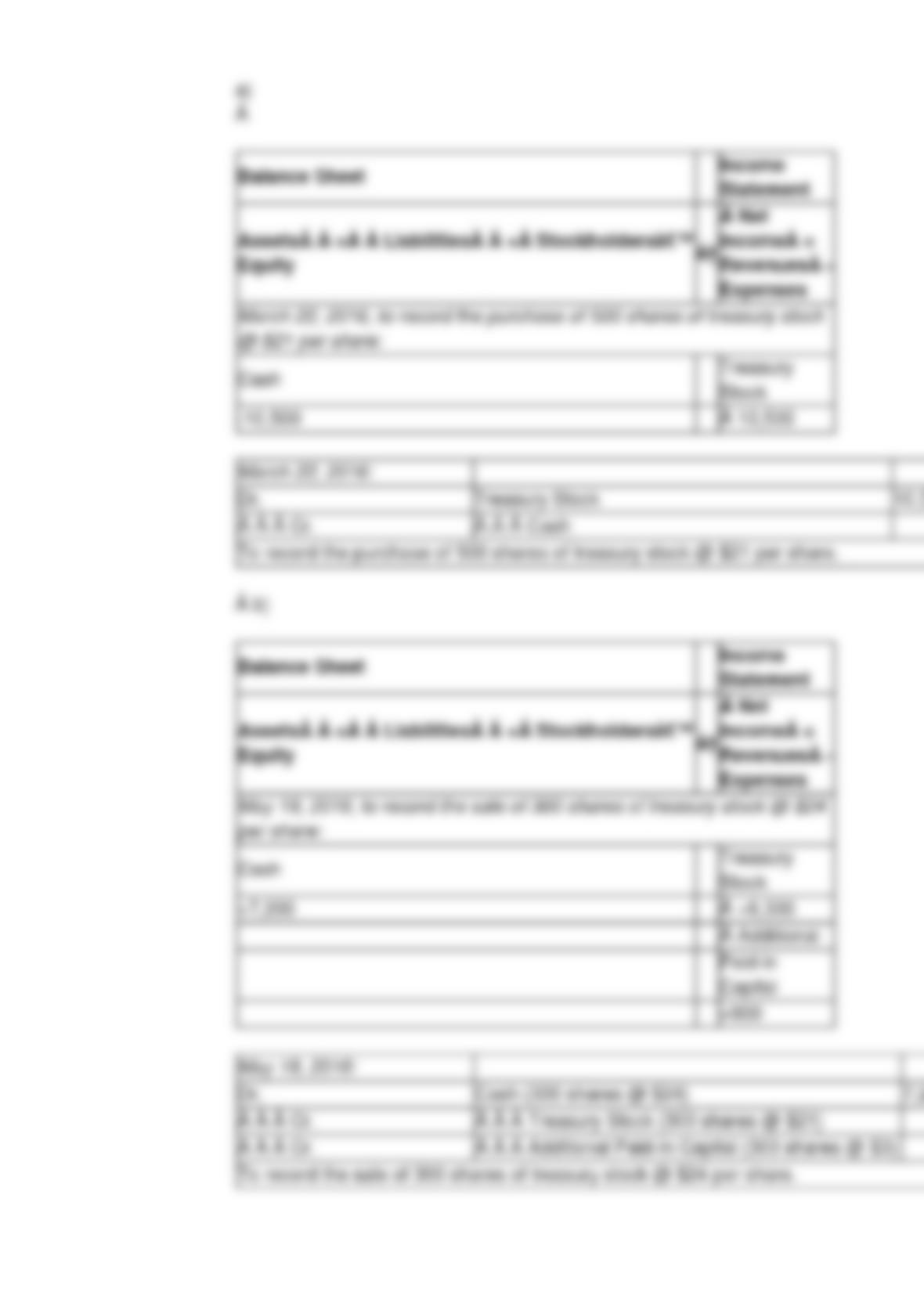
On March 22, 2016, Amelia, Inc., purchased 500 shares of its own common stock in the
market for $21 per share. On May 19, 2016, the company sold 300 of these shares in
the open market at a price of $24 per share.
Required:

Use the horizontal model (or write the entry) to show the effects on Amelia, Inc.’s
financial statements of:
(a.) The purchase of the treasury stock on March 22, 2016.
(b.) The sale of the treasury stock on May 19, 2016.
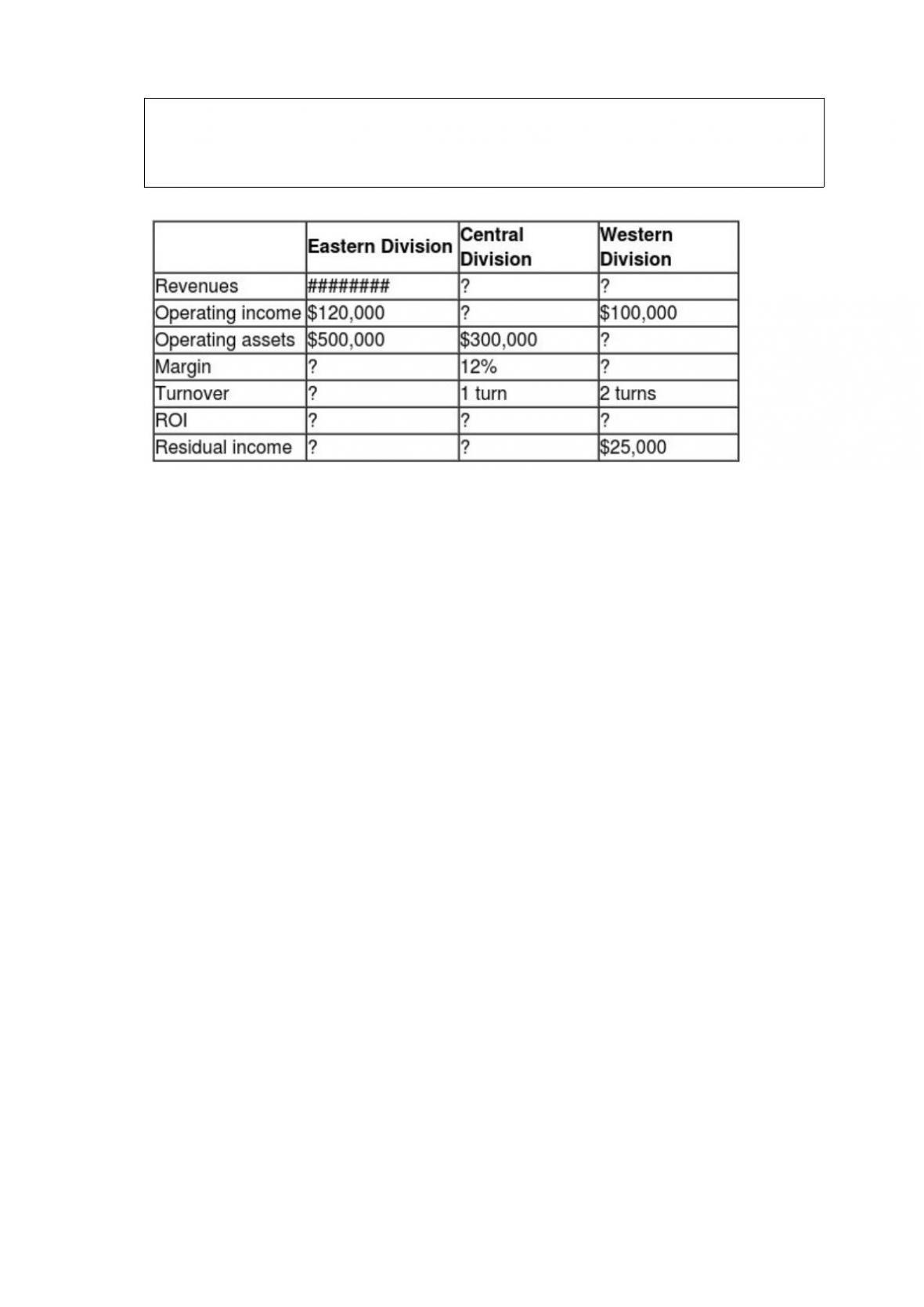
Selected information about American Industries is presented below. American has three
operating divisions and requires a 12% return on all investments:
Calculate the missing amounts for each division.
Sunset Center’s sales are all made on account. The firm’s collection experience has been
that 25 percent of a month’s sales are collected in the month of sale, 65 percent are
collected in the month following the sale, and 8 percent are collected in the second
month following the sale. The sales forecast for the months of May through August is:
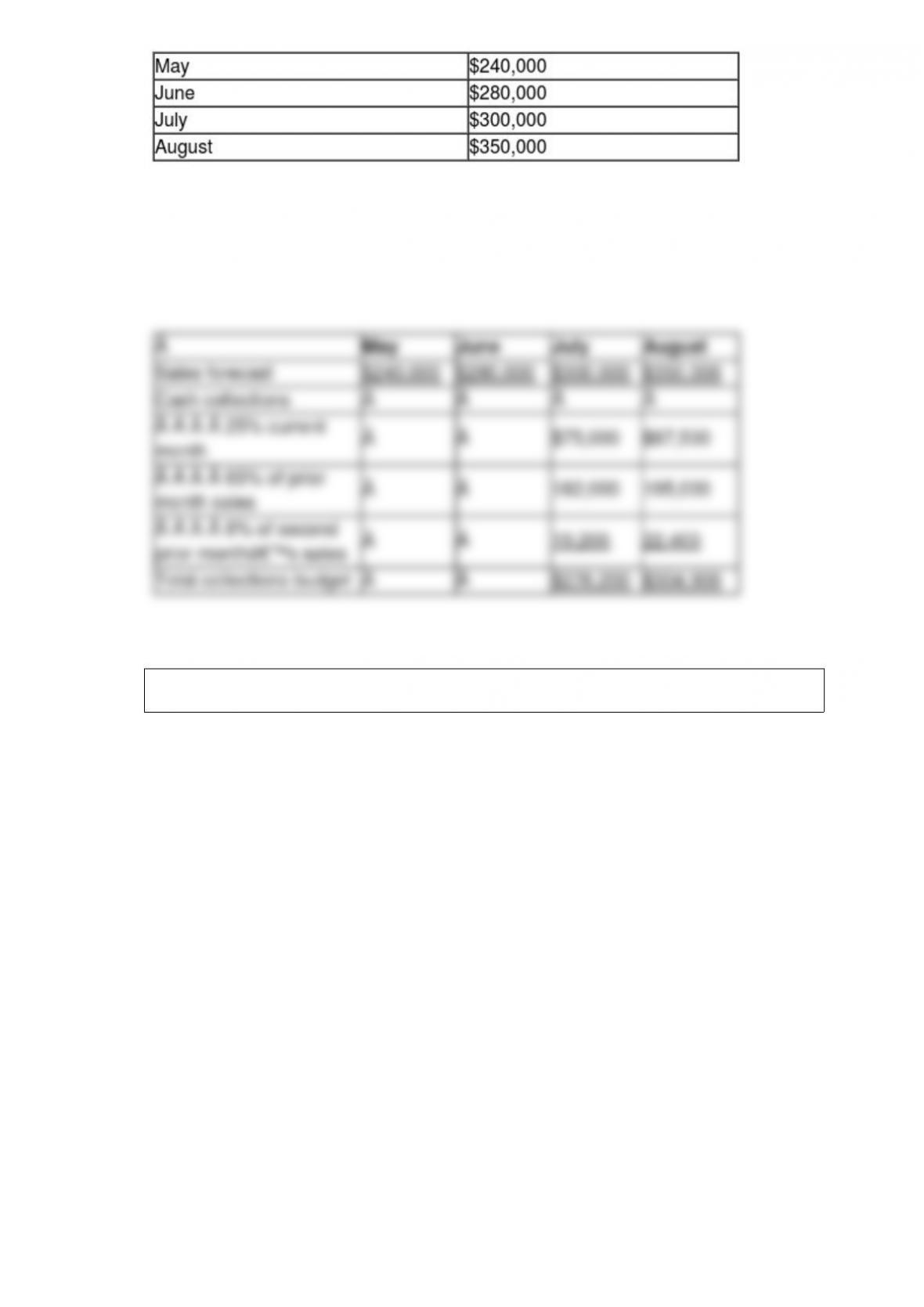
Calculate the cash collections that would be included in the cash budgets for July and
August.
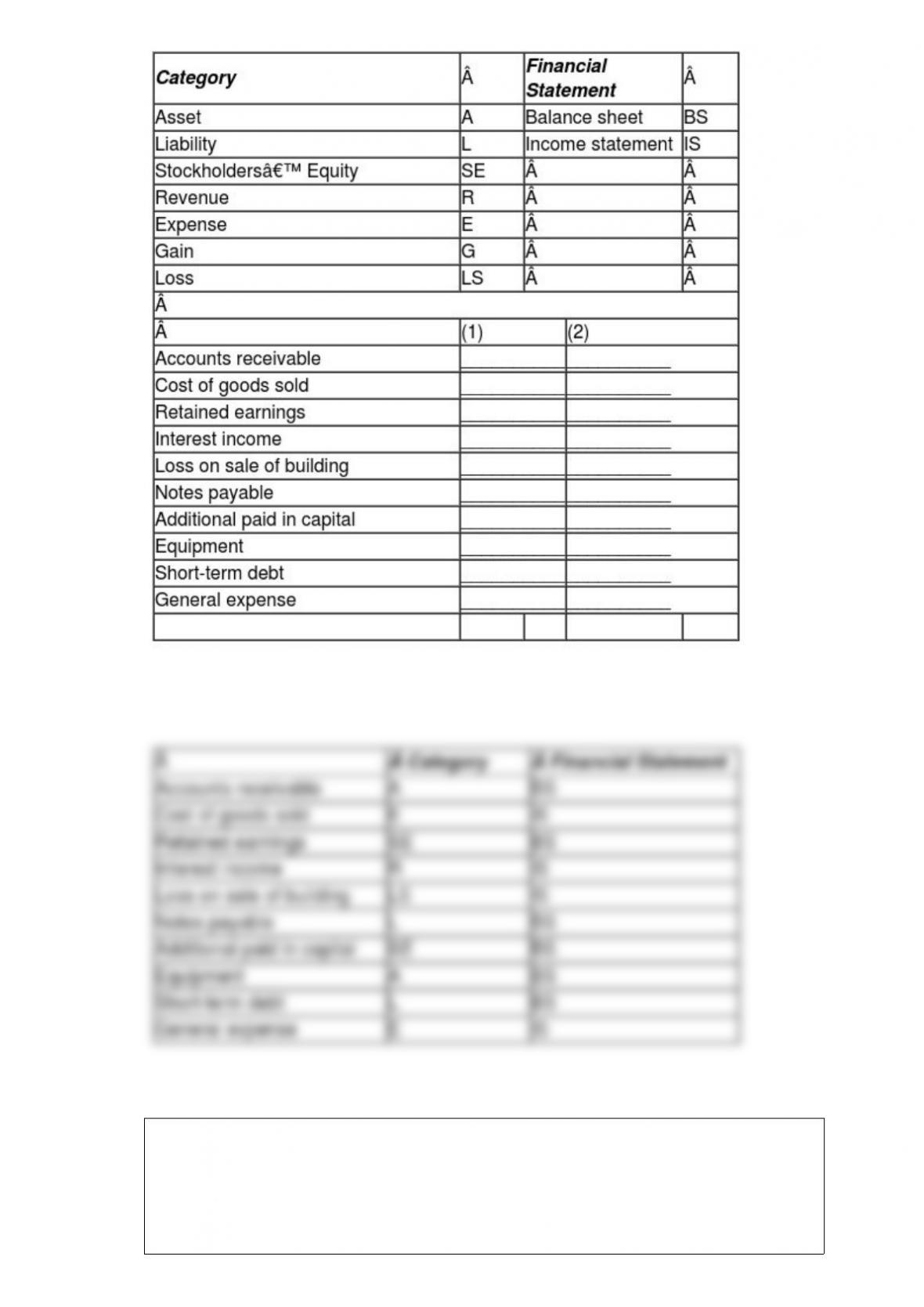
Listed below are a number of financial statement captions.
At the beginning of the current fiscal year, Surrey Corp.balance sheet showed assets of
$1,350,000 and liabilities of $1,050,000. During the year, liabilities decreased by
$70,000. Net Income for the year was $350,000, and net assets at the end of the year
were $386,000. There were no changes in paid-in capital during the year.
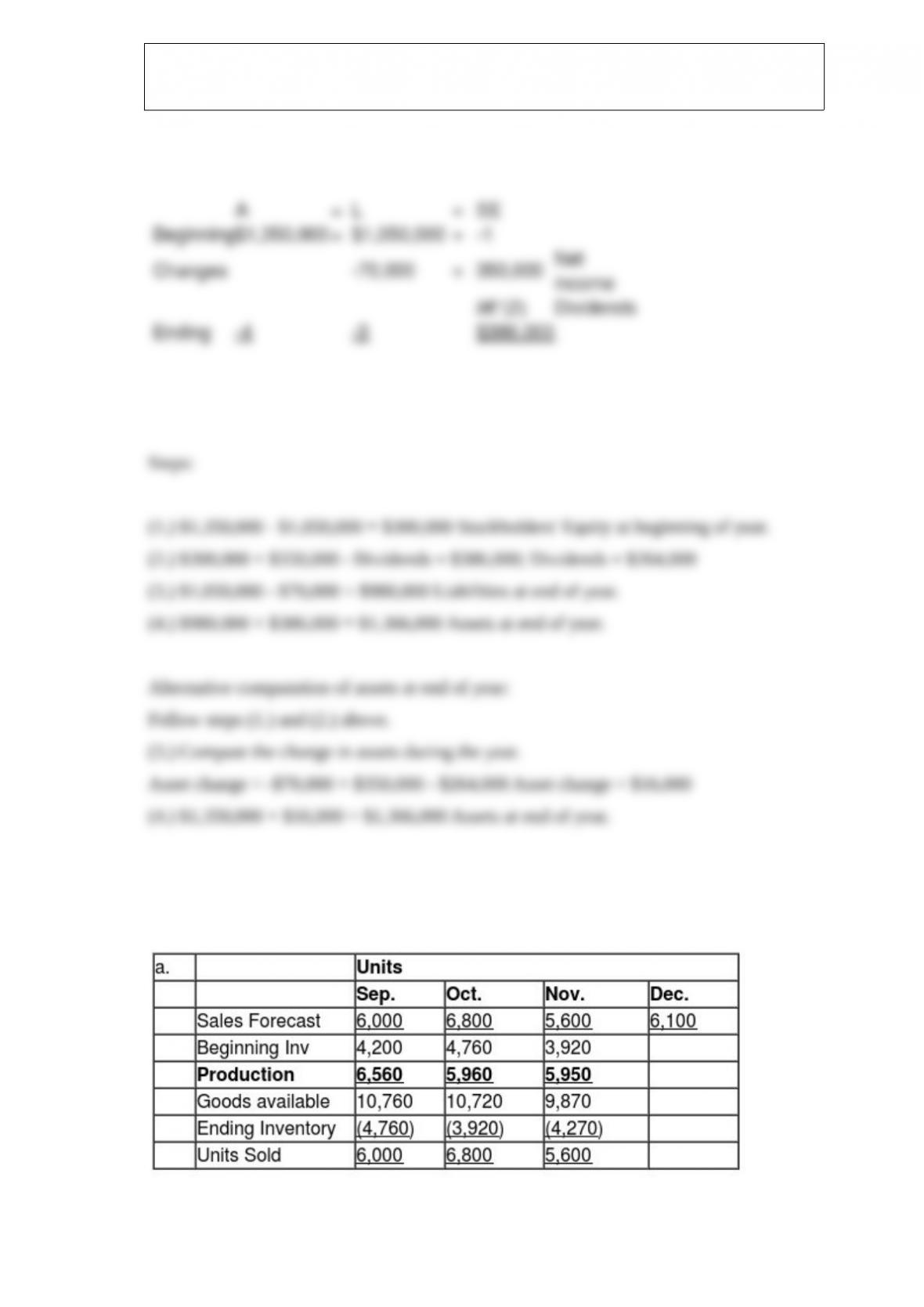
Calculate the dividends, if any, declared during the year.
Calculate the total assets at the end of the year.
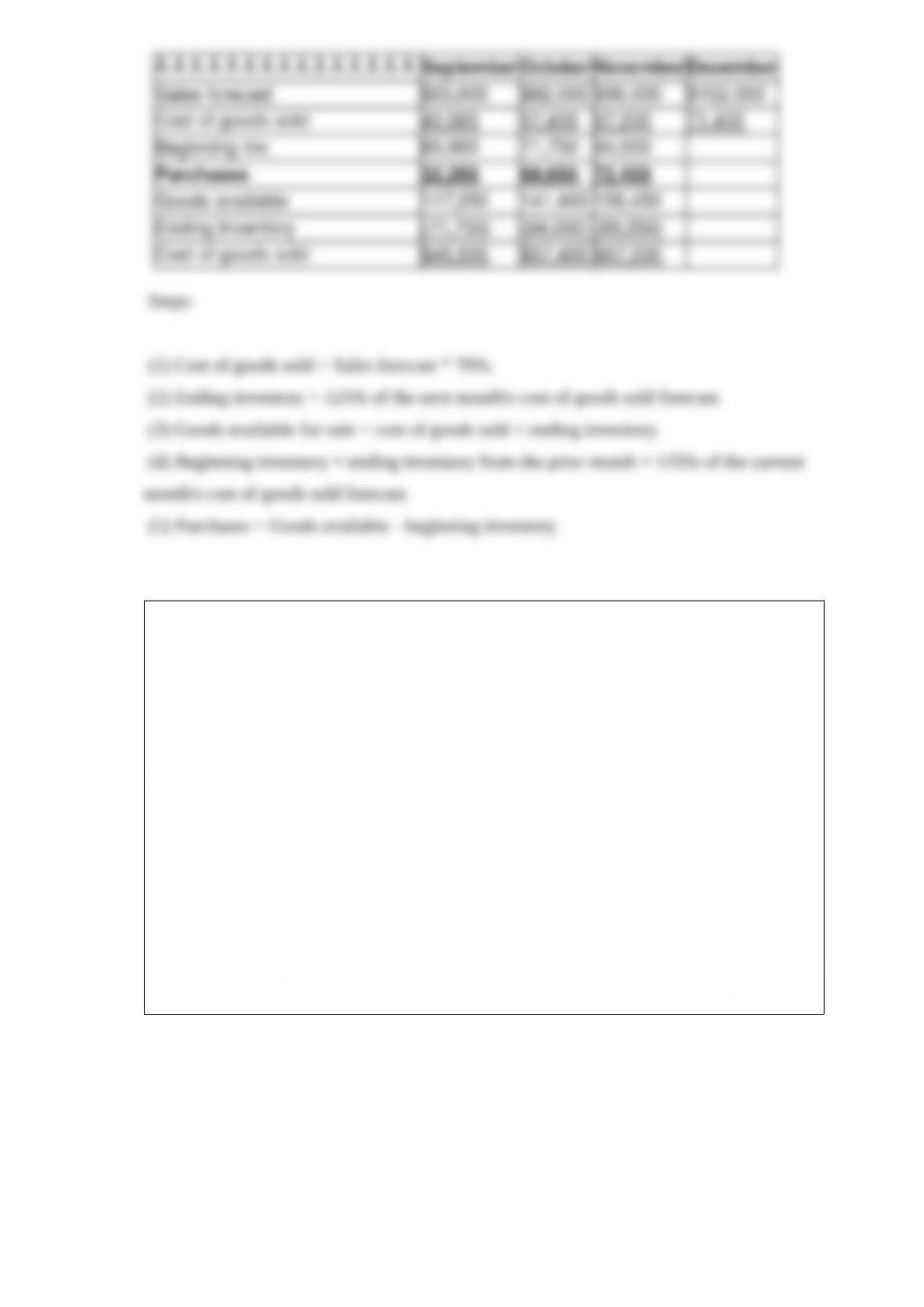
Mario’s Record Shop, a retail store, has an average gross profit ratio of 30 percent. The
sales forecast for the next four months follows:
Steps:
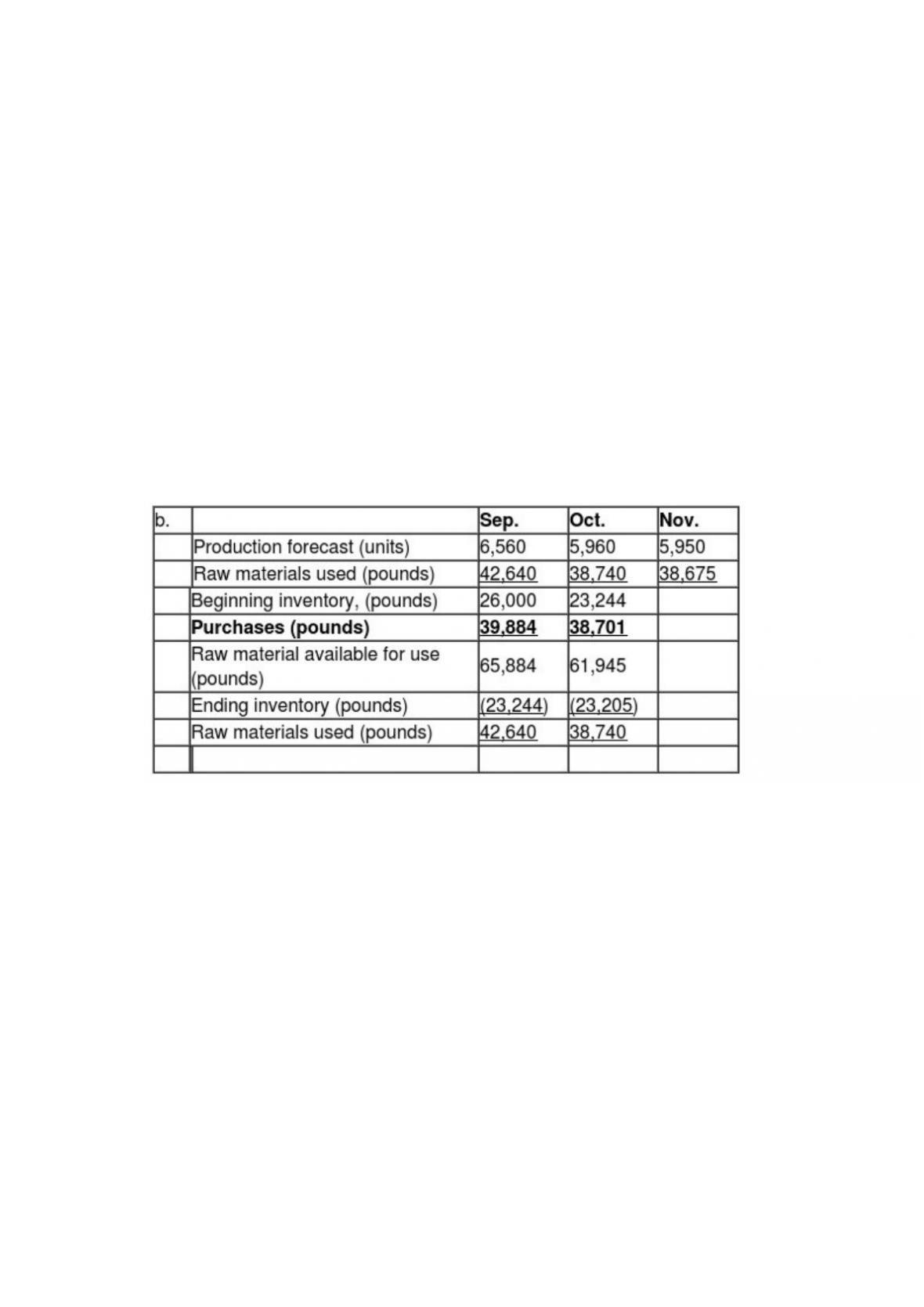
(1) Units sold based on sales forecast.
(2) Ending inventory = 70% of the next month’s forecast.
(3) Goods available for sale = units sold (based on sales forecast) + ending inventory.
(4) Beginning inventory = ending inventory from the prior month = 70% of the current
month’s sales forecast. September is given.
(5) Production = Goods available – Beginning inventory.
Steps:
(1) Raw materials used in production = production forecast × 6.5 pounds per unit
produced.
(2) Ending inventory = 60% of the next month’s estimated raw materials usage.
(3) Raw materials available for use = raw materials used (based on production forecast) +
ending inventory.
(4) Beginning inventory = ending inventory from the prior month = 60% of the current
month’s raw material usage (pounds). September is given.
(5) Purchases (pounds) = raw materials available for use – beginning inventory
Using the column headings provided below, show the effect, if any, of the transaction
on each financial statement category by indicating whether it is an addition (+) or
subtraction (-) and by showing the amount in the appropriate column. For the treasury
stock column, show the effects, if any, of the transaction on total stockholders’ equity.
Do not show items that affect net income in the retained earnings column. You should
assume that the transactions occurred in the chronological sequence as indicated.
(1.) Issued 600 shares of $90 par value preferred stock in exchange for land that had an
appraised value of $64,000.
(2.) Issued 35,000 shares of $20 par value common stock for $24 per share.
(3.) Purchased 7,600 shares of common stock for the treasury at $20 per share.
(4.) Sold 5,000 shares of treasury stock purchased in transaction #3 for $22 per share.
(5.) Declared a cash dividend of $2.80 per share on the common stock outstanding, to
be paid early next year.
(6.) Declared and issued a 5% stock dividend on the common stock when the market
price per share of common stock was $26.
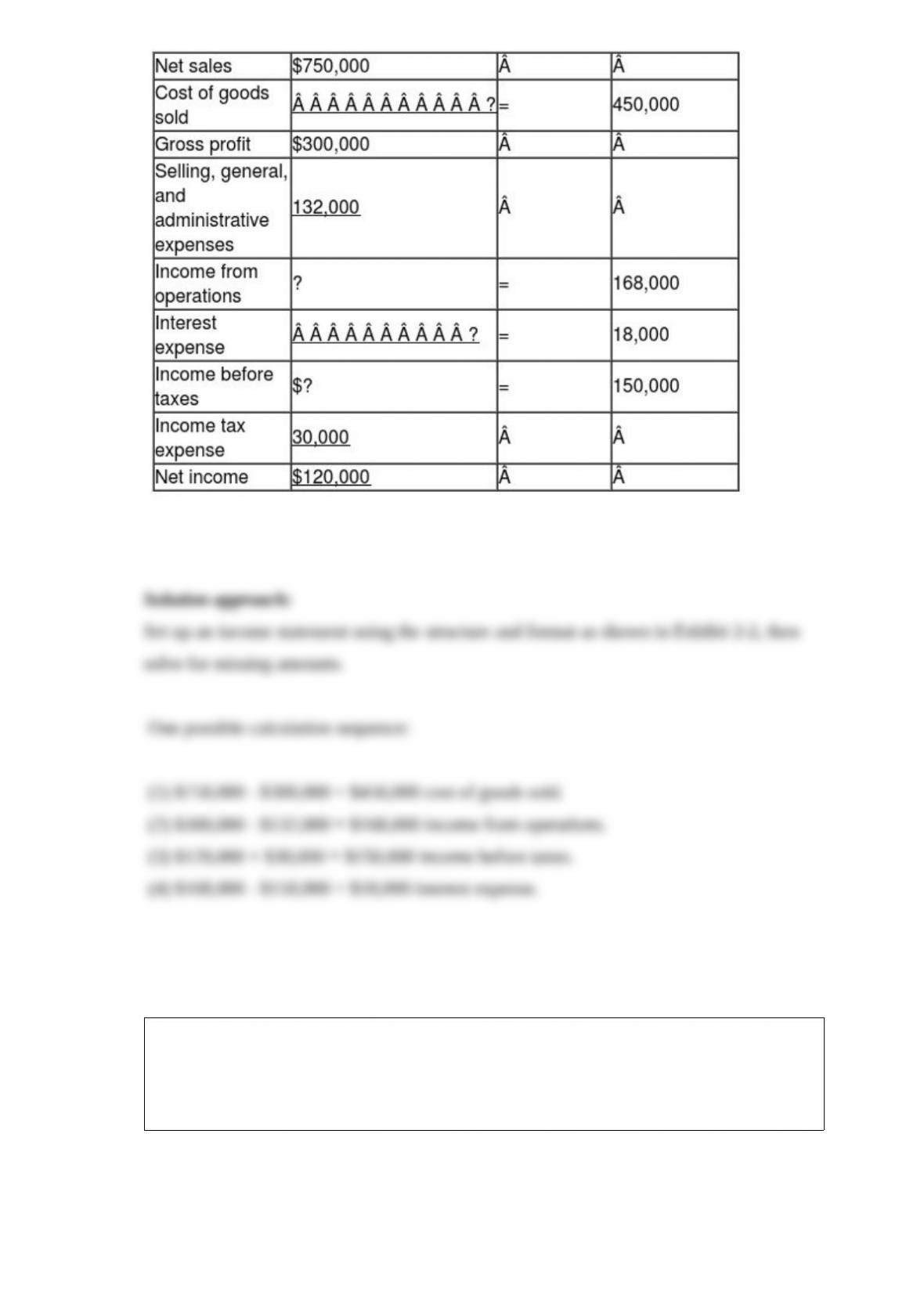
During the year, net sales were $750,000; gross profit was $300,000; net income was
$120,000; income tax expense was $30,000; and selling, general, and administrative
expenses were $132,000.
Required:
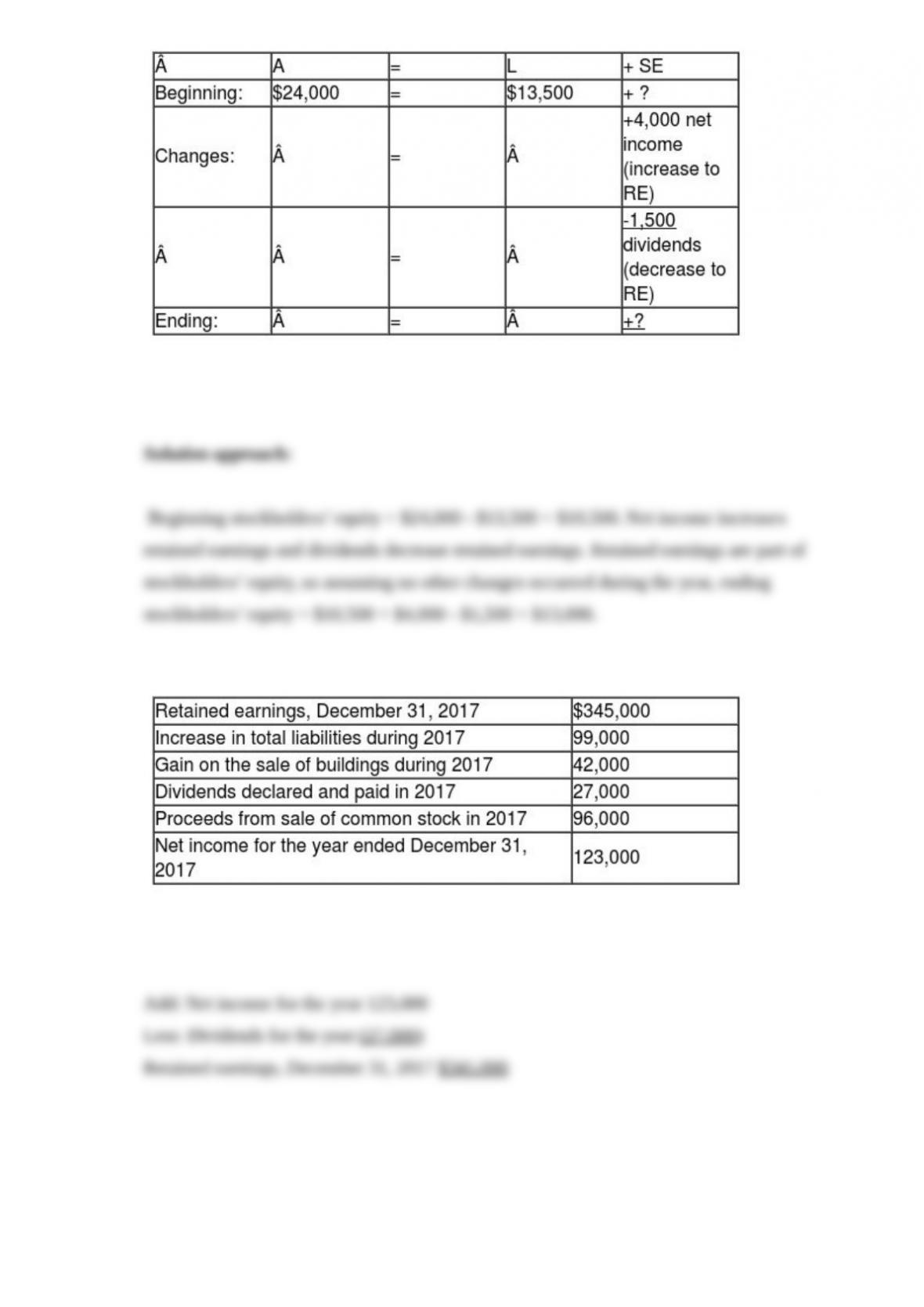
Total assets were $24,000 and total liabilities were $13,500 at the beginning of the year.
Net income for the year was $4,000, and dividends of $1,500 were declared and paid
during the year.
Required:
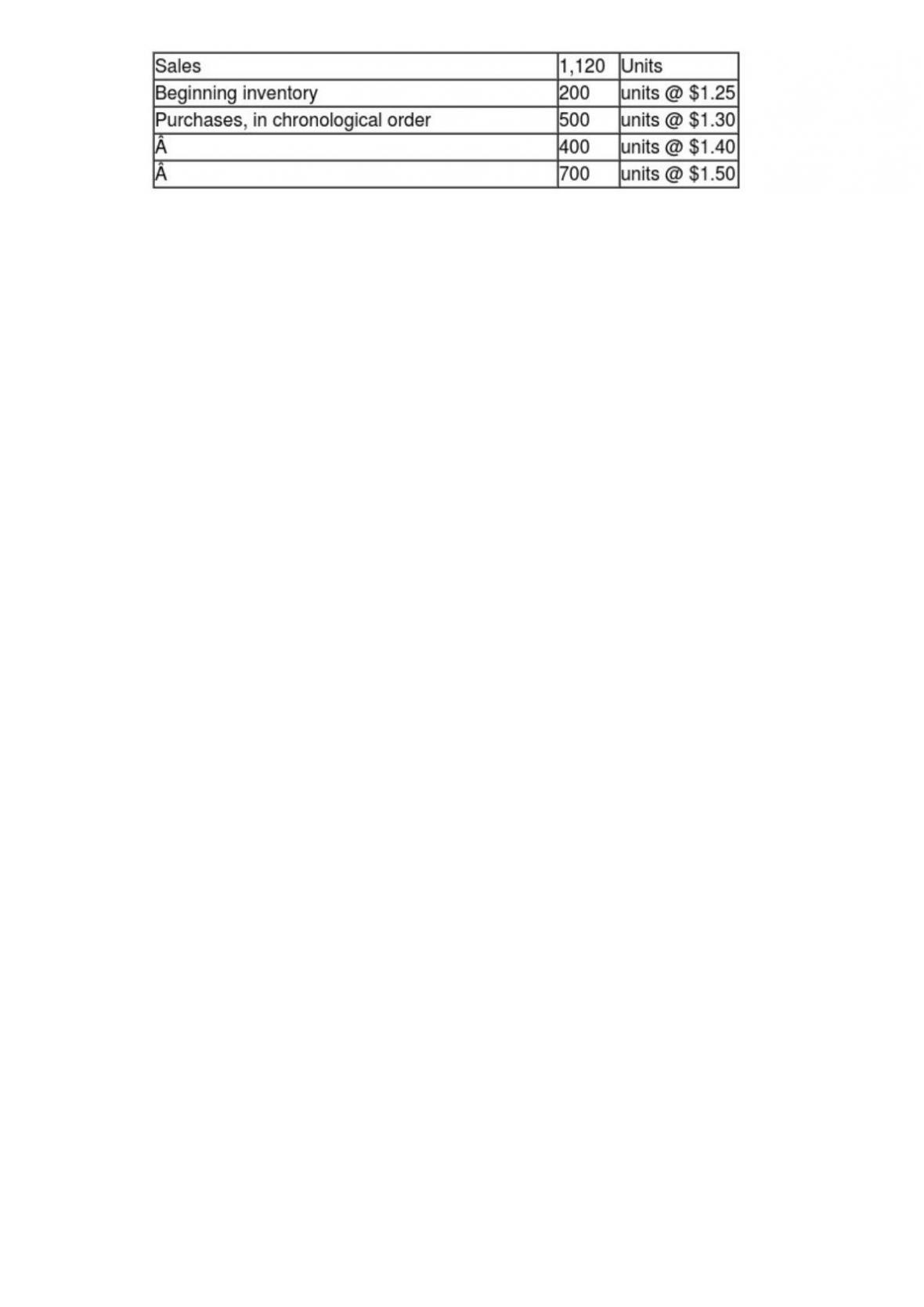
Calculate cost of goods sold and ending inventory under the following cost flow
assumptions:
(1.) Weighted average
(2.) FIFO
(3.) LIFO