1) What is a deferral?
2) Indicate whether each of the following statements is true or false.
1>When a company can identify more than one cost driver for a particular cost, it
should use the cost driver with the strongest cause-and-effect relationship to the cost
2>Different cost drivers almost always give about the same results when a cost is
allocated to cost objects
3>In allocating costs among departments, a company must consider how department
managers are likely to respond
4>Availability and cost of information are likely to influence a company’s choice of
cost drivers
5>A company should never use a cost driver unless there is a strong causal relationship
between the cost and the cost driver
3) Company A makes and sells a single product. For each of the following changes,
indicate whether the break-even point increases (i.e., break even would occur at a
higher volume of sales), decreases, is not affected, or the direction of change cannot be
determined from the information given. Assume that nothing changes except the given
item(s).
What happens to the break-even point when the variable cost per unit increases?
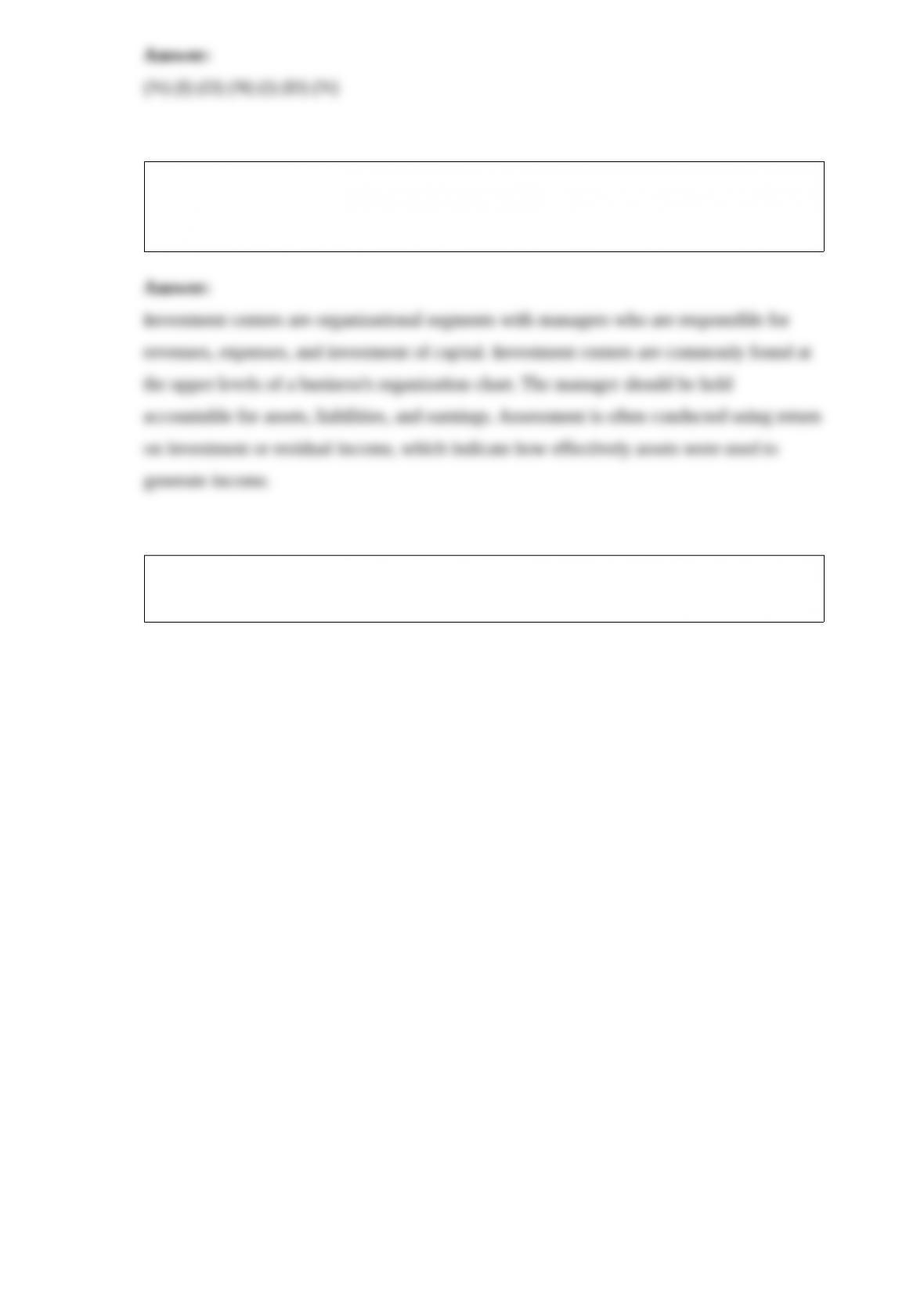
4) Indicate how each event affects the elements of financial statements. Use the
following letters to record your answer in the box shown below each element. You do
not need to enter amounts.
Remsen Co. incurred $700 of expenses on account.
5) What are the responsibilities of the manager of an investment center? At what levels
of an organization chart are investment centers most commonly found? What basis
should be used for evaluating the manager of an investment center?
6) Tevepaugh Company’s balance sheet, with some missing amounts is provided below:
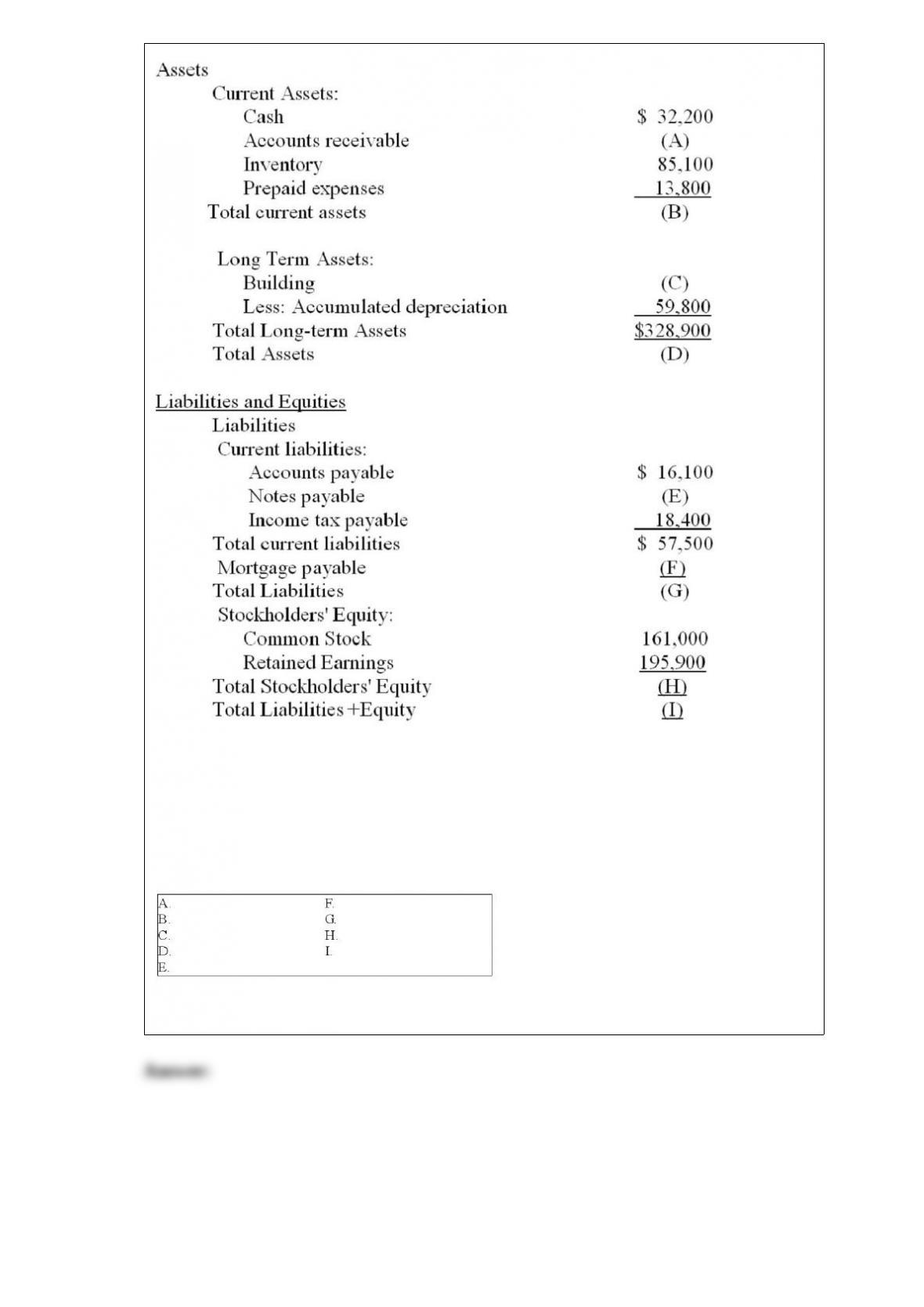
Tevepaugh Company’s working capital is $138,000.
Required:
Compute the missing amounts. Record your answers in the following table:
Note: Solve in the following order: C, E, B, A, D, I, H, G, F
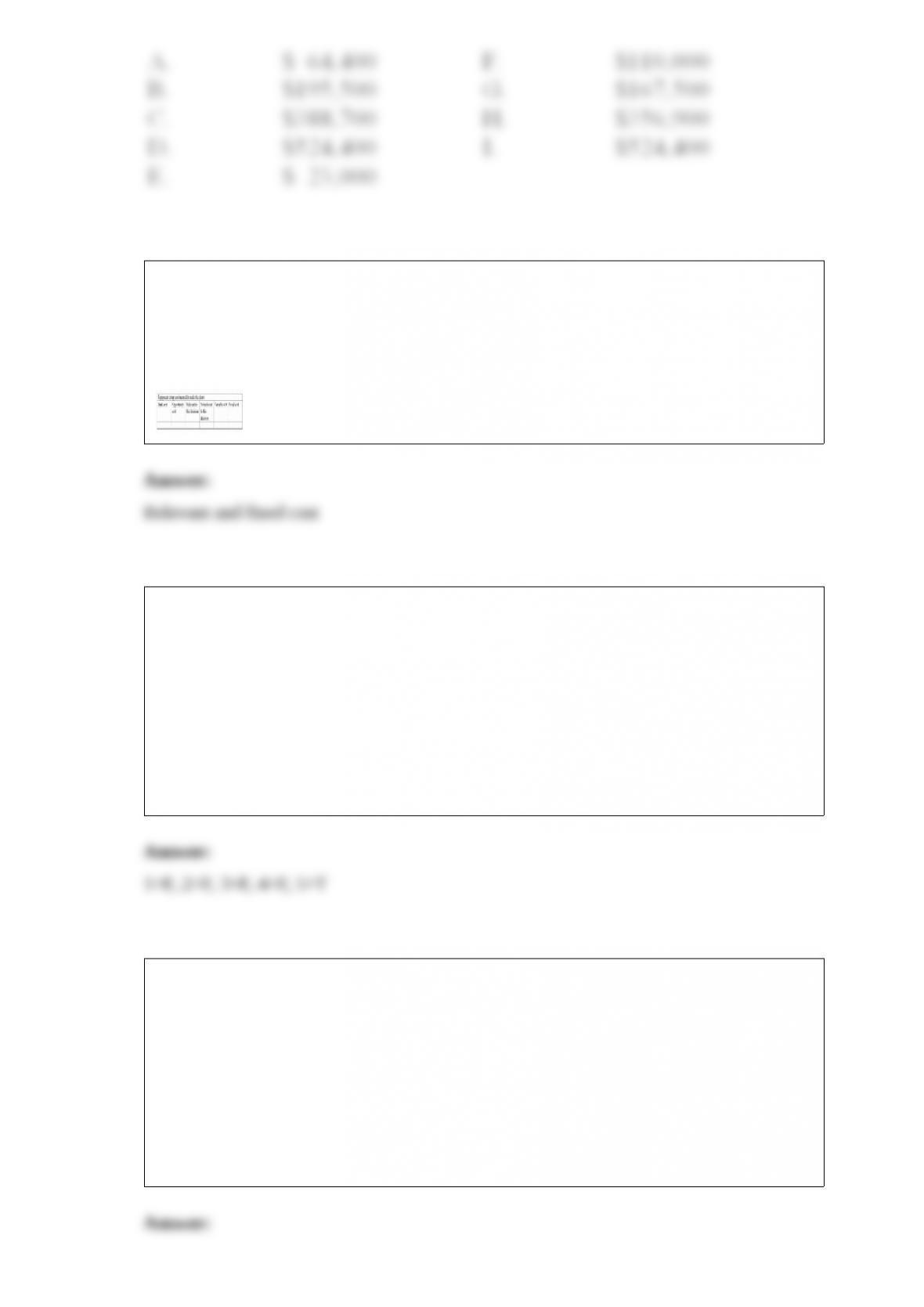
7) Halley Company has just received a special order for 1,000 deck chairs. Halley has
sufficient idle capacity to accept the order. Indicate whether the given cost is a sunk
cost, opportunity cost, relevant or not relevant to the decision to accept the special
order, variable or fixed, by placing X’s below the headings as appropriate. A variable
cost is one that varies with the number of chairs that Halley makes.
8) Indicate whether each of the following statements is true or false.
1>Variable costs almost always are relevant to a decision, and fixed costs almost always
are not relevant
2>A variable cost is relevant to a decision even when it does not differ among the
alternatives under consideration
3>Relevant costs are frequently called unavoidable costs
4>Opportunity costs are not relevant in decision making
5>The benefit not received from an alternative not selected is an opportunity cost
9) Indicate whether each of the following statements about financial statement analysis
is true or false.
1>Working capital is calculated, Quick Assets – Current Liabilities
2>Comparing Net Income in 2012 with Sales for 2009 is a form of horizontal analysis
3>Comparing Sales in 2012 with Sales for 2010 is a form of vertical analysis
4>Ratio analysis may involve studying relationships between an item reported on the
balance sheet and another reported on the income statement
5>Liquidity ratios measure a company’s ability to generate profits in the short term

10) What is a deposit in transit?