1) Lower-of-cost-or-market is a method of inventory valuation.
2) Obligations that depend on future events and are based on past transactions are
contingent liabilities.
3) If Division Inc. expects to sell 300,000 units in 2012, desires ending inventory of
22,000 units, and has 24,000 units on hand as of the beginning of the year, the budgeted
volume of production for 2012 is 298,000 units.
4) If fixed costs are $850,000 and the unit contribution margin is $50, profit is zero
when 15,000 units are sold.
5) Separating the responsibilities for purchasing, receiving, and paying for equipment is
an example of the control procedure: separating operations, custody of assets, and
accounting.
6) The three common types of responsibility centers are referred to as asset centers,
liabilities centers, and equity centers.
7) The minimum amount of desired divisional income from operations is set by top
management by establishing a maximum rate of return that is expected from the
invested assets.
8) “Market,” as used in the phrase “lower of cost or market” for valuing inventory,
refers to the price at which the inventory is being offered for sale by its owner.
9) Supervisor salaries, maintenance, and indirect factory wages would normally appear
in the factory overhead cost budget.
10) If the volume of sales is $4,000,000 and sales at the break-even point amount to
$3,200,000, the margin of safety will be 20%.
11) Favorable volume variances are never harmful since achieving them encourages
managers to run the factory above normal capacity.
12) In a job order cost system, materials and supply costs for a service business are
normally included as part of overhead cost.
13) Non-manufacturing costs are generally classified into two categories: selling and
administrative.
14) If the market rate of interest is 9% and a corporation’s bonds bear interest at 7%, the
bonds will sell at a premium.
15) The budgeted volume of production is based on the sum of (1) the expected sales
volume and (2) the desired ending inventory, less (3) the estimated beginning inventory.
16) The prices of bonds are quoted on bond exchanges as a percentage of the bonds’
face value.
17) The amount of the promissory note plus the interest earned on the due date is called
the:
A.market value
B.maturity value
C.face value
D.discounted value
18) On the statement of cash flows, the cash flows from operating activities section
would include:
A.receipts from the issuance of capital stock
B.receipts from the sale of investments
C.payments for the acquisition of investments
D.cash receipts from sales activities
19) Each account in the subsidiary ledger for work in process is called a:
A.finished goods sheet
B.stock record
C.materials requisition
D.job cost sheet
20) If merchandise sold on account is returned to the seller, the seller may inform the
customer of the details by issuing a:
A.sales invoice
B.purchase invoice
C.credit memorandum
D.debit memorandum
21) Managers are evaluated primarily on the business’s:
A.tax collections
B.growth
C.economic performance
D.all of these
22) Illustrate the effects on the accounts and financial statements of each of the
following transactions for a company using a job order cost system:
(a) Materials purchased on account $186,000
(b) Materials requisitioned:
For production orders 161,500
For general factory use 8,700
(c) Factory labor used:
On production orders 139,800
For general factory purposes 9,000
(d) Depreciation on factory equipment 40,000
(e) Factory overhead applied, based on machine hours 97,650
(f) Jobs finished 406,000
(g) Jobs shipped to customers: cost, $394,000; selling price 580,000
23) For the purpose of analysis, mixed costs are generally:
A.classified as fixed costs
B.classified as variable costs
C.classified as period costs
D.separated into their variable and fixed cost components
24) The charter of a corporation provides for the issuance of 100,000 shares of common
stock. Assume that 60,000 shares were originally issued and 5,000 were subsequently
reacquired. What is the number of shares outstanding?
A.5,000
B.100,000
C.60,000
D.55,000
25) For most profitable companies, the rate earned on total assets will be less than:
A.the rate earned on stockholders equity
B.the rate earned on total liabilities and stockholders’ equity
C.the rate earned on sales
D.cannot be determined without more information
26) The amount of increase or decrease in revenue that is expected from a particular
course of action as compared with an alternative is termed:
A.manufacturing margin
B.contribution margin
C.differential cost
D.differential revenue
27) A sales invoice included the following information: merchandise price, $4,500;
transportation, $300; terms 1/10, n/eom, FOB shipping point. Assuming that a credit for
merchandise returned of $600 is granted prior to payment, that the transportation is
prepaid by the seller, and that the invoice is paid within the discount period, what is the
amount of cash received by the seller?
A.$3,861
B.$4,158
C.$4,161
D.$4,200
28) What type of account is Allowance for Doubtful Accounts?
A.Contra asset account
B.Asset account
C.Liability account
D.Expense account
29) The resources a business owns are called:
A.assets
B.liabilities
C.earnings
D.stockholders’ equity
30) An element of internal control is:
A.risk assessment
B.journals
C.subsidiary ledgers
D.controlling accounts
31) When the contract rate of interest on bonds is higher than the market rate of interest,
the bonds sell at:
A.a premium
B.their face value
C.their maturity value
D.a discount
32) Which of the following statements is true regarding fixed and variable costs?
A.Both costs are constant when considered on a per-unit basis
B.Both costs are constant when considered on a total basis
C.Fixed costs are fixed in total, and variable costs are fixed per unit
D.Variable costs are fixed in total, and fixed costs vary in total
33) When an account is written off under the allowance method:
A.accounts receivable decreases
B.bad debt expense is increased
C.accounts receivable remains unchanged
D.accounts receivable increases
34) Which method of depreciation considers residual value in computing the normal
periodic depreciation?
A.Straight-line
B.MACRS
C.Double-declining-balance
D.Accelerated
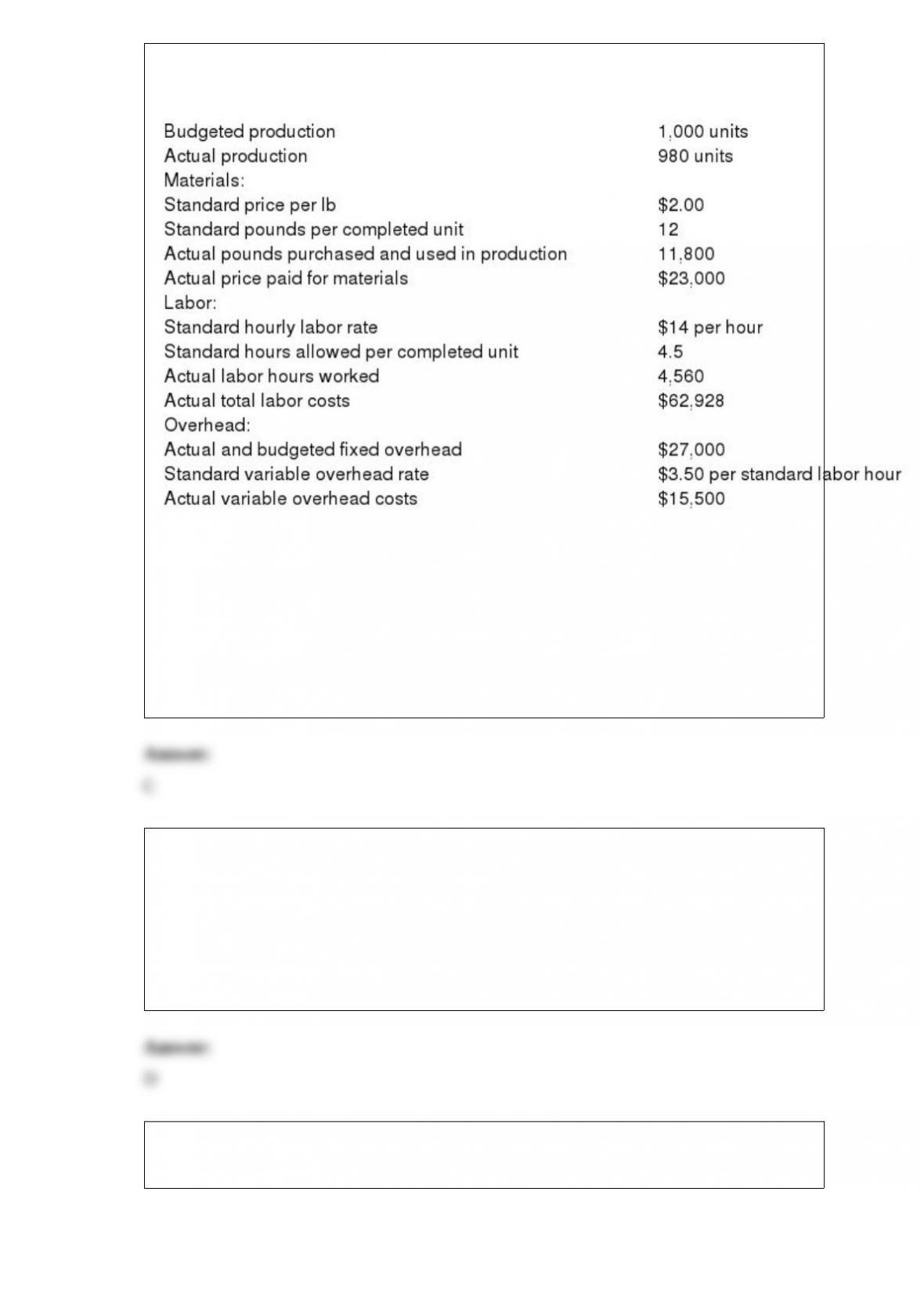
35) The following data is given for the Walker Company:
Overhead is applied on standard labor hours.
The factory overhead volume variance is:
A.$65 unfavorable
B.$65 favorable
C.$540 unfavorable
D.$540 favorable
36) A business is considering a cash outlay of $250,000 for the purchase of land, which
it intends to lease for $40,000 per year. If alternative investments are available that
yield an 15% return, the opportunity cost of the purchase of the land is
A.$45,000
B.$37,800
C.$47,200
D.$37,500
37) The budget for Department 5 of Plant M for the current month ending March 31 is
as follows:
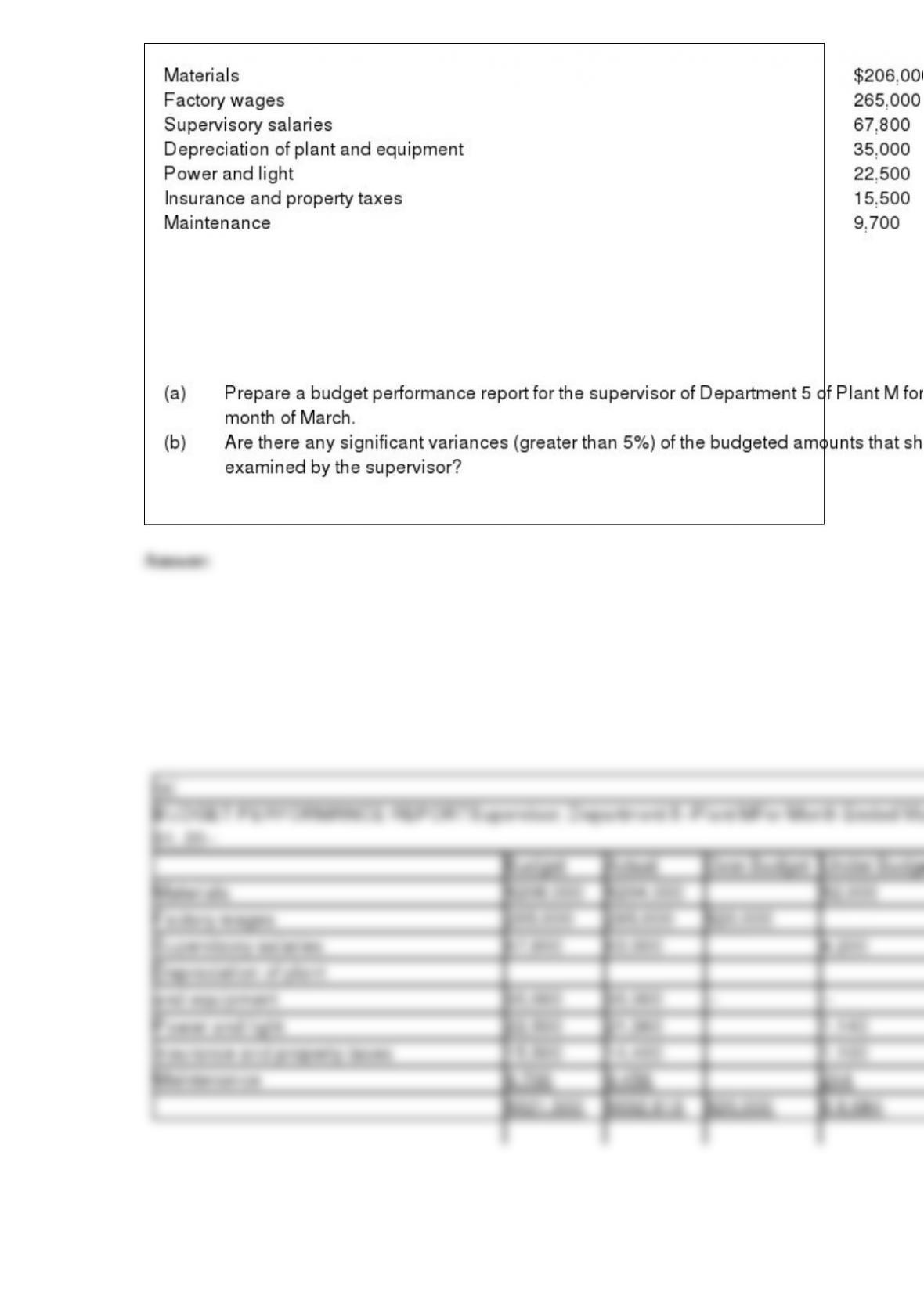
During March, the costs incurred in Department 5 of Plant M were materials, $204,000;
factory wages, $285,000; supervisory salaries, $63,600; depreciation of plant and
equipment, $35,000; power and light, $21,360; insurance and property taxes, $14,400;
maintenance, $9,456.
38) Johnson, Inc. receives $5,000 cash for fees earned. What is the effect of this
transaction?
A.Total assets remain unchanged
B.Cash flow from Financing Activities will increase
C.Net income will increase
D.Retained earnings will remain unchanged
39) If a revenue expenditure is treated as a capital expenditure, then:
A.expenses are overstated and owners’ equity is understated
B.expenses are overstated and assets are overstated
C.expenses are understated and owners’ equity is overstated
D.net income is overstated and owners’ equity is understated
40) The difference between the current sales revenue and the sales at the break-even
point is called the:
A.contribution margin
B.margin of safety
C.price factor
D.operating leverage
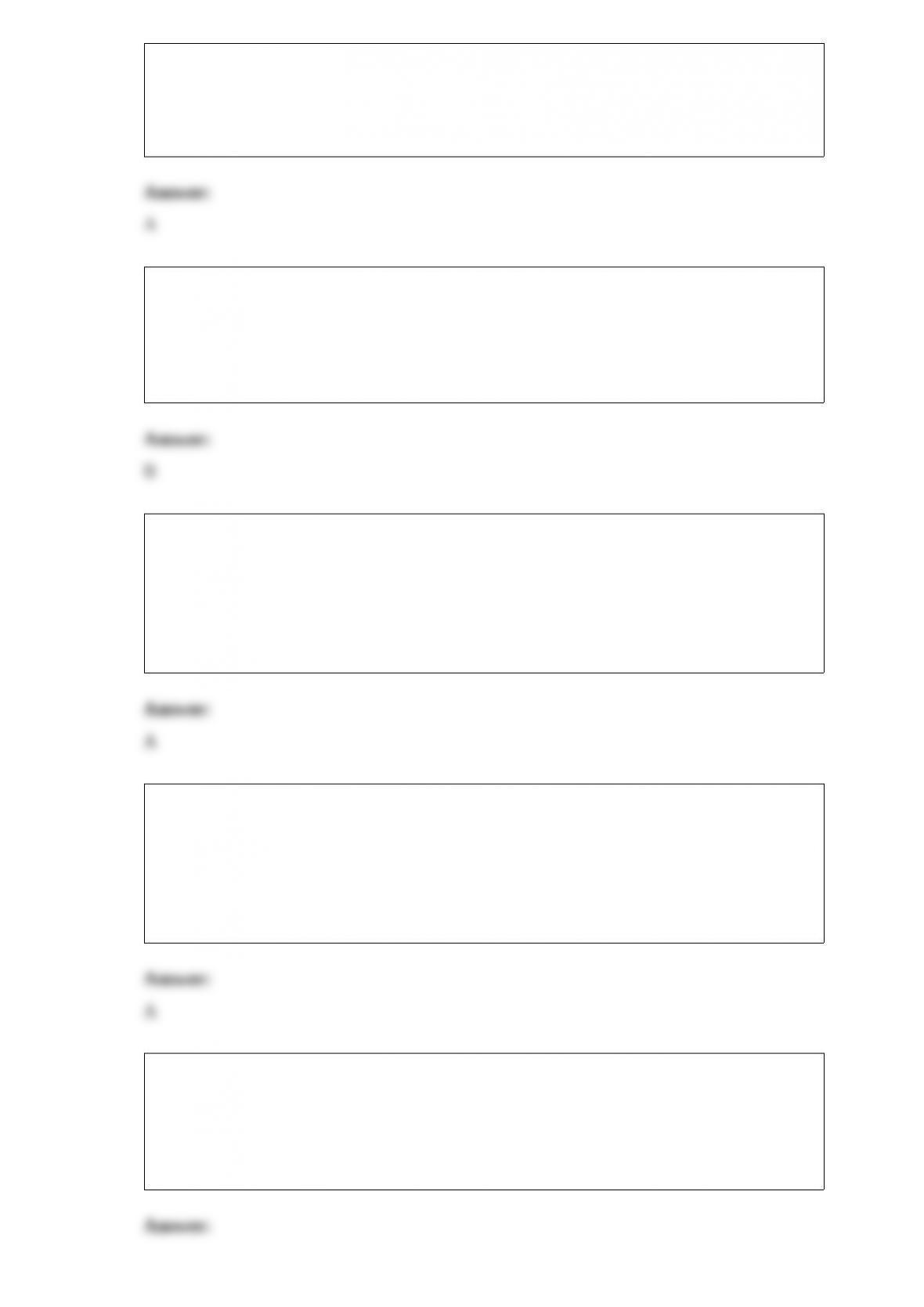
41) The standard costs and actual costs for direct materials, direct labor, and factory
overhead for the manufacture of 2,500 units of product are as follows:
The amount of the direct labor time variance is:
A.$1,200 favorable
B.$1,140 unfavorable
C.$1,200 unfavorable
D.$1,140 favorable
42) Inventory costing methods place primary emphasis on assumptions about:
A.flow of goods
B.flow of costs
C.flow of goods or costs depending on the method
D.flow of values
43) If $1,000,000 of 10% bonds are issued at 98, the amount of cash received from the
sale is:
A.$980,000
B.$975,000
C.$987,500
D.$1,000,000
44) The process of transferring the cost of metal ores and other minerals removed from
the earth to an expense account is called:
A.depletion
B.deferral
C.amortization
D.depreciation
45) The formula to compute direct materials price variance is:
A.actual costs (actual quantity standard price)
B.actual cost + standard costs
C.actual cost standard costs
D.(actual quantity standard price) standard costs
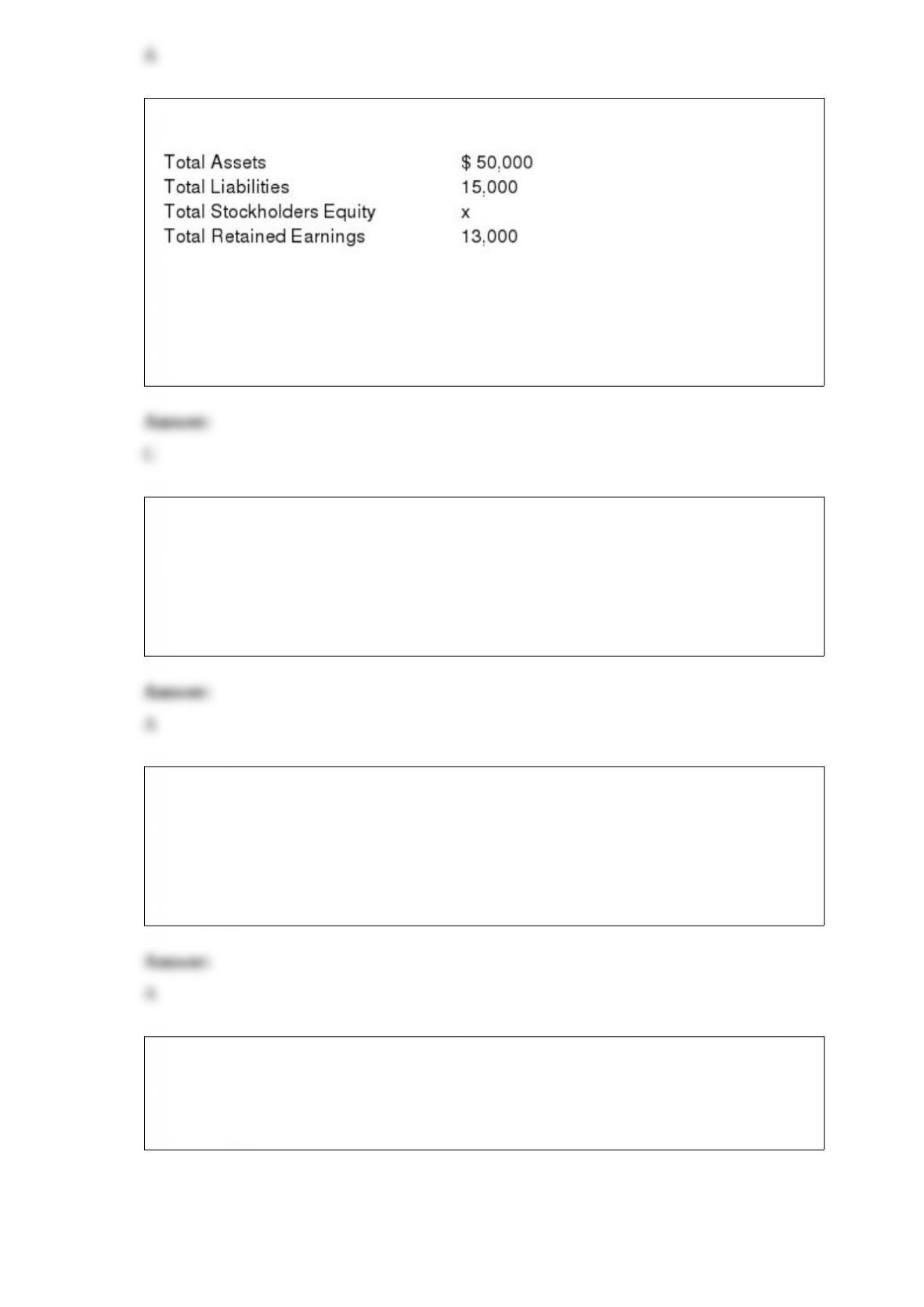
46) Use the following information to determine Total Stockholders Equity:
A.$52,000
B.$50,000
C.$35,000
D.$22,000
47) Responsibility accounting reports for a profit center typically show:
A.revenues, expenses, and profit controlled by the manager of the center
B.only the controllable revenues
C.revenues, expenses, profit, and investment in assets controlled by the manager of the
center
D.all the investment in assets controlled by the manager of the center
48) For EFG Co., the transaction “purchase of store equipment with a note payable”
would:
A.increase total assets
B.decrease total assets
C.have no effect on total assets
D.decrease total liabilities
49) The standard factory overhead rate of Quaker Inc. is $10 per direct labor hour ($8
for variable factory overhead and $2 for fixed factory overhead) based on 100%
capacity of 30,000 direct labor hours. The standard cost and the actual cost of factory
overhead for the production of 5,000 units during May were as follows:
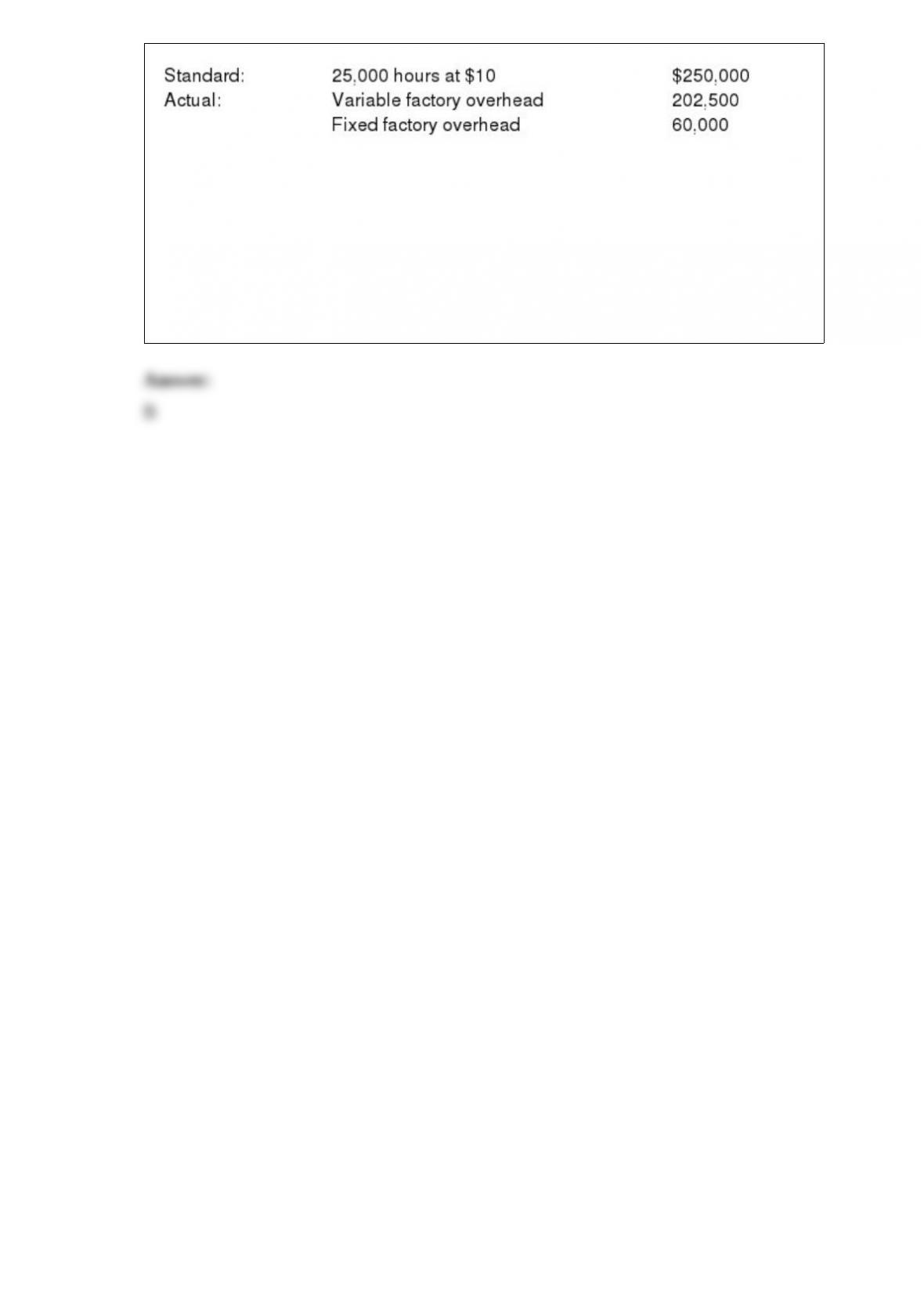
Refer to the information provided for Quaker Inc. What is the amount of the variable
factory overhead controllable variance?
A.$10,000 favorable
B.$2,500 unfavorable
C.$10,000 unfavorable
D.$2,500 favorable