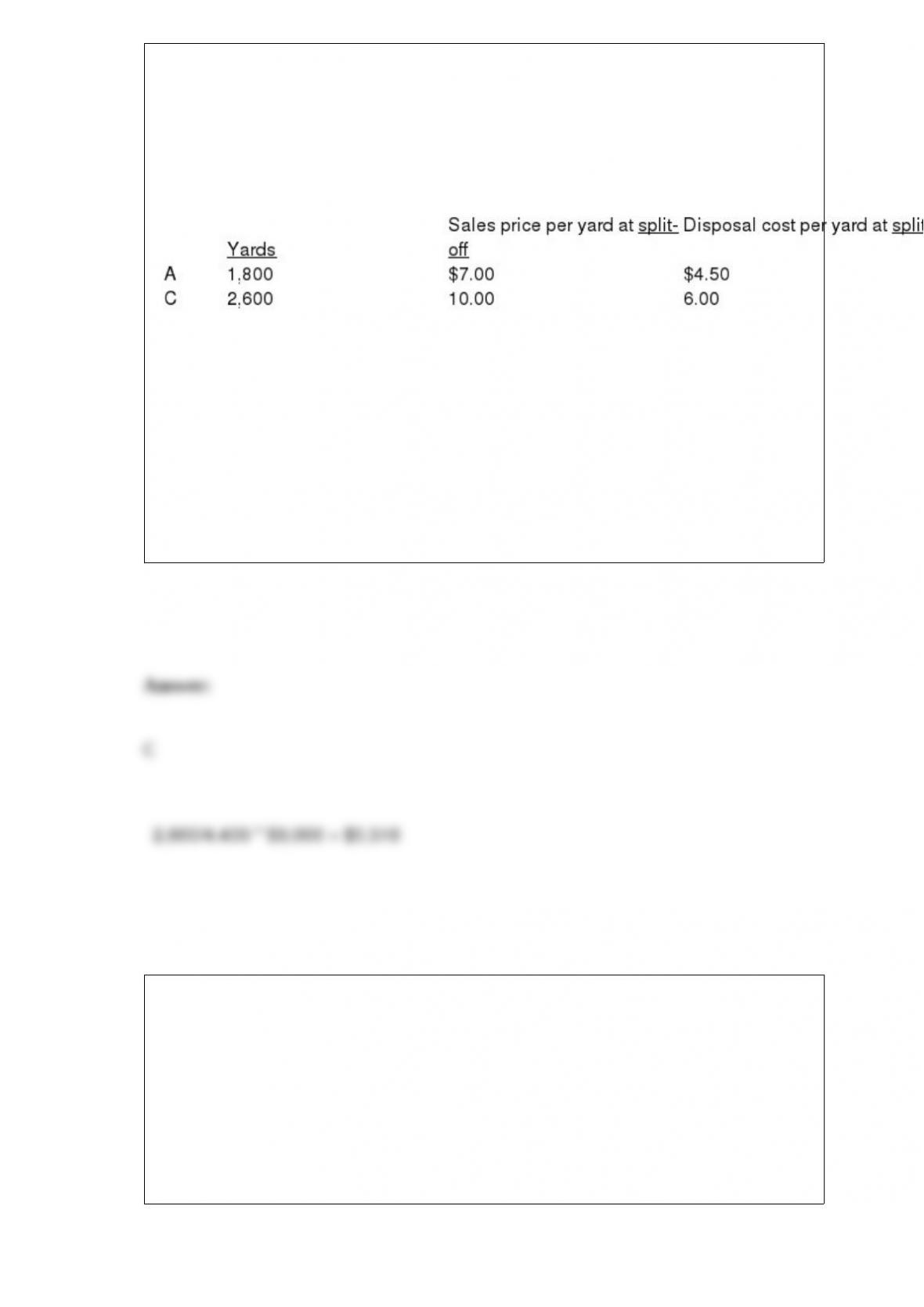
Riley Company
Riley Company produces two products from a joint process: A and C. Joint processing
costs for this production cycle are $9,000.
Refer to Riley Company. Using a physical measure, what amount of joint processing
cost is allocated to Product C (round to the nearest dollar)?
a. $3,682
b. $4,500
c. $5,318
d. $6,062
In a make or buy decision, the reliability of a potential supplier is
a. an irrelevant decision factor.
b. relevant information if it can be quantified.
c. an opportunity cost of continued production.
d. a qualitative decision factor.

The term incremental cost refers to
a. the profit foregone by selecting one choice instead of another.
b. the additional cost of producing or selling another product or service.
c. a cost that continues to be incurred in the absence of activity.
d. a cost common to all choices in question and not clearly or feasibly allocable to any
of them.
Refer to Commodore Company. Using the three-variance approach, what is the volume
variance?
a. $ 750 F
b. $ 750 U
c. $1,000 U
d. $1,000 F
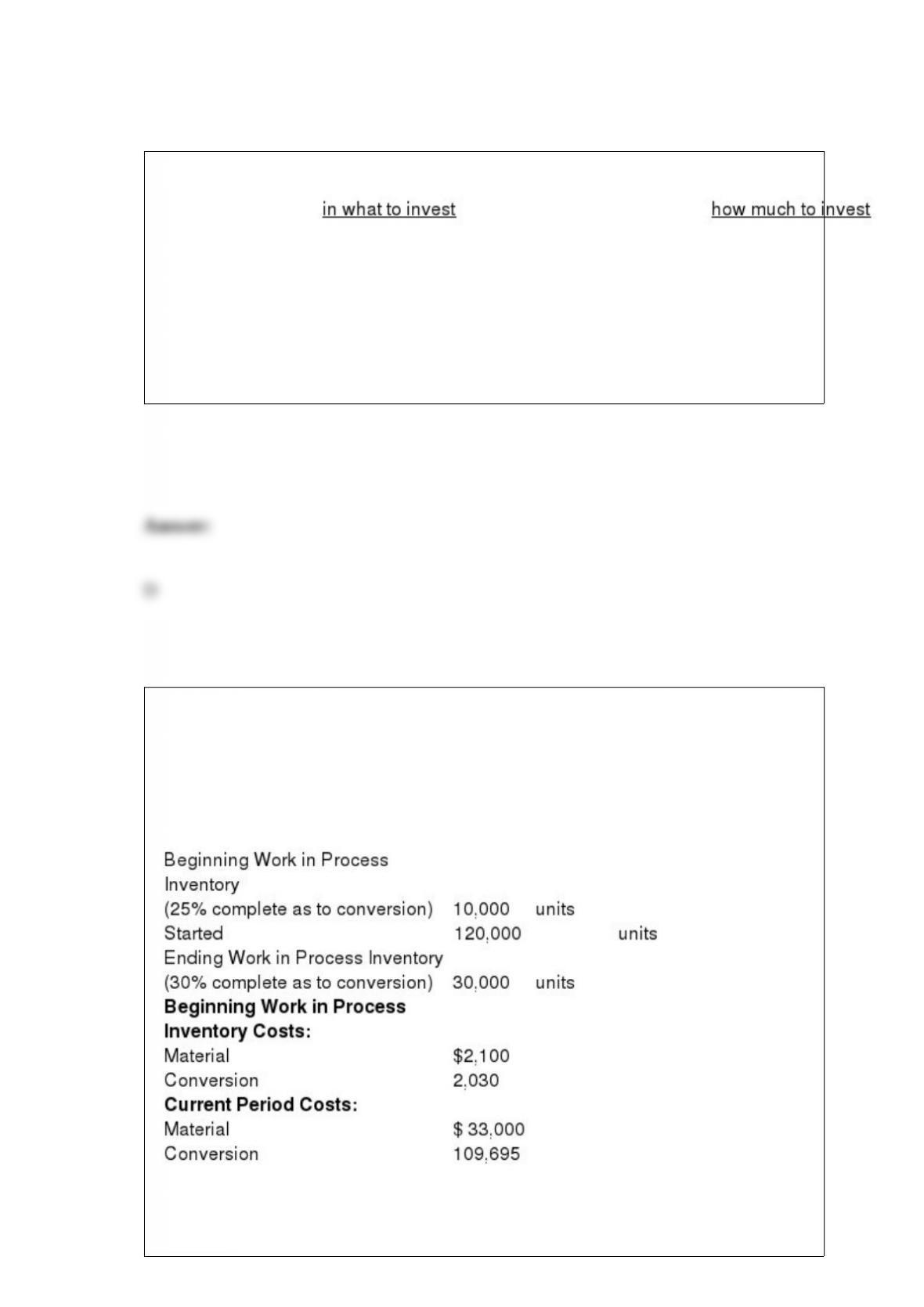
A capital budget is used by management to determine
a. no no
b. no yes
c. yes no
d. yes yes
Nelson Corporation
Nelson Corporation has the following information available for May of the current
year:
All material is added at the start of production and all products completed are
transferred out.
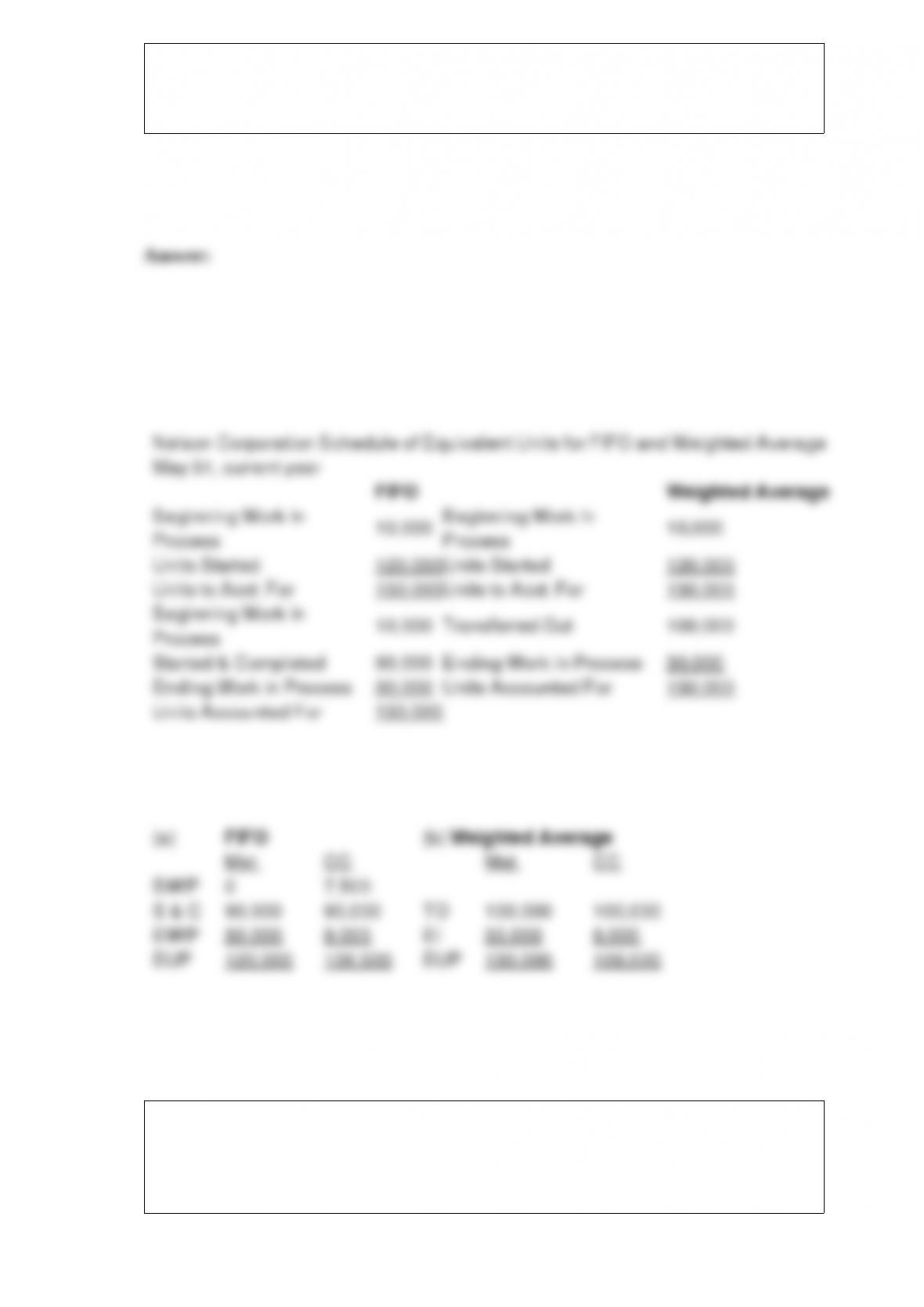
Refer to Nelson Corporation. Prepare an equivalent units schedule using the (a) FIFO
and (b) weighted average method.
Putnam Company
Below is an income statement for Putnam Company:
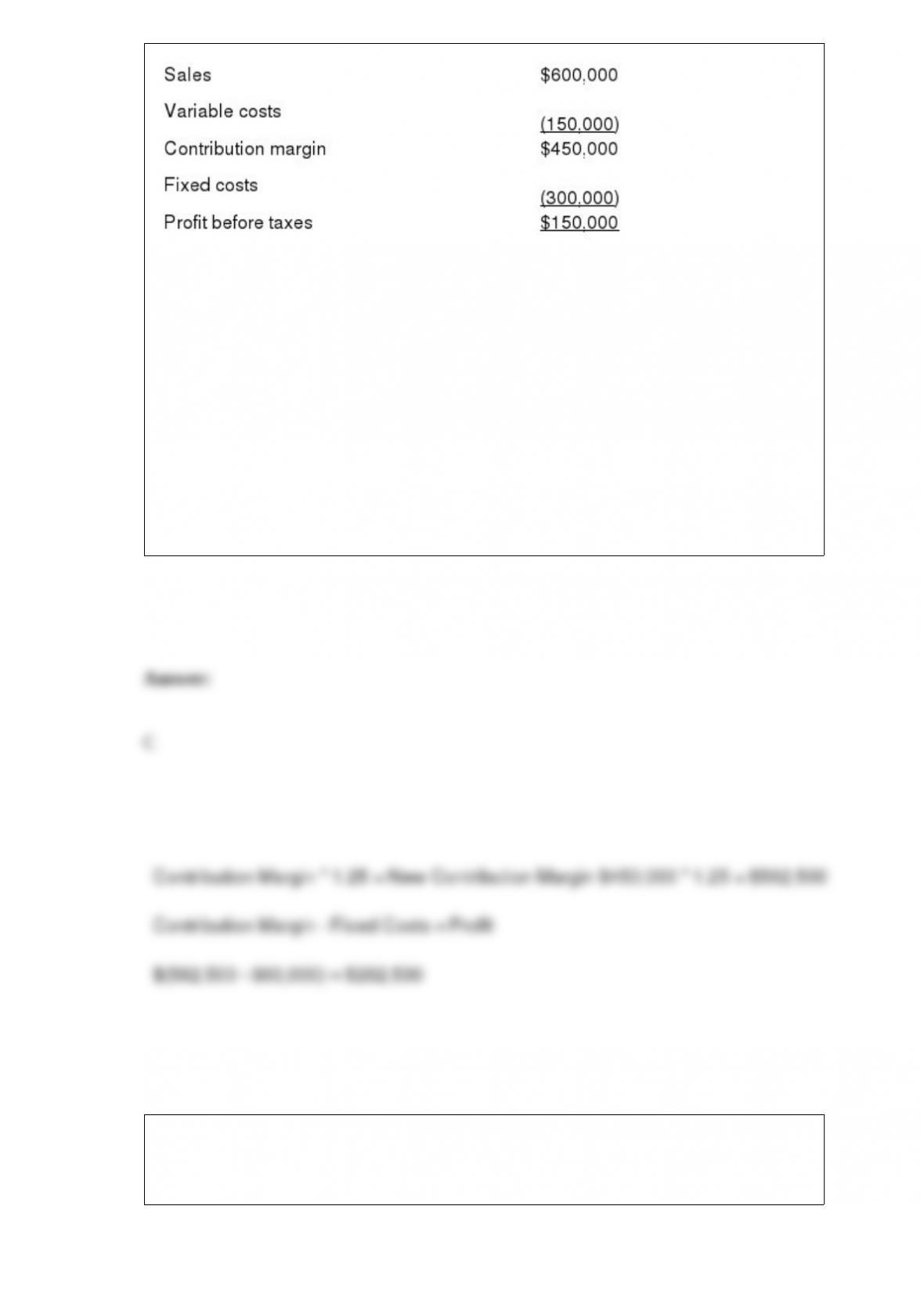
Refer to Putnam Company. Assuming that the fixed costs are expected to remain at
$300,000 for the coming year and the sales price per unit and variable costs per unit are
also expected to remain constant, how much profit before taxes will be produced if the
company anticipates sales for the coming year rising to 125 percent of the current year’s
level?
a. $112,500
b. $187,500
c. $262,500
d. $300,000
Economic value added (EVA) applies the target rate of return to the book value of the
assets invested in a division.

A bill of material does notinclude
a. quantity of component inputs.
b. price of component inputs.
c. quality of component inputs.
d. type of product output.
If a company has a policy of maintaining an inventory of finished goods at a specified
percentage of the next month’s budgeted sales, budgeted production for January will
exceed budgeted sales for January when budgeted
a. February sales exceed budgeted January sales.
b. January sales exceed budgeted December sales.
c. January sales exceed budgeted February sales.
d. December sales exceed budgeted January sales.
Jenkins Manufacturing
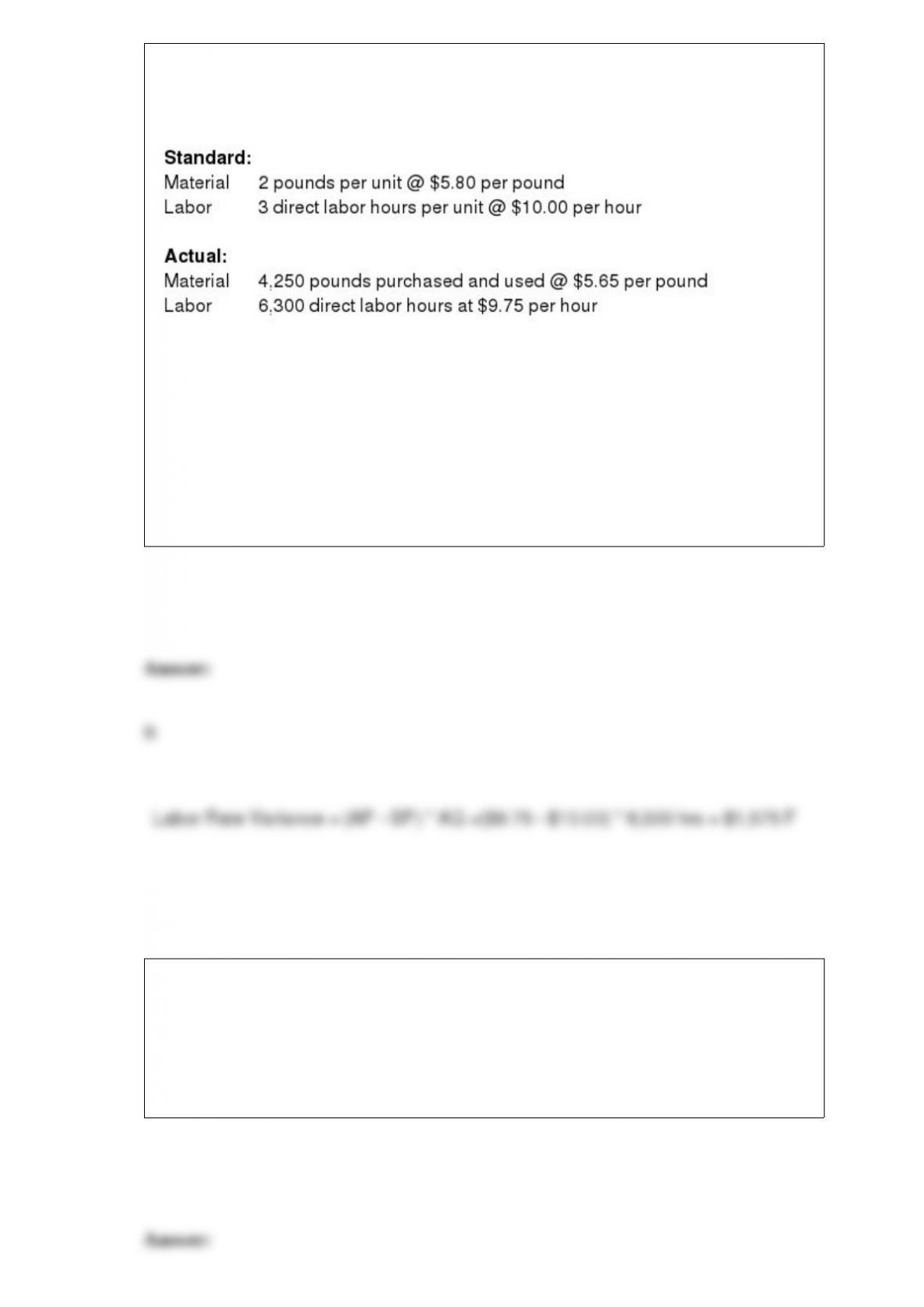
The following information is available for Jenkins Manufacturing Company for the
month of June when the company produced 2,100 units:
Refer to Jenkins Manufacturing Company. What is the labor rate variance?
a. $1,575 U
b. $1,575 F
c. $1,594 U
d. $0
Costs of decentralization include all of the following except
a. more elaborate accounting control systems.
b. potential costs of poor decisions.
c. additional training costs.
d. slow response time to changes in local conditions.
Moore Company.
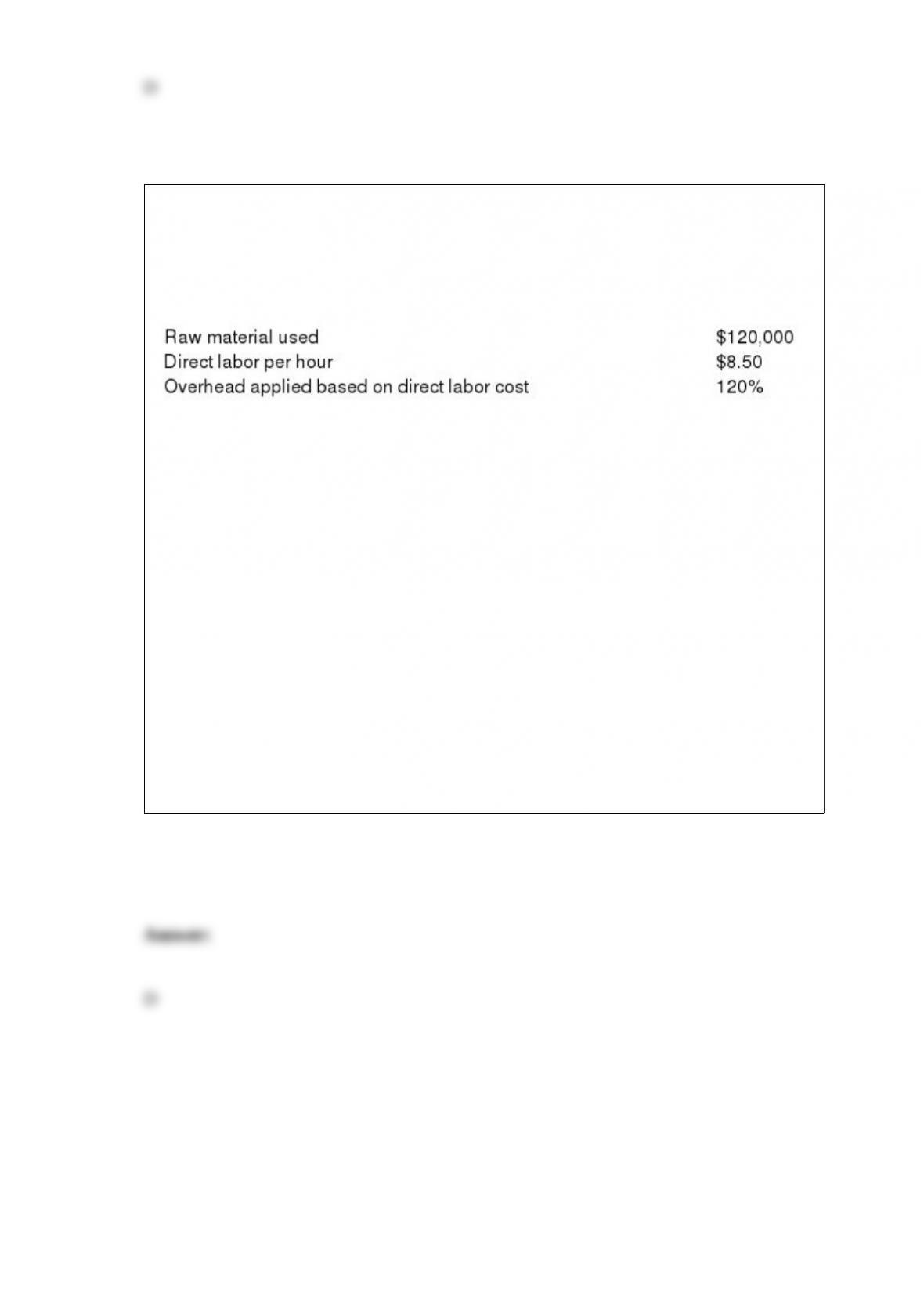
Moore Company uses a job-order costing system and the following information is
available from its records. The company has three jobs in process: #6, #9, and #13.
Direct material was requisitioned as follows for each job respectively: 30 percent, 25
percent, and 25 percent; the balance of the requisitions was considered indirect. Direct
labor hours per job are 2,500; 3,100; and 4,200; respectively. Indirect labor is $33,000.
Other actual overhead costs totaled $36,000.
Refer to Moore Company. If Job #13 is completed and transferred, what is the balance
in Work in Process Inventory at the end of the period if overhead is applied at the end of
the period?
a. $ 96,700
b. $ 99,020
c. $139,540
d. $170,720

When allocating joint process cost based on tons of output, all products will
a. be salable at split-off.
b. have the same joint cost per ton.
c. have a sales value greater than their costs.
d. have no disposal costs at the split-off point.
A budget aids in
a. communication.
b. motivation.
c. coordination.
d. all of the above.
Which of the following responsibility centers may be evaluated on the basis of residual
income?
a. investment center
b. revenue center
c. profit center
d. cost center
Office Systems Corporation
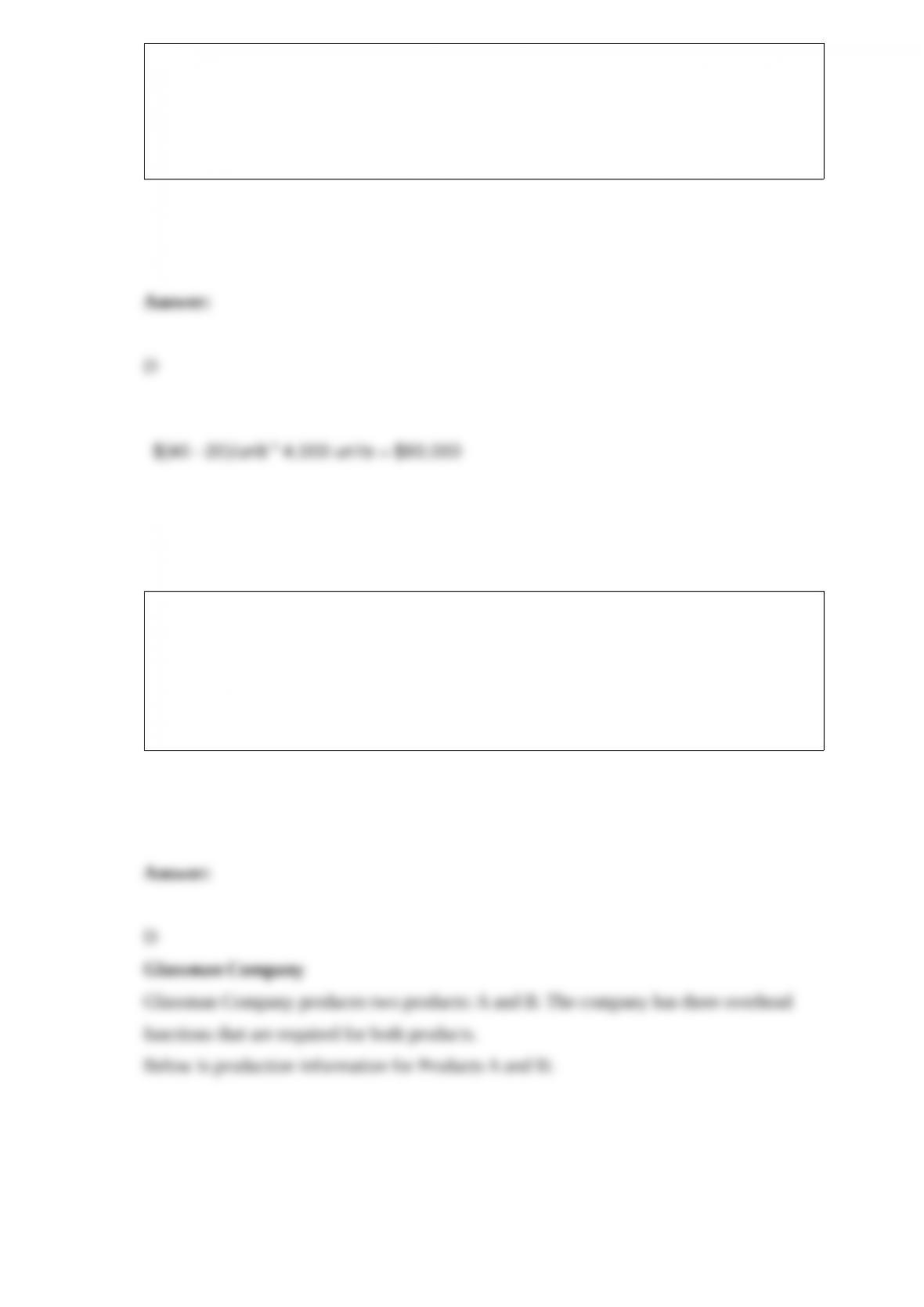
Office Systems Corporation manufactures and sells various high-tech office automation
products. Two divisions of Office Systems Corporation are the Computer Chip Division
and the Computer Division. The Computer Chip Division manufactures one product, a
“super chip,” that can be used by both the Computer Division and other external
customers. The following information is available on this month’s operations in the
Computer Chip Division:
Presently, the Computer Division purchases no chips from the Computer Chips
Division, but instead pays $45 to an external supplier for the 4,000 chips it needs each
month.
Refer to Office Systems Corporation. If a transfer between the two divisions is arranged
next period at a price (on 4,000 units of super chips) of $40, total profits in the
Computer Chip division will
a. rise by $20,000 compared to the prior period.
b. drop by $40,000 compared to the prior period.
c. drop by $20,000 compared to the prior period.
d. rise by $80,000 compared to the prior period.
In the “new era” of manufacturing, good performance indicators are
a. production-based.
b. sales-based.
c. cost-based.
d. consumer-based.
The budgeted amount of selling and administrative expense for a period can be found in
the
a. sales budget.
b. cash budget.
c. pro forma income statement.
d. pro forma balance sheet.
Which of the following represents a proper sequencing in which the budgets below are
prepared?
a. Direct Material Purchases, Cash, Sales

b. Production, Sales, Income Statement
c. Sales, Balance Sheet, Direct Labor
d. Sales, Production, Manufacturing Overhead
If a company obtains two salable products from the refining of one ore, the refining
process should be accounted for as a(n)
a. mixed cost process.
b. joint process.
c. extractive process.
d. reduction process.
Assume actual output exceeds the level of output in the original budget. Costs in which
of the following categories will exceed the original budget?
a. total variable costs
b. committed fixed costs
c. discretionary fixed costs
d. all of the above

Unabsorbed fixed overhead costs in an absorption costing system are
a. fixed manufacturing costs not allocated to units produced.
b. variable overhead costs not allocated to units produced.
c. excess variable overhead costs.
d. costs that cannot be controlled.
A firm estimates that its annual carrying cost for material X is $.30 per lb. If the firm
requires 50,000 lbs. per year, and ordering costs are $100 per order, what is the EOQ
(rounded to the nearest pound)?
a. 5,774 lbs.
b. 4,082 lbs.
c. 1,732 lbs.
d. 1,225 lbs.
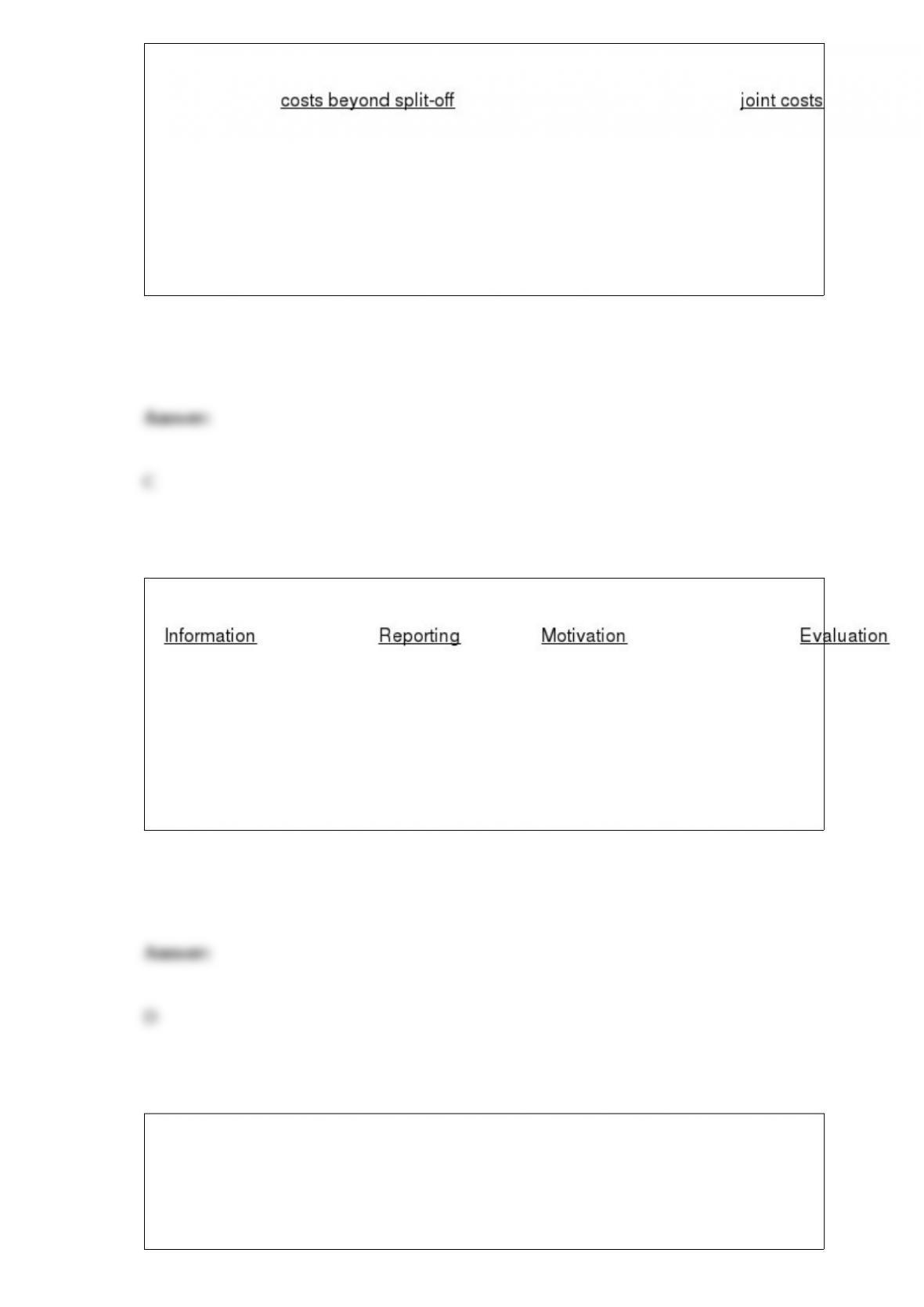
Relative sales value at split-off is used to allocate
a. yes yes
b. yes no
c. no yes
d. no no
Which of the following is a primary element of a cost management system?
a. yes yes yes yes
b. no yes yes no
c. yes no no yes
d. yes yes yes no
Truman Corporation
The following information has been extracted from the financial records of Truman
Corporation for its first year of operations:
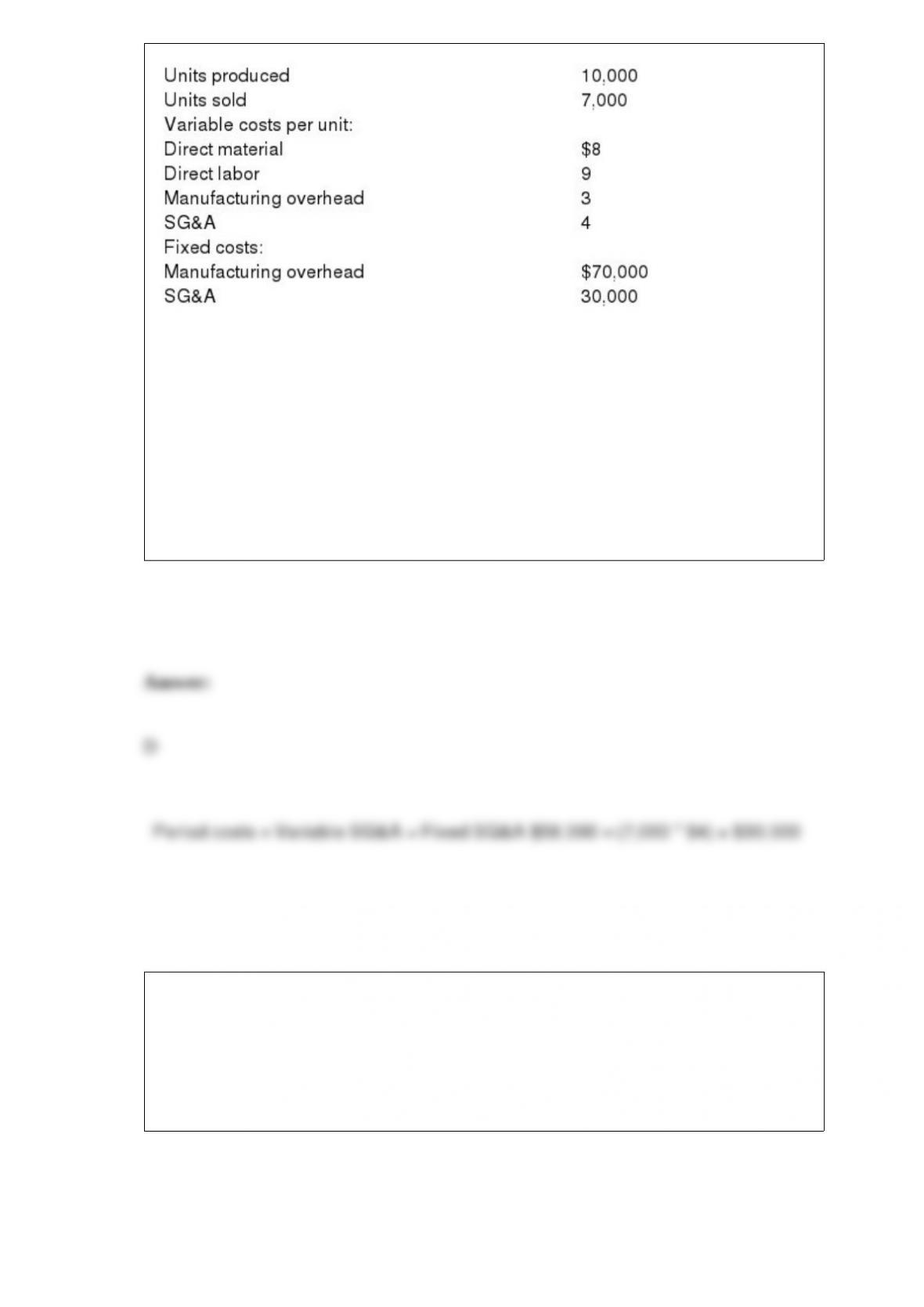
Refer to Truman Corporation. Based on absorption costing, what amount of period
costs will Truman Corporation deduct?
a. $70,000
b. $79,000
c. $30,000
d. $58,000
Ultimate Vision Corporation
Ultimate Vision Corporation has two product lines: LCD televisions and projection
televisions. The company has budgeted the following production and overhead costs for
the upcoming year:
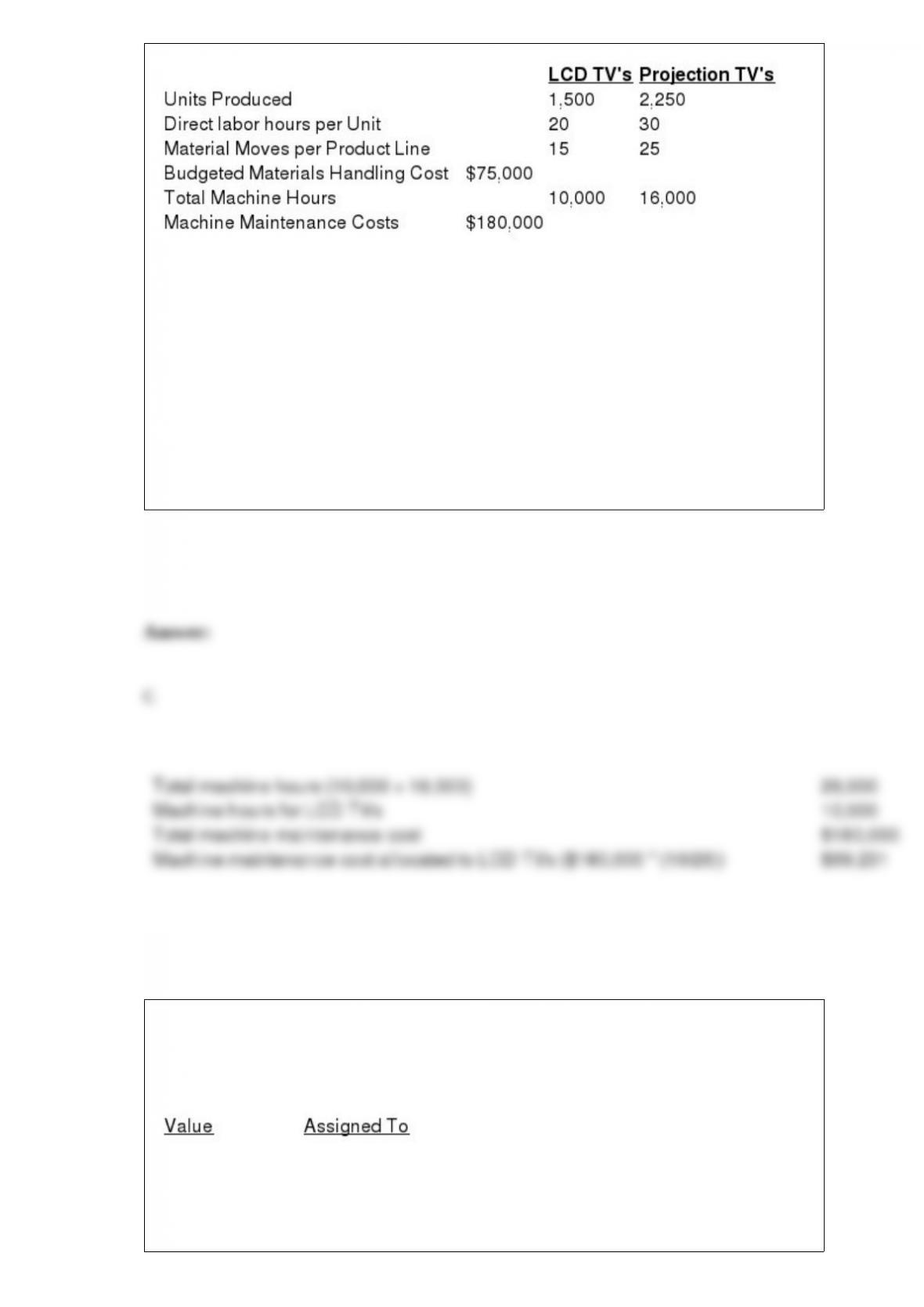
Refer to Ultimate Vision Corporation. If the company uses an activity-based costing
(ABC) system to allocate factory overhead, the machine maintenance cost allocated to
LCD TVs would be:
a. $51,923
b. $55,385
c. $69,231
d. $72,000
Refer to Andersen Corporation. Assume that the costs per EUP for material and
conversion are $2.00 and $2.25, respectively. What is the cost assigned to normal
spoilage, using weighted average, and where is it assigned?
a. $11,063 Units transferred out and Ending Inventory
b. $11,063 Units transferred out
c. $12,750 Units transferred out and Ending Inventory
d. $12,750 Units transferred out
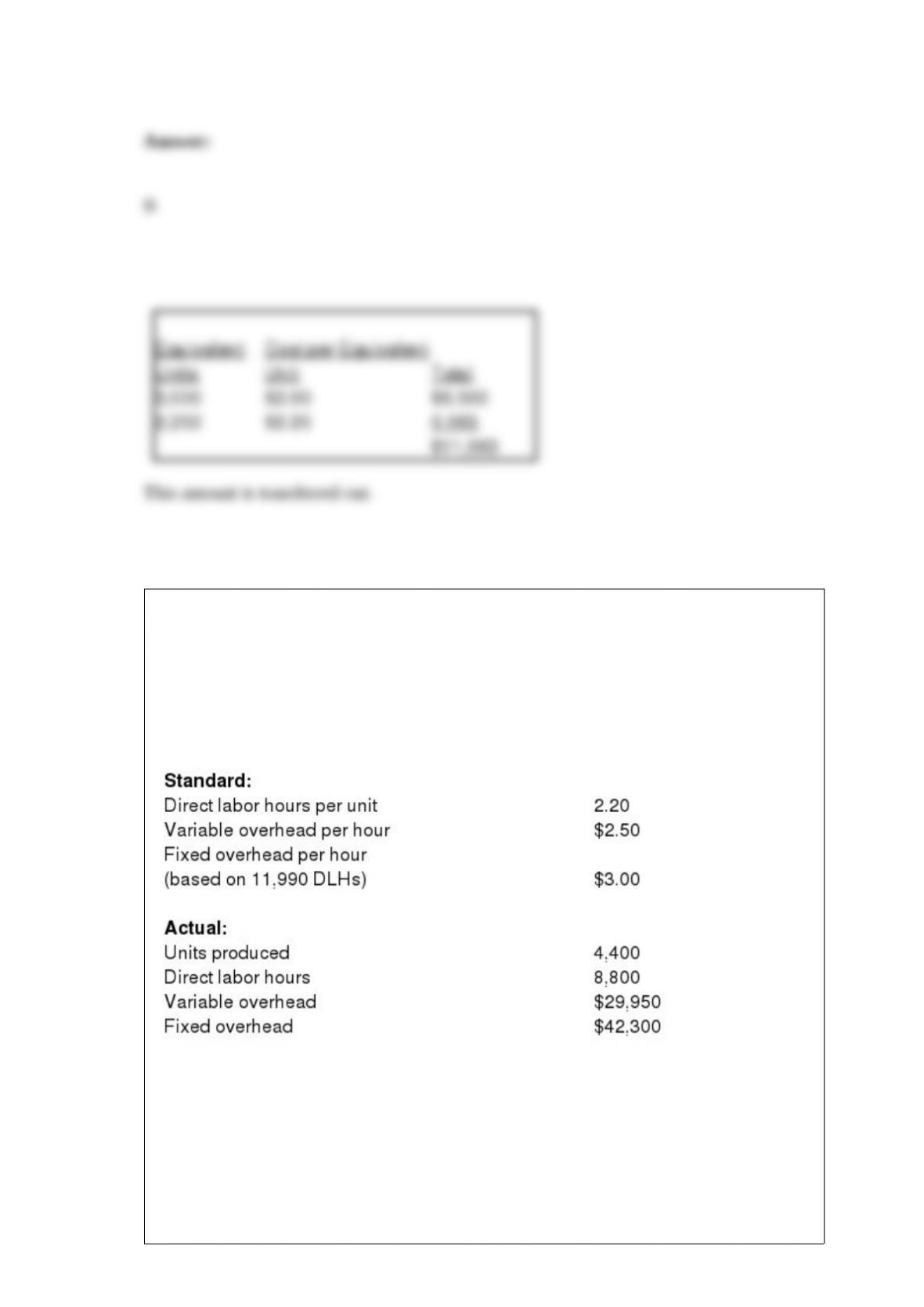
Pearce Company
Pearce Company uses a standard cost system for its production process. Pearce
Company applies overhead based on direct labor hours. The following information is
available for July:
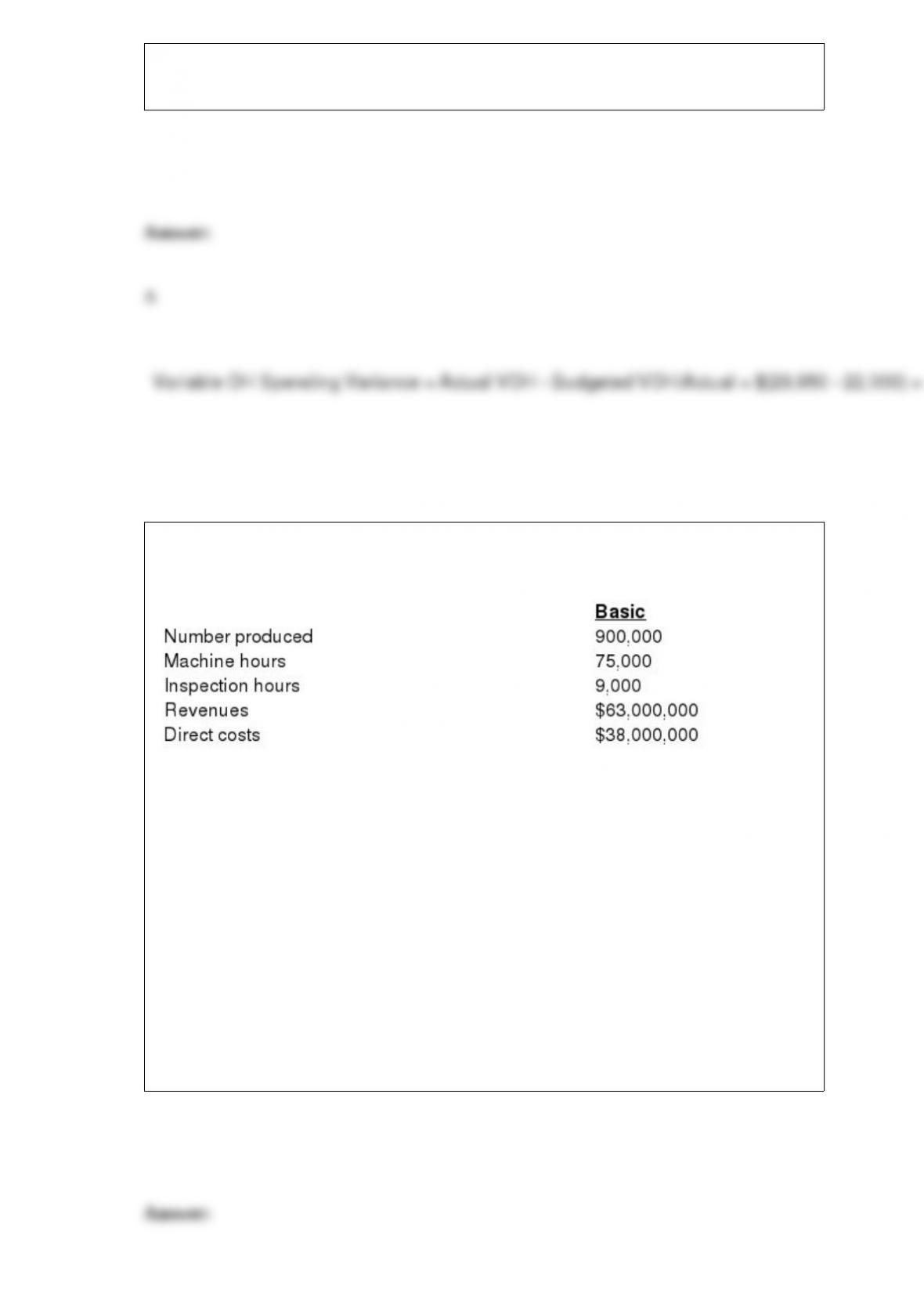
Refer to Pearce Company Using the four-variance approach, what is the variable
overhead spending variance?
a. $ 7,950 U
b. $ 25 F
c. $ 7,975 U
d. $10,590 U
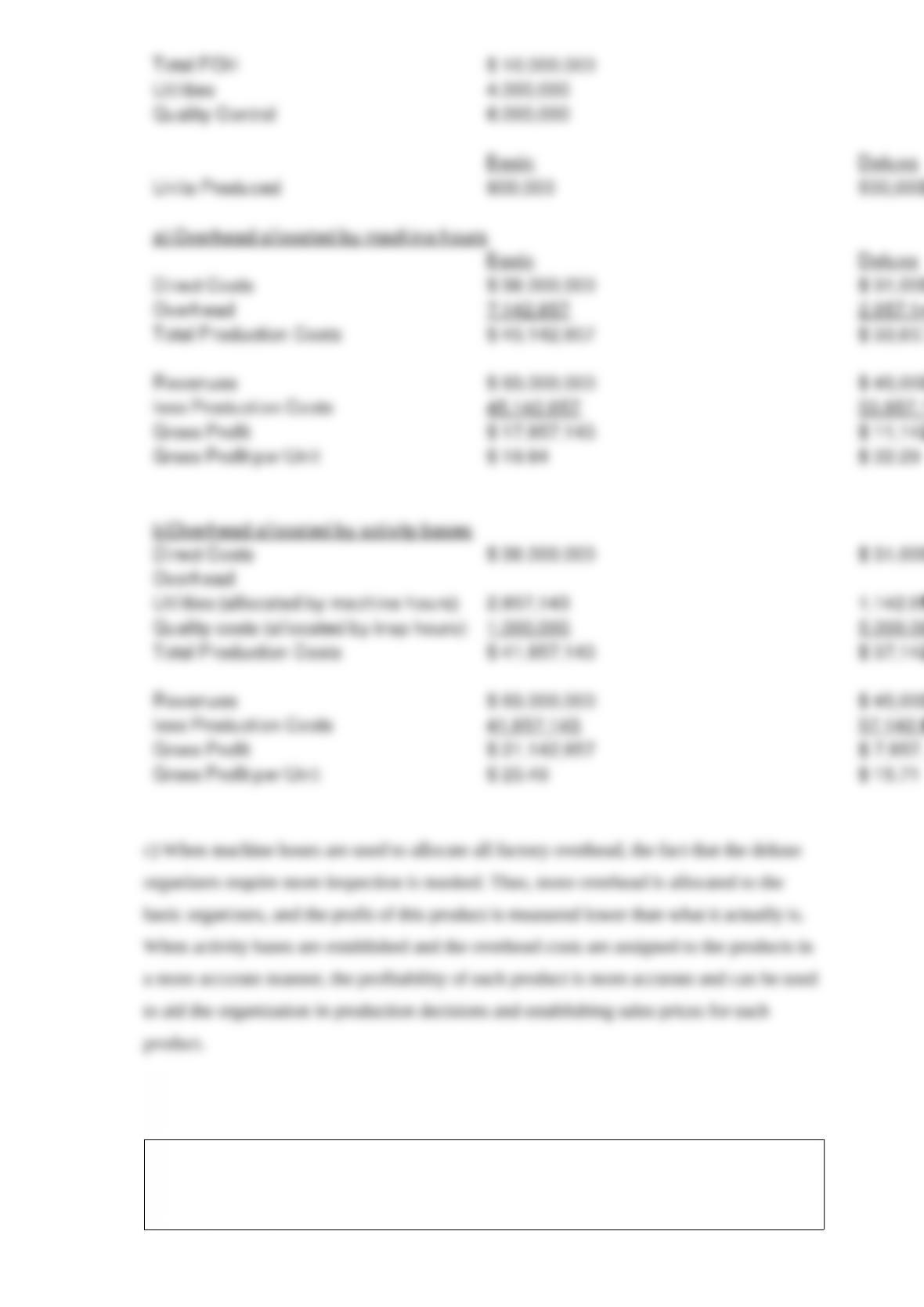
Efficient Electronics Corporation produces two types of electronic data organizers:
basic and deluxe. The following information about the production process is available:
Total factory overhead is $10,000,000. Of this overhead, $4,000,000 is related to
utilities and the remainder is related to quality control.
a. Determine the total overhead cost assigned to each type of data organizer using
machine hours as the allocation base. Calculate the gross profit per unit for each
product.
b. Determine the total overhead cost assigned to each type of data organizer if overhead
is assigned using allocation bases appropriate to the overhead costs. Calculate the gross
profit per unit of each product.
c. Explain why the unit cost for each model is different between the two methods of
allocation.
After the break-even point is reached, each dollar of contribution margin is a dollar of
before-tax profit.

In CVP analysis, sales and production are assumed to be equal.
A company may outsource some of its production in order to focus on core
competencies.
Why should predetermined overhead rates be used?
What is an opportunity cost and why is it a relevant cost?
Variable costs per unit remain unchanged with levels of production.
When manufacturing overhead is charged to a job, the work in process account is
credited.
In a standard job-order costing system, factory overhead is applied using
rates times input.
What is the relationship between the incurrence of the various types of quality costs and
the quantity of output that meets specification?
Variable costs per unit vary directly with levels of production.

A master budget is a planning document that presents expected variable and fixed
overhead costs at different activity levels.
Project funding is an investing decision.
Discrete production losses are assumed to occur at the end of a process.

Reinvestment assumptions are different under each method of ranking capital projects.
Reworking a product is an internal failure cost.
In a service industry, direct materials are usually significant in amount and can be easily
traced to a cost object.
Using MACRS depreciation for tax purposes and straight-line depreciation for book
purposes will affect after-tax cash flows during the life of a project.
Define an environmental management system (EMS).
The focus of business process reengineering is on the improvement of specific
processes.
Expected standards tend to yield unfavorable variances.