If an organization has an obligation to pay $25,000 to a supplier two years from now,
the present value of the obligation:
A. is less than $25,000.
B. is $25,000.
C. is more than $25,000.
D. could be calculated using an annuity factor from the present value tables.
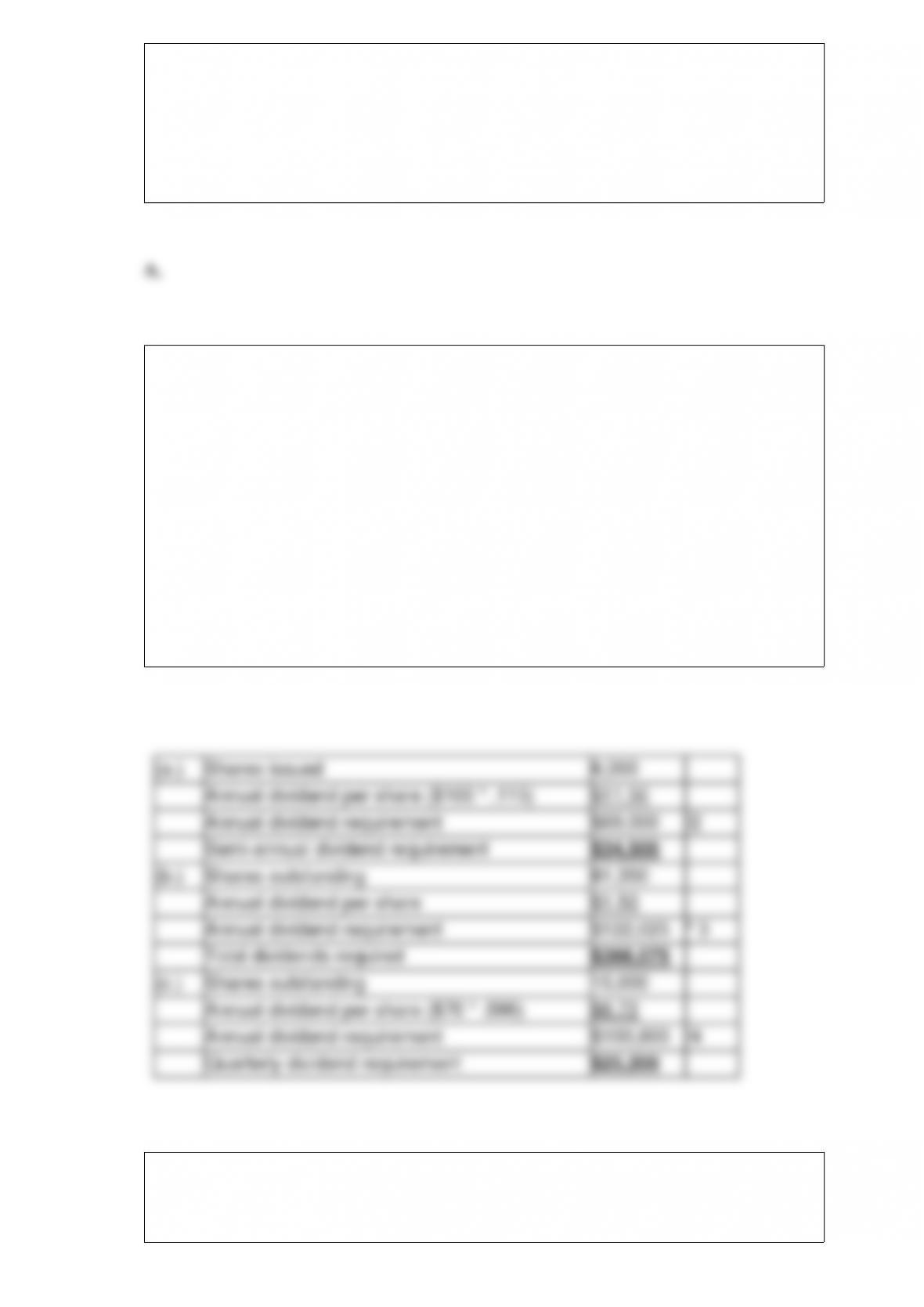
Calculate the cash dividends required to be paid for each of the following preferred
stock issuances:
(a.) The semiannual dividend on 11.5% cumulative preferred, $100 par value;
6,000 shares authorized, issued, and outstanding.
(b.) The total dividends owed to preferred shareholders on $1.50 annual cumulative
preferred, 100,000 shares authorized, 85,000 shares issued, and 81,350 shares
outstanding. The company did not pay dividends during the prior two years or during
the current year.
(c.) The quarterly dividend on 9.6% cumulative preferred, $70 stated value, $72
liquidating value, 20,000 shares authorized, 15,000 shares issued and outstanding. No
dividends in arrears.
The reason for recording a prepaid expense as a current asset is:
A. that the prepaid item will be returned for a cash refund.
B. that the prepaid item has not yet become an expense.
C. that the expense has been incurred but not yet paid.
D. to avoid recognizing an expense so net income will be higher for the current
accounting period.
In order to achieve higher quality cost information from the assignment of overhead
costs to products manufactured, the use of a predetermined overhead rate is being
replaced by:
A. absorption costing.
B. job order costing.
C. activity-based costing.
D. process costing.
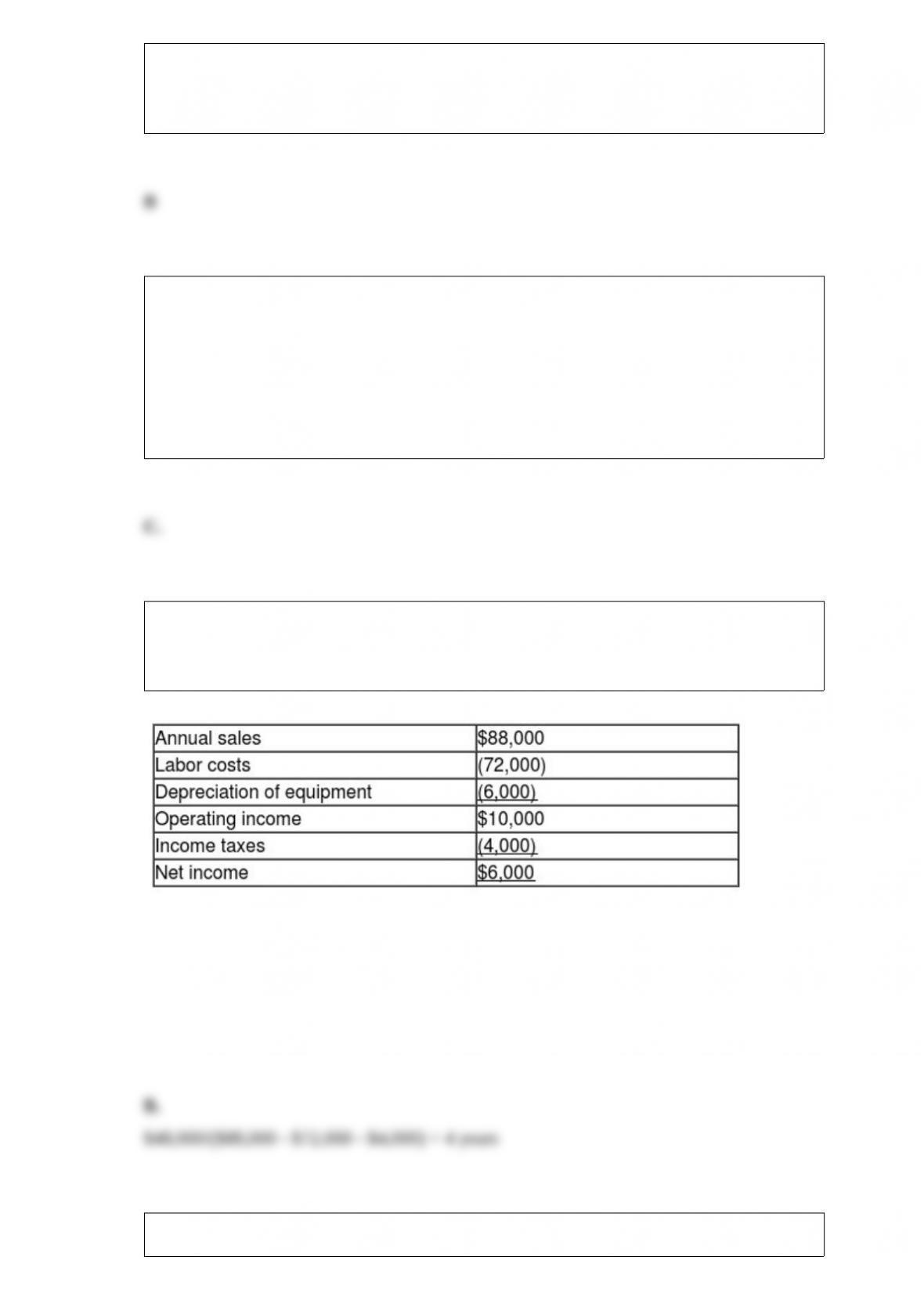
Boccardi Inc., has invested in new pasta manufacturing equipment at a cost of $48,000.
The equipment has an estimated useful life of eight years. Estimated annual sales and
operating expenses related to the pasta equipment follow:
A. 3.0 years.
B. 4.0 years.
C. 6.0 years.
D. 8.0 years.
How are unfavorable standard cost variances reported in an organization’s annual

report?
A. as an expense in the income statement.
B. as a reduction in the work in process inventory in the balance sheet.
C. as an explanatory note to accompany the financial statements.
D. none of the above.
For performance reports to be most effective for management by exception, they
should:
A. be issued at the same time for all responsibility centers.
B. be held until the financial statements for the month have been issued.
C. be issued as soon as possible after the activity or period covered.
D. show all of the costs associated with the responsibility center being reported about.
When an entity changes its accounting from one generally accepted method to another
generally accepted method:
A. financial statements of all prior years are changed to maintain comparability.
B. an explanatory note stating that the change was approved by the Financial
Accounting Standards Board is required.
C. the dollar effect of the change on both the balance sheet and income statement must
be disclosed.
D. changes like this are not permitted.
A concept or principle that relates to transactions is:
A. materiality.
B. full disclosure.
C. original cost.
D. consistency.

The term transfer price refers to:
A. The price at which a product or service is sold to a government entity.
B. The price at which a product or service is sold by one segment to another related
segment.
C. The price at which a product or service is sold by a segment to an outside party.
D. None of the above.
Activities included in a generally accepted definition of management accounting
include:
A. planning, organizing, controlling.
B. planning, operating, reporting.
C. preparing, operating, creating.
D. preparing, organizing, converting.
The accounting concept/principle being applied when an adjustment is made is usually:
A. matching revenue and expense.
B. consistency.
C. original cost.
D. materiality.
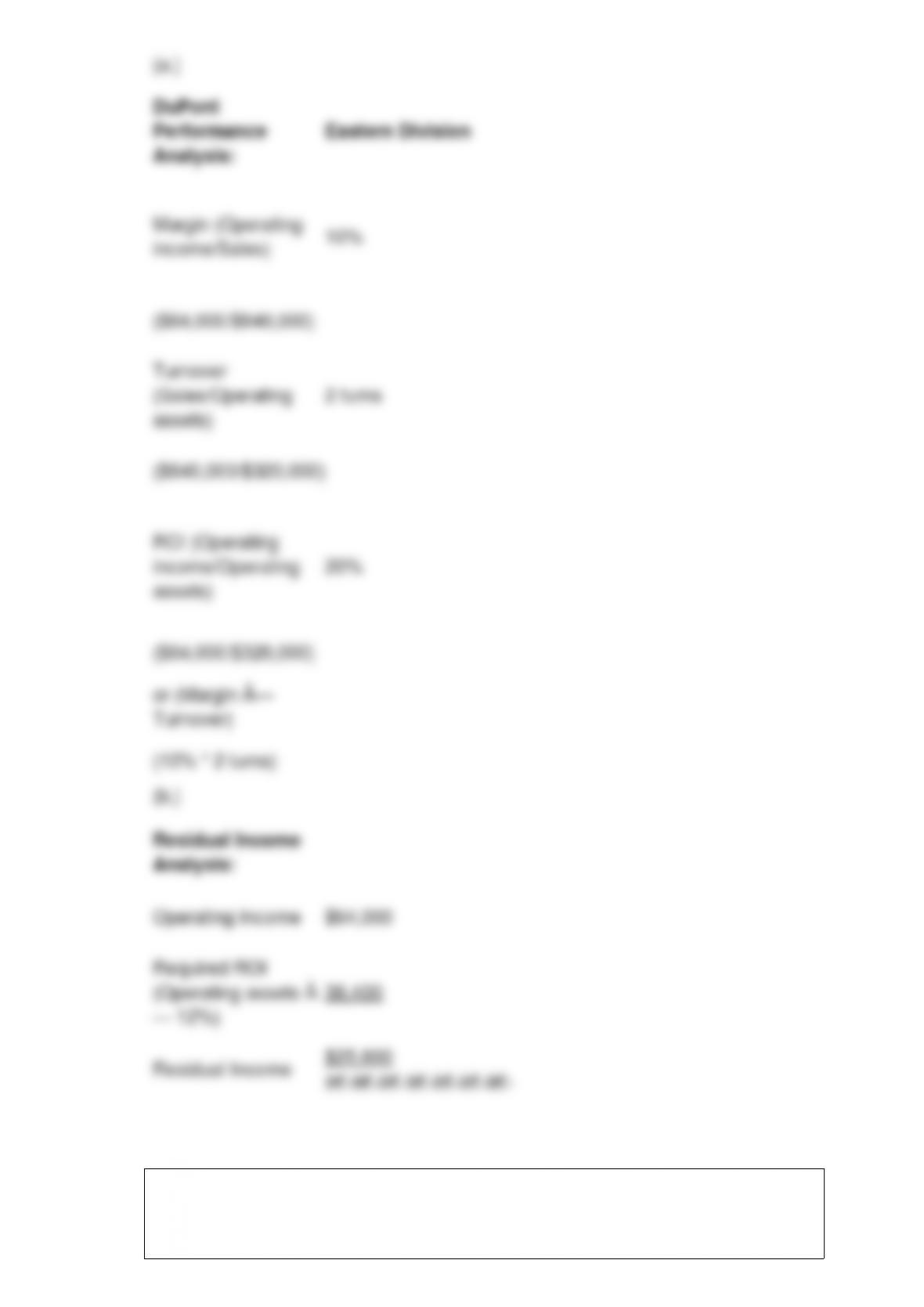
The Central Division of AAA, Inc., has operating income of $64,000 on sales revenue
of $640,000. Divisional operating assets are $320,000 and management of AAA has
determined that a minimum return of 12% should be expected from all investments.
(a.) Using the DuPont model, calculate the Central Division’s margin, turnover, and
ROI.
(b.) Calculate the Central Division’s residual income.
An example of a direct cost in the production of a computer is:
A. depreciation of production equipment.
B. production labor costs.

C. salary of the vice president of production.
D. material warehouse costs.
Which of the following statements is true regarding the payback period?
A. the time value of money is considered when calculating the payback.
B. the payback analysis is more accurate than the net present value analysis.
C. the payback period is less accurate than the accounting rate of return.
D. the time value of money is not considered when calculating the payback.
Which of the following terms do not appear on the contribution margin format income
statement?
A. gross profit.
B. contribution margin.
C. operating income.
D. variable expenses.
Knowledge about the behavior pattern of a cost is important to understanding the effect
on net income of a change in sales volume because as sales volume changes:
A. net income will change proportionately.
B. the effect on net income will depend on the behavior pattern of various costs.
C. fixed costs will rise proportionately.
D. variable costs will not change.
Selling price per unit $100 Variable expenses per unit $40 Fixed expenses per month
$60,000
If sales volume were to decrease 10%, from 4,000 units per month to 3,600 units per
month, operating income would:
A. not change.
B. decrease $10,000.
C. decrease $24,000.
D. decrease $40,000.
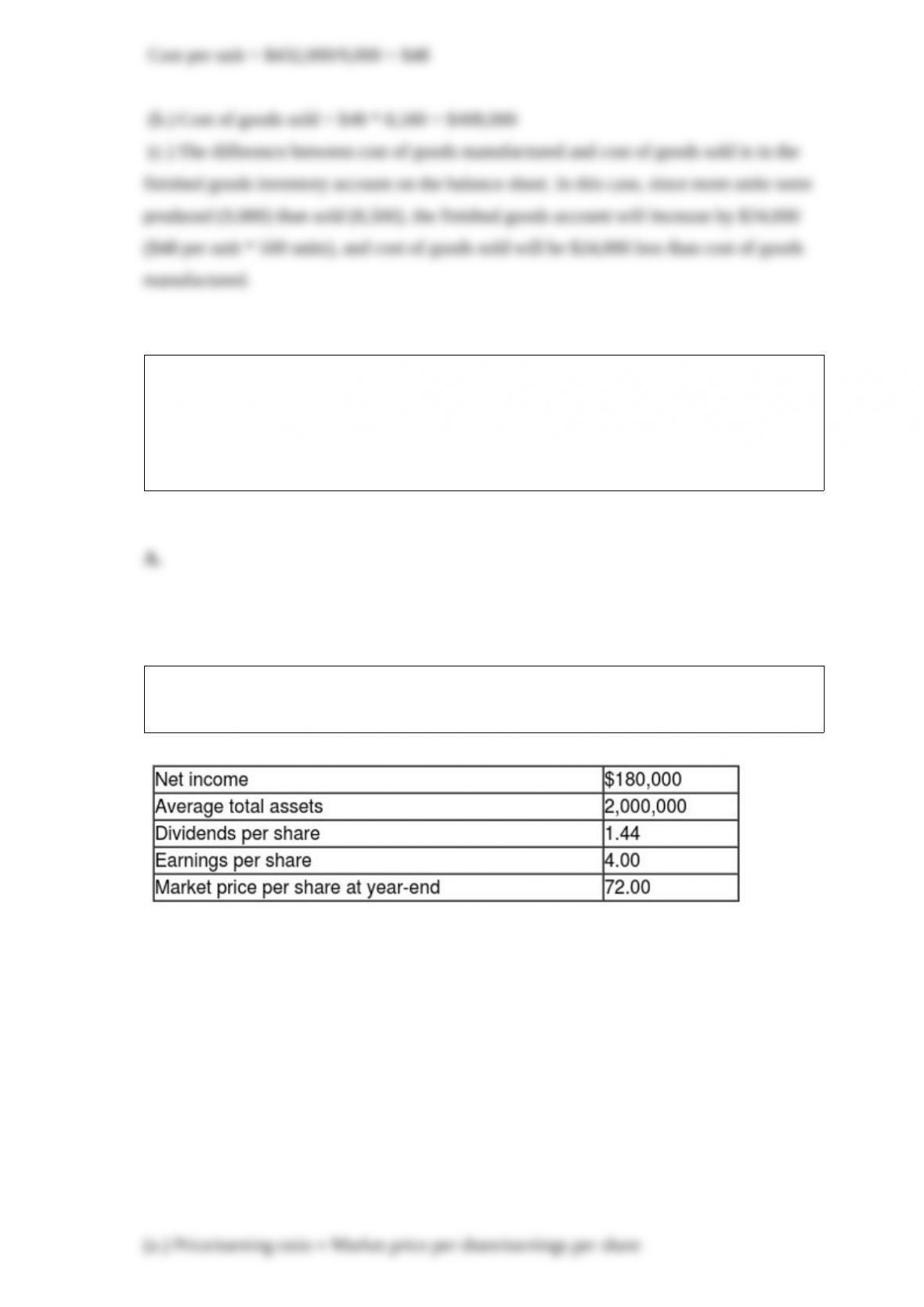
AAA Plumbing Co. incurred the following costs during August:
During the month, 9,000 units of product were manufactured and 8,500 units of product
were sold. On August 1, AAA Plumbing carried no inventories.
(a.) Calculate the cost of goods manufactured during August and the average cost per unit
of product manufactured.
(b.) Calculate the cost of goods sold during August.
(c.) Where in the financial statements will the difference between cost of goods
manufactured and cost of goods sold be classified?
The kind of standard that is most useful for planning and control is:
A. an attainable standard.
B. an ideal standard.
C. a negotiated standard.
D. a past experience standard.
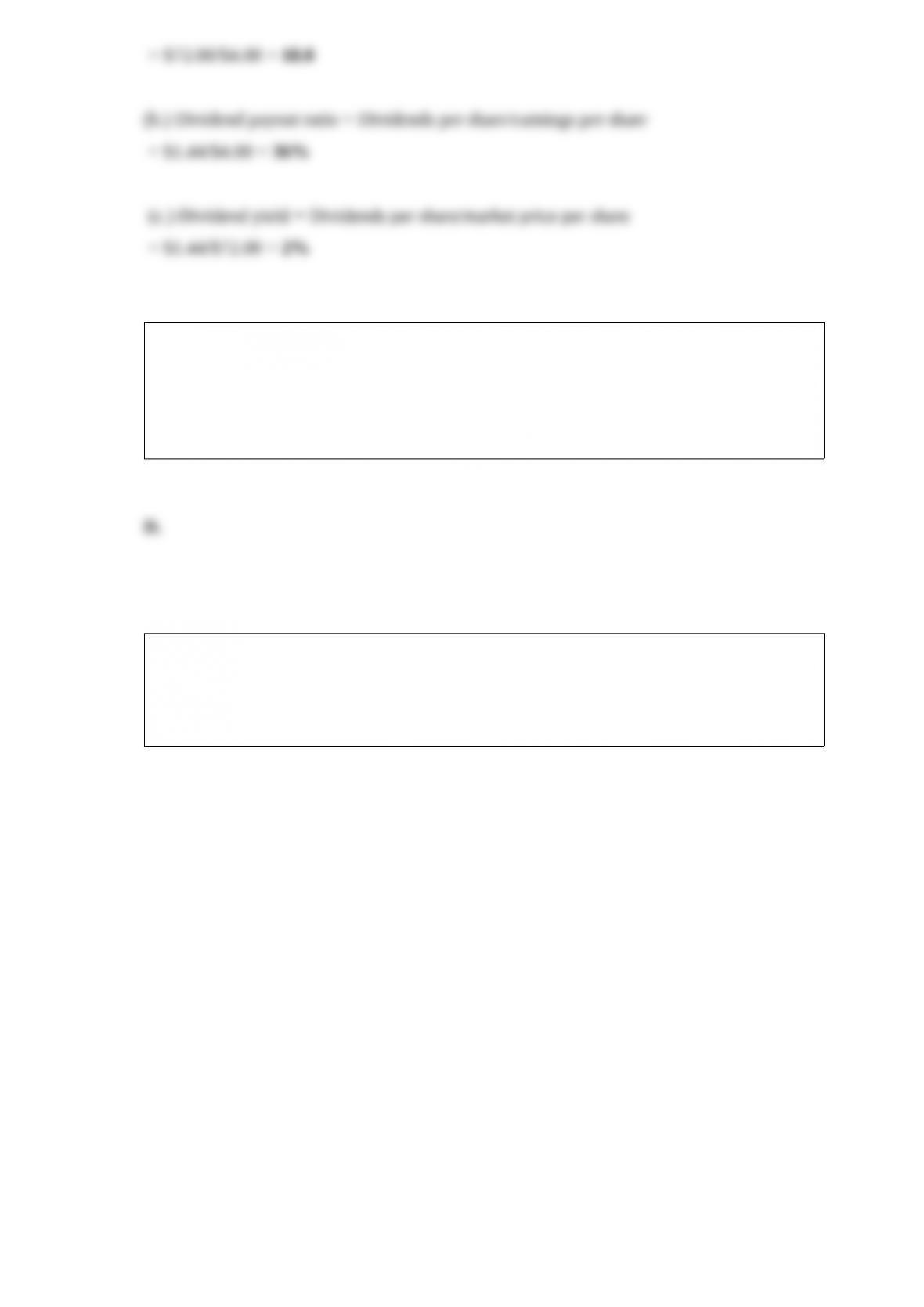
The following information was available for the year ended December 31, 2016:
Required:
(a.) Calculate the price/earnings ratio for 2016.
(b.) Calculate the dividend payout ratio for 2016.
(c.) Calculate the dividend yield for 2016.
The advantage of a continuous budget is:
A. that it is less costly to produce.
B. that it eliminates the need for annual planning.
C. that it saves time for other management activities.
D. that the final budget for any quarter should be more accurate.
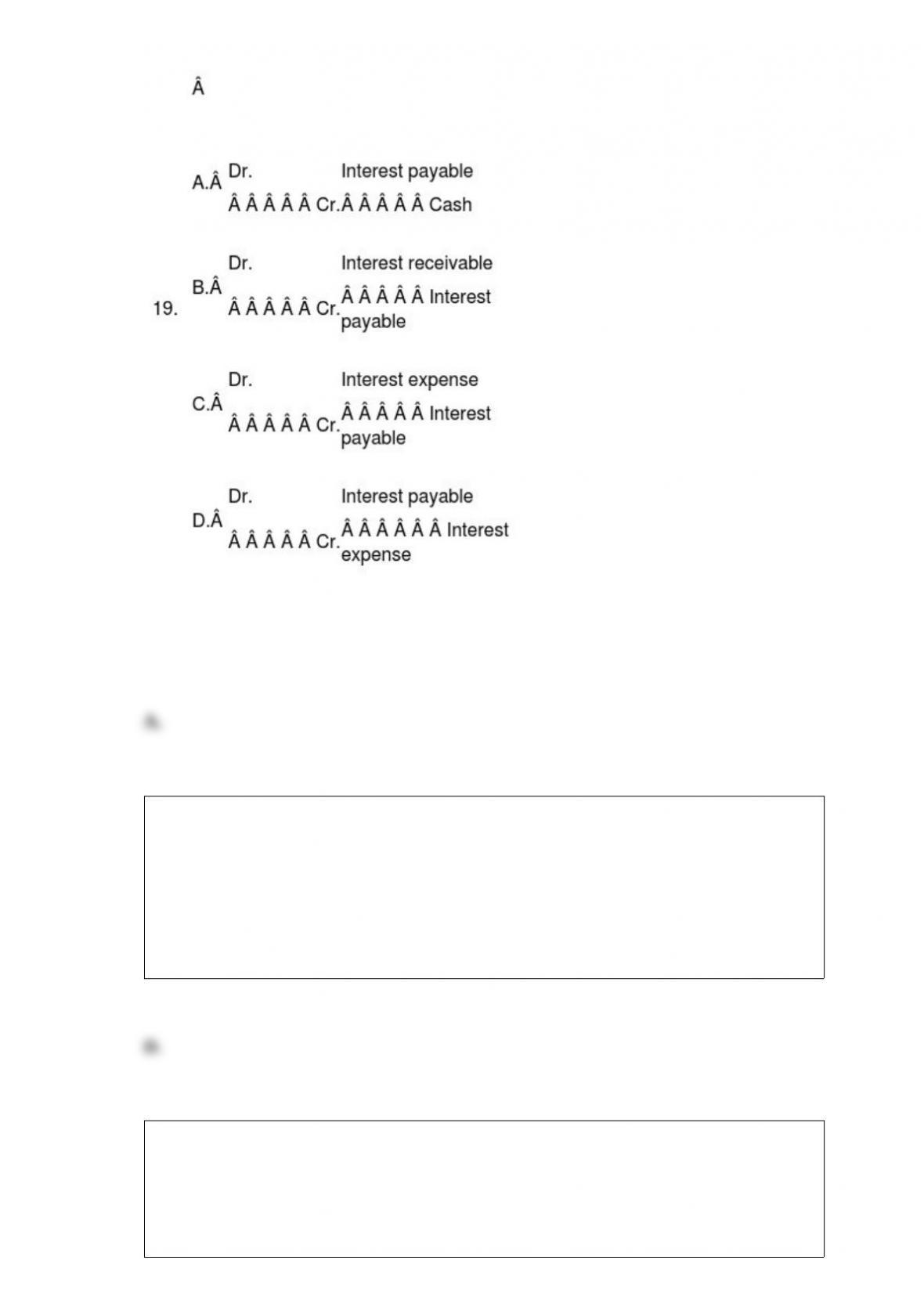
Martin & Associates borrowed $15,000 on April 1, 2016 at 8% interest with both
principal and interest due on March 31, 2017.
Which of the following journal entries should the firm use to record the payment of
interest on March 31, 2017?
The fixed manufacturing overhead variance caused by actual activity being different
from the estimated activity used in calculating the predetermined overhead application
rate is called the:
A. spending variance.
B. budget variance.
C. efficiency variance.
D. volume variance.
The noncurrent Deferred Tax Liability account arises because:
A. some book income will never be subject to income tax.
B. some expenses are deducted for tax purposes before they are deducted for book
purposes.
C. income tax rates change from year to year.

D. the company has not paid income taxes currently due.
Firms that issue registered securities are required to file, with the SEC on an annual
basis, which of the following?
A. An annual report.
B. A form 10-K.
C. A set of financial statements.
D. All of the above.
The key to analyzing a sell as is or process further decision is to determine that:
A. opportunity costs exceed sunk costs.
B. incremental revenues exceed incremental costs.
C. differential costs do not exist.
D. all allocated costs are included in the decision.
Which of the following budgets must be completed before a budgeted income statement
can be prepared?
A. sales, cash, and cost of goods sold.
B. sales, cost of goods sold, and operating expense.
C. sales, operating expense, and cash.
D. sales, cash, and balance sheet.
Establishing the standard cost for a unit of product involves:
A. aggregating the standard costs for each of the products inputs.
B. determining the standard costs for raw materials, direct labor, and manufacturing
overhead.
C. determining the standard quantities allowed for each unit of input.
D. all of the above.
Which of the following is not an example of a decision or informed judgment that a
potential employee could make from accounting information?
A. Personnel turnover statistics (i.e., hiring and terminations).
B. Probability of the company’s ability to make profit sharing plan contributions in the
future.
C. Assessment of the risk that the company may become bankrupt in the near future.
D. The extent of the company’s commitment to a research program.
A. Personnel turnover statistics (i.e., hiring and terminations).
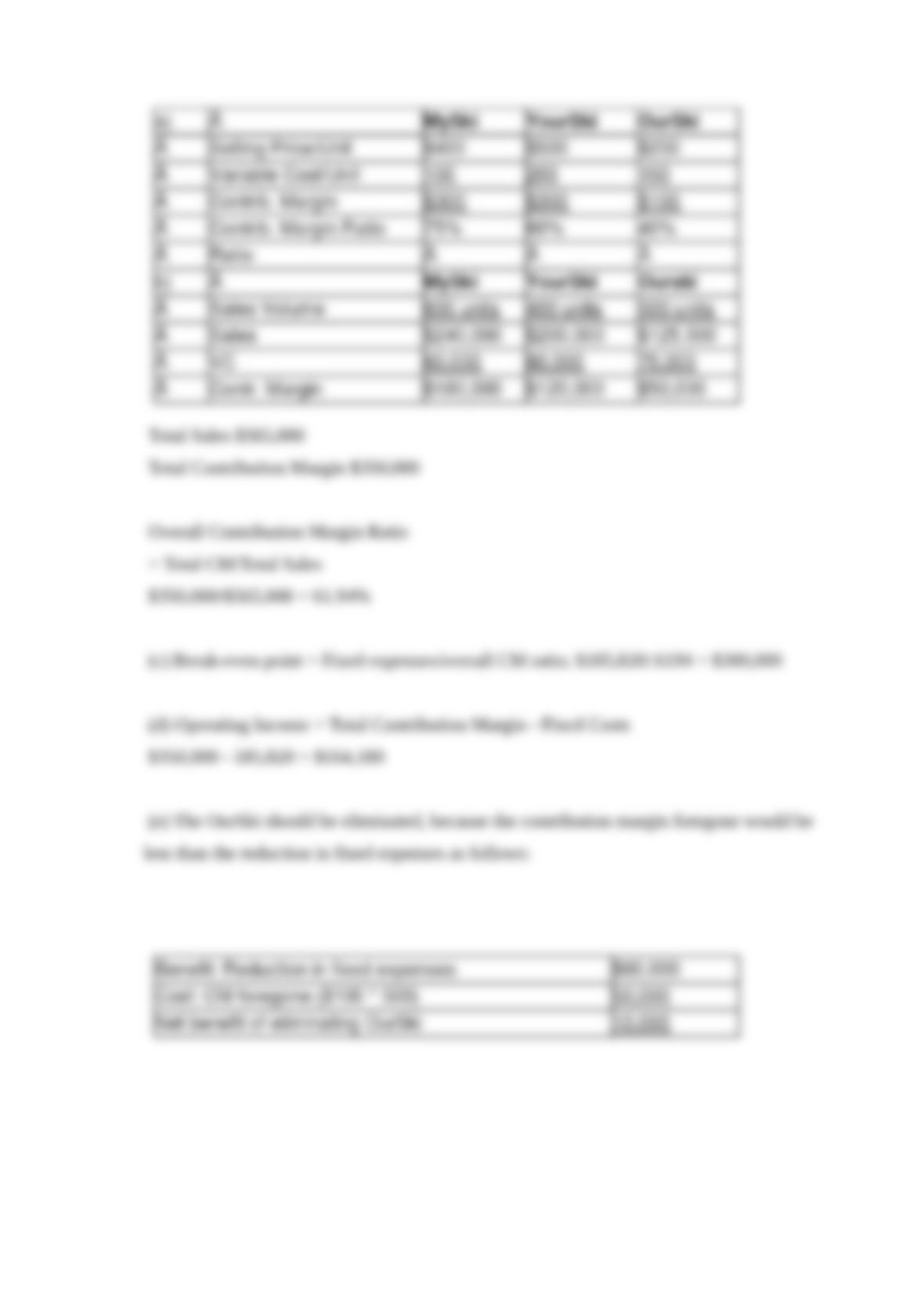
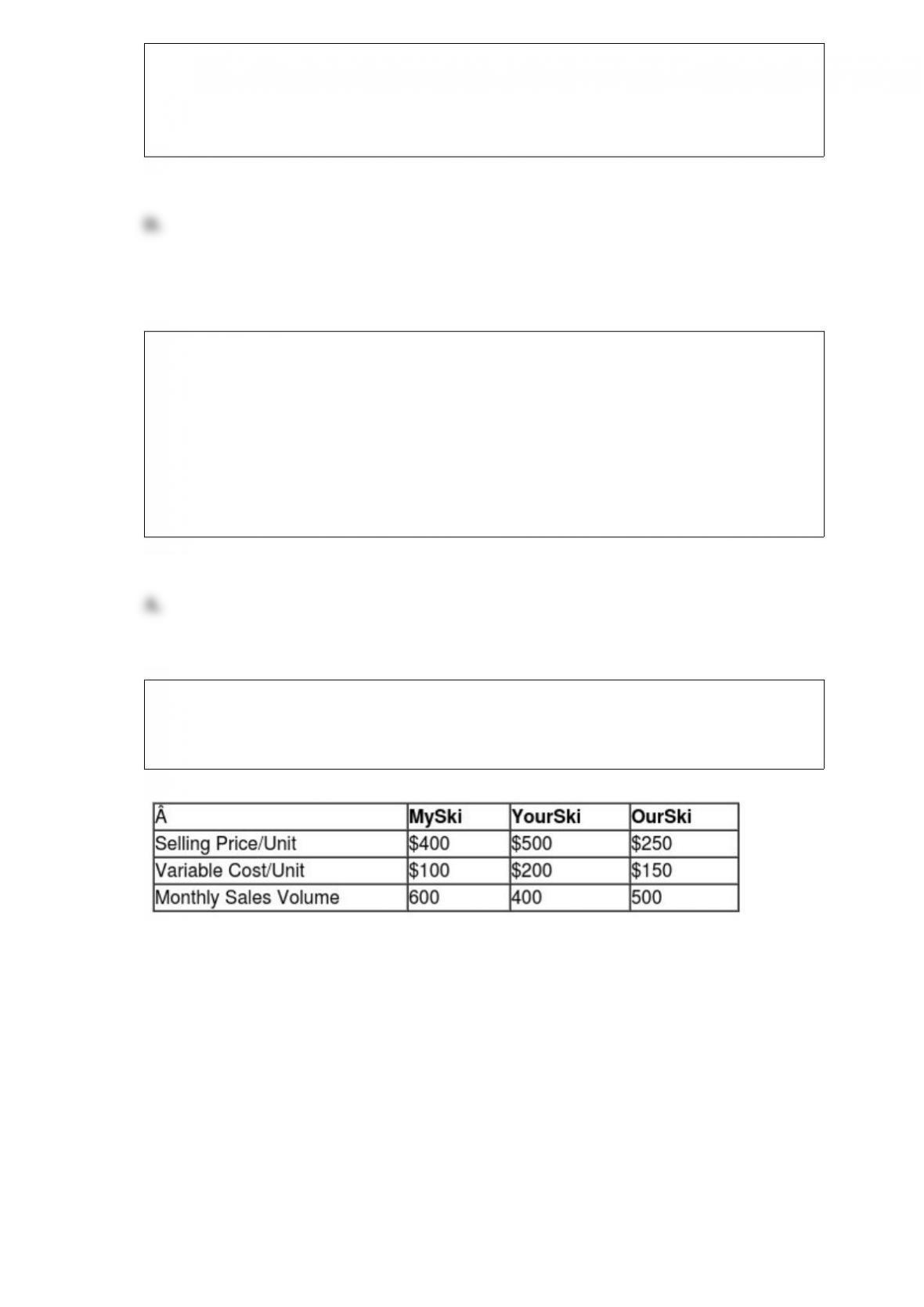
Obed Corp. makes three models of high performance cross country ski machines.
Current operating data are summarized below:
Fixed expenses per month total $185,820
(a) Calculate the contribution margin ratio for each product.
(b) Calculate the firm’s overall contribution margin ratio.
(c) Calculate the firm’s break-even point in sales dollar.
(d) Calculate the firm’s operating income.
(e) Management is considering the elimination of the OurSki model due to low sales
volume. As a result, total fixed expenses can be reduced by $60,000 per month. Assuming
that this change would not affect the other models, would you recommend the elimination
of the OurSki model?