
The closing process is sometimes referred to as closing the books.
Answer:
Accrued revenues are ordinarily listed on the balance sheet as current liabilities.
Answer:
Receivables not currently collectible are reported in the investments section of the
balance sheet.
Answer:
The main objective of a not-for-profit business is not to make a profit.

Answer:
In a process costing system, costs flow into finished goods inventory only from the
work in process inventory of the last manufacturing process.
Answer:
The direct labor costs and factory overhead costs incurred by a production department
are referred to as conversion costs.
Answer:
If divisional income from operations is $100,000, invested assets are $850,000, and the
minimum rate of return on invested assets is 8%, the residual income is $68,000.
Answer:

Principle of exceptions allows managers to focus on correcting variances between
standard costs and actual costs.
Answer:
The anticipated purchase of a fixed asset for $400,000, with a useful life of 5 years and
no residual value, is expected to yield total net income of $300,000 for the 5 years. The
expected average rate of return is 37.5%.
Answer:
A budget procedure that provides for the maintenance at all times of a twelve-month
projection into the future is called master budgeting.
Answer:

Posting a part of a transaction to the wrong account will cause the trial balance totals to
be unequal.
Answer:
Under the negotiated price approach, the transfer price is the price at which the product
or service transferred could be sold to outside buyers.
Answer:
Transactions must first be recorded into the general journal before they can be entered
into specialized journals.
Answer:

The units of production depreciation method provides a good match of expenses against
revenue.
Answer:
The first budget to be prepared is usually the cash budget.
Answer:
Notes payable may be issued to creditors to satisfy accounts payable created earlier.
Answer:
The costs of materials and labor that do not enter directly into the finished product are

classified as cost of goods sold.
Answer:
When accounts do not appear on the unadjusted trial balance but are needed to post
adjustments, they are simply added to the account title column.
Answer:
The desired selling price for a product will be the same under both variable and total
cost.
Answer:
An operating lease is accounted for as if the lessee has purchased the asset.

Answer:
A gain can be realized when a fixed asset is discarded.
Answer:
A budget procedure that provides for the maintenance at all times of a twelve-month
projection into the future is called continuous budgeting.
Answer:
Standard costs serve as a device for measuring efficiency.
Answer:

Job order cost accounting systems can be used only for companies that manufacture a
product.
Answer:
A company pays $36,000 for twelve month’s rent on October 1. The adjusting entry on
December 31 is debit Rent Expense, $9,000 and credit Prepaid Rent, $9,000.
Answer:
A business that requires all cash payments be made by check can not use a petty cash
system.
Answer:

The amount of interest paid when buying a bond as an investment should be credited to
Interest Revenue.
Answer:
A qualitative characteristic that may impact upon capital investment analysis is the
impact of investment proposals on product quality.
Answer:
When a plant asset is traded for another similar asset, losses on the asset traded are not
recognized.
Answer:

Period costs can be found in the balance sheet or in the income statement.
Answer:
Comprehensive income must be reported on the income statement.
Answer:
A partnership requires only an agreement between two or more persons to organize.
Answer:
Rental charges of $40,000 per year plus $3 for each machine hour over 18,000 hours is
an example of a fixed cost.

Answer:
The basic procedure of posting from a revenue journal is to make all postings at the end
of the month.
Answer:
The direct labor time variance measures the efficiency of the direct labor force.
Answer:
In a process costing system, the cost per equivalent unit is computed before computing
equivalent units.
Answer:

The auditor’s report is where the auditor certifies that the financial statements are
correct and accurate.
Answer:
If ending inventory for the year is overstated, owner’s equity reported on the balance
sheet at the end of the year is understated.
Answer:
Accrued taxes payable are generally reported on the balance sheet as a current liability.
Answer:
If a proposed expenditure of $80,000 for a fixed asset with a 4-year life has an annual
expected net cash flow and net income of $32,000 and $12,000, respectively, the cash
payback period is 4 years.
Answer:
Calculate the total amount of interest expense over the life of the bonds for the
following independent situations.
a) $100,000 face value, 10%, 10-year bonds issued at 101.
b) $240,000 face value, 5%, 5-year bonds issued at 100.
c) $300,000 face value, 9%, 6-year bonds issued at 98.
Answer:

How does the purchase of equipment by signing a note affect the accounting equation?
A.assets increase; assets decrease
B.assets increase; liabilities decrease
C.assets increase; liabilities increase
D.assets increase; owner’s equity increases
Answer:
The current ratio is
A.used to evaluate a company’s liquidity and short-term debt paying ability.
B.is a solvency measure that indicated the margin of safety of a noteholder or
bondholder.
C.calculated by dividing current liabilities by current assets.
D.calculated by subtracting current liabilities from current assets.

Answer:
Pia and Ramona are partners who share income in the ratio of 3:2. Their capital
balances are $90,000 and $130,000 respectively. Income Summary has a credit balance
of $40,000. What is Ramona’s capital balance after closing Income Summary to
Capital?
A.$110,000
B.$146,000
C.$106,000
D.$150,000
Answer:
Which of the following entries records the receipt of a utility bill from the water
company?
A.debit Utilities Expense; credit Accounts Payable
B.debit Utilities Payable; credit Accounts Receivable
C.debit Accounts Payable; credit Cash
D.debit Accounts Payable; credit Utilities Payable
Answer:
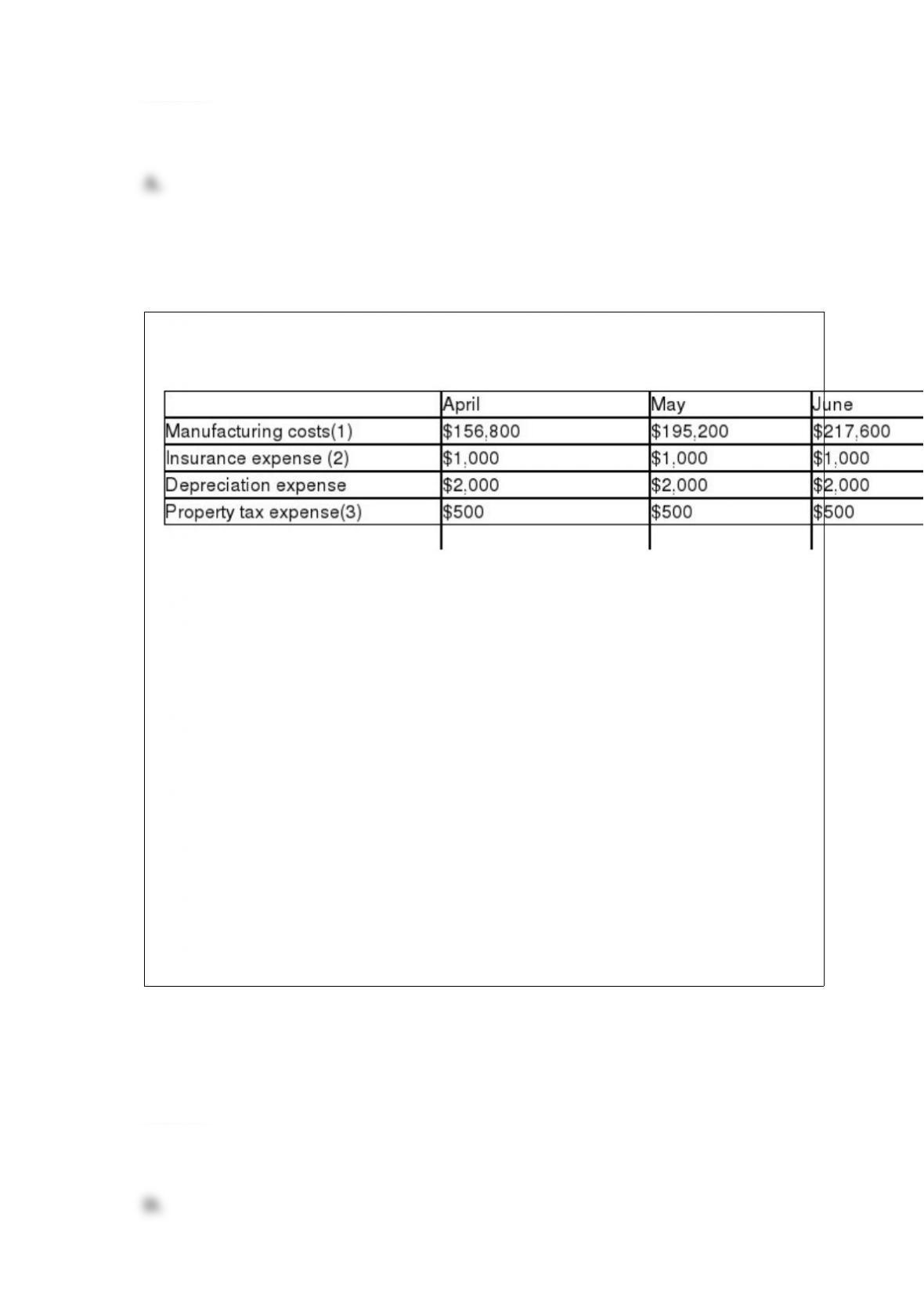
Finch Company began its operations on March 31 of the current year. Finch Co. has the
following projected costs:
(1) 3/4 of the manufacturing costs are paid for in the month they are incurred. 1/4 is
paid in the following month.
(2) Insurance expense is $1,000 a month, however, the insurance is paid four times
yearly in the first month of the quarter, i.e. January, April, July, and October.
(3) Property tax is paid once a year in November.
The cash payments for Finch Company in the month of June are:
A.$215,500
B.$188,800
C.$214,000
D.$212,000
Answer:
Explain the difference between
A) Accrued revenues and unearned revenues.
B) Accrued expenses and prepaid expenses.
C) Give an example of each.
Answer:
Selected data for the current year ended December 31 are as follows:
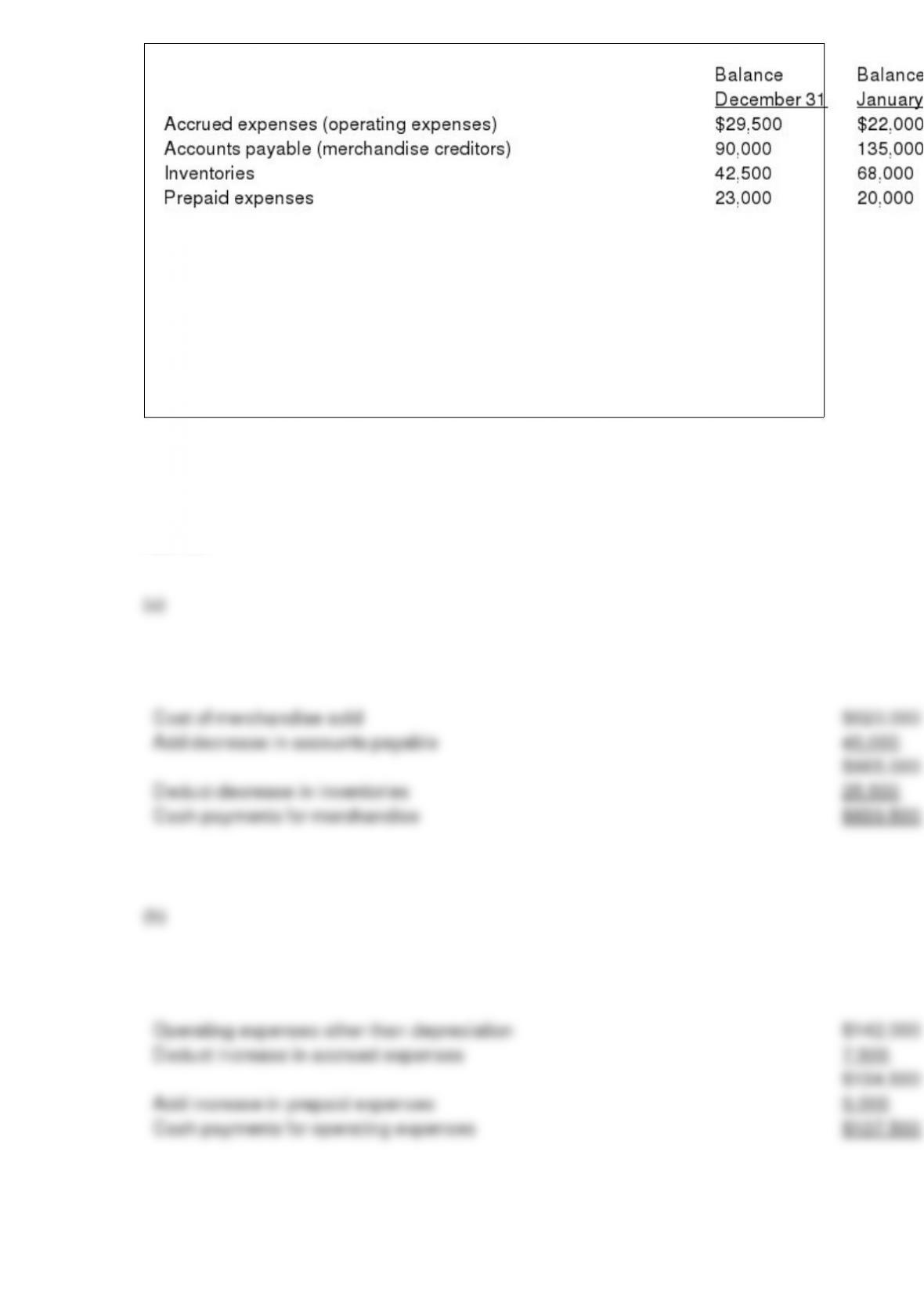
During the current year, the cost of merchandise sold was $620,000 and the operating
expenses other than depreciation were $142,000. The direct method is used for
presenting the cash flows from operating activities on the statement of cash flows.
Determine the amount reported on the statement of cash flows for (a) cash payments for
merchandise and (b) cash payments for operating expenses.
Answer:
The balance in the office supplies account on June 1 was $7,500, supplies purchased
during June were $3,100, and the supplies on hand at June 30 were $2,300. The amount
to be used for the appropriate adjusting entry is
A.$2,100
B.$12,900
C.$6,700
D.$8,300
Answer:
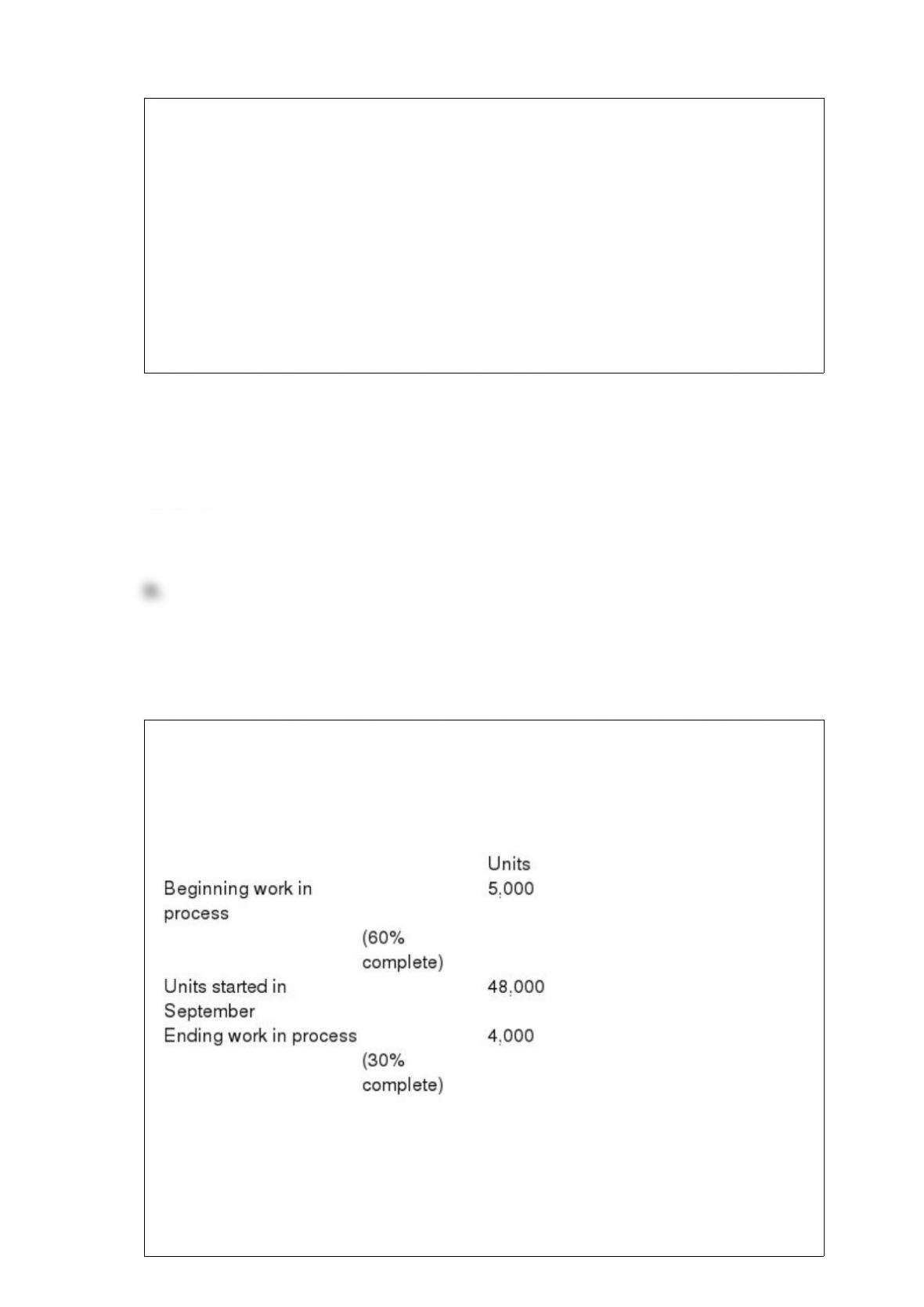
The following unit data were assembled for the assembly process of the Super Co. for
the month of June. Direct materials are added at the beginning of the process.
Conversion costs are added uniformly over the production process. The company uses
the FIFO process.
The number of equivalent units produced with respect to conversion costs is:
A.50,200
B.48,000
C.53,000
D.47,200
Answer:
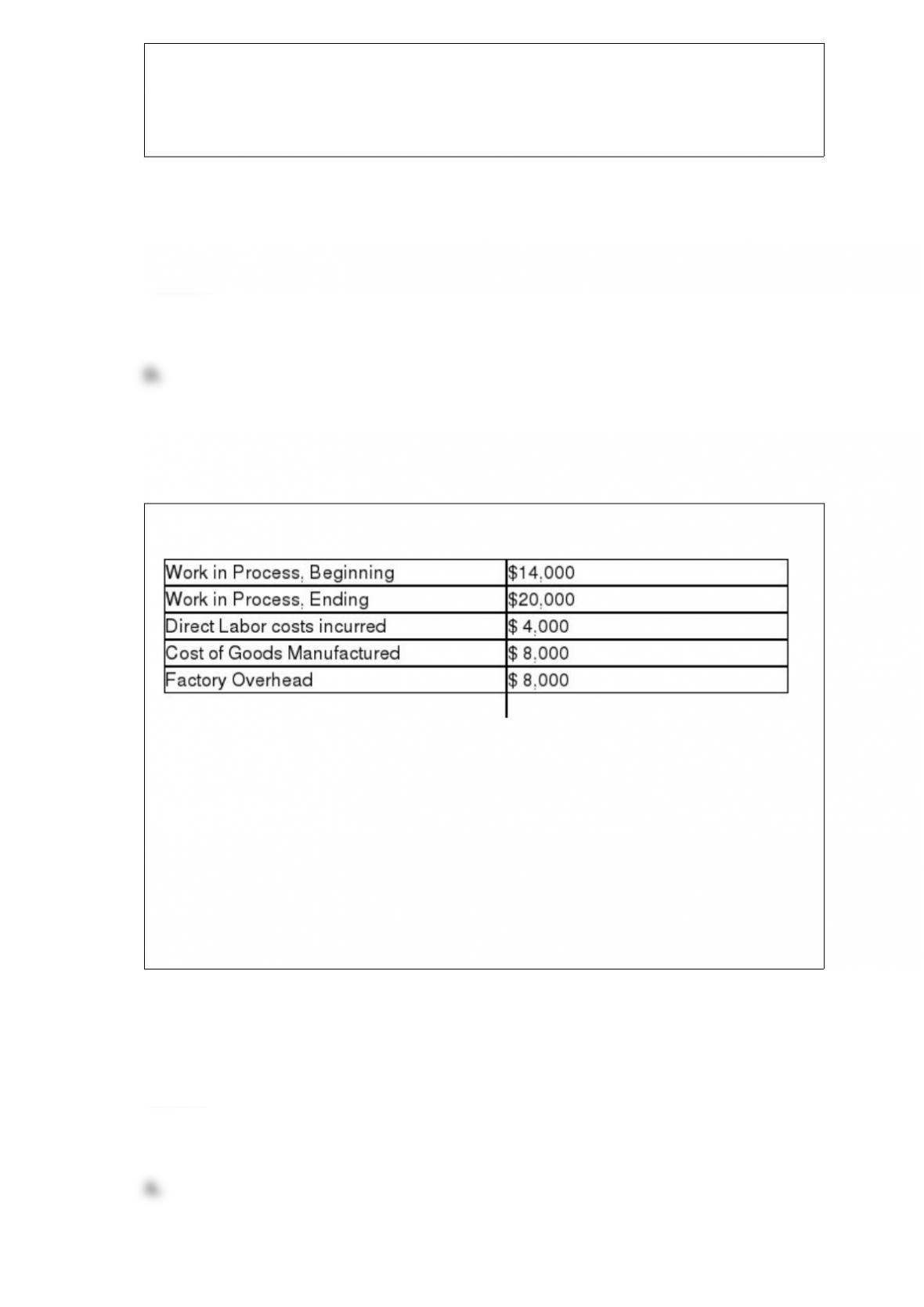
What is the amount of Direct Materials used?
A.$2,000
B.$4,000
C.$8,000
D.$14,000
Answer:
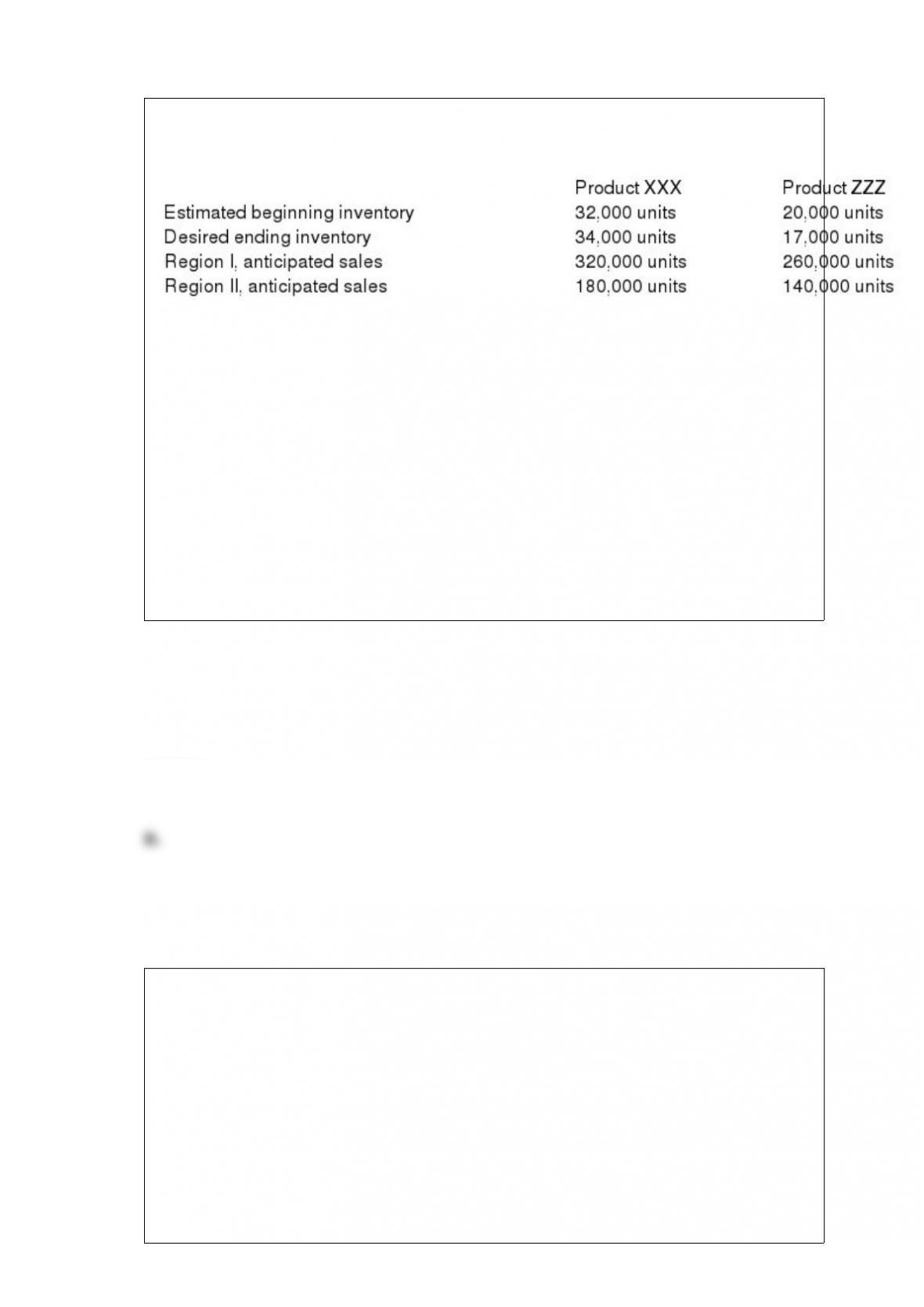
Below is budgeted production and sales information for Flushing Company for the
month of December:
The unit selling price for product XXX is $5 and for product ZZZ is $15.
Budgeted production for product XXX during the month is:
A.498,000 units
B.502,000 units
C.534,000 units
D.566,000 units
Answer:
The cost of production of completed and finished goods during the period amounted to
$450,000, and the finished products shipped to customers had total production costs of
$357,000. From the following, select the entry to record the transfer of costs from work
in process to finished goods.
A.Finished Goods357,000
Work in Process357,000
B.Finished Goods450,000

Work in Process450,000
C.Work in Process450,000
Finished Goods450,000
D.Work in Process357,000
Finished Goods357,000
Answer:
Allowance for Doubtful Accounts has a credit balance of $2,100 at the end of the year
(before adjustment), and an analysis of customers’ accounts indicates uncollectible
receivables of $19,700. Which of the following entries records the proper adjustment
for Bad Debt Expense?
A.debit Allowance for Doubtful Accounts, $17,600; credit Bad Debt Expense, $17,600
B.debit Allowance for Doubtful Accounts, $21,800; credit Bad Debt Expense, $21,800
C.debit Bad Debt Expense $21,800; credit Allowance for Doubtful Accounts, $21,800
D.debit Bad Debt Expense, $17,600; credit Allowance for Doubtful Accounts, $17,600
Answer:

Which of the following costs is a mixed cost?
A.Salary of a factory supervisor
B.Electricity costs of $3 per kilowatt-hour
C.Rental costs of $10,000 per month plus $.30 per machine hour of use
D.Straight-line depreciation on factory equipment
Answer:
If total assets decreased by $88,000 during a period of time and owner’s equity
increased by $71,000 during the same period, then the amount and direction (increase
or decrease) of the period’s change in total liabilities is
A.$17,000 increase
B.$88,000 decrease
C.$159,000 increase
D.$159,000 decrease
Answer:

Prepaid expenses are eventually expected to
A.become expenses when their future economic value expires.
B.become revenues when services are performed.
C.become expenses in the period when they are paid.
D.become revenues when the liability is no longer owed.
Answer:
Of the following financial reports, which one is the one that will determine if the
accounting equation is in balance?
A.Journal entry
B.Income statement
C.Trial balance
D.Account reconciliation
Answer:

On May 1, 2014, Stanton Company purchased $60,000 of Harris Company’s 12%
bonds at 100 plus accrued interest of $2,400. On June 30, 2014, Stanton received its
first semiannual interest. On February 1, 2015, Stanton sold $50,000 of the bonds at
103 plus accrued interest.
The journal entry Stanton will record on June 30, 2014, will include:
A.a credit to Interest Revenue for $2,400.
B.a debit to Cash for $3,600.
C.a credit to Cash for $2,400.
D.a credit to Interest Receivable for $1,200.
Answer:
Bar code scanners are now being used to track incoming materials and to electronically
transmit this data. Scanners have replaced which of the following:
A.receiving report
B.materials requisition
C.materials ledger
D.job cost sheet
Answer:
The total earnings of an employee for a payroll period is referred to as
A.take-home pay
B.pay net of taxes
C.net pay
D.gross pay
Answer:
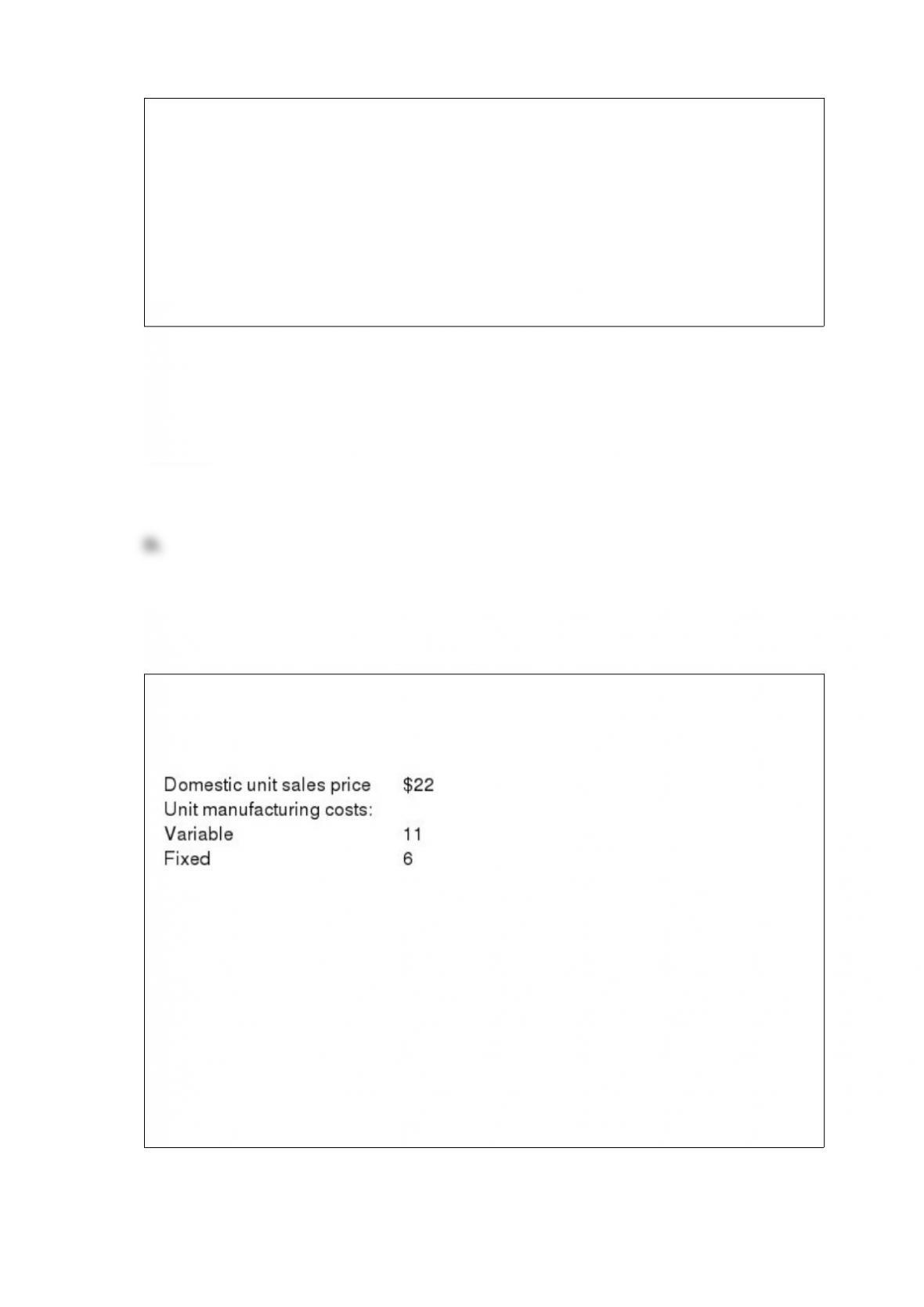
A business received an offer from an exporter for 30,000 units of product at $16 per
unit. The acceptance of the offer will not affect normal production or domestic sales
prices. The following data are available:
What is the amount of the gain or loss from acceptance of the offer?
A.$30,000 loss
B.$40,000 gain
C.$150,000 gain
D.$50,000 gain
Answer:
Equipment purchased at the beginning of the fiscal year for $360,000 is expected to
have a useful life of 5 years, or 14,000 operating hours, and a residual value of $10,000.
Compute the depreciation for the first and second years of use by each of the following
methods:
(a) straight-line
(b) units-of-production (1,200 hours first year; 2,250 hours second year)
(c) declining-balance at twice the straight-line rate
(Round the answer to the nearest dollar.)
Answer:

Too much inventory on hand
A.reduces solvency
B.increases the cost to safeguard the assets
C.increases the losses due to price declines
D.all of the above
Answer:
An indication that the work sheet columns are in balance and the work sheet is
completed is
A.the word “Total” is written at the bottom of each pair of columns
B.each pair of columns is double underlined
C.each pair of columns has the totals circled
D.the final figures are written in ink
Answer:

If the individual subsidiary ledger accounts of Accounts Receivable and Accounts
Payable contained the following data:
Cadence Company – Vendor – $250 credit balance
Franklin Enterprises – Customer – $750 debit balance
Marcelo Construction – Client – $125 – debit balance
Peyton Supplies – Supplier – $375 – credit balance
The Accounts Receivable (A/R) controlling account and the Accounts Payable (A/P)
controlling account balances would be:
A.A/R – $1,000, A/P – $500
B.A/R – $625, A/P – $875
C.A/R – $875, A/P – $625
D.A/R – $750, A/P – $750
Answer:
Harold Corporation just started business in January 2012. They had no beginning
inventories. During 2012 they manufactured 12,000 units of product, and sold 10,000
units. The selling price of each unit was $20. Variable manufacturing costs were $4 per
unit, and variable selling and administrative costs were $2 per unit. Fixed
manufacturing costs were $24,000 and fixed selling and administrative costs were
$6,000.
What would be the Harold Corporations net income for 2012 using absorption costing?
A.$114,000
B.$110,000
C.$4,000

D.$106,000
Answer:
Of the following which istrue about assets?
A.Assets include physical and intangible assets.
B.Assets include only physical assets.
C.Assets are owned solely by the owner of the company.
D.Assets are the result of selling products or services to customers.
Answer:
Equipment acquired at a cost of $126,000 has a book value of $42,000. Journalize the
disposal of the equipment under the following independent assumptions.
a. The equipment had no market value and was discarded.
b. The equipment is sold for $54,000.
c. The equipment is sold for $24,000.
d. The equipment is traded-in for a similar asset. The list price of the new equipment is
$63,000. The buyer gave no cash in the exchange. The transaction lacks commercial
substance.
Journal
Answer:
On which financial statement will Income Summary be shown?
A.Statement of Owner’s Equity
B.Balance Sheet
C.Income Statement
D.No financial statement
Answer:
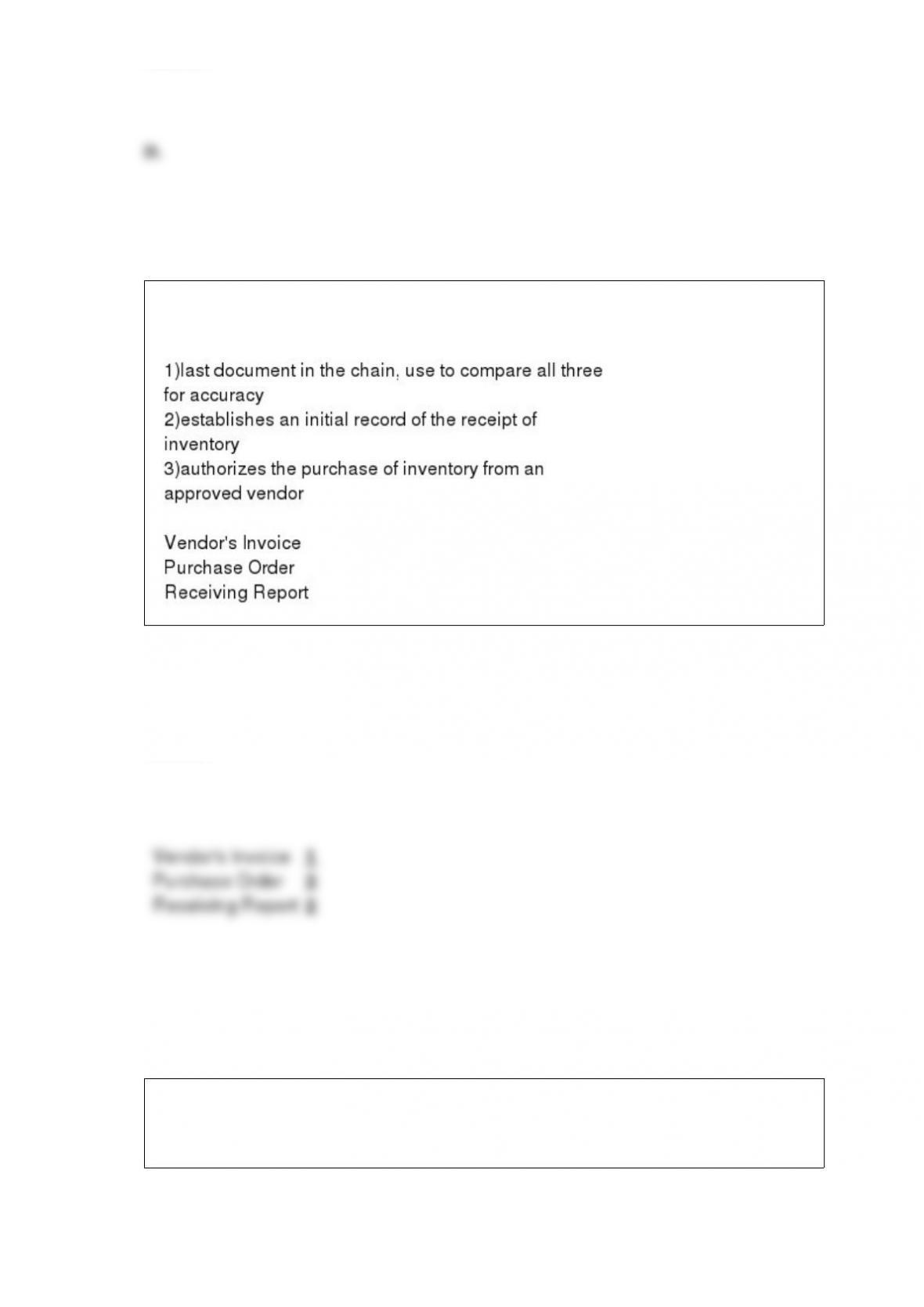
Match the following documents used for inventory control:
Answer:
The balance in the unearned fees account, before adjustment at the end of the year, is
$10,250. Journalize the adjusting entry required if the amount of unearned fees at the
end of the year is $3,125.
Answer:
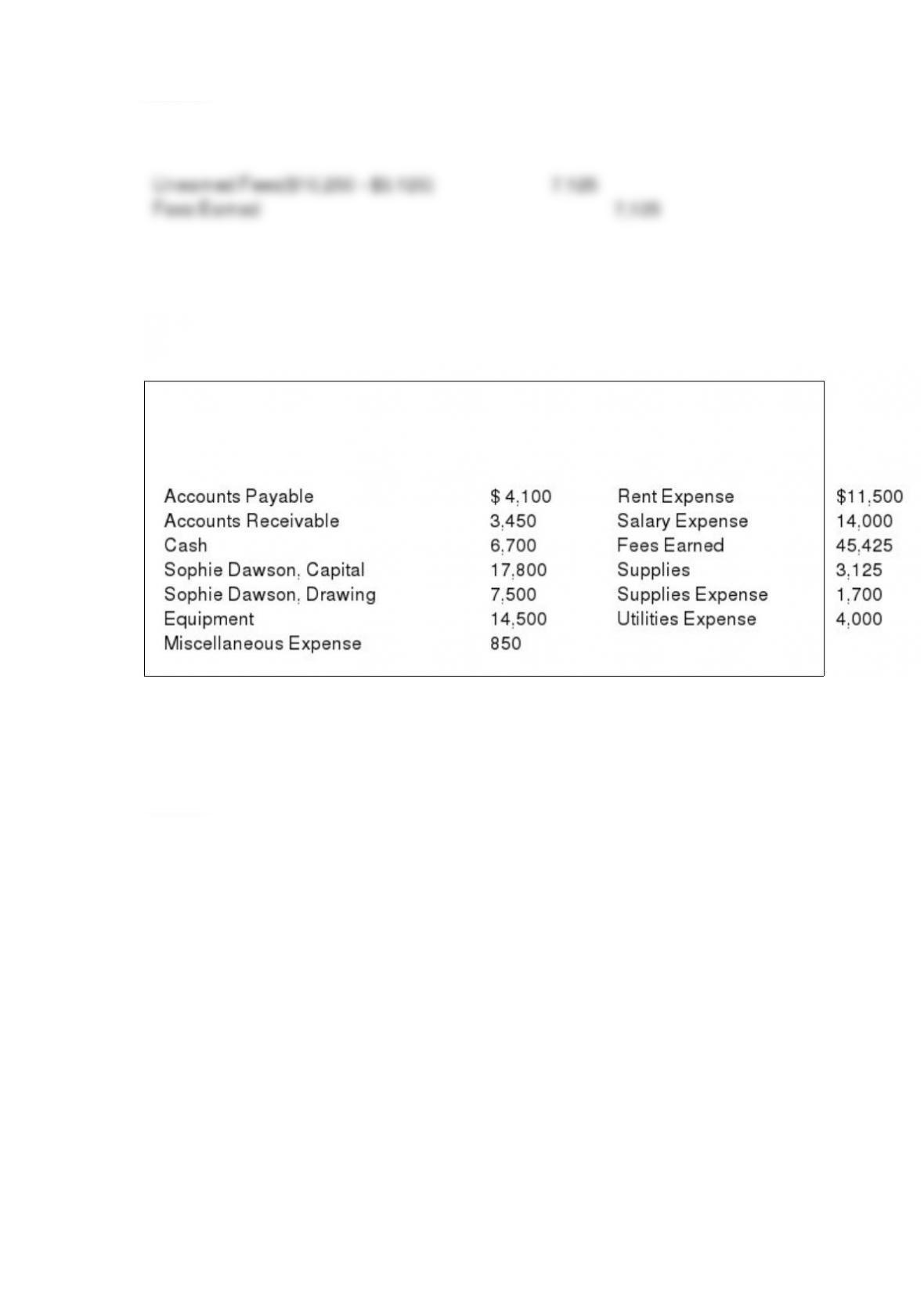
Prepare a trial balance, listing the following accounts in proper sequence. The accounts
(all normal balances) were taken from the ledger of Sophie Designs Co. on April 30,
2014.
Answer:
Lark Art Company sells unfinished wooden decorations at a price of $15.00. The
current profit margin is $5.00 per decoration. The company is considering taking
individual orders and customizing them for sale. To finish the decoration the company
would have to pay additional labor of $3.00, additional materials costing an average of
$4.00 per unit and fixed costs would increase by $1,500. If the company estimates that
it can sell 600 units for $25.00 each month, should they start taking the orders?
Answer:
On March 4th, Micro Sales makes $4,850.00 in sales on bank credit cards which charge
a 2.5% service charge and deposit the funds into Micro Sales bank accounts at the end
of the business day. Journalize the sales and recognition of expense.
Answer:
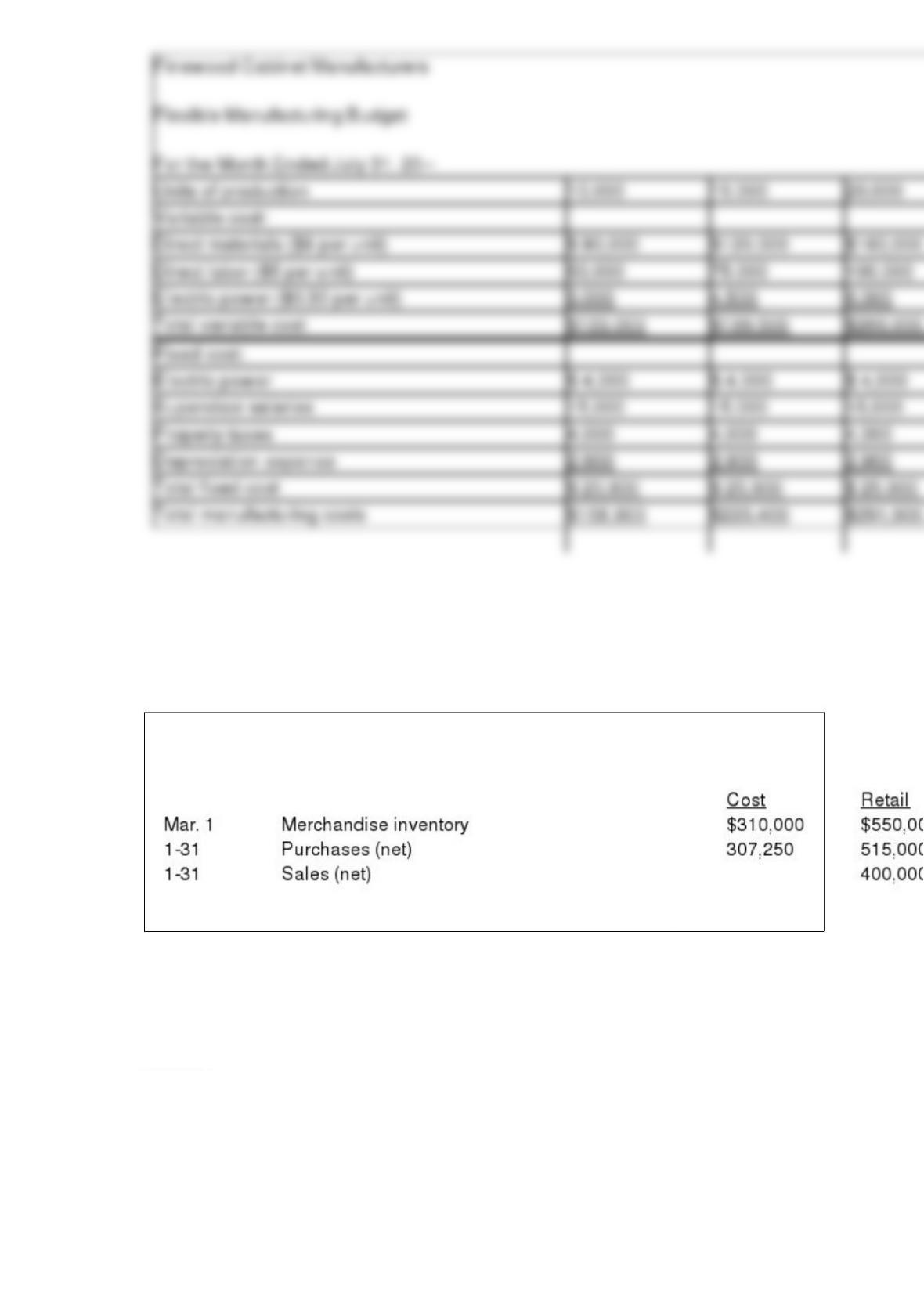
Finewood Cabinet Manufacturers uses flexible budgets that are based on the following
manufacturing data for the month of July:
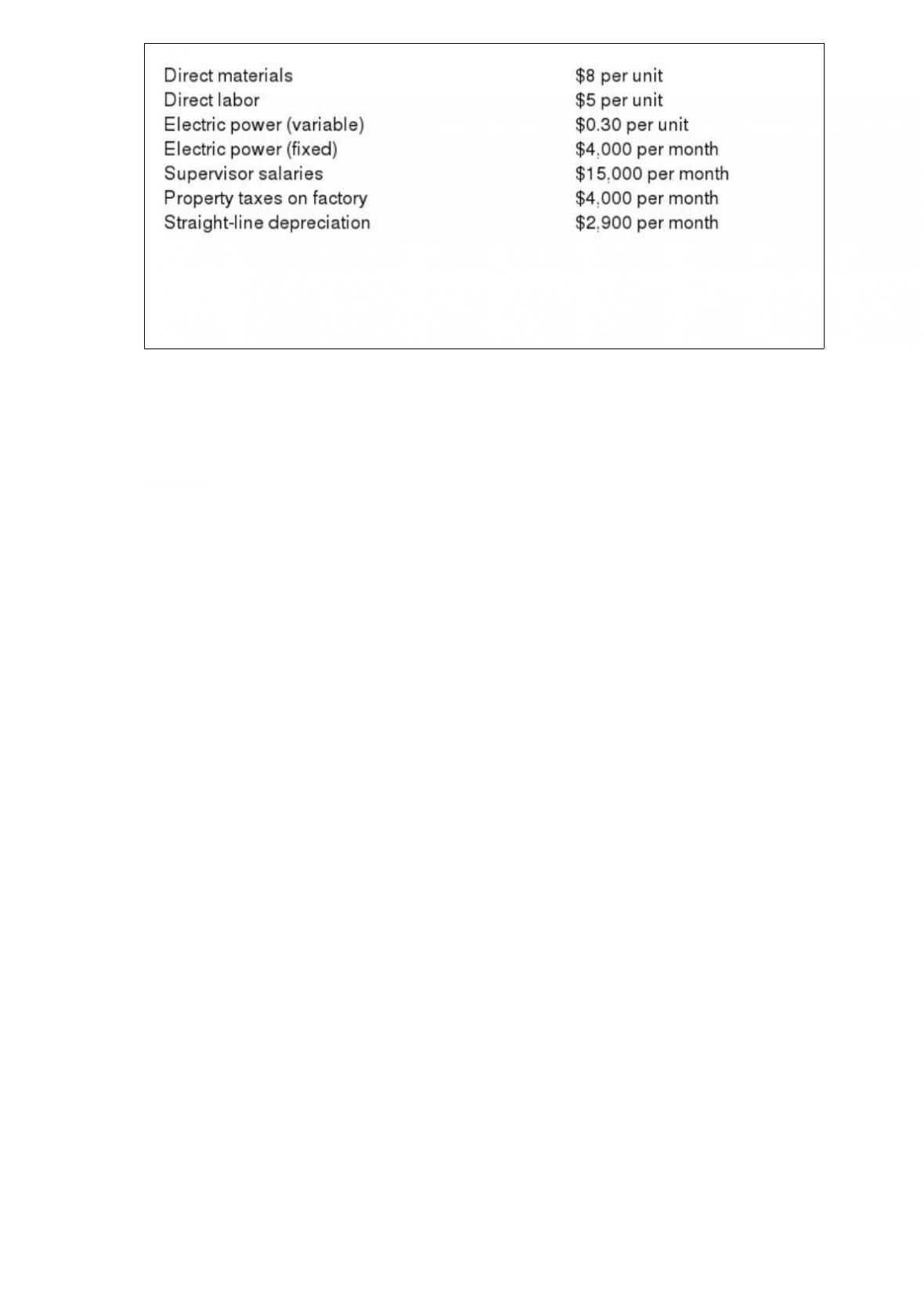
Prepare a flexible budget for Finewood based on production of 10,000, 15,000, and
20,000 units.
Answer:
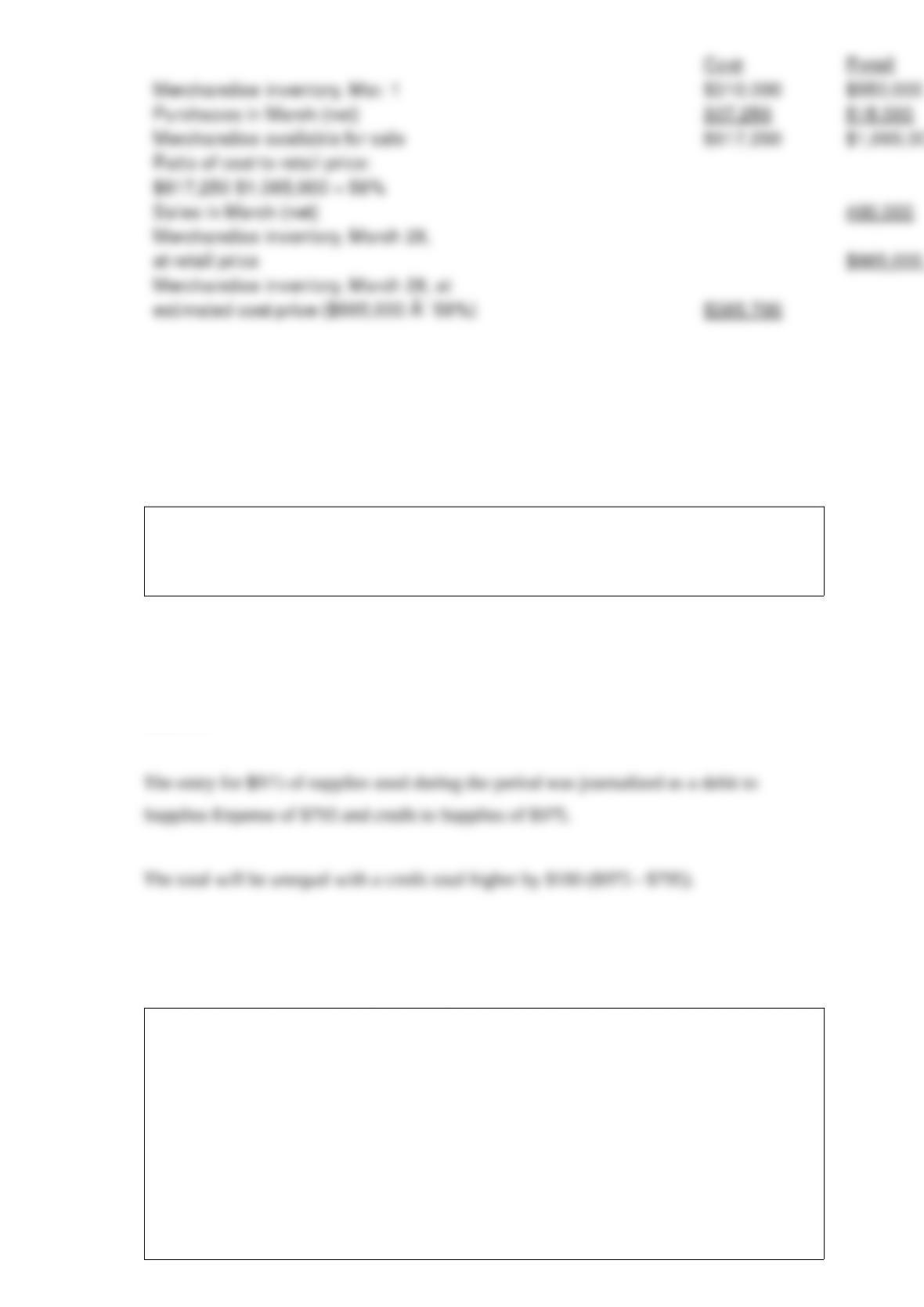
On the basis of the following data, determine the estimated cost of the inventory as of
March 31 by the retail method, presenting details of the computation in good order.
Answer:
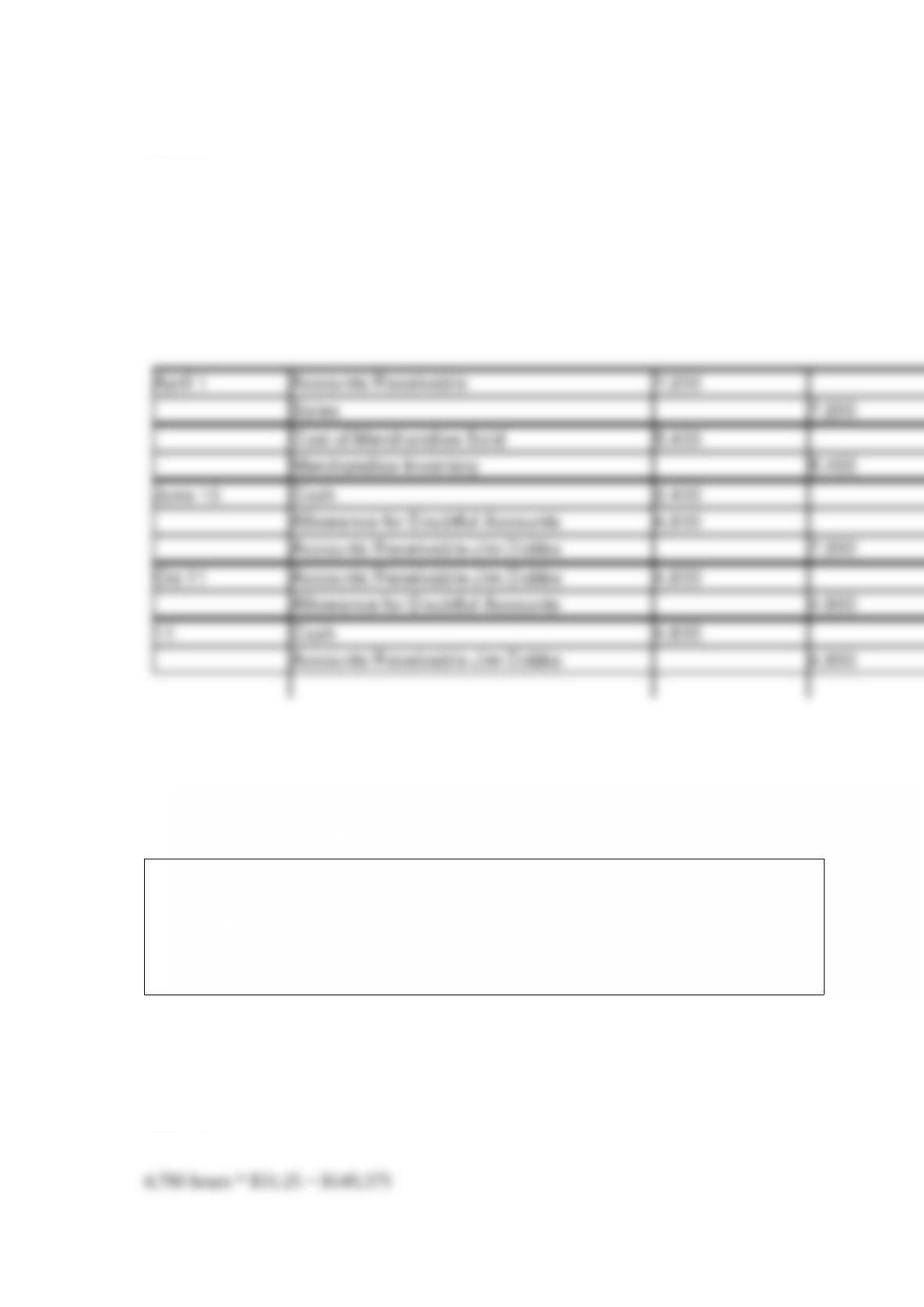
Indicate whether the following error would cause the adjusted trial balance totals to be
unequal. If the error would cause the adjusted trial balance totals to be unequal, indicate
whether the debit or credit total is higher and by how much.
Answer:
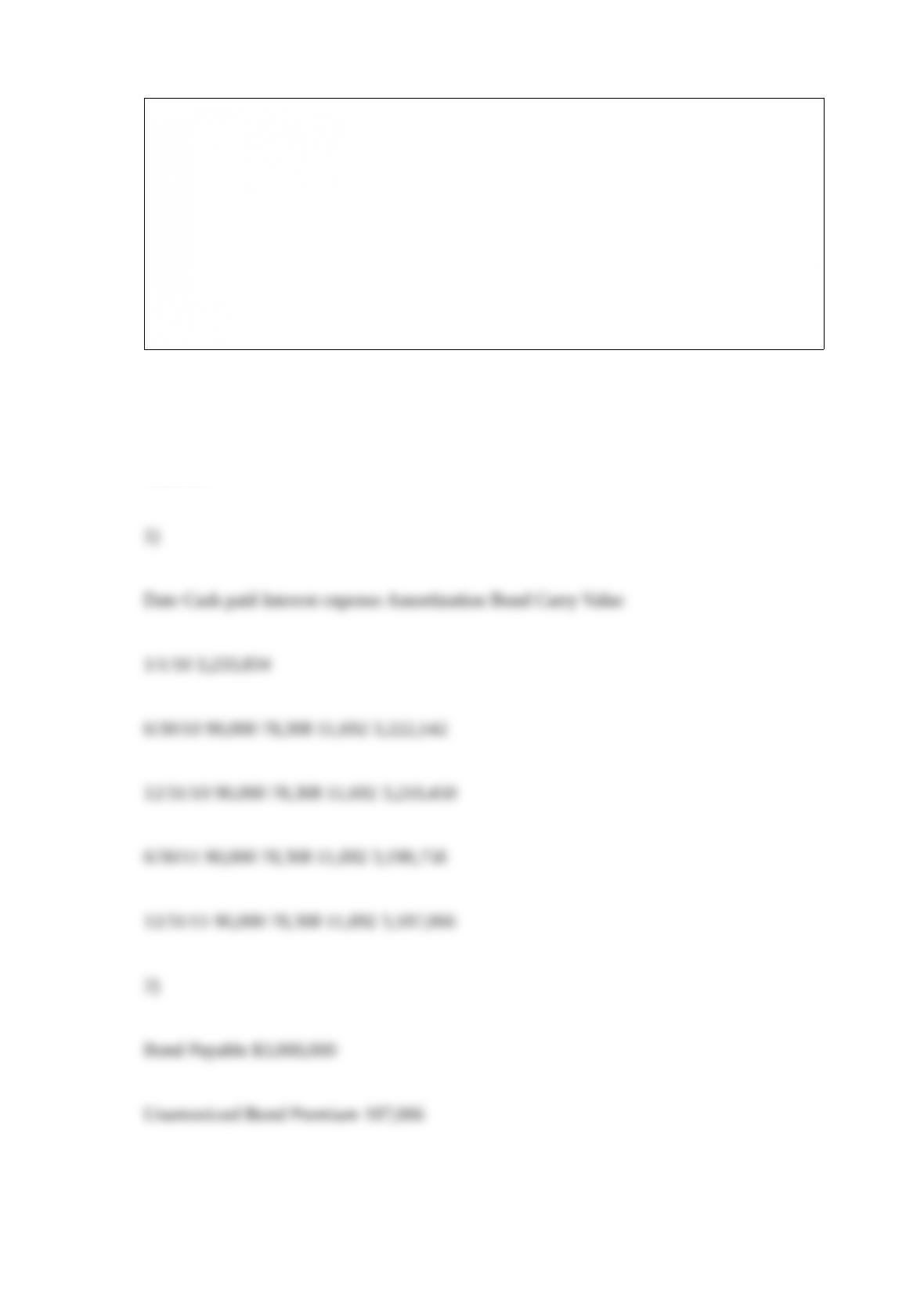
Journalize the following transactions using the allowance method of accounting for
uncollectible receivables.
April 1 Sold merchandise on account to Jim Dobbs, $7,200. The cost of the
merchandise is $5,400.
June 10 Received payment for one-third of the receivable from Jim Dobbs and wrote
off the remainder.
Oct. 11 Reinstated the account of Jim Dobbs and received cash in full payment.
Answer:
The Cavy Company estimates that the factory overhead for the following year will be
$1,250,000. The company has decided that the basis for applying factory overhead
should be machine hours, which is estimated to be 40,000 hours. The machine hours for
the month of April for all of the jobs was 4,780. What is the amount that will be applied
to all of the jobs for the month of April?
Answer:
Prepare an amortization schedule for the 1st 2 years (straight line method) using the
following data:
1) On January 1, 2010 XYZ Co. issued $3,000,000, 6%, 10 year bonds, interest payable
on June 30th and December 31st to yield 5%. Use the following format and round to the
nearest dollar (may have small rounding error). The bonds were issued for $3,233,834.
Date Cash paid Interest expense Amortization Bond Carry Value
2) Show how this bond would be reported on the balance sheet on 12/31/11.
Answer:
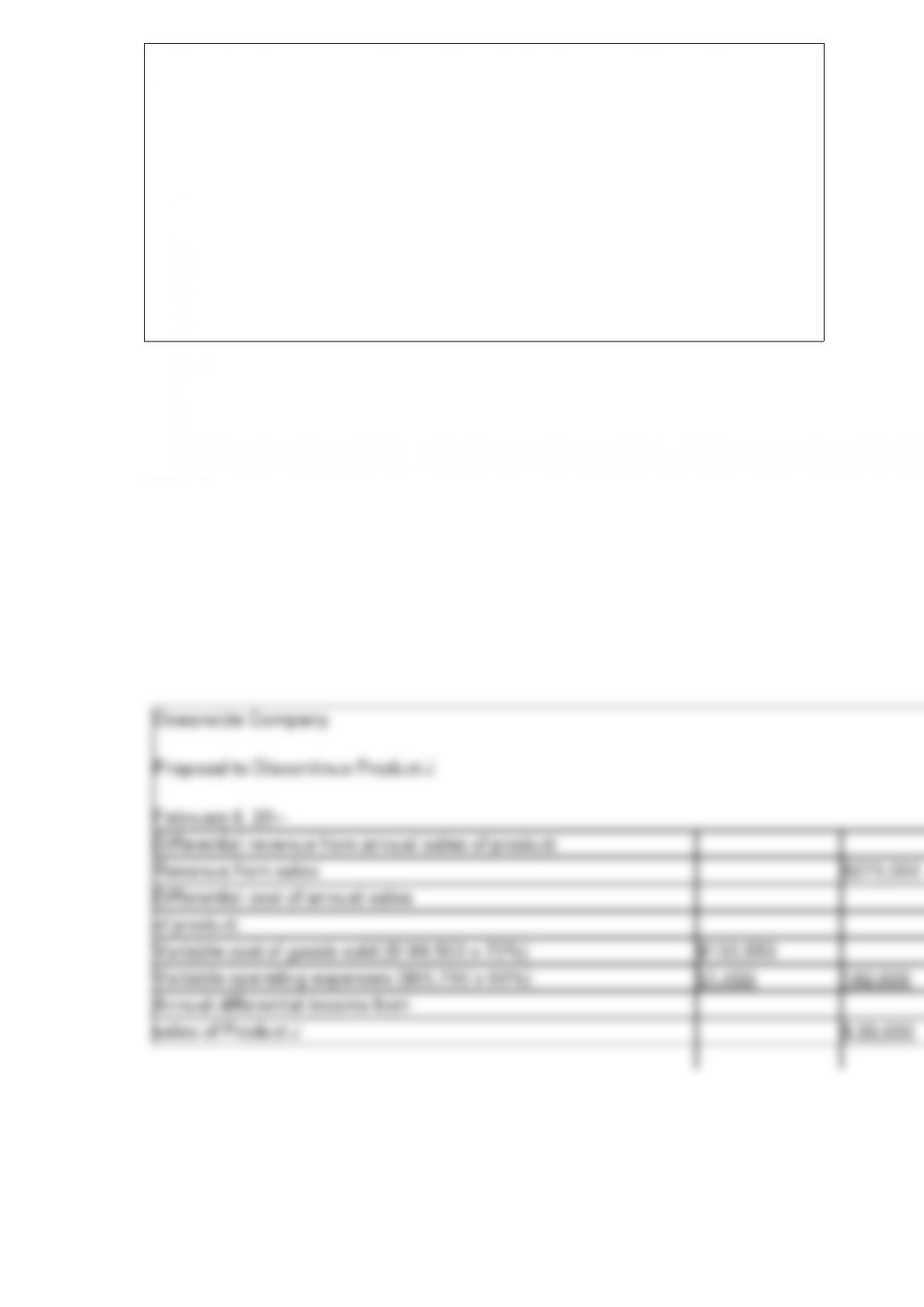
Product J is one of the many products manufactured and sold by Oceanside Company.
An income statement by product line for the past year indicated a net loss for Product J
of $12,250. This net loss resulted from sales of $275,000, cost of goods sold of
$186,500, and operating expenses of $85,750. It is estimated that 30% of the cost of
goods sold represents fixed factory overhead costs and that 40% of the operating
expense is fixed. If Product J is retained, the revenue, costs, and expenses are not
expected to change significantly from those of the current year. Because of the large
number of products manufactured, the total fixed costs and expenses are not expected to
decline significantly if Product J is discontinued.
Prepare a differential analysis report, dated February 8 of the current year, on the
proposal to discontinue Product J.
Answer:
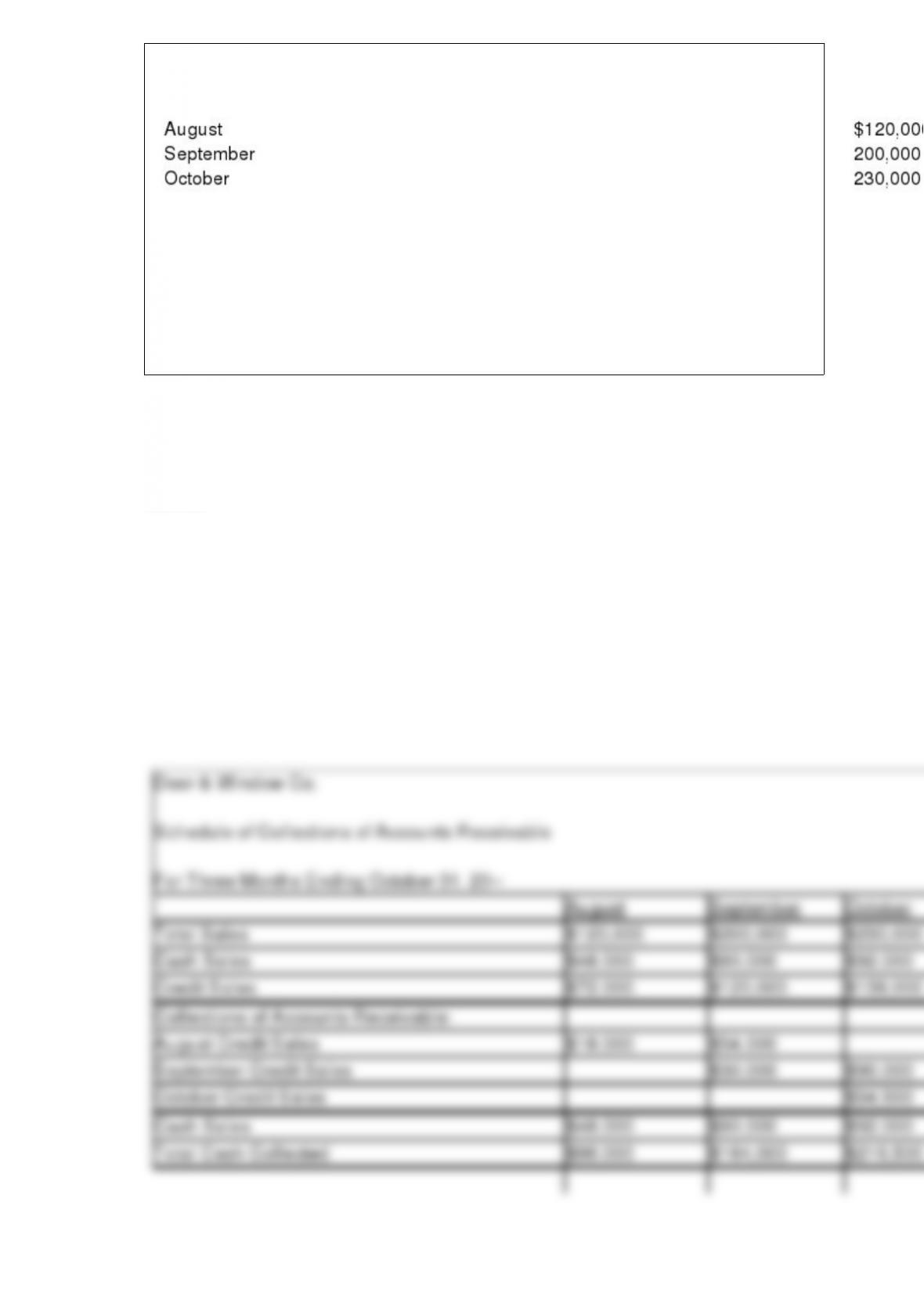
Door & Window Co. was organized on August 1 of the current year. Projected sales for
the next three months are as follows:
The company expects to sell 40% of its merchandise for cash. Of the sales on account,
25% are expected to be collected in the month of the sale and the remainder in the
following month.
Prepare a schedule indicating total cash collections for August, September, and October.
Answer:
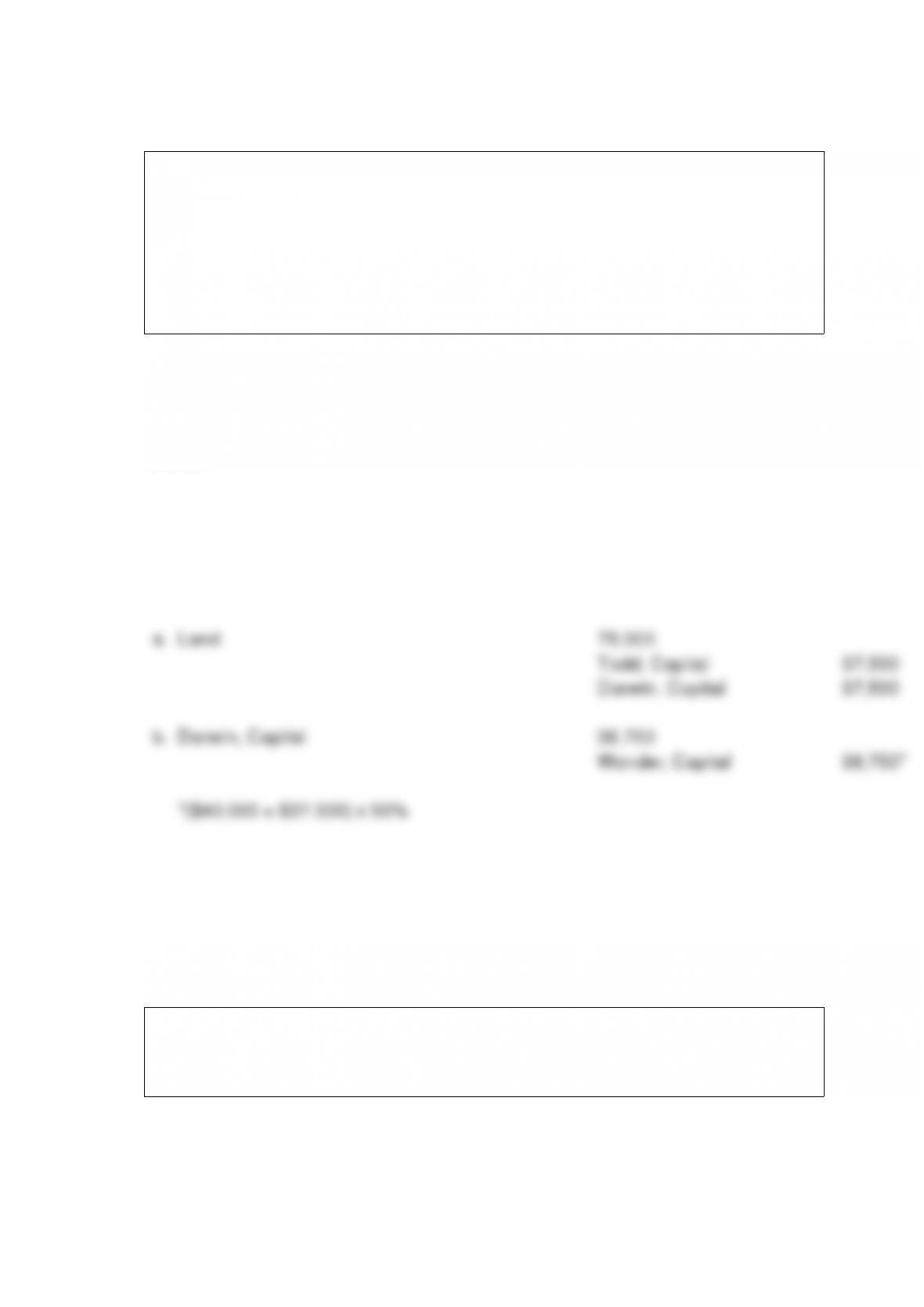
Wonder purchased one-half of Darwin’s interest in the Todd and Darwin’s partnership
for $50,000. Prior to the investment, land was revalued to a market value of $175,000
from a book value of $100,000. Todd and Darwin share net income equally. Darwin had
a capital balance of $40,000 prior to these transactions.
a. Provide the journal entry for the revaluation of land.
b. Provide the journal entry to admit Wonder.
Answer:
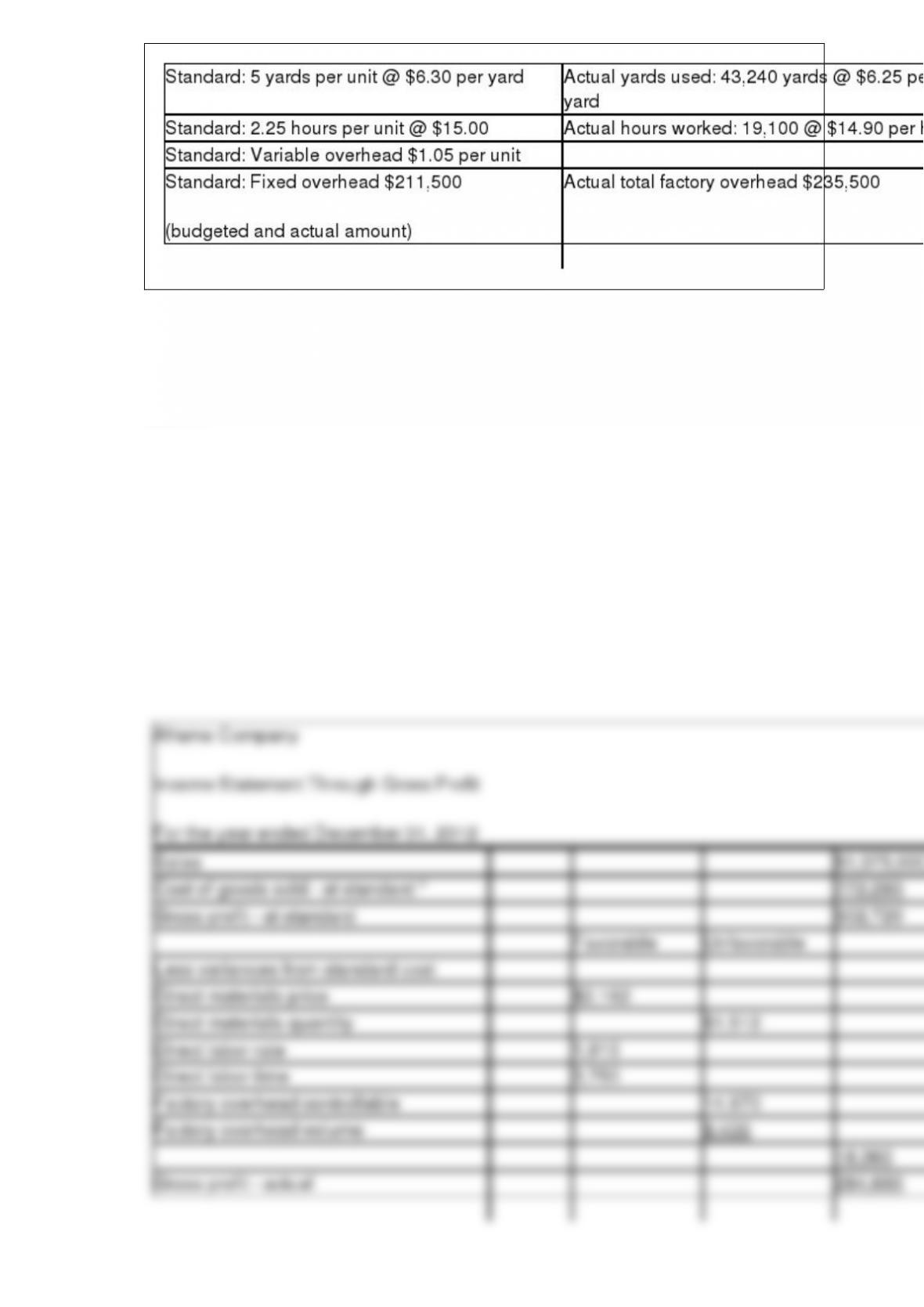
Prepare an income statement for the year ended December 31, 2012, through gross
profit for Aframe Company using the following information. Assume Aframe Company
sold 8,600 units at $125 per unit. (Note: Normal production is 9,000 units)
Answer:
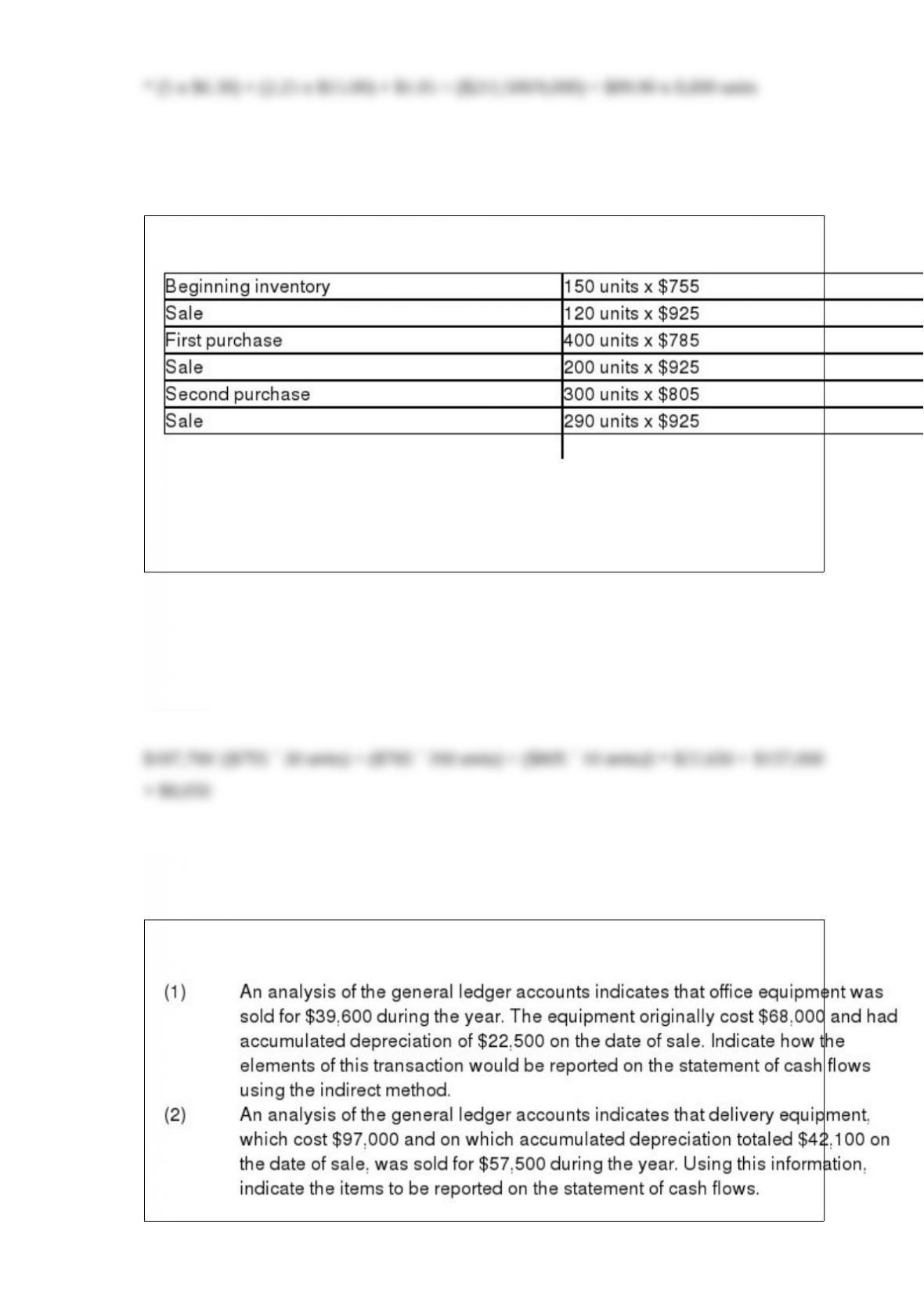
The following units of a particular item were available for sale during the year:
The firm uses the perpetual inventory system and there are 240 units of the item on
hand at the end of the year. What is the total cost of ending inventory according to
LIFO?
Answer:
The following two problems are independent of one another.

Answer:
Indicate whether the following error would cause the adjusted trial balance totals to be
unequal. If the error would cause the adjusted trial balance totals to be unequal, indicate
whether the debit or credit total is higher and by how much.
Answer:
Salaries of $6,400 are paid for a five-day week on Friday. Prepare the adjusting journal
entry that is required if the month ends on Thursday.
Answer: