
Under the perpetual inventory system, the Cost of Goods Sold and Merchandise
Inventory accounts are updated with each sale.
Inventory is classified as a long-term asset.
The work sheet is prepared after the formal adjusting and closing entries.
Each partner has a separate Capital, Withdrawals, and Income or Loss account.
The work sheet is published in the annual report along with the financial statements.

A purchase should usually not be recognized (recorded) before the title is transferred
because, until that point, the vendor has not fulfilled its contractual obligation and the
buyer has no liability.
All sales transactions generate immediate cash.
A new partner must have the consent of all the partners before being admitted into the
partnership.
An increase in expenses will have the effect of reducing owner’s equity.

The adjusting entries entered onto a work sheet must still be recorded in the general
journal.
The terms “bookkeeping” and “accounting” are not synonymous.
As long as an investment can be sold within a short period of time, it must be classified
as a current asset.
Merchandise inventory is valued on the balance sheet at the expected resale price.
The higher the value assigned to ending inventory, the lower the gross margin.

The Allowance for Uncollectible Accounts is a contra-asset account.
Group depreciation is an appropriate method for a large company calculating
depreciation on office equipment.
A reduction in carrying value as a result of impairment is recorded as a loss.
An ownership interest of greater than 50 percent is required for an investor to have
accounting control over an investee.
Only not-for-profit organizations form joint ventures.

Treasury stock is considered a reduction in stockholders’ equity, not a purchase of
assets .
When the terms are FOB destination, the title passes at the point of origin and the buyer
pays the transportation costs.
If any portion of a long-term debt is to be paid in the next year, that portion should be
classified as a current liability.
In accounting for inventory, the assumed cost flow need not match the physical goods
flow.

Under the perpetual inventory system, the return of goods from a customer would
increase Cost of Goods sold and decrease Merchandise Inventory.
In periods of rising inventory prices, the LIFO method will result in a higher inventory
valuation than will the average-cost method.
For accounting purposes, stated value is treated the same way as par value.
When a corporate stockholder sells his or her shares of stock, the corporation is
technically dissolved.
A partner in a landscaping business can bind the partnership to a contract for purchasing
furniture and clothing.

A controlling investment is defined as ownership of more than 50 percent of the stock
of another company.
Creditors are those who lend money to others or deliver goods and services before
being paid.
The analysis of risk and return is important to both investors and creditors.
The classification of a liability as current or long-term is not important to the evaluation
of a company’s liquidity.

Expected obligations arising from programs, such as frequent flyer miles, are usually
recorded as a reduction in sales (in a contra-sales account) with a related liability.
Withdrawls and revenues are deductions from owner’s equity.
Due to the recording of adjusting entries, the dollar amount of Cash on the trial balance
is usually less than the dollar amount of Cash on the adjusted trial balance.
The purchase of equipment is an example of an investing activity.
The Owner’s Withdrawals account has a normal debit balance.

Adding together the ending merchandise inventory and cost of goods sold gives the cost
of goods available for sale.
As an asset’s depreciation is recorded, its carrying value decreases.
On a bank reconciliation, interest income would be added to the balance per bank.
A capital expenditure results in a debit to a(n)
A. expense account.
B. capital account.
C. asset account.
D. liability account.

Days’ inventory on hand is used to analyze
A. cash flow adequacy.
B. operating asset management.
C. profitability.
D. long-term solvency.
Gross margin is the difference between net sales and
A. net income.
B. cost of goods sold plus operating expenses.
C. operating expenses.
D. cost of goods sold.
Cortney invests $80,000 for a 10 percent interest in a partnership that has total capital
of $600,000 after admitting Cortney. Which of the following is true?
A. Cortney’s capital is $52,000
B. The original partners’ capital in the business was $540,000 before admitting Cortney
C. Cortney received a bonus of $20,000
D. The original partners received a bonus of $20,000
Which of the following transactions would be recorded in a multicolumn purchases
journal?
A. Credit purchase of supplies.
B. Credit purchase of equipment.
C. Credit purchase of merchandise for resale to customers.
D. All of these choices.
If dividends declared per share during 20×4 (the base year), 20×5, and 20×6 are $4.80,
$3.60, and $4.32, respectively, the index numbers assigned to 20×5 and 20×6,
respectively, are
A. 75 and 90.
B. 60 and 95.
C. 180 and 80.
D. 133.3 and 110.
Under the perpetual inventory system, the entry to record a purchase return would
include a credit to which account?
A. Merchandise Inventory
B. Purchases Returns and Allowances
C. Accounts Payable
D. Sales
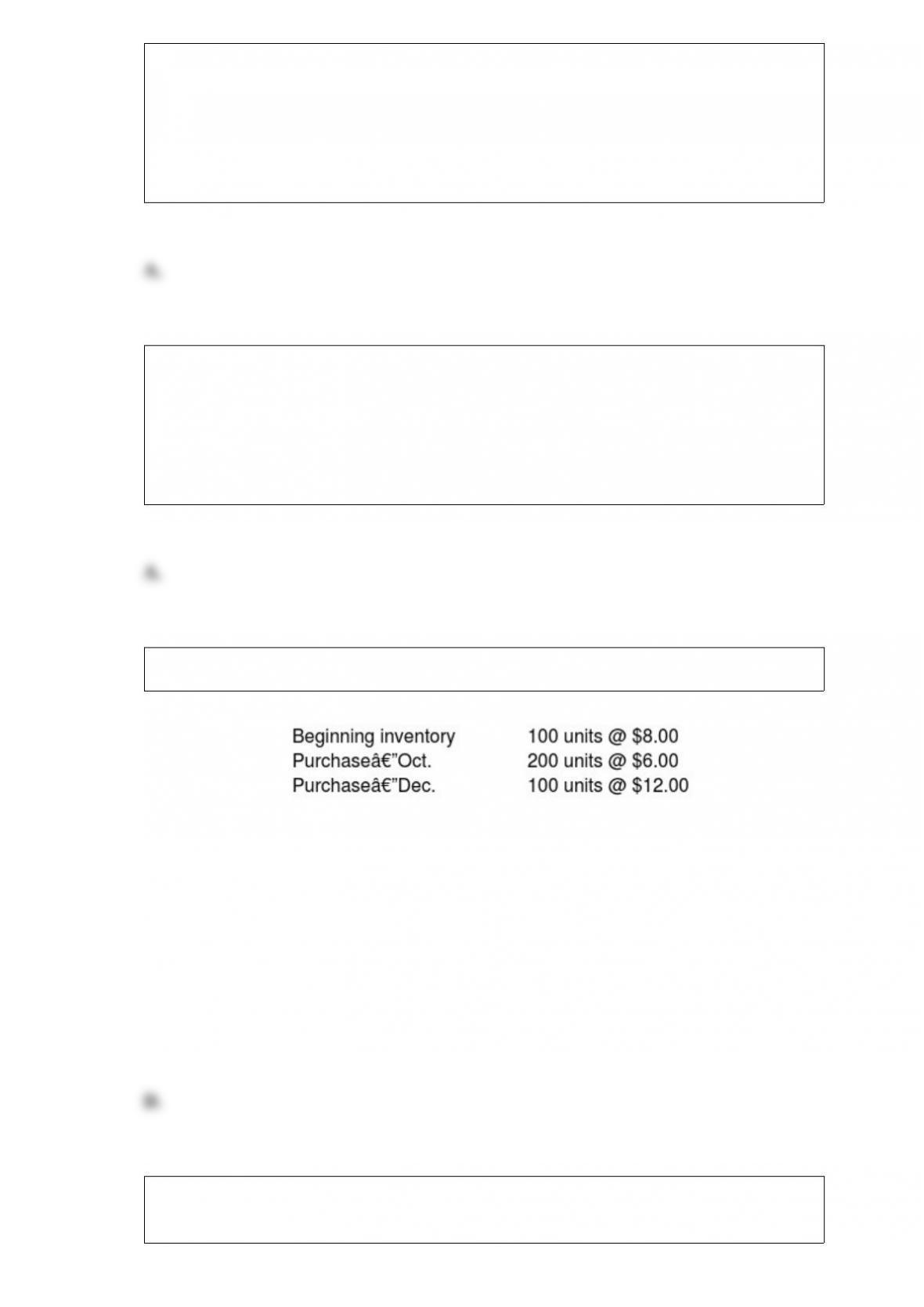
Use this information to answer the following question.
A periodic inventory system is used; ending inventory is 150 units.
What is ending inventory under the average-cost method?
A. $900
B. $1,050
C. $1,350
D. $1,200
Use this information to answer the following question.
The following totals for the month of September were taken from the payroll register of
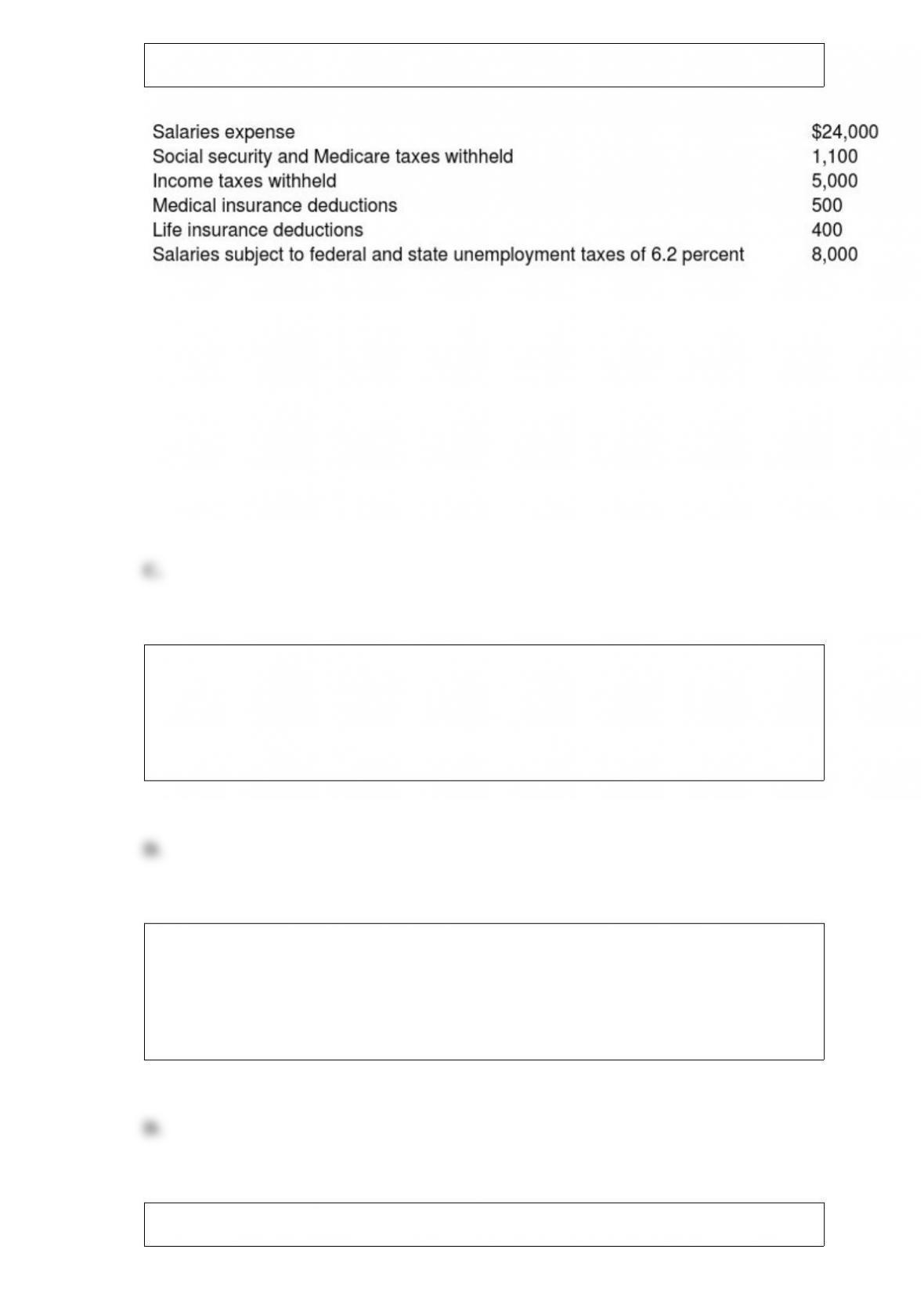
Meadors Company:
The entry to record the accrual of employer’s payroll taxes would include a debit to Payroll
Taxes and Benefits Expense for
A. $2,496.
B. $1,100.
C. $1,596.
D. $496.
Business organizations that mimic the characteristics of partnerships include
A. Special-purpose entities.
B. Limited liability companies.
C. S corporations.
D. All of these choices.
Which work sheet columns should contain “key letters”?
A. Balance Sheet
B. Adjusted Trial Balance
C. Trial Balance
D. Adjustments
Which of the following accounts would not need to be adjusted at year end?

A. Prepaid Rent.
B. Owner’s Capital.
C. Equipment.
D. Unearned Rent Revenue.
For each of the following oversights, state whether owner’s equity will be understated,
overstated, or not affected.
______ a.Failure to record depreciation
______ b.Failure to record accrued wages
______ c.Failure to convert unearned revenue to earned revenue
______ d.Failure to record accrued interest in the bank
______ e.Failure to record expired insurance
______ f.Failure to record revenue earned but not yet received
When common stock is issued by a corporation for a cash price above par value, the
excess of the cash proceeds over the par value should be reported in the financial
statements as a component of
A. retained earnings on the balance sheet.
B. total liabilities on the balance sheet.
C. operating income on the income statement.
D. total contributed capital on the balance sheet.
The matching rule relates the least to
A. income measurement.
B. the cash basis of accounting.

C. revenues and expenses.
D. a direct relationship between expenses and revenues.
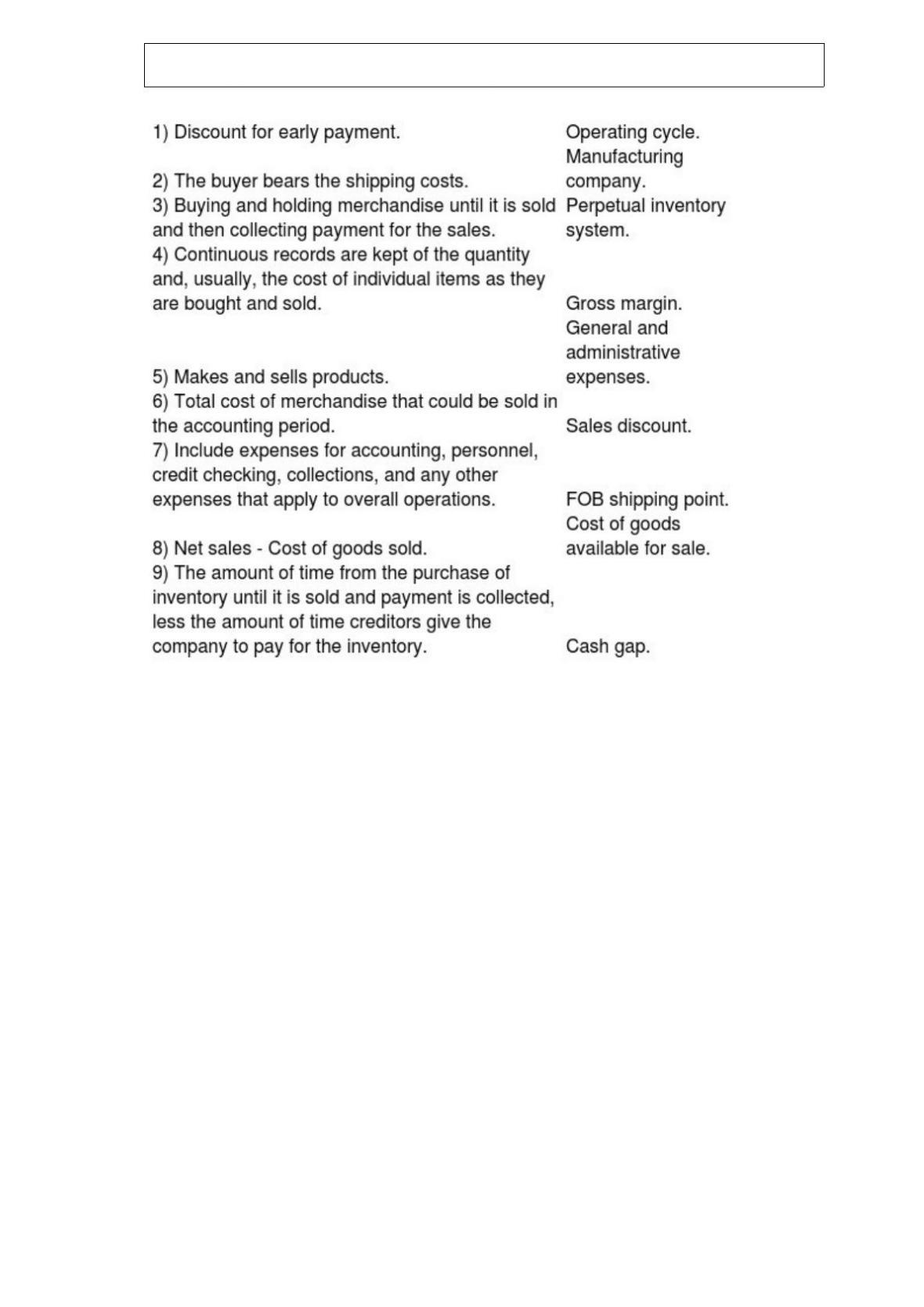
A discount that buyers take for early payment of merchandise is called a
A. customer discount.
B. purchases discount.
C. sales discount.
D. trade discount.
An expenditure to lengthen the useful life of a company vehicle would require a
A. credit to Company Vehicles.
B. debit to Repair and Maintenance Expense
C. debit to Depreciation Expense.
D. debit to Accumulated Depreciation.
The division of partnership profits on the basis of salaries, interest, and a stated ratio is
usually necessary because
A. partners seldom contribute time, effort, and resources equally.
B. this prevents arguments among the partners.
C. this reflects the amount of time devoted to the partnership by the partners.
D. most states require this method of distribution.
The sale or transfer of accounts receivable to raise funds is called
A. discounting.
B. collateralizing.
C. pledging.
D. factoring.

Which of the following most likely would be classified as a current liability?
A. Mortgage payable
B. Dividends payable
C. Five-year notes payable
D. Bonds payable
How will the declaration and distribution of a 10 percent stock dividend affect the
issuing corporation’s balance of retained earnings and total stockholders’ equity,
respectively?
A. Decrease and no effect
B. No effect and no effect
C. Decrease and decrease
D. No effect and decrease
Use the following adjusted trial balance to answer the question below.
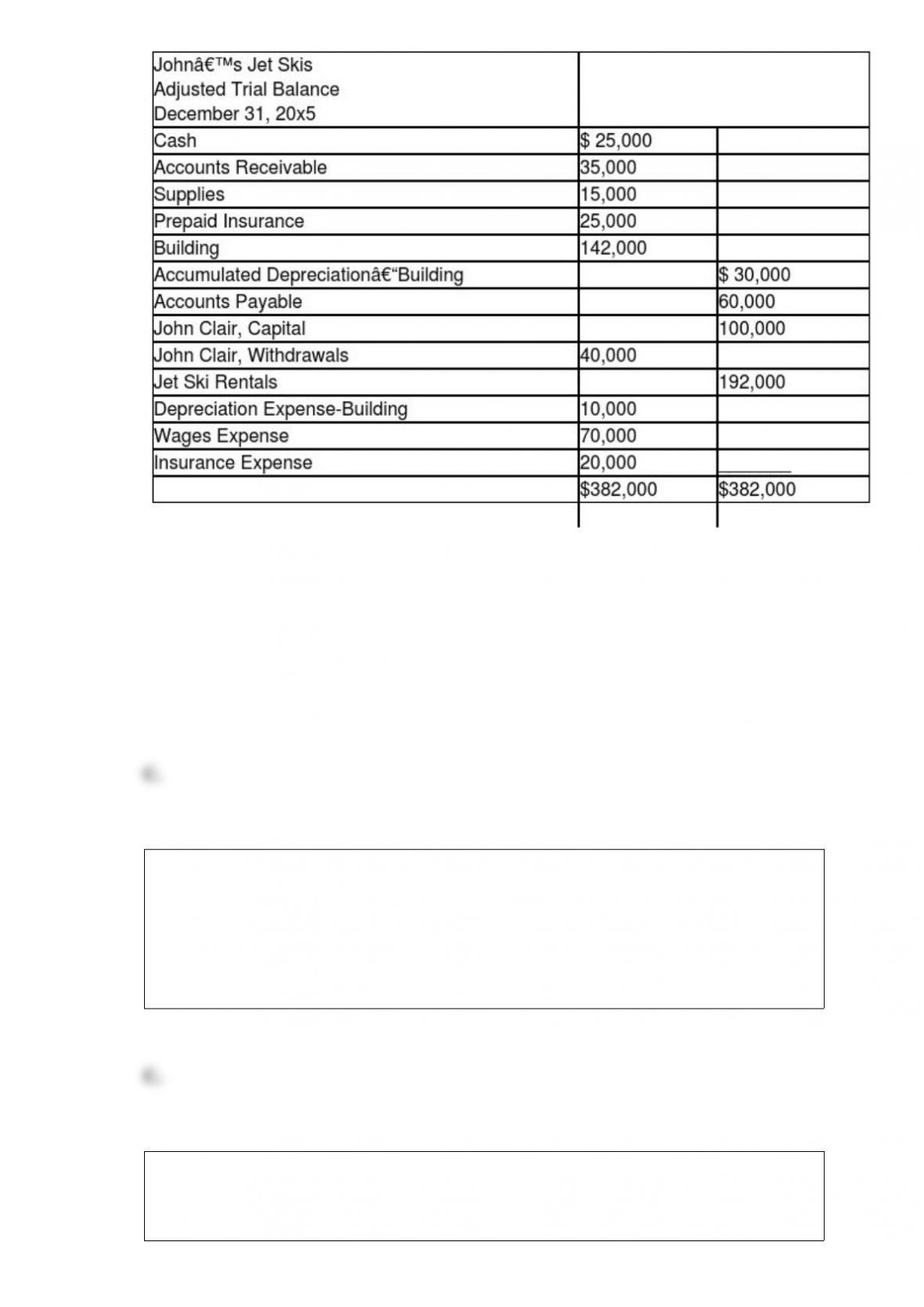
The amount of net income (or net loss) during the period is
A. $182,000 net income.
B. $122,000 net loss.
C. $92,000 net income.
D. $52,000 net income.
Which of the following accounts will have an amount in the Adjustments columns of
the work sheet but probably not in the Trial Balance columns?
A. Owner’s Capital
B. Revenue from Services
C. Depreciation Expense–Machinery
D. Utilities Expense
After initially recording an asset at cost, fair value is
A. the price at which an asset could be sold in a current transaction between
independent parties.

B. the actual, or historical, price at which the asset was acquired.
C. the easiest value used to measure and record assets.
D. verifiable at all future dates by referring to the invoice price paid for the asset.
Chad invests $20,000 for a one-third interest in a partnership in which the other partners
have capital totaling $52,000 before admitting Chad. After distribution of the bonus,
what is Chad’s capital?
A. $10,666
B. $17,334
C. $20,000
D. $24,000
Which of the following is an example of off-balance-sheet financing?
A. Leases
B. Bonds
C. Dividends
D. Notes
If bonds payable were issued initially at a premium, the carrying value of the bonds at a
balance sheet date will be calculated by
A. deducting the amount of premium amortized between the issuance date and the
balance sheet date from the face value.
B. deducting the balance of unamortized bond premium from the face value.
C. adding the balance of unamortized bond premium to the face value.
D. adding the amount of premium amortized between the issuance date and the balance
sheet date to the face value.
An American company makes a credit purchase of goods from a company in London
for 1,000 British pounds. On the date of purchase, the exchange rate was $1.65 per
pound. However, on the date of payment, the rate had declined to $1.60 per pound. As a
result, the American company would record
A. an exchange gain of $50.
B. an exchange loss of $1,600.
C. an exchange loss of $50.
D. no exchange gain or loss.
A building was purchased for $250,000. It has accumulated depreciation of $40,000 and
an expected residual value of $50,000. Assuming the use of straight-line depreciation,
its estimated useful life must be
A. 15 years.
B. 10 years.
C. 5 years.
D. impossible to determine from the facts given.
Which of the following is not a measurement issue in accounting?
A. When to record a business transaction.
B. How to classify the items of a business transaction.
C. When to classify the items of a business transaction.
D. Where to record a business transaction.
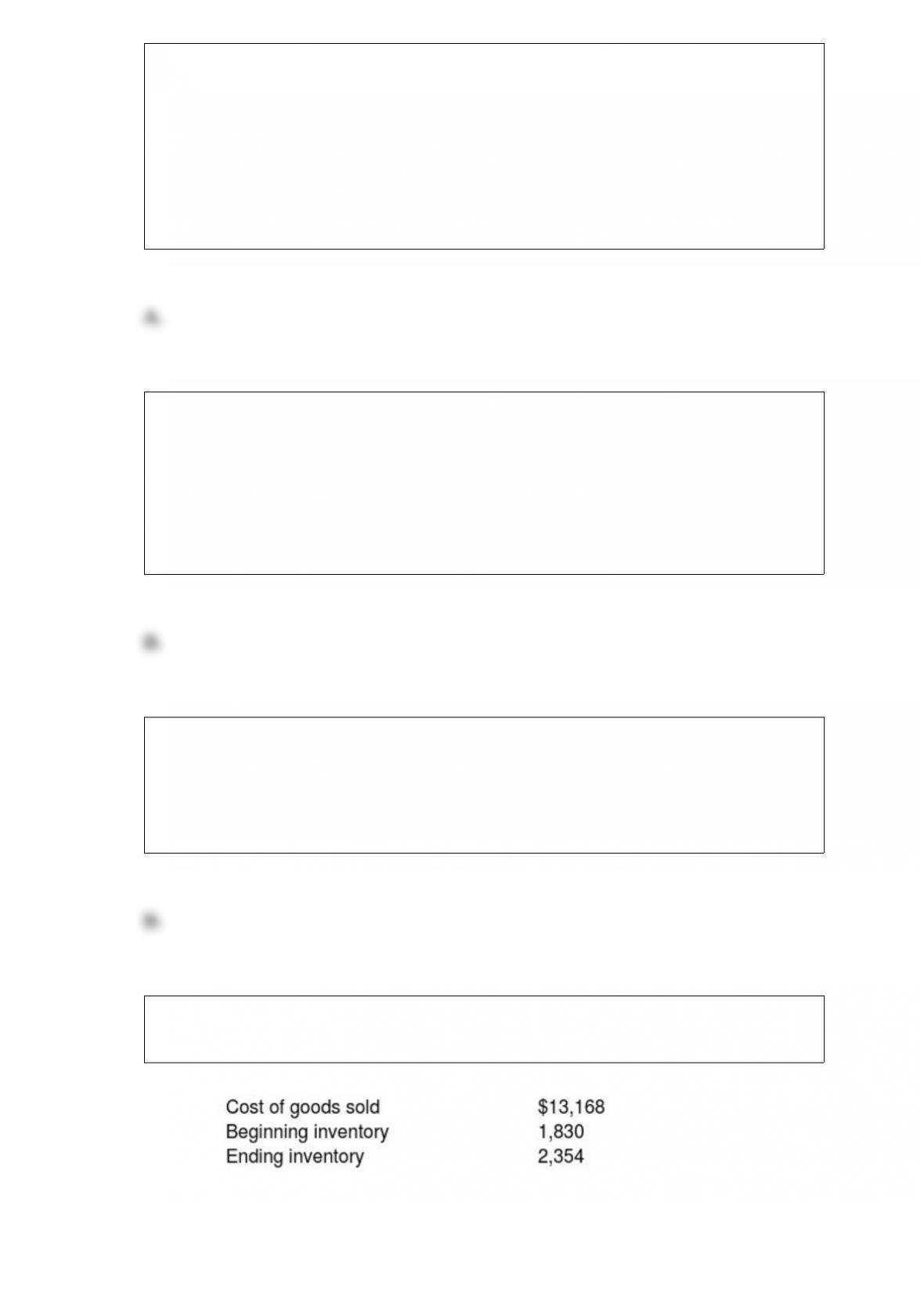
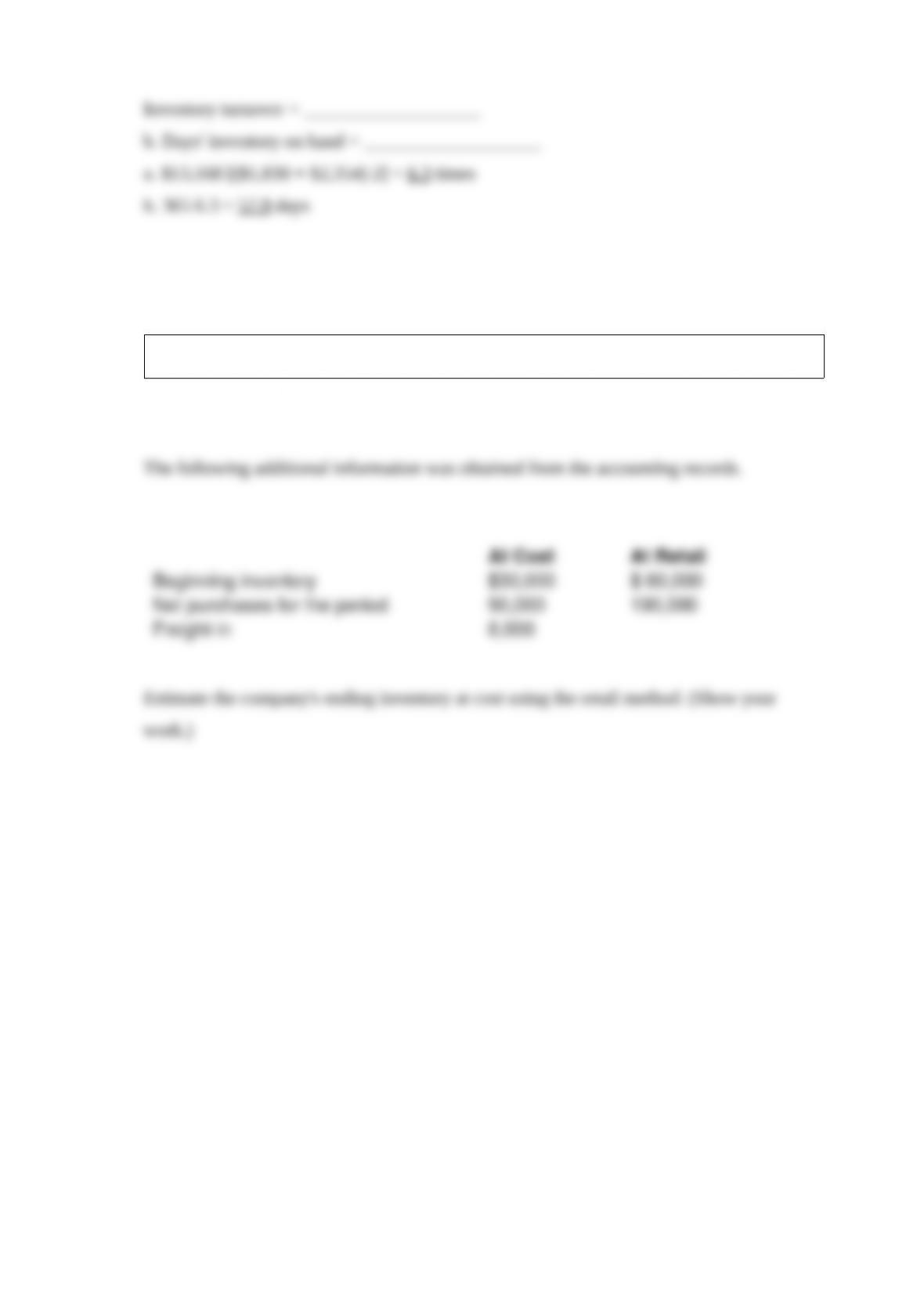
Use the following figures (stated in millions of dollars) to compute the inventory
turnover and the days’ inventory on hand within one decimal point:
a.
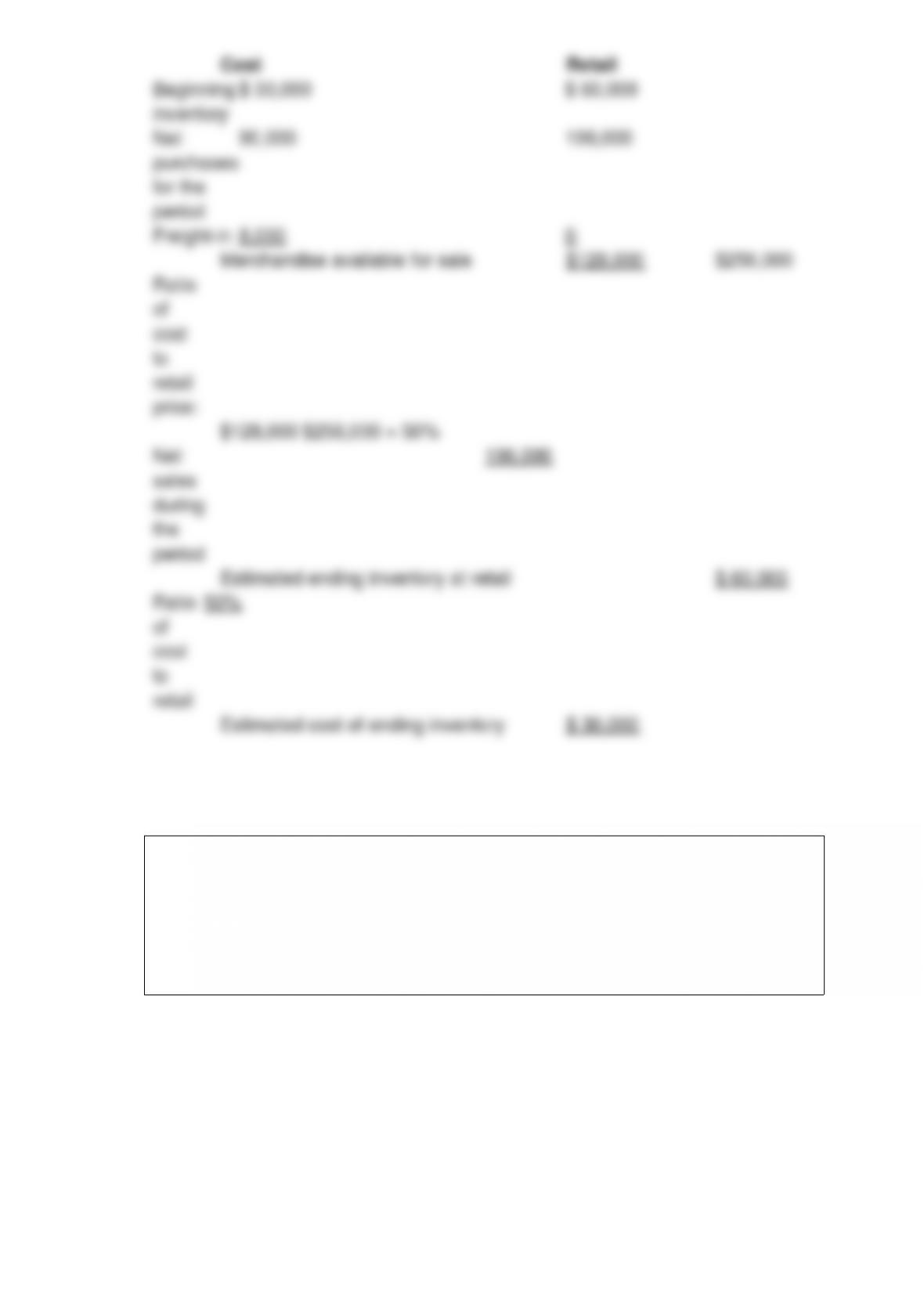
Feltner’s Shoe Store had net retail sales of $196,000 during the current year.
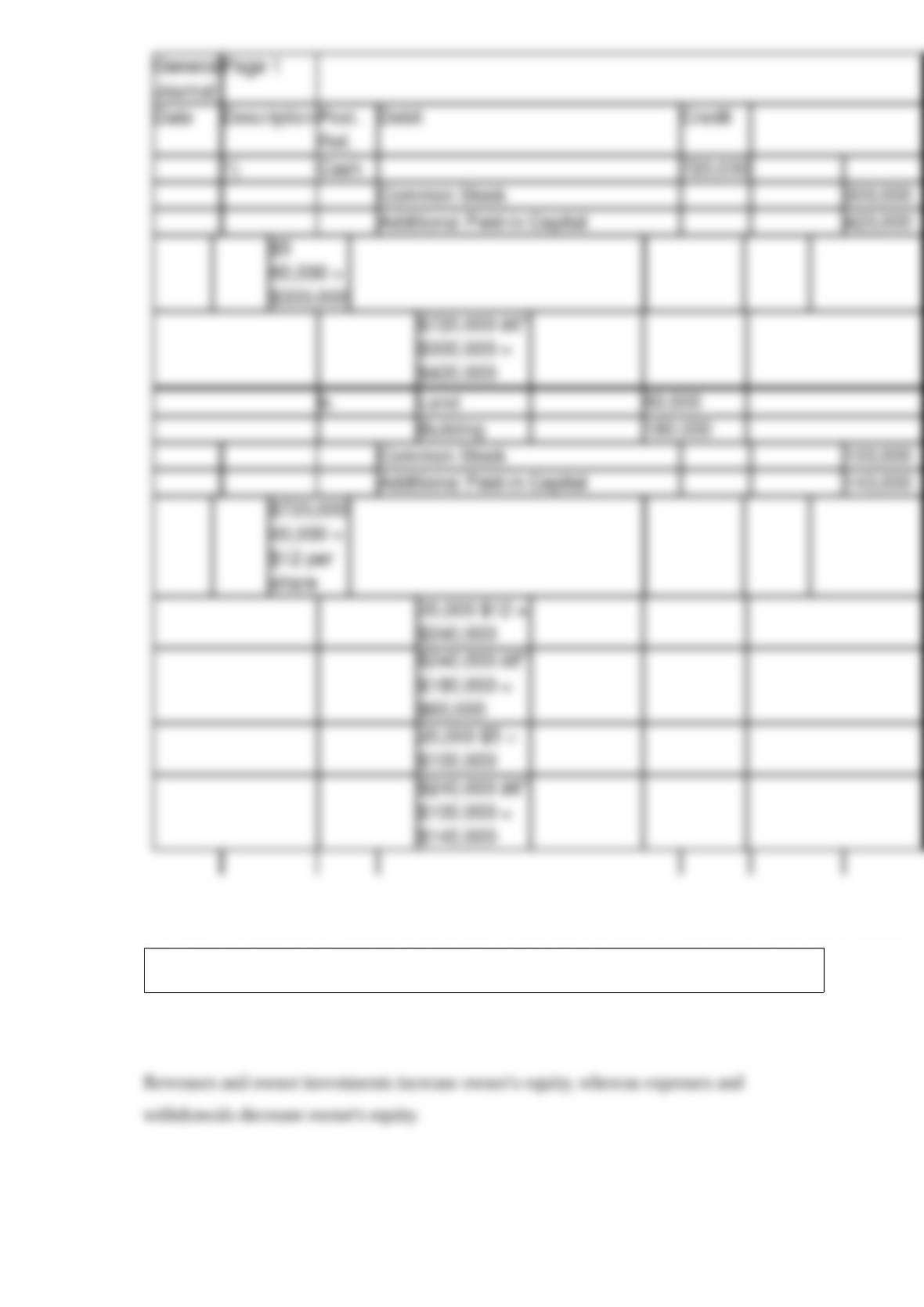
Lawler Corporation had both the following transactions occur on the same day:
1) Issued 60,000 shares of its $5 par value common stock for $720,000 cash.
2) Issued 20,000 shares of its $5 par value common stock in exchange for land and a
building. The building is estimated to have a market value of $180,000.
Prepare the entries in journal form to record the above transactions. Omit explanations,
but show computations.
Which four types of transactions affect owner’s equity, and how do they affect it?
How is the purchase of long-term investments in bonds accounted for when purchased
between interest payment dates?
Upshaw Company had a balance of $160,000 in Sue Upshaw, Capital on December 31,
2013.
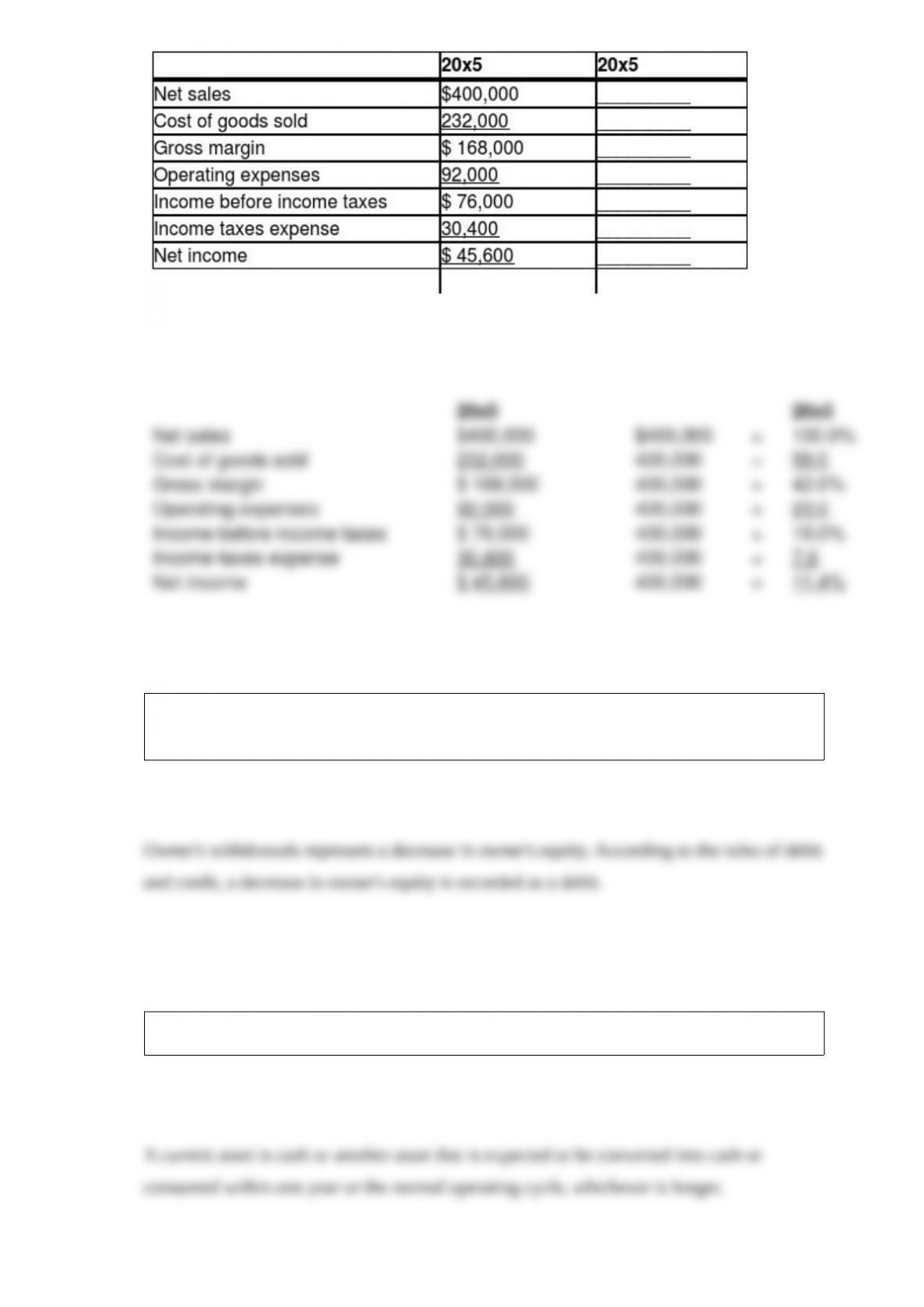
Using the income statement below, develop a common-size statement by filling in the
blanks provided. Show your work. Round to one decimal place.
Why is the Owner’s Withdrawals account increased by a debit? Explain in terms of its
relationship to owner’s equity.
State the definition of a current asset.
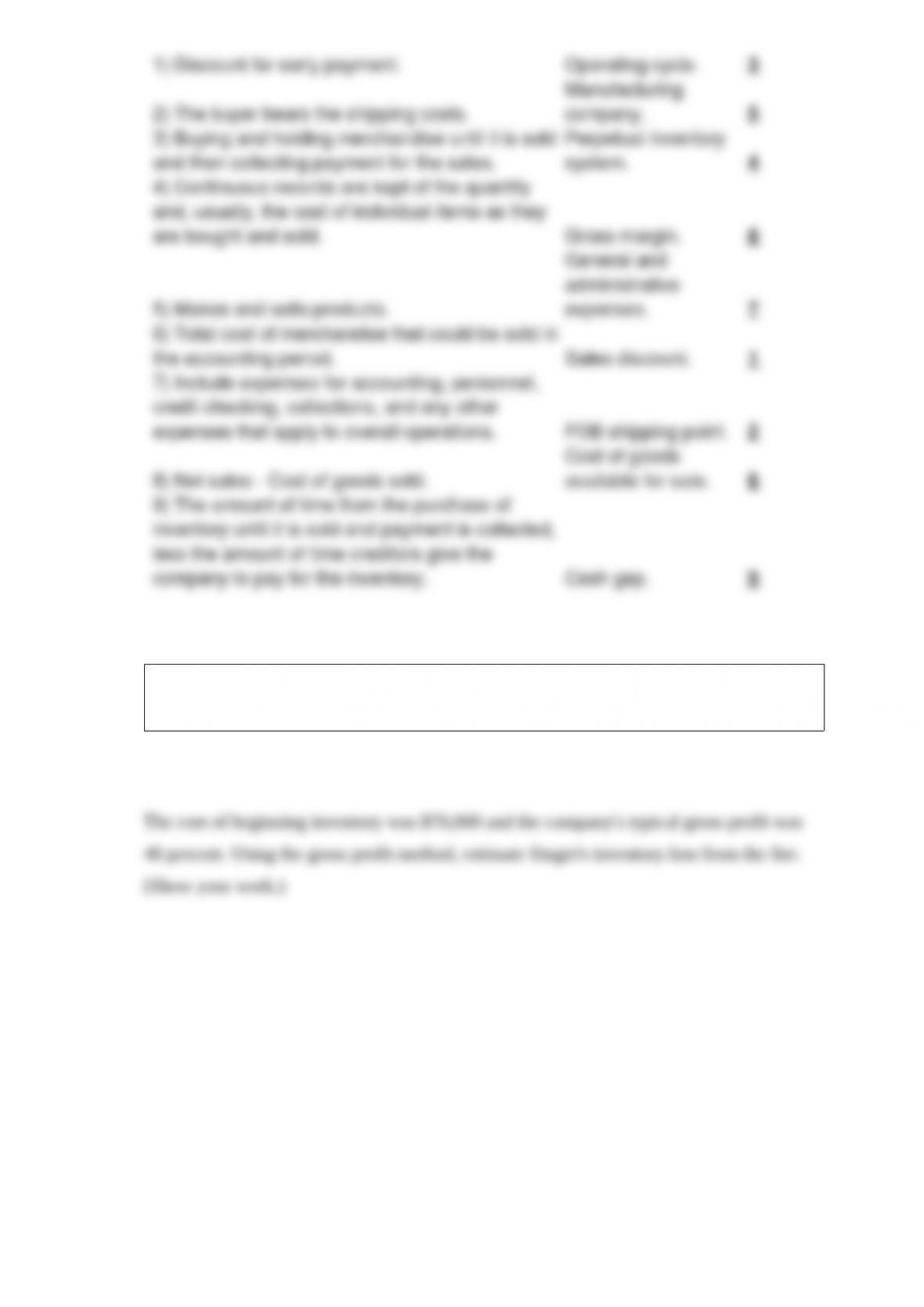
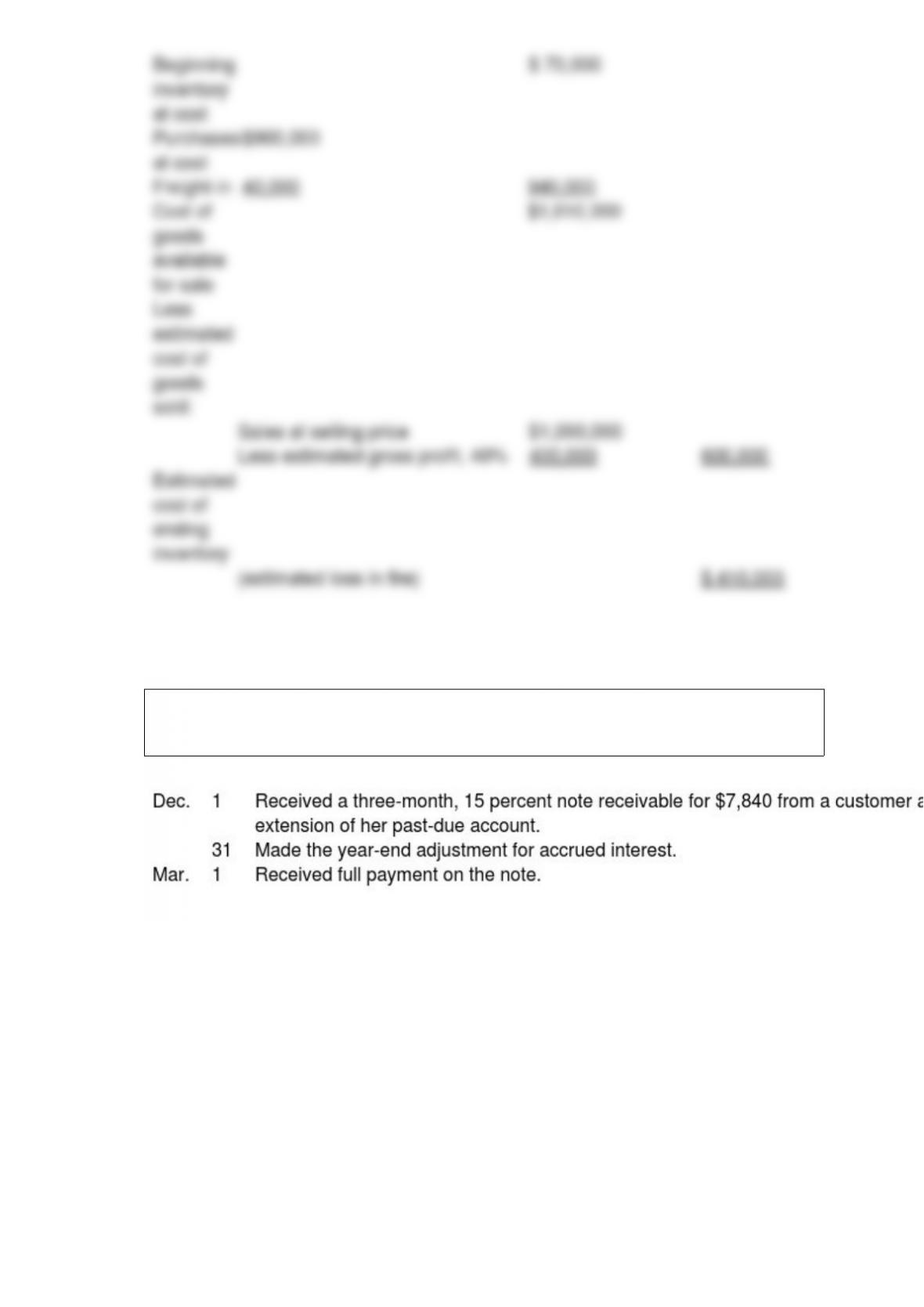
Up to the date of a fire that completely destroyed Hummer’s inventory, Hummer had
sales of $1,000,000, purchases of $900,000, and freight-in of $40,000.
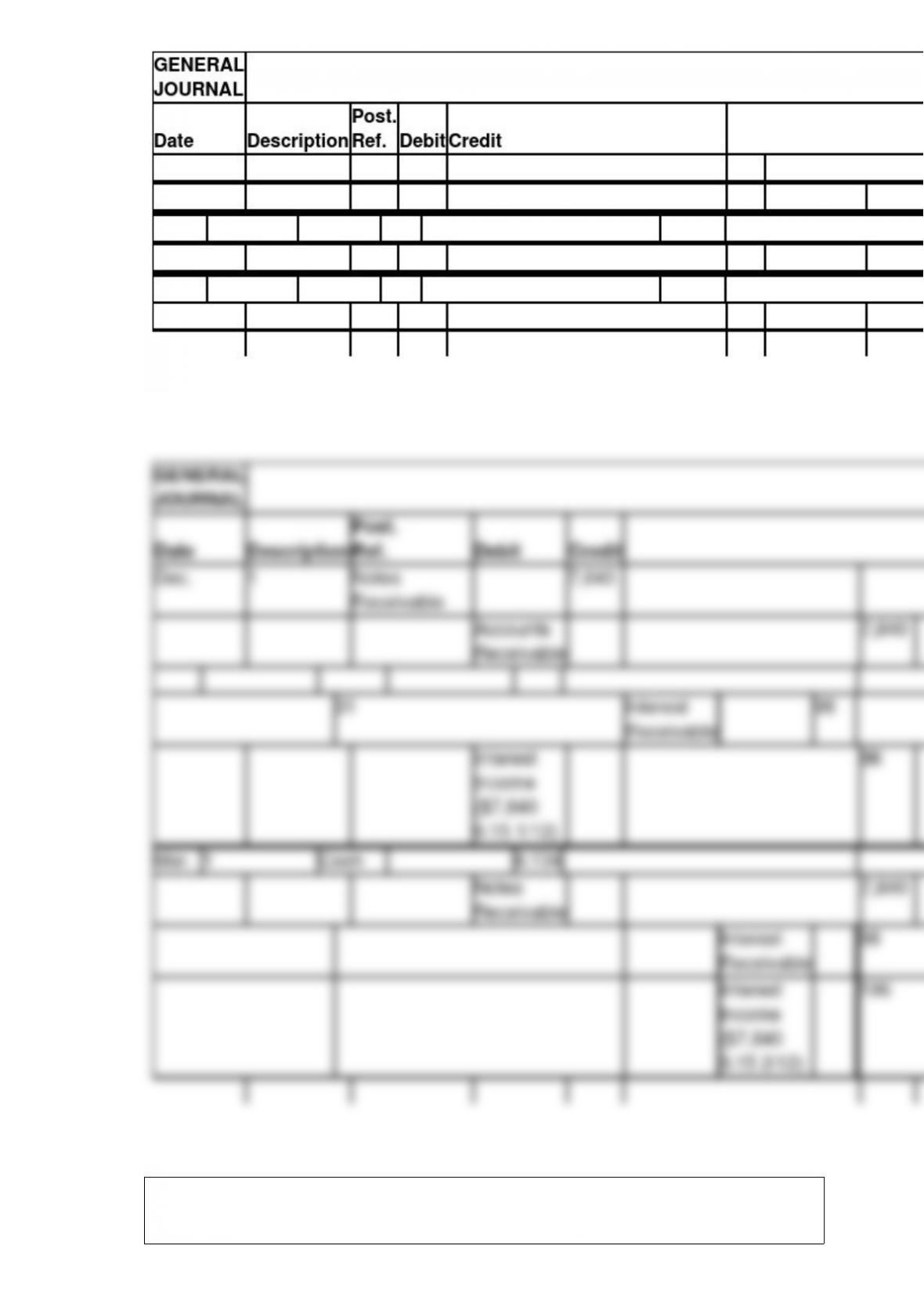
In the journal provided, prepare entries for the following (assume a calendar-year
accounting period). Omit explanations.
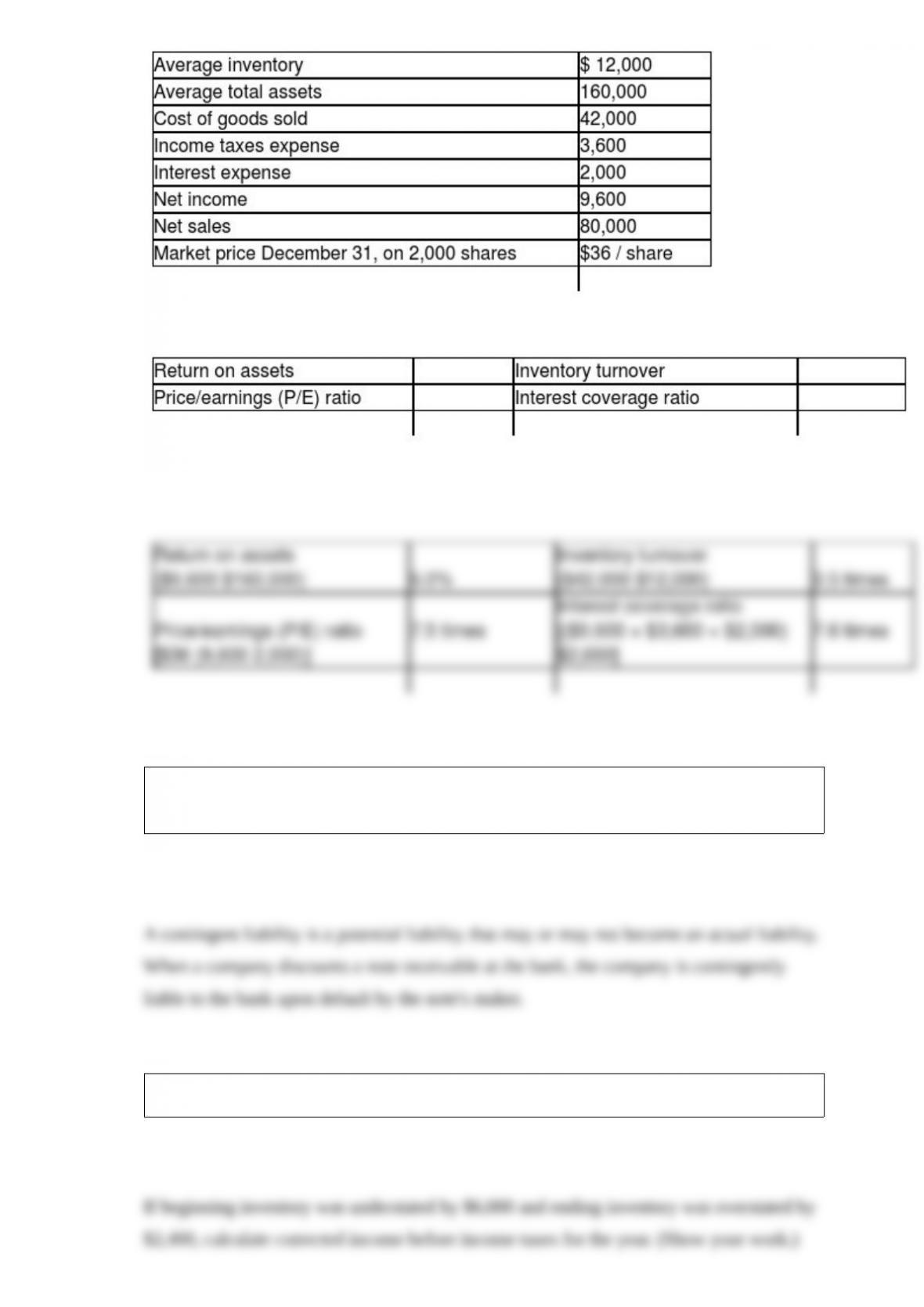
Use the following information to calculate the ratios requested below. Round answers to
two decimal places. Show your work.
What is a contingent liability, and how does it relate to the discounting of a note
receivable at the bank?
Lee Sisters reports income before income taxes of $20,000 during 2014.
Gonzalez Printing purchased a new printing press for $80,000.
Briefly explain a “big bath” including when it occurs and why it occurs.
What is the financing period? Is a longer or shorter financing period most desireable?
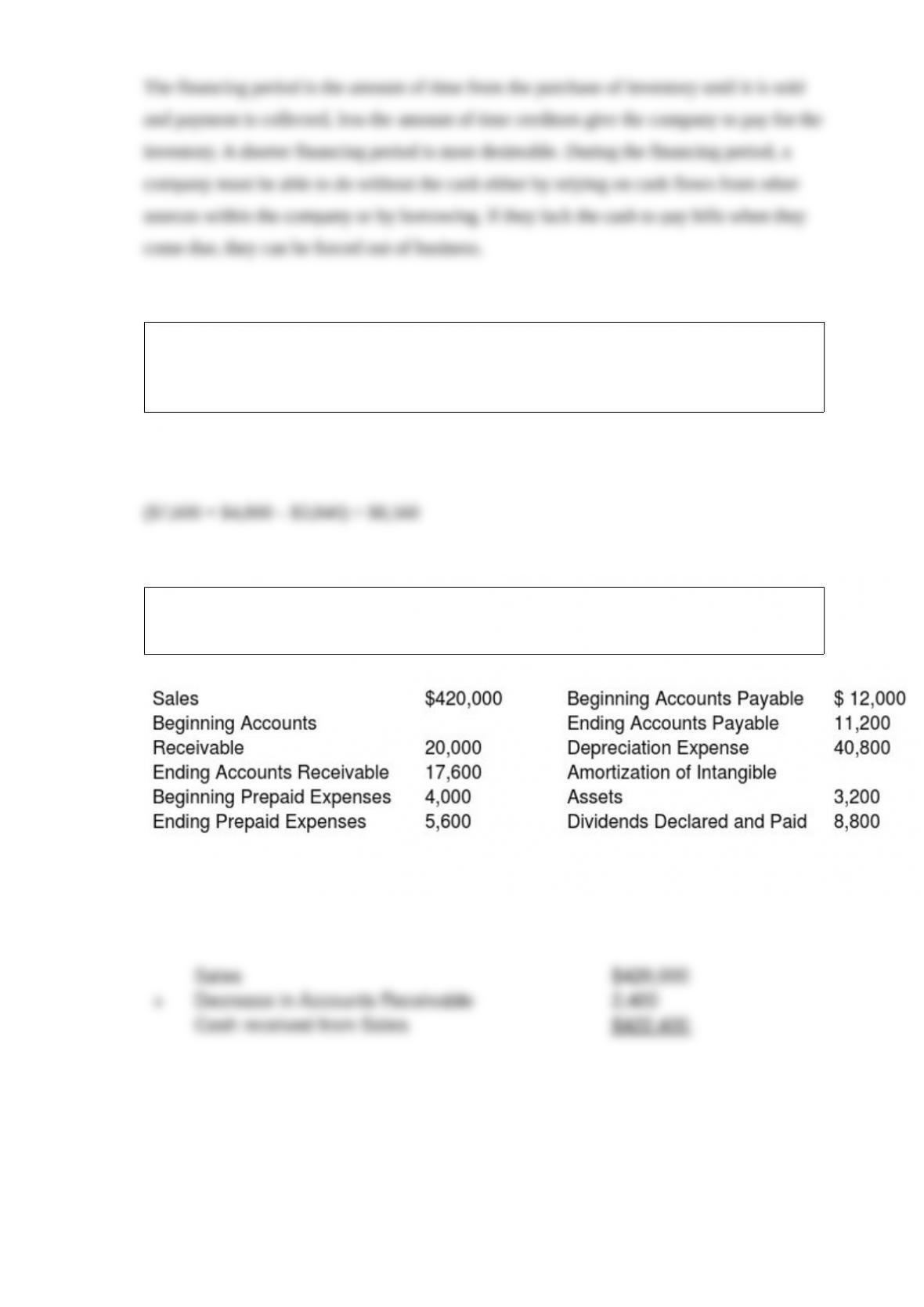
Custom Enterprises had supplies on hand costing $3,840 at the beginning of the year
and $4,800 at the end of the year. During the year, supplies totaling $7,600 were
consumed. How much was the total cost of supplies purchased during the year?
Using the direct method, calculate the amount of cash receipts from sales. Show your
work