The Varsity Club sells souvenir items at university sporting events for $24 each. The
souvenir items cost $16 each. The club is negotiating with the university administration
to sell the items in a kiosk in the university student center. Three rental arrangements
are under consideration:
Option 1: Pay rent of $2,000.
Option 2: Pay rent of $1,200 plus 10% of revenue; and
Option 3: Pay the university 25% of revenue;
The club estimates that it will be able to sell 300 souvenir items during the period.
Required:
1) Compute the break-even point in units for each of the three options.
2) Assuming the club reaches its sales target, which option should be chosen?
In 2008, Burton Company purchased equipment with an expected useful life of 5 years.
The initial cost of the equipment was $160,000. Burton’s cost of capital is 12%; when it
purchased the equipment, Burton computed a net present value of $15,824 for the
investment. In 2013, the equipment reached the end of its useful life. Burton determined
that, over the 5-year life, the equipment had generated annual cash inflows of $46,000.
Required:
Conduct a post-audit to determine whether the equipment achieved the net present
value the company had expected. Based on the results actually achieved, was the asset
in fact an acceptable investment?
The Carson Company was started at the beginning of the current year when it acquired
$20,000 by issuing common stock to its owners. During the year, the company incurred
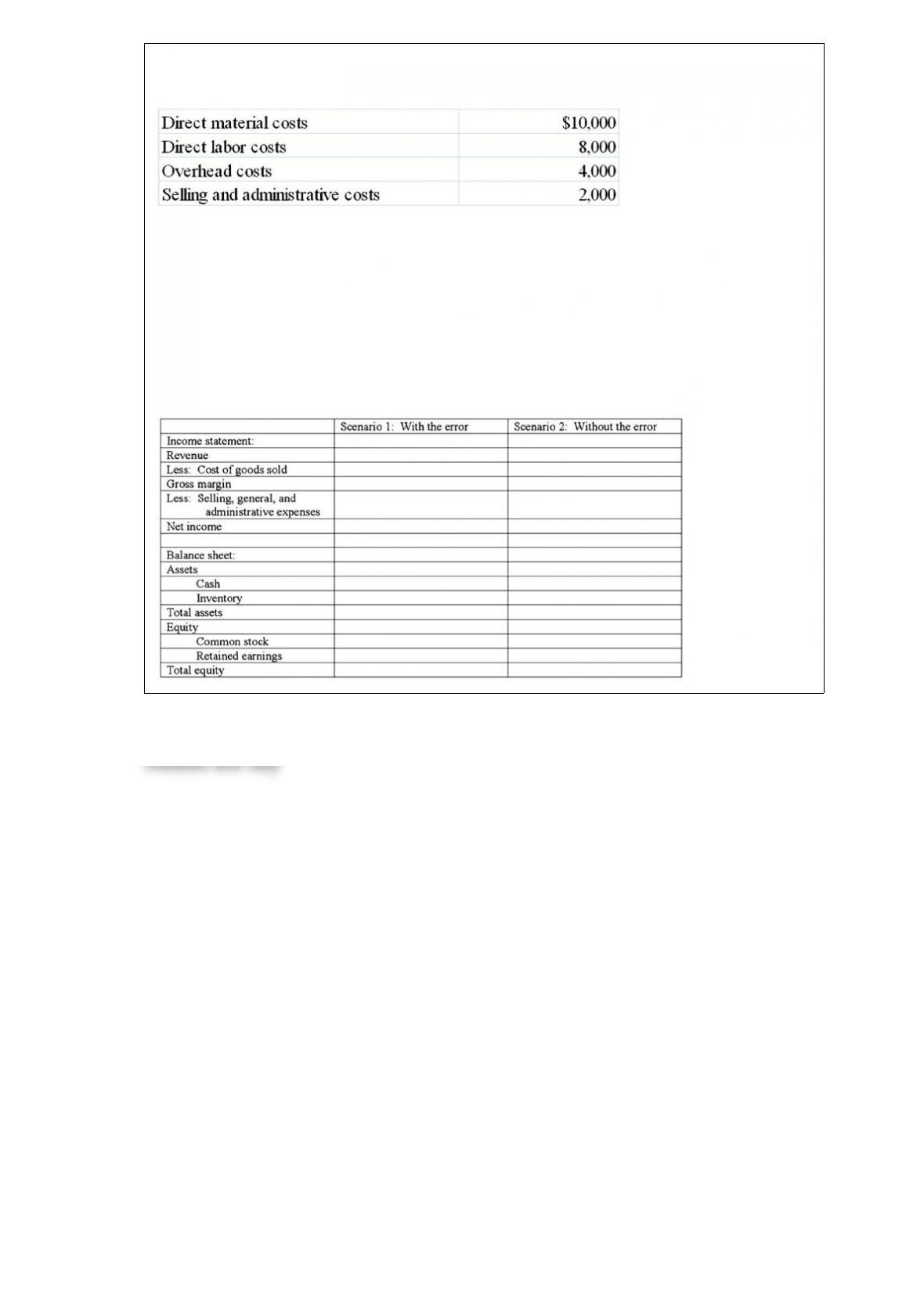
the following cash costs:
The company produced 5,000 units of product and sold 4,500 units. The average selling
price was $7.00 per unit. The accountant who prepared the firm’s financial statements
misclassified the selling and administrative costs as product costs.
Required:
Demonstrate the impact of the error on the company’s financial statements by
completing the following schedule.
Indicate whether each of the following statements is true or false.
A special order decision involves an offer to purchase goods at a price that is lower than
normal.
To analyze a special order decision, a manager should identify differential costs and
revenues.
A special order should be accepted if avoidable costs exceed differential revenue.
Availability of idle capacity is often relevant to special order decisions.
Alternative uses for facilities should be considered in making a special order decision.
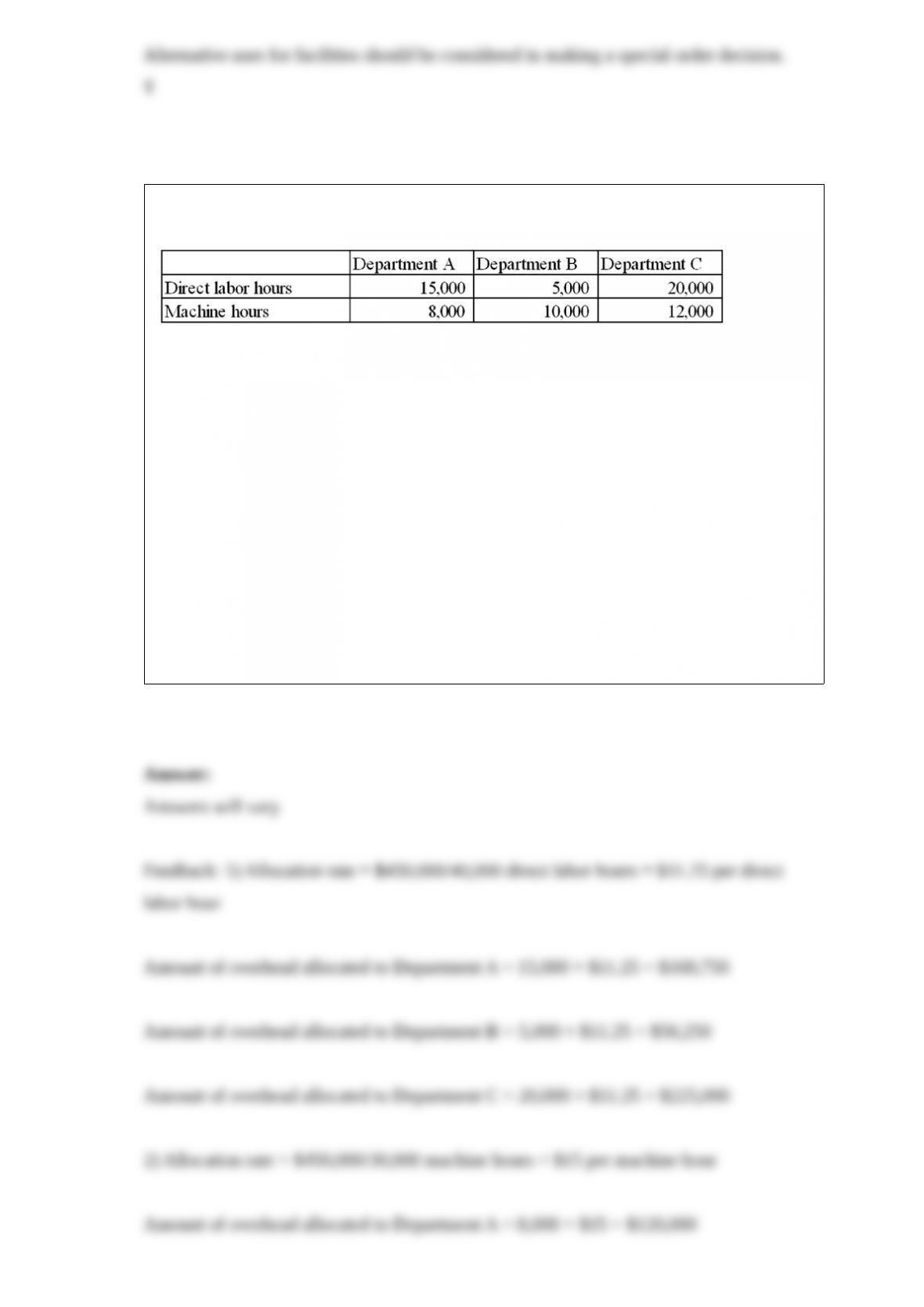
Jefferson Company expects to incur $450,000 in manufacturing overhead costs during
2014. Other budget information follows:
Required:
1) Use direct labor hours as the cost driver to compute the allocation rate. Determine
the amount of budgeted overhead cost for each department.
2) Use machine hours as the cost driver to compute the allocation. Determine the
amount of budgeted overhead cost for each department.
3) Assume that Department A manufactured a product that required 160 direct labor
hours and 85 machine hours. If overhead is allocated based on direct labor hours, how
much overhead would be allocated to this product?
4) Assume that Department A manufactured a product that required 160 direct labor
hours and 85 machine hours. If overhead is allocated based on machine hours, how
much overhead would be allocated to this product?
For Perez Corporation, return on equity is substantially higher than return on
investment. What does that tell you about the company?