1) Raymond Company owns 90% of Rachel Company. Rachel Company owns 10% of
Raymond Company. The treasury stock method is used. On the books of Rachel
Company, we maintain the Investment in Raymond using the ________ method. The
ending balance in Investment in Raymond is ________ stockholders’ equity in the
consolidated balance sheet.
A) equity; deducted from
B) cost; deducted from
C) treasury stock; deducted from
D) conventional; added to
2) Bonds with relatively high risk of default are called
A) Brady bonds
B) junk bonds
C) zero coupon bonds
D) investment grade bonds
3) When the Treasury bond market becomes less liquid, other things equal, the demand
curve for corporate bonds shifts to the ________ and the demand curve for Treasury
bonds shifts to the ________
A) right; right
B) right; left
C) left; right
D) left; left
4) The purchase price of an option contract is typically recorded as
A) an expense
B) an asset
C) an amortized cost
D) a component of shareholders equity
5) Which one of the following statements is correct for an investor company?
A) The balance in the Investment in Osprey Co. account can be reduced to represent a
decline in the fair market value of the investment, but will not be adjusted if the fair

market value increases
B) Under the equity method, the balance in the Investment in Osprey Co. account can
be negative if the investee corporation operates at a loss
C) Once the balance in the Investment in Osprey Co. is reduced to zero, it will not be
reduced any further
D) Under the equity method, the balance in the Investment in Osprey Co. account will
increase when cash dividends are received
6) There are several theories for allocating constructive gains or losses between
purchasing and issuing affiliates. The Agency Theory
A) does so based on the par value of the bonds purchased
B) assigns the entire constructive gain or loss to the parent based on their control of the
decision to purchase the bonds
C) assigns the entire constructive gain or loss to the subsidiary based on the need to
have the noncontrolling interest share in the retirement of the debt
D) assigns the entire constructive gain or loss to whichever company issued the bonds
7) On January 1, 2011, Bosna borrowed $100,000 from Lenda. The three-year term note
carries a variable rate interest, based on LIBOR, and interest is payable at December 31
of each year, compounded annually. The first year’s rate of interest is 7% and Bosna
would like to assure that their rate does not increase. Bosna enters into a pay-fixed,
receive-variable interest rate swap agreement with Swamp City Bank, under which
Bosna will pay 7%, fixed. At December 31, 2011, it is determined that Bosna’s interest
rate to Lenda for 2012 will be 6%. At December 31, 2012, the interest rate for 2013 was
determined to be 8%. Treat as a cash flow hedge.
Required:
Determine the estimated fair value of the hedge at December 31, 2011, and prepare the
related journal entries required to document this hedge and the related interest payments
at December 31, 2011, 2012, and 2013, including final repayment on 12/31/13 . Assume
a flat interest rate curve.
8) Everything else held constant, abolishing all taxes will
A) increase the interest rate on corporate bonds
B) reduce the interest rate on municipal bonds
C) increase the interest rate on municipal bonds
D) increase the interest rate on Treasury bonds
9) Pan Corporation has total stockholders’ equity of $5,000,000 consisting of
$1,000,000 of $10 par value Common Stock, $1,000,000 of Additional Paid-in Capital,
and $3,000,000 of Retained Earnings. Pan owns 80% of Sailor Corporation’s common
stock purchased at book value, which equals fair value. Sailor has $900,000 of 10%
cumulative preferred stock outstanding, with no preferred dividends in arrears. The
preferred stock has no call price, redemption price or liquidation price. Pan acquired

60% of the preferred stock of Sailor for $500,000. After this transaction the balances in
Pan’s Retained Earnings and Additional Paid-in Capital accounts, respectively, are
A) $2,960,000 and $1,000,000
B) $3,000,000 and $960,000
C) $3,000,000 and $1,040,000
D) $3,040,000 and $1,000,000
10) Which of the following is not a quantitative threshold for determining a reportable
segment?
A) Segment assets are 10% or more of the combined assets of all operating segments
B) The absolute value of a segment’s profit or loss is 10% or more of the greater of (1)
the combined reported profit of all operating segments that reported a profit or (2) the
absolute value of the combined reported loss of all operating segments that reported a
loss
C) Segment reported revenue, including intersegment revenues, is 10% or more of the
combined revenue (both internal and external) of all operating segments
D) Segment residual profit after the cost of equity is 10% or more of the combined
residual profit of all operating segments
11) Which type of trust is created pursuant to a will?
A) A testamentary trust
B) A Crummey trust
C) A generation-skipping trust
D) A life estate trust
12) Under GAAP, the ________ will include the variable interest entity in consolidated
financial statements.
A) special purpose entity
B) limited liability company
C) trust
D) primary beneficiary
13) Typically, yield curves are
A) gently upward sloping
B) mound shaped
C) flat
D) bowl shaped
14) On January 1, 2010, Shrimp Corporation purchased a delivery truck with an
expected useful life of five years, and a salvage value of $8,000. On January 1, 2012,
Shrimp sold the truck to Pacet Corporation. Pacet assumed the same salvage value and
remaining life of three years used by Shrimp. Straight-line depreciation is used by both
companies. On January 1, 2012, Shrimp recorded the following journal entry:
Debit Credit
Cash50,000
Accumulated depreciation18,000
Truck53,000
Gain on Sale of Truck15,000
Pacet holds 60% of Shrimp. Shrimp reported net income of $55,000 in 2012 and Pacet’s
separate net income (excludes interest in Shrimp) for 2012 was $98,000.
The noncontrolling interest share for 2012 was
A) $18,000
B) $22,000
C) $23,000
D) $27,000
15) On July 1, 2011, Piper Corporation issued 23,000 shares of its own $2 par value
common stock for 40,000 shares of the outstanding stock of Sector Inc. in an
acquisition. Piper common stock at July 1, 2011 was selling at $16 per share. Just
before the business combination, balance sheet information of the two corporations was
as follows:
PiperSectorSector
Book BookFair
ValueValueValue
Cash$25,000$17,000$17,000
Inventories55,00042,00047,000
Other current assets110,00040,00030,000
Land100,00045,00035,000
Plant and equipment-net660,000220,000280,000
$950,000$364,000$409,000
Liabilities$220,000$70,000$75,000
Capital stock, $2 par value500,000100,000
Additional paid-in capital170,00090,000
Retained earnings60,000104,000
$950,000$364,000
Required:
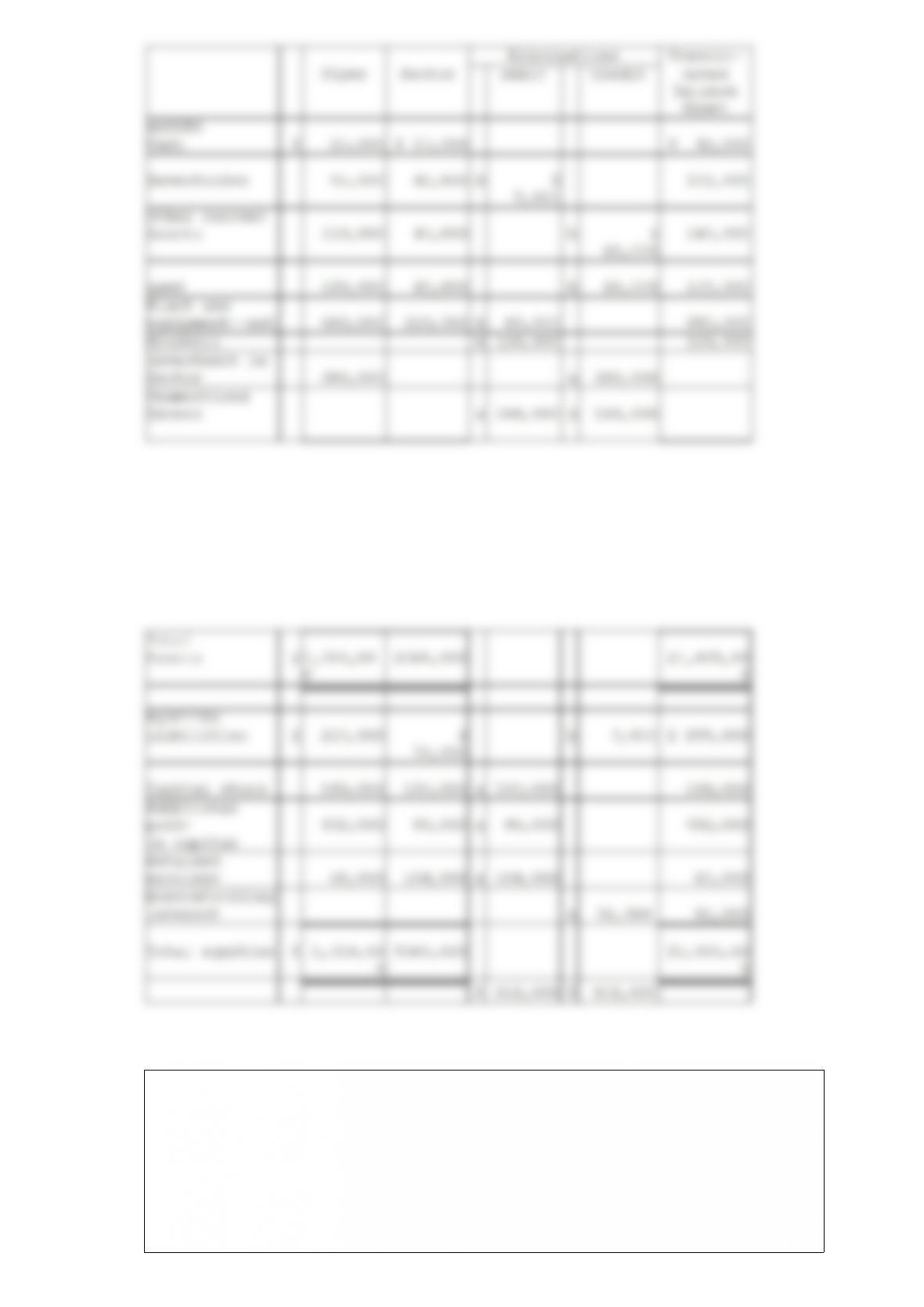
1>Prepare the journal entry on Piper Corporation’s books to account for the investment
in Sector Inc.
2>Prepare a consolidated balance sheet for Piper Corporation and Subsidiary
immediately after the business combination.
16) Greta, Harriet, and Ivy have a retail partnership business selling personal
computers. The partners are allowed an interest allocation of 6% on their average
capital. Capital account balances on the first day of each month are used in determining
weighted average capital, regardless of additional partner investment or withdrawal
transactions during any given month. Withdrawals of capital that are debited to the
capital account are used in the average calculation. Partner capital activity for the year
was:
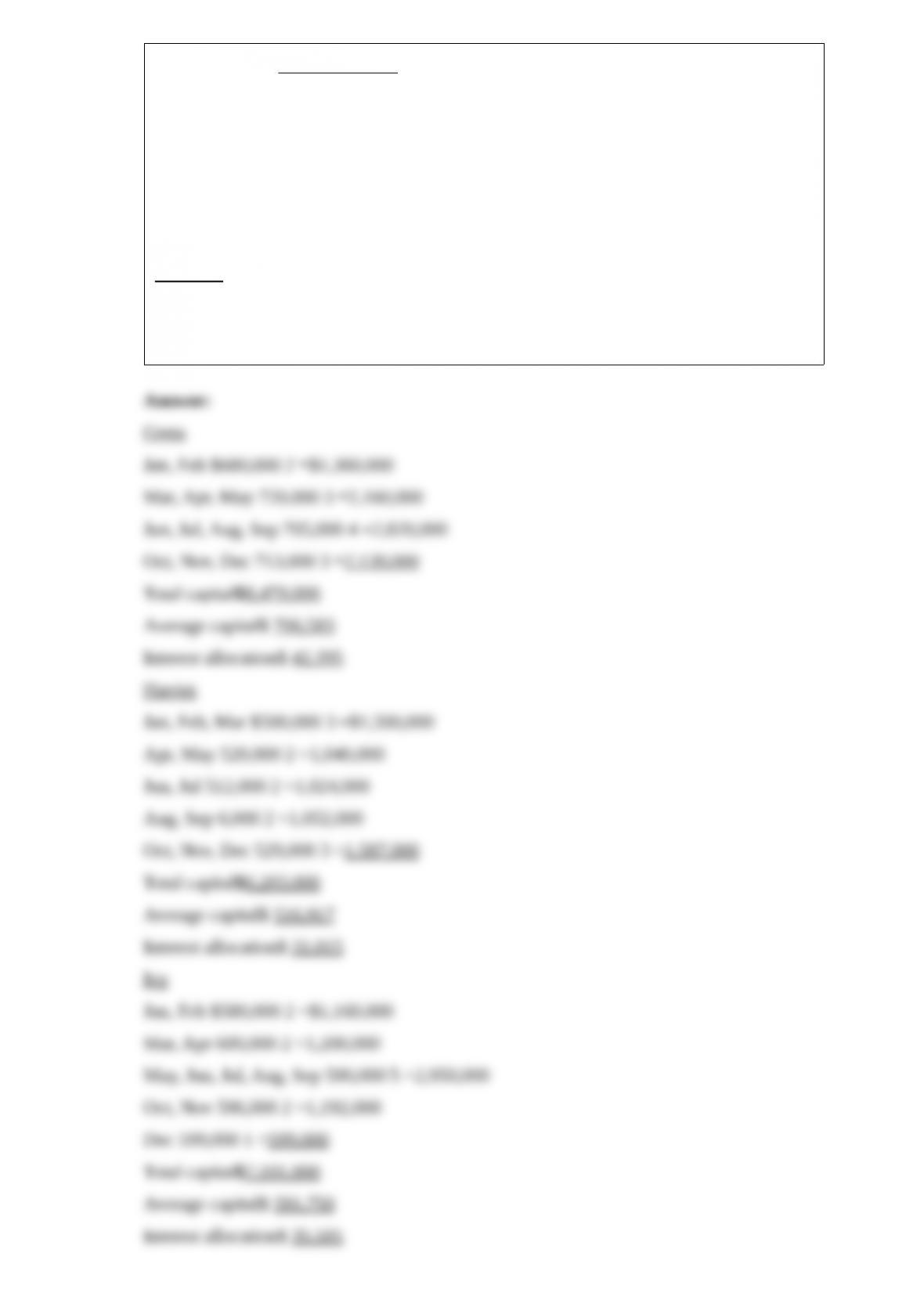
Capital accountsGretaHarrietIvy
Jan 1 balance$680,000$500,000$580,000
Feb 12 investment40,000
Mar 26 investment20,000
Apr 20 withdrawal(10,000)
May 8 withdrawal(15,000)(8,000)
Jul 3 investment14,000
Sep 29 investment8,0003,0006,000
Nov 5 investment3,000
Required:
Calculate weighted average capital for each partner, and determine the amount of
interest that each partner will be allocated. Round all calculations to the nearest whole
dollar.
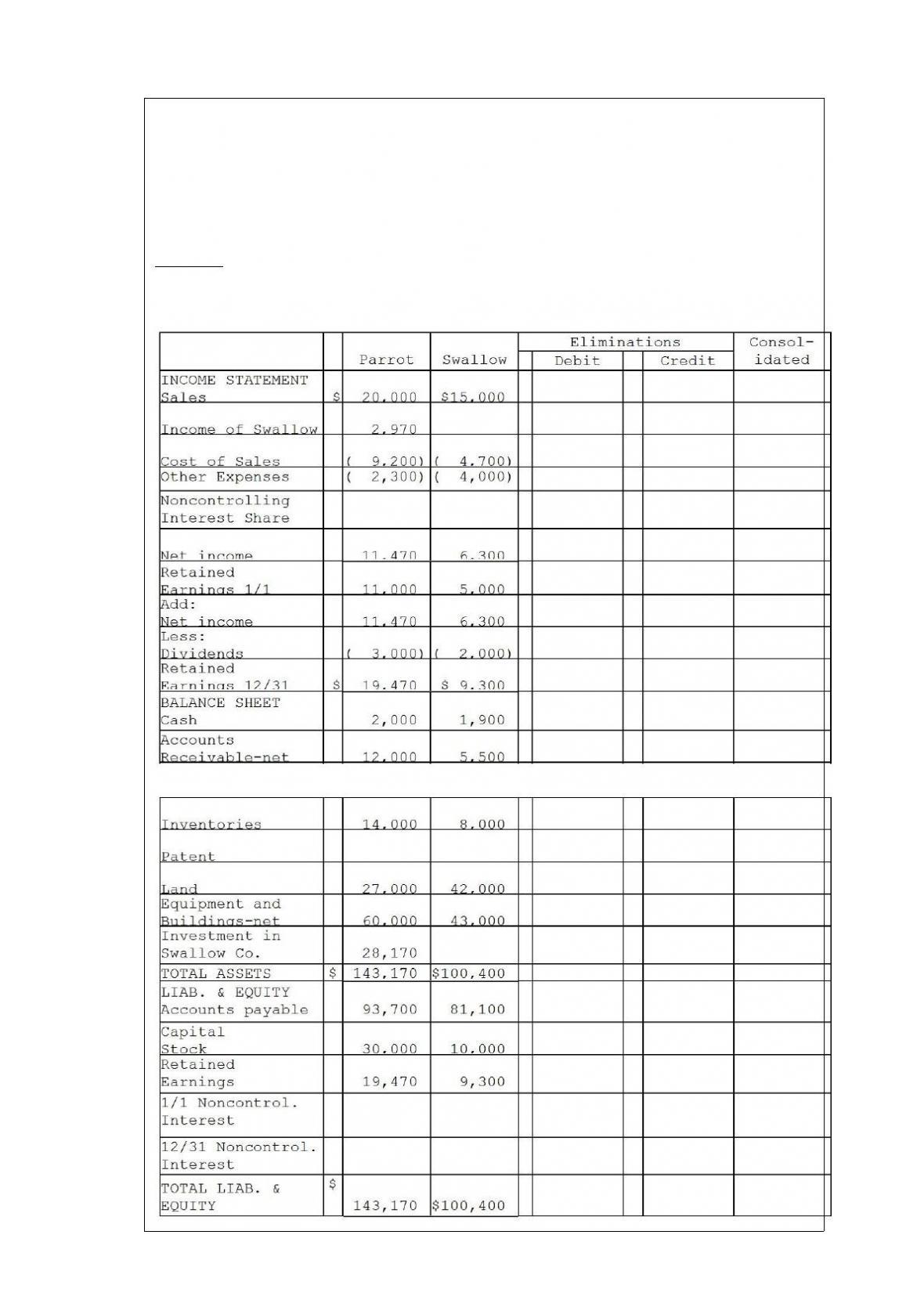
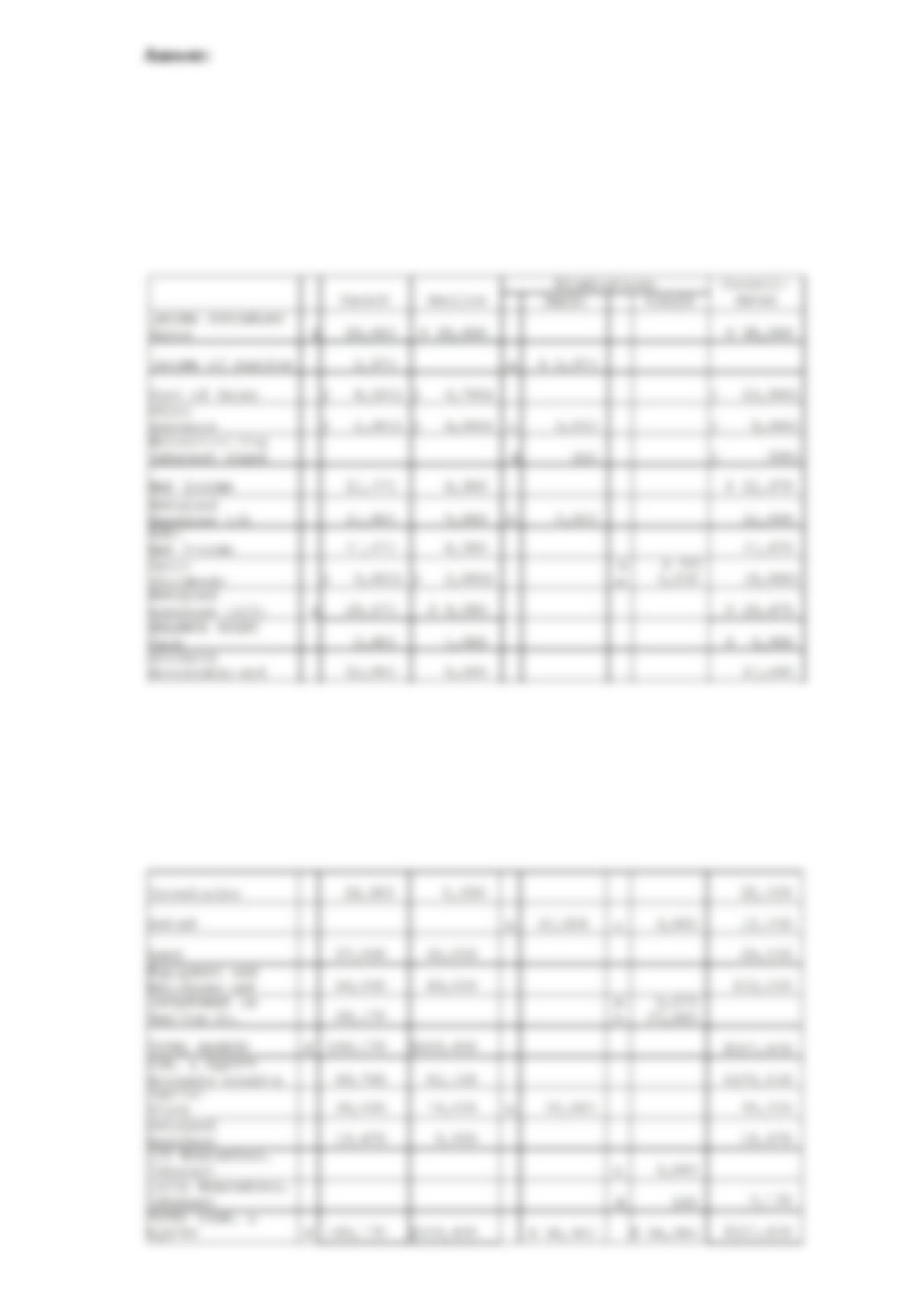
17) Parrot Corporation acquired 90% of Swallow Co. on January 1, 2011 for $27,000
cash when Swallow’s stockholders’ equity consisted of $10,000 of Capital Stock and
$5,000 of Retained Earnings. The difference between the fair value and book value of
Swallow’s net assets was allocated solely to a patent amortized over 5 years. The
separate company statements for Parrot and Swallow appear in the first two columns of
the partially completed consolidation working papers.
Required:
Complete the consolidation working papers for Parrot and Swallow for the year 2011 .
18) The Vera, Wade, and Xena partnership was dissolved, and a cash distribution plan
was developed, as follows:
Priority
CreditorsVeraWadeXena
First $462,000100%
Next $173,00060%40%
Next $240,0007/125/12
Remainder20%30%50%
Required:
If $1,000,000 of cash was distributed by the partnership, how much was received
respectively by the priority creditors, Vera, Wade, and Xena?
19) Pretax operating incomes of Panitz Corporation and its 80%-owned subsidiary,
Salazar Corporation, for the year 2011, are shown below.
Panitz and Salazar belong to an affiliated group. Salazar pays total dividends of $35,000
for the year. There are no unamortized book value/fair value differentials relating to
Panitz’s investment in Salazar. During the year, Panitz sold land to Salazar at a total loss
of $15,000 which is included in its pretax operating income. Salazar still holds this land
at the end of the year. The marginal corporate tax rate for both corporations is 34%.
PanitzSalazar
Sales revenue$890,000$700,000
Loss on sale of land(15,000)
Cost of sales(400,000)(250,000)
Other expenses(350,000)(350,000)
Depreciation expense(50,000)(35,000)
Pretax operating income
(does not include Salazar investment income)$75,000$65,000
Required:
1> Determine the separate amounts of income tax expense for Panitz and Salazar as if
they had filed separate tax returns.
2> Determine Panitz’s net income from Salazar.