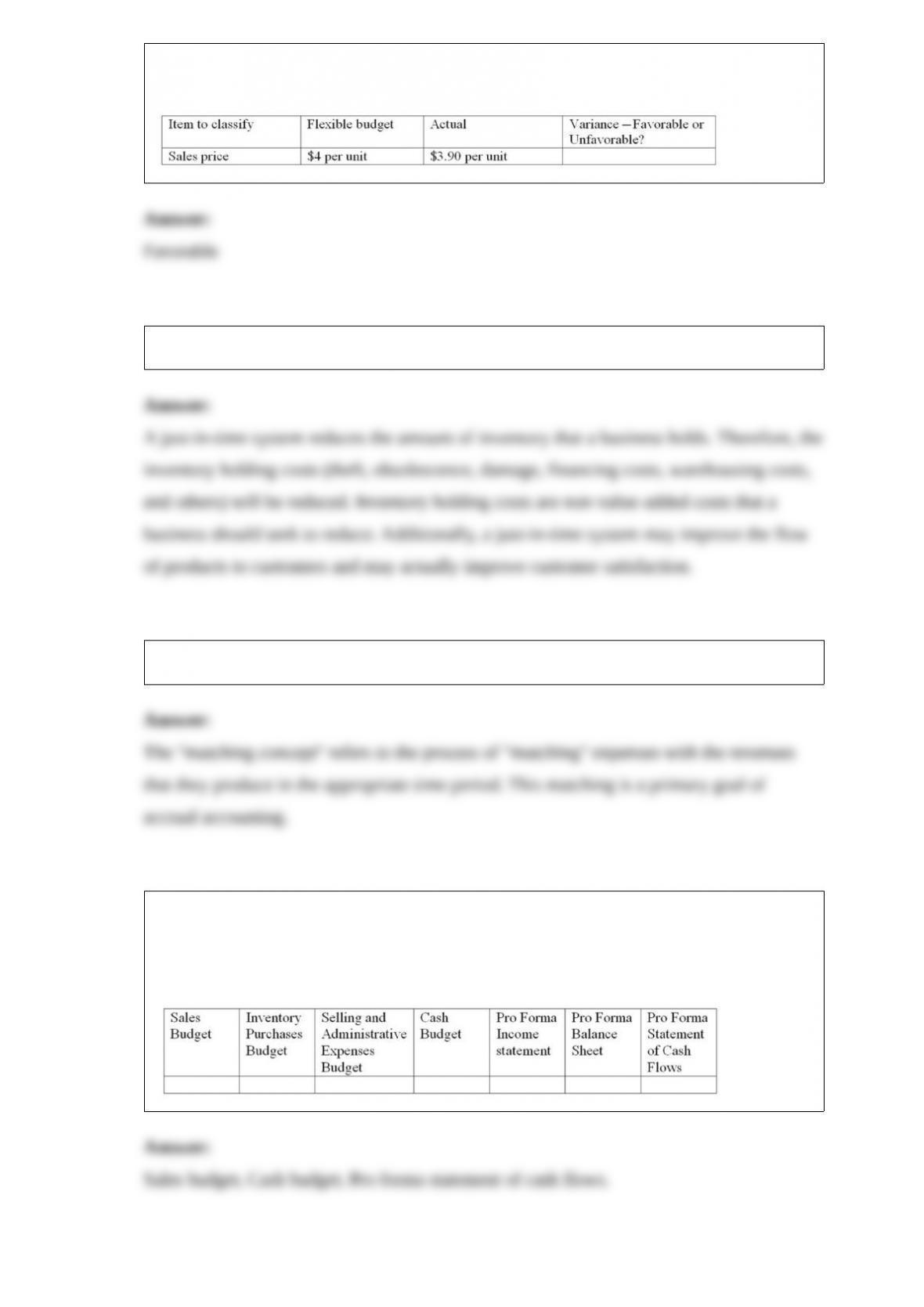
1) Based on the information given for a variance, indicate whether the variance is
favorable or unfavorable.
2) What benefits may result from use of a just-in-time system?
3) Explain the meaning of the term “matching concept.”
4) Indicate which of the budgets and pro forma financial statements the given item
appears on by placing X’s in the appropriate column or columns.
Budgeted cash receipts from customers

5) Indicate whether each of the following statements about accounting information
systems is true or false.
1>Managerial accounting information is reported periodically, generally at the end of
the year and quarterly
2>Managerial accounting information includes estimates and forecasted information
3>The information developed by a company’s financial accounting system is
proprietary in nature and is not made available to anyone other than managers of the
company
4>Managerial accounting information is prepared to meet needs of government
agencies and various analysts
5>Managerial accounting information systems need not be regulated to protect the
public
6) On January 1, 2012, Stassi Corporation purchased equipment for $25,000. A discount
of 2% was granted on the equipment; the shipping terms were FOB Shipping Point, and
the shipping cost was $1,500; installation and testing amounted to $1,000. The
equipment had an estimated useful life of 4 years and salvage value of $4,000. At the
beginning of 2014, Stassi revised the expected life of the asset to six years and the
salvage value to $5,000.
Required:
Compute the depreciation expense using straight-line method for each of the six years.
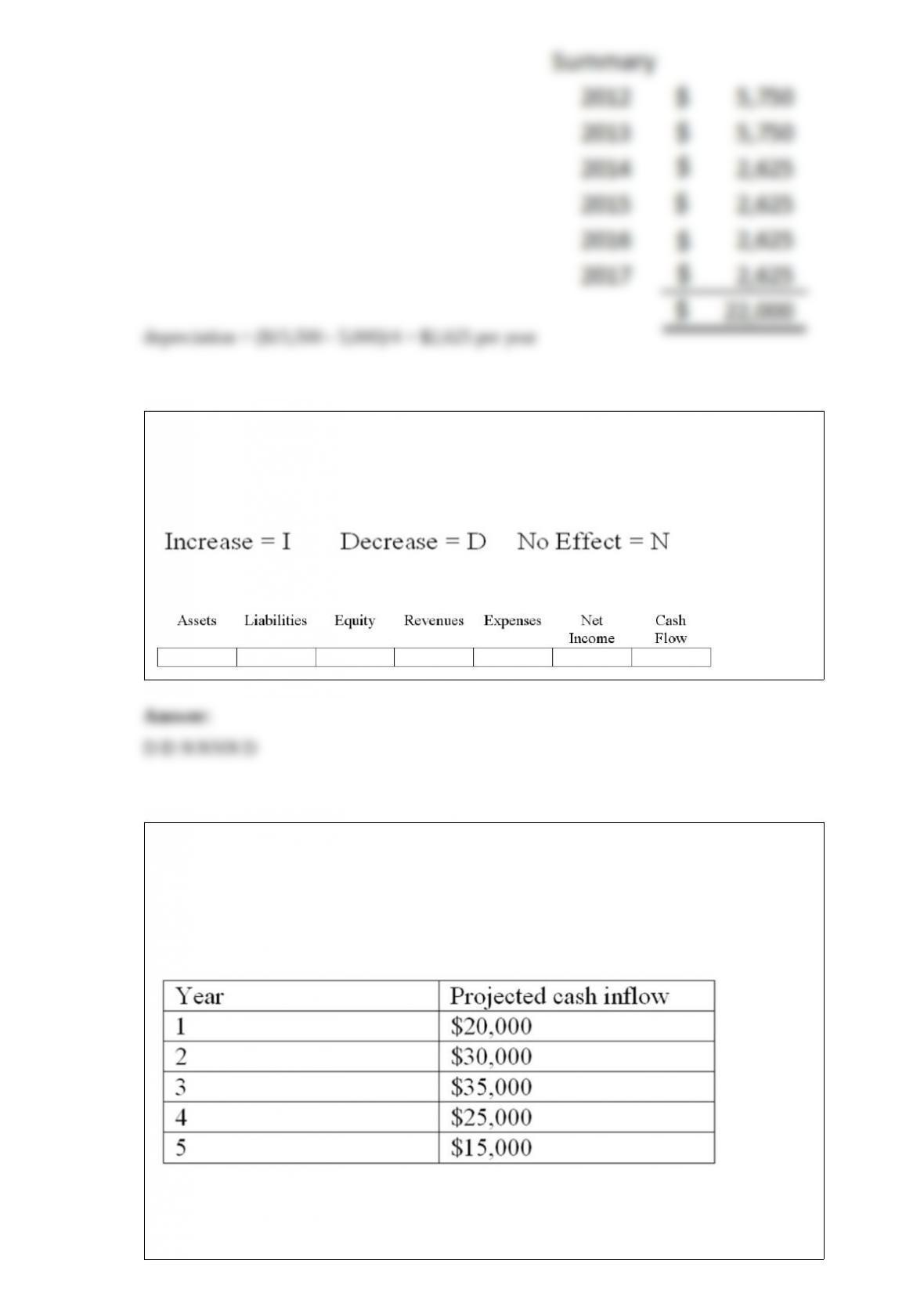
7) Indicate how each event affects the elements of financial statements. Use the
following letters to record your answer in the box shown below each element. You do
not need to enter amounts.
On March 17, Ransom Company repaid the principal on a note payable.
8) In 2008, Biggs Company purchased equipment with an expected useful life of 5
years. The initial cost of the equipment was $90,000. Biggs’s cost of capital is 10%. At
the time it purchased the equipment, Biggs projected the following cash inflows from
use of the equipment:
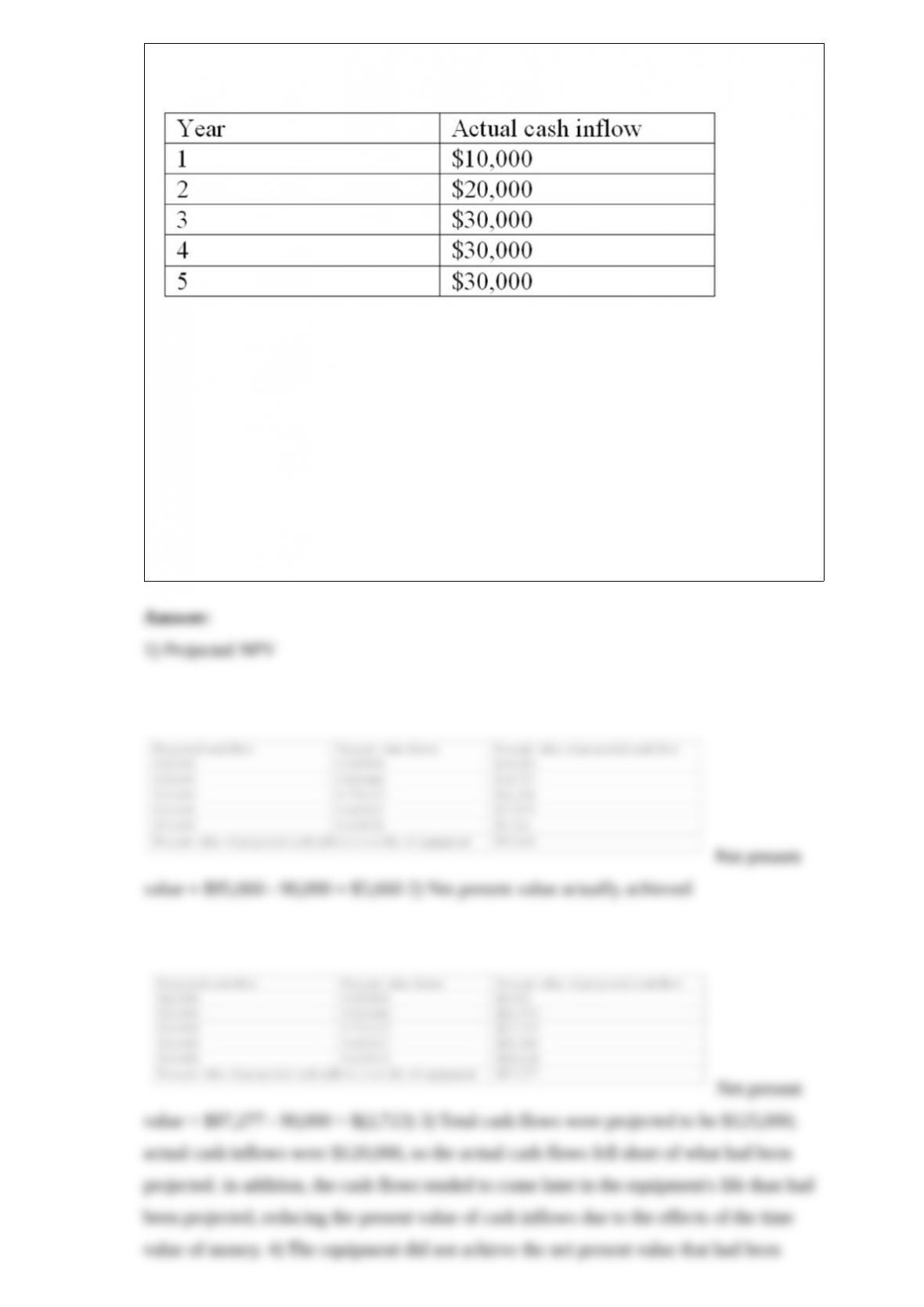
In 2012, the equipment had reached the end of its useful life. Biggs determined that it
had actually generated the following cash flows:
Required:
1) What was the net present value that Biggs calculated for the equipment when the
company purchased the asset?
2) Calculate the net present value that the equipment achieved, based on the actual cash
inflows.
3) Comment on the pattern of actual cash inflows, compared to the cash flows that had
been projected.
4) Was the equipment in fact an acceptable investment, based on the cash flows actually
achieved?
9) Indicate whether each of the following statements about a cash budget is true or
false.
1>The total cash available is calculated by adding cash receipts and the ending cash
balance
2>A cash budget helps managers to anticipate cash shortages and excess cash balances
3>Cash payments may include outflows for inventory, selling and administrative
expenses, and equipment purchases
4>The cash budget has two main sections: a cash deficit section and a financing section
5>Cash inflows and outflows indicated on the cash budget are reported on a company’s
pro forma statement of cash flows