
1) which of the following is never classified as an extraordinary item?
a.losses from a major casualty
b.losses from an expropriation of assets
c.gain on a sale of the only security investment a company has ever owned
d.losses from exchange or translation of foreign currencies
2) which of the following is not one of the basic questions that must be answered before
the amount of depreciation charge can be computed?
a.what is the depreciation base to use for the asset?
b.what is the asset’s useful life?
c.what method of cost apportionment is best for this asset?
d.what product or service is the asset related to?
3) january 2, 2010, koll, inc. purchased a patent for a new consumer product for
$450,000. at the time of purchase, the patent was valid for 15 years; however, the
patents useful life was estimated to be only 10 years due to the competitive nature of
the product. on december 31, 2013, the product was permanently withdrawn from the
market under governmental order because of a potential health hazard in the product.
what amount should koll charge against income during 2013, assuming amortization is
recorded at the end of each year?
a.$ 45,000
b.$270,000
c.$315,000
d.$360,000
4) on june 15, 2012, wynne corporation accepted delivery of merchandise which it
pur-chased on account. as of june 30, wynne had not recorded the transaction or
included the merchandise in its inventory. the effect of this on its balance sheet for june
30, 2012 would be
a.assets and stockholders’ equity were overstated but liabilities were not affected
b.stockholders’ equity was the only item affected by the omission
c.assets, liabilities, and stockholders’ equity were understated
d.none of these

5) a major objective of macrs for tax depreciation is to
a.reduce the amount of depreciation deduction on business firms’ tax returns
b.assure that the amount of depreciation for tax and book purposes will be the same
c.help companies achieve a faster write-off of their capital assets
d.require companies to use the actual economic lives of assets in calculating tax
depreciation
6) in a troubled debt restructuring in which the debt is continued with modified terms
and the carrying amount of the debt is less than the total future cash flows, the creditor
should
a.compute a new effective-interest rate
b.not recognize a loss
c.calculate its loss using the historical effective rate of the loan
d.calculate its loss using the current effective rate of the loan
7) which of the following statements concerning the cost-benefit relationship is not
true?
a.business reporting should exclude information outside of management’s expertise
b.management should not be required to report information that would significantly
harm the company’s competitive position
c.management should not be required to provide forecasted financial information
d.if needed by financial statement users, management should gather information not
included in the financial statements that would not otherwise be gathered for internal
use
8) logan corp.’s trial balance of income statement accounts for the year ended december
31, 2012 included the following:

other information:
logan’s income tax rate is 30%. finished goods inventory:
on logan’s multiple-step income statement for 2012,
income before extraordinary item is
a.$128,000
b.$94,000
c.$65,800
d.$49,000
9) in reporting extraordinary transactions on a statement of cash flows (indirect
method), the
a.gross amount of an extraordinary gain should be deducted from net income
b.net of tax amount of an extraordinary gain should be added to net income
c.net of tax amount of an extraordinary gain should be deducted from net income
d.gross amount of an extraordinary gain should be added to net income
10) recognition of tax benefits in the loss year due to a loss carryforward requires
a.the establishment of a deferred tax liability
b.the establishment of a deferred tax asset
c.the establishment of an income tax refund receivable
d.only a note to the financial statements
11) according to statement of financial accounting concepts no. 2, predictive value is an
ingredient of the fundamental quality of

relevance faithful representation
a. yes no
b. yes yes
c. no no
d. no yes
12) thompson company incurred research and development costs of $100,000 and legal
fees of $20,000 to acquire a patent. the patent has a legal life of 20 years and a useful
life of 10 years. what amount should thompson record as patent amortization expense in
the first year?
a.$ -0-.
b.$ 2,000
c.$ 6,000
d. $12,000
13) if a company employs the gross method of recording accounts receivable from
customers, then sales discounts taken should be reported as
a.a deduction from sales in the income statement
b.an item of “other expense” in the income statement
c.a deduction from accounts receivable in determining the net realizable value of
accounts receivable
d.sales discounts forfeited in the cost of goods sold section of the income statement
14) the balance in retained earnings at december 31, 2012 was $720,000 and at
december 31, 2013 was $582,000. net income for 2013 was $500,000. a stock dividend
was declared and distributed which increased common stock $250,000 and paid-in
capital $110,000. a cash dividend was declared and paid.
the amount of the cash dividend was
a.$248,000
b.$278,000
c.$388,000
d.$638,000
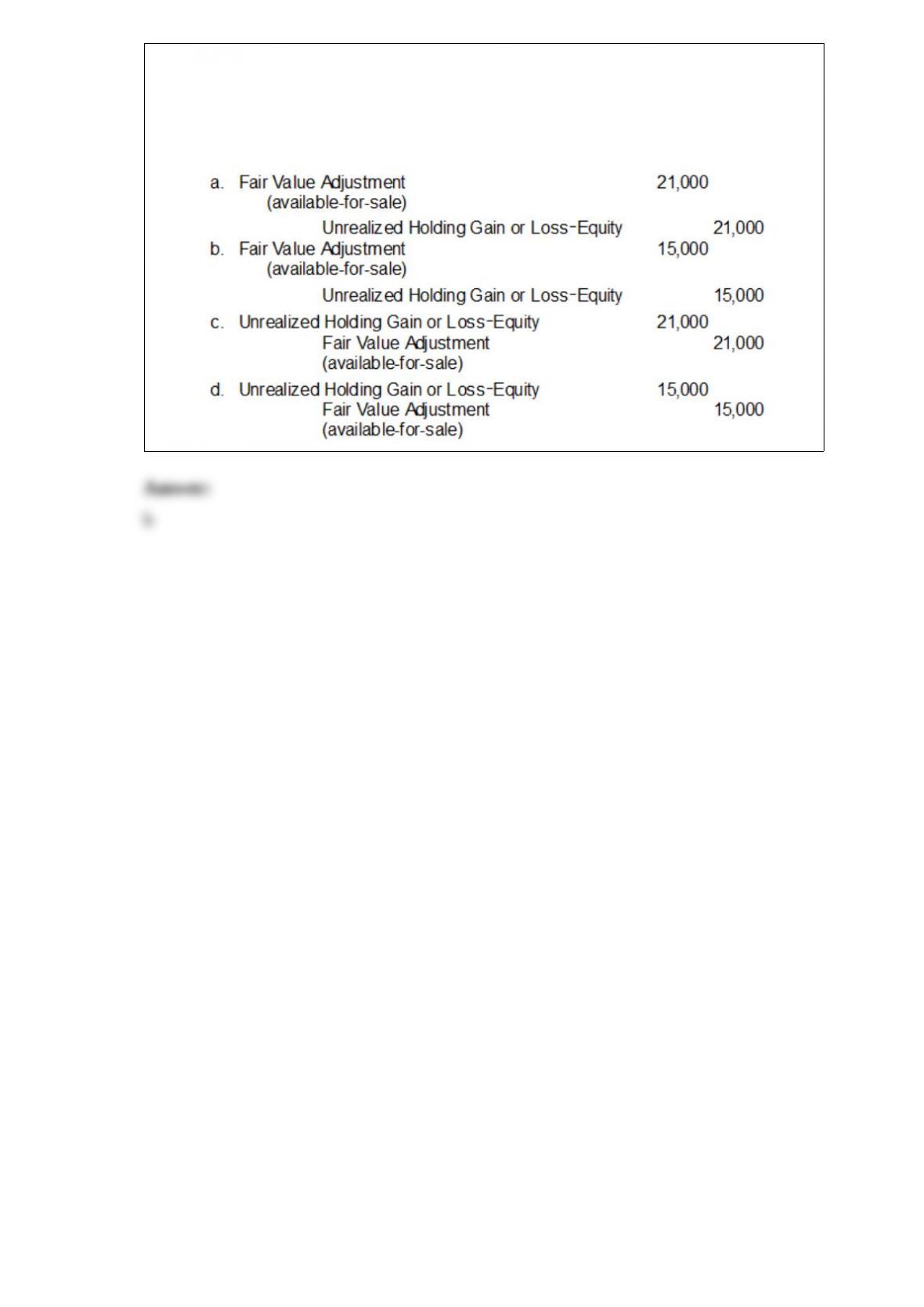
15) at december 31, 2013, atlanta co. has a stock portfolio valued at $120,000. its cost
was $99,000. if the securities fair value adjustment (available-for-sale) has a debit
balance of $6,000, which of the following journal entries is required at december 31,
2013?