The usual presentation of the statement of owner’s equity is (1) Beginning capital, (2)
Net income or loss, (3) Drawing, (4) Owner’s contributions, (5) Ending capital.
Answer:
Managerial accounting information is used by external and internal users equally.
Answer:
The cost of repairing damage to a machine during installation is debited to a fixed asset
account.
Answer:
If sales total $2,000,000, fixed costs total $800,000, and variable costs are 60% of sales,
the contribution margin ratio is 60%.

Answer:
The cost of materials entering directly into the manufacturing process is classified as
factory overhead cost.
Answer:
The amount of interest expense reported on the income statement will be more than the
interest paid to bondholders if the bonds were originally sold at a discount.
Answer:
In preparing the cash flows from operating activities section of the statement of cash
flows by the indirect method, the net decrease in inventories from the beginning to the
end of the period is added to net income for the period.
Answer:
No significant differences exist between the accounting standards issued by the FASB
and the IASB.
Answer:
Variable costs are costs that vary on a per-unit basis with changes in the activity level.
Answer:
Costs of ending work in process inventory are included in the cost per equivalent unit
computation.
Answer:
The concept of present value is that an amount of cash to be received at some date in
the future is the equivalent of the same amount of cash held at an earlier date.
Answer:
Flexible budgeting requires all levels of management to start from zero and estimate
sales, production, and other operating data as though operations were being started for
the first time.
Answer:
Budget preparation is best determined in a top-down managerial approach.
Answer:
The sales budget is derived from the production budget.
Answer:
A process cost accounting system accumulates costs for each of the departments or
processes within the factory.
Answer:
Only a single line, which represents the difference between total sales revenues and
total costs, is plotted on the cost-volume-profit chart.
Answer:
One of the prerequisites to paying a cash dividend is sufficient retained earnings.
Answer:
A staff department or unit is one directly involved in the basic objective of the
organization.
Answer:
Responsibility accounting reports for profit centers are normally in the form of income
statements.
Answer:
A company should only use nonfinancial performance measures when financial
measures cannot be calculated.
Answer:
When a merchandising business is compared to a service business, the financial
statement that is not affected by that change is the Statement of Owner’s Equity.
Answer:
Depreciation on factory plant and equipment is an example of factory overhead cost.
Answer:
When using the analysis of receivables method for estimating uncollectible receivables,
the amount computed in the analysis is usually the amount that would be recorded in
the end-of-period adjusting entry.
Answer:
FICA tax becomes a liability to the federal government at the time an employee’s
payroll is prepared.
Answer:
The budgeted volume of production is normally computed as the sum of (1) the
expected sales volume and (2) the desired ending inventory.
Answer:
Gross profit minus selling expenses equals net income.
Answer:

The first budget to be prepared is usually the sales budget.
Answer:
The master budget is an integrated set of budgets that tie together a company’s
operating, financing and investing activities into an integrated plan for the coming year.
Answer:
Revenue per employee may be used to measure partnership (LLC) efficiency.
Answer:
Once a static budget has been determined, it is changed regularly as the underlying
activity changes.
Answer:
The statement of cash flows is not one of the basic financial statements.
Answer:
If a corporation is liquidated, preferred stockholders are paid before the creditors and
before the common stockholders.
Answer:
The budgeted volume of production is based on the sum of (1) the expected sales
volume and (2) the desired ending inventory, less (3) the estimated beginning inventory.

Answer:
An equity investment in less than 20% of another company’s stock is accounted for
using the cost method.
Answer:
The initial owners of stock of a newly formed corporation are called directors.
Answer:
Details of the division of partnership income should normally be disclosed in the
financial statements.

Answer:
Mocha Company manufactures a single product by a continuous process, involving
three production departments. The records indicate that direct materials, direct labor,
and applied factory overhead for Department 1 were $100,000, $125,000, and
$150,000, respectively. The records further indicate that direct materials, direct labor,
and applied factory overhead for Department 2 were $55,000, $65,000, and $80,000,
respectively. In addition, work in process at the beginning of the period for Department
1 totaled $75,000, and work in process at the end of the period totaled $60,000.
The journal entry to record the flow of costs into Department 1 during the period for
applied overhead is:
A.Factory Overhead–Department 1150,000
Work in Process–Department 1150,000
B.Work in Process–Department 1125,000
Factory Overhead–Department 1125,000
C.Work in Process–Department 180,000
Factory Overhead–Department 180,000
D.Work in Process–Department 1150,000
Factory Overhead–Department 1150,000
Answer:
Flyer Company sells a product in a competitive marketplace. Market analysis indicates

that their product would probably sell at $48 per unit. Flyer management desires a
12.5% profit margin on sales. Their current full cost per unit for the product is $44 per
unit.
What is the desired profit per unit?
A.$6
B.$8
C.$5
D.$4
Answer:
Which of the following is nottrueabout closing entries?
A.There are four closing entries that update the owner’s equity account.
B.After the second closing entry, the income summary account is equal to the net
income or (loss) for the period.
C.All real accounts are closed at the end of the period.
D.By closing nominal accounts at the end of the period to zero, it is possible to isolate
next period’s information correctly.
Answer:

Which of the following would be most effective in a small owner/manager-operated
business?
A.Profit centers
B.Centralization
C.Investment centers
D.Cost centers
Answer:
When a stock dividend is declared, which of the following accounts is credited?
A.Common Sock
B.Dividend Payable
C.Stock Dividends Distributable
D.Retained Earnings
Answer:

What is the type of account and normal balance of Allowance for Doubtful Accounts?
A.Contra asset, credit
B.Asset, debit
C.Asset, credit
D.Contra asset, debit
Answer:
The following information is for the standard and actual costs for the Happy
Corporation.
Standard Costs:
Budgeted units of production – 16,000 (80% of capacity)
Standard labor hours per unit – 4
Standard labor rate – $26 per hour
Standard material per unit – 8 lbs.
Standard material cost – $ 12 per pound
Standard variable overhead rate – $15 per labor hour
Budgeted fixed overhead – $640,000
Fixed overhead rate is based on budgeted labor hours at 80% capacity.
Actual Cost:
Actual production – 16,500 units
Actual material purchased and used – 130,000 pounds
Actual total material cost – $1,600,000
Actual labor – 65,000 hours
Actual total labor costs – $1,700,000
Actual variable overhead – $1,000,000
Actual fixed overhead – $640,000
Actual variable overhead – $1,000,000
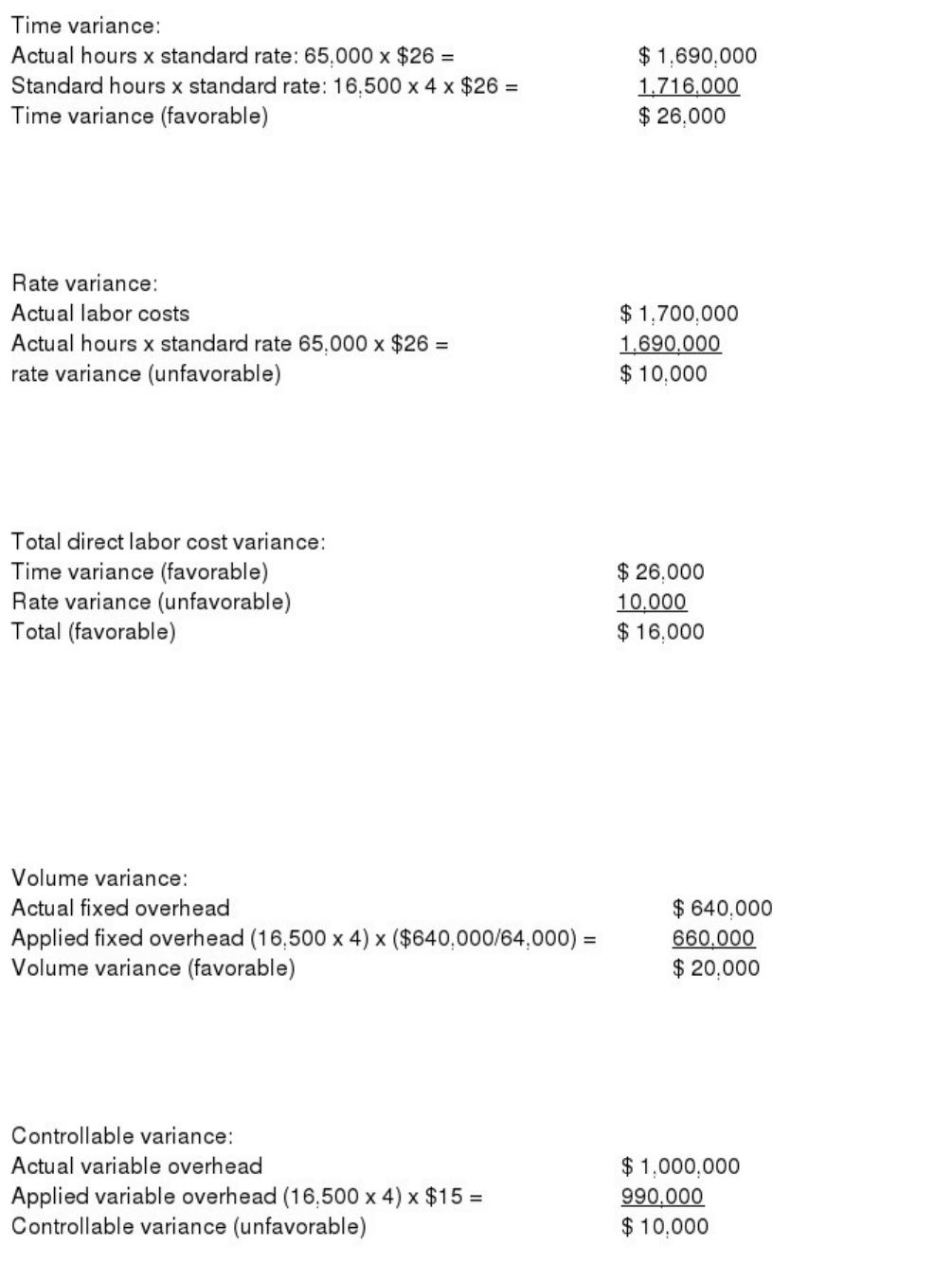
Determine: (a) the quantity variance, price variance, and total direct materials cost
variance; (b) the time variance, rate variance, and total direct labor cost variance; and
(c) the volume variance, controllable variance, and total factory overhead cost variance.
Answer:

Everett, Miguel, and Ramona are partners, sharing income 1:2:3. After selling all of the
assets for cash, dividing losses on realization, and paying liabilities, the balances in the
capital accounts are as follows: Everett, $50,000 Cr.; Miguel, $40,000 Dr.; and Ramona,
$30,000 Cr. How much cash should be distributed to Everett assuming that Miguel pays
the deficiency?
A.$50,000
B.$20,000
C.$30,000
D.$40,000
Answer:
Operating expenses other than depreciation for the year were $400,000. Prepaid
expenses increased by $17,000 and accrued expenses decreased by $30,000 during the
year. Cash payments for operating expenses to be reported on the cash flow statement
using the direct method would be
A.$353,000
B.$413,000
C.$447,000

D.$383,000
Answer:
A cost that has characteristics of both a variable cost and a fixed cost is called a:
A.variable/fixed cost
B.mixed cost
C.discretionary cost
D.sunk cost
Answer:
Heston and Burton, CPAs, currently work a five-day week. They estimate that net
income for the firm would increase by $75,000 annually if they worked an additional
day each month. The cost associated with the decision to continue the practice of a
five-day work week is an example of:
A.differential revenue
B.sunk cost

C.differential income
D.opportunity cost
Answer:
An element of internal control is
A.risk assessment
B.journals
C.subsidiary ledgers
D.controlling accounts
Answer:
If the straight-line method of amortization of bond premium or discount is used, which
of the following statements is true?
A.Annual interest expense will increase over the life of the bonds with the amortization
of bond premium.

B.Annual interest expense will remain the same over the life of the bonds with the
amortization of bond discount.
C.Annual interest expense will decrease over the life of the bonds with the amortization
of bond discount.
D.Annual interest expense will increase over the life of the bonds with the amortization
of bond discount.
Answer:
The arrangements between buyer and seller as to when payments for merchandise are to
be made are called
A.credit terms
B.net cash
C.cash on demand
D.gross cash
Answer:
Which of the following entries records the payment of an account payable?

A.debit Cash; credit Accounts Payable
B.debit Accounts Receivable; credit Cash
C.debit Cash; credit Supplies Expense
D.debit Accounts Payable; credit Cash
Answer:
Because accountants have financial expertise, they are the only ones that are able to set
standard costs for the production area.
Answer:
Adjusting entries are
A.the same as correcting entries
B.needed to bring accounts up to date and match revenue and expense
C.optional under generally accepted accounting principles
D.rarely needed in large companies

Answer:
For February, sales revenue is $700,000; sales commissions are 5% of sales; the sales
manager’s salary is $96,000; advertising expenses are $80,000; shipping expenses total
2% of sales; and miscellaneous selling expenses are $2,500 plus 1/2 of 1% of sales.
Total selling expenses for the month of February are:
A.$151,000
B.$227,500
C.$225,000
D.$231,000
Answer:
Use the following information in the adjusted trial balance for Stockton Company to
answer the following questions.
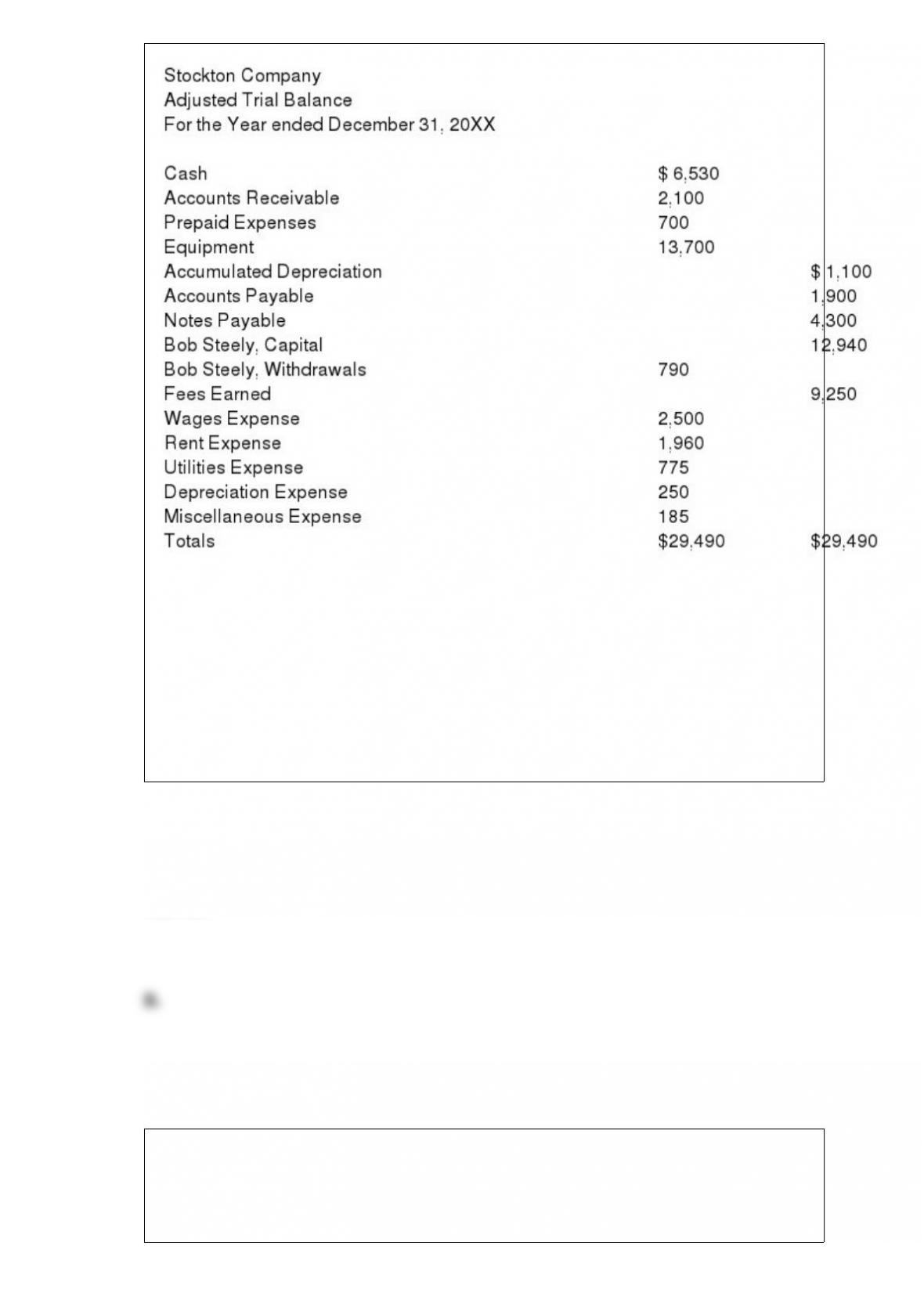
Determine the current assets.
A.$23,030
B.$9,330
C.$21,930
D.$8,630
Answer:
Heedy Company is trying to decide how many units of merchandise to order each
month. The company policy is to have 20% of the next month’s sales in inventory at the
end of each month. Projected sales for August, September, and October are 30,000
units, 20,000 units, and 40,000 units, respectively. How many units must be purchased
in September?
A.24,000
B.18,000
C.28,000
D.22,000
Answer:
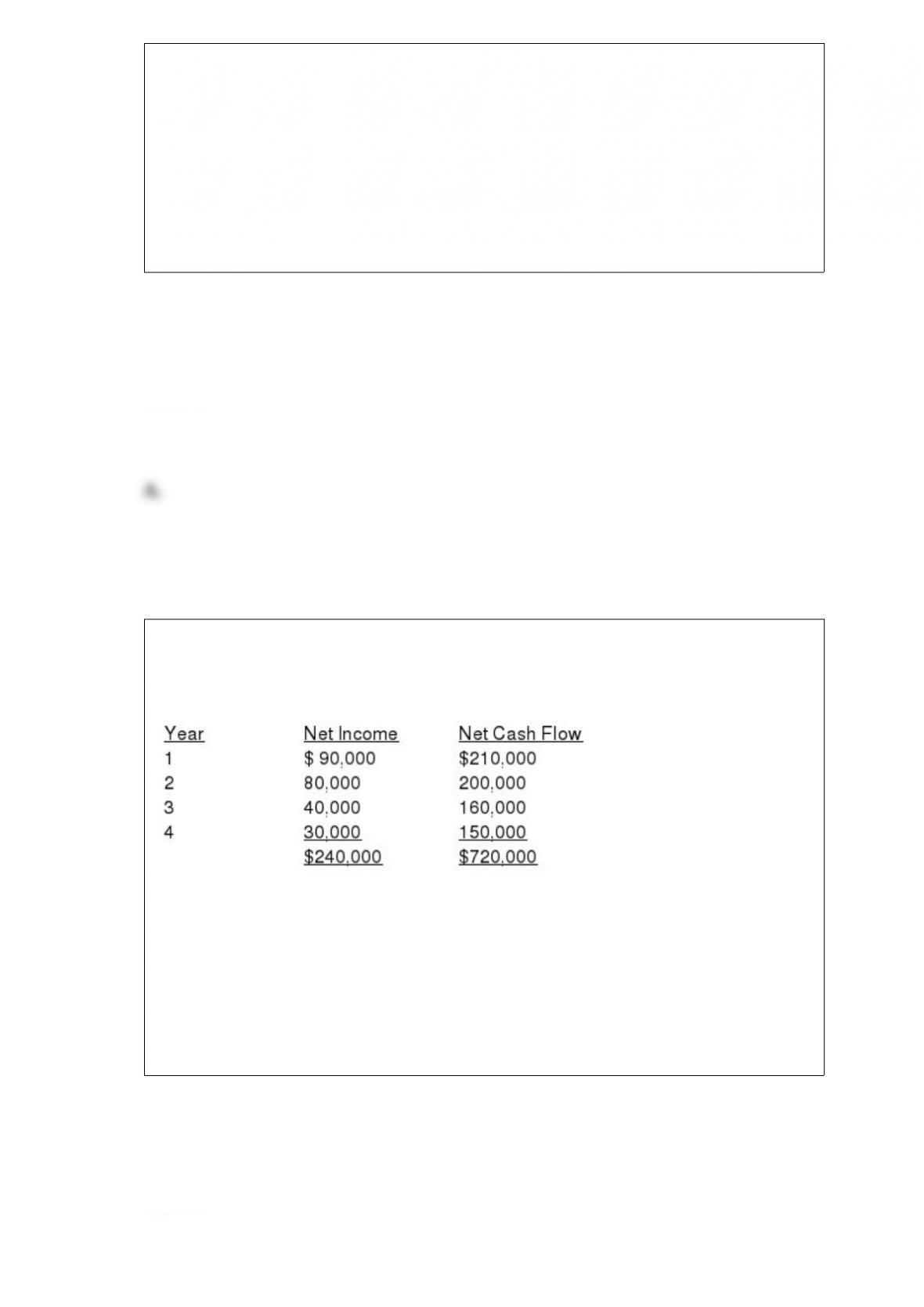
Vanessa Company is evaluating a project requiring a capital expenditure of $480,000.
The project has an estimated life of 4 years and no salvage value. The estimated net
income and net cash flow from the project are as follows:
The company’s minimum desired rate of return for net present value analysis is 15%.
The present value of $1 at compound interest of 15% for 1, 2, 3, and 4 years is .870, .
756, .658, and .572, respectively.
Determine (a) the average rate of return on investment, using straight line depreciation,
and (b) the net present value.
Answer:
When using a purchases journal
A.all cash and credit purchases are recorded in the journal.
B.posting to creditor accounts is only done at the end of the month.
C.the “Other Accounts” total is posted to Accounts Payable at month’s end.
D.there will always be an “Accounts Payable Cr.” column.
Answer:

Each year there is a ceiling for the amount that is subject to all of the following except
A.social security tax
B.federal income tax
C.federal unemployment tax
D.state unemployment tax
Answer:
The journal entry a company records for the issuance of bonds when the contract rate is
greater than the market rate would be
A.debit Bonds Payable, credit Cash
B.debit Cash and Discount on Bonds Payable, credit Bonds Payable
C.debit Cash, credit Premium on Bonds Payable and Bonds Payable
D.debit Cash, credit Bonds Payable
Answer:
At January 31, the end of the first month of the year, the usual adjusting entry
transferring expired insurance to an expense account is omitted. Which items will be
incorrectly stated, because of the error, on (a) the income statement for January and (b)
the balance sheet as of January 31? Also indicate whether the items in error will be
overstated or understated.
Answer:
The following budget data are available for Happy Company:
If factory overhead is to be applied based on direct labor hours as the cost allocation
base for the predetermined overhead rate, the amount of overhead applied into
production is
A.$180,000
B.$181,000
C.$172,500
D.$184,000

Answer:
If the wage rate paid per hour differs from the standard wage rate per hour for direct
labor, the variance is termed a:
A.variable variance
B.rate variance
C.quantity variance
D.volume variance
Answer:
Xavier and Yolanda have original investments of $50,000 and $100,000 respectively in
a partnership. The articles of partnership include the following provisions regarding the
division of net income: interest on original investment at 20%, salary allowances of
$34,000 and $26,000 respectively, and the remainder equally. How much of the net
income of $100,000 is allocated to Yolanda?
A.$49,000
B.$51,000
C.$50,000

D.$56,000
Answer:
If the two totals of a trial balance are not equal, it could be due to
A.failure to record a transaction
B.recording the same erroneous amount for both the debit and the credit parts of a
transaction
C.an error in determining the account balances, such as a balance being incorrectly
computed
D.recording the same transaction more than once
Answer:
Addison, Inc. uses a perpetual inventory system. The following is information about
one inventory item for the month of September:
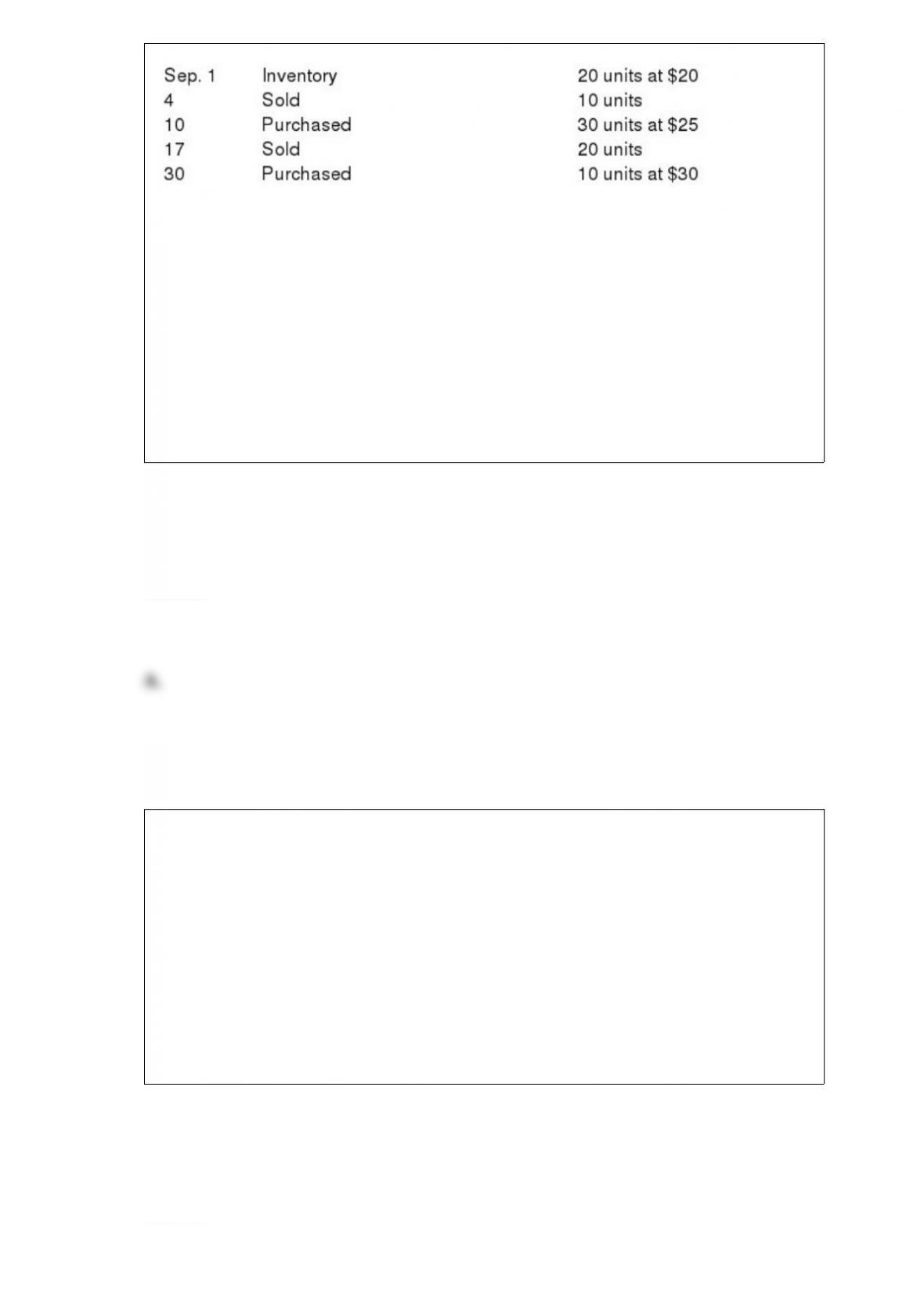
If Addison uses FIFO, the cost of the ending merchandise inventory on September 30 is
A.$800
B.$650
C.$750
D.$700
Answer:
A debit or credit memo describing entries in the company’s bank account may be
enclosed with the bank statement. An example of a credit memo is
A.deposited checks returned for insufficient funds
B.a promissory note left for collection
C.a service charge
D.notification that a customer’s check for $375 was recorded by the company as $735
on the deposit ticket
Answer:

Which of the following accounts usually has a debit balance?
A.Purchase Discounts
B.Sales Tax Payable
C.Allowance for Doubtful Accounts
D.Freight-In
Answer:
A pension plan which requires the employer to make annual pension contributions, with
no promise to employees regarding future pension payments, is termed
A.funded
B.unfunded
C.defined benefit
D.defined contribution
Answer:
The board of directors declared cash dividends totaling $252,000 during the current
year. The comparative balance sheet indicates dividends payable of $48,000 at the
beginning of the year and $63,000 at the end of the year. What was the amount of cash
payments to stockholders during the year?
Answer:
Florida Keys Construction installs swimming pools. They calculate that warranty
obligations are 3% of gross sales. For the year just ending Florida Keys’ gross sales
were $1,450,000. Due to previous quarter recognitions, the Warranty Liability account
has a credit balance of $28,700. Determine the year’s total warranty liability and
journalize any necessary value to establish the year’s liability at December 31st.
ans: Due to sales, $1,450,000, warranty liability is $43,500 ($1,450,000 x 3%). Since
$28,700 has already been recognized, $14,800 (or $43,500 – $28,700) must still be
recognized.
Answer:
Describe three inventory cost flow assumptions and how they impact the financial
statements.
Answer:
Journalize the following transactions for Armour Inc. using both the periodic inventory
system and the perpetual inventory system, presented in a side-by-side format shown at
the end of this exercise.
Oct.7 Sold merchandise on credit to Rondo Distributors, terms n/30, FOB destination,
$1,200; the cost of the merchandise was $720.
Oct. 8 Purchased merchandise, $10,000, terms FOB shipping point, 2/15, n/30, with
prepaid freight charges of $525 added to the invoice.
Answer:
Master Designs Company has cash flows for operating activities of $350,000. Cash
flows used for investments in property, plant, and equipment totaled $65,000, of which
70% of this investment was used to replace machinery to maintain existing capacity.
What is the free cash flow for Master Designs?
Answer:
Identify the three main advantages of a computerized accounting system over a manual
accounting system.
Answer:
Given the following: Beginning capital $ 58,000
Ending capital $ 30,000
Owner’s withdrawals $ 25,000
Calculate net income or net loss.
Answer:
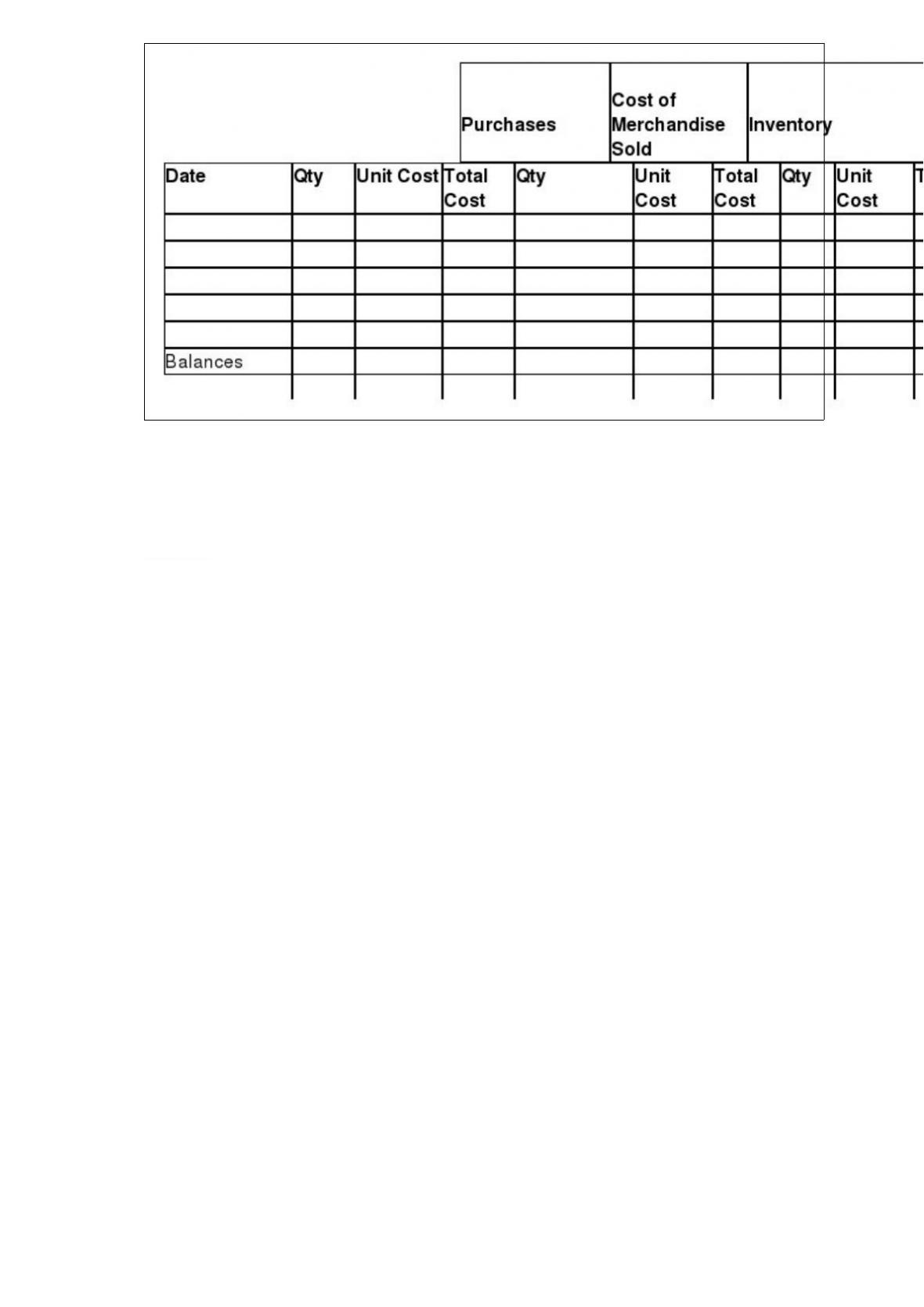
Beginning inventory, purchases and sales data for widgets are as follows:
Complete the inventory cost card assuming the business maintains a perpetual
inventory system and calculates the cost of merchandise sold and ending inventory
using LIFO.
Answer:
Prepare a multiple-step income statement for Armour Co. from the following data for
the year ended December 31, 2014.
Sales, $790,000; cost of merchandise sold, $330,000; administrative expenses, $35,000;
interest expense, $20,000; rent revenue, $25,000; sales returns and allowances,
$35,000; selling expenses, $50,000.
Answer:
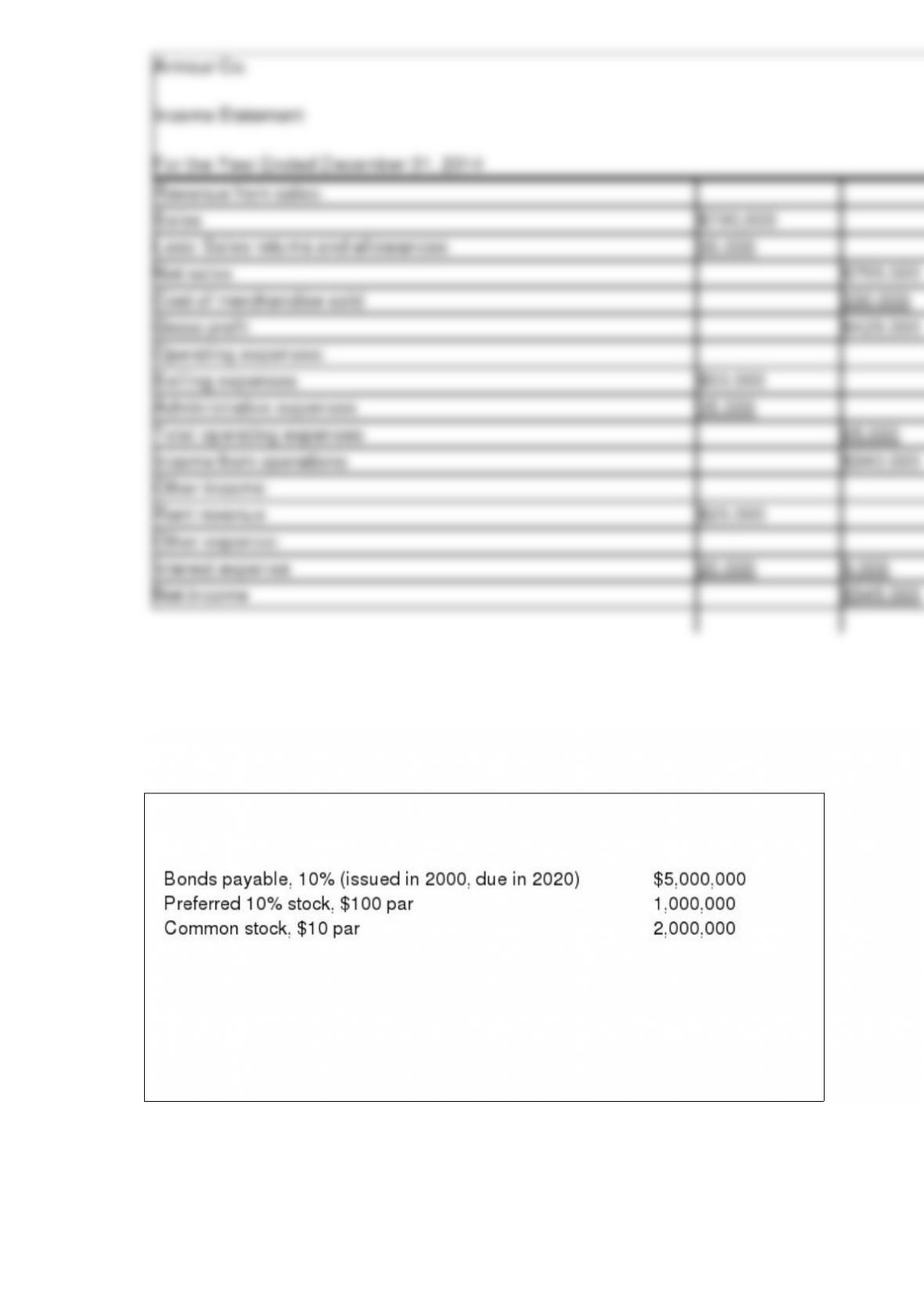
The balance sheet for Borglum Company at the end of the current fiscal year indicated
the following:
Income before income tax was $1,500,000 and income taxes were $200,000, for the
current year. Cash dividends paid on common stock during the current year totaled
$150,000. The common stock was selling for $70 per share at the end of the year.
Determine each of the following:
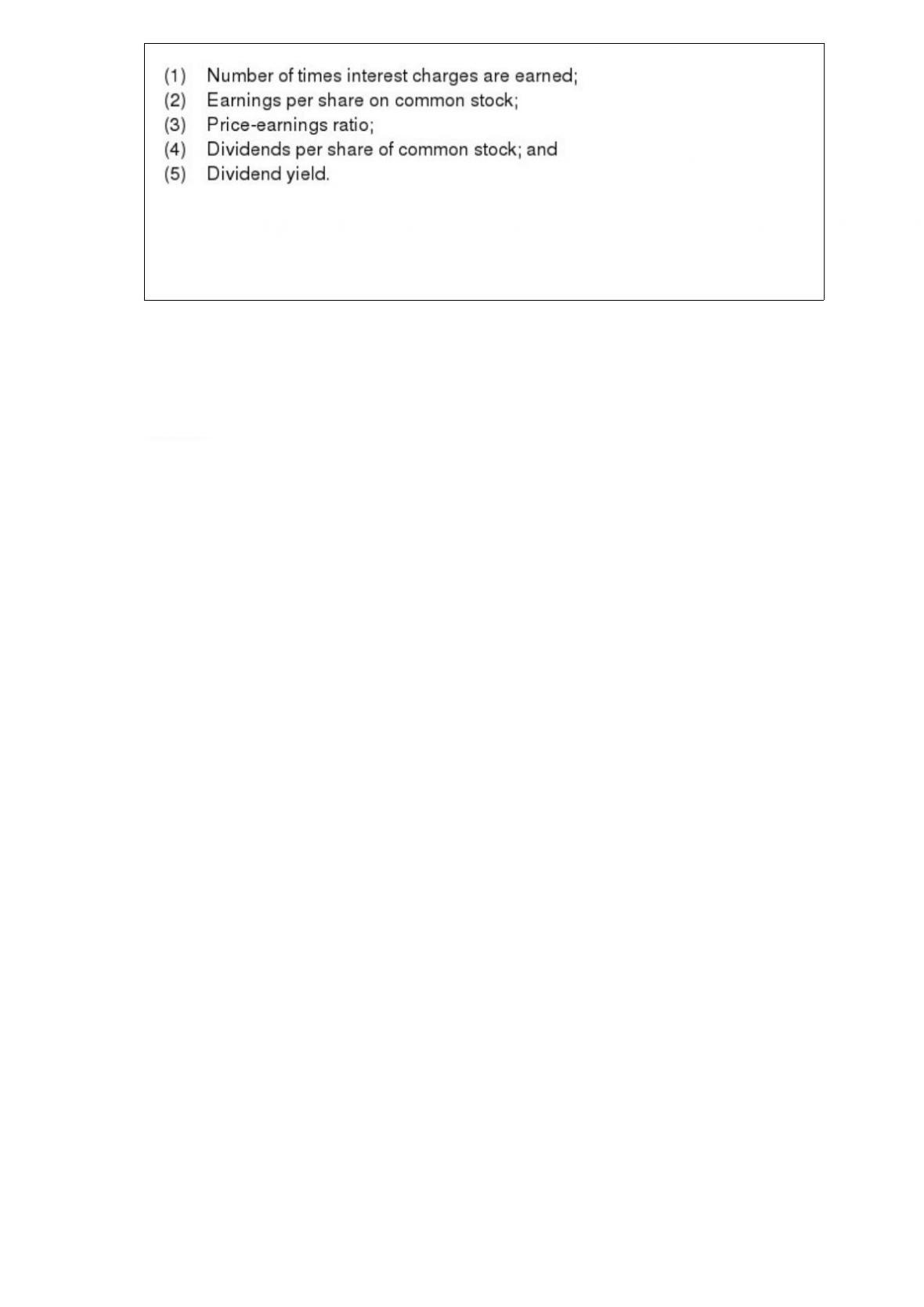
Round to one decimal place except earnings per share and dividends per share, which
should be rounded to two decimal places.
Answer:
Using the variable cost concept determine the selling price for 30,000 units using the
following data: Variable cost per unit $15.00, total fixed costs $90,000 and desired
profit $150,000.
Answer:
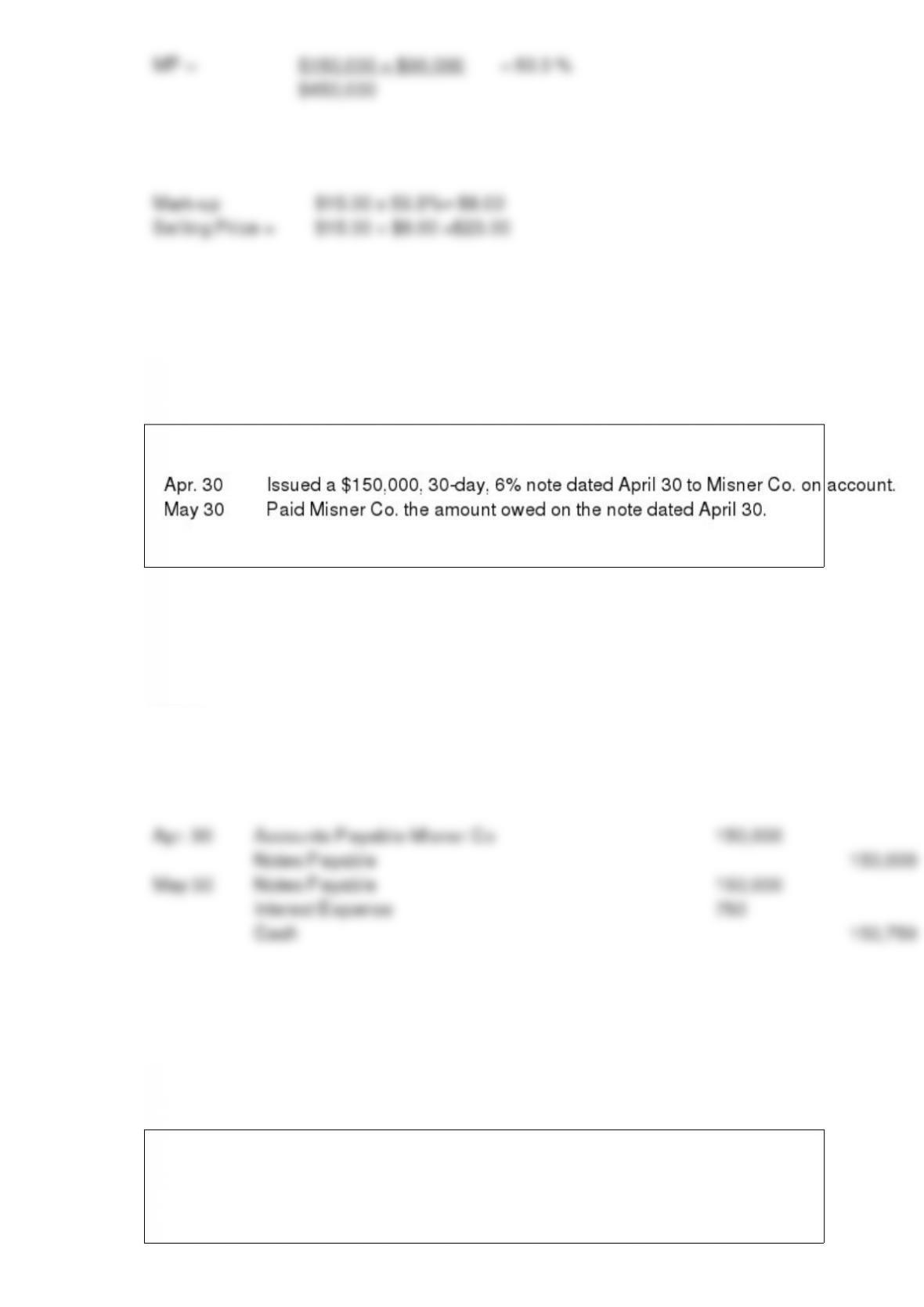
Journalize the following, assuming a 360-day year is used for interest calculations:
Answer:
On October 1, 2012, Marcus Corporation purchased $20,000 of 6% bonds of Roberts
Corporation, due in 8 1/2 years. The bonds were purchased at a price of $17,561 plus
interest of $300 accrued from July 1, 2012, the date of the last semi-annual interest
payments. Journalize the purchase.
Answer:
A $500,000 bond issue on which there is an unamortized discount of $35,000 is
redeemed for $475,000. Journalize the redemption of the bonds.
Answer:
After all adjustments have been made, but before the accounts have been closed, the
following balances were taken from the ledger of Ramona’s Designs:
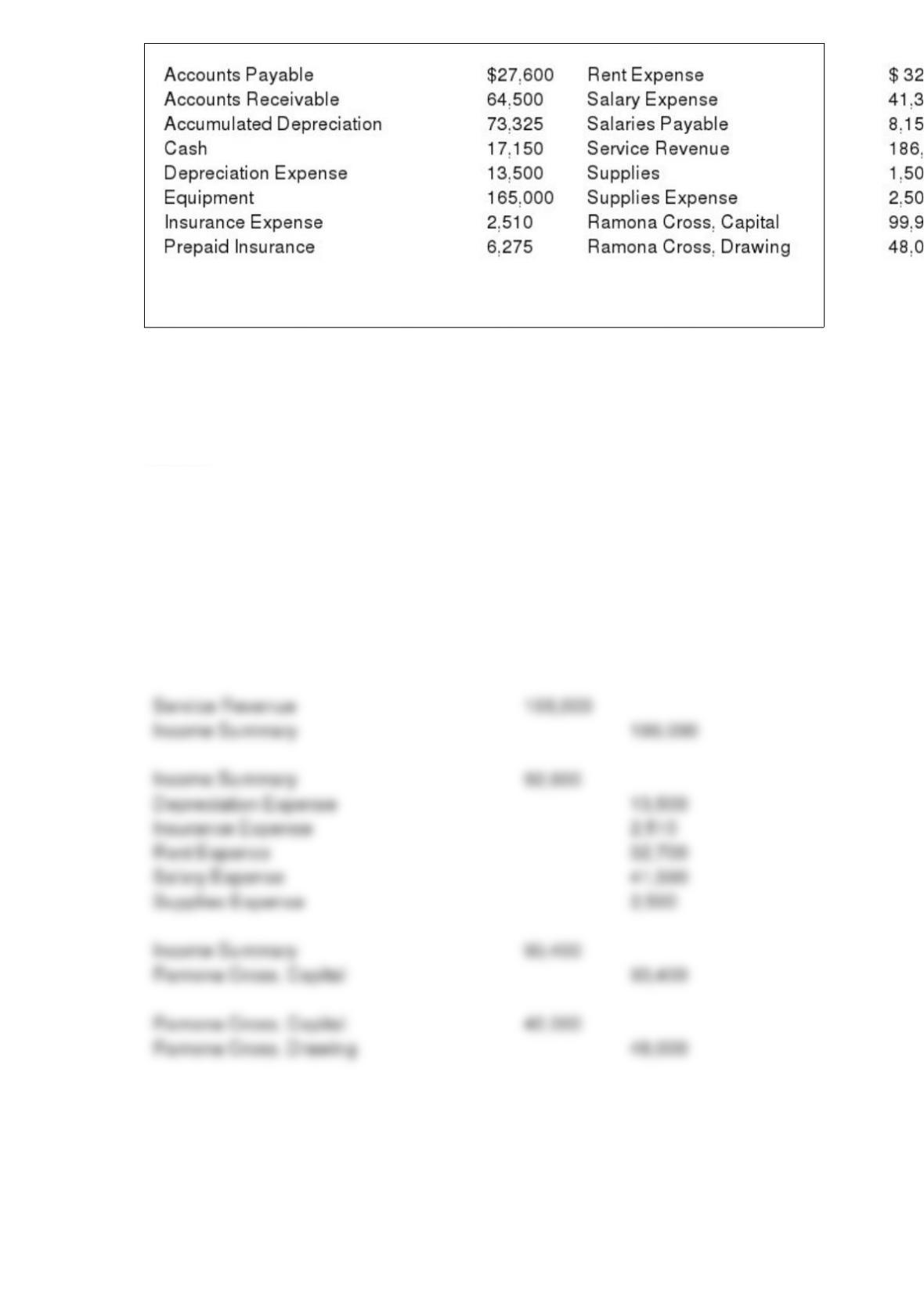
Journalize the entries to close the appropriate accounts.
Answer:
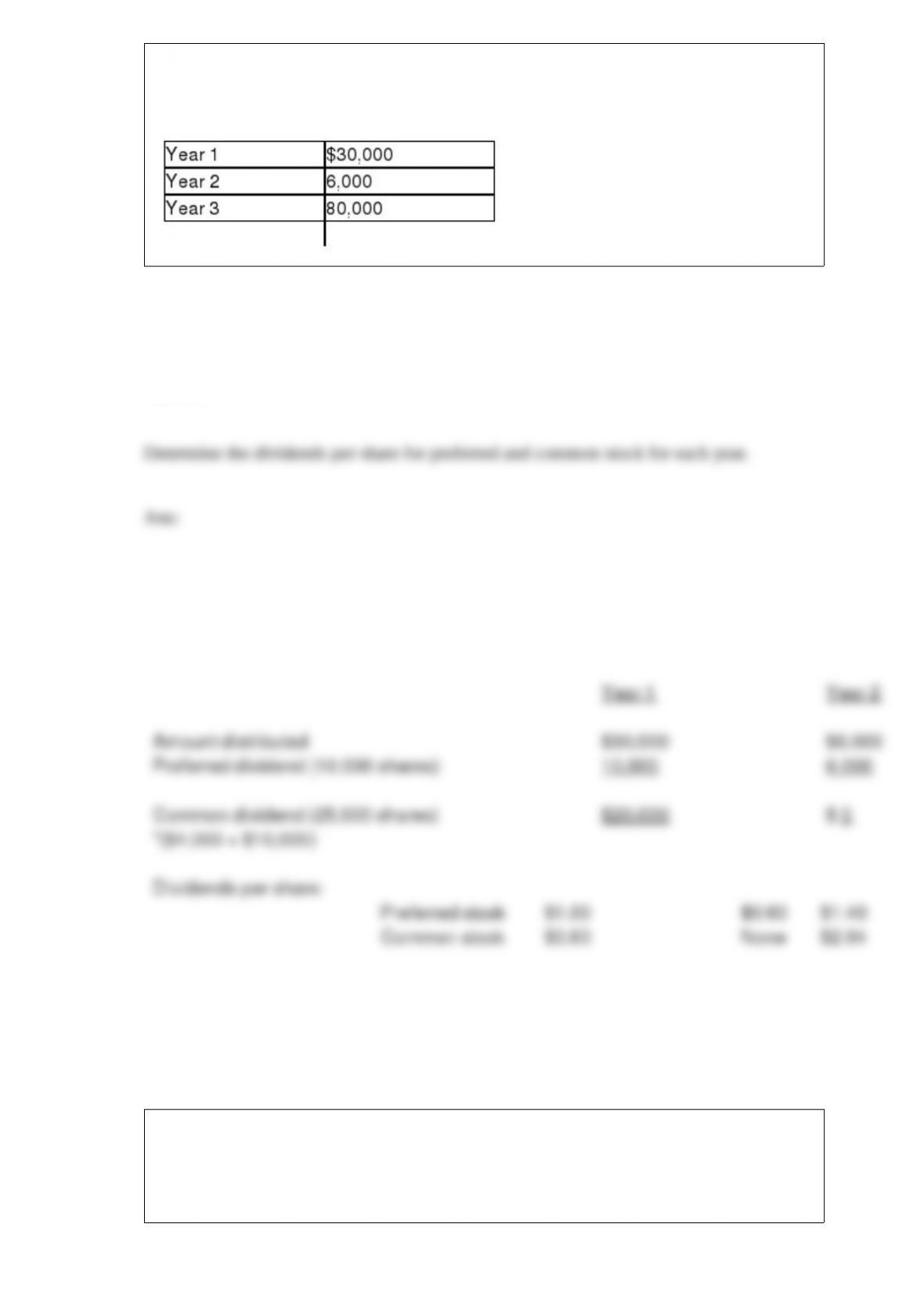
Macy Company has 10,000 shares of 2% cumulative preferred stock of $50 par and
25,000 shares of $75 par common stock. The following amounts were distributed as
dividends:
Answer:
On July 1 of the current year, the assets and liabilities of John Wong, DVM, are as
follows: Cash, $27,000; Accounts Receivable, $12,300; Supplies, $3,100; Land,
$35,000; Accounts Payable, $13,900. What is the amount of owner’s equity (John
Wong’s capital) as of July 1 of the current year?
Answer: