COMPREHENSIVE EXAMINATION A
PART 1
(Chapters 1-6)
Problem A-I — Multiple Choice.
Choose the best answer for each of the following questions and enter the identifying
letter in the space provided.
____ 1. How does failure to record accrued revenue distort the financial reports?
a. It understates revenue, net income, and current assets.
b. It understates net income, stockholders’ equity, and current liabilities.
c. It overstates revenue, stockholders’ equity, and current liabilities.
d. It understates current assets and overstates stockholders’ equity.
____ 2. A contingent liability which is normally accrued is
a. notes receivable discounted.
b. accommodation endorsements on customer notes.
c. additional compensation that may be payable on a dispute now being
arbitrated.
d. estimated claims under a service warranty on new products sold.
____ 3. Which of the following items is a current liability?
a. Bonds due in three months (for which there is an adequate sinking fund
classified as a long-term investment).
b. Bonds due in three years.
c. Bonds (for which there is an adequate appropriation of retained earnings)
due in eleven months.
d. Bonds to be refunded when due in eight months, there being no doubt
about the marketability of the refunding issue.
____ 4. On June 15, 2014 Stine Corporation accepted delivery of merchandise which
it purchased on account. As of June 30 Stine had not recorded the
transaction or included the merchandise in its inventory. The effect of this
error on its balance sheet for June 30, 2014 would be
a. assets and stockholders’ equity were overstated but liabilities were not
affected.
b. stockholders’ equity was the only item affected by the omission.
c. assets and liabilities were understated but stockholders’ equity was not
affected.
d. assets and stockholders’ equity were understated but liabilities were not
affected.
____ 5. Reversing entries are most commonly used in relation to year-end adjusting
entries that
a. allocate the expired portion of a depreciable asset to expense.
b. amortize intangible assets.
c. provide for bad debt expense.
d. accrue interest revenue on notes receivable.
Comprehensive Exam A
A-2
____ 6. Of the following adjusting entries, which one would cause an increase in
assets at the end of the period?
a. The entry to record the earned portion of rent received in advance.
b. The entry to accrue unrecorded interest expense.
c. The entry to accrue unrecorded interest revenue.
d. The entry to record expiration of prepaid insurance.
____ 7. Why is it necessary to make adjusting entries?
a. The accountant has made errors in recording external transactions.
b. Certain facts about the affairs of the business are not included in the
ledger as built up from external transactions.
c. The accountant wants to show the largest possible net income for the
period.
d. The accountant wants to show the net cash flow for the year.
____ 8. Notes to financial statements should not be used to
a. describe the nature and effect of a change in accounting principles.
b. identify substantial differences between book and tax income.
c. correct an improper financial statement presentation.
d. indicate basis for asset valuation.
____ 9. Consistency is best demonstrated when
a. expenses are reported as charges against the period in which incurred.
b. the effect of changes in accounting methods is properly disclosed.
c. extraordinary gains and losses are not reported on the income statement.
d. accounting procedures are adopted which give a consistent rate of net
income.
____ 10. The current assets section of a balance sheet should never include
a. a receivable from a customer not collectible for over one year.
b. the premium paid on short-term bond investment.
c. goodwill arising from the purchase of a going business.
d. customers’ accounts with credit balances.

Comprehensive Exam A
A-3
Problem A-II — Adjusting and Reversing Entries.
The following list of accounts and their balances represents the unadjusted trial balance
of Alt Company at December 31, 2014:
Cash $ 27,290
Equity Investments (trading) 60,000
Accounts Receivable 69,000
Allowance for Doubtful Accounts $ 500
Inventory 54,720
Prepaid Rent 36,000
Plant Assets 160,000
Accumulated Depreciation-Plant Assets 14,740
Accounts Payable 11,370
Bonds Payable 90,000
Common Stock 170,000
Retained Earnings 97,180
Sales Revenue 214,800
Cost of Goods Sold 154,400
Freight-Out 11,000
Salaries and Wages Expense 32,000
Interest Expense 2,040
Rent Revenue 21,600
Miscellaneous Expense 890
Insurance Expense 12,850
$620,190 $620,190
Additional Data:
Problem A–II — (cont.)
1. The balance in the Insurance Expense account contains the premium costs of three
policies:
Policy 1, remaining cost of $2,550, 1-yr. term, taken out on May 1, 2013;
Policy 2, original cost of $9,000, 3-yr. term, taken out on Oct. 1, 2014;
Policy 3, original cost of $1,300, 1-yr. term, taken out on Jan. 1, 2014.
2. On September 30, 2014, Alt received $21,600 rent from its lessee for an eighteen
month lease beginning on that date.
3. The regular rate of depreciation is 10% per year. Acquisitions and retirements during
a year are depreciated at half this rate. There were no purchases during the year. On
December 31, 2013, the balance of the Plant and Equipment account was $220,000.
4. On December 28, 2014, the bookkeeper incorrectly credited Sales Revenue for a
receipt on account in the amount of $20,000.
5. At December 31, 2014, salaries and wages accrued but unpaid were $4,200.
6. Alt estimates that 1% of sales will become uncollectible.
7. On August 1, 2014, Alt purchased, as a short-term investment, 60 $1,000, 6% bonds
of Allen Corp. at par. The bonds mature on August 1, 2015. Interest payment dates
are July 31 and January 31.
Comprehensive Exam A
A-4
8. On April 30, 2014, Alt rented a warehouse for $3,000 per month, paying $36,000 in
advance.
Instructions
(a) Record the necessary correcting and adjusting entries.
(b) Indicate which of the adjusting entries may be reversed at the beginning of the next
accounting period.
Comprehensive Exam A
A-5
Problem A-III — Key Conceptual Terms.
Various accounting assumptions, principles, constraints, and characteristics are listed
below. Select those which best justify the following accounting procedures and indicate
the corresponding letter(s) in the space(s) provided. A letter may be used more than
once or not at all.
a. Historical cost f. Economic entity k. Revenue recognition
b. Relevance g. Cost constraint l. Full disclosure
c. Monetary unit h. Conservatism m. Faithful
d. Going concern i. Periodicity representation
e. Consistency j. Expense recognition
____ 1. Chose the solution that will be least likely to overstate assets or income.
____ 2. Describing the depreciation methods used in the financial statements.
____ 3. Applying the same accounting treatment to similar accounting events.
____ 4. The quality which helps users make predictions about present, past, and
future events.
____ 5. Recording a transaction when goods or services are exchanged for cash or
claims to cash.
____ 6. Preparing consolidated statements.
____ 7. Information must make a difference or a company need not disclose it.
____ 8. Provides the figure at which to record a liability.
____ 9. The preparation of timely reports on continuing operations.
____ 10. Accrual accounting (do not use “going concern”).
____ 11. Reporting those items which are significant enough to affect decisions. Select
two.
____ 12. Additivity of financial statement figures relating to different time periods.
____ 13. Ignoring the phenomenon of price-level changes (do not use “historical cost”).
____ 14. Not reporting assets at liquidation prices (do not use “historical cost”).
____ 15. Characterized by completeness, neutrality, and being free from error.
____ 16. Establishment of an allowance for doubtful accounts.
____ 17. Use of estimating procedures for amortization policies. Select two (do not use
“periodicity”) (17 and 18).
____ 18. See item 17 above.
Comprehensive Exam A
A-6
Problem A-IV — Balance Sheet Form.
List the corrections needed to present in good form the balance sheet below. Errors
include misclassifications, lack of adequate disclosure, and poor terminology. Do not
concern yourself with the arithmetic. If an item can be classified in more than one
category, select the category most favored by the authors of your textbook.
Tanner Corporation
Balance Sheet
For the year ended December 31, 2014
Assets
Current Assets:
Cash $ 18,000
Equity investments−trading (fair value, $32,000) 27,000
Accounts receivable 75,000
Inventory 60,000
Supplies inventory 3,000
Investment in subsidiary company 60,000 $243,000
Investments:
Treasury stock 78,000
Tangible Fixed Assets:
Buildings and land 213,000
Less: Reserve for depreciation 60,000 153,000
Deferred Charges:
Discount on bonds payable 3,000
Other Assets:
Cash surrender value of life insurance 54,000
$531,000
Liabilities and Capital
Current Liabilities:
Accounts payable $ 45,000
Reserve for income taxes 42,000
Customer’s accounts with credit balances 3 $ 87,003
Long-Term Liabilities:
Bonds payable 120,000
Total Liabilities 207,003
Capital Stock:
Capital stock 225,000
Earned surplus 74,997
Cash dividends declared 24,000 323,997
$531,000

Comprehensive Exam A
A-7
Problem A-V — Balance Sheet and Income Statement Classifications.
Specify, to the left of each account, the letter of the financial statement classification the
account would appear in. Use only the classifications shown.
Balance Sheet Income and Retained Earnings
Statement
a. Current Assets j. Sales Revenue
b. Investments k. Cost of Goods Sold
c. Property, Plant, and Equipment l. Operating Expenses
d. Intangible Assets m. Other Revenues and Gains
e. Other Assets n. Other Expenses and Losses
f. Current Liabilities o. Extraordinary Item
g. Long-term Debt p. Retained Earnings Section
h. Capital Stock q. Not on the Statements
i. Retained Earnings
Account balances taken from the ledger of Morin Company on December 31, 2014
follow:
____ 1. Common Stock, $10 par _____ 16. Inventory
____ 2. Loss on Disposal of Equipment _____ 17. Salaries and Wages Expense
____ 3. Buildings _____ 18. Merchandise on order with supplier
____ 4. Office Expense _____ 19. Interest Revenue
____ 5. Allowance for Doubtful Accounts _____ 20. Selling Expenses
____ 6. Notes Payable (Short Term) _____ 21. Interest Expense
____ 7. Accum. Depreciation—Buildings _____ 22. Income Taxes Payable
____ 8. Mortgage Payable due 2016 _____ 23. Insurance Expense
____ 9. Depletion Expense _____ 24. Advertising Expense
____ 10. Freight-Out _____ 25. Equity Investments
____ 11. Sales Revenue _____ 26. Accounts Receivable
____ 12. Dividends _____ 27. Land
____ 13. Retained Earnings Dec. 31, _____ 28. Accounts Payable
2013
_____ 29. Error made in computing 2012
____ 14. Cash depreciation expense
____ 15. Sales Discounts _____ 30. Gain on Redemption of
Debt

Comprehensive Exam A
A-8
Problem A-VI — Future Value and Present Value.
In computing your answers to the cases below, you can round your answer to the
nearest dollar. Present value tables are provided on the next page.
Use the following information in answering Cases 1 and 2 below:
On January 1, 2008, Gray Company sold $900,000 of 10% bonds, due January 1, 2018.
Interest on these bonds is paid on July 1 and January 1 each year. According to the
terms of the bond contract, Gray must establish a sinking fund for the retirement of the
bond principal starting no later than January 1, 2016. Since Gray was in a tight cash
position during the years 2008 through 2013, the first contribution into the fund was
made on January 1, 2014.
Case 1: Assume that, starting with the January 1, 2014 contribution, Gray desires to
make a total of four equal annual contributions into this fund. Compute the
amount of each of these contributions assuming the interest rate is 8%
compounded annually.
Case 2: Assume, instead, that starting with the January 1, 2016 contribution, Gray
desires to make a total of five equal semiannual contributions into this fund.
Compute the amount of each of these contributions assuming the annual
interest rate is 12%, compounded semiannually.
Case 3: On January 2, 2014, Nelson Company loaned $100,000 to Holt Company. The
terms of this loan agreement stipulate that Holt is to make 5 equal annual
payments to Nelson at 10% interest compounded annually. Assume the
payments are to begin on December 31, 2014. Compute the amount of each of
these payments.
Case 4: Jim Marsh, a lawyer contemplating retirement on his 65th birthday, decides to
create a fund on an 8% basis which will enable him to withdraw $60,000 per
year beginning June 30, 2017, and ending June 30, 2021. To provide this fund,
he intends to make equal contributions on June 30 of each of the years 2012
through 2016.
(a) How much must the balance of the fund equal after the last contribution on
June 30, 2016 in order for him to satisfy his objective?
(b) What are each of his contributions to the fund?
Comprehensive Exam A
A-9
Table 1
Future Value of 1
Periods 6% 8% 9% 10% 12%
1 1.06000 1.08000 1.09000 1.10000 1.1200
2 1.12360 1.16640 1.18810 1.21000 1.2544
3 1.19102 1.25971 1.29503 1.33100 1.4049
4 1.26248 1.36049 1.41158 1.46410 1.5735
5 1.33823 1.46933 1.53862 1.61051 1.7623
Table 2
Present Value of 1
Periods 6% 8% 9% 10% 12%
1 0.94340 0.92593 0.91743 0.90909 0.8928
2 0.89000 0.85734 0.84168 0.82645 0.7971
3 0.83962 0.79383 0.77218 0.75132 0.7117
4 0.79209 0.73503 0.70843 0.68301 0.6355
5 0.74726 0.68058 0.64993 0.62092 0.5674
Table 3
Future Value of an Ordinary Annuity of 1
Periods 6% 8% 9% 10% 12%
1 1.00000 1.00000 1.00000 1.00000 1.0000
2 2.06000 2.08000 2.09000 2.10000 2.1200
3 3.18360 3.24640 3.27810 3.31000 3.3744
4 4.37462 4.50611 4.57313 4.64100 4.7793
5 5.63709 5.86660 5.98471 6.10510 6.3528
Table 4
Present Value of an Ordinary Annuity of 1
Periods 6% 8% 9% 10% 12%
1 0.94340 0.92593 0.91743 0.90909 0.8928
2 1.83339 1.78326 1.75911 1.73554 1.6900
3 2.67301 2.57710 2.53130 2.48685 2.4018
4 3.46511 3.31213 3.23972 3.16986 3.0373
5 4.21236 3.99271 3.88965 3.79079 3.6047
Table 5
Present Value of an Annuity Due of 1
Periods 6% 8% 9% 10% 12%
1 1.00000 1.00000 1.00000 1.00000 1.0000
2 1.94340 1.92593 1.91743 1.90909 1.8928
3 2.83339 2.78326 2.75911 2.73554 2.6900
4 3.67301 3.57710 3.53130 3.48685 3.4018
5 4.46511 4.31213 4.23972 4.16986 4.0373
Comprehensive Exam A
A-10
Solutions — Comprehensive Examination A
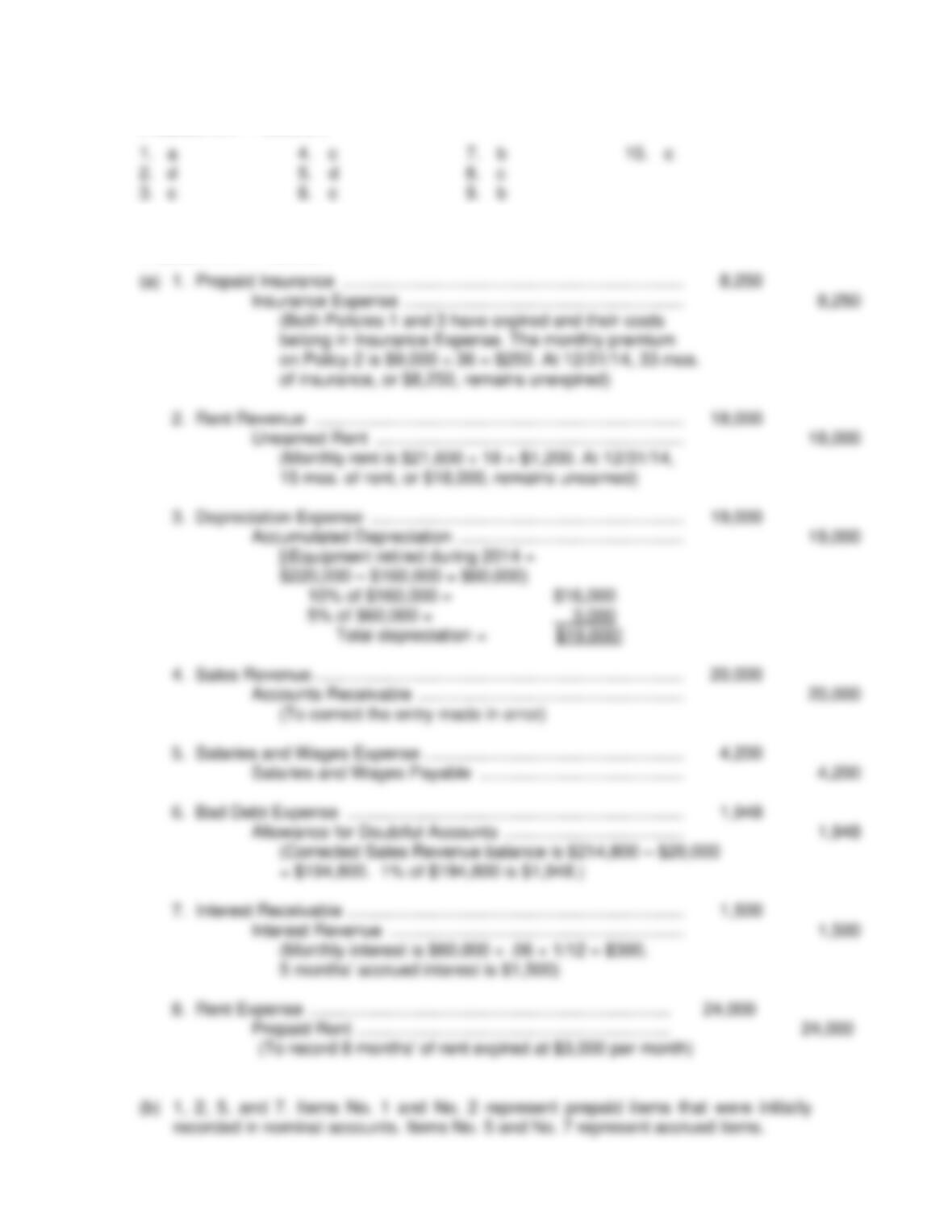
Problem A-I — Solution.
Problem A-II — Solution.
Comprehensive Exam A
A-11
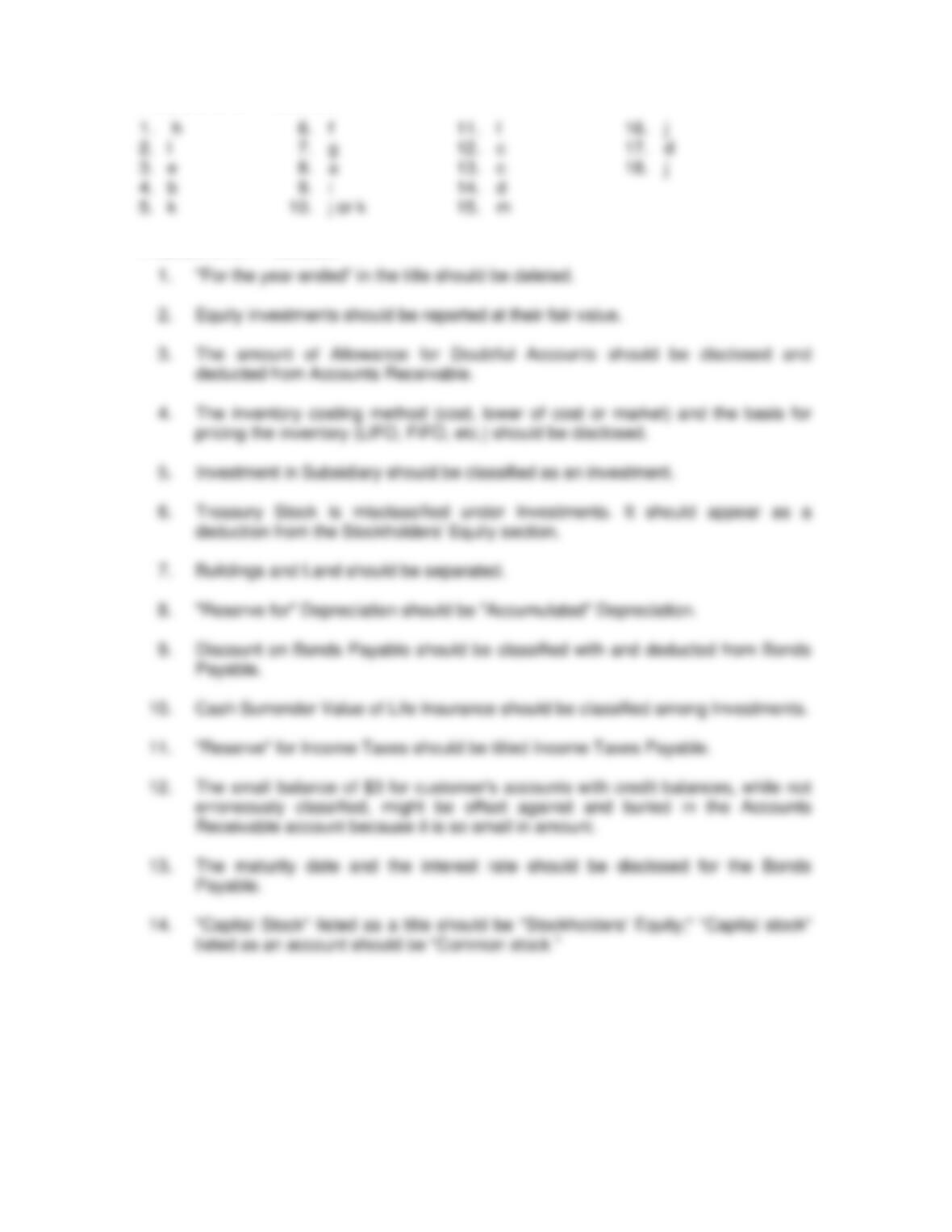
Problem A-III — Solution.
Problem A-IV — Solution.
Comprehensive Exam A
A-12
Problem A-V — Solution.
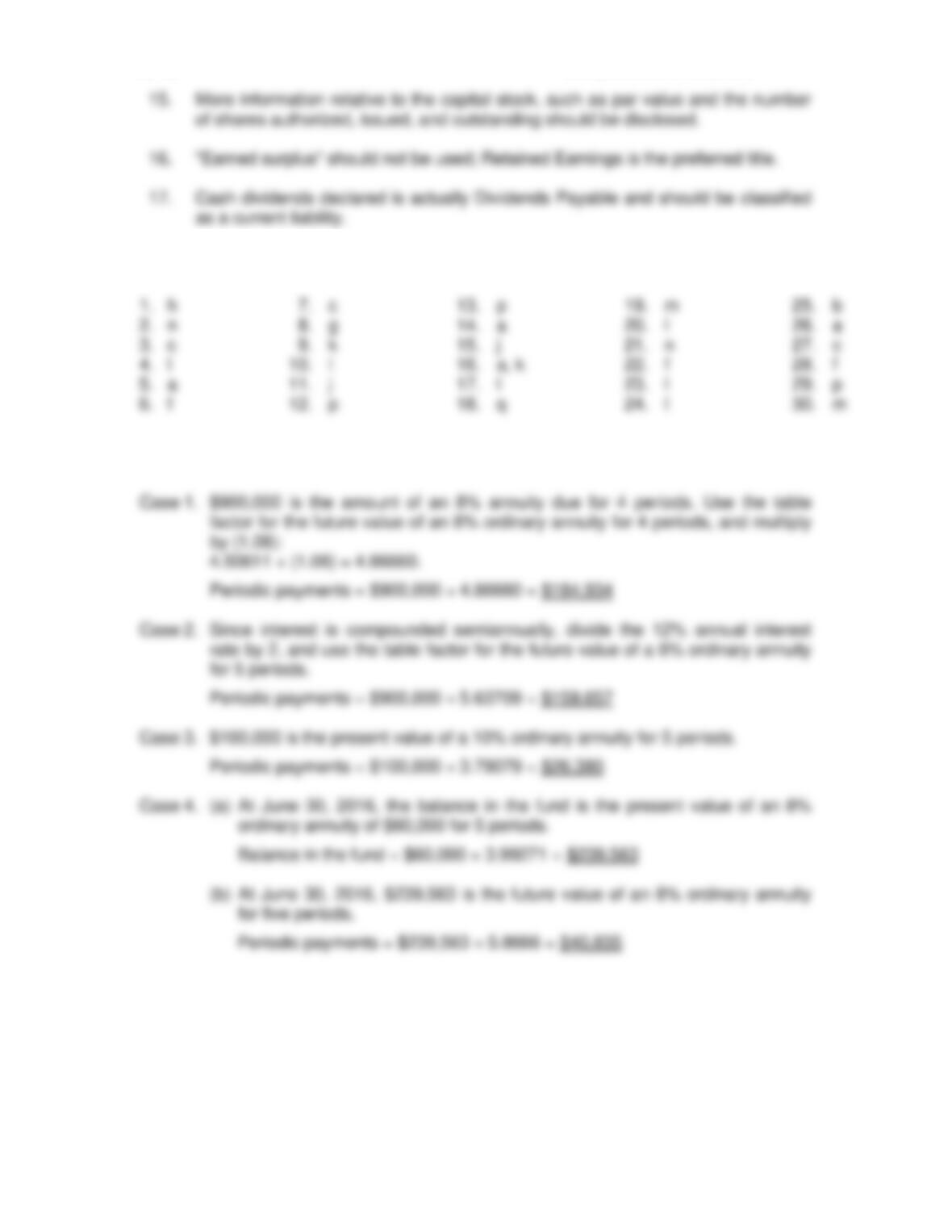
Problem A-VI — Solution.