9-101
Short Answer Questions

9-102
161.
Classify each of the following items as either:
A. Current liability
B. Long-term liability
C. Not a liability
1. 60-day promissory note
2. Payment of a 4-year term loan due this
year
3. Salaries payable
4. Debt guarantees
5. FICA taxes payable
6. Income taxes payable
7. Payment of a 30-year term loan due this
year
8. Payment of a 30-year term loan due next
year. (The company’s operating cycle is 2
months.)
9. Warranty work completed this year
10. Accounts payable
162.
Classify each of the following items as either:
A. Estimated liability
B. Contingent liability
C. Known liability
1. Lawsuit against the company
2. Warranty on products sold this year
3. Accounts payable
4. Income taxes payable
5. Vacation benefits
6. Accrued wages payable
7. Debt guarantees
8. Sales taxes payable
9. Payroll taxes payable
10. Unearned revenues
163.
Define liabilities and explain the difference between current and long-term liabilities.
164.
What are known current liabilities? Cite at least two examples of known current liabilities.
165.
Describe contingent liabilities and how to account for and/or report them.
166.
Describe employer responsibilities for reporting payroll taxes. (To the extent possible,
reference the form to be filed for each tax.)
167.
Explain how to calculate times interest earned and how it is used to analyze a company’s
risk.
168.
What is a short-term note payable? Explain the accounting issues related to notes
payable.
169.
Explain the responsibilities of and the accounting by employers for deductions from
employee payroll.
170.
Identify and explain the types of employer payroll taxes, both those that are withheld from
employees and those that are the responsibility of the employer.
171.
What are estimated liabilities? Cite at least two examples and explain why they are
classified as estimated liabilities.
9-109
172.
Identify and discuss the factors involved in computing federal income taxes withheld from
employees.
Essay Questions
173.
A company has income before interest expense and income taxes of $186,000, and its
interest expense is $55,000. Calculate the company’s times interest earned ratio.
174.
A company’s income before interest expense and income taxes is $302,400, and its
interest expense is $62,000. Calculate the company’s times interest earned ratio.
175.
A company’s income before interest expense and income taxes in 2016 and 2017 is
$225,000 and $250,000, respectively. Its interest expense was $45,000 for both years.
Calculate the company’s times interest earned ratio, and comment on its level of risk.
176.
A company’s income before interest expense and income taxes in 2016 and 2017 is
$487,500 and $427,000, respectively. Its fixed interest expense was $125,000 for both
years. Calculate the company’s times interest earned ratio, and comment on its level of
risk.
177.
Floral Depot’s income before interest expense and income taxes was $5,900 million, and
interest expense was $38 million. Calculate Floral Depot’s times interest earned.
178.
Kelso had income before interest expense and income taxes of $570 million and interest
expense of $37 million. Calculate Kelso’ times interest earned.
179.
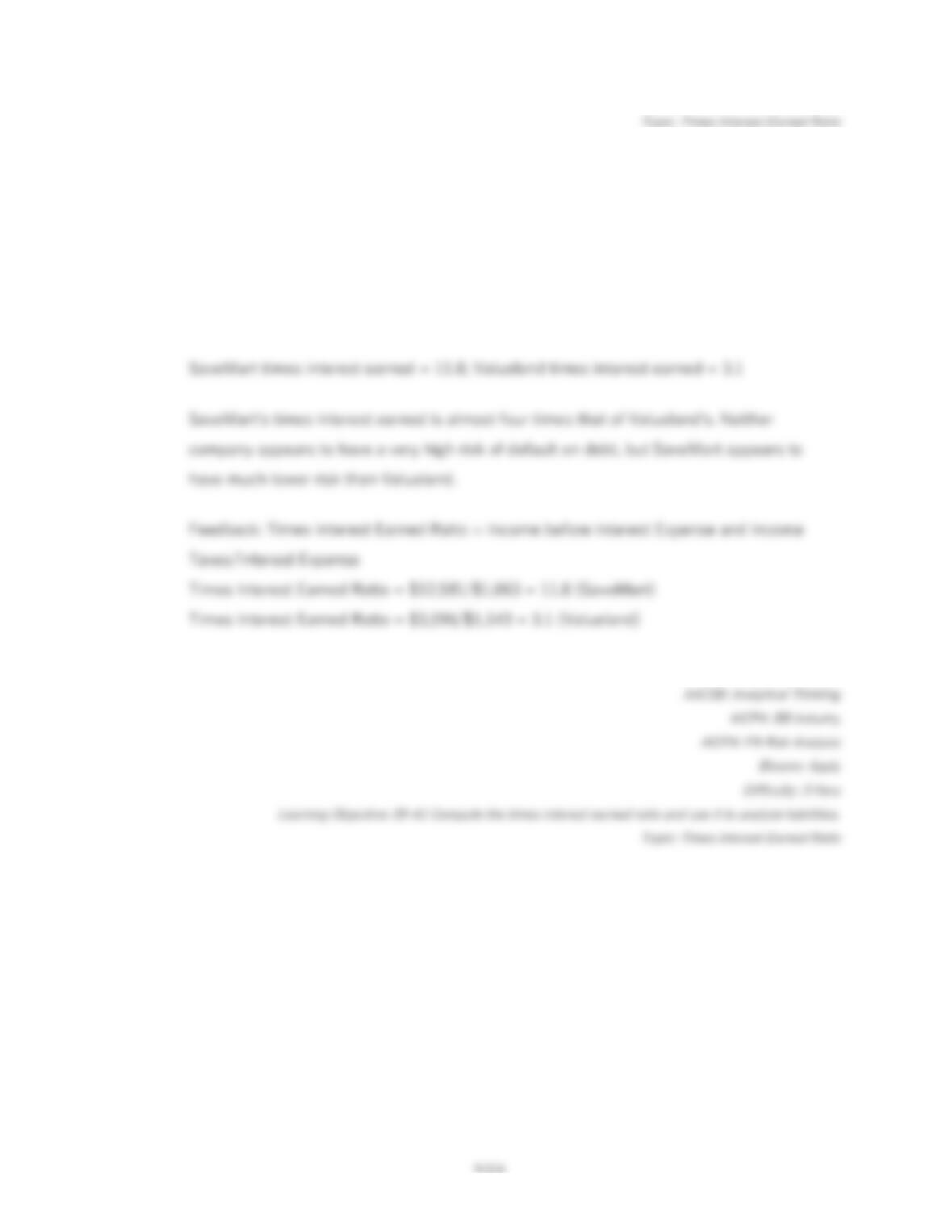
SaveMart had income before interest expense and income taxes of $12,581 million and
interest expense of $1,063 million. Valueland had income before interest expense and
income taxes of $3,596 million and interest expense of $1,143 million. Calculate the times
interest earned for each company and comment on the results.
180.
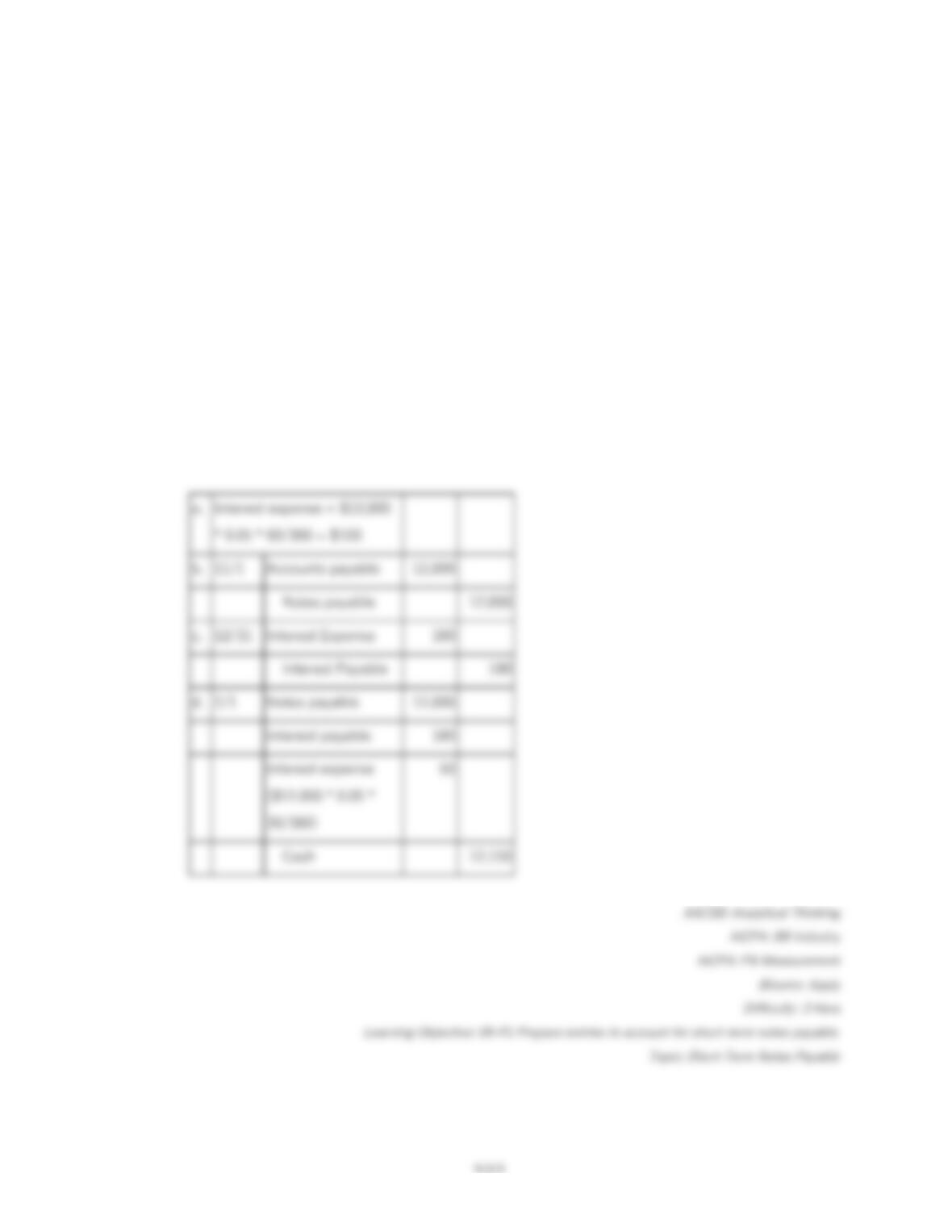
On November 1, Casey’s Snowboards signed a $12,000, 90-day, 5% note payable to cover
a past due account payable.
a. What amount of interest expense on this note should Casey’s Snowboards report on
year-end December 31?
b. Prepare Casey’s journal entry to record the issuance of the note payable.
c. Prepare Casey’s adjusting journal entry at the end of the year.
d. Prepare Casey’s journal entry to record the payment of the note on February 1 of the
following year.
181.
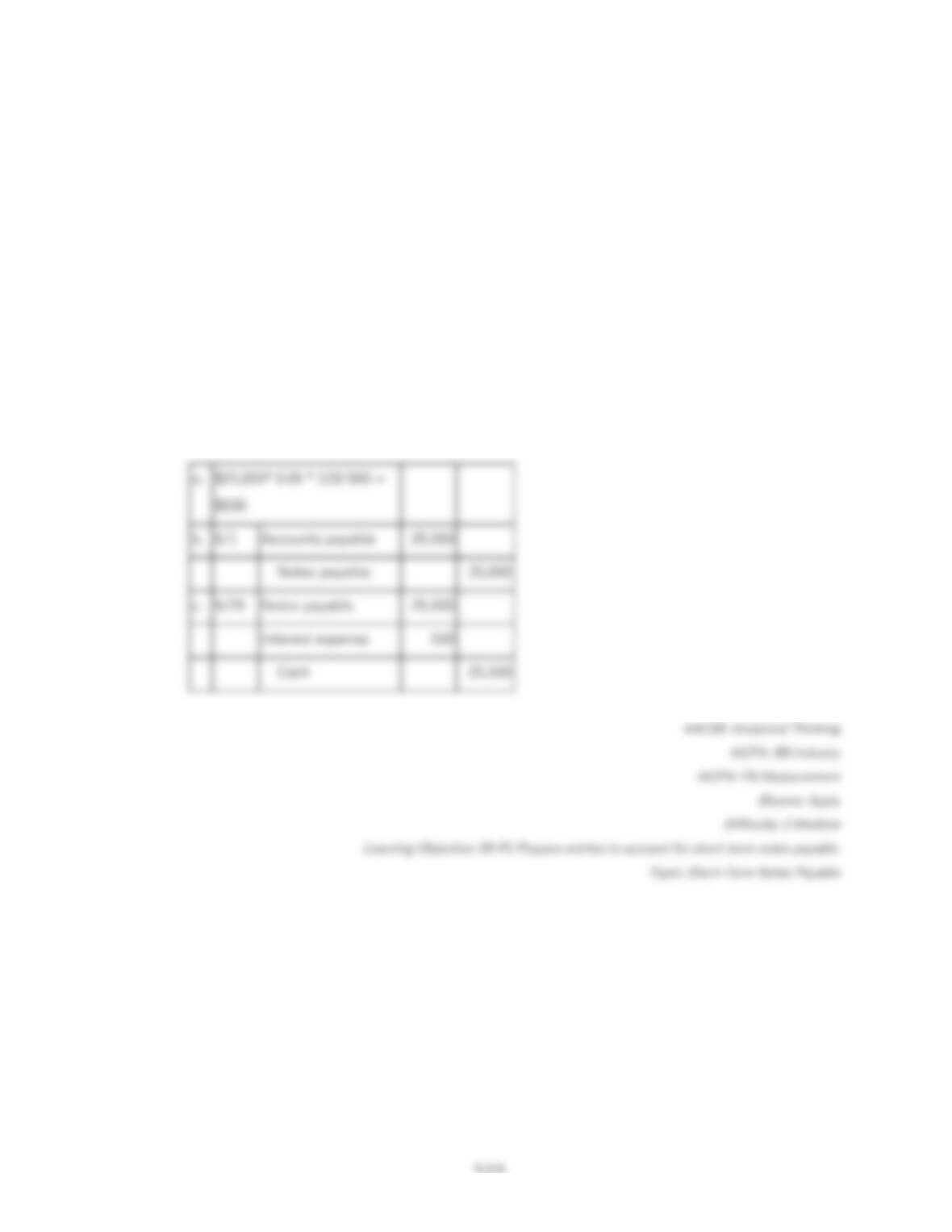
On June 1, Jasper Company signed a $25,000, 120-day, 6% note payable to cover a past
due account payable.
a. What is the total amount of interest to be paid on this note?
b. Prepare Jasper Company’s general journal entry to record the issuance of the note
payable.
c. Prepare Jasper Company’s general journal entry to record the payment of the note on
September 29.
182.
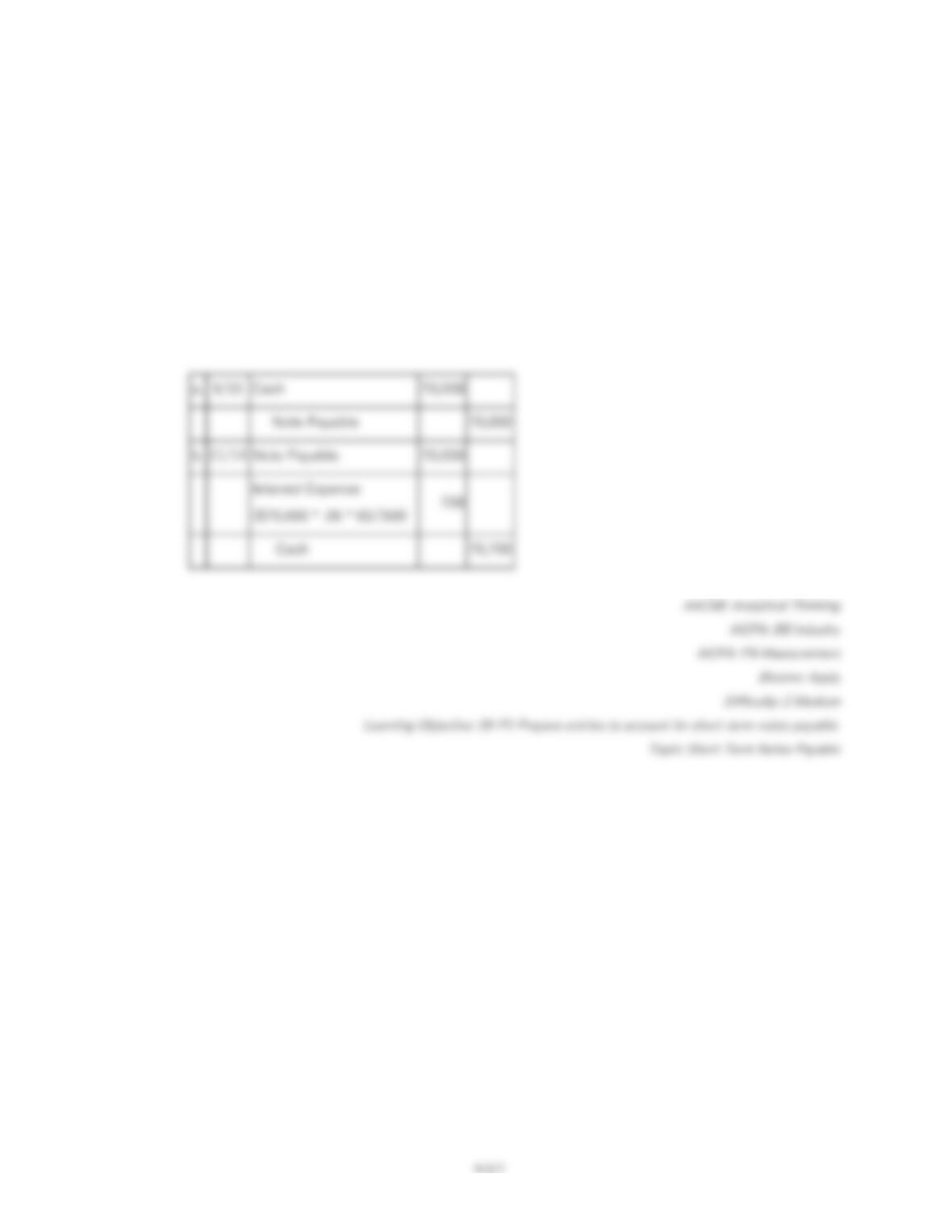
On September 15, SkateWorld borrowed $70,000 cash from Mutual Bank by signing a 6%,
60-day note payable.
a. Prepare SkateWorld’s journal entry to record the issuance of the note payable.
b. Prepare SkaetWorld’s journal entry to record the payment of the note at maturity.
183.
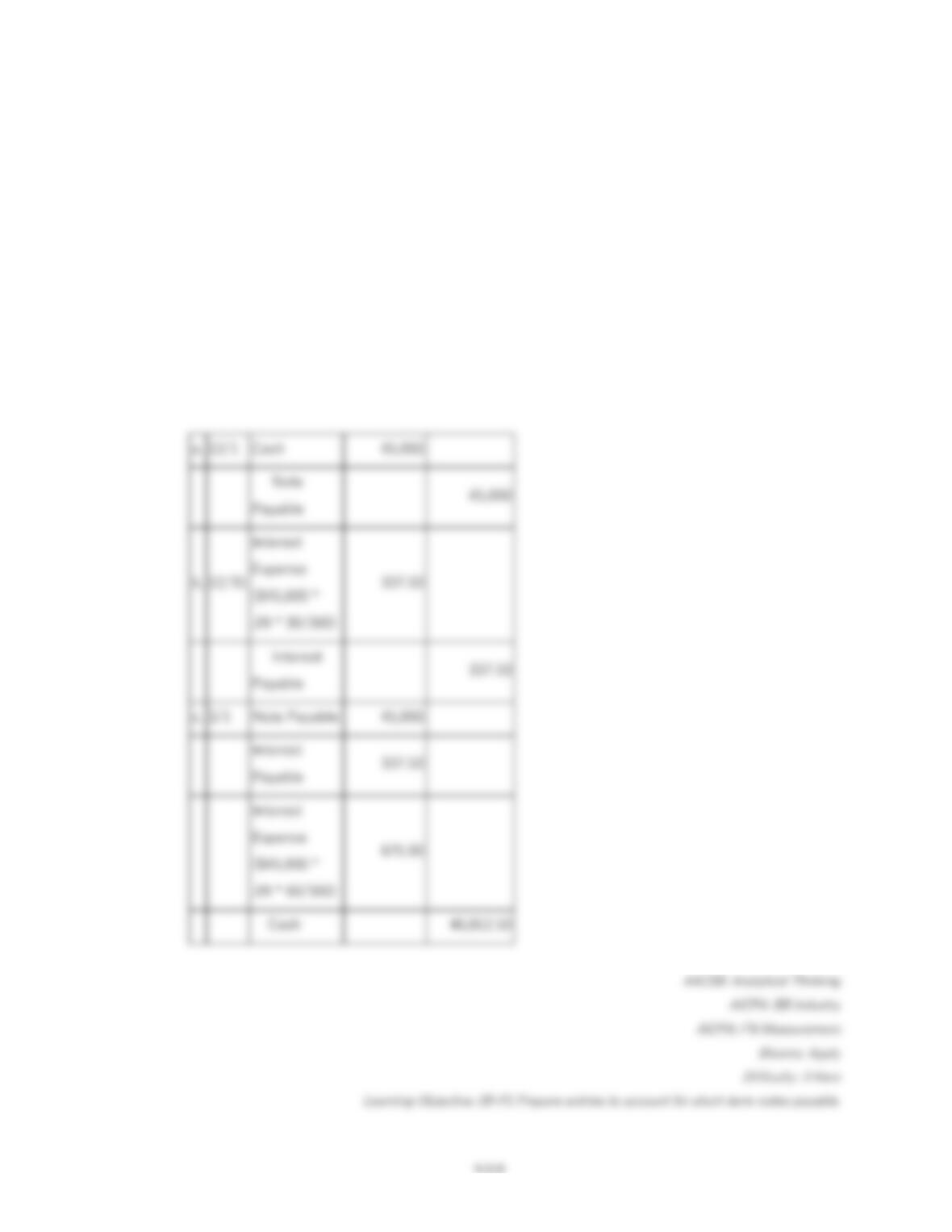
On December 1, Williams Company borrowed $45,000 cash from Second National Bank by
signing a 90-day, 9% note payable.
a. Prepare Williams’ journal entry to record the issuance of the note payable.
b. Prepare Williams’ journal entry to record the accrued interest due at December 31.
c. Prepare Williams’ journal entry to record the payment of the note on March 1 of the next
year.
184.
A company borrowed $60,000 by signing a 60-day, 5% note payable from its bank.
Compute the total cash payment due on the note’s maturity date.
185.
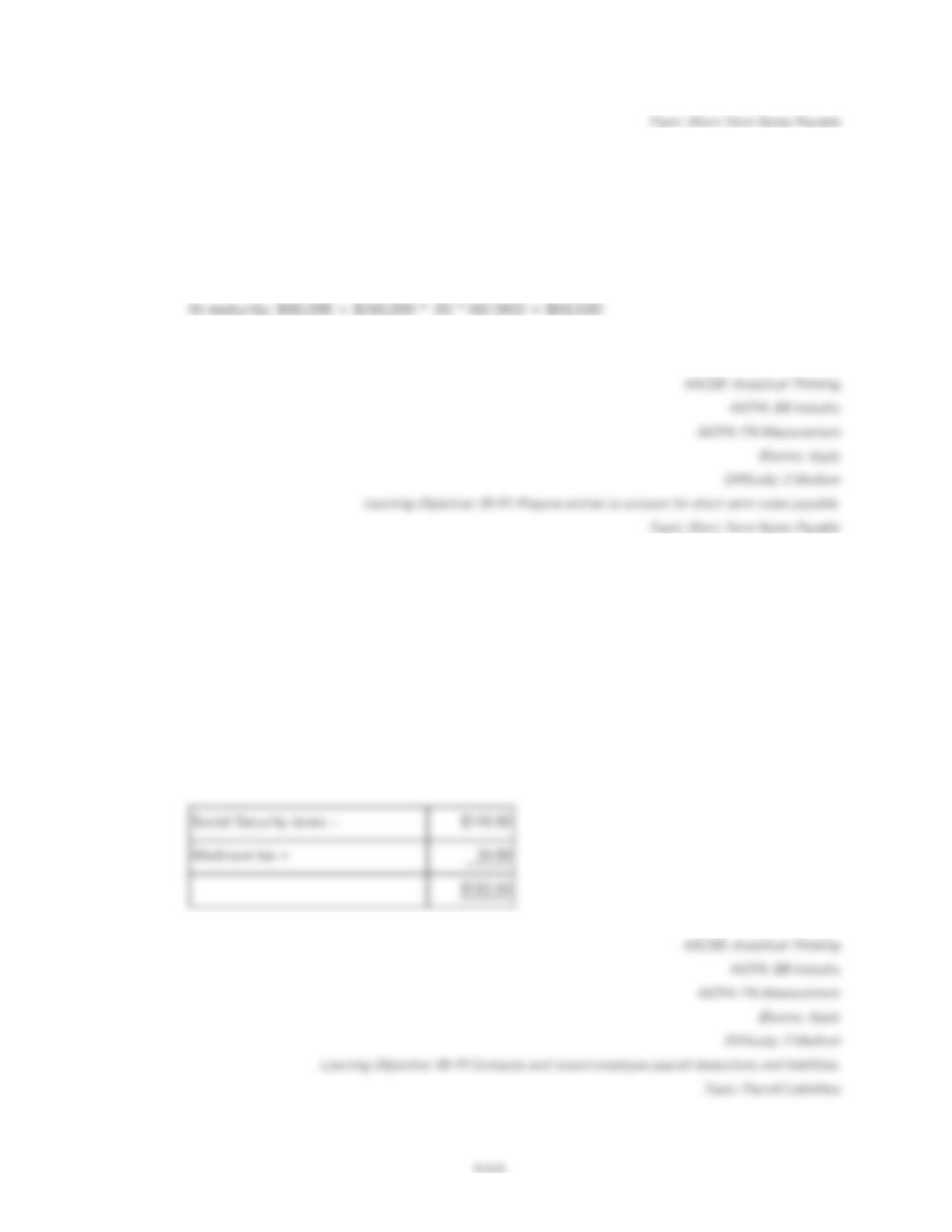
Calculate the total amount of FICA withholding for an employee whose pay is $2,400 for
the first pay period of the year. The tax rate for FICA—Social Security is 6.2% of the first
$118,500 of employee earnings per calendar year and the tax rate for FICA—Medicare is
1.45% of all earnings.
186.
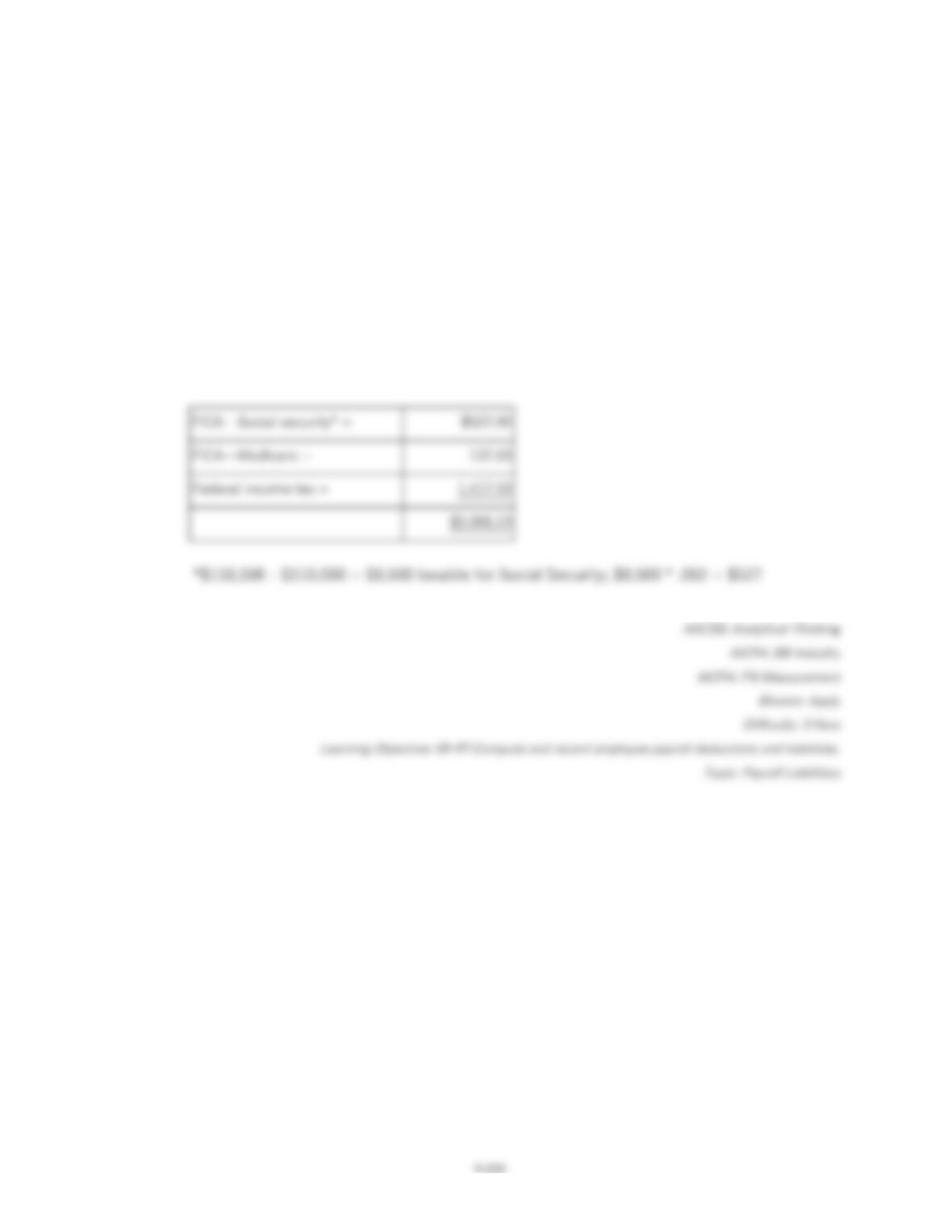
An employee earns $9,450 for the current period. The cumulative earnings of previous pay
periods is $110,000. Social security tax of 6.2% applies to the first $118,500 of employee
earnings per calendar year and Medicare tax of 1.45% applies to all earnings. Calculate the
total and individual amounts to be withheld for social security, Medicare and federal
income tax (15% of earnings).