51.
All of the following are true of known liabilities
except
:
52.
Accounts payable are:
53.
Amounts received in advance from customers for future products or services:
54.
When a company is obligated for sales taxes payable, it is reported as a(n):
55.
Which of the following do not apply to unearned revenues?
56.
If a company has advance ticket sales totaling $2,000,000 for the upcoming football
season, the receipt of cash would be journalized as:
57.
A contingent liability is:
58.
Contingent liabilities are recorded or disclosed unless they are:
59.
Contingent liabilities must be recorded if:
60.
Debt guarantees are:
61.
In the accounting records of a defendant, lawsuits:
62.
Uncertainties such as natural disasters are:
63.
The times interest earned ratio reflects:
64.
Interest expense is
not
:
65.
Times interest earned is calculated by:
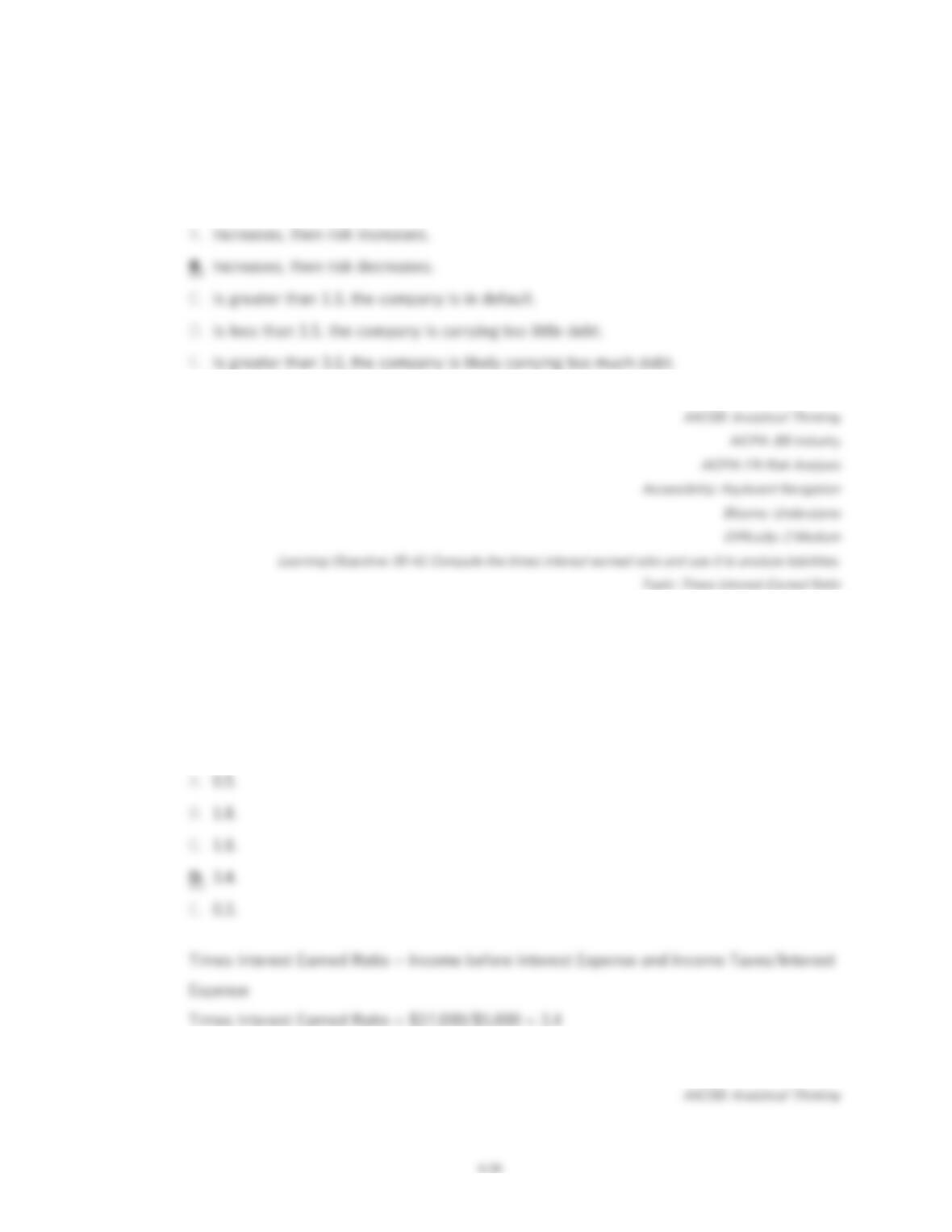
66.
If the times interest earned ratio:
67.
A company’s had fixed interest expense of $5,000, its income before interest expense and
income taxes is $17,000, and its net income is $9,400. The company’s times interest
earned ratio equals:
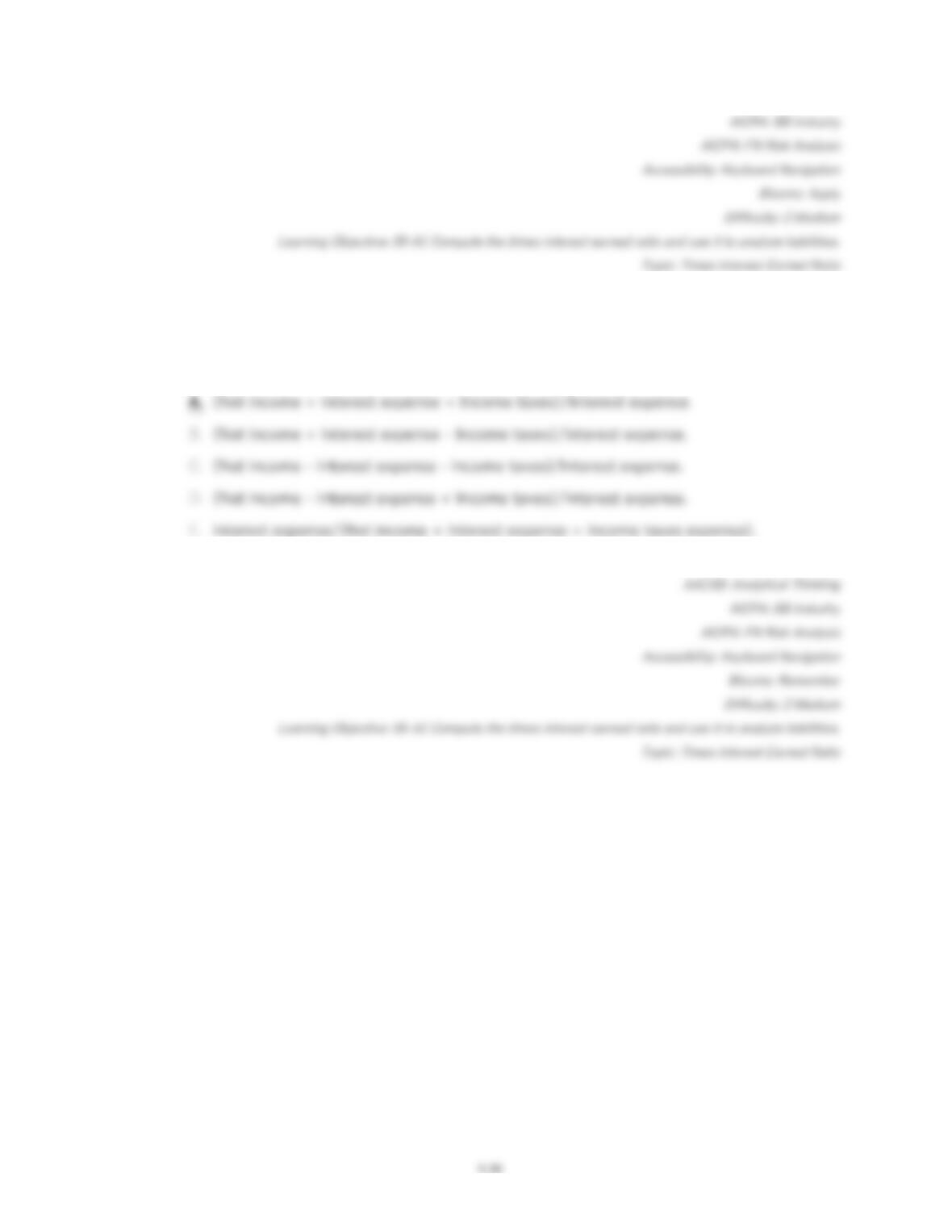
68.
The correct times interest earned computation is:
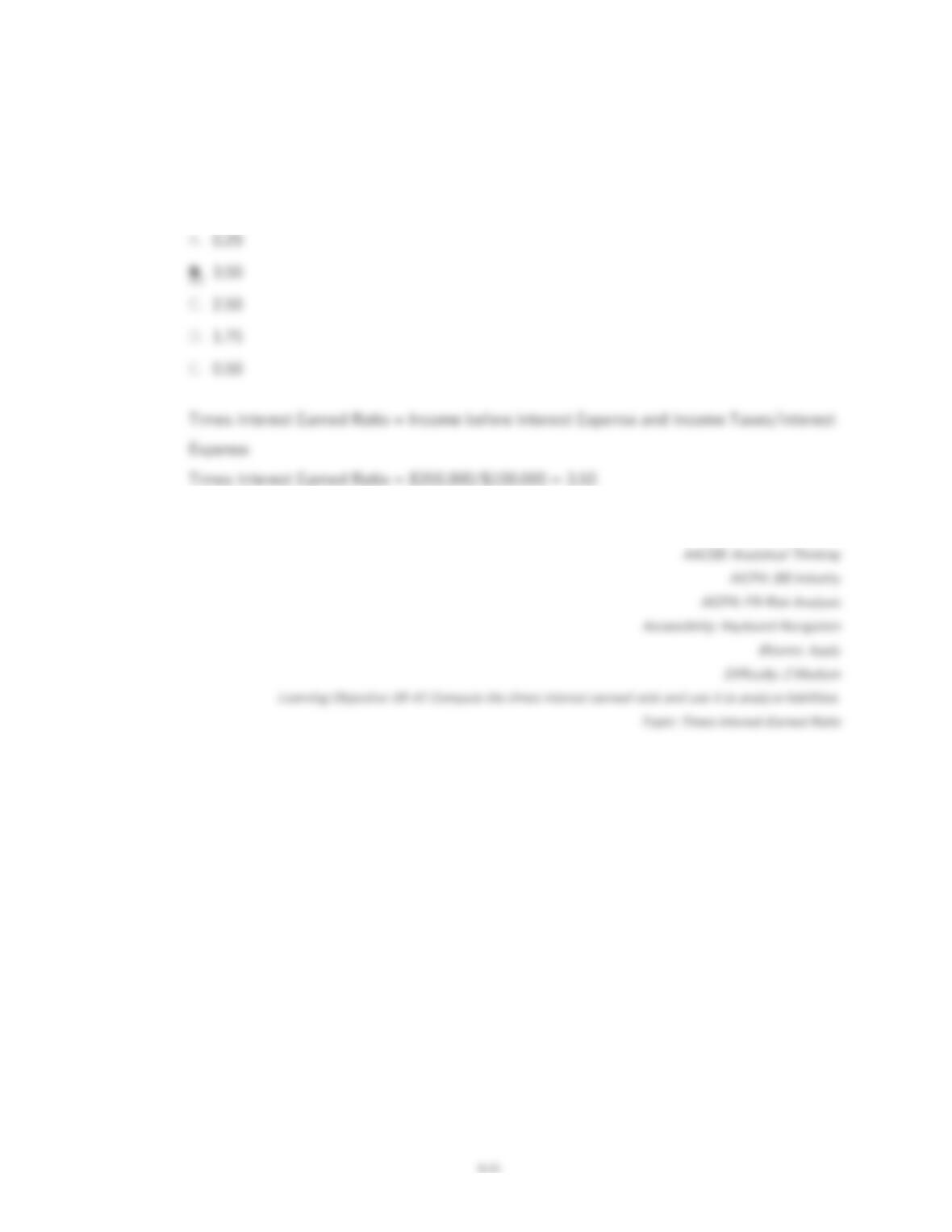
69.
A company’s income before interest expense and income taxes is $350,000 and its interest
expense is $100,000. Its times interest earned ratio is:
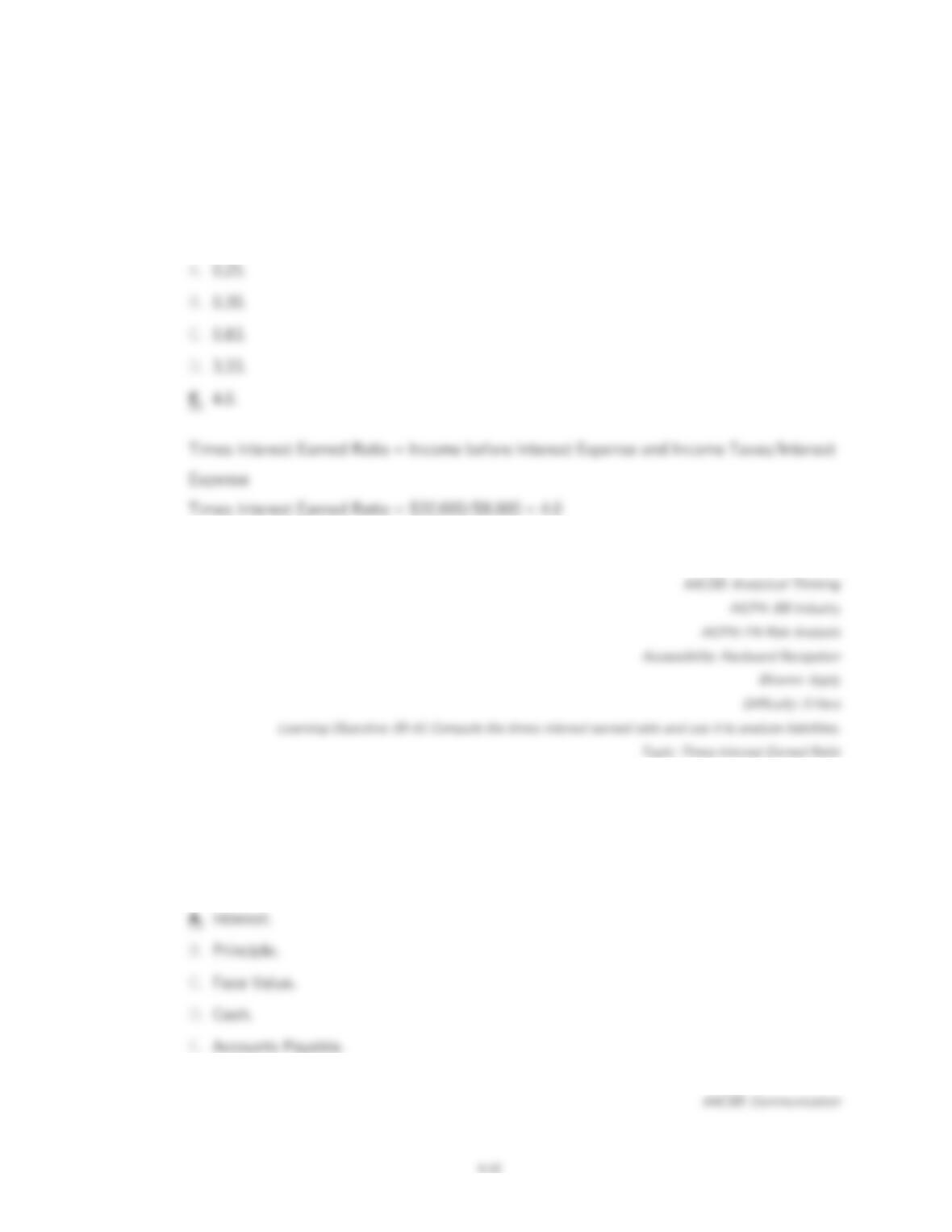
70.
A company’s fixed interest expense is $8,000, its income before interest expense and
income taxes is $32,000. Its net income is $9,600. The company’s times interest earned
ratio equals:
71.
The difference between the amount received from issuing a note payable and the amount
repaid at maturity is referred to as:
72.
A short-term note payable:
73.
Short-term notes payable:
74.
On December 1, Victoria Company signed a 90-day, 6% note payable, with a face value of
$15,000. What amount of interest expense is accrued at December 31, the company’s year
end, on the note?
75.
On November 1, Alan Company signed a 120-day, 8% note payable, with a face value of
$9,000. What is the adjusting entry for the accrued interest at December 31, the
company’s year end, on the note?
76.
On November 1, Alan Company signed a 120-day, 8% note payable, with a face value of
$9,000. What is the maturity value of the note on March 1 of the following year?
77.
On November 1, Alan Company signed a 120-day, 8% note payable, with a face value of
$9,000. Alan made the appropriate year-end accrual on December 31. What is the journal
entry as of March 1 to record the payment of the note assuming no reversing entry was
made?
78.
Employers’ responsibilities for payroll do
not
include:
79.
Gross pay is:
80.
The employer should record deductions from employee pay as:
81.
FICA taxes include:
82.
The amount of federal income taxes withheld from an employee’s paycheck is determined
by:
83.
The entry to accrue payroll expenses and liabilities for
employees
will not include: