136. Describe the four steps involved in activity–based costing.
137. Why is a plantwide allocation often considered to be a single-stage allocation approach?
Explain.
138. Describe four classifications of cost drivers.
139. Explain how activity-based costing provides a more detailed measure of costs than do
plantwide or department allocation methods.
140. “Activity-based costing is just a more precise form of product costing and is only usable in
a production setting.” Do you agree or disagree. Explain why.
9-144
141. Cosgrove Company manufactures two products, Product K-7 and Product L-15. Product L-
15 is of fairly recent origin, having been developed as an attempt to enter a market closely related
to that of Product K-7. Product L-15 is the more complex of the two products, requiring 2.0 hours
of direct labor time per unit to manufacture compared to 1.0 hour of direct labor time for Product
K-7. Product L-15 is produced on an automated production line.
Overhead currently is applied to the products on the basis of direct labor-hours. The company
estimated it would incur $510,000 in manufacturing overhead costs and produce 10,000 units of
Product L-15 and 40,000 units of Product K- 7 during the current year.
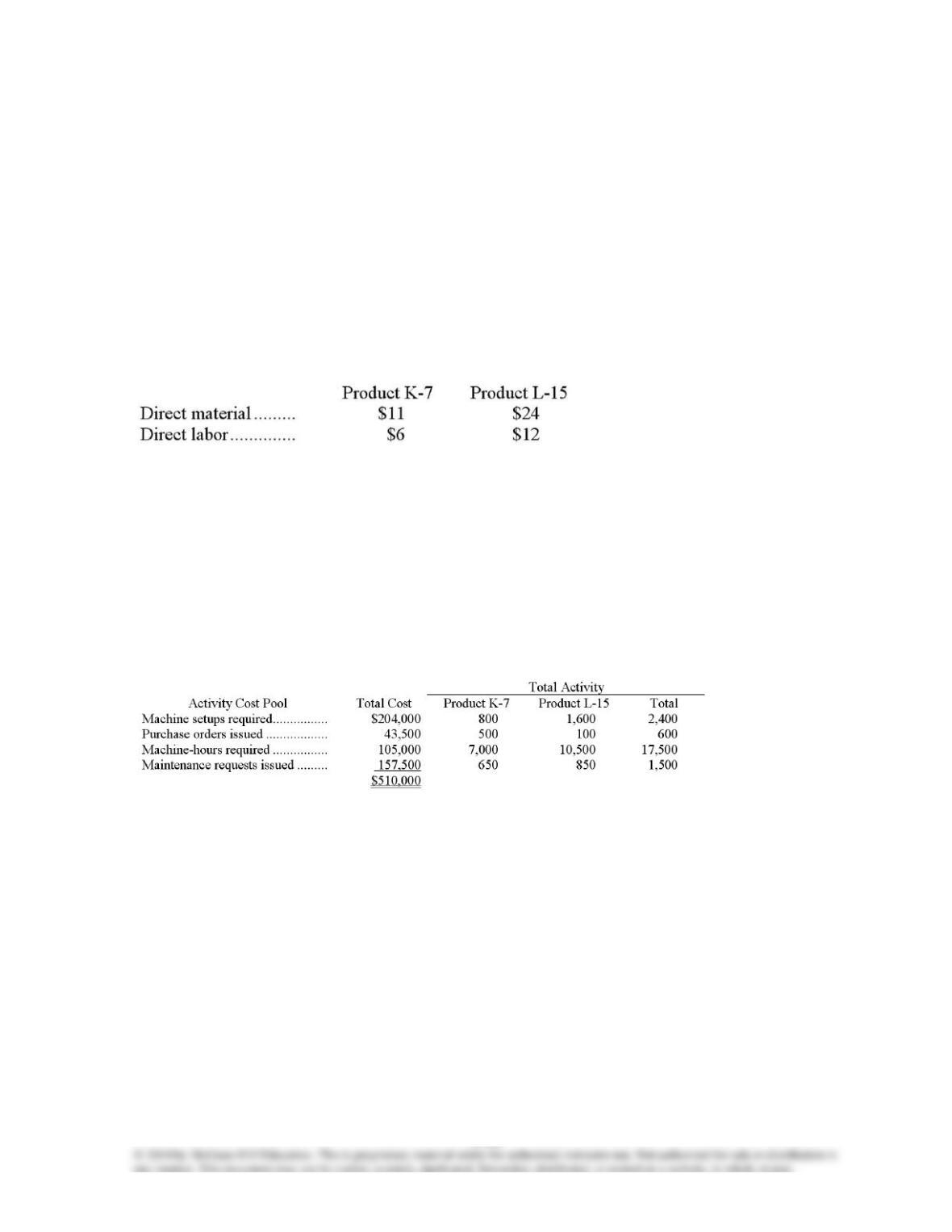
Unit costs for materials and labor are:
Required:
a. Compute the predetermined overhead rate under the current method, and determine the unit
product cost of each product for the current year.
b. The company is considering the use of activity-based costing as an alternative to its traditional
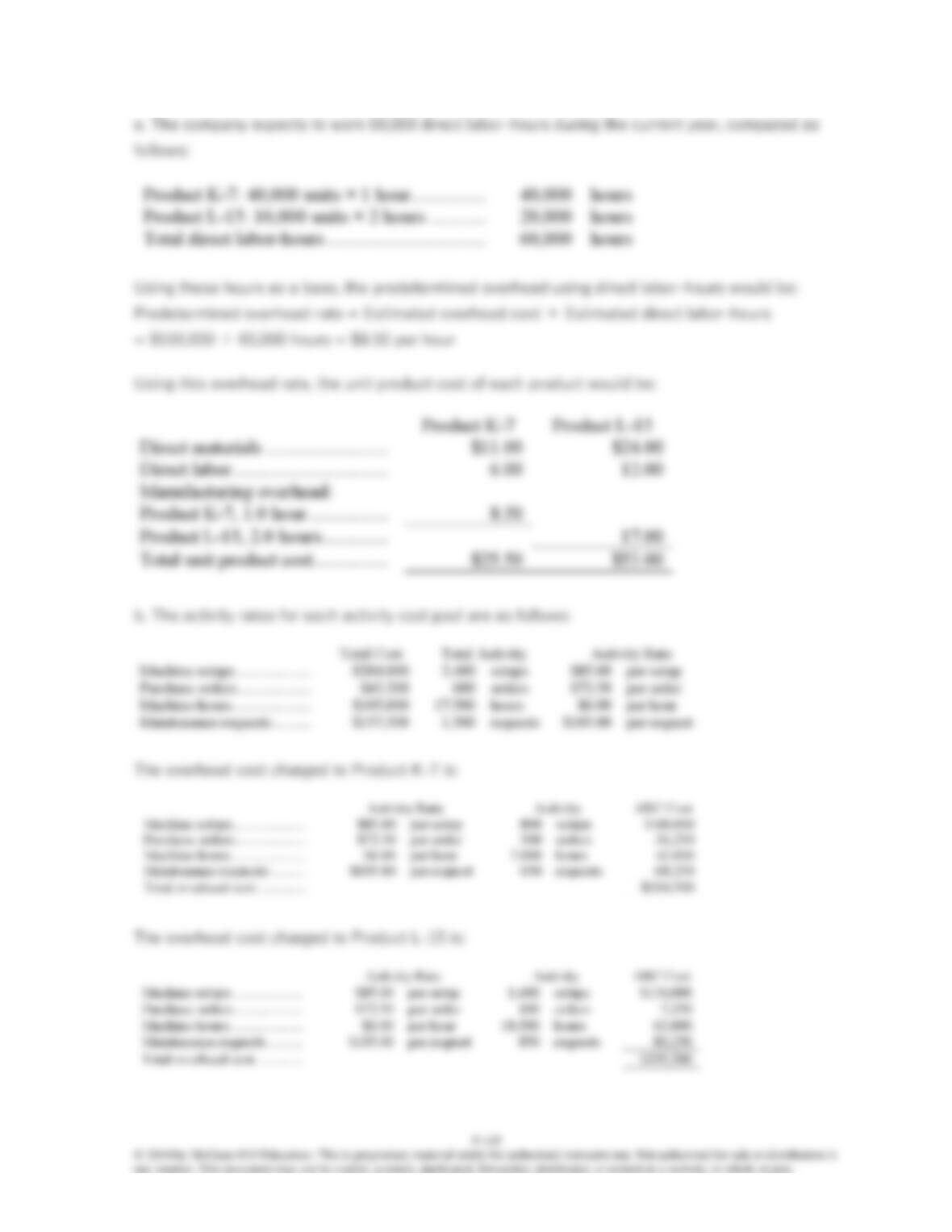
costing method for manufacturing overhead. Data relating to the company’s activity cost pools for
the current year are given below:
Using the data above, determine the unit product cost of each product for the current year.
c. What items of overhead cost make Product L-15 so costly to produce according to the activity–
based costing system? What influence might the activity-based costing data have on
management’s opinions regarding the profitability of Product L-15?
9-147
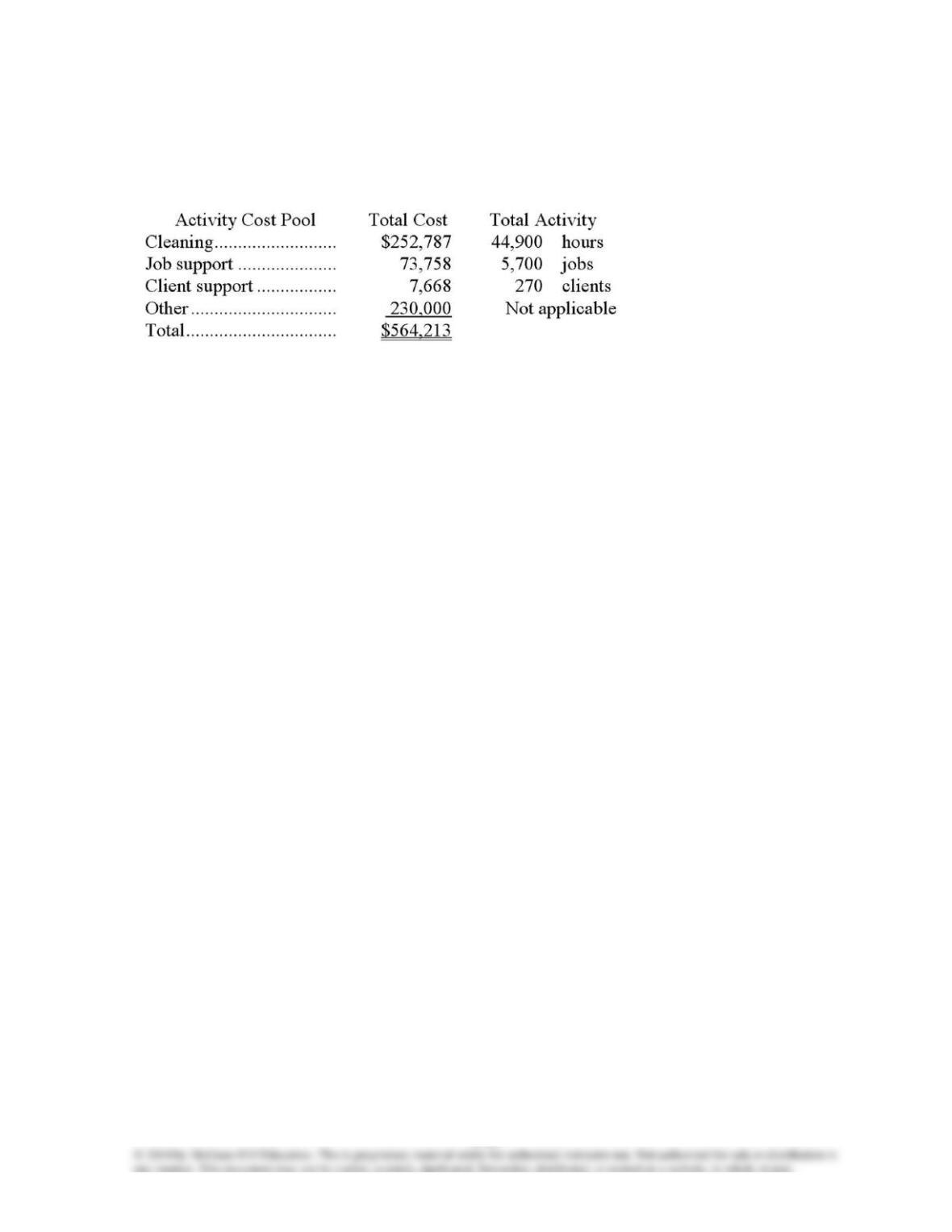
142. Roskam Housecleaning provides housecleaning services to its clients. The company uses
an activity-based costing system for its overhead costs. The company has provided the following
data from its activity-based costing system.
The “Other” activity cost pool consists of the costs of idle capacity and organization-sustaining
costs.
One particular client, the Haan family, requested 49 jobs during the year that required a total of
245 hours of housecleaning. For this service, the client was charged $2,500.
Required:
a. Compute the activity rates (i.e., cost per unit of activity) for the activity cost pools. Round off all
calculations to the nearest whole cent.
b. Using the activity-based costing system, compute the customer margin for the Haan family.
Round off all calculations to the nearest whole cent.
c. Assume the company decides instead to use a traditional costing system in which ALL costs are
allocated to customers on the basis of cleaning hours. Compute the margin for the Haan family.
Round off all calculations to the nearest whole cent.
9-149
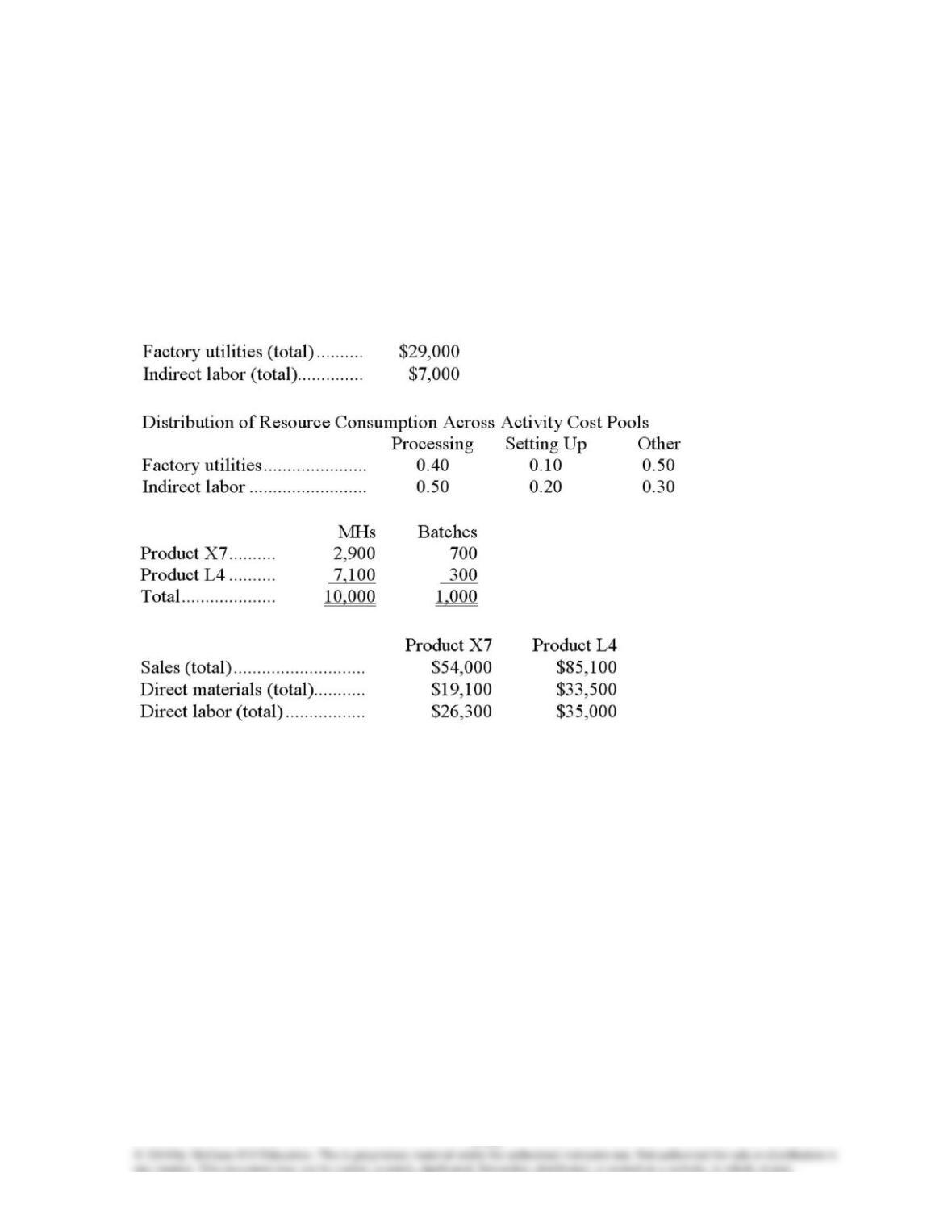
143. Murri Corporation has an activity-based costing system with three activity cost pools–
Processing, Setting Up, and Other. The company’s overhead costs, which consist of factory
utilities and indirect labor, are allocated to the cost pools in proportion to the activity cost pools’
consumption of resources. Costs in the Processing cost pool are assigned to products based on
machine-hours (MHs) and costs in the Setting Up cost pool are assigned to products based on
the number of batches. Costs in the Other cost pool are not assigned to products. Data
concerning the two products and the company’s costs and activity-based costing system appear
below:
Required:
a. Assign overhead costs to activity cost pools using activity-based costing.
b. Calculate activity rates for each activity cost pool using activity-based costing.
c. Determine the amount of overhead cost that would be assigned to each product using activity–
based costing.
d. Determine the product margins for each product using activity–based costing.
9-151
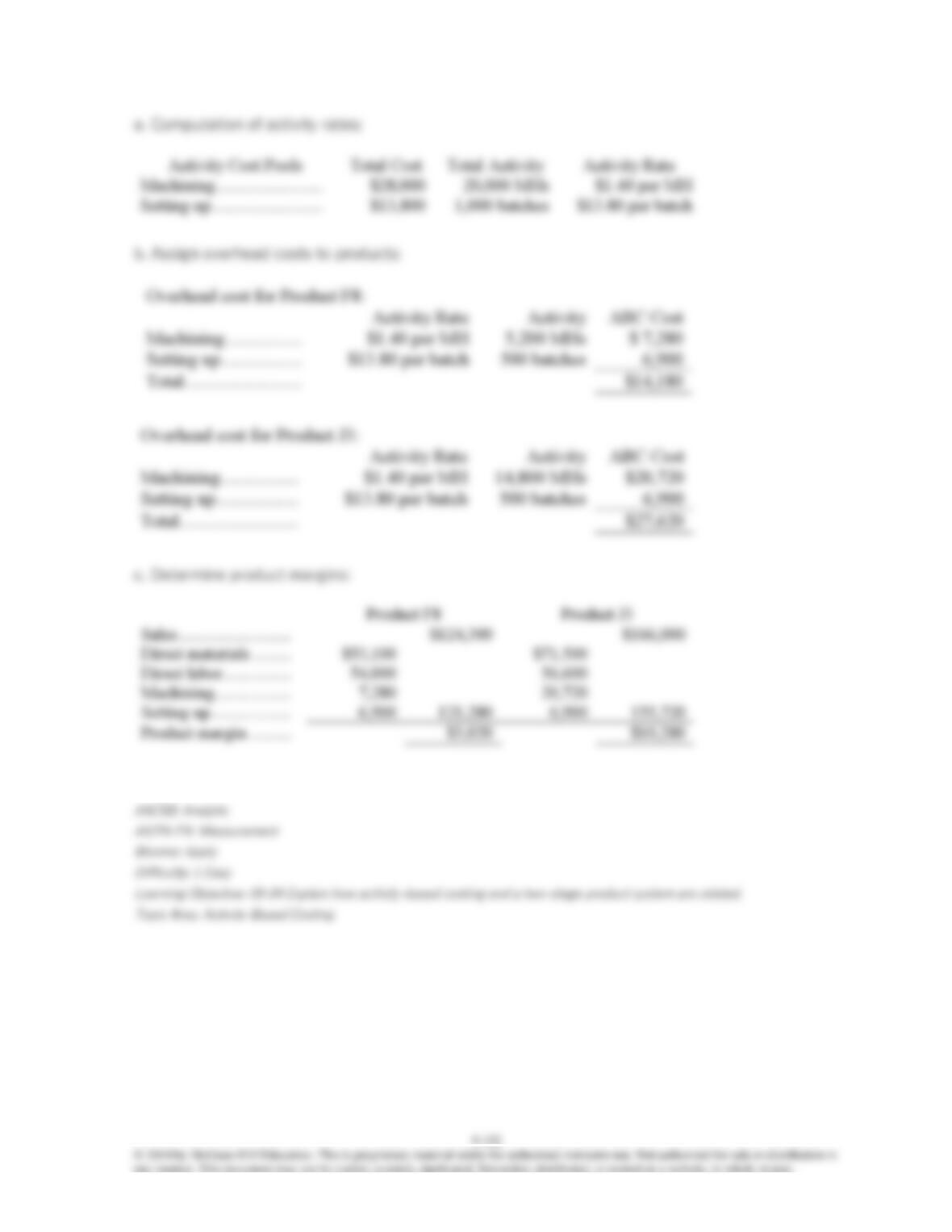
144. Mccance Corporation has an activity-based costing system with three activity cost pools–
Machining, Setting Up, and Other. The company’s overhead costs have already been allocated to
the cost pools and total $28,000 for the Machining cost pool, $13,800 for the Setting Up cost pool,
and $27,200 for the Other cost pool.
Costs in the Machining cost pool are assigned to products based on machine-hours (MHs) and
costs in the Setting Up cost pool are assigned to products based on the number of batches. Costs
in the Other cost pool are not assigned to products. Data concerning the two products and the
company’s costs appear below:
Required:
a. Calculate activity rates for each activity cost pool using activity-based costing.
b. Determine the amount of overhead cost that would be assigned to each product using activity–
based costing.
c. Determine the product margins for each product using activity-based costing.
9-153
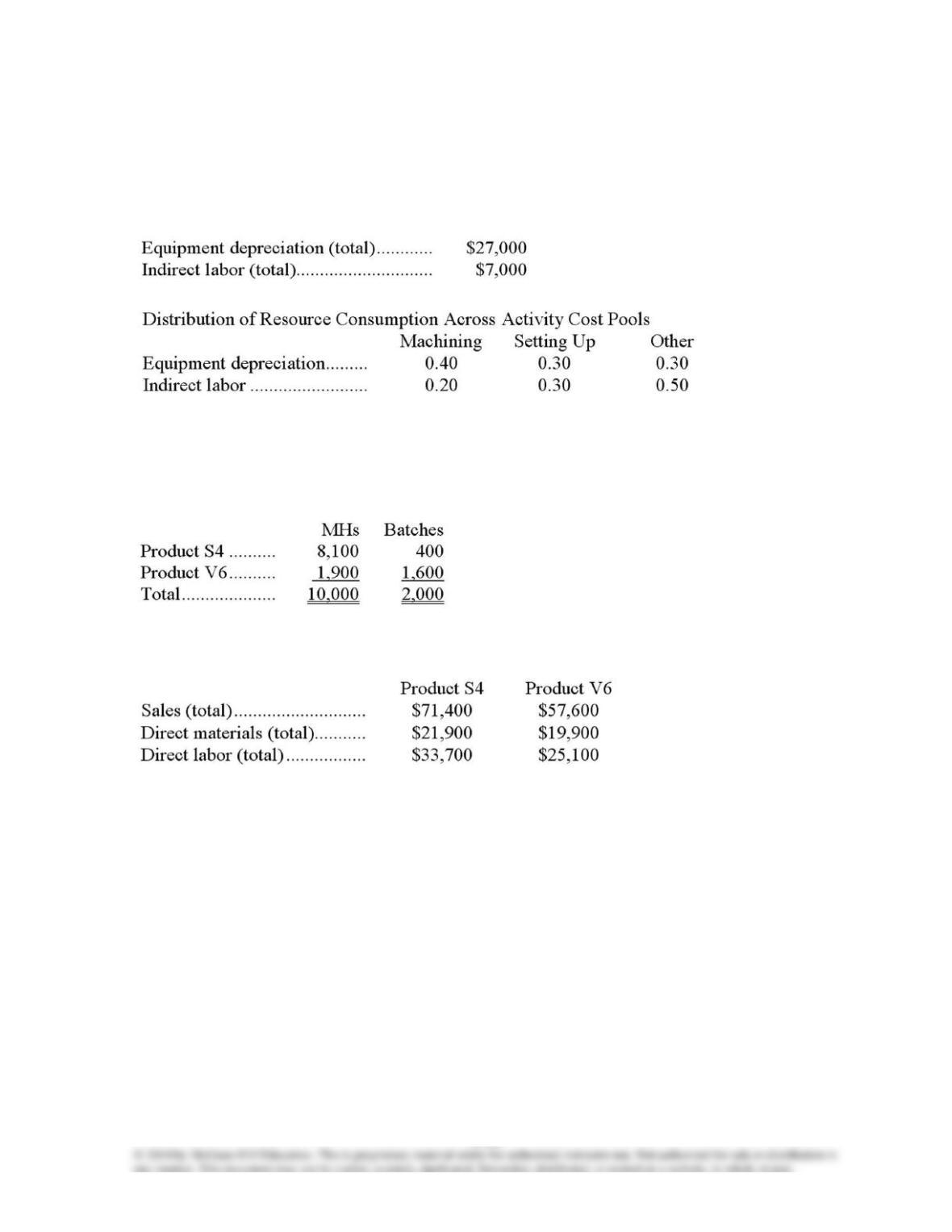
145. Pressler Corporation’s activity-based costing system has three activity cost pools–
Machining, Setting Up, and Other. The company’s overhead costs, which consist of equipment
depreciation and indirect labor, are allocated to the cost pools in proportion to the activity cost
pools’ consumption of resources.
Costs in the Machining cost pool are assigned to products based on machine-hours (MHs) and
costs in the Setting Up cost pool are assigned to products based on the number of batches. Costs
in the Other cost pool are not assigned to products.
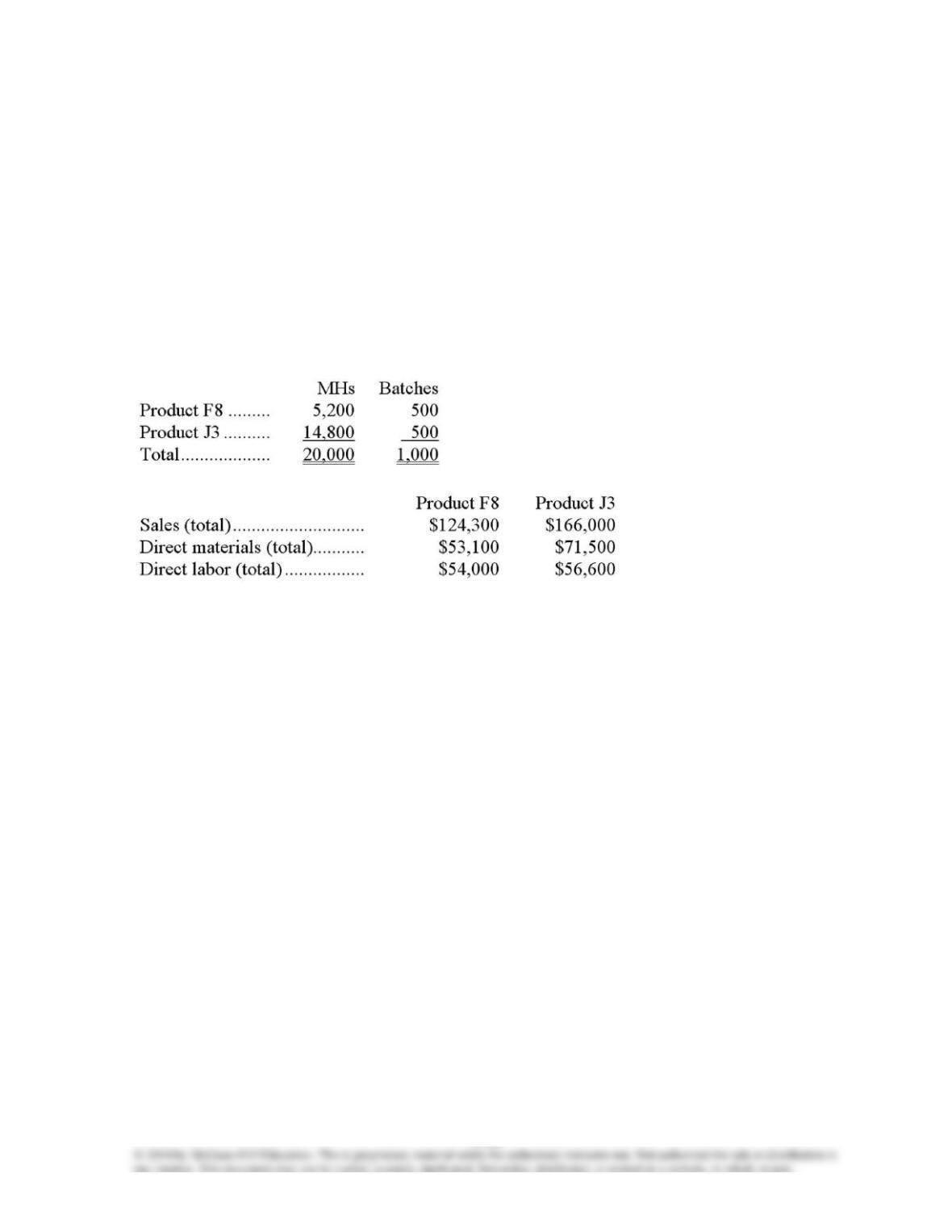
Additional data concerning the company’s products appears below:
Required:
a. Assign overhead costs to activity cost pools using activity-based costing.
b. Calculate activity rates for each activity cost pool using activity-based costing.
c. Determine the amount of overhead cost that would be assigned to each product using activity–
based costing.
d. Determine the product margins for each product using activity-based costing.