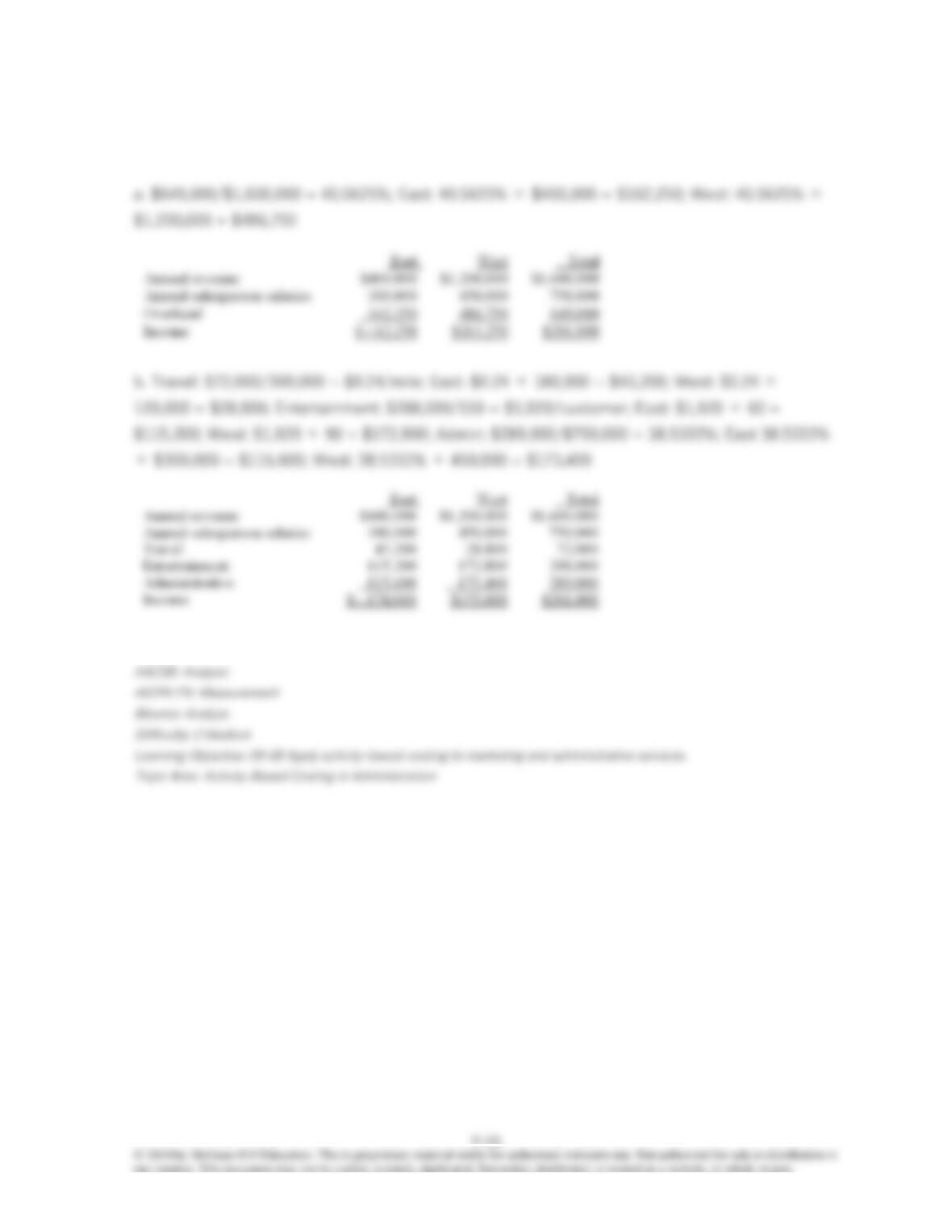
a. East: $-62,250; West: $263,250
b. East: $-174,000; West: $375,000
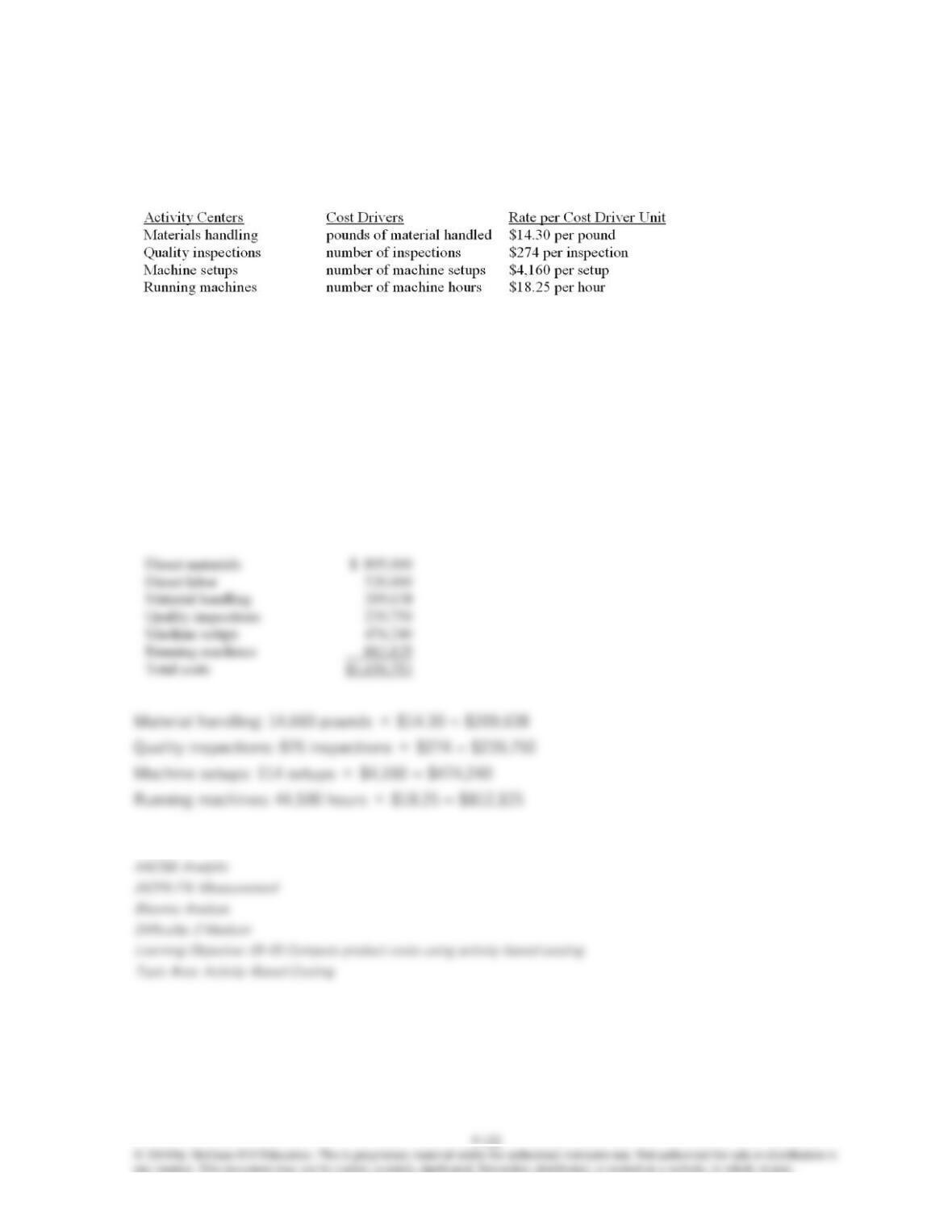
120. NorthWest Culverts, Inc., recently switched to activity-based costing from a department
allocation method. The Fabrication Department has the following estimated cost drivers and
rates:
Direct materials of $895,000 were put into production during September, and direct labor costs
were $520,000. The Fabrication Department handled 14,660 pounds of materials, made 875
inspections, had 114 setups, and ran the machines for 44,500 hours during the month.
Required:
Prepare a schedule of the costs applied to work–in-process for September:
9-123
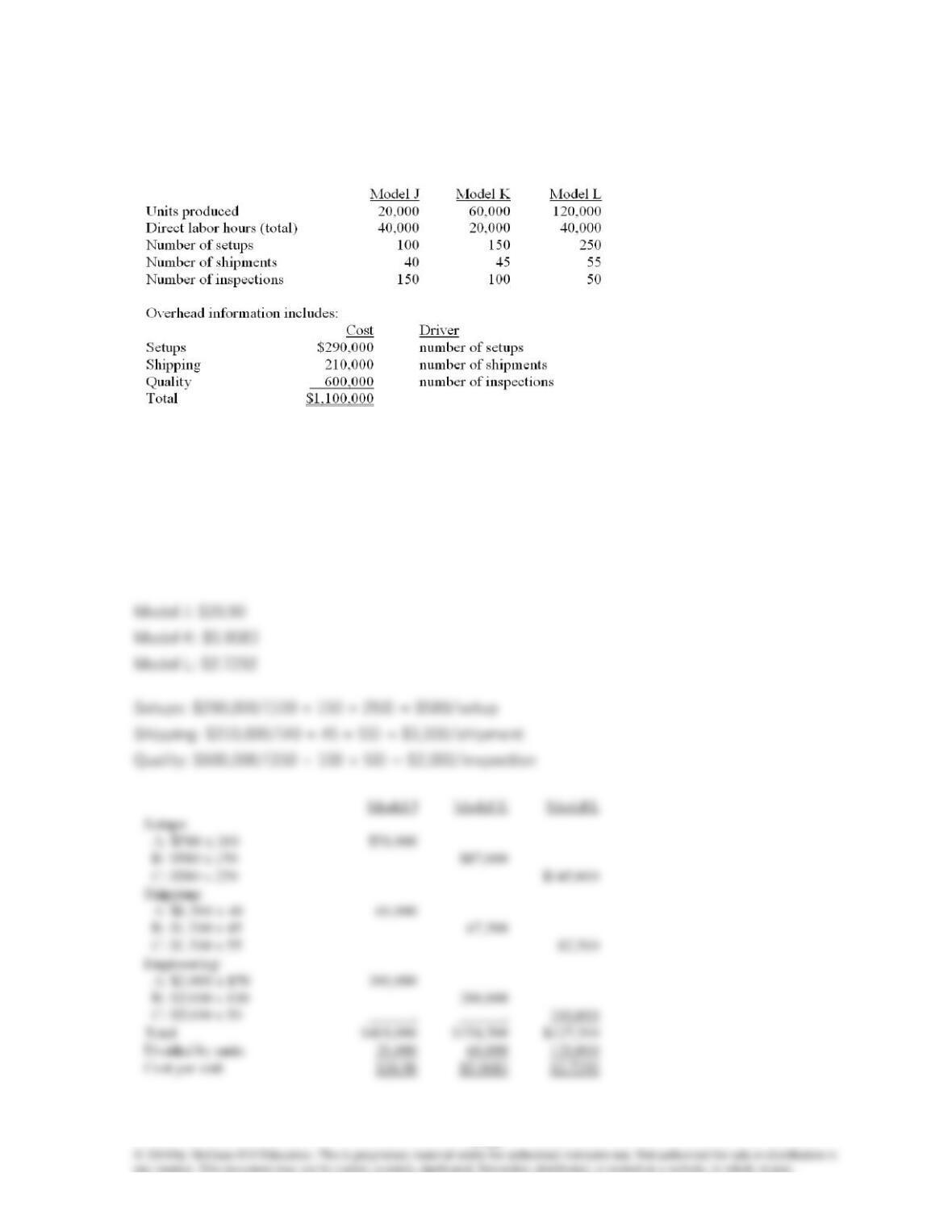
121. Bad River Company produces three products with the following production and cost
information:
Required:
Determine the amount of overhead that would be assigned to each unit of all three products using
activity-based costing.
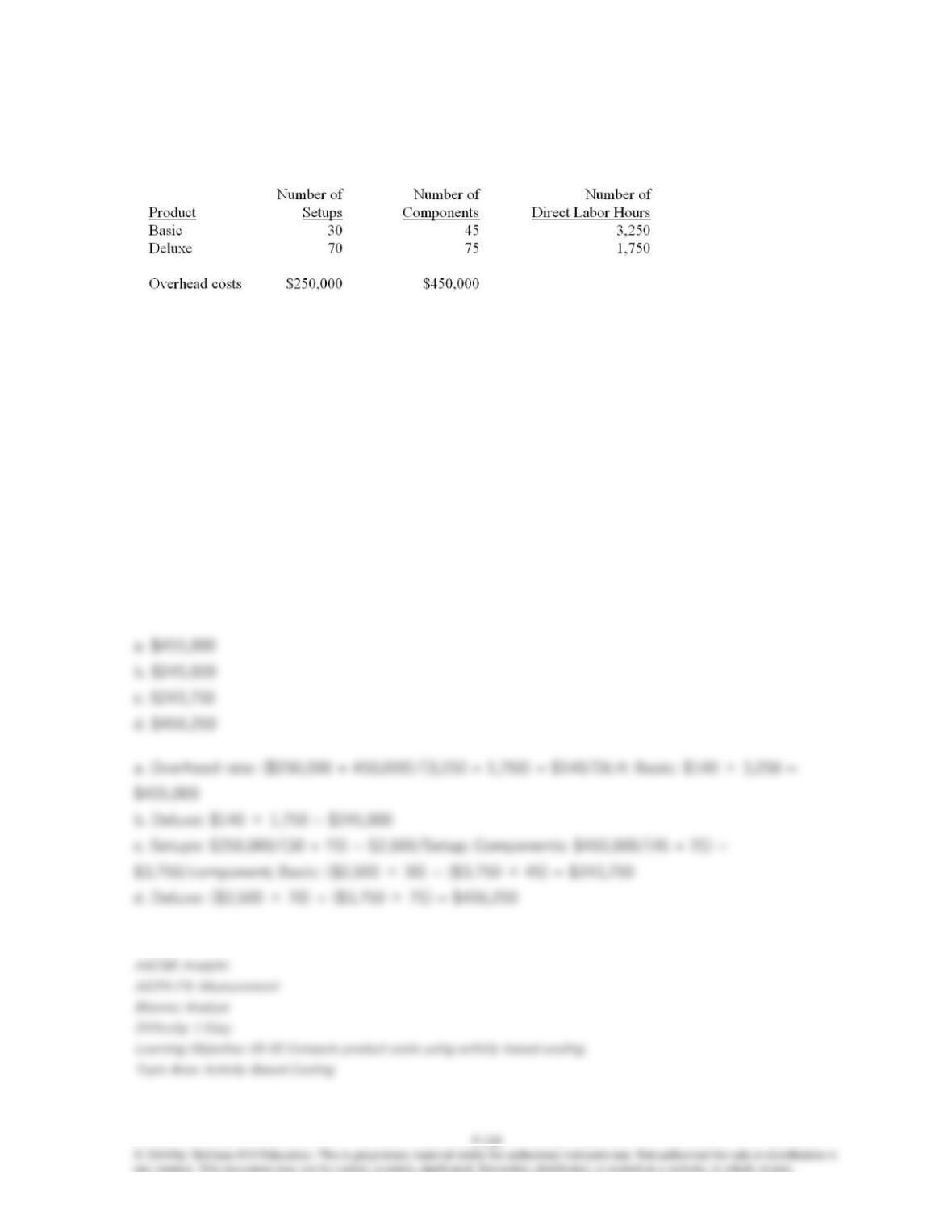
122. Alexis, Inc. manufactures two models of hedge trimmer, a basic model and a deluxe
model. The following activity and cost information has been compiled:
Assume a traditional costing system applies the overhead costs based on direct labor hours.
Required:
a. What is the total amount of overhead costs assigned to the basic model?
b. What is the total amount of overhead costs assigned to the deluxe model?
Assume an activity-based costing system is used and that the number of setups and the number
of components are identified as the activity-cost drivers for overhead.
c. What is the total amount of overhead costs assigned to the basic model?
d. What is the total amount of overhead costs assigned to the deluxe model?
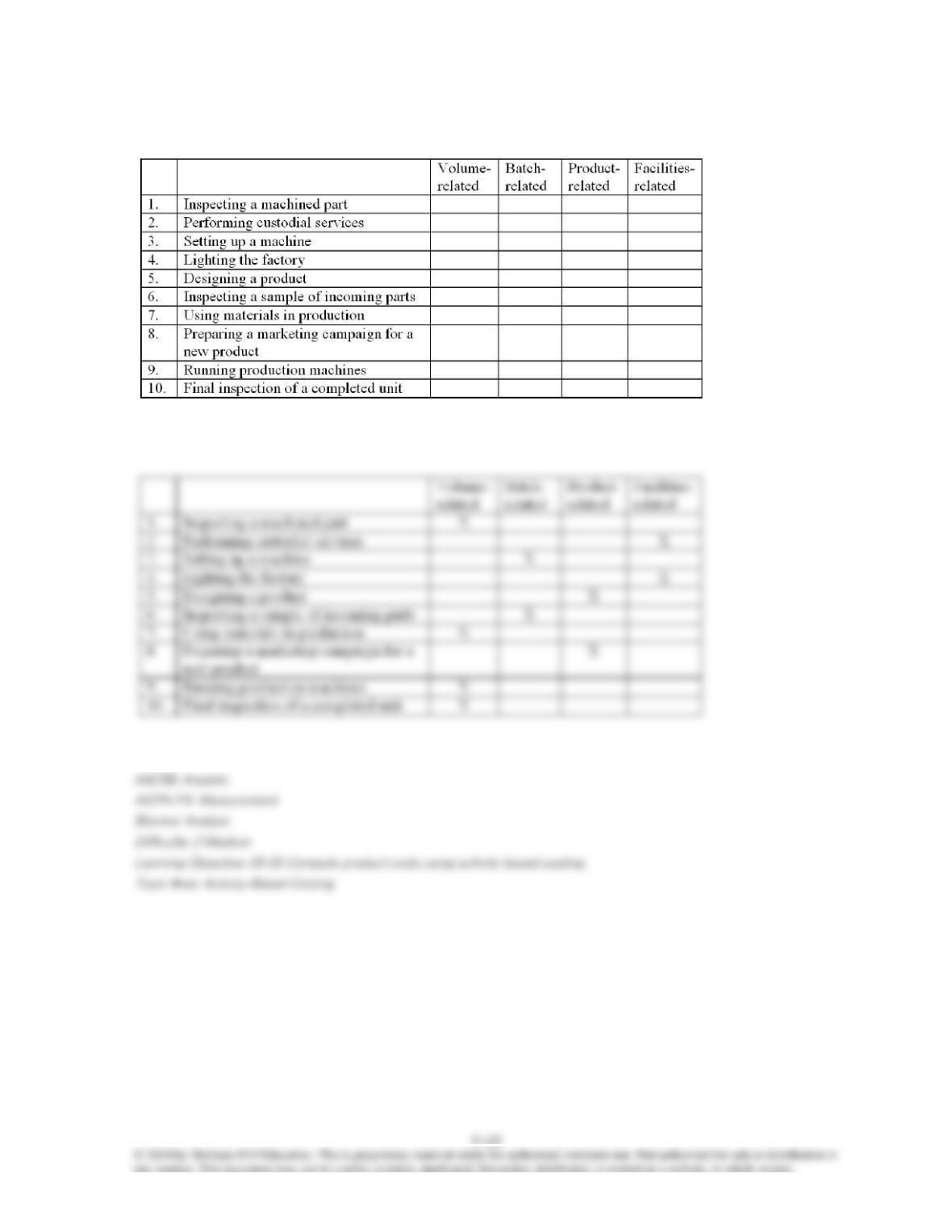
123. Match each of the following activities with the appropriate category:
9-126
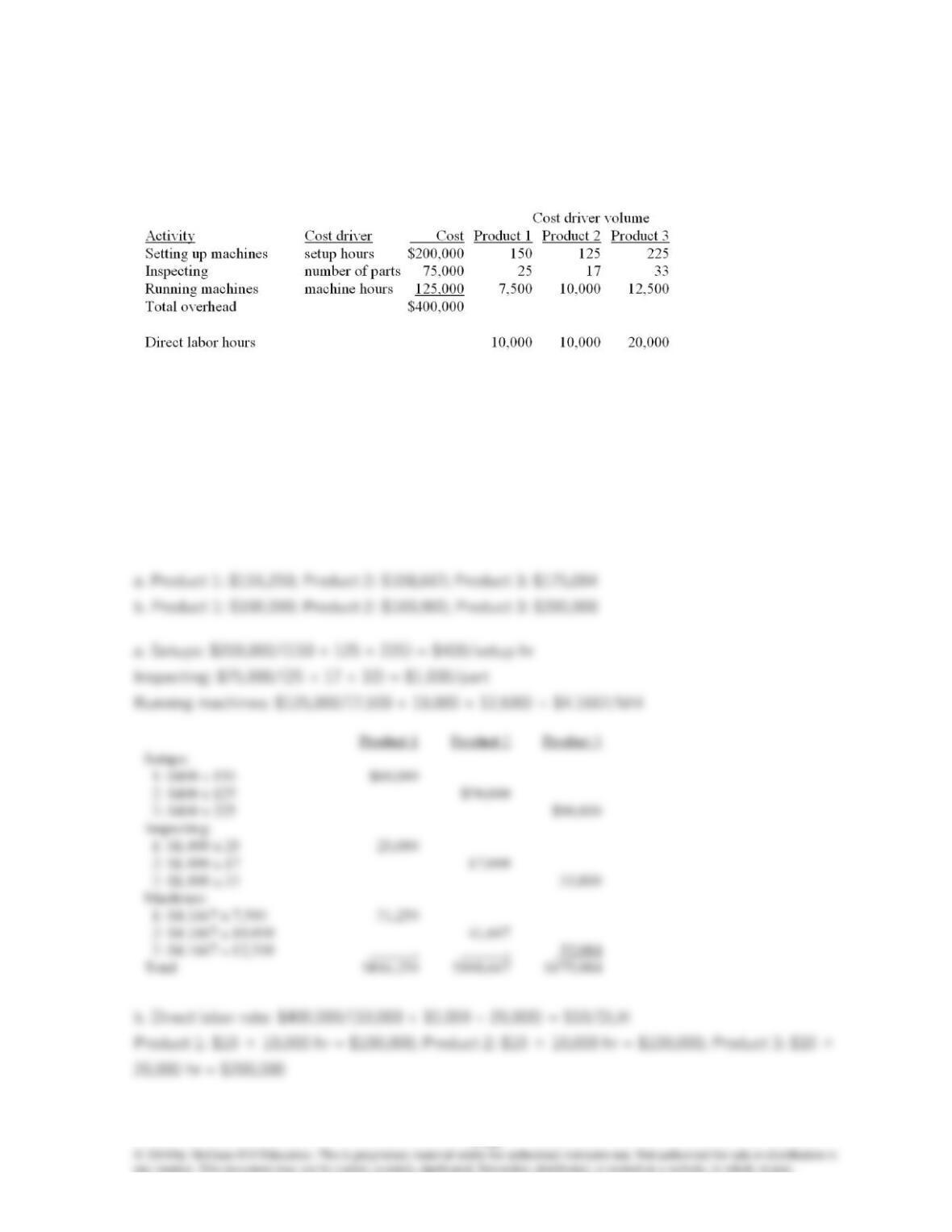
124. Bloomer Gifts manufactures three products. Overhead costs are currently allocated using
direct labor hours, but the controller has recommended an activity-based costing system.
Estimated data is as follows:
Required:
a. Compute the amount of overhead to be allocated to each product under activity-based costing.
b. Compute the amount of overhead to be allocated to each product using labor hours as the
allocation base.
9-127
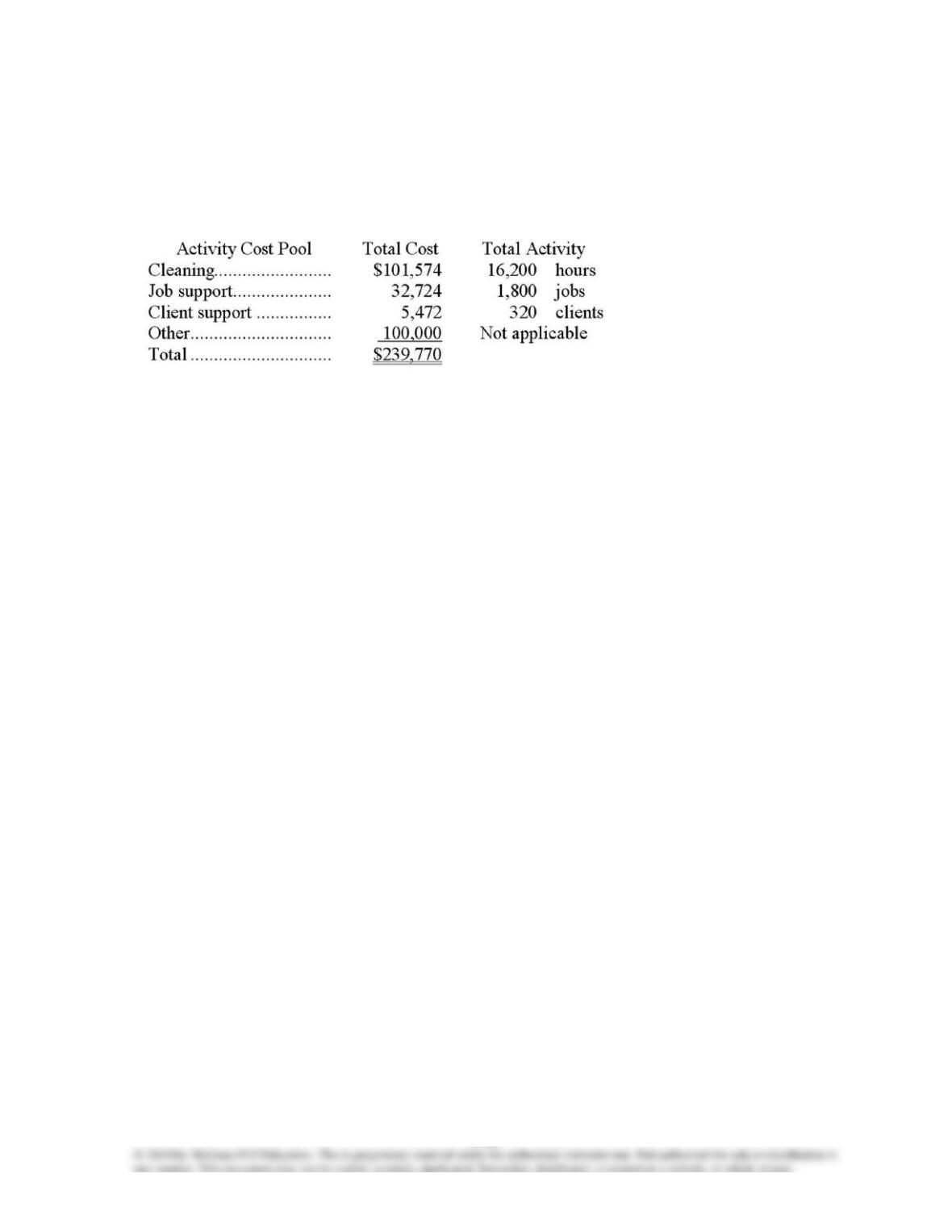
125. The Spurling Cleaning Brigade Company provides housecleaning services to its clients.
The company uses an activity-based costing system for its overhead costs. The company has
provided the following data from its activity-based costing system.
The “Other” activity cost pool consists of the costs of idle capacity and organization-sustaining
costs.
One particular client, the Vandal family, requested 32 jobs during the year that required a total of
192 hours of housecleaning. For this service, the client was charged $2,200.
Required:
a. Using the activity-based costing system, compute the client margin for the Vandal family.
Round off all calculations to the nearest whole cent.
b. Assume the company decides instead to use a traditional costing system in which ALL costs
are allocated to clients on the basis of cleaning hours. Compute the margin for the Vandal family.
Round off all calculations to the nearest whole cent.
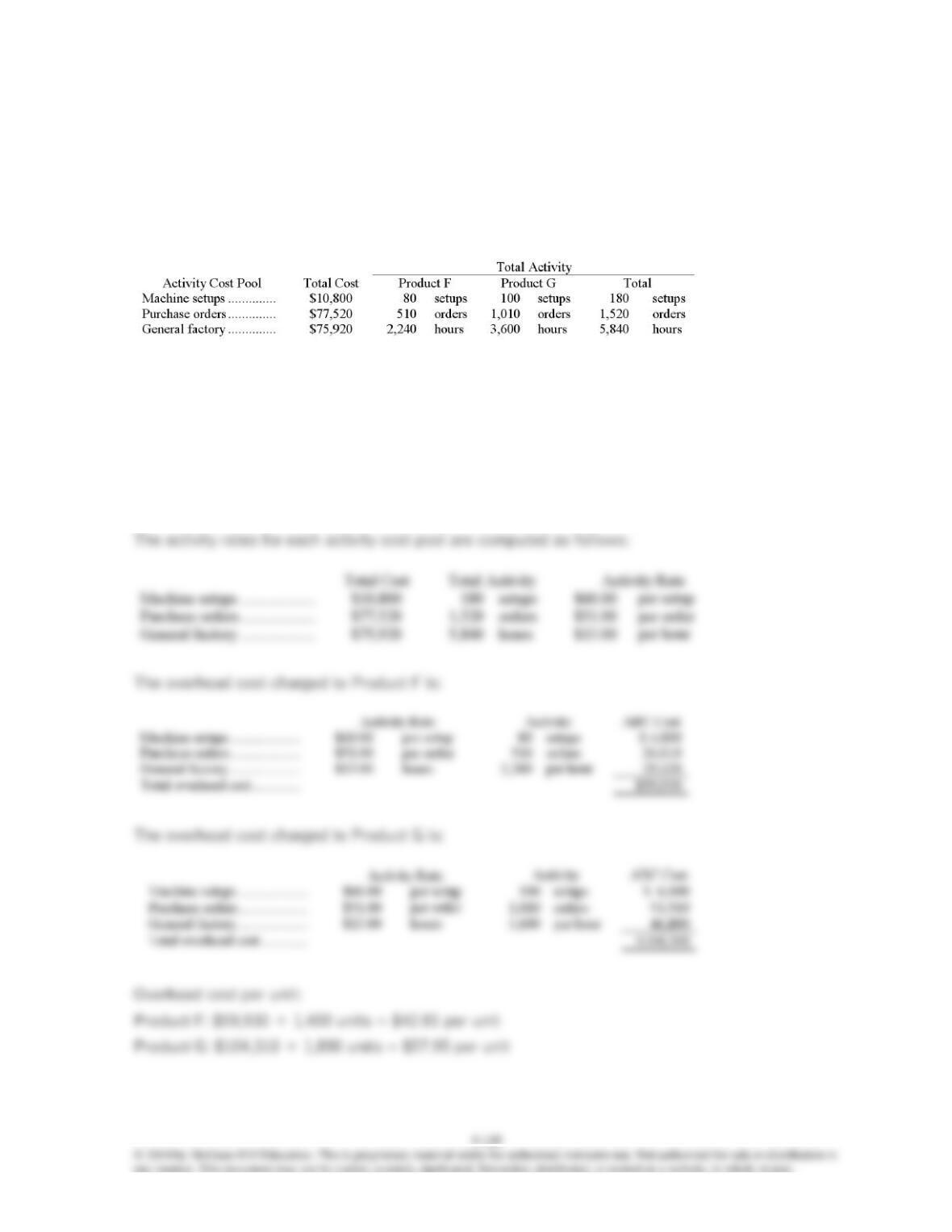
126. Daba Company manufactures two products, Product F and Product G. The company
expects to produce and sell 1,400 units of Product F and 1,800 units of Product G during the
current year. The company uses activity-based costing to compute unit product costs for external
reports. Data relating to the company’s three activity cost pools are given below for the current
year:
Required:
Using the activity-based costing approach, determine the overhead cost per unit for each
product.
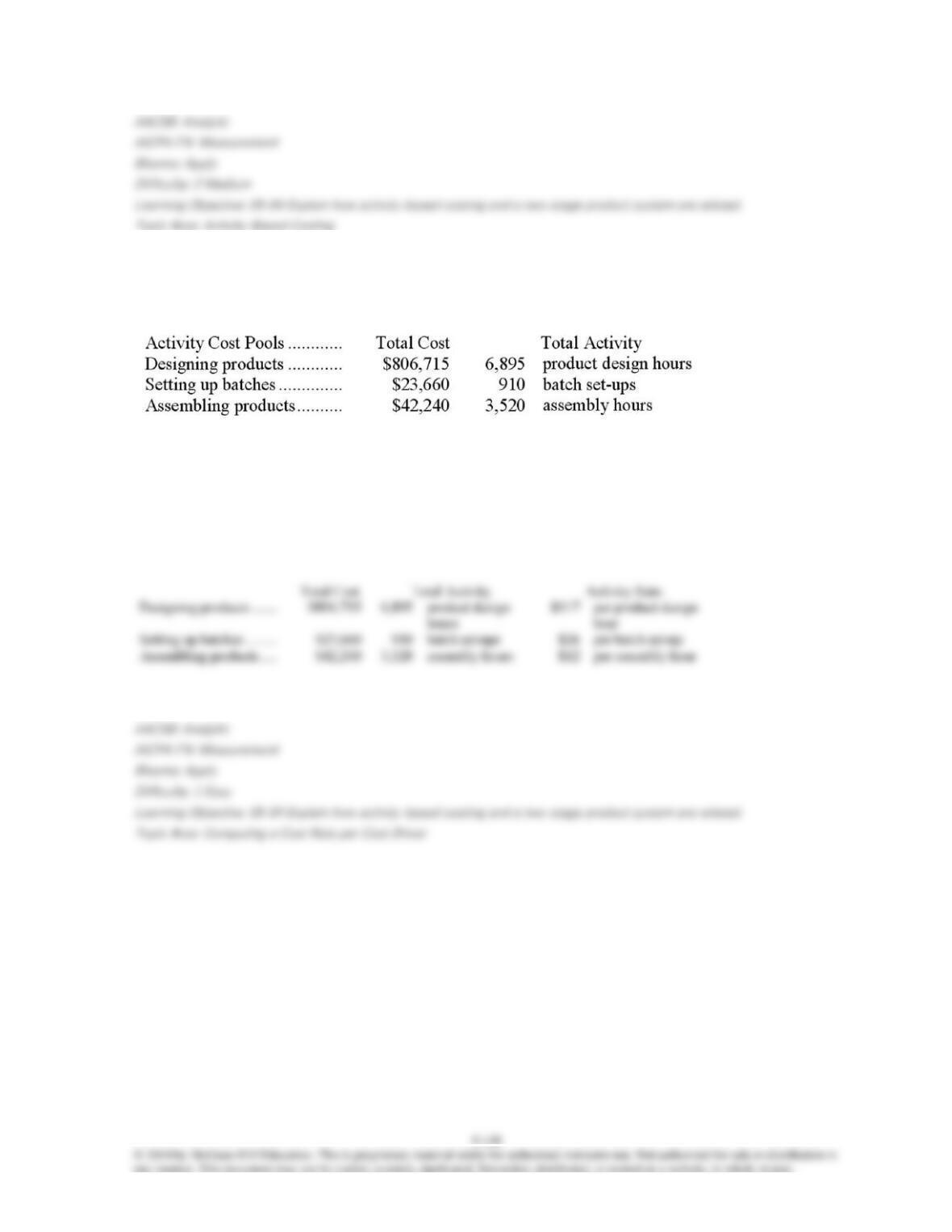
127. Bubb Corporation has provided the following data from its activity-based costing
accounting system:
Required:
Compute the activity rates for each of the three cost pools. Show your work!
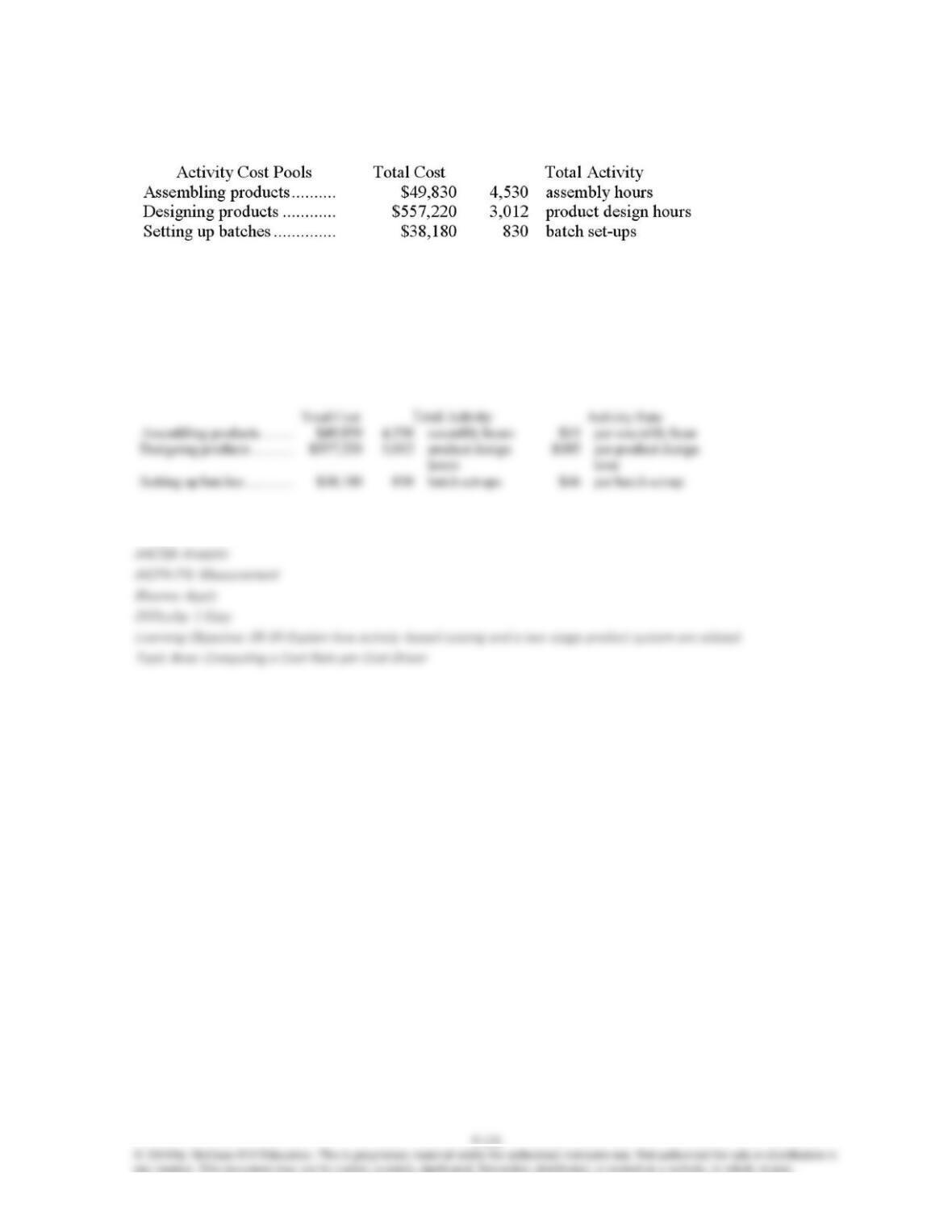
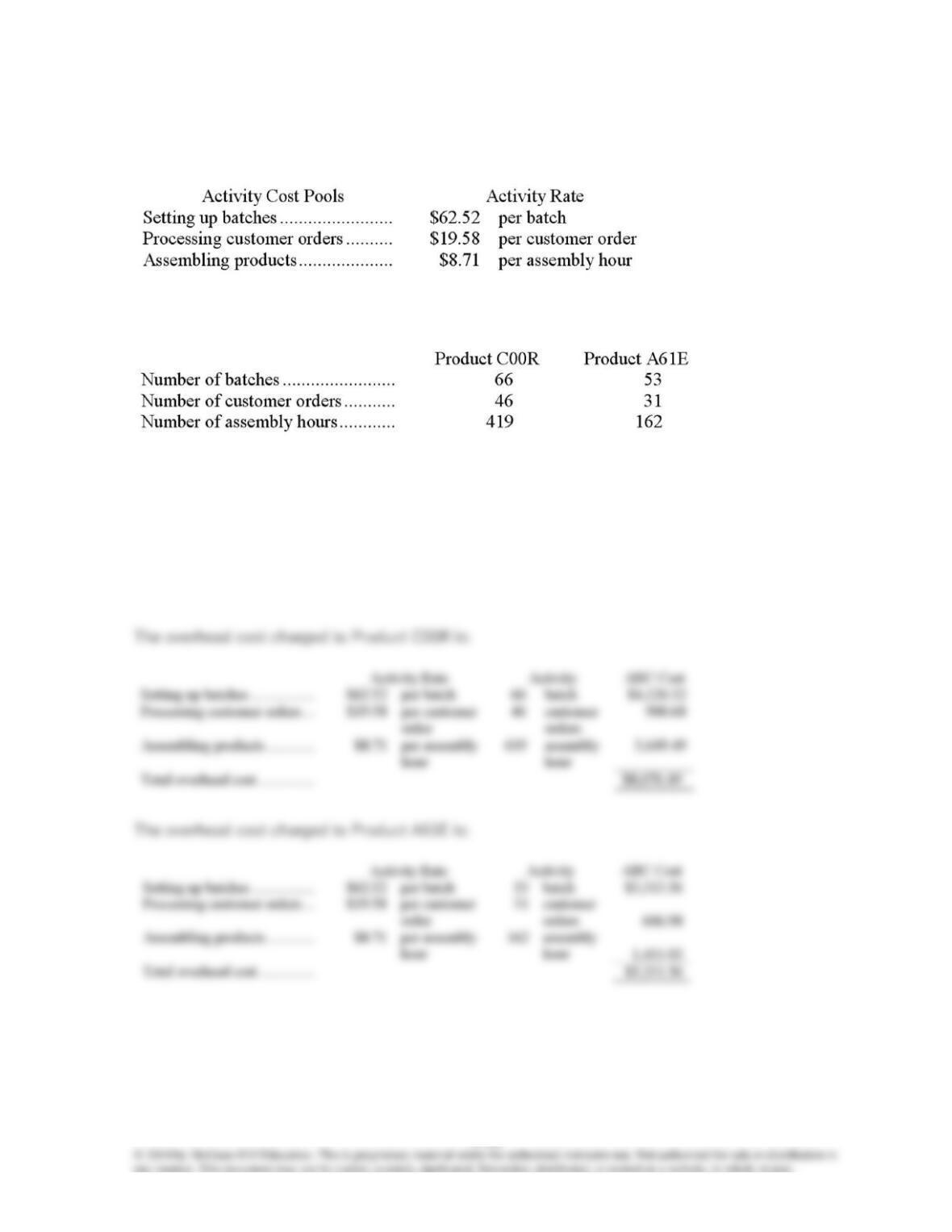
128. Data concerning three of Pressnell Corporation’s activity cost pools appear below:
Required:
Compute the activity rates for each of the three cost pools. Show your work!
9-132
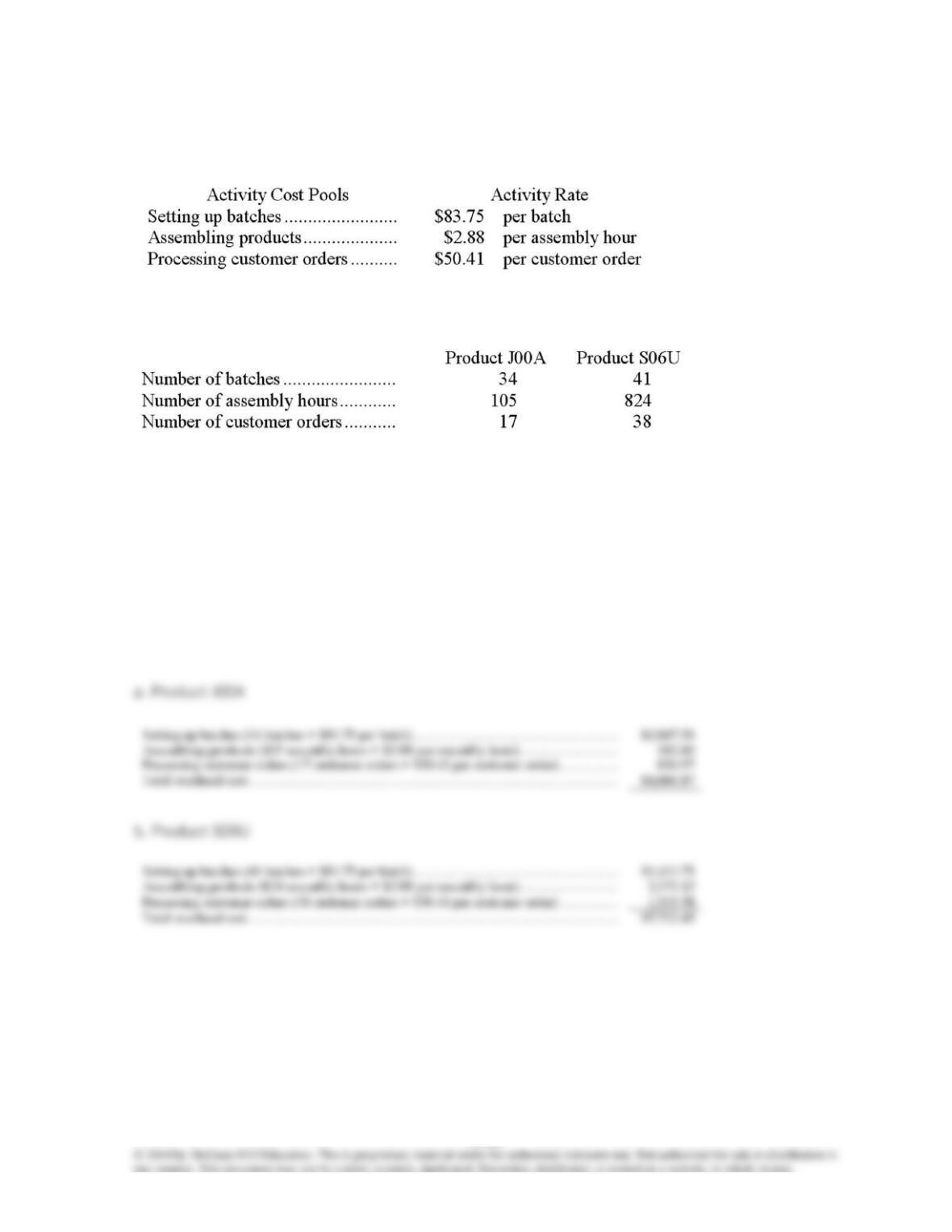
129. Schmeider Corporation uses the following activity rates from its activity-based costing to
assign overhead costs to products.
Data concerning two products appear below:
Required:
How much overhead cost would be assigned to each of the two products using the company’s
activity-based costing system?
9-133
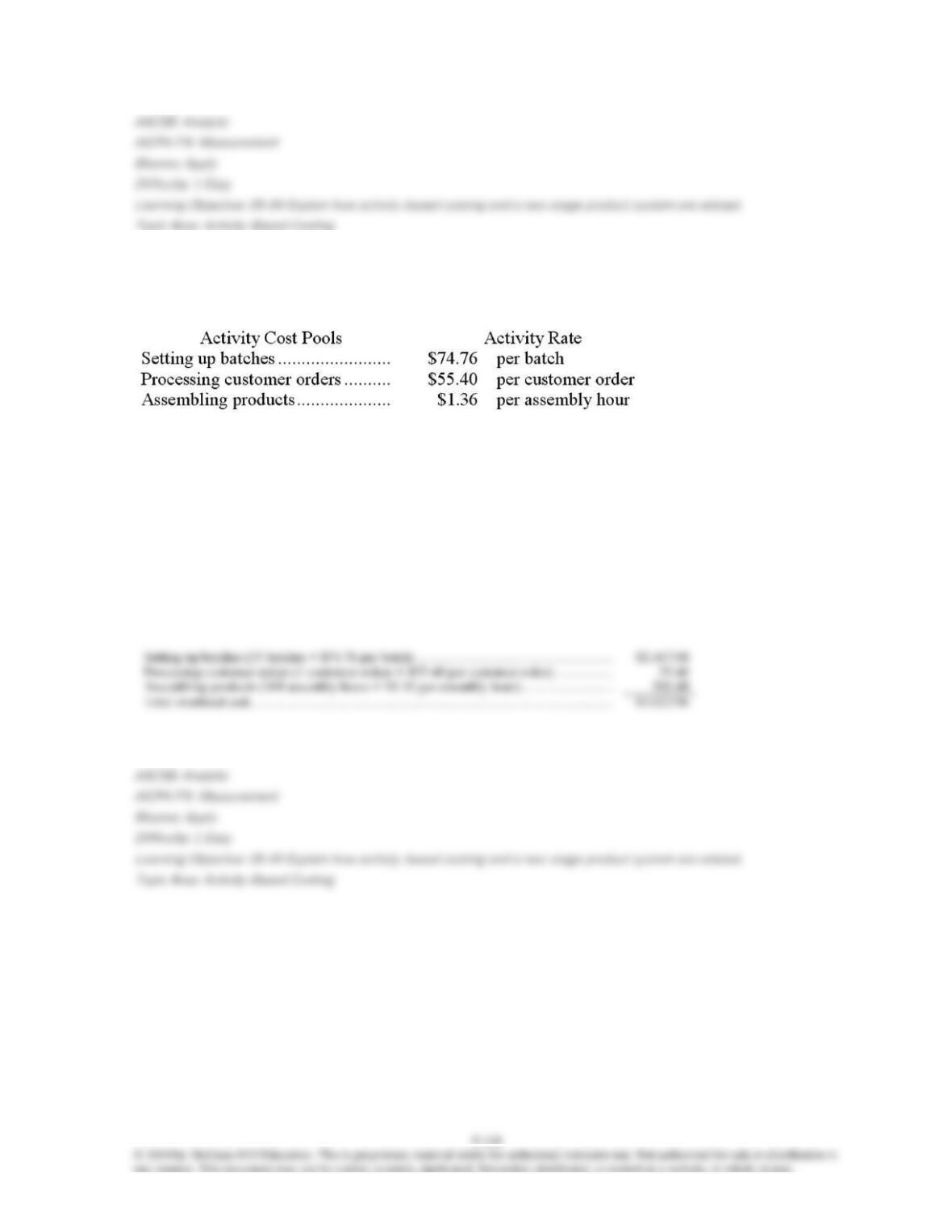
130. Kapoor Corporation uses the following activity rates from its activity-based costing to
assign overhead costs to products.
Data concerning two products appear below:
Required:
a. How much overhead cost would be assigned to Product J00A using the company’s activity–
based costing system? Show your work!
b. How much overhead cost would be assigned to Product S06U using the company’s activity–
based costing system? Show your work!
131. Alongi Corporation uses the following activity rates from its activity-based costing to
assign overhead costs to products.
Last year, Product P91M involved 33 batches, 1 customer orders, and 368 assembly hours.
Required:
How much overhead cost would be assigned to Product P91M using the company’s activity-based
costing system? Show your work!
9-135
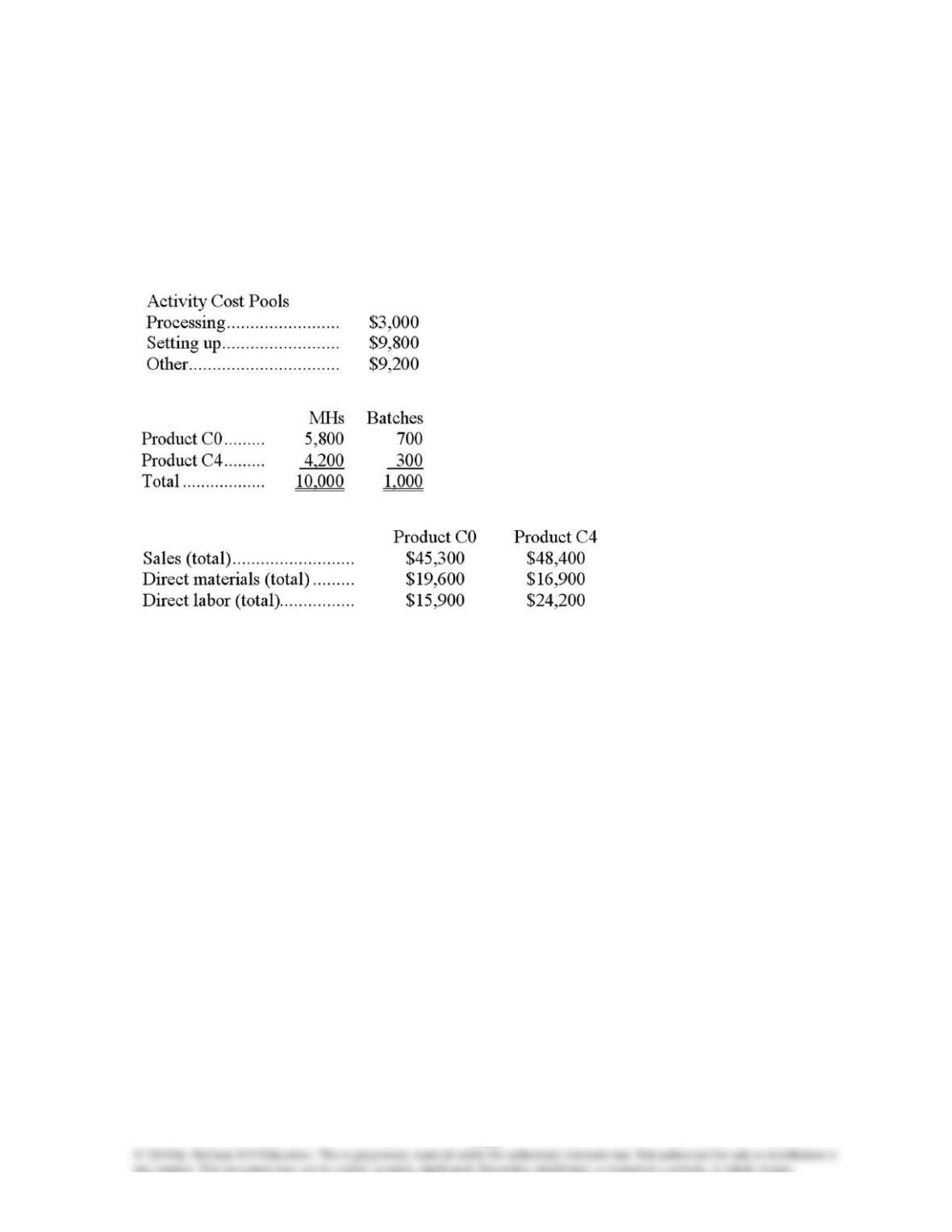
132. Spadaro Corporation has an activity-based costing system with three activity cost pools–
Processing, Setting Up, and Other. Costs in the Processing cost pool are assigned to products
based on machine-hours (MHs) and costs in the Setting Up cost pool are assigned to products
based on the number of batches. Costs in the Other cost pool are not assigned to products. Data
concerning the two products and the company’s costs and activity-based costing system appear
below:
Required:
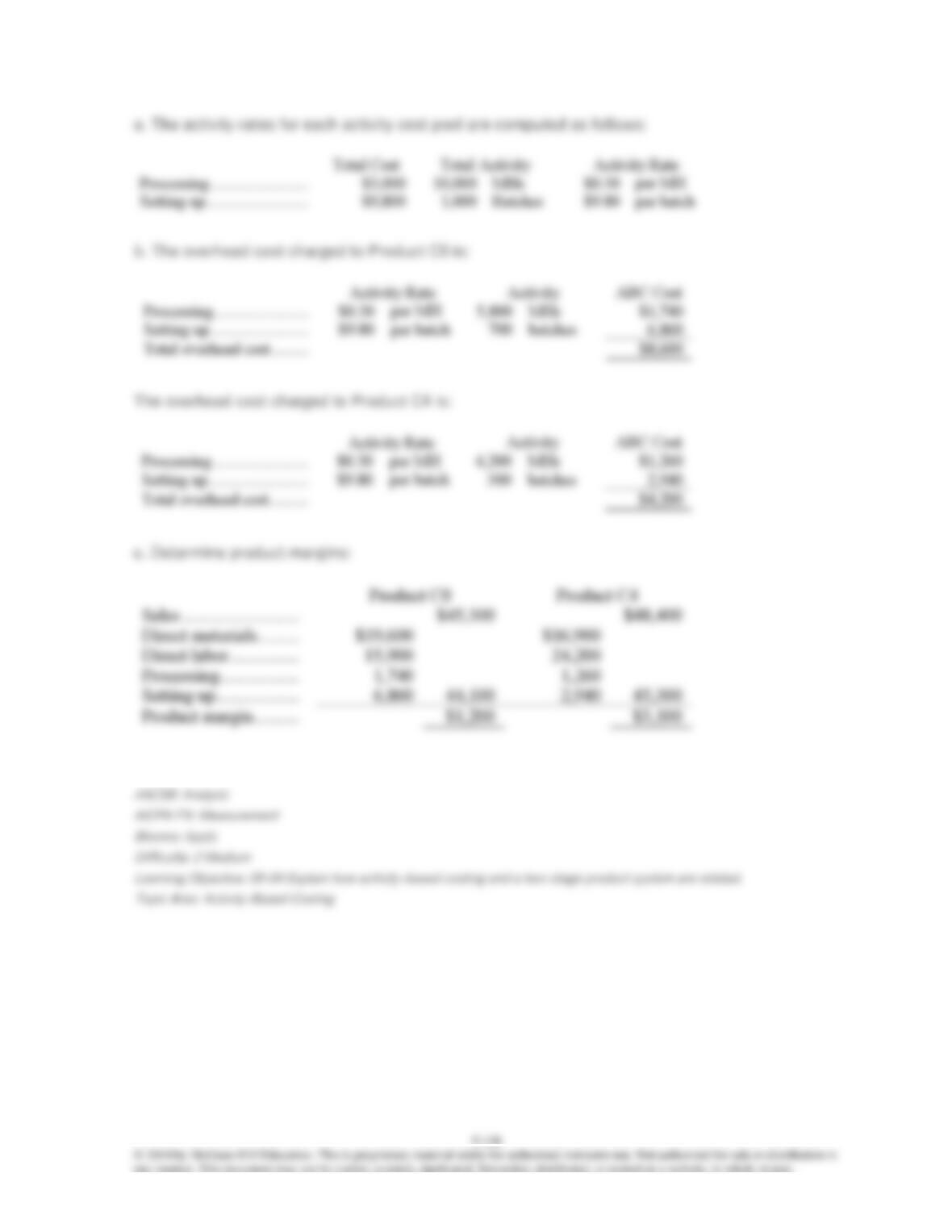
a. Calculate activity rates for each activity cost pool using activity-based costing.
b. Determine the amount of overhead cost that would be assigned to each product using activity–
based costing.
c. Determine the product margins for each product using activity-based costing.
133. Day Corporation has an activity-based costing system with three activity cost pools-
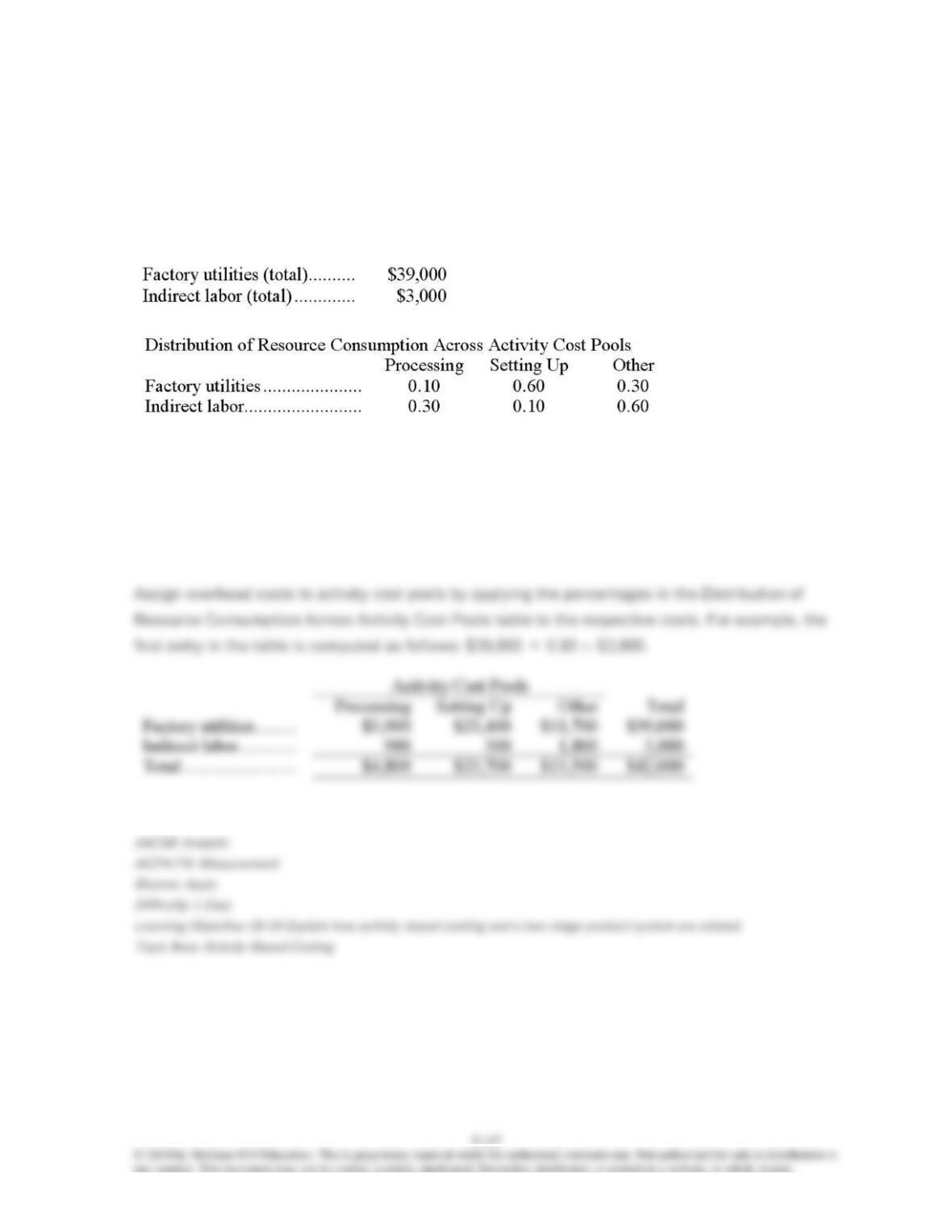
Processing, Setting Up, and Other. The company’s overhead costs, which consist of factory
utilities and indirect labor, are allocated to the cost pools in proportion to the activity cost pools’
consumption of resources. Data concerning the company’s costs and activity-based costing
system appear below:
Required:
Assign overhead costs to activity cost pools using activity-based costing.
134. Yentzer Corporation has an activity-based costing system with three activity cost pools–
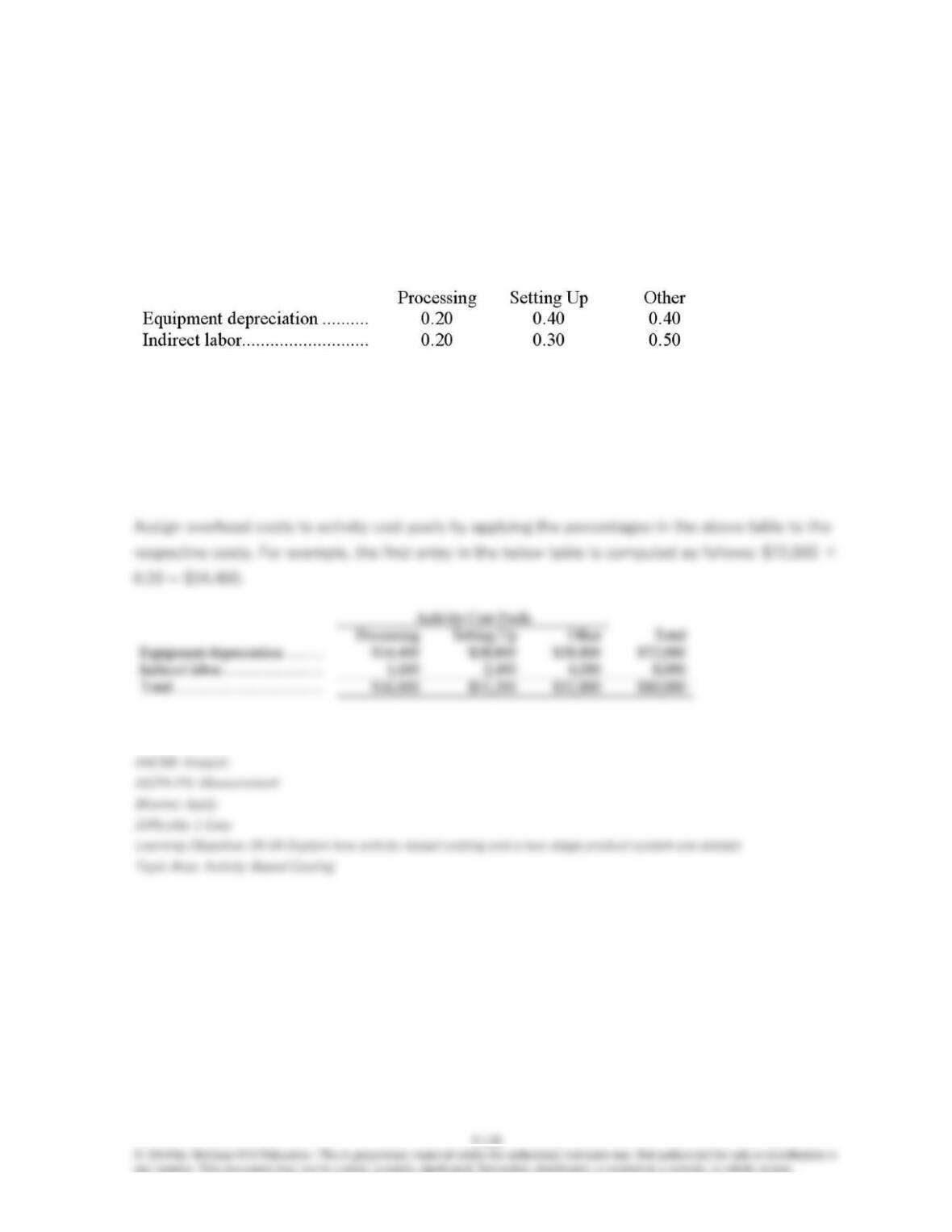
Processing, Setting Up, and Other. The company’s overhead costs consist of equipment
depreciation and indirect labor and are allocated to the cost pools in proportion to the activity cost
pools’ consumption of resources. Equipment depreciation totals $72,000 and indirect labor totals
$8,000. Data concerning the distribution of resource consumption across activity cost pools
appear below:
Required:
Assign overhead costs to activity cost pools using activity-based costing.
9-139
135. Narayan Corporation has an activity-based costing system with three activity cost pools–
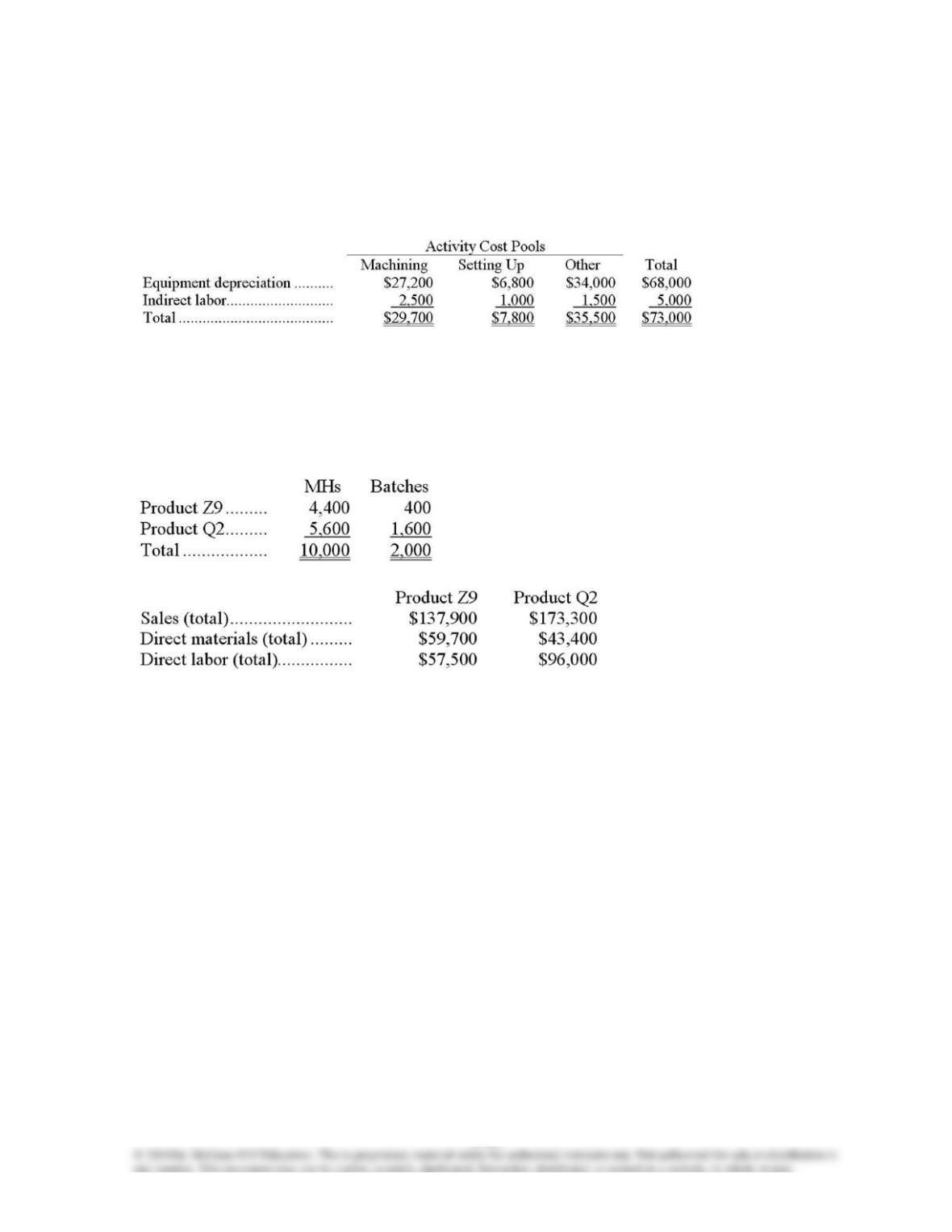
Machining, Setting Up, and Other. The company’s overhead costs, which consist of equipment
depreciation and indirect labor, have been allocated to the cost pools already and are provided in
the table below.
Costs in the Machining cost pool are assigned to products based on machine-hours (MHs) and
costs in the Setting Up cost pool are assigned to products based on the number of batches. Costs
in the Other cost pool are not assigned to products. Data concerning the two products and the
company’s costs appear below:
Required:
a. Calculate activity rates for each activity cost pool using activity-based costing.
b. Determine the amount of overhead cost that would be assigned to each product using activity–
based costing.
c. Determine the product margins for each product using activity-based costing.