35. Which one of the following accounts is not used in an activity-based costing (ABC)
system?
36. Smelly Perfume Company manufactures and distributes several different products. The
company currently uses a plantwide allocation method for allocating overhead at a rate of $7 per
direct labor hour. Cindy is the department manager of Department C which produces Products J
and P. Department C has $16,200 in traceable overhead. Diane is the department manager of
Department D which manufactures Product X. Department D has $11,100 in traceable overhead.
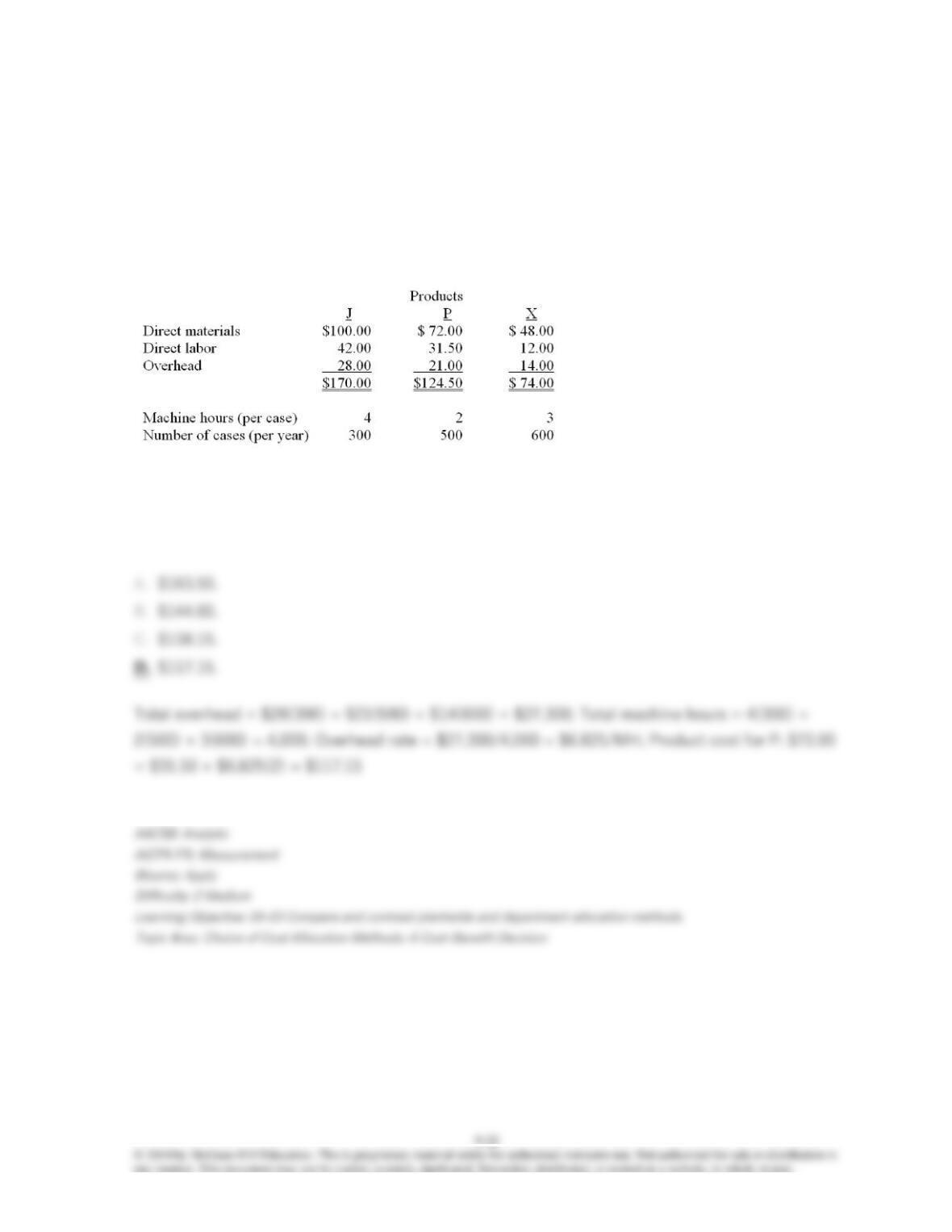
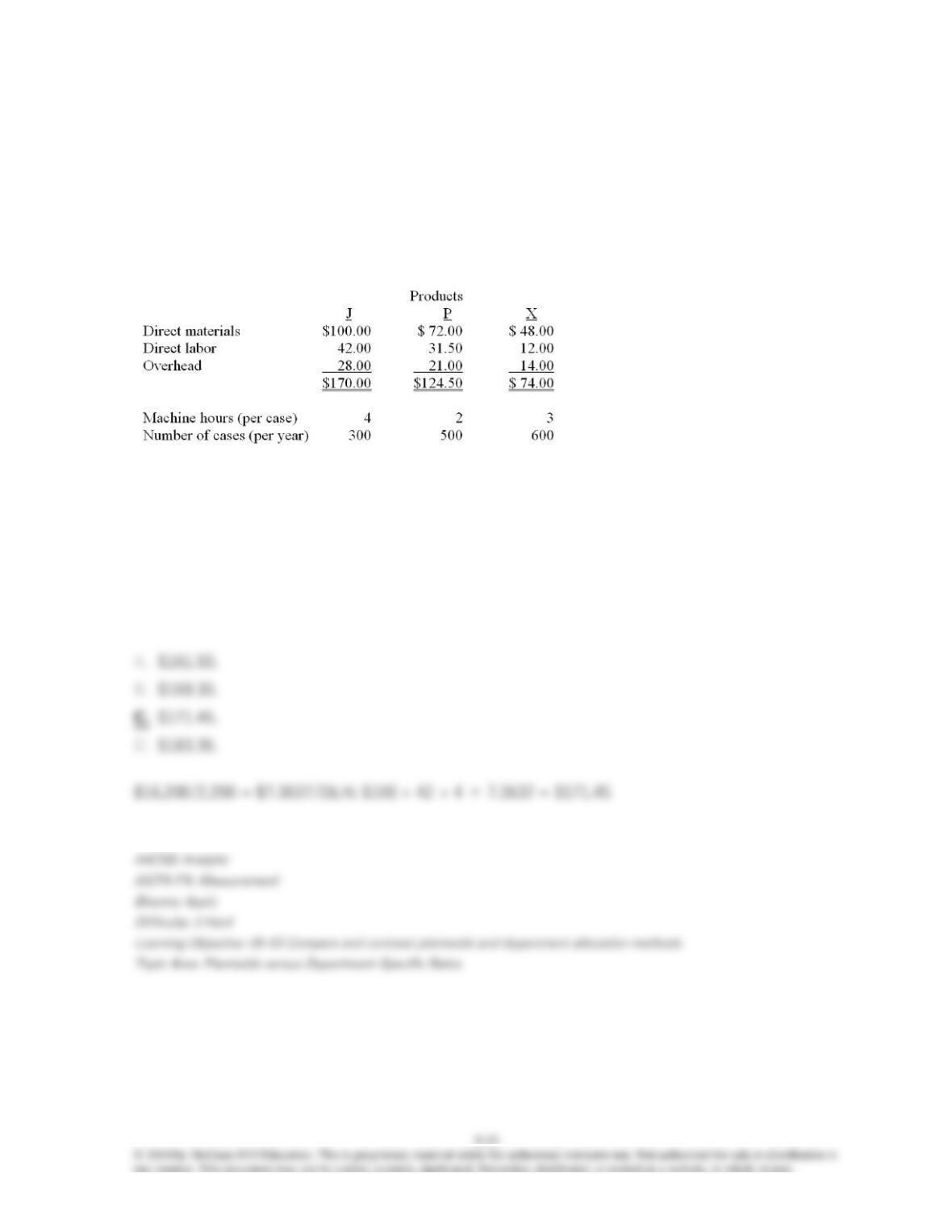
The product costs (per case of 24 bottles) and other information are as follows:
If Smelly changes its allocation basis to machine hours, what is the total product cost per case for
Product P?
37. Smelly Perfume Company manufactures and distributes several different products. The
company currently uses a plantwide allocation method for allocating overhead at a rate of $7 per
direct labor hour. Cindy is the department manager of Department C which produces Products J
and P. Department C has $16,200 in traceable overhead. Diane is the department manager of
Department D which manufactures Product X. Department D has $11,100 in traceable overhead.
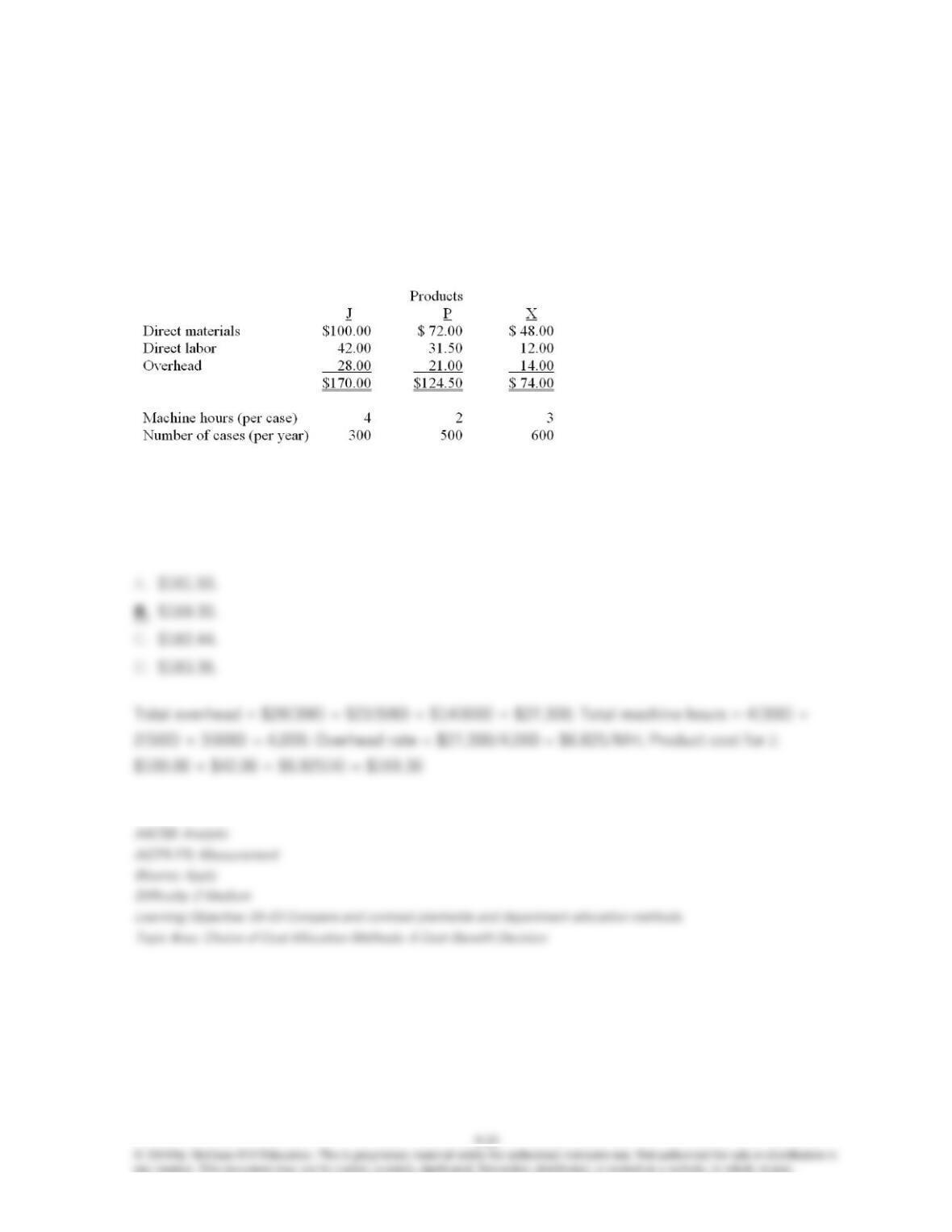
The product costs (per case of 24 bottles) and other information are as follows:
If Smelly changes its allocation basis to machine hours, what is the total product cost per case for
Product J?
38. Smelly Perfume Company manufactures and distributes several different products. The
company currently uses a plantwide allocation method for allocating overhead at a rate of $7 per
direct labor hour. Cindy is the department manager of Department C which produces Products J
and P. Department C has $16,200 in traceable overhead. Diane is the department manager of
Department D which manufactures Product X. Department D has $11,100 in traceable overhead.
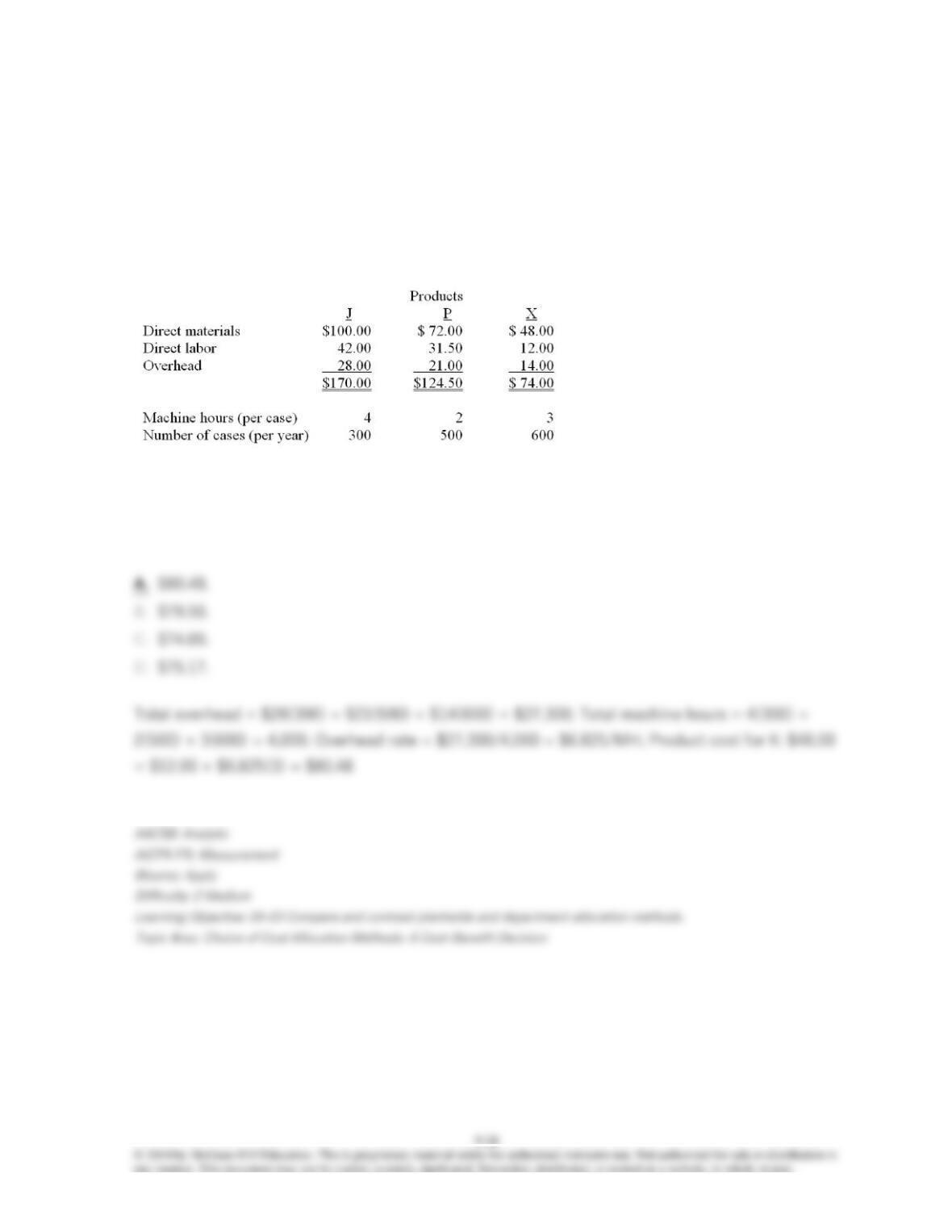
The product costs (per case of 24 bottles) and other information are as follows:
If Smelly changes its allocation basis to machine hours, what is the total product cost per case for
Product X?
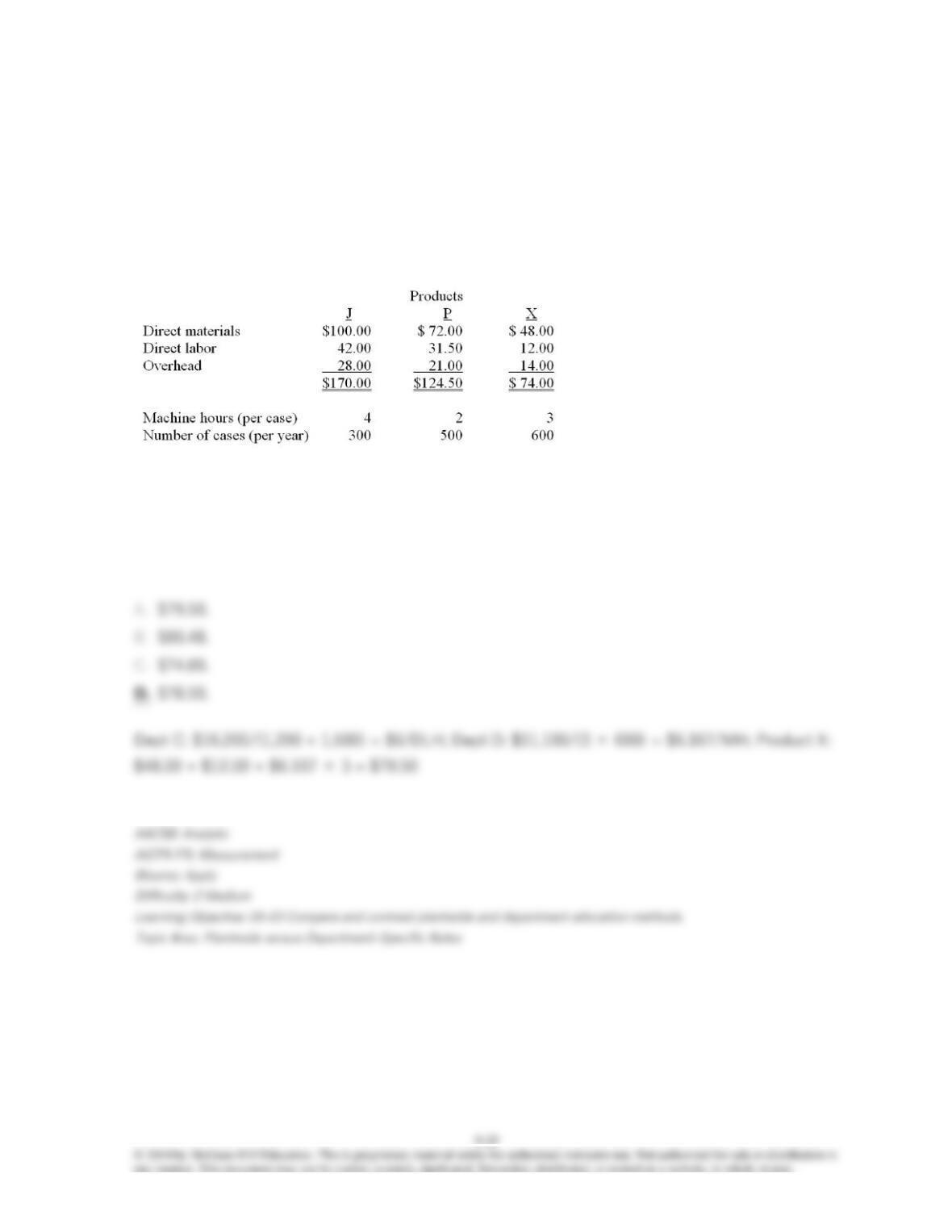
39. Smelly Perfume Company manufactures and distributes several different products. The
company currently uses a plantwide allocation method for allocating overhead at a rate of $7 per
direct labor hour. Cindy is the department manager of Department C which produces Products J
and P. Department C has $16,200 in traceable overhead. Diane is the department manager of
Department D which manufactures Product X. Department D has $11,100 in traceable overhead.
The product costs (per case of 24 bottles) and other information are as follows:
If Smelly changes its overhead allocation to departmental rates, what is the product cost per case
for Product X assuming Departments C and D use direct labor hours and machine hours as their
respective allocation bases?
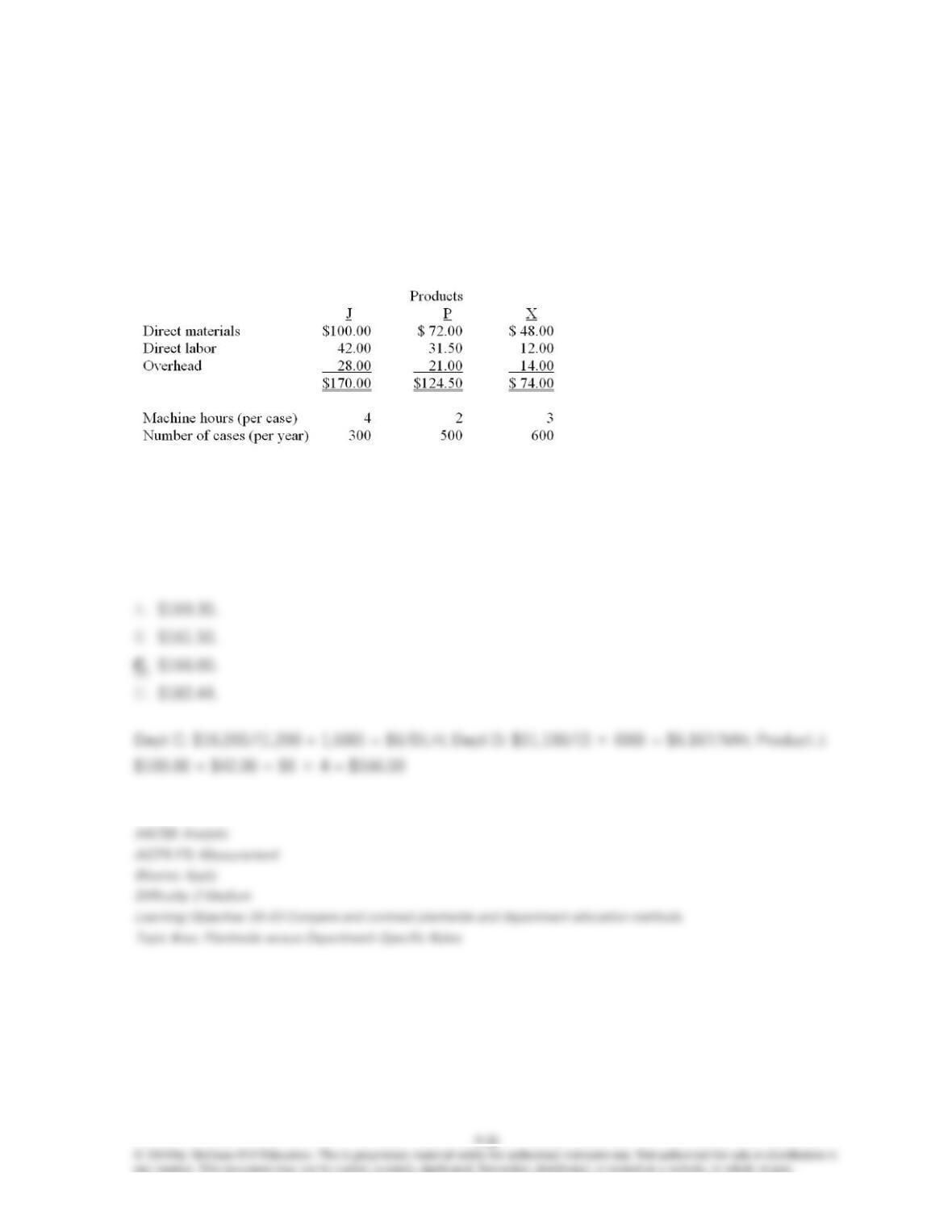
40. Smelly Perfume Company manufactures and distributes several different products. The
company currently uses a plantwide allocation method for allocating overhead at a rate of $7 per
direct labor hour. Cindy is the department manager of Department C which produces Products J
and P. Department C has $16,200 in traceable overhead. Diane is the department manager of
Department D which manufactures Product X. Department D has $11,100 in traceable overhead.
The product costs (per case of 24 bottles) and other information are as follows:
If Smelly changes its overhead allocation to departmental rates, what is the product cost per case
for Product J assuming Departments C and D use direct labor hours and machine hours as their
respective allocation bases?
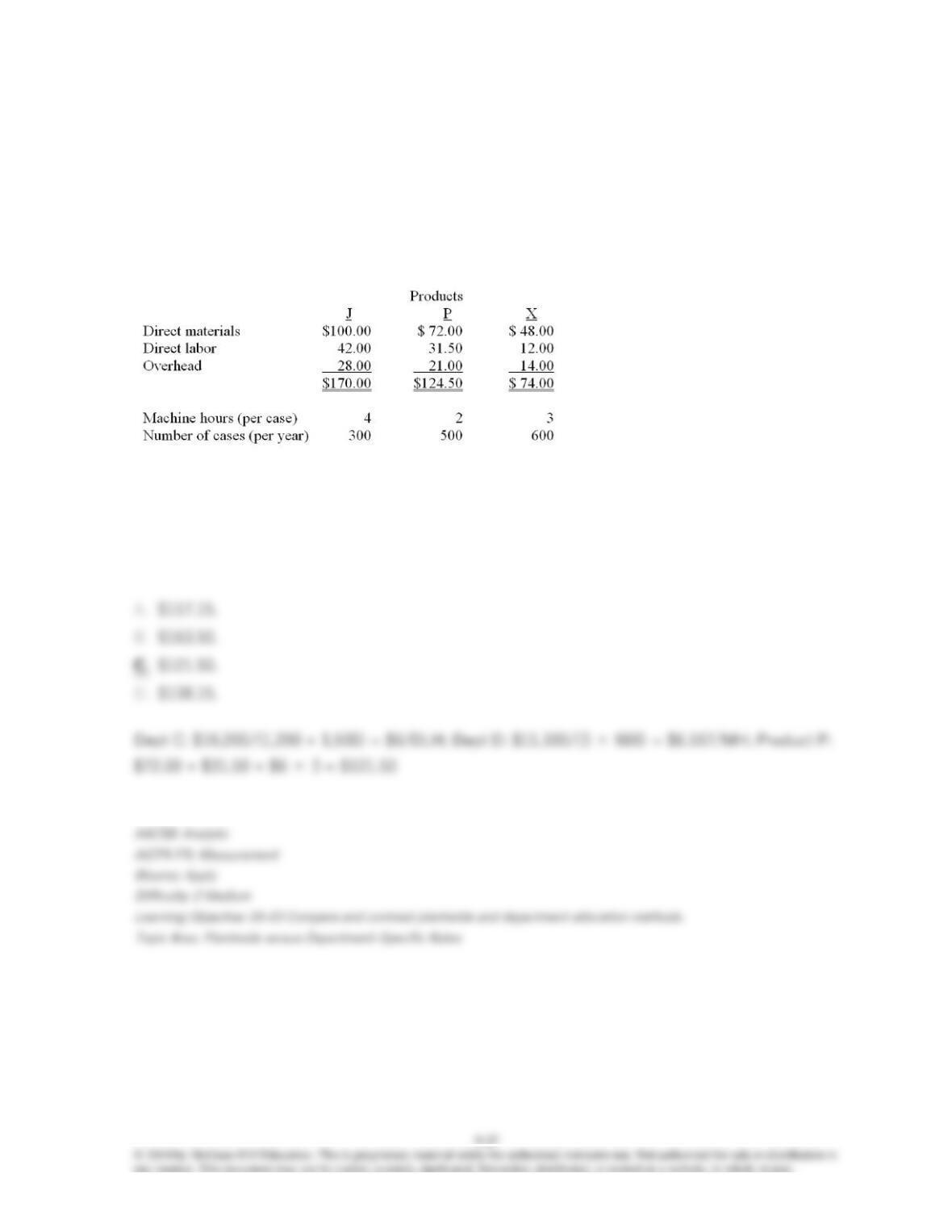
41. Smelly Perfume Company manufactures and distributes several different products. The
company currently uses a plantwide allocation method for allocating overhead at a rate of $7 per
direct labor hour. Cindy is the department manager of Department C which produces Products J
and P. Department C has $16,200 in traceable overhead. Diane is the department manager of
Department D which manufactures Product X. Department D has $11,100 in traceable overhead.
The product costs (per case of 24 bottles) and other information are as follows:
If Smelly changes its overhead allocation to departmental rates, what is the product cost per case
for Product P assuming Departments C and D use direct labor hours and machine hours as their
respective allocation bases?
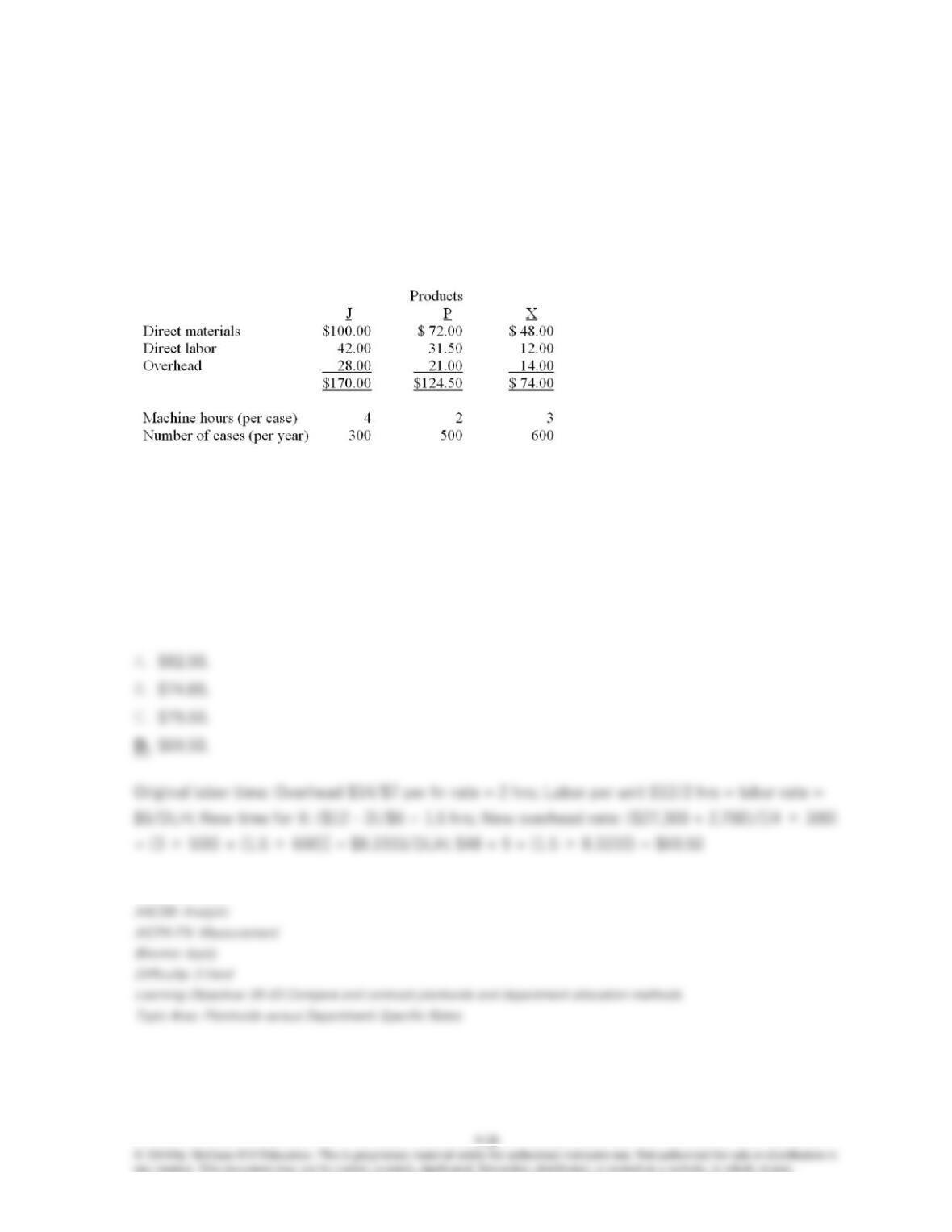
42. Smelly Perfume Company manufactures and distributes several different products. The
company currently uses a plantwide allocation method for allocating overhead at a rate of $7 per
direct labor hour. Cindy is the department manager of Department C which produces Products J
and P. Department C has $16,200 in traceable overhead. Diane is the department manager of
Department D which manufactures Product X. Department D has $11,100 in traceable overhead.
The product costs (per case of 24 bottles) and other information are as follows:
Department D has recently purchased and installed new computerized equipment for Product X.
This equipment will increase the overhead costs by $2,700 and decrease labor costs (due to time
savings) in Department D by $3.00 per case. Machine hours will not change. If Smelly uses a
plantwide rate based on direct labor hours, what is the revised product cost per case for Product
X?
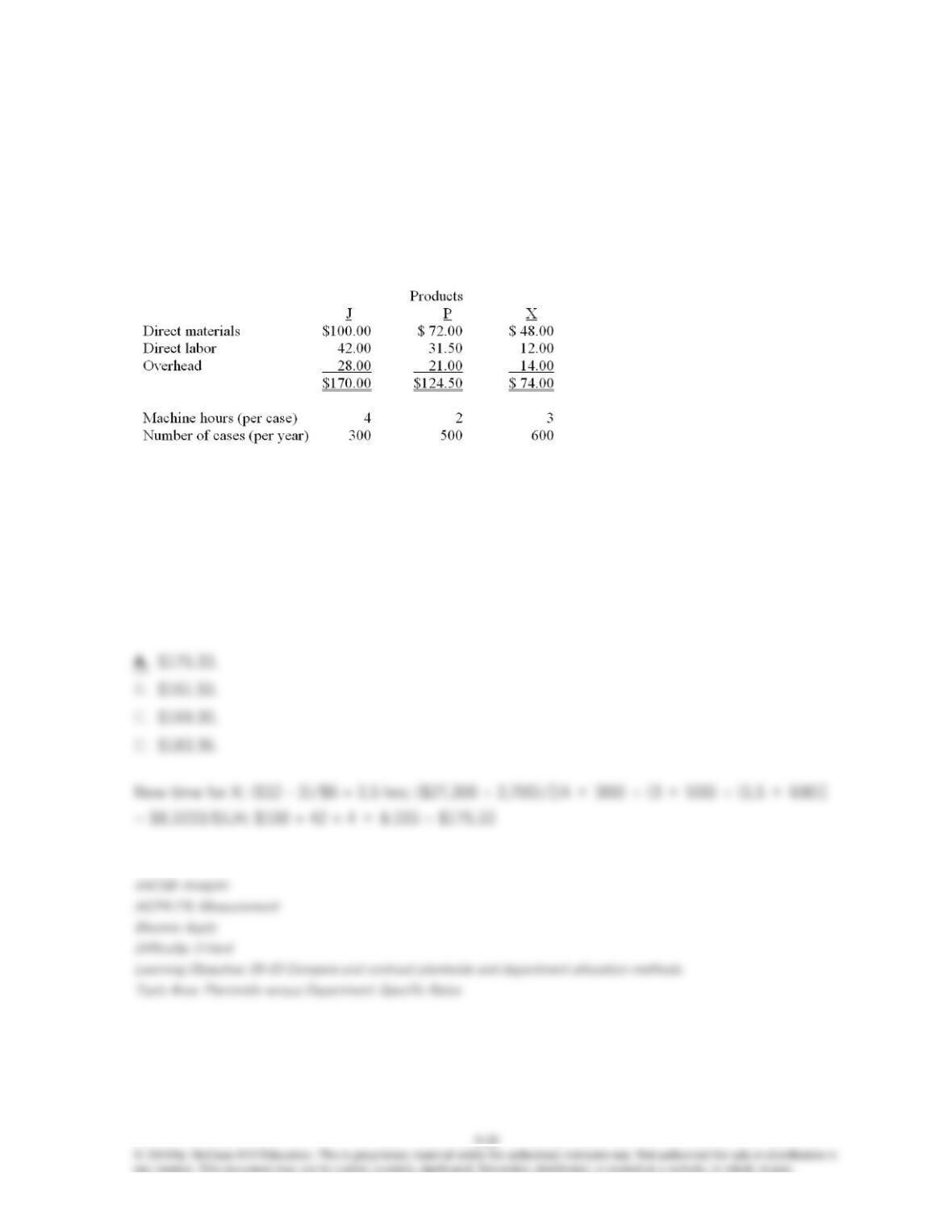
43. Smelly Perfume Company manufactures and distributes several different products. The
company currently uses a plantwide allocation method for allocating overhead at a rate of $7 per
direct labor hour. Cindy is the department manager of Department C which produces Products J
and P. Department C has $16,200 in traceable overhead. Diane is the department manager of
Department D which manufactures Product X. Department D has $11,100 in traceable overhead.
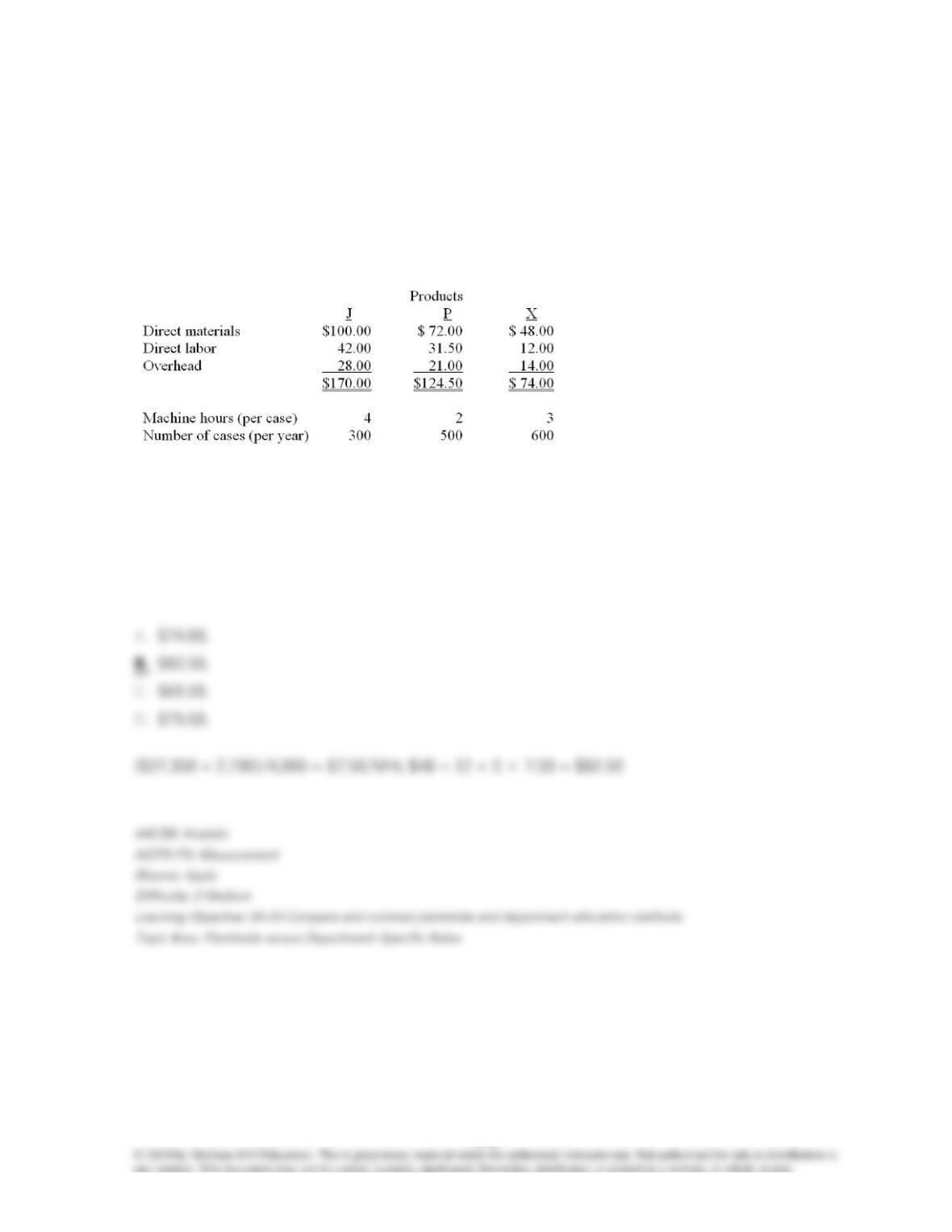
The product costs (per case of 24 bottles) and other information are as follows:
Department D has recently purchased and installed new computerized equipment for Product X.
This equipment will increase the overhead costs by $2,700 and decrease labor costs (due to time
savings) in Department D by $3.00 per case. Machine hours will not change. If Smelly uses a
plantwide rate based on direct labor hours, what is the revised product cost per case for Product
J?
9-30
44. Smelly Perfume Company manufactures and distributes several different products. The
company currently uses a plantwide allocation method for allocating overhead at a rate of $7 per
direct labor hour. Cindy is the department manager of Department C which produces Products J
and P. Department C has $16,200 in traceable overhead. Diane is the department manager of
Department D which manufactures Product X. Department D has $11,100 in traceable overhead.
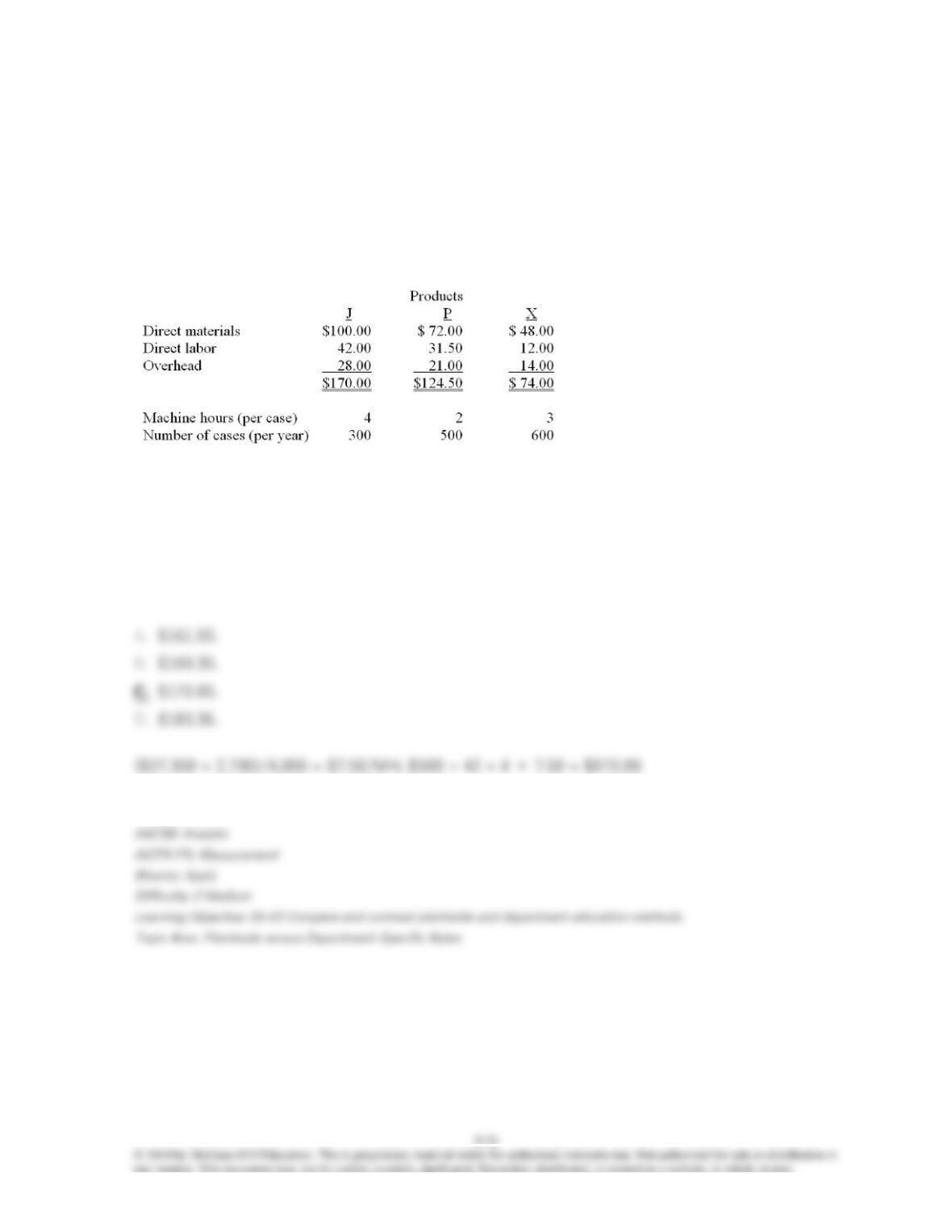
The product costs (per case of 24 bottles) and other information are as follows:
Department D has recently purchased and installed new computerized equipment for Product X.
This equipment will increase the overhead costs by $2,700 and decrease labor costs (due to time
savings) in Department D by $3.00 per case. Machine hours will not change. If Smelly uses a
plantwide rate based on machine hours, what is the revised product cost per case for Product X?
45. Smelly Perfume Company manufactures and distributes several different products. The
company currently uses a plantwide allocation method for allocating overhead at a rate of $7 per
direct labor hour. Cindy is the department manager of Department C which produces Products J
and P. Department C has $16,200 in traceable overhead. Diane is the department manager of
Department D which manufactures Product X. Department D has $11,100 in traceable overhead.
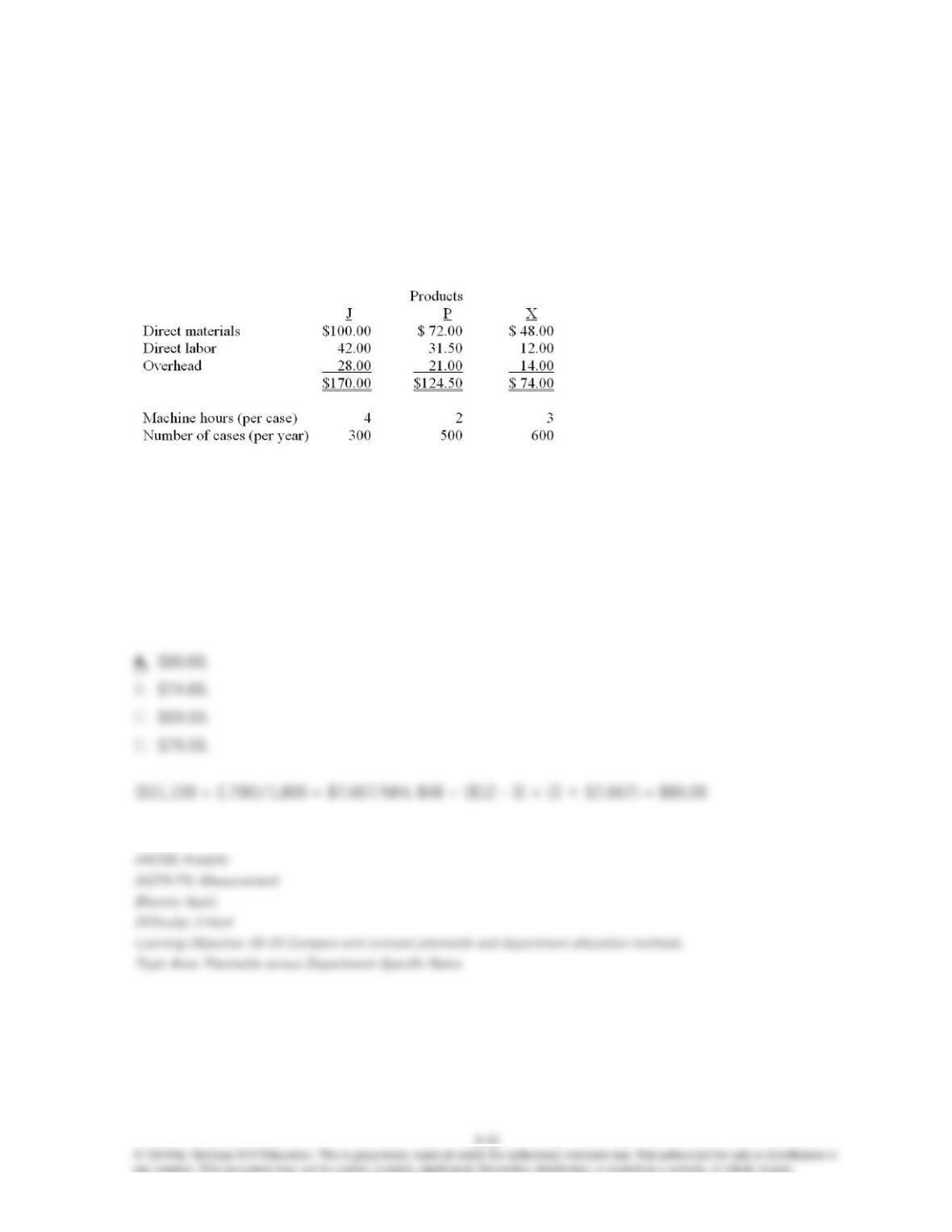
The product costs (per case of 24 bottles) and other information are as follows:
Department D has recently purchased and installed new computerized equipment for Product X.
This equipment will increase the overhead costs by $2,700 and decrease labor costs (due to time
savings) in Department D by $3.00 per case. Machine hours will not change. If Smelly uses a
plantwide rate based on machine hours, what is the revised product cost per case for Product J?
46. Smelly Perfume Company manufactures and distributes several different products. The
company currently uses a plantwide allocation method for allocating overhead at a rate of $7 per
direct labor hour. Cindy is the department manager of Department C which produces Products J
and P. Department C has $16,200 in traceable overhead. Diane is the department manager of
Department D which manufactures Product X. Department D has $11,100 in traceable overhead.
The product costs (per case of 24 bottles) and other information are as follows:
Department D has recently purchased and installed new computerized equipment for Product X.
This equipment will increase the overhead costs by $2,700 and decrease labor costs (due to time
savings) in Department D by $3.00 per case. Machine hours will not change. If Smelly uses
departmental rates, what are the product costs per case for Product X assuming Departments C
and D use direct labor hours and machine hours as their respective allocation bases?
47. Smelly Perfume Company manufactures and distributes several different products. The
company currently uses a plantwide allocation method for allocating overhead at a rate of $7 per
direct labor hour. Cindy is the department manager of Department C which produces Products J
and P. Department C has $16,200 in traceable overhead. Diane is the department manager of
Department D which manufactures Product X. Department D has $11,100 in traceable overhead.
The product costs (per case of 24 bottles) and other information are as follows:
Department D has recently purchased and installed new computerized equipment for Product X.
This equipment will increase the overhead costs by $2,700 and decrease labor costs (due to time
savings) in Department D by $3.00 per case. Machine hours will not change. If Smelly uses
departmental rates, what are the product costs per case for Product J assuming Departments C
and D use direct labor hours and machine hours as their respective allocation bases?
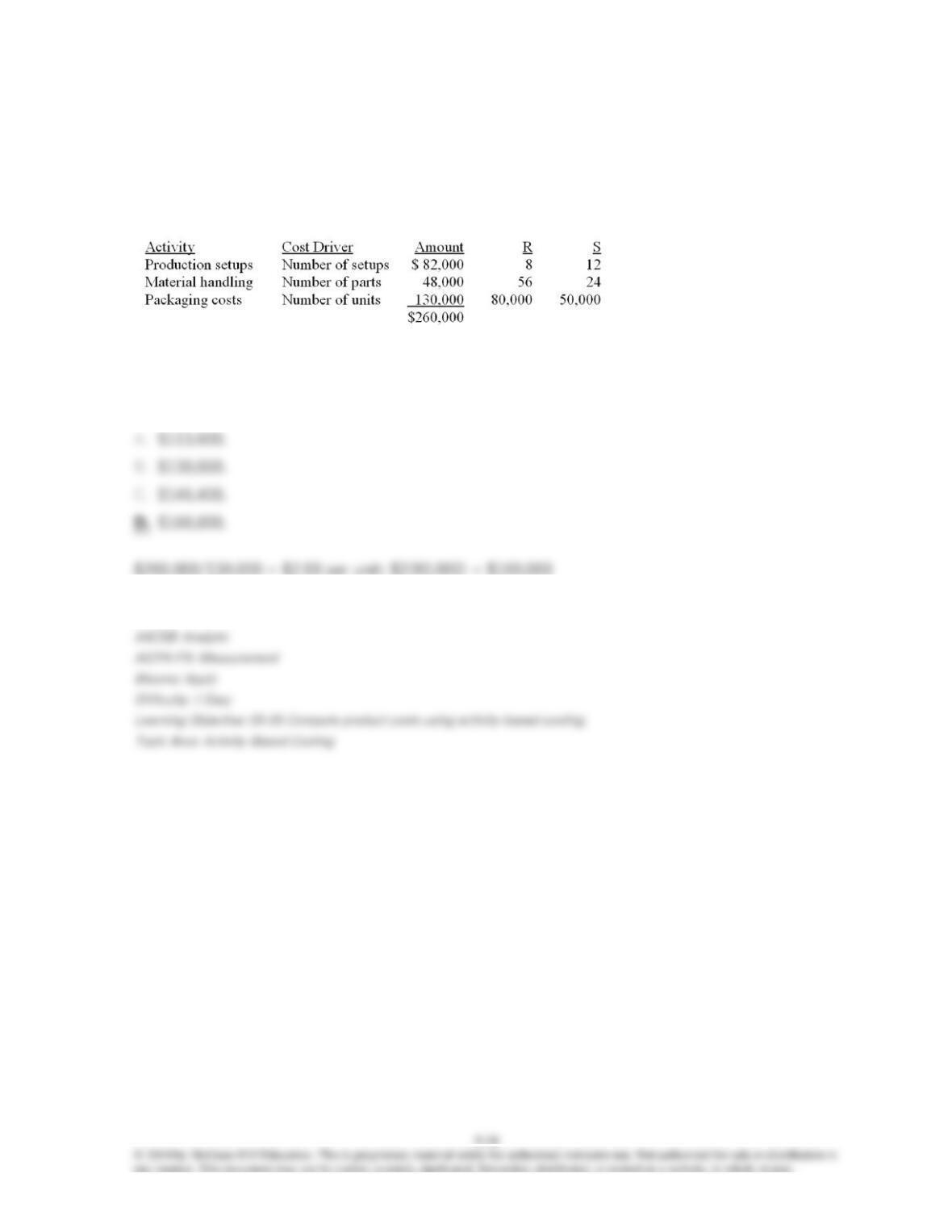
48. RS Company manufactures and distributes two products, R and S. Overhead costs are
currently allocated using the number of units produced as the allocation base. The controller has
recommended changing to an activity-based costing (ABC) system. She has collected the
following information:
What is the total overhead allocated to Product R using the current system?
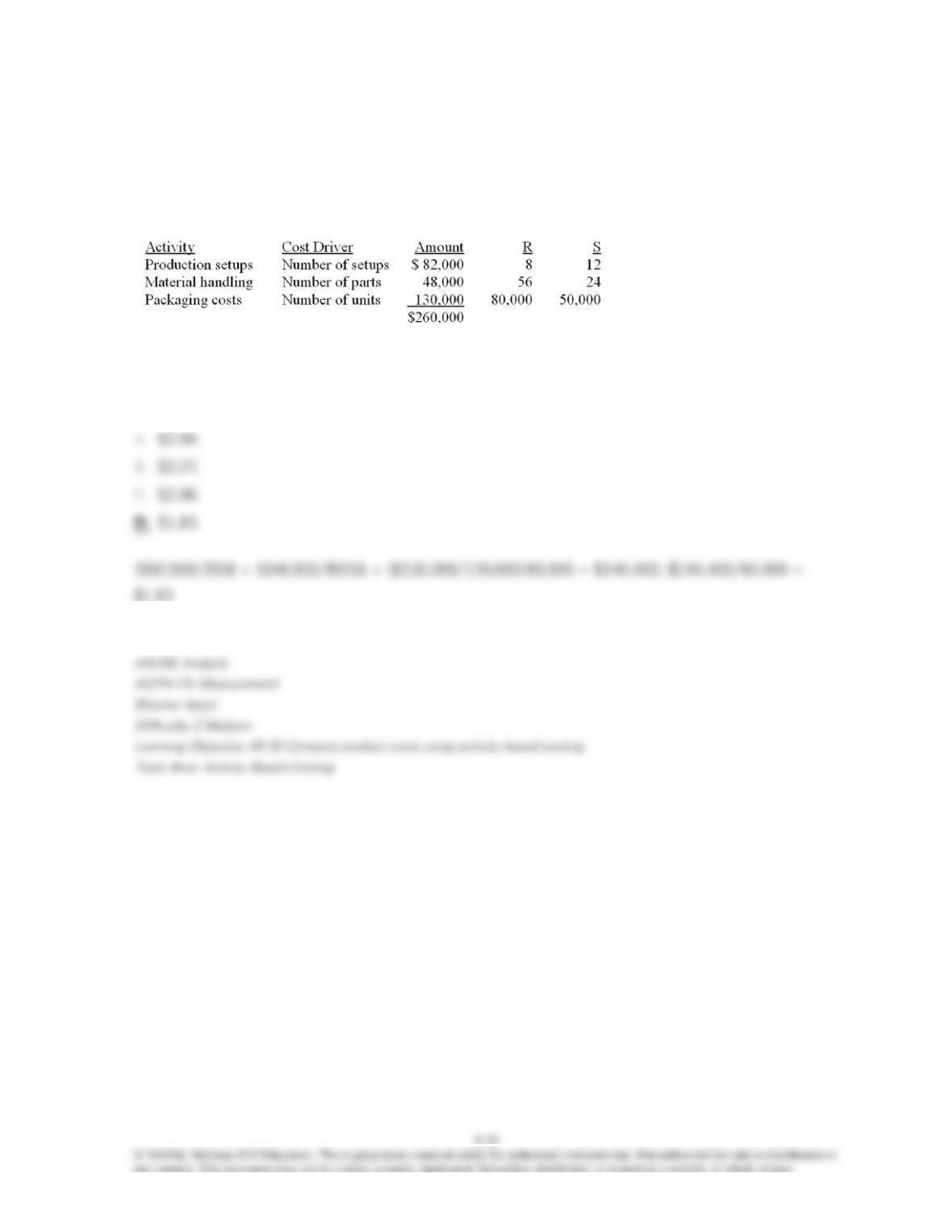
49. RS Company manufactures and distributes two products, R and S. Overhead costs are
currently allocated using the number of units produced as the allocation base. The controller has
recommended changing to an activity-based costing (ABC) system. She has collected the
following information:
What is the total overhead per unit allocated to Product R using activity-based costing (ABC)?
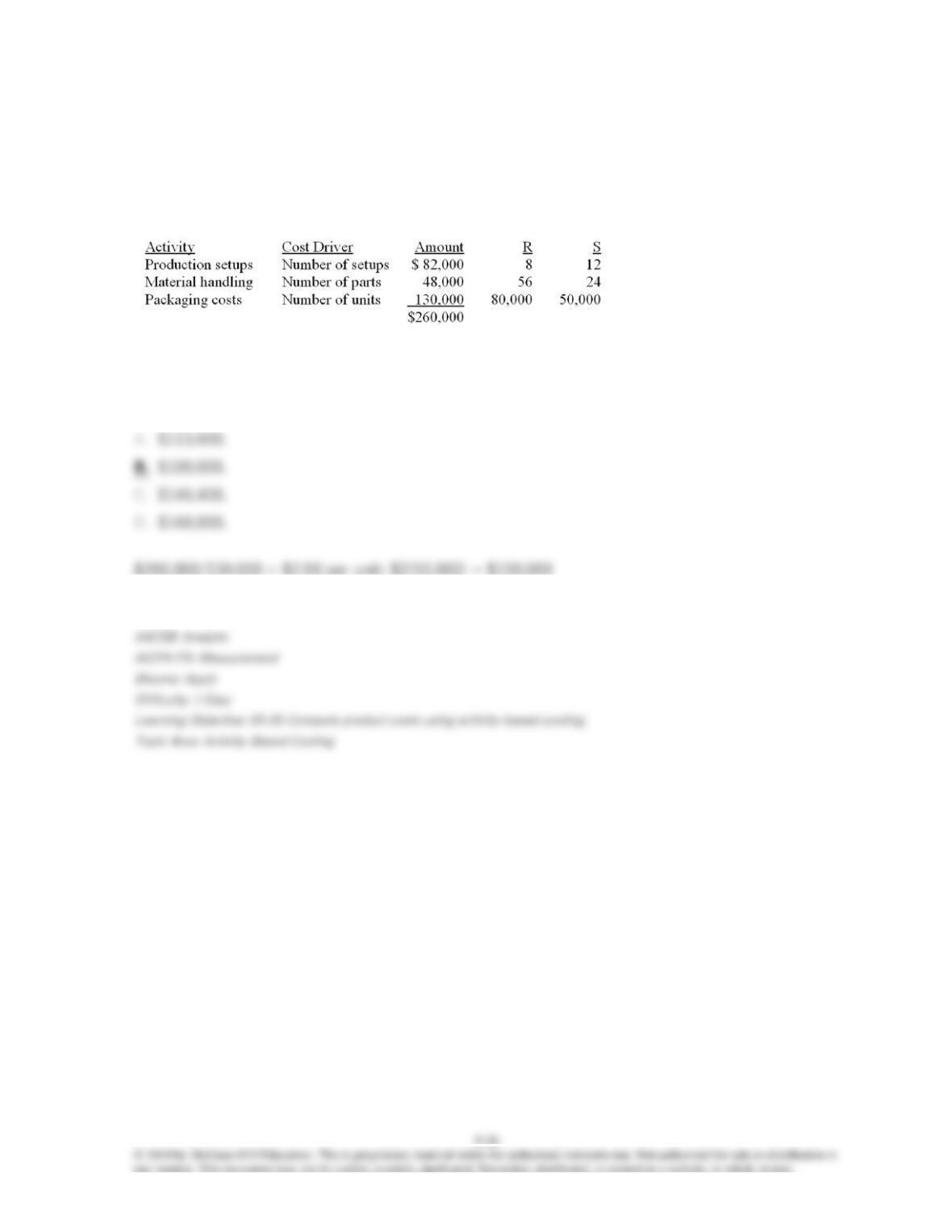
50. RS Company manufactures and distributes two products, R and S. Overhead costs are
currently allocated using the number of units produced as the allocation base. The controller has
recommended changing to an activity-based costing (ABC) system. She has collected the
following information:
What is the total overhead allocated to Product S using the current system?
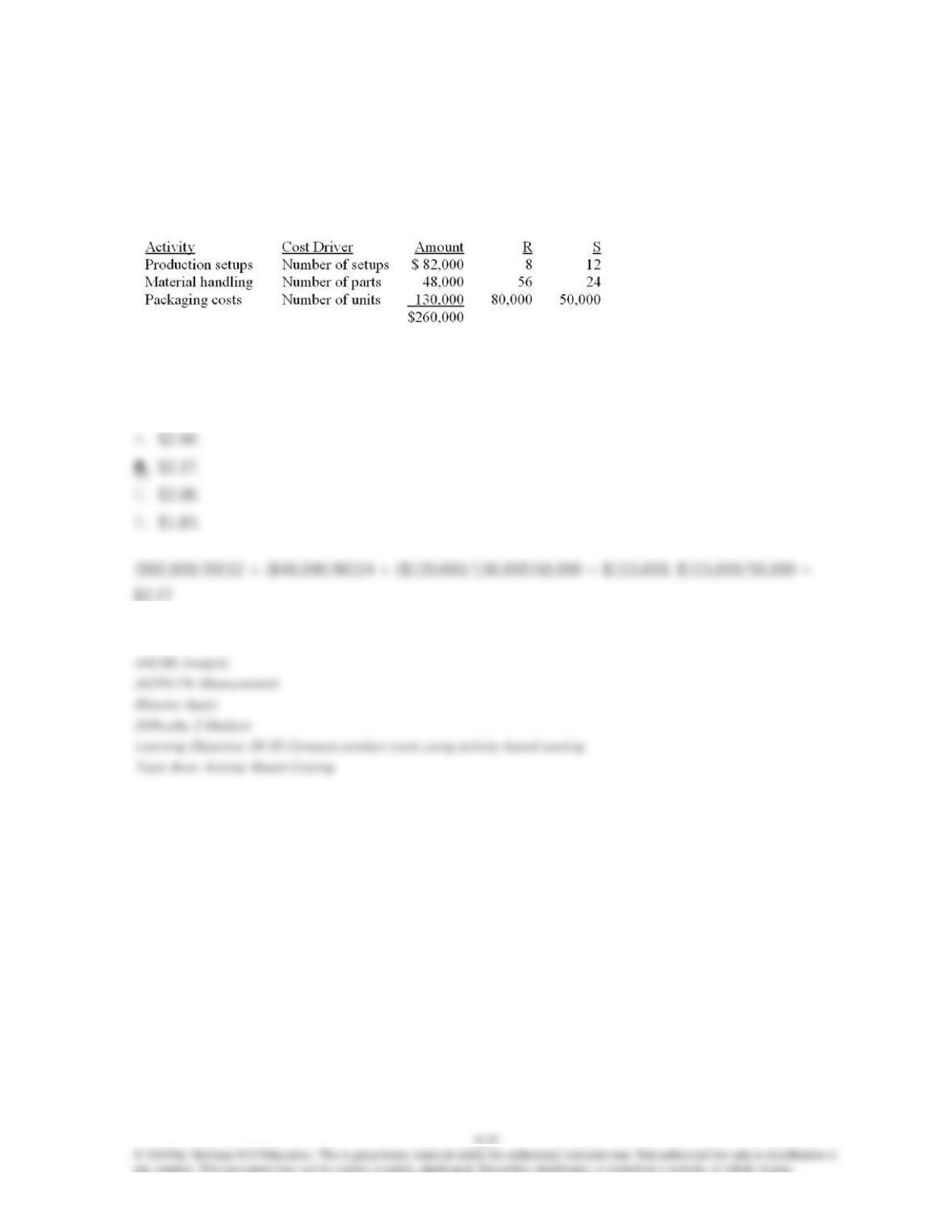
51. RS Company manufactures and distributes two products, R and S. Overhead costs are
currently allocated using the number of units produced as the allocation base. The controller has
recommended changing to an activity-based costing (ABC) system. She has collected the
following information:
What is the total overhead per unit allocated to Product S using activity-based costing (ABC)?
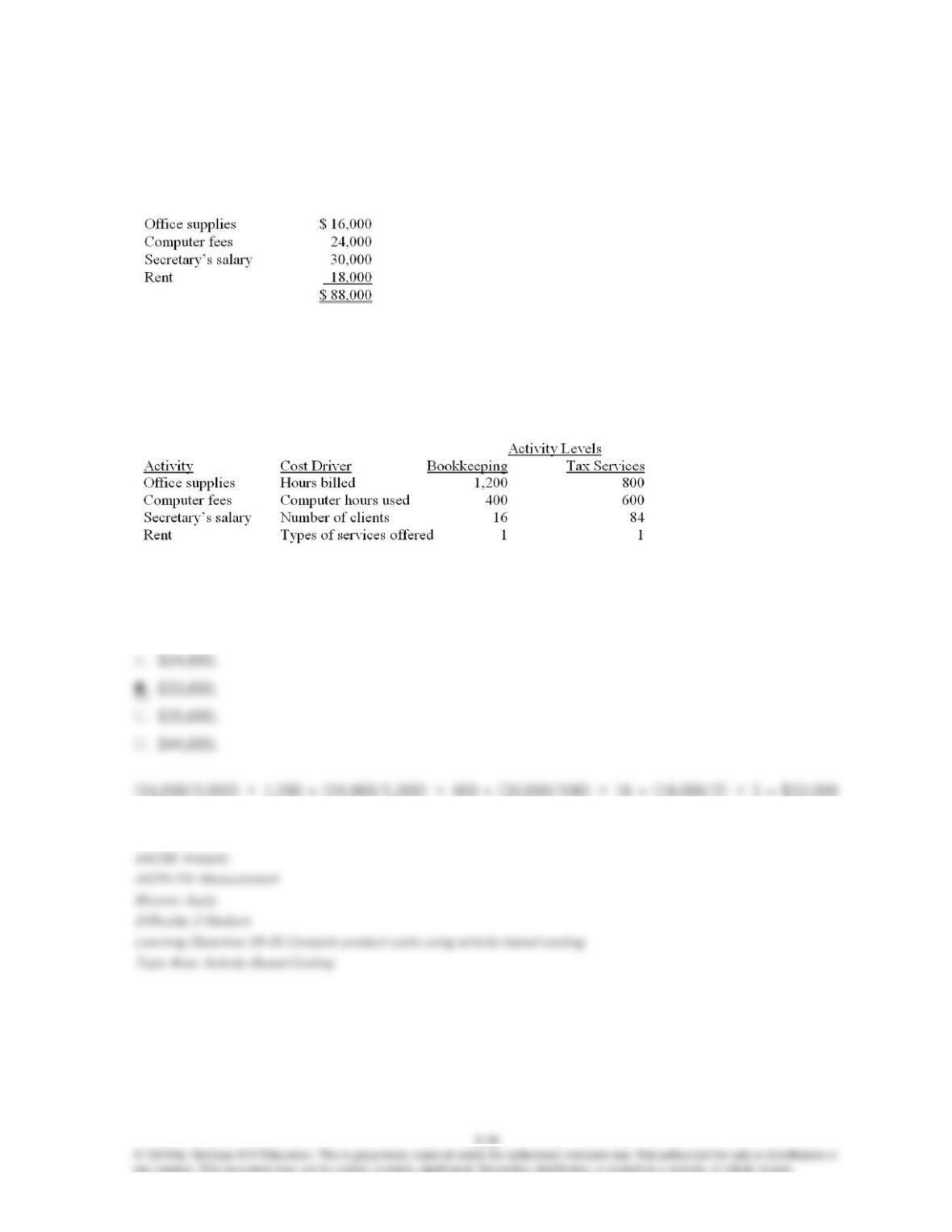
52. Terri Martin, CPA provides bookkeeping and tax services to her clients. She charges a fee
of $60 per hour for bookkeeping and $90 per hour for tax services. Martin estimates the following
costs for the upcoming year:
Operating profits declined last year and Ms. Martin has decided to use activity-based costing
(ABC) procedures to evaluate her hourly fees. She gathered the following information from last
year’s records:
What is the total cost allocated to the bookkeeping services using activity-based costing?
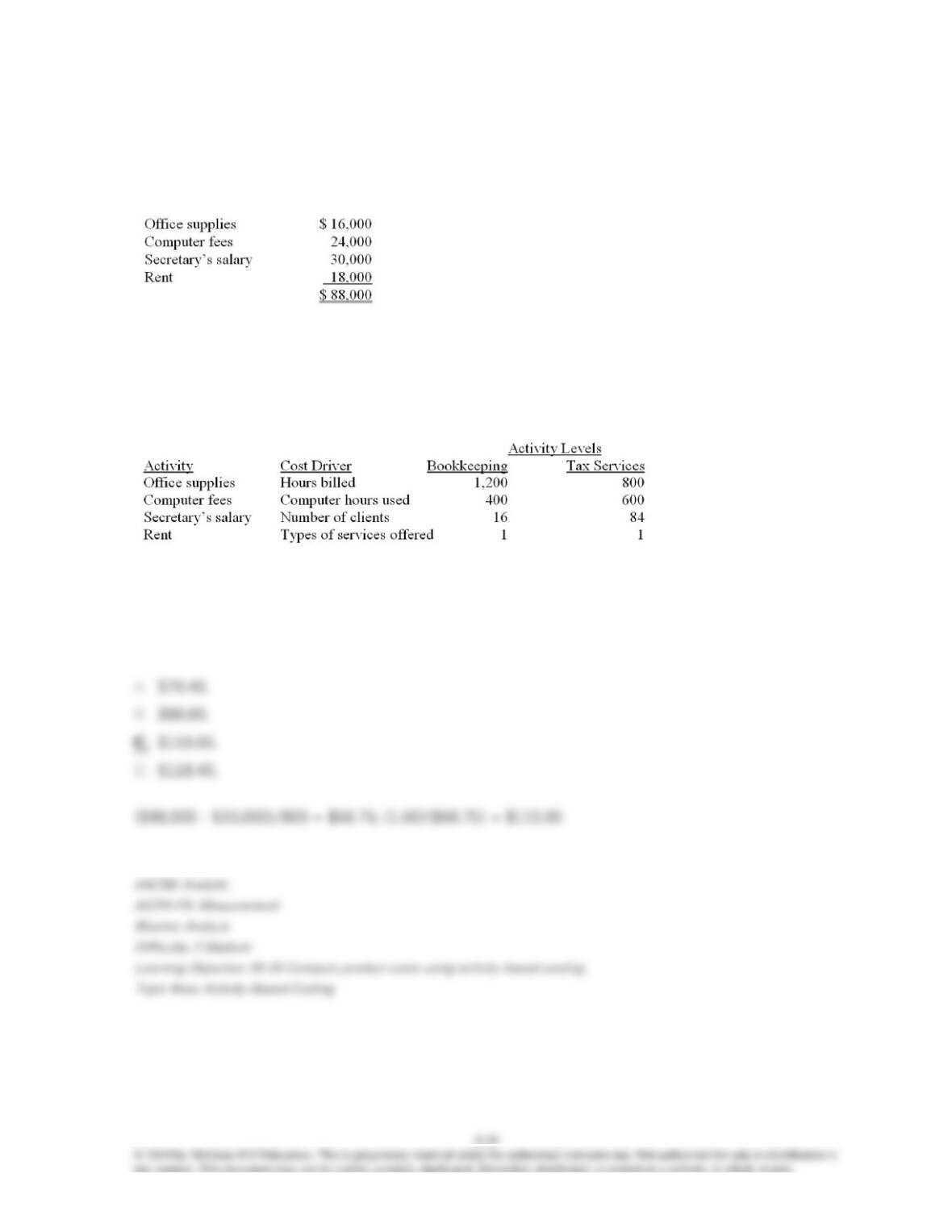
53. Terri Martin, CPA provides bookkeeping and tax services to her clients. She charges a fee
of $60 per hour for bookkeeping and $90 per hour for tax services. Martin estimates the following
costs for the upcoming year:
Operating profits declined last year and Ms. Martin has decided to use activity–based costing
(ABC) procedures to evaluate her hourly fees. She gathered the following information from last
year’s records:
Martin wants her hourly fees for the tax services to be 160% of their activity-based costs. What is
the fee per hour for tax services in the upcoming year?
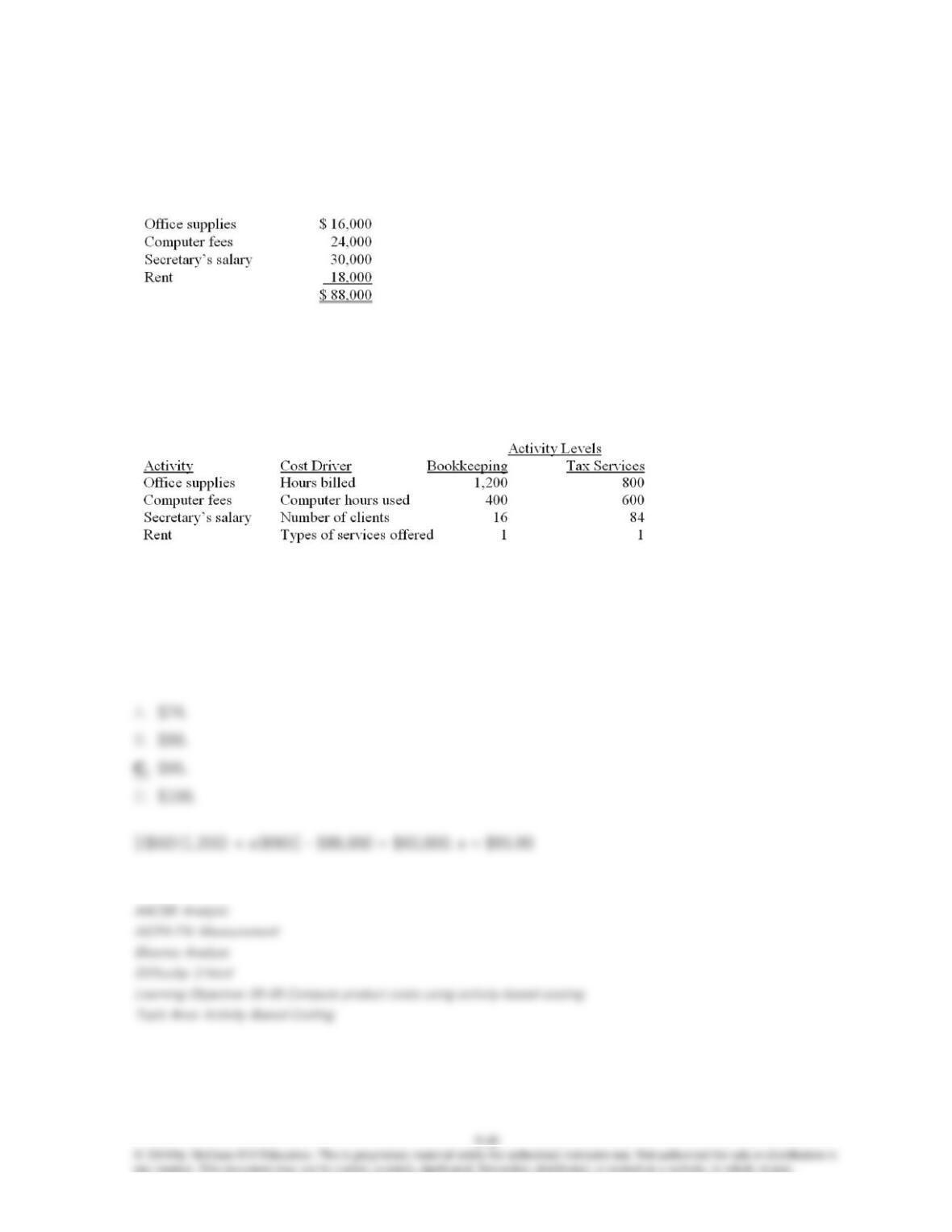
54. Terri Martin, CPA provides bookkeeping and tax services to her clients. She charges a fee
of $60 per hour for bookkeeping and $90 per hour for tax services. Martin estimates the following
costs for the upcoming year:
Operating profits declined last year and Ms. Martin has decided to use activity-based costing
(ABC) procedures to evaluate her hourly fees. She gathered the following information from last
year’s records:
Martin cannot change the hourly fee for the bookkeeping services because of the number of
competing firms in the area. If Martin wants to earn $60,000 pre-tax in the upcoming year, how
much will she charge per hour for tax services?