153)
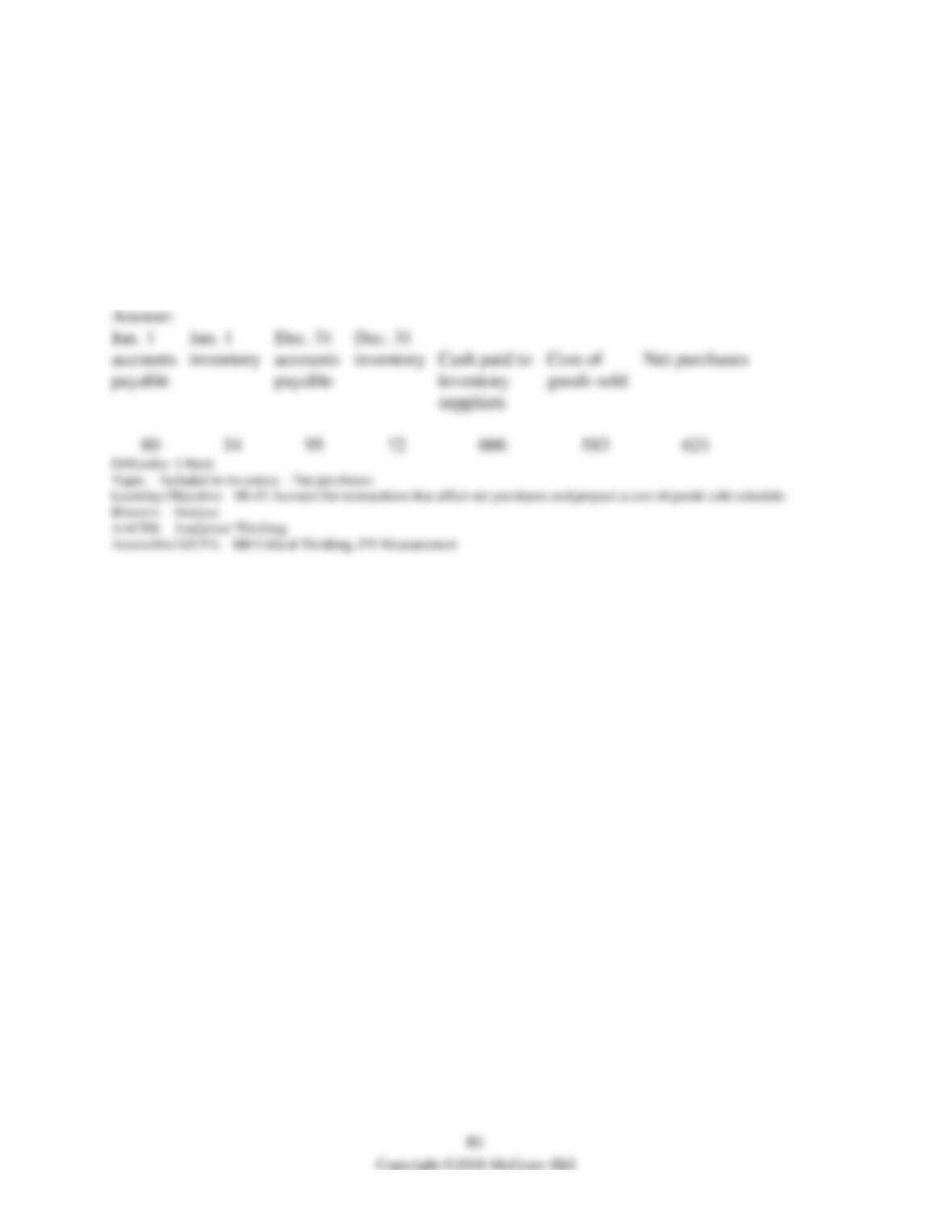
Jan. 1
accounts
payable
Jan. 1
inventory
Dec. 31
accounts
payable
Dec. 31
inventory
Cash paid to
inventory
suppliers
Cost of
goods sold
Net purchases
80
72
606
583
621
suppliers
80
34
95
72
606
583
621
Use the following to answer the question(s) below:
Shown below is activity for one of the products of Denver Office Equipment:
January 1 balance, 500 units @ $55 $27,500
Purchases:
January 10: 500 units @ $60
January 20: 1,000 units @ $63
Sales:
January 12: 800 units
January 28: 750 units
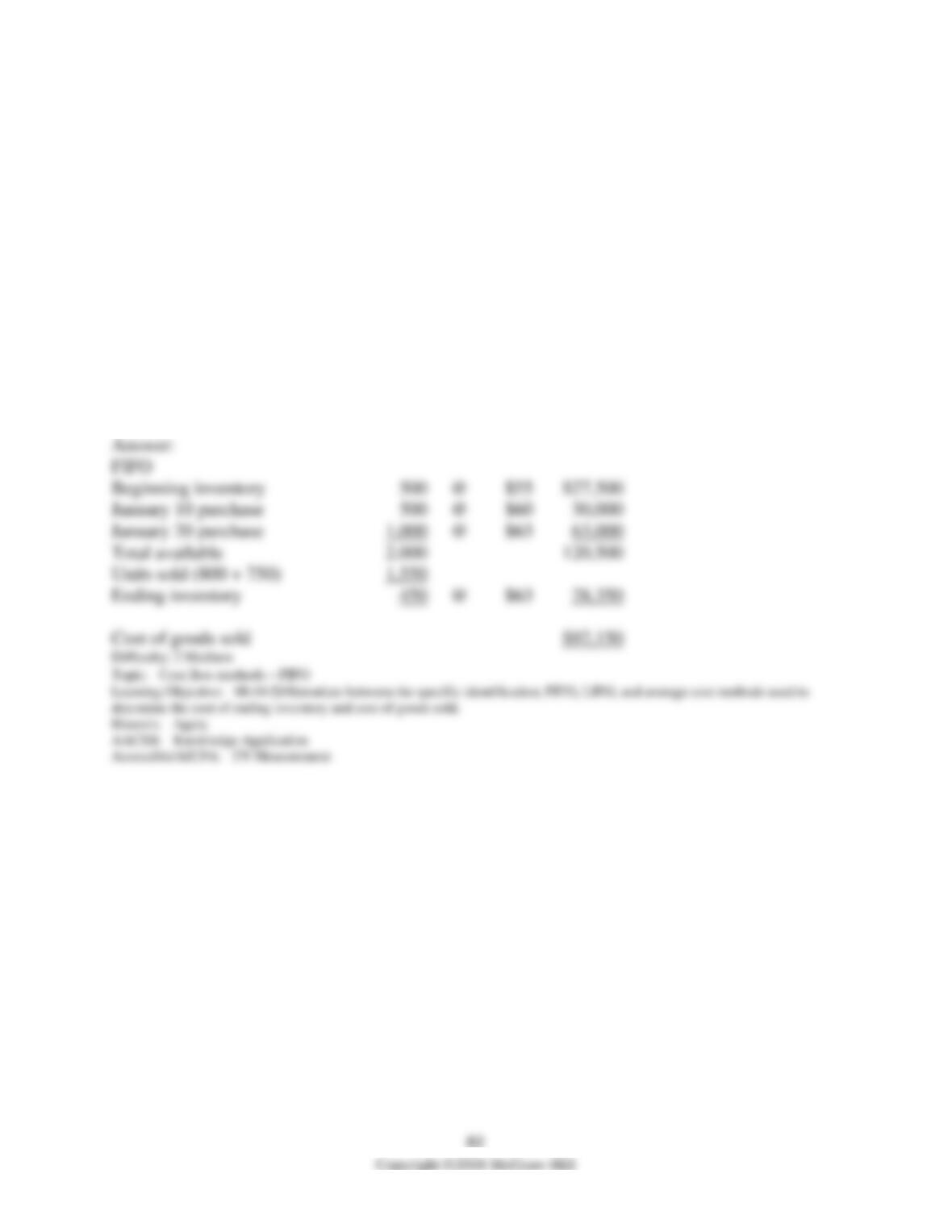
154) Required: Compute the January 31 ending inventory and cost of goods sold for January,
assuming Denver uses FIFO.
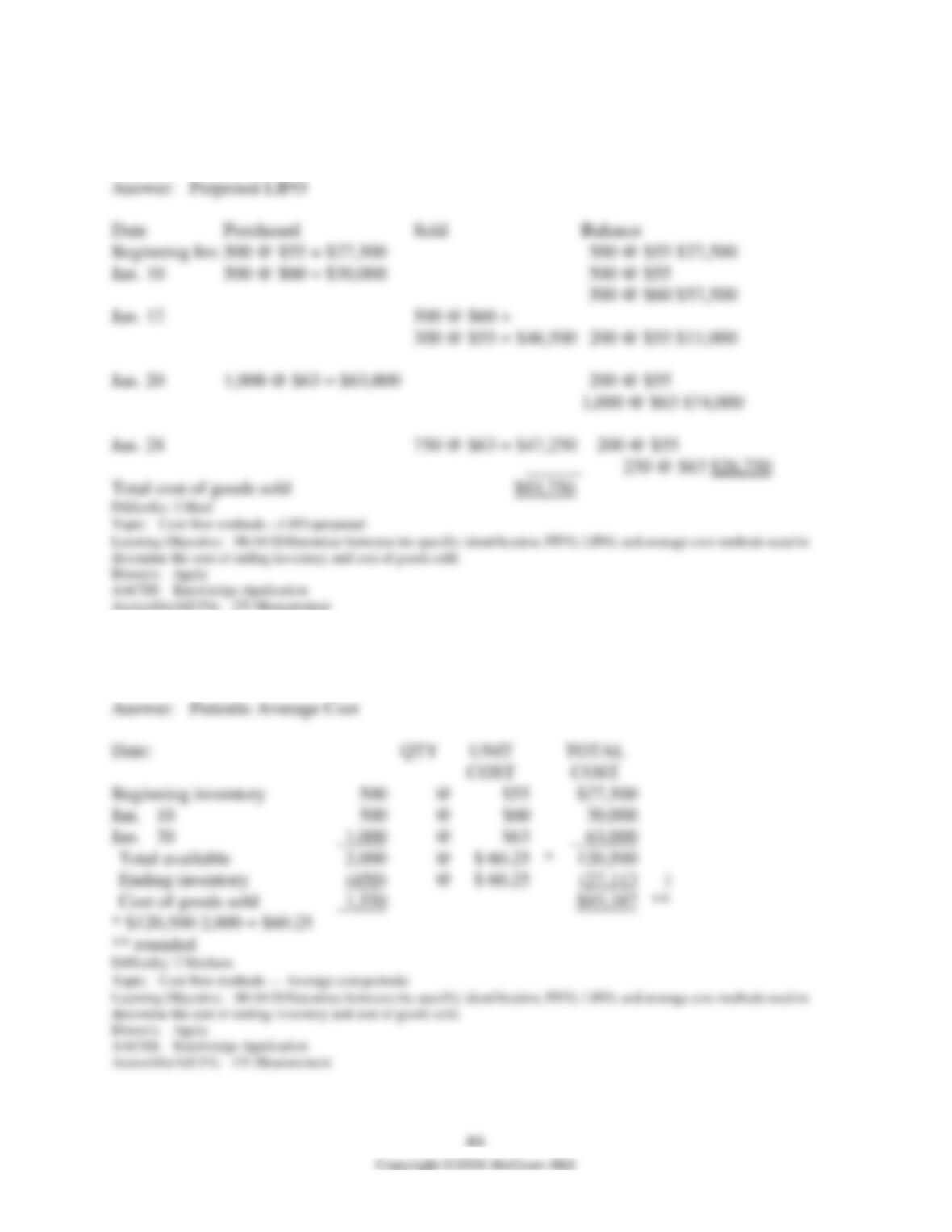
155) Required: Compute the January 31 ending inventory and cost of goods sold for January,
assuming Denver uses LIFO and a perpetual inventory system.
156) Required: Compute the January 31 ending inventory and cost of goods sold for January,
assuming Denver uses average cost and a periodic inventory system.
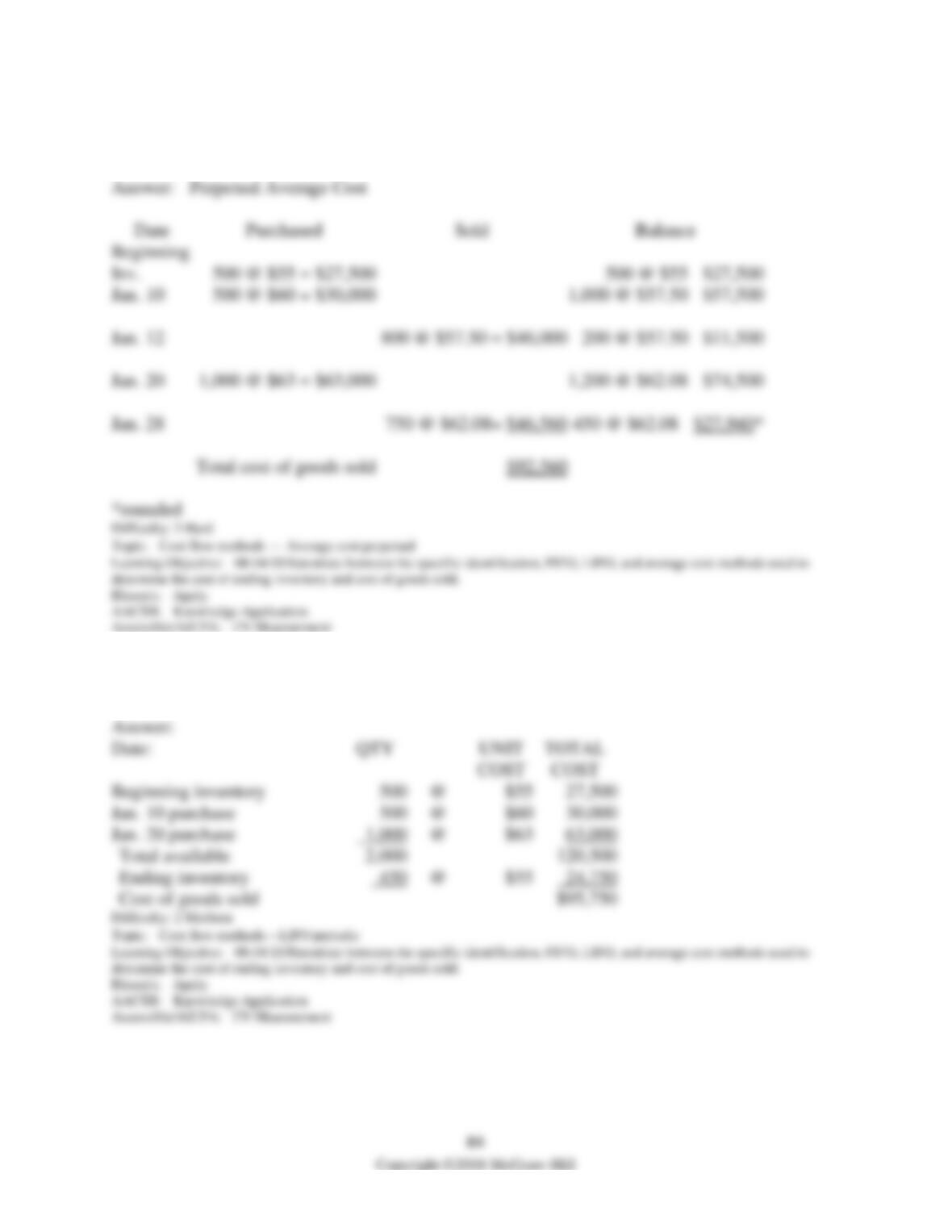
157) Required: Compute the January 31 ending inventory and cost of goods sold for January,
assuming Denver uses average cost and a perpetual inventory system.
158) Required: Compute the January 31 ending inventory and cost of goods sold for January,
assuming Denver uses LIFO and a periodic inventory system.
159) Required: Compute the January 31 ending inventory and cost of goods sold for January,
assuming Random Creations uses FIFO.
160) Required: Compute the January 31 ending inventory and cost of goods sold for January,
assuming Random Creations uses LIFO and perpetual inventory system.
161) Required: Compute the January 31 ending inventory and cost of goods sold for January,
assuming Random Creations uses LIFO and a periodic inventory system.
162) Required: Compute the January 31 ending inventory and cost of goods sold for January,
assuming Random Creations uses average cost and a periodic inventory system.
163) Required: Compute the January 31 ending inventory and cost of goods sold for January,
assuming Random Creations uses average cost and a perpetual inventory system.
164) Bettencourt Clothing Corporation uses a periodic inventory system and the LIFO cost
method. The company began 2018 with the following inventory layers (listed in chronological
order of acquisition):
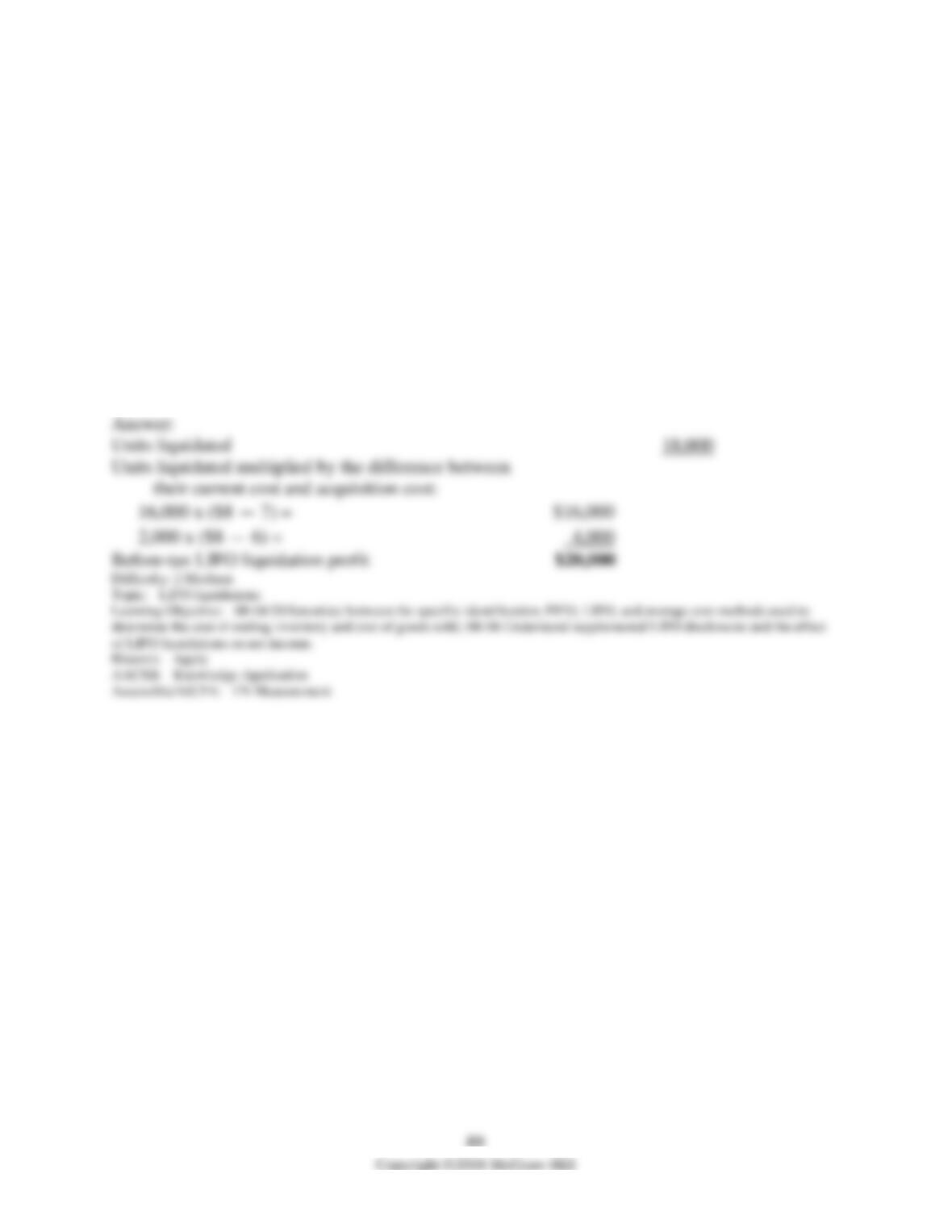
5,000 units @ $10 $50,000
8,000 units @ $12 96,000
Beginning inventory $146,000
During 2018, 20,000 units were purchased for $15 per unit. Sales for the year totaled 30,000
units at various prices, leaving 3,000 units in ending inventory.
Required:
1. Calculate cost of goods sold for 2018.
2. Determine the amount of LIFO liquidation profit that the company must report in a disclosure
note to its 2018 financial statements, assuming the amount is material. Assume an income tax
rate of 40%.
165) The Foxworthy Corporation uses a periodic inventory system and the LIFO inventory cost
method for its one product. Beginning inventory of 40,000 units consisted of the following, listed
in chronological order of acquisition:
24,000 units at a cost of $6.00 per unit = $144,000
16,000 units at a cost of $7.00 per unit = 112,000
During 2018, inventory quantity declined by 18,000 units. All units purchased during 2018 cost
$8.00 per unit.
Required:
Calculate the before-tax LIFO liquidation profit or loss that the company would report in a
disclosure note assuming the amount determined is material.

90
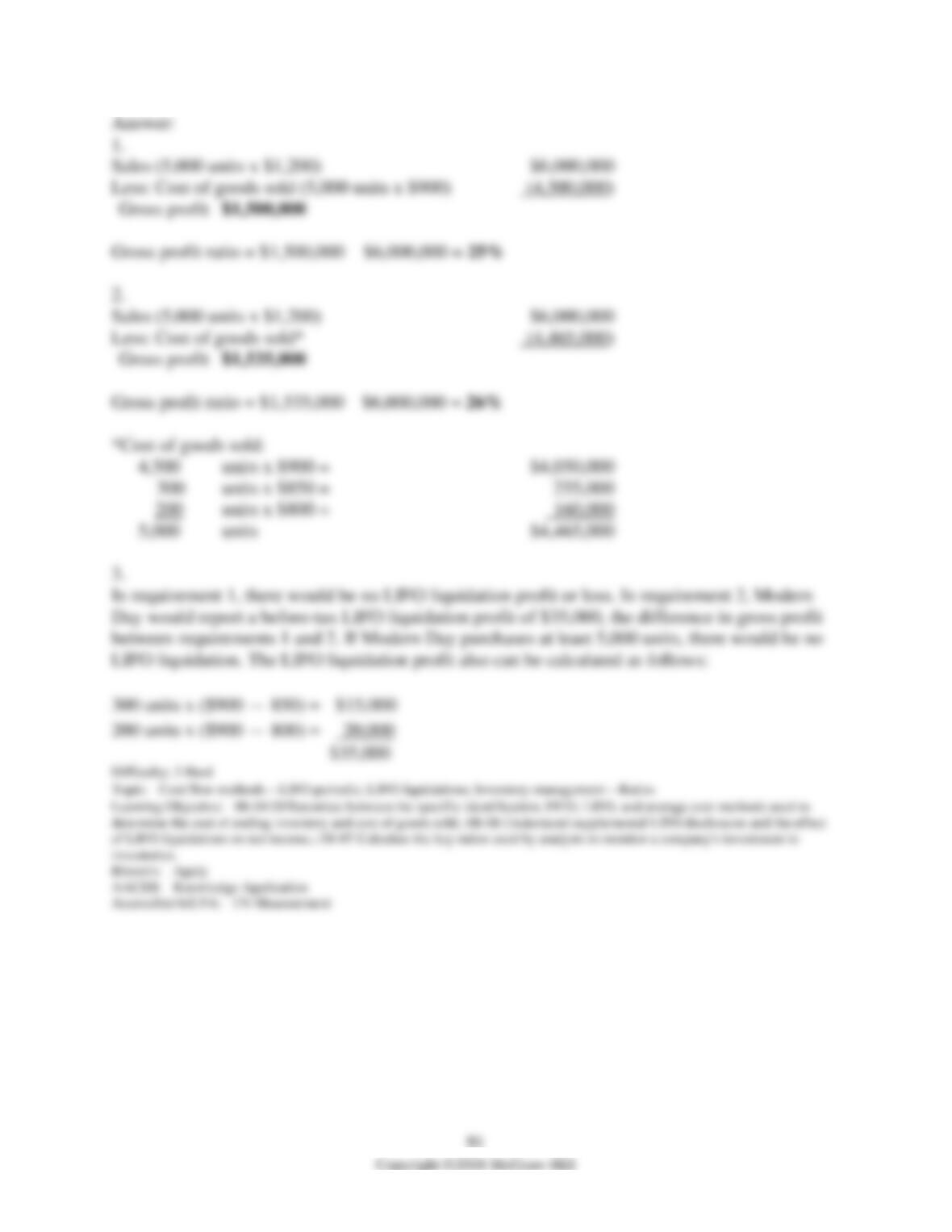
166) Modern Day Appliances, Inc. is a wholesaler of kitchen appliances. The company uses a
periodic inventory system and the LIFO cost method. Modern Day’s December 31, 2018, fiscal
year-end inventory of its main product, double-door stainless steel refrigerators, consisted of the
following (listed in chronological order of acquisition):
Units Unit cost
100 $750
200 800
300 850
The replacement cost of the refrigerators throughout 2019 was $900. Modern Day sold 5,000 of
these refrigerators during 2019. The company’s selling price throughout 2019 was $1,200.
Required:
1. Compute the gross profit (sales minus cost of goods sold) and the gross profit ratio for 2019
assuming that Modern Day purchased 5,200 units during the year.
2. Repeat requirement 1 assuming that Modern Day purchased only 4,500 units.
3. For requirements 1 and 2, what amount of before-tax LIFO liquidation profit or loss would
Modern Day report in its 2019 disclosure notes, if any, assuming any calculated amount is
material?
167) Selected financial statement data from Western Colorado Stores is shown below.
2018
2017
Net sales
$625,000
$690,000
Cost of goods sold
500,000
490,000
Operating expenses
105,000
85,000
Inventory
90,000
70,000
Required:
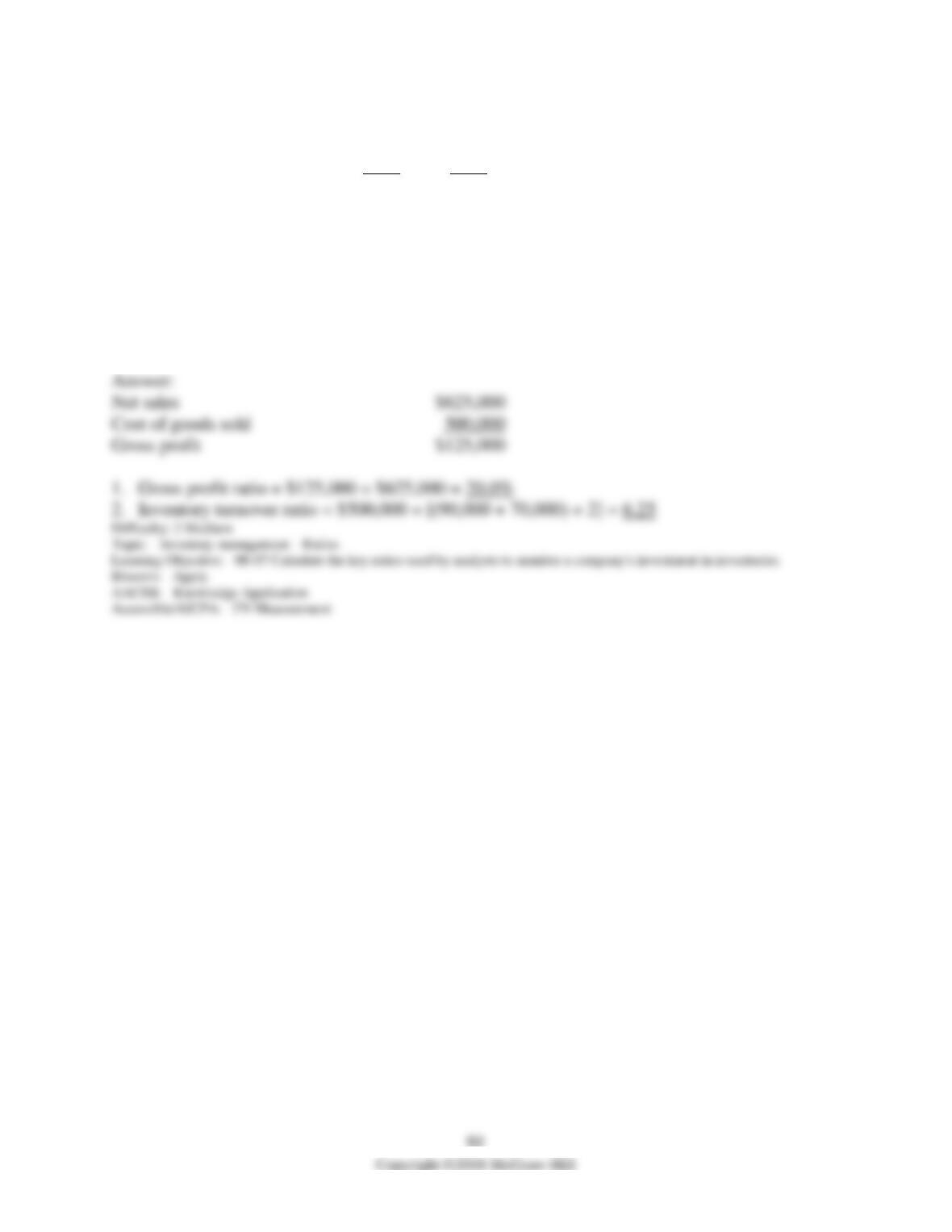
1. Compute the gross profit ratio for 2018.
2. Compute the inventory turnover ratio for 2018.
Net sales
$625,000
Cost of goods sold
Gross profit
$125,000
168) The inventories disclosure note in the 2014 financial statements for SUPERVALU Inc., one
of the largest grocery chains in the United States, included the following ($ in millions):
“Inventories are valued at the lower of cost or market. Substantially all of the Company’s
inventory consists of finished goods. As of February 22, 2014 and February 23, 2013,
approximately 57 percent and 60 percent, respectively, of the Company’s inventories were valued
under the LIFO method. If the FIFO method had been used to determine cost of inventories for
which the LIFO method is used, the Company’s inventories would have been higher by
approximately $202 and $211 as of February 22, 2014 and February 23, 2013, respectively.”
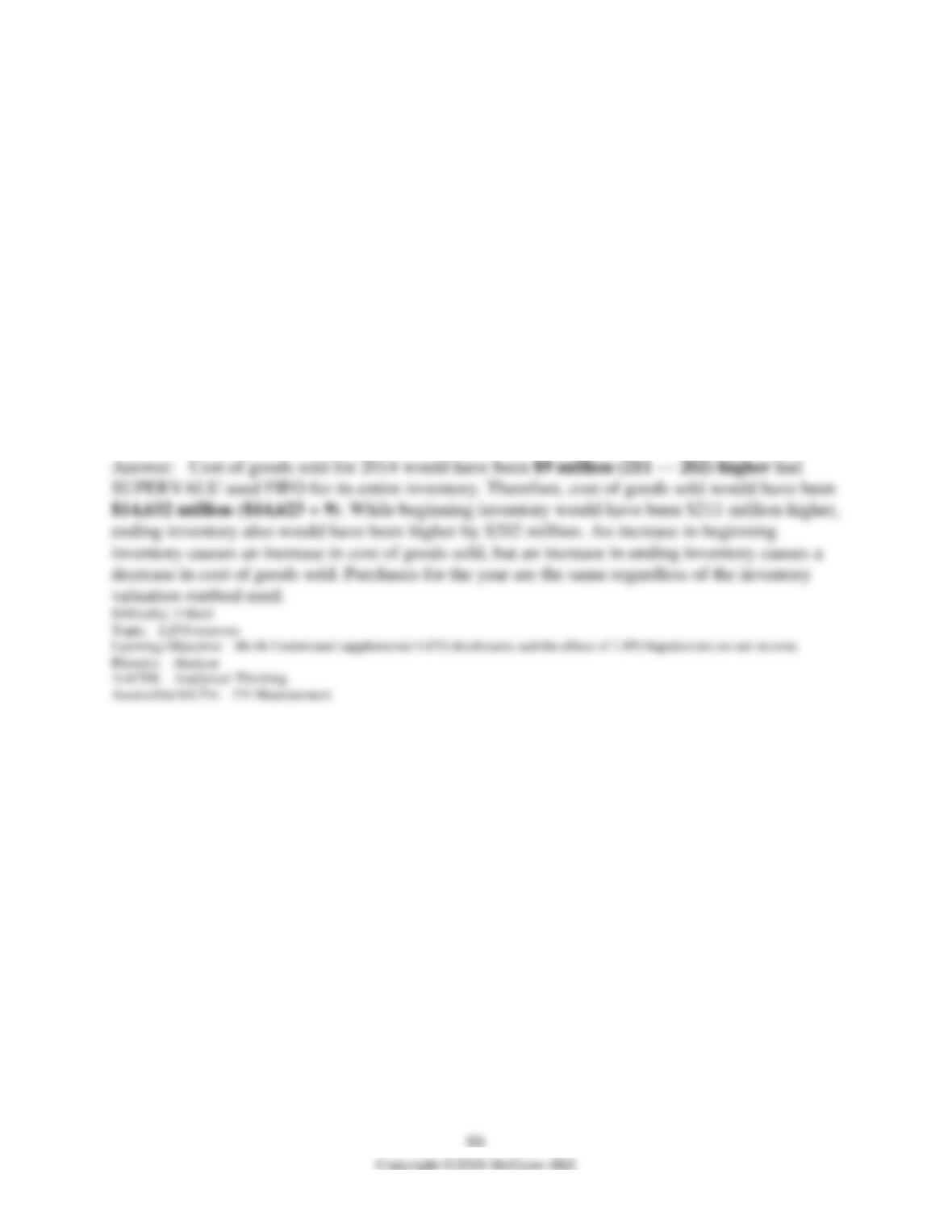
Cost of goods sold for the fiscal year ended February 22, 2014 was $14,623 million.
Required:
If SUPERVALU had used FIFO for all of its LIFO inventories, what would its cost of goods sold
have been for 2014?