
8-161
214.
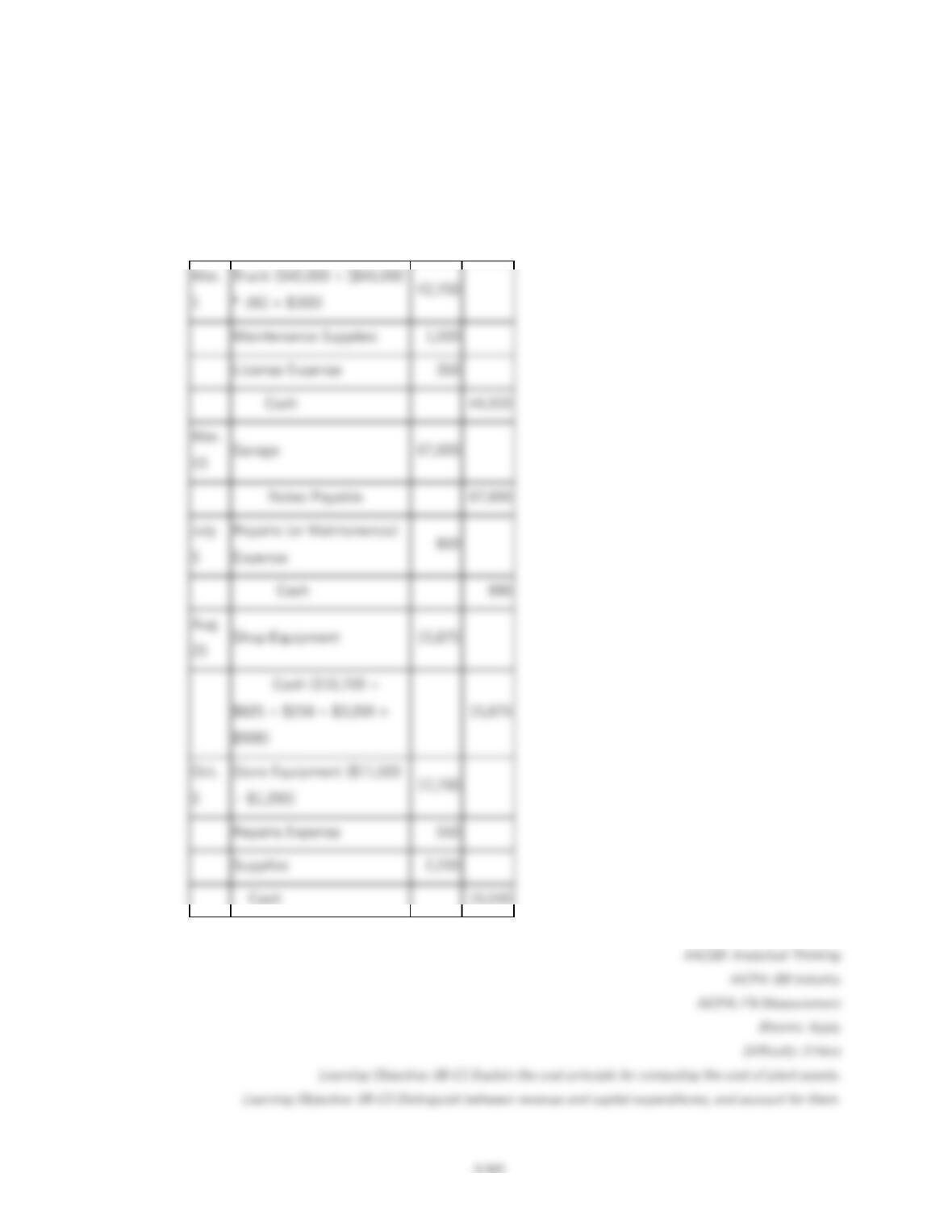
Prepare journal entries to record the following transactions of a company during the
current year:
Mar. 1
Purchased a truck for $40,000 with a 5-
year useful life and a $5,000 salvage
value. Also paid 6% sales tax, $350 for
the annual truck license, $300 to paint
the truck with the company’s colors and
name, and $1,500 for maintenance
supplies for the future. All payments
were in cash.
Mar.
10
Purchased a garage from a neighboring
business with a 7%, 4-year, $67,000
note. The seller’s book value for the
garage was $42,750. The estimated
remaining useful life of the garage is 10
years.
July 5
Paid $800 cash to replace uninsured
garage windows broken during a storm.
Aug.
25
Purchased used shop equipment for
$10,700 cash. Sales tax was $825, freight
costs $250, $3,200 for a special base to
house the equipment, and reconditioning
costs $900, all of which were paid in
cash. The estimated useful life of the
equipment is 3 years and salvage value
is $500.
Oct. 5
Purchased office equipment for $11,500
cash. Paid $1,290 in sales tax, $550 for
repairs incurred from damage during
installation, and $2,200 for supplies to be
used for periodic preventive
maintenance. The estimated useful life
of the equipment is 8 years and salvage
value is $1,200.
215.
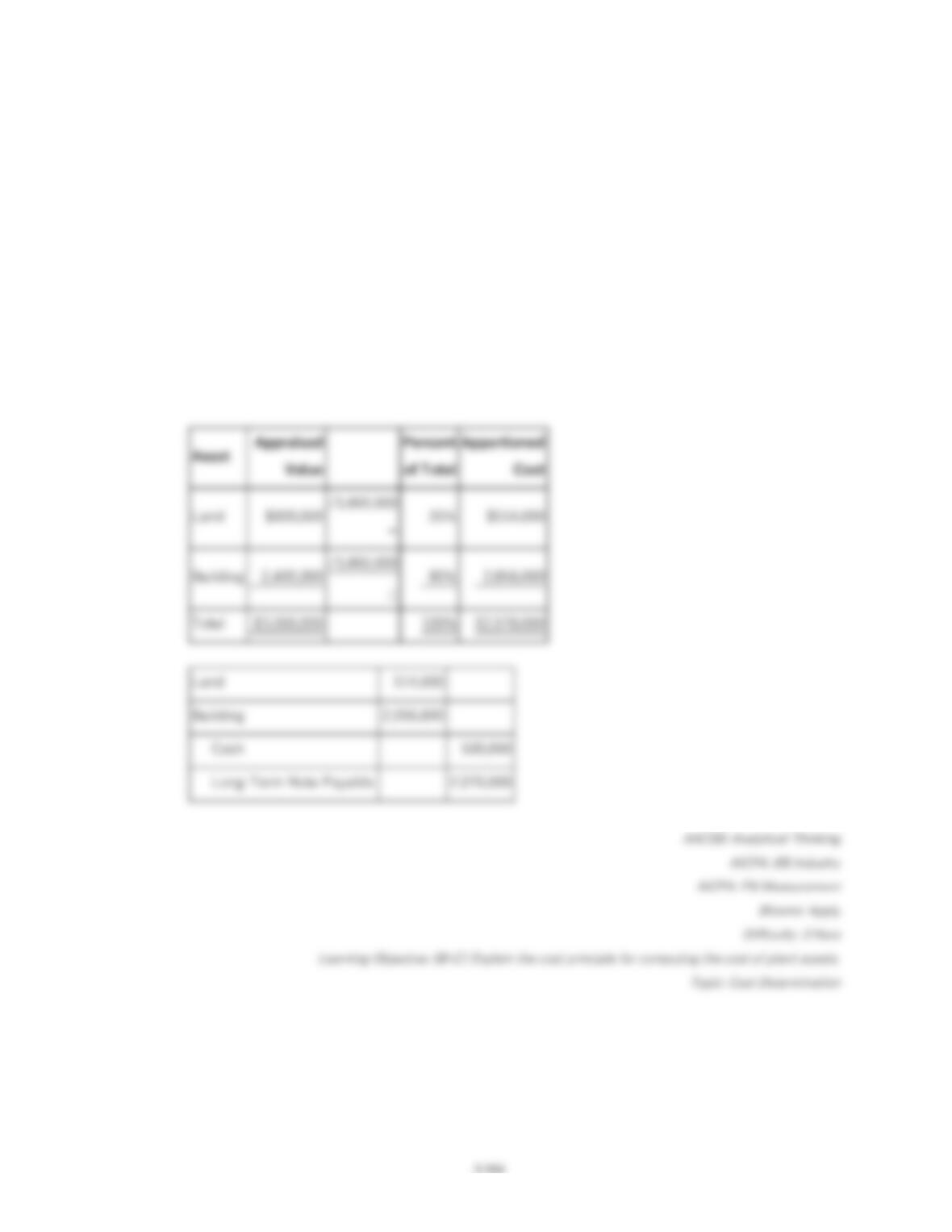
A company purchased equipment on June 28 of the current year and placed it in service on
August 1. The following costs were incurred in acquiring the equipment:
Purchase (invoice) price
$215,600
Transportation
1,400
Insurance during shipping
200
One-year fire insurance beginning
August 1 of the current year
1,200
Installation cost
4,500
Raw materials and direct labor used to
test the equipment
1,500
Purchase (invoice) price
Transportation
Insurance during shipping
Installation costs
Raw materials and direct labor to test
Determine the amount to be recorded as cost for the equipment.
216.
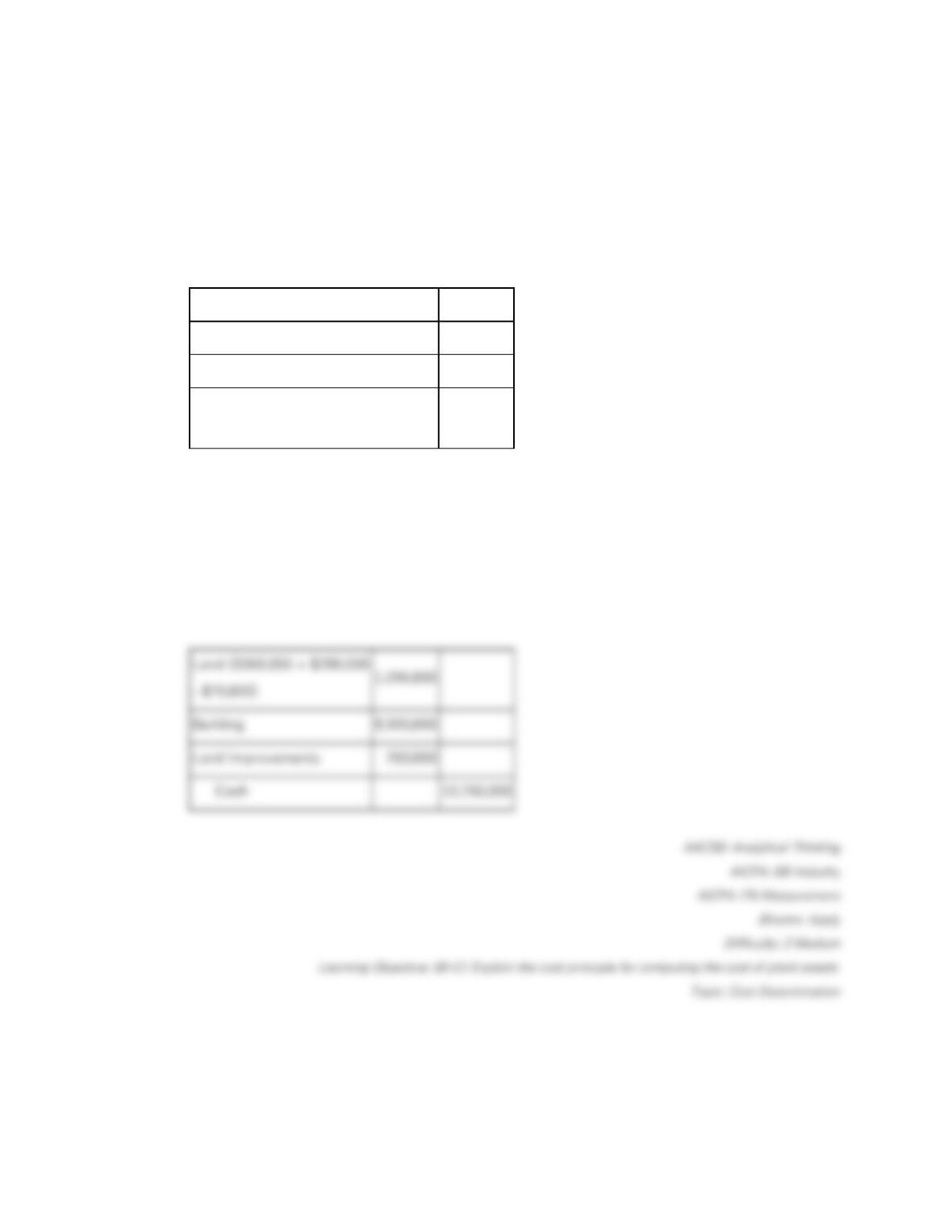
A company purchased land with a building for a lump-sum cost of $2,570,000 ($500,000
paid in cash and the balance on a long-term note). It was estimated that the land and
building had market values of $600,000 and $2,400,000, respectively.
Determine the cost to be apportioned to the land and to the building and prepare the
journal entry to record the acquisition.
8-165
217.
A company needed a new building. It found a suitable location with an existing old building
on the land. The company reached an agreement to buy the land and the building for
$960,000 cash. The old building was demolished to make way for the needed new building.
Following is information regarding the demolition of the old building and construction of
the new one:
Construction cost of new building
$8,900,000
Cost for parking lot
$260,000
Demolition of old building
200,000
Proceeds from sale of salvaged
materials from old building
70,000
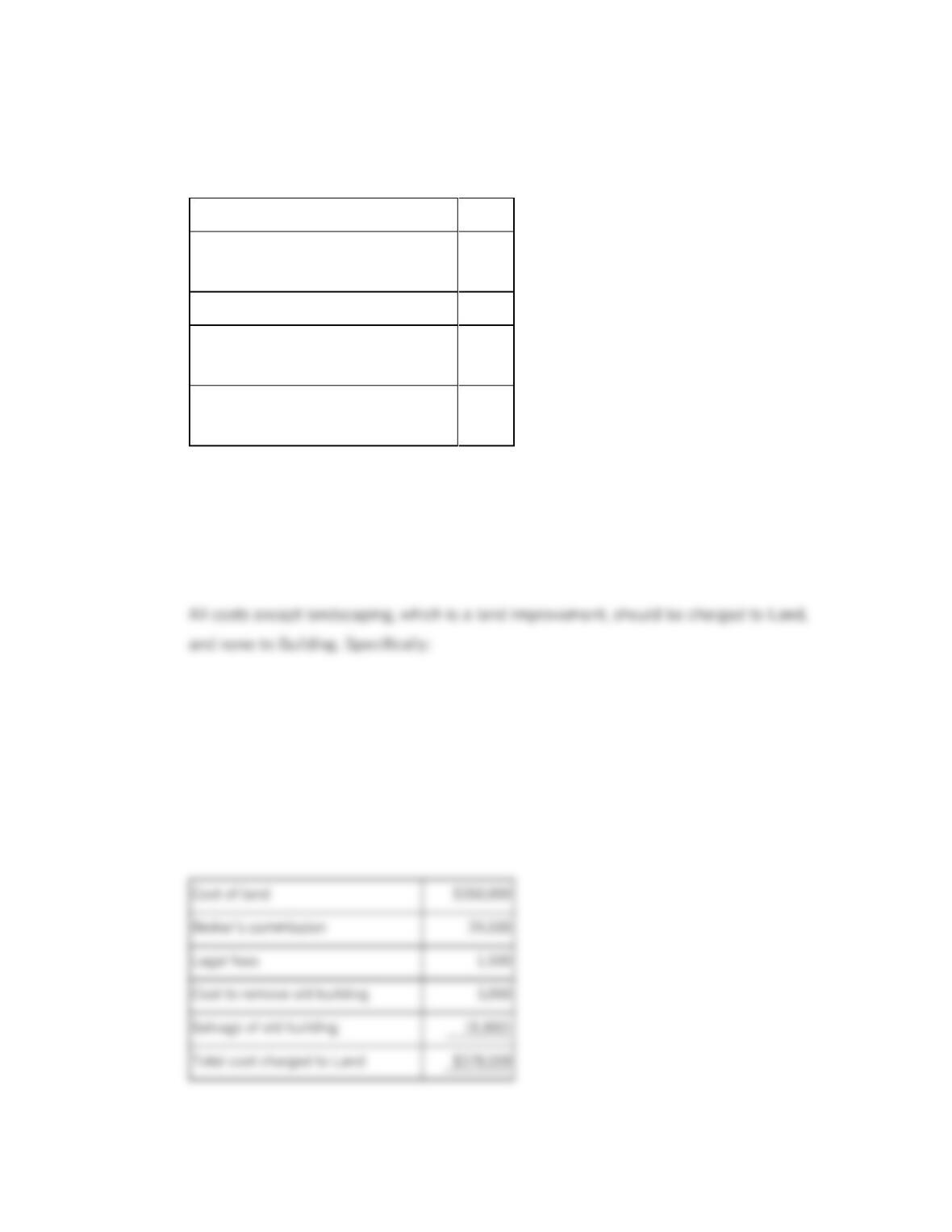
Prepare a single journal entry to record the above costs assuming all transactions are
paid in cash.
Land Improvements
Cash
10,250,000
8-166
218.
A company purchased land on which to construct a new building for a cost of $350,000.
Additional costs incurred were:
Real estate broker’s commissions
$24,500
Legal fees incurred in purchase of the
real estate
1,500
Landscaping
8,000
Cost to remove old house located on
land
3,000
Proceeds from selling materials
salvaged from old house
1,000
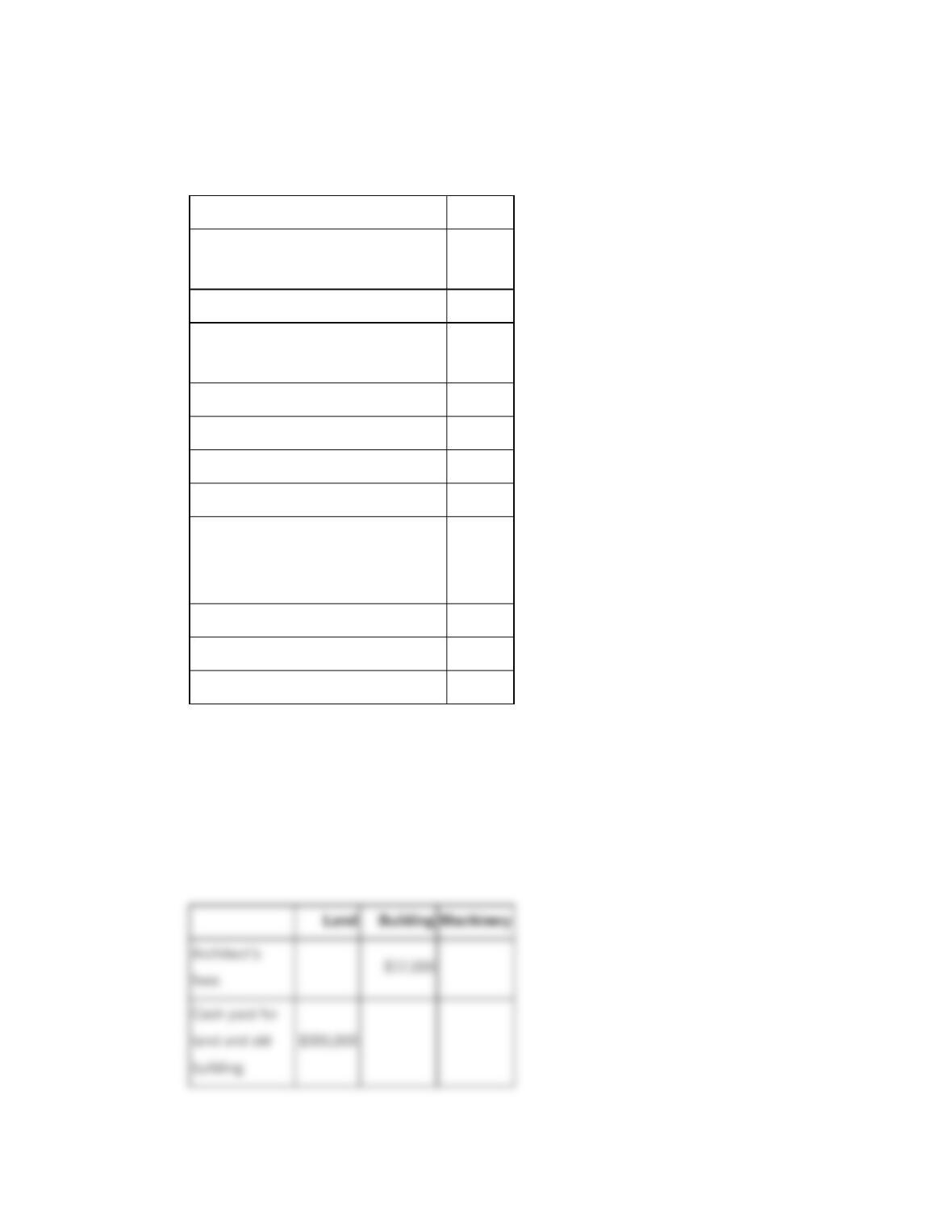
What total dollar amount should be charged to Land and what amount should be charged
to Building or other accounts?
Legal fees
Cost to remove old building
Salvage of old building
8-167
219.
A company made the following expenditures in connection with the construction of a new
building:
Architect’s fees
$12,000
Cash paid for land and unusable
building on the land
300,000
Removal of old building
18,000
Salvage from sale of old building
materials
(4,000)
Construction survey
1,500
Legal fees for title search
3,000
Excavation for basement construction
25,000
Machinery purchased for operations
100,000
Storage and delivery charges on
machinery because building was not
ready when machinery was delivered
900
Freight on machinery purchased
1,600
Construction costs of new building
1,000,000
Installation of machinery
2,500
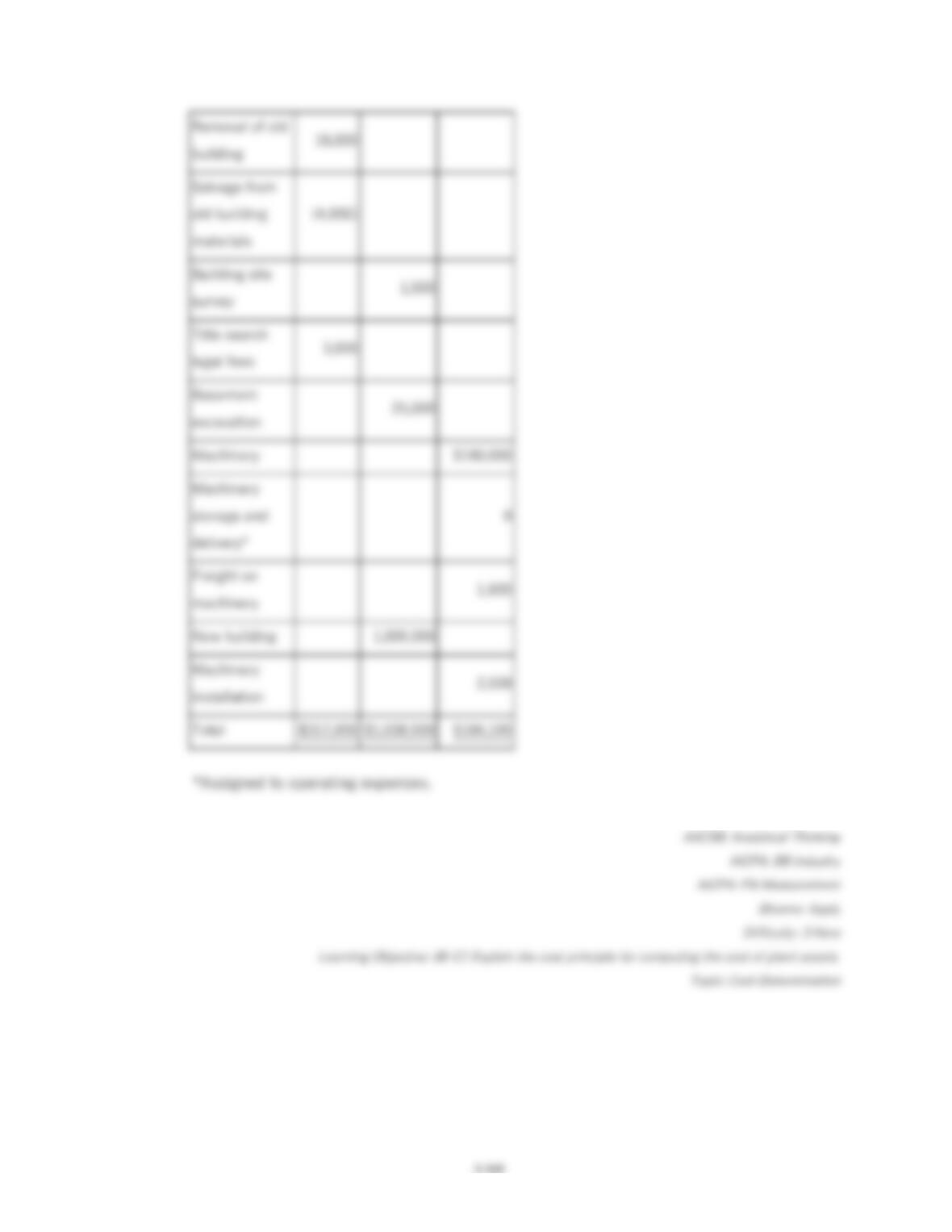
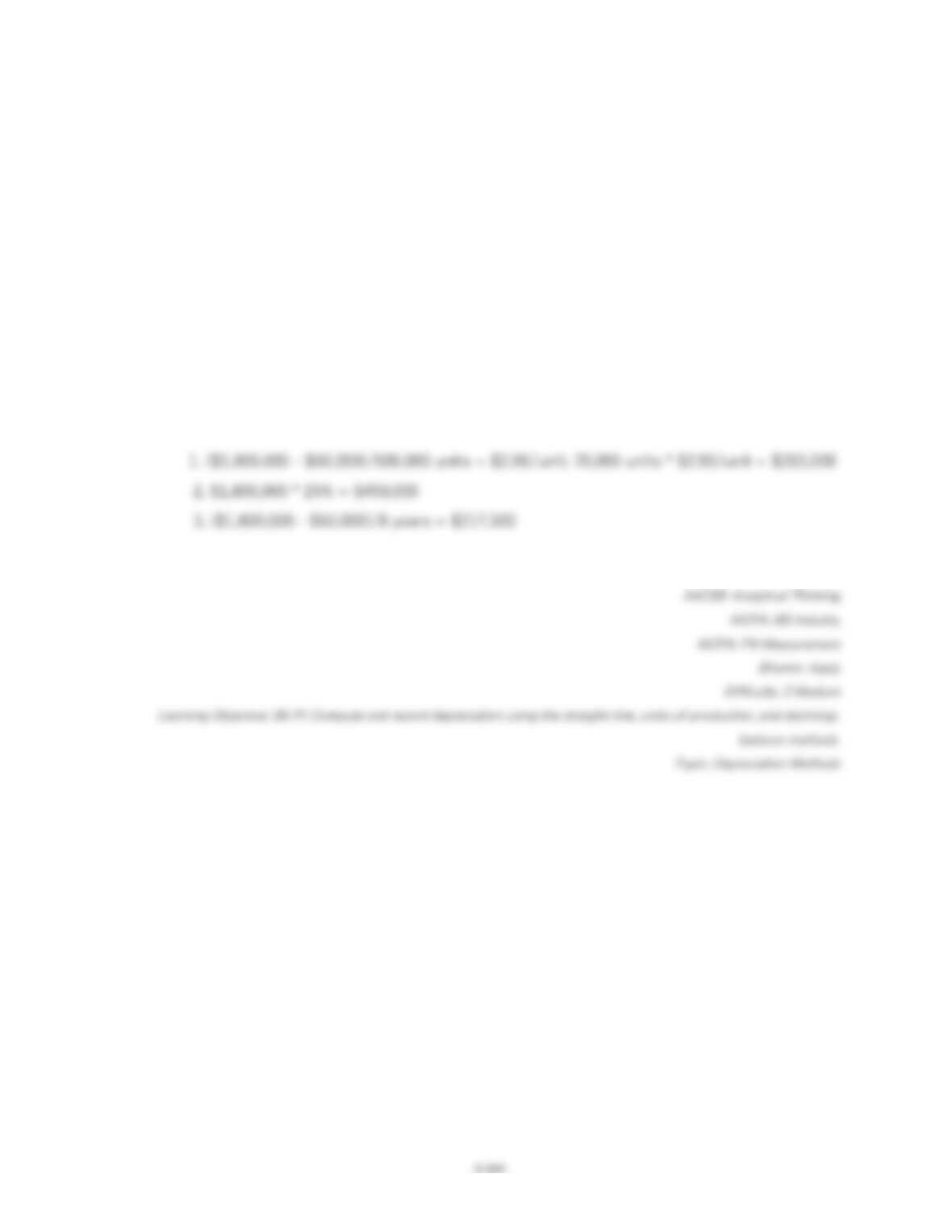
Prepare a schedule showing the amounts to be recorded as Land, Buildings, and
Machinery.
220.
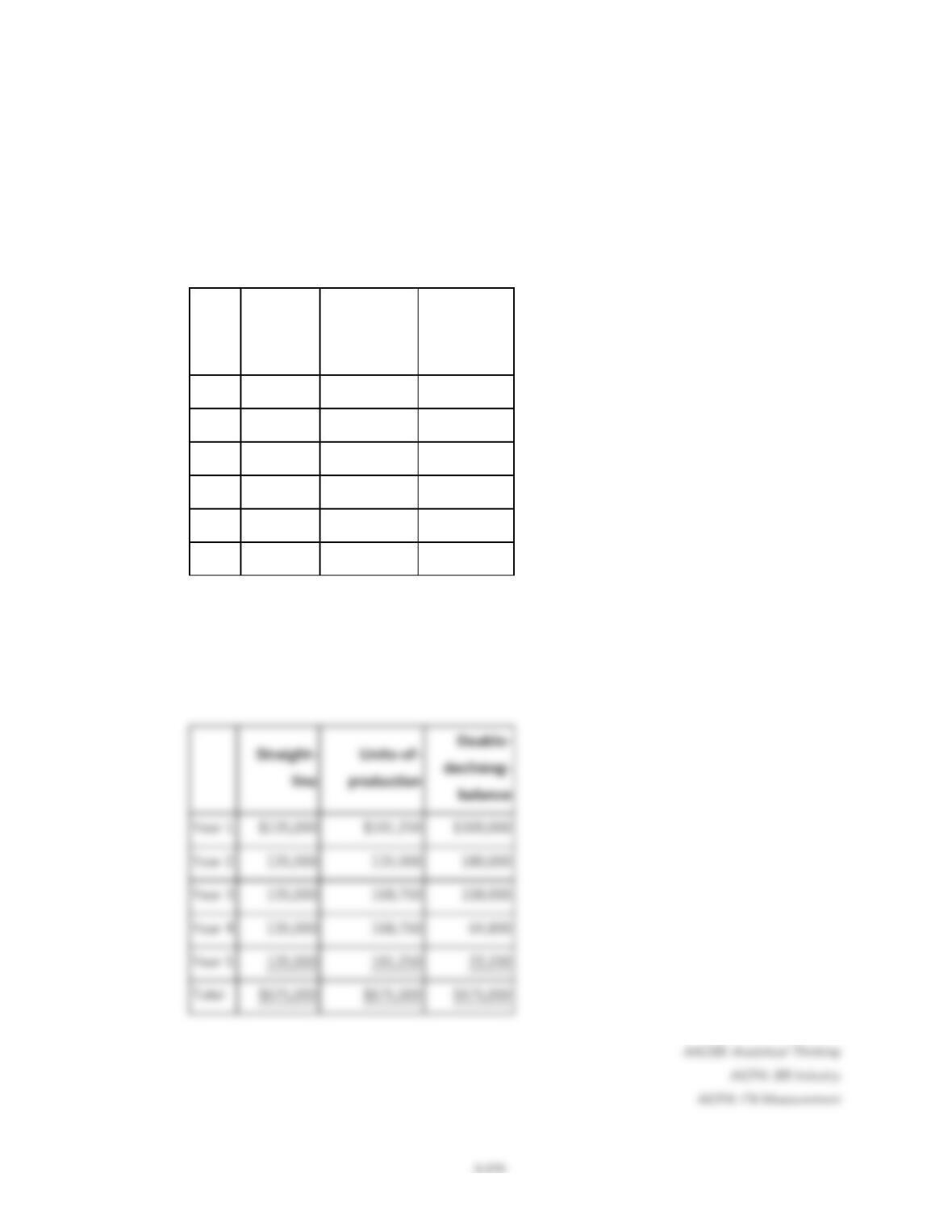
A new machine costing $1,800,000 cash and estimated to have a $60,000 salvage value
was purchased on January 1. The machine is expected to produce 600,000 units of product
during its 8-year useful life. Calculate the depreciation expense in the first year under the
following independent situations:
1. The company uses the units–of-production method and the machine produces 70,000
units of product during its first year.
2. The company uses the double-declining-balance method.
3. The company uses the straight-line method.
221.
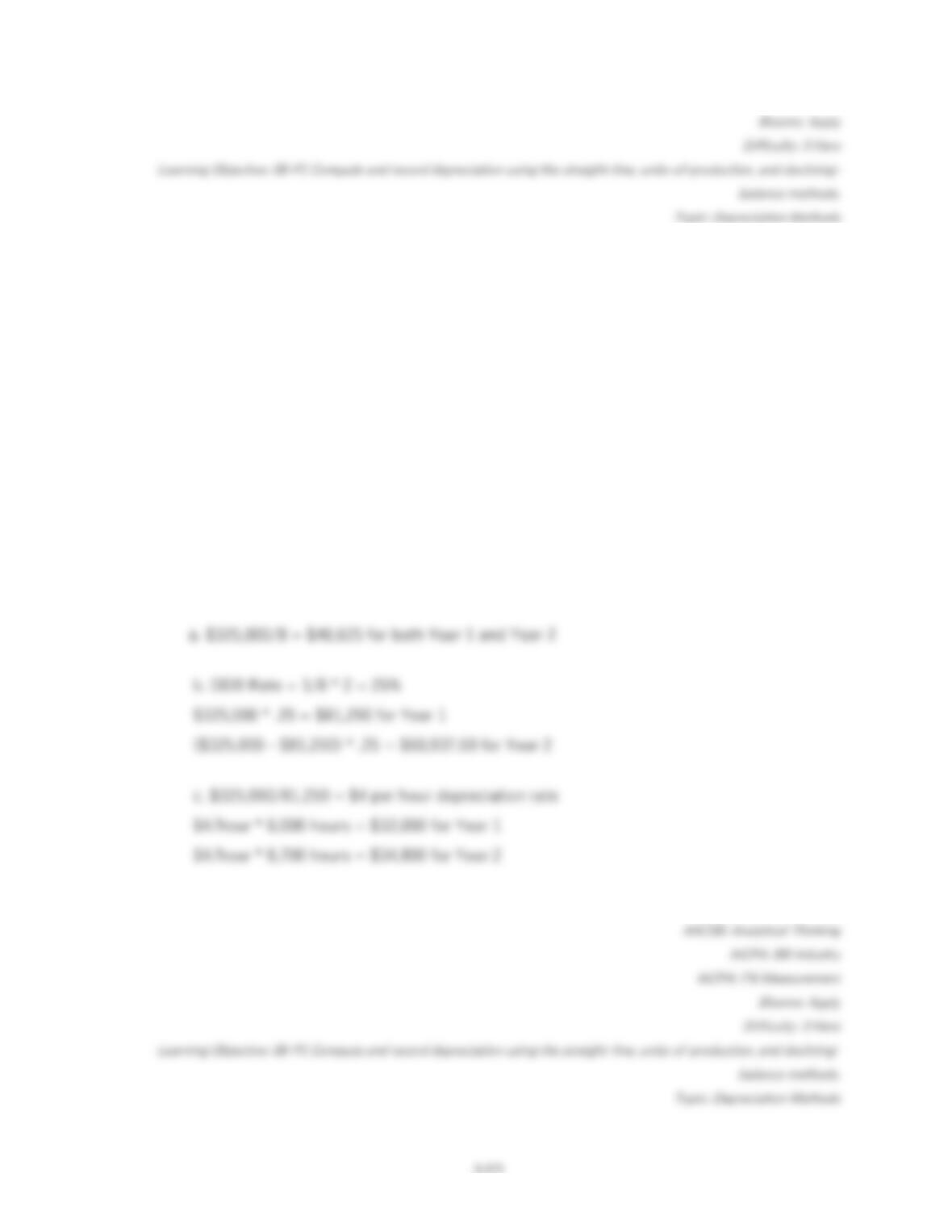
A company purchased a machine on January 1 of the current year for $750,000. Calculate
the annual depreciation expense for each year of the machine’s life (estimated at 5 years
or 20,000 hours, with a salvage value of $75,000) using each of the below-mentioned
methods. During the machine’s 5-year life its hourly usage was: 3,000; 4,000; 5,000; 5,000;
and 3,000 hours.
Straight-
line
Units-of–
production
Double-
declining-
balance
Year 1
Year 2
Year 3
Year 4
Year 5
Total
Year 1
Year 2
Year 3
Year 4
Year 5
Total
222.
A company purchased an equipment system for $325,000 on January 2. The company
expects the equipment to last for eight years or 81,250 hours of operation, with no
estimated salvage value. During the first year, the equipment was in operation for 8,000
hours, while in the second year, the equipment was in operation for 8,700 hours. Compute
the depreciation expense relating to the equipment for Year 1 and Year 2 using the
following depreciation methods:
a. Straight-line.
b. Double-declining-balance.
c. Units-of-production.
223.
On January 1, a machine costing $260,000 with a 6-year life and an estimated $5,000
salvage value was purchased. It was also estimated that the machine would produce
500,000 units during its life. The actual units produced during its first year of operation
were 110,000. Determine the amount of depreciation expense for the first year under each
of the following assumptions:
1. The company uses the straight-line method of depreciation.
2. The company uses the units–of-production method of depreciation.
3. The company uses the double-declining-balance method of depreciation.
8-173
224.
Suarez Company uses the straight-line method of depreciation. The company purchased a
computer system on January 1, Year 1, for $1,600,000 with an expected life of six years
and a salvage value of $130,000. Assuming the computer is sold on July 1, Year 3 for
$1,000,000 cash, prepare the journal entries to record depreciation for the first 6 months
of Year 3 and the sale of the computer.
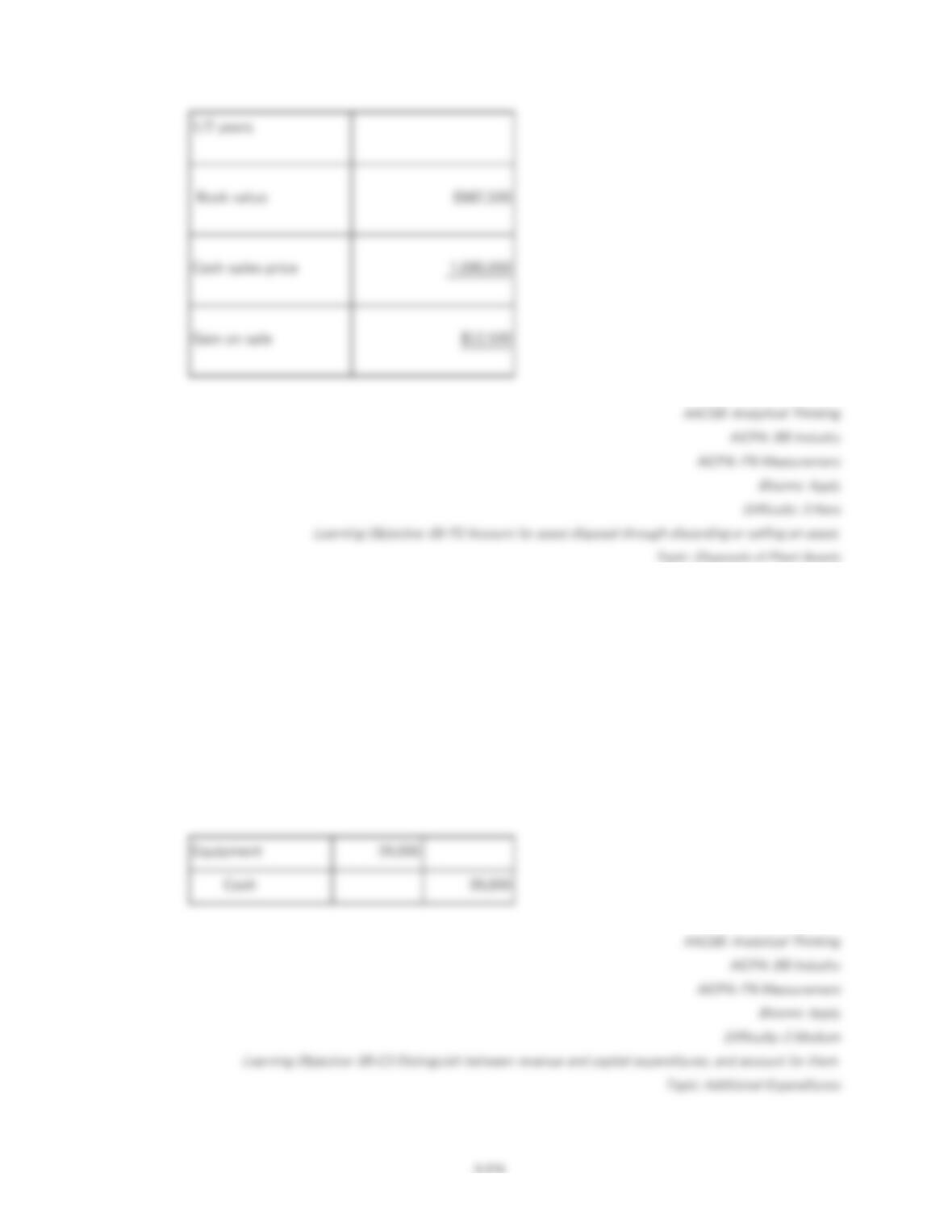
225.
A company paid $320,000 for equipment that was expected to last five years and to have a
salvage value of $40,000. During the third year of the equipment’s life, $39,000 cash was
paid for replacement parts that were expected to increase productivity by 10% each year.
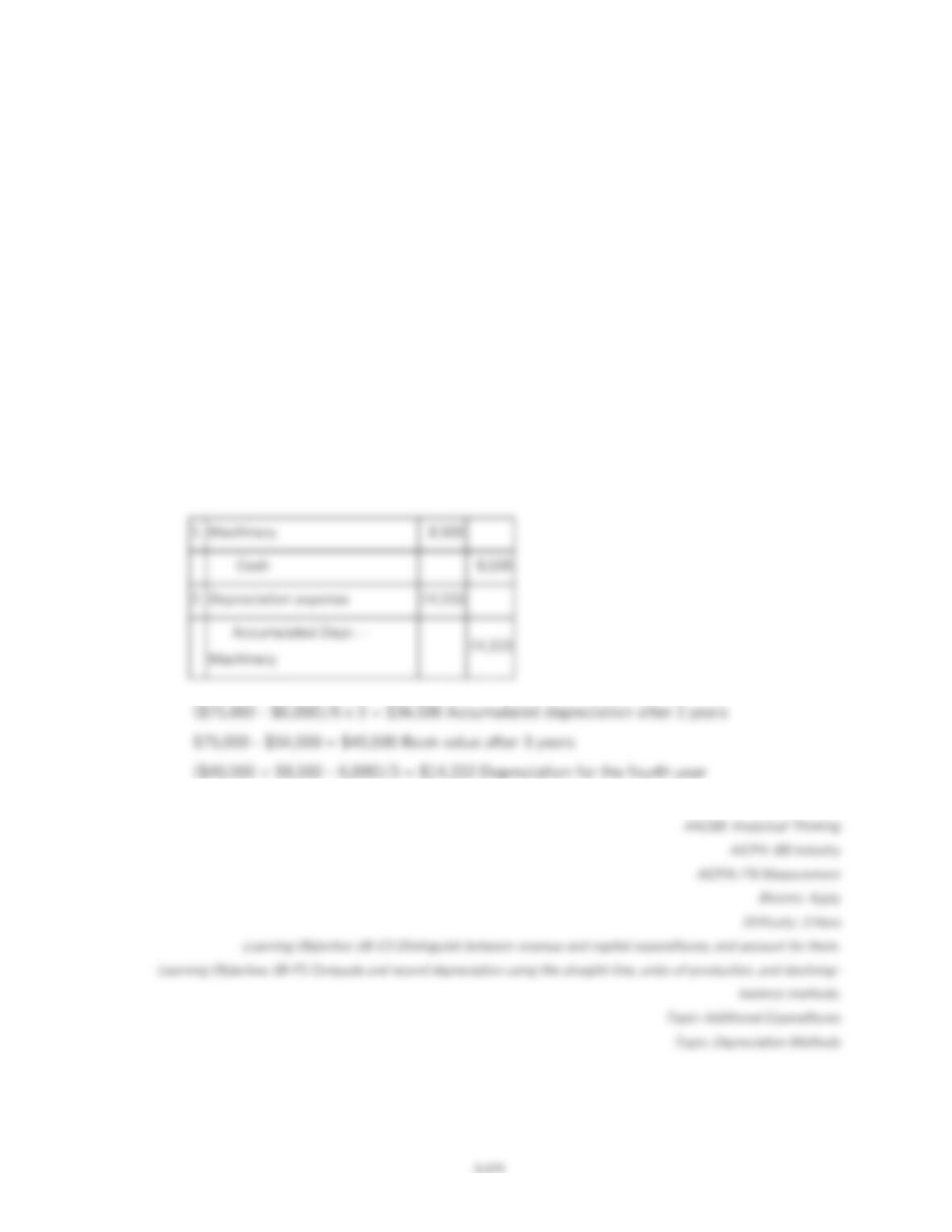
Prepare the journal entry to record the $39,000 cost incurred in the third year.
226.
On January 1, a company purchased machinery for $75,000 that had a 6-year useful life
and a salvage value of $6,000. After three years of straight-line depreciation, the company
paid $8,500 cash at the beginning of the year to improve the efficiency of the machinery.
The productivity of the machinery was improved without increasing its remaining useful
life or changing its salvage value. Straight-line depreciation is used throughout the
machinery’s life.
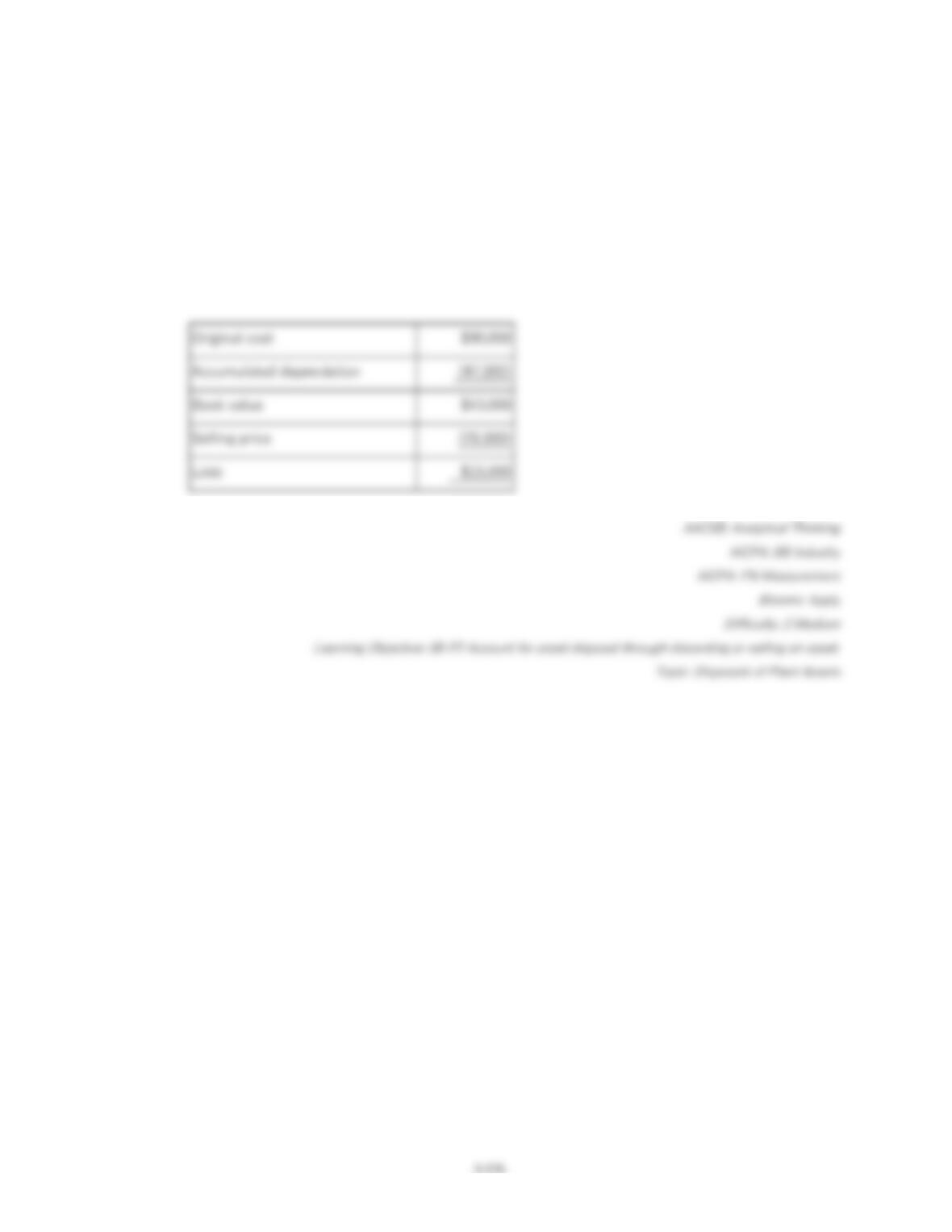
1. Prepare the journal entry to record the $8,500 expenditure.
2. Prepare the journal entry to record depreciation expense for the fourth year.
227.
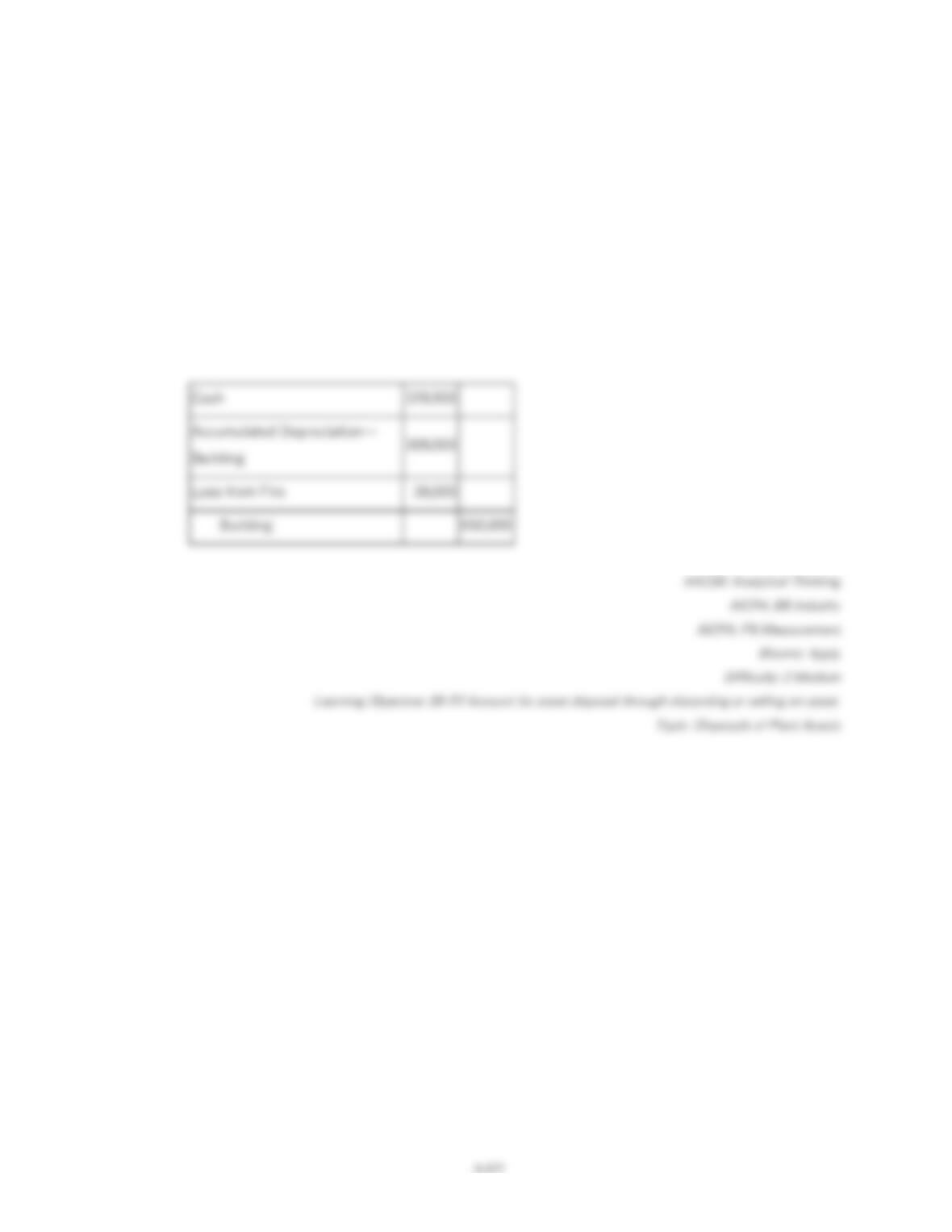
A company sold a machine that originally cost $90,000 for $28,000 cash. The accumulated
depreciation on this machine was $47,000 at the time of the sale. What was the company’s
gain or loss on this sale?
228.
Wallace Company had a building that was destroyed by fire. The building originally cost
$650,000, and its accumulated depreciation as of the date of the fire was $300,000. The
company received $320,000 cash from an insurance policy that covered the building and
will use that money to help rebuild. Prepare the single journal entry to record the disposal
of the building and the receipt of cash from the insurance company.
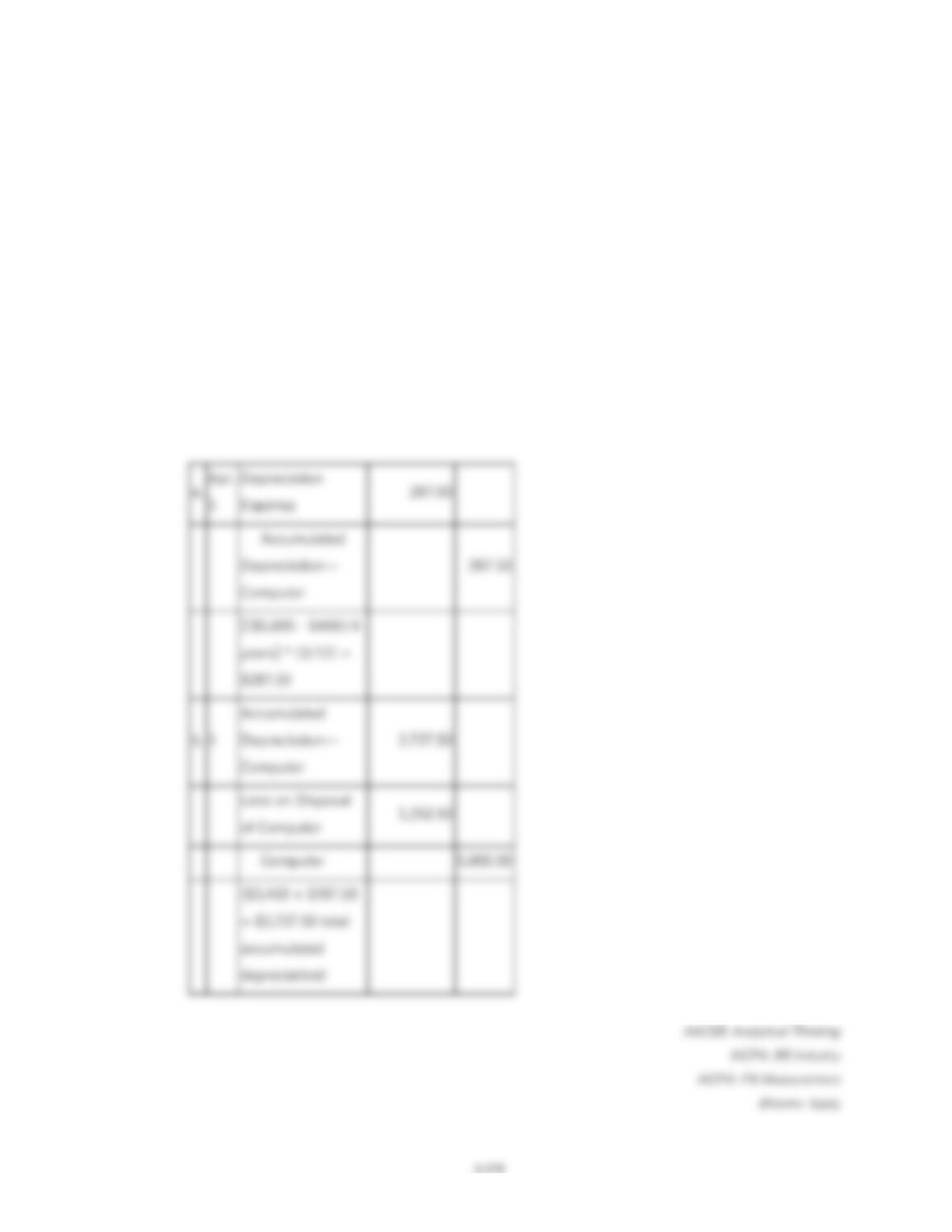
229.
On April 1, 2015, due to obsolescence resulting from a new technology, a company
discarded a computer that cost $5,000, had a useful life of 4 years, and a salvage value of
$400. Based on straight-line depreciation, the accumulated depreciation as of December
31, 2014 was $3,450.
a. Prepare the journal entry to record depreciation up to the date of disposal of the
computer.
b. Prepare the journal entry to record the disposal of the computer.
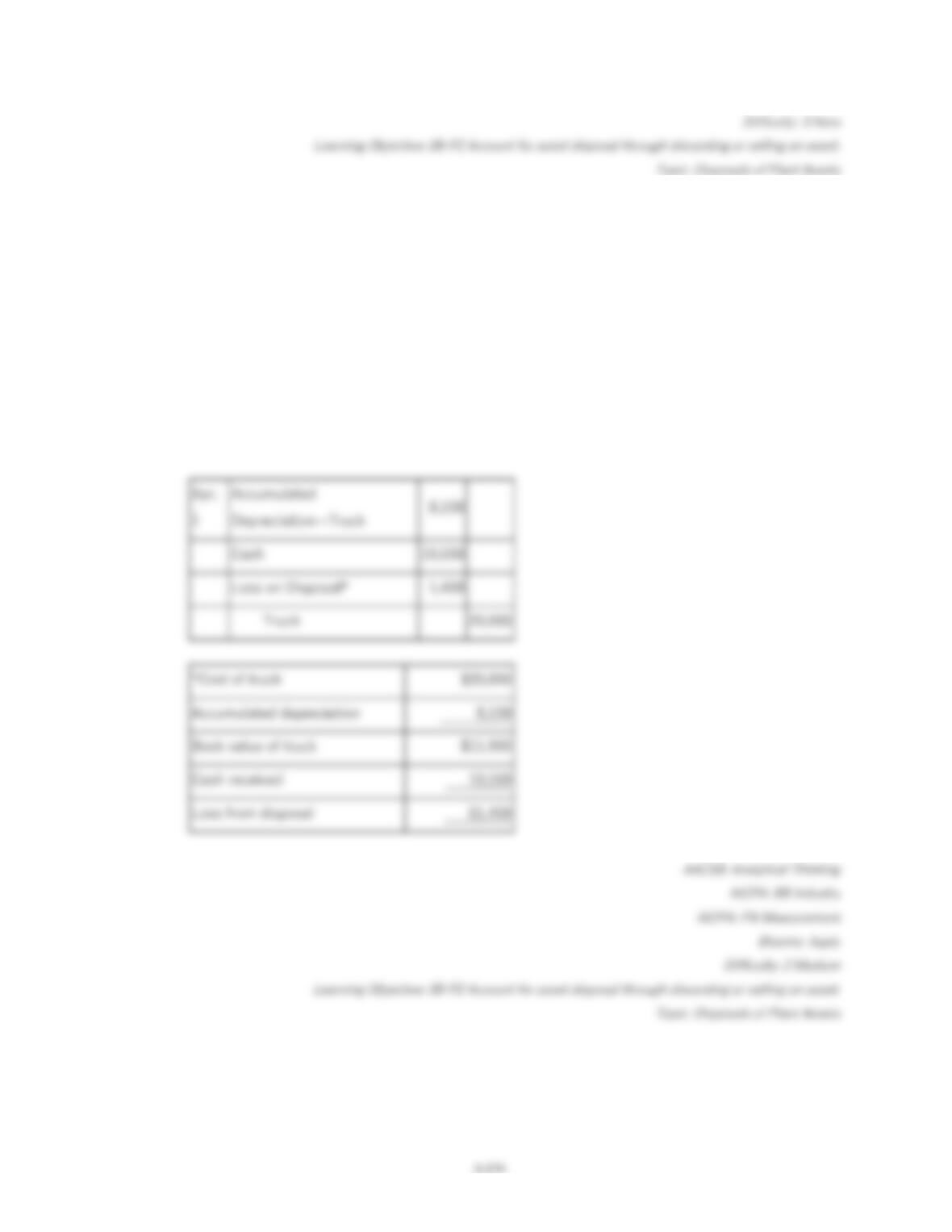
230.
On April 1 of the current year, a company disposed of a truck that had cost $20,000. The
truck had a salvage value of $2,000, and a useful life of 5 years. The accounting records
showed accumulated depreciation for this truck of $8,100 as of April 1 of the current year.
The asset was discarded after an accident, and $10,500 cash was received from an
insurance claim. Prepare the journal entry to record the disposal of the truck.
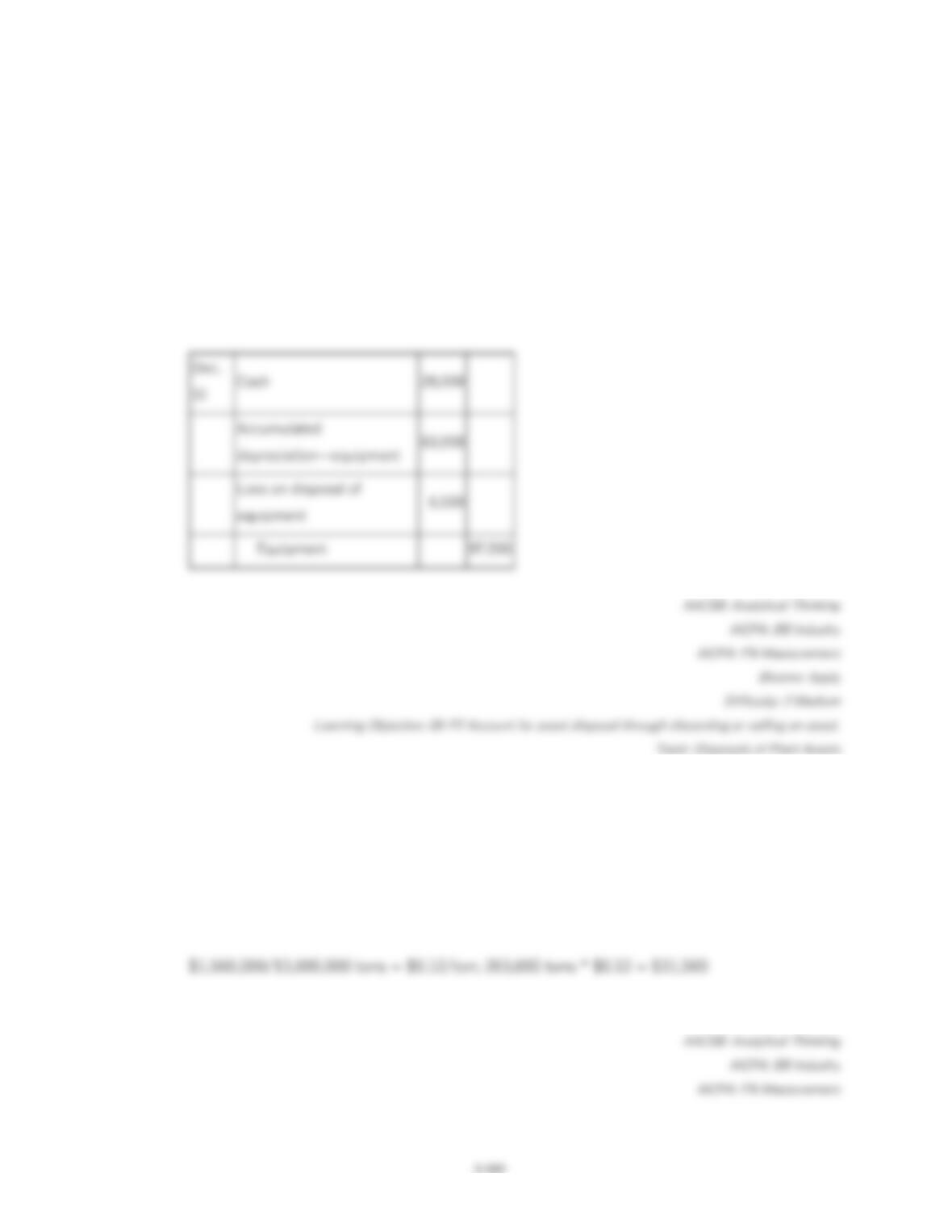
231.
Anderson Company sold a piece of equipment for $28,000 cash on December 31 after
recording the annual depreciation on the asset. The equipment had an original cost of
$97,500 and accumulated depreciation of $63,000. Prepare the general journal entry to
record the sale of this asset.
232.
A company purchased mining property for $1,560,000. The property was estimated to
contain 13,000,000 tons of ore. In the current year, the company removed and sold 263,000
tons of ore. Calculate the depletion expense for the current year.