201
201) Porter Corporation makes and sells a single product called a Yute. The company is in the
process of preparing its Selling and Administrative Expense Budget for the last quarter of the year.
The following budget data are available:
Variable Cost
Per Yute Sold
Monthly Fixed
Cost
Sales commissions
$
5.90
Shipping
$
5.30
Advertising
$
8.90
$
32,000
Executive salaries
$
178,000
Depreciation on office equipment
$
7,000
Other
$
0.60
$
20,000
–
All of these expenses (except depreciation) are paid in cash in the month they are incurred.
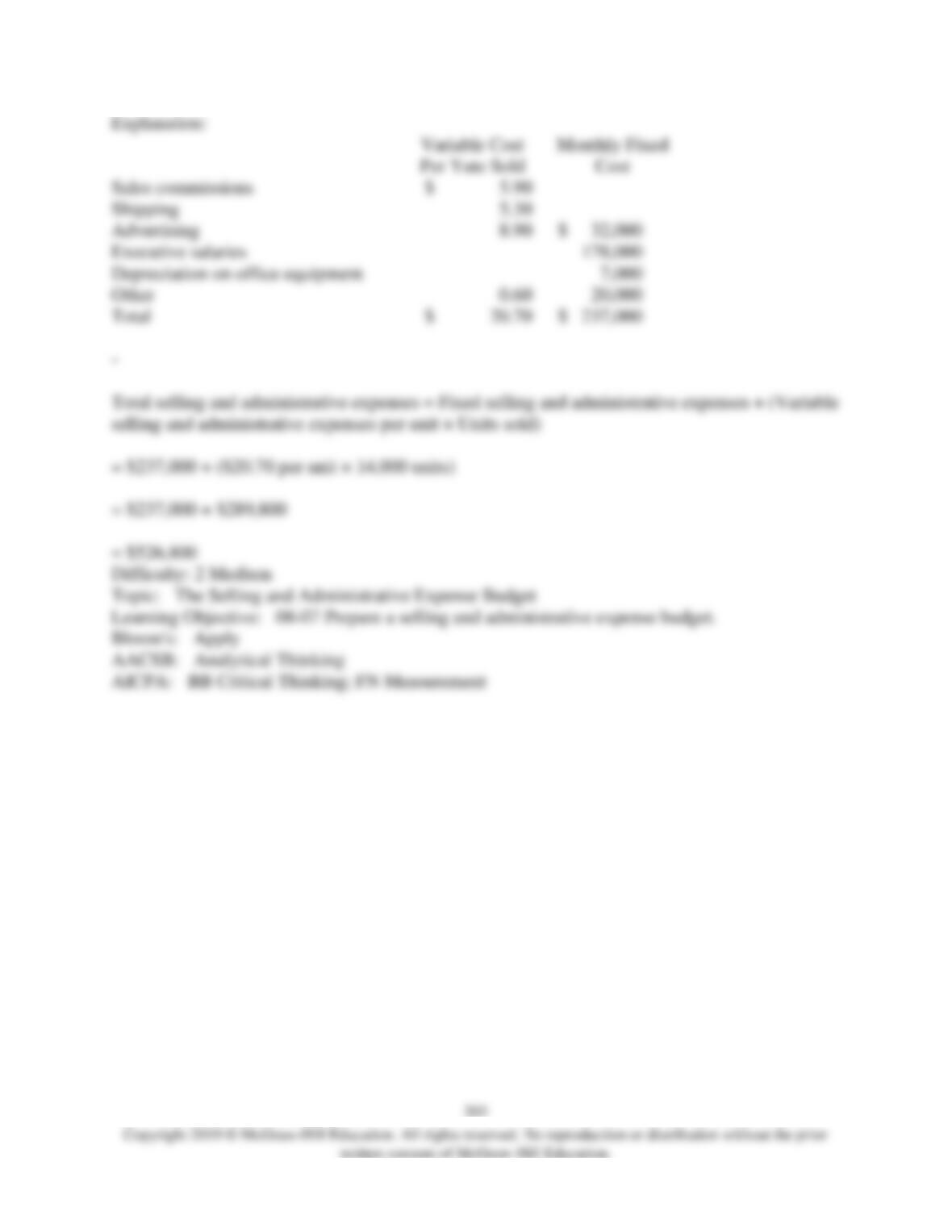
If the company has budgeted to sell 14,000 Yutes in November, then the total budgeted selling and
administrative expenses for November would be:
A) $526,800
B) $289,800
C) $237,000
D) $519,800
202) Porter Corporation makes and sells a single product called a Yute. The company is in the
process of preparing its Selling and Administrative Expense Budget for the last quarter of the year.
The following budget data are available:
Variable Cost
Per Yute Sold
Monthly Fixed
Cost
Sales commissions
$
5.90
Shipping
$
5.30
Advertising
$
8.90
$
32,000
Executive salaries
$
178,000
Depreciation on office equipment
$
7,000
Other
$
0.60
$
20,000
–
All of these expenses (except depreciation) are paid in cash in the month they are incurred.
If the company has budgeted to sell 12,000 Yutes in December, then the budgeted total cash
disbursements for selling and administrative expenses for December would be:
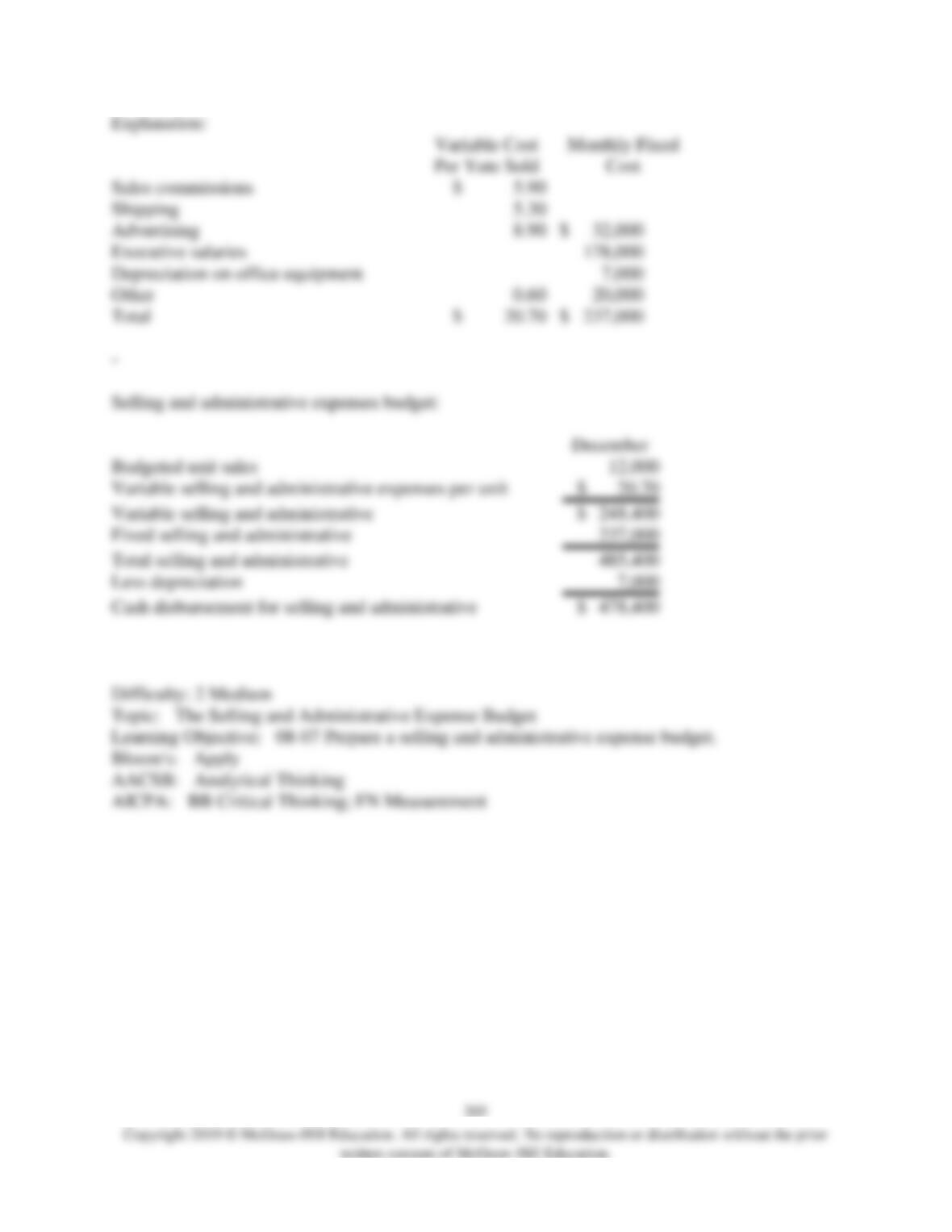
A) $237,000
B) $485,400
C) $248,400
D) $478,400
203) Porter Corporation makes and sells a single product called a Yute. The company is in the
process of preparing its Selling and Administrative Expense Budget for the last quarter of the year.
The following budget data are available:
Variable Cost
Per Yute Sold
Monthly Fixed
Cost
Sales commissions
$
5.90
Shipping
$
5.30
Advertising
$
8.90
$
32,000
Executive salaries
$
178,000
Depreciation on office equipment
$
7,000
Other
$
0.60
$
20,000
–
All of these expenses (except depreciation) are paid in cash in the month they are incurred.
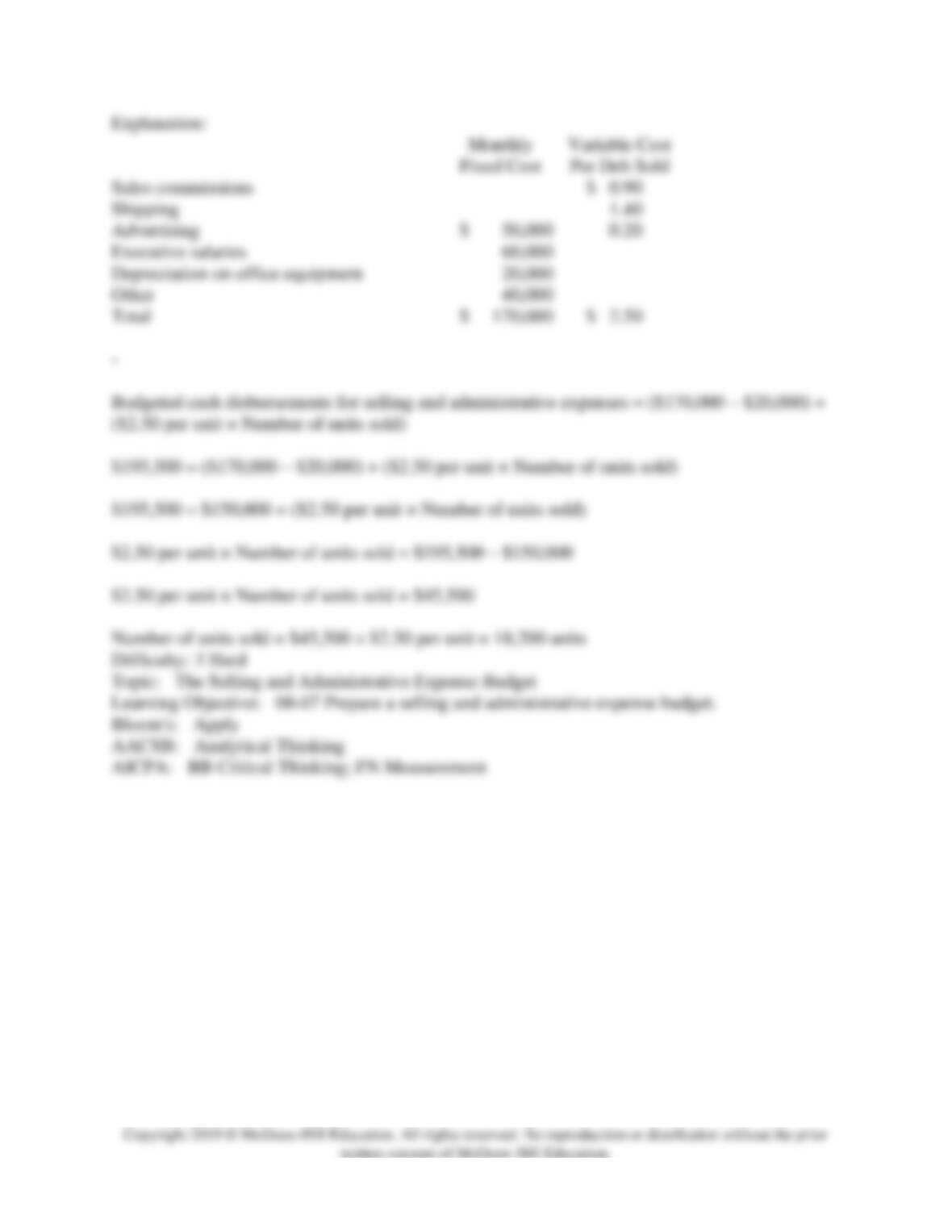
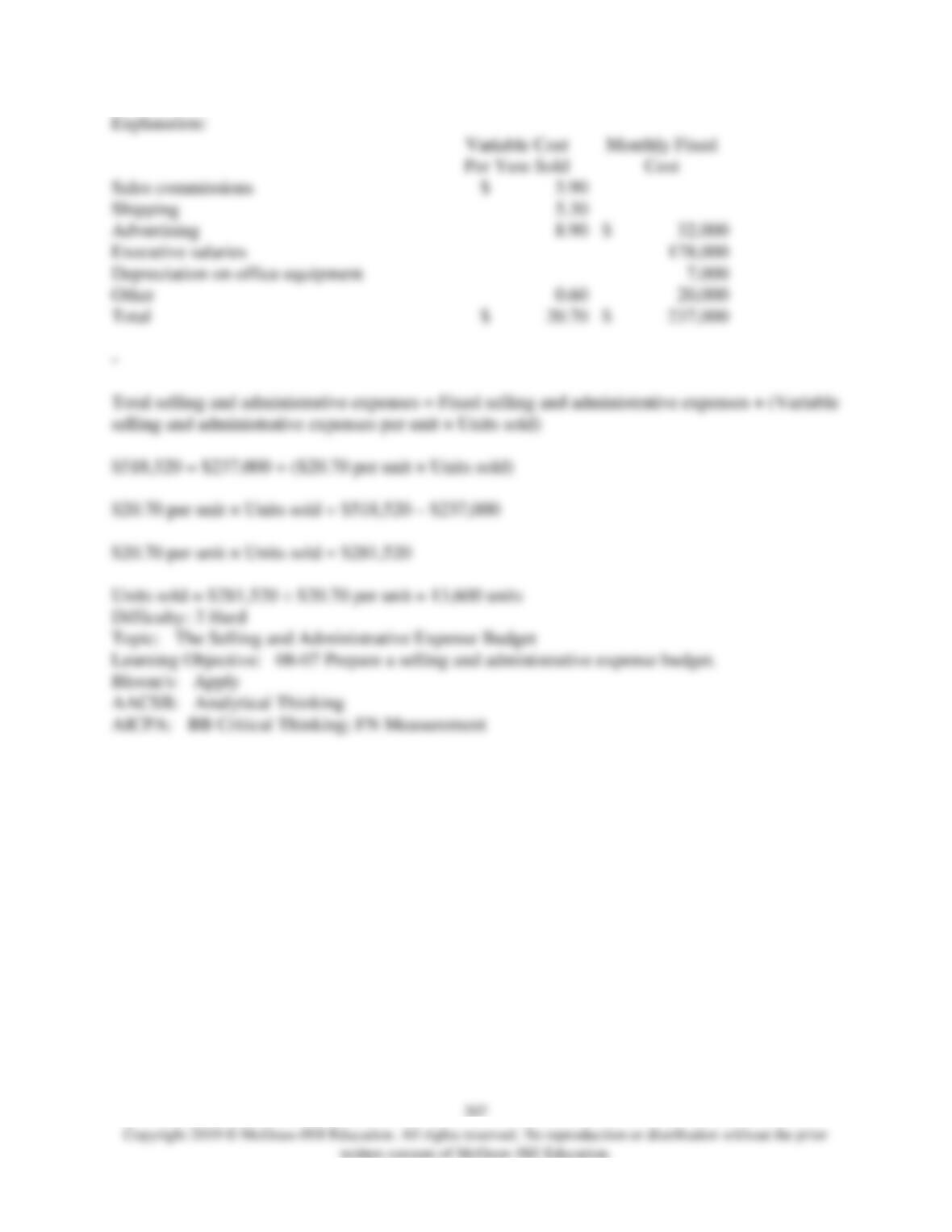
If the total budgeted selling and administrative expense for October is $518,520, then how many
Yutes does the company plan to sell in October?
A) 13,300 units
B) 14,100 units
C) 13,800 units
D) 13,600 units
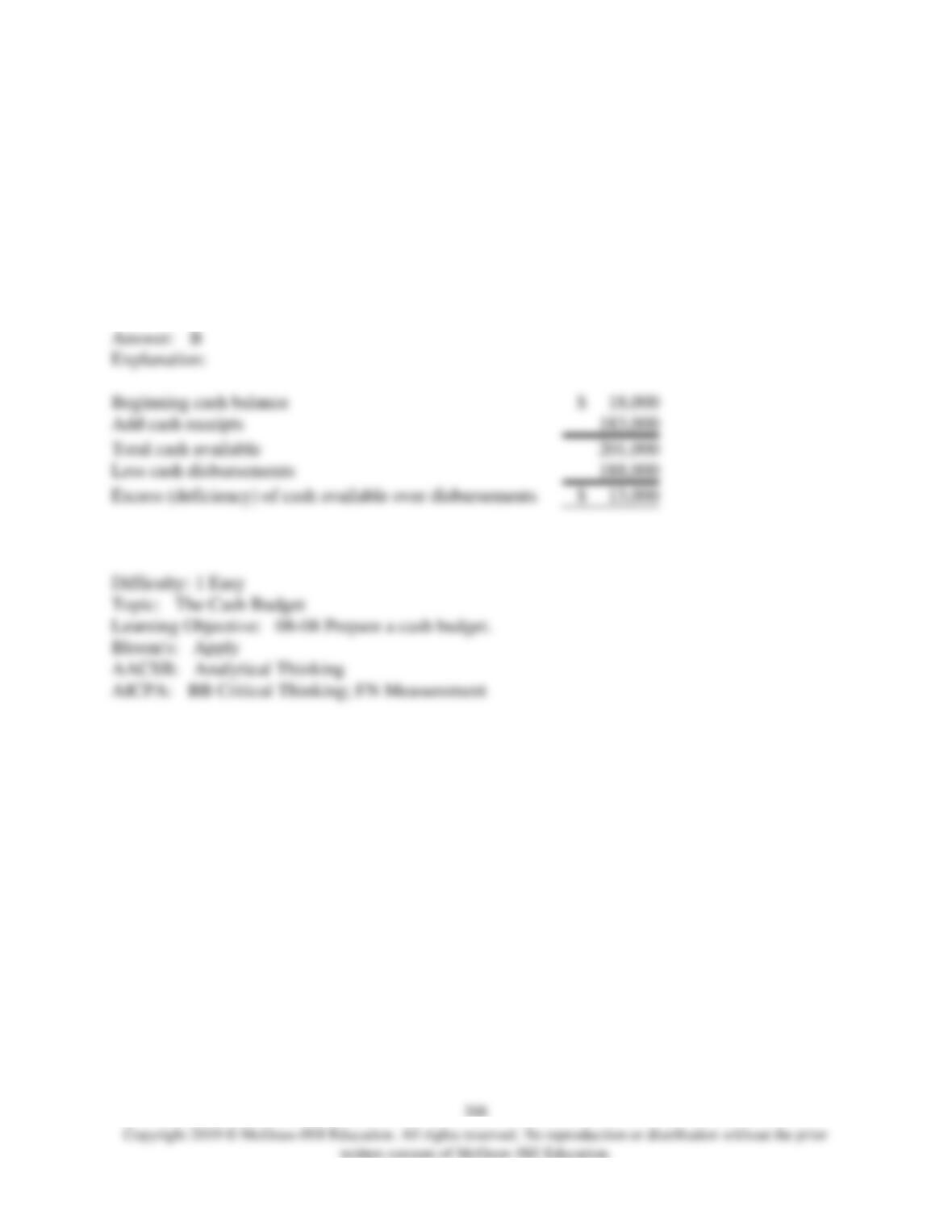
204) Bries Corporation is preparing its cash budget for January. The budgeted beginning cash
balance is $18,000. Budgeted cash receipts total $183,000 and budgeted cash disbursements total
$188,000. The desired ending cash balance is $30,000.
The excess (deficiency) of cash available over disbursements for January is:
A) 23,000
B) $13,000
C) ($5,000)
D) $201,000
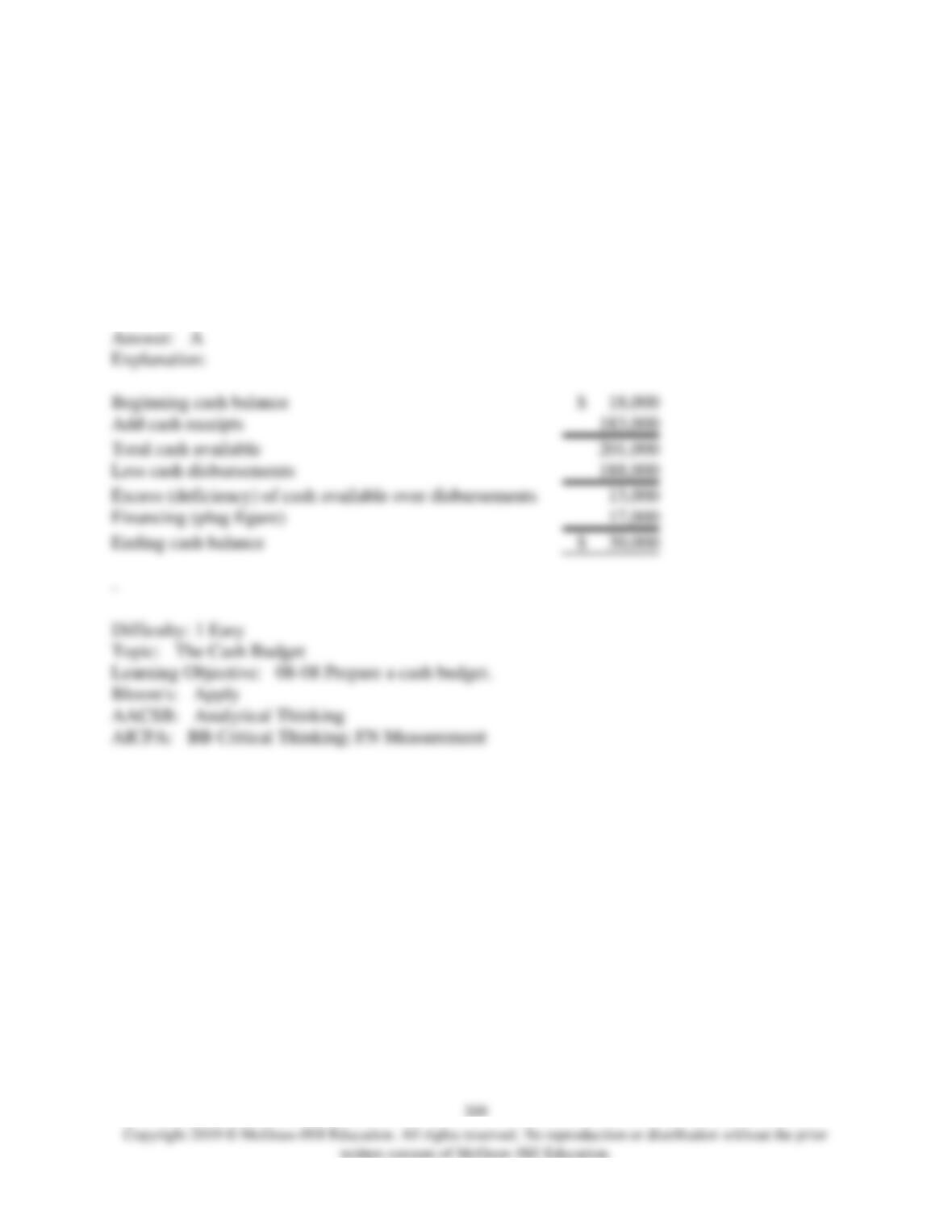
205) Bries Corporation is preparing its cash budget for January. The budgeted beginning cash
balance is $18,000. Budgeted cash receipts total $183,000 and budgeted cash disbursements total
$188,000. The desired ending cash balance is $30,000.
To attain its desired ending cash balance for January, the company should borrow:
A) $17,000
B) $0
C) $30,000
D) $43,000
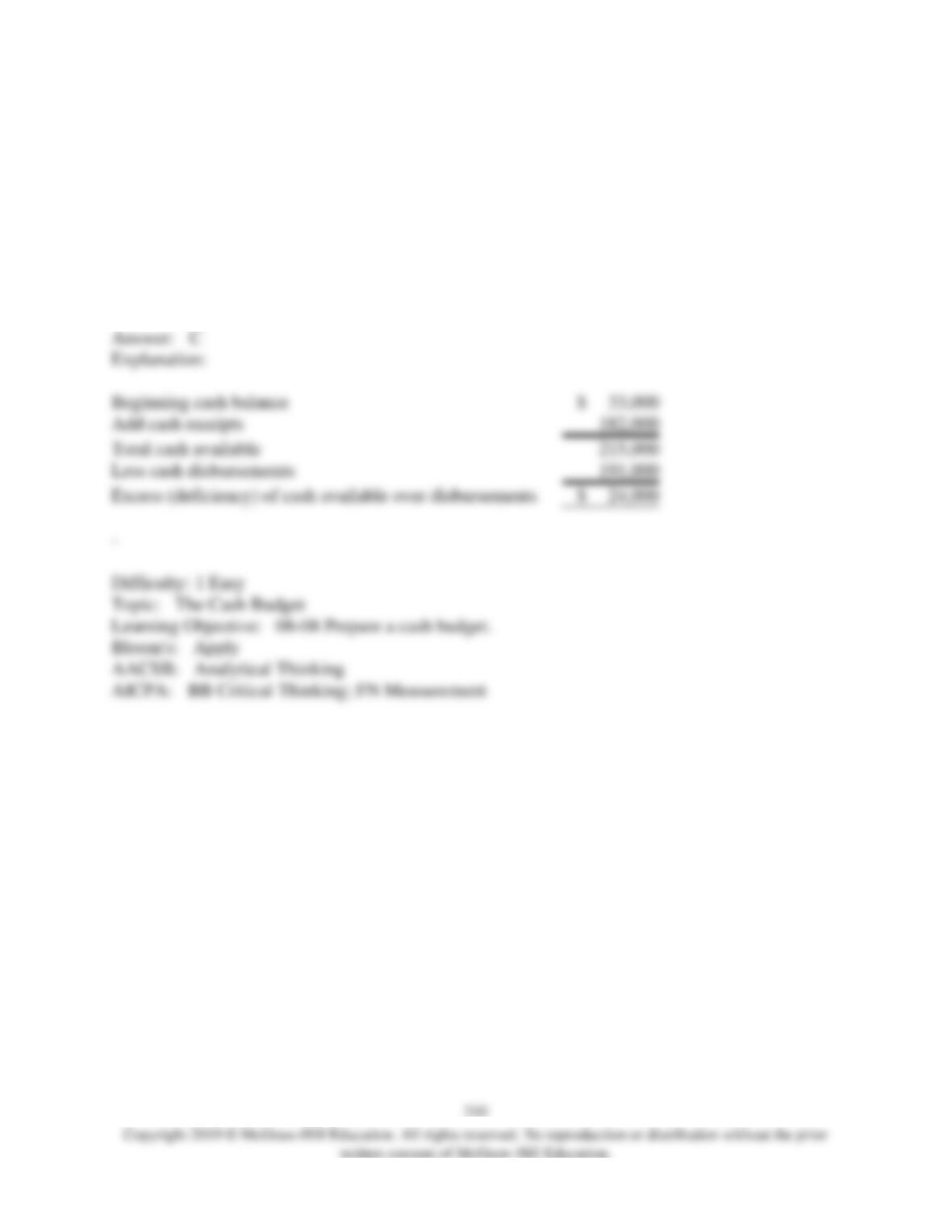
206) Varughese Inc. is working on its cash budget for March. The budgeted beginning cash
balance is $33,000. Budgeted cash receipts total $182,000 and budgeted cash disbursements total
$191,000. The desired ending cash balance is $40,000.
The excess (deficiency) of cash available over disbursements for March will be:
A) $215,000
B) $42,000
C) $24,000
D) ($9,000)
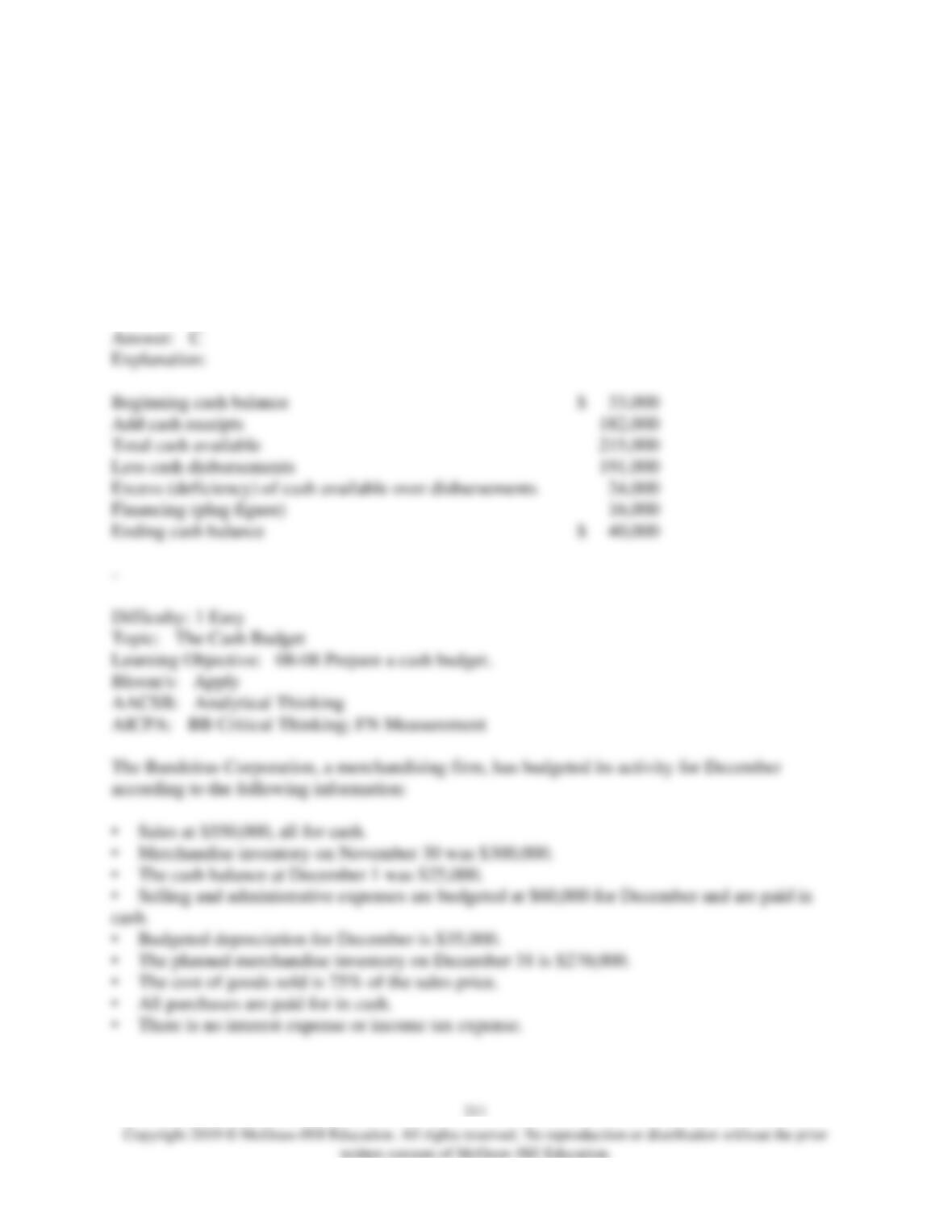
207) Varughese Inc. is working on its cash budget for March. The budgeted beginning cash
balance is $33,000. Budgeted cash receipts total $182,000 and budgeted cash disbursements total
$191,000. The desired ending cash balance is $40,000.
To attain its desired ending cash balance for March, the company needs to borrow:
A) $40,000
B) $0
C) $16,000
D) $64,000
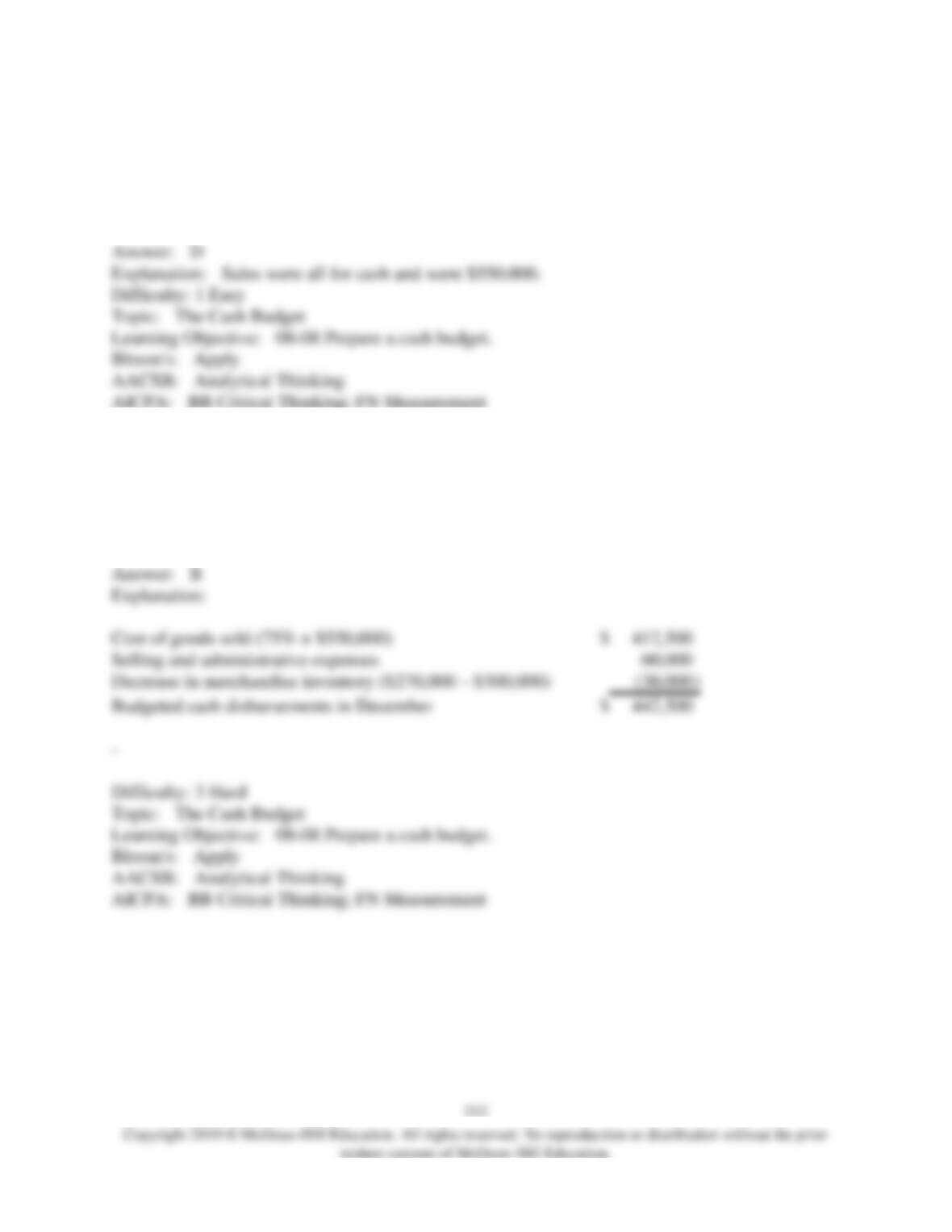
208) The budgeted cash receipts for December are:
A) $412,500
B) $137,500
C) $585,000
D) $550,000
209) The budgeted cash disbursements for December are:
A) $382,500
B) $442,500
C) $472,500
D) $477,500
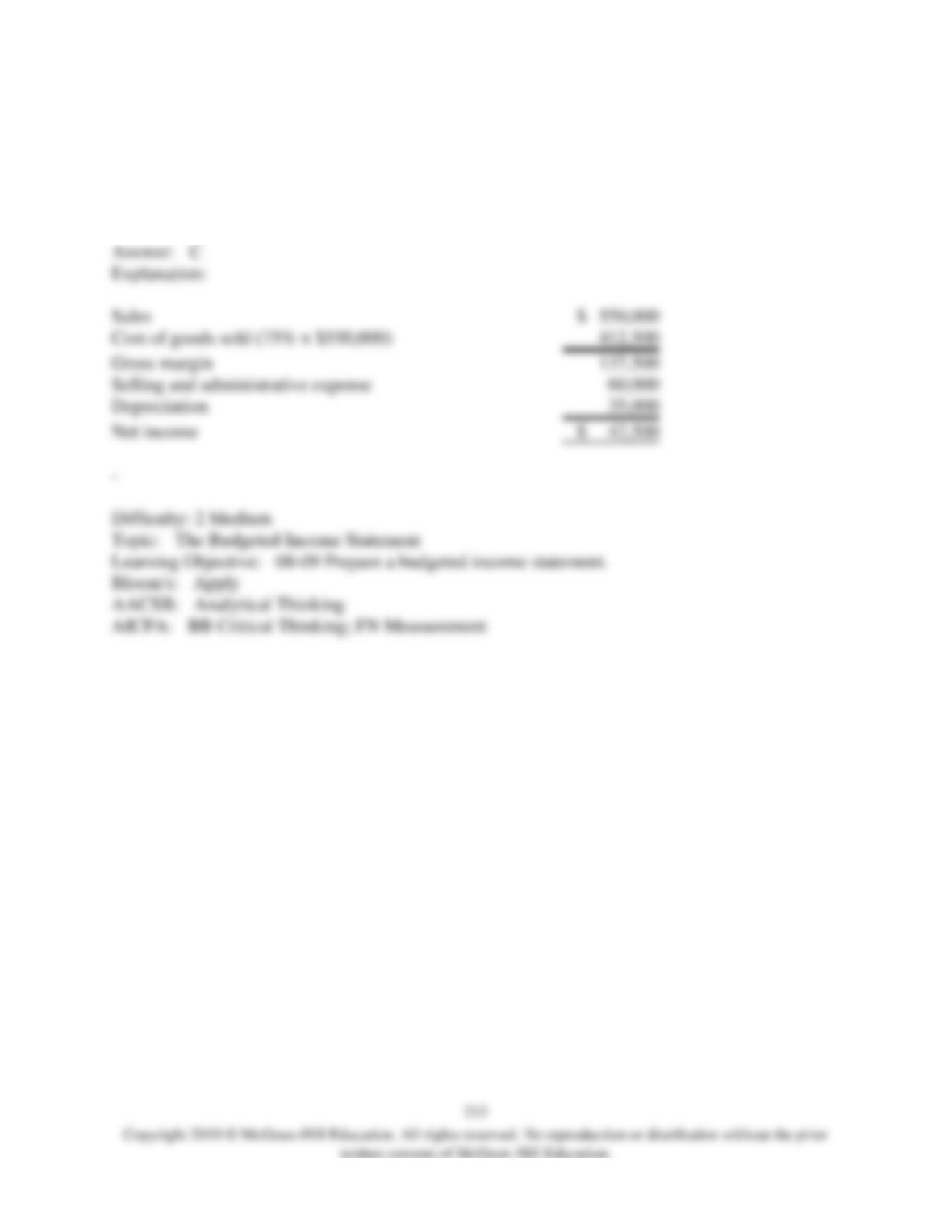
210) The budgeted net income for December is:
A) $107,500
B) $137,500
C) $42,500
D) $77,500
214
Carver Lumber sells lumber and general building supplies to building contractors in a
medium-sized town in Montana. Data regarding the store’s operations follow:
• Sales are budgeted at $350,000 for November, $320,000 for December, and $300,000 for
January.
• Collections are expected to be 90% in the month of sale and 10% in the month following the
sale.
• The cost of goods sold is 75% of sales.
• The company desires to have an ending merchandise inventory equal to 60% of the following
month’s cost of goods sold. Payment for merchandise is made in the month following the purchase.
• Other monthly expenses to be paid in cash are $24,700.
• Monthly depreciation is $16,000.
• Ignore taxes.
Balance Sheet
October 31
Assets
Cash
$
19,000
Accounts receivable
77,000
Inventory
157,500
Property, plant and equipment, net of $502,000 accumulated
depreciation
1,002,000
Total assets
$
1,255,500
Liabilities and Stockholders’ Equity
Accounts payable
$
272,000
Common stock
780,000
Retained earnings
203,500
Total liabilities and stockholders’ equity
$
1,255,500
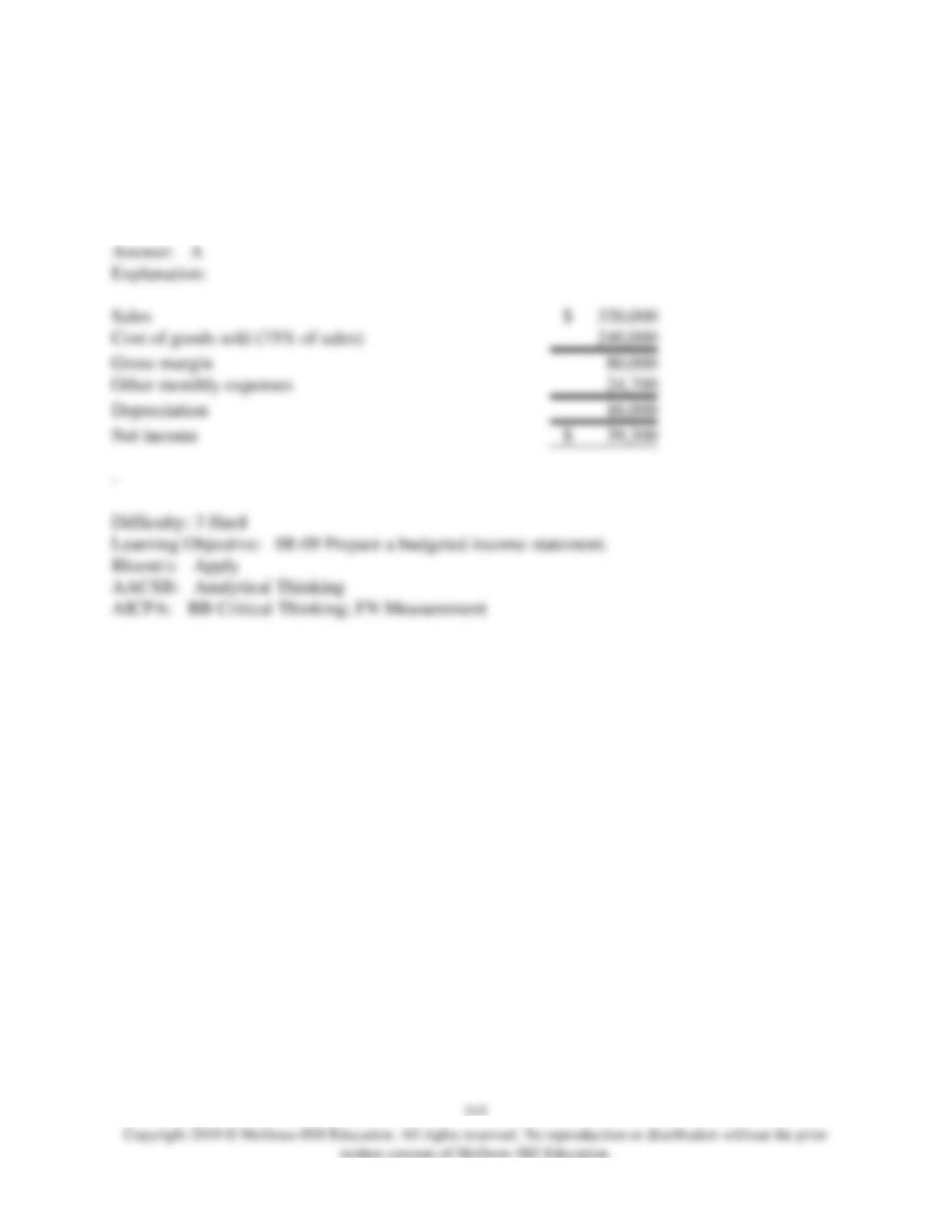
211) The net income for December would be:
A) $39,300
B) $42,300
C) $32,900
D) $55,300
212) The cash balance at the end of December would be:
A) $19,000
B) $163,600
C) $61,300
D) $137,600
213) Accounts payable at the end of December would be:
A) $231,000
B) $96,000
C) $135,000
D) $240,000
214) Retained earnings at the end of December would be:
A) $289,600
B) $296,000
C) $236,400
D) $203,500

219
215) At March 31 Streuling Enterprises, a merchandising firm, had an inventory of 38,000 units,
and it had accounts receivable totaling $85,000. Sales, in units, have been budgeted as follows for
the next four months:
April
60,000
May
75,000
June
90,000
July
81,000
Streuling’s board of directors has established a policy to commence in April that the inventory at
the end of each month should contain 40% of the units required for the following month’s budgeted
sales.
The selling price is $2 per unit. One-third of sales are paid for by customers in the month of the
sale, the balance is collected in the following month.
Required:
a. Prepare a merchandise purchases budget showing how many units should be purchased for each
of the months April, May, and June.
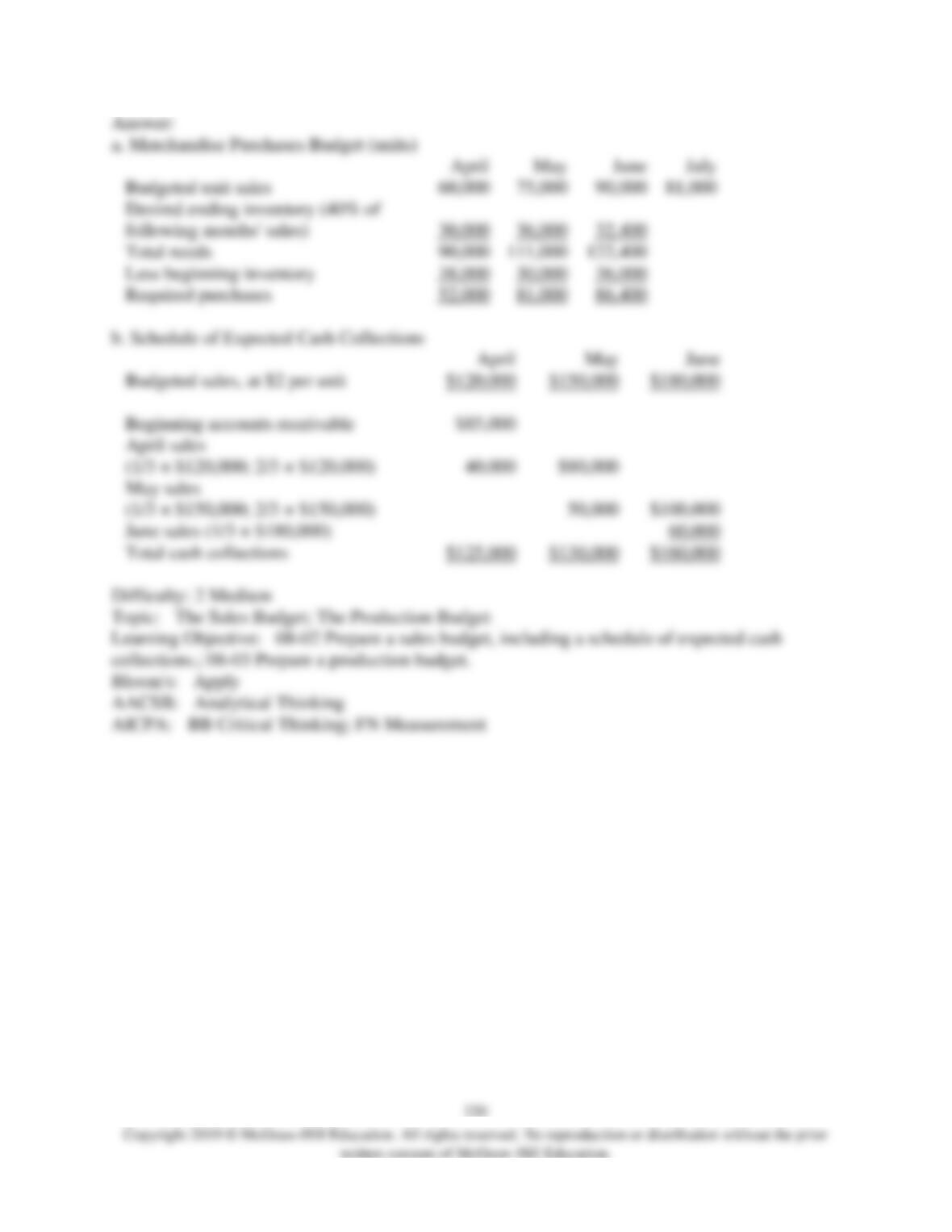
b. Prepare a schedule of expected cash collections for each of the months April, May, and June.