84.
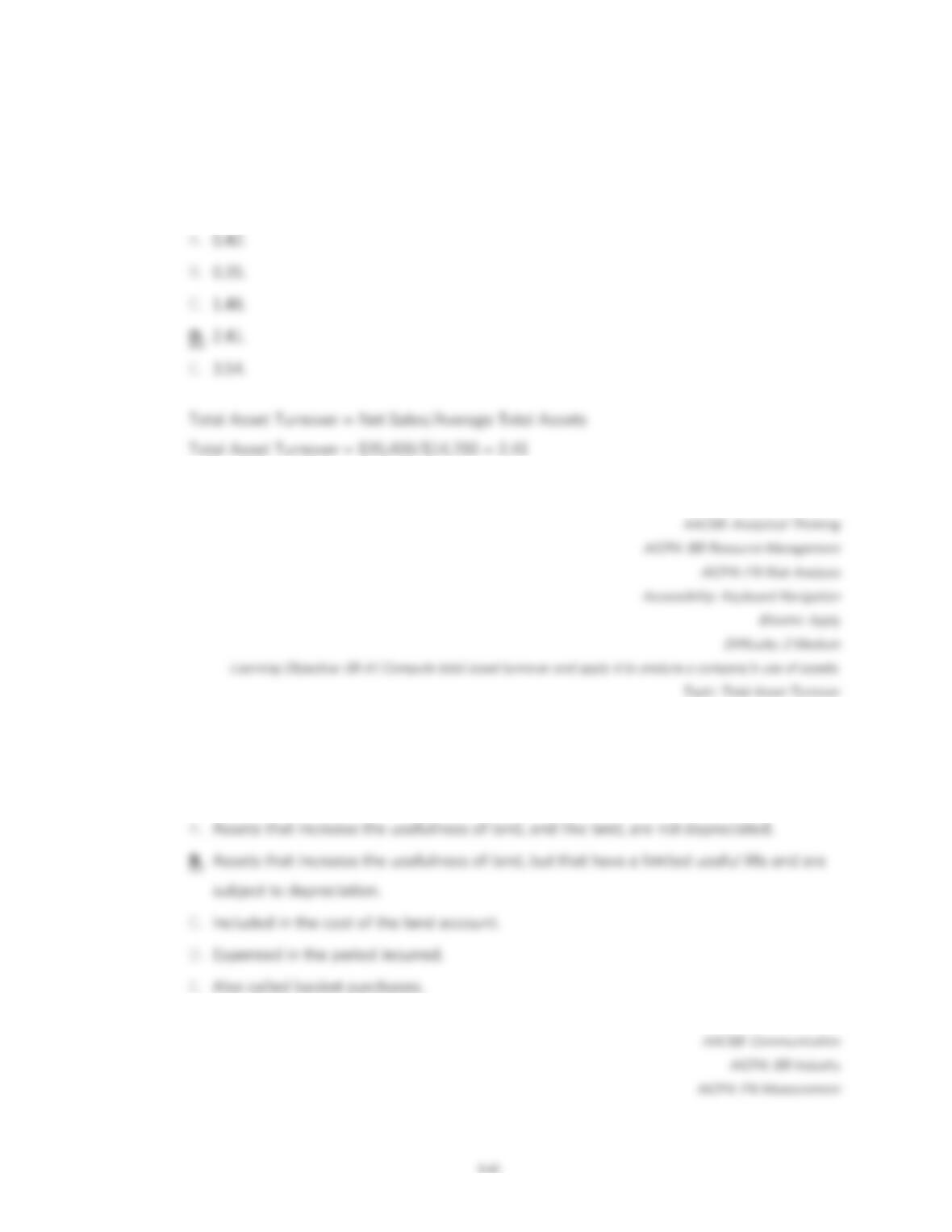
Spears Co. had net sales of $35,400 million. Its average total assets for the period were
$14,700 million. Spears’ total asset turnover equals:
85.
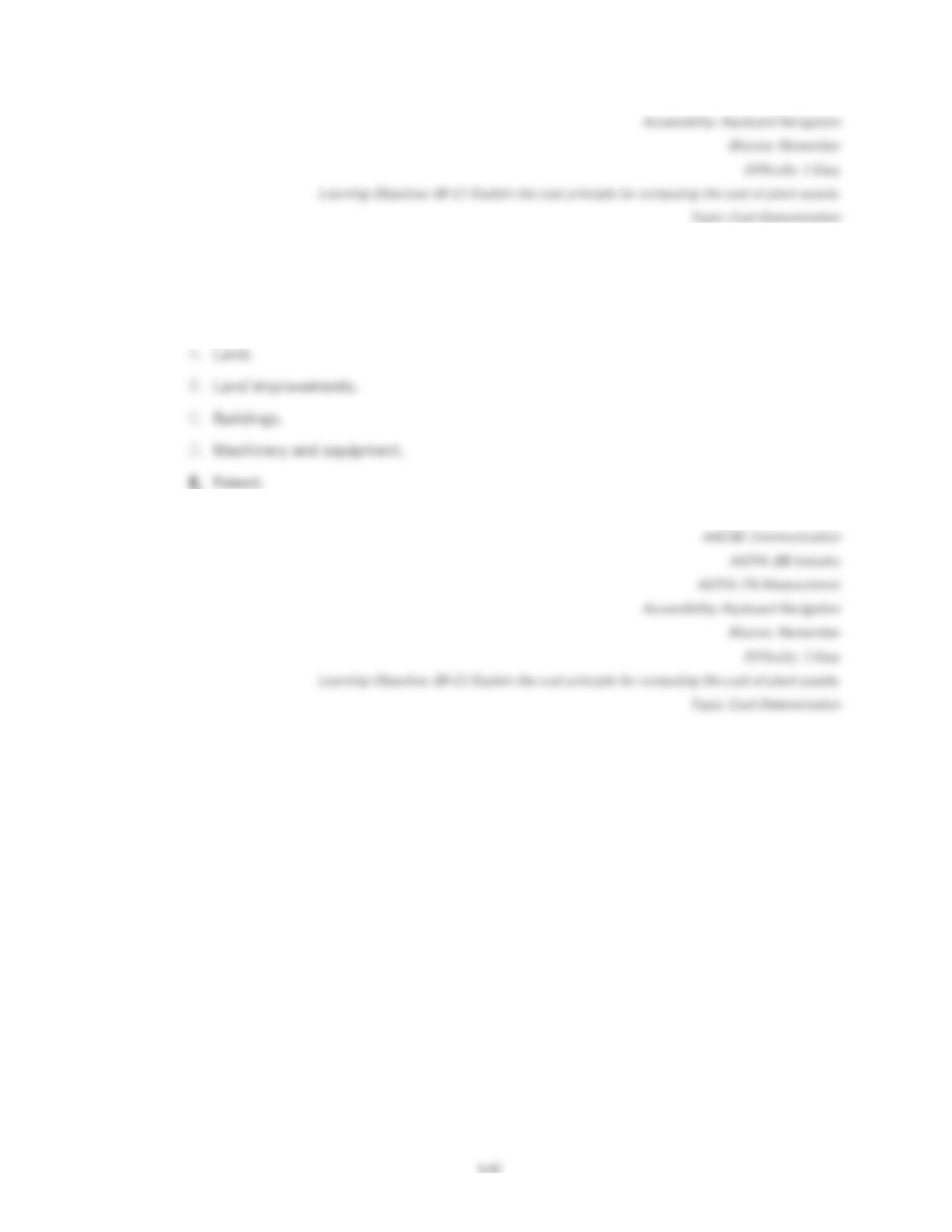
Land improvements are:
86.
Which of the following are
not
classified as plant assets?
8-43
87.
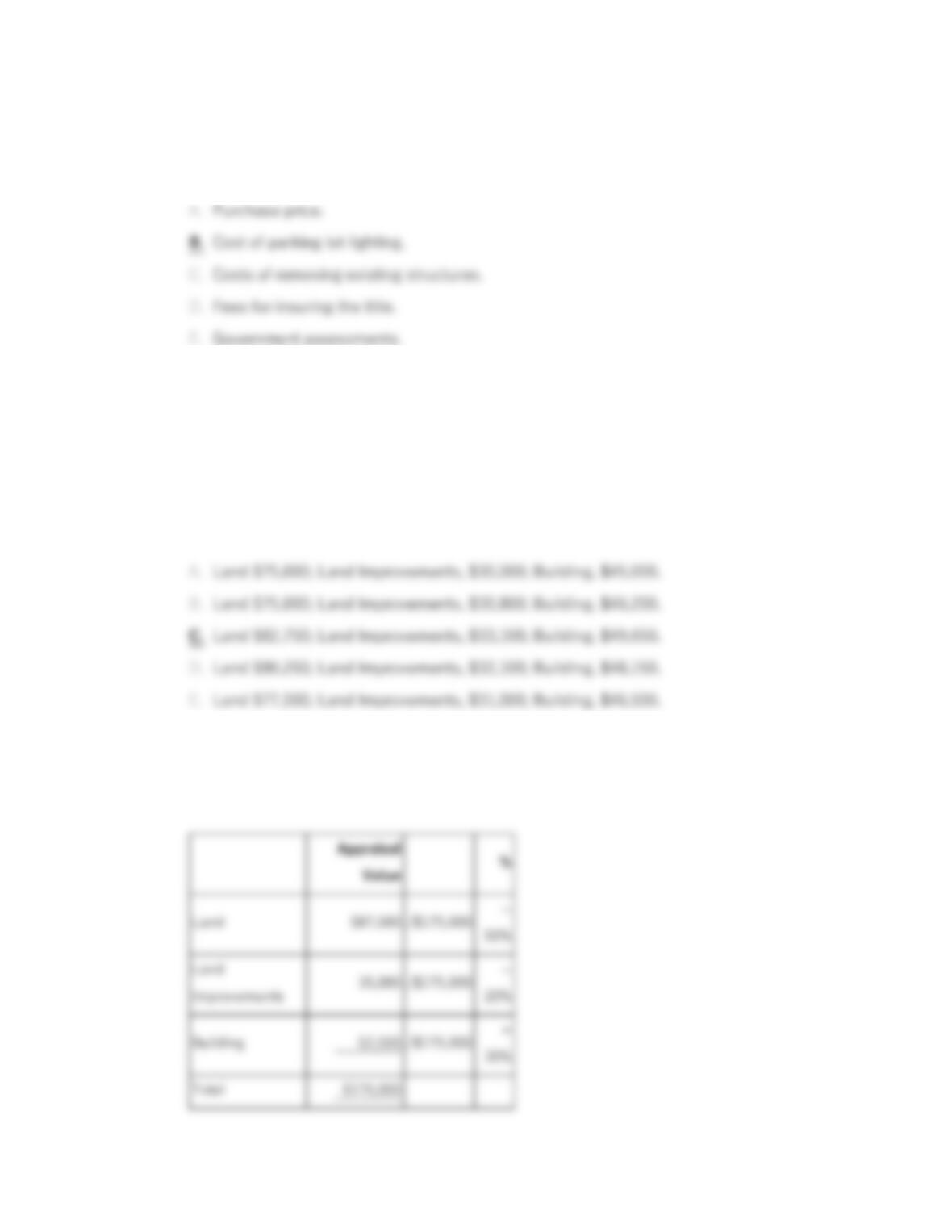
The cost of land would
not
include:
88.
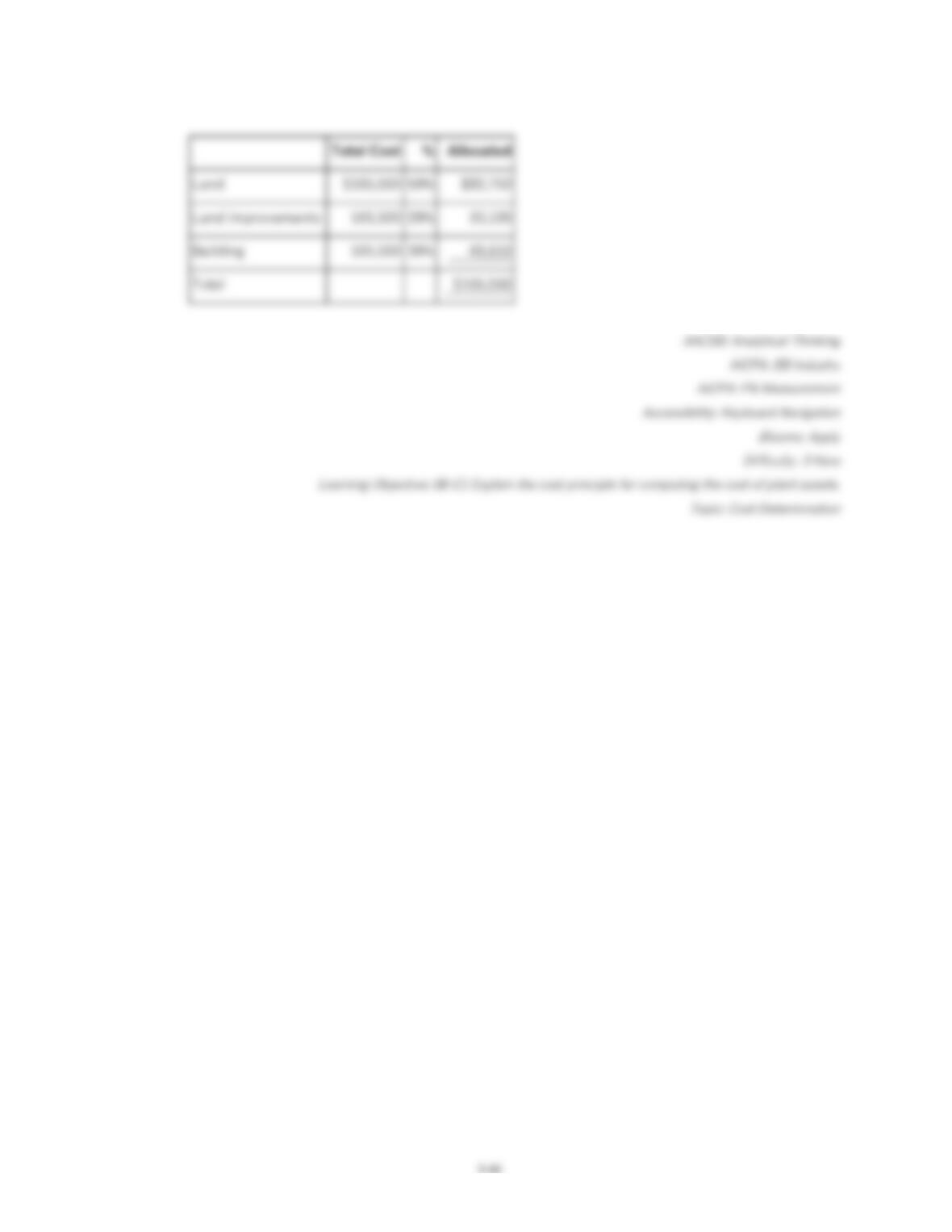
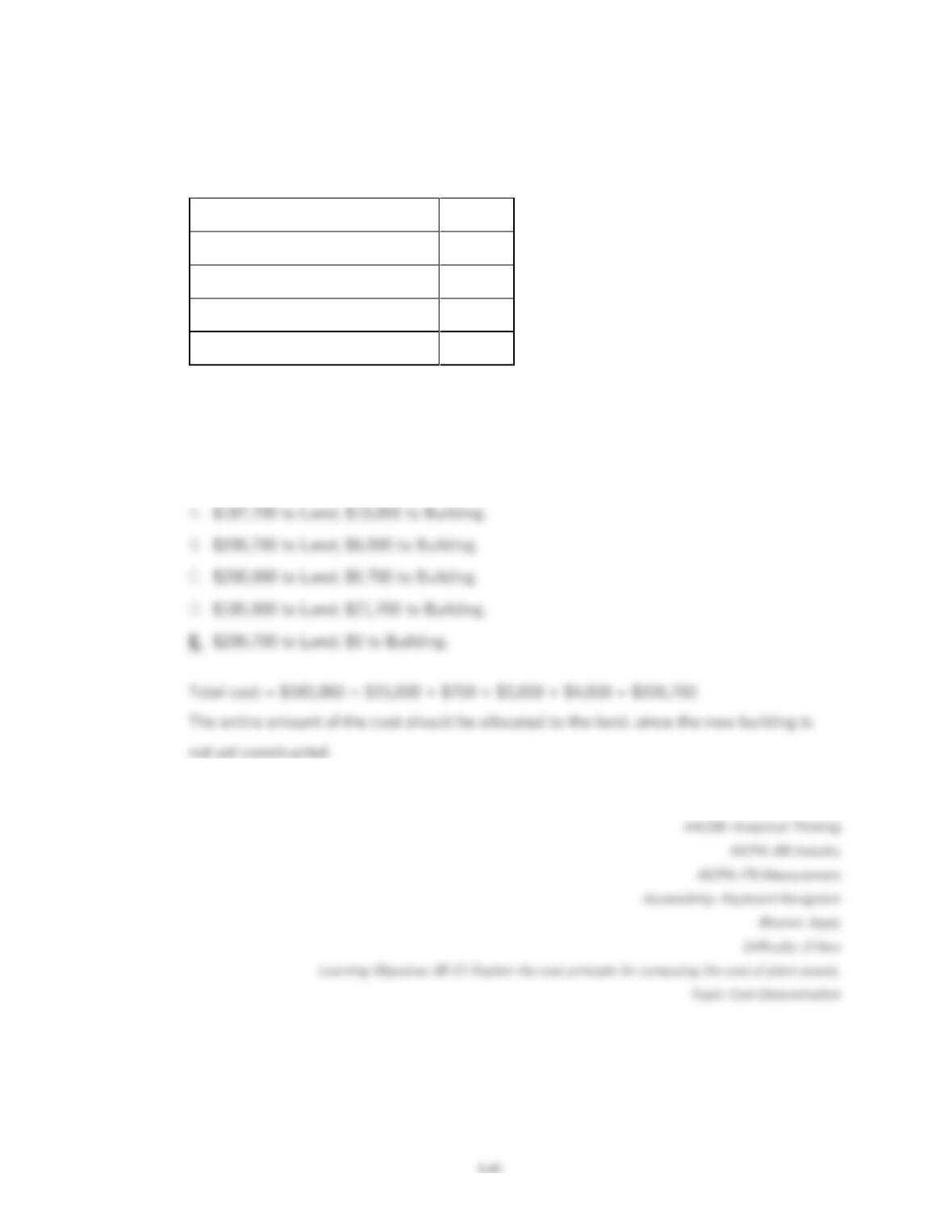
A company paid $150,000, plus a 7% commission and $5,000 in closing costs for a
property. The property included land appraised at $87,500, land improvements appraised
at $35,000, and a building appraised at $52,500. What should be the allocation of this
property’s costs in the company’s accounting records?
Total cost to allocate = $150,000 + ($150,000 * .07) + 5,000 = $165,500
89.
Merchant Company purchased property for a building site. The costs associated with the
property were:
Purchase price
$185,000
Real estate commissions
15,000
Legal fees
700
Expenses of clearing the land
2,000
Expenses to remove old building
4,000
What portion of these costs should be allocated to the cost of the land and what portion
should be allocated to the cost of the new building?
90.
A company purchased property for $100,000. The property included a building, a parking
lot, and land. The building was appraised at $62,000; the land at $35,000, and the parking
lot at $18,000. Land should be recorded in the accounting records with an allocated cost
of:
91.
The formula to compute annual straight-line depreciation is:
92.
The total cost of an asset less its accumulated depreciation is called:
93.
The depreciation method that charges the same amount of expense to each period of the
asset’s useful life is called:
94.
The depreciation method that allocates a varying amount of a plant asset’s cost to
expense for each period depending on its usage is called:
95.
The depreciation method in which a plant asset’s depreciation expense for a period is
determined by applying a constant depreciation rate to the asset’s beginning–of-period
book value is called:
96.
The depreciation method that produces larger depreciation expense during the early years
of an asset’s life and smaller expense in the later years is a(an):
97.
A company purchased a delivery van for $28,000 with a salvage value of $3,000 on
September 1, Year 1. It has an estimated useful life of 5 years. Using the straight-line
method, how much depreciation expense should the company recognize on December 31,
Year 1?
98.
Marlow Company purchased a point of sale system on January 1 for $3,400. This system
has a useful life of 10 years and a salvage value of $400. What would be the
depreciation
expense
for the second year of its useful life using the double-declining-balance method?
99.
Marlow Company purchased a point of sale system on January 1 for $3,400. This system
has a useful life of 10 years and a salvage value of $400. What would be the
depreciation
expense
for the first year of its useful life using the double-declining-balance method?
100.
Marlow Company purchased a point of sale system on January 1 for $3,400. This system
has a useful life of 10 years and a salvage value of $400. What would be the
accumulated
depreciation
at the end of the second year of its useful life using the double-declining–
balance method?
101.
Marlow Company purchased a point of sale system on January 1 for $3,400. This system
has a useful life of 10 years and a salvage value of $400. What would be the
book
value
of
the asset at the end of the first year of its useful life using the double-declining-balance
method?
102.
A company purchased a weaving machine for $190,000. The machine has a useful life of 8
years and a salvage value of $10,000. It is estimated that the machine could produce
75,000 bolts of woven fabric over its useful life. In the first year, 15,000 bolts were
produced. In the second year, production increased to 19,000 units. Using the units–of–
production method, what is the amount of
depreciation
expense
that should be recorded
for the second year?
103.
A company purchased a weaving machine for $190,000. The machine has a useful life of 8
years and a salvage value of $10,000. It is estimated that the machine could produce
75,000 bolts of woven fabric over its useful life. In the first year, 15,000 bolts were
produced. In the second year, production increased to 19,000 units. Using the units–of–
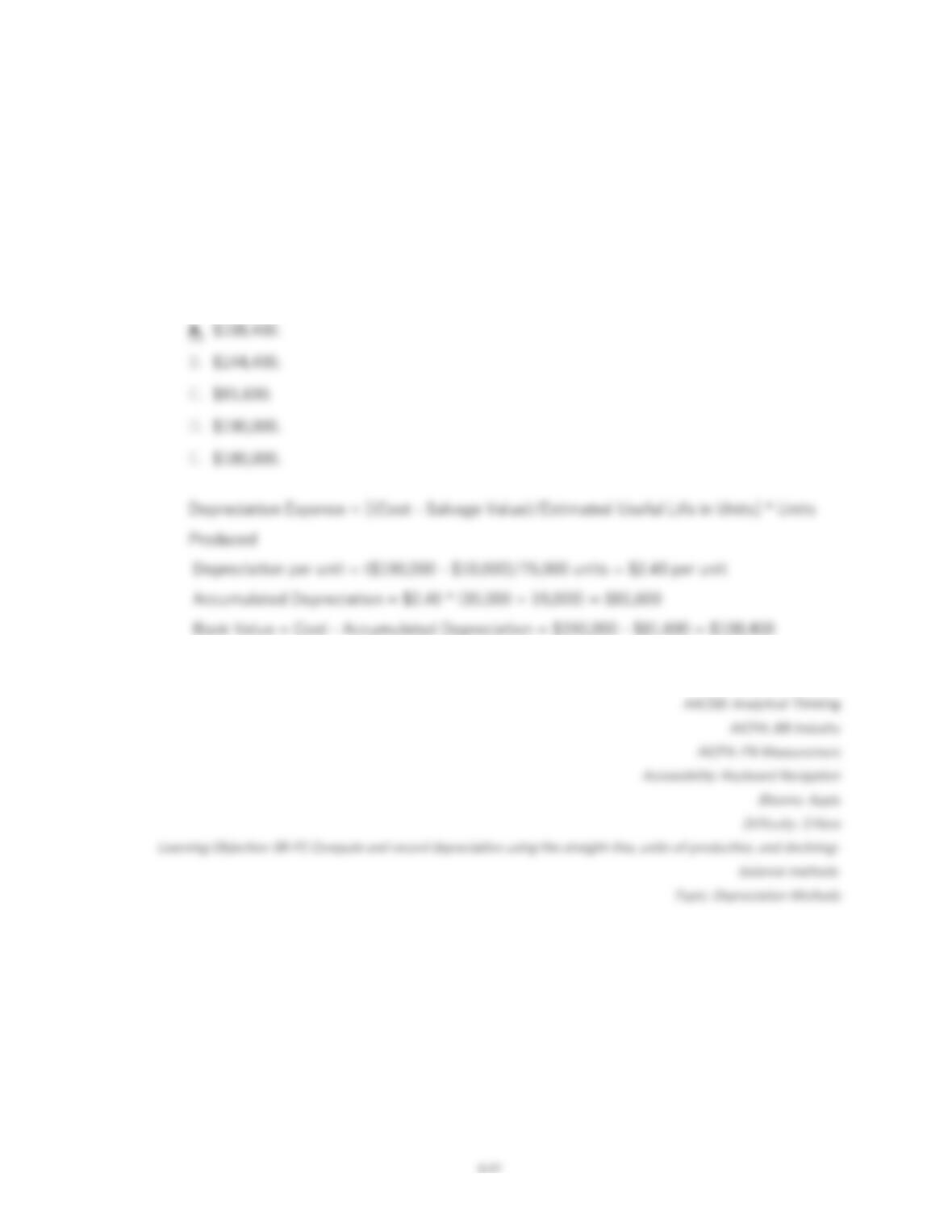
production method, what is the amount of
accumulated
depreciation
at the end of the
second year?
104.
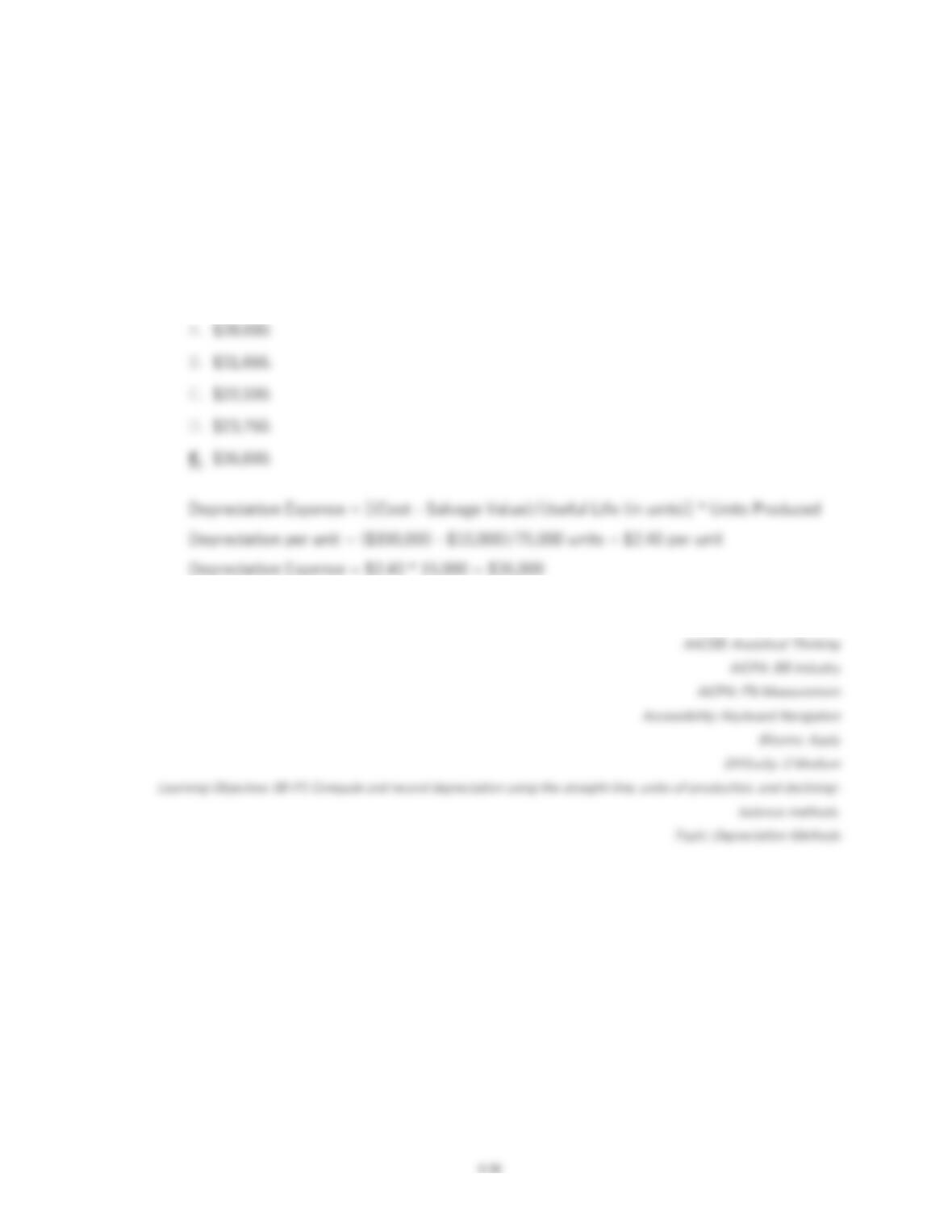
A company purchased a weaving machine for $190,000. The machine has a useful life of 8
years and a salvage value of $10,000. It is estimated that the machine could produce
75,000 bolts of woven fabric over its useful life. In the first year, 15,000 bolts were
produced. In the second year, production increased to 19,000 units. Using the units–of–
production method, what is the
book
value
of the machine at the end of the second year?
105.
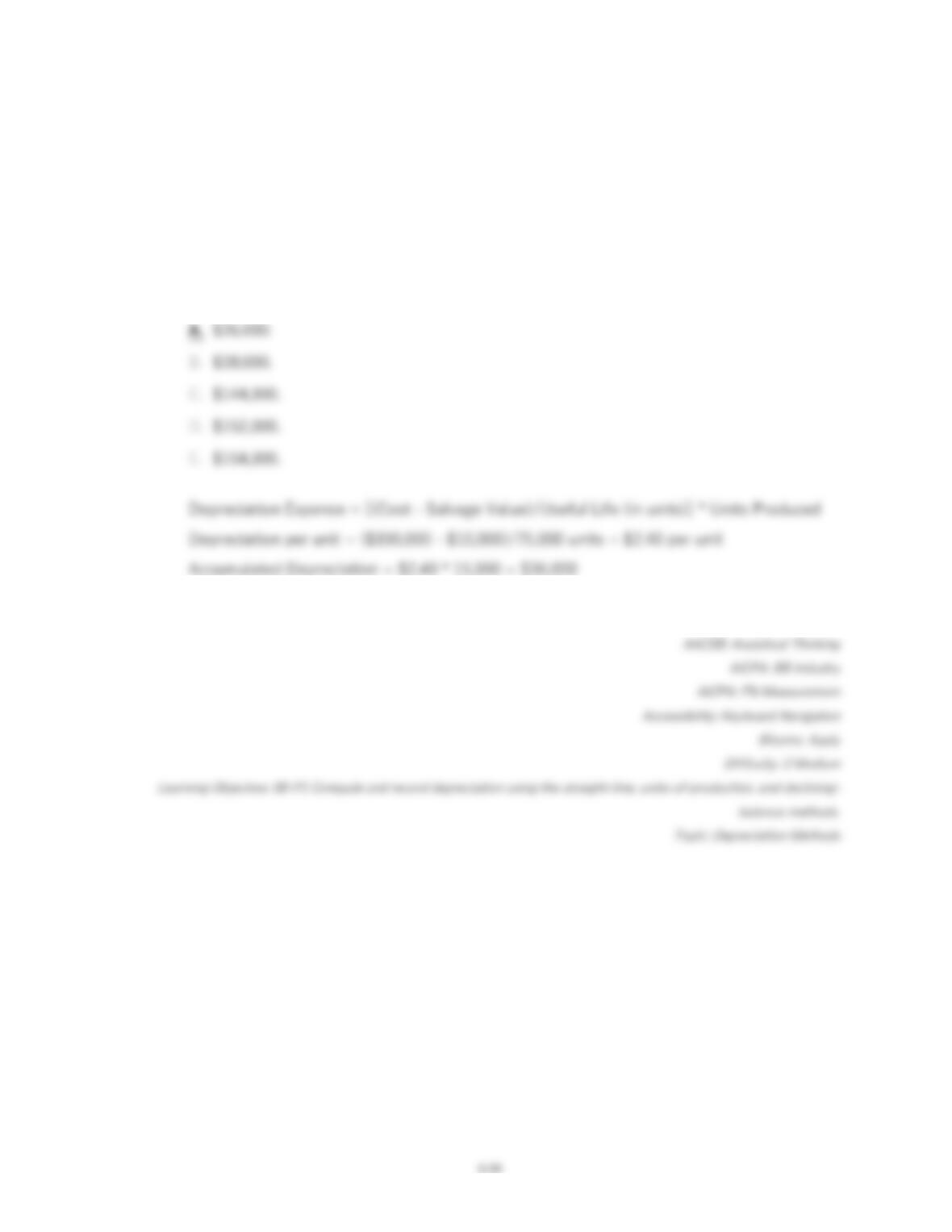
A company purchased a weaving machine for $190,000. The machine has a useful life of 8
years and a salvage value of $10,000. It is estimated that the machine could produce
75,000 bolts of woven fabric over its useful life. In the first year, 15,000 bolts were
produced. Using the units-of-production method, what is the amount of
depreciation
expense
that should be recorded for the first year?
106.
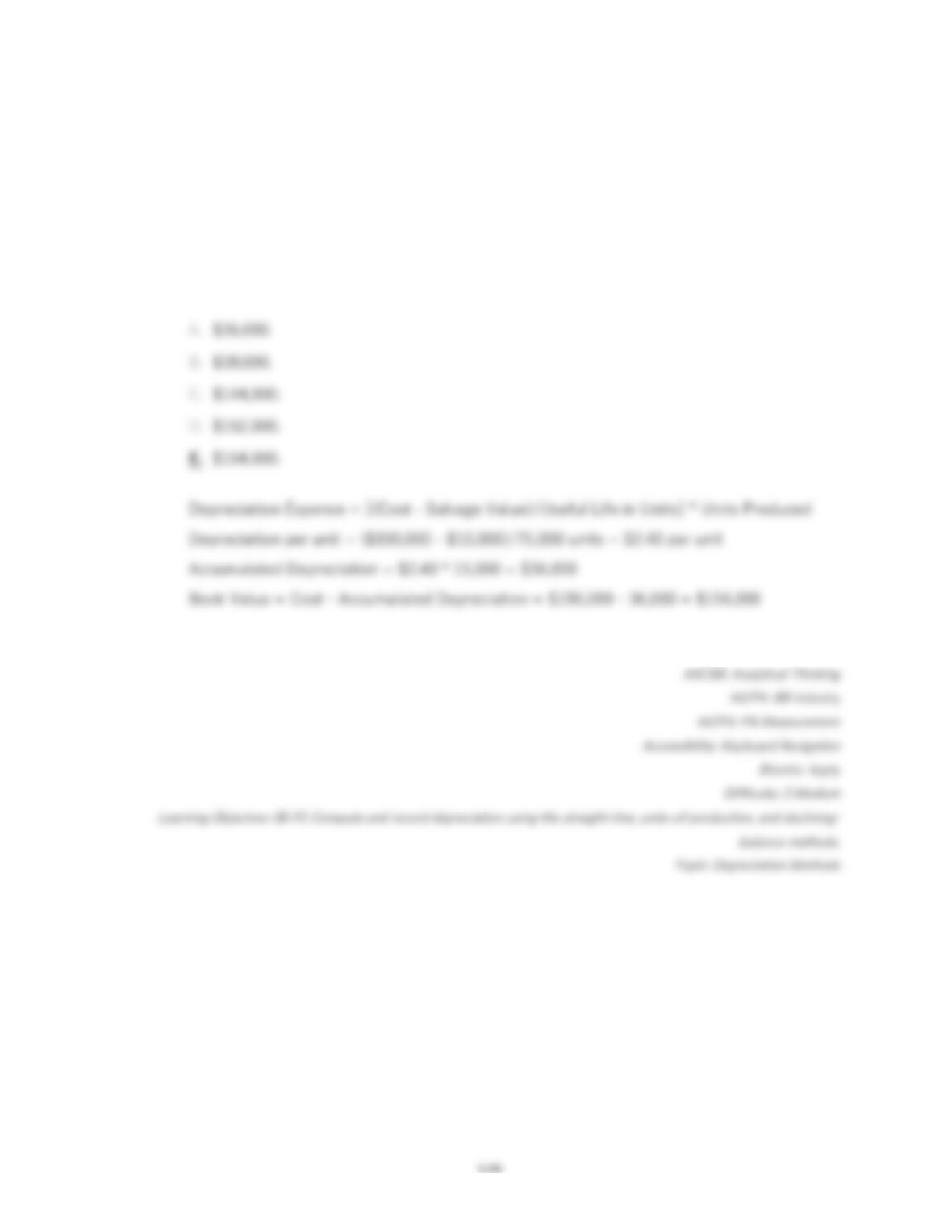
A company purchased a weaving machine for $190,000. The machine has a useful life of 8
years and a salvage value of $10,000. It is estimated that the machine could produce
75,000 bolts of woven fabric over its useful life. In the first year, 15,000 bolts were
produced. Using the units-of-production method, what is the amount of
accumulated
depreciation
at the end of the first year?
107.
A company purchased a weaving machine for $190,000. The machine has a useful life of 8
years and a salvage value of $10,000. It is estimated that the machine could produce
75,000 bolts of woven fabric over its useful life. In the first year, 15,000 bolts were
produced. Using the units-of-production method, what is the
book
value
of the machine at
the end of the first year?