8-193
8-194
245.
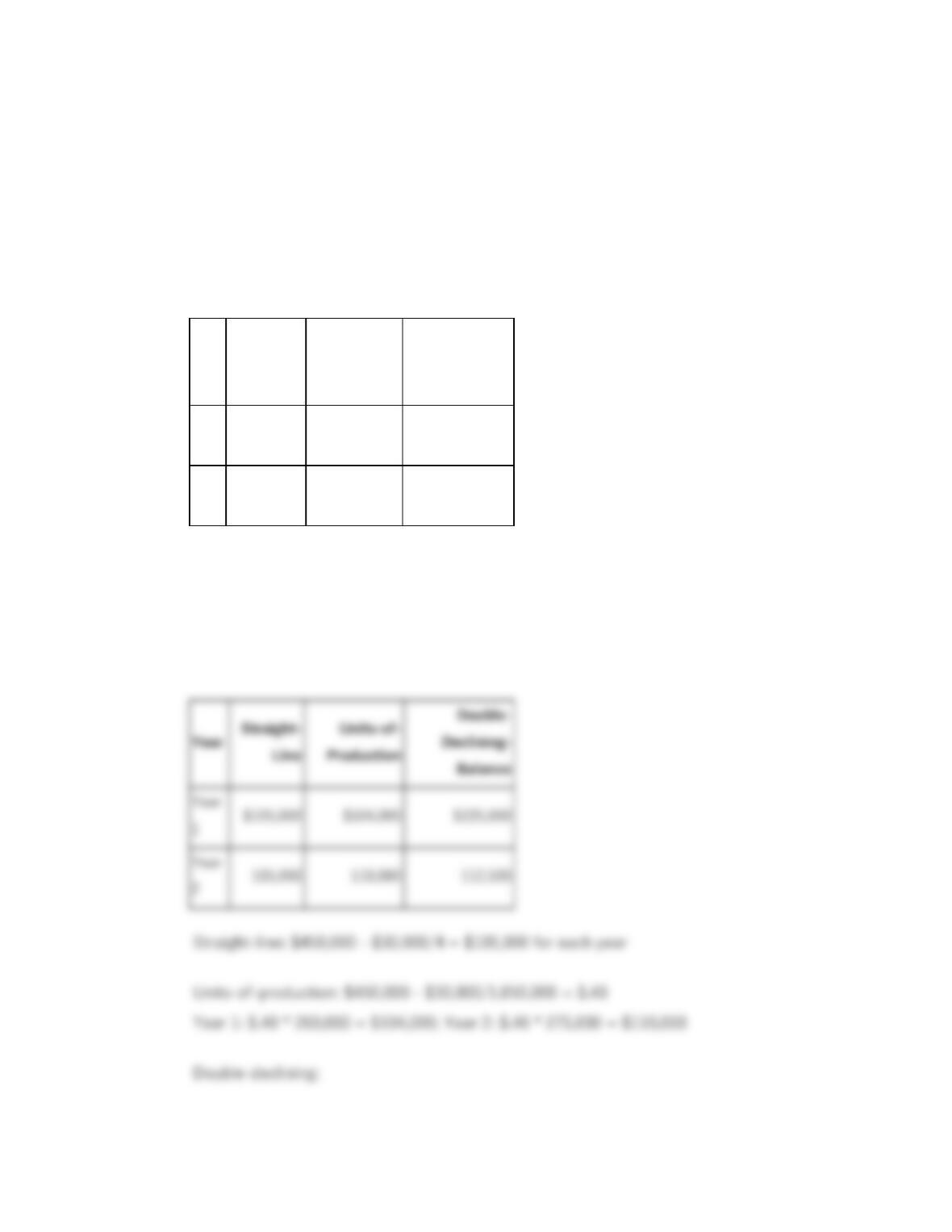
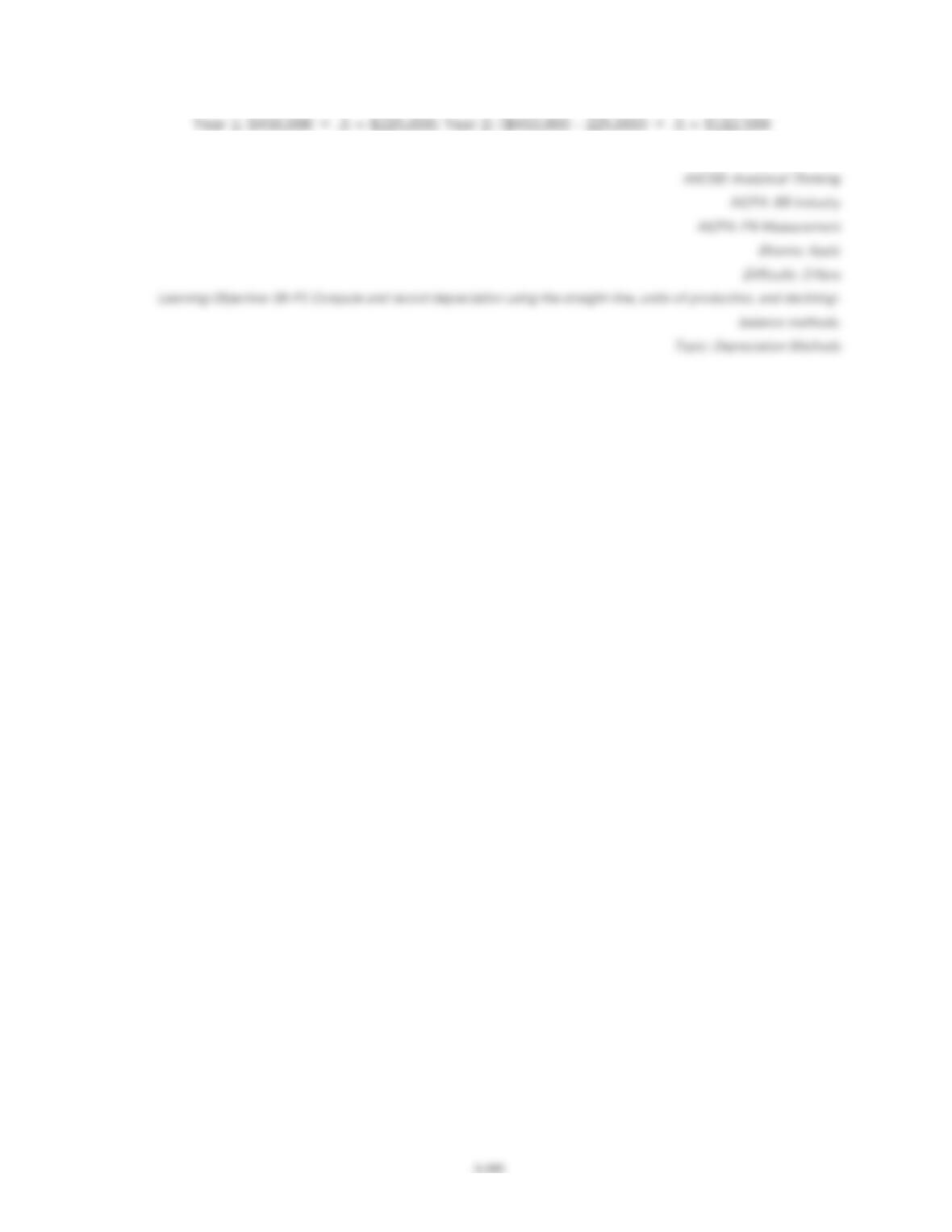
A machine costing $450,000 with a 4-year life and an estimated salvage value of $30,000
is installed by Peters Company on January 1. The company estimates the machine will
produce 1,050,000 units of product during its life. It actually produces the following units
for the first 2 years: Year 1, 260,000; Year 2, 275,000. Enter the depreciation amounts for
years 1 and 2 in the table below for each depreciation method. Show calculation of
amounts below the table.
Year
Straight-
Line
Units-of–
Production
Double-
Declining-
Balance
Year
1
Year
2
Year
1
8-196
246.
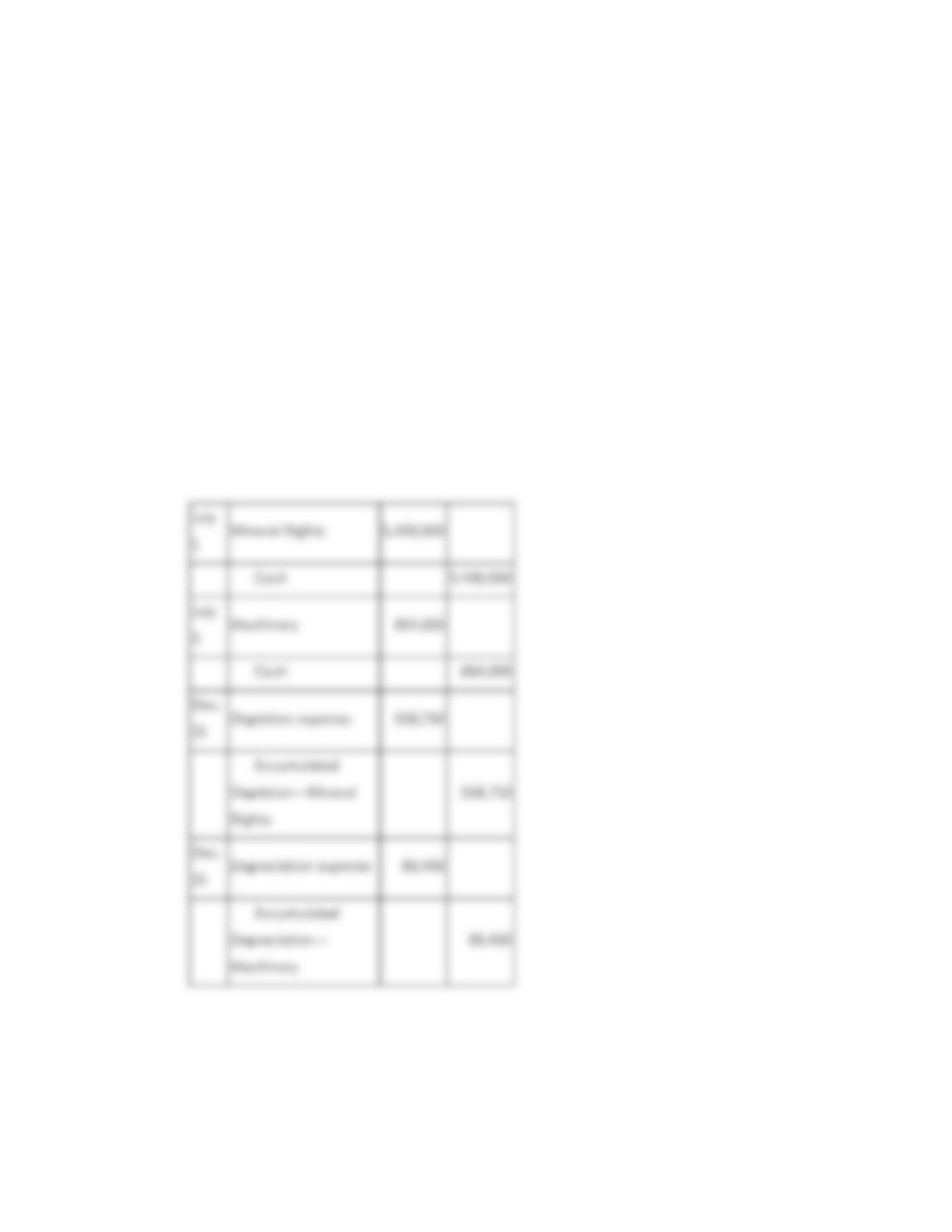
On July 1 of the current year, Glover Mining Co. pays $5,400,000 for land estimated to
contain 7,200,000 tons of recoverable ore. It installs machinery on July 3 costing $864,000
that has an 8 year life and no salvage value and is capable of mining the ore deposit in six
years. The company removes and sells 745,000 tons of ore during its first six months of
operations ending on December 31. Depreciation of the machinery is in proportion to the
mine’s depletion as the machinery will be abandoned after the ore is mined. Prepare the
entries Glover must record for (a) the purchase of the ore deposit, (b) the costs and
installation of the machinery, (c) the depletion assuming the land has a zero salvage value,
and (d) the depreciation on the machinery.
247.
On July 1 of the current year, Timberlake Company signed a contract to sublease space in
a building for 7 years. Timberlake Company paid $56,000 for the right to sublease this
space. After taking possession of the leased space, Timberlake pays $140,000 for
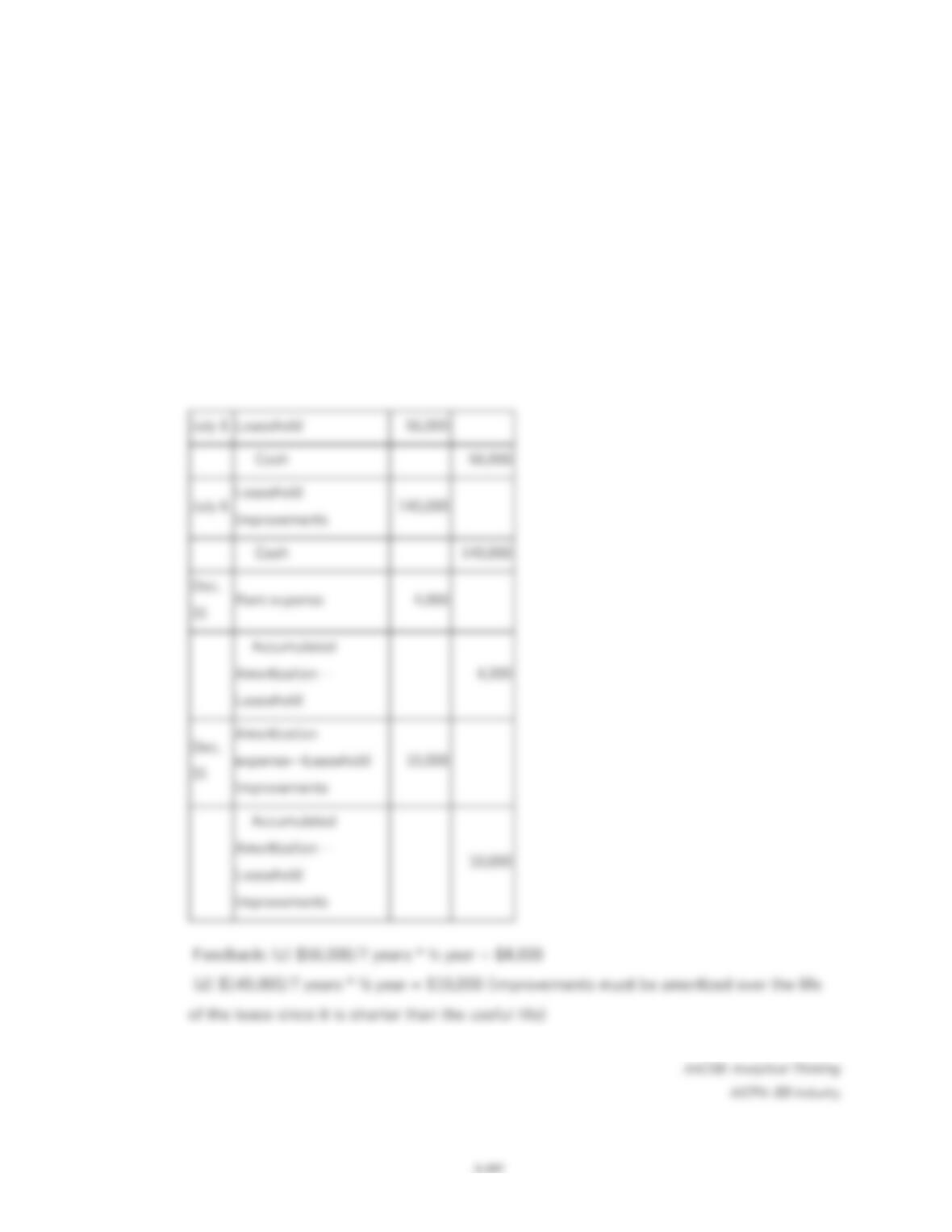
improving the office portion of the lease space. The improvements are paid on July 6 of the
current year, and are estimated to have a useful life equal to the 14 years remaining in the
life of the building. Prepare entries for Timberlake to record (a) its payment for the right to
sublease the building space, (b) its payment for the office improvements, (c) the
December 31 year-end entry to amortize the cost of the sublease, (d) the December 31
year-end entry to amortize the office improvements.
8-198
248.
Westport Company reports the following in millions: net sales of $25,300 for 2016 and
$22,640 for 2015; end-of-year total assets of $14,875 for 2016 and $13,680 for 2015.
Compute its total asset turnover for 2016 and assess its level if competitors average a
total asset turnover of 2.0 times.
Fill in the Blank Questions
249.
__________________ is an estimate of an asset’s value at the end of its benefit period (or
useful life).
250.
The insufficient capacity of a company’s plant asset to meet the company’s productive
demands is called ______________________.
251.
_________________ refers to a plant asset that is no longer useful in producing goods or
services with a competitive advantage because of new inventions and improvements.
252.
A ____________________________ results from revising estimates of the useful life or
salvage value of a plant asset.
253.
The federal income tax rules for depreciating assets are known as
___________________________.
254.
The depreciation method that recognizes equal amounts of annual depreciation over the
life of an asset is _______________________________.
255.
The depreciation method that charges a varying amount to expense for each period of an
asset’s useful life depending on its usage is ________________________________.
256.
The depreciation method that uses a depreciation rate that is a multiple of the straight–
line rate and applies it to an asset’s beginning–of-period book value is
____________________.
257.
Capital expenditures that extend an asset’s useful life beyond its original estimate are
called _______________________.
258.
Additional costs of plant assets that do not materially increase the asset’s life or
productive capabilities are recorded as ______________________________.
259.
Additional costs of plant assets that provide benefits extending beyond the current period;
they increase or improve the type or amount of service an asset provides are treated as
_________________________________.
260.
Revenue expenditures to keep an asset in normal, good operating condition; they are
necessary if an asset is to perform to expectations over its useful life are called
_____________________.
261.
_________________________ are capital expenditures that make a plant asset more
productive but do not always increase an asset’s life; they often involve adding a
component to an asset or replacing one of its old components with a better one.