8-141
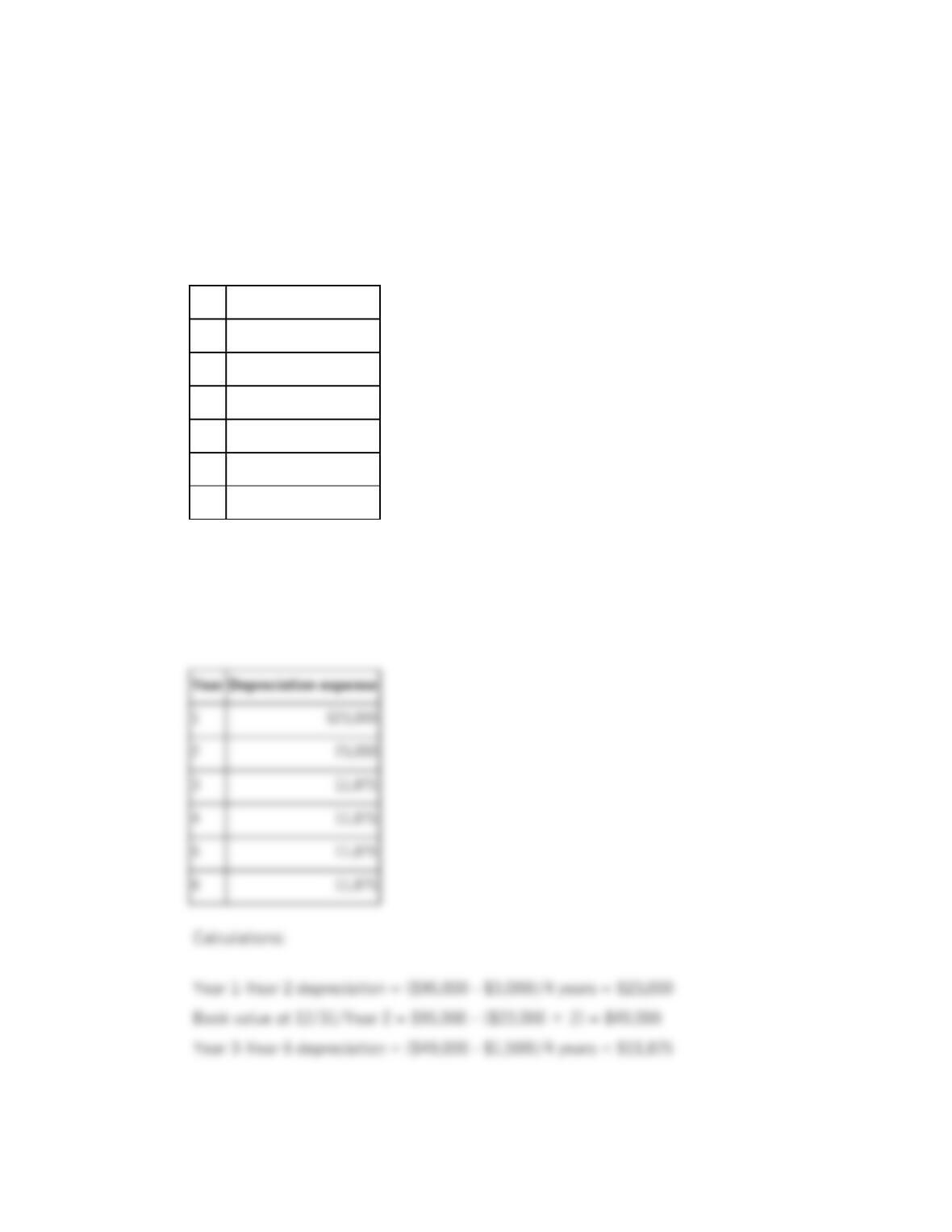
estimated to have a $3,000 salvage value and a 4 year life. The truck was depreciated
using the straight-line method. At the beginning of the third year, it was obvious that the
truck’s total useful life would be 6 years rather than 4, and the salvage at the end of the 6th
year would be $1,500. Determine the depreciation expense for the truck for the 6 years of
its life.
Year
Depreciation expense
1
2
3
4
5
6
Year
Depreciation expense
1
2
3
4
5
6
8-142
198.
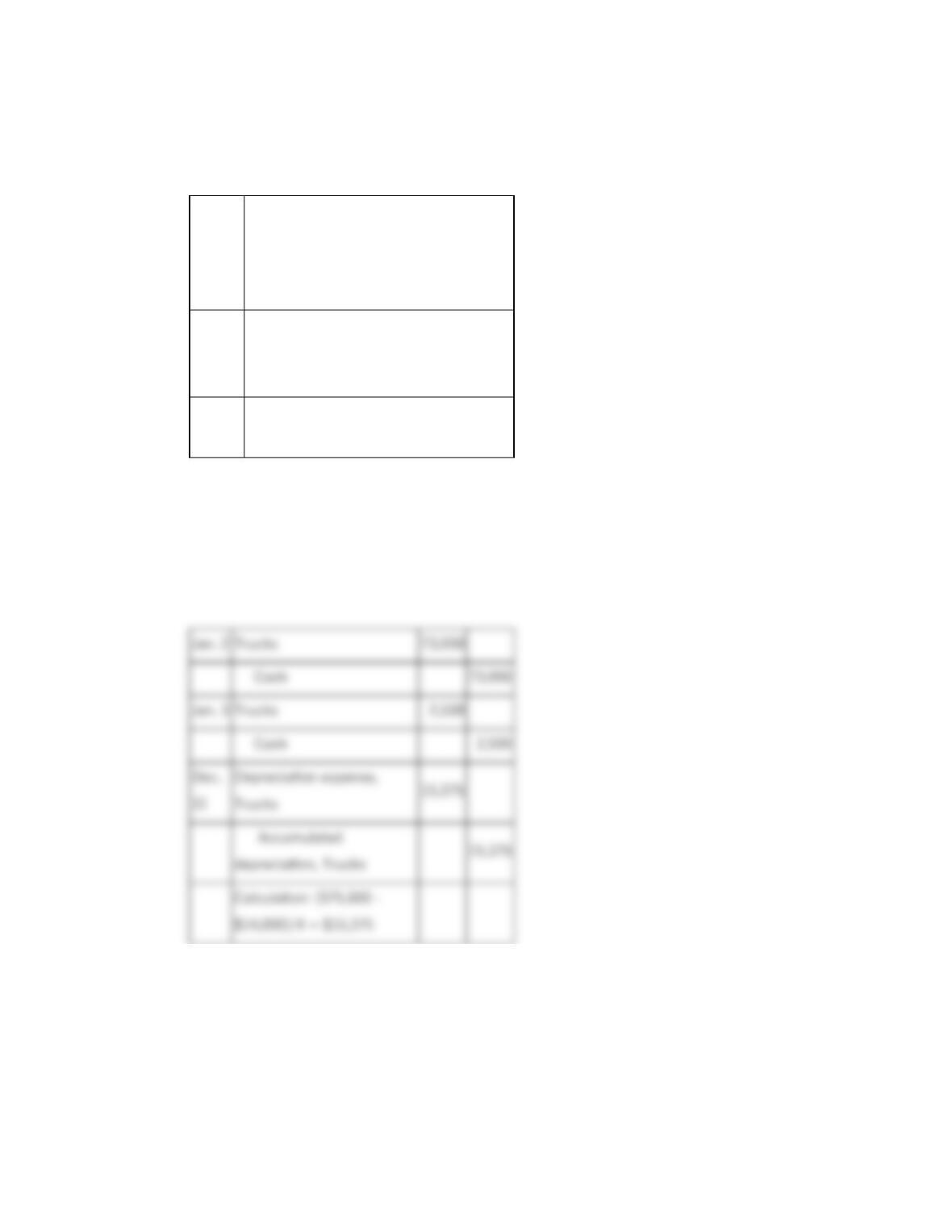
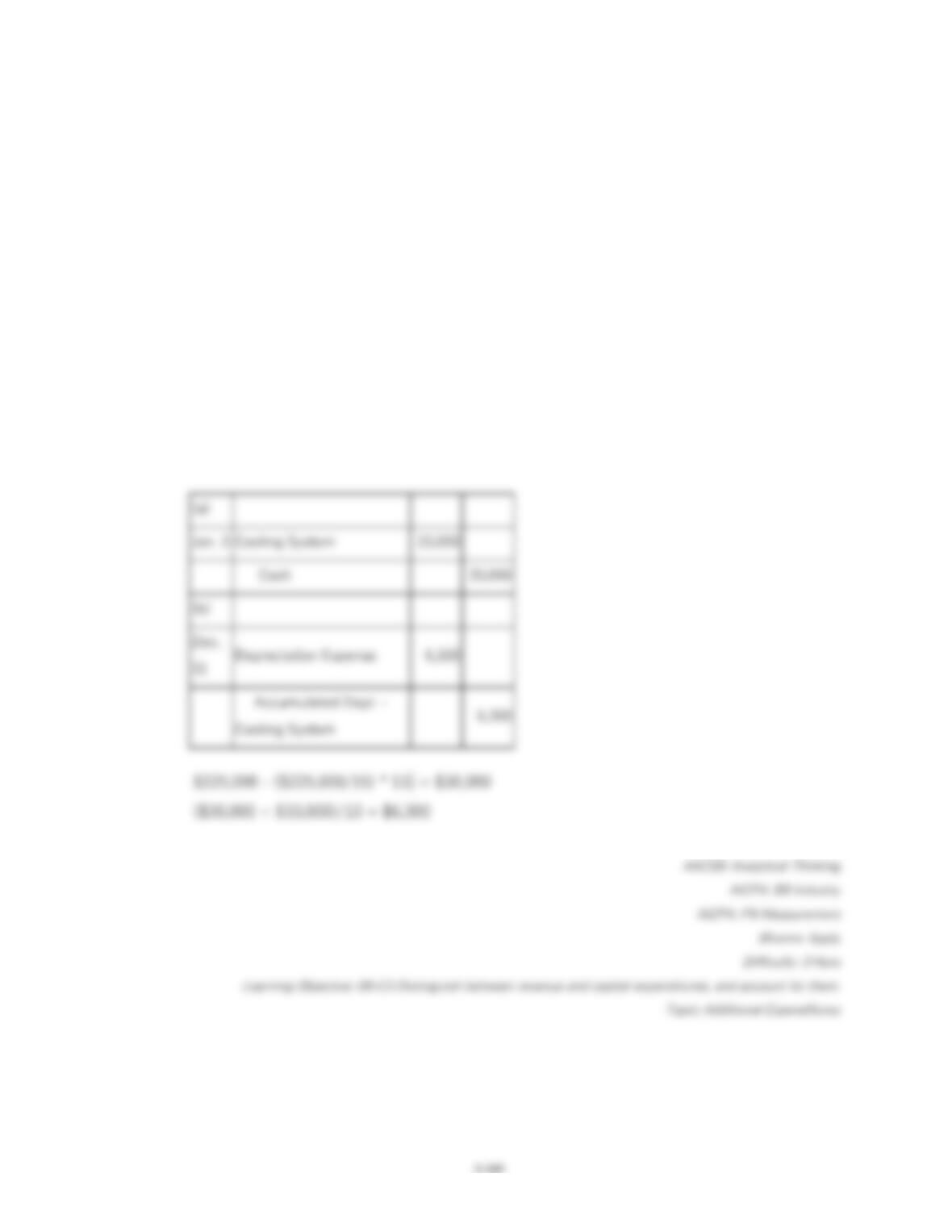
McClintock Co. had the following transactions involving plant assets during Year 1. Unless
otherwise indicated, all transactions were for cash.
Jan. 2
Purchased a truck for $70,000 plus sales
taxes of $3,000. The truck is expected to
have a $14,000 salvage value and a 4
year life.
Jan. 3
Paid $2,500 to have the company’s logo
painted on the truck. This did not
change the truck’s salvage value.
Dec. 31
Recorded straight-line depreciation on
the truck.
Prepare the general journal entries to record these transactions.
199.
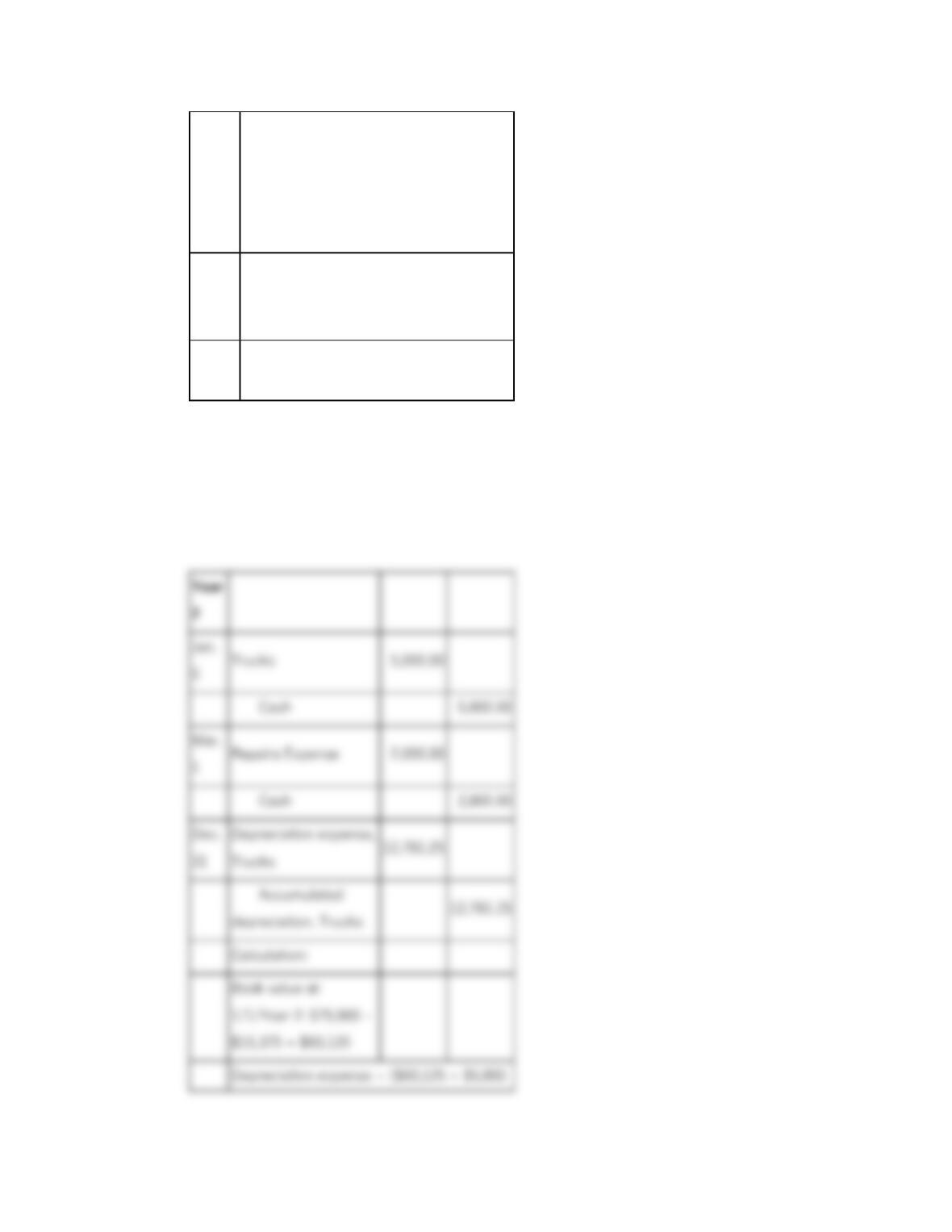
In Year one, McClintock Co. acquired a truck that cost $75,500 with an estimated $14,000
salvage value and 4 year estimated useful life. Depreciation in the first year was $15,375.
McClintock had the following transactions involving plant assets during Year 2. Unless
otherwise indicated, all transactions were for cash.
Dec.
Depreciation expense,
Accumulated
depreciation, Trucks
Calculation: ($75,500 –
8-143
Jan. 5
Paid $5,000 to put a new engine in the
truck that is expected to make the truck
run more efficiently and increase the
truck’s useful life by one year. The
salvage value did not change.
Mar. 1
Paid $2,000 to replace a broken tailgate
that was damaged when a heavy carton
was inadvertently dropped on it.
Dec.
31
Recorded straight-line depreciation on
the truck.
Prepare the general journal entries to record these transactions.
depreciation, Trucks
Book value at
1/1/Year 2: $75,500 –
Depreciation expense = ($60,125 + $5,000
200.
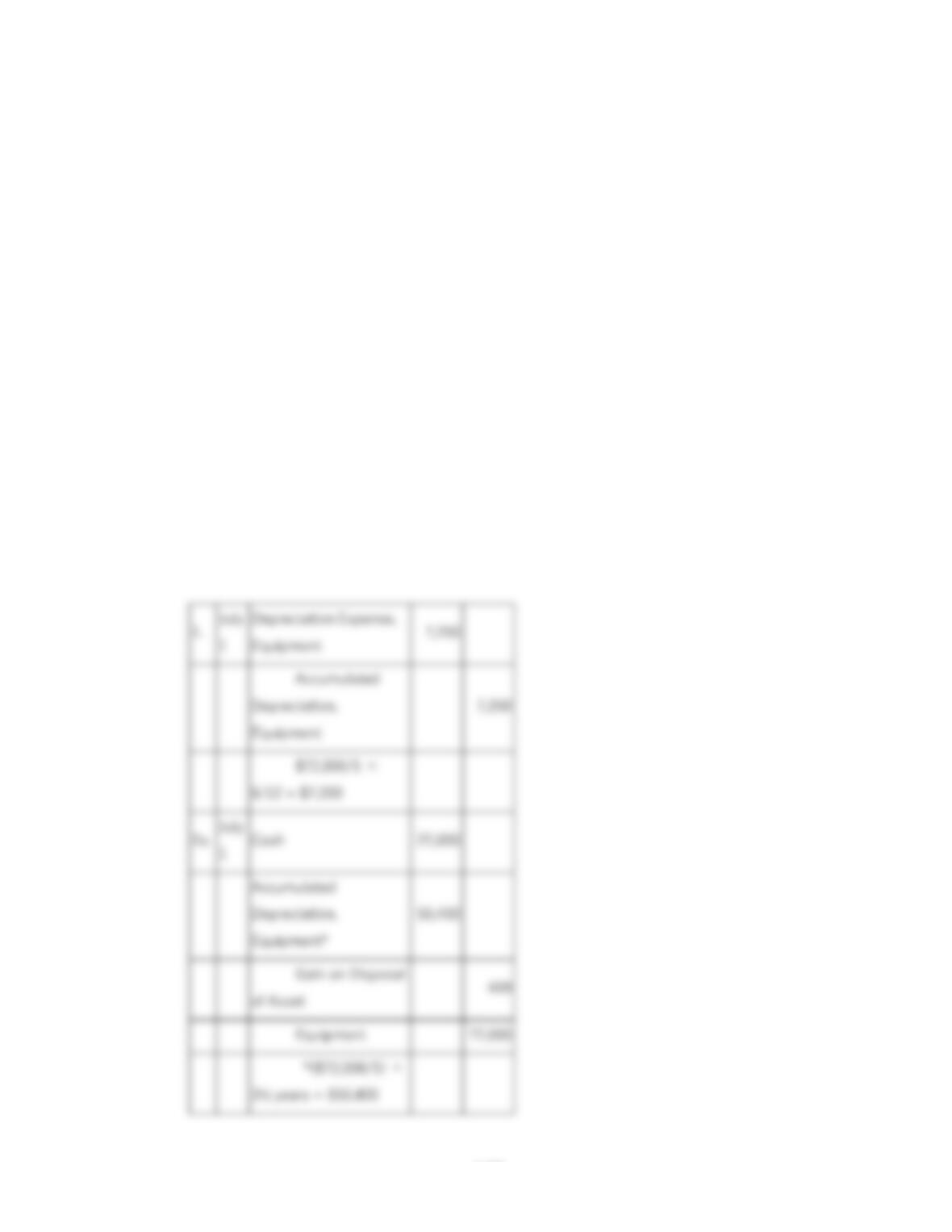
A company purchased a cooling system on January 2 for $225,000. The system had an
estimated useful life of 15 years. On January 3 of the thirteenth year, the company
completed a renovation of the system at a cost of $33,000 and now expects the system to
be more efficient and last 8 years beyond the original estimate. The company uses the
straight-line method of depreciation.
(a) Prepare the journal entry at January 3, to record the renovation of the cooling system.
(b) Prepare the journal entry at December 31, to record the revised depreciation for the
thirteenth year.
8-146
201.
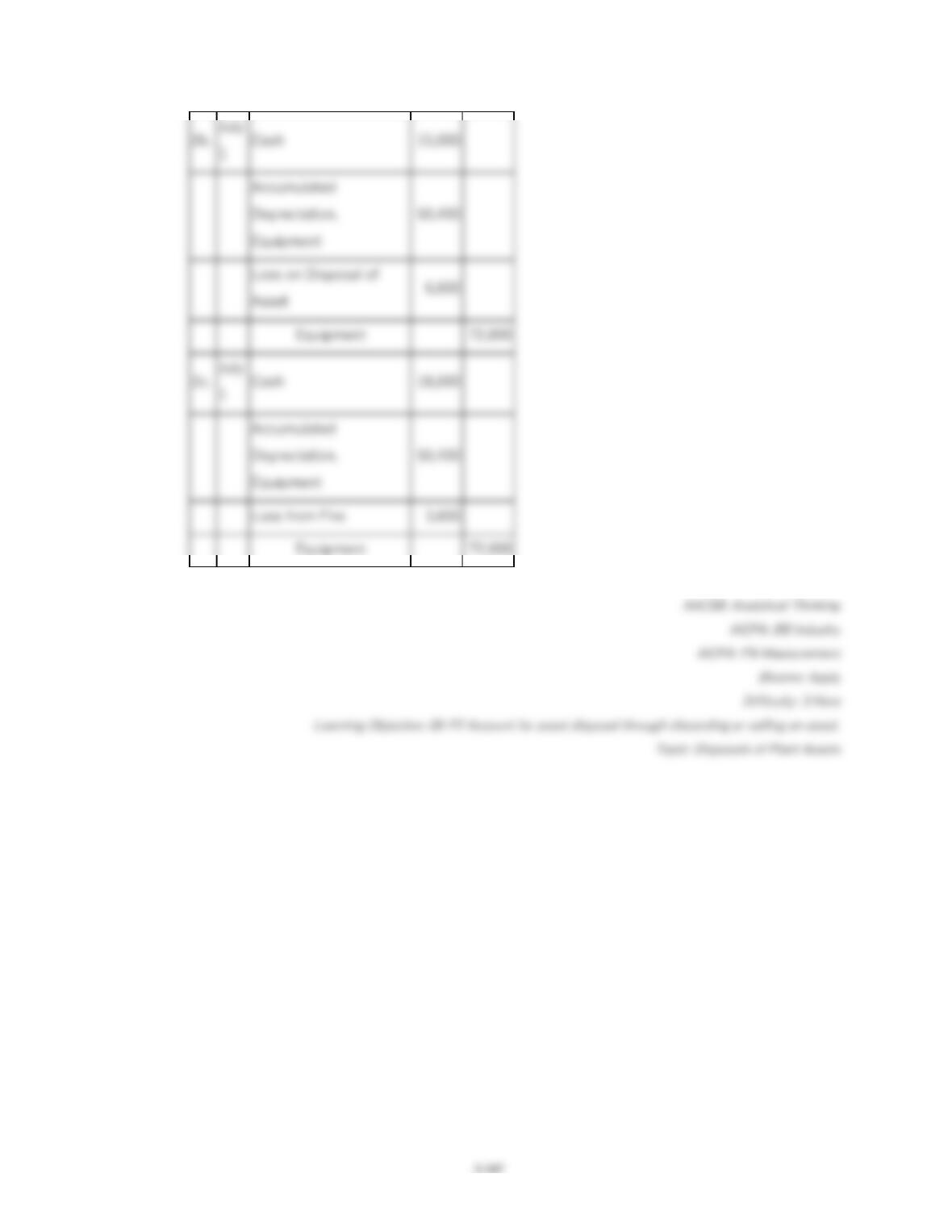
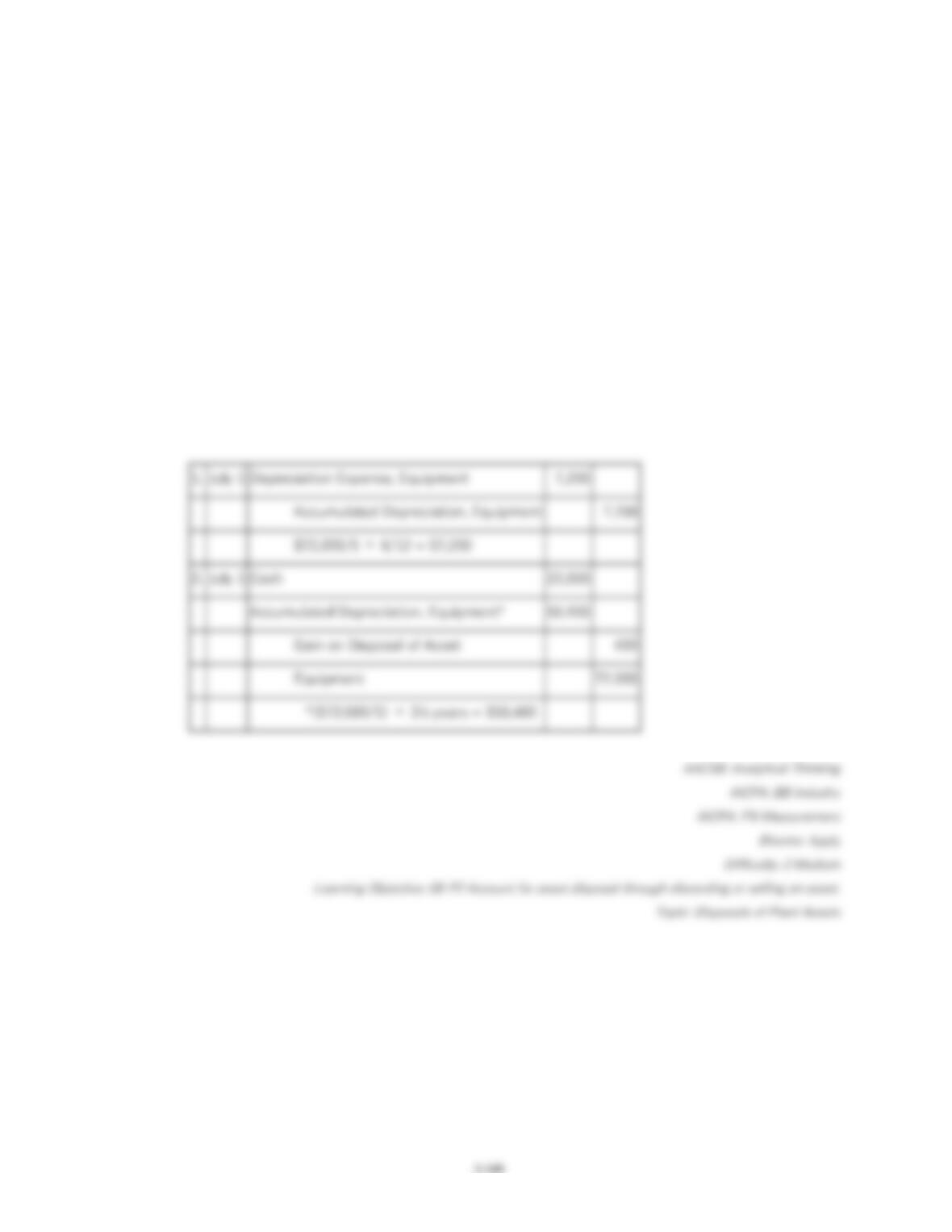
A company purchased and installed equipment on January 1 at a total cost of $72,000.
Straight-line depreciation was calculated based on the assumption of a five-year life and
no salvage value. The equipment was disposed of on July 1 of the fourth year. The
company uses the calendar year.
1. Prepare the general journal entry to update depreciation to July 1 in the fourth year.
2. Prepare the general journal entry to record the disposal of the equipment under each of
these three independent situations:
a. The equipment was sold for $22,000 cash.
b. The equipment was sold for $15,000 cash.
c. The equipment was totally destroyed in a fire and the insurance company settled the
claim for $18,000 cash.
202.
A company purchased and installed equipment on January 1 at a total cost of $72,000.
Straight-line depreciation was calculated based on the assumption of a five-year life and
no salvage value. The equipment was disposed of on July 1 of the fourth year. The
company uses the calendar year.
1. Prepare the general journal entry to update depreciation to July 1 in the fourth year.
2. Prepare the general journal entry to record the disposal if the equipment was sold for
$22,000 cash.
203.
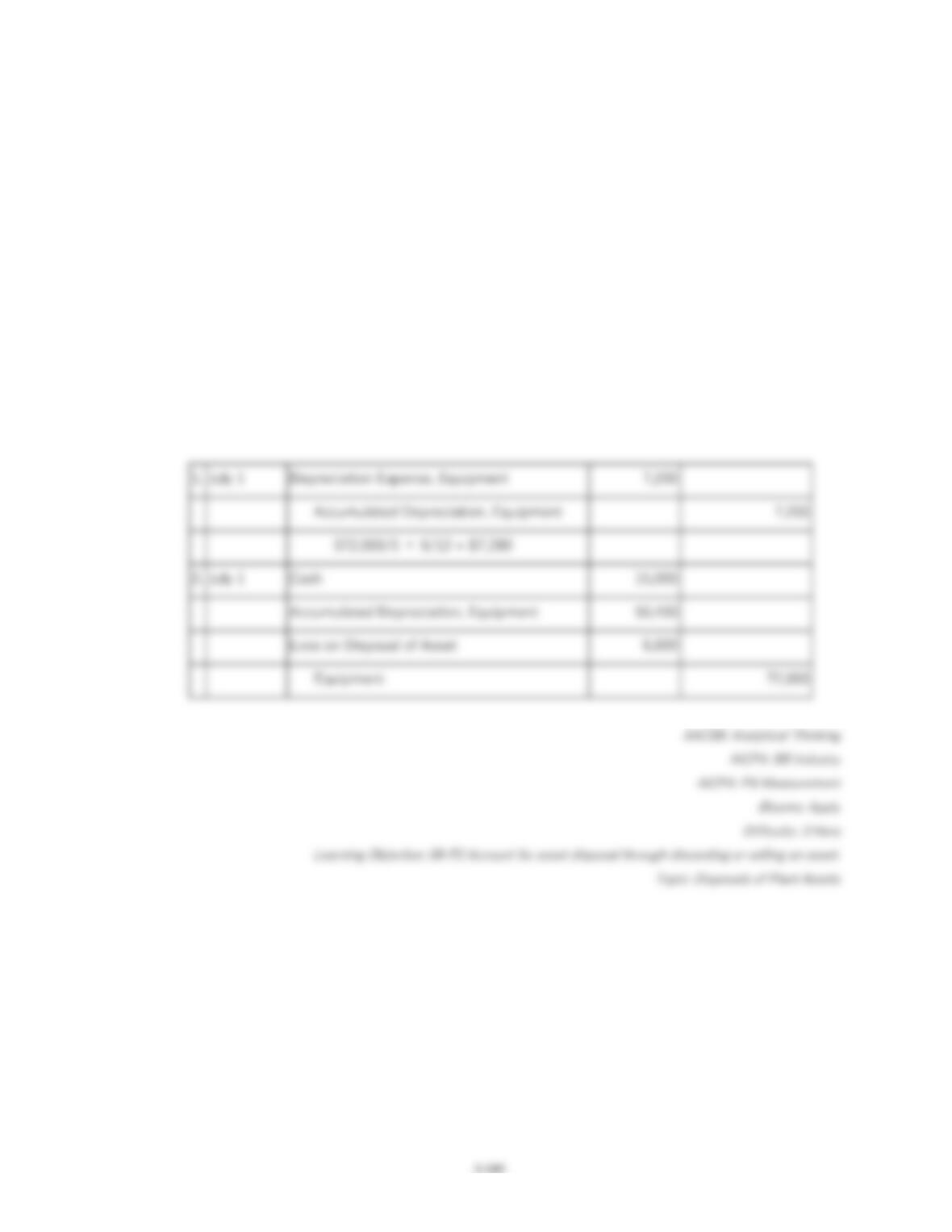
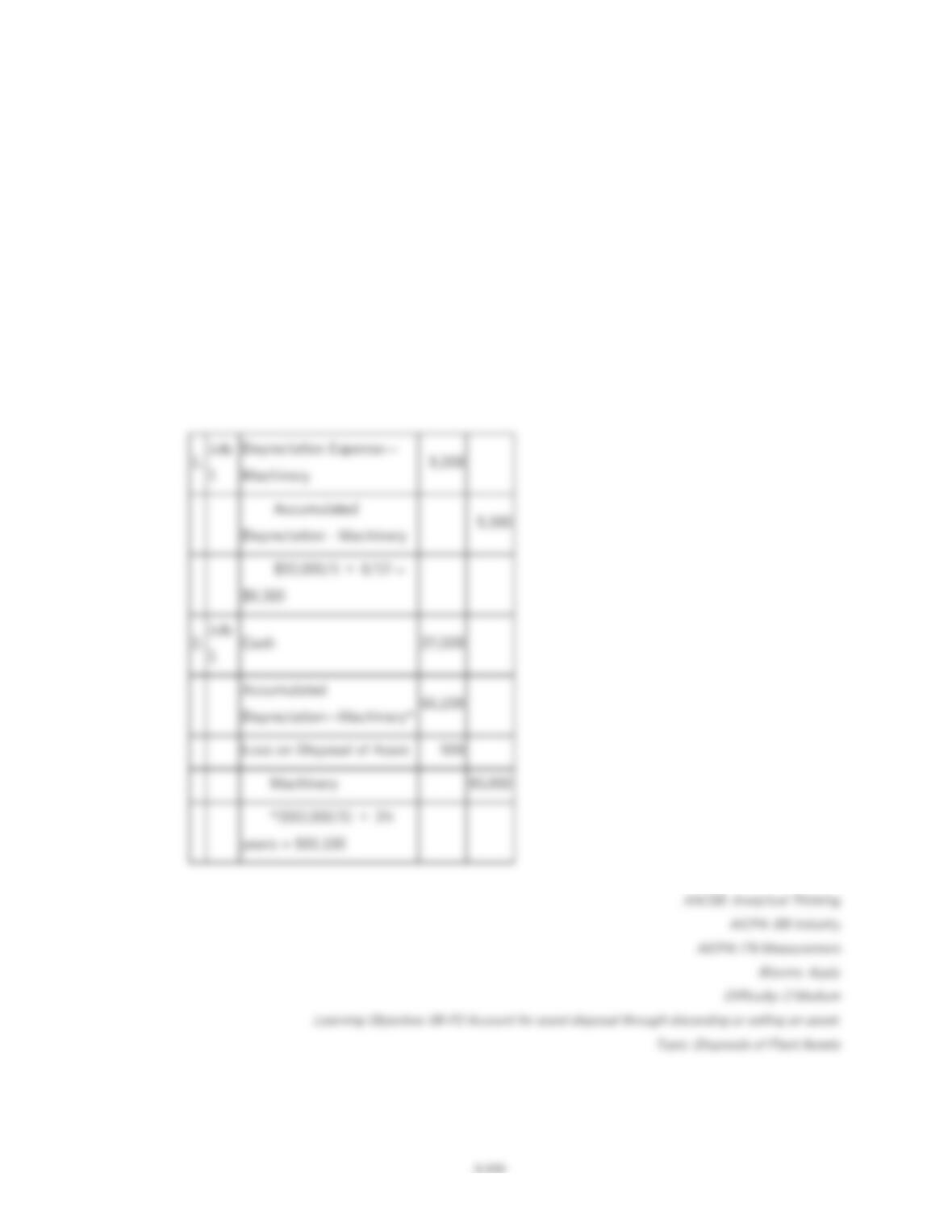
A company purchased and installed equipment on January 1 at a total cost of $72,000.
Straight-line depreciation was calculated based on the assumption of a five-year life and
no salvage value. The equipment was disposed of on July 1 of the fourth year. The
company uses the calendar year.
1. Prepare the general journal entry to update depreciation to July 1 in the fourth year.
2. Prepare the general journal entry to record the disposal if the equipment was sold for
$15,000 cash.
204.
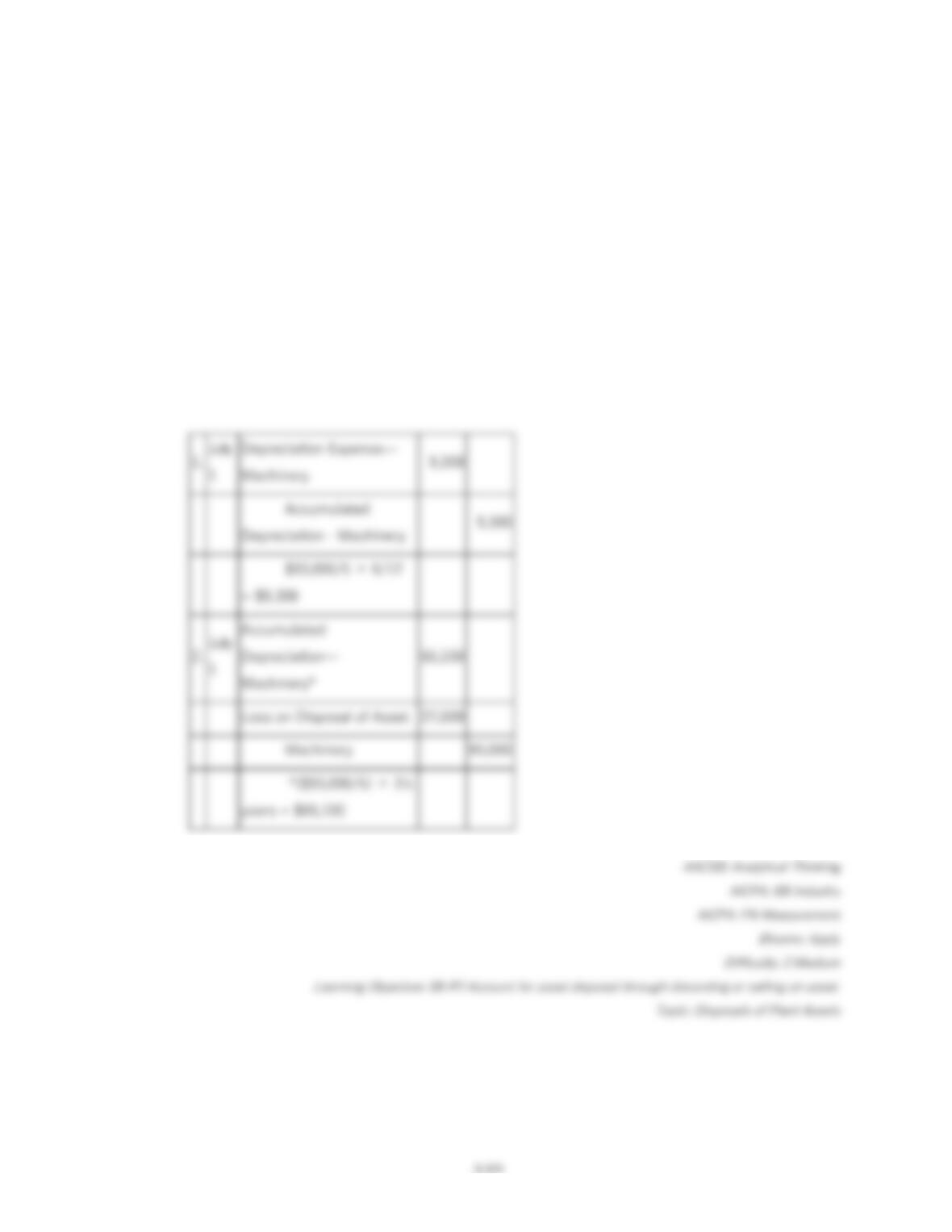
A company purchased and installed machinery on January 1 at a total cost of $93,000.
Straight-line depreciation was calculated based on the assumption of a five-year life and
no salvage value. The machinery was disposed of on July 1 of year four. The company uses
the calendar year.
1. Prepare the general journal entry to update depreciation to July 1 in year four.
2. Prepare the general journal entry to record the sale of the machine for $27,000 cash.
205.
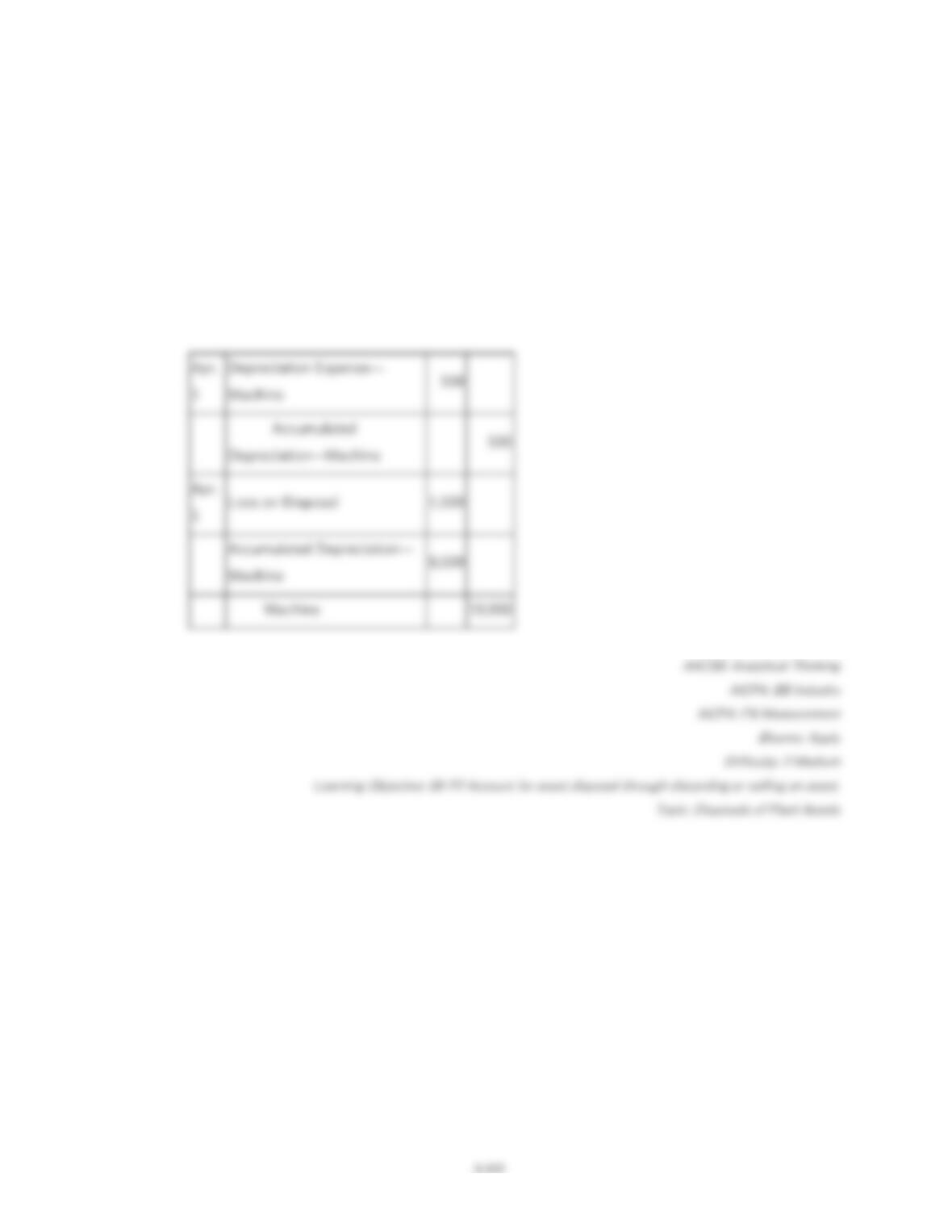
A company purchased and installed machinery on January 1 at a total cost of $93,000.
Straight-line depreciation was calculated based on the assumption of a five-year life and
no salvage value. The machinery was discarded on July 1 of Year four due to
obsolescence. The company uses the calendar year.
1. Prepare the general journal entry to update depreciation to July 1 in year four.
2. Prepare the general journal entry to record the disposal.
206.
On April 1, Year 5 a company discarded a machine that had cost $10,000 and had
accumulated depreciation of $8,000 as of December 31, Year 4. The asset had a 5-year life
and no salvage value. Prepare the journal entries to record the updating of the
depreciation expense and discarding of this asset in Year 5.
207.
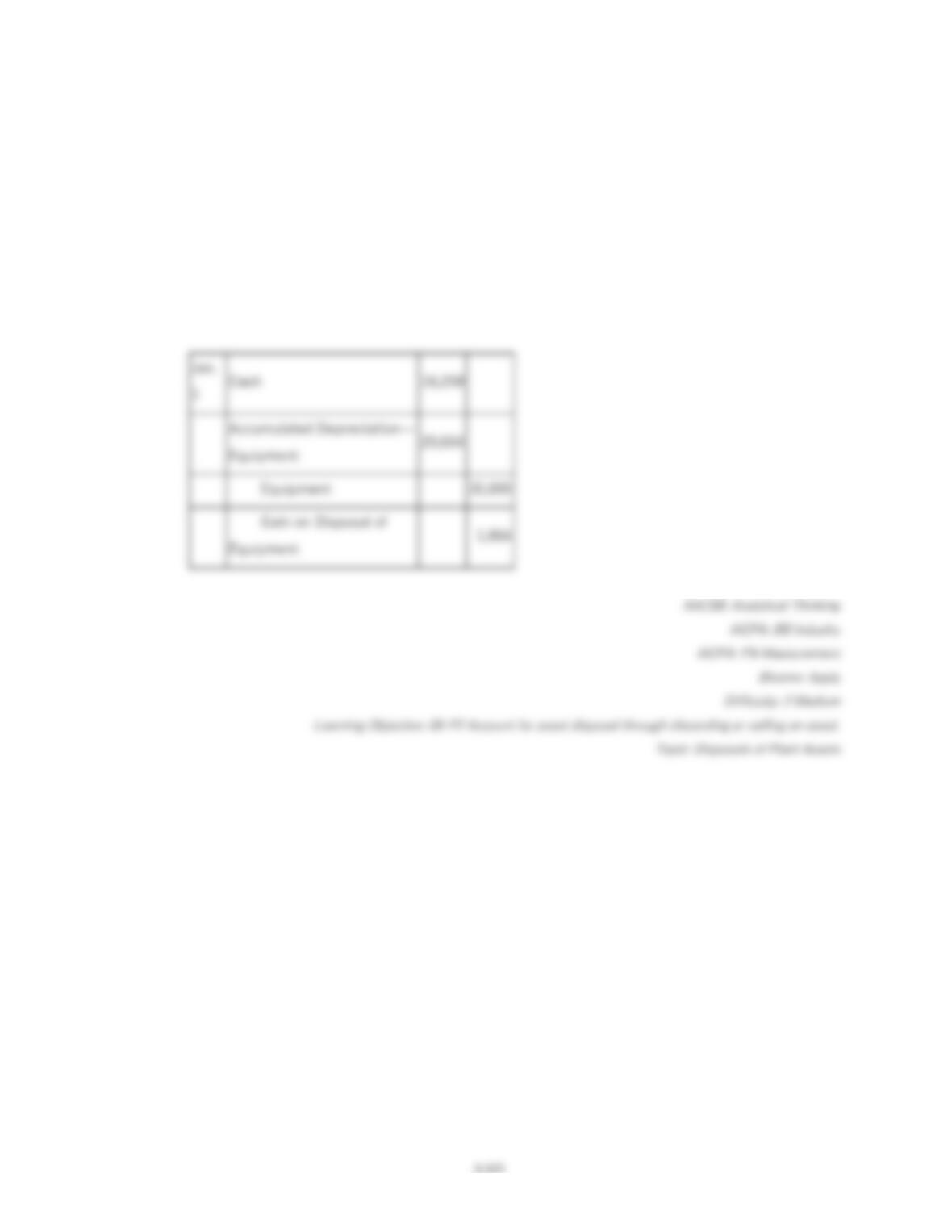
On January 1, 2016, a company disposed of equipment for $16,200 cash that had cost
$35,000, a salvage value of $5,000, and a useful life 10 years. The double-declining–
balance depreciation method was used. On December 31, 2015, accumulated depreciation
was $20,664. Prepare a journal entry to record the disposal of the equipment.
8-154
208.
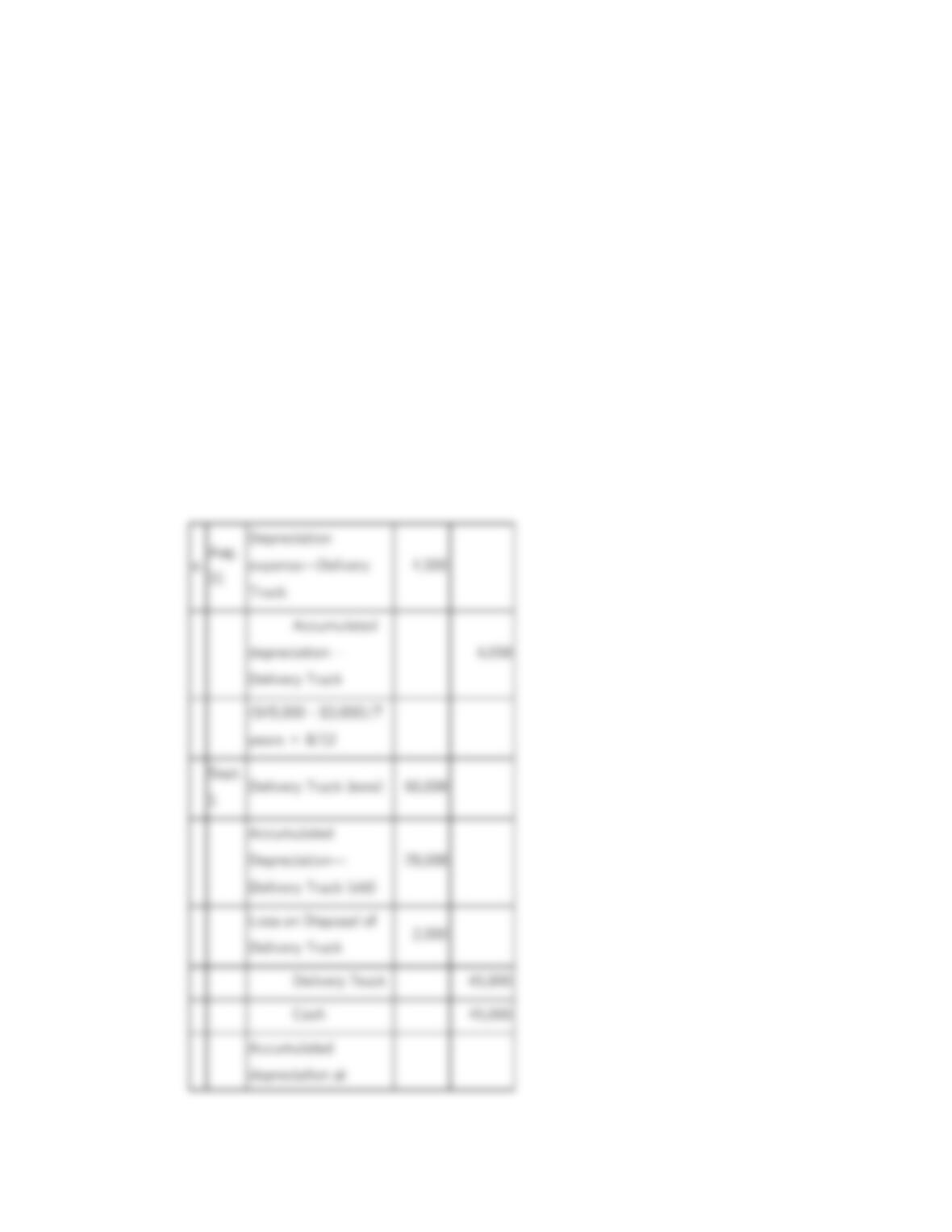
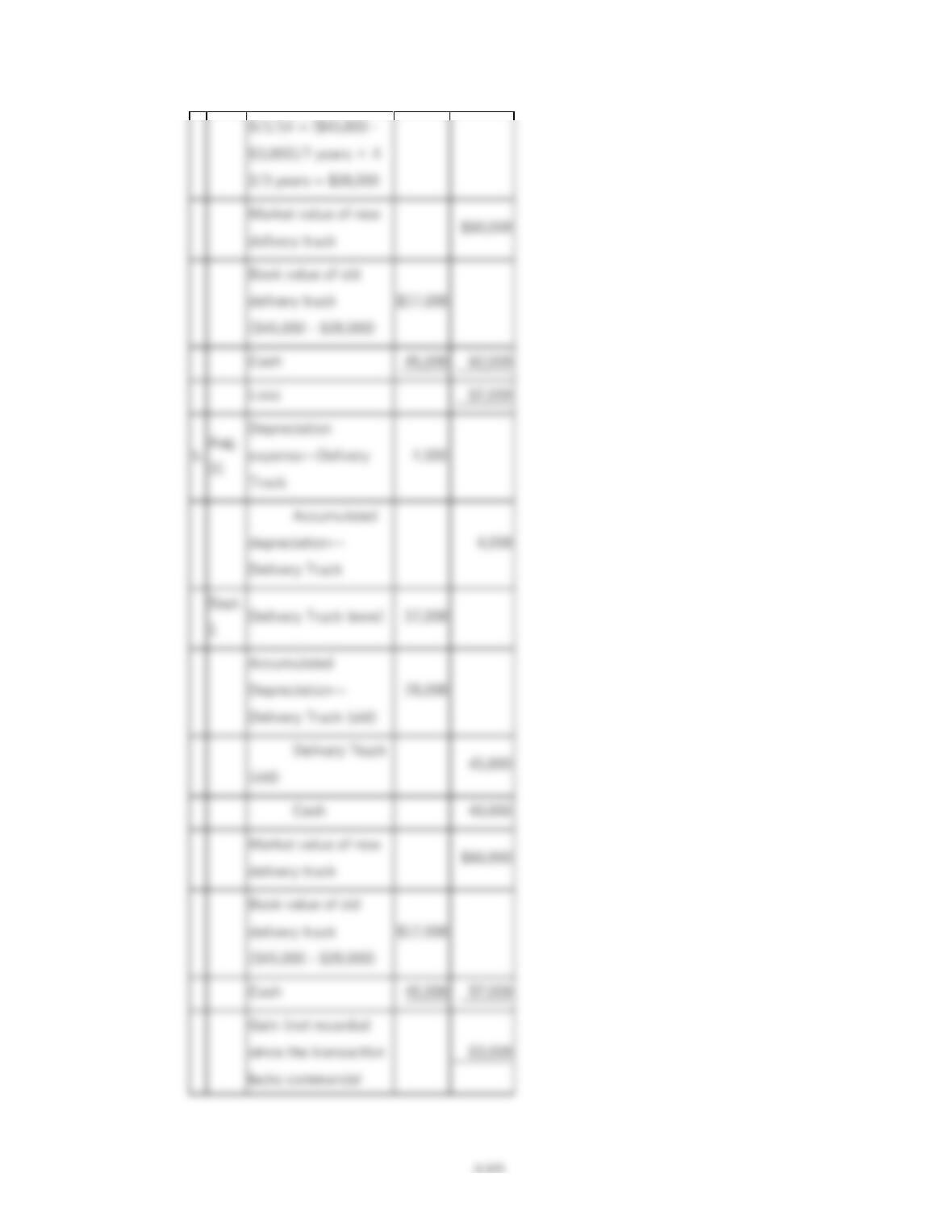
On January 2, 2010, a company purchased a delivery truck for $45,000 cash. The truck had
an estimated useful life of seven years and an estimated salvage value of $3,000. The
straight-line method of depreciation was used. Prepare the journal entries to record
depreciation expense and the disposition of the truck on September 1, 2014, under each of
the following assumptions:
a. The truck and $45,000 cash were given in exchange for a new delivery truck that had a
cash price of $60,000. This transaction has commercial substance.
b. The truck and $40,000 cash were exchanged for a new delivery truck that had a cash
price of $60,000. This transaction lacks commercial substance.
209.
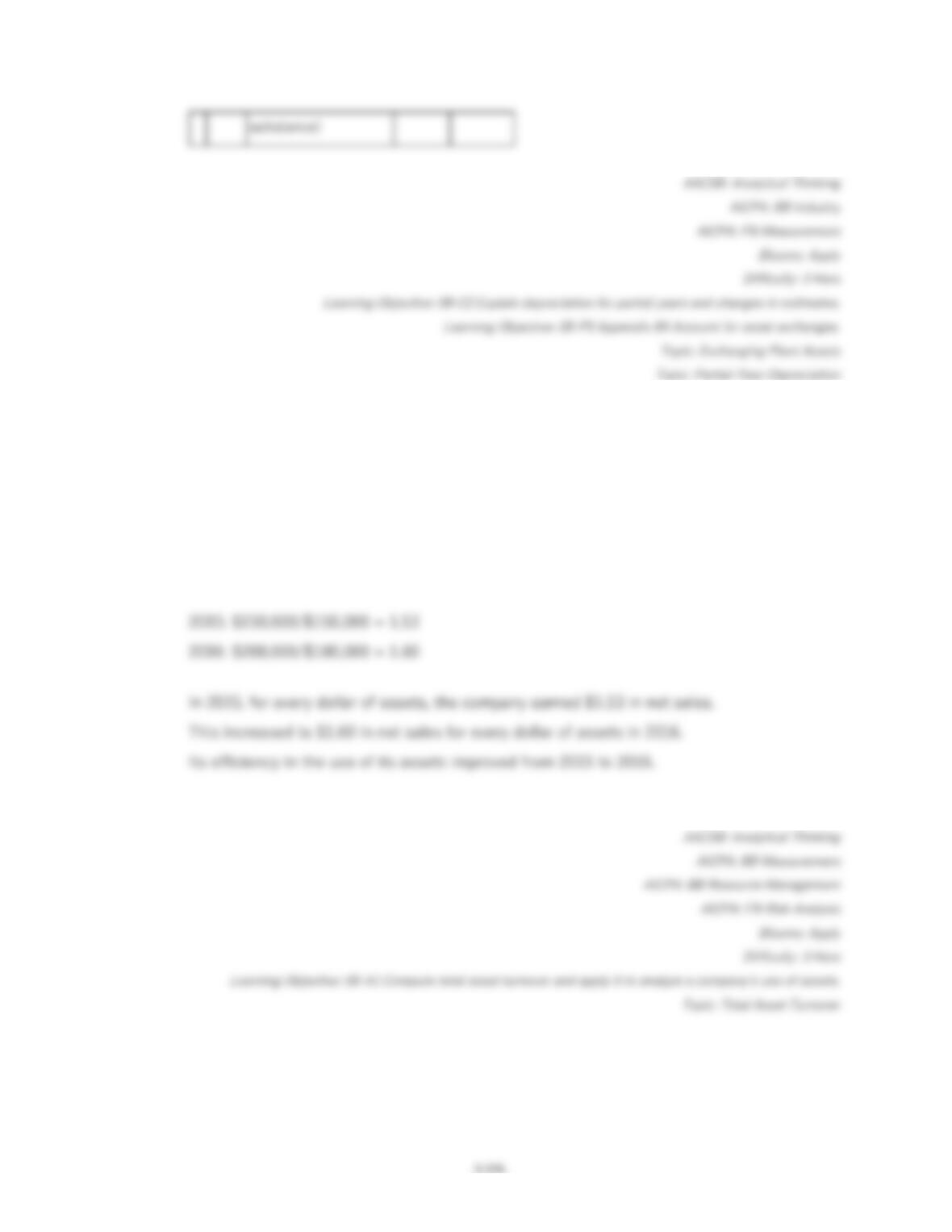
A company had net sales of $230,000 for 2015 and $288,000 for 2016. The company’s
average total assets for 2015 were $150,000 and $180,000 for 2016. Calculate the total
asset turnover for each year and comment on the company’s efficiency in the use of its
assets.
210.
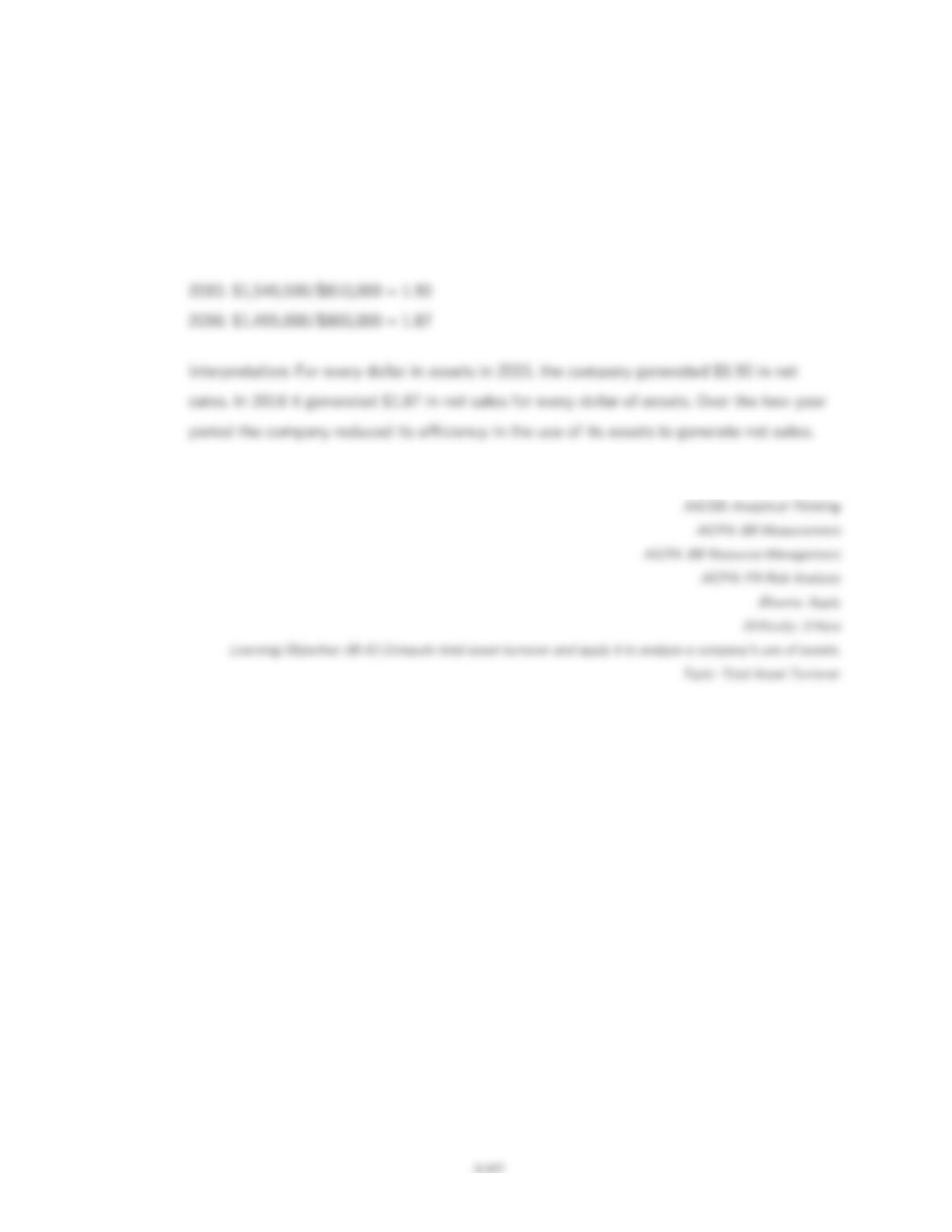
A company had net sales of $1,540,500 in 2015 and $1,495,000 in 2016. Its average assets
were $810,000 for 2015 and $800,000 for 2016. (1) Calculate the total asset turnover for
each year. (2) Interpret and comment on the company’s efficiency in the use of its assets.
8-158
211.
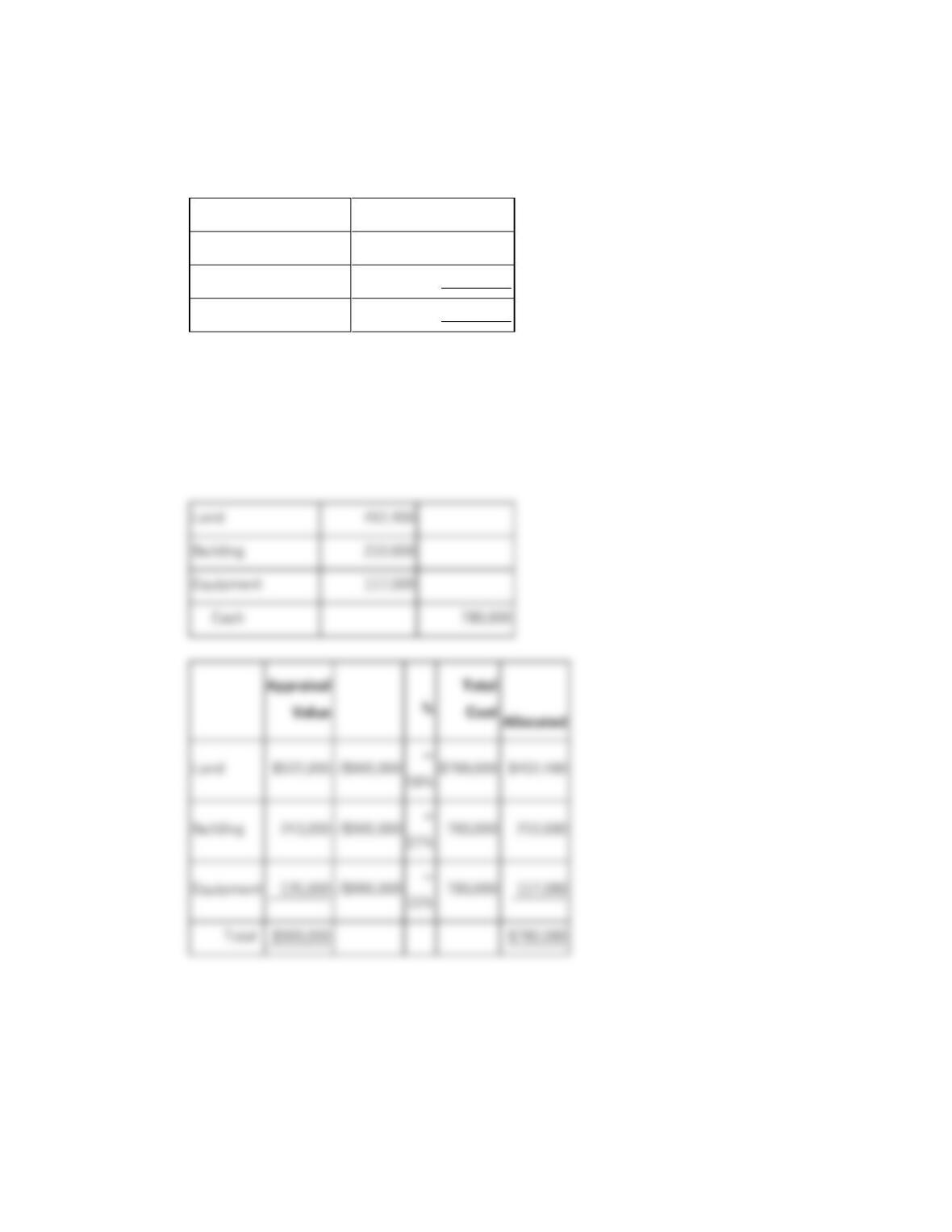
Schwartz Co. paid $780,000 cash to buy the plant assets of Kimberly Co. that went out of
business. An independent appraiser assigned the following values to the assets acquired:
Land
$522,000
Building
243,000
Equipment
135,000
Total
$900,000
Prepare Schwartz’ journal entry to record the acquisition of these assets.
212.
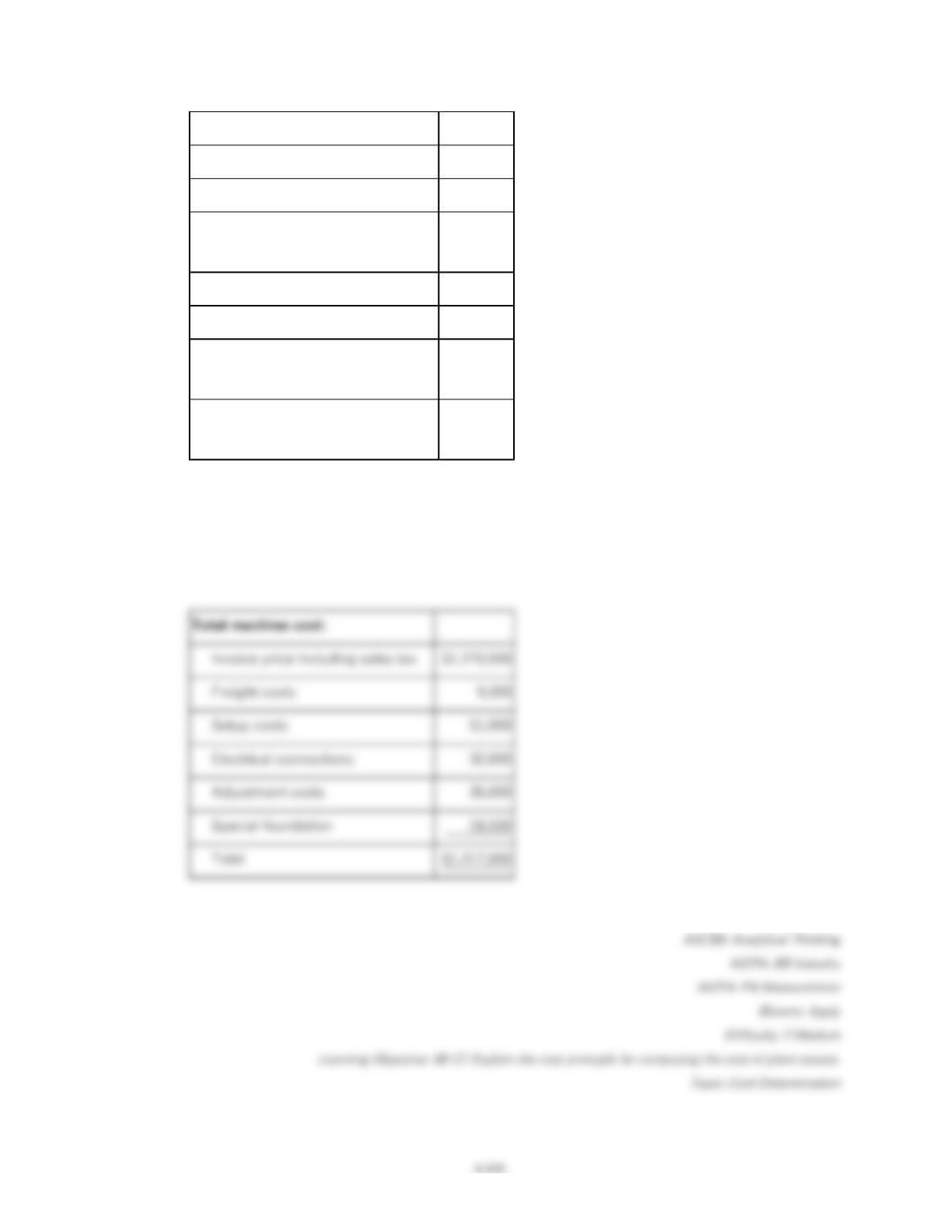
A company purchased a special purpose machine on September 15 of the past year, and it
was installed and ready to run on January 1 of this year. The following costs were incurred
in the purchase and installation of the machine. Determine the total cost of the machine.
Land
Building
Equipment
Invoice price plus sales tax
$1,270,500
Freight costs
9,000
Setup costs
51,000
Costs to adjust machine to
appropriate specifications
36,000
Electrical connections
32,000
Maintenance supplies for future use
108,000
Traffic fine incurred during transport
of machine
300
Cost of special foundation for
machine
18,500
Invoice price including sales tax
Freight costs
Setup costs
Electrical connections
Adjustment costs
Special foundation
Total
213.
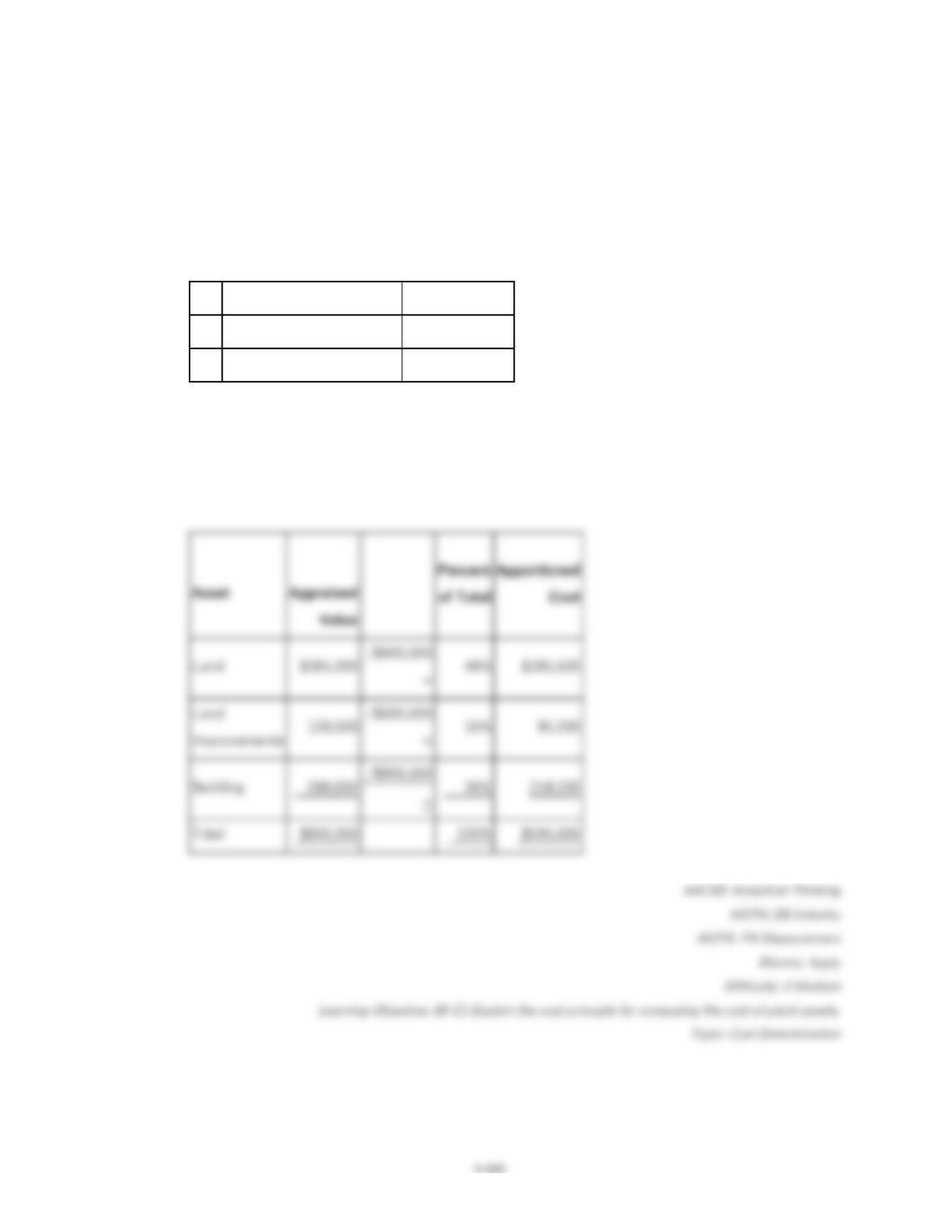
A company paid $595,000 for property that included land appraised at $384,000; land
improvements appraised at $128,000; and a building appraised at $288,000. The plan is to
use the building as a manufacturing plant. Determine the amounts that should be
recorded as:
(a)
Land
$__________
(b)
Land Improvements
$__________
(c)
Building
$__________
Total