8-101
115. Leisure-Time (LT) Sports manufactures and distributes two types of tennis rackets: Ace
Master (AM) and Smash Supreme (SS). Both types of rackets go through Operations 1 and 3. SS
also goes through Operation 2, which adds a layer of graphite for additional strength. All material
is added at the beginning of their respective operations.
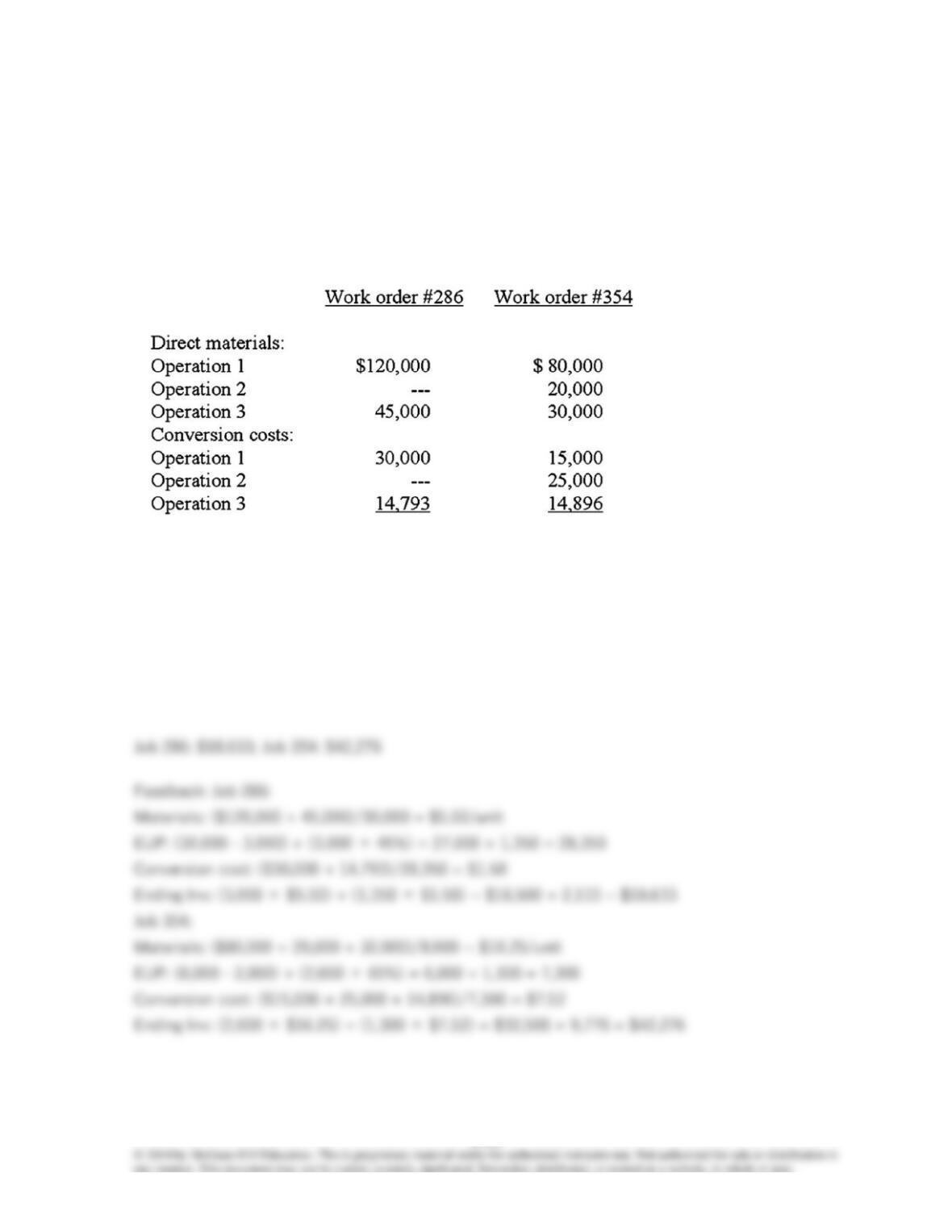
The following information relates to a work order from Discount Warehouse, Inc. for 30,000 units
of AM (Work order #286) and 8,000 units of SS (Work order #354).
Required:
Assume that there are 3,000 units of AM and 2,000 units of SS in Operation 3 at the end of the
reporting period 45% and 65% complete respectively. Compute the ending inventory for Operation
#3.
8-102
116. Gregg Industries uses three operations in sequence to manufacture an assortment of
flower baskets. In each operation, the same procedures, time, and costs are used to perform that
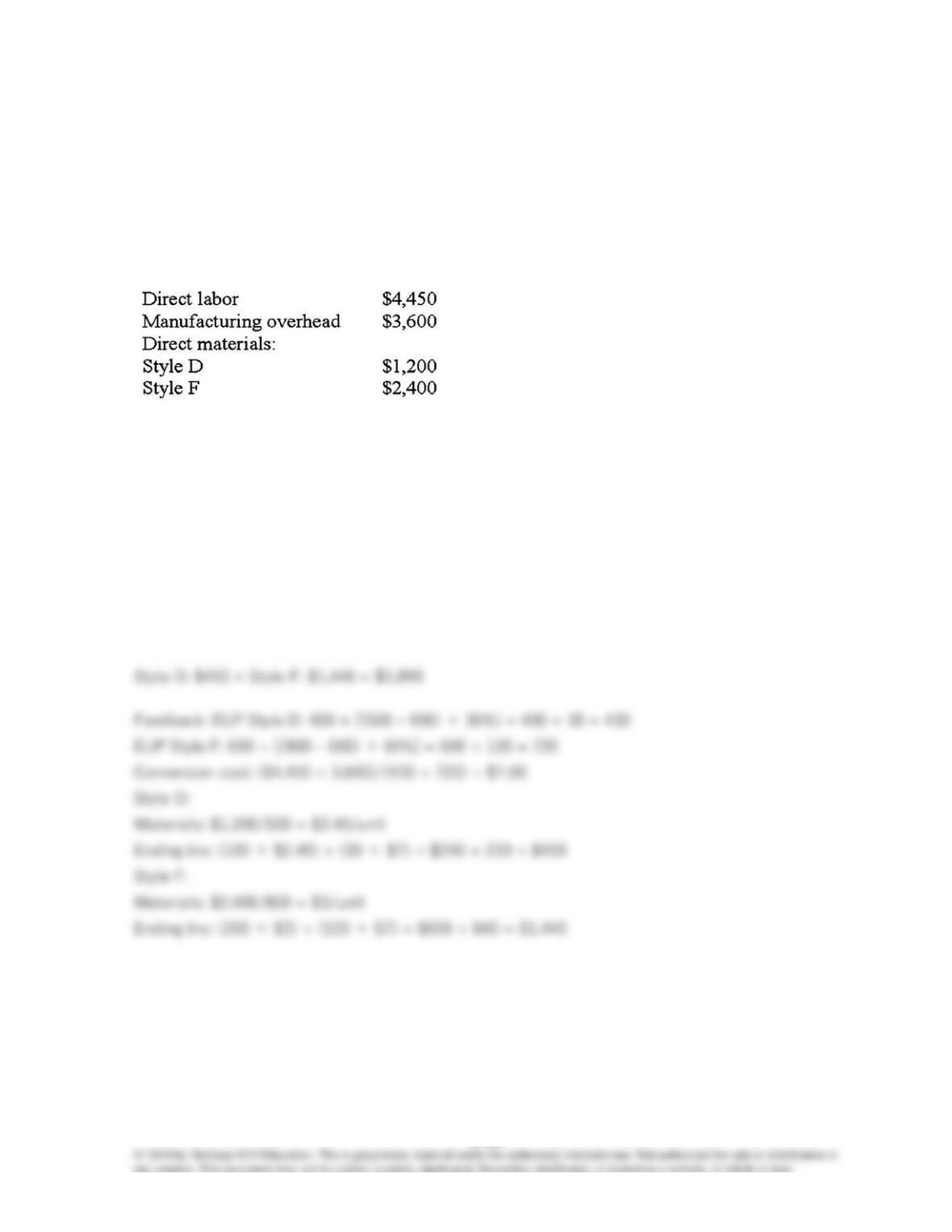
operation, regardless of the basket style being produced. During March, a batch of 500 baskets of
style D and a batch of 800 baskets of style F were put through the first operation. All materials for
a batch are introduced at the beginning of the operation for that batch. The costs shown below
were incurred in March for the first operation:
There were no inventories at the beginning of the month; 400 units of Style D and 600 units of
Style F were transferred to the next operation. The ending inventories were 30% and 60%
complete for Styles D and F, respectively.
Required:
What is the total cost of the ending inventory in process for operation #1?
8-103
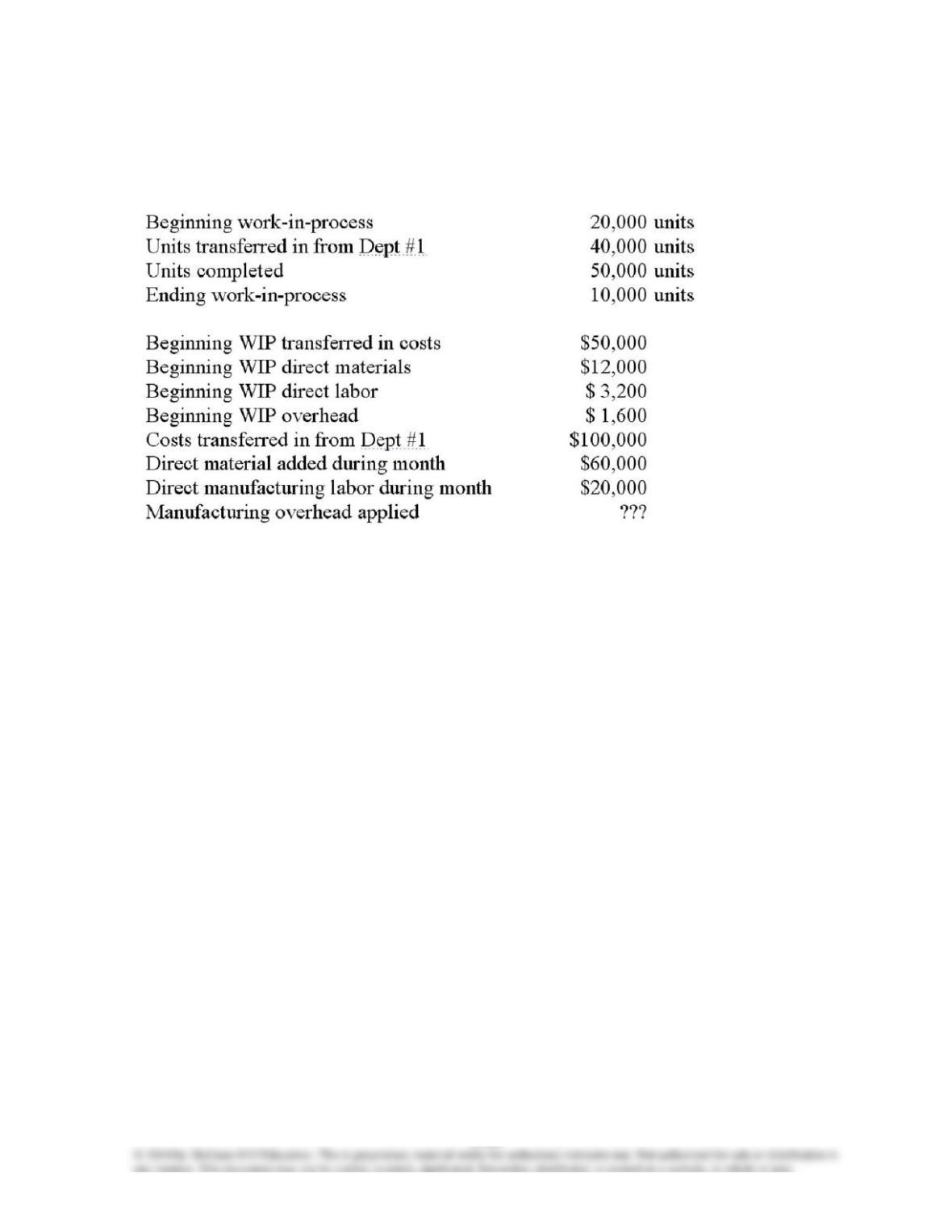
117. Viking Sports is a manufacturer of sportswear. Viking produces its products in two
departments.
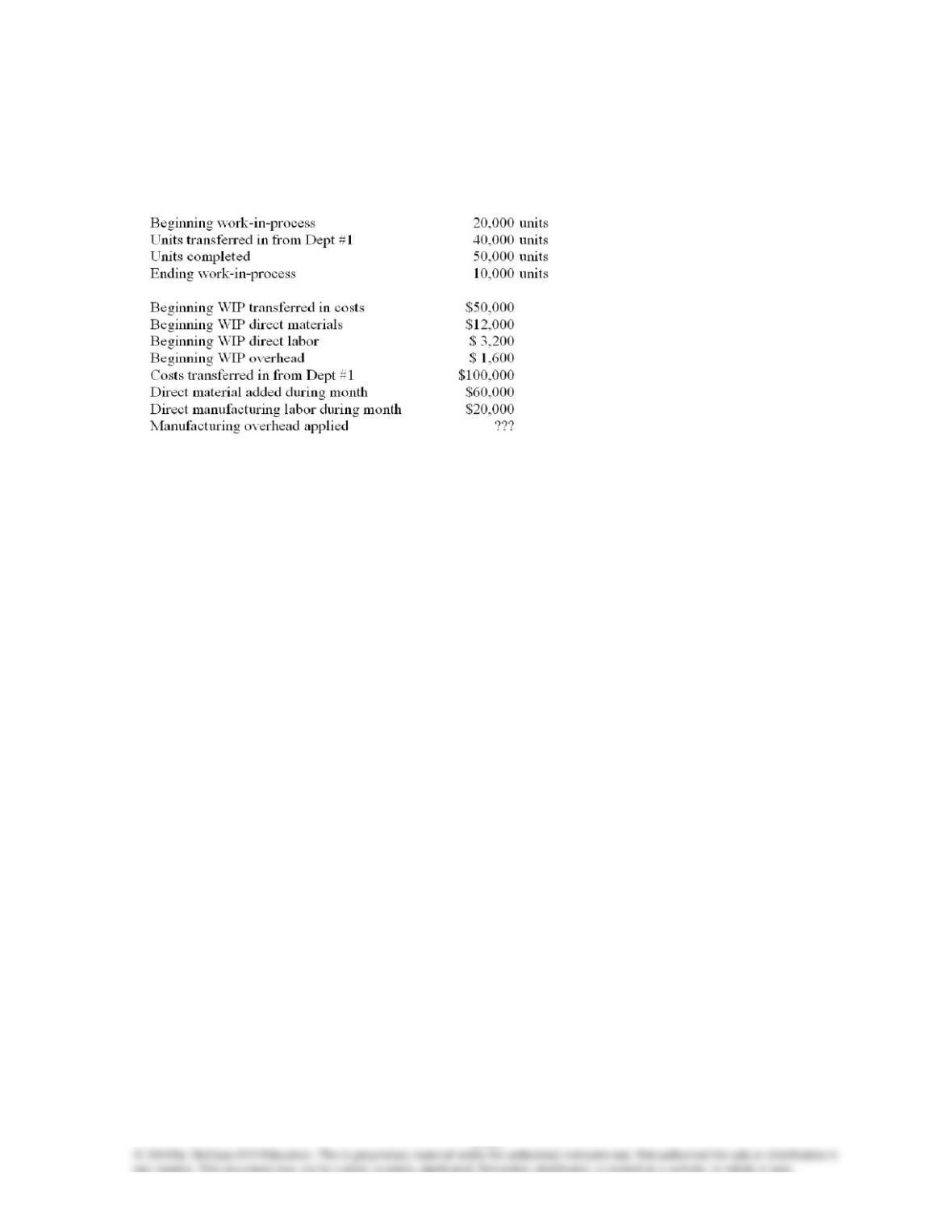
The information for the current month for Department #2 is as follows:
Beginning WIP was half complete as to conversion costs. Direct materials for Department #2 are
added when the process is 25% complete. Factory overhead is applied at a rate equal to 50
percent of direct manufacturing labor. Ending WIP was 60 percent complete. Viking Sports uses
weighted-average costing.
Required: (
HINT:
use 4 decimal places in your calculations)
a. Compute the equivalent units of production for each input.
b. Compute the cost per unit.
c. Compute the cost transferred out to finished goods.
d. Compute the ending work-in–process inventory balance.
8-105
118. Viking Sports is a manufacturer of sportswear. Viking produces its products in two
departments.
The information for the current month for Department #2 is as follows:
Beginning WIP was half complete as to conversion costs. Direct materials for Department #2 are
added when the process is 25% complete. Factory overhead is applied at a rate equal to 50
percent of direct manufacturing labor. Ending WIP was 60 percent complete. Viking Sports uses
first-in, first-out (FIFO) costing.
Required: (
HINT:
use 4 decimal places in your calculations)
a. Compute the equivalent units of production for each input.
b. Compute the cost per unit.
c. Compute the cost transferred out to finished goods.
d. Compute the ending work-in–process inventory balance.
119. Bisson Furniture uses a process cost system to account for its chair factory. Beginning
inventory consisted of 5,000 units (100% complete as to material, 55% complete as to labor) with
a cost of $124,800 materials and $104,500 conversion. 58,000 units were started into production
during the month with material costs of $1,537,000 and $2,124,375 of conversion costs. The
ending inventory of 6,000 chairs was 100% complete as to materials and 40% complete as to labor.
Bisson uses weighted-average costing.
Required: (
HINT:
use 4 decimal places in your calculations)
a. Compute the equivalent units of production for each input.
b. Compute the cost per unit.
c. Compute the cost transferred out to finished goods.
d. Compute the ending work-in–process inventory balance.
8-108
120. Bisson Furniture uses a process cost system to account for its chair factory. Beginning
inventory consisted of 5,000 units (100% complete as to material, 55% complete as to labor) with
a cost of $124,800 materials and $104,500 conversion. 58,000 units were started into production
during the month with material costs of $1,537,000 and $2,124,375 of conversion costs. The
ending inventory of 6,000 chairs was 100% complete as to materials and 40% complete as to labor.
Bisson uses first-in, first-out (FIFO) costing.
Required: (
HINT:
use 4 decimal places in your calculations)
a. Compute the equivalent units of production for each input.
b. Compute the cost per unit.
c. Compute the cost transferred out to finished goods.
d. Compute the ending work-in–process inventory balance.
8-109
121. Brisebois Hardwoods uses a process costing system to account for its wood processing
plant. Beginning inventory consisted of 4,000 board feet of lumber (100% complete as to material,
35% complete as to labor). Brisebois added 132,000 board feet into the process during April. On
April 30th there were 10,000 board feet still in process (100% complete as to material, 22%
complete as to labor).
Required:
(a) Calculate the equivalent units of production for each input, assuming Brisebois uses weighted–
average.
(b) Calculate the equivalent units of production for each input, assuming Brisebois uses FIFO.
122. Giguere Processing uses a process costing system to account for its solvent plant.
Beginning inventory consisted of 14,000 gallons (80% complete as to material, 55% complete as to
labor). Giguere added 213,000 gallons into the process during April. On April 30th there were
18,000 gallons still in process (60% complete as to material, 45% complete as to labor).
Required:
(a) Calculate the equivalent units of production for each input, assuming Giguere uses weighted–
average.
(b) Calculate the equivalent units of production for each input, assuming Giguere uses FIFO.
8-111
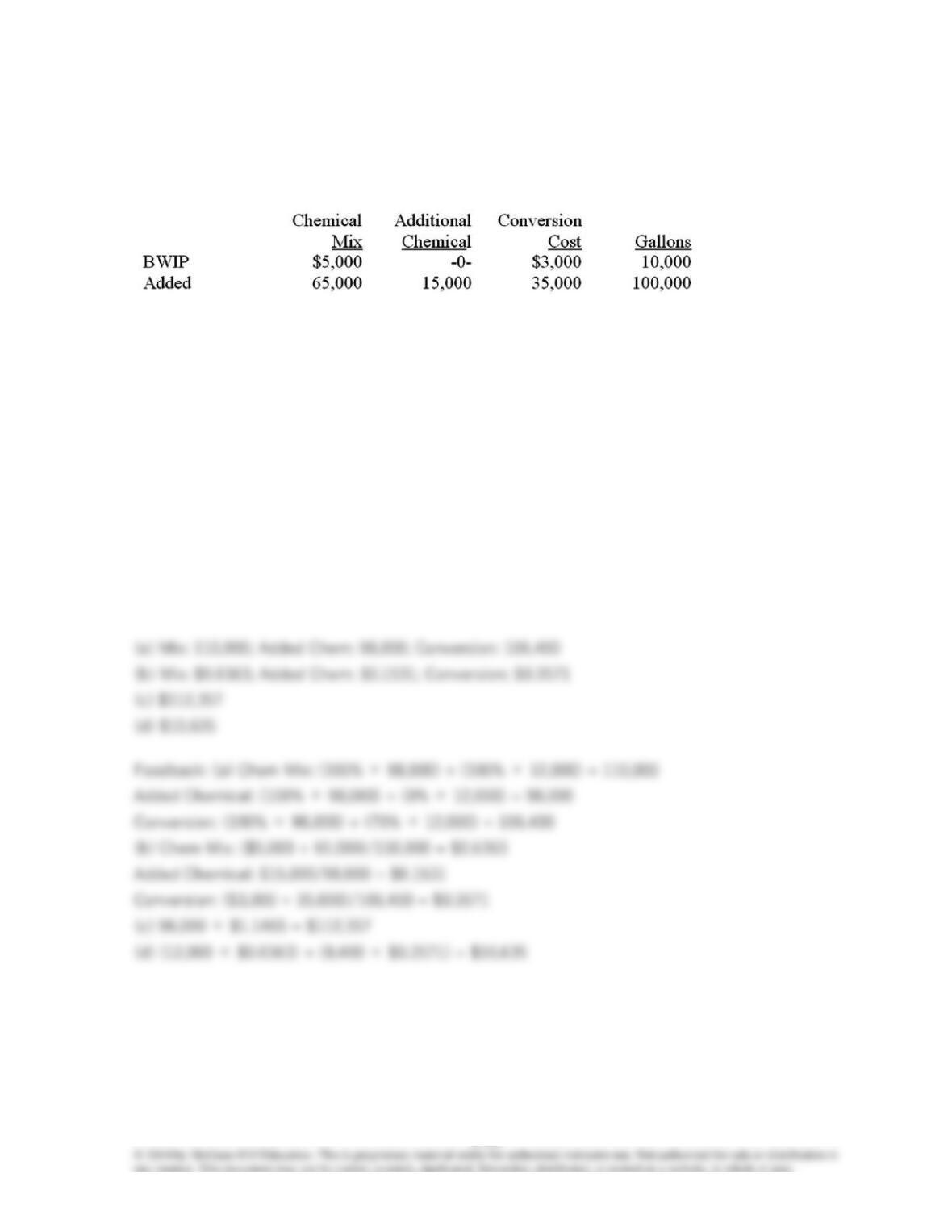
123. Franken Chemicals produces a solvent in its Thorp plant. Three chemicals are combined
at the start of the process and blended under pressure for a period of time. At the 75% point of
completion, an additional chemical is added. The following information has been gathered:
Franken completed 98,000 gallons during the month. The process engineer informs you that the
beginning WIP was at the 30% completion point, the ending WIP is at 70%. Franken uses
weighted-average costing.
Required: (
HINT:
use 4 decimal places in your calculations)
a. Compute the equivalent units of production for each input.
b. Compute the cost per unit.
c. Compute the cost transferred out to finished goods.
d. Compute the ending work-in–process inventory balance.
8-112
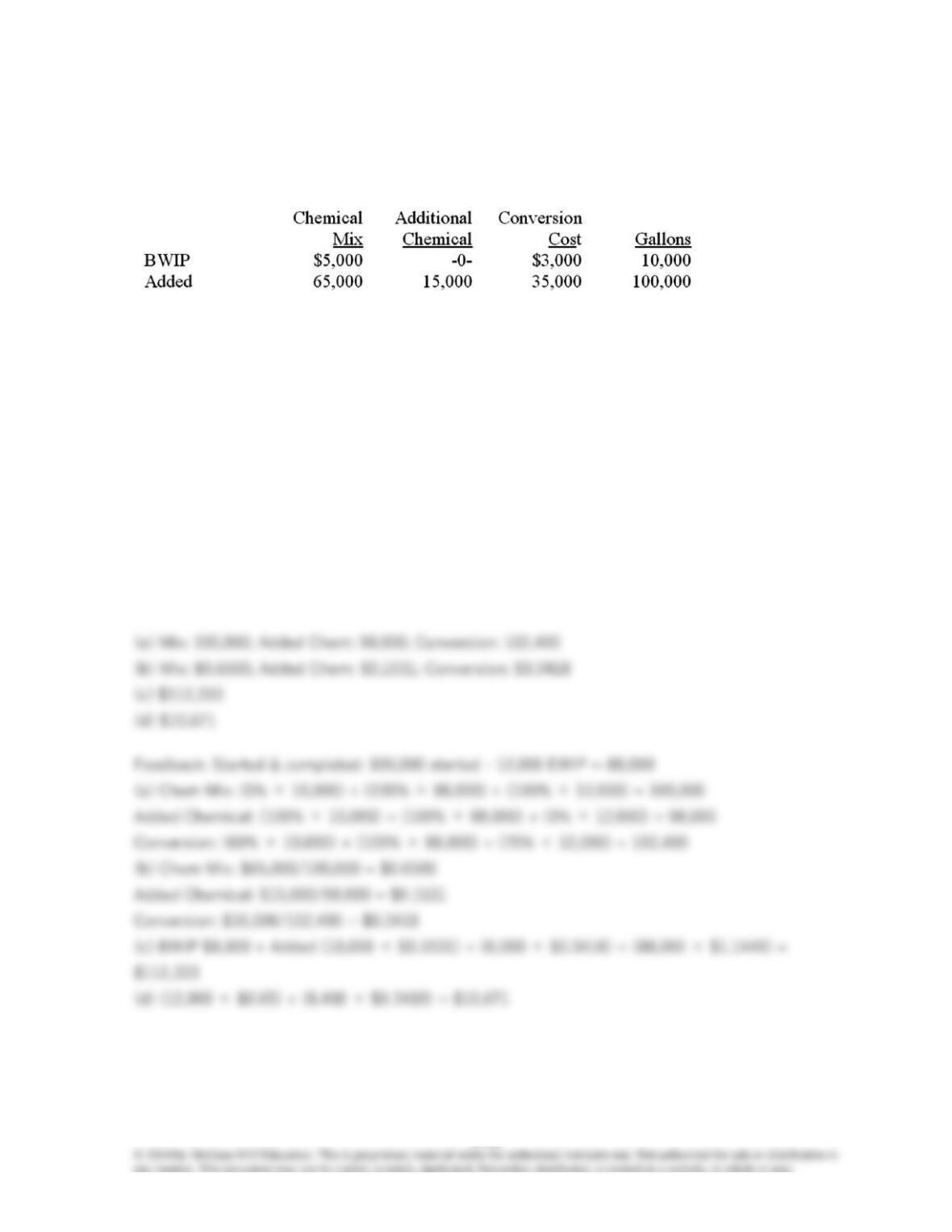
124. Franken Chemicals produces a solvent in its Thorp plant. Three chemicals are combined
at the start of the process and blended under pressure for a period of time. At the 75% point of
completion, an additional chemical is added. The following information has been gathered:
Franken completed 98,000 gallons during the month. The process engineer informs you that the
beginning WIP was at the 40% completion point, the ending WIP is at 70%. Franken uses first-in,
first out (FIFO) costing.
Required: (
HINT:
use 4 decimal places in your calculations)
a. Compute the equivalent units of production for each input.
b. Compute the cost per unit.
c. Compute the cost transferred out to finished goods.
d. Compute the ending work-in–process inventory balance.
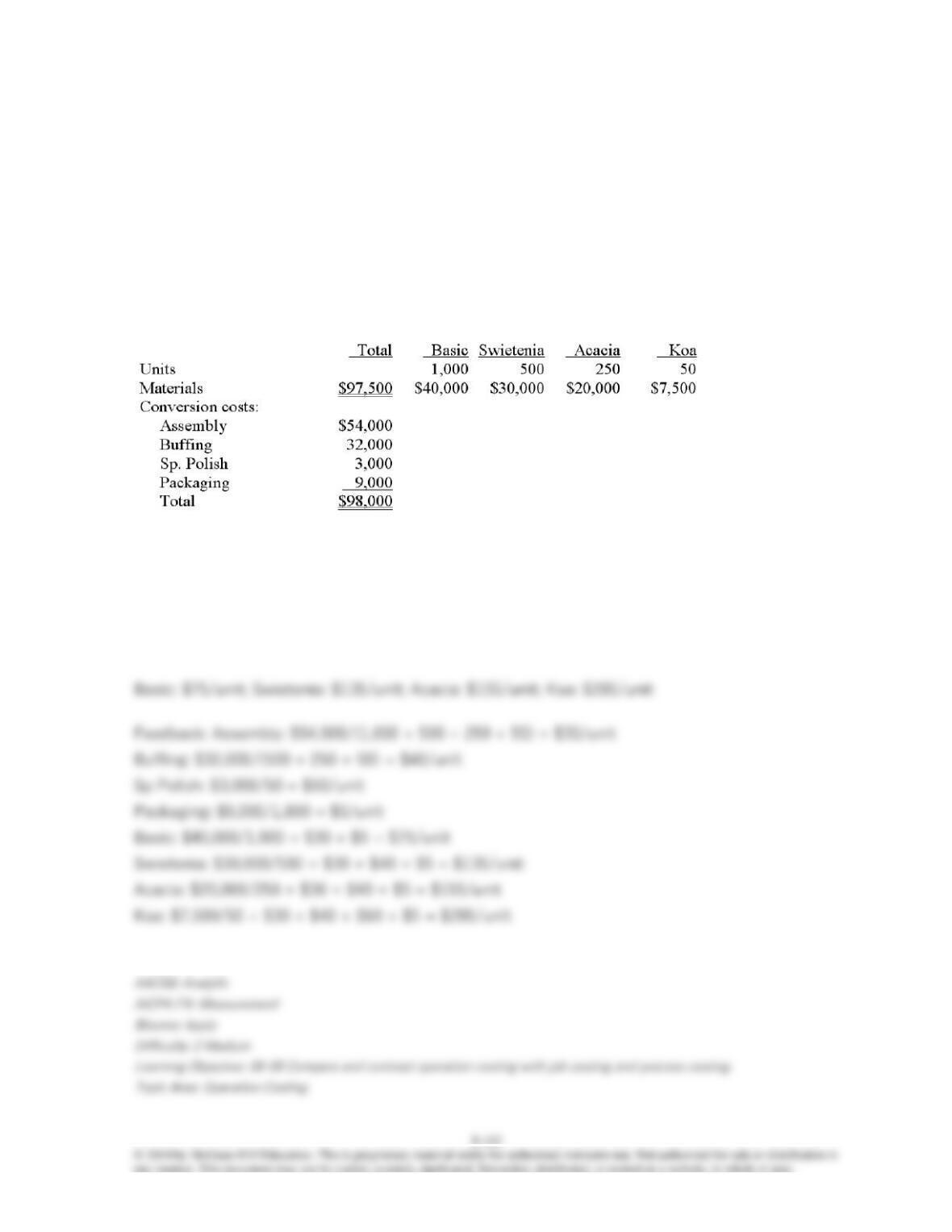
125. Kumalae Products makes four models of ukuleles. All of the models go through the same
assembly line but they differ as to the materials used and the degree of finishing. The Basic model
has a low gloss finish and goes immediately to Packaging upon completion in Assembly. The
Swietenia model and the Acacia model go through a Buffing process upon completion in
Assembly. They then go on to Packaging. The Koa model is the top of the line and goes first to
Buffing from the Assembly, then to Special Polishing, then to Packaging.
Kumalae uses operations costing and allocates conversion costs based on the number of units
processed in each department.
Required:
(a) What is the cost per unit of each of the completed ukuleles?
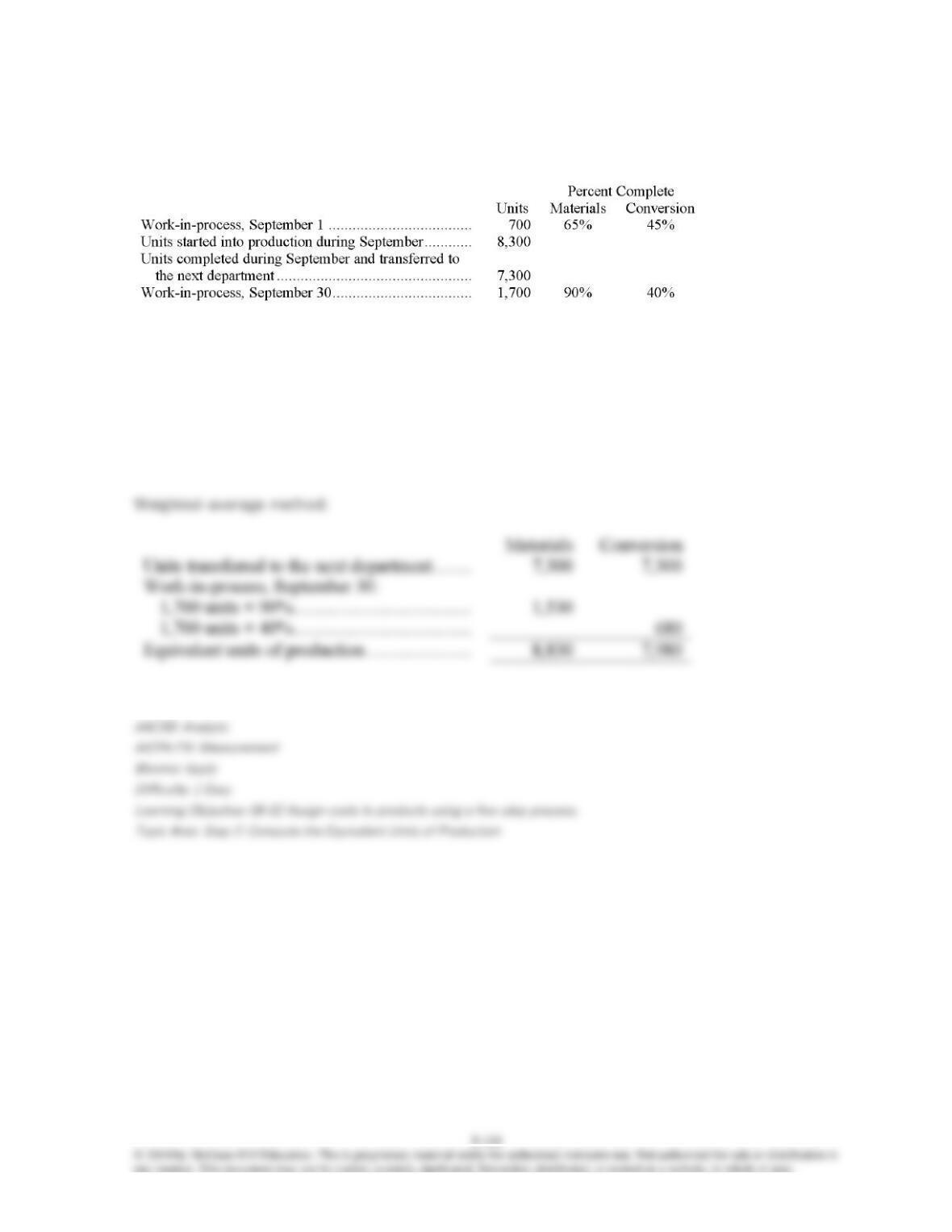
126. Nygaard Corporation uses the weighted-average method in its process costing. The
following data pertain to its Assembly Department for September.
Required:
Compute the equivalent units of production for both materials and conversion costs for the
Assembly Department for September using the weighted-average method.
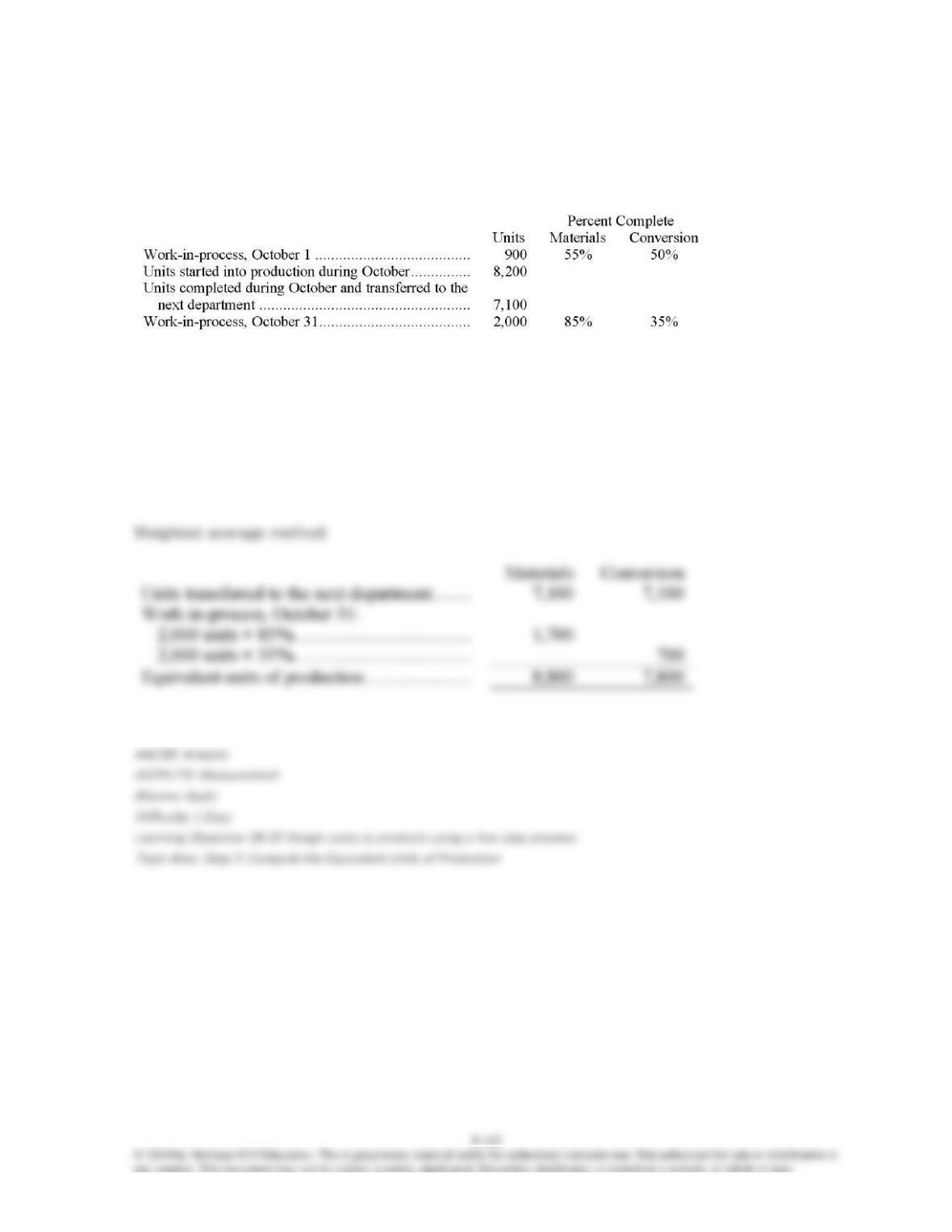
127. The following data have been provided by Fattig Corporation, which uses the weighted–
average method in its process costing. The data are for the company’s Shaping Department for
October.
Required:
Compute the equivalent units of production for both materials and conversion costs for the
Shaping Department for October using the weighted-average method.
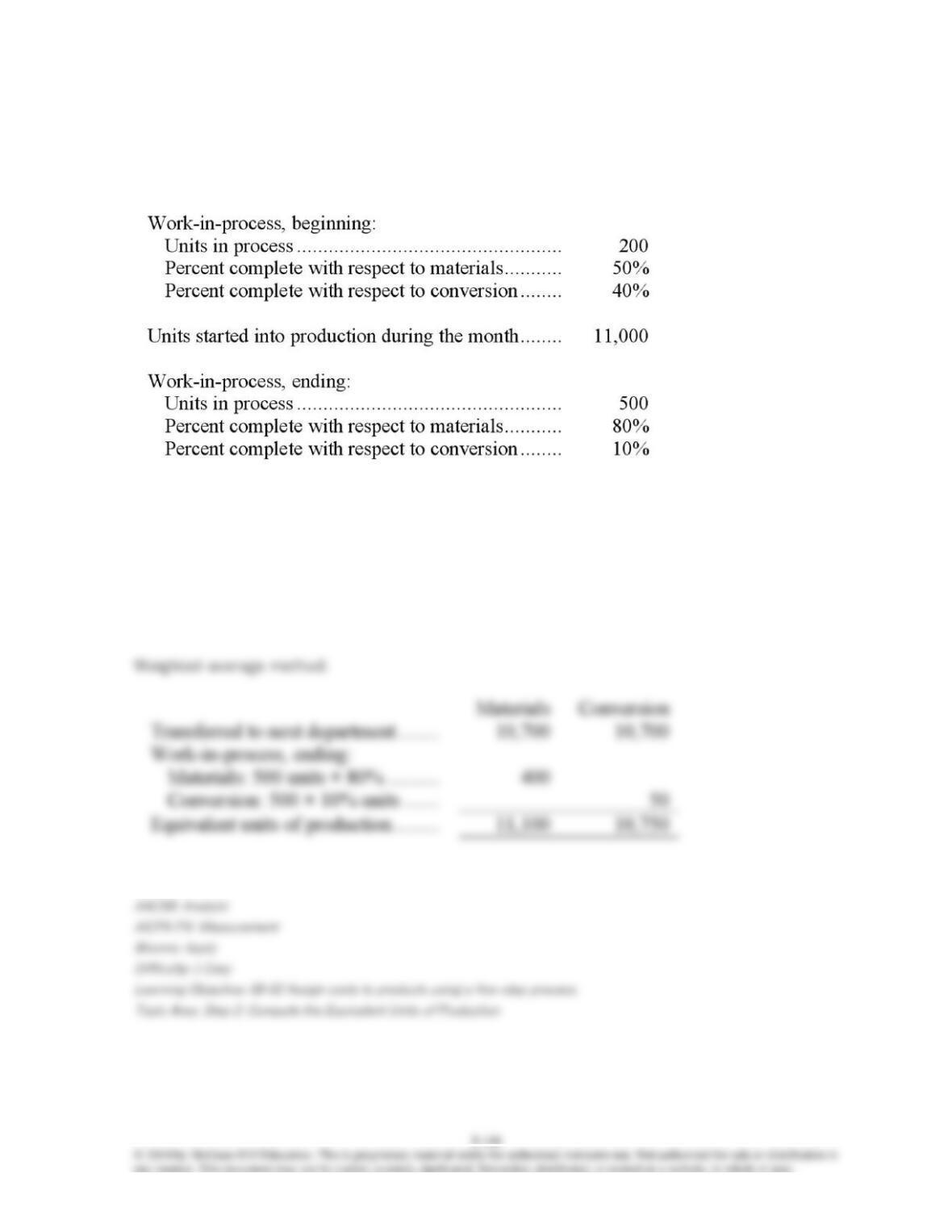
128. Canler Inc. uses the weighted-average method in its process costing system. The
following data concern the operations of the company’s first processing department for a recent
month.
Required:
Using the weighted-average method, determine the equivalent units of production for materials
and conversion costs.
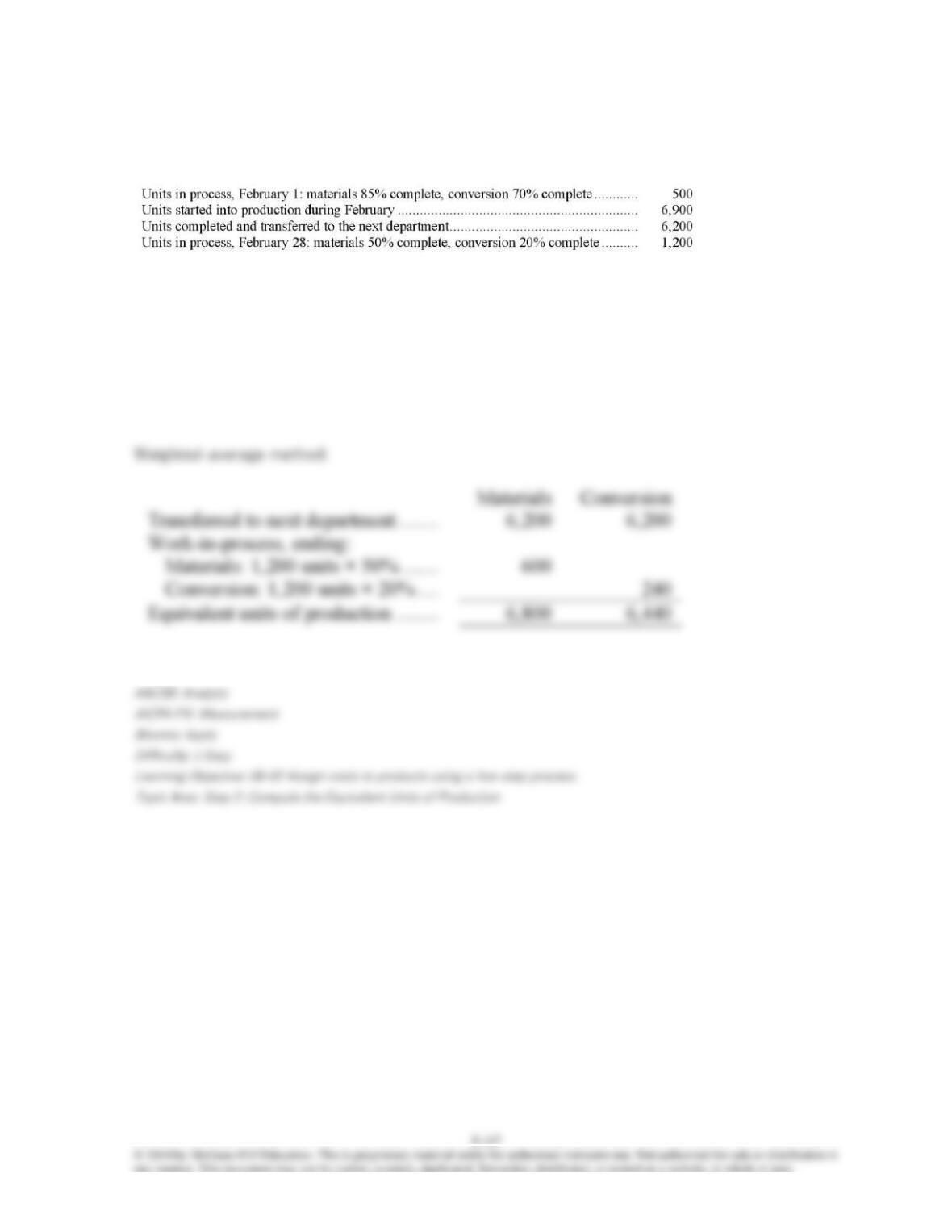
129. Garneau Corporation uses process costing. The following data pertain to its Assembly
Department for February.
Required:
Determine the equivalent units of production for the Assembly Department for February using the
weighted-average method.
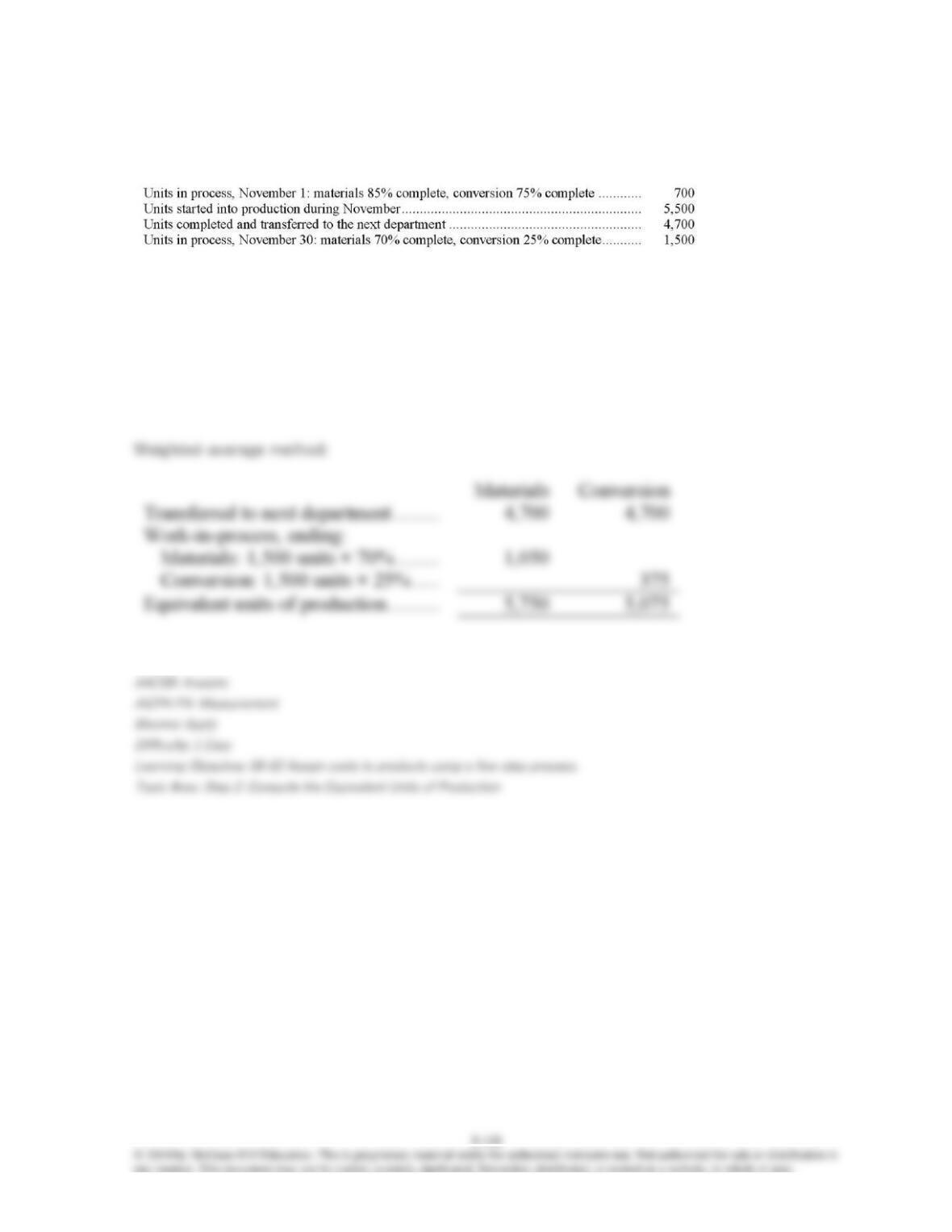
130. Flitter Corporation uses the weighted-average method in its process costing. The
following data pertain to its Materials Preparation Department for November.
Required:
Determine the equivalent units of production for the Materials Preparation Department for
November using the weighted-average method.
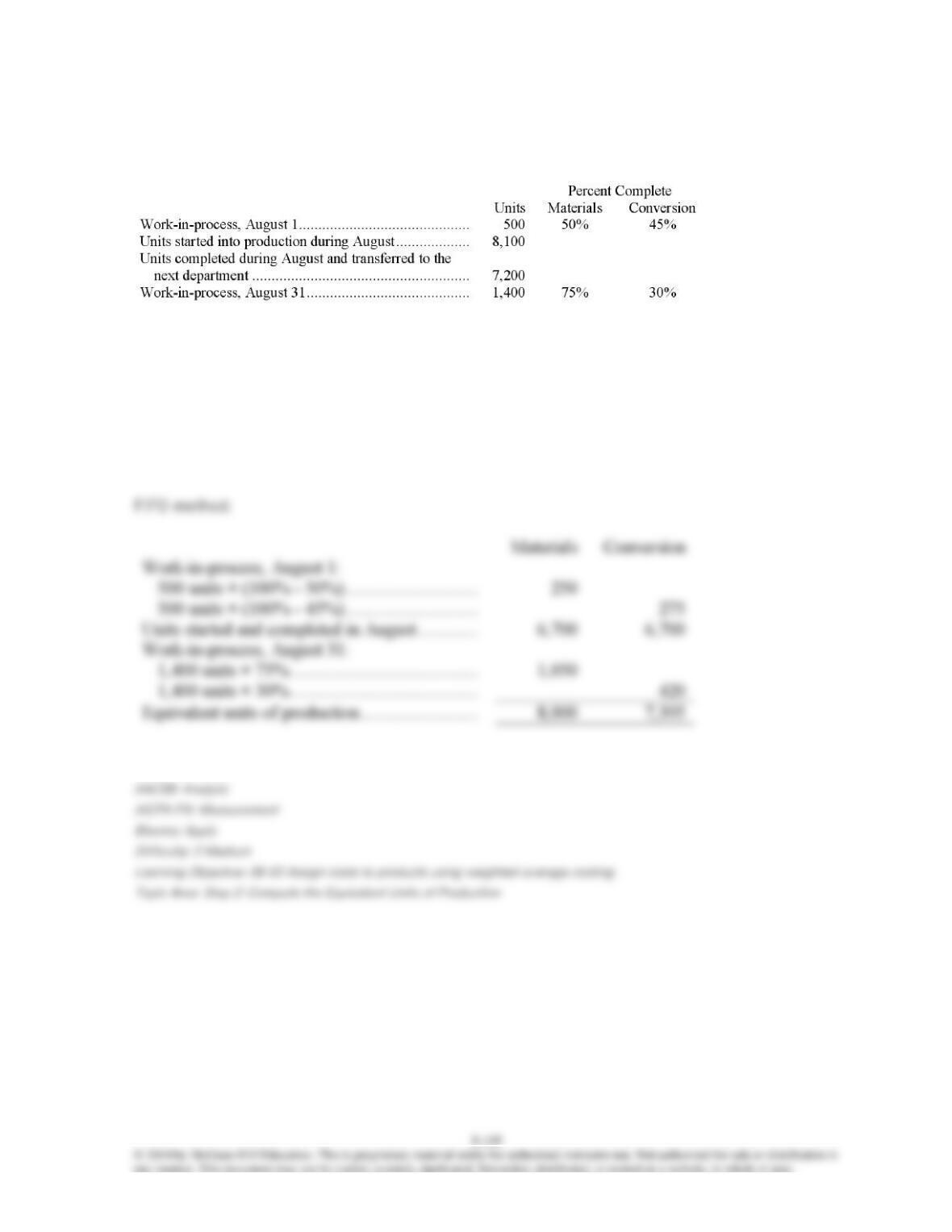
131. Deluz Corporation uses the FIFO method in its process costing. The following data pertain
to its Assembly Department for August.
Required:
Compute the equivalent units of production for both materials and conversion costs for the
Assembly Department for August using the FIFO method.
8-120
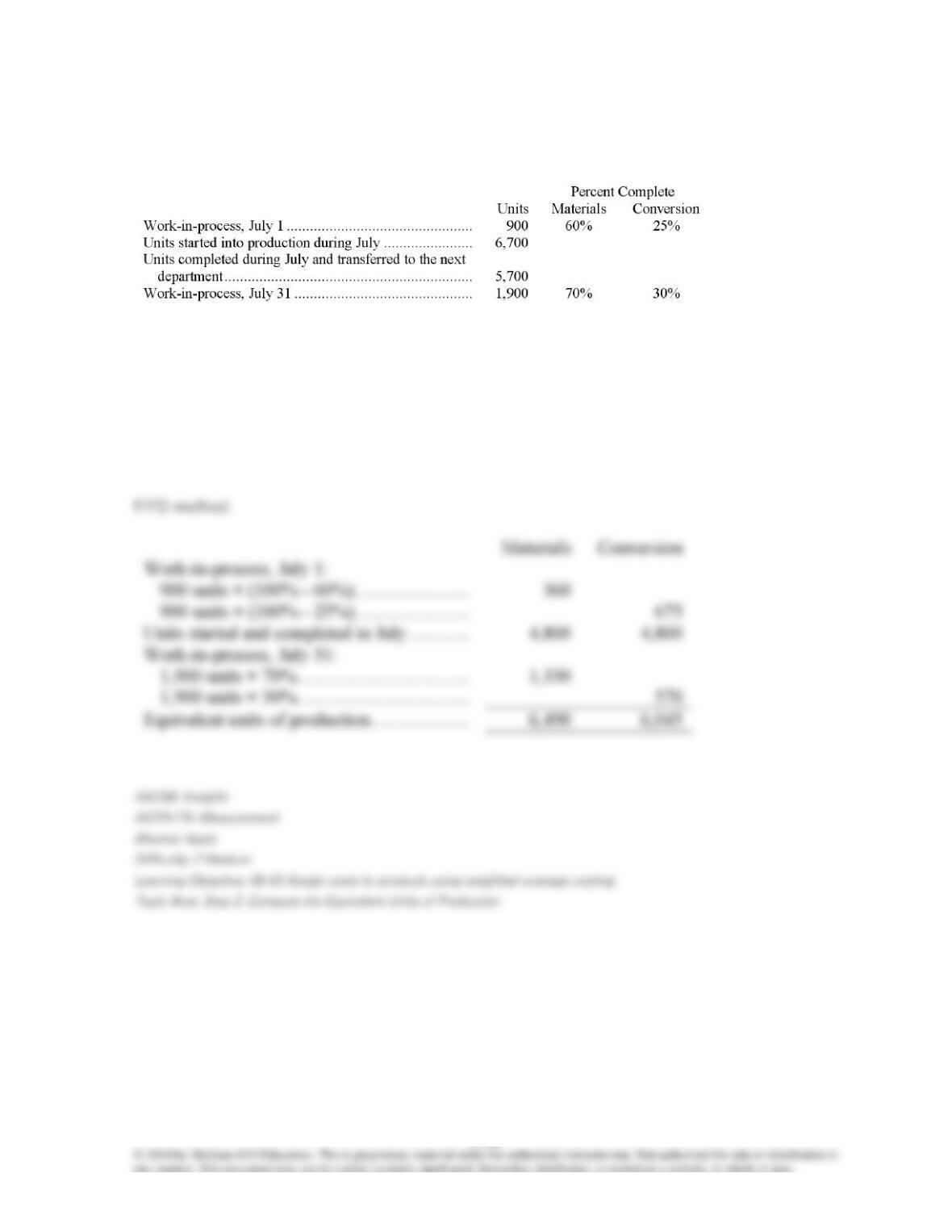
132. The following data pertain to the Milling Department of Gehle Corporation for July. The
company uses the FIFO method in its process costing.
Required:
Compute the equivalent units of production for both materials and conversion costs for the Milling
Department for July using the FIFO method.