8-82
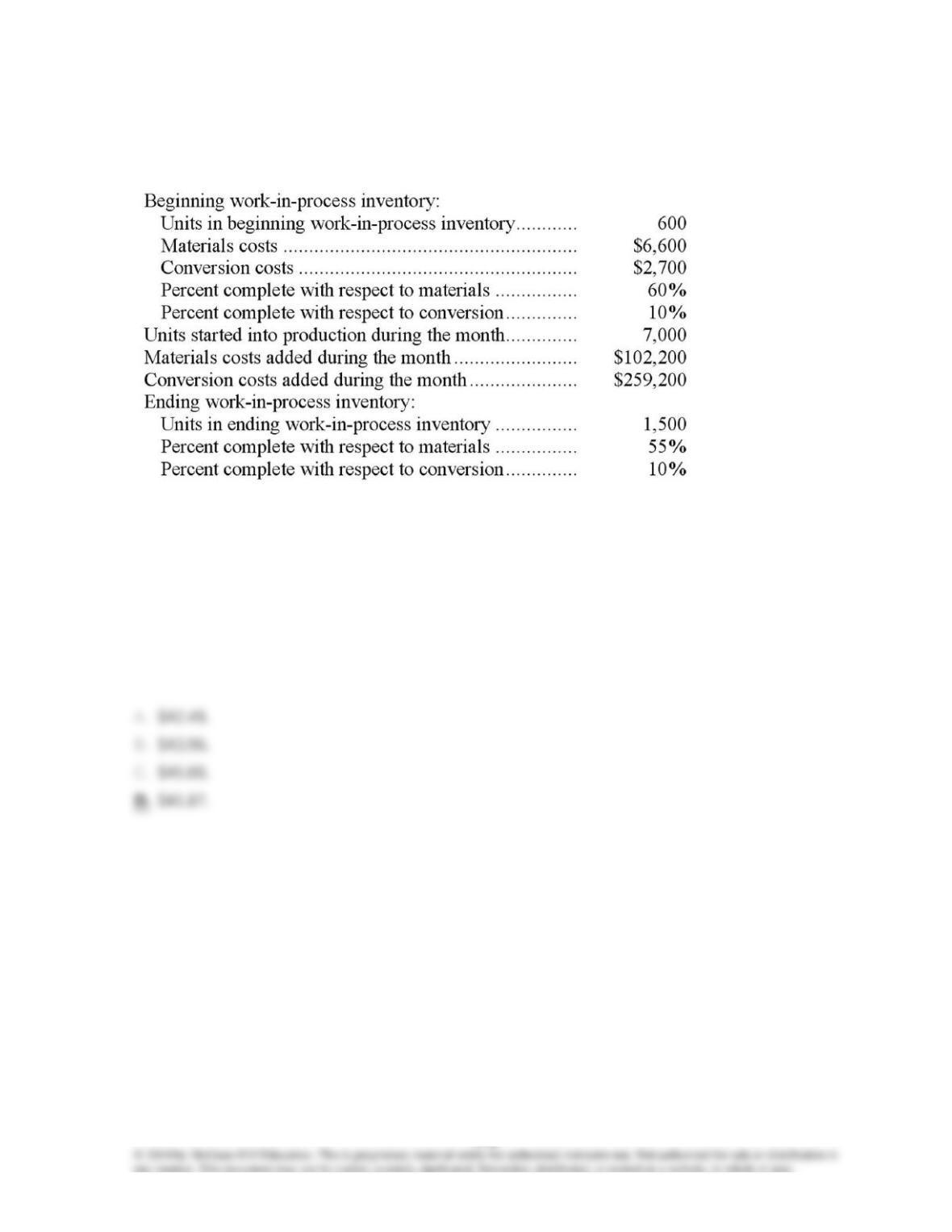
103. Qdynamic Corporation uses the FIFO method in its process costing system. Data
concerning the first processing department for the most recent month are listed below:
Note: Your answers may differ from those offered below due to rounding error. In all cases, select
the answer that is the closest to the answer you computed. To reduce rounding error, carry out all
computations to at least three decimal places.
The cost per equivalent unit for conversion costs for the first department for the month is closest
to:
8-84
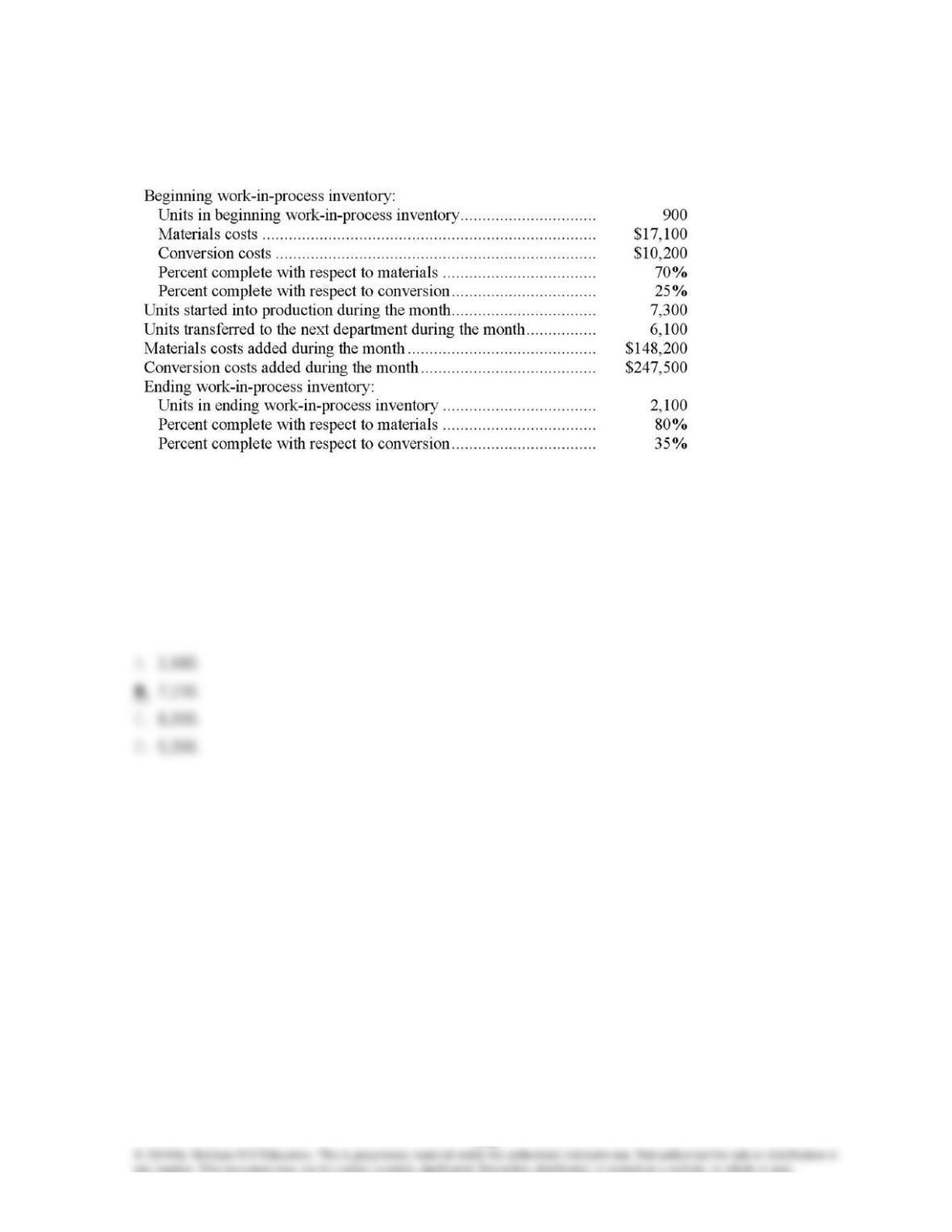
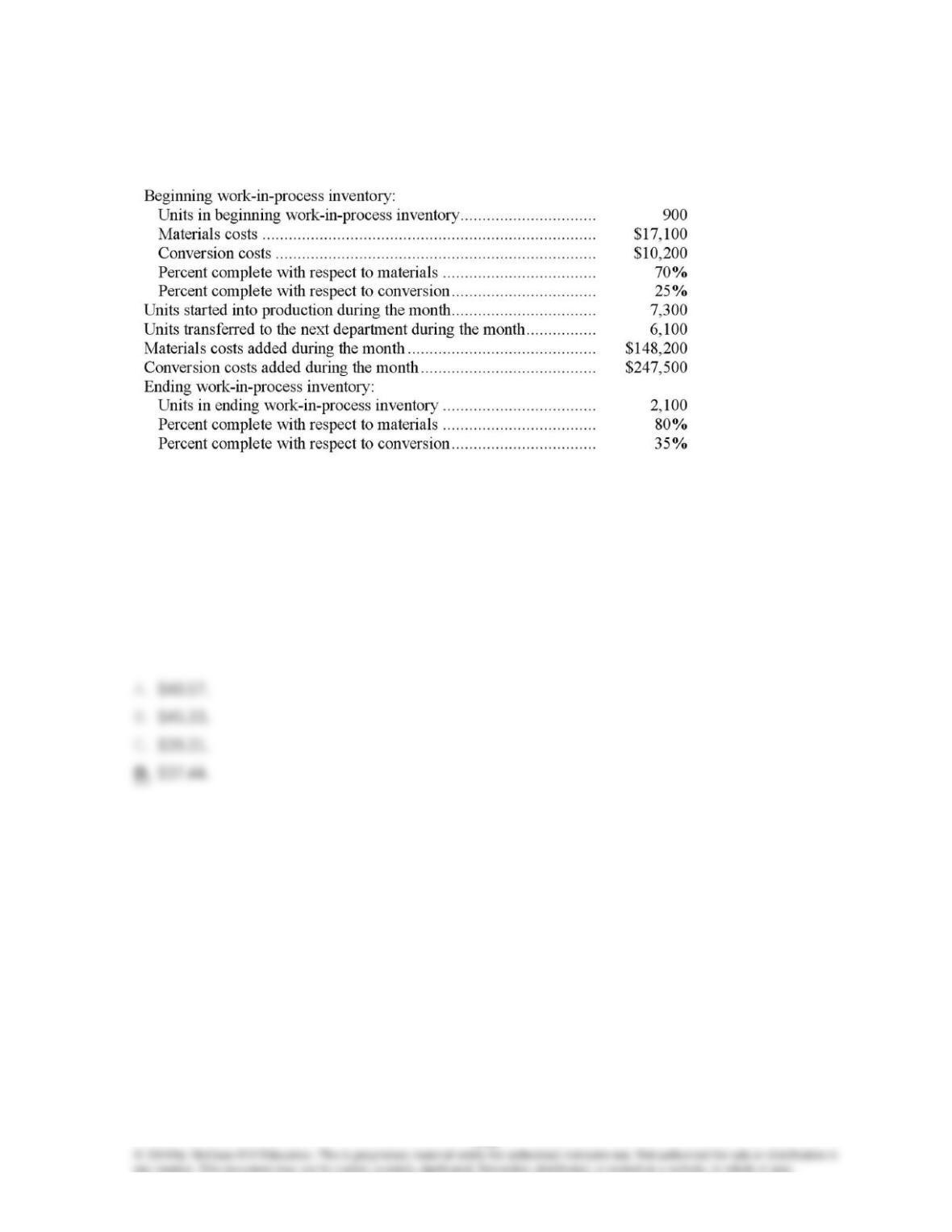
104. Nilgiri Corporation uses the FIFO method in its process costing system. Data concerning
the first processing department for the most recent month are listed below:
Note: Your answers may differ from those offered below due to rounding error. In all cases, select
the answer that is the closest to the answer you computed. To reduce rounding error, carry out all
computations to at least three decimal places.
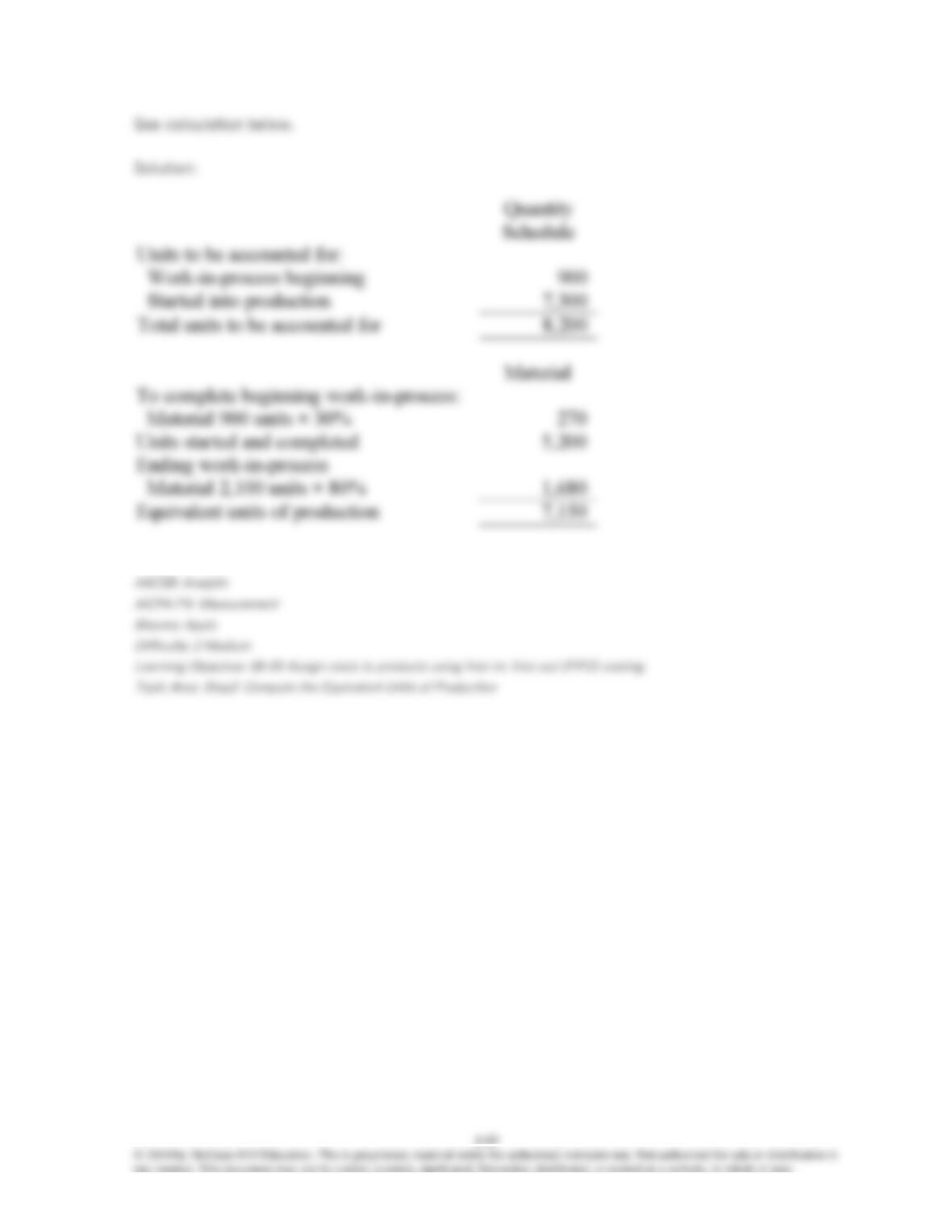
What are the equivalent units for materials for the month in the first processing department?
8-86
105. Nilgiri Corporation uses the FIFO method in its process costing system. Data concerning
the first processing department for the most recent month are listed below:
Note: Your answers may differ from those offered below due to rounding error. In all cases, select
the answer that is the closest to the answer you computed. To reduce rounding error, carry out all
computations to at least three decimal places.
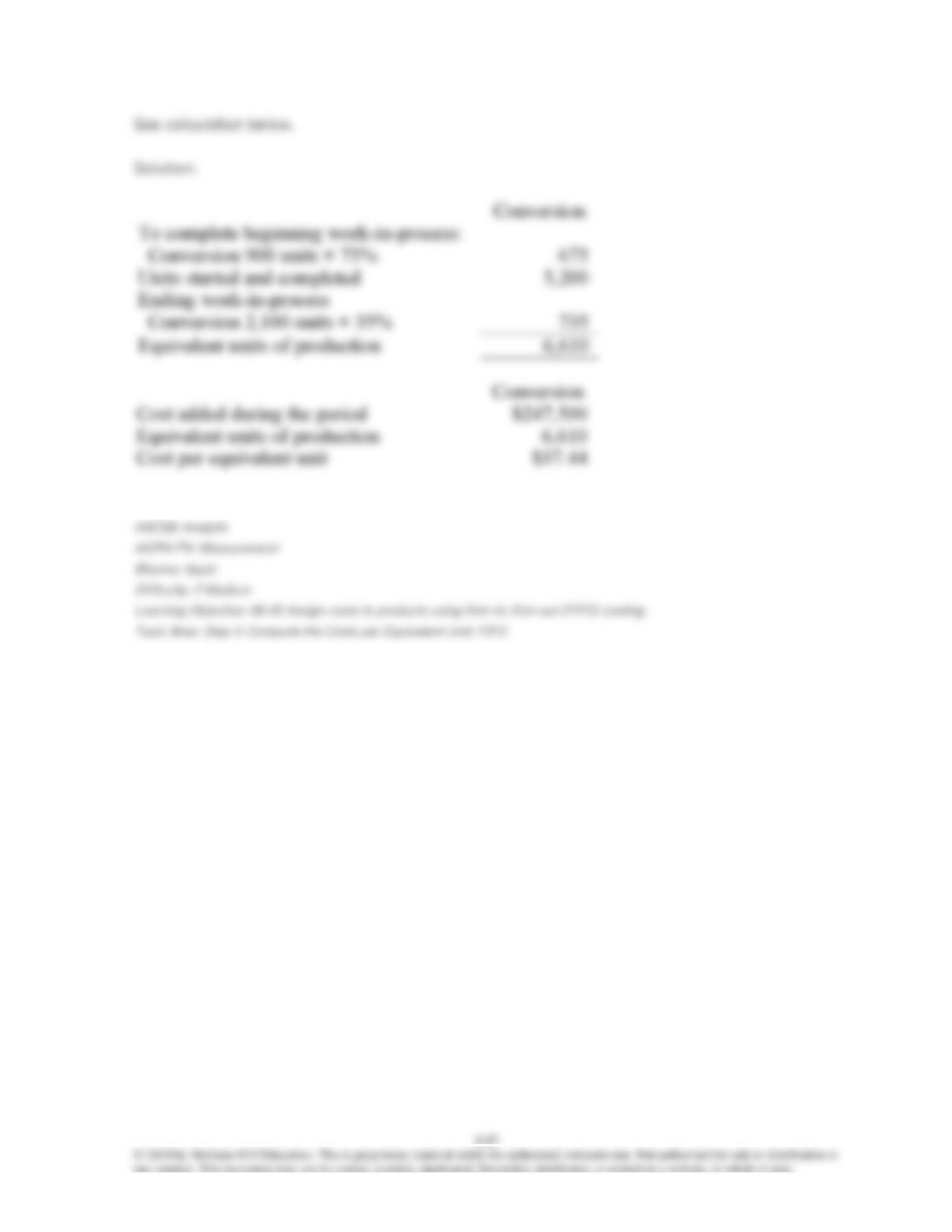
The cost per equivalent unit for conversion costs for the first department for the month is closest
to:
8-88
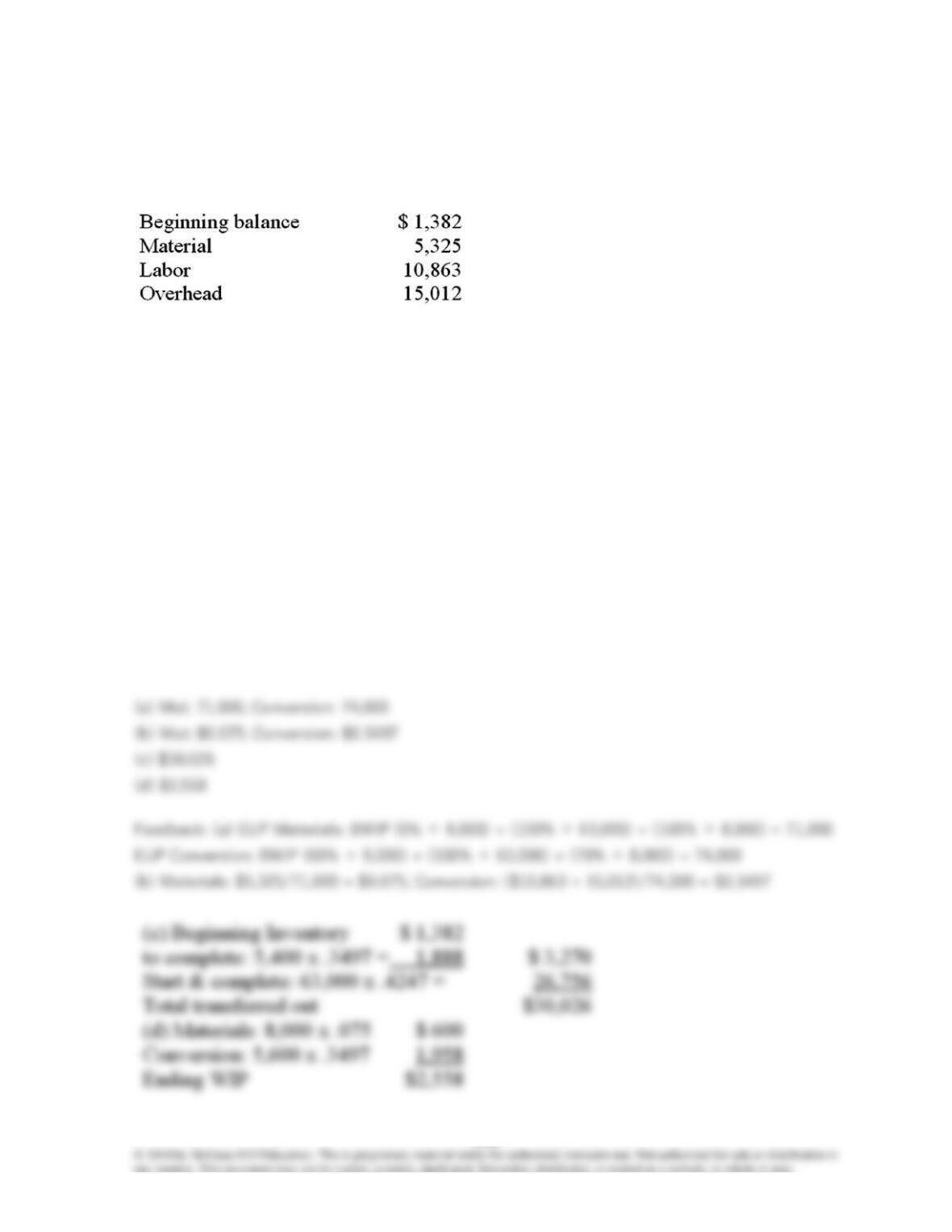
106. The St. Vincent Manufacturing Company produces a single product in a single processing
department. The material is added when 25% of the conversion costs have been added.
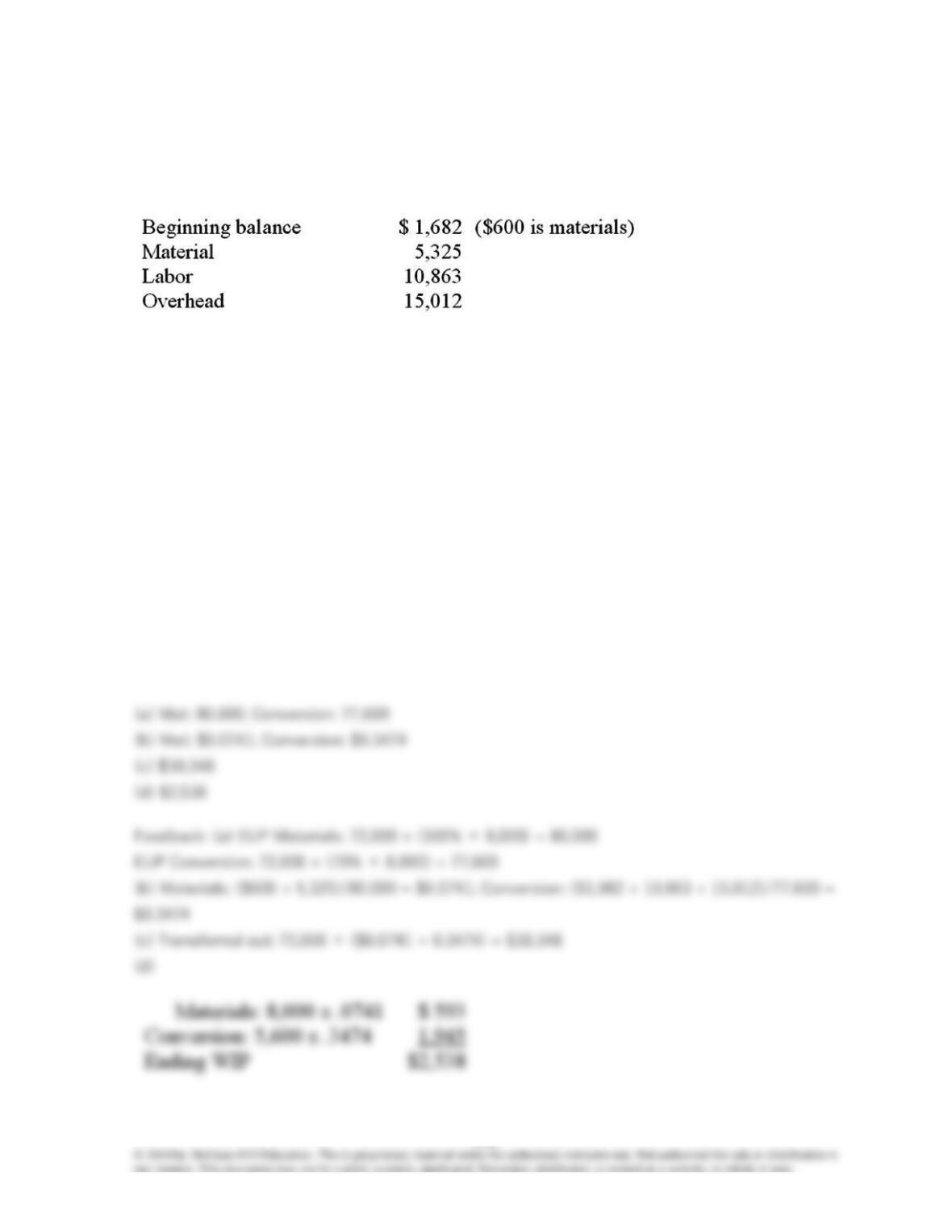
The Work-in-Process Inventory account on April 30th includes the following information:
During the month, the company finished and transferred 72,000 units out of the Work–in-Process
Inventory. 9,000 units were in process at the beginning of the month, which were 40% complete.
8,000 units were in process at the end of the month, which were 70% complete. The company
uses first-in, first-out (FIFO) process costing.
Required (use 4 decimal places for computations):
(a) Compute the equivalent units of production (EUP) for materials and conversion costs in April.
(b) Compute the unit conversion costs and unit material costs for April.
(c) Compute the total cost transferred out of the Work–in-Process Inventory during the month of
April.
(d) Compute the cost of the ending inventory for April.
8-89
107. The Edna Millay Manufacturing Company produces a single product in a single processing
department. The material is added when 25% of the conversion costs have been added.
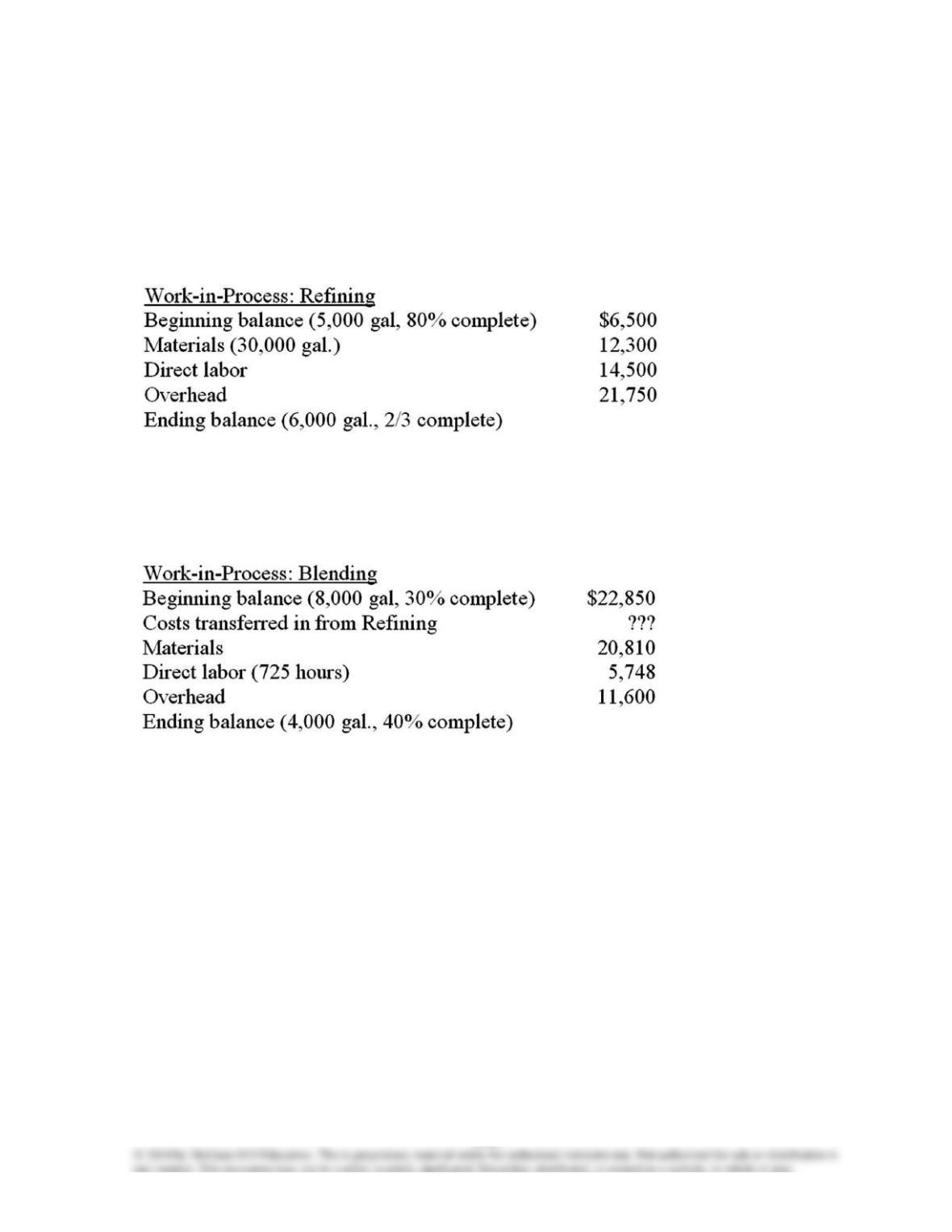
The Work-in-Process Inventory account on April 30th includes the following information:
During the month, the company finished and transferred 72,000 units out of the Work–in-Process
Inventory. 9,000 units were in process at the beginning of the month and were 40% complete.
8,000 units were in process at the end of the month, and were 70% complete. The company uses
weighted-average process costing.
Required (use 4 decimal places for computations):
(a) Compute the equivalent units of production (EUP) for materials and conversion costs in April.
(b) Compute the unit conversion costs and unit material costs for April.
(c) Compute the total cost transferred out of the Work–in-Process Inventory during the month of
April.
(d) Compute the cost of the ending inventory for April.
8-90
108. The Clarke Chemical Company produces a special kind of body oil that is widely used by
professional sports trainers. The oil is produced in three processes: Refining, Blending, and
Mixing. Raw oil materials are introduced at the beginning of the refining process. A “mountain-air
scent” material is added in the blending process when processing is 50% completed.
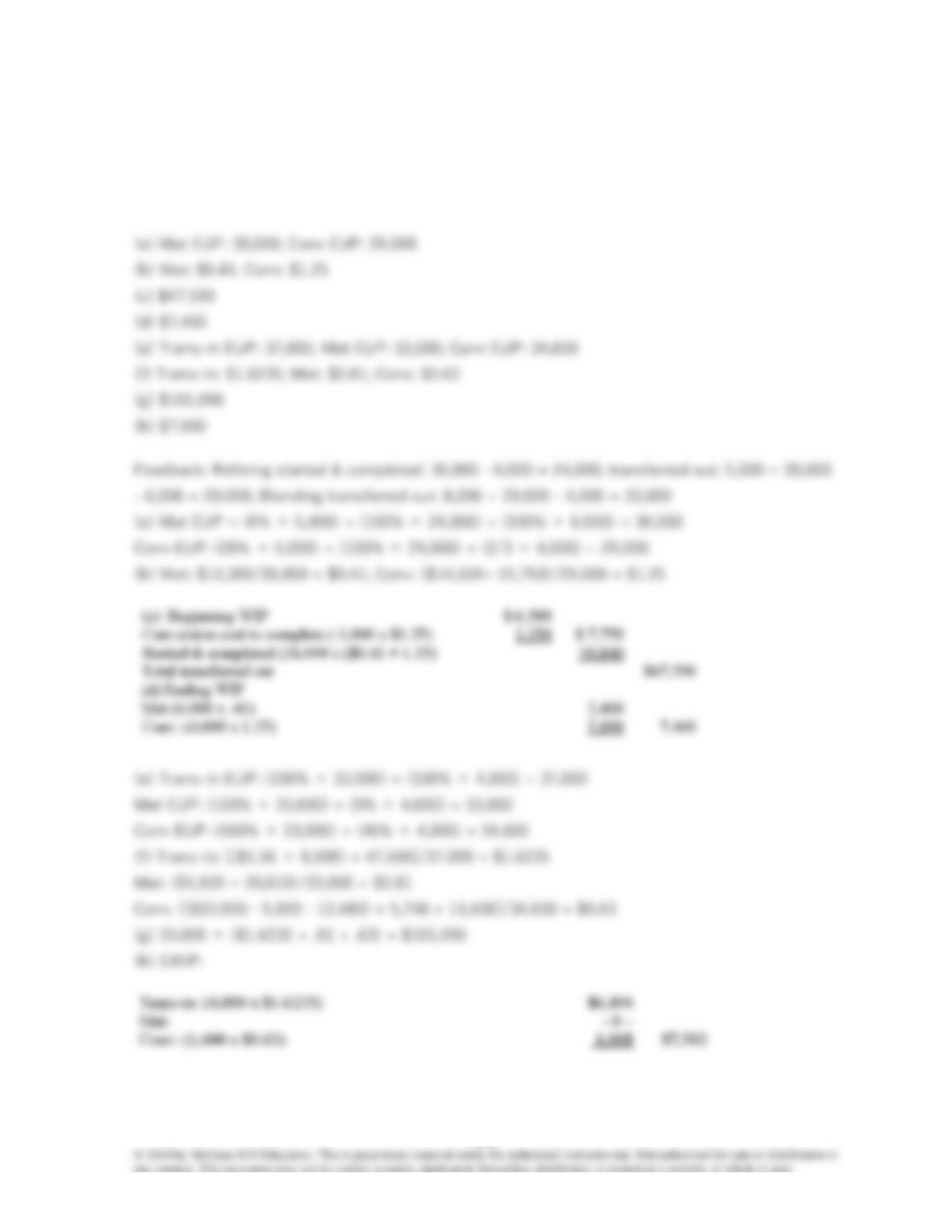
The following Work-in-Process account for the Refining Department is available for the month of
July. The July 1 Work–in-Process Inventory contains $1,500 in material costs.
The following Work-in-Process account for the Blending Department is available for the month of
July. The July 1 Work–in-Process inventory contains $5,920 in material costs, and $1.56/unit in
costs transferred in from the Refining Department.
The Clarke Chemical Company uses first-in, first-out (FIFO) costing for the Refining Department
and weighted-average costing for the Blending Department.
Required (use 4 decimal places for computations):
Part 1: Refining Department
(a) Compute the equivalent units of production for July.
(b) Compute the material cost per unit and the conversion cost per unit for July.
(c) Compute the costs transferred to the Blending Department for July.
(d) Compute the July 31 Work–in-Process Inventory balance.
Part 2: Blending Department
(e) Compute the equivalent units of production.
(f) Compute the unit costs in the Blending Department for the month of July. (HINT: There are
three!!)
8-91
(g) Compute the costs transferred out for July.
(h) Compute the July 31 Work-in-Process Inventory balance.
8-92
109. The Clarke Chemical Company produces a special kind of body oil that is widely used by
professional sports trainers. The oil is produced in three processes: Refining, Blending, and
Mixing. Raw oil materials are introduced at the beginning of the refining process. A “mountain-air
scent” material is added in the blending process when processing is 50% completed.
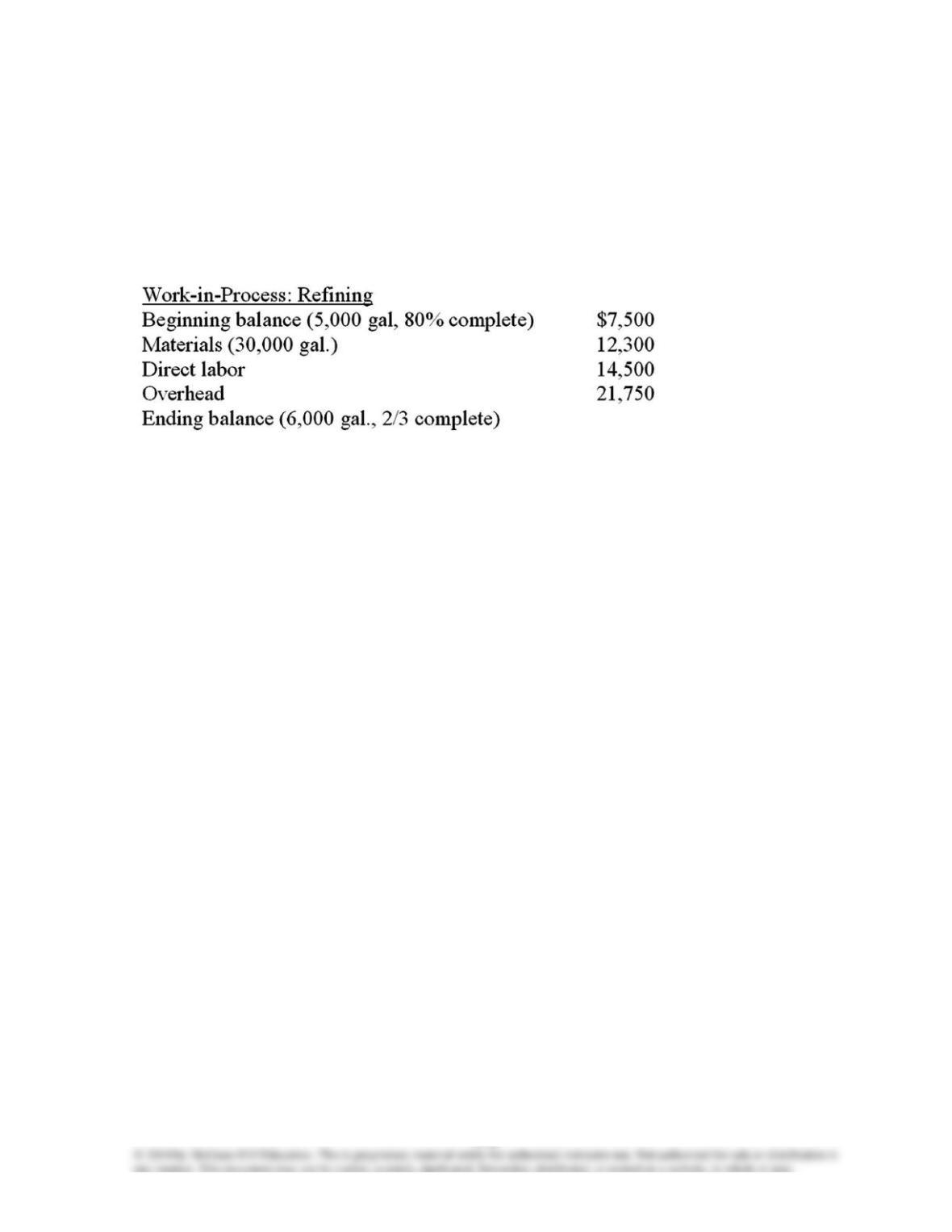
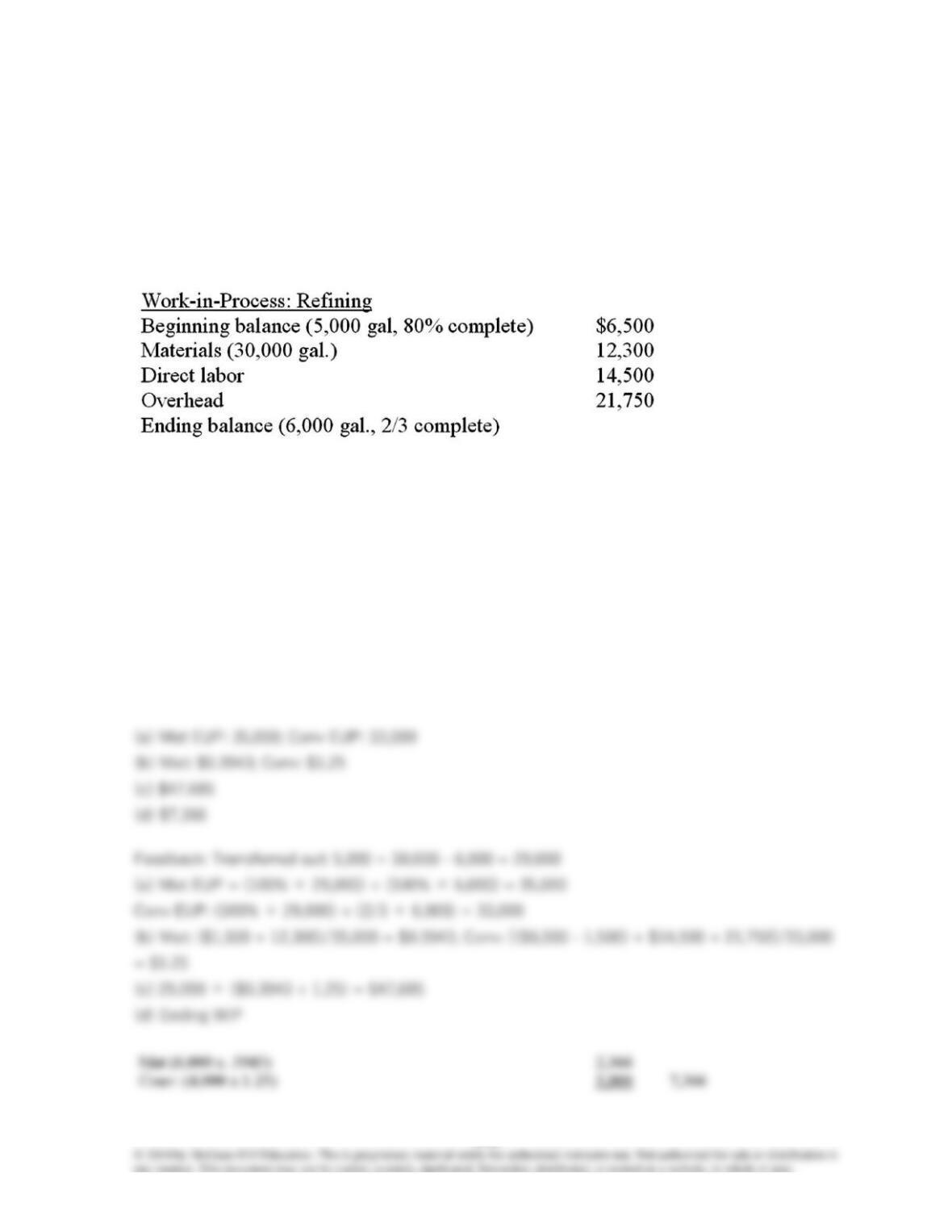
The following Work-in-Process account for the Refining Department is available for the month of
July. The July 1 Work–in-Process Inventory contains $1,500 in material costs.
The Clarke Chemical Company uses first-in, first-out (FIFO) costing.
Required (use 4 decimal places for computations):
(a) Compute the equivalent units of production for Refining for July.
(b) Compute the material cost per unit and the conversion cost per unit for July.
(c) Compute the costs transferred to the Blending Department for July.
(d) Compute the July 31 Work–in-Process Inventory balance.
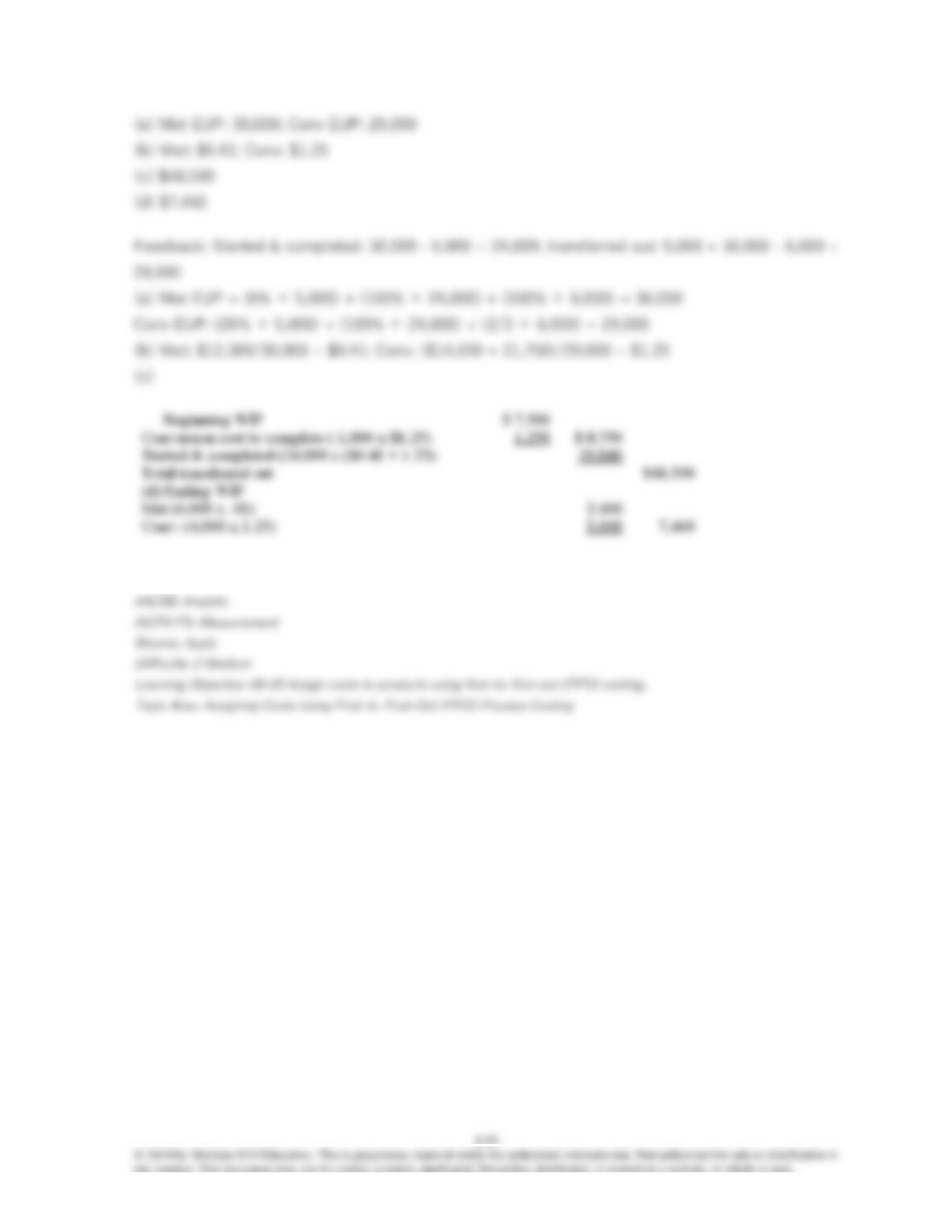
8-94
110. The Clarke Chemical Company produces a special kind of body oil that is widely used by
professional sports trainers. The oil is produced in three processes: Refining, Blending, and
Mixing. Raw oil materials are introduced at the beginning of the refining process. A “mountain-air
scent” material is added in the blending process when processing is 50% completed.
The following Work-in-Process account for the Refining Department is available for the month of
July. The July 1 Work–in-Process Inventory contains $1,500 in material costs.
The Clarke Chemical Company uses weighted-average costing.
Required (use 4 decimal places for computations):
(a) Compute the equivalent units of production for Refining for July.
(b) Compute the material cost per unit and the conversion cost per unit for July.
(c) Compute the costs transferred to the Blending Department for July.
(d) Compute the July 31 Work–in-Process Inventory balance.
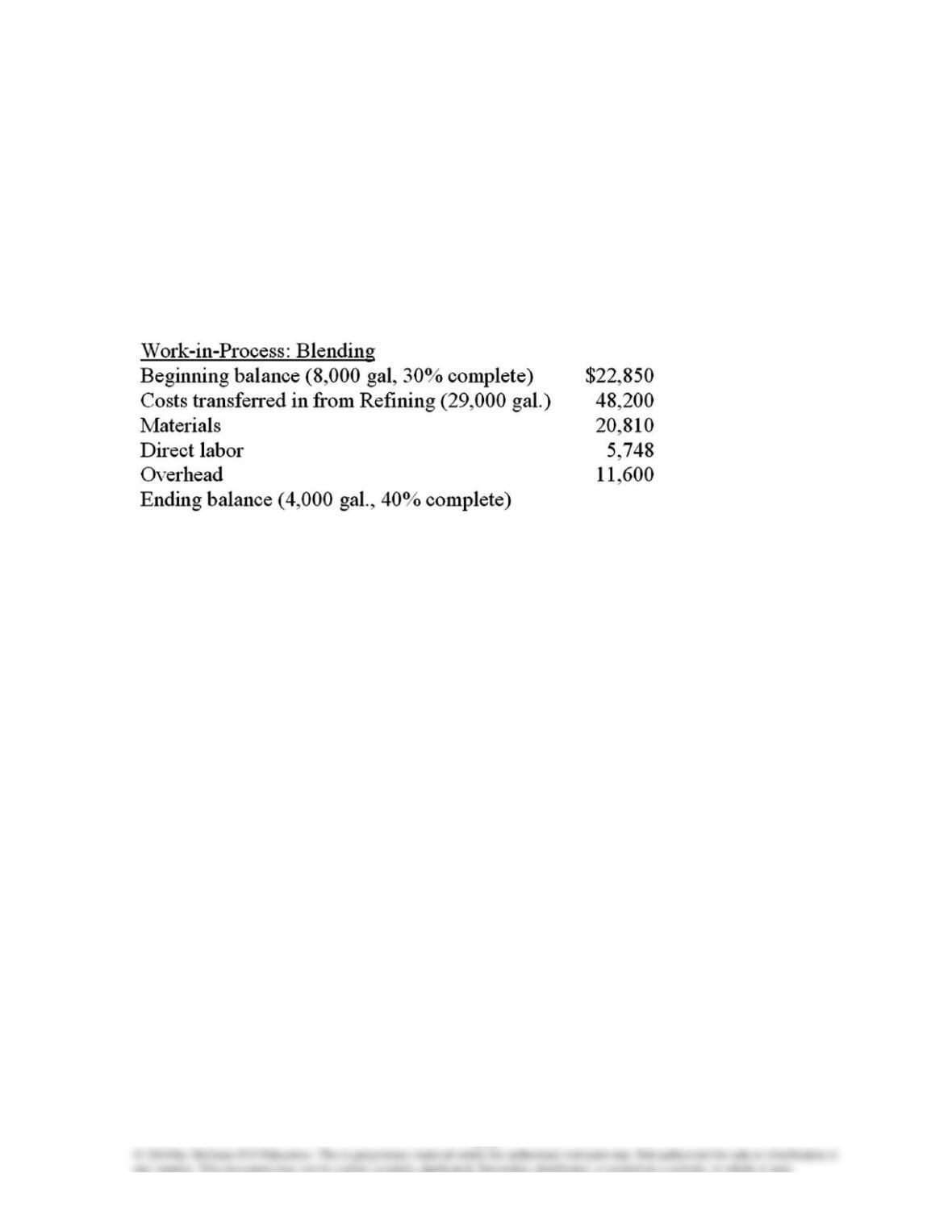
8-95
111. The Clarke Chemical Company produces a special kind of body oil that is widely used by
professional sports trainers. The oil is produced in three processes: Refining, Blending, and
Mixing. Raw oil materials are introduced at the beginning of the refining process. A “mountain-air
scent” material is added in the blending process when processing is 50% completed.
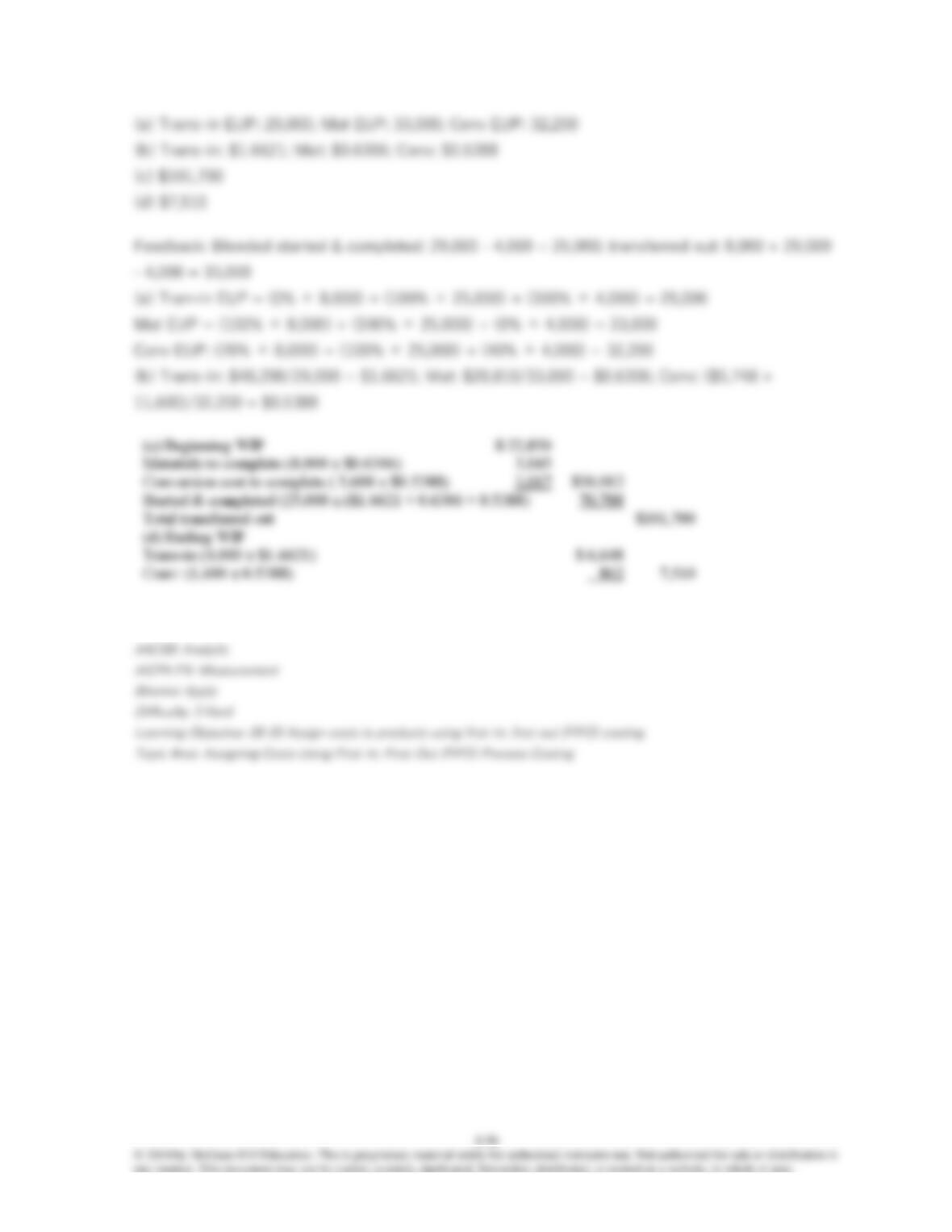
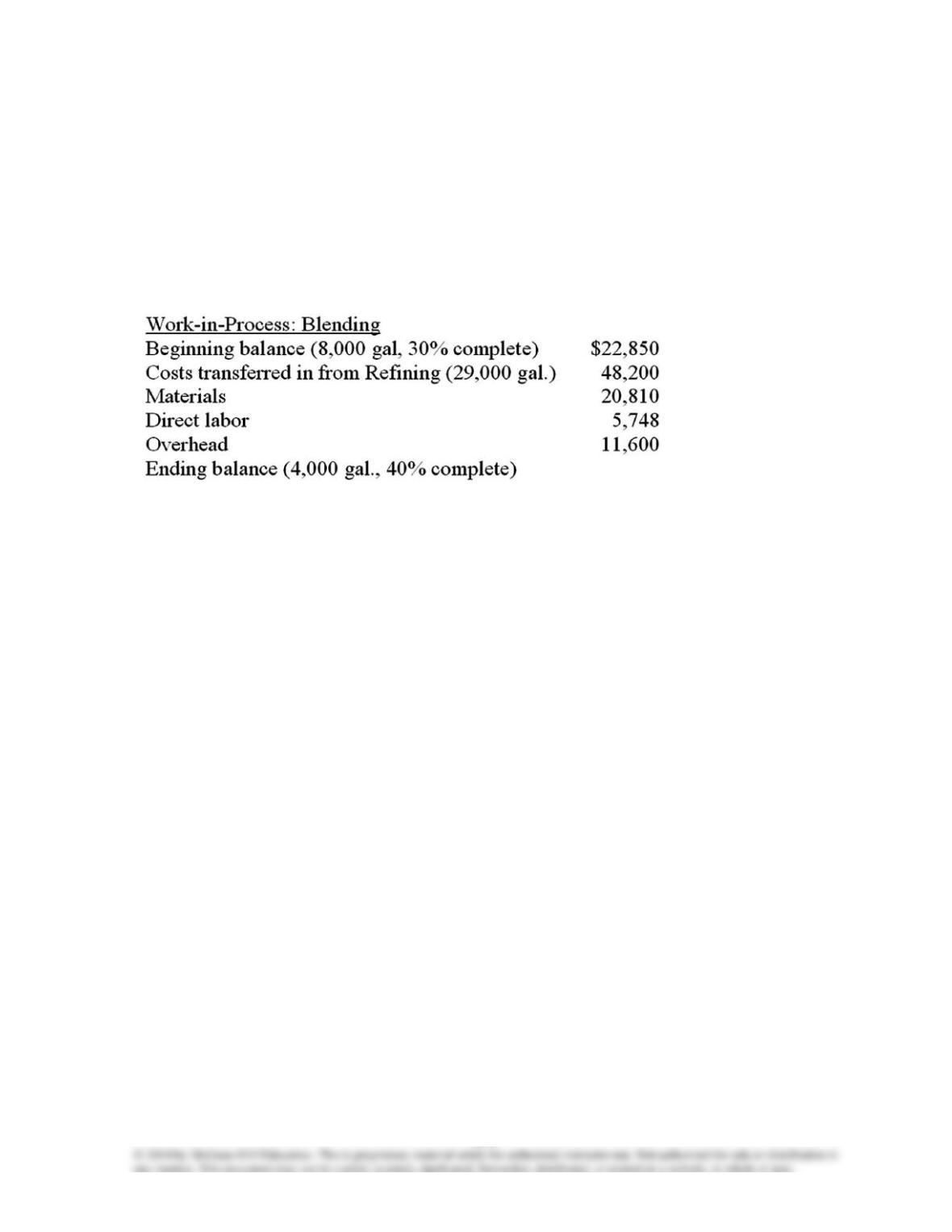
The following Work-in-Process account for the Blending Department is available for the month of
July. The July 1 Work–in-Process inventory contains $10,370 in conversion costs, and $1.56/unit in
costs transferred in from the Refining Department.
The Clarke Chemical Company uses first-in, first-out (FIFO) costing.
Required (use 4 decimal places for computations):
(a) Compute the equivalent units of production for Blending.
(b) Compute the unit costs in the Blending Department for the month of July. (HINT: There are
three!!)
(c) Compute the costs transferred out to the Mixing Department for July.
(d) Compute the July 31 Work–in-Process Inventory balance.
8-97
112. The Clarke Chemical Company produces a special kind of body oil that is widely used by
professional sports trainers. The oil is produced in three processes: Refining, Blending, and
Mixing. Raw oil materials are introduced at the beginning of the refining process. A “mountain-air
scent” material is added in the blending process when processing is 50% completed.
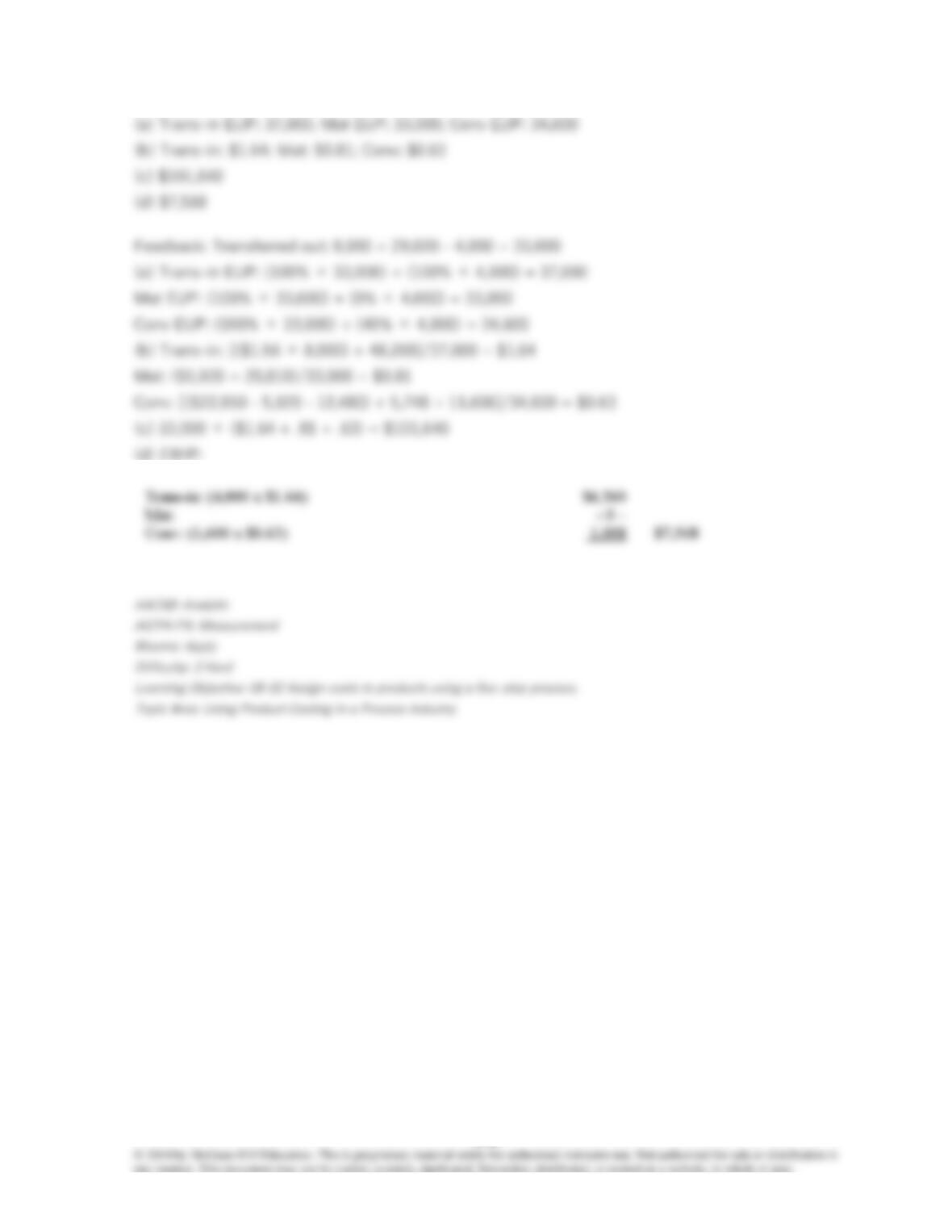
The following Work-in-Process account for the Blending Department is available for the month of
July. The July 1 Work–in-Process inventory contains $5,920 in material costs, and $1.56/unit in
costs transferred in from the Refining Department.
The Clarke Chemical Company uses weighted-average costing.
Required (use 4 decimal places for computations):
(a) Compute the equivalent units of production for Blending.
(b) Compute the unit costs in the Blending Department for the month of July. (HINT: There are
three!!)
(c) Compute the costs transferred out to the Mixing Department for July.
(d) Compute the July 31 Work-in-Process Inventory balance.
8-98
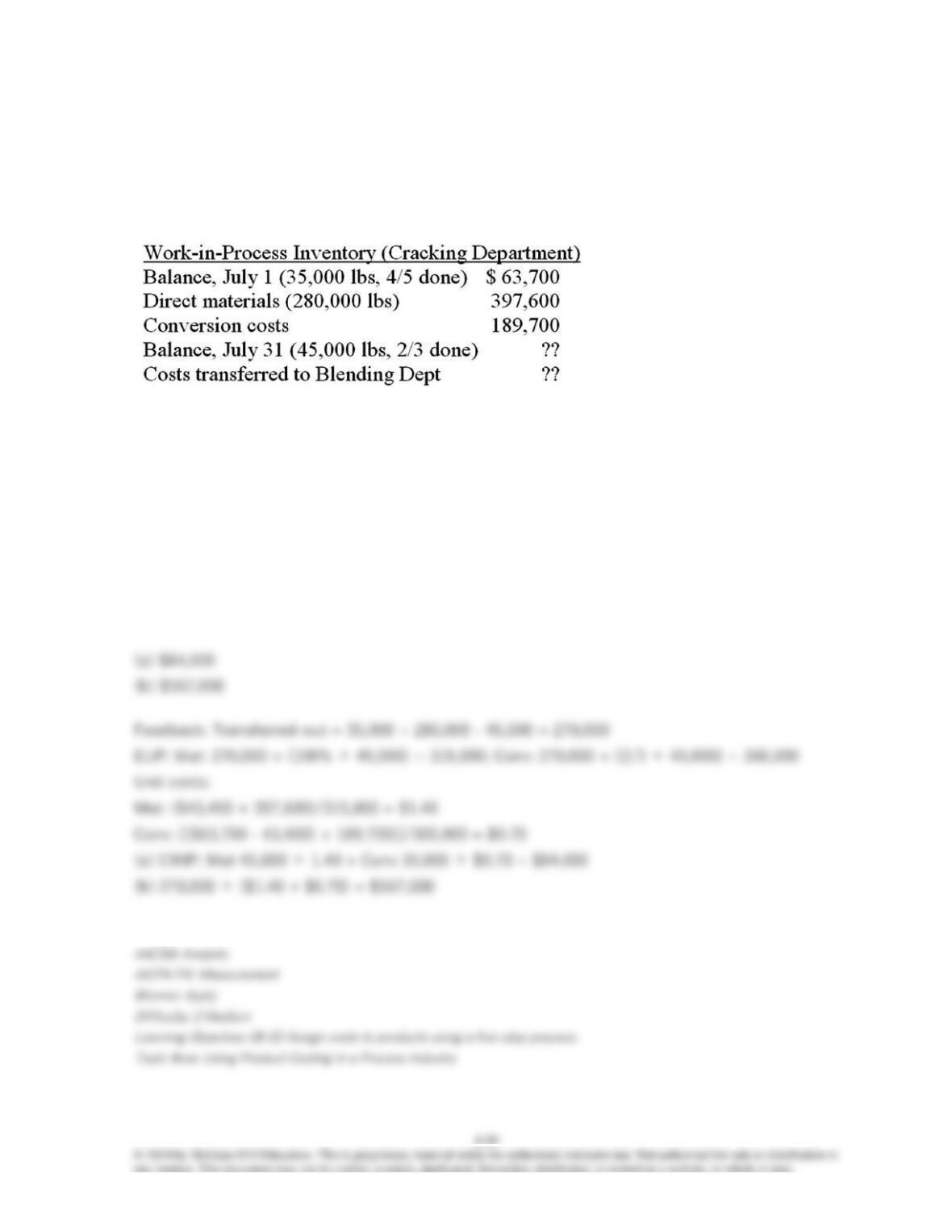
113. Brady Products manufactures a silicone paste wax that goes through three processing
departments: cracking, blending, and packing. All raw materials are introduced at the start of work
in the cracking department, with conversion costs being incurred uniformly in each department.
The Work-in-Process T-account for the cracking department for July is:
The beginning balance inventory consists of $43,400 in materials cost. Brady uses the weighted–
average method to account for its operations.
Required (use 4 decimal places for computations):
(a) What would be the Cracking Department inventory balance on July 31?
(b) What would be the cost transferred to the Blending Dept. in July?
8-100
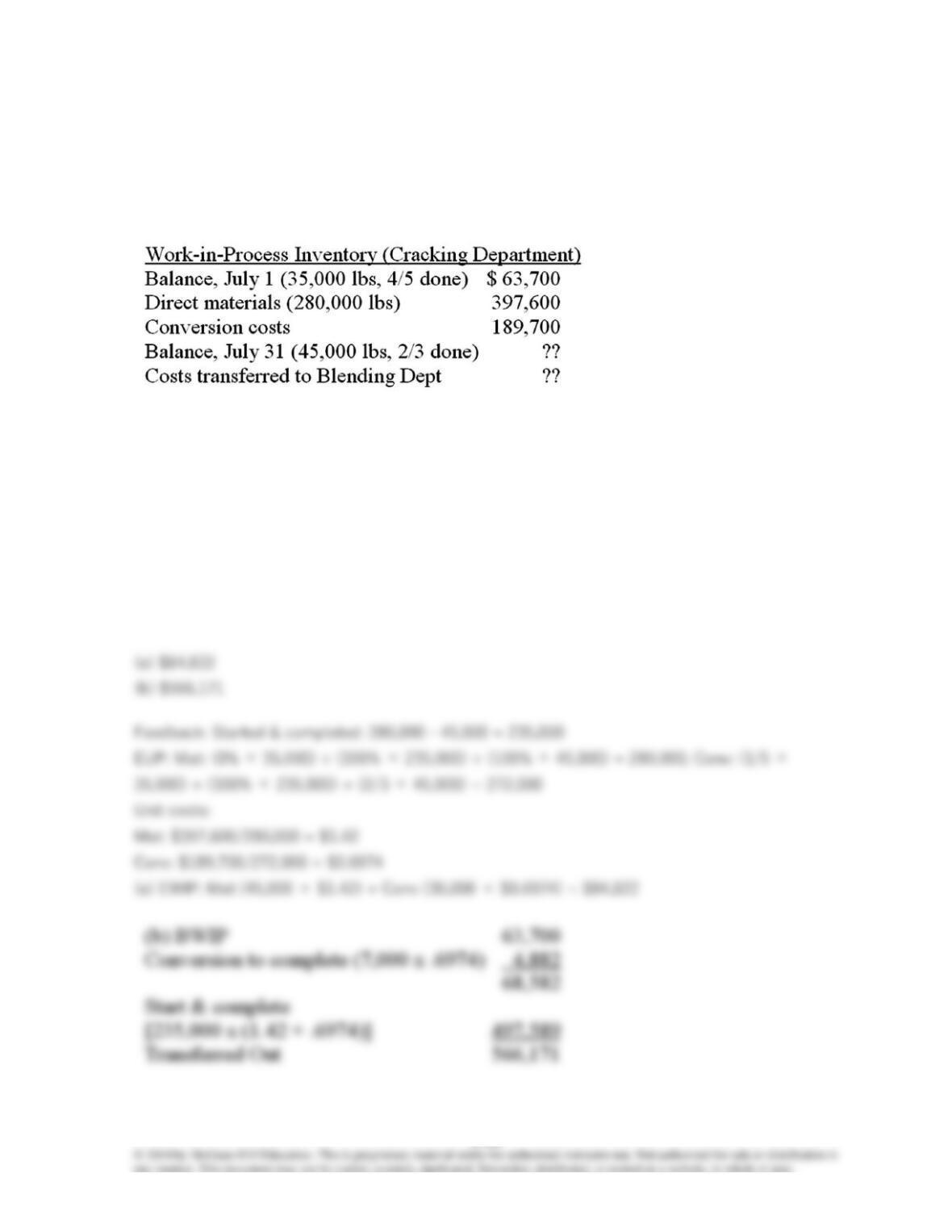
114. Brady Products manufactures a silicone paste wax that goes through three processing
departments: cracking, blending, and packing. All raw materials are introduced at the start of work
in the cracking department, with conversion costs being incurred uniformly in each department.
The Work-in-Process T-account for the cracking department for July is:
The beginning balance inventory consists of $43,400 in materials cost. Brady uses the first-in,
first-out (FIFO) method to account for its operations.
Required: (use 4 decimal places for computations):
(a) What would be the Cracking Department inventory balance on July 31?
(b) What would be the cost transferred to the Blending Dept. in July?