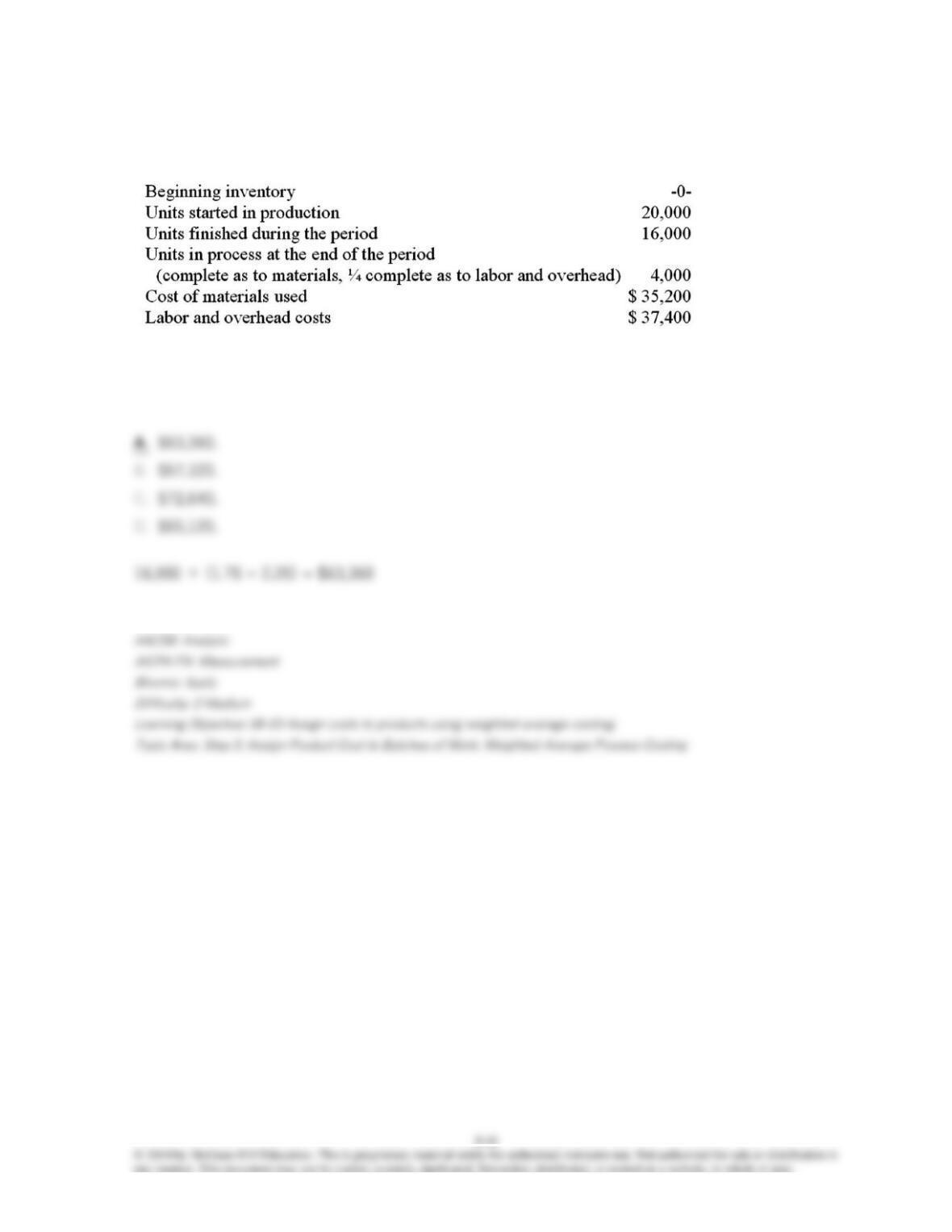
61. The WISCO Company uses a weighted-average process costing system. The following
data are available:
Total cost of the 16,000 units finished is:
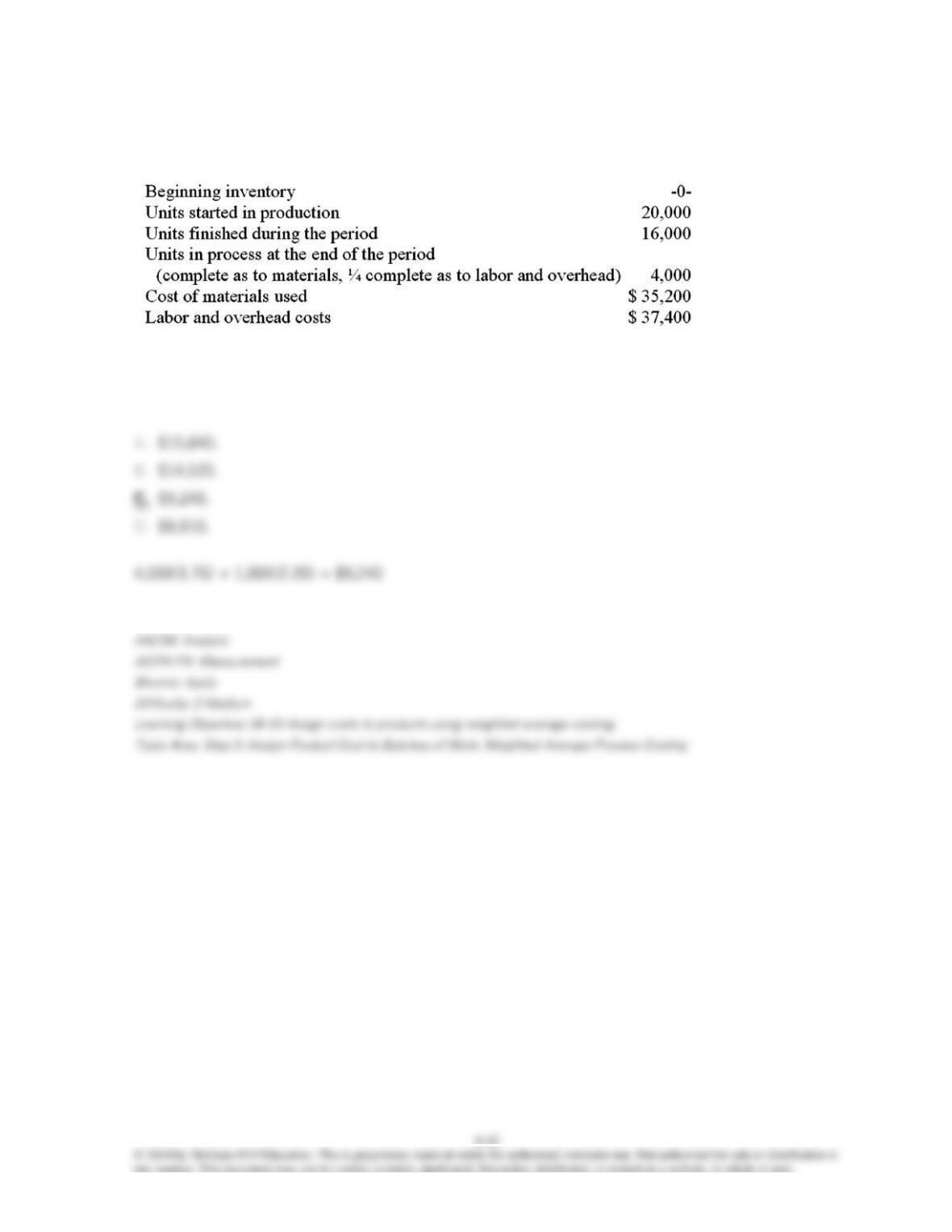
62. The WISCO Company uses a weighted-average process costing system. The following
data are available:
Total cost of the 4,000 units of the ending inventory:
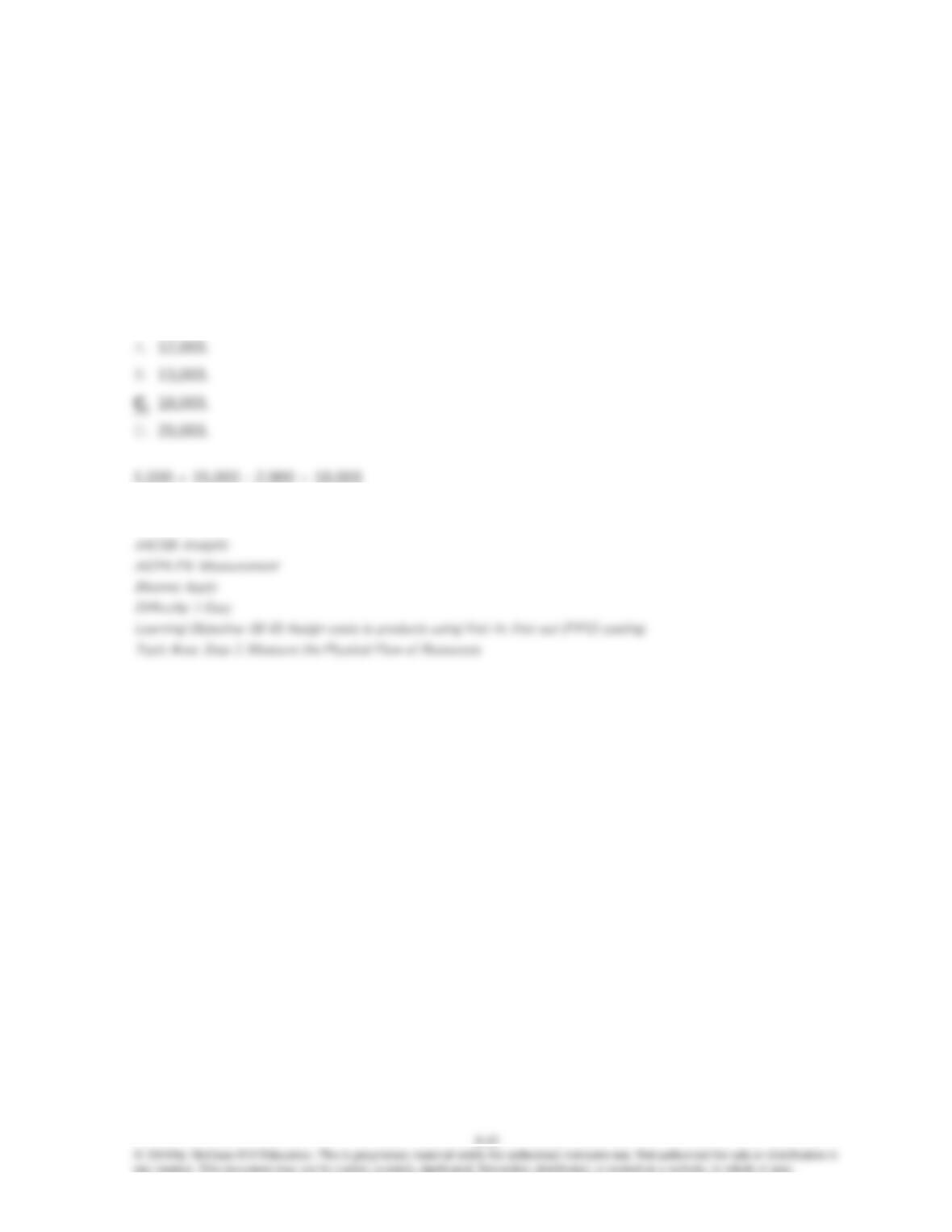
63. The Finishing Department had 5,000 incomplete units in its beginning Work-in–Process
Inventory which were 100% complete as to materials and 30% complete as to conversion costs.
15,000 units were received from the previous department. The ending Work–in-Process Inventory
consisted of 2,000 units which were 50% complete as to materials and 30% complete as to
conversion costs. The Finishing Department uses first-in, first-out (FIFO) process costing.
How many units were transferred-out during the period?
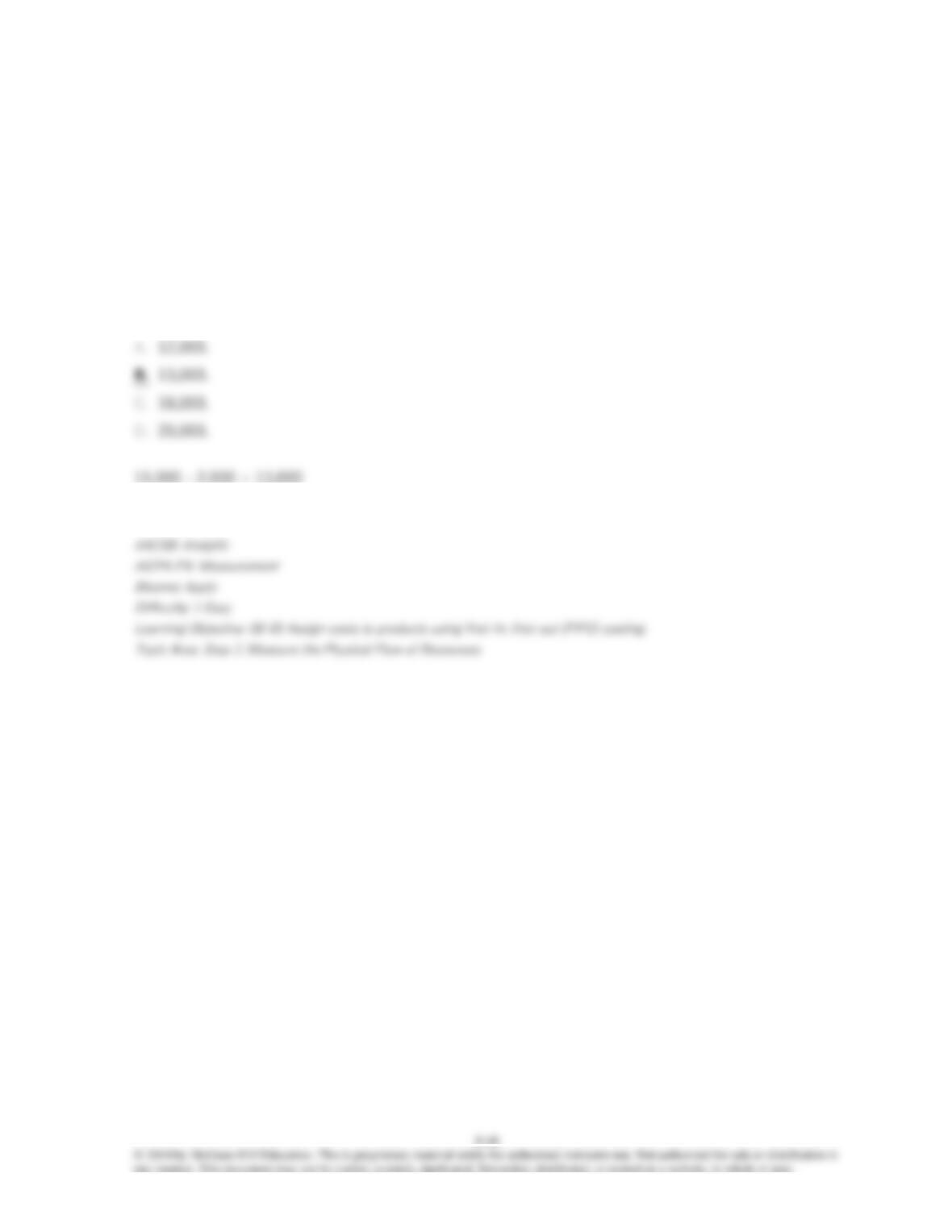
64. The Finishing Department had 5,000 incomplete units in its beginning Work–in-Process
Inventory which were 100% complete as to materials and 30% complete as to conversion costs.
15,000 units were received from the previous department. The ending Work-in-Process Inventory
consisted of 2,000 units which were 50% complete as to materials and 30% complete as to
conversion costs. The Finishing Department uses first-in, first-out (FIFO) process costing.
How many units were started and completed during the period?
65. The Finishing Department had 5,000 incomplete units in its beginning Work–in-Process
Inventory which were 100% complete as to materials and 30% complete as to conversion costs.
15,000 units were received from the previous department. The ending Work–in-Process Inventory
consisted of 2,000 units which were 50% complete as to materials and 30% complete as to
conversion costs. The Finishing Department uses first-in, first-out (FIFO) process costing.
What are the equivalent units of production for materials during the period?
66. The Finishing Department had 5,000 incomplete units in its beginning Work–in-Process
Inventory which were 100% complete as to materials and 30% complete as to conversion costs.
15,000 units were received from the previous department. The ending Work-in-Process Inventory
consisted of 2,000 units which were 50% complete as to materials and 30% complete as to
conversion costs. The Finishing Department uses first-in, first-out (FIFO) process costing.
What are the equivalent units of production for the conversion costs during the period?
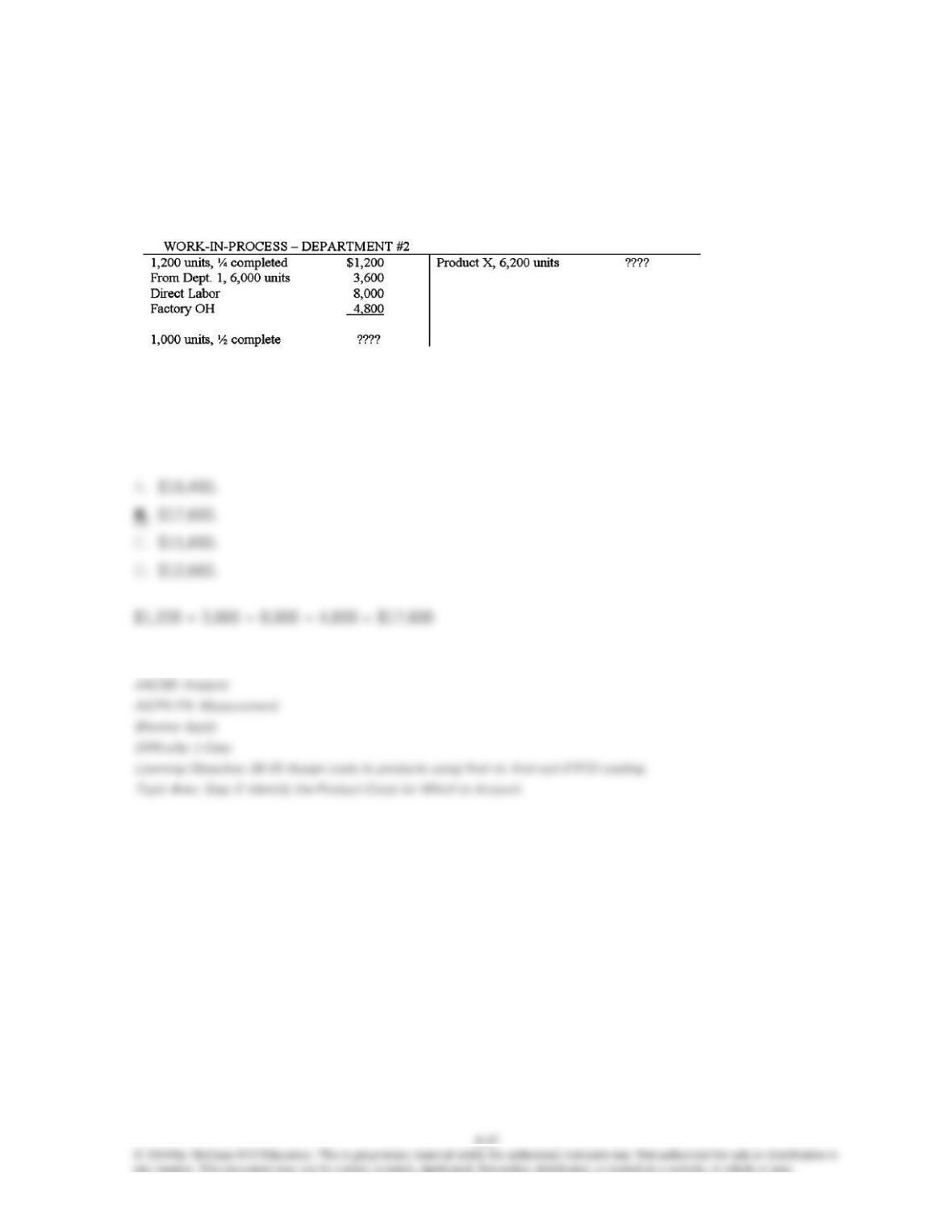
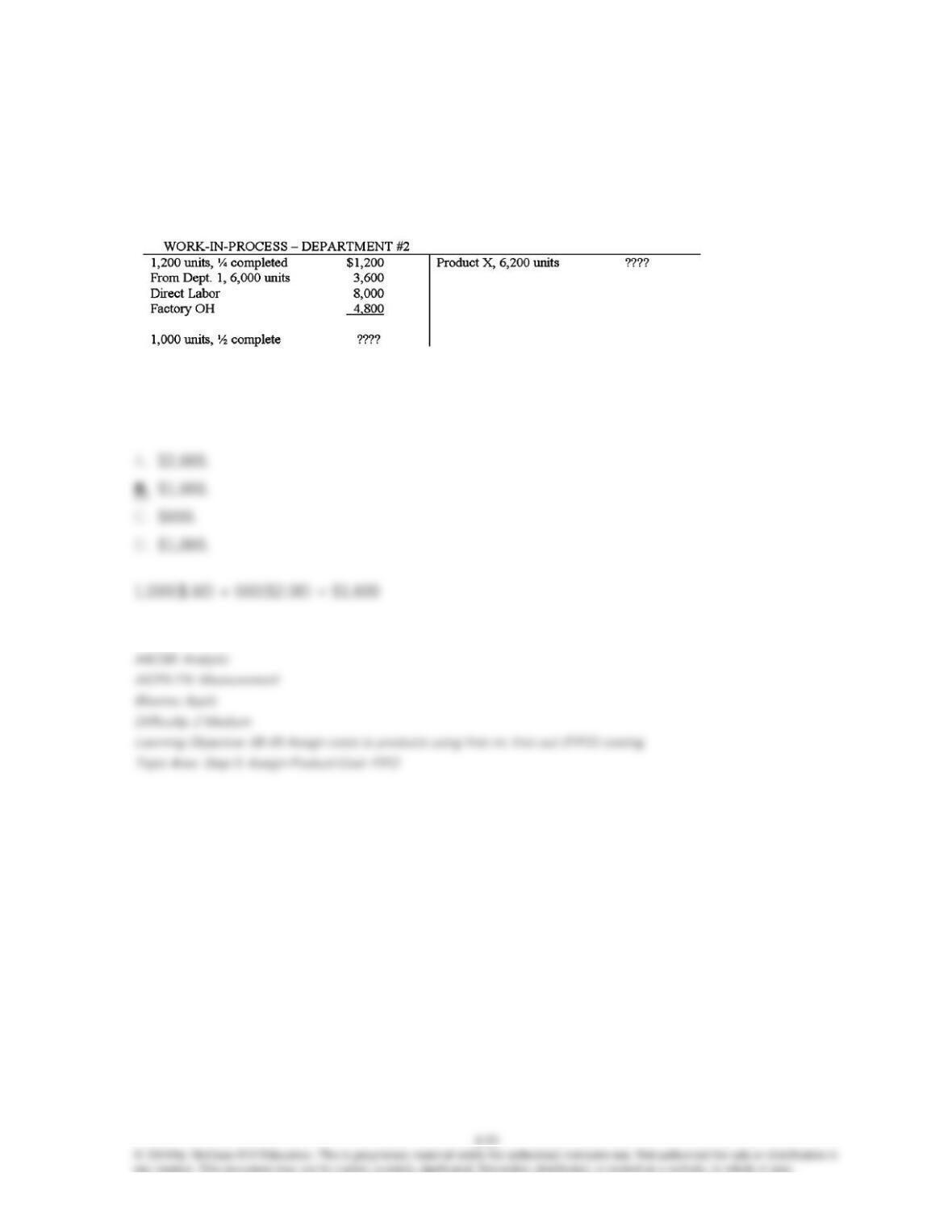
67. The debits to Work-in-Process for Department #2 for the month of April of the current
year, together with information concerning production, are presented below. All direct materials
come from Department #1. The units completed include the 1,200 in process at the beginning of
the period. Department #2 uses FIFO costing.
What are the total costs to be accounted for on the production cost report for Department #2 for
the period?
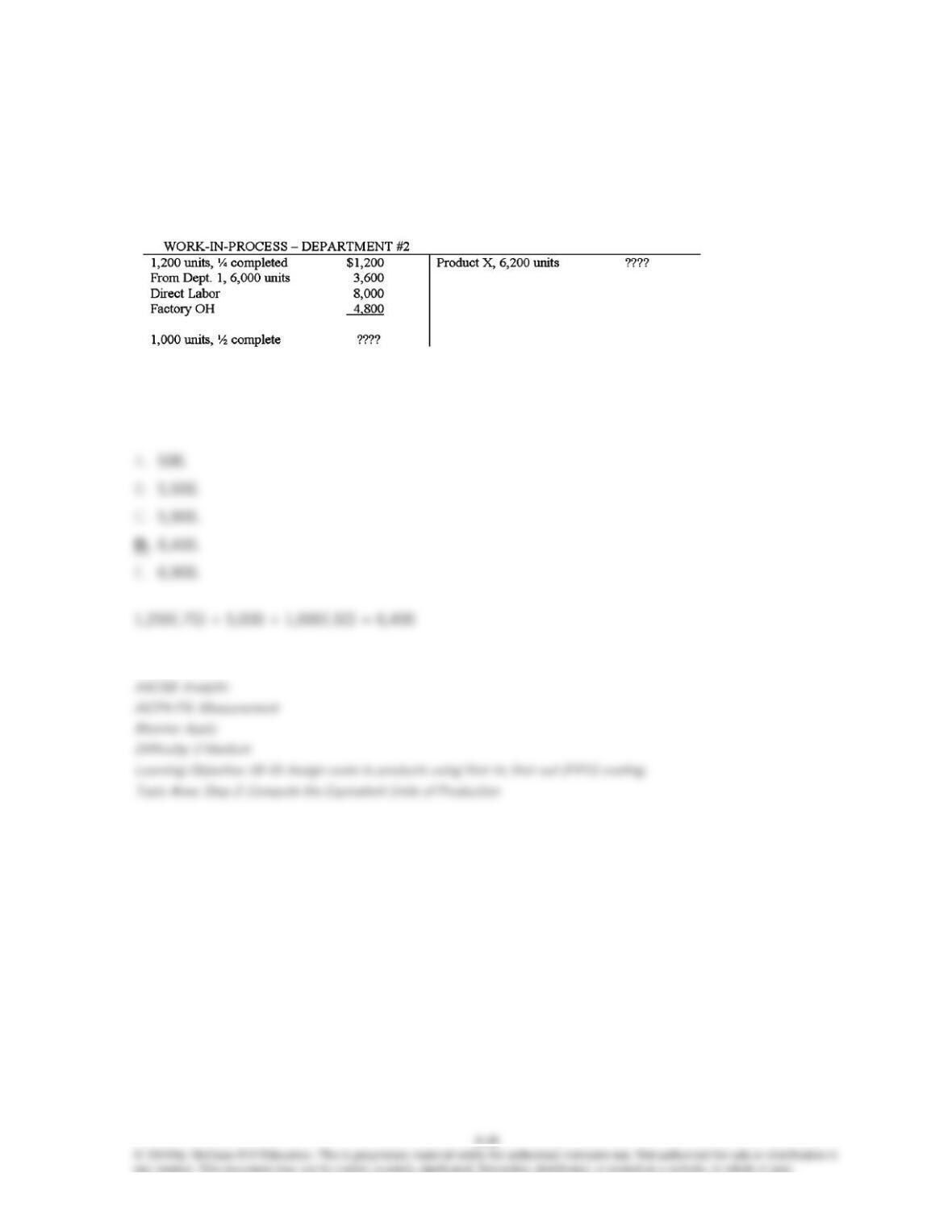
68. The debits to Work-in-Process for Department #2 for the month of April of the current
year, together with information concerning production, are presented below. All direct materials
come from Department #1. The units completed include the 1,200 in process at the beginning of
the period. Department #2 uses FIFO costing.
What are the equivalent units of production for conversion costs?
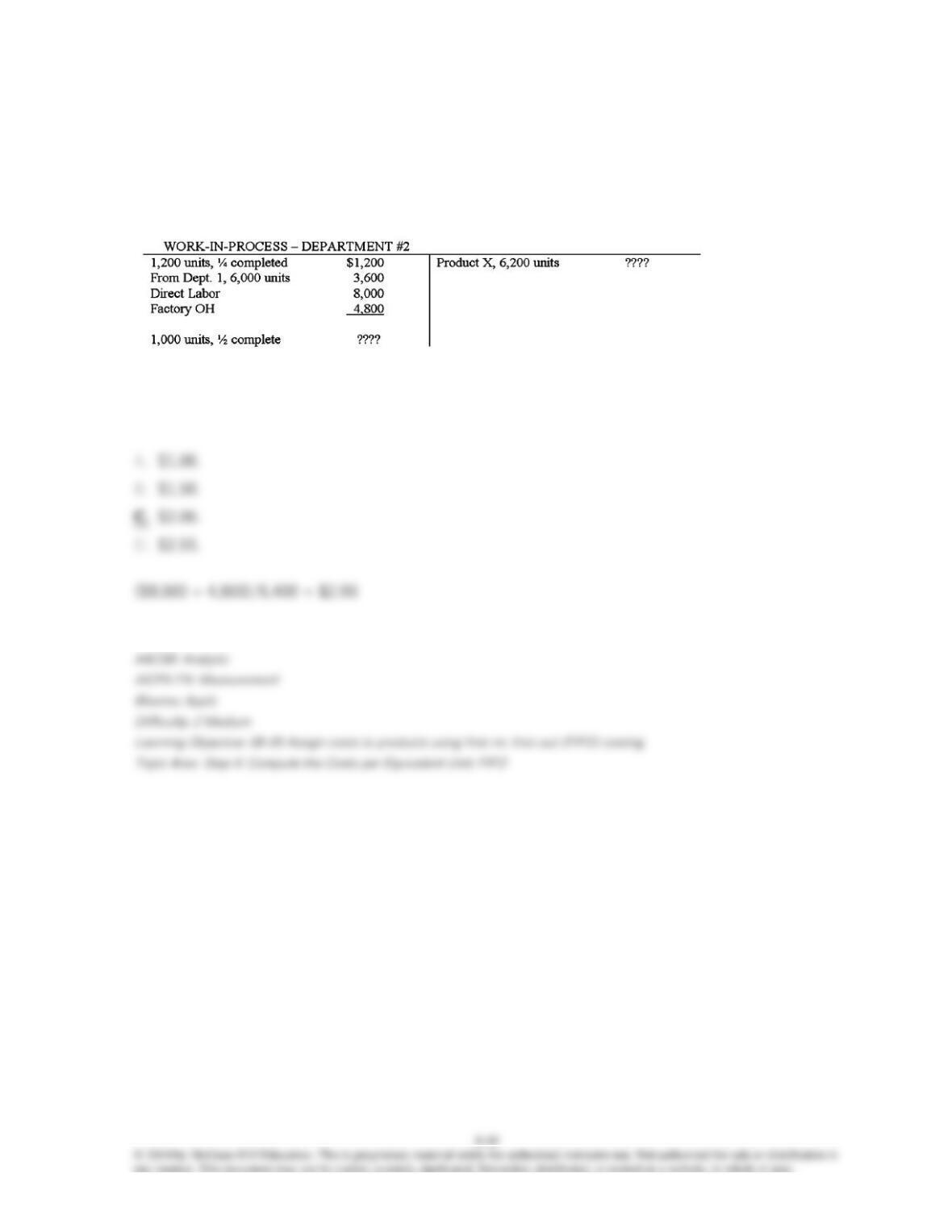
69. The debits to Work-in-Process for Department #2 for the month of April of the current
year, together with information concerning production, are presented below. All direct materials
come from Department #1. The units completed include the 1,200 in process at the beginning of
the period. Department #2 uses FIFO costing.
The conversion costs per equivalent units is:
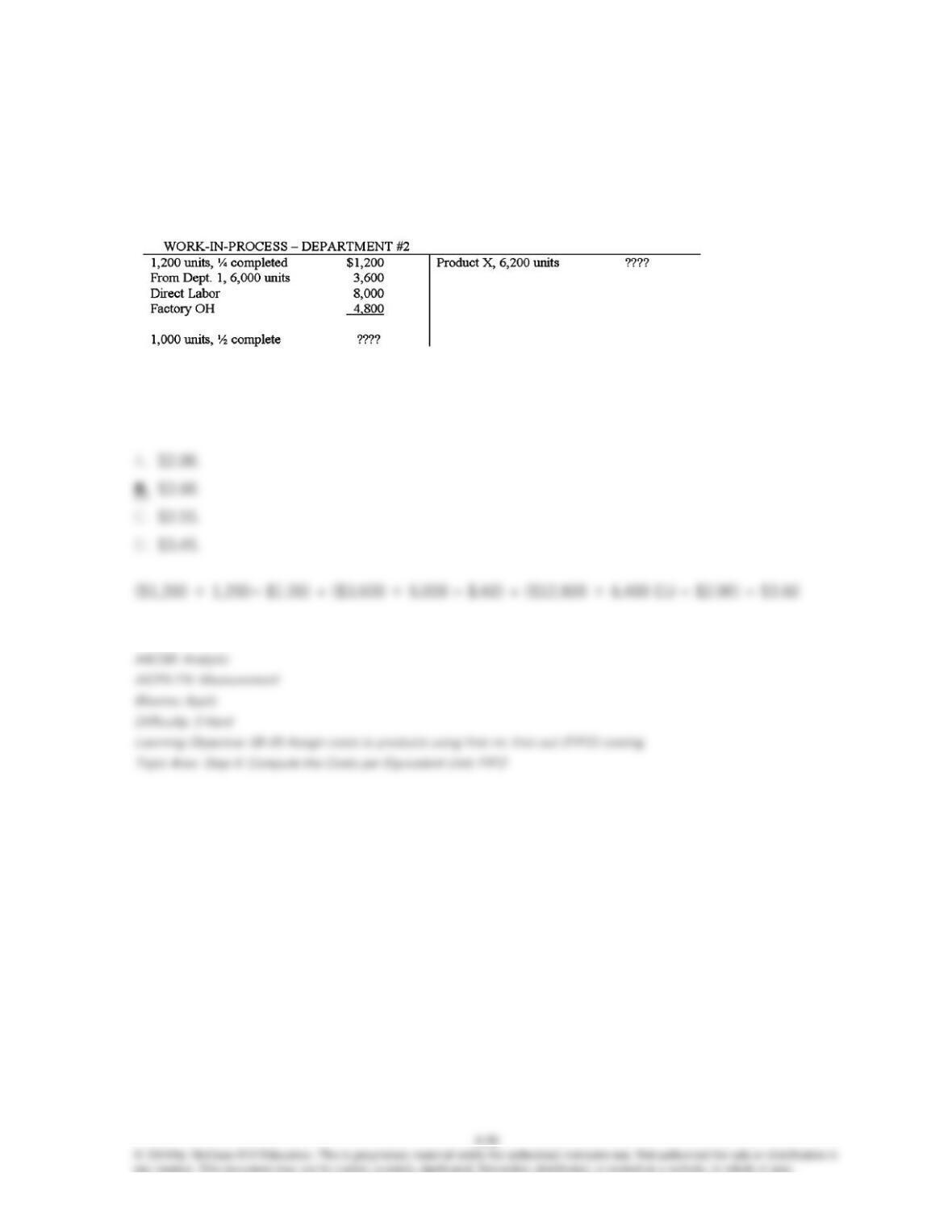
70. The debits to Work-in-Process for Department #2 for the month of April of the current
year, together with information concerning production, are presented below. All direct materials
come from Department #1. The units completed include the 1,200 in process at the beginning of
the period. Department #2 uses FIFO costing.
The unit cost of Product X started in the prior period and completed in the current period is:
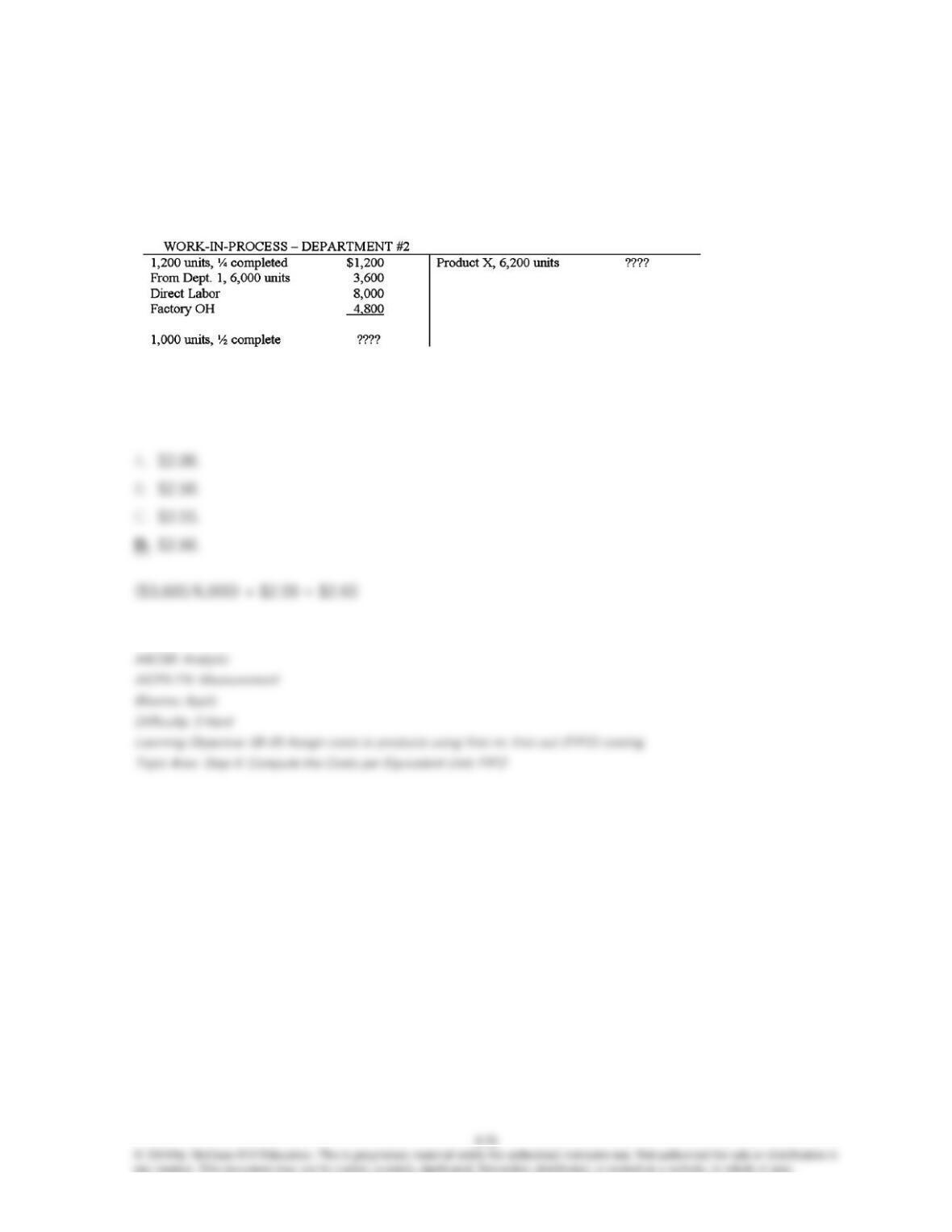
71. The debits to Work-in-Process for Department #2 for the month of April of the current
year, together with information concerning production, are presented below. All direct materials
come from Department #1. The units completed include the 1,200 in process at the beginning of
the period. Department #2 uses FIFO costing.
The unit cost of Product X started and completed in the current period is:
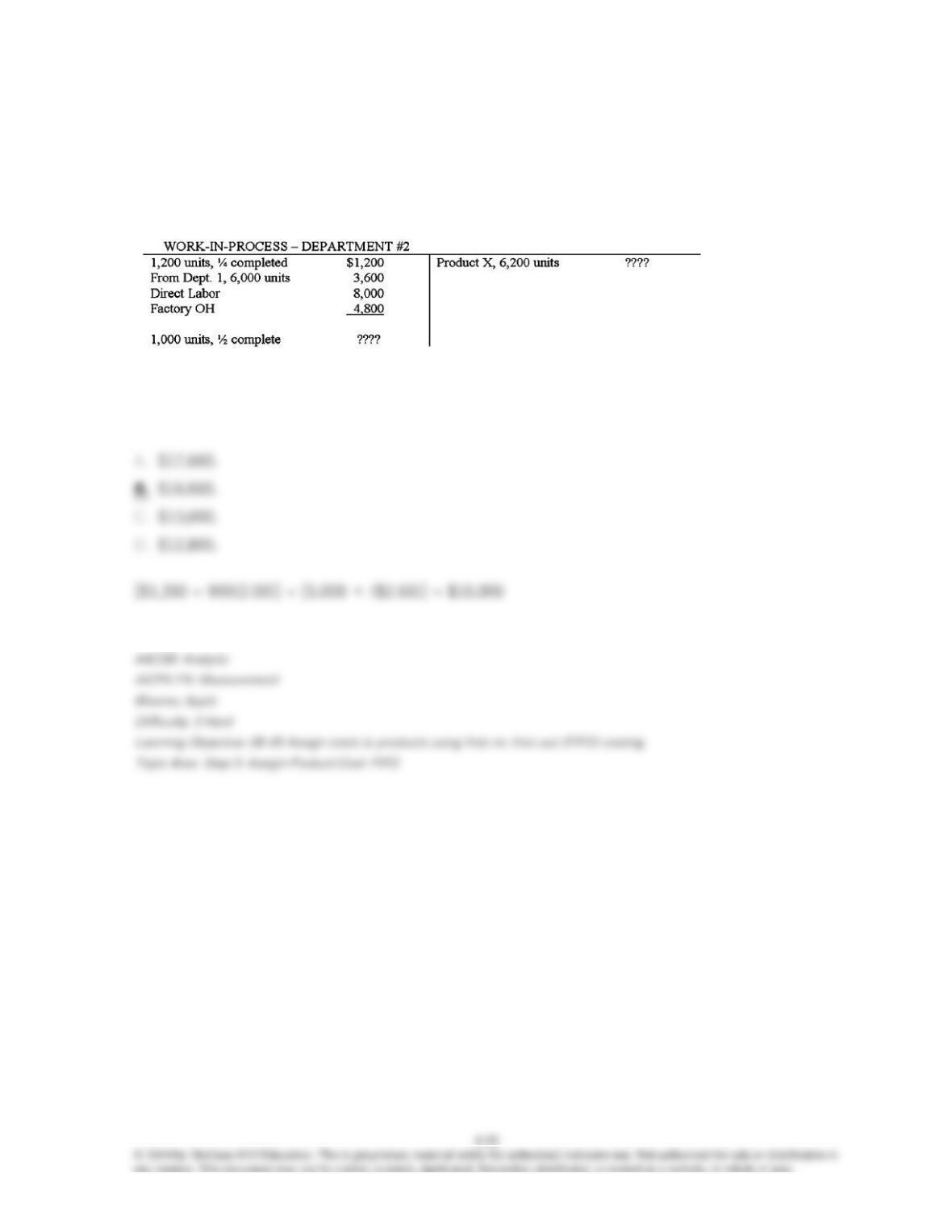
72. The debits to Work-in-Process for Department #2 for the month of April of the current
year, together with information concerning production, are presented below. All direct materials
come from Department #1. The units completed include the 1,200 in process at the beginning of
the period. Department #2 uses FIFO costing.
The cost of goods transferred to finished goods is:
73. The debits to Work-in-Process for Department #2 for the month of April of the current
year, together with information concerning production, are presented below. All direct materials
come from Department #1. The units completed include the 1,200 in process at the beginning of
the period. Department #2 uses FIFO costing.
The cost of the ending Work-in-Process Inventory is:
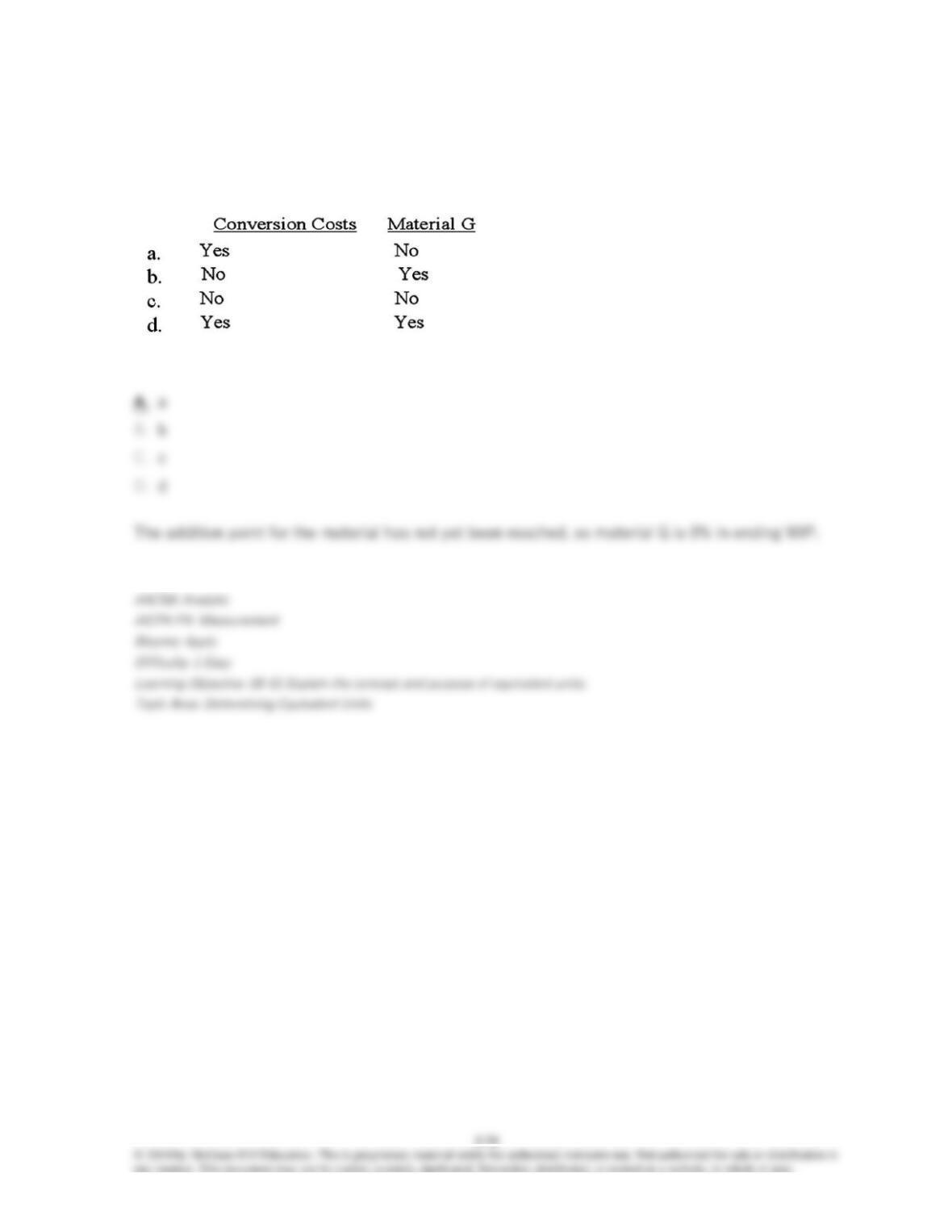
74. In process 2, material G is added when a batch is 60% complete. Ending work–in-process
units, which are 50% complete, would be included in the computation of equivalent units for: (CPA
adapted)
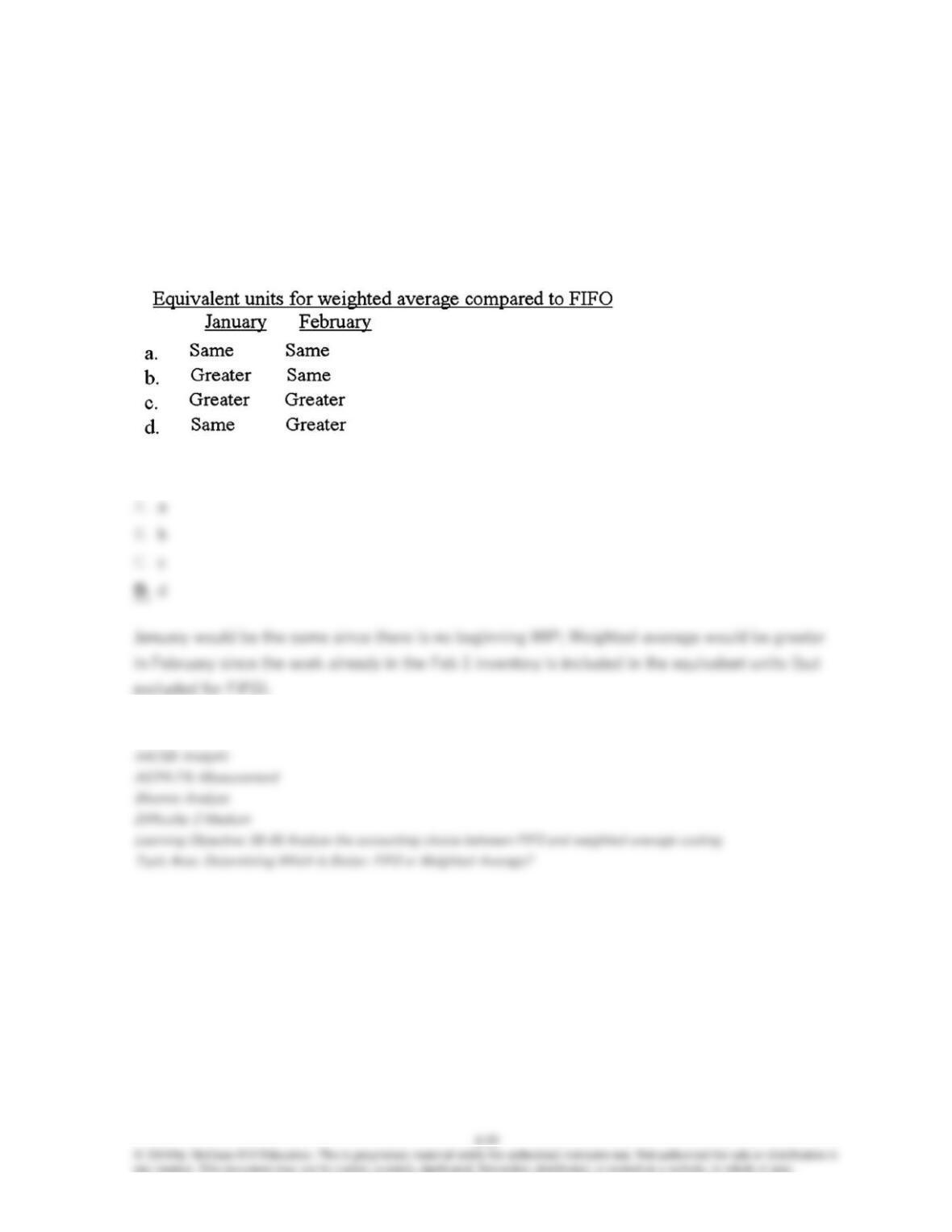
75. A process costing system was used for a department that began operations in January
2012. Approximately the same number of physical units, at the same degree of completion, were
in work-in-process at the end of both January and February. Monthly conversion costs are
allocated between ending work–in-process and units completed. Compared to the FIFO method,
would the weighted-average method use the same or a greater number of equivalent units to
calculate the monthly allocations? (CPA adapted)
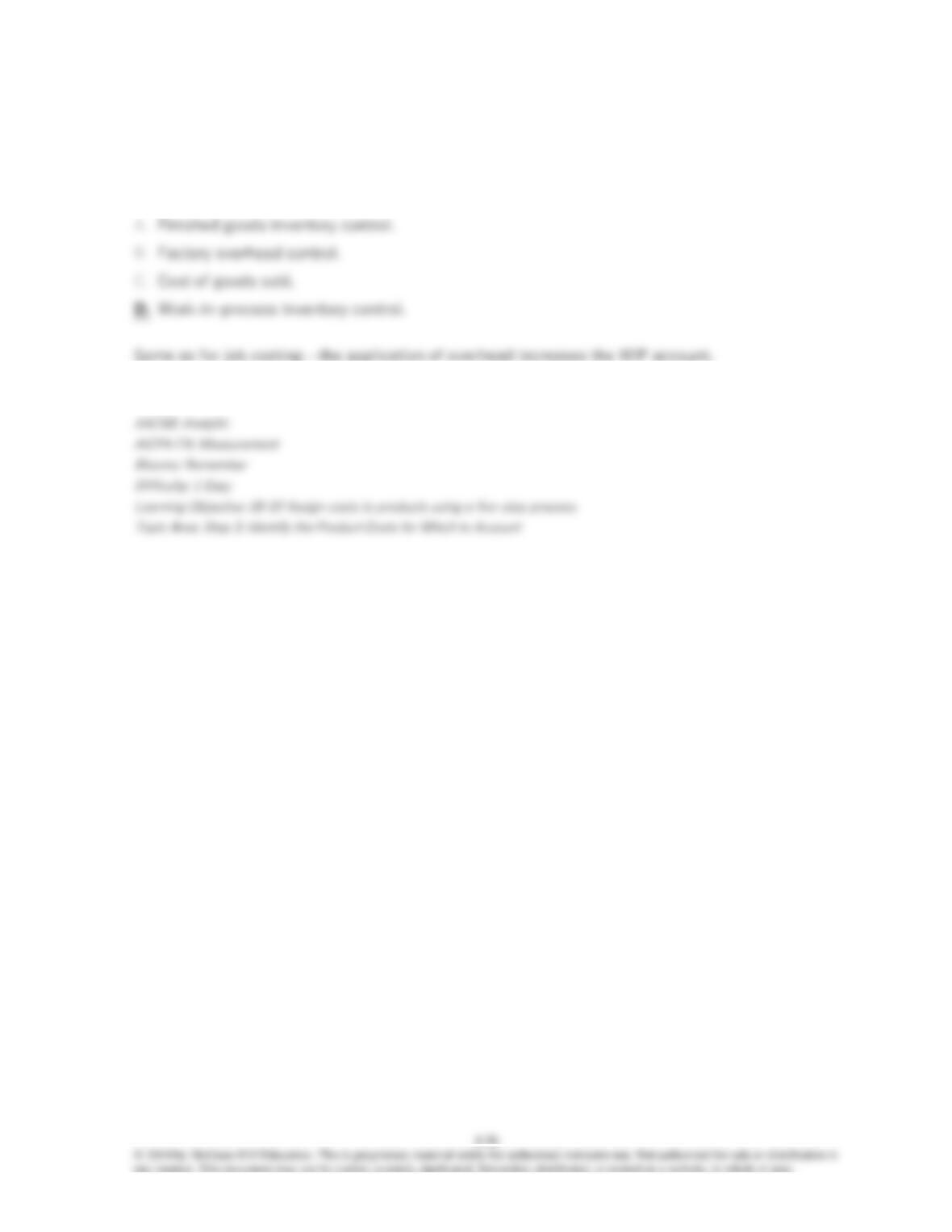
76. In a process costing system, the application of factory overhead usually would be recorded
as an increase in: (CPA adapted)
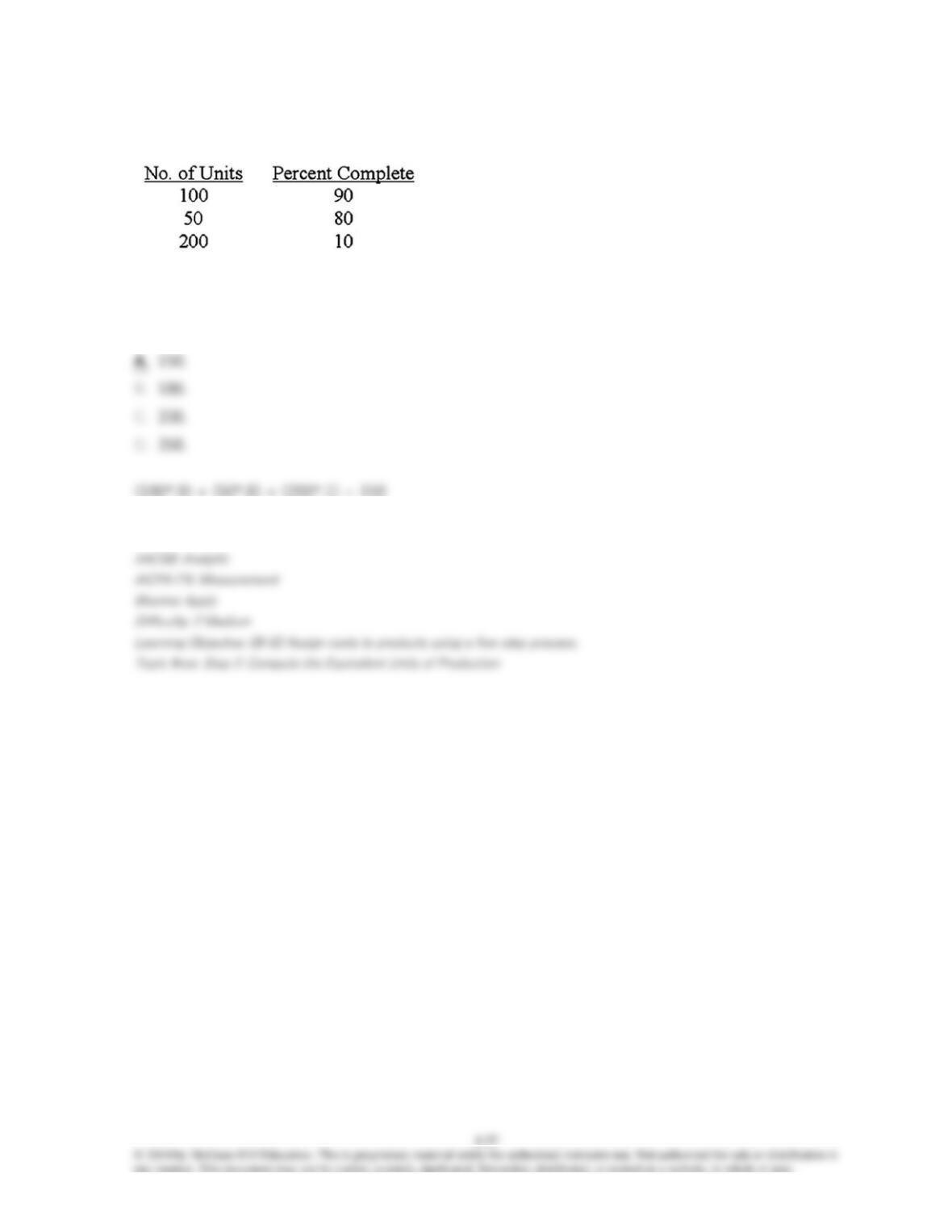
77. Yarn Co.’s inventories in process were at the following stages of completion at April 30:
Equivalent units of production in ending inventory amounted to: (CPA adapted)
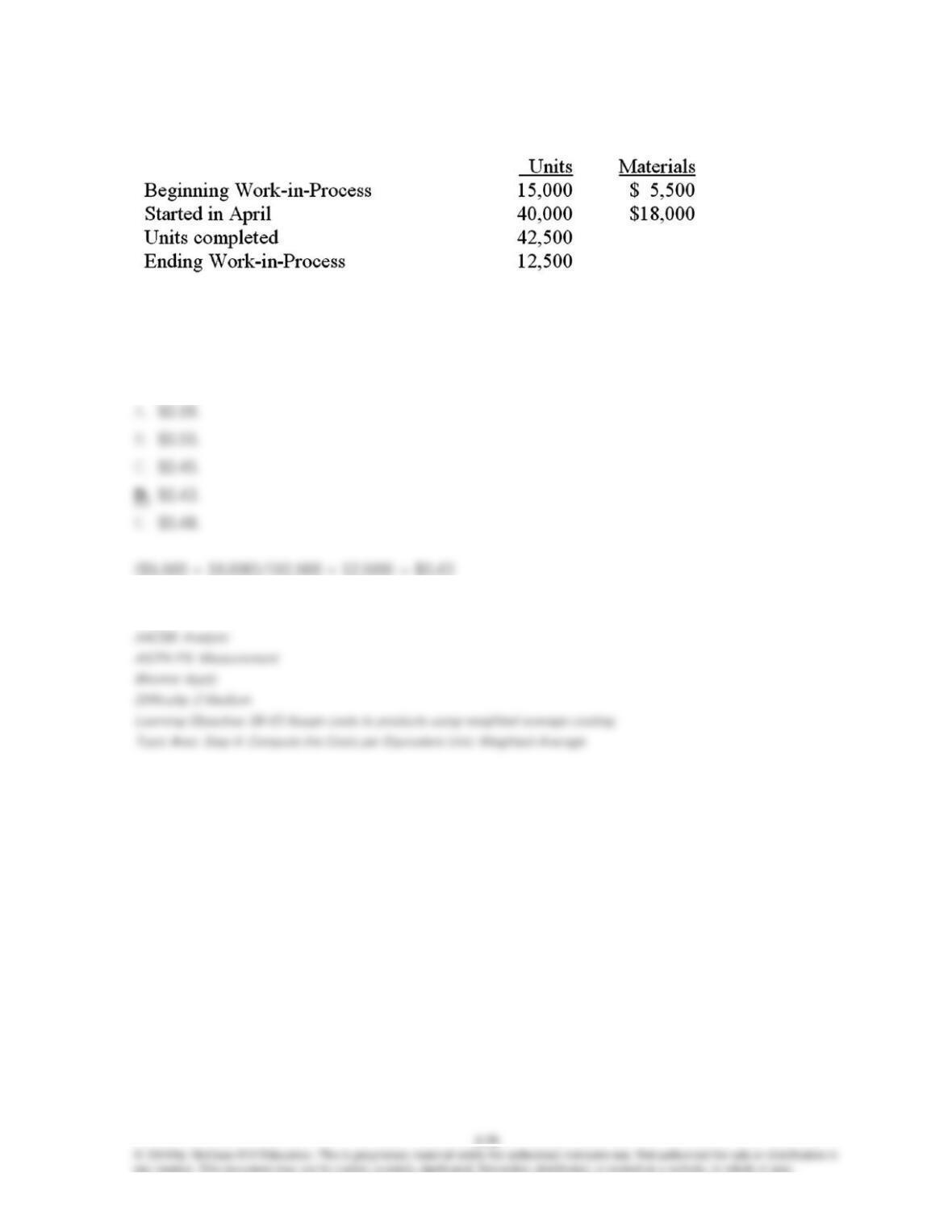
78. The following information pertains to Lap Co.’s Palo Division for the month of April:
All materials are added at the beginning of the process. Using the weighted-average method, the
cost per equivalent unit of materials is: (CPA adapted)
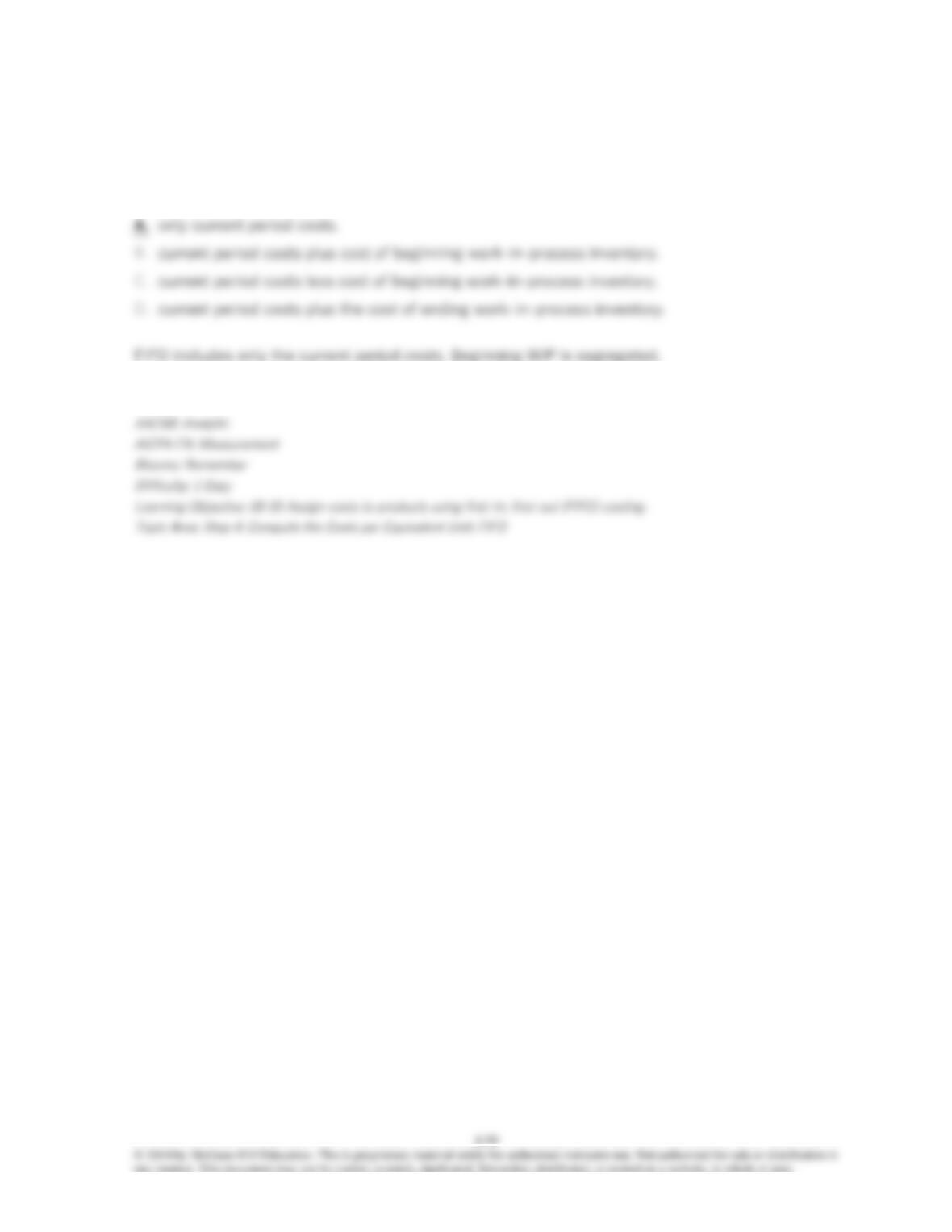
79. In computing the current period’s manufacturing cost per equivalent unit, the FIFO method
of process costing considers: (CPA adapted)
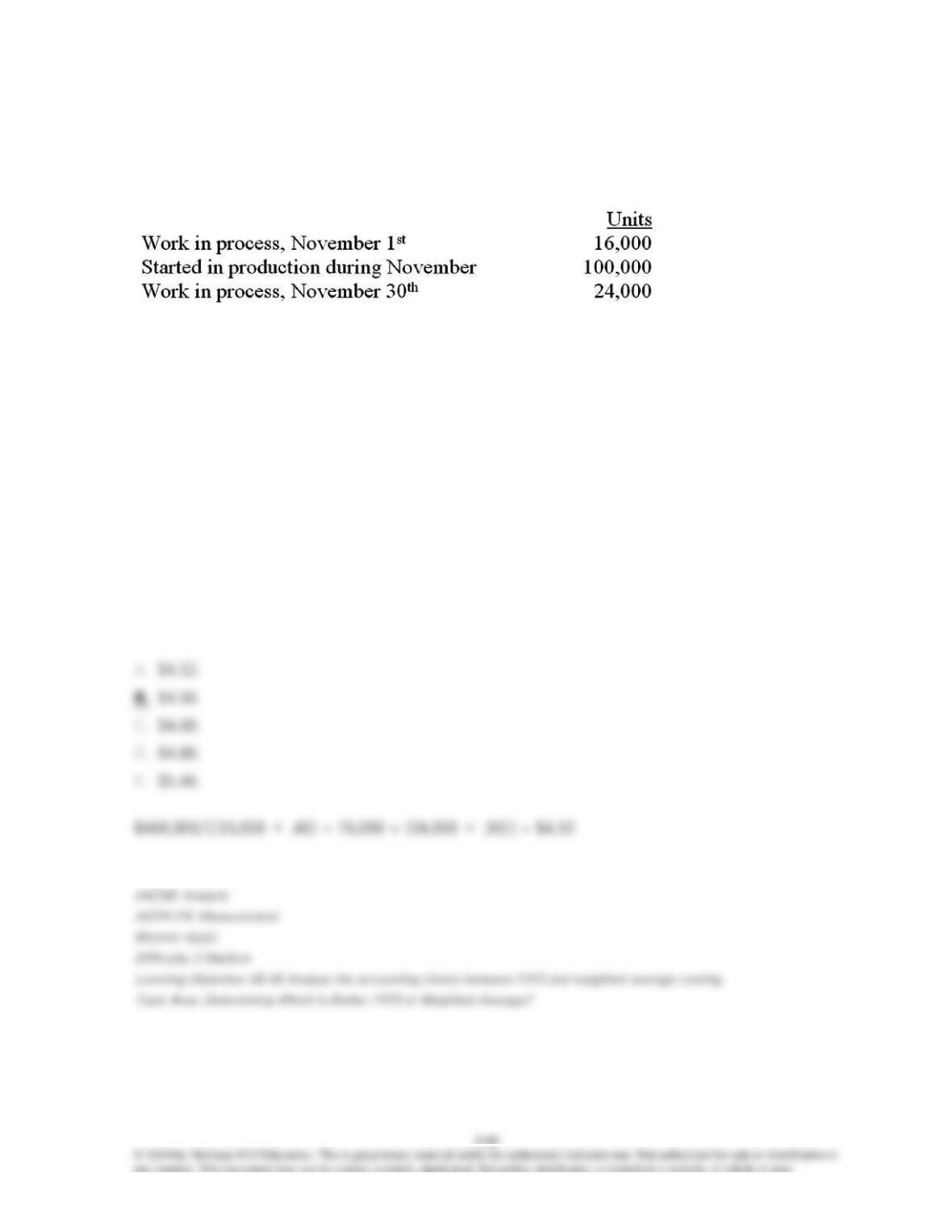
80. Kimbeth Manufacturing uses process costing to control costs in the manufacture of Dust
Sensors for the mining industry. The following information pertains to operations for November.
(CMA Exam adapted)
The beginning inventory was 60% complete as to materials and 20% complete as to conversion
costs. The ending inventory was 90% complete as to materials and 40% complete as to conversion
costs.
Costs pertaining to November are as follows:
Beginning inventory: direct materials, $54,560; direct labor, $20,320; manufacturing overhead,
$15,240.
Costs incurred during the month: direct materials, $468,000; direct labor, $182,880; manufacturing
overhead, $391,160.
What is the equivalent unit cost for materials assuming Kimbeth uses first-in, first-out (FIFO)
process costing?